Article

Synthesis of BSA-Coated Iron Oxide Nanoparticles with Size Control for High-Performance T1 Contrast Agents in Magnetic Resonance Imaging

1
Department of Chemistry, Physics and Atmospheric Science, Jackson State University, Jackson, MS 39217, USA
2
Mallinckrodt Institute of Radiology, Washington University School of Medicine, St. Louis, MO 63110, USA
3
Advanced Microscopy and Analytical Core, Louisiana State University, Baton Rouge, LA 70803, USA
*
Author to whom correspondence should be addressed.
Biomolecules 2026, 16(3), 478; https://doi.org/10.3390/biom16030478
Submission received: 20 January 2026 / Revised: 13 March 2026 / Accepted: 19 March 2026 / Published: 23 March 2026
(This article belongs to the Special Issue Advances in Nano-Based Drug Delivery: Unveiling the Next Frontier)

Abstract

The excellent biocompatibility and favorable physicochemical properties of iron oxide nanoparticles have made them attractive candidates for magnetic resonance imaging. However, it remains challenging to synthesize high-performance T1 contrast agents with controlled sizes and biocompatible coating materials. In this study, we demonstrate a simple and environmentally friendly approach for synthesizing ultra-small iron oxide nanoparticles using bovine serum albumin (BSA) as a template. Following synthesis, the iron oxide nanoparticles (Fe3O4) were oxidized to Fe2O3 via the addition of hydrogen peroxide, which resulted in enhanced T1-weighted magnetic resonance contrast. The use of BSA not only stabilized the nanoparticles but also enabled precise control over nanoparticle size by adjusting the Fe-to-BSA molar ratio. This method yielded highly uniform and crystalline ultra-small nanoparticles ranging from approximately 3.7 to 7.9 nm in diameter. The T1 contrast performance of the Fe2O3@BSA nanoparticles was evaluated at 3 T magnetic field. Among the synthesized samples, nanoparticles with sizes of 4.6 nm exhibited the strongest T1 contrast enhancement along with low r2/r1 ratios. These features highlight their potential as promising alternatives to gadolinium-based contrast agents. In addition to their superior performance, this synthesis method is low-cost and non-toxic, making it suitable for scalable biomedical applications.

1. Introduction

Magnetic resonance imaging (MRI) is a widely used diagnostic tool in clinical practice [1]. Besides its non-invasive nature, MRI can provide high-resolution images of internal body structures without the use of ionizing radiation [1,2,3,4,5]. By employing strong magnetic fields and radiofrequency pulses, MRI generates detailed two- and three-dimensional tomographic images based on the nuclear magnetization of hydrogen protons in tissues. Its excellent soft-tissue contrast and high spatial resolution make MRI a standard for imaging of the brain, spine, cardiovascular system, musculoskeletal tissues, and oncology [6]. Clinical MRI contrast primarily relies on intrinsic T1 and T2 relaxation properties of tissues, which are often amplified by contrast agents to enhance diagnostic sensitivity.
To further improve image contrast, MRI contrast agents are routinely used and are classified as either positive (T1-weighted) or negative (T2- weighted) agents based on their influence on signal intensity [7]. Positive contrast agents are typically gadolinium-based chelates or manganese complexes, whereas superparamagnetic iron oxide nanoparticles have traditionally been employed as negative contrast agents due to their strong T2-shortening effects [3,7,8]. Contrast agents enhance image quality by accelerating proton nuclear spin relaxation, thereby improving signal intensity and lesion detection [9].
Gadolinium-based contrast agents (GBCAs) have been extensively used in clinical MRI [10]. However, growing safety concerns have limited their long-term application. Adverse effects associated with GBCAs include nephrogenic systemic fibrosis (NSF) in patients with impaired renal function and long-term gadolinium retention in the brain and other tissues [11]. Additionally, GBCAs are rapidly cleared through renal excretion, which restricts their use in prolonged or repeated imaging. These limitations have motivated intensive research for safer alternatives to gadolinium-based contrast agents [12,13,14].
Iron oxide nanoparticles offer several advantages as MRI contrast agents, including metabolism through natural iron pathways, high relaxivity, and improved biocompatibility [15,16]. Certain iron oxide formulations have demonstrated superior imaging performance compared to commercial gadolinium chelates, even at low and intermediate magnetic field strengths. Clinically, iron oxide nanoparticles have been successfully used for liver and lymph node imaging, owing to their uptake by the reticuloendothelial system and incorporation into ferritin and normal iron metabolism [16,17]. Due to their favorable safety profile and high relaxivity, iron oxide nanoparticles are increasingly being explored as potential alternatives to GBCAs, particularly as T1 contrast agents [4].
The magnetic behavior and relaxivity of iron oxide nanoparticles are strongly dependent on their size, crystallinity, magnetic anisotropy, hydrodynamic diameter, and surface coating [18,19]. These parameters collectively regulate water accessibility and local magnetic field fluctuations [20]. Conventional iron oxide nanoparticles with core sizes of approximately 8–30 nm generate strong local magnetic field inhomogeneities. As a result, transverse relaxation is predominantly accelerated, leading to enhancement on T2-weighted images [21,22]. Clinically approved agents such as ferumoxides, ferucarbotran, and ferumoxtran exhibit high r2/r1 ratios, making them effective T2 contrast agents for liver and lymph node imaging [21]. At standard clinical field strengths (1.5–3 T), the high magnetic susceptibility of these particles favors transverse over longitudinal relaxation, limiting their utility as T1 enhancers [16].
Recent studies have demonstrated that ultra-small iron oxide nanoparticles with core sizes below ~5 nm can exhibit strong T1 contrast due to their reduced magnetic moments and enhanced longitudinal relaxation [23,24]. Nanoparticles with low r2/r1 ratios and high r1 values typically possess moderate magnetization and thin water-permeable surface coatings that promote efficient proton exchange near the magnetic core [20,23]. Exceedingly small iron oxide nanoparticles with hydrodynamic diameters below the renal clearance threshold (~5.5 nm) have shown r2/r1 ratios approaching those of GBCAs, with comparable r1 values and improved clearance profiles [23].
The synthesis method plays a critical role in determining the size, crystallinity, morphology, and magnetic properties of iron oxide nanoparticles [25,26,27]. While thermal decomposition and hydrothermal methods can produce well-defined nanoparticles, they often require organic solvents, high temperatures, or high pressures [28]. In contrast, the co-precipitation method is a green and scalable approach that utilizes aqueous media at relatively low temperatures. Hydrophilic nanoparticles are produced by precipitating Fe2+ and Fe3+ salts under basic conditions [29]. However, co-precipitation typically suffers from limited control over particle size and size uniformity.
To address this limitation, various surface-modifying agents have been explored to regulate nanoparticle growth during co-precipitation. Natural fatty acids, synthetic polymers such as poly(acrylic acid), and proteins including bovine serum albumin (BSA) have been shown to influence nanoparticle size and morphology [30,31,32]. Among these, BSA is particularly attractive due to its biocompatibility, non-toxicity, and widespread clinical use. BSA coatings enhance colloidal stability, prolong circulation time, and provide functional groups for surface modification [21,33]. In MRI and magnetic particle imaging, albumin-coated iron oxide nanoparticles have demonstrated improved stability under physiological conditions while maintaining favorable magnetic properties.
Although BSA has previously been used to synthesize ultra-small iron oxide nanoparticles [31], systematic control of iron oxide core size and its direct impact on T1 contrast performance have not been explored [31,34,35]. In particular, the interplay between BSA concentration, core size, and resulting r1 and r2/r1 values has not been fully elucidated.
In this study, we employ BSA as a size-regulating agent to synthesize iron oxide nanoparticles via the co-precipitation method by systematically varying the Fe:BSA molar ratio. We investigate how controlled changes in nanoparticle size influence T1 relaxivity and overall MRI performance, aiming to optimize iron oxide nanoparticles as effective and safe T1 contrast agents.

2. Materials and Methods

2.1. Materials and Reagents

Bovine serum albumin (BSA), FeCl3∙6H2O, FeSO4∙7H2O, NaOH, and hydrogen peroxide (35%) were puchased from Sigma-Aldrich (St. Louis, MO, USA). All chemicals were used without purification.

2.2. Synthesis of Fe3O4@BSA and Fe2O3@BSA

In a typical reaction, BSA (30.23 mg, 0.00045 mmol) in 10 mL of deionized water was purged with argon for 30 min. FeCl3∙6H2O (27.03 mg, 0.1 mmol) and FeSO4∙7H2O (13.9 mg, 0.05 mmol) were dissolved in 2 mL of deionized water and were injected into the BSA solution and purged for another 15 min. The reaction mixture was placed in a water bath (60 °C) and allowed to heat up for 5 min. NaOH solution (0.5 ml, 0.6 m mol) was added at 12 mL/hr, and allowed to stir for an hour. The Fe3O4@BSA (6 ml) was taken out and H2O2 peroxide (35%) (0.5 ml) was added at 12 mL/hr under low stirring for the formation of Fe2O3@BSA. The reaction was stirred for 10–30 min and allowed to settle down overnight. To purify, the reaction mixture was washed with deionized water amicon filter (100 k) until the pH reached 7. The same reaction was repeated with different amounts of BSA (60.45 mg, 120.90 mg, and 237.7 mg) for 165:1, 83:1, 43:1 Fe:BSA molar ratio respectively.

2.3. Characterization of Fe3O4@BSA and Fe2O3@BSA

2.3.1. Transmission Electron Microscope

The information about the sizes and morphology of the nanoparticles was obtained using a transmission electron microscope (TEM) (JEOL JEM-1011, JEOL, Inc., Peabody, MA, USA). The diluted purified samples (4 µL) were placed on a Carbon film 150-mesh copper TEM grid (CF 150-CU) and allowed to stay for 20 min. Excess samples were removed using a small piece of filter paper and allowed to dry completely before viewing them under the transmission electron microscope. About 100 nanoparticles were analyzed using ImageJ (v1.54d, National Institutes of Health, Bethesda, MD, USA) software to analyze the TEM images. The statistical analyses were conducted in Origin 2008.

2.3.2. Crystal Size Measurement of Iron Oxide Nanoparticles

X-ray diffraction (XRD) measurement was done using the Rigaku MiniFlex 600 X-ray (40 kV, 15 mA) (Rigaku Americas Corp, The Woodlands, TX, USA) with Cu Kβ radiation (λ = 0.154 nm). The samples were placed on zero-background quartz slides and allowed to dry. Then, the samples were mounted on the central goniometer stage (beam incident position) of the XRD instrument. The scan degree ranged from 10° to 80° with a step size of 0.01 at a rate of 1°/min. The crystal sizes of the nanoparticles were calculated using the Scherrer equation.

2.3.3. X-Ray Photoelectron Spectroscopy (XPS)

X-ray Photoelectron Spectroscopy (XPS) analysis of the samples was conducted using a ScientaOmicron ESCA 2SR X-ray Photoelectron Spectroscope equipped with a flood source charge neutralizer. The powders were pressed into pellets and analyzed using a monochromatic Al Kα X-ray source (1486.6 eV) at 450 W, with the analysis chamber pressure maintained below 5 × 10⁻⁹ mBar. Both wide-scan surveys and high-resolution core-level spectra of all elements were acquired, with binding energies calibrated using the major N 1s peak of BSA protein at 399.8 eV. The core-level spectra were deconvoluted to obtain chemical state information using CasaXPS (v2.3.25, Casa Software) data processing software.

2.3.4. Hydrodynamic Size

The hydrodynamic diameter and size distribution of the nanoparticles were measured by dynamic light scattering (DLS) using a LitesizerTM 100 Anton Paar particle size analyzer (Anton Paar USA Inc., Ashland, VA, USA). Prior to measurement, samples were dispersed in deionized water and appropriately diluted to minimize multiple scattering effects. All measurements were performed at room temperature and the reported values represent the number-weighted average hydrodynamic diameter.

2.3.5. UV Spectrometer

UV-Vis absorption spectroscopy was used to confirm the presence of bovine serum albumin (BSA) on the surface of the iron oxide nanoparticles. Spectra were recorded using a Shimadzu UV-Vis spectrophotometer (Shimadzu Corporation, Kyoto, Japan). Stock dispersions of BSA-coated iron oxide nanoparticles (2 mM) were diluted into deionized water to a final concentration of 0.4 mM. Aliquots of 2 mL were prepared in quartz cuvettes (1 cm path length). For comparison and confirmation of BSA coating, a reference solution of pure BSA was prepared by dissolving a small amount of BSA in ultra-pure water at equivalent protein concentration (e.g., 0.1–1 mg/mL). Both samples and the BSA reference were gently pipetted to ensure homogeneity and degassed to remove air bubbles or BSA foam. Cuvettes were rinsed 3 times with deionized water before filling. Deionized water served as the blank. Absorbance spectra were recorded from 200 to 800 nm to identify characteristic BSA protein absorption bands (~280 nm) alongside nanoparticle plasmonic features, confirming successful protein coating on the iron oxide cores. The BSA functionalized nanoparticles exhibited a characteristic absorption band around 280 nm attributed to the aromatic amino acid residues (trptophan and tyrosine) of BSA, which was absent in the spectra of bare iron oxide nanoparticles.

2.3.6. Fourier Transform Infrared Spectroscopy (FTIR)

A Perkin Elmer Fourier Transform Infrared (FTIR) Spectrometer (Perkin Elmer, Waltham, MA, USA) was used to scan the dried nanoparticles. Drops (~5–10 µL) of concentrated BSA-coated iron oxide nanoparticle dispersion, pure BSA solution, and uncoated iron oxide nanoparticle dispersion were separately deposited on clean KBr crystals and allowed to air-dry completely at room temperature to form thin films. Dried samples were then mounted in the FTIR instrument for measurement. Spectra were recorded in the 400–4000 cm−1 range at 4 cm−1 resolution with 64 scans averaged. FTIR was also used to confirm BSA functional groups.

2.3.7. Determination of Iron Concentration

The iron concentration of the nanoparticles was determined using an Agilent 5800 VDV inductively coupled plasma optical emission spectrometer (ICP-OES; Agilent Technology, Santa Clara, CA, USA) equipped with an SPS 4 autosampler and a recirculating chiller. The instrument was operated under manufacturer-recommended conditions. Briefly, an aliquot of the stock dispersion (5 µL, containing approximately 3.5 mg/mL iron concentration) was transferred into a 0.5 mL centrifuge tube containing 95 µL of deionized water. Aqua regia (HCl and HNO3, 3:1) (100 µL) was added and sonicated for 30 min for complete digestion of the iron oxide core and BSA coating of the sample. A freshly prepared dilution matrix (~0.5% HCl, 5% HNO3) was used to dilute the samples to the range of 0.5–0.8 ppm. Calibration standards in the range of 0.125, 0.25, 0.5, 1, and 2 ppm Fe were prepared from a certified 200 ppm Fe standard using the same acid matrix solution (~0.5% HCl, 5% HNO3). All standards were prepared fresh daily, measured in triplicate alongside digested nanoparticle samples to construct a linear calibration curve (R2 > 0.999). Sample iron concentrations were determined by interpolation from this calibration curve and corrected for all serial dilution factors applied during sample preparation. Data acquisition and quantitative analysis were performed using ICP ExpertTM software (v7.6.2, Agilent Technologies). Quality control checks were conducted to ensure measurement accuracy and reproducibility.

2.3.8. In Vitro MRI Relaxivity Study

Relaxivity measurements were performed on a 3T clinical Prisma MRI scanner (Siemens Heathineers, Erlangen, Germany). Aliquots (2 mL) of BSA-coated iron oxide nanoparticle dispersions at iron concentrations of 0.8, 0.4, 0.2, 0.1, and 0.05 mM were prepared in 4 mL glass vials and arranged in a multi-sample phantom holder. Vials were positioned at the scanner isocenter using a dedicated head coil with room temperature at 22 °C. T1 and T2 relaxation times were determined using standard sequences. A series of T1-weighted images was acquired by a 2D inversion-recovery spin-echo pulse sequence at multiple times of inversion (TIs) (TR = 7000 ms, TI = 50, 150, 300, 450, …, 2500 ms, slice thickness = 5 mm). T2-weighted images were acquired by a 2D multi-echo T2-weighted spin-echo pulse sequence (TR = 4000 ms, 10 TEs from 10 ms to 100 ms at a step of 10 msec, slice thickness = 5 mm). Imaging field of view (FOV) was 180 × 90 mm and the matrix size was 192 × 96. The specific relaxivities of r1 and r2 (mM−1s−1) for nanoparticles were computed by taking the linear slope of 1/T2 (or 1/T1) versus Fe concentration.

3. Results and Discussion

3.1. Synthesis and Characterization

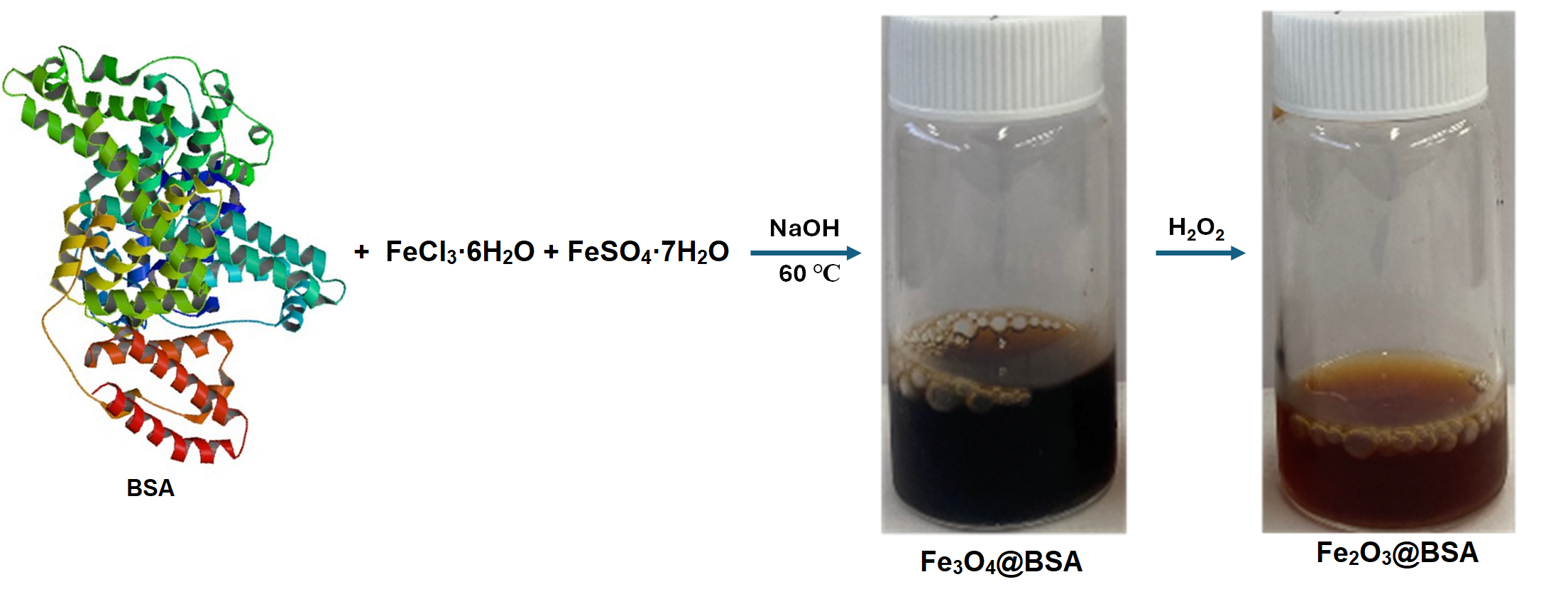
The Fe3O4@BSA nanoparticles were synthesized through the co-precipitation method as outlined in Figure 1. Co-precipitation is a commonly used approach for fabrication of Fe3O4 nanoparticles because the reaction is carried out in aqueous solutions under relatively low temperatures. No further surface modification is required to achieve water dispersibility. Due to its high compatibility and common availability, BSA was used as template and surface coating material in the mixture of ferric and ferrous salt.
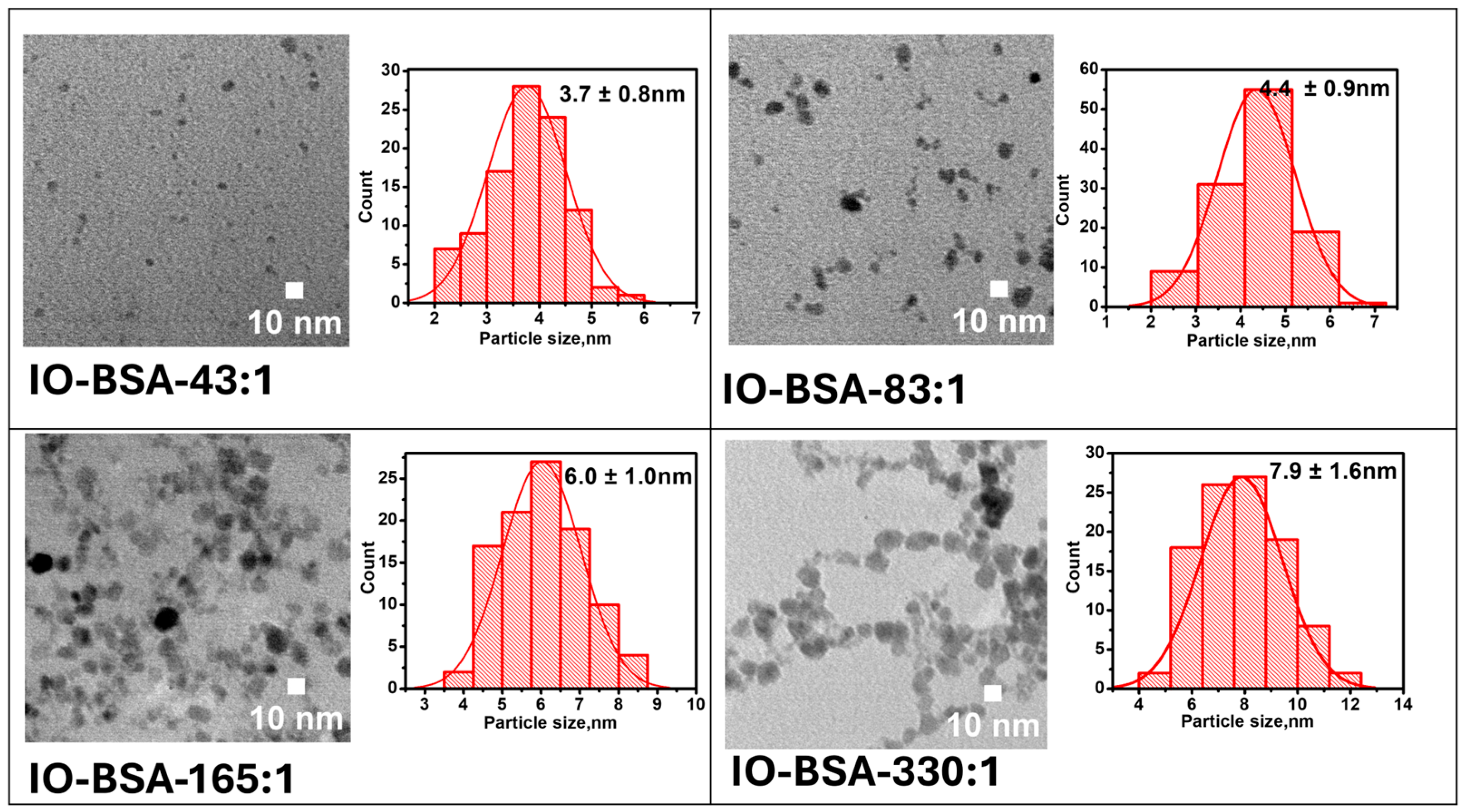
In the synthesis, BSA solution was mixed with ferric and ferrous salt solution (molar ratio of 2:1). After purging with argon gas, NaOH solution was added slowly under stirring at an elevated temperature. To control the size of iron oxide nanoparticles, the relative ratio of iron and BSA was adjusted. The size was characterized by TEM after purification (Figure 2). The effect of BSA in the control of the nanoparticle size is clearly observed in the TEM images. The sizes obtained at different Fe:BSA molar ratios of 43:1, 83:1, 165:1, and 330:1 are 3.7 ± 0.1 nm, 4.4 ± 0.9 nm, 6.0 ± 1.0 nm, and 7.9 ± 1. 5 nm respectively. The particle sizes increase with decreasing BSA. Interestingly, when NH4OH was used instead of NaOH, the nanoparticle size could not be tuned by varying the Fe:BSA ratio.
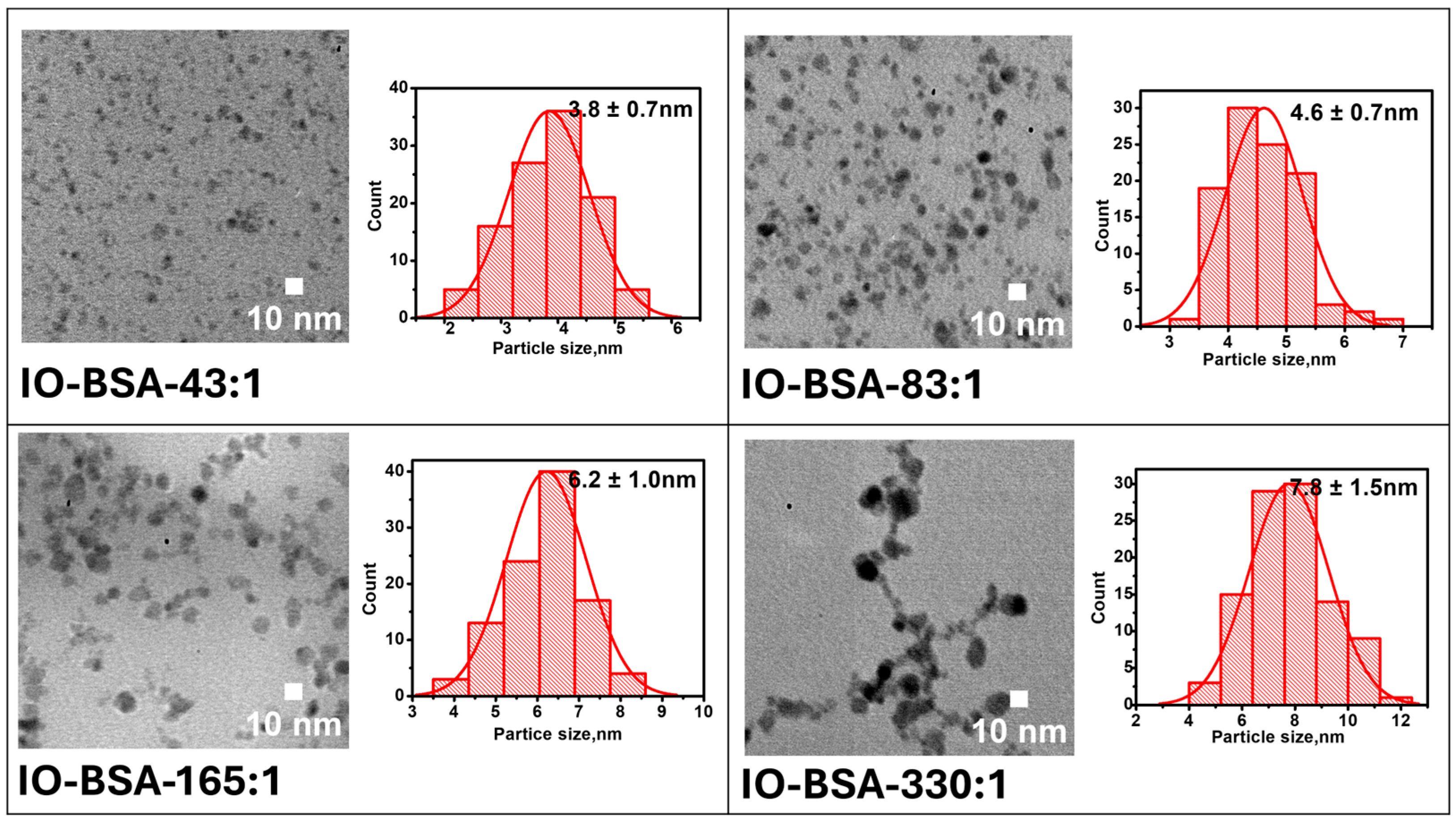
Studies have reported that Fe2O3 nanoparticles are better T1 contrast agents than Fe3O4 [17]. To study the T1 imaging property, the resulting Fe3O4 was further oxidized with hydrogen peroxide. Upon the oxidation of Fe3O4@BSA to Fe2O3@BSA, there was no significant change in the sizes of the iron oxide nanoparticles (Figure 3). The sizes at different Fe:BSA molar ratios—43:1, 83:1, 165:1, and 330:1—were 3.8 ± 0.7 nm, 4.6 ± 0.7 nm, 6.2 ± 0.9 nm, and 7.8 ± 1. 5 nm respectively.

3.2. XRD and XPS

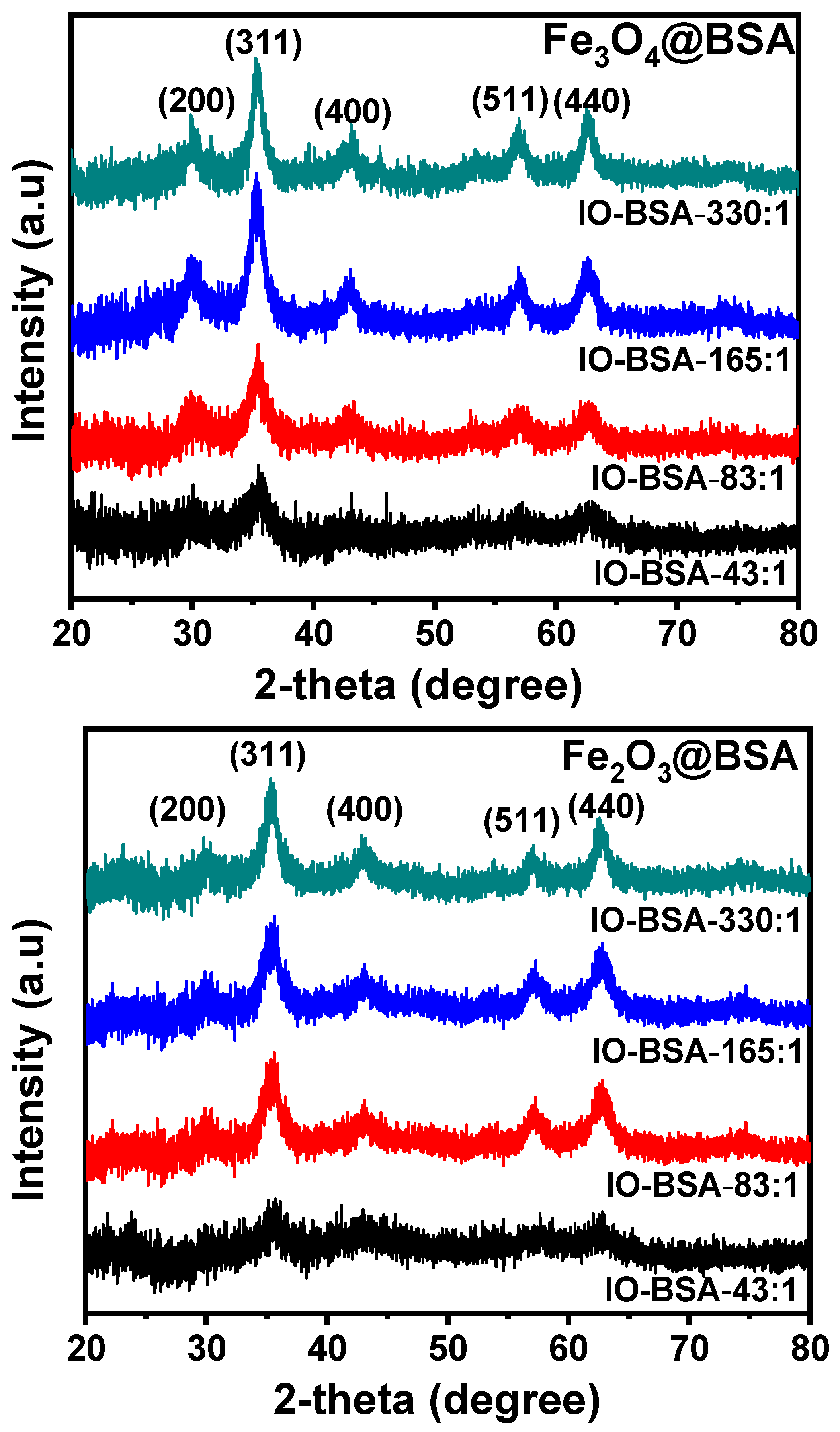
The crystal structure of the nanoparticles was further studied by X-ray diffraction (XRD). From the XRD data (Figure 4), the characteristic diffraction peaks for the nanoparticles are clearly observed, and these diffraction peaks align well with the theoretical patterns (JCPDS 19-0629). Indicated by the relatively sharp diffraction peaks, the nanoparticles appear to be highly crystalline. In addition, the peak intensity increases with increasing particle size. According to the Scherrer equation, the crystal sizes of the nanoparticles for Fe3O4@BSA with different Fe:BSA molar ratios—43:1, 83:1, 165:1, and 330:1—are calculated as 3.9, 4.9, 6.6, and 7.0 nm respectively, while those of Fe2O3@BSA are 4.0, 5.6, 6.9, and 7.9 nm respectively. The crystal sizes are close to the values from the TEM images, confirming the size control of iron oxide nanoparticles using BSA. Based on XRD data, Rietveld refinement and the Le Bail method were reported to be employed to extract structural parameters [36]. However, the lattice parameters of Fe3O4 and Fe2O3 are very similar and are widely reported to be difficult to distinguish [36,37]. In addition, the nanoparticles synthesized in this study are ultra-small and coated with BSA. The XRD patterns exhibit significant peak broadening, which may reduce the accuracy and reliability of structural parameters obtained from Rietveld refinement.
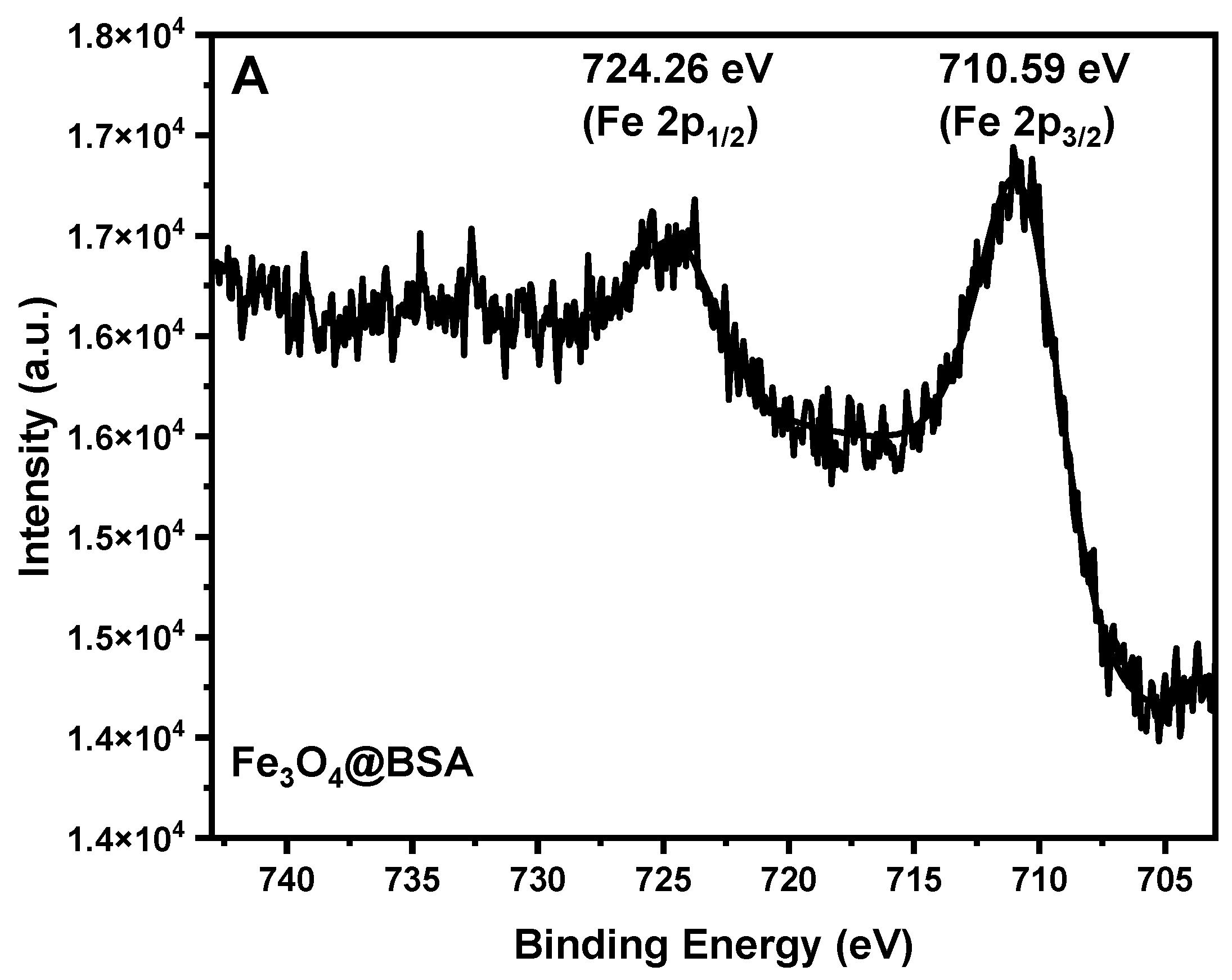
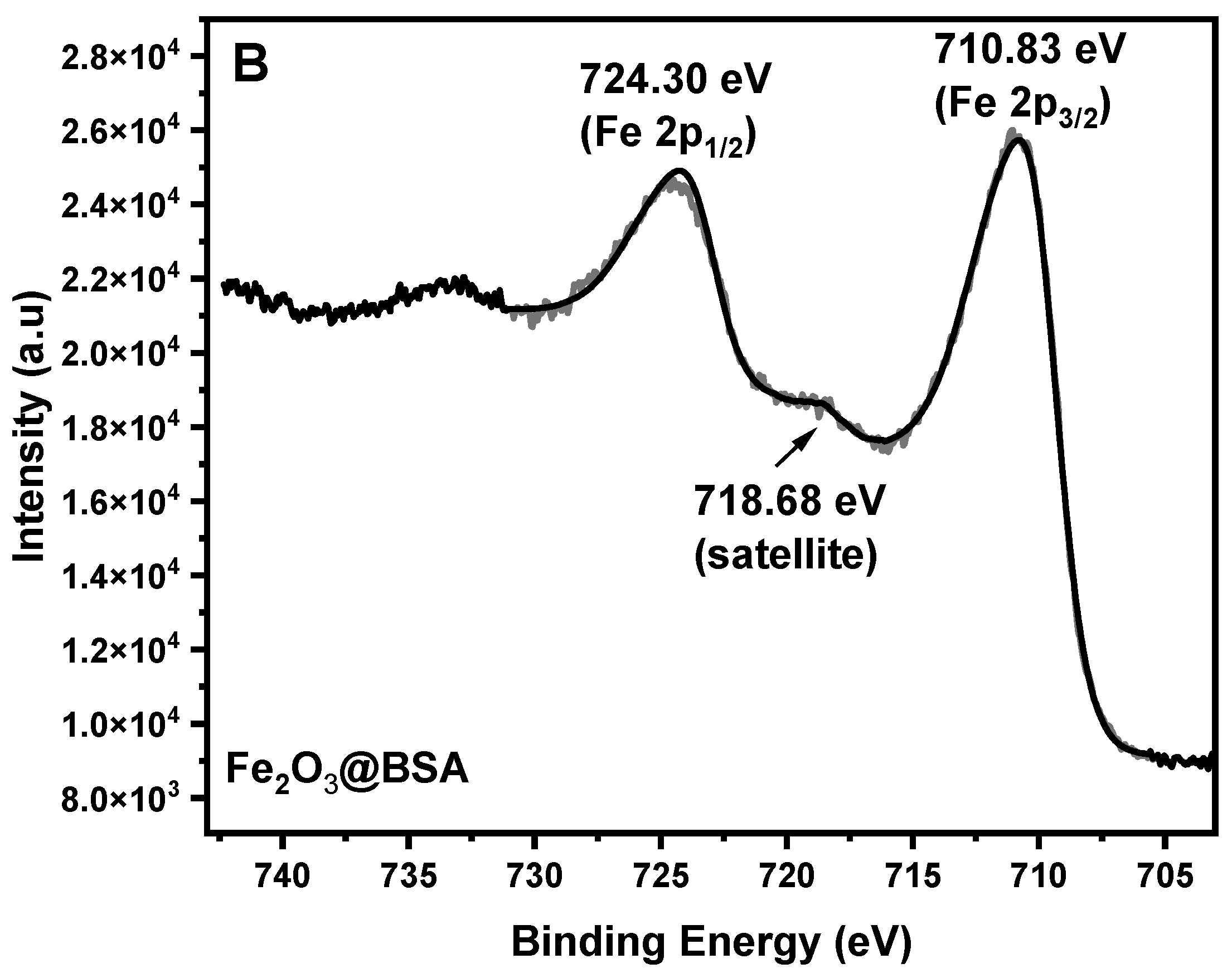
To further investigate the different phases, XPS was conducted to characterize the Fe3O4@BSA and Fe2O3@BSA nanoparticles. As shown in Figure 5A, two peaks of 710.59 eV (2p3/2) and 724.26 eV (2p1/2) were observed for the Fe3O4 phase, which are slightly lower than those of the Fe2O3 phase [31]. In contrast, two peaks of 710.83 eV (2p3/2) and 724.30 eV (2p1/2) were observed for Fe2O3@BSA (Figure 5B), which can be attributed to Fe (III). In addition, a significant satellite peak at 718.68 eV was identified, which further confirms the formation of Fe2O3 [31,38,39].

3.3. FT-IR

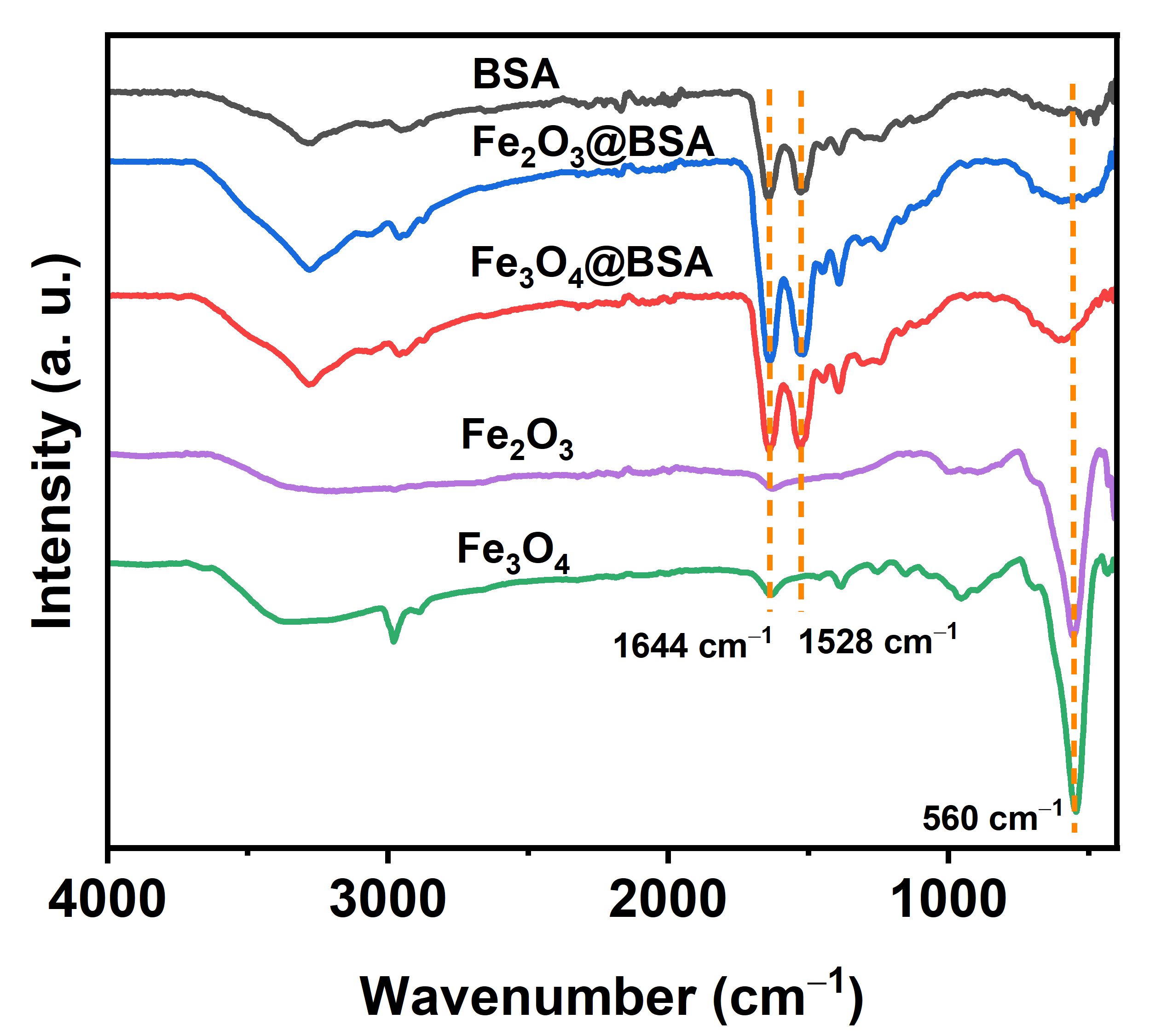
Since BSA was used in the synthesis, we expected that BSA was coated on the surface of the nanoparticles. To confirm the coating material on the surface of nanoparticles, Fourier transform infrared (FT-IR) for synthesized nanoparticles was performed. For comparison, the FT-IR for pure BSA was collected as control. As shown in Figure 6, the absorptions of 1644 cm−1 and 1528 cm−1 correspond to the C=O and N–H stretching vibrations [40]. The broad band at 3000–3600 cm−1 corresponds to the O–H and N–H stretching. The absorption at 560 cm−1 is attributed to Fe–O vibration. The characteristic peaks of BSA were clearly identified on Fe2O3@BSA and Fe3O4@BSA, indicating the surface coating of the iron oxide nanoparticles with BSA.

3.4. UV-Vis

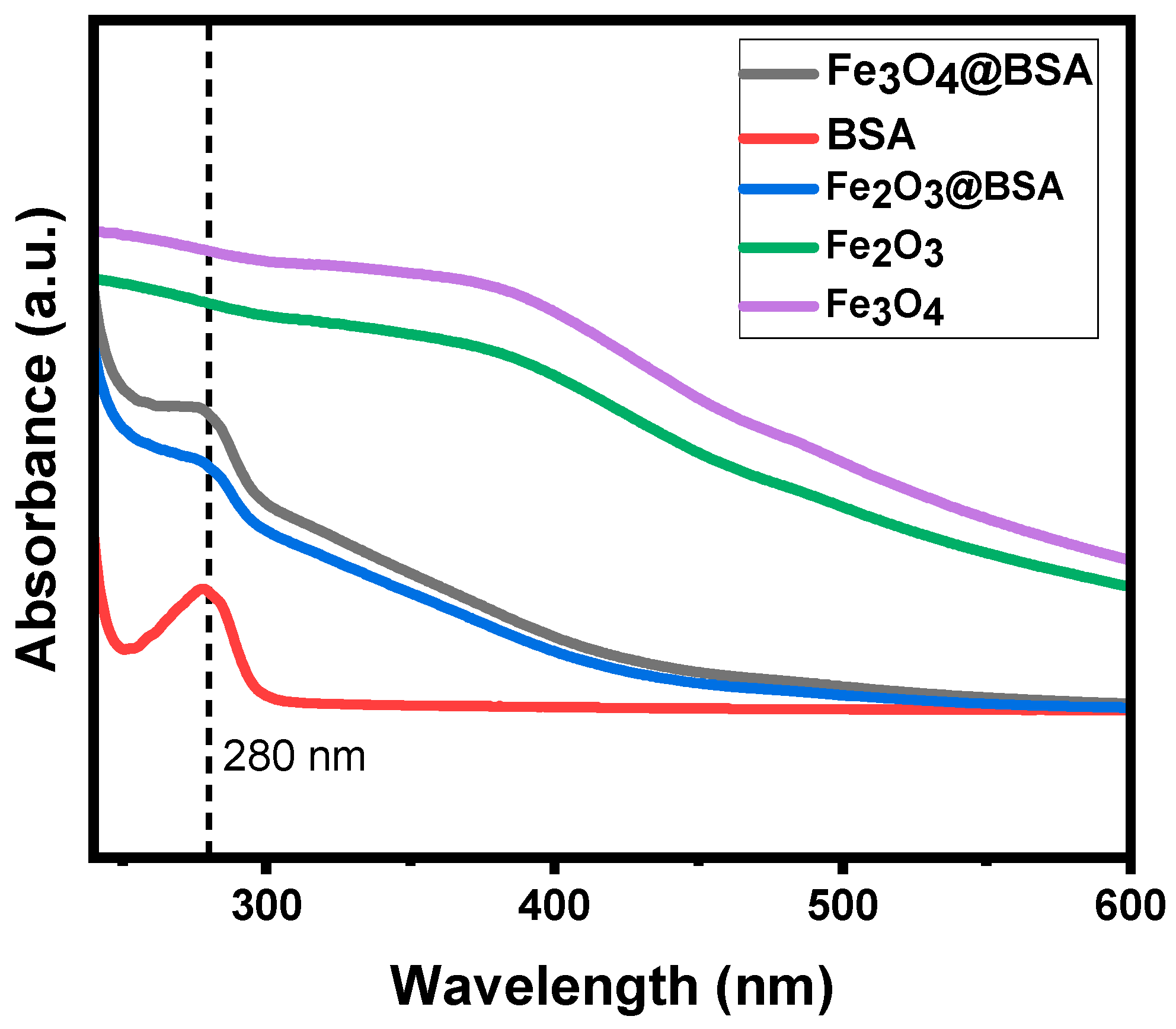
Because BSA typically has UV absorption at 280 nm, the UV spectra of the resulting nanoparticles were collected to confirm their coating materials (Figure 7). Compared with iron oxide nanoparticles without the surface coating, the UV spectra of both Fe3O4@BSA and Fe2O3@BSA show the characteristic BSA absorption peak around 280 nm. The UV spectra suggest that the surface coating on the iron oxide nanoparticles is BSA [41]. These results confirm that the nanoparticles consist of iron oxide cores coated with BSA. The exact amount of BSA on each nanoparticle was not concluded in this study, although previous work has reported approximately 6–7 BSA subunits per nanoparticle [31].

3.5. Water Dispersibility

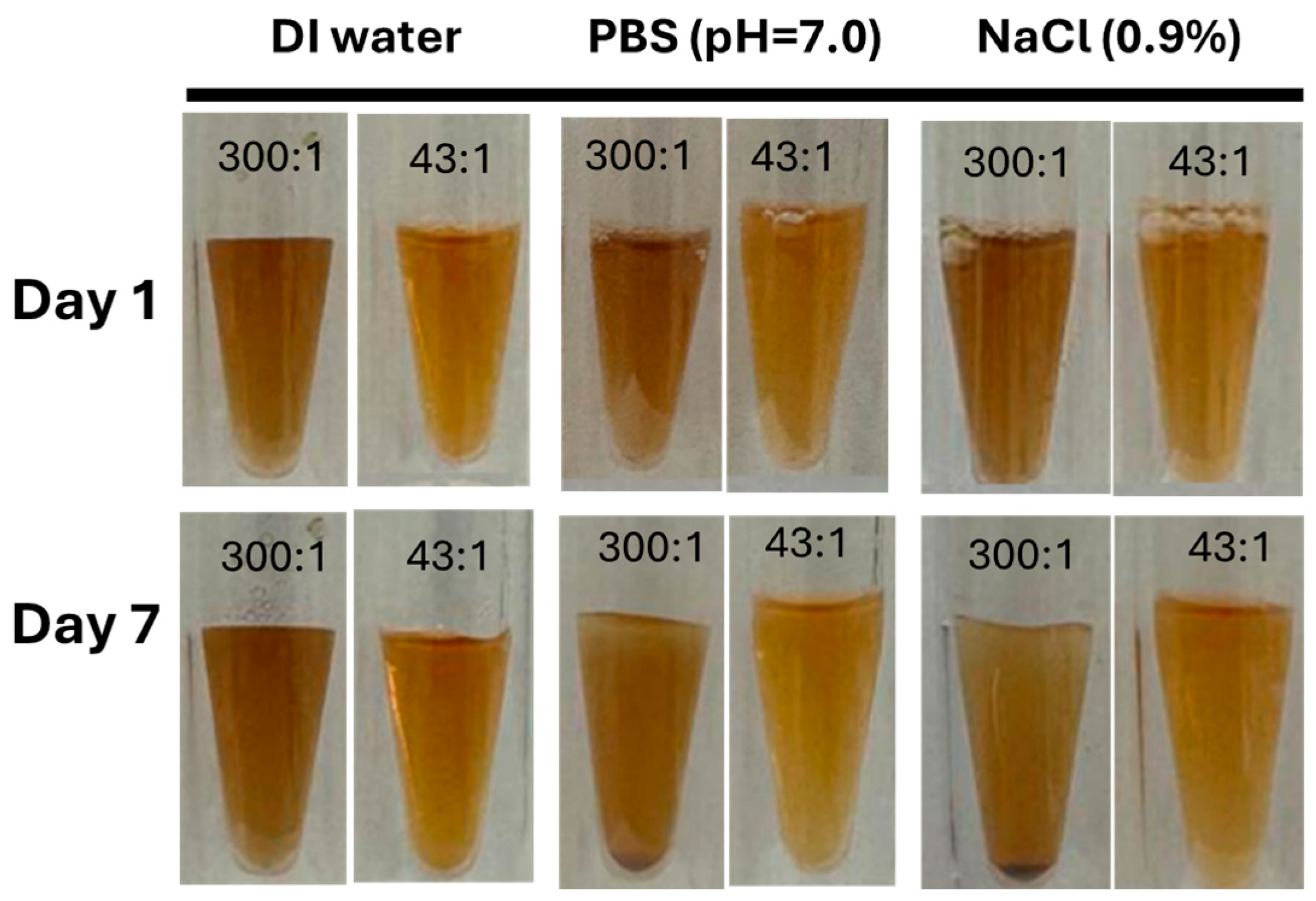
High water dispersibility plays a key role for the biomedical application of iron oxide nanoparticles. Traditionally, iron oxide nanoparticles with precisely controlled size can be synthesized by thermal decomposition. However, the problem is that the synthesized nanoparticles can only be dispersed in organic solvents. A surface modification is needed to provide water dispersibility [14]. The water dispersibility largely depends on the presence of hydrophilic coating ligands. Bovine serum albumin (BSA) is a water-soluble natural protein and highly biocompatible [42]. BSA contains hydrophilic groups that coordinate with the Fe ions [32]. The coating of BSA on the surface of nanoparticles could significantly improve water dispersibility. As shown in Figure 8, Fe2O3@BSA nanoparticles of various sizes exhibit excellent dispersibility. Furthermore, the solution is stable up to 7 days in different aqueous media, including DI water, PBS, and NaCl (0.9%), which has a high ion strength. The BSA-coated nanoparticles are highly stable in physiological solution, which is important for biomedical applications.

3.6. Hydrodynamic Diameter

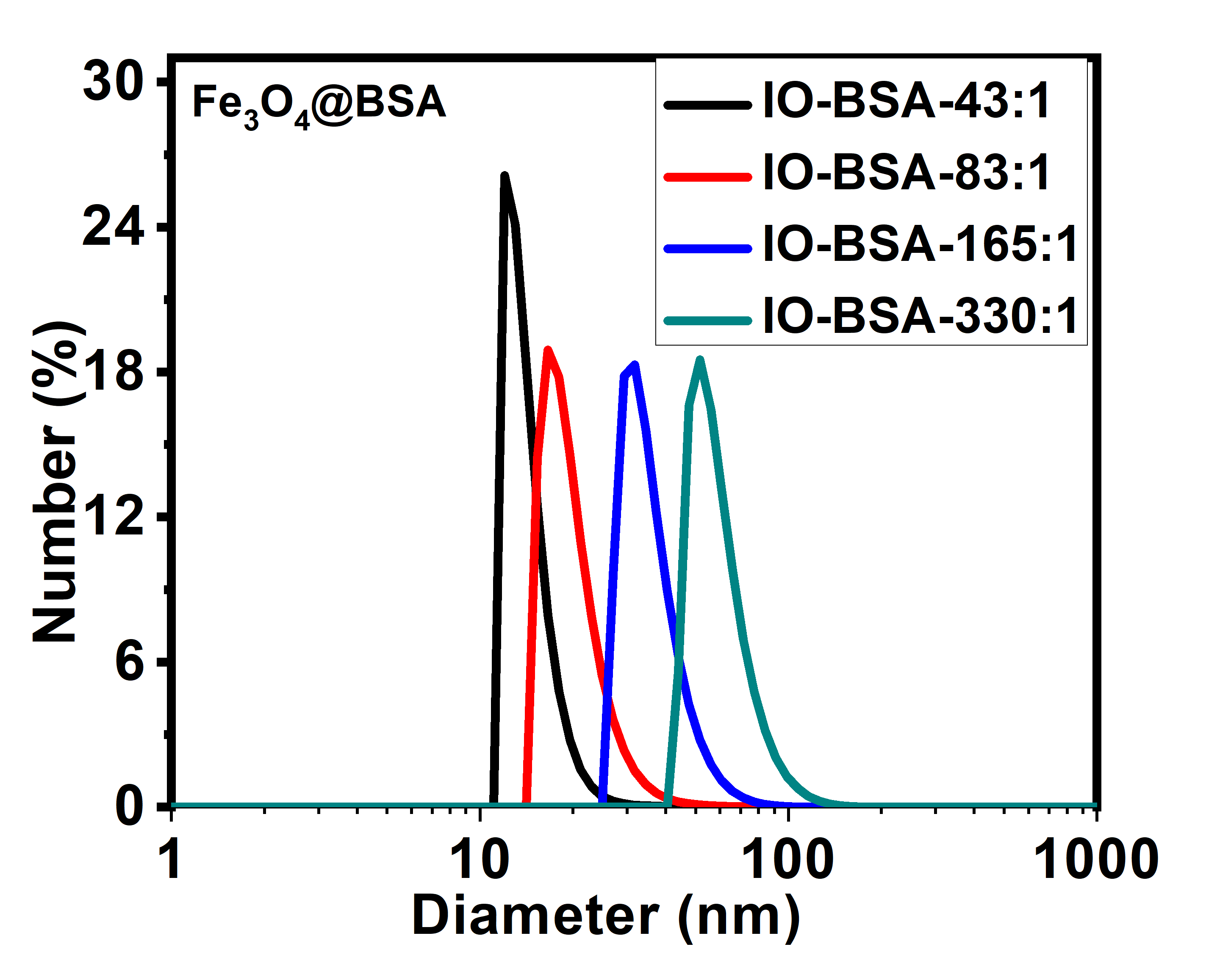
The water dispersibility was further evaluated by dynamic light scattering (DLS). As shown in Figure 9, a single peak was observed for all nanoparticles and the hydrodynamic size was relatively small. For example, Fe3O4@BSA of different Fe:BSA molar ratios—43:1, 83:1, 165:1 and 330:1—has a hydrodynamic size of 14.4, 20.1, 36.1 and 60.0 nm respectively. The hydrodynamic size of the nanoparticles in deionized water reduces with increasing BSA in the Fe:BSA molar ratio (43:1 < 83:1 < 165:1 < 330:1), which agrees with the TEM data. The relatively small hydrodynamic sizes further support the excellent water dispersibility of the nanoparticles.

3.7. Relaxivity Studies

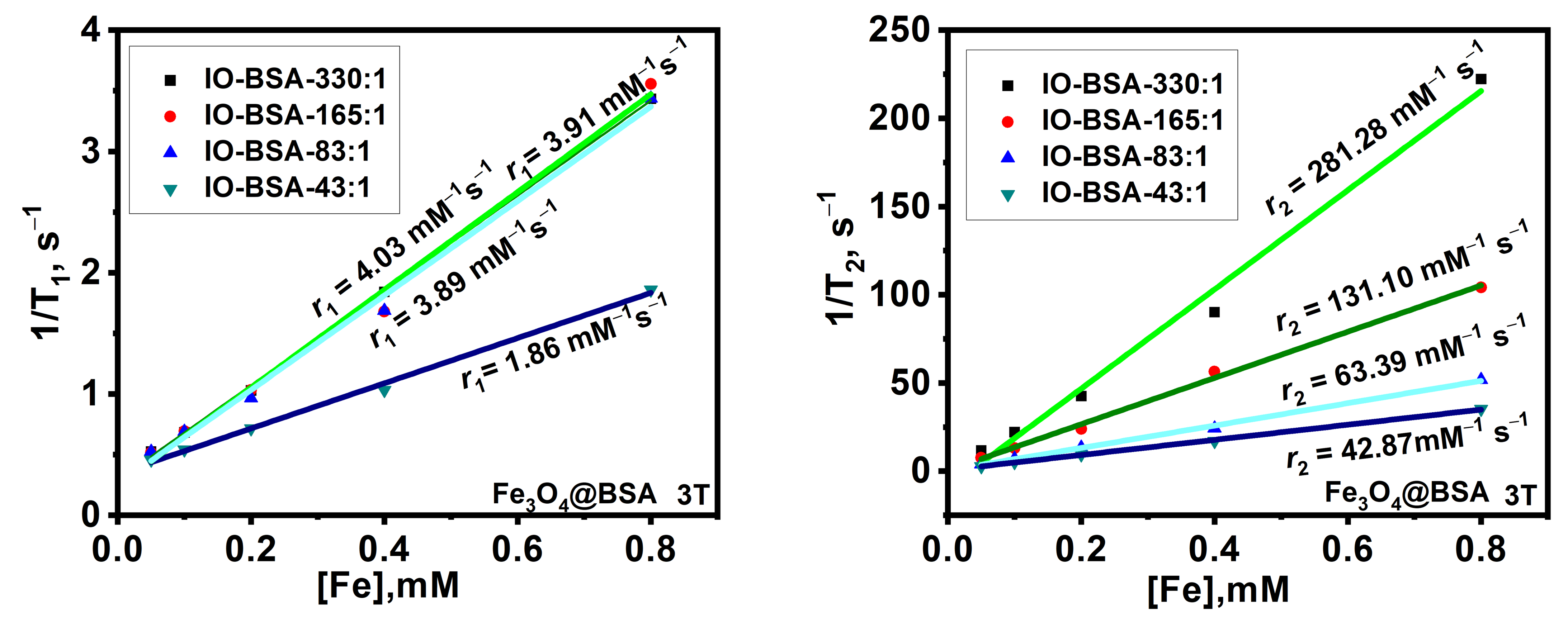
Iron oxide nanoparticles hold great potential as contrast agents for MRI. One of the advantages of iron oxide nanoparticles is biocompatibility, which has been proven by clinical usage. In MRI, contrast agents reduce the T1 and T2 relaxation times of nuclei in tissues. The T1 contrast agents have relative reduction in T1, while T2 contrast agents have relative reduction in T2. Their efficiency is measured in terms of their relaxivity values (r1 and r2) [43]. The longitudinal relaxation time (T1) and transverse relaxation time (T2) of Fe3O4@BSA and Fe2O3@BSA were evaluated using an MRI scanner at 3T. When the graph of 1/T1 and 1/T2 was plotted against iron concentration, the slopes r1 and r2 were obtained respectively.
The size of nanoparticles has a great impact on their relaxivity and MRI performance. The representative plots are shown in Figure 10. For Fe3O4@BSA with Fe:BSA molar ratios of 42.5:1, 82.5:1, 165:1 and 330:1, the r1 values are 1.86, 3.89, 4.03 and 3.91 mM−1 s−1 respectively, and the r2 values are 42.87, 63.39, 131.10 and 281.28 mM−1 s−1 respectively.
For Fe3O4@BSA, the r2/r1 ratios at Fe:BSA molar ratios of 330:1, 165:1, 83:1, and 43:1 are listed in Table 1. The r2/r1 ratio generally decreases with decreasing particle size, and the smallest ratio was observed at 83:1. Interestingly, the ratio increased again to 43:1 despite this sample having the smallest size (3.7 ± 0.8 nm). This may result from the large amount of BSA coating at this ratio, which can limit interactions between the magnetic core and surrounding water molecules [44].
The r2/r1 ratios of Fe2O3@BSA were also investigated and are shown in Table 2. As expected, the r2/r1 ratios of Fe2O3@BSA were consistently lower than those of Fe3O4@BSA. Similar to Fe3O4@BSA, the smallest r2/r1 ratio (11.52) was observed at 83:1. The r2/r1 value of 11.52 is relatively low and is almost the same as the previously reported value (10.6) for BSA-coated iron oxide nanoparticles [31]. The r2/r1 ratio for Ferumoxyltol was reported to be 12.3, which is higher than the value obtained in this study [45]. The small r2/r1 ratio of Fe2O3@BSA synthesized in this work demostrate the potential for T1-weighed MRI.

3.8. Phantom Study

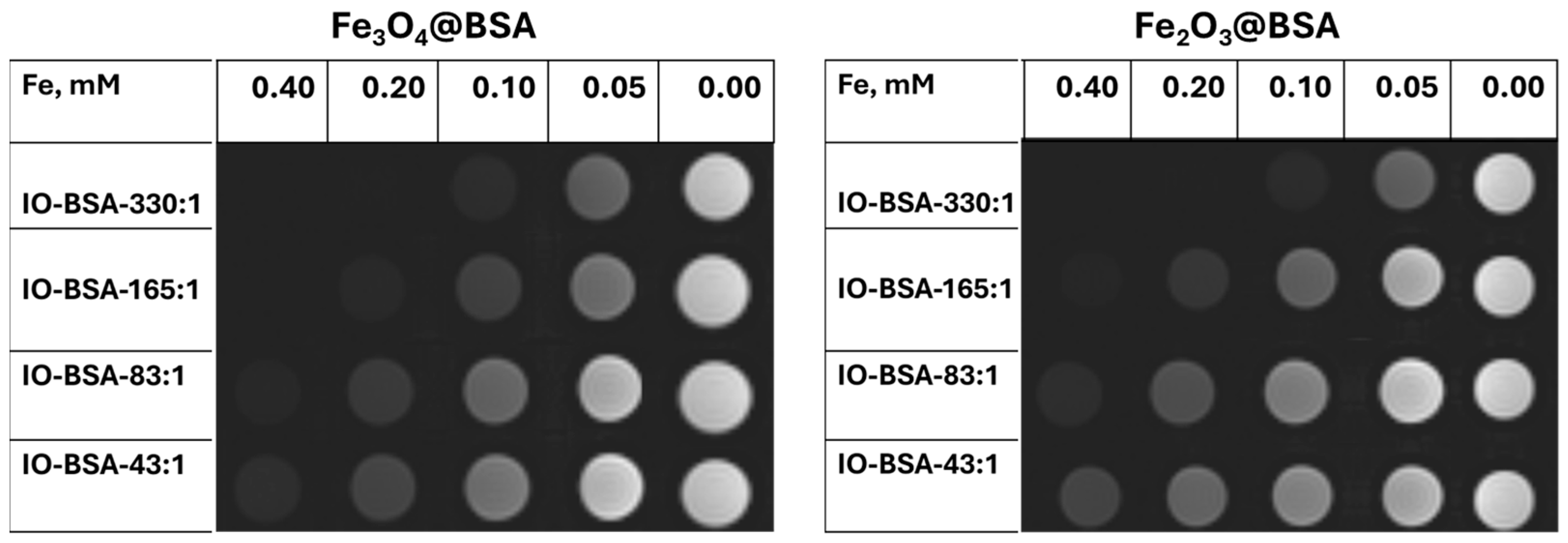
We further conducted phantom studies of the iron oxide nanoparticles in solution. As shown in Figure 11, T2 phantom images were acquired for Fe3O4@BSA and Fe2O3@BSA with different Fe:BSA ratios. With increases in concentrations, the imaging became dark. The imaging was darker at the same concentration for larger nanoparticles. The results are consistent with the high r2. Although the nanoparticles have small sizes, those with Fe:BSA molar ratios of 165:1 and 330:1 exhibited noticeable T2 effects at higher concentrations. Consistent with other iron oxide nanoparticles, the BSA-coated nanoparticles could potentially be used as T2 contrast agents [14].
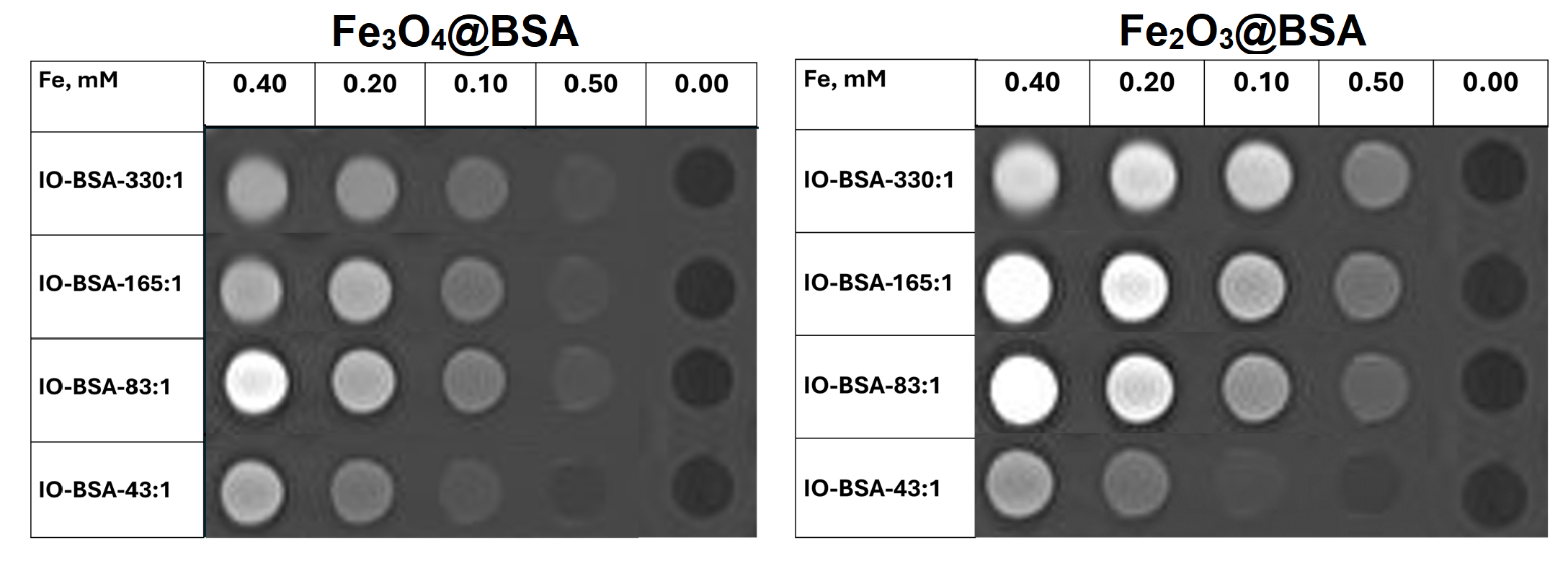
Due to the small sizes, our BSA-coated iron oxide nanoparticles can be used as high-performance T1 contrast agents. The T1 phantom images are shown in Figure 12. All nanoparticles at different concentrations displayed a T1 brightening effect. For Fe3O4@BSA, the 83:1 Fe:BSA ratio exhibited the strongest T1 brightening effect and the lowest r2/r1 ratio. For Fe2O3@BSA, the 83:1 Fe:BSA ratios showed enhanced T1 brightening and correspondingly lower r2/r1 ratios compared to the other samples. These phantom studies clearly demonstrate that the BSA-coated nanoparticles are stable and suitable for T1-weighted MRI applications. A T1-weighted contrast agent is usually favorable for clinical use.

4. Conclusions

In this study, we demonstrated that the size of iron oxide nanoparticles can be effectively controlled using a simple co-precipitation method by adjusting the Fe:BSA molar ratio. Increasing the amount of BSA led to smaller nanoparticles. XRD analysis confirmed that the nanoparticles are highly crystalline, with peak intensities increasing with particle size. FT-IR and UV-Vis spectroscopy verified successful BSA coating on the nanoparticle surfaces. The resulting Fe2O3@BSA nanoparticles exhibited excellent water dispersibility across different pH and high-ionic-strength solutions.
Oxidation of Fe3O4@BSA to Fe2O3@BSA enhanced the T1 contrast properties of the nanoparticles, with r2/r1 ratios lower than those of Fe3O4@BSA. Phantom studies further confirmed the stability and T1 imaging capability of the BSA-coated nanoparticles. The value is comparable to the lowest r2/r1 ratios reported in the literature.
Compared to conventional thermal decomposition methods, which require organic solvents and high temperatures, this co-precipitation approach uses water as the solvent and mild reaction conditions. The method is low-cost, non-toxic, and time-efficient, making it a practical and scalable strategy for producing ultra-small, biocompatible iron oxide nanoparticles suitable for biomedical imaging applications.

Author Contributions

Conceptualization, B.K. and Y.Z.; Methodology, B.K., J.Z. and Y.Z.; Validation, B.K.; Formal analysis, Y.Z.; Investigation, B.K., J.Z., D.C. and Y.Z.; Data curation, B.K., J.Z., D.C. and Y.Z.; Writing—original draft, B.K.; Writing—review and editing, Y.Z.; Visualization, B.K.; Supervision, Y.Z.; Project administration, Y.Z. All authors have read and agreed to the published version of the manuscript.

Funding

This research was supported by the National Science Foundation (grant number: DMR-2144790).

Institutional Review Board Statement

Not applicable.

Informed Consent Statement

Not applicable.

Data Availability Statement

The original contributions presented in this study are included in the article. Further inquiries can be directed to the corresponding author.

Conflicts of Interest

The authors declare no conflicts of interest.

References

  1. Carr, M.W.; Grey, M.L. Magnetic resonance imaging. Am. J. Nurs. 2002, 102, 26–33. [Google Scholar] [CrossRef]
  2. Katti, G.; Ara, S.A.; Shireen, A. Magnetic resonance imaging (MRI)-A review. Int. J. Dent. Clin. 2011, 3, 65–70. [Google Scholar]
  3. Zhou, Z.; Bai, R.; Munasinghe, J.; Shen, Z.; Nie, L.; Chen, X. T1T2 Dual-Modal Magnetic Resonance Imaging: From Molecular Basis to Contrast Agents. ACS Nano 2017, 11, 5227–5232. [Google Scholar] [CrossRef] [PubMed]
  4. Jeon, M.; Halbert, M.V.; Stephen, Z.R.; Zhang, M. Iron Oxide Nanoparticles as T(1) Contrast Agents for Magnetic Resonance Imaging: Fundamentals, Challenges, Applications, and Prospectives. Adv. Mater. 2021, 33, e1906539. [Google Scholar] [CrossRef]
  5. Zhao, Y.; Sultan, D.; Detering, L.; Cho, S.; Sun, G.; Pierce, R.; Wooley, K.L.; Liu, Y. Copper-64-alloyed gold nanoparticles for cancer imaging: Improved radiolabel stability and diagnostic accuracy. Angew. Chem. (Int. Ed. Engl.) 2014, 53, 156–159. [Google Scholar] [CrossRef] [PubMed]
  6. Uhlig, J.; Al-Bourini, O.; Salgado, R.; Francone, M.; Vliegenthart, R.; Bremerich, J.; Lotz, J.; Gutberlet, M. Gadolinium-based Contrast Agents for Cardiac MRI: Use of Linear and Macrocyclic Agents with Associated Safety Profile from 154,779 European Patients. Radiol. Cardiothorac. Imaging 2020, 2, e200102. [Google Scholar] [CrossRef]
  7. Xiao, Y.D.; Paudel, R.; Liu, J.; Ma, C.; Zhang, Z.S.; Zhou, S.K. MRI contrast agents: Classification and application (Review). Int. J. Mol. Med. 2016, 38, 1319–1326. [Google Scholar] [CrossRef] [PubMed]
  8. Wang, K.; An, L.; Tian, Q.; Lin, J.; Yang, S. Gadolinium-labelled iron/iron oxide core/shell nanoparticles as T1–T2 contrast agent for magnetic resonance imaging. RSC Adv. 2018, 8, 26764–26770. [Google Scholar] [CrossRef]
  9. Wahsner, J.; Gale, E.M.; Rodríguez-Rodríguez, A.; Caravan, P. Chemistry of MRI Contrast Agents: Current Challenges and New Frontiers. Chem. Rev. 2019, 119, 957–1057. [Google Scholar] [CrossRef]
  10. Iyad, N.; Ahmad, M.S.; Alkhatib, S.G.; Hjouj, M. Gadolinium contrast agents- challenges and opportunities of a multidisciplinary approach: Literature review. Eur. J. Radiol. Open 2023, 11, 100503. [Google Scholar] [CrossRef]
  11. Lu, Y.; Xu, Y.J.; Zhang, G.B.; Ling, D.; Wang, M.Q.; Zhou, Y.; Wu, Y.D.; Wu, T.; Hackett, M.J.; Hyo Kim, B.; et al. Iron oxide nanoclusters for T1 magnetic resonance imaging of non-human primates. Nat. Biomed. Eng. 2017, 1, 637–643. [Google Scholar] [CrossRef]
  12. Poggiarelli, L.; Bernetti, C.; Pugliese, L.; Greco, F.; Beomonte Zobel, B.; Mallio, C.A. Manganese-Based Contrast Agents as Alternatives to Gadolinium: A Comprehensive Review. Clin. Pract. 2025, 15, 137. [Google Scholar] [CrossRef] [PubMed]
  13. Wamelink, I.J.H.G.; Azizova, A.; Booth, T.C.; Mutsaerts, H.J.M.M.; Ogunleye, A.; Mankad, K.; Petr, J.; Barkhof, F.; Keil, V.C. Brain Tumor Imaging without Gadolinium-based Contrast Agents: Feasible or Fantasy? Radiology 2024, 310, e230793. [Google Scholar] [CrossRef] [PubMed]
  14. Cheah, P.; Cowan, T.; Zhang, R.; Fatemi-Ardekani, A.; Liu, Y.; Zheng, J.; Han, F.; Li, Y.; Cao, D.; Zhao, Y. Continuous growth phenomenon for direct synthesis of monodisperse water-soluble iron oxide nanoparticles with extraordinarily high relaxivity. Nanoscale 2020, 12, 9272–9283. [Google Scholar] [CrossRef]
  15. Oberdick, S.D.; Jordanova, K.V.; Lundstrom, J.T.; Parigi, G.; Poorman, M.E.; Zabow, G.; Keenan, K.E. Iron oxide nanoparticles as positive T1 contrast agents for low-field magnetic resonance imaging at 64 mT. Sci. Rep. 2023, 13, 11520. [Google Scholar] [CrossRef]
  16. Pellico, J.; Ruiz-Cabello, J.; Herranz, F. Radiolabeled Iron Oxide Nanomaterials for Multimodal Nuclear Imaging and Positive Contrast Magnetic Resonance Imaging (MRI): A Review. ACS Appl. Nano Mater. 2023, 6, 20523–20538. [Google Scholar] [CrossRef]
  17. Rahman, M. Magnetic Resonance Imaging and Iron-oxide Nanoparticles in the era of Personalized Medicine. Nanotheranostics 2023, 7, 424–449. [Google Scholar] [CrossRef]
  18. Maldonado-Camargo, L.; Unni, M.; Rinaldi, C. Magnetic Characterization of Iron Oxide Nanoparticles for Biomedical Applications. Methods Mol. Biol. 2017, 1570, 47–71. [Google Scholar] [CrossRef]
  19. Cheah, P.; Brown, P.; Qu, J.; Tian, B.; Patton, D.L.; Zhao, Y. Versatile Surface Functionalization of Water-Dispersible Iron Oxide Nanoparticles with Precisely Controlled Sizes. Langmuir 2021, 37, 1279–1287. [Google Scholar] [CrossRef]
  20. de Oliveira, E.M.N.; da Rocha, M.S.; Vargas, P.; Selli, G.I.; Papaléo, R.M. Relaxivity and cytotoxicity of iron oxide nanoparticles with different coatings for contrast agents in magnetic resonance imaging. Mater. Chem. Phys. 2026, 348, 131673. [Google Scholar] [CrossRef]
  21. Aboushoushah, S.F.O. Iron oxide nanoparticles enhancing magnetic resonance imaging: A review of the latest advancements. J. Sci. Adv. Mater. Devices 2025, 10, 100875. [Google Scholar] [CrossRef]
  22. Guo, Z.; Liu, D.; Zhang, H.; Yu, W.; Li, Y.; Gu, N. Superparamagnetic iron oxide nanoparticles in clinical applications: Current status and future perspectives. EBioMedicine 2025, 122, 106054. [Google Scholar] [CrossRef]
  23. Wei, H.; Bruns, O.T.; Kaul, M.G.; Hansen, E.C.; Barch, M.; Wiśniowska, A.; Chen, O.; Chen, Y.; Li, N.; Okada, S.; et al. Exceedingly small iron oxide nanoparticles as positive MRI contrast agents. Proc. Natl. Acad. Sci. USA 2017, 114, 2325–2330. [Google Scholar] [CrossRef] [PubMed]
  24. Ngwu-Hyacinth, O.; Alford, A.; Rowe, C.S.; Willoughby, R.; Mirbozorgi, S.A.; Rothenberg, S.A.; Jones, J.; Sajan, A.; Krishnasamy, V.P.; Bolding, M. Ultrasmall Superparamagnetic Iron Oxide Nanoparticles as Positive Contrast Agents in Low-Field Magnetic Resonance Imaging. Iradiology 2025, 3, 372–387. [Google Scholar] [CrossRef]
  25. Cheah, P.; Qu, J.; Li, Y.; Cao, D.; Zhu, X.; Zhao, Y. The key role of reaction temperature on a polyol synthesis of water-dispersible iron oxide nanoparticles. J. Magn. Magn. Mater. 2021, 540, 168481. [Google Scholar] [CrossRef]
  26. Shokrollahi, H. A review of the magnetic properties, synthesis methods and applications of maghemite. J. Magn. Magn. Mater. 2017, 426, 74–81. [Google Scholar] [CrossRef]
  27. Qu, J.; Cheah, P.; Adams, D.; Collen, C.; Zhao, Y. The influence of the polyol solvents on the continuous growth of water-dispersible iron oxide nanoparticles. J. Mater. Res. 2024, 39, 165–175. [Google Scholar] [CrossRef]
  28. Unni, M.; Uhl, A.M.; Savliwala, S.; Savitzky, B.H.; Dhavalikar, R.; Garraud, N.; Arnold, D.P.; Kourkoutis, L.F.; Andrew, J.S.; Rinaldi, C. Thermal Decomposition Synthesis of Iron Oxide Nanoparticles with Diminished Magnetic Dead Layer by Controlled Addition of Oxygen. ACS Nano 2017, 11, 2284–2303. [Google Scholar] [CrossRef]
  29. Ali, A.; Zafar, H.; Zia, M.; Ul Haq, I.; Phull, A.R.; Ali, J.S.; Hussain, A. Synthesis, characterization, applications, and challenges of iron oxide nanoparticles. Nanotechnol. Sci. Appl. 2016, 9, 49–67. [Google Scholar] [CrossRef]
  30. Petcharoen, K.; Sirivat, A. Synthesis and characterization of magnetite nanoparticles via the chemical co-precipitation method. Mater. Sci. Eng. B 2012, 177, 421–427. [Google Scholar] [CrossRef]
  31. Xu, S.; Wang, J.; Wei, Y.; Zhao, H.; Tao, T.; Wang, H.; Wang, Z.; Du, J.; Wang, H.; Qian, J.; et al. In Situ One-Pot Synthesis of Fe2O3@BSA Core-Shell Nanoparticles as Enhanced T1-Weighted Magnetic Resonance Imagine Contrast Agents. ACS Appl. Mater. Interfaces 2020, 12, 56701–56711. [Google Scholar] [CrossRef]
  32. Tao, C.; Zheng, Q.; An, L.; He, M.; Lin, J.; Tian, Q.; Yang, S. T1-Weight Magnetic Resonance Imaging Performances of Iron Oxide Nanoparticles Modified with a Natural Protein Macromolecule and an Artificial Macromolecule. Nanomaterials 2019, 9, 170. [Google Scholar] [CrossRef]
  33. Baki, A.; Remmo, A.; Löwa, N.; Wiekhorst, F.; Bleul, R. Albumin-Coated Single-Core Iron Oxide Nanoparticles for Enhanced Molecular Magnetic Imaging (MRI/MPI). Int. J. Mol. Sci. 2021, 22, 6235. [Google Scholar] [CrossRef]
  34. Hajesmaeelzadeh, F.; Shanehsazzadeh, S.; Grüttner, C.; Daha, F.J.; Oghabian, M.A. Effect of coating thickness of iron oxide nanoparticles on their relaxivity in the MRI. Iran. J. Basic Med. Sci. 2016, 19, 166–171. [Google Scholar]
  35. LaConte, L.E.; Nitin, N.; Zurkiya, O.; Caruntu, D.; O’Connor, C.J.; Hu, X.; Bao, G. Coating thickness of magnetic iron oxide nanoparticles affects R2 relaxivity. J. Magn. Reson. Imaging JMRI 2007, 26, 1634–1641. [Google Scholar] [CrossRef] [PubMed]
  36. Portwin, K.A.; Galaviz, P.; Li, X.; Hao, C.; Smillie, L.A.; You, M.; Stamper, C.; Mole, R.A.; Yu, D.; Rule, K.C.; et al. Tuning the Surface States of Fe3O4 Nanoparticles for Enhanced Magnetic Anisotropy and Induction Efficacy. Chem. Mater. 2025, 37, 7347–7358. [Google Scholar] [CrossRef]
  37. Niraula, G.; Coaquira, J.A.H.; Zoppellaro, G.; Villar, B.M.G.; Garcia, F.; Bakuzis, A.F.; Longo, J.P.F.; Rodrigues, M.C.; Muraca, D.; Ayesh, A.I.; et al. Engineering Shape Anisotropy of Fe3O4-γ-Fe2O3 Hollow Nanoparticles for Magnetic Hyperthermia. ACS Appl. Nano Mater. 2021, 4, 3148–3158. [Google Scholar] [CrossRef]
  38. Ma, M.; Zhu, H.; Ling, J.; Gong, S.; Zhang, Y.; Xia, Y.; Tang, Z. Quasi-amorphous and Hierarchical Fe2O3 Supraparticles: Active T1-Weighted Magnetic Resonance Imaging in Vivo and Renal Clearance. ACS Nano 2020, 14, 4036–4044. [Google Scholar] [CrossRef]
  39. Yamashita, T.; Hayes, P. Analysis of XPS spectra of Fe2+ and Fe3+ ions in oxide materials. Appl. Surf. Sci. 2008, 254, 2441–2449. [Google Scholar] [CrossRef]
  40. Nosrati, H.; Sefidi, N.; Sharafi, A.; Danafar, H.; Kheiri Manjili, H. Bovine Serum Albumin (BSA) coated iron oxide magnetic nanoparticles as biocompatible carriers for curcumin-anticancer drug. Bioorganic Chem. 2018, 76, 501–509. [Google Scholar] [CrossRef] [PubMed]
  41. Ravindran, A.; Singh, A.; Raichur, A.M.; Chandrasekaran, N.; Mukherjee, A. Studies on interaction of colloidal Ag nanoparticles with Bovine Serum Albumin (BSA). Colloids Surf. B Biointerfaces 2010, 76, 32–37. [Google Scholar] [CrossRef] [PubMed]
  42. Al-Jawad, S.M.H.; Taha, A.A.; Al-Halbosiy, M.M.F.; Al-Barram, L.F.A. Synthesis and characterization of small-sized gold nanoparticles coated by bovine serum albumin (BSA) for cancer photothermal therapy. Photodiagnosis Photodyn. Ther. 2018, 21, 201–210. [Google Scholar] [CrossRef]
  43. Geraldes, C.F.; Laurent, S. Classification and basic properties of contrast agents for magnetic resonance imaging. Contrast Media Mol. Imaging 2009, 4, 1–23. [Google Scholar] [CrossRef] [PubMed]
  44. Ahmadpoor, F.; Masood, A.; Feliu, N.; Parak, W.J.; Shojaosadati, S.A. The effect of surface coating of iron oxide nanoparticles on magnetic resonance imaging relaxivity. Front. Nanotechnol. 2021, 3, 644734. [Google Scholar] [CrossRef]
  45. Sandiford, L.; Phinikaridou, A.; Protti, A.; Meszaros, L.K.; Cui, X.; Yan, Y.; Frodsham, G.; Williamson, P.A.; Gaddum, N.; Botnar, R.M.; et al. Bisphosphonate-Anchored PEGylation and Radiolabeling of Superparamagnetic Iron Oxide: Long-Circulating Nanoparticles for in Vivo Multimodal (T1 MRI-SPECT) Imaging. ACS Nano 2013, 7, 500–512. [Google Scholar] [CrossRef]
Figure 1. Schematic illustration of the synthesis of Fe3O4@BSA and Fe2O3@BSA nanoparticles.
Biomolecules 16 00478 g001
Figure 2. Transmission electron microscopy (TEM) images of Fe3O4@BSA with their size distribution.
Biomolecules 16 00478 g002
Figure 3. TEM images of Fe2O3@BSA with size distribution.
Biomolecules 16 00478 g003
Figure 4. Powder X-ray diffraction (XRD) patterns of Fe3O4@BSA and Fe2O3@BSA with different Fe:BSA molar ratios.
Biomolecules 16 00478 g004
Figure 5. The XPS spectra of Fe 2p for (A) Fe3O4@BSA and (B) Fe2O3@BSA.
Biomolecules 16 00478 g005aBiomolecules 16 00478 g005b
Figure 6. Fourier transform infrared spectroscopy of bovine serum albumin (BSA), Fe3O4@BSA, Fe2O3@BSA, Fe3O4 and Fe2O3.
Biomolecules 16 00478 g006
Figure 7. UV spectra of BSA, Fe3O4@BSA, Fe2O3@BSA, Fe3O4 and Fe2O3 without BSA.
Biomolecules 16 00478 g007
Figure 8. Water stability test of Fe2O3@BSA with different Fe:BSA (2 mM) ratios of 330:1 and 43:1 (from left to right) in deionized water, pBS, and NaCl (0.9%).
Biomolecules 16 00478 g008
Figure 9. Hydrodynamic diameter of Fe3O4@BSA nanoparticles with different Fe:BSA molar ratios.
Biomolecules 16 00478 g009
Figure 10. The plot of 1/T1, s−1 and 1/T2, s−1 against [Fe], mM of Fe3O4@BSA at different Fe-to-BSA molar ratios using a 3T relaxometer.
Biomolecules 16 00478 g010
Figure 11. T2 phantom images of Fe3O4@BSA and Fe3O4@BSA with different Fe:BSA ratios using a 3T scanner.
Biomolecules 16 00478 g011
Figure 12. T1 phantom images of Fe3O4@BSA and Fe2O3@BSA with different Fe:BSA molar ratios using a 3T scanner.
Biomolecules 16 00478 g012
Table 1. The r2/r1 ratio of Fe3O4@BSA with different Fe:BSA ratios at 3T field strength.
Fe:BSA Molar Ratior1, mM−1 s−1r2, mM−1 s−1r2/r1
330:13.91281.2871.93
165:14.03131.1032.53
83:13.8663.3916.42
43:11.8642.8723.05
Table 2. The r2/r1 ratio of Fe2O3@BSA with different Fe:BSA ratios at 3T field strength.
Fe:BSA Molar Ratior1, mM−1 s−1r2, mM−1 s−1r2/r1
330:19.18279.2930.42
165:15.7976.5813.23
83:13.9445.3811.52
43:11.2426.6121.45
Disclaimer/Publisher’s Note: The statements, opinions and data contained in all publications are solely those of the individual author(s) and contributor(s) and not of MDPI and/or the editor(s). MDPI and/or the editor(s) disclaim responsibility for any injury to people or property resulting from any ideas, methods, instructions or products referred to in the content.