The Role of GABA and Its Receptors in Temporal Lobe Epilepsy

Abstract
1. Introduction
2. Temporal Lobe Epilepsy (TLE)
3. Animal Models of Temporal Lobe Epilepsy (TLE)
3.1. Kindling Models
3.2. TLE Models Based on Induction of a Status Epilepticus (SE)
3.2.1. Models Using Sustained Electrical Stimulation
3.2.2. TLE Animal Models Using Neurotoxic Treatment
The Kainic Acid (KA) Model
The Lithium–Pilocarpine Model
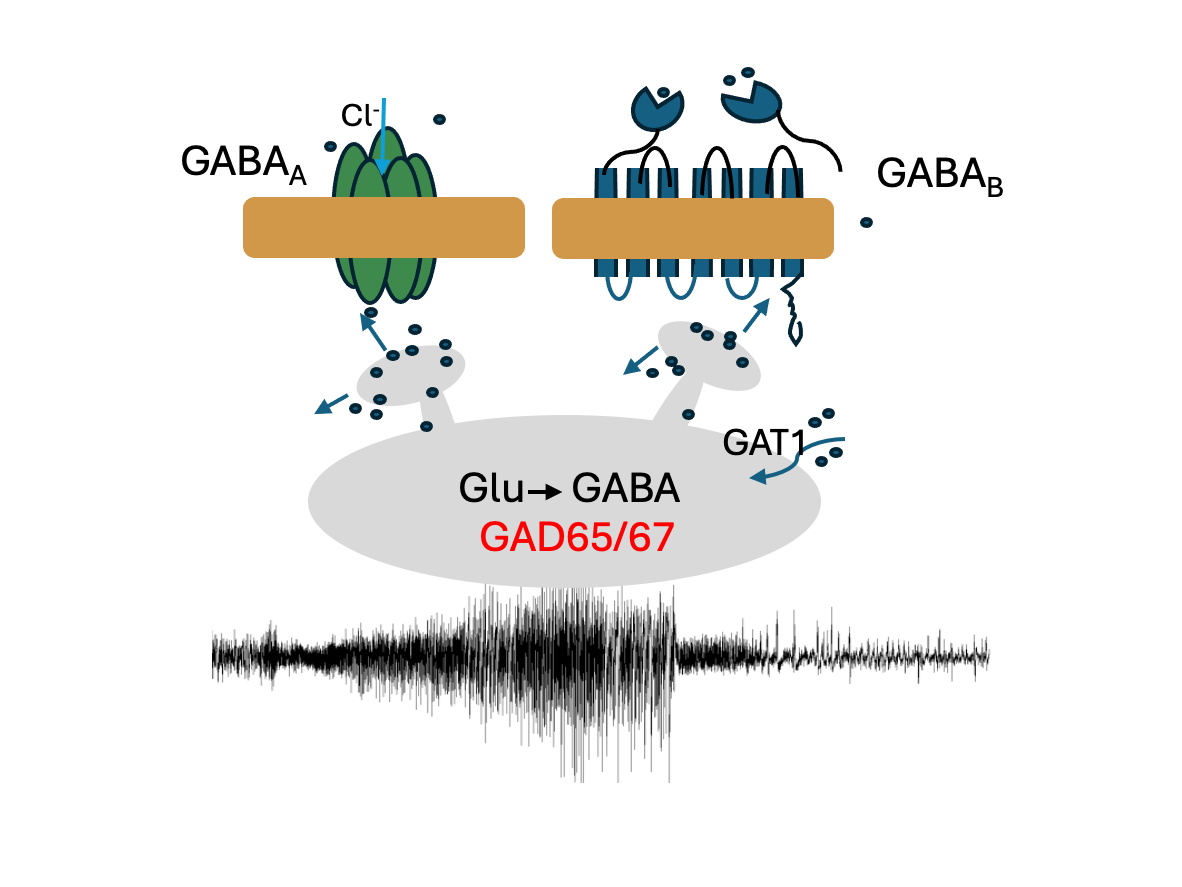
4. The GABAergic Synapse
4.1. Synthesis of GABA
4.2. Storage and Release of GABA
4.3. GABA Receptors
4.4. Termination of the Action of GABA
5. Impaired GABA Transmission as a Cause for Epilepsy
5.1. Antagonists and Agonists of the GABAA Receptor
5.2. Disrupted GABAergic Transmission as a Mechanism Underlying TLE
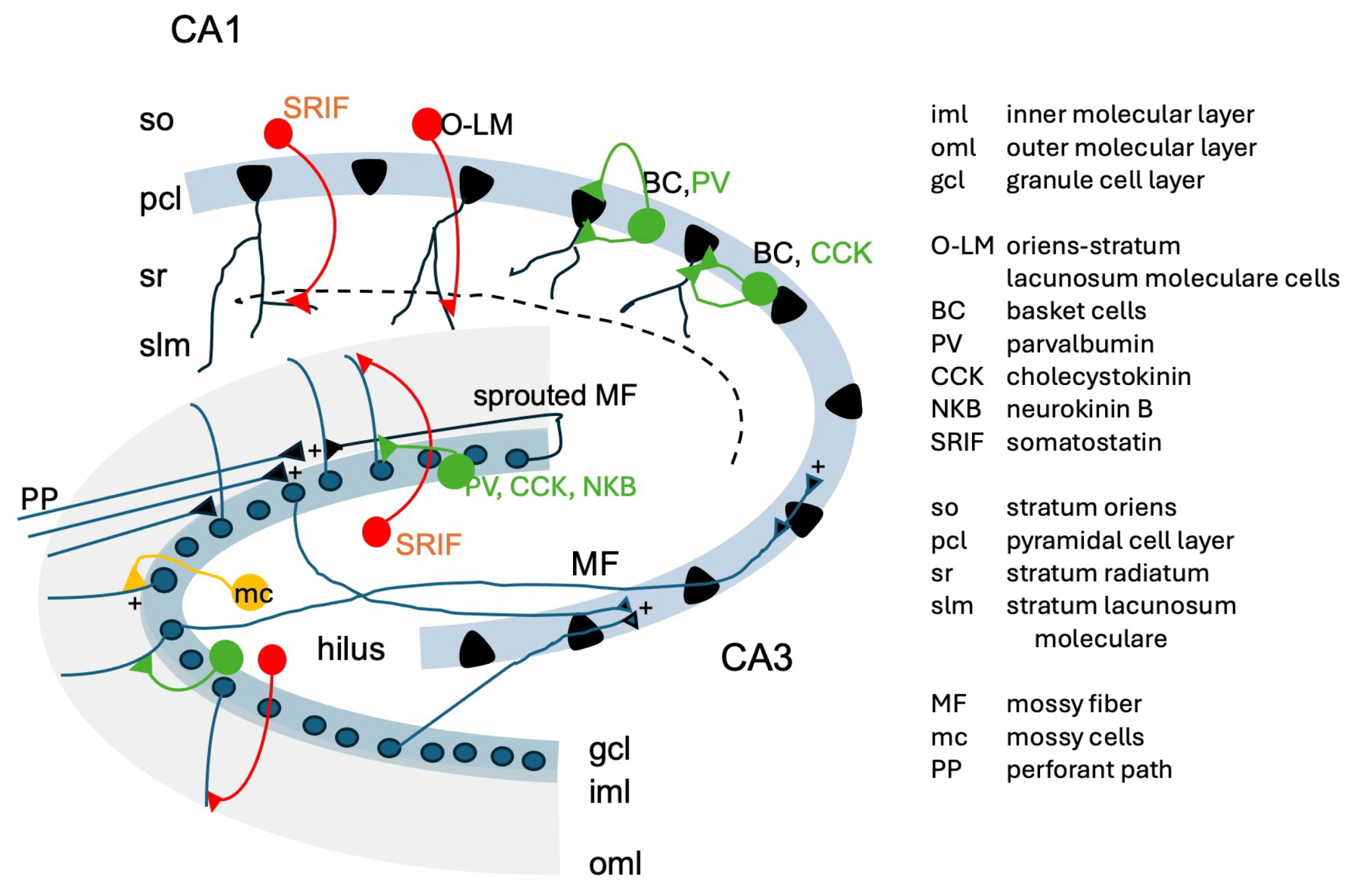
5.3. Impairing Specific Subpopulations of GABAergic Neurons Induces TLE
6. The GABA System in Response to Seizures and Epilepsy
6.1. The GABA Synthetizing Enzymes Glutamate Decarboxylase (GAD) in Epilepsy
6.2. Sprouted Mossy Fibers Innervate Basket Cells and/or Granule Cells
6.3. GAD and GABA in Excitatory Granule Cells and Mossy Fibers
6.4. Embryonic GAD67 Splice Variant in Granule Cells
7. GABAA Receptors in TLE Animal Models
7.1. Assembly of GABAA Receptor Subunits
7.2. GABAA Receptor Binding Studies in Kindling and TLE Models
7.3. Changes in GABAA Receptor Subunit mRNAs During Kindling
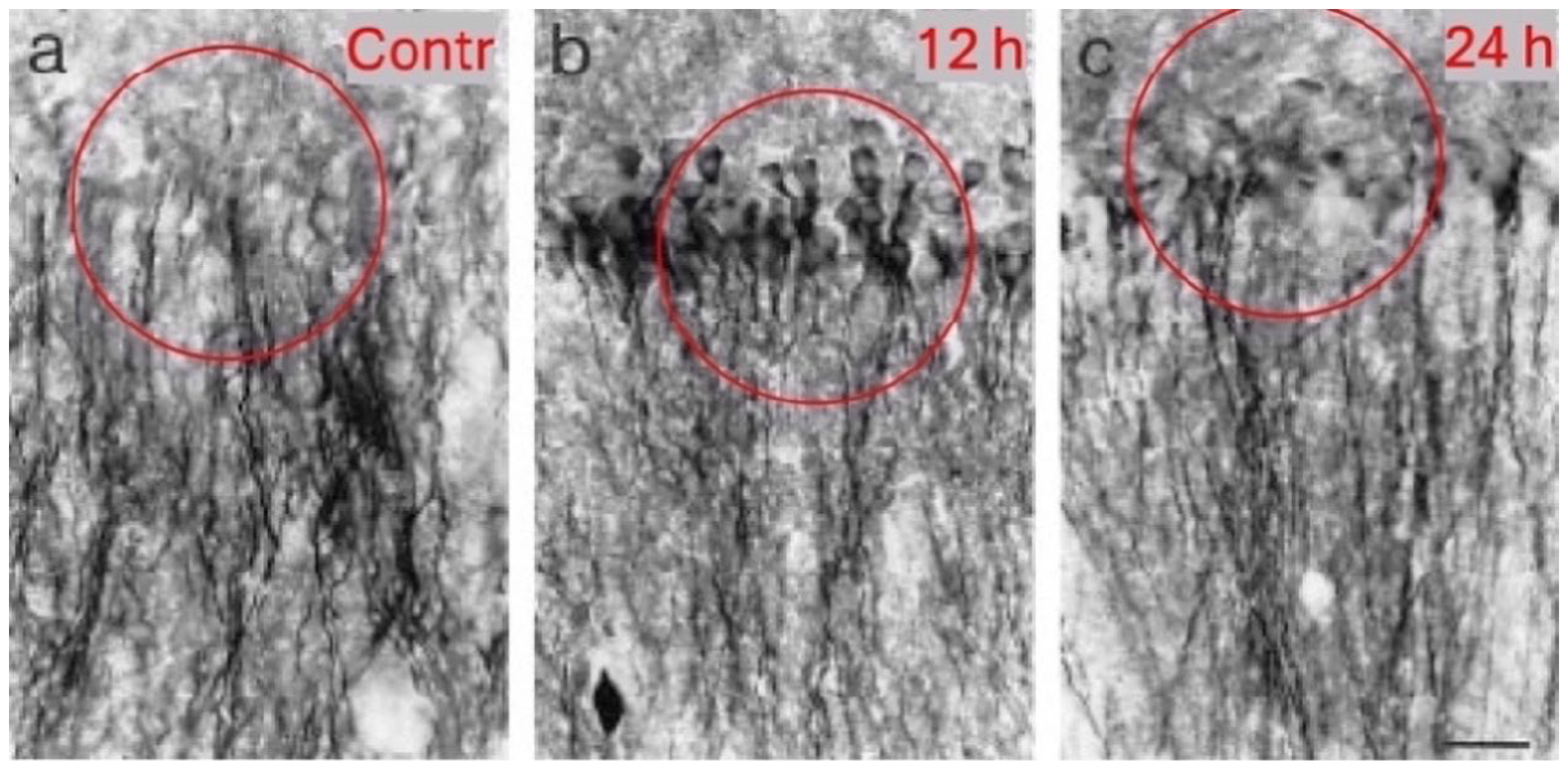
7.4. Changes in GABAA Receptor mRNAs and Immunoreactivity (IR) in the Kainic Acid and Li-Pilocarpine TLE Models
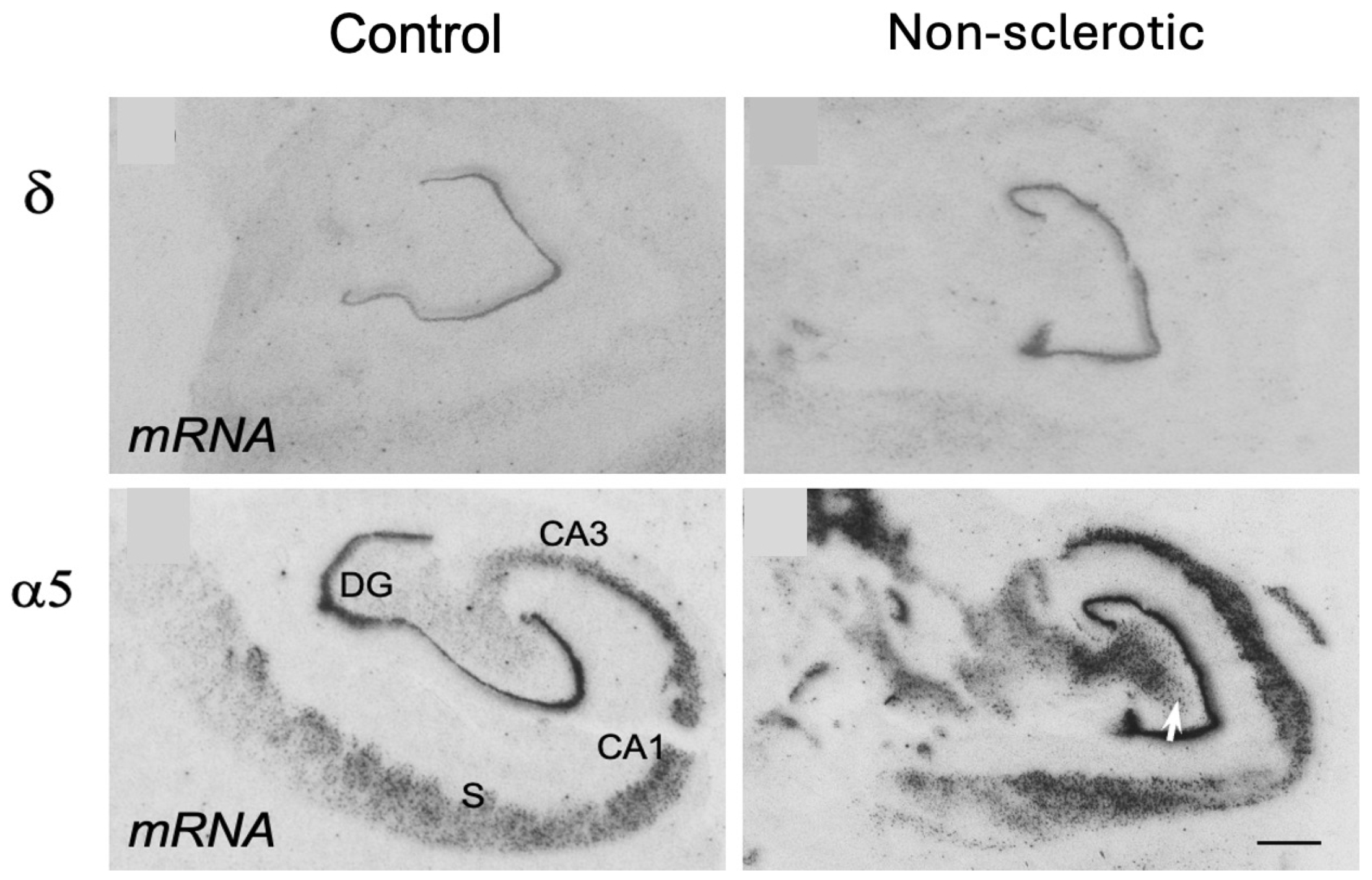
7.4.1. Changes in GABAA Receptor Assembly in Dentate Granule Cells
7.4.2. Changes in GABAA Receptor Subunits in Pyramidal Cells
7.4.3. Changes in Interneurons
7.4.4. Functional Changes in the Dentate Gyrus
7.4.5. Loss of δ and α5 Subunits Indicates Reduced Tonic Inhibition
7.5. Changes After Traumatic Brain Injury (TBI)
8. Chloride Channels: Their Role in GABAA Receptor Function and in Epileptogenesis
9. GABAB Receptors in Animal Epilepsy Models
GABAB Receptors in KA-Induced Epilepsy
10. Changes in GABA Receptors in Human TLE
10.1. GABAA Receptor Binding in TLE Patients
10.2. Changes in GABAA Receptor Subunits in TLE Patients
10.3. GABAB Receptors in Human TLE
11. Summary of Epilepsy-Induced Changes in GABA Receptors and Differences Between Animal Models and Human TLE
12. Conclusions
Author Contributions
Funding
Institutional Review Board Statement
Informed Consent Statement
Data Availability Statement
Conflicts of Interest
Abbreviations
| BBB | blood–brain barrier |
| CCK-8 | cholecystokinin octapeptide |
| EEG | electro encephalogram |
| GABA | γ-aminobutyric acid |
| GABAA | GABAA receptor |
| GABAB | GABAB receptor |
| GIRK | G-protein-activated inwardly rectifying potassium channels |
| ILAE | International League against Epilepsy |
| GAD | glutamate decarboxylase |
| GAD65, GAD67 | isoforms of glutamate decarboxylase |
| GAD25 | embryonic glutamate decarboxylase |
| IR | immunoreactivity |
| KA | kainic acid |
| NKB | neurokinin B |
| KCC2 | K-Cl co-transporter isoform 2 |
| NKCC1 | Na-K-2Cl co-transporter isoform 1 |
| NPY | neuropeptide Y |
| O-LM cells | oriens to the stratum lacunosum moleculare cells |
| SE | status epilepticus |
| TLE | temporal lobe epilepsy |
| VIP | vasoactive intestinal peptide |
| VGAT | vesicular GABA transporter |
References
- Riney, K.; Bogacz, A.; Somerville, E.; Hirsch, E.; Nabbout, R.; Scheffer, I.E.; Zuberi, S.M.; Alsaadi, T.; Jain, S.; French, J.; et al. International League Against Epilepsy classification and definition of epilepsy syndromes with onset at a variable age: Position statement by the ILAE Task Force on Nosology and Definitions. Epilepsia 2022, 63, 1443–1474. [Google Scholar] [CrossRef]
- Behr, C.; Goltzene, M.A.; Kosmalski, G.; Hirsch, E.; Ryvlin, P. Epidemiology of epilepsy. Rev. Neurol. 2016, 172, 27–36. [Google Scholar] [CrossRef] [PubMed]
- Wiebe, S. Epidemiology of temporal lobe epilepsy. Can. J. Neurol. Sci. 2000, 27, S6–S10. [Google Scholar] [CrossRef] [PubMed]
- Asadi-Pooya, A.A.; Stewart, G.R.; Abrams, D.J.; Sharan, A. Prevalence and Incidence of Drug-Resistant Mesial Temporal Lobe Epilepsy in the United States. World Neurosurg. 2017, 99, 662–666. [Google Scholar] [CrossRef] [PubMed]
- Abarrategui, B.; Mai, R.; Sartori, I.; Francione, S.; Pelliccia, V.; Cossu, M.; Tassi, L. Temporal lobe epilepsy: A never-ending story. Epilepsy Behav. 2021, 122, 108–122. [Google Scholar] [CrossRef]
- Larsen, P.M.; Wüstenhagen, S.; Terney, D.; Gardella, E.; Aurlien, H.; Beniczky, S. Duration of epileptic seizure types: A data-driven approach. Epilepsia 2023, 64, 469–478. [Google Scholar]
- Dube, C.M.; Brewster, A.L.; Richichi, C.; Zha, Q.; Baram, T.Z. Fever, febrile seizures and epilepsy. Trends Neurosci. 2007, 30, 490–496. [Google Scholar] [CrossRef]
- Mathern, G.W.; Babb, T.L.; Mischel, P.S.; Vinters, H.V.; Pretorius, J.K.; Leite, J.P.; Peacock, W.J. Childhood generalized and mesial temporal epilepsies demonstrate different amounts and patterns of hippocampal neuron loss and mossy fibre synaptic reorganization. Brain 1996, 119, 965–987. [Google Scholar] [CrossRef]
- Helmstaedter, C.; Al-Haj Mustafa, S.; Witt, J.-A. Temporal trends indicate an epidemiological shift in the pathology of mesial temporal lobe epilepsy. J. Neurol. 2025, 272, 652. [Google Scholar] [CrossRef]
- Engel, J. Introduction to temporal lobe epilepsy. Epilepsy Res. 1996, 26, 141–150. [Google Scholar] [CrossRef]
- Wiebe, S.; Blume, W.T.; Girvin, J.P.; Eliasziw, M. Effectiveness and Efficiency of Surgery for Temporal Lobe Epilepsy Study Group. A randomized, controlled trial of surgery for temporal-lobe epilepsy. N. Engl. J. Med. 2001, 345, 311–318. [Google Scholar] [CrossRef] [PubMed]
- Blumcke, I.; Spreafico, R.; Haaker, G.; Coras, R.; Kobow, K.; Bien, C.G.; Pfäfflin, M.; Elger, C.; Widman, G.; Schramm, J.; et al. EEBB Consortium. Histopathological Findings in Brain Tissue Obtained during Epilepsy Surgery. N. Engl. J. Med. 2017, 377, 1648–1656. [Google Scholar] [CrossRef] [PubMed]
- Sutula, T.P.; Hermann, B. Progression in mesial temporal lobe epilepsy. Ann. Neurol. 1999, 45, 553–556. [Google Scholar] [CrossRef]
- Van Paesschen, W.; Revesz, T.; Duncan, J.S.; King, M.D.; Connelly, A. Quantitative neuropathology and quantitative magnetic resonance imaging of the hippocampus in temporal lobe epilepsy. Ann. Neurol. 1997, 42, 756–766. [Google Scholar] [CrossRef] [PubMed]
- Schramm, J. Temporal lobe epilepsy surgery and the quest for optimal extent of resection: A review. Epilepsia 2008, 49, 1296–1307. [Google Scholar] [CrossRef]
- Killam, K.F.; Bain, J.A. Convulsant hydrazides. I. In vitro and in vivo inhibition of vitamin B6 enzymes by convulsant hydrazides. J. Pharmacol. Exp. Ther. 1957, 119, 255–262. [Google Scholar] [CrossRef]
- Lloyd, K.G.; Bossi, L.; Morselli, P.L.; Munari, C.; Rougier, M.; Loiseau, H. Alterations of GABA-mediated synaptic transmission in human epilepsy. Adv. Neurol. 1986, 44, 1033–1044. [Google Scholar] [CrossRef]
- Löscher, W.; Schwartz-Porsche, D. Low levels of gamma-aminobutyric acid in cerebrospinal fluid of dogs with epilepsy. J. Neurochem. 1986, 46, 1322–1325. [Google Scholar] [CrossRef]
- Meldrum, B. GABA-agonists as anti-epileptic agents. Adv. Biochem. Psychopharmacol. 1981, 26, 207–217. [Google Scholar]
- Lévesque, M.; Avoli, M.; Bernard, C. Animal models of temporal lobe epilepsy following systemic chemoconvulsant administration. J. Neurosci. Methods 2016, 260, 45–52. [Google Scholar] [CrossRef]
- Reddy, D.S.; Vadassery, A.; Ramakrishnan, S.; Singh, T.; Clossen, B.; Wu, X. Kindling Models of Epileptogenesis for Developing Disease-Modifying Drugs for Epilepsy. Curr. Protoc. 2024, 4, e70020. [Google Scholar] [CrossRef]
- Sloviter, R.S. “Epileptic” brain damage in rats induced by sustained electrical stimulation of the perforant path. I. Acute electrophysiological and light microscopic studies. Brain Res. Bull. 1983, 10, 675–697. [Google Scholar] [CrossRef]
- Kienzler, F.; Norwood, B.A.; Sloviter, R.S. Hippocampal injury, atrophy, synaptic reorganization, and epileptogenesis after perforant pathway stimulation-induced status epilepticus in the mouse. J. Comp. Neurol. 2009, 515, 181–196. [Google Scholar] [CrossRef]
- Olney, J.W.; deGubareff, T.; Sloviter, R.S. “Epileptic” brain damage in rats induced by sustained electrical stimulation of the perforant path. II. Ultrastructural analysis of acute hippocampal pathology. Brain Res. Bull. 1983, 10, 699–712. [Google Scholar] [CrossRef]
- Lothman, E.W.; Bertram, E.H.; Bekenstein, J.W.; Perlin, J.B. Self-sustaining limbic status epilepticus induced by ‘continuous’ hippocampal stimulation: Electrographic and behavioral characteristics. Epilepsy Res. 1989, 3, 107–119. [Google Scholar] [CrossRef] [PubMed]
- Bertram, E.H.; Lothman, E.W.; Lenn, N.J. The hippocampus in experimental chronic epilepsy: A morphometric analysis. Ann. Neurol. 1990, 27, 43–48. [Google Scholar] [CrossRef] [PubMed]
- Olney, J.W.; Sharpe, L.G.; Feigin, R.D. Glutamate-induced brain damage in infant primates. J. Neuropathol. Exp. Neurol. 1972, 31, 464–488. [Google Scholar] [CrossRef] [PubMed]
- Olney, J.W.; Labruyere, J.; de Gubareff, T. Brain damage in mice from voluntary ingestion of glutamate and aspartate. Neurobehav. Toxicol. 1980, 2, 125–129. [Google Scholar]
- Lévesque, M.; Avoli, M. The kainic acid model of temporal lobe epilepsy. Neurosci. Biobehav. Rev. 2013, 37, 2887–2899. [Google Scholar] [CrossRef]
- Schwob, J.E.; Fuller, T.; Price, J.L.; Olney, J.W. Widespread patterns of neuronal damage following systemic or intracerebral injections of kainic acid: A histological study. Neuroscience 1980, 5, 991–1014. [Google Scholar] [CrossRef]
- Drexel, M.; Preidt, A.P.; Kirchmair, E.; Sperk, G. Parvalbumin interneurons and calretinin fibers arising from the thalamic nucleus reuniens degenerate in the subiculum after kainic acid-induced seizures. Neuroscience 2011, 189, 316–329. [Google Scholar] [CrossRef]
- Du, F.; Eid, T.; Lothman, E.W.; Köhler, C.; Schwarcz, R. Preferential neuronal loss in layer III of the medial entorhinal cortex in rat models of temporal lobe epilepsy. J. Neurosci. 1995, 15, 6301–6313. [Google Scholar] [CrossRef]
- Ben-Ari, Y.; Lagowska, J.; Tremblay, E.; Le Gal La Salle, G. A new model of focal status epilepticus: Intra-amygdaloid application of kainic acid elicits repetitive secondarily generalized convulsive seizures. Brain Res. 1979, 163, 176–179. [Google Scholar] [CrossRef] [PubMed]
- Ben-Ari, Y.; Tremblay, E.; Ottersen, O.P. Injections of kainic acid into the amygdaloid complex of the rat: An electrographic, clinical and histological study in relation to the pathology of epilepsy. Neuroscience 1980, 5, 515–528. [Google Scholar] [CrossRef]
- Naquet, R.; Meldrum, B.; Ben-Ari, Y. Hippocampal lesions and status epilepticus. Electroencephalogr. Clin. Neurophysiol. Suppl. 1982, 35, 171–183. [Google Scholar]
- Nadler, J.V.; Perry, B.W.; Gentry, C.; Cotman, C.W. Degeneration of hippocampal CA3 pyramidal cells induced by intraventricular kainic acid. J. Comp. Neurol. 1980, 192, 333–359. [Google Scholar] [CrossRef]
- French, E.D.; Aldinio, C.; Schwarcz, R. Intrahippocampal kainic acid, seizures and local neuronal degeneration: Relationships assessed in unanesthetized rats. Neuroscience 1982, 7, 2525–2536. [Google Scholar] [CrossRef] [PubMed]
- Sperk, G.; Lassmann, H.; Baran, H.; Kish, S.J.; Seitelberger, F.; Hornykiewicz, O. Kainic acid induced seizures: Neurochemical and histopathological changes. Neuroscience 1983, 10, 1301–1315. [Google Scholar] [CrossRef] [PubMed]
- Berger, M.L.; Lefauconnier, J.M.; Tremblay, E.; Ben-Ari, Y. Limbic seizures induced by systemically applied kainic acid: How much kainic acid reaches the brain? Adv. Exp. Med. Biol. 1986, 203, 199–209. [Google Scholar] [PubMed]
- Baran, H.; Sperk, G.; Hörtnagl, H.; Sapetschnig, G.; Hornykiewicz, O. Alpha 2-adrenoceptors modulate kainic acid-induced limbic seizures. Eur. J. Pharmacol. 1985, 113, 263–269. [Google Scholar] [CrossRef]
- Kovács, R.; Heinemann, U.; Steinhäuser, C. Mechanisms underlying blood-brain barrier dysfunction in brain pathology and epileptogenesis: Role of astroglia. Epilepsia 2012, 53, 53–59. [Google Scholar] [CrossRef] [PubMed]
- Williams, P.A.; Hellier, J.L.; White, A.M.; Staley, K.J.; Dudek, F.E. Development of spontaneous seizures after experimental status epilepticus: Implications for understanding epileptogenesis. Epilepsia 2007, 48, 157–163. [Google Scholar] [CrossRef] [PubMed]
- Drexel, M.; Preidt, A.P.; Sperk, G. Sequel of spontaneous seizures after kainic acid-induced status epilepticus and associated neuropathological changes in the subiculum and entorhinal cortex. Neuropharmacology 2012, 63, 806–817. [Google Scholar] [CrossRef] [PubMed]
- Ben-Ari, Y.; Cossart, R. Kainate, a double agent that generates seizures: Two decades of progress. Trends Neurosci. 2000, 23, 580–587. [Google Scholar] [CrossRef]
- Werner, P.; Voigt, M.; Keinänen, K.; Wisden, W.; Seeburg, P.H. Cloning of a putative high-affinity kainate receptor expressed predominantly in hippocampal CA3 cells. Nature 1991, 351, 742–744. [Google Scholar] [CrossRef]
- Yu, L.M.Y.; Polygalov, D.; Wintzer, M.E.; Chiang, M.-C.; McHugh, T.J. CA3 Synaptic Silencing Attenuates Kainic Acid-Induced Seizures and Hippocampal Network Oscillations. eNeuro 2016, 3, ENEURO.0003-16.2016. [Google Scholar] [CrossRef]
- Crepel, V.; Represa, A.; Beaudoin, M.; Ben-Ari, Y. Hippocampal damage induced by ischemia and intra-amygdaloid kainate injection: Effect on N-methyl-D-aspartate, N-(1-[2-thienyl]cyclohexyl)piperidine and glycine binding sites. Neuroscience 1989, 31, 605–612. [Google Scholar] [CrossRef]
- Cossart, R.; Epsztein, J.; Tyzio, R.; Becq, H.; Hirsch, J.; Ben-Ari, Y.; Crépel, V. Quantal release of glutamate generates pure kainate and mixed AMPA/kainate EPSCs in hippocampal neurons. Neuron 2002, 35, 147–159. [Google Scholar] [CrossRef]
- Herb, A.; Higuchi, M.; Sprengel, R.; Seeburg, P.H. Q/R site editing in kainate receptor GluR5 and GluR6 pre-mRNAs requires distant intronic sequences. Proc. Natl. Acad. Sci. USA 1996, 93, 1875–1880. [Google Scholar] [CrossRef]
- Melcher, T.; Maas, S.; Herb, A.; Sprengel, R.; Seeburg, P.H.; Higuchi, M. A mammalian RNA editing enzyme. Nature 1996, 379, 460–464. [Google Scholar] [CrossRef]
- Bernard, A.; Ferhat, L.; Dessi, F.; Charton, G.; Represa, A.; Ben-Ari, Y.; Khrestchatisky, M. Q/R editing of the rat GluR5 and GluR6 kainate receptors in vivo and in vitro: Evidence for independent developmental, pathological and cellular regulation. Eur. J. Neurosci. 1999, 11, 604–616. [Google Scholar] [CrossRef]
- Rodríguez-Moreno, A.; Lerma, J. Kainate receptor modulation of GABA release involves a metabotropic function. Neuron 1998, 20, 1211–1218. [Google Scholar] [CrossRef]
- Rodríguez-Moreno, A.; Sistiaga, A.; Lerma, J.; Sánchez-Prieto, J. Switch from facilitation to inhibition of excitatory synaptic transmission by group I mGluR desensitization. Neuron 1998, 21, 1477–1486. [Google Scholar] [CrossRef]
- Rodríguez-Moreno, A.; López-García, J.C.; Lerma, J. Two populations of kainate receptors with separate signaling mechanisms in hippocampal interneurons. Proc. Natl. Acad. Sci. USA 2000, 97, 1293–1298. [Google Scholar] [CrossRef]
- Paternain, A.V.; Herrera, M.T.; Nieto, M.A.; Lerma, J. GluR5 and GluR6 kainate receptor subunits coexist in hippocampal neurons and coassemble to form functional receptors. J. Neurosci. 2000, 20, 196–205. [Google Scholar] [CrossRef] [PubMed]
- Cossart, R.; Tyzio, R.; Dinocourt, C.; Esclapez, M.; Hirsch, J.C.; Ben-Ari, Y.; Bernard, C. Presynaptic kainate receptors that enhance the release of GABA on CA1 hippocampal interneurons. Neuron 2001, 29, 497–508. [Google Scholar] [CrossRef] [PubMed]
- Cossart, R.; Esclapez, M.; Hirsch, J.C.; Bernard, C.; Ben-Ari, Y. GluR5 kainate receptor activation in interneurons increases tonic inhibition of pyramidal cells. Nat. Neurosci. 1998, 1, 470–478. [Google Scholar] [CrossRef] [PubMed]
- Falcón-Moya, R.; Sihra, T.S.; Rodríguez-Moreno, A. Kainate Receptors: Role in Epilepsy. Front. Mol. Neurosci. 2018, 11, 217. [Google Scholar] [CrossRef]
- Clarke, V.R.; Ballyk, B.A.; Hoo, K.H.; Mandelzys, A.; Pellizzari, A.; Bath, C.P.; Thomas, J.; Sharpe, E.F.; Davies, C.H.; Ornstein, P.L.; et al. A hippocampal GluR5 kainate receptor regulating inhibitory synaptic transmission. Nature 1997, 389, 599–603. [Google Scholar] [CrossRef]
- Rodríguez-Moreno, A.; Herreras, O.; Lerma, J. Kainate receptors presynaptically downregulate GABAergic inhibition in the rat hippocampus. Neuron 1997, 19, 893–901. [Google Scholar] [CrossRef]
- Jiang, L.; Xu, J.; Nedergaard, M.; Kang, J. A kainate receptor increases the efficacy of GABAergic synapses. Neuron 2001, 30, 503–513. [Google Scholar] [CrossRef] [PubMed]
- Khalilov, I.; Hirsch, J.; Cossart, R.; Ben-Ari, Y. Paradoxical anti-epileptic effects of a GluR5 agonist of kainate receptors. J. Neurophysiol. 2002, 88, 523–527. [Google Scholar] [CrossRef] [PubMed]
- Rodríguez-Moreno, A.; Sihra, T.S. Metabotropic actions of kainate receptors in the control of glutamate release in the hippocampus. Adv. Exp. Med. Biol. 2011, 717, 39–48. [Google Scholar] [PubMed]
- Sihra, T.S.; Rodríguez-Moreno, A. Metabotropic actions of kainate receptors in the control of GABA release. In Kainate Receptors; Advances in Experimental Medicine and Biology; Springer: Boston, MA, USA, 2011; Volume 717, pp. 1–10. [Google Scholar]
- Berger, M.; Ben-Ari, Y. Autoradiographic visualization of [3H]kainic acid receptor subtypes in the rat hippocampus. Neurosci. Lett. 1983, 39, 237–242. [Google Scholar] [CrossRef]
- Represa, A.; Tremblay, E.; Ben-Ari, Y. Kainate binding sites in the hippocampal mossy fibers: Localization and plasticity. Neuroscience 1987, 20, 739–748. [Google Scholar] [CrossRef]
- Buckmaster, P.S.; Zhang, G.F.; Yamawaki, R. Axon sprouting in a model of temporal lobe epilepsy creates a predominantly excitatory feedback circuit. J. Neurosci. 2002, 22, 6650–6658. [Google Scholar] [CrossRef]
- Houser, C.R.; Miyashiro, J.E.; Swartz, B.E.; Walsh, G.O.; Rich, J.R.; Delgado-Escueta, A.V. Altered patterns of dynorphin immunoreactivity suggest mossy fiber reorganization in human hippocampal epilepsy. J. Neurosci. 1990, 10, 267–282. [Google Scholar] [CrossRef]
- Epsztein, J.; Represa, A.; Jorquera, I.; Ben-Ari, Y.; Crépel, V. Recurrent mossy fibers establish aberrant kainate receptor-operated synapses on granule cells from epileptic rats. J. Neurosci. 2005, 25, 8229–8239. [Google Scholar] [CrossRef]
- Olney, J.W.; de Gubareff, T.; Labruyere, J. Seizure-related brain damage induced by cholinergic agents. Nature 1983, 301, 520–522. [Google Scholar] [CrossRef]
- Turski, L.; Cavalheiro, E.A.; Czuczwar, S.J.; Turski, W.A.; Kleinrok, Z. The seizures induced by pilocarpine: Behavioral, electroencephalographic and neuropathological studies in rodents. Pol. J. Pharmacol. Pharm. 1987, 39, 545–555. [Google Scholar]
- Turski, L.; Ikonomidou, C.; Turski, W.A.; Bortolotto, Z.A.; Cavalheiro, E.A. Review: Cholinergic mechanisms and epileptogenesis. The seizures induced by pilocarpine: A novel experimental model of intractable epilepsy. Synapse 1989, 3, 154–171. [Google Scholar] [CrossRef]
- Honchar, M.P.; Olney, J.W.; Sherman, W.R. Systemic cholinergic agents induce seizures and brain damage in lithium-treated rats. Science 1983, 220, 323–325. [Google Scholar] [CrossRef] [PubMed]
- Olney, J.W.; Collins, R.C.; Sloviter, R.S. Excitotoxic mechanisms of epileptic brain damage. Adv. Neurol. 1986, 44, 857–877. [Google Scholar] [PubMed]
- Lee, S.-E.; Lee, Y.; Lee, G.H. The regulation of glutamic acid decarboxylases in GABA neurotransmission in the brain. Arch. Pharm. Res. 2019, 42, 1031–1039. [Google Scholar] [CrossRef] [PubMed]
- Martin, D.L.; Rimvall, K. Regulation of gamma-aminobutyric acid synthesis in the brain. J. Neurochem. 1993, 60, 395–407. [Google Scholar] [CrossRef]
- Soghomonian, J.J.; Martin, D.L. Two isoforms of glutamate decarboxylase: Why? Trends Pharmacol. Sci. 1998, 19, 500–505. [Google Scholar] [CrossRef]
- Chaudhry, F.A.; Reimer, R.J.; Bellocchio, E.E.; Danbolt, N.C.; Osen, K.K.; Edwards, R.H.; Storm-Mathisen, J. The vesicular GABA transporter, VGAT, localizes to synaptic vesicles in sets of glycinergic as well as GABAergic neurons. J. Neurosci. 1998, 18, 9733–9750. [Google Scholar] [CrossRef]
- Hokfelt, T.; Johansson, O.; Ljungdahl, A.; Lundberg, J.M.; Schultzberg, M. Peptidergic neurones. Nature 1980, 284, 515–521. [Google Scholar] [CrossRef]
- Klausberger, T. GABAergic interneurons targeting dendrites of pyramidal cells in the CA1 area of the hippocampus. Eur. J. Neurosci. 2009, 30, 947–957. [Google Scholar] [CrossRef]
- Macdonald, R.L.; Olsen, R.W. GABAA receptor channels. Annu. Rev. Neurosci. 1994, 17, 569–602. [Google Scholar] [CrossRef]
- Kaila, K.; Price, T.J.; Payne, J.A.; Puskarjov, M.; Voipio, J. Cation-chloride cotransporters in neuronal development, plasticity and disease. Nat. Rev. Neurosci. 2014, 15, 637–654. [Google Scholar] [CrossRef] [PubMed]
- Padgett, C.L.; Slesinger, P.A. GABAB receptor coupling to G-proteins and ion channels. Adv. Pharmacol. 2010, 58, 123–147. [Google Scholar]
- Pin, J.-P.; Bettler, B. Organization and functions of mGlu and GABAB receptor complexes. Nature 2016, 540, 60–68. [Google Scholar] [CrossRef] [PubMed]
- Zhou, Y.; Danbolt, N.C. GABA and Glutamate Transporters in Brain. Front. Endocrinol. 2013, 4, 165. [Google Scholar] [CrossRef] [PubMed]
- Malter, M.P.; Helmstaedter, C.; Urbach, H.; Vincent, A.; Bien, C.G. Antibodies to glutamic acid decarboxylase define a form of limbic encephalitis. Ann. Neurol. 2010, 67, 470–478. [Google Scholar] [CrossRef]
- Kofler, M.; Kronenberg, M.F.; Rifici, C.; Saltuari, L.; Bauer, G. Epileptic seizures associated with intrathecal baclofen application. Neurology 1994, 44, 25–27. [Google Scholar] [CrossRef]
- Kurz, S.; Marth, L.M.; Hoffmann, C.-H.; Maria Kummerant, J.H.; Schneckmann, F.W. Intrathecal baclofen therapy in patients with spastic paraplegia: Retrospective evaluation of pretreatment drugs, test dosage, dose increments and final therapy. Brain Spine 2025, 5, 104323. [Google Scholar] [CrossRef]
- Sloviter, R.S.; Zappone, C.A.; Harvey, B.D.; Bumanglag, A.V.; Bender, R.A.; Frotscher, M. “Dormant basket cell” hypothesis revisited: Relative vulnerabilities of dentate gyrus mossy cells and inhibitory interneurons after hippocampal status epilepticus in the rat. J. Comp. Neurol. 2003, 459, 44–76. [Google Scholar] [CrossRef]
- Andrioli, A.; Alonso-Nanclares, L.; Arellano, J.I.; DeFelipe, J. Quantitative analysis of parvalbumin-immunoreactive cells in the human epileptic hippocampus. Neuroscience 2007, 149, 131–143. [Google Scholar] [CrossRef]
- Knopp, A.; Frahm, C.; Fidzinski, P.; Witte, O.W.; Behr, J. Loss of GABAergic neurons in the subiculum and its functional implications in temporal lobe epilepsy. Brain 2008, 131, 1516–1527. [Google Scholar] [CrossRef]
- Wittner, L.; Eross, L.; Czirják, S.; Halász, P.; Freund, T.F.; Maglóczky, Z. Surviving CA1 pyramidal cells receive intact perisomatic inhibitory input in the human epileptic hippocampus. Brain 2005, 128, 138–152. [Google Scholar] [CrossRef] [PubMed]
- Cossart, R.; Dinocourt, C.; Hirsch, J.C.; Merchan-Perez, A.; De Felipe, J.; Ben-Ari, Y.; Esclapez, M.; Bernard, C. Dendritic but not somatic GABAergic inhibition is decreased in experimental epilepsy. Nat. Neurosci. 2001, 4, 52–62. [Google Scholar] [CrossRef] [PubMed]
- Drexel, M.; Romanov, R.A.; Wood, J.; Weger, S.; Heilbronn, R.; Wulff, P.; Tasan, R.O.; Harkany, T.; Sperk, G. Selective Silencing of Hippocampal Parvalbumin Interneurons Induces Development of Recurrent Spontaneous Limbic Seizures in Mice. J. Neurosci. 2017, 37, 8166–8179. [Google Scholar] [CrossRef] [PubMed]
- Drexel, M.; Rahimi, S.; Sperk, G. Silencing of Hippocampal Somatostatin Interneurons Induces Recurrent Spontaneous Limbic Seizures in Mice. Neuroscience 2022, 487, 155–165. [Google Scholar] [CrossRef]
- Rahimi, S.; Salami, P.; Matulewicz, P.; Schmuck, A.; Bukovac, A.; Ramos-Prats, A.; Tasan, R.O.; Drexel, M. The role of subicular VIP-expressing interneurons on seizure dynamics in the intrahippocampal kainic acid model of temporal lobe epilepsy. Exp. Neurol. 2023, 370, 114580. [Google Scholar] [CrossRef]
- Gruber, B.; Greber, S.; Rupp, E.; Sperk, G. Differential NPY mRNA expression in granule cells and interneurons of the rat dentate gyrus after kainic acid injection. Hippocampus 1994, 4, 474–482. [Google Scholar] [CrossRef]
- Marksteiner, J.; Sperk, G. Concomitant increase of somatostatin, neuropeptide Y and glutamate decarboxylase in the frontal cortex of rats with decreased seizure threshold. Neuroscience 1988, 26, 379–385. [Google Scholar] [CrossRef]
- Marksteiner, J.; Lassmann, H.; Saria, A.; Humpel, C.; Meyer, D.K.; Sperk, G. Neuropeptide Levels after Pentylenetetrazol Kindling in the Rat. Eur. J. Neurosci. 1990, 2, 98–103. [Google Scholar] [CrossRef]
- Hendry, S.H.; Jones, E.G.; DeFelipe, J.; Schmechel, D.; Brandon, C.; Emson, P.C. Neuropeptide-containing neurons of the cerebral cortex are also GABAergic. Proc. Natl. Acad. Sci. USA 1984, 81, 6526–6530. [Google Scholar] [CrossRef]
- Furtinger, S.; Pirker, S.; Czech, T.; Baumgartner, C.; Ransmayr, G.; Sperk, G. Plasticity of Y1 and Y2 receptors and neuropeptide Y fibers in patients with temporal lobe epilepsy. J. Neurosci. 2001, 21, 5804–5812. [Google Scholar] [CrossRef]
- Feldblum, S.; Ackermann, R.F.; Tobin, A.J. Long-term increase of glutamate decarboxylase mRNA in a rat model of temporal lobe epilepsy. Neuron 1990, 5, 361–371. [Google Scholar] [CrossRef] [PubMed]
- Erlander, M.G.; Tillakaratne, N.J.; Feldblum, S.; Patel, N.; Tobin, A.J. Two genes encode distinct glutamate decarboxylases. Neuron 1991, 7, 91–100. [Google Scholar] [CrossRef] [PubMed]
- Esclapez, M.; Houser, C.R. Up-regulation of GAD65 and GAD67 in remaining hippocampal GABA neurons in a model of temporal lobe epilepsy. J. Comp. Neurol. 1999, 412, 488–505. [Google Scholar] [CrossRef]
- Schwarzer, C.; Sperk, G. Hippocampal granule cells express glutamic acid decarboxylase-67 after limbic seizures in the rat. Neuroscience 1995, 69, 705–709. [Google Scholar] [CrossRef]
- Sperk, G.; Wieselthaler-Hölzl, A.; Pirker, S.; Tasan, R.; Strasser, S.S.; Drexel, M.; Pifl, C.; Marschalek, J.; Ortler, M.; Trinka, E.; et al. Glutamate decarboxylase 67 is expressed in hippocampal mossy fibers of temporal lobe epilepsy patients. Hippocampus 2012, 22, 590–603. [Google Scholar] [CrossRef]
- Amaral, D.G.; Scharfman, H.E.; Lavenex, P. The dentate gyrus: Fundamental neuroanatomical organization (dentate gyrus for dummies). Prog. Brain Res. 2007, 163, 3–22. [Google Scholar]
- Scharfman, H.E. Advances in understanding hilar mossy cells of the dentate gyrus. Cell Tissue Res. 2018, 373, 643–652. [Google Scholar] [CrossRef]
- Sloviter, R.S.; Zappone, C.A.; Harvey, B.D.; Frotscher, M. Kainic acid-induced recurrent mossy fiber innervation of dentate gyrus inhibitory interneurons: Possible anatomical substrate of granule cell hyper-inhibition in chronically epileptic rats. J. Comp. Neurol. 2006, 494, 944–960. [Google Scholar] [CrossRef]
- Sandler, R.; Smith, A.D. Coexistence of GABA and glutamate in mossy fiber terminals of the primate hippocampus: An ultrastructural study. J. Comp. Neurol. 1991, 303, 177–192. [Google Scholar] [CrossRef]
- Sloviter, R.S.; Dichter, M.A.; Rachinsky, T.L.; Dean, E.; Goodman, J.H.; Sollas, A.L.; Martin, D.L. Basal expression and induction of glutamate decarboxylase and GABA in excitatory granule cells of the rat and monkey hippocampal dentate gyrus. J. Comp. Neurol. 1996, 373, 593–618. [Google Scholar] [CrossRef]
- Sperk, G.; Schwarzer, C.; Heilman, J.; Furtinger, S.; Reimer, R.J.; Edwards, R.H.; Nelson, N. Expression of plasma membrane GABA transporters but not of the vesicular GABA transporter in dentate granule cells after kainic acid seizures. Hippocampus 2003, 13, 806–815. [Google Scholar] [CrossRef]
- Walker, M.C.; Ruiz, A.; Kullmann, D.M. Monosynaptic GABAergic signaling from dentate to CA3 with a pharmacological and physiological profile typical of mossy fiber synapses. Neuron 2001, 29, 703–715. [Google Scholar] [CrossRef] [PubMed]
- Attwell, D.; Barbour, B.; Szatkowski, M. Nonvesicular release of neurotransmitter. Neuron 1993, 11, 401–407. [Google Scholar] [CrossRef] [PubMed]
- Rassner, M.P.; Moser, A.; Follo, M.; Joseph, K.; van Velthoven-Wurster, V.; Feuerstein, T.J. Neocortical GABA release at high intracellular sodium and low extracellular calcium: An anti-seizure mechanism. J. Neurochem. 2016, 137, 177–189. [Google Scholar] [CrossRef] [PubMed]
- Szabo, G.; Kartarova, Z.; Hoertnagl, B.; Somogyi, R.; Sperk, G. Differential regulation of adult and embryonic glutamate decarboxylases in rat dentate granule cells after kainate-induced limbic seizures. Neuroscience 2000, 100, 287–295. [Google Scholar] [CrossRef]
- Asada, H.; Kawamura, Y.; Maruyama, K.; Kume, H.; Ding, R.G.; Kanbara, N.; Kuzume, H.; Sanbo, M.; Yagi, T.; Obata, K. Cleft palate and decreased brain gamma-aminobutyric acid in mice lacking the 67-kDa isoform of glutamic acid decarboxylase. Proc. Natl. Acad. Sci. USA 1997, 94, 6496–6499. [Google Scholar] [CrossRef]
- Olsen, R.W.; Sieghart, W. GABAA receptors: Subtypes provide diversity of function and pharmacology. Neuropharmacology 2009, 56, 141–148. [Google Scholar] [CrossRef]
- Seeburg, P.H.; Wisden, W.; Verdoorn, T.A.; Pritchett, D.B.; Werner, P.; Herb, A.; Lüddens, H.; Sprengel, R.; Sakmann, B. The GABAA receptor family: Molecular and functional diversity. Cold Spring Harb. Symp. Quant. Biol. 1990, 55, 29–40. [Google Scholar] [CrossRef]
- Pirker, S.; Schwarzer, C.; Wieselthaler, A.; Sieghart, W.; Sperk, G. GABAA receptors: Immunocytochemical distribution of 13 subunits in the adult rat brain. Neuroscience 2000, 101, 815–850. [Google Scholar] [CrossRef]
- Sperk, G.; Kirchmair, E.; Bakker, J.; Sieghart, W.; Drexel, M.; Kondova, I. Immunohistochemical distribution of 10 GABAA receptor subunits in the forebrain of the rhesus monkey Macaca mulatta. J. Comp. Neurol. 2020, 528, 2551–2568. [Google Scholar] [CrossRef]
- Wisden, W.; Laurie, D.J.; Monyer, H.; Seeburg, P.H. The distribution of 13 GABAA receptor subunit mRNAs in the rat brain. I. Telencephalon, diencephalon, mesencephalon. J. Neurosci. 1992, 12, 1040–1062. [Google Scholar] [CrossRef] [PubMed]
- Chang, Y.; Wang, R.; Barot, S.; Weiss, D.S. Stoichiometry of a recombinant GABAA receptor. J. Neurosci. 1996, 16, 5415–5424. [Google Scholar] [CrossRef] [PubMed]
- Absalom, N.L.; Lin, S.X.; Liao, V.W.; Chua, H.C.; Møller, R.S.; Chebib, M.; Ahring, P.K. GABAA receptors in epilepsy: Elucidating phenotypic divergence through functional analysis of genetic variants. J. Neurochem. 2024, 168, 3831–3852. [Google Scholar] [CrossRef] [PubMed]
- Kananura, C.; Haug, K.; Sander, T.; Runge, U.; Gu, W.; Hallmann, K.; Rebstock, J.; Heils, A.; Steinlein, O.K. A splice-site mutation in GABRG2 associated with childhood absence epilepsy and febrile convulsions. Arch. Neurol. 2002, 59, 1137–1141. [Google Scholar] [CrossRef]
- Sajan, S.A.; Gradisch, R.; Vogel, F.D.; Coffey, A.J.; Salyakina, D.; Soler, D.; Jayakar, P.; Jayakar, A.; Bianconi, S.E.; Cooper, A.H.; et al. De novo variants in GABRA4 are associated with a neurological phenotype including developmental delay, behavioral abnormalities and epilepsy. Eur. J. Hum. Genet. 2024, 32, 912–919. [Google Scholar] [CrossRef]
- Cossette, P.; Liu, L.; Brisebois, K.; Dong, H.; Lortie, A.; Vanasse, M.; Saint-Hilaire, J.-M.; Carmant, L.; Verner, A.; Lu, W.-Y.; et al. Mutation of GABRA1 in an autosomal dominant form of juvenile myoclonic epilepsy. Nat. Genet. 2002, 31, 184–189. [Google Scholar] [CrossRef]
- Hernandez, C.C.; Shen, Y.; Hu, N.; Shen, W.; Narayanan, V.; Ramsey, K.; He, W.; Zou, L.; Macdonald, R.L. GABRG2 Variants Associated with Febrile Seizures. Biomolecules 2023, 13, 414. [Google Scholar] [CrossRef]
- Maillard, P.Y.; Baer, S.; Schaefer, É.; Desnous, B.; Villeneuve, N.; Lépine, A.; Fabre, A.; Lacoste, C.; El Chehadeh, S.; Piton, A.; et al. Molecular and clinical descriptions of patients with GABAA receptor gene variants (GABRA1, GABRB2, GABRB3, GABRG2): A cohort study, review of literature, and genotype-phenotype correlation. Epilepsia 2022, 63, 2519–2533. [Google Scholar] [CrossRef]
- Benkherouf, A.Y.; Taina, K.-R.; Meera, P.; Aalto, A.J.; Li, X.-G.; Soini, S.L.; Wallner, M.; Uusi-Oukari, M. Extrasynaptic δ-GABAA receptors are high-affinity muscimol receptors. J. Neurochem. 2019, 149, 41–53. [Google Scholar] [CrossRef]
- Koepp, M.J.; Richardson, M.P.; Labbé, C.; Brooks, D.J.; Cunningham, V.J.; Ashburner, J.; Van Paesschen, W.; Revesz, T.; Duncan, J.S. 11C-flumazenil PET, volumetric MRI, and quantitative pathology in mesial temporal lobe epilepsy. Neurology 1997, 49, 764–773. [Google Scholar] [CrossRef]
- Koepp, M.J.; Labbé, C.; Richardson, M.P.; Brooks, D.J.; Van Paesschen, W.; Cunningham, V.J.; Duncan, J.S. Regional hippocampal [11C]flumazenil PET in temporal lobe epilepsy with unilateral and bilateral hippocampal sclerosis. Brain 1997, 120, 1865–1876. [Google Scholar] [CrossRef] [PubMed]
- Gibbs, J.W.; Zhang, Y.F.; Shumate, M.D.; Coulter, D.A. Regionally selective blockade of GABAergic inhibition by zinc in the thalamocortical system: Functional significance. J. Neurophysiol. 2000, 83, 1510–1521. [Google Scholar] [CrossRef] [PubMed]
- Kapur, J.; Coulter, D.A. Experimental status epilepticus alters gamma-aminobutyric acid type A receptor function in CA1 pyramidal neurons. Ann. Neurol. 1995, 38, 893–900. [Google Scholar] [CrossRef]
- Kapur, J.; Macdonald, R.L. Rapid seizure-induced reduction of benzodiazepine and Zn2+ sensitivity of hippocampal dentate granule cell GABAA receptors. J. Neurosci. 1997, 17, 7532–7540. [Google Scholar] [CrossRef] [PubMed]
- Kish, S.J.; Sperk, G.; Hornykiewicz, O. Alterations in benzodiazepine and GABA receptor binding in rat brain following systemic injection of kainic acid. Neuropharmacology 1983, 22, 1303–1309. [Google Scholar] [CrossRef]
- Nobrega, J.N.; Kish, S.J.; Burnham, W.M. Regional brain [3H]muscimol binding in kindled rat brain: A quantitative autoradiographic examination. Epilepsy Res. 1990, 6, 102–109. [Google Scholar] [CrossRef]
- Shin, C.; Pedersen, H.B.; McNamara, J.O. gamma-Aminobutyric acid and benzodiazepine receptors in the kindling model of epilepsy: A quantitative radiohistochemical study. J. Neurosci. 1985, 5, 2696–2701. [Google Scholar] [CrossRef]
- Titulaer, M.N.; Kamphuis, W.; Pool, C.W.; van Heerikhuize, J.J.; Lopes da Silva, F.H. Kindling induces time-dependent and regional specific changes in the [3H]muscimol binding in the rat hippocampus: A quantitative autoradiographic study. Neuroscience 1994, 59, 817–826. [Google Scholar] [CrossRef]
- Kamphuis, W.; De Rijk, T.C.; Lopes da Silva, F.H. GABAA receptor beta 1-3 subunit gene expression in the hippocampus of kindled rats. Neurosci. Lett. 1994, 174, 5–8. [Google Scholar] [CrossRef]
- Kamphuis, W.; De Rijk, T.C.; Lopes da Silva, F.H. Expression of GABAA receptor subunit mRNAs in hippocampal pyramidal and granular neurons in the kindling model of epileptogenesis: An in situ hybridization study. Brain Res. Mol. Brain Res. 1995, 31, 33–47. [Google Scholar] [CrossRef]
- Kokaia, M.; Pratt, G.D.; Elmér, E.; Bengzon, J.; Fritschy, J.M.; Kokaia, Z.; Lindvall, O.; Mohler, H. Biphasic differential changes of GABAA receptor subunit mRNA levels in dentate gyrus granule cells following recurrent kindling-induced seizures. Brain Res. Mol. Brain Res. 1994, 23, 323–332. [Google Scholar] [CrossRef] [PubMed]
- Nishimura, T.; Schwarzer, C.; Gasser, E.; Kato, N.; Vezzani, A.; Sperk, G. Altered expression of GABAA and GABAB receptor subunit mRNAs in the hippocampus after kindling and electrically induced status epilepticus. Neuroscience 2005, 134, 691–704. [Google Scholar] [CrossRef] [PubMed]
- Tsunashima, K.; Schwarzer, C.; Kirchmair, E.; Sieghart, W.; Sperk, G. GABAA receptor subunits in the rat hippocampus III: Altered messenger RNA expression in kainic acid-induced epilepsy. Neuroscience 1997, 80, 1019–1032. [Google Scholar] [CrossRef]
- Drexel, M.; Kirchmair, E.; Sperk, G. Changes in the expression of GABAA receptor subunit mRNAs in parahippocampal areas after kainic acid induced seizures. Front. Neural Circuits 2013, 7, 142. [Google Scholar] [CrossRef] [PubMed]
- Schwarzer, C.; Tsunashima, K.; Wanzenböck, C.; Fuchs, K.; Sieghart, W.; Sperk, G. GABAA receptor subunits in the rat hippocampus II: Altered distribution in kainic acid-induced temporal lobe epilepsy. Neuroscience 1997, 80, 1001–1017. [Google Scholar] [CrossRef]
- Brooks-Kayal, A.R.; Shumate, M.D.; Jin, H.; Rikhter, T.Y.; Coulter, D.A. Selective changes in single cell GABAA receptor subunit expression and function in temporal lobe epilepsy. Nat. Med. 1998, 4, 1166–1172. [Google Scholar] [CrossRef]
- Peng, Z.; Huang, C.S.; Stell, B.M.; Mody, I.; Houser, C.R. Altered expression of the delta subunit of the GABAA receptor in a mouse model of temporal lobe epilepsy. J. Neurosci. 2004, 24, 8629–8639. [Google Scholar] [CrossRef]
- Houser, C.R.; Esclapez, M. Downregulation of the alpha5 subunit of the GABAA receptor in the pilocarpine model of temporal lobe epilepsy. Hippocampus 2003, 13, 633–645. [Google Scholar] [CrossRef]
- Fritschy, J.M.; Kiener, T.; Bouilleret, V.; Loup, F. GABAergic neurons and GABAA -receptors in temporal lobe epilepsy. Neurochem. Int. 1999, 34, 435–445. [Google Scholar] [CrossRef]
- Bouilleret, V.; Loup, F.; Kiener, T.; Marescaux, C.; Fritschy, J.M. Early loss of interneurons and delayed subunit-specific changes in GABAA -receptor expression in a mouse model of mesial temporal lobe epilepsy. Hippocampus 2000, 10, 305–324. [Google Scholar] [CrossRef]
- Loup, F.; Wieser, H.G.; Yonekawa, Y.; Aguzzi, A.; Fritschy, J.M. Selective alterations in GABAA receptor subtypes in human temporal lobe epilepsy. J. Neurosci. 2000, 20, 5401–5419. [Google Scholar] [CrossRef] [PubMed]
- Pirker, S.; Schwarzer, C.; Czech, T.; Baumgartner, C.; Pockberger, H.; Maier, H.; Hauer, B.; Sieghart, W.; Furtinger, S.; Sperk, G. Increased expression of GABAA receptor beta-subunits in the hippocampus of patients with temporal lobe epilepsy. J. Neuropathol. Exp. Neurol. 2003, 62, 820–834. [Google Scholar] [CrossRef]
- Sperk, G.; Pirker, S.; Gasser, E.; Wieselthaler, A.; Bukovac, A.; Kuchukhidze, G.; Maier, H.; Drexel, M.; Baumgartner, C.; Ortler, M.; et al. Increased expression of GABAA receptor subunits associated with tonic inhibition in patients with temporal lobe epilepsy. Brain Commun. 2021, 3, fcab239. [Google Scholar] [CrossRef] [PubMed]
- Nusser, Z.; Hájos, N.; Somogyi, P.; Mody, I. Increased number of synaptic GABAA receptors underlies potentiation at hippocampal inhibitory synapses. Nature 1998, 395, 172–177. [Google Scholar] [CrossRef] [PubMed]
- Cavalheiro, E.A.; Santos, N.F.; Priel, M.R. The pilocarpine model of epilepsy in mice. Epilepsia 1996, 37, 1015–1019. [Google Scholar] [CrossRef]
- Sperk, G. Kainic acid seizures in the rat. Prog. Neurobiol. 1994, 42, 1–32. [Google Scholar] [CrossRef]
- Stringer, J.L.; Williamson, J.M.; Lothman, E.W. Induction of paroxysmal discharges in the dentate gyrus: Frequency dependence and relationship to afterdischarge production. J. Neurophysiol. 1989, 62, 126–135. [Google Scholar] [CrossRef]
- Blumcke, I.; Kistner, I.; Clusmann, H.; Schramm, J.; Becker, A.J.; Elger, C.E.; Bien, C.G.; Merschhemke, M.; Meencke, H.-J.; Lehmann, T.; et al. Towards a clinico-pathological classification of granule cell dispersion in human mesial temporal lobe epilepsies. Acta Neuropathol. 2009, 117, 535–544. [Google Scholar] [CrossRef]
- Ben-Ari, Y. Limbic seizure and brain damage produced by kainic acid: Mechanisms and relevance to human temporal lobe epilepsy. Neuroscience 1985, 14, 375–403. [Google Scholar] [CrossRef]
- Sperk, G.; Schwarzer, C.; Tsunashima, K.; Fuchs, K.; Sieghart, W. GABAA receptor subunits in the rat hippocampus I: Immunocytochemical distribution of 13 subunits. Neuroscience 1997, 80, 987–1000. [Google Scholar] [CrossRef]
- Brickley, S.G.; Mody, I. Extrasynaptic GABAA receptors: Their function in the CNS and implications for disease. Neuron 2012, 73, 23–34. [Google Scholar] [CrossRef] [PubMed]
- Goodkin, H.P.; Joshi, S.; Mtchedlishvili, Z.; Brar, J.; Kapur, J. Subunit-specific trafficking of GABAA receptors during status epilepticus. J. Neurosci. 2008, 28, 2527–2538. [Google Scholar] [CrossRef]
- Naylor, D.E.; Liu, H.; Wasterlain, C.G. Trafficking of GABAA receptors, loss of inhibition, and a mechanism for pharmacoresistance in status epilepticus. J. Neurosci. 2005, 25, 7724–7733. [Google Scholar] [CrossRef] [PubMed]
- Goodkin, H.P.; Yeh, J.-L.; Kapur, J. Status epilepticus increases the intracellular accumulation of GABAA receptors. J. Neurosci. 2005, 25, 5511–5520. [Google Scholar] [CrossRef] [PubMed]
- Kapur, J.; Lothman, E.W.; DeLorenzo, R.J. Loss of GABAA receptors during partial status epilepticus. Neurology 1994, 44, 2407–2408. [Google Scholar] [CrossRef]
- Scimemi, A.; Semyanov, A.; Sperk, G.; Kullmann, D.M.; Walker, M.C. Multiple and plastic receptors mediate tonic GABAA receptor currents in the hippocampus. J. Neurosci. 2005, 25, 10016–10024. [Google Scholar] [CrossRef]
- Wohlfarth, K.M.; Bianchi, M.T.; Macdonald, R.L. Enhanced neurosteroid potentiation of ternary GABAA receptors containing the delta subunit. J. Neurosci. 2002, 22, 1541–1549. [Google Scholar] [CrossRef]
- Zhang, N.; Wei, W.; Mody, I.; Houser, C.R. Altered localization of GABAA receptor subunits on dentate granule cell dendrites influences tonic and phasic inhibition in a mouse model of epilepsy. J. Neurosci. 2007, 27, 7520–7531. [Google Scholar] [CrossRef]
- Goodkin, H.P.; Sun, C.; Yeh, J.-L.; Mangan, P.S.; Kapur, J. GABAA receptor internalization during seizures. Epilepsia 2007, 48, 109–113. [Google Scholar] [CrossRef]
- Caraiscos, V.B.; Elliott, E.M.; You-Ten, K.E.; Cheng, V.Y.; Belelli, D.; Newell, J.G.; Jackson, M.F.; Lambert, J.J.; Rosahl, T.W.; Wafford, K.A.; et al. Tonic inhibition in mouse hippocampal CA1 pyramidal neurons is mediated by alpha5 subunit-containing gamma-aminobutyric acid type A receptors. Proc. Natl. Acad. Sci. USA 2004, 101, 3662–3667. [Google Scholar] [CrossRef]
- Drexel, M.; Puhakka, N.; Kirchmair, E.; Hörtnagl, H.; Pitkänen, A.; Sperk, G. Expression of GABA receptor subunits in the hippocampus and thalamus after experimental traumatic brain injury. Neuropharmacology 2015, 88, 122–133. [Google Scholar] [CrossRef] [PubMed]
- Payne, J.A.; Rivera, C.; Voipio, J.; Kaila, K. Cation-chloride co-transporters in neuronal communication, development and trauma. Trends Neurosci. 2003, 26, 199–206. [Google Scholar] [CrossRef] [PubMed]
- Sipila, S.T.; Schuchmann, S.; Voipio, J.; Yamada, J.; Kaila, K. The cation-chloride cotransporter NKCC1 promotes sharp waves in the neonatal rat hippocampus. J. Physiol. 2006, 573, 765–773. [Google Scholar] [CrossRef] [PubMed]
- Katchman, A.N.; Vicini, S.; Hershkowitz, N. Mechanism of early anoxia-induced suppression of the GABAA -mediated inhibitory postsynaptic current. J. Neurophysiol. 1994, 71, 1128–1138. [Google Scholar] [CrossRef]
- Nabekura, J.; Ueno, T.; Okabe, A.; Furuta, A.; Iwaki, T.; Shimizu-Okabe, C.; Fukuda, A.; Akaike, N. Reduction of KCC2 expression and GABAA receptor-mediated excitation after in vivo axonal injury. J. Neurosci. 2002, 22, 4412–4417. [Google Scholar] [CrossRef]
- Huberfeld, G.; Wittner, L.; Clemenceau, S.; Baulac, M.; Kaila, K.; Miles, R.; Rivera, C. Perturbed chloride homeostasis and GABAergic signaling in human temporal lobe epilepsy. J. Neurosci. 2007, 27, 9866–9873. [Google Scholar] [CrossRef]
- Karlócai, M.R.; Wittner, L.; Tóth, K.; Maglóczky, Z.; Katarova, Z.; Rásonyi, G.; Erőss, L.; Czirják, S.; Halász, P.; Szabó, G.; et al. Enhanced expression of potassium-chloride cotransporter KCC2 in human temporal lobe epilepsy. Brain Struct. Funct. 2016, 221, 3601–3615. [Google Scholar] [CrossRef]
- Sloviter, R.S.; Ali-Akbarian, L.; Elliott, R.C.; Bowery, B.J.; Bowery, N.G. Localization of GABAB1 receptors in the rat hippocampus by immunocytochemistry and high resolution autoradiography, with specific reference to its localization in identified hippocampal interneuron subpopulations. Neuropharmacology 1999, 38, 1707–1721. [Google Scholar] [CrossRef]
- Wurpel, J.N. Baclofen prevents rapid amygdala kindling in adult rats. Experientia 1994, 50, 475–478. [Google Scholar] [CrossRef]
- Karlsson, G.; Klebs, K.; Hafner, T.; Schmutz, M.; Olpe, H.R. Blockade of GABAB receptors accelerates amygdala kindling development. Experientia 1992, 48, 748–751. [Google Scholar] [CrossRef]
- Prosser, H.M.; Gill, C.H.; Hirst, W.D.; Grau, E.; Robbins, M.; Calver, A.; Soffin, E.M.; Farmer, C.E.; Lanneau, C.; Gray, J.; et al. Epileptogenesis and enhanced prepulse inhibition in GABAB1-deficient mice. Mol. Cell Neurosci. 2001, 17, 1059–1070. [Google Scholar] [CrossRef]
- Schuler, V.; Lüscher, C.; Blanchet, C.; Klix, N.; Sansig, G.; Klebs, K.; Schmutz, M.; Heid, J.; Gentry, C.; Urban, L.; et al. Epilepsy, hyperalgesia, impaired memory, and loss of pre- and postsynaptic GABAB responses in mice lacking GABAB1. Neuron 2001, 31, 47–58. [Google Scholar] [CrossRef] [PubMed]
- Haas, K.Z.; Sperber, E.F.; Moshé, S.L.; Stanton, P.K. Kainic acid-induced seizures enhance dentate gyrus inhibition by downregulation of GABAB receptors. J. Neurosci. 1996, 16, 4250–4260. [Google Scholar] [CrossRef] [PubMed]
- Furtinger, S.; Bettler, B.; Sperk, G. Altered expression of GABAB receptors in the hippocampus after kainic-acid-induced seizures in rats. Brain Res. Mol. Brain Res. 2003, 113, 107–115. [Google Scholar] [CrossRef] [PubMed]
- Blumcke, I.; Pauli, E.; Clusmann, H.; Schramm, J.; Becker, A.; Elger, C.; Merschhemke, M.; Meencke, H.-J.; Lehmann, T.; von Deimling, A.; et al. A new clinico-pathological classification system for mesial temporal sclerosis. Acta Neuropathol. 2007, 113, 235–244. [Google Scholar] [CrossRef]
- Engel, J. Finally, a randomized, controlled trial of epilepsy surgery. N. Engl. J. Med. 2001, 345, 365–367. [Google Scholar] [CrossRef]
- Houser, C.R. Granule cell dispersion in the dentate gyrus of humans with temporal lobe epilepsy. Brain Res. 1990, 535, 195–204. [Google Scholar] [CrossRef]
- Koepp, M.J.; Hand, K.S.; Labbé, C.; Richardson, M.P.; Van Paesschen, W.; Baird, V.H.; Cunningham, V.J.; Bowery, N.G.; Brooks, D.J.; Duncan, J.S. In vivo [11C]flumazenil-PET correlates with ex vivo [3H]flumazenil autoradiography in hippocampal sclerosis. Ann. Neurol. 1998, 43, 618–626. [Google Scholar] [CrossRef]
- Burdette, D.E.; Sakurai, S.Y.; Henry, T.R.; Ross, D.A.; Pennell, P.B.; Frey, K.A.; Sackellares, J.C.; Albin, R.L. Temporal lobe central benzodiazepine binding in unilateral mesial temporal lobe epilepsy. Neurology 1995, 45, 934–941. [Google Scholar] [CrossRef]
- McDonald, J.W.; Garofalo, E.A.; Hood, T.; Sackellares, J.C.; Gilman, S.; McKeever, P.E.; Troncoso, J.C.; Johnston, M.V. Altered excitatory and inhibitory amino acid receptor binding in hippocampus of patients with temporal lobe epilepsy. Ann. Neurol. 1991, 29, 529–541. [Google Scholar] [CrossRef]
- Bouilleret, V.; Dupont, S.; Spelle, L.; Baulac, M.; Samson, Y.; Semah, F. Insular cortex involvement in mesiotemporal lobe epilepsy: A positron emission tomography study. Ann. Neurol. 2002, 51, 202–208. [Google Scholar] [CrossRef]
- McGinnity, C.J.; Riaño Barros, D.A.; Hinz, R.; Myers, J.F.; Yaakub, S.N.; Thyssen, C.; Heckemann, R.A.; de Tisi, J.; Duncan, J.S.; Sander, J.W.; et al. Alpha 5 subunit-containing GABAA receptors in temporal lobe epilepsy with normal MRI. Brain Commun. 2021, 3, fcaa190. [Google Scholar] [CrossRef]
- Furtinger, S.; Pirker, S.; Czech, T.; Baumgartner, C.; Sperk, G. Increased expression of gamma-aminobutyric acid type B receptors in the hippocampus of patients with temporal lobe epilepsy. Neurosci. Lett. 2003, 352, 141–145. [Google Scholar] [CrossRef]
- Princivalle, A.P.; Duncan, J.S.; Thom, M.; Bowery, N.G. Studies of GABAB receptors labelled with [(3)H]-CGP62349 in hippocampus resected from patients with temporal lobe epilepsy. Br. J. Pharmacol. 2002, 136, 1099–1106. [Google Scholar] [CrossRef]
- Farrant, M.; Nusser, Z. Variations on an inhibitory theme: Phasic and tonic activation of GABAA receptors. Nat. Rev. Neurosci. 2005, 6, 215–229. [Google Scholar] [CrossRef]
- Kasaragod, V.B.; Malinauskas, T.; Wahid, A.A.; Lengyel, J.; Knoflach, F.; Hardwick, S.W.; Jones, C.F.; Chen, W.-N.; Lucas, X.; El Omari, K.; et al. The molecular basis of drug selectivity for α5 subunit-containing GABAA receptors. Nat. Struct. Mol. Biol. 2023, 30, 1936–1946. [Google Scholar] [CrossRef]
- Clayton, T.; Poe, M.M.; Rallapalli, S.; Biawat, P.; Savić, M.M.; Rowlett, J.K.; Gallos, G.; Emala, C.W.; Kaczorowski, C.C.; Stafford, D.C.; et al. A Review of the Updated Pharmacophore for the Alpha 5 GABAA Benzodiazepine Receptor Model. Int. J. Med. Chem. 2015, 2015, 430248. [Google Scholar] [CrossRef] [PubMed]
- Quirk, K.; Blurton, P.; Fletcher, S.; Leeson, P.; Tang, F.; Mellilo, D.; Ragan, C.I.; McKernan, R.M. [3H]L-655,708, a novel ligand selective for the benzodiazepine site of GABAA receptors which contain the alpha 5 subunit. Neuropharmacology 1996, 35, 1331–1335. [Google Scholar] [CrossRef] [PubMed]




| Animal Models of TLE | TLE in Humans | |||||||||||||||||||||
|---|---|---|---|---|---|---|---|---|---|---|---|---|---|---|---|---|---|---|---|---|---|---|
| KA (rat) Dorsal [144] Ventral [145] | KA (rat) [146] | Li/pilo (rat) [147] | Li/pilo (mouse) [148,149,150] | KA (mouse) Intrahip [151] | Kindling (rat) [140,141] | Electrical stim (rat) Ventral [143] | Loup et al. [152] | Pirker et al. [153] | Sperk et al. [154] | |||||||||||||
| Time after status epilepticus | Time of terminating kindling | Human TLE | ||||||||||||||||||||
| 12 h | 7–30 d | 24 h | 30 d | 24 h | >30 d | 24 h | 30 d | >30 d | 24 h | 28 d | 7 d | IR | IR mRNA | IR, mRNA, Receptor binding | ||||||||
| mRNA | IR | mRNA | IR | mRNA | mRNA | |||||||||||||||||
| α1 | ++ | + | (-) | ++ | - - | - | ++ | ++ | = | = | = | + | - - | |||||||||
| α2 | - - | = | - | ++ | = | - | - | + | + | + | + | |||||||||||
| α3 | - - | + | - | = | ++ | + | + | + | = | = | = | ++ | ||||||||||
| α4 | + | (+) | = | ++ | + | ++ | - | ++ | + | = | (+) | ++ | ||||||||||
| α5 | - - | - - | - | ± * | - - | (+) | = | (-) | = | ++ | ||||||||||||
| β1 | + | + | - | ± | - - | - | = | + | (+) | ++ | ||||||||||||
| β2 | ± | ++ | + | ++ | = | + | (+) | + | ++ | |||||||||||||
| β3 | - | ± | = | ++ | ++ | ++ | + | + | (+) | + | ++ | |||||||||||
| γ2 | - | = | (+) | ++ | - | + | ++ | + | + | (+) | ± | |||||||||||
| δ | - - | - - | - - | - - | ++ | ++ | - - | - - | = | - - | ++ | |||||||||||
Disclaimer/Publisher’s Note: The statements, opinions and data contained in all publications are solely those of the individual author(s) and contributor(s) and not of MDPI and/or the editor(s). MDPI and/or the editor(s) disclaim responsibility for any injury to people or property resulting from any ideas, methods, instructions or products referred to in the content. |
© 2026 by the authors. Licensee MDPI, Basel, Switzerland. This article is an open access article distributed under the terms and conditions of the Creative Commons Attribution (CC BY) license.
Share and Cite
Sperk, G.; Pirker, S. The Role of GABA and Its Receptors in Temporal Lobe Epilepsy. Biomolecules 2026, 16, 422. https://doi.org/10.3390/biom16030422
Sperk G, Pirker S. The Role of GABA and Its Receptors in Temporal Lobe Epilepsy. Biomolecules. 2026; 16(3):422. https://doi.org/10.3390/biom16030422
Chicago/Turabian StyleSperk, Günther, and Susanne Pirker. 2026. "The Role of GABA and Its Receptors in Temporal Lobe Epilepsy" Biomolecules 16, no. 3: 422. https://doi.org/10.3390/biom16030422
APA StyleSperk, G., & Pirker, S. (2026). The Role of GABA and Its Receptors in Temporal Lobe Epilepsy. Biomolecules, 16(3), 422. https://doi.org/10.3390/biom16030422