Review

Natural Products Targeting PAD4 in NETosis: Structural and Mechanistic Insights into Direct and Indirect Inhibition

Department of Biology Education, Daegu University, 201, Daegudae-ro, Gyeongsan 38453, Gyeongsangbuk-do, Republic of Korea
Biomolecules 2026, 16(3), 420; https://doi.org/10.3390/biom16030420
Submission received: 6 February 2026 / Revised: 20 February 2026 / Accepted: 24 February 2026 / Published: 12 March 2026

Abstract

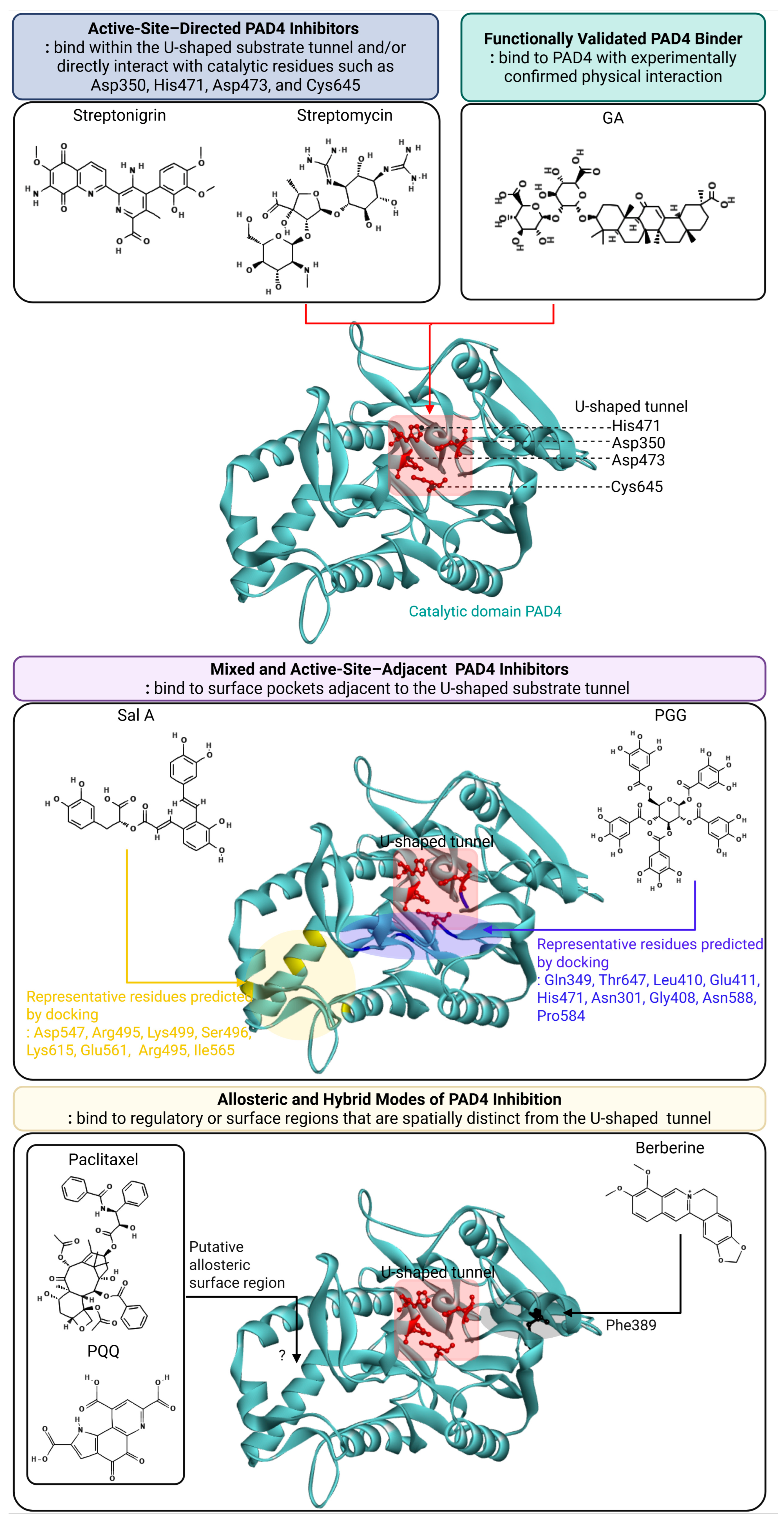
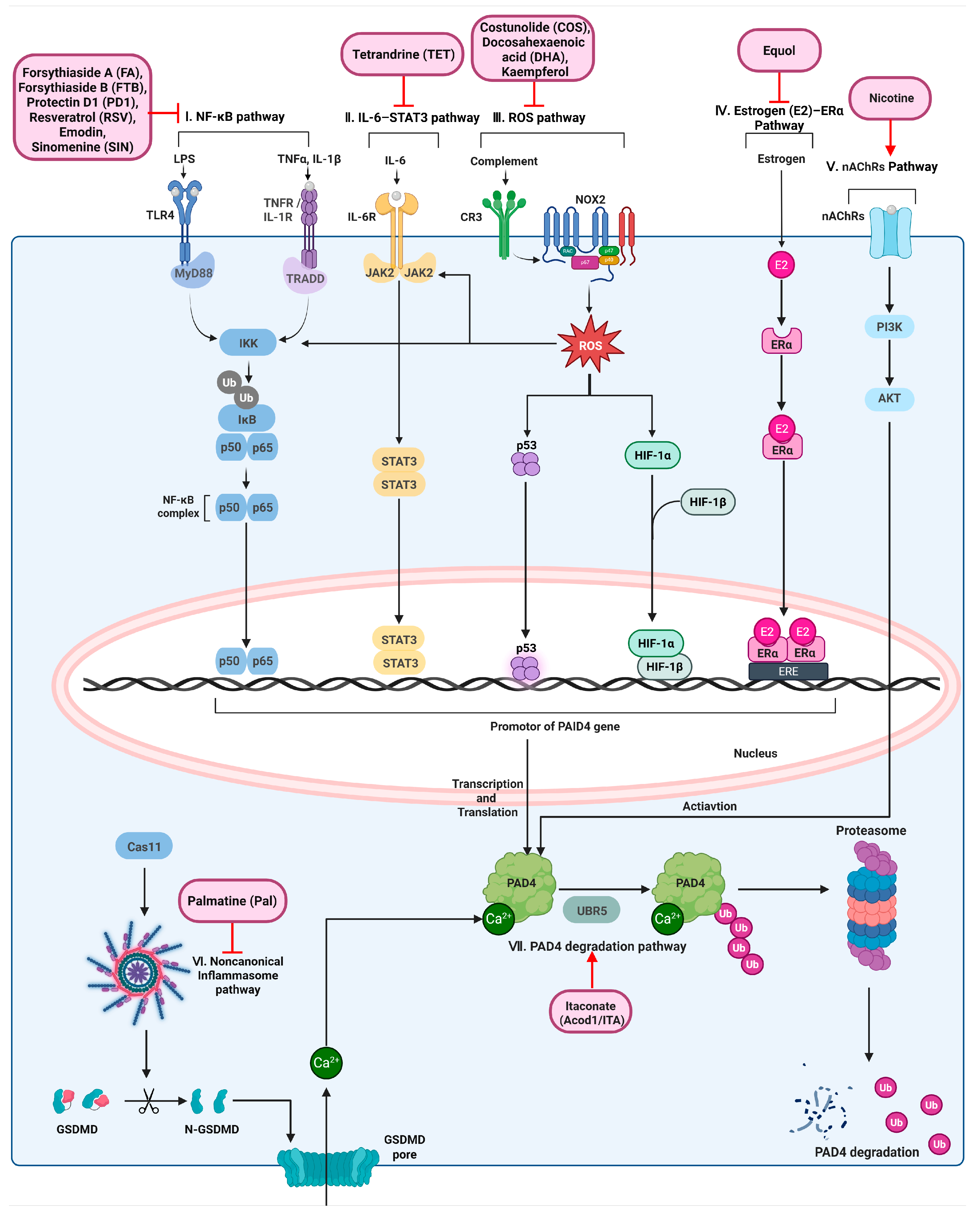
Peptidyl arginine deiminase 4 (PAD4) is a Ca2+-dependent enzyme that catalyzes histone citrullination and plays a central role in chromatin decondensation during neutrophil extracellular trap (NET) formation. Dysregulated PAD4-mediated NETosis contributes to the pathogenesis of diverse inflammatory and immune-related diseases, including autoimmune disorders, cancer, and thrombosis. Although several synthetic PAD4 inhibitors have been developed, their therapeutic application has been limited by issues related to selectivity, irreversible covalent reactivity, and suboptimal pharmacokinetic properties, prompting growing interest in natural products as alternative modulators of PAD4 activity and NETosis. This article presents a structural and mechanistic overview of natural products that target PAD4 and regulate NETosis. Based on enzyme kinetics, structural analyses, and functional validation, natural PAD4 modulators are classified into four categories: (i) active-site-directed inhibitors that bind within the U-shaped substrate tunnel, (ii) mixed and active-site-adjacent inhibitors that engage surface pockets flanking the catalytic site, (iii) allosteric and hybrid modulators that bind to regulatory regions distinct from the active site, and (iv) functionally validated PAD4 binders supported by biophysical and cellular evidence. Integration of structural, biochemical, and cellular data highlights that indirect or noncanonical modes of PAD4 regulation represent biologically coherent strategies for controlling pathological NETosis.
Keywords: PAD4; NETosis; natural products PAD4; NETosis; natural products