A Single-Cell Perspective on Remapping Human Adult Neurogenesis and Its Clinical Implications



Abstract
1. Introduction
2. scRNA-Seq Brings New Dimensions to Neurology Research
3. scRNA-Seq Advancing the Study of AHN in Mammals
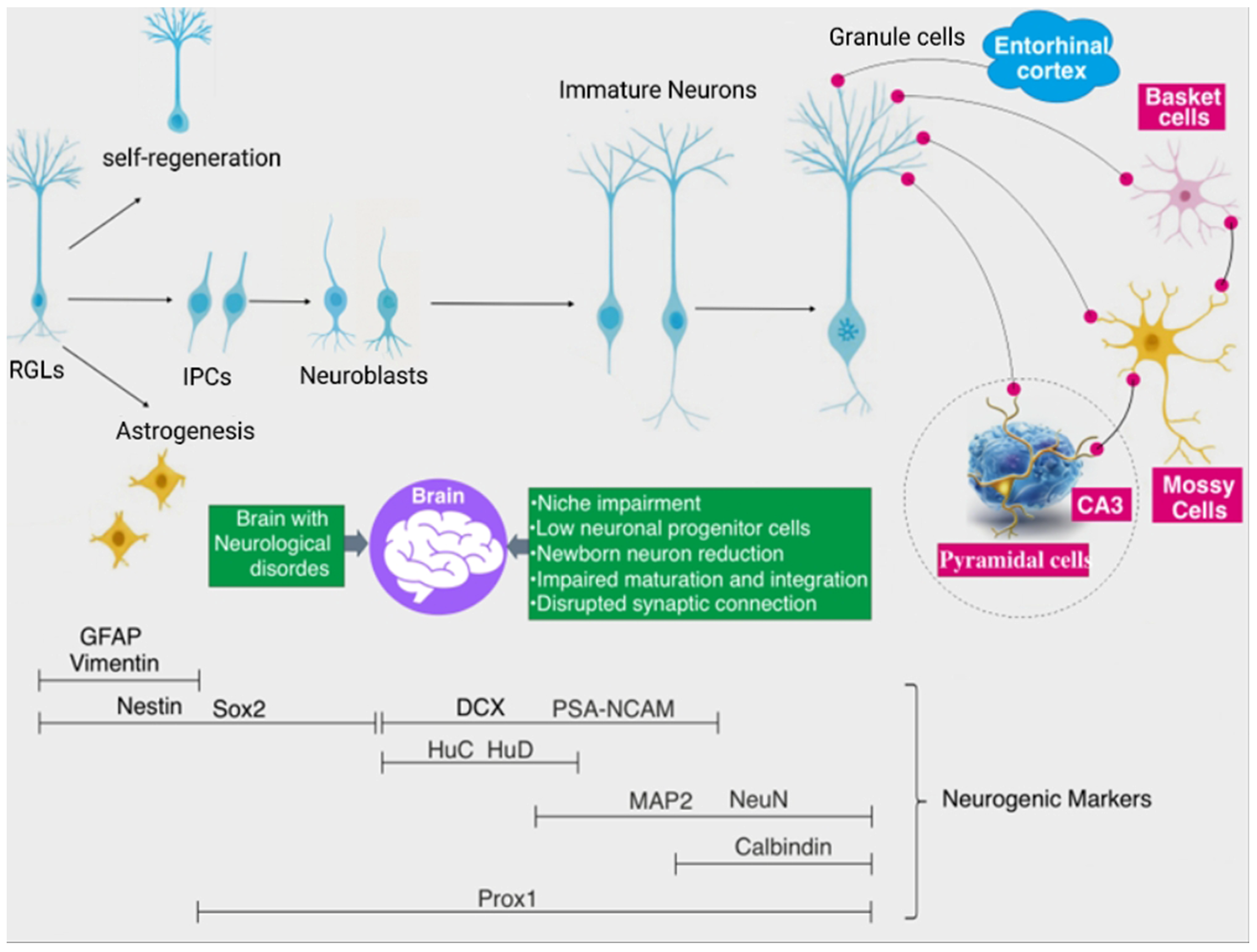
3.1. Molecular Regulation of AHN
3.2. Mapping AHN in Mammals with scRNA-Seq
3.3. Profiling AHN in Non-Human Primates with scRNA-Seq
4. snRNA-Seq Reshapes AHN Research in Humans
4.1. Debates on Human AHN
4.2. snRNA-Seq Reveals Novel Evidence on AHN in the Human Brain
4.3. snRNA-Seq Can Discover Neuronal Progenitors in the Human Hippocampus
4.4. snRNA-Seq Mapping Neurogenic Trajectories in the Human Hippocampus
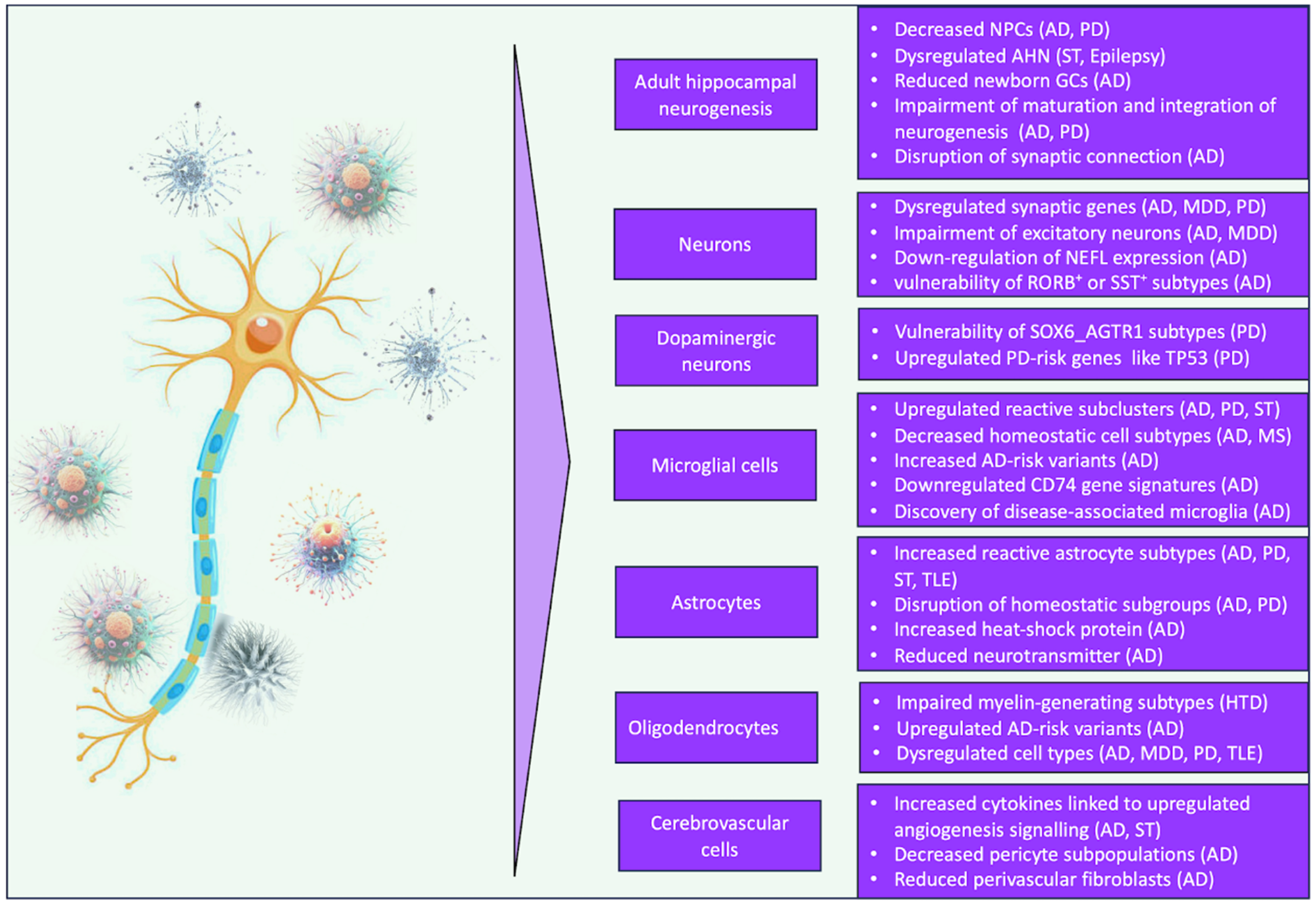
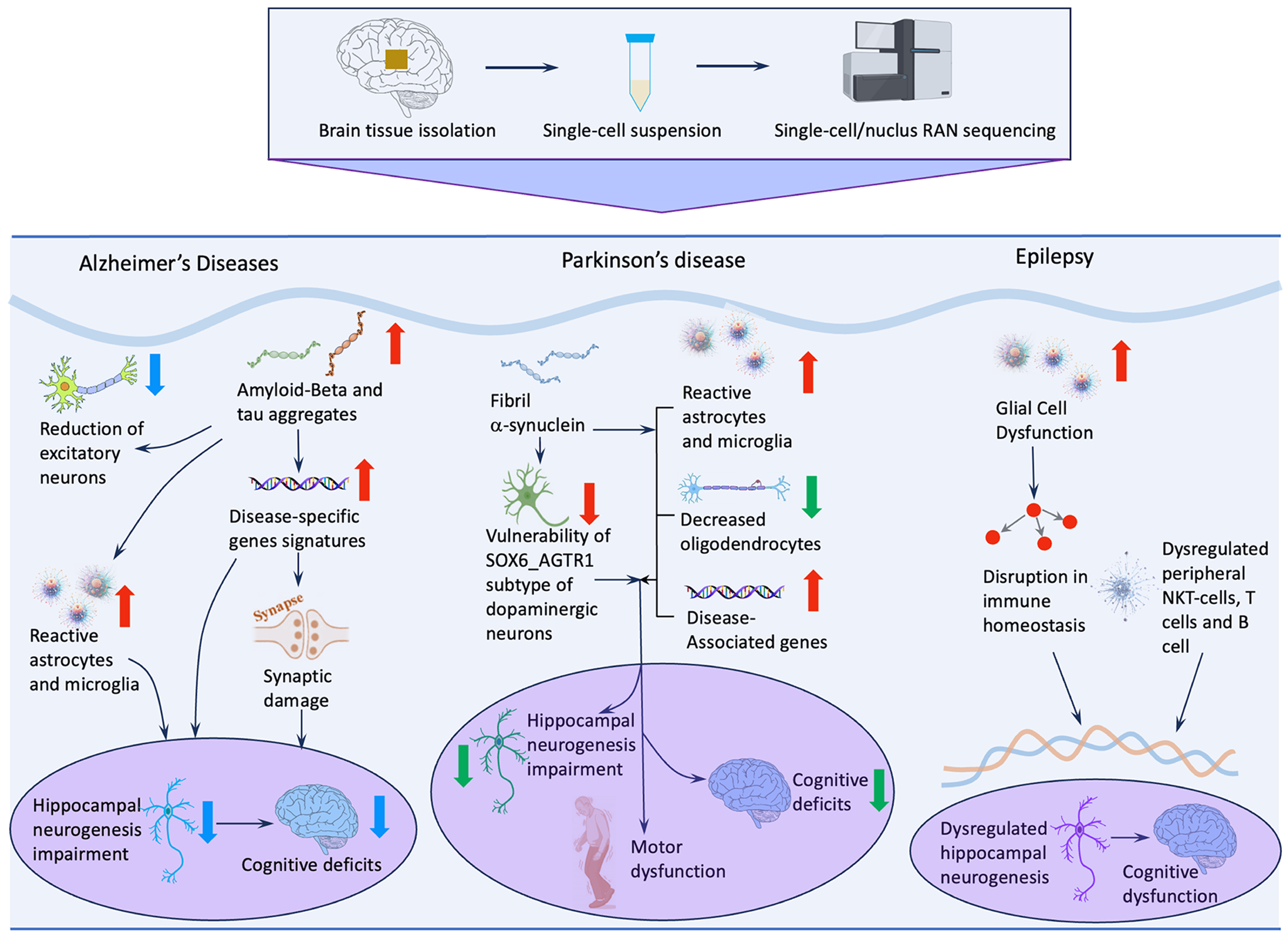
5. snRNA-Seq Profiles AHN in Neurological Disorders
5.1. snRNA-Seq Profiles AHN and Transcriptomic Features in Epilepsy
5.2. snRNA-Seq Reveals AHN Disruption and Transcriptomic Remodeling in AD
5.3. Application of snRNA-Seq in Other Neurological Disorders
6. Application of snRNA-Seq in Clinical Research
6.1. Insights into Hippocampal Neurogenesis and Neurological Disorders
6.2. Revealing Disease Mechanisms and Pathways
6.3. Enhancing Diagnostic Accuracy and Targeting Therapy
7. Conclusions
Author Contributions
Funding
Institutional Review Board Statement
Informed Consent Statement
Data Availability Statement
Conflicts of Interest
Abbreviations
| AHN | Adult Hippocampal Neurogenesis |
| scRNA-seq | Single-cell RNA sequencing |
| snRNA-seq | Single-nucleus RNA sequencing |
| AD | Alzheimer’s Disease |
| PD | Parkinson’s Disease |
| NSCs | Neural Stem Cells |
| IHC | Immunohistochemistry |
| SGZ | Subgranular Zone |
| PS | Pattern Separation |
| DEGs | Differentially Expressed Genes |
| ERPs | Embryonic Radial Precursors |
| NHPs | Non-Human Primates |
| BrdU | Bromodeoxyuridine |
| DCX | Doublecortin |
| PSA-NCAM | Polysialylated Neural Cell Adhesion Molecule |
| ASCL1 | Achaete-Scute Family BHLH Transcription Factor 1 |
| HES6 | Hairy and Enhancer of Split 6 |
| LPAR1 | Lysophosphatidic Acid Receptor 1 |
| RGLs | Radial Glial Cells |
| MDD | Major Depressive Disorder |
| MS | Multiple Sclerosis |
| NFTs | Neurofibrillary Tangles |
| OPCs | Oligodendrocyte Precursor Cells |
| Mn | Manganese |
| IPD | Idiopathic Parkinson’s Disease |
| LRRK2 | Leucine-Rich Repeat Kinase 2 |
| SNCA | Alpha-Synuclein |
| DAM | Disease-Associated Microglia |
| BAG3 | BCL2-Associated Athanogene 3 |
| GBM | Glioblastoma Multiforme |
| SULT1E1 | Sulfotransferase Family 1E Member 1 |
| MO | Meningioma Organoid |
| NKT | Natural Killer T Cells |
| LE | Temporal Lobe Epilepsy |
| GFAP | Glial Fibrillary Acidic Protein |
| OLIG2 | Oligodendrocyte Transcription Factor 2 |
| PBMCs | Peripheral Blood Mononuclear Cells |
| PC | Poorly Controlled |
| WC | Well-Controlled |
| IL-1 | Interleukin-1 |
| TLR | Toll-Like Receptor |
| XRCC6 | X-Ray Repair Cross-Complementing Protein 6 |
| Csf1 | Colony-Stimulating Factor 1 |
| Ccl6 | Chemokine (C-C motif) Ligand 6 |
| Trem2 | Triggering Receptor Expressed on Myeloid Cells 2 |
| Tyrobp | TYRO Protein Tyrosine Kinase Binding Protein |
| Clec7a | C-Type Lectin Domain Family 7 Member A |
| APP/PS1 | Amyloid Precursor Protein/Presenilin 1 |
| PSEN1-E280A | Presenilin 1 E280A Mutation |
| APOE3 | Apolipoprotein E3 |
| Cplx1 | Complexin-1 |
| iPSC | Induced Pluripotent Stem Cell |
| IGSF3 | Immunoglobulin Superfamily Member 3 |
| EEF1A1 | Eukaryotic Translation Elongation Factor 1 Alpha 1 |
| GLUL | Glutamine Synthetase |
| KIAA1217 | Protein KIAA1217 |
| LDLRAD3 | Low-Density Lipoprotein Receptor Adaptor Protein 3 |
| CX3CR1 | CX3C Chemokine Receptor 1 |
| P2RY12 | Purinergic Receptor P2Y12 |
| P2RY13 | Purinergic Receptor P2Y13 |
| HLA-E | Human Leukocyte Antigen-E |
| MEF2C | Myocyte Enhancer Factor 2C |
| NFKBIA | NF-Kappa-B Inhibitor Alpha |
| CRYAB | Crystallin Alpha B |
| HSP1A1 | Heat Shock Protein Family A Member 1 |
| HSBP1 | Heat Shock Factor Binding Protein 1 |
| HSP90AA1 | Heat Shock Protein 90 Alpha Family Class A Member 1 |
| NEAT1 | Nuclear-Enriched Abundant Transcript 1 |
| NRXN1 | Neurexin 1 |
| NRXN3 | Neurexin 3 |
| ETNPPL | Ethanolamine Phosphotransferase 1-Like Protein |
| STMN1 | Stathmin 1 |
| STMN2 | Stathmin 2 |
References
- Zhou, Y.; Su, Y.; Li, S.; Kennedy, B.C.; Zhang, D.Y.; Bond, A.M.; Sun, Y.; Jacob, F.; Lu, L.; Hu, P.; et al. Molecular landscapes of human hippocampal immature neurons across lifespan. Nature 2022, 607, 527–533. [Google Scholar] [CrossRef] [PubMed]
- Tosoni, G.; Ayyildiz, D.; Bryois, J.; Macnair, W.; Fitzsimons, C.P.; Lucassen, P.J.; Salta, E. Mapping human adult hippocampal neurogenesis with single-cell transcriptomics: Reconciling controversy or fueling the debate? Neuron 2023, 111, 1714–1731.e3. [Google Scholar] [CrossRef] [PubMed]
- Colonna, M.; Brioschi, S. Neuroinflammation and neurodegeneration in human brain at single-cell resolution. Nat. Rev. Immunol. 2019, 20, 81–82. [Google Scholar] [CrossRef] [PubMed]
- Kempermann, G.; Gage, F.H.; Aigner, L.; Song, H.; Curtis, M.A.; Thuret, S.; Kuhn, H.G.; Jessberger, S.; Frankland, P.W.; Cameron, H.A.; et al. Human Adult Neurogenesis: Evidence and Remaining Questions. Cell Stem Cell 2018, 23, 25–30. [Google Scholar] [CrossRef]
- Terreros-Roncal, J.; Moreno-Jiménez, E.P.; Flor-García, M.; Rodríguez-Moreno, C.B.; Trinchero, M.F.; Cafini, F.; Rábano, A.; Llorens-Martín, M. Impact of neurodegenerative diseases on human adult hippocampal neurogenesis. Science 2021, 374, 1106–1113. [Google Scholar] [CrossRef]
- Mathews, K.J.; Allen, K.M.; Boerrigter, D.; Ball, H.; Shannon Weickert, C.; Double, K.L. Evidence for reduced neurogenesis in the aging human hippocampus despite stable stem cell markers. Aging Cell 2017, 16, 1195–1199. [Google Scholar] [CrossRef]
- Moreno-Jimenez, E.P.; Terreros-Roncal, J.; Flor-Garcia, M.; Rabano, A.; Llorens-Martin, M. Evidences for Adult Hippocampal Neurogenesis in Humans. J. Neurosci. 2021, 41, 2541–2553. [Google Scholar] [CrossRef]
- Sorrells, S.F.; Paredes, M.F.; Zhang, Z.; Kang, G.; Pastor-Alonso, O.; Biagiotti, S.; Page, C.E.; Sandoval, K.; Knox, A.; Connolly, A.; et al. Positive Controls in Adults and Children Support That Very Few, If Any, New Neurons Are Born in the Adult Human Hippocampus. J. Neurosci. 2021, 41, 2554–2565. [Google Scholar] [CrossRef]
- Flor-Garcia, M.; Terreros-Roncal, J.; Moreno-Jimenez, E.P.; Avila, J.; Rabano, A.; Llorens-Martin, M. Unraveling human adult hippocampal neurogenesis. Nat. Protoc. 2020, 15, 668–693. [Google Scholar] [CrossRef]
- Jovic, D.; Liang, X.; Zeng, H.; Lin, L.; Xu, F.; Luo, Y. Single-cell RNA sequencing technologies and applications: A brief overview. Clin. Transl. Med. 2022, 12, e694. [Google Scholar] [CrossRef]
- Luecken, M.D.; Theis, F.J. Current best practices in single-cell RNA-seq analysis: A tutorial. Mol. Syst. Biol. 2019, 15, e8746. [Google Scholar] [CrossRef] [PubMed]
- Stark, R.; Grzelak, M.; Hadfield, J. RNA sequencing: The teenage years. Nat. Rev. Genet. 2019, 20, 631–656. [Google Scholar] [CrossRef] [PubMed]
- Murdock, M.H.; Tsai, L.-H. Insights into Alzheimer’s disease from single-cell genomic approaches. Nat. Neurosci. 2023, 26, 181–195. [Google Scholar] [CrossRef]
- Jerber, J.; Seaton, D.D.; Cuomo, A.S.E.; Kumasaka, N.; Haldane, J.; Steer, J.; Patel, M.; Pearce, D.; Andersson, M.; Bonder, M.J.; et al. Population-scale single-cell RNA-seq profiling across dopaminergic neuron differentiation. Nat. Genet. 2021, 53, 304–312. [Google Scholar] [CrossRef]
- Luquez, T.; Gaur, P.; Kosater, I.M.; Lam, M.; Lee, D.I.; Mares, J.; Paryani, F.; Yadav, A.; Menon, V. Cell type-specific changes identified by single-cell transcriptomics in Alzheimer’s disease. Genome Med. 2022, 14, 136. [Google Scholar] [CrossRef]
- Masuda, T.; Sankowski, R.; Staszewski, O.; Bottcher, C.; Amann, L.; Sagar; Scheiwe, C.; Nessler, S.; Kunz, P.; van Loo, G.; et al. Spatial and temporal heterogeneity of mouse and human microglia at single-cell resolution. Nature 2019, 566, 388–392. [Google Scholar] [CrossRef] [PubMed]
- Tran, M.N.; Maynard, K.R.; Spangler, A.; Huuki, L.A.; Montgomery, K.D.; Sadashivaiah, V.; Tippani, M.; Barry, B.K.; Hancock, D.B.; Hicks, S.C.; et al. Single-nucleus transcriptome analysis reveals cell-type-specific molecular signatures across reward circuitry in the human brain. Neuron 2021, 109, 3088–3103.e5. [Google Scholar] [CrossRef]
- Van de Sande, B.; Lee, J.S.; Mutasa-Gottgens, E.; Naughton, B.; Bacon, W.; Manning, J.; Wang, Y.; Pollard, J.; Mendez, M.; Hill, J.; et al. Applications of single-cell RNA sequencing in drug discovery and development. Nat. Rev. Drug Discov. 2023, 22, 496–520. [Google Scholar] [CrossRef]
- Altman, J.; Das, G.D. Post-natal origin of microneurones in the rat brain. Nature 1965, 207, 953–956. [Google Scholar] [CrossRef]
- Clelland, C.D.; Choi, M.; Romberg, C.; Clemenson, G.D., Jr.; Fragniere, A.; Tyers, P.; Jessberger, S.; Saksida, L.M.; Barker, R.A.; Gage, F.H.; et al. A functional role for adult hippocampal neurogenesis in spatial pattern separation. Science 2009, 325, 210–213. [Google Scholar] [CrossRef]
- Akers, K.G.; Martinez-Canabal, A.; Restivo, L.; Yiu, A.P.; De Cristofaro, A.; Hsiang, H.L.; Wheeler, A.L.; Guskjolen, A.; Niibori, Y.; Shoji, H.; et al. Hippocampal neurogenesis regulates forgetting during adulthood and infancy. Science 2014, 344, 598–602. [Google Scholar] [CrossRef] [PubMed]
- Hao, Z.-Z.; Wei, J.-R.; Xiao, D.; Liu, R.; Xu, N.; Tang, L.; Huang, M.; Shen, Y.; Xing, C.; Huang, W.; et al. Single-cell transcriptomics of adult macaque hippocampus reveals neural precursor cell populations. Nat. Neurosci. 2022, 25, 805–817. [Google Scholar] [CrossRef]
- Franjic, D.; Skarica, M.; Ma, S.; Arellano, J.I.; Tebbenkamp, A.T.N.; Choi, J.; Xu, C.; Li, Q.; Morozov, Y.M.; Andrijevic, D.; et al. Transcriptomic taxonomy and neurogenic trajectories of adult human, macaque, and pig hippocampal and entorhinal cells. Neuron 2022, 110, 452–469.e414. [Google Scholar] [CrossRef]
- Sorrells, S.F.; Paredes, M.F.; Cebrian-Silla, A.; Sandoval, K.; Qi, D.; Kelley, K.W.; James, D.; Mayer, S.; Chang, J.; Auguste, K.I.; et al. Human hippocampal neurogenesis drops sharply in children to undetectable levels in adults. Nature 2018, 555, 377–381. [Google Scholar] [CrossRef]
- Boldrini, M.; Fulmore, C.A.; Tartt, A.N.; Simeon, L.R.; Pavlova, I.; Poposka, V.; Rosoklija, G.B.; Stankov, A.; Arango, V.; Dwork, A.J.; et al. Human Hippocampal Neurogenesis Persists throughout Aging. Cell Stem Cell 2018, 22, 589–599 e585. [Google Scholar] [CrossRef]
- Wang, W.; Wang, M.; Yang, M.; Zeng, B.; Qiu, W.; Ma, Q.; Jing, X.; Zhang, Q.; Wang, B.; Yin, C.; et al. Transcriptome dynamics of hippocampal neurogenesis in macaques across the lifespan and aged humans. Cell Res. 2022, 32, 729–743. [Google Scholar] [CrossRef]
- Miller, S.M.; Sahay, A. Functions of adult-born neurons in hippocampal memory interference and indexing. Nat. Neurosci. 2019, 22, 1565–1575. [Google Scholar] [CrossRef] [PubMed]
- Otsuki, L.; Brand, A.H. Quiescent Neural Stem Cells for Brain Repair and Regeneration: Lessons from Model Systems. Trends Neurosci. 2020, 43, 213–226. [Google Scholar] [CrossRef]
- Welberg, L. Adult neurogenesis is altered in neurodegenerative disease. Nat. Neurosci. 2021, 24, 1640. [Google Scholar] [CrossRef]
- Surget, A.; Belzung, C. Adult hippocampal neurogenesis shapes adaptation and improves stress response: A mechanistic and integrative perspective. Mol. Psychiatry 2022, 27, 403–421. [Google Scholar] [CrossRef] [PubMed]
- Denoth-Lippuner, A.; Jessberger, S. Formation and integration of new neurons in the adult hippocampus. Nat. Rev. Neurosci. 2021, 22, 223–236. [Google Scholar] [CrossRef] [PubMed]
- Kalinina, A.; Lagace, D. Single-Cell and Single-Nucleus RNAseq Analysis of Adult Neurogenesis. Cells 2022, 11, 1633. [Google Scholar] [CrossRef]
- Artegiani, B.; Lyubimova, A.; Muraro, M.; van Es, J.H.; van Oudenaarden, A.; Clevers, H. A Single-Cell RNA Sequencing Study Reveals Cellular and Molecular Dynamics of the Hippocampal Neurogenic Niche. Cell Rep. 2017, 21, 3271–3284. [Google Scholar] [CrossRef]
- Allen, W.E.; Blosser, T.R.; Sullivan, Z.A.; Dulac, C.; Zhuang, X. Molecular and spatial signatures of mouse brain aging at single-cell resolution. Cell 2023, 186, 194–208.e18. [Google Scholar] [CrossRef] [PubMed]
- Potter, S.S. Single-cell RNA sequencing for the study of development, physiology and disease. Nat. Rev. Nephrol. 2018, 14, 479–492. [Google Scholar] [CrossRef] [PubMed]
- Walter, T.J.; Suter, R.K.; Ayad, N.G. An overview of human single-cell RNA sequencing studies in neurobiological disease. Neurobiol. Dis. 2023, 184, 106201. [Google Scholar] [CrossRef]
- Ma, S.X.; Lim, S.B. Single-Cell RNA Sequencing in Parkinson’s Disease. Biomedicines 2021, 9, 368. [Google Scholar] [CrossRef]
- Drew, M.R.; Hen, R. Adult hippocampal neurogenesis as target for the treatment of depression. CNS Neurol. Disord. Drug Targets 2007, 6, 205–218. [Google Scholar] [CrossRef]
- Tanaka, N.; Katayama, S.; Reddy, A.; Nishimura, K.; Niwa, N.; Hongo, H.; Ogihara, K.; Kosaka, T.; Mizuno, R.; Kikuchi, E.; et al. Single-cell RNA-seq analysis reveals the platinum resistance gene COX7B and the surrogate marker CD63. Cancer Med. 2018, 7, 6193–6204. [Google Scholar] [CrossRef]
- Jang, J.S.; Li, Y.; Mitra, A.K.; Bi, L.; Abyzov, A.; van Wijnen, A.J.; Baughn, L.B.; Van Ness, B.; Rajkumar, V.; Kumar, S.; et al. Molecular signatures of multiple myeloma progression through single cell RNA-Seq. Blood Cancer J. 2019, 9, 2. [Google Scholar] [CrossRef]
- Cohen, Y.C.; Zada, M.; Wang, S.Y.; Bornstein, C.; David, E.; Moshe, A.; Li, B.; Shlomi-Loubaton, S.; Gatt, M.E.; Gur, C.; et al. Identification of resistance pathways and therapeutic targets in relapsed multiple myeloma patients through single-cell sequencing. Nat. Med. 2021, 27, 491–503. [Google Scholar] [CrossRef] [PubMed]
- Lang, C.; Campbell, K.R.; Ryan, B.J.; Carling, P.; Attar, M.; Vowles, J.; Perestenko, O.V.; Bowden, R.; Baig, F.; Kasten, M.; et al. Single-Cell Sequencing of iPSC-Dopamine Neurons Reconstructs Disease Progression and Identifies HDAC4 as a Regulator of Parkinson Cell Phenotypes. Cell Stem Cell 2019, 24, 93–106.e6. [Google Scholar] [CrossRef]
- Urban, N.; van den Berg, D.L.; Forget, A.; Andersen, J.; Demmers, J.A.; Hunt, C.; Ayrault, O.; Guillemot, F. Return to quiescence of mouse neural stem cells by degradation of a proactivation protein. Science 2016, 353, 292–295. [Google Scholar] [CrossRef] [PubMed]
- Bonaguidi, M.A.; Wheeler, M.A.; Shapiro, J.S.; Stadel, R.P.; Sun, G.J.; Ming, G.L.; Song, H. In vivo clonal analysis reveals self-renewing and multipotent adult neural stem cell characteristics. Cell 2011, 145, 1142–1155. [Google Scholar] [CrossRef] [PubMed]
- Guo, N.N.; Sahay, A. Neural Circuits Serve as Periscopes for NSCs. Cell Stem Cell 2017, 21, 557–559. [Google Scholar] [CrossRef]
- Paul, A.; Chaker, Z.; Doetsch, F. Hypothalamic regulation of regionally distinct adult neural stem cells and neurogenesis. Science 2017, 356, 1383–1386. [Google Scholar] [CrossRef]
- Furutachi, S.; Matsumoto, A.; Nakayama, K.I.; Gotoh, Y. p57 controls adult neural stem cell quiescence and modulates the pace of lifelong neurogenesis. EMBO J. 2013, 32, 970–981. [Google Scholar] [CrossRef]
- Bouchard-Cannon, P.; Lowden, C.; Trinh, D.; Cheng, H.-Y.M. Dexras1 is a homeostatic regulator of exercise-dependent proliferation and cell survival in the hippocampal neurogenic niche. Sci. Rep. 2018, 8, 5294. [Google Scholar] [CrossRef]
- Pilz, G.A.; Bottes, S.; Betizeau, M.; Jorg, D.J.; Carta, S.; Simons, B.D.; Helmchen, F.; Jessberger, S. Live imaging of neurogenesis in the adult mouse hippocampus. Science 2018, 359, 658–662. [Google Scholar] [CrossRef]
- Toni, N.; Laplagne, D.A.; Zhao, C.; Lombardi, G.; Ribak, C.E.; Gage, F.H.; Schinder, A.F. Neurons born in the adult dentate gyrus form functional synapses with target cells. Nat. Neurosci. 2008, 11, 901–907. [Google Scholar] [CrossRef]
- Toni, N.; Teng, E.M.; Bushong, E.A.; Aimone, J.B.; Zhao, C.; Consiglio, A.; van Praag, H.; Martone, M.E.; Ellisman, M.H.; Gage, F.H. Synapse formation on neurons born in the adult hippocampus. Nat. Neurosci. 2007, 10, 727–734. [Google Scholar] [CrossRef] [PubMed]
- Sierra, A.; Encinas, J.M.; Deudero, J.J.P.; Chancey, J.H.; Enikolopov, G.; Overstreet-Wadiche, L.S.; Tsirka, S.E.; Maletic-Savatic, M. Microglia Shape Adult Hippocampal Neurogenesis through Apoptosis-Coupled Phagocytosis. Cell Stem Cell 2010, 7, 483–495. [Google Scholar] [CrossRef]
- Tashiro, A.; Sandler, V.M.; Toni, N.; Zhao, C.; Gage, F.H. NMDA-receptor-mediated, cell-specific integration of new neurons in adult dentate gyrus. Nature 2006, 442, 929–933. [Google Scholar] [CrossRef]
- Sun, G.J.; Sailor, K.A.; Mahmood, Q.A.; Chavali, N.; Christian, K.M.; Song, H.; Ming, G.l. Seamless Reconstruction of Intact Adult-Born Neurons by Serial End-Block Imaging Reveals Complex Axonal Guidance and Development in the Adult Hippocampus. J. Neurosci. 2013, 33, 11400–11411. [Google Scholar] [CrossRef]
- Pan, Y.W.; Chan, G.C.; Kuo, C.T.; Storm, D.R.; Xia, Z. Inhibition of adult neurogenesis by inducible and targeted deletion of ERK5 mitogen-activated protein kinase specifically in adult neurogenic regions impairs contextual fear extinction and remote fear memory. J. Neurosci. 2012, 32, 6444–6455. [Google Scholar] [CrossRef] [PubMed]
- Zhang, J.; Ji, F.; Liu, Y.; Lei, X.; Li, H.; Ji, G.; Yuan, Z.; Jiao, J. Ezh2 regulates adult hippocampal neurogenesis and memory. J. Neurosci. 2014, 34, 5184–5199. [Google Scholar] [CrossRef] [PubMed]
- Marr, D. Simple memory: A theory for archicortex. Philos. Trans. R. Soc. Lond. B Biol. Sci. 1971, 262, 23–81. [Google Scholar] [CrossRef]
- O’Reilly, R.C.; McClelland, J.L. Hippocampal conjunctive encoding, storage, and recall: Avoiding a trade-off. Hippocampus 1994, 4, 661–682. [Google Scholar] [CrossRef]
- Berron, D.; Schutze, H.; Maass, A.; Cardenas-Blanco, A.; Kuijf, H.J.; Kumaran, D.; Duzel, E. Strong Evidence for Pattern Separation in Human Dentate Gyrus. J. Neurosci. 2016, 36, 7569–7579. [Google Scholar] [CrossRef]
- Bakker, A.; Kirwan, C.B.; Miller, M.; Stark, C.E. Pattern separation in the human hippocampal CA3 and dentate gyrus. Science 2008, 319, 1640–1642. [Google Scholar] [CrossRef]
- Leutgeb, J.K.; Leutgeb, S.; Moser, M.B.; Moser, E.I. Pattern separation in the dentate gyrus and CA3 of the hippocampus. Science 2007, 315, 961–966. [Google Scholar] [CrossRef] [PubMed]
- Neunuebel, J.P.; Knierim, J.J. CA3 retrieves coherent representations from degraded input: Direct evidence for CA3 pattern completion and dentate gyrus pattern separation. Neuron 2014, 81, 416–427. [Google Scholar] [CrossRef]
- Leal, S.L.; Yassa, M.A. Integrating new findings and examining clinical applications of pattern separation. Nat. Neurosci. 2018, 21, 163–173. [Google Scholar] [CrossRef]
- Arruda-Carvalho, M.; Sakaguchi, M.; Akers, K.G.; Josselyn, S.A.; Frankland, P.W. Posttraining ablation of adult-generated neurons degrades previously acquired memories. J. Neurosci. 2011, 31, 15113–15127. [Google Scholar] [CrossRef]
- Wang, W.; Pan, Y.W.; Zou, J.; Li, T.; Abel, G.M.; Palmiter, R.D.; Storm, D.R.; Xia, Z. Genetic activation of ERK5 MAP kinase enhances adult neurogenesis and extends hippocampus-dependent long-term memory. J. Neurosci. 2014, 34, 2130–2147. [Google Scholar] [CrossRef]
- Frankland, P.W.; Kohler, S.; Josselyn, S.A. Hippocampal neurogenesis and forgetting. Trends Neurosci. 2013, 36, 497–503. [Google Scholar] [CrossRef]
- Goncalves, J.T.; Schafer, S.T.; Gage, F.H. Adult Neurogenesis in the Hippocampus: From Stem Cells to Behavior. Cell 2016, 167, 897–914. [Google Scholar] [CrossRef]
- Zhao, C.; Deng, W.; Gage, F.H. Mechanisms and functional implications of adult neurogenesis. Cell 2008, 132, 645–660. [Google Scholar] [CrossRef]
- Winner, B.; Winkler, J. Adult neurogenesis in neurodegenerative diseases. Cold Spring Harb. Perspect. Biol. 2015, 7, a021287. [Google Scholar] [CrossRef] [PubMed]
- Zeisel, A.; Munoz-Manchado, A.B.; Codeluppi, S.; Lonnerberg, P.; La Manno, G.; Jureus, A.; Marques, S.; Munguba, H.; He, L.; Betsholtz, C.; et al. Brain structure. Cell types in the mouse cortex and hippocampus revealed by single-cell RNA-seq. Science 2015, 347, 1138–1142. [Google Scholar] [CrossRef] [PubMed]
- Földy, C.; Darmanis, S.; Aoto, J.; Malenka, R.C.; Quake, S.R.; Südhof, T.C. Single-cell RNAseq reveals cell adhesion molecule profiles in electrophysiologically defined neurons. Proc. Natl. Acad. Sci. USA 2016, 113, E5222–E5231. [Google Scholar] [CrossRef]
- Lake, B.B.; Ai, R.; Kaeser, G.E.; Salathia, N.S.; Yung, Y.C.; Liu, R.; Wildberg, A.; Gao, D.; Fung, H.L.; Chen, S.; et al. Neuronal subtypes and diversity revealed by single-nucleus RNA sequencing of the human brain. Science 2016, 352, 1586–1590. [Google Scholar] [CrossRef]
- La Manno, G.; Gyllborg, D.; Codeluppi, S.; Nishimura, K.; Salto, C.; Zeisel, A.; Borm, L.E.; Stott, S.R.W.; Toledo, E.M.; Villaescusa, J.C.; et al. Molecular Diversity of Midbrain Development in Mouse, Human, and Stem Cells. Cell 2016, 167, 566–580.e19. [Google Scholar] [CrossRef]
- Gokce, O.; Stanley, G.M.; Treutlein, B.; Neff, N.F.; Camp, J.G.; Malenka, R.C.; Rothwell, P.E.; Fuccillo, M.V.; Südhof, T.C.; Quake, S.R. Cellular Taxonomy of the Mouse Striatum as Revealed by Single-Cell RNA-Seq. Cell Rep. 2016, 16, 1126–1137. [Google Scholar] [CrossRef] [PubMed]
- Borrett, M.J.; Innes, B.T.; Jeong, D.; Tahmasian, N.; Storer, M.A.; Bader, G.D.; Kaplan, D.R.; Miller, F.D. Single-Cell Profiling Shows Murine Forebrain Neural Stem Cells Reacquire a Developmental State when Activated for Adult Neurogenesis. Cell Rep. 2020, 32, 108022. [Google Scholar] [CrossRef]
- Aizawa, K.; Ageyama, N.; Terao, K.; Hisatsune, T. Primate-specific alterations in neural stem/progenitor cells in the aged hippocampus. Neurobiol. Aging 2011, 32, 140–150. [Google Scholar] [CrossRef] [PubMed]
- Ngwenya, L.B.; Rosene, D.L.; Peters, A. An ultrastructural characterization of the newly generated cells in the adult monkey dentate gyrus. Hippocampus 2008, 18, 210–220. [Google Scholar] [CrossRef]
- Gould, E.; Reeves, A.J.; Fallah, M.; Tanapat, P.; Gross, C.G.; Fuchs, E. Hippocampal neurogenesis in adult Old World primates. Proc. Natl. Acad. Sci. USA 1999, 96, 5263–5267. [Google Scholar] [CrossRef] [PubMed]
- Kornack, D.R.; Rakic, P. Continuation of neurogenesis in the hippocampus of the adult macaque monkey. Proc. Natl. Acad. Sci. USA 1999, 96, 5768–5773. [Google Scholar] [CrossRef]
- Kordower, J.H.; Chen, E.Y.; Morrison, J.H. Long-term gonadal hormone treatment and endogenous neurogenesis in the dentate gyrus of the adult female monkey. Exp. Neurol. 2010, 224, 252–257. [Google Scholar] [CrossRef]
- Ngwenya, L.B.; Heyworth, N.C.; Shwe, Y.; Moore, T.L.; Rosene, D.L. Age-related changes in dentate gyrus cell numbers, neurogenesis, and associations with cognitive impairments in the rhesus monkey. Front. Syst. Neurosci. 2015, 9, 102. [Google Scholar] [CrossRef] [PubMed]
- Eckenhoff, M.F.; Rakic, P. Nature and fate of proliferative cells in the hippocampal dentate gyrus during the life span of the rhesus monkey. J. Neurosci. 1988, 8, 2729–2747. [Google Scholar] [CrossRef] [PubMed]
- Zhang, H.; Li, J.; Ren, J.; Sun, S.; Ma, S.; Zhang, W.; Yu, Y.; Cai, Y.; Yan, K.; Li, W.; et al. Single-nucleus transcriptomic landscape of primate hippocampal aging. Protein Cell 2021, 12, 695–716. [Google Scholar] [CrossRef]
- Abrous, D.N.; Koehl, M.; Lemoine, M. A Baldwin interpretation of adult hippocampal neurogenesis: From functional relevance to physiopathology. Mol. Psychiatry 2021, 27, 383–402. [Google Scholar] [CrossRef]
- Eriksson, P.S.; Perfilieva, E.; Björk-Eriksson, T.; Alborn, A.-M.; Nordborg, C.; Peterson, D.A.; Gage, F.H. Neurogenesis in the adult human hippocampus. Nat. Med. 1998, 4, 1313–1317. [Google Scholar] [CrossRef]
- Boldrini, M.; Underwood, M.D.; Hen, R.; Rosoklija, G.B.; Dwork, A.J.; John Mann, J.; Arango, V. Antidepressants increase neural progenitor cells in the human hippocampus. Neuropsychopharmacology 2009, 34, 2376–2389. [Google Scholar] [CrossRef] [PubMed]
- Crews, L.; Adame, A.; Patrick, C.; Delaney, A.; Pham, E.; Rockenstein, E.; Hansen, L.; Masliah, E. Increased BMP6 levels in the brains of Alzheimer’s disease patients and APP transgenic mice are accompanied by impaired neurogenesis. J. Neurosci. 2010, 30, 12252–12262. [Google Scholar] [CrossRef]
- Knoth, R.; Singec, I.; Ditter, M.; Pantazis, G.; Capetian, P.; Meyer, R.P.; Horvat, V.; Volk, B.; Kempermann, G. Murine features of neurogenesis in the human hippocampus across the lifespan from 0 to 100 years. PLoS ONE 2010, 5, e8809. [Google Scholar] [CrossRef]
- Ernst, A.; Alkass, K.; Bernard, S.; Salehpour, M.; Perl, S.; Tisdale, J.; Possnert, G.; Druid, H.; Frisen, J. Neurogenesis in the striatum of the adult human brain. Cell 2014, 156, 1072–1083. [Google Scholar] [CrossRef]
- Palmer, T.D.; Schwartz, P.H.; Taupin, P.; Kaspar, B.; Stein, S.A.; Gage, F.H. Cell culture. Progenitor cells from human brain after death. Nature 2001, 411, 42–43. [Google Scholar] [CrossRef]
- Dennis, C.V.; Suh, L.S.; Rodriguez, M.L.; Kril, J.J.; Sutherland, G.T. Human adult neurogenesis across the ages: An immunohistochemical study. Neuropathol. Appl. Neurobiol. 2016, 42, 621–638. [Google Scholar] [CrossRef]
- Liu, Y.W.J.; Curtis, M.A.; Gibbons, H.M.; Mee, E.W.; Bergin, P.S.; Teoh, H.H.; Connor, B.; Dragunow, M.; Faull, R.L.M. Doublecortin expression in the normal and epileptic adult human brain. Eur. J. Neurosci. 2008, 28, 2254–2265. [Google Scholar] [CrossRef]
- Cipriani, S.; Ferrer, I.; Aronica, E.; Kovacs, G.G.; Verney, C.; Nardelli, J.; Khung, S.; Delezoide, A.L.; Milenkovic, I.; Rasika, S.; et al. Hippocampal Radial Glial Subtypes and Their Neurogenic Potential in Human Fetuses and Healthy and Alzheimer’s Disease Adults. Cereb. Cortex 2018, 28, 2458–2478. [Google Scholar] [CrossRef]
- Terreros-Roncal, J.; Flor-Garcia, M.; Moreno-Jimenez, E.P.; Rodriguez-Moreno, C.B.; Marquez-Valadez, B.; Gallardo-Caballero, M.; Rabano, A.; Llorens-Martin, M. Methods to study adult hippocampal neurogenesis in humans and across the phylogeny. Hippocampus 2023, 33, 271–306. [Google Scholar] [CrossRef] [PubMed]
- Spalding, K.L.; Bergmann, O.; Alkass, K.; Bernard, S.; Salehpour, M.; Huttner, H.B.; Boström, E.; Westerlund, I.; Vial, C.; Buchholz, B.A.; et al. Dynamics of Hippocampal Neurogenesis in Adult Humans. Cell 2013, 153, 1219–1227. [Google Scholar] [CrossRef] [PubMed]
- Moreno-Jimenez, E.P.; Flor-Garcia, M.; Terreros-Roncal, J.; Rabano, A.; Cafini, F.; Pallas-Bazarra, N.; Avila, J.; Llorens-Martin, M. Adult hippocampal neurogenesis is abundant in neurologically healthy subjects and drops sharply in patients with Alzheimer’s disease. Nat. Med. 2019, 25, 554–560. [Google Scholar] [CrossRef]
- Seki, T.; Hori, T.; Miyata, H.; Maehara, M.; Namba, T. Analysis of proliferating neuronal progenitors and immature neurons in the human hippocampus surgically removed from control and epileptic patients. Sci. Rep. 2019, 9, 18194. [Google Scholar] [CrossRef]
- Hedlund, E.; Deng, Q. Single-cell RNA sequencing: Technical advancements and biological applications. Mol. Asp. Med. 2018, 59, 36–46. [Google Scholar] [CrossRef]
- Andrews, T.S.; Kiselev, V.Y.; McCarthy, D.; Hemberg, M. Tutorial: Guidelines for the computational analysis of single-cell RNA sequencing data. Nat. Protoc. 2021, 16, 1–9. [Google Scholar] [CrossRef] [PubMed]
- Habib, N.; Li, Y.; Heidenreich, M.; Swiech, L.; Avraham-Davidi, I.; Trombetta, J.J.; Hession, C.; Zhang, F.; Regev, A. Div-Seq: Single-nucleus RNA-Seq reveals dynamics of rare adult newborn neurons. Science 2016, 353, 925–928. [Google Scholar] [CrossRef]
- Pimpalwar, N.; Czuba, T.; Smith, M.L.; Nilsson, J.; Gidlöf, O.; Smith, J.G. Methods for isolation and transcriptional profiling of individual cells from the human heart. Heliyon 2020, 6, e05810. [Google Scholar] [CrossRef]
- Nayak, R.; Hasija, Y. A hitchhiker’s guide to single-cell transcriptomics and data analysis pipelines. Genomics 2021, 113, 606–619. [Google Scholar] [CrossRef]
- Leng, K.; Li, E.; Eser, R.; Piergies, A.; Sit, R.; Tan, M.; Neff, N.; Li, S.H.; Rodriguez, R.D.; Suemoto, C.K.; et al. Molecular characterization of selectively vulnerable neurons in Alzheimer’s disease. Nat. Neurosci. 2021, 24, 276–287. [Google Scholar] [CrossRef]
- Soriano, E.; Bakken, T.E.; Hodge, R.D.; Miller, J.A.; Yao, Z.; Nguyen, T.N.; Aevermann, B.; Barkan, E.; Bertagnolli, D.; Casper, T.; et al. Single-nucleus and single-cell transcriptomes compared in matched cortical cell types. PLoS ONE 2018, 13, e0209648. [Google Scholar]
- Tobin, M.K.; Musaraca, K.; Disouky, A.; Shetti, A.; Bheri, A.; Honer, W.G.; Kim, N.; Dawe, R.J.; Bennett, D.A.; Arfanakis, K.; et al. Human Hippocampal Neurogenesis Persists in Aged Adults and Alzheimer’s Disease Patients. Cell Stem Cell 2019, 24, 974–982.e3. [Google Scholar] [CrossRef]
- Ayhan, F.; Kulkarni, A.; Berto, S.; Sivaprakasam, K.; Douglas, C.; Lega, B.C.; Konopka, G. Resolving cellular and molecular diversity along the hippocampal anterior-to-posterior axis in humans. Neuron 2021, 109, 2091–2105.e6. [Google Scholar] [CrossRef] [PubMed]
- Dumitru, I.; Paterlini, M.; Zamboni, M.; Ziegenhain, C.; Giatrellis, S.; Saghaleyni, R.; Bjorklund, A.; Alkass, K.; Tata, M.; Druid, H.; et al. Identification of proliferating neural progenitors in the adult human hippocampus. Science 2025, 389, 58–63. [Google Scholar] [CrossRef] [PubMed]
- Habib, N.; Avraham-Davidi, I.; Basu, A.; Burks, T.; Shekhar, K.; Hofree, M.; Choudhury, S.R.; Aguet, F.; Gelfand, E.; Ardlie, K.; et al. Massively parallel single-nucleus RNA-seq with DroNc-seq. Nat. Methods 2017, 14, 955–958. [Google Scholar] [CrossRef]
- Grubman, A.; Chew, G.; Ouyang, J.F.; Sun, G.; Choo, X.Y.; McLean, C.; Simmons, R.K.; Buckberry, S.; Vargas-Landin, D.B.; Poppe, D.; et al. A single-cell atlas of entorhinal cortex from individuals with Alzheimer’s disease reveals cell-type-specific gene expression regulation. Nat. Neurosci. 2019, 22, 2087–2097. [Google Scholar] [CrossRef]
- Zhou, Y.; Song, W.M.; Andhey, P.S.; Swain, A.; Levy, T.; Miller, K.R.; Poliani, P.L.; Cominelli, M.; Grover, S.; Gilfillan, S.; et al. Human and mouse single-nucleus transcriptomics reveal TREM2-dependent and TREM2-independent cellular responses in Alzheimer’s disease. Nat. Med. 2020, 26, 131–142. [Google Scholar] [CrossRef]
- Cain, A.; Taga, M.; McCabe, C.; Green, G.S.; Hekselman, I.; White, C.C.; Lee, D.I.; Gaur, P.; Rozenblatt-Rosen, O.; Zhang, F. Multicellular communities are perturbed in the aging human brain and Alzheimer’s disease. Nat. Neurosci. 2023, 26, 1267–1280. [Google Scholar] [CrossRef]
- Lau, S.F.; Cao, H.; Fu, A.K.Y.; Ip, N.Y. Single-nucleus transcriptome analysis reveals dysregulation of angiogenic endothelial cells and neuroprotective glia in Alzheimer’s disease. Proc. Natl. Acad. Sci. USA 2020, 117, 25800–25809. [Google Scholar] [CrossRef]
- Olah, M.; Menon, V.; Habib, N.; Taga, M.F.; Ma, Y.; Yung, C.J.; Cimpean, M.; Khairallah, A.; Coronas-Samano, G.; Sankowski, R.; et al. Single cell RNA sequencing of human microglia uncovers a subset associated with Alzheimer’s disease. Nat. Commun. 2020, 11, 6129. [Google Scholar] [CrossRef]
- Gerrits, E.; Brouwer, N.; Kooistra, S.M.; Woodbury, M.E.; Vermeiren, Y.; Lambourne, M.; Mulder, J.; Kummer, M.; Moller, T.; Biber, K.; et al. Distinct amyloid-beta and tau-associated microglia profiles in Alzheimer’s disease. Acta Neuropathol. 2021, 141, 681–696. [Google Scholar] [CrossRef] [PubMed]
- Morabito, S.; Miyoshi, E.; Michael, N.; Shahin, S.; Martini, A.C.; Head, E.; Silva, J.; Leavy, K.; Perez-Rosendahl, M.; Swarup, V. Single-nucleus chromatin accessibility and transcriptomic characterization of Alzheimer’s disease. Nat. Genet. 2021, 53, 1143–1155. [Google Scholar] [CrossRef] [PubMed]
- Yang, A.C.; Vest, R.T.; Kern, F.; Lee, D.P.; Agam, M.; Maat, C.A.; Losada, P.M.; Chen, M.B.; Schaum, N.; Khoury, N.; et al. A human brain vascular atlas reveals diverse mediators of Alzheimer’s risk. Nature 2022, 603, 885–892. [Google Scholar] [CrossRef]
- Sadick, J.S.; O’Dea, M.R.; Hasel, P.; Dykstra, T.; Faustin, A.; Liddelow, S.A. Astrocytes and oligodendrocytes undergo subtype-specific transcriptional changes in Alzheimer’s disease. Neuron 2022, 110, 1788–1805.e10. [Google Scholar] [CrossRef] [PubMed]
- Adams, L.; Song, M.K.; Yuen, S.; Tanaka, Y.; Kim, Y.S. A single-nuclei paired multiomic analysis of the human midbrain reveals age- and Parkinson’s disease-associated glial changes. Nat. Aging 2024, 4, 364–378. [Google Scholar] [CrossRef]
- Smajic, S.; Prada-Medina, C.A.; Landoulsi, Z.; Ghelfi, J.; Delcambre, S.; Dietrich, C.; Jarazo, J.; Henck, J.; Balachandran, S.; Pachchek, S.; et al. Single-cell sequencing of human midbrain reveals glial activation and a Parkinson-specific neuronal state. Brain 2022, 145, 964–978. [Google Scholar] [CrossRef]
- Wang, P.; Luo, M.; Zhou, W.; Jin, X.; Xu, Z.; Yan, S.; Li, Y.; Xu, C.; Cheng, R.; Huang, Y.; et al. Global Characterization of Peripheral B Cells in Parkinson’s Disease by Single-Cell RNA and BCR Sequencing. Front. Immunol. 2022, 13, 814239. [Google Scholar] [CrossRef]
- Kamath, T.; Abdulraouf, A.; Burris, S.J.; Langlieb, J.; Gazestani, V.; Nadaf, N.M.; Balderrama, K.; Vanderburg, C.; Macosko, E.Z. Single-cell genomic profiling of human dopamine neurons identifies a population that selectively degenerates in Parkinson’s disease. Nat. Neurosci. 2022, 25, 588–595. [Google Scholar] [CrossRef] [PubMed]
- Sarkis, R.; Amer, H.; Mares, J.; Hobson, R.; Menon, V.; Pennell, P.; Elyaman, W. Single-Cell RNA and TCR Sequencing Reveals Novel Immune Cell Networks in Poorly Controlled Epilepsy. Neurology 2023, 100, 4667. [Google Scholar] [CrossRef]
- Walker, T.L.; Overall, R.W.; Vogler, S.; Sykes, A.M.; Ruhwald, S.; Lasse, D.; Ichwan, M.; Fabel, K.; Kempermann, G. Lysophosphatidic Acid Receptor Is a Functional Marker of Adult Hippocampal Precursor Cells. Stem Cell Rep. 2016, 6, 552–565. [Google Scholar] [CrossRef]
- Hochgerner, H.; Zeisel, A.; Lönnerberg, P.; Linnarsson, S. Conserved properties of dentate gyrus neurogenesis across postnatal development revealed by single-cell RNA sequencing. Nat. Neurosci. 2018, 21, 290–299. [Google Scholar] [CrossRef]
- Osmani, W.A.; Duffy, E.; Manis, A.; Rohde, N.; Mouradian, G.; Forster, H.; Staruschenko, A.; Hodges, M.R. Single Nuclear RNA Sequencing Reveals Activation of Neuroinflammation Within the Pre-Bötzinger Complex Following Repeated Seizures. FASEB J. 2022, 36, R3667. [Google Scholar] [CrossRef]
- Salta, E.; Lazarov, O.; Fitzsimons, C.P.; Tanzi, R.; Lucassen, P.J.; Choi, S.H. Adult hippocampal neurogenesis in Alzheimer’s disease: A roadmap to clinical relevance. Cell Stem Cell 2023, 30, 120–136. [Google Scholar] [CrossRef] [PubMed]
- Chen, Y.; Colonna, M. Microglia in Alzheimer’s disease at single-cell level. Are there common patterns in humans and mice? J. Exp. Med. 2021, 218, e20202717. [Google Scholar] [CrossRef]
- Otero-Garcia, M.; Mahajani, S.U.; Wakhloo, D.; Tang, W.; Xue, Y.Q.; Morabito, S.; Pan, J.; Oberhauser, J.; Madira, A.E.; Shakouri, T.; et al. Molecular signatures underlying neurofibrillary tangle susceptibility in Alzheimer’s disease. Neuron 2022, 110, 2929–2948.e8. [Google Scholar] [CrossRef]
- Slota, J.A.; Sajesh, B.V.; Frost, K.F.; Medina, S.J.; Booth, S.A. Dysregulation of neuroprotective astrocytes, a spectrum of microglial activation states, and altered hippocampal neurogenesis are revealed by single-cell RNA sequencing in prion disease. Acta Neuropathol. Commun. 2022, 10, 161. [Google Scholar] [CrossRef] [PubMed]
- Song, B.; Xiong, G.; Luo, H.; Zuo, Z.; Zhou, Z.; Chang, X. Single-cell RNA sequencing of mouse neural stem cell differentiation reveals adverse effects of cadmium on neurogenesis. Food Chem. Toxicol. 2021, 148, 111936. [Google Scholar] [CrossRef]
- Wang, X.; Yang, X.; He, W.; Zhang, S.; Song, X.; Zhang, J.; Ma, J.; Chen, L.; Niu, P.; Chen, T. Single-cell transcriptomics analysis of zebrafish brain reveals adverse effects of manganese on neurogenesis. Environ. Pollut. 2024, 341, 122908. [Google Scholar] [CrossRef]
- Del-Aguila, J.L.; Li, Z.; Dube, U.; Mihindukulasuriya, K.A.; Budde, J.P.; Fernandez, M.V.; Ibanez, L.; Bradley, J.; Wang, F.; Bergmann, K.; et al. A single-nuclei RNA sequencing study of Mendelian and sporadic AD in the human brain. Alzheimers Res. Ther. 2019, 11, 71. [Google Scholar] [CrossRef]
- Tasic, B.; Menon, V.; Nguyen, T.N.; Kim, T.K.; Jarsky, T.; Yao, Z.; Levi, B.; Gray, L.T.; Sorensen, S.A.; Dolbeare, T.; et al. Adult mouse cortical cell taxonomy revealed by single cell transcriptomics. Nat. Neurosci. 2016, 19, 335–346. [Google Scholar] [CrossRef]
- Babcock, K.R.; Page, J.S.; Fallon, J.R.; Webb, A.E. Adult Hippocampal Neurogenesis in Aging and Alzheimer’s Disease. Stem Cell Rep. 2021, 16, 681–693. [Google Scholar] [CrossRef] [PubMed]
- Salmina, A.B.; Kapkaeva, M.R.; Vetchinova, A.S.; Illarioshkin, S.N. Novel Approaches Used to Examine and Control Neurogenesis in Parkinson’s Disease. Int. J. Mol. Sci. 2021, 22, 9608. [Google Scholar] [CrossRef] [PubMed]
- Wu, A.; Zhang, J. Neuroinflammation, memory, and depression: New approaches to hippocampal neurogenesis. J. Neuroinflamm. 2023, 20, 283. [Google Scholar] [CrossRef]
- Wang, Z.; Guo, X.; Gao, L.; Wang, Y.; Ma, W.; Xing, B. Glioblastoma cell differentiation trajectory predicts the immunotherapy response and overall survival of patients. Aging (Albany NY) 2020, 12, 18297–18321. [Google Scholar] [CrossRef] [PubMed]
- Liu, W.; Venugopal, S.; Majid, S.; Ahn, I.S.; Diamante, G.; Hong, J.; Yang, X.; Chandler, S.H. Single-cell RNA-seq analysis of the brainstem of mutant SOD1 mice reveals perturbed cell types and pathways of amyotrophic lateral sclerosis. Neurobiol. Dis. 2020, 141, 104877. [Google Scholar] [CrossRef]



| Studies | Donors or Samples (n) | Regions of Interest | Cells/Nuclei (n) | Analyzing Methods | Changes in Cell Types/Subtypes and Disease-Associated Genes |
|---|---|---|---|---|---|
| AHN | |||||
| Dumitru, I. et al. [107] | 25 subjects in the range of 0 to 78 years old | Hippocampus | 115,861 | snRNA-seq | Identification of proliferating neural progenitors |
| Ayhan, F. et al., 2021 [106] | 5 adult people | Hippocampus | 129,908 | snRNA-seq | Presence of a specific subcluster of granule cells expressing stem cell marker–LPAR1 |
| Franjic, D. et al., 2022 [23] | 2 females and 4 males | Hippocampus | 139,187 | snRNA-seq | Detection of one cell with characteristics of intermediate neuronal progenitors and one putative neuroblast |
| Habib, N. et al., 2017 [108] | 5 adult people | Hippocampus | 14,137 | snRNA-seq | Identification of 201 NPCs |
| Wang, W. et al., 2022 [26] | 4 adult people | Hippocampus | 22,119 | snRNA-seq | Obvious presence of AHN with big between-individual variances |
| Zhou, Y. et al., 2022 [1] | 72 males and females | Hippocampus | 152,184 | snRNA-seq | Immature GCs are about 3.1–7.5% of DG in adults, with twofold lower in AD patients |
| AD | |||||
| Grubman, A. et al., 2019 [109] | 12 AD patients and normal controls | Entorhinal cortex | 13,214 | snRNA-seq | Up-regulated AD-risk genes like LINGO1 in subclusters of oligodendrocytes, OPCs, astrocytes, and microglia |
| Zhou, Y. et al., 2020 [110] | 21 AD patients and 11 controls | Prefrontal cortex Dorsolateral prefrontal cortexes | 73,419 66,311 | snRNA-seq | AD mice: Increased Trem2-dependent DAM and Serpina3n+C4b+ reactive oligodendrocytes AD patients: Increased IRF8-driven reactive microglia Enhanced axonal myelination-impaired and metabolic adaptative oligodendrocytes Metabolic- dysregulated astrocytes |
| Cain, A. et al., 2023 [111] | 24 individuals with AD | Dorsolateral prefrontal cortex | 172,659 | snRNA-seq | Increased AD-related neuronal and glial cells Tau-specific subtypes of oligodendrocytes, endothelial cells, astrocytes, and microglia |
| Lau, S.F. al., 2020 [112] | 12 AD patients and 9 normal controls | Dorsolateral prefrontal cortex | 169,496 | snRNA-seq | Fewer neuroprotective astrocytes and oligodendrocytes A subtype of AECs expressing AGF and their receptors such as EGFL7, FLT1, and VWF |
| Olah, M. et al., 2020 [113] | 10 AD, 4 MCI and 3 TLE | Dorsolateral prefrontal cortex, temporal cortex | 16,242 | scRNA-seq | Reduction in one distinct microglia subcluster in AD brain |
| Leng, K. et al., 2021 [103] | 10 AD patients | Superior frontal gyrus, entorhinal cortex | 106,136 | snRNA-seq | Expression of the RORB gene in vulnerable excitatory neurons Down-regulated homeostatic function genes in a reactive astrocyte subpopulation |
| Gerrits, E. et al., 2021 [114] | 20 AD patients and 9 age-matched controls | Occipital cortex, occipitotemporal cortex | 482,472 | snRNA-seq | The abundance of two distinct microglial subtypes associated with Aβ and tau phosphorylation |
| Morabito, S. et al., 2021 [115] | 23 AD patients and 15 controls | Prefrontal cortex | 191,890 | snRNA-seq, snATC-seq | DAM and astrocytes expressing AD-relevant transcription factors like SREBF1 Identification of two specific genes (SPI1 and NRF1) linked to late-stage AD |
| Yang, A.C. et al., 2022 [116] | 9 AD patients and 8 controls | Superior frontal cortex, Hippocampus | 143,793 | snRNA-seq | Selective vulnerability of ECM-maintaining pericytes with gene expression patterns involving dysregulated blood flow |
| Sadick, J.S. et al., 2022 [117] | 9 AD patients and 5 controls | Prefrontal cortex | 65,180 | snRNA-seq | Disease-associated astrocytes dysregulating genes critical for neuronal plasticity Dysfunction of oligodendrocytes |
| PD | |||||
| Adams, L. et al., 2024 [118] | 10 young and 9 older people, 15 PD patients | Brain | 69,289 | snRNA-seq | Motifs for NRF2 and ASCL1 decreased |
| Smajic, S. et al., 2022 [119] | 6 IPD patients and 5 matched controls | Midbrain | 41,000 | snRNA-seq | Presence of IPD-specific microglia and astrocytes Microglia show a specific pro-inflammatory trajectory ECADPS2 is specifically expressed in dysfunctional dopaminergic neurons |
| Wang, P. et al., 2022 [120] | 8 PD patients and 6 age-matched healthy controls | Blood | 10,466 | scRNA0seq | Increased memory B cells and decreased naïve B cells Enhanced antigen presentation capacity of B cells |
| Kamath, T. et al., 2022 [121] | 10 PD patients and 8 matched controls | Midbrain | 387,483 | snRNA-seq | A specific subset of dopaminergic neurons susceptible to PD pathology is defined by the expression of AGTR1. |
| Epilepsy | |||||
| Sarkis, R. et al., 2023 [122] | 87 epilepsy subjects and 20 healthy controls | Peripheral blood | 84,000 | scRNA-seq | Increased proportion of memory CD4+ and CD8+ T-cells and NK T-cells expressing cytotoxic cytokines such as granzyme and perforin in poorly controlled epilepsy subjects Reduction in CD14+ and CD16+ monocytes, and B memory cells |
Disclaimer/Publisher’s Note: The statements, opinions and data contained in all publications are solely those of the individual author(s) and contributor(s) and not of MDPI and/or the editor(s). MDPI and/or the editor(s) disclaim responsibility for any injury to people or property resulting from any ideas, methods, instructions or products referred to in the content. |
© 2026 by the authors. Licensee MDPI, Basel, Switzerland. This article is an open access article distributed under the terms and conditions of the Creative Commons Attribution (CC BY) license.
Share and Cite
Tian, X.; Zhao, R. A Single-Cell Perspective on Remapping Human Adult Neurogenesis and Its Clinical Implications. Biomolecules 2026, 16, 331. https://doi.org/10.3390/biom16020331
Tian X, Zhao R. A Single-Cell Perspective on Remapping Human Adult Neurogenesis and Its Clinical Implications. Biomolecules. 2026; 16(2):331. https://doi.org/10.3390/biom16020331
Chicago/Turabian StyleTian, Xin, and Renqing Zhao. 2026. "A Single-Cell Perspective on Remapping Human Adult Neurogenesis and Its Clinical Implications" Biomolecules 16, no. 2: 331. https://doi.org/10.3390/biom16020331
APA StyleTian, X., & Zhao, R. (2026). A Single-Cell Perspective on Remapping Human Adult Neurogenesis and Its Clinical Implications. Biomolecules, 16(2), 331. https://doi.org/10.3390/biom16020331