Galectins: Role and Therapeutics in Diabetes and Diabetic Foot Ulcers


Abstract
1. Introduction
2. The Galectin Family: Structure, Biology, and Distribution
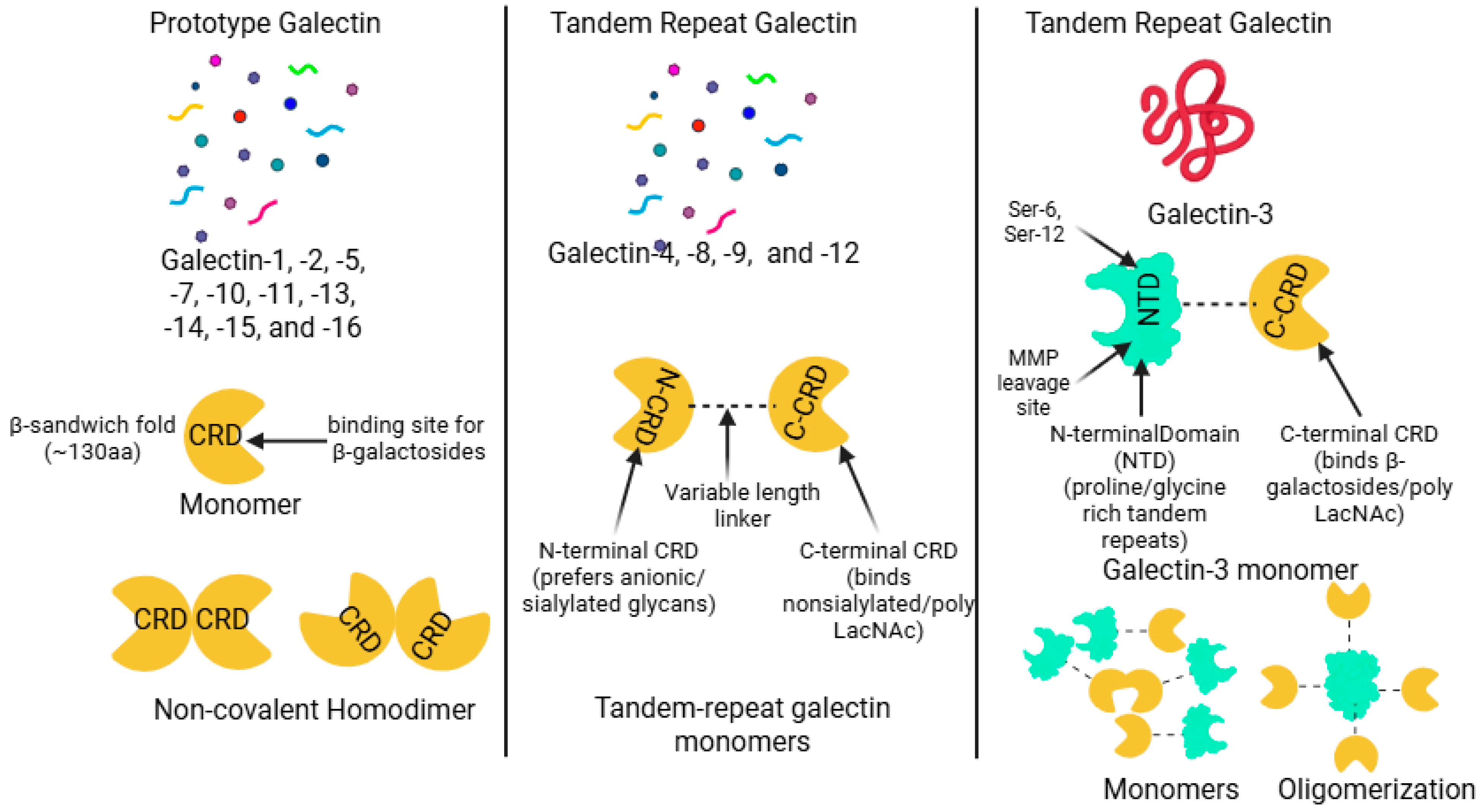
2.1. Galectin Classification and Structural Biology
2.2. Expression Patterns of Major Galectins in Human Tissues
2.2.1. Prototype Galectins (Gal-1, -2, -7, -10, -13, -14, -16)
2.2.2. Chimeric Galectin (Gal-3)
2.2.3. Tandem-Repeat Galectins (Gal-4, -8, -9, -12)
3. Galectins: General Effect Pathways and Diabetes
3.1. Galectins in Glucose Metabolism
3.2. Galectins in Inflammation and Immune Modulation
3.3. Cardiovascular and Endothelial Dysfunction
3.4. Galectins in Diabetic Neuropathy and Nerve Degeneration
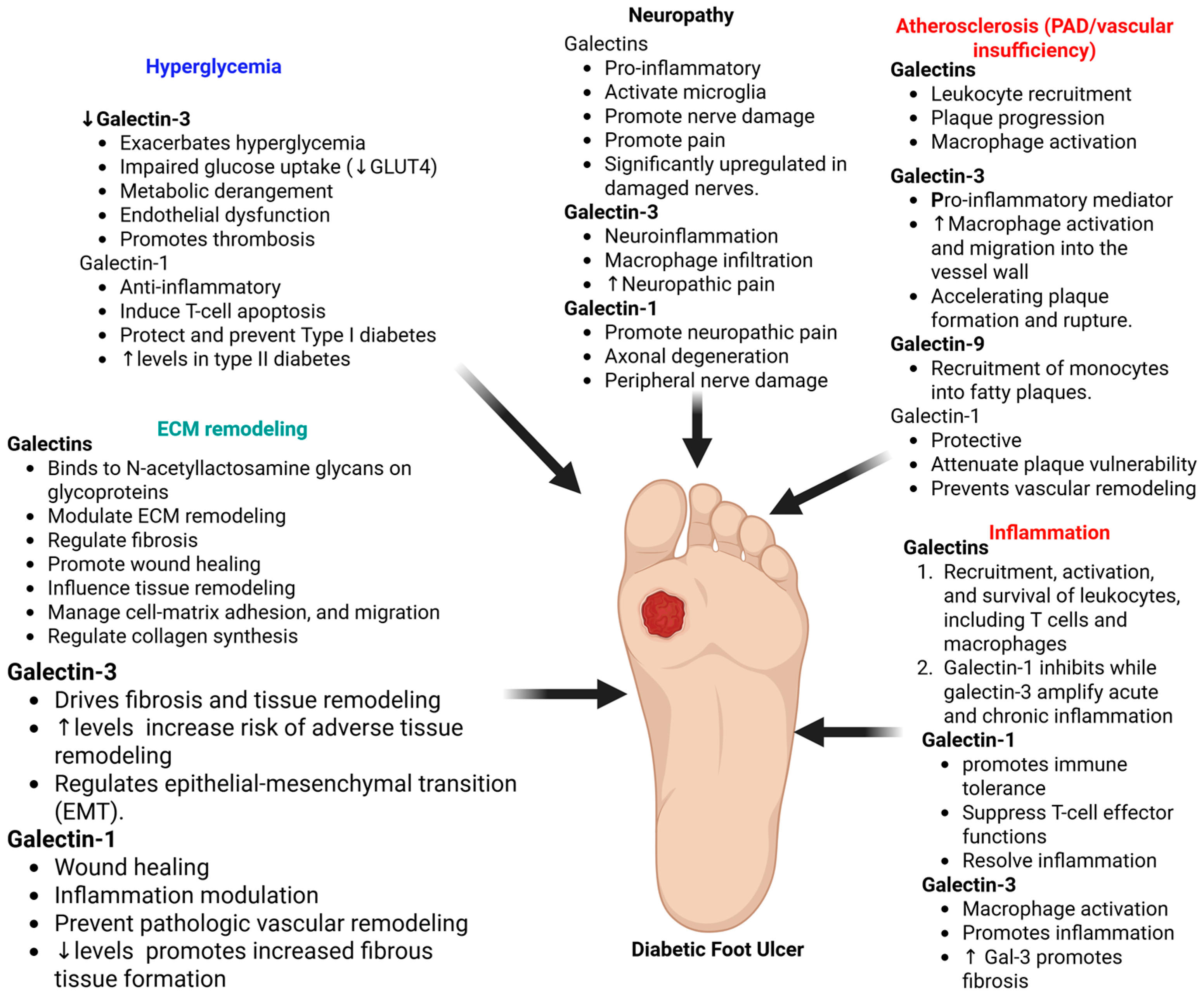
4. Galectins in Diabetic Foot Ulcers
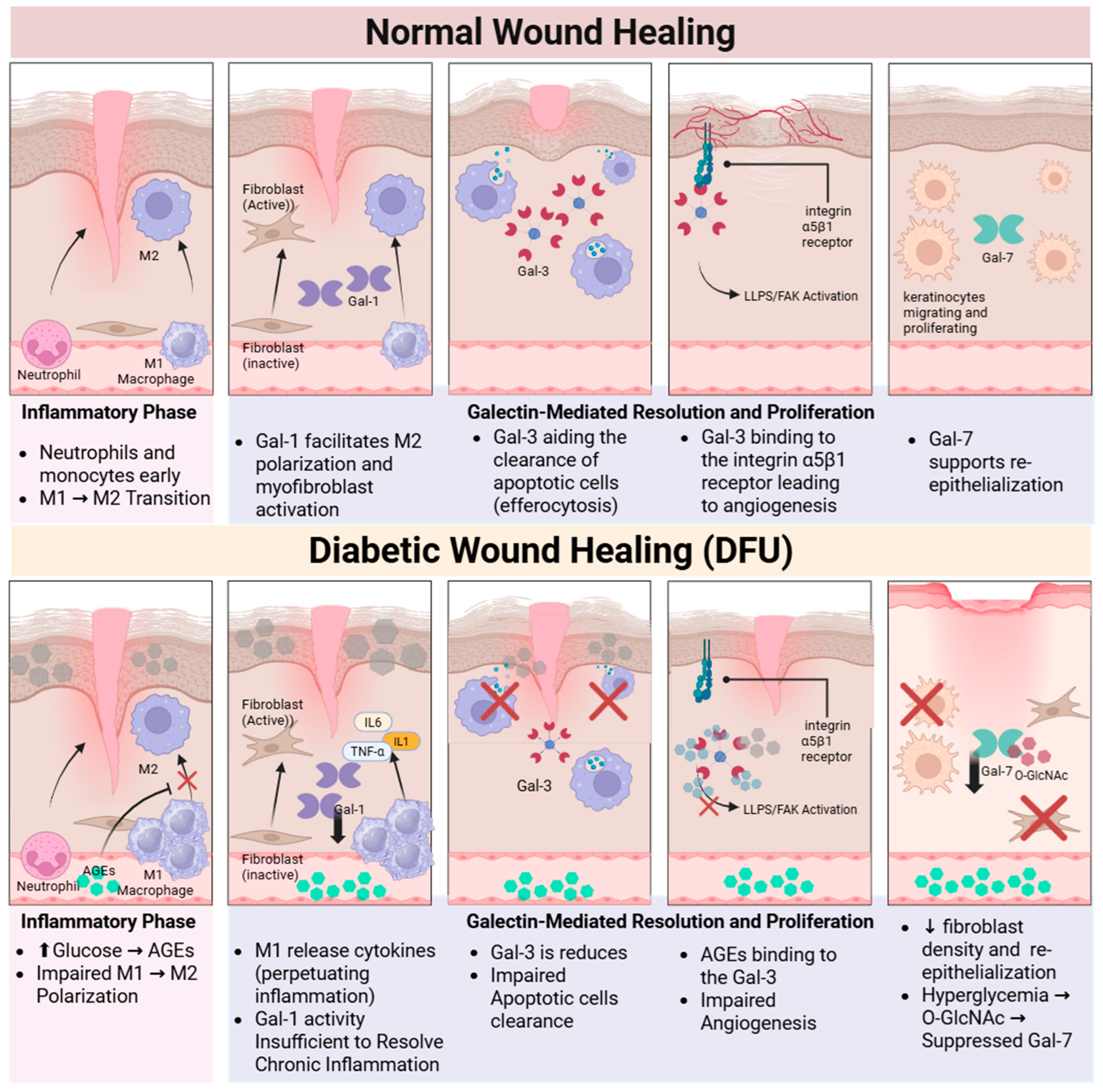
4.1. Normal Wound Healing: Where Galectins Act
4.2. Specific Roles of Major Galectins in DFUs
4.2.1. Galectin-1
4.2.2. Galectin-3
4.2.3. Galectin-7
4.3. Galectins, Infection, and Clinical Evidence
5. Galectins: Diagnostic and Prognostic Biomarkers
6. Therapeutic Strategies Targeting Galectins
7. Challenges and Knowledge Gaps
8. Future Directions
9. Conclusions
Author Contributions
Funding
Institutional Review Board Statement
Informed Consent Statement
Data Availability Statement
Conflicts of Interest
References
- Shi, S.; Li, X.; Chen, Y.; Li, J.; Dai, Y. Cardiovascular Therapy Benefits of Novel Antidiabetic Drugs in Patients with Type 2 Diabetes Mellitus Complicated with Cardiovascular Disease: A Network Meta-Analysis. J. Diabetes 2025, 17, e70044. [Google Scholar] [CrossRef]
- Kim, J.; Nomkhondorj, O.; An, C.Y.; Choi, Y.C.; Cho, J. Management of diabetic foot ulcers: A narrative review. J. Yeungnam Med. Sci. 2023, 40, 335–342. [Google Scholar] [CrossRef]
- Mendez, N.G.; Aguilera, M.F.G.; Munoz, E.A.; Rivadeneira, J.; Cabrera, P.J.B.; Totomoch-Serra, A.; Romo, P.L.; Aguilar, P.V.; Cid, M.A.E.; Diaz, M.A.P. New technologies applied in self-care to patients with diabetic foot ulcers: A scoping review. Diabetol. Metab. Syndr. 2025, 17, 262. [Google Scholar] [CrossRef]
- Zhang, W.; He, H.; Chen, S.; Xie, S.; Tong, X.; Ding, X.; Li, Y.; Xian, S.; Huang, R.; Xia, Z.; et al. Research progress on the role and mechanisms of ferroptosis in diabetic wound repair. Cell Death Discov. 2025, 11, 515. [Google Scholar] [CrossRef]
- Mohammadi, A.; Goharimehr, M.; Darvishi, A.; Heshmat, R.; Esfahani, E.N.; Shafiee, G.; Ostovar, A.; Daroudi, R. Economic burden of Type 2 diabetes in Iran in 2022. BMC Public Health 2025, 25, 35. [Google Scholar] [CrossRef] [PubMed]
- Wang, R.; Gu, S.; Kim, Y.H.; Lee, A.; Lin, H.; Jiang, D. Diabetic Wound Repair: From Mechanism to Therapeutic Opportunities. MedComm (2020) 2025, 6, e70406. [Google Scholar] [CrossRef] [PubMed]
- Wijaya, L.; Budiyanto, A.; Astuti, I. Pathogenesis, evaluation, and recent management of diabetic foot ulcer. J. Med. Sci. 2019, 51, 82–97. [Google Scholar] [CrossRef]
- Afonso, A.C.; Oliveira, D.; Saavedra, M.J.; Borges, A.; Simoes, M. Biofilms in Diabetic Foot Ulcers: Impact, Risk Factors and Control Strategies. Int. J. Mol. Sci. 2021, 22, 8278. [Google Scholar] [CrossRef]
- Ray, H.; Weis, C.; Nwaeze, C.; Zhou, V.; Basu, P.; Mitra, A. Development and Control of Biofilms in Diabetic Foot Infections: A Narrative Review. Acta Microbiol. Hell. 2025, 70, 9. [Google Scholar] [CrossRef]
- Troncoso, M.F.; Elola, M.T.; Blidner, A.G.; Sarrias, L.; Espelt, M.V.; Rabinovich, G.A. The universe of galectin-binding partners and their functions in health and disease. J. Biol. Chem. 2023, 299, 105400. [Google Scholar] [CrossRef]
- Chaudhary, S.; Chaudhary, S.; Rawat, S.; Kulkarni, A.; Bilgrami, A.L.; Perveen, A.; Alghamdi, B.S.; Zughaibi, T.A.; Ashraf, G.M.; Alam, M.Z.; et al. Galectins-Potential Therapeutic Targets for Neurodegenerative Disorders. Int. J. Mol. Sci. 2022, 23, 11012. [Google Scholar] [CrossRef]
- Liu, F.T.; Stowell, S.R. The role of galectins in immunity and infection. Nat. Rev. Immunol. 2023, 23, 479–494. [Google Scholar] [CrossRef]
- Marino, K.V.; Cagnoni, A.J.; Croci, D.O.; Rabinovich, G.A. Targeting galectin-driven regulatory circuits in cancer and fibrosis. Nat. Rev. Drug Discov. 2023, 22, 295–316. [Google Scholar] [CrossRef]
- Li, Y.; Li, T.; Zhou, Z.; Xiao, Y. Emerging roles of Galectin-3 in diabetes and diabetes complications: A snapshot. Rev. Endocr. Metab. Disord. 2022, 23, 569–577. [Google Scholar] [CrossRef]
- Lee, Y.S.; Olefsky, J. Chronic tissue inflammation and metabolic disease. Genes Dev. 2021, 35, 307–328. [Google Scholar] [CrossRef] [PubMed]
- Mansour, A.A.; Krautter, F.; Zhi, Z.; Iqbal, A.J.; Recio, C. The interplay of galectins-1, -3, and -9 in the immune-inflammatory response underlying cardiovascular and metabolic disease. Cardiovasc. Diabetol. 2022, 21, 253. [Google Scholar] [CrossRef]
- Yu, X.; Qian, J.; Ding, L.; Yin, S.; Zhou, L.; Zheng, S. Galectin-1: A Traditionally Immunosuppressive Protein Displays Context-Dependent Capacities. Int. J. Mol. Sci. 2023, 24, 6501. [Google Scholar] [CrossRef]
- Kumar, S.; Ranawat, C.S.; Bhandiwad, C.; Arya, H.; Mali, M.; Singh, C.P.; Sharma, N.; Lathwal, N.; Wasim, S. Galectin-3 as a Potential Biomarker of Microvascular Complications in Patients with Type 2 Diabetes. Indian J. Endocrinol. Metab. 2022, 26, 490–497. [Google Scholar] [CrossRef] [PubMed]
- Zhu, N.; Zhu, L.; Huang, B.; Xiang, W.; Zhao, X. Galectin-3 Inhibition Ameliorates Streptozotocin-Induced Diabetic Cardiomyopathy in Mice. Front. Cardiovasc. Med. 2022, 9, 868372. [Google Scholar] [CrossRef]
- Zhang, Z.; Zhao, Z.; Huang, X.; Zhou, L.; Jiang, X.; Wu, H.; Liu, C.; Huang, K.; Wen, J.; Liu, Y.; et al. Galectin-3-integrin alpha5beta1 phase separation disrupted by advanced glycation end-products impairs diabetic wound healing in rodents. Nat. Commun. 2025, 16, 7287. [Google Scholar] [CrossRef] [PubMed]
- Wang, T.; Zhang, Y.; Guo, Y.; Zhao, M.; Cai, X.; Feng, S. Galectins-1, -3 and -9 in leukemia: Mechanistic insights and therapeutic translation. Front. Immunol. 2025, 16, 1685266. [Google Scholar] [CrossRef]
- Hermenean, A.; Oatis, D.; Herman, H.; Ciceu, A.; D’Amico, G.; Trotta, M.C. Galectin 1-A Key Player between Tissue Repair and Fibrosis. Int. J. Mol. Sci. 2022, 23, 5548. [Google Scholar] [CrossRef]
- Sewgobind, N.V.; Albers, S.; Pieters, R.J. Functions and Inhibition of Galectin-7, an Emerging Target in Cellular Pathophysiology. Biomolecules 2021, 11, 1720. [Google Scholar] [CrossRef] [PubMed]
- Hussain, S.; Habib, A.; Hussain, M.S.; Najmi, A.K. Potential biomarkers for early detection of diabetic kidney disease. Diabetes Res. Clin. Pract. 2020, 161, 108082. [Google Scholar] [CrossRef]
- Gunes, A.E.; Eren, M.A.; Koyuncu, I.; Taskin, A.; Sabuncu, T. Investigation of galectin-3 levels in diabetic foot ulcers. J. Wound Care 2018, 27, 843–848. [Google Scholar] [CrossRef]
- Caridi, B.; Doncheva, D.; Sivaprasad, S.; Turowski, P. Galectins in the Pathogenesis of Common Retinal Disease. Front. Pharmacol. 2021, 12, 687495. [Google Scholar] [CrossRef] [PubMed]
- Dawi, J.; Tumanyan, K.; Tomas, K.; Misakyan, Y.; Gargaloyan, A.; Gonzalez, E.; Hammi, M.; Tomas, S.; Venketaraman, V. Diabetic Foot Ulcers: Pathophysiology, Immune Dysregulation, and Emerging Therapeutic Strategies. Biomedicines 2025, 13, 1076. [Google Scholar] [CrossRef]
- Lin, H.; Yang, Y.; Wang, X.; Chung, M.; Zhang, L.; Cai, S.; Pan, X.; Pan, Y. Targeting the AGEs-RAGE axis: Pathogenic mechanisms and therapeutic interventions in diabetic wound healing. Front. Med. 2025, 12, 1667620. [Google Scholar] [CrossRef] [PubMed]
- Hara, A.; Niwa, M.; Kanayama, T.; Noguchi, K.; Niwa, A.; Matsuo, M.; Kuroda, T.; Hatano, Y.; Okada, H.; Tomita, H. Galectin-3: A Potential Prognostic and Diagnostic Marker for Heart Disease and Detection of Early Stage Pathology. Biomolecules 2020, 10, 1277. [Google Scholar] [CrossRef]
- Ahmed, R.; Anam, K.; Ahmed, H. Development of Galectin-3 Targeting Drugs for Therapeutic Applications in Various Diseases. Int. J. Mol. Sci. 2023, 24, 8116. [Google Scholar] [CrossRef]
- Brinchmann, M.F.; Patel, D.M.; Iversen, M.H. The Role of Galectins as Modulators of Metabolism and Inflammation. Mediat. Inflamm. 2018, 2018, 9186940. [Google Scholar] [CrossRef] [PubMed]
- Mimura, S.; Morishita, A.; Oura, K.; Takuma, K.; Nakahara, M.; Tadokoro, T.; Fujita, K.; Tani, J.; Kobara, H. Galectins and Liver Diseases. Int. J. Mol. Sci. 2025, 26, 790. [Google Scholar] [CrossRef]
- Zetterberg, F.R.; MacKinnon, A.; Brimert, T.; Gravelle, L.; Johnsson, R.E.; Kahl-Knutson, B.; Leffler, H.; Nilsson, U.J.; Pedersen, A.; Peterson, K.; et al. Discovery and Optimization of the First Highly Effective and Orally Available Galectin-3 Inhibitors for Treatment of Fibrotic Disease. J. Med. Chem. 2022, 65, 12626–12638. [Google Scholar] [CrossRef]
- Zukowska, D.; Gedaj, A.; Porebska, N.; Pozniak, M.; Krzyscik, M.; Czyrek, A.; Krowarsch, D.; Zakrzewska, M.; Otlewski, J.; Opalinski, L. Receptor clustering by a precise set of extracellular galectins initiates FGFR signaling. Cell Mol. Life Sci. 2023, 80, 113. [Google Scholar] [CrossRef] [PubMed]
- Puric, E.; Nilsson, U.J.; Anderluh, M. Galectin-8 inhibition and functions in immune response and tumor biology. Med. Res. Rev. 2024, 44, 2236–2265. [Google Scholar] [CrossRef] [PubMed]
- Stojanovic, B.; Jovanovic, I.; Dimitrijevic Stojanovic, M.; Milosevic, B.; Spasic, M.; Stojanovic, B.S.; Jakovljevic, S.; Zornic, N.; Jovanovic, D.; Nesic, J.; et al. Galectins as Master Regulators of Gastric Cancer Progression. Cells 2025, 14, 1090. [Google Scholar] [CrossRef]
- Jacob, R.; Gorek, L.S. Intracellular galectin interactions in health and disease. Semin. Immunopathol. 2024, 46, 4. [Google Scholar] [CrossRef]
- Boutin, L.; Depret, F.; Gayat, E.; Legrand, M.; Chadjichristos, C.E. Galectin-3 in Kidney Diseases: From an Old Protein to a New Therapeutic Target. Int. J. Mol. Sci. 2022, 23, 3124. [Google Scholar] [CrossRef]
- Barake, F.; Soza, A.; Gonzalez, A. Galectins in the brain: Advances in neuroinflammation, neuroprotection and therapeutic opportunities. Curr. Opin. Neurol. 2020, 33, 381–390. [Google Scholar] [CrossRef]
- Lau, L.S.; Mohammed, N.B.B.; Dimitroff, C.J. Decoding Strategies to Evade Immunoregulators Galectin-1, -3, and -9 and Their Ligands as Novel Therapeutics in Cancer Immunotherapy. Int. J. Mol. Sci. 2022, 23, 15554. [Google Scholar] [CrossRef]
- Nangia-Makker, P.; Hogan, V.; Balan, V.; Raz, A. Chimeric galectin-3 and collagens: Biomarkers and potential therapeutic targets in fibroproliferative diseases. J. Biol. Chem. 2022, 298, 102622. [Google Scholar] [CrossRef]
- Seropian, I.M.; Gonzalez, G.E.; Maller, S.M.; Berrocal, D.H.; Abbate, A.; Rabinovich, G.A. Galectin-1 as an Emerging Mediator of Cardiovascular Inflammation: Mechanisms and Therapeutic Opportunities. Mediat. Inflamm. 2018, 2018, 8696543. [Google Scholar] [CrossRef]
- Petrovic, I.; Pejnovic, N.; Ljujic, B.; Pavlovic, S.; Miletic Kovacevic, M.; Jeftic, I.; Djukic, A.; Draginic, N.; Andjic, M.; Arsenijevic, N.; et al. Overexpression of Galectin 3 in Pancreatic beta Cells Amplifies beta-Cell Apoptosis and Islet Inflammation in Type-2 Diabetes in Mice. Front. Endocrinol. 2020, 11, 30. [Google Scholar] [CrossRef] [PubMed]
- Cardenas-Leon, C.G.; Maemets-Allas, K.; Klaas, M.; Lagus, H.; Kankuri, E.; Jaks, V. Matricellular proteins in cutaneous wound healing. Front. Cell Dev. Biol. 2022, 10, 1073320. [Google Scholar] [CrossRef] [PubMed]
- Bertuzzi, S.; Quintana, J.I.; Arda, A.; Gimeno, A.; Jimenez-Barbero, J. Targeting Galectins with Glycomimetics. Front. Chem. 2020, 8, 593. [Google Scholar] [CrossRef] [PubMed]
- Koneru, J.K.; Sinha, S.; Mondal, J. Molecular dynamics simulations elucidate oligosaccharide recognition pathways by galectin-3 at atomic resolution. J. Biol. Chem. 2021, 297, 101271. [Google Scholar] [CrossRef]
- Modenutti, C.P.; Capurro, J.I.B.; Di Lella, S.; Marti, M.A. The Structural Biology of Galectin-Ligand Recognition: Current Advances in Modeling Tools, Protein Engineering, and Inhibitor Design. Front. Chem. 2019, 7, 823. [Google Scholar] [CrossRef]
- Ayona, D.; Fournier, P.E.; Henrissat, B.; Desnues, B. Utilization of Galectins by Pathogens for Infection. Front. Immunol. 2020, 11, 1877. [Google Scholar] [CrossRef]
- Puigdellivol, M.; Allendorf, D.H.; Brown, G.C. Sialylation and Galectin-3 in Microglia-Mediated Neuroinflammation and Neurodegeneration. Front. Cell Neurosci. 2020, 14, 162. [Google Scholar] [CrossRef]
- Wu, S.C.; Ho, A.D.; Kamili, N.A.; Wang, J.; Murdock, K.L.; Cummings, R.D.; Arthur, C.M.; Stowell, S.R. Full-Length Galectin-3 Is Required for High Affinity Microbial Interactions and Antimicrobial Activity. Front. Microbiol. 2021, 12, 731026. [Google Scholar] [CrossRef]
- Abdelwahab, M.M.; Ebian, H.F.; Ibrahim, T.R.; Badr, M.S.; Lashin, M.E.-B.; Yassin, M.A.; Ismail, A.M.; Obaya, A.A. Clinical significance of serum galectin-1 and its tissue immunohistochemical expression in serous ovarian carcinoma patients. Open J. Obstet. Gynecol. 2019, 9, 937–953. [Google Scholar] [CrossRef]
- Seropian, I.M.; Cassaglia, P.; Miksztowicz, V.; Gonzalez, G.E. Unraveling the role of galectin-3 in cardiac pathology and physiology. Front. Physiol. 2023, 14, 1304735. [Google Scholar] [CrossRef]
- Baek, J.H.; Kim, D.H.; Lee, J.; Kim, S.J.; Chun, K.H. Galectin-1 accelerates high-fat diet-induced obesity by activation of peroxisome proliferator-activated receptor gamma (PPARγ) in mice. Cell Death Dis. 2021, 12, 66. [Google Scholar] [CrossRef]
- Drake, I.; Fryk, E.; Strindberg, L.; Lundqvist, A.; Rosengren, A.H.; Groop, L.; Ahlqvist, E.; Boren, J.; Orho-Melander, M.; Jansson, P.A. The role of circulating galectin-1 in type 2 diabetes and chronic kidney disease: Evidence from cross-sectional, longitudinal and Mendelian randomisation analyses. Diabetologia 2022, 65, 128–139. [Google Scholar] [CrossRef]
- Fryk, E.; Rodrigues Silva, V.R.; Strindberg, L.; Strand, R.; Ahlstrom, H.; Michaelsson, K.; Kullberg, J.; Lind, L.; Jansson, P.A. Metabolic profiling of galectin-1 and galectin-3: A cross-sectional, multi-omics, association study. Int. J. Obes. 2024, 48, 1180–1189. [Google Scholar] [CrossRef]
- Al-Obaidi, N.; Mohan, S.; Liang, S.; Zhao, Z.; Nayak, B.K.; Li, B.; Sriramarao, P.; Habib, S.L. Galectin-1 is a new fibrosis protein in type 1 and type 2 diabetes. FASEB J. 2019, 33, 373–387. [Google Scholar] [CrossRef] [PubMed]
- Kuo, C.S.; Chou, R.H.; Lu, Y.W.; Tsai, Y.L.; Huang, P.H.; Lin, S.J. Increased circulating galectin-1 levels are associated with the progression of kidney function decline in patients undergoing coronary angiography. Sci. Rep. 2020, 10, 1435. [Google Scholar] [CrossRef]
- Abu El-Asrar, A.M.; Ahmad, A.; Allegaert, E.; Siddiquei, M.M.; Alam, K.; Gikandi, P.W.; De Hertogh, G.; Opdenakker, G. Galectin-1 studies in proliferative diabetic retinopathy. Acta Ophthalmol. 2020, 98, e1–e12. [Google Scholar] [CrossRef]
- Abel, W.F.; Funk, C.R.; Blenda, A.V. Galectins in the Pathogenesis of Cerebrovascular Accidents: An Overview. J. Exp. Neurosci. 2019, 13, 1179069519836794. [Google Scholar] [CrossRef] [PubMed]
- Negedu, M.N.; Duckworth, C.A.; Yu, L.G. Galectin-2 in Health and Diseases. Int. J. Mol. Sci. 2022, 24, 341. [Google Scholar] [CrossRef] [PubMed]
- Buschmann, C.; Unverdorben, L.; Knabl, J.; Hutter, S.; Meister, S.; Beyer, S.; Burgmann, M.; Keilmann, L.; Zati Zehni, A.; Schmoeckel, E.; et al. Galectin-10 Expression in Placentas of Women with Gestational Diabetes. Curr. Issues Mol. Biol. 2023, 45, 8840–8851. [Google Scholar] [CrossRef]
- Hepp, P.; Unverdorben, L.; Hutter, S.; Kuhn, C.; Ditsch, N.; Gross, E.; Mahner, S.; Jeschke, U.; Knabl, J.; Heidegger, H.H. Placental Galectin-2 Expression in Gestational Diabetes: A Systematic, Histological Analysis. Int. J. Mol. Sci. 2020, 21, 2404. [Google Scholar] [CrossRef] [PubMed]
- Choi, J.W.; Nam, K.M.; Choi, H.R.; Lee, D.H.; Huh, C.H.; Park, K.C. Decreased Galectin-3 and -7 Expressions in Old-Aged Skin and Their Differential Expression in Skin Equivalents. Ann. Dermatol. 2018, 30, 375–378. [Google Scholar] [CrossRef]
- Pinto, N.A.; Rabinovich, G.A.; Sundblad, V.; Cerliani, J.P. Enhanced galectin-7 expression favors wound healing. J. Dermatol. 2021, 48, 1616–1618. [Google Scholar] [CrossRef] [PubMed]
- Yu, D.; Bu, M.; Yu, P.; Li, Y.; Chong, Y. Regulation of wound healing and fibrosis by galectins. J. Mol. Med. 2022, 100, 861–874. [Google Scholar] [CrossRef]
- Kaminker, J.D.; Timoshenko, A.V. Expression, Regulation, and Functions of the Galectin-16 Gene in Human Cells and Tissues. Biomolecules 2021, 11, 1909. [Google Scholar] [CrossRef]
- Srejovic, I.; Selakovic, D.; Jovicic, N.; Jakovljevic, V.; Lukic, M.L.; Rosic, G. Galectin-3: Roles in Neurodevelopment, Neuroinflammation, and Behavior. Biomolecules 2020, 10, 798. [Google Scholar] [CrossRef] [PubMed]
- Kozak, K.; Zajkowska, M. Association of Elevated Galectin-4 Concentrations with Obesity, Diabetes, and Cardiovascular Diseases. Int. J. Mol. Sci. 2025, 26, 9402. [Google Scholar] [CrossRef]
- Hong, S.H.; Shin, J.S.; Chung, H.; Park, C.G. Galectin-4 Interaction with CD14 Triggers the Differentiation of Monocytes into Macrophage-like Cells via the MAPK Signaling Pathway. Immune Netw. 2019, 19, e17. [Google Scholar] [CrossRef]
- Zick, Y. Galectin-8, cytokines, and the storm. Biochem. Soc. Trans. 2022, 50, 135–149. [Google Scholar] [CrossRef]
- Weinmann, D.; Kenn, M.; Schmidt, S.; Schmidt, K.; Walzer, S.M.; Kubista, B.; Windhager, R.; Schreiner, W.; Toegel, S.; Gabius, H.J. Galectin-8 induces functional disease markers in human osteoarthritis and cooperates with galectins-1 and -3. Cell Mol. Life Sci. 2018, 75, 4187–4205. [Google Scholar] [CrossRef]
- Iwasaki-Hozumi, H.; Chagan-Yasutan, H.; Ashino, Y.; Hattori, T. Blood Levels of Galectin-9, an Immuno-Regulating Molecule, Reflect the Severity for the Acute and Chronic Infectious Diseases. Biomolecules 2021, 11, 430. [Google Scholar] [CrossRef] [PubMed]
- Tsao, C.H.; Hsieh, W.C.; Lin, F.J.; Liu, F.T.; Yang, R.Y. Galectin-12 in the Regulation of Sebocyte Proliferation, Lipid Metabolism, and Immune Responses. Biomolecules 2025, 15, 837. [Google Scholar] [CrossRef]
- Wan, L.; Yang, R.Y.; Liu, F.T. Galectin-12 in Cellular Differentiation, Apoptosis and Polarization. Int. J. Mol. Sci. 2018, 19, 176. [Google Scholar] [CrossRef]
- Lin, E.S.; Hsu, Y.A.; Chang, C.Y.; Lin, H.J.; Chen, C.S.; Wan, L. Ablation of Galectin-12 Inhibits Atherosclerosis through Enhancement of M2 Macrophage Polarization. Int. J. Mol. Sci. 2020, 21, 5511. [Google Scholar] [CrossRef]
- Lin, F.J.; Huang, Y.H.; Tsao, C.H.; Hsieh, W.C.; Lo, Y.H.; Zouboulis, C.C.; Chen, H.L.; Liu, F.T. Galectin-12 Regulates Immune Responses in the Skin through Sebaceous Glands. J. Invest. Dermatol. 2023, 143, 2120–2131.e7. [Google Scholar] [CrossRef] [PubMed]
- Mielczarek-Palacz, A.; Kondera-Anasz, Z.; Smycz-Kubanska, M.; Englisz, A.; Janusz, A.; Krolewska-Daszczynska, P.; Wendlocha, D. The role of galectins-1, 3, 7, 8 and 9 as potential diagnostic and therapeutic markers in ovarian cancer (Review). Mol. Med. Rep. 2022, 25, 166. [Google Scholar] [CrossRef]
- Jiang, Z.; Zhang, W.; Sha, G.; Wang, D.; Tang, D. Galectins Are Central Mediators of Immune Escape in Pancreatic Ductal Adenocarcinoma. Cancers 2022, 14, 5475. [Google Scholar] [CrossRef] [PubMed]
- Morrison, H.M.; Craft, J.; Rivera-Lugo, R.; Johnson, J.R.; Golovkine, G.R.; Bell, S.L.; Dodd, C.E.; Van Dis, E.; Beatty, W.L.; Margolis, S.R.; et al. Deficiency in Galectin-3, -8, and -9 impairs immunity to chronic Mycobacterium tuberculosis infection but not acute infection with multiple intracellular pathogens. PLoS Pathog. 2023, 19, e1011088. [Google Scholar] [CrossRef]
- Diaz Del Arco, C.; Estrada Munoz, L.; Ceron Nieto, M.L.A.; Molina Roldan, E.; Fernandez Acenero, M.J.; Garcia Gomez de Las Heras, S. Prognostic Influence of Galectin-1 in Gastric Adenocarcinoma. Biomedicines 2024, 12, 1508. [Google Scholar] [CrossRef]
- Geng, K.; Ma, X.; Jiang, Z.; Huang, W.; Gao, C.; Pu, Y.; Luo, L.; Xu, Y.; Xu, Y. Innate Immunity in Diabetic Wound Healing: Focus on the Mastermind Hidden in Chronic Inflammatory. Front. Pharmacol. 2021, 12, 653940. [Google Scholar] [CrossRef]
- Atalar, M.N.; Abusoglu, S.; Unlu, A.; Tok, O.; Ipekci, S.H.; Baldane, S.; Kebapcilar, L. Assessment of serum galectin-3, methylated arginine and Hs-CRP levels in type 2 diabetes and prediabetes. Life Sci. 2019, 231, 116577. [Google Scholar] [CrossRef]
- Dieden, A.; Gudmundsson, P.; Korduner, J.; Molvin, J.; Zaghi, A.; Nezami, Z.; Bachus, E.; Holm, H.; Jujic, A.; Magnusson, M. Galectin-4 is associated with diabetes and obesity in a heart failure population. Sci. Rep. 2023, 13, 20285. [Google Scholar] [CrossRef]
- Jujic, A.; Vieira, J.P.P.; Matuskova, H.; Nilsson, P.M.; Lindblad, U.; Olsen, M.H.; Duarte, J.M.N.; Meissner, A.; Magnusson, M. Plasma Galectin-4 Levels Are Increased after Stroke in Mice and Humans. Int. J. Mol. Sci. 2023, 24, 10064. [Google Scholar] [CrossRef]
- Theocharidis, G.; Thomas, B.E.; Sarkar, D.; Mumme, H.L.; Pilcher, W.J.R.; Dwivedi, B.; Sandoval-Schaefer, T.; Sirbulescu, R.F.; Kafanas, A.; Mezghani, I.; et al. Single cell transcriptomic landscape of diabetic foot ulcers. Nat. Commun. 2022, 13, 181. [Google Scholar] [CrossRef]
- Pelech, A.; Ruszala, M.; Niebrzydowska-Tatus, M.; Bien, K.; Kimber-Trojnar, Z.; Czuba, M.; Swistowska, M.; Leszczynska-Gorzelak, B. Do Serum Galectin-9 Levels in Women with Gestational Diabetes and Healthy Ones Differ before or after Delivery? A Pilot Study. Biomolecules 2023, 13, 697. [Google Scholar] [CrossRef] [PubMed]
- Albuayjan, H.H.H.; Watanabe, M.; Sugawara, R.; Katsuyama, E.; Mise, K.; Oi, Y.; Kanno, A.; Yang, B.; Tahara, T.; Nojima, I.; et al. Role of galectin-9 in the development of gestational diabetes mellitus. Sci. Rep. 2025, 15, 18981. [Google Scholar] [CrossRef]
- Wang, L.; Zhang, C.; Ji, J.; Jiao, Q. Galectin-9: Diverse roles in skin disease. Front. Allergy 2025, 6, 1614277. [Google Scholar] [CrossRef] [PubMed]
- Lin, C.W.; Hung, C.M.; Chen, W.J.; Chen, J.C.; Huang, W.Y.; Lu, C.S.; Kuo, M.L.; Chen, S.G. New Horizons of Macrophage Immunomodulation in the Healing of Diabetic Foot Ulcers. Pharmaceutics 2022, 14, 2065. [Google Scholar] [CrossRef]
- Chen, P.W.; Hsu, L.W.; Chang, H.Y.; Huang, T.C.; Yu, J.R.; Liao, H.Y.; Lee, C.H.; Liu, P.Y. Elevated Platelet Galectin-3 and Rho-Associated Protein Kinase Activity Are Associated with Hemodialysis Arteriovenous Shunt Dysfunction among Subjects with Diabetes Mellitus. Biomed. Res. Int. 2019, 2019, 8952414. [Google Scholar] [CrossRef] [PubMed]
- Chen, X.; Yu, C.; Liu, X.; Liu, B.; Wu, X.; Wu, J.; Yan, D.; Han, L.; Tang, Z.; Yuan, X.; et al. Intracellular galectin-3 is a lipopolysaccharide sensor that promotes glycolysis through mTORC1 activation. Nat. Commun. 2022, 13, 7578. [Google Scholar] [CrossRef]
- Jiang, Q.; Zhao, Q.; Li, P. Galectin-3 in metabolic disorders: Mechanisms and therapeutic potential. Trends Mol. Med. 2025, 31, 424–437. [Google Scholar] [CrossRef]
- Nikolova, D.; Kamenov, Z. New Markers for the Assessment of Microvascular Complications in Patients with Metabolic Syndrome. Metabolites 2025, 15, 184. [Google Scholar] [CrossRef]
- Lv, Y.; Ma, X.; Ma, Y.; Du, Y.; Feng, J. A new emerging target in cancer immunotherapy: Galectin-9 (LGALS9). Genes Dis. 2023, 10, 2366–2382. [Google Scholar] [CrossRef] [PubMed]
- Fryk, E.; Silva, V.R.R.; Jansson, P.A. Galectin-1 in Obesity and Type 2 Diabetes. Metabolites 2022, 12, 930. [Google Scholar] [CrossRef] [PubMed]
- Thiemann, S.; Baum, L.G. Galectins and Immune Responses—Just How Do They Do Those Things They Do? Annu. Rev. Immunol. 2016, 34, 243–264. [Google Scholar] [CrossRef]
- Schmitt, V.H.; Prochaska, J.H.; Föll, A.S.; Schulz, A.; Keller, K.; Hahad, O.; Koeck, T.; Troebs, S.-O.; Rapp, S.; Beutel, M. Galectin-3 for prediction of cardiac function compared to NT-proBNP in individuals with prediabetes and type 2 diabetes mellitus. Sci. Rep. 2021, 11, 19012. [Google Scholar] [CrossRef]
- Aldahish, A.; Shanmugasundaram, N.; Vasudevan, R.; Alqahtani, T.; Alqahtani, S.; Mohammad Asiri, A.; Devanandan, P.; Thamaraikani, T.; Vellapandian, C.; Jayasankar, N. Silk Fibroin Nanofibers: Advancements in Bioactive Dressings through Electrospinning Technology for Diabetic Wound Healing. Pharmaceuticals 2024, 17, 1305. [Google Scholar] [CrossRef] [PubMed]
- Blasetti Fantauzzi, C.; Iacobini, C.; Menini, S.; Vitale, M.; Sorice, G.P.; Mezza, T.; Cinti, S.; Giaccari, A.; Pugliese, G. Galectin-3 gene deletion results in defective adipose tissue maturation and impaired insulin sensitivity and glucose homeostasis. Sci. Rep. 2020, 10, 20070. [Google Scholar] [CrossRef]
- Zhang, W.; Chen, L.; Xiong, Y.; Panayi, A.C.; Abududilibaier, A.; Hu, Y.; Yu, C.; Zhou, W.; Sun, Y.; Liu, M.; et al. Antioxidant Therapy and Antioxidant-Related Bionanomaterials in Diabetic Wound Healing. Front. Bioeng. Biotechnol. 2021, 9, 707479. [Google Scholar] [CrossRef]
- Suthahar, N.; Meijers, W.C.; Sillje, H.H.W.; Ho, J.E.; Liu, F.T.; de Boer, R.A. Galectin-3 Activation and Inhibition in Heart Failure and Cardiovascular Disease: An Update. Theranostics 2018, 8, 593–609. [Google Scholar] [CrossRef]
- Sun, Z.; Zhang, L.; Li, L.; Shao, C.; Liu, J.; Zhou, M.; Wang, Z. Galectin-3 mediates cardiac remodeling caused by impaired glucose and lipid metabolism through inhibiting two pathways of activating Akt. Am. J. Physiol. Heart Circ. Physiol. 2021, 320, H364–H380. [Google Scholar] [CrossRef]
- Xu, G.R.; Zhang, C.; Yang, H.X.; Sun, J.H.; Zhang, Y.; Yao, T.T.; Li, Y.; Ruan, L.; An, R.; Li, A.Y. Modified citrus pectin ameliorates myocardial fibrosis and inflammation via suppressing galectin-3 and TLR4/MyD88/NF-kappaB signaling pathway. Biomed. Pharmacother. 2020, 126, 110071. [Google Scholar] [CrossRef]
- Hodeib, H.; Hagras, M.M.; Abdelhai, D.; Watany, M.M.; Selim, A.; Tawfik, M.A.; Elsebaey, M.A.; Elshweikh, S.A. Galectin-3 as a prognostic biomarker for diabetic nephropathy. Diabetes Metab. Syndr. Obes. 2019, 12, 325–331. [Google Scholar] [CrossRef]
- Darrow, A.L.; Shohet, R.V. Galectin-3 deficiency exacerbates hyperglycemia and the endothelial response to diabetes. Cardiovasc. Diabetol. 2015, 14, 73. [Google Scholar] [CrossRef] [PubMed]
- Nio-Kobayashi, J.; Itabashi, T. Galectins and Their Ligand Glycoconjugates in the Central Nervous System Under Physiological and Pathological Conditions. Front. Neuroanat. 2021, 15, 767330. [Google Scholar] [CrossRef]
- Sango, K.; Yako, H.; Niimi, N.; Takaku, S. Immortalized Schwann cell lines as useful tools for pathogenesis-based therapeutic approaches to diabetic peripheral neuropathy. Front. Endocrinol. 2024, 15, 1531209. [Google Scholar] [CrossRef] [PubMed]
- Mendonça, H.R.; Carvalho, J.N.A.; Abreu, C.A.; Carvalho, J.R.; Marques, S.A.; da Costa Calaza, K.; Martinez, A.M.B. Lack of Galectin-3 attenuates neuroinflammation and protects the retina and optic nerve of diabetic mice. Brain Res. 2018, 1700, 126–137. [Google Scholar] [CrossRef]
- Lozinski, B.M.; Ta, K.; Dong, Y. Emerging role of galectin 3 in neuroinflammation and neurodegeneration. Neural Regen. Res. 2024, 19, 2004–2009. [Google Scholar] [CrossRef] [PubMed]
- Siew, J.J.; Chen, H.M.; Chen, H.Y.; Chen, H.L.; Chen, C.M.; Soong, B.W.; Wu, Y.R.; Chang, C.P.; Chan, Y.C.; Lin, C.H.; et al. Galectin-3 is required for the microglia-mediated brain inflammation in a model of Huntington’s disease. Nat. Commun. 2019, 10, 3473. [Google Scholar] [CrossRef]
- Golboyu, B.E.; Erdogan, M.A.; Cosar, M.A.; Balikoglu, E.; Erbas, O. Diosmin and Hesperidin Have a Protective Effect in Diabetic Neuropathy via the FGF21 and Galectin-3 Pathway. Medicina 2024, 60, 1580. [Google Scholar] [CrossRef]
- Bahreiny, S.S.; Ahangarpour, A.; Aghaei, M.; Mohammadpour Fard, R.; Jalali Far, M.A.; Sakhavarz, T. A closer look at Galectin-3: Its association with gestational diabetes mellitus revealed by systematic review and meta-analysis. J. Diabetes Metab. Disord. 2024, 23, 1621–1633. [Google Scholar] [CrossRef] [PubMed]
- Qi, B.; Chai, S.; Chen, Y.; Zhou, G.; Li, P.; Li, X.; Lu, X.; Huang, L.H. O-linked beta-N-acetylglucosamine modification in diabetic foot ulcer pathogenesis. Burns Trauma 2025, 13, tkaf044. [Google Scholar] [CrossRef] [PubMed]
- Bhopale, R.S.; Jangam, R.D.; Dhekale, H.M.; Aiwale, P.P.; Chaware, V.J.; Redasani, V.K. A Detailed Review on Diabetic Wound Healing Activity. Asian J. Pharm. Res. Dev. 2023, 11, 95–105. [Google Scholar] [CrossRef]
- Petkovic, M.; Sorensen, A.E.; Leal, E.C.; Carvalho, E.; Dalgaard, L.T. Mechanistic Actions of microRNAs in Diabetic Wound Healing. Cells 2020, 9, 2228. [Google Scholar] [CrossRef]
- Wilkinson, H.N.; Hardman, M.J. Wound healing: Cellular mechanisms and pathological outcomes. Open Biol. 2020, 10, 200223. [Google Scholar] [CrossRef]
- Pasmatzi, E.; Papadionysiou, C.; Monastirli, A.; Badavanis, G.; Tsambaos, D. Galectin 1 in dermatology: Current knowledge and perspectives. Acta Dermatovenerol. Alp. Pannonica Adriat. 2019, 28, 27–31. [Google Scholar] [CrossRef]
- Sundblad, V.; Garcia-Tornadu, I.A.; Ornstein, A.M.; Martinez Allo, V.C.; Lorenzo, R.; Gatto, S.G.; Morales, R.M.; Gambarte Tudela, J.A.; Manselle Cocco, M.N.; Croci, D.O.; et al. Galectin-1 impacts on glucose homeostasis by modulating pancreatic insulin release. Glycobiology 2021, 31, 908–915. [Google Scholar] [CrossRef]
- Rehak, L.; Giurato, L.; Meloni, M.; Panunzi, A.; Manti, G.M.; Uccioli, L. The Immune-Centric Revolution in the Diabetic Foot: Monocytes and Lymphocytes Role in Wound Healing and Tissue Regeneration-A Narrative Review. J. Clin. Med. 2022, 11, 889. [Google Scholar] [CrossRef]
- Perez-Moreno, E.; Oyanadel, C.; de la Pena, A.; Hernandez, R.; Perez-Molina, F.; Metz, C.; Gonzalez, A.; Soza, A. Galectins in epithelial-mesenchymal transition: Roles and mechanisms contributing to tissue repair, fibrosis and cancer metastasis. Biol. Res. 2024, 57, 14. [Google Scholar] [CrossRef]
- Cardoso, A.C.; Andrade, L.N.; Bustos, S.O.; Chammas, R. Galectin-3 Determines Tumor Cell Adaptive Strategies in Stressed Tumor Microenvironments. Front. Oncol. 2016, 6, 127. [Google Scholar] [CrossRef]
- Thijssen, V.L. Galectins in Endothelial Cell Biology and Angiogenesis: The Basics. Biomolecules 2021, 11, 1386. [Google Scholar] [CrossRef] [PubMed]
- McLeod, K.M.; Gregerio, M.D.; Tinney, D.; Carmichael, J.J.; Zuanazzi, D.; Siqueira, W.L.; Rizkalla, A.; Hamilton, D.W. Assessment of Wound Bed Delivery of Galectin-3 to Modulate Macrophage Polarization, Re-epithelialization and Collagen Synthesis in a Murine Model of Excisional Skin Healing. Preprint 2024. [Google Scholar] [CrossRef]
- Gal, P.; Vasilenko, T.; Kovac, I.; Coma, M.; Jakubco, J.; Jakubcova, M.; Perzelova, V.; Urban, L.; Kolar, M.; Sabol, F.; et al. Human galectin-3: Molecular switch of gene expression in dermal fibroblasts in vitro and of skin collagen organization in open wounds and tensile strength in incisions in vivo. Mol. Med. Rep. 2021, 23, 99. [Google Scholar] [CrossRef]
- Mohsin, F.; Javaid, S.; Tariq, M.; Mustafa, M. Molecular immunological mechanisms of impaired wound healing in diabetic foot ulcers (DFU), current therapeutic strategies and future directions. Int. Immunopharmacol. 2024, 139, 112713. [Google Scholar] [CrossRef]
- Shirakawa, K.; Endo, J.; Kataoka, M.; Katsumata, Y.; Yoshida, N.; Yamamoto, T.; Isobe, S.; Moriyama, H.; Goto, S.; Kitakata, H.; et al. IL (Interleukin)-10-STAT3-Galectin-3 Axis Is Essential for Osteopontin-Producing Reparative Macrophage Polarization After Myocardial Infarction. Circulation 2018, 138, 2021–2035. [Google Scholar] [CrossRef]
- Burgess, J.L.; Wyant, W.A.; Abdo Abujamra, B.; Kirsner, R.S.; Jozic, I. Diabetic wound-healing science. Medicina 2021, 57, 1072. [Google Scholar] [CrossRef]
- McQuilling, J.P.; Kammer, M.; Kimmerling, K.A.; Mowry, K.C. Characterisation of dehydrated amnion chorion membranes and evaluation of fibroblast and keratinocyte responses in vitro. Int. Wound J. 2019, 16, 827–840. [Google Scholar] [CrossRef]
- Ayona, D.; Zarza, S.M.; Landemarre, L.; Roubinet, B.; Decloquement, P.; Raoult, D.; Fournier, P.E.; Desnues, B. Human galectin-1 and galectin-3 promote Tropheryma whipplei infection. Gut Microbes 2021, 13, 1–15. [Google Scholar] [CrossRef]
- Lambris, J.D.; Hajishengallis, G. Current Topics in Innate Immunity II; Springer: Berlin/Heidelberg, Germany, 2012. [Google Scholar]
- Iftimie, S.; Hernandez-Aguilera, A.; Lopez-Azcona, A.F.; Castane, H.; Rodriguez-Tomas, E.; Baiges-Gaya, G.; Camps, J.; Castro, A.; Joven, J. Measurement of Plasma Galectin-3 Concentrations in Patients with Catheter Infections: A Post Hoc Retrospective Cohort Study. Diagnostics 2022, 12, 2418. [Google Scholar] [CrossRef]
- Velickovic, M.; Arsenijevic, A.; Acovic, A.; Arsenijevic, D.; Milovanovic, J.; Dimitrijevic, J.; Todorovic, Z.; Milovanovic, M.; Kanjevac, T.; Arsenijevic, N. Galectin-3, Possible Role in Pathogenesis of Periodontal Diseases and Potential Therapeutic Target. Front. Pharmacol. 2021, 12, 638258. [Google Scholar] [CrossRef]
- Simovic Markovic, B.; Nikolic, A.; Gazdic, M.; Bojic, S.; Vucicevic, L.; Kosic, M.; Mitrovic, S.; Milosavljevic, M.; Besra, G.; Trajkovic, V.; et al. Galectin-3 Plays an Important Pro-inflammatory Role in the Induction Phase of Acute Colitis by Promoting Activation of NLRP3 Inflammasome and Production of IL-1beta in Macrophages. J. Crohns Colitis 2016, 10, 593–606. [Google Scholar] [CrossRef]
- Sasaki, T.; Oyama, M.; Kubota, M.; Isshiki, Y.; Takeuchi, T.; Tanaka, T.; Tanikawa, T.; Tamura, M.; Arata, Y.; Hatanaka, T. Galectin-2 Agglutinates Helicobacter pylori via Lipopolysaccharide Containing H Type I Under Weakly Acidic Conditions. Int. J. Mol. Sci. 2024, 25, 8725. [Google Scholar] [CrossRef]
- Johannes, L.; Jacob, R.; Leffler, H. Galectins at a glance. J. Cell Sci. 2018, 131, jcs208884. [Google Scholar] [CrossRef]
- Popa, S.J.; Stewart, S.E.; Moreau, K. Unconventional secretion of annexins and galectins. Semin. Cell Dev. Biol. 2018, 83, 42–50. [Google Scholar] [CrossRef]
- Zhang, M.; Liu, L.; Lin, X.; Wang, Y.; Li, Y.; Guo, Q.; Li, S.; Sun, Y.; Tao, X.; Zhang, D.; et al. A Translocation Pathway for Vesicle-Mediated Unconventional Protein Secretion. Cell 2020, 181, 637–652.e15. [Google Scholar] [CrossRef] [PubMed]
- Vasta, G.R. Galectins as pattern recognition receptors: Structure, function, and evolution. Adv. Exp. Med. Biol. 2012, 946, 21–36. [Google Scholar] [CrossRef] [PubMed]
- Vora, A.; de Lemos, J.A.; Ayers, C.; Grodin, J.L.; Lingvay, I. Association of Galectin-3 With Diabetes Mellitus in the Dallas Heart Study. J. Clin. Endocrinol. Metab. 2019, 104, 4449–4458. [Google Scholar] [CrossRef] [PubMed]
- Fryk, E.; Sundelin, J.P.; Strindberg, L.; Pereira, M.J.; Federici, M.; Marx, N.; Nystrom, F.H.; Schmelz, M.; Svensson, P.A.; Eriksson, J.W.; et al. Microdialysis and proteomics of subcutaneous interstitial fluid reveals increased galectin-1 in type 2 diabetes patients. Metabolism 2016, 65, 998–1006. [Google Scholar] [CrossRef]
- Wang, F.; Zhou, L.; Eliaz, A.; Hu, C.; Qiang, X.; Ke, L.; Chertow, G.; Eliaz, I.; Peng, Z. The potential roles of galectin-3 in AKI and CKD. Front. Physiol. 2023, 14, 1090724. [Google Scholar] [CrossRef]
- Hsu, B.G.; Wang, C.H.; Lai, Y.H.; Tsai, J.P. Serum Galectin-3 Level Is Positively Associated with Endothelial Dysfunction in Patients with Chronic Kidney Disease Stage 3 to 5. Toxins 2021, 13, 532. [Google Scholar] [CrossRef] [PubMed]
- Ou, S.M.; Tsai, M.T.; Chen, H.Y.; Li, F.A.; Lee, K.H.; Tseng, W.C.; Chang, F.P.; Lin, Y.P.; Yang, R.B.; Tarng, D.C. Urinary Galectin-3 as a Novel Biomarker for the Prediction of Renal Fibrosis and Kidney Disease Progression. Biomedicines 2022, 10, 585. [Google Scholar] [CrossRef]
- Leal-Perez, N.; Blanco-Colio, L.M.; Martin-Ventura, J.L.; Gutierrez-Landaluce, C.; Mahillo-Fernandez, I.; Gonzalez-Casaus, M.L.; Lorenzo, O.; Egido, J.; Tunon, J. High Levels of Galectin-3 and Uric Acid Are Independent Predictors of Renal Impairment in Patients with Stable Coronary Artery Disease. J. Clin. Med. 2025, 14, 5264. [Google Scholar] [CrossRef]
- Lorenzo-Almoros, A.; Pello, A.; Acena, A.; Martinez-Milla, J.; Gonzalez-Lorenzo, O.; Tarin, N.; Cristobal, C.; Blanco-Colio, L.M.; Martin-Ventura, J.L.; Huelmos, A.; et al. Galectin-3 Is Associated with Cardiovascular Events in Post-Acute Coronary Syndrome Patients with Type-2 Diabetes. J. Clin. Med. 2020, 9, 1105. [Google Scholar] [CrossRef] [PubMed]
- Karolko, B.; Serafin, A.; Przewlocka-Kosmala, M. Impact of moderately reduced renal function on the diagnostic and prognostic value of galectin-3 in patients with exertional dyspnea. Adv. Clin. Exp. Med. 2022, 31, 873–879. [Google Scholar] [CrossRef] [PubMed]
- Sethi, A.; Sanam, S.; Alvala, R.; Alvala, M. An updated patent review of galectin-1 and galectin-3 inhibitors and their potential therapeutic applications (2016–present). Expert. Opin. Ther. Pat. 2021, 31, 709–721. [Google Scholar] [CrossRef]
- Hirani, N.; MacKinnon, A.C.; Nicol, L.; Ford, P.; Schambye, H.; Pedersen, A.; Nilsson, U.J.; Leffler, H.; Sethi, T.; Tantawi, S.; et al. Target inhibition of galectin-3 by inhaled TD139 in patients with idiopathic pulmonary fibrosis. Eur. Respir. J. 2021, 57, 2002559. [Google Scholar] [CrossRef]
- Xia, J.; Wang, Y.; Qi, B.R. In vitro and in vivo effects of Galectin-3 inhibitor TD139 on inflammation and ERK/JNK/p38 pathway in gestational diabetes mellitus. Kaohsiung J. Med. Sci. 2024, 40, 916–925. [Google Scholar] [CrossRef]
- Yin, Q.; Chen, J.; Ma, S.; Dong, C.; Zhang, Y.; Hou, X.; Li, S.; Liu, B. Pharmacological Inhibition of Galectin-3 Ameliorates Diabetes-Associated Cognitive Impairment, Oxidative Stress and Neuroinflammation in vivo and in vitro. J. Inflamm. Res. 2020, 13, 533–542. [Google Scholar] [CrossRef]
- Chalasani, N.; Abdelmalek, M.F.; Garcia-Tsao, G.; Vuppalanchi, R.; Alkhouri, N.; Rinella, M.; Noureddin, M.; Pyko, M.; Shiffman, M.; Sanyal, A.; et al. Effects of Belapectin, an Inhibitor of Galectin-3, in Patients With Nonalcoholic Steatohepatitis With Cirrhosis and Portal Hypertension. Gastroenterology 2020, 158, 1334–1345 e1335. [Google Scholar] [CrossRef]
- Karahan, B.; Binici, D.N.; Karasahin, O.; Yilmaz, S.I.; Kiziltunc, A.; Mercantepe, F. Serum sICAM-1 and Galectin-3 Levels in Diabetic Patients with COVID-19. Viruses 2025, 17, 1005. [Google Scholar] [CrossRef]
- Cassidy, B.; Kendrick, C.; Reeves, N.D.; Pappachan, J.M.; O’Shea, C.; Armstrong, D.G.; Yap, M.H. Diabetic foot ulcer grand challenge 2021: Evaluation and summary. In Diabetic Foot Ulcers Grand Challenge; Springer: Berlin/Heidelberg, Germany, 2021; pp. 90–105. [Google Scholar]
- Compagno, D.; Tiraboschi, C.; Garcia, J.D.; Rondon, Y.; Corapi, E.; Velazquez, C.; Laderach, D.J. Galectins as Checkpoints of the Immune System in Cancers, Their Clinical Relevance, and Implication in Clinical Trials. Biomolecules 2020, 10, 750. [Google Scholar] [CrossRef]
- Girard, A.; Magnani, J.L. Clinical trials and applications of galectin antagonists. Trends Glycosci. Glycotechnol. 2018, 30, SE211–SE220. [Google Scholar] [CrossRef]
- Song, J.; Zhao, T.; Wang, C.; Sun, X.; Sun, J.; Zhang, Z. Cell migration in diabetic wound healing: Molecular mechanisms and therapeutic strategies (Review). Int. J. Mol. Med. 2025, 56, 126. [Google Scholar] [CrossRef]
- Wang, J.; Yang, X.; Zhou, T.; Ma, H.; Yuan, X.; Yan, S. Understanding risk factors and prognosis in diabetic foot ulcers. Open Life Sci. 2025, 20, 20251137. [Google Scholar] [CrossRef] [PubMed]
- Zhao, Y.; Zhao, Y.; Xu, B.; Liu, H.; Chang, Q. Microenvironmental dynamics of diabetic wounds and insights for hydrogel-based therapeutics. J. Tissue Eng. 2024, 15, 20417314241253290. [Google Scholar] [CrossRef]
- Zhou, X.; Dai, N.; Yu, D.; Niu, T.; Wang, S. Exploring galectin-3’s role in predicting mild cognitive impairment in type 2 diabetes and its regulation by miRNAs. Front. Med. 2024, 11, 1443133. [Google Scholar] [CrossRef]
- Bogut, A.; Stojanovic, B.; Jovanovic, M.; Dimitrijevic Stojanovic, M.; Gajovic, N.; Stojanovic, B.S.; Balovic, G.; Jovanovic, M.; Lazovic, A.; Mirovic, M.; et al. Galectin-1 in Pancreatic Ductal Adenocarcinoma: Bridging Tumor Biology, Immune Evasion, and Therapeutic Opportunities. Int. J. Mol. Sci. 2023, 24, 15500. [Google Scholar] [CrossRef]
- Cui, J.; Zhang, S.; Cheng, S.; Shen, H. Current and future outlook of loaded components in hydrogel composites for the treatment of chronic diabetic ulcers. Front. Bioeng. Biotechnol. 2023, 11, 1077490. [Google Scholar] [CrossRef] [PubMed]
- Gan, J.; Chen, Y.; Tang, L.; Dong, H.; Gao, X.; Huang, Y.; Pan, Y.; Hong, J.; Bai, Z.; Chen, X.; et al. Immune microenvironment and fibroblast subpopulation in diabetic wound healing. iScience 2025, 28, 113440. [Google Scholar] [CrossRef]
- Dings, R.P.M.; Miller, M.C.; Griffin, R.J.; Mayo, K.H. Galectins as Molecular Targets for Therapeutic Intervention. Int. J. Mol. Sci. 2018, 19, 905. [Google Scholar] [CrossRef] [PubMed]



| Galectin | Major Tissue Expression | Key Biological Functions | Relevance to Diabetes/DFUs |
|---|---|---|---|
| Gal-1 (Prototype (single CRD, forms homodimer) [22,53,54,58] | Expressed in Epithelium, Vascular/Endothelial cells, Adipose tissue, Immune cells | Immunosuppression (induces activated T cell apoptosis, promotes M2 macrophage polarization); Pro-angiogenic factor Promotes myofibroblast activation; Regulates cell proliferation and migration | Circulating levels are often increased in T2DM patients and correlate with insulin resistance. Accelerates pathological wound healing in diabetic models by promoting myofibroblast activation via NRP1/Smad3 signaling. Upregulated in diabetic retinopathy (PDR) as a pro-angiogenic factor correlating with VEGF. Supports pancreatic insulin secretion, |
| Gal-2 Prototype (single CRD, forms homodimer) [60,62] | Predominantly in the gastrointestinal epithelium, also found in cardiovascular tissue and the placenta | Supports mucosal barrier integrity (mucin crosslinking); Induces T-cell apoptosis; Can drive pro-inflammatory M1 macrophage polarization (context dependent) | Genetic variants linked to elevated fasting glucose and insulin levels. Placental expressions are often regulated in Gestational Diabetes Mellitus (GDM) |
| Gal-3 Chimera (single CRD + proline/glycine-rich N-terminal domain, forms oligomer/pentamer) [20,30,82] | Expressed in Epithelial cells, Macrophages/Monocytes/Neutrophils, Fibroblasts, Heart, Kidney, and Liver | Strong Pro-inflammatory and Pro-fibrotic mediator (activates macrophages/fibroblasts); Angiogenesis; Anti-apoptotic (intracellular); Acts as an innate immune pattern recognition receptor (PRR); Binds AGEs (scavenger) | Systemically elevated in obesity and T2DM. Correlates with insulin resistance by directly binding to the insulin receptor. Locally in DFUs, its crucial pro-angiogenic function is disrupted by accumulating AGEs. Elevated serum levels are prognostic biomarkers for complications. |
| Gal-4 Tandem repeat (two distinct CRDs, tandem) [68,69,83,84] | Highly concentrated in Gastrointestinal Epithelium | Stabilizes lipid rafts; Regulates apical protein trafficking (DPP-4); Modulates intestinal inflammation; Promotes intestinal wound healing | Elevated serum linked to diabetes/CVD/ischemic stroke risk. May influence glucose homeostasis by enhancing DPP-4 activity, potentially reducing GLP-1 (Glucagon-Like Peptide-1) action. Associated with obesity primarily in diabetic patients. |
| Gal-7 Prototype (single CRD, forms homodimer/monomer) [23,85] | Highly concentrated in Stratified epithelia (Skin Keratinocytes, Cornea) | Essential for Epithelial homeostasis; Promotes re-epithelialization by enhancing keratinocyte migration and proliferation; Regulates apoptosis. | Expression is suppressed by hyperglycemia in diabetic keratinocytes, leading to impaired epithelial repair. High expression associated with successful DFU healing (DFU-Healers). Exogenous application stimulates wound closure. |
| Gal-8 Tandem-repeat (two distinct CRDs, tandem) [35,39] | Expressed in the Liver, Kidney, Brain, Adipose tissue, and Immune cells | Endomembrane damage sensor (targets damaged vesicles for autophagy); Promotes cell adhesion/migration; Neuroprotective factor; Induces T-cell apoptosis | Identified as a neuroprotective factor in the CNS, defending hippocampal neurons against excitotoxicity and oxidative stress. Senses endomembrane damage, a mechanism critical for antibacterial defense. |
| Gal-9 Tandem-repeat (two distinct CRDs, tandem) [72,86,87] | Immune tissues (Thymus, Liver, Spleen), Small intestine, Kidney | Induces immune tolerance (promotes apoptosis of Th1/Th17 cells via TIM-3); Senses membrane damage/promotes autophagy; Regulates glucose metabolism | Plays a role in glucose homeostasis by mediating GLUT-2 transporter retention on β-cell surfaces. Elevated serum levels are seen in T2D/CKD patients. Dysregulated concentration observed in Gestational Diabetes Mellitus (GDM). |
| Gal-10 Prototype (single CRD) [61] | Eosinophils, Basophils, Placenta | Associated with eosinophil/basophil inflammation; Functions in T-regulatory cells; Associated with Charcot-Leyden crystals | Overexpressed in the nuclear decidua and syncytiotrophoblast of GDM placentas. |
| Gal-12 Tandem repeat (two distinct CRDs, tandem) [61] | Predominantly expressed in Adipose tissue | Negative regulator of lipolysis (acting on lipid droplets); Induces adipocyte apoptosis; Promotes pro-inflammatory M1 macrophage polarization | Ablation improves insulin sensitivity and reduces adiposity/glucose tolerance in obese animal models. Enhances inflammation by promoting M1 macrophage polarization. Elevated in GDM placental tissue. |
| Galectin | Target Tissue | Metabolic Effect | Mechanism |
|---|---|---|---|
| Galectin-1 [22,34,53,54,55] | Adipose Tissue, Pancreatic β-cells, Renal Tubular Cells | Accelerates high-fat diet (HFD)- induced obesity and lipogenesis; negatively associated with fasting glucose; enhances glucose-stimulated insulin secretion (GSIS) from pancreatic β-cells; elevated levels are associated with lower renal function. | Promotes adipogenesis by interacting with and activating PPARγ transcriptional activity (adipose tissue); deficiency results in reduced expression of lipogenic genes (adipose tissue); enhances β-cell insulin release (paracrine effect); promotes kidney fibrosis via the Akt/AP4 signaling pathway under hyperglycemia. |
| Galectin-2 [60,62] | Placenta, Cardiovascular Tissue | Placental expression is often upregulated in Gestational Diabetes Mellitus (GDM); genetic variants are linked to elevated fasting glucose and insulin levels. | Genetic polymorphisms (SNP rs7291467) in the encoding gene (LGALS2) correlate with higher fasting levels of glucose and insulin; they may influence M1 macrophage polarization. |
| Galectin-3 [14,43,82,90,91,92,93] | Macrophages, Adipocytes, Hepatocytes, Myocytes, Pancreatic β-cells | Causes systemic Insulin Resistance and glucose intolerance; elevated in obesity, T2DM, prediabetes, and GDM; contributes to β-cell apoptosis (when overexpressed in β-cells); may promote glycolysis. | Extracellular Gal-3 directly binds the Insulin Receptor (InsR), inhibiting tyrosine phosphorylation and downstream signaling (IRS1/AKT); intracellular Gal-3 acts as an LPS sensor to activate the mTORC1 pathway, promoting glycolysis (upregulating GLUT1, HK2, PKM2); secreted Gal-3 impairs β-cell function by inhibiting calcium channels (CACNG1). |
| Galectin-4 [68,69,83,84] | Gastrointestinal Epithelium, Placenta | Associated with an increased likelihood of diabetes and obesity (primarily in diabetic patients); positively correlated with Fasting Plasma Glucose (FPG) and the incretin GIP. | Regulates the apical trafficking of Dipeptidyl Peptidase-4 (DPP-4) in enterocytes, potentially enhancing DPP-4 activity and inactivating GLP-1/GIP hormones; binds to CD14 on monocytes, promoting differentiation into macrophages. |
| Galectin-9 [16,72,86,87,94] | Pancreatic β-cells, Adipose tissue, Placenta | Regulates glucose homeostasis in T2DM (via transporter function); elevated levels are seen in T2DM patients; ablation exacerbates maternal glucose intolerance in GDM mouse models. | Favors retention of the GLUT-2 glucose transporter on the pancreatic β-cell surface to sustain GSIS; plays a role in regulating hepatic NKT cell homeostasis via the Tim-3 pathway; ablating it impairs autophagy in placental cells. |
| Galectin-12 [59,73,74,75] | Adipocytes, Macrophages | Deficiency increases lipolysis and improves insulin sensitivity and glucose tolerance in obese animal models; promotes M1 macrophage polarization. | Functions as an intrinsic negative regulator of lipolysis (localized on lipid droplets), promoting lipid accumulation; indirectly reduces insulin sensitivity in adipocytes by fostering M1 (pro-inflammatory) macrophage polarization. |
| Galectin | Cell Type Affected | Effect on Inflammation | Impact on Wound Healing | Evidence Type (Animal/Human/In Vitro) |
|---|---|---|---|---|
| Galectin-1 (Gal-1) [17,22,44,58,59,117] | T cells (activated, Th1/Th17), Macrophages (M1/M2), Myofibroblasts, Endothelial cells, Neutrophils, Platelets | Anti-inflammatory/Immunosuppressive; Induces T cell apoptosis; Promotes macrophage shift toward pro-resolving M2 phenotype; Inhibits neutrophil recruitment. | Accelerates pathological wound healing (diabetic models); Promotes myofibroblast activation, migration, and proliferation (via NRP1/Smad3/NOX4); Essential for angiogenesis/neovascularization; Deficiency delays healing; Promotes platelet adhesion/aggregation | Human (PDR, vitreous, plasma, skin), Animal (Diabetic/Excisional/Ischemia models in rats/mice), In vitro (T cells, Macrophages, Endothelial cells, Fibroblasts) |
| Galectin-2 (Gal-2) [31,60,62,65,120,134] | T lymphocytes, Monocytes/Macrophages (M1), Gastrointestinal epithelial cells | Induces T cell apoptosis (via caspase-3/9); Can induce pro-inflammatory M1 macrophage phenotype (context-dependent); Regulates inflammation by binding lymphotoxin-α | Promotes epithelial wound healing/mucosal healing in the gastrointestinal tract; Associated with altered glucose/insulin regulation (GDM) | Human (Placenta, Cardiovascular tissue), Animal (Mouse colitis model), In vitro (T cells, Monocytes, Epithelial cells) |
| Galectin-3 (Gal-3) [20,25,27,123,132] | Macrophages (M1/M2), Monocytes, Neutrophils, Fibroblasts, Keratinocytes, Endothelial cells | Pro-inflammatory mediator (activates inflammatory cells, binds LPS); Functions as an opsonin (enhances clearance of apoptotic neutrophils); Drives fibrosis/scarring; Elevated circulating levels correlate with chronic inflammation | Promotes angiogenesis (via Integrin α5β1 signaling); Promotes re-epithelialization (keratinocyte migration via EGFR/ALIX); Promotes collagen synthesis/wound tensile strength; Impaired function in diabetic wounds due to AGE binding | Human (Serum, DFU lesions, atherosclerotic plaque), Animal (Diabetic/Excisional models, MI models), In vitro (Neutrophils, Macrophages, Keratinocytes, Endothelial cells) |
| Galectin-4 (Gal-4) [60,65,69,83,120] | Gastrointestinal epithelial cells, Monocytes | Promotes monocyte differentiation toward macrophage-like cells | Promotes intestinal epithelial wound healing/closure (TGF-β-independent) | Human (Serum), In vitro (Epithelial cells, Monocytes) |
| Galectin-7 (Gal-7) [23,44,64,113] | Keratinocytes, T cells, Periodontal Ligament Fibroblasts | Modulates keratinocyte apoptosis and proliferation in response to injury; Induces T cell apoptosis | Crucial regulator for re-epithelialization; Promotes keratinocyte migration; Expression is significantly decreased in diabetic keratinocytes (impaired DFU healing); Exogenous application stimulates epithelial wound closure | Human (Skin, Scars), Animal (Mouse/Rat skin/corneal injury models), In vitro (Keratinocytes) |
| Galectin-8 (Gal-8) [35,65,71,79] | Microvascular Endothelial cells, Neutrophils, T cells | Cytoplasmic sensor activating antibacterial autophagy; Promotes extracellular pro-inflammatory cytokine/chemokine secretion (e.g., IL-6, CXCL1); Induces T-cell apoptosis | Pro-angiogenic factor (promotes endothelial cell migration/sprouting); Mediates fibrogenesis | Animal (Mouse model), In vitro (Endothelial cells, T cells) |
| Galectin-9 (Gal-9) [12,16,65,72,79,86] | T cells, Th1/Th17/Treg Macrophages (M1/M2) | Immunosuppressive/Anti-inflammatory; Induces immune tolerance/apoptosis in T cells (via TIM-3); Cytoplasmic sensor for antibacterial autophagy; Can suppress M1 macrophage polarization | Promotes angiogenesis; Plays a role in epithelial restitution | Animal (Mouse models), In vitro (T cells, Macrophages) |
| Galectin | Sample Type | Clinical Association | Potential Use (Biomarker/Therapy) | Limitations |
|---|---|---|---|---|
| Galectin-1 (Gal-1) [13,17,22,54,56,57,58] | Serum, Plasma, Tissue (Renal tubular cells, Endothelial cells, Vitreous fluid) | Elevated levels associated with insulin resistance and progression of kidney function decline (CKD) are significantly elevated in the vitreous fluid of Proliferative Diabetic Retinopathy (PDR) patients. | Targeted therapy (e.g., OTX008) for PDR by inhibiting pro-angiogenic activity. Potential therapeutic targeting for renal fibrosis in diabetes. Recombinant protein accelerates pathological wound healing and promotes pro-resolving M2 macrophage polarization. | Pleiotropy and context-dependent duality complicate systemic administration. High homology of the binding domain (CRD) challenges specific inhibitor design. |
| Galectin-3 (Gal-3) [13,20,25,29,30,151] | Serum, Plasma, Tissue (DFU lesions, Kidney, Placenta) | Systemically elevated in T2DM, prediabetes, Gestational Diabetes Mellitus (GDM), DKD, and DFUs. Elevated serum is strongly correlated with disease progression in DKD and heart failure (HF). | Critical Biomarker for the prognosis of DKD, HF, and DFU progression. Therapeutic strategies target systemic metabolic disorders and fibrosis (e.g., NASH) via inhibitors like Belapectin (GR-MD-02) and TD139 (GB0139). Localized recombinant Gal-3 therapy (in hydrogels) promotes angiogenesis in DFUs. | Systemic inhibition is limited by its dual role (IR inducer vs. local regenerative factor). The DFU repair function is blocked locally by Advanced Glycation End-products (AGEs). Inhibitor trials have shown mixed clinical efficacy for some indications. |
| Galectin-7 (Gal-7) [23,64,85,113] | Tissue (Keratinocytes, DFU lesions, Placenta), Serum | Tissue expression is suppressed in diabetic keratinocytes due to O-GlcNAc modification, compromising re-epithelialization. High expression in DFU tissue often correlates with successful healing. | Therapeutic target for accelerating re-epithelialization; strategies focus on restoring its local function. Exogenous application promotes epithelial wound closure. | Susceptible to down-regulation by hyperglycemia. Local deficiency is a key component of impaired wound healing in DFUs. |
| Galectin-9 (Gal-9) [13,16,72,86,87,94] | Serum, Plasma | Elevated plasma levels associated with T2DM and CKD progression. Elevated levels are linked to the severity of acute/chronic infectious diseases. Dysregulated expression noted in GDM. | Potential Biomarker for disease activity and severity, including infectious diseases. Plays a role in glucose homeostasis by supporting GLUT-2 retention on β-cell surfaces. Potential Therapeutic target for immune modulation/tolerance. | Challenges exist in developing highly selective inhibitors due to conserved CRD structure. |
Disclaimer/Publisher’s Note: The statements, opinions and data contained in all publications are solely those of the individual author(s) and contributor(s) and not of MDPI and/or the editor(s). MDPI and/or the editor(s) disclaim responsibility for any injury to people or property resulting from any ideas, methods, instructions or products referred to in the content. |
© 2026 by the authors. Licensee MDPI, Basel, Switzerland. This article is an open access article distributed under the terms and conditions of the Creative Commons Attribution (CC BY) license.
Share and Cite
Alobaidi, A.; Judeid, R.A.; Rai, V. Galectins: Role and Therapeutics in Diabetes and Diabetic Foot Ulcers. Biomolecules 2026, 16, 232. https://doi.org/10.3390/biom16020232
Alobaidi A, Judeid RA, Rai V. Galectins: Role and Therapeutics in Diabetes and Diabetic Foot Ulcers. Biomolecules. 2026; 16(2):232. https://doi.org/10.3390/biom16020232
Chicago/Turabian StyleAlobaidi, Alhasan, Rawan Al Judeid, and Vikrant Rai. 2026. "Galectins: Role and Therapeutics in Diabetes and Diabetic Foot Ulcers" Biomolecules 16, no. 2: 232. https://doi.org/10.3390/biom16020232
APA StyleAlobaidi, A., Judeid, R. A., & Rai, V. (2026). Galectins: Role and Therapeutics in Diabetes and Diabetic Foot Ulcers. Biomolecules, 16(2), 232. https://doi.org/10.3390/biom16020232