Hepatocyte-Derived Apoptotic Bodies as Pathological Intercellular Messengers in the Liver

 ,
,  ,
,  ,
,  and
and 
Abstract
1. Introduction
2. Biogenesis Hepatocyte ApopBDs
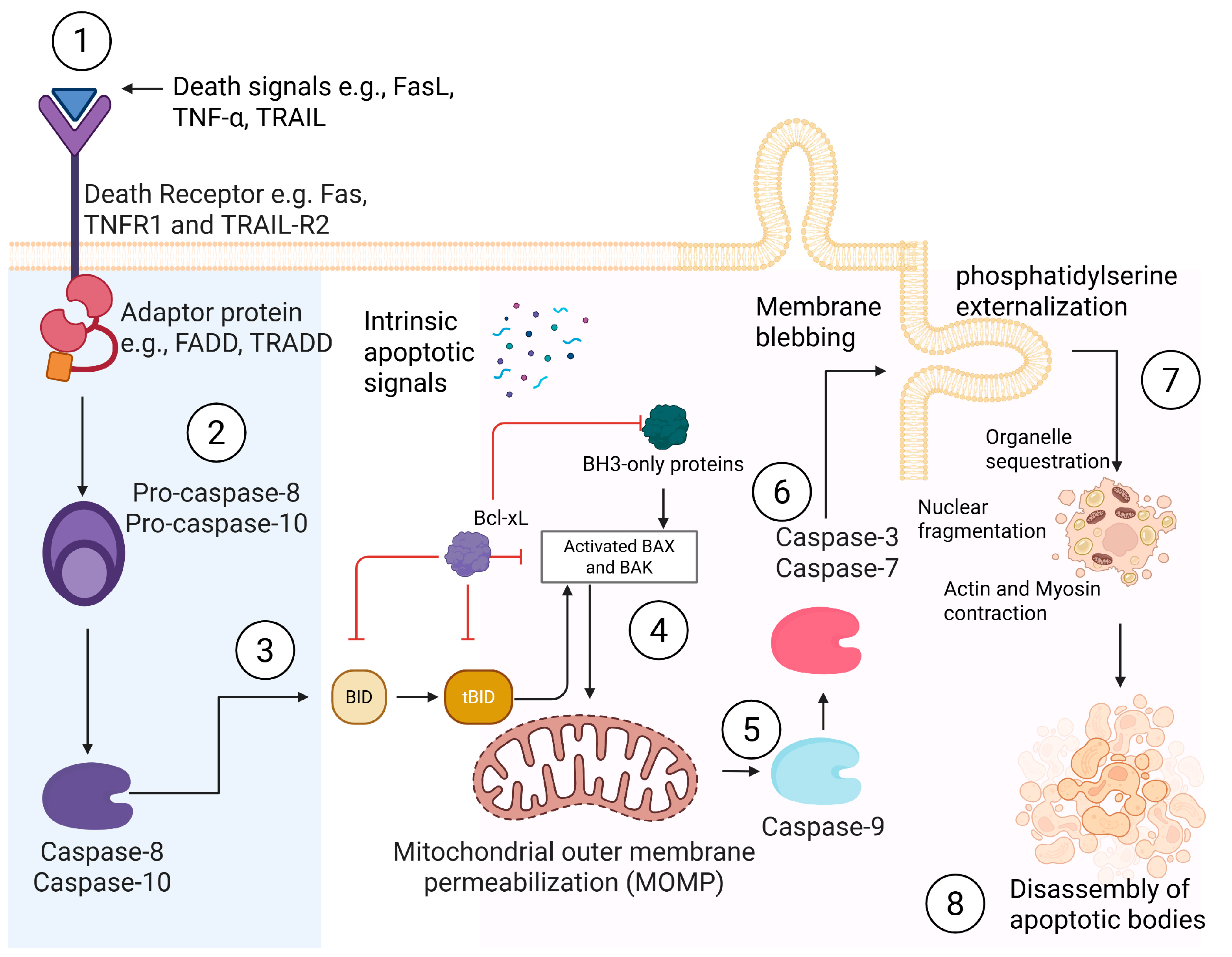
2.1. Hepatocyte Apoptosis
2.1.1. Intrinsic Hepatocyte Apoptotic Pathway
2.1.2. Extrinsic Hepatocyte Apoptotic Pathway
2.2. Formation of Hepatocyte ApopBDs
3. Characteristics of Hepatocyte ApopBDs
3.1. Structural Features
3.2. Biochemistry of the Cargo Content
3.3. Phosphatidylserine Externalization
3.4. Size Variations and Subpopulations
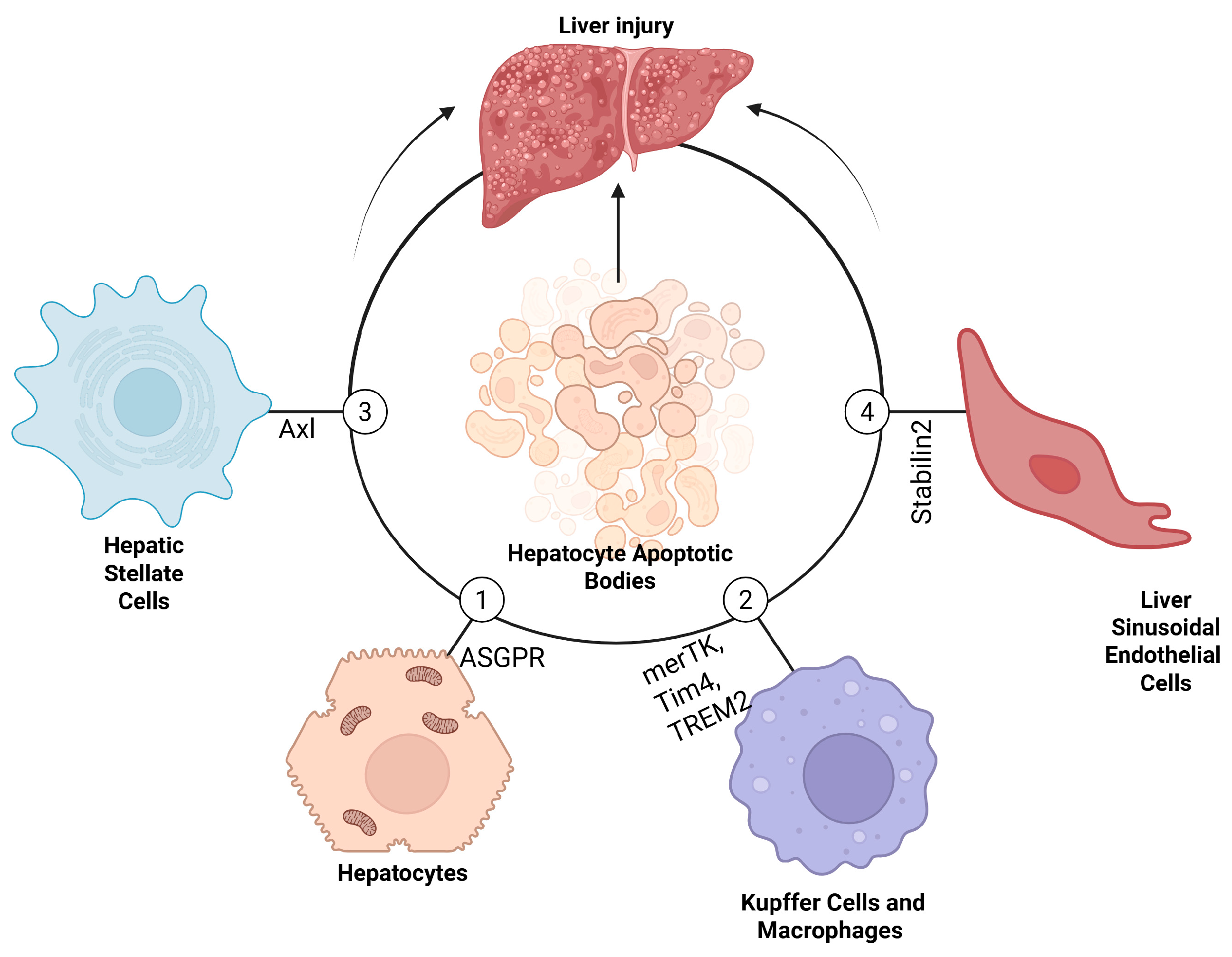
4. Intercellular Communications in the Liver
4.1. Crosstalk with Surviving Hepatocytes
4.2. Crosstalk with KCs and Macrophages
4.3. Crosstalk with HSC
4.4. Crosstalk with LSECs
5. Disease-Specific Roles of ApopBDs in Liver Pathophysiology
5.1. Hepatocyte ApopBDs in HBV Infection
5.2. Hepatocyte ApopBDs in HCV Infection
5.3. Hepatocyte ApopBDs in Alcohol-Associated Liver Disease (ALD)
5.4. Hepatocyte ApopBDs in Metabolic Dysfunction–Associated Steatohepatitis (MASLD/NASH)
5.5. Hepatocyte ApopBDs in Other Injury and Regenerative Contexts
5.5.1. Drug-Induced Liver Injury
5.5.2. Regeneration After Hepatectomy
6. Therapeutic and Diagnostic Implications
6.1. Therapeutic Implications
6.1.1. Targeting MerTK-Mediated Pro-Inflammatory Signaling
6.1.2. Modulating TIM4 and Stabilin-2 to Reduce Pathological Efferocytosis
6.1.3. Targeting Hepatocyte–Hepatocyte Propagation of Cell Death
6.1.4. Reducing ApopBDs Biogenesis and Lipotoxic Death
6.1.5. Interrupting HSC Activation via ApopBDs Cargo
6.2. Diagnostic Implications
6.2.1. Circulating ApopBDs Quantification as a Marker of Hepatocyte Apoptosis
6.2.2. ApopBDs-Associated DNA and RNA as Molecular Biomarkers
6.2.3. Surface Markers and Receptor–Ligand Signatures
6.3. ApopBDs Profiling for Disease Staging and Treatment Response

| Target | Biological Rationale | Proposed Intervention | Potential Clinical Utility | Key References |
|---|---|---|---|---|
| MerTK signaling in KCs and HSCs | Chronic ApoBD clearance via MerTK promotes TGF-β–driven inflammation and fibrogenesis | MerTK small-molecule inhibitors; soluble MerTK decoy receptors | Attenuation of macrophage- and stellate-cell–mediated fibrosis in NASH, ASH, and chronic viral hepatitis | [150,151] |
| TIM4 and Stabilin-2–mediated efferocytosis | Dysregulated phosphatidylserine-dependent efferocytosis sustains inflammatory signaling | Monoclonal antibodies or blocking peptides targeting TIM4 or Stabilin-2 | Reduction in pathological efferocytosis and interruption of chronic inflammatory cycles | [133] |
| Hepatocyte ApoBD uptake pathways (ASGPR, integrins, CD91/LRP1) | ApoBD internalization propagates oxidative stress and secondary hepatocyte apoptosis | Pharmacologic modulation of ASGPR; inhibition of bridging molecules (Gas6, MFG-E8) | Limitation of hepatocyte-to-hepatocyte amplification of apoptotic signaling | [153] |
| ApoBD biogenesis at the source | Excessive hepatocyte apoptosis increases ApoBD burden and downstream immune activation | Antioxidants, ROS scavengers; caspase inhibitors; lipotoxicity inhibitors (ACC, DGAT2 blockers) | Upstream suppression of ApoBD release and downstream macrophage/HSC activation | [134,151] |
| ApoBD cargo–mediated HSC activation | ApoBD-associated mtDNA and oxidized lipids activate TLR9, NF-κB, and MAPK pathways in HSCs | TLR9 antagonists; MAPK (JNK/p38) inhibitors | Direct inhibition of ApoBD-driven stellate cell activation and fibrogenesis | [154,155] |
| Engineered ApoBDs carrying antifibrotic miRNAs | Certain ApoBDs contain miRNAs (e.g., miR-29, miR-19b) with antifibrotic effects | Engineered or enriched vesicles delivering antifibrotic miRNAs | Novel antifibrotic therapeutic platforms targeting stellate cells | [5,152] |
| Circulating ApoBD quantification | ApoBD levels reflect regulated hepatocyte apoptosis rather than nonspecific injury | Flow cytometry; nanoparticle tracking analysis | Non-invasive assessment of hepatocyte apoptosis burden across liver diseases | [154,155] |
| ApoBD-associated mtDNA and miRNAs | ApoBD cargo mirrors molecular pathways of injury and fibrosis | Liquid-biopsy profiling of mtDNA and apoptosis-associated miRNAs | Molecular biomarkers for fibrosis severity, metabolic stress, and inflammatory activity | [133,148] |
| ApoBD surface markers | Injury-specific surface signatures distinguish apoptosis etiologies | Detection of calreticulin, desialylated glycoproteins, oxidized phospholipids | Etiology-specific discrimination (ALD vs. NASH vs. viral hepatitis) | [153] |
| ApoBD profiling for disease staging and response | ApoBD levels rise early and decline with effective therapy | Longitudinal ApoBD monitoring | Early disease staging and dynamic assessment of therapeutic response | [156] |
7. Conclusions
Author Contributions
Funding
Institutional Review Board Statement
Informed Consent Statement
Data Availability Statement
Conflicts of Interest
Abbreviations
| ApopBDs | Apoptotic bodies |
| EVs | Extracellular vesicles |
| KCs | Kupffer cells |
| HSC | Hepatic stellate cells |
| Bcl2 | B-cell lymphoma 2 |
| TNFR | Tumor Necrosis Factor Receptor |
| TRAIL | Tumor Necrosis Factor-Related Apoptosis-Inducing Ligand |
| FasL | Fas Ligand |
| TNFα | Tumor Necrosis Factor alpha |
| PS | Phosphatidylserine |
| PAMPs | Pathogen-Associated Molecular Patterns |
| DAMPs | Damage-Associated Molecular Patterns |
| HBV | Hepatitis B virus |
| HCV | Hepatitis C virus |
| HIV | Human immunodeficiency virus |
| ASGPR | Asialoglycoprotein receptor |
| JAK | Janus Kinase |
| STAT | Signal Transducer and Activator of Transcription |
| JNK | c-Jun N-terminal kinase |
| ERK | Extracellular signal-regulated kinase |
| Wnt | Wingless-Type MMTV Integration Site Family, Member |
| NF | Nuclear Factor |
| CTLs | Cytotoxic T Lymphocytes |
| NK | Natural Killer |
| ATP | Adenosine Triphosphate |
| NLRP3 | Nod-like receptor family pyrin domain containing 3 |
| MAPK | Mitogen-Activated Protein Kinase |
| NASH | Non-Alcoholic Steatohepatitis |
| TGF | Transforming Growth Factor |
| TK | Tyrosine Kinase |
| TREM2 | Triggering Receptor Expressed on Myeloid Cells |
| Tim | T cell immunoglobulin and mucin domain |
References
- Gan, C.; Yuan, Y.; Shen, H.; Gao, J.; Kong, X.; Che, Z.; Guo, Y.; Wang, H.; Dong, E.; Xiao, J. Liver diseases: Epidemiology, causes, trends and predictions. Signal Transduct. Target. Ther. 2025, 10, 33. [Google Scholar] [CrossRef]
- Wang, K.; Lin, B. Pathophysiological Significance of Hepatic Apoptosis. Int. Sch. Res. Not. 2013, 2013, 740149. [Google Scholar] [CrossRef]
- Ganesan, M.; New-Aaron, M.; Dagur, R.S.; Makarov, E.; Wang, W.; Kharbanda, K.K.; Kidambi, S.; Poluektova, L.Y.; Osna, N.A. Alcohol Metabolism Potentiates HIV-Induced Hepatotoxicity: Contribution to End-Stage Liver Disease. Biomolecules 2019, 9, 851. [Google Scholar] [CrossRef] [PubMed]
- Vitale, I.; Pietrocola, F.; Guilbaud, E.; Aaronson, S.A.; Abrams, J.M.; Adam, D.; Agostini, M.; Agostinis, P.; Alnemri, E.S.; Altucci, L.; et al. Apoptotic cell death in disease—Current understanding of the NCCD 2023. Cell Death Differ. 2023, 30, 1097–1154. [Google Scholar] [CrossRef] [PubMed]
- Guicciardi, M.E.; Gores, G.J. Apoptosis: A mechanism of acute and chronic liver injury. Gut 2005, 54, 1024–1033. [Google Scholar] [CrossRef]
- Feldstein, A.E.; Wieckowska, A.; Lopez, A.R.; Liu, Y.C.; Zein, N.N.; McCullough, A.J. Cytokeratin-18 fragment levels as noninvasive biomarkers for nonalcoholic steatohepatitis: A multicenter validation study. Hepatology 2009, 50, 1072–1078. [Google Scholar] [CrossRef] [PubMed]
- Kanda, T.; Matsuoka, S.; Yamazaki, M.; Shibata, T.; Nirei, K.; Takahashi, H.; Kaneko, T.; Fujisawa, M.; Higuchi, T.; Nakamura, H.; et al. Apoptosis and non-alcoholic fatty liver diseases. World J. Gastroenterol. 2018, 24, 2661–2672. [Google Scholar] [CrossRef]
- Zhang, Y.; Meng, X.; Ding, Y.; Yu, J.; Wan, Y.; Yang, Z.; Han, Z.; Zhu, Q.; Feng, R.; Li, J.; et al. Neutrophil Recruitment via Hepatocyte IL-1α Drives NETs-Mediated AIM2 Hepatocyte Apoptosis in Alcohol-associated steatohepatitis. Int. J. Biol. Sci. 2025, 21, 5762–5781. [Google Scholar] [CrossRef]
- Tan, H.K.; Yates, E.; Lilly, K.; Dhanda, A.D. Oxidative stress in alcohol-related liver disease. World J. Hepatol. 2020, 12, 332–349. [Google Scholar] [CrossRef]
- Miñana, J.B.; Gómez-Cambronero, L.; Lloret, A.; Pallardó, F.V.; Del Olmo, J.; Escudero, A.; Rodrigo, J.M.; Pellíin, A.; Viña, J.R.; Viña, J.; et al. Mitochondrial oxidative stress and CD95 ligand: A dual mechanism for hepatocyte apoptosis in chronic alcoholism. Hepatology 2002, 35, 1205–1214. [Google Scholar] [CrossRef]
- Gao, B.; Ahmad, M.F.; Nagy, L.E.; Tsukamoto, H. Inflammatory pathways in alcoholic steatohepatitis. J. Hepatol. 2019, 70, 249–259. [Google Scholar] [CrossRef]
- Nagy, L.E.; Ding, W.X.; Cresci, G.; Saikia, P.; Shah, V.H. Linking Pathogenic Mechanisms of Alcoholic Liver Disease with Clinical Phenotypes. Gastroenterology 2016, 150, 1756–1768. [Google Scholar] [CrossRef]
- Luedde, T.; Kaplowitz, N.; Schwabe, R.F. Cell death and cell death responses in liver disease: Mechanisms and clinical relevance. Gastroenterology 2014, 147, 765–783.e764. [Google Scholar] [CrossRef] [PubMed]
- Neuman, M.G.; Mueller, J.; Mueller, S. Non-invasive Biomarkers of Liver Inflammation and Cell Death in Response to Alcohol Detoxification. Front. Physiol. 2021, 12, 678118. [Google Scholar] [CrossRef]
- Xu, H.; Wang, H. Immune cells in alcohol-related liver disease. Liver Res. 2022, 6, 1–9. [Google Scholar] [CrossRef] [PubMed]
- Nagy, L.E. The Role of Innate Immunity in Alcoholic Liver Disease. Alcohol. Res. 2015, 37, 237–250. [Google Scholar] [CrossRef]
- Lau, J.Y.; Xie, X.; Lai, M.M.; Wu, P.C. Apoptosis and viral hepatitis. Semin. Liver Dis. 1998, 18, 169–176. [Google Scholar] [CrossRef]
- Calabrese, F.; Pontisso, P.; Pettenazzo, E.; Benvegnù, L.; Vario, A.; Chemello, L.; Alberti, A.; Valente, M. Liver cell apoptosis in chronic hepatitis C correlates with histological but not biochemical activity or serum HCV-RNA levels. Hepatology 2000, 31, 1153–1159. [Google Scholar] [CrossRef] [PubMed]
- New-Aaron, M.; Thomes, P.G.; Ganesan, M.; Dagur, R.S.; Donohue, T.M.; Kusum, K.K.; Poluektova, L.Y.; Osna, N.A. Alcohol-Induced Lysosomal Damage and Suppression of Lysosome Biogenesis Contribute to Hepatotoxicity in HIV-Exposed Liver Cells. Biomolecules 2021, 11, 1497. [Google Scholar] [CrossRef]
- Bouchecareilh, M. Alpha-1 Antitrypsin Deficiency-Mediated Liver Toxicity: Why Do Some Patients Do Poorly? What Do We Know So Far? Chronic Obs. Pulm. Dis. 2020, 7, 172–181. [Google Scholar] [CrossRef]
- Dev, S.; Kruse, R.L.; Hamilton, J.P.; Lutsenko, S. Wilson Disease: Update on Pathophysiology and Treatment. Front. Cell Dev. Biol. 2022, 10, 871877. [Google Scholar] [CrossRef]
- Cao, L.; Quan, X.B.; Zeng, W.J.; Yang, X.O.; Wang, M.J. Mechanism of Hepatocyte Apoptosis. J. Cell Death 2016, 9, 19–29. [Google Scholar] [CrossRef]
- Czaja, A.J. Examining pathogenic concepts of autoimmune hepatitis for cues to future investigations and interventions. World J. Gastroenterol. 2019, 25, 6579–6606. [Google Scholar] [CrossRef]
- Lapierre, P.; Béland, K.; Alvarez, F. Pathogenesis of autoimmune hepatitis: From break of tolerance to immune-mediated hepatocyte apoptosis. Transl. Res. 2007, 149, 107–113. [Google Scholar] [CrossRef]
- Miyoshi, H.; Rust, C.; Roberts, P.J.; Burgart, L.J.; Gores, G.J. Hepatocyte apoptosis after bile duct ligation in the mouse involves Fas. Gastroenterology 1999, 117, 669–677. [Google Scholar] [CrossRef]
- Higashi, Y.; Munesue, S.; Saeki, M.; Harashima, A.; Kimura, K.; Oshima, Y.; Takei, R.; Takada, S.; Nakanuma, S.; Makino, I.; et al. Platelet aggregation elicits FasL expression and hepatocyte apoptosis in sinusoidal obstruction syndrome. Sci. Rep. 2025, 15, 18859. [Google Scholar] [CrossRef] [PubMed]
- Cheng, Z.; Chu, H.; Seki, E.; Lin, R.; Yang, L. Hepatocyte programmed cell death: The trigger for inflammation and fibrosis in metabolic dysfunction-associated steatohepatitis. Front. Cell Dev. Biol. 2024, 12, 1431921. [Google Scholar] [CrossRef] [PubMed]
- Malhi, H.; Guicciardi, M.E.; Gores, G.J. Hepatocyte Death: A Clear and Present Danger. Physiol. Rev. 2010, 90, 1165–1194. [Google Scholar] [CrossRef]
- Mustafa, M.; Ahmad, R.; Tantry, I.Q.; Ahmad, W.; Siddiqui, S.; Alam, M.; Abbas, K.; Moinuddin; Hassan, M.I.; Habib, S.; et al. Apoptosis: A Comprehensive Overview of Signaling Pathways, Morphological Changes, and Physiological Significance and Therapeutic Implications. Cells 2024, 13, 1838. [Google Scholar] [CrossRef]
- Vogler, M.; Braun, Y.; Smith, V.M.; Westhoff, M.-A.; Pereira, R.S.; Pieper, N.M.; Anders, M.; Callens, M.; Vervliet, T.; Abbas, M.; et al. The BCL2 family: From apoptosis mechanisms to new advances in targeted therapy. Signal Transduct. Target. Ther. 2025, 10, 91. [Google Scholar] [CrossRef]
- Montinaro, A.; Walczak, H. Harnessing TRAIL-induced cell death for cancer therapy: A long walk with thrilling discoveries. Cell Death Differ. 2023, 30, 237–249. [Google Scholar] [CrossRef]
- Yin, X.M.; Ding, W.X. Death receptor activation-induced hepatocyte apoptosis and liver injury. Curr. Mol. Med. 2003, 3, 491–508. [Google Scholar] [CrossRef]
- Malhi, H.; Bronk, S.F.; Werneburg, N.W.; Gores, G.J. Free fatty acids induce JNK-dependent hepatocyte lipoapoptosis. J. Biol. Chem. 2006, 281, 12093–12101. [Google Scholar] [CrossRef]
- Panaretakis, T.; Shabalina, I.G.; Grandér, D.; Shoshan, M.C.; DePierre, J.W. Reactive Oxygen Species and Mitochondria Mediate the Induction of Apoptosis in Human Hepatoma HepG2 Cells by the Rodent Peroxisome Proliferator and Hepatocarcinogen, Perfluorooctanoic Acid. Toxicol. Appl. Pharmacol. 2001, 173, 56–64. [Google Scholar] [CrossRef] [PubMed]
- Herrera, B.; Alvarez, A.M.; Sánchez, A.; Fernández, M.; Roncero, C.; Benito, M.; Fabregat, I. Reactive oxygen species (ROS) mediates the mitochondrial-dependent apoptosis induced by transforming growth factor (beta) in fetal hepatocytes. Faseb J. 2001, 15, 741–751. [Google Scholar] [CrossRef]
- Pfaffenbach, K.T.; Gentile, C.L.; Nivala, A.M.; Wang, D.; Wei, Y.; Pagliassotti, M.J. Linking endoplasmic reticulum stress to cell death in hepatocytes: Roles of C/EBP homologous protein and chemical chaperones in palmitate-mediated cell death. Am. J. Physiol. Endocrinol. Metab. 2010, 298, E1027–1035. [Google Scholar] [CrossRef]
- Olivares, S.; Henkel, A.S. Hepatic Xbp1 Gene Deletion Promotes Endoplasmic Reticulum Stress-induced Liver Injury and Apoptosis. J. Biol. Chem. 2015, 290, 30142–30151. [Google Scholar] [CrossRef] [PubMed]
- Ferreira, D.M.; Afonso, M.B.; Rodrigues, P.M.; Simão, A.L.; Pereira, D.M.; Borralho, P.M.; Rodrigues, C.M.; Castro, R.E. c-Jun N-terminal kinase 1/c-Jun activation of the p53/microRNA 34a/sirtuin 1 pathway contributes to apoptosis induced by deoxycholic acid in rat liver. Mol. Cell Biol. 2014, 34, 1100–1120. [Google Scholar] [CrossRef]
- Alkhouri, N.; Carter-Kent, C.; Feldstein, A.E. Apoptosis in nonalcoholic fatty liver disease: Diagnostic and therapeutic implications. Expert. Rev. Gastroenterol. Hepatol. 2011, 5, 201–212. [Google Scholar] [CrossRef]
- Bender, T.; Martinou, J.C. Where killers meet--permeabilization of the outer mitochondrial membrane during apoptosis. Cold Spring Harb. Perspect. Biol. 2013, 5, a011106. [Google Scholar] [CrossRef] [PubMed]
- Riedl, S.J.; Shi, Y. Molecular mechanisms of caspase regulation during apoptosis. Nat. Rev. Mol. Cell Biol. 2004, 5, 897–907. [Google Scholar] [CrossRef] [PubMed]
- Lomonosova, E.; Chinnadurai, G. BH3-only proteins in apoptosis and beyond: An overview. Oncogene 2008, 27, S2–S19. [Google Scholar] [CrossRef] [PubMed]
- Faletti, L.; Peintner, L.; Neumann, S.; Sandler, S.; Grabinger, T.; Mac Nelly, S.; Merfort, I.; Huang, C.-H.; Tschaharganeh, D.; Kang, T.-W.; et al. TNFα sensitizes hepatocytes to FasL-induced apoptosis by NFκB-mediated Fas upregulation. Cell Death Dis. 2018, 9, 909. [Google Scholar] [CrossRef]
- Costelli, P.; Aoki, P.; Zingaro, B.; Carbo, N.; Reffo, P.; Lopez-Soriano, F.; Bonelli, G.; Argiles, J.; Baccino, F.M. Mice lacking TNFα receptors 1 and 2 are resistant to death and fulminant liver injury induced by agonistic anti-Fas antibody. Cell Death Differ. 2003, 10, 997–1004. [Google Scholar] [CrossRef]
- Nagaki, M.; Sugiyama, A.; Osawa, Y.; Naiki, T.; Nakashima, S.; Nozawa, Y.; Moriwaki, H. Lethal hepatic apoptosis mediated by tumor necrosis factor receptor, unlike Fas-mediated apoptosis, requires hepatocyte sensitization in mice. J. Hepatol. 1999, 31, 997–1005. [Google Scholar] [CrossRef]
- Jin, T.G.; Kurakin, A.; Benhaga, N.; Abe, K.; Mohseni, M.; Sandra, F.; Song, K.; Kay, B.K.; Khosravi-Far, R. Fas-associated protein with death domain (FADD)-independent recruitment of c-FLIPL to death receptor 5. J. Biol. Chem. 2004, 279, 55594–55601. [Google Scholar] [CrossRef]
- Hikita, H.; Takehara, T.; Kodama, T.; Shimizu, S.; Hosui, A.; Miyagi, T.; Tatsumi, T.; Ishida, H.; Ohkawa, K.; Li, W.; et al. BH3-only protein bid participates in the Bcl-2 network in healthy liver cells. Hepatology 2009, 50, 1972–1980. [Google Scholar] [CrossRef]
- Elmore, S. Apoptosis: A review of programmed cell death. Toxicol. Pathol. 2007, 35, 495–516. [Google Scholar] [CrossRef]
- Coleman, M.L.; Sahai, E.A.; Yeo, M.; Bosch, M.; Dewar, A.; Olson, M.F. Membrane blebbing during apoptosis results from caspase-mediated activation of ROCK I. Nat. Cell Biol. 2001, 3, 339–345. [Google Scholar] [CrossRef] [PubMed]
- New-Aaron, M.; Dagur, R.S.; Koganti, S.S.; Ganesan, M.; Wang, W.; Makarov, E.; Ogunnaike, M.; Kharbanda, K.K.; Poluektova, L.Y.; Osna, N.A. Alcohol and HIV-Derived Hepatocyte Apoptotic Bodies Induce Hepatic Stellate Cell Activation. Biology 2022, 11, 1059. [Google Scholar] [CrossRef]
- Fadok, V.A.; Bratton, D.L.; Frasch, S.C.; Warner, M.L.; Henson, P.M. The role of phosphatidylserine in recognition of apoptotic cells by phagocytes. Cell Death Differ. 1998, 5, 551–562. [Google Scholar] [CrossRef] [PubMed]
- Jang, J.Y.; Shao, R.-X.; Lin, W.; Weinberg, E.; Chung, W.J.; Tsai, W.L.; Zhao, H.; Goto, K.; Zhang, L.; Mendez-Navarro, J.; et al. HIV infection increases HCV-induced hepatocyte apoptosis. J. Hepatol. 2011, 54, 612–620. [Google Scholar] [CrossRef]
- Gruevska, A.; Moragrega, Á.B.; Cossarizza, A.; Esplugues, J.V.; Blas-García, A.; Apostolova, N. Apoptosis of Hepatocytes: Relevance for HIV-Infected Patients under Treatment. Cells 2021, 10, 140. [Google Scholar] [CrossRef]
- Gregory, C.D.; Rimmer, M.P. Extracellular vesicles arising from apoptosis: Forms, functions, and applications. J. Pathol. 2023, 260, 592–608. [Google Scholar] [CrossRef]
- Krishna, M. Microscopic anatomy of the liver. Clin Liver Dis. 2013, 2, S4–S7. [Google Scholar] [CrossRef]
- McVicker, B.L.; Tuma, D.J.; Casey, C.A. Effect of ethanol on pro-apoptotic mechanisms in polarized hepatic cells. World J. Gastroenterol. 2007, 13, 4960–4966. [Google Scholar] [CrossRef] [PubMed]
- Dixson, A.C.; Dawson, T.R.; Di Vizio, D.; Weaver, A.M. Context-specific regulation of extracellular vesicle biogenesis and cargo selection. Nat. Rev. Mol. Cell Biol. 2023, 24, 454–476. [Google Scholar] [CrossRef]
- Lu, Y.; Cederbaum, A.I. Cytochrome P450s and Alcoholic Liver Disease. Curr. Pharm. Des. 2018, 24, 1502–1517. [Google Scholar] [CrossRef]
- Hu, Y.; Wang, R.; Liu, J.; Wang, Y.; Dong, J. Lipid droplet deposition in the regenerating liver: A promoter, inhibitor, or bystander? Hepatol. Commun. 2023, 7, e0267. [Google Scholar] [CrossRef]
- Dawson, P.A.; Lan, T.; Rao, A. Bile acid transporters. J. Lipid Res. 2009, 50, 2340–2357. [Google Scholar] [CrossRef]
- Karin, M.; Kim, J.Y. Endoplasmic reticulum stress at the forefront of fatty liver diseases and cancer. Pharmacol. Rev. 2025, 77, 100096. [Google Scholar] [CrossRef]
- Braun, J.R.; Willnow, T.E.; Ishibashi, S.; Ashwell, G.; Herz, J. The major subunit of the asialoglycoprotein receptor is expressed on the hepatocellular surface in mice lacking the minor receptor subunit. J. Biol. Chem. 1996, 271, 21160–21166. [Google Scholar] [CrossRef]
- Liu, R.; Chen, C.; Xia, X.; Liao, Q.; Wang, Q.; Newcombe, P.J.; Xu, S.; Chen, M.; Ding, Y.; Li, X.; et al. Homozygous p.Ser267Phe in SLC10A1 is associated with a new type of hypercholanemia and implications for personalized medicine. Sci. Rep. 2017, 7, 9214. [Google Scholar] [CrossRef] [PubMed]
- Nyarko, E.; Obirikorang, C.; Owiredu, W.; Adu, E.A.; Acheampong, E.; Aidoo, F.; Ofori, E.; Addy, B.S.; Asare-Anane, H. NTCP gene polymorphisms and hepatitis B virus infection status in a Ghanaian population. Virol. J. 2020, 17, 91. [Google Scholar] [CrossRef]
- Yang, X.; Zheng, X.; Zhu, Y.; Zhao, X.; Liu, J.; Xun, J.; Yuan, S.; Chen, J.; Pan, H.; Yang, J.; et al. Asialoglycoprotein receptor 1 promotes SARS-CoV-2 infection of human normal hepatocytes. Signal Transduct. Target. Ther. 2024, 9, 42. [Google Scholar] [CrossRef] [PubMed]
- Nagata, S.; Suzuki, J.; Segawa, K.; Fujii, T. Exposure of phosphatidylserine on the cell surface. Cell Death Differ. 2016, 23, 952–961. [Google Scholar] [CrossRef]
- Lee, S.H.; Meng, X.W.; Flatten, K.S.; Loegering, D.A.; Kaufmann, S.H. Phosphatidylserine exposure during apoptosis reflects bidirectional trafficking between plasma membrane and cytoplasm. Cell Death Differ. 2013, 20, 64–76. [Google Scholar] [CrossRef] [PubMed]
- Birge, R.B.; Boeltz, S.; Kumar, S.; Carlson, J.; Wanderley, J.; Calianese, D.; Barcinski, M.; Brekken, R.A.; Huang, X.; Hutchins, J.T.; et al. Phosphatidylserine is a global immunosuppressive signal in efferocytosis, infectious disease, and cancer. Cell Death Differ. 2016, 23, 962–978. [Google Scholar] [CrossRef]
- Blom, W.M.; de Bont, H.J.; Nagelkerke, J.F. Regional loss of the mitochondrial membrane potential in the hepatocyte is rapidly followed by externalization of phosphatidylserines at that specific site during apoptosis. J. Biol. Chem. 2003, 278, 12467–12474. [Google Scholar] [CrossRef]
- Schiller, M.; Bekeredjian-Ding, I.; Heyder, P.; Blank, N.; Ho, A.D.; Lorenz, H.-M. Autoantigens are translocated into small apoptotic bodies during early stages of apoptosis. Cell Death Differ. 2008, 15, 183–191. [Google Scholar] [CrossRef]
- Osna, N.A.; Poluektova, L.Y. Elucidating the role of extracellular vesicles in liver injury induced by HIV. Expert. Rev. Gastroenterol. Hepatol. 2023, 17, 701–708. [Google Scholar] [CrossRef]
- Zhang, L.; Han, C.; Shrestha, M.M.; Le, J.; Berger, W.K.; Huang, Y.; Desrouleaux, R.; Wang, E.; Nagy, L.; Yang, X. The OGT-TFF2 axis mediates intrahepatic crosstalk and MASH pathogenesis. Hepatology 2025. [Google Scholar] [CrossRef] [PubMed]
- Zhou, Y.; Wang, G.; Liu, L.; Song, L.; Hu, L.; Liu, L.; Xu, L.; Wang, T.; Liu, L.; Wang, Y.; et al. Cellular crosstalk mediated by Meteorin-like regulating hepatic stellate cell activation during hepatic fibrosis. Cell Death Dis. 2025, 16, 405. [Google Scholar] [CrossRef] [PubMed]
- Yu, F.; Yan, L.; Sun, J.; Zhao, Y.; Yuan, Y.; Gu, J.; Bian, J.; Zou, H.; Liu, Z. Gap junction intercellular communication mediates cadmium-induced apoptosis in hepatocytes via the Fas/FasL pathway. Environ. Toxicol. 2022, 37, 2692–2702. [Google Scholar] [CrossRef]
- Devaraj, E.; Perumal, E.; Subramaniyan, R.; Mustapha, N. Liver fibrosis: Extracellular vesicles mediated intercellular communication in perisinusoidal space. Hepatology 2022, 76, 275–285. [Google Scholar] [CrossRef] [PubMed]
- Roggenbuck, D.; Mytilinaiou, M.G.; Lapin, S.V.; Reinhold, D.; Conrad, K. Asialoglycoprotein receptor (ASGPR): A peculiar target of liver-specific autoimmunity. Auto. Immun. Highlights 2012, 3, 119–125. [Google Scholar] [CrossRef]
- Mota, M.; Banini, B.A.; Cazanave, S.C.; Sanyal, A.J. Molecular mechanisms of lipotoxicity and glucotoxicity in nonalcoholic fatty liver disease. Metabolism 2016, 65, 1049–1061. [Google Scholar] [CrossRef]
- Davies, S.P.; Reynolds, G.M.; Stamataki, Z. Clearance of apoptotic cells by tissue epithelia: A putative role for hepatocytes in liver efferocytosis. Front. Immunol. 2018, 9, 44. [Google Scholar] [CrossRef]
- Triantafyllou, E.; Pop, O.T.; Possamai, L.A.; Wilhelm, A.; Liaskou, E.; Singanayagam, A.; Bernsmeier, C.; Khamri, W.; Petts, G.; Dargue, R.; et al. MerTK expressing hepatic macrophages promote the resolution of inflammation in acute liver failure. Gut 2018, 67, 333–347. [Google Scholar] [CrossRef]
- Wu, H.; Chen, G.; Wang, J.; Deng, M.; Yuan, F.; Gong, J. TIM-4 interference in Kupffer cells against CCL4-induced liver fibrosis by mediating Akt1/Mitophagy signalling pathway. Cell Prolif. 2020, 53, e12731. [Google Scholar] [CrossRef]
- Gonçalves, L.A.; Rodrigues-Duarte, L.; Rodo, J.; Vieira de Moraes, L.; Marques, I.; Penha-Gonçalves, C. TREM2 governs Kupffer cell activation and explains belr1 genetic resistance to malaria liver stage infection. Proc. Natl. Acad. Sci. USA 2013, 110, 19531–19536. [Google Scholar] [CrossRef]
- Shi, H.; Moore, M.P.; Wang, X.; Tabas, I. Efferocytosis in liver disease. JHEP Rep. 2024, 6, 100960. [Google Scholar] [CrossRef]
- Canbay, A.; Feldstein, A.E.; Higuchi, H.; Werneburg, N.; Grambihler, A.; Bronk, S.F.; Gores, G.J. Kupffer cell engulfment of apoptotic bodies stimulates death ligand and cytokine expression. Hepatology 2003, 38, 1188–1198. [Google Scholar] [CrossRef]
- Huang, H.; Chen, H.W.; Evankovich, J.; Yan, W.; Rosborough, B.R.; Nace, G.W.; Ding, Q.; Loughran, P.; Beer-Stolz, D.; Billiar, T.R.; et al. Histones activate the NLRP3 inflammasome in Kupffer cells during sterile inflammatory liver injury. J. Immunol. 2013, 191, 2665–2679. [Google Scholar] [CrossRef]
- Beltrán-García, J.; Osca-Verdegal, R.; Pérez-Cremades, D.; Novella, S.; Hermenegildo, C.; Pallardó, F.V.; García-Giménez, J.L. Extracellular histones activate endothelial NLRP3 inflammasome and are associated with a severe sepsis phenotype. J. Inflamm. Res. 2022, 15, 4217–4238. [Google Scholar] [CrossRef]
- Guicciardi, M.E.; Gores, G.J. Apoptosis as a mechanism for liver disease progression. Semin. Liver Dis. 2010, 30, 402–410. [Google Scholar] [CrossRef]
- Fasano, R.; Malerba, E.; Prete, M.; Solimando, A.G.; Buonavoglia, A.; Silvestris, N.; Leone, P.; Racanelli, V. Impact of Antigen Presentation Mechanisms on Immune Response in Autoimmune Hepatitis. Front. Immunol. 2021, 12, 814155. [Google Scholar] [CrossRef]
- Zhan, S.-S.; Jiang, J.X.; Wu, J.; Halsted, C.; Friedman, S.L.; Zern, M.A.; Torok, N.J. Phagocytosis of apoptotic bodies by hepatic stellate cells induces NADPH oxidase and is associated with liver fibrosis in vivo. Hepatology 2006, 43, 435–443. [Google Scholar] [CrossRef]
- Canbay, A.; Taimr, P.; Torok, N.; Higuchi, H.; Friedman, S.; Gores, G.J. Apoptotic Body Engulfment by a Human Stellate Cell Line Is Profibrogenic. Lab. Investig. 2003, 83, 655–663. [Google Scholar] [CrossRef]
- Dechêne, A.; Sowa, J.-P.; Gieseler, R.K.; Jochum, C.; Bechmann, L.P.; El Fouly, A.; Schlattjan, M.; Saner, F.; Baba, H.A.; Paul, A.; et al. Acute Liver Failure Is Associated with Elevated Liver Stiffness and Hepatic Stellate Cell Activation†. Hepatology 2010, 52, 1008–1016. [Google Scholar] [CrossRef]
- Kharbanda, K.K.; Chokshi, S.; Tikhanovich, I.; Weinman, S.A.; New-Aaron, M.; Ganesan, M.; Osna, N.A. A Pathogenic Role of Non-Parenchymal Liver Cells in Alcohol-Associated Liver Disease of Infectious and Non-Infectious Origin. Biology 2023, 12, 255. [Google Scholar] [CrossRef]
- New-Aaron, M.; Koganti, S.S.; Ganesan, M.; Kanika, S.; Kumar, V.; Wang, W.; Makarov, E.; Kharbanda, K.K.; Poluektova, L.Y.; Osna, N.A. Hepatocyte-Specific Triggering of Hepatic Stellate Cell Profibrotic Activation by Apoptotic Bodies: The Role of Hepatoma-Derived Growth Factor, HIV, and Ethanol. Int. J. Mol. Sci. 2023, 24, 5346. [Google Scholar]
- Dini, L.; Lentini, A.; Diez, G.D.; Rocha, M.; Falasca, L.; Serafino, L.; Vidal-Vanaclocha, F. Phagocytosis of apoptotic bodies by liver endothelial cells. J. Cell Sci. 1995, 108, 967–973. [Google Scholar] [CrossRef]
- Bhandari, S.; Larsen, A.K.; McCourt, P.; Smedsrød, B.; Sørensen, K.K. The scavenger function of liver sinusoidal endothelial cells in health and disease. Front. Physiol. 2021, 12, 757469. [Google Scholar] [CrossRef]
- Pandey, E.; Nour, A.S.; Harris, E.N. Prominent receptors of liver sinusoidal endothelial cells in liver homeostasis and disease. Front. Physiol. 2020, 11, 873. [Google Scholar] [CrossRef]
- Arroyave-Ospina, J.C.; Wu, Z.; Geng, Y.; Moshage, H. Role of oxidative stress in the pathogenesis of non-alcoholic fatty liver disease: Implications for prevention and therapy. Antioxidants 2021, 10, 174. [Google Scholar] [CrossRef]
- Saiman, Y.; Friedman, S.L. The role of chemokines in acute liver injury. Front. Physiol. 2012, 3, 213. [Google Scholar] [CrossRef]
- Arzberger, S.; Hösel, M.; Protzer, U. Apoptosis of hepatitis B virus-infected hepatocytes prevents release of infectious virus. J. Virol. 2010, 84, 11994–12001. [Google Scholar] [CrossRef]
- Schuch, A.; Hoh, A.; Thimme, R. The role of natural killer cells and CD8(+) T cells in hepatitis B virus infection. Front. Immunol. 2014, 5, 258. [Google Scholar] [CrossRef]
- Maini, M.K.; Boni, C.; Lee, C.K.; Larrubia, J.R.; Reignat, S.; Ogg, G.S.; King, A.S.; Herberg, J.; Gilson, R.; Alisa, A.; et al. The role of virus-specific CD8(+) cells in liver damage and viral control during persistent hepatitis B virus infection. J. Exp. Med. 2000, 191, 1269–1280. [Google Scholar] [CrossRef]
- Su, F.; Schneider, R.J. Hepatitis B virus HBx protein sensitizes cells to apoptotic killing by tumor necrosis factor α. Proc. Natl. Acad. Sci. USA 1997, 94, 8744–8749. [Google Scholar] [CrossRef]
- Su, F.; Theodosis, C.N.; Schneider, R.J. Role of NF-κB and myc proteins in apoptosis induced by hepatitis B virus HBx protein. J. Virol. 2001, 75, 215–225. [Google Scholar] [CrossRef]
- Nishi, C.; Toda, S.; Segawa, K.; Nagata, S. Tim4-and MerTK-mediated engulfment of apoptotic cells by mouse resident peritoneal macrophages. Mol. Cell. Biol. 2014, 34, 1512–1520. [Google Scholar] [CrossRef]
- Zhou, Y.; Yang, X.; Liu, S. Emerging roles of apoptotic bodies in immune homeostasis and oral disease therapeutics. Transl. Dent. Res. 2025, 1, 100030. [Google Scholar] [CrossRef]
- Zong, Q.; Zhang, H.; Liu, F.; Li, J.; Liu, Q.; Duan, Z.; Duan, W.; Ruan, M.; Zhang, J.; Liu, Y. Activation of the cGAS-STING pathway by viral dsDNA leading to M1 polarization of macrophages mediates antiviral activity against hepatitis B virus. Immunobiology 2024, 229, 152810. [Google Scholar] [CrossRef]
- Li, A.; Yi, Z.; Ma, C.; Sun, B.; Zhao, L.; Cheng, X.; Hui, L.; Xia, Y. Innate immune recognition in hepatitis B virus infection. Virulence 2025, 16, 2492371. [Google Scholar] [CrossRef]
- Boltjes, A.; van Montfoort, N.; Biesta, P.J.; Op den Brouw, M.L.; Kwekkeboom, J.; van der Laan, L.J.; Janssen, H.L.; Boonstra, A.; Woltman, A.M. Kupffer cells interact with hepatitis B surface antigen in vivo and in vitro, leading to proinflammatory cytokine production and natural killer cell function. J. Infect. Dis. 2015, 211, 1268–1278. [Google Scholar] [CrossRef]
- Zhu, Q.; Yang, Y.; Zhou, H. Novel insights into the role of cGAS-STING signaling in HBV infection. Virology 2025, 611, 110639. [Google Scholar] [CrossRef]
- Soleiman-Meigooni, S.; Yarahmadi, A.; Kheirkhah, A.-H.; Afkhami, H. Recent advances in different interactions between toll-like receptors and hepatitis B infection: A review. Front. Immunol. 2024, 15, 1363996. [Google Scholar] [CrossRef]
- Dansako, H.; Ueda, Y.; Okumura, N.; Satoh, S.; Sugiyama, M.; Mizokami, M.; Ikeda, M.; Kato, N. The cyclic GMP-AMP synthetase–STING signaling pathway is required for both the innate immune response against HBV and the suppression of HBV assembly. FEBS J. 2016, 283, 144–156. [Google Scholar] [CrossRef]
- Liu, S.; Zhao, K.; Su, X.; Lu, L.; Zhao, H.; Zhang, X.; Wang, Y.; Wu, C.; Chen, J.; Zhou, Y. MITA/STING and its alternative splicing isoform MRP restrict hepatitis B virus replication. PLoS ONE 2017, 12, e0169701. [Google Scholar] [CrossRef]
- Guo, F.; Han, Y.; Zhao, X.; Wang, J.; Liu, F.; Xu, C.; Wei, L.; Jiang, J.-D.; Block, T.M.; Guo, J.-T. STING agonists induce an innate antiviral immune response against hepatitis B virus. Antimicrob. Agents Chemother. 2015, 59, 1273–1281. [Google Scholar] [CrossRef]
- Taru, V.; Szabo, G.; Mehal, W.; Reiberger, T. Inflammasomes in chronic liver disease: Hepatic injury, fibrosis progression and systemic inflammation. J. Hepatol. 2024, 81, 895–910. [Google Scholar] [CrossRef]
- Brahadeeswaran, S.; Tamizhselvi, R. Consequence of alcohol intoxication-mediated efferocytosis impairment. Front. Immunol. 2024, 15, 1386658. [Google Scholar] [CrossRef]
- Kouwaki, T.; Okamoto, M.; Tsukamoto, H.; Fukushima, Y.; Oshiumi, H. Extracellular vesicles deliver host and virus RNA and regulate innate immune response. Int. J. Mol. Sci. 2017, 18, 666. [Google Scholar] [CrossRef]
- Kouwaki, T.; Fukushima, Y.; Daito, T.; Sanada, T.; Yamamoto, N.; Mifsud, E.J.; Leong, C.R.; Tsukiyama-Kohara, K.; Kohara, M.; Matsumoto, M. Extracellular vesicles including exosomes regulate innate immune responses to hepatitis B virus infection. Front. Immunol. 2016, 7, 335. [Google Scholar] [CrossRef]
- Kakizaki, M.; Yamamoto, Y.; Otsuka, M.; Kitamura, K.; Ito, M.; Kawai, H.D.; Muramatsu, M.; Kagawa, T.; Kotani, A. Extracellular vesicles secreted by HBV-infected cells modulate HBV persistence in hydrodynamic HBV transfection mouse model. J. Biol. Chem. 2020, 295, 12449–12460. [Google Scholar] [CrossRef]
- Ganesan, M.; Poluektova, L.Y.; Enweluzo, C.; Kharbanda, K.K.; Osna, N.A. Hepatitis C Virus-Infected Apoptotic Hepatocytes Program Macrophages and Hepatic Stellate Cells for Liver Inflammation and Fibrosis Development: Role of Ethanol as a Second Hit. Biomolecules 2018, 8, 113. [Google Scholar] [CrossRef]
- Albertoni, G.; Arnoni, C.P.; Latini, F.R.M.; Andrade, S.S.; Araújo, P.R.B.; Rodrigues, F.K.; Rozenchan, P.B.; Mendes-Correa, M.C.; Leite, O.H.M.; Schor, N. Altered of apoptotic markers of both extrinsic and intrinsic pathways induced by hepatitis C virus infection in peripheral blood mononuclear cells. Virol. J. 2012, 9, 314. [Google Scholar] [CrossRef]
- Ramachandran, A.; Kumar, B.; Waris, G.; Everly, D. Deubiquitination and activation of the NLRP3 inflammasome by UCHL5 in HCV-infected cells. Microbiol. Spectr. 2021, 9, e0075521. [Google Scholar] [CrossRef]
- Zampino, R.; Marrone, A.; Restivo, L.; Guerrera, B.; Sellitto, A.; Rinaldi, L.; Romano, C.; Adinolfi, L.E. Chronic HCV infection and inflammation: Clinical impact on hepatic and extra-hepatic manifestations. World J. Hepatol. 2013, 5, 528. [Google Scholar] [CrossRef]
- Amoras, E.d.S.G.; Gomes, S.T.M.; Freitas, F.B.; Santana, B.B.; Ishak, G.; Ferreira de Araújo, M.T.; Demachki, S.; Conde, S.R.S.d.S.; Ishak, M.d.O.G.; Ishak, R. Intrahepatic mRNA expression of FAS, FASL, and FOXP3 genes is associated with the pathophysiology of chronic HCV infection. PLoS ONE 2016, 11, e0156604. [Google Scholar] [CrossRef]
- Feldstein, A.E.; Gores, G.J. An apoptosis biomarker goes to the HCV clinic. Hepatology 2004, 40, 1044–1046. [Google Scholar] [CrossRef]
- Sakurai, T.; Kudo, M. Molecular link between liver fibrosis and hepatocellular carcinoma. Liver Cancer 2013, 2, 365–366. [Google Scholar] [CrossRef]
- Xu, J.; Liu, X.; Koyama, Y.; Wang, P.; Lan, T.; Kim, I.-G.; Kim, I.H.; Ma, H.-Y.; Kisseleva, T. The types of hepatic myofibroblasts contributing to liver fibrosis of different etiologies. Front. Pharmacol. 2014, 5, 167. [Google Scholar] [CrossRef]
- Valva, P.; Ríos, D.A.; De Matteo, E.; Preciado, M.V. Chronic hepatitis C virus infection: Serum biomarkers in predicting liver damage. World J. Gastroenterol. 2016, 22, 1367. [Google Scholar] [CrossRef]
- Bansal, R.; Frelin, L.; Brenndörfer, E.D.; Storm, G.; Prakash, J.; Sällberg, M. Hepatitis C virus nonstructural 3/4A protein dampens inflammation and contributes to slow fibrosis progression during chronic fibrosis in vivo. PLoS ONE 2015, 10, e0128466. [Google Scholar] [CrossRef]
- Ganesan, M.; Natarajan, S.K.; Zhang, J.; Mott, J.L.; Poluektova, L.I.; McVicker, B.L.; Kharbanda, K.K.; Tuma, D.J.; Osna, N.A. Role of apoptotic hepatocytes in HCV dissemination: Regulation by acetaldehyde. Am. J. Physiol. Gastrointest. Liver Physiol. 2016, 310, G930–G940. [Google Scholar] [CrossRef]
- Blachère, N.E.; Darnell, R.B.; Albert, M.L. Apoptotic Cells Deliver Processed Antigen to Dendritic Cells for Cross-Presentation. PLoS Biol. 2005, 3, e185. [Google Scholar] [CrossRef] [PubMed]
- Louvet, A.; Mathurin, P. Alcoholic liver disease: Mechanisms of injury and targeted treatment. Nat. Rev. Gastroenterol. Hepatol. 2015, 12, 231–242. [Google Scholar] [CrossRef]
- Petagine, L.; Zariwala, M.G.; Patel, V.B. Alcoholic liver disease: Current insights into cellular mechanisms. World J. Biol. Chem. 2021, 12, 87. [Google Scholar] [CrossRef]
- Osna, N.A.; Eguchi, A.; Feldstein, A.E.; Tsukamoto, H.; Dagur, R.S.; Ganesan, M.; New-Aaron, M.; Arumugam, M.K.; Chava, S.; Ribeiro, M. Cell-to-cell communications in alcohol-associated liver disease. Front. Physiol. 2022, 13, 831004. [Google Scholar] [CrossRef]
- Gaul, S.; Leszczynska, A.; Alegre, F.; Kaufmann, B.; Johnson, C.D.; Adams, L.A.; Wree, A.; Damm, G.; Seehofer, D.; Calvente, C.J. Hepatocyte pyroptosis and release of inflammasome particles induce stellate cell activation and liver fibrosis. J. Hepatol. 2021, 74, 156–167. [Google Scholar] [CrossRef]
- Shim, Y.-R.; Jeong, W.-I. Recent advances of sterile inflammation and inter-organ cross-talk in alcoholic liver disease. Exp. Mol. Med. 2020, 52, 772–780. [Google Scholar] [CrossRef] [PubMed]
- Kaufmann, B.; Kim, A.D.; Feldstein, A.E. Chapter 22—Inflammasome-induced inflammation and fibrosis in liver. In Inflammasome Biology; Pelegrin, P., Ed.; Academic Press: Cambridge, MA, USA, 2023; pp. 355–368. [Google Scholar]
- Fujii, H.; Kawada, N. Fibrogenesis in alcoholic liver disease. World J. Gastroenterol. 2014, 20, 8048–8054. [Google Scholar] [CrossRef] [PubMed]
- Seki, E.; Schwabe, R.F. Hepatic inflammation and fibrosis: Functional links and key pathways. Hepatology 2015, 61, 1066–1079. [Google Scholar] [CrossRef]
- Gong, J.; Tu, W.; Liu, J.; Tian, D. Hepatocytes: A key role in liver inflammation. Front. Immunol. 2022, 13, 1083780. [Google Scholar] [CrossRef]
- Eichhorst, S.T. Modulation of apoptosis as a target for liver disease. Expert. Opin. Ther. Targets 2005, 9, 83–99. [Google Scholar] [CrossRef] [PubMed]
- Fuchs, M.; Sanyal, A.J. Lipotoxicity in NASH. J. Hepatol. 2012, 56, 291–293. [Google Scholar] [CrossRef]
- Geng, Y.; Faber, K.N.; de Meijer, V.E.; Blokzijl, H.; Moshage, H. How does hepatic lipid accumulation lead to lipotoxicity in non-alcoholic fatty liver disease? Hepatol. Int. 2021, 15, 21–35. [Google Scholar] [CrossRef]
- Schuster, S.; Cabrera, D.; Arrese, M.; Feldstein, A.E. Triggering and resolution of inflammation in NASH. Nat. Rev. Gastroenterol. Hepatol. 2018, 15, 349–364. [Google Scholar] [CrossRef]
- Parola, M.; Pinzani, M. Liver fibrosis: Pathophysiology, pathogenetic targets and clinical issues. Mol. Asp. Med. 2019, 65, 37–55. [Google Scholar] [CrossRef]
- Carranza-Trejo, A.M.; Vetvicka, V.; Vistejnova, L.; Kralickova, M.; Montufar, E.B. Hepatocyte and immune cell crosstalk in non-alcoholic fatty liver disease. Expert. Rev. Gastroenterol. Hepatol. 2021, 15, 783–796. [Google Scholar] [CrossRef]
- Tamimi, T.I.; Elgouhari, H.M.; Alkhouri, N.; Yerian, L.M.; Berk, M.P.; Lopez, R.; Schauer, P.R.; Zein, N.N.; Feldstein, A.E. An apoptosis panel for nonalcoholic steatohepatitis diagnosis. J. Hepatol. 2011, 54, 1224–1229. [Google Scholar] [CrossRef]
- Lavallard, V.J.; Bonnafous, S.; Patouraux, S.; Saint-Paul, M.-C.; Rousseau, D.; Anty, R.; Le Marchand-Brustel, Y.; Tran, A.; Gual, P. Serum Markers of Hepatocyte Death and Apoptosis Are Non Invasive Biomarkers of Severe Fibrosis in Patients with Alcoholic Liver Disease. PLoS ONE 2011, 6, e17599. [Google Scholar] [CrossRef]
- Li, J.; Liu, H.; Mauer, A.S.; Lucien, F.; Raiter, A.; Bandla, H.; Mounajjed, T.; Yin, Z.; Glaser, K.J.; Yin, M.; et al. Characterization of Cellular Sources and Circulating Levels of Extracellular Vesicles in a Dietary Murine Model of Nonalcoholic Steatohepatitis. Hepatol. Commun. 2019, 3, 1235–1249. [Google Scholar] [CrossRef] [PubMed]
- Andrade, R.J.; Chalasani, N.; Björnsson, E.S.; Suzuki, A.; Kullak-Ublick, G.A.; Watkins, P.B.; Devarbhavi, H.; Merz, M.; Lucena, M.I.; Kaplowitz, N.; et al. Drug-induced liver injury. Nat. Rev. Dis. Primers 2019, 5, 58. [Google Scholar] [CrossRef]
- Aizawa, S.; Brar, G.; Tsukamoto, H. Cell Death and Liver Disease. Gut Liver 2020, 14, 20–29. [Google Scholar] [CrossRef]
- Afonso, M.B.; Marques, V.; van Mil, S.W.C.; Rodrigues, C.M.P. Human liver organoids: From generation to applications. Hepatology 2024, 79, 1432–1451. [Google Scholar] [CrossRef]
- Schwabe, R.F.; Luedde, T. Apoptosis and necroptosis in the liver: A matter of life and death. Nat. Rev. Gastroenterol. Hepatol. 2018, 15, 738–752. [Google Scholar] [CrossRef]
- Wang, K. Molecular mechanisms of hepatic apoptosis. Cell Death Dis. 2014, 5, e996. [Google Scholar] [CrossRef] [PubMed]
- Ghavami, S.; Hashemi, M.; Kadkhoda, K.; Alavian, S.M.; Bay, G.H.; Los, M. Apoptosis in liver diseases--detection and therapeutic applications. Med. Sci. Monit. 2005, 11, Ra337–Ra345. [Google Scholar] [PubMed]
- Xin, X.; Li, J.; Wu, W.; Zhao, P.; Yang, Y.; Zhu, Y.; Ren, L.; Qin, C.; Yin, L. ROS-scavenging nanomedicine for “multiple crosstalk” modulation in non-alcoholic fatty liver disease. Biomater. Sci. 2023, 11, 3709–3725. [Google Scholar] [CrossRef]
- Eguchi, A.; Wree, A.; Feldstein, A.E. Biomarkers of liver cell death. J. Hepatol. 2014, 60, 1063–1074. [Google Scholar] [CrossRef]
- Klieser, E.; Mayr, C.; Kiesslich, T.; Wissniowski, T.; Fazio, P.D.; Neureiter, D.; Ocker, M. The Crosstalk of miRNA and Oxidative Stress in the Liver: From Physiology to Pathology and Clinical Implications. Int. J. Mol. Sci. 2019, 20, 5266. [Google Scholar] [CrossRef] [PubMed]
- Sun, H.J.; Jiao, B.; Wang, Y.; Zhang, Y.H.; Chen, G.; Wang, Z.X.; Zhao, H.; Xie, Q.; Song, X.H. Necroptosis contributes to non-alcoholic fatty liver disease pathoetiology with promising diagnostic and therapeutic functions. World J. Gastroenterol. 2024, 30, 1968–1981. [Google Scholar] [CrossRef] [PubMed]


Disclaimer/Publisher’s Note: The statements, opinions and data contained in all publications are solely those of the individual author(s) and contributor(s) and not of MDPI and/or the editor(s). MDPI and/or the editor(s) disclaim responsibility for any injury to people or property resulting from any ideas, methods, instructions or products referred to in the content. |
© 2026 by the authors. Licensee MDPI, Basel, Switzerland. This article is an open access article distributed under the terms and conditions of the Creative Commons Attribution (CC BY) license.
Share and Cite
New-Aaron, M.; Adepoju, L.A.; Pathania, A.S.; Kharbanda, K.K.; Osna, N.A. Hepatocyte-Derived Apoptotic Bodies as Pathological Intercellular Messengers in the Liver. Biomolecules 2026, 16, 198. https://doi.org/10.3390/biom16020198
New-Aaron M, Adepoju LA, Pathania AS, Kharbanda KK, Osna NA. Hepatocyte-Derived Apoptotic Bodies as Pathological Intercellular Messengers in the Liver. Biomolecules. 2026; 16(2):198. https://doi.org/10.3390/biom16020198
Chicago/Turabian StyleNew-Aaron, Moses, Lukman A. Adepoju, Anup Singh Pathania, Kusum K. Kharbanda, and Natalia A. Osna. 2026. "Hepatocyte-Derived Apoptotic Bodies as Pathological Intercellular Messengers in the Liver" Biomolecules 16, no. 2: 198. https://doi.org/10.3390/biom16020198
APA StyleNew-Aaron, M., Adepoju, L. A., Pathania, A. S., Kharbanda, K. K., & Osna, N. A. (2026). Hepatocyte-Derived Apoptotic Bodies as Pathological Intercellular Messengers in the Liver. Biomolecules, 16(2), 198. https://doi.org/10.3390/biom16020198