
Placenta-Driven Evolution: Viral Gene Acquisition and PEG10’s Essential Roles in Eutherian Placenta


Abstract
1. Introduction
2. Results
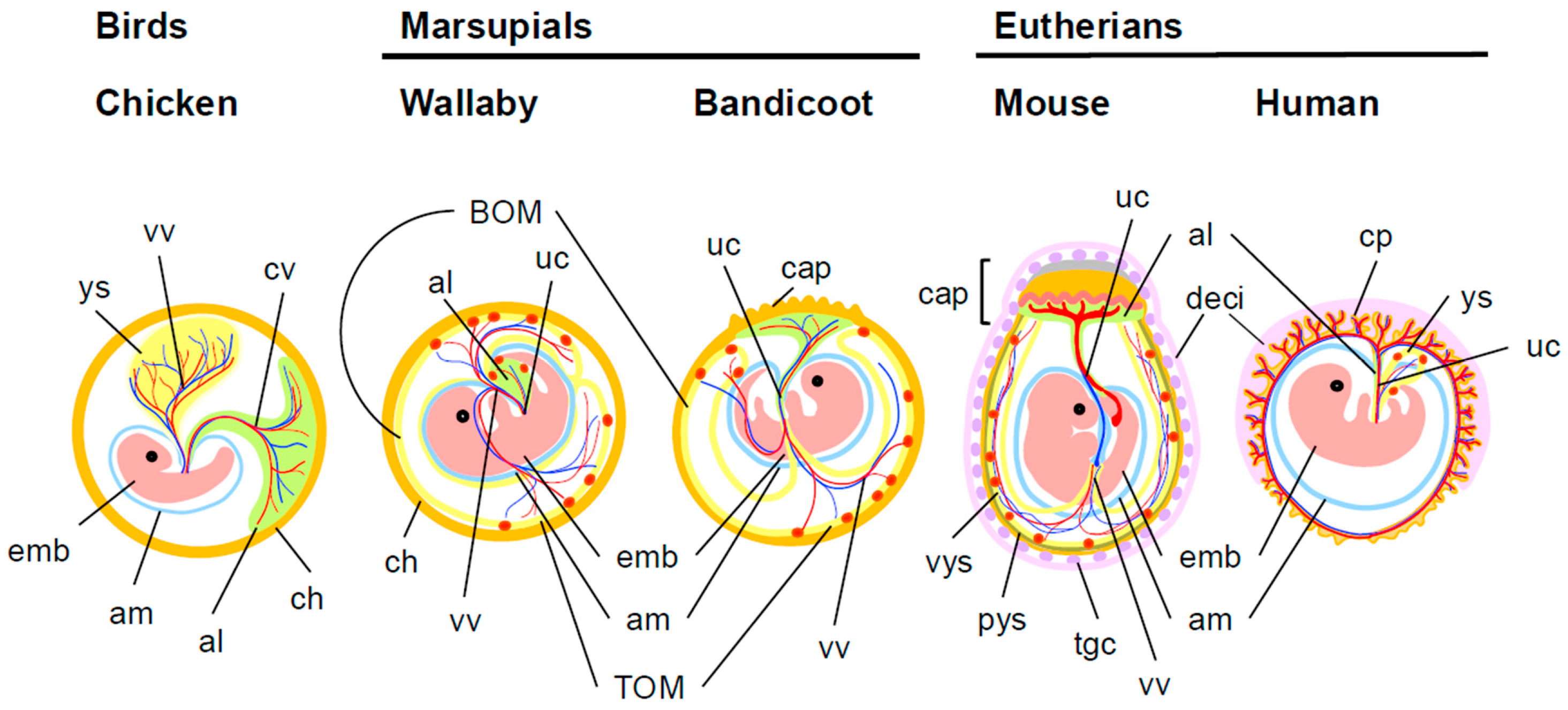
2.1. Placental Development and Evolution: Five Virus-Derived Genes Essential for the Eutherian Placenta
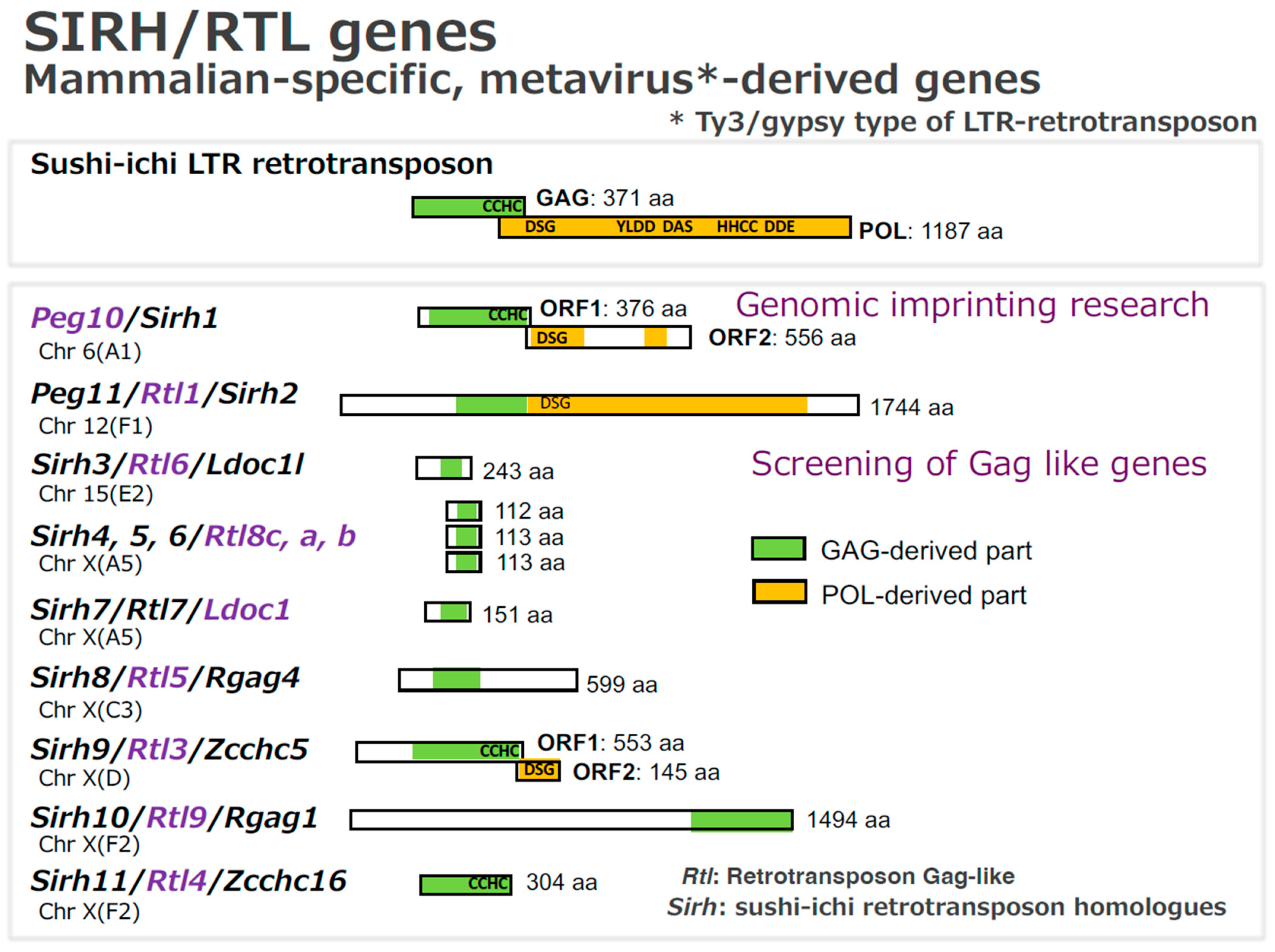
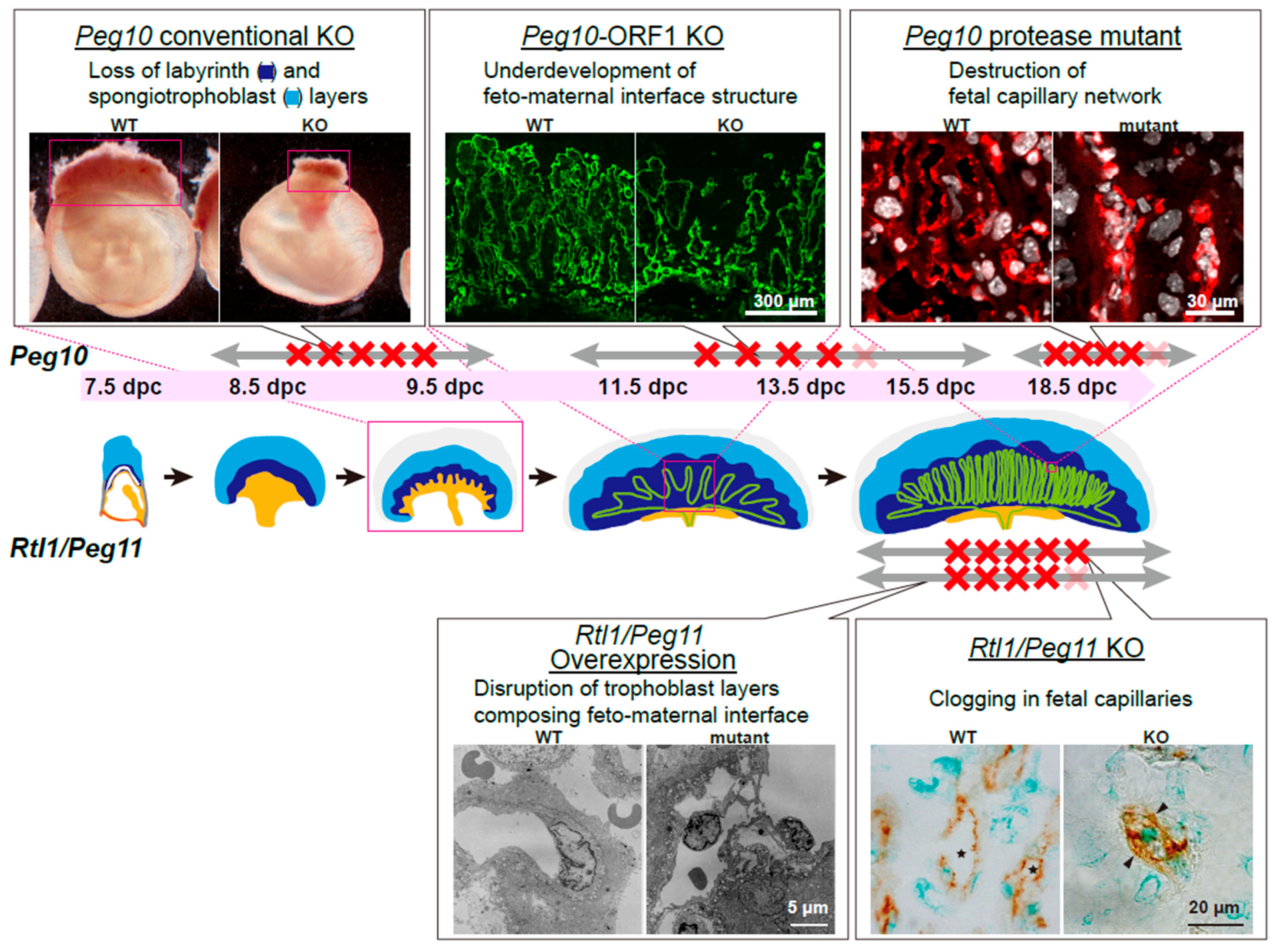
2.1.1. Therian-Specific, Metavirus-Derived PEG10 Has Multiple, Stage-Specific, Essential Roles in the Placenta
2.1.2. Eutherian-Specific, Metavirus-Derived PEG11/RTL1 and LOC1/SIRH7/RTL7 Are Essential for the Establishment of the Eutherian-Type Placenta
2.1.3. Rodent-Specific, Retrovirus-Derived Syncytin-A and Syncytin-B Are Indispensable for Syncytiotrophoblast Formation
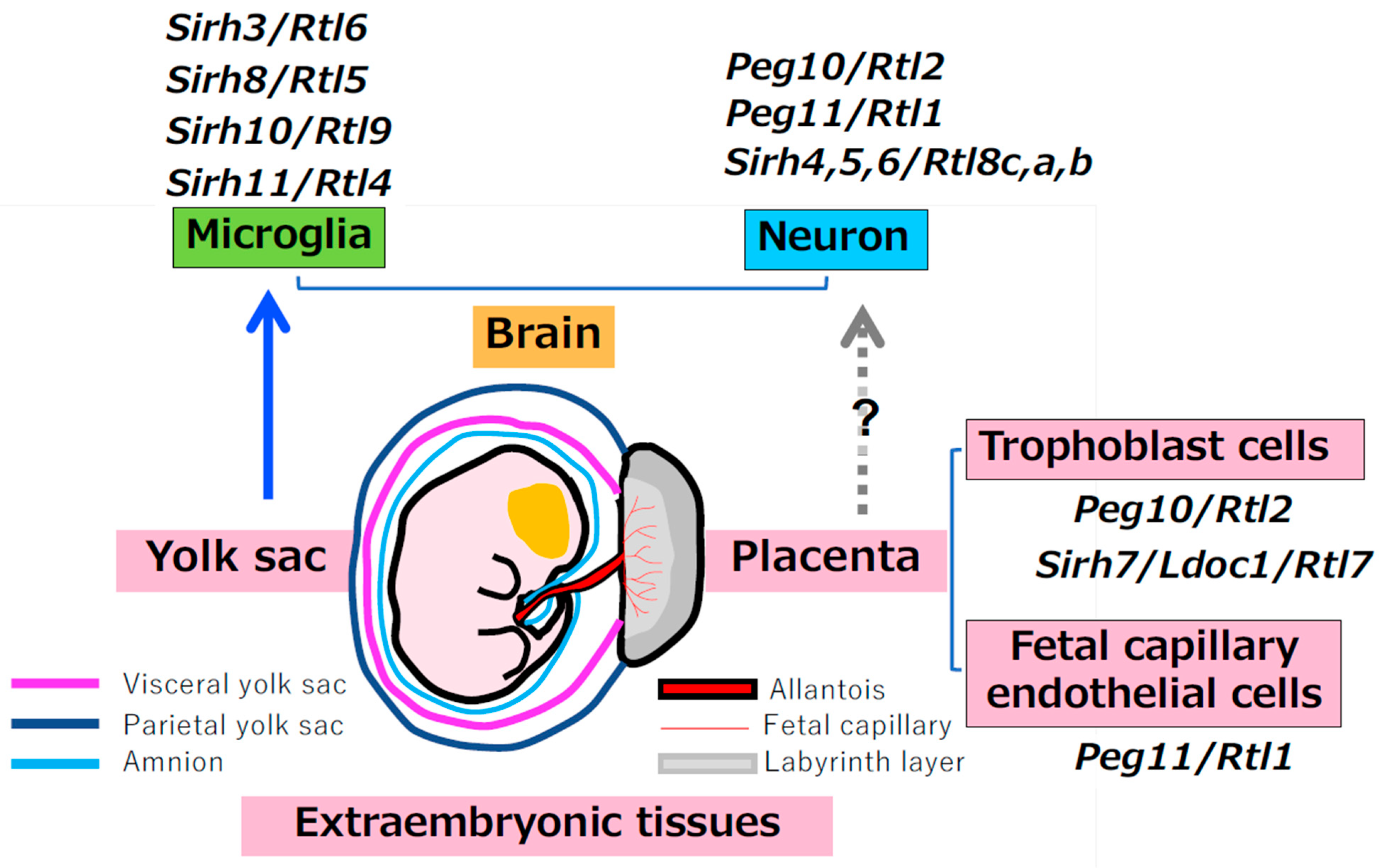
2.2. Roles of SIRH/RTL Genes in Yolk Sac-Derived Microglia of the Brain
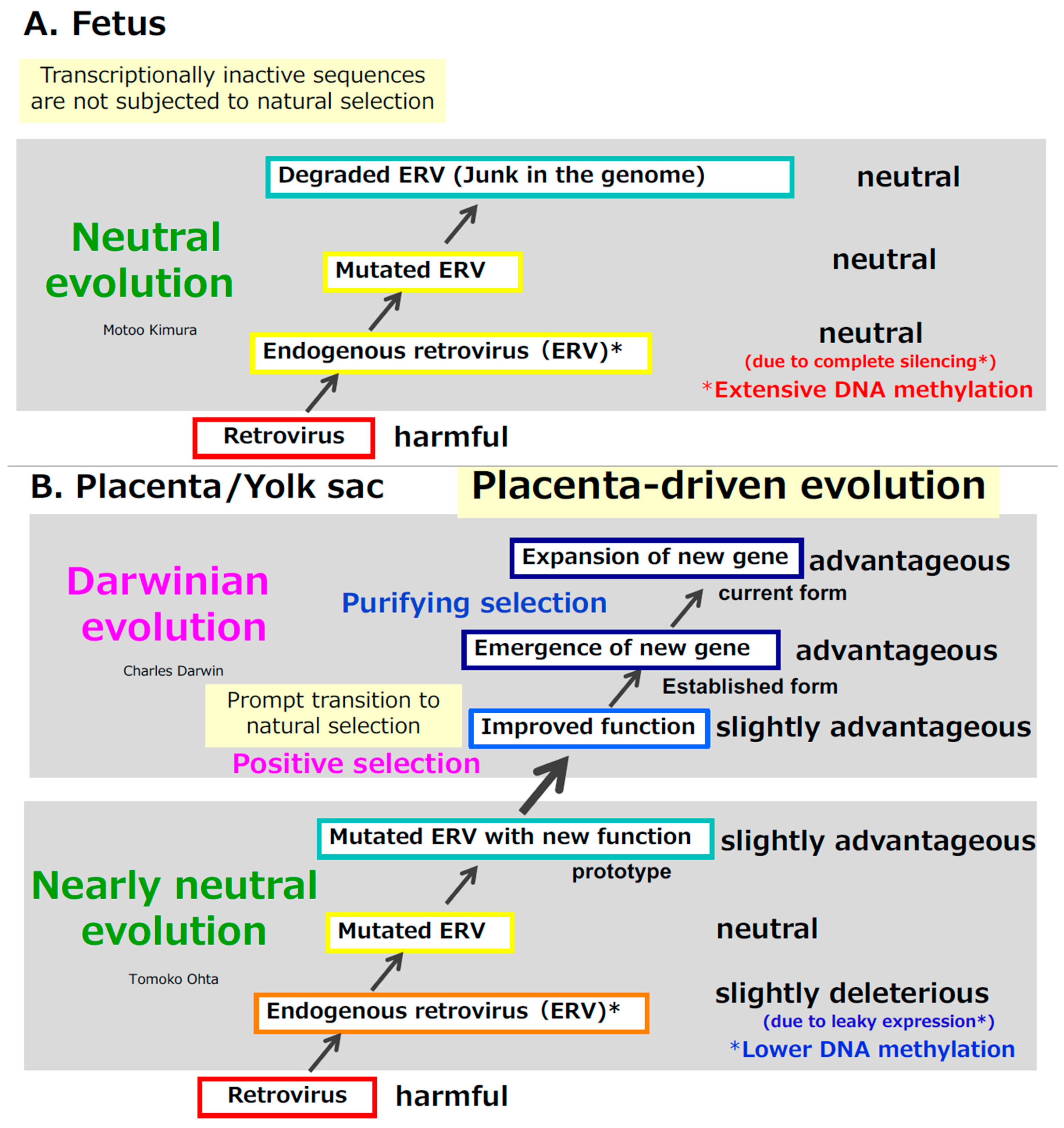
2.3. How Were Virus-Derived Genes Acquired in Therian Mammals?—A Two-Step Evolutionary Model for the Acquisition of Viral Genes in the Placenta
2.4. Placenta-Driven Evolution
3. Discussion
4. Conclusions
Author Contributions
Funding
Institutional Review Board Statement
Informed Consent Statement
Data Availability Statement
Acknowledgments
Conflicts of Interest
Abbreviations
| ERV | Endogenous retrovirus |
| LDOC1 | Leucine-zipper downregulated in cancer 1 |
| PEG10 | Paternally expressed 10 |
| PEG11 | Paternally expressed 11 |
| PNMA | Paraneoplastic Ma antigen |
| RTL | Retrotransposon Gag-like |
| SIRH | Sushi-ichi retrotransposon homolog |
References
- Rossant, J.; Cross, J.C. Lineage Specification and Differentiation: Extraembryonic Lineages. In Mouse Development: Patterning, Morphogenesis and Organogenesis; Tam, P.L., Rossant, J., Eds.; Academic Press: Cambridge, MA, USA, 2001; pp. 155–174. [Google Scholar]
- Rossant, J.; Cross, J.C. Placental development: Lessons from mouse mutants. Nat. Rev. Genet. 2001, 2, 538–548. [Google Scholar] [CrossRef]
- Freyer, C.; Renfree, M.B. The mammalian yolk sac placenta. J. Exp. Zool. B. Mol. Dev. Evol. 2009, 312, 545–554. [Google Scholar] [CrossRef] [PubMed]
- Renfree, M.B. Marsupials: Placental mammals with a difference. Placenta 2010, 31, S21–S26. [Google Scholar] [CrossRef] [PubMed]
- Nowak-Sliwinska, P.; Segura, T.; Iruela-Arispe, M.L. The chicken chorioallantoic membrane model in biology, medicine and bioengineering. Angiogenesis 2014, 17, 779–804. [Google Scholar] [CrossRef]
- Chen, L.; Wang, S.; Feng, Y.; Zhang, J.; Du, Y.; Zhang, J.; Ongeval, C.V.; Ni, Y.; Li, Y. Utilisation of Chick Embryo Chorioallantoic Membrane as a Model Platform for Imaging-Navigated Biomedical Research. Cells 2021, 10, 463. [Google Scholar] [CrossRef]
- Li, Z.; Pollack, G.H. On the driver of blood circulation beyond the heart. PLoS ONE 2023, 18, e0289652. [Google Scholar] [CrossRef]
- Tyndale-Biscoe, C.H.; Renfree, M.B. Reproductive Physiology of Marsupials; Cambridge University Press: Cambridge, UK, 1987; pp. 295, 310–314. [Google Scholar]
- Smith, K.K. Placental Evolution in Therian Mammals. In Great Transformations in Vertebrate Evolution; Dial, K.P., Shubin, N., Brainerd, E.L., Eds.; University of Chicago Press: Chicago, IL, USA, 2015; pp. 205–226. [Google Scholar] [CrossRef]
- Renfree, M.B.; Shaw, G. Placentation in Marsupials. In Placentation in Mammals; Advances in Anatomy, Embryology and Cell Biology; Geisert, R.D., Spencer, T., Eds.; Springer: Cham, Switzerland, 2021; Volume 234, pp. 41–60. [Google Scholar] [CrossRef]
- Ferner, K.; Mess, A. Evolution and development of fetal membranes and placentation in amniote vertebrates. Respir. Physiol. Neurobiol. 2011, 178, 39–50. [Google Scholar] [CrossRef]
- Hsu, C.W.; Wong, L.; Rasmussen, T.L.; Kalaga, S.; McElwee, M.L.; Keith, L.C.; Bohat, R.; Seavitt, J.R.; Beaudet, A.L.; Dickinson, M.E. Three-dimensional microCT imaging of mouse development from early post-implantation to early postnatal stages. Dev. Biol. 2016, 419, 229–236. [Google Scholar] [CrossRef]
- Burton, G.J.; Jauniaux, E. Placentation in the Human and Higher Primates. In Placentation in Mammals; Advances in Anatomy, Embryology and Cell Biology; Geisert, R.D., Spencer, T., Eds.; Springer: Cham, Switzerland, 2021; Volume 234, pp. 223–254. [Google Scholar] [CrossRef]
- Dickinson, M.E.; Flenniken, A.M.; Ji, X.; Teboul, L.; Wong, M.D.; White, J.K.; Meehan, T.F.; Weninger, W.J.; Westerberg, H.; Adissu, H.; et al. High-throughput discovery of novel developmental phenotypes. Nature 2016, 537, 508–514. [Google Scholar] [CrossRef] [PubMed]
- Woods, L.; Perez-Garcia, V.; Hemberger, M. Regulation of Placental Development and Its Impact on Fetal Growth-New Insights From Mouse Models. Front. Endocrinol. 2018, 9, 570. [Google Scholar] [CrossRef]
- Perez-Garcia, V.; Fineberg, E.; Wilson, R.; Murray, A.; Mazzeo, C.I.; Tudor, C.; Sienerth, A.; White, J.K.; Tuck, E.; Ryder, E.J.; et al. Placentation defects are highly prevalent in embryonic lethal mouse mutants. Nature 2018, 555, 463–468. [Google Scholar] [CrossRef]
- Watson, E.D.; Cross, J.C. Development of structures and transport functions in the mouse placenta. Physiology 2005, 20, 180–193. [Google Scholar] [CrossRef]
- Kaneko-Ishino, T.; Ishino, F. The role of genes domesticated from LTR retrotransposons and retroviruses in mammals. Front. Microbiol. 2012, 3, 262. [Google Scholar] [CrossRef]
- Kaneko-Ishino, T.; Ishino, F. Mammalian-specific genomic functions: Newly acquired traits generated by genomic imprinting and LTR retrotransposon-derived genes in mammals. Proc. Jpn. Acad. Ser. B Phys. Biol. Sci. 2015, 91, 511–538. [Google Scholar] [CrossRef]
- Kaneko-Ishino, T.; Ishino, F. Retrovirus-Derived RTL/SIRH: Their Diverse Roles in the Current Eutherian Developmental System and Contribution to Eutherian Evolution. Biomolecules 2023, 13, 1436. [Google Scholar] [CrossRef]
- Poulter, R.; Butler, M. A retrotransposon family from the pufferfish (fugu) Fugu rubripes. Gene 1998, 215, 241–249. [Google Scholar] [CrossRef]
- Krupovic, M.; Blomberg, J.; Coffin, J.M.; Dasgupta, I.; Fan, H.; Geering, A.D.; Gifford, R.; Harrach, B.; Hull, R.; Johnson, W.; et al. Ortervirales: New Virus Order Unifying Five Families of Reverse-Transcribing Viruses. J. Virol. 2018, 92, e00515–e00518. [Google Scholar] [CrossRef] [PubMed]
- Butler, M.; Goodwin, T.; Simpson, M.; Singh, M.; Poulter, R. Vertebrate LTR retrotransposons of the Tf1/sushi group. J. Mol. Evol. 2001, 52, 260–274. [Google Scholar] [CrossRef]
- Ono, R.; Kobayashi, S.; Wagatsuma, H.; Aisaka, K.; Kohda, T.; Kaneko-Ishino, T.; Ishino, F. A retrotransposon-derived gene, PEG10, is a novel imprinted gene located on human chromosome 7q21. Genomics 2001, 73, 232–237. [Google Scholar] [CrossRef]
- Volff, J.; Körting, C.; Schartl, M. Ty3/Gypsy retrotransposon fossils in mammalian genomes: Did they evolve into new cellular functions? Mol. Biol. Evol. 2001, 18, 266–270. [Google Scholar] [CrossRef] [PubMed]
- Brandt, J.; Schrauth, S.; Veith, A.M.; Froschauer, A.; Haneke, T.; Schultheis, C.; Gessler, M.; Leimeister, C.; Volff, J.N. Transposable elements as a source of genetic innovation: Expression and evolution of a family of retrotransposon-derived neogenes in mammals. Gene 2005, 345, 101–111. [Google Scholar] [CrossRef] [PubMed]
- Youngson, N.A.; Kocialkowski, S.; Peel, N.; Ferguson-Smith, A.C. A small family of sushi-class retrotransposon-derived genes in mammals and their relation to genomic imprinting. J. Mol. Evol. 2005, 61, 481–490. [Google Scholar] [CrossRef]
- Ono, R.; Nakamura, K.; Inoue, K.; Naruse, M.; Usami, T.; Wakisaka-Saito, N.; Hino, T.; Suzuki-Migishima, R.; Ogonuki, N.; Miki, H.; et al. Deletion of Peg10, an imprinted gene acquired from a retrotransposon, causes early embryonic lethality. Nat. Genet. 2006, 38, 101–106. [Google Scholar] [CrossRef]
- Suzuki, S.; Ono, R.; Narita, T.; Pask, A.J.; Shaw, G.; Wang, C.; Kohda, T.; Alsop, A.E.; Graves, J.A.M.; Kohara, Y.; et al. Retrotransposon Silencing by DNA Methylation Can Drive Mammalian Genomic Imprinting. PLoS Genet. 2007, 3, e55. [Google Scholar] [CrossRef]
- Henriques, W.S.; Young, J.M.; Nemudryi, A.; Nemudraia, A.; Wiedenheft, B.; Malik, H.S. The Diverse Evolutionary Histories of Domesticated Metaviral Capsid Genes in Mammals. Mol. Biol. Evol. 2024, 41, msae061. [Google Scholar] [CrossRef] [PubMed]
- Blond, J.-L.; Lavillette, D.; Cheynet, V.; Bouton, O.; Oriol, G.; Chapel-Fernandes, S.; Mandrand, B.; Mallet, F.; Cosset, F.-L. An envelope glycoprotein of the human endogenous retrovirus HERV-W is expressed in the human placenta and fuses cells expressing the type D mammalian retrovirus receptor. J. Virol. 2000, 74, 3321–3329. [Google Scholar] [CrossRef] [PubMed]
- Mi, S.; Lee, X.; Li, X.-P.; Veldman, G.M.; Finnerty, H.; Racie, L.; LaVallie, E.; Tang, X.-Y.; Edouard, P.; Howes, S.; et al. Syncytin is a captive retroviral envelope protein involved in human placental morphogenesis. Nature 2000, 403, 785–789. [Google Scholar] [CrossRef] [PubMed]
- Blaise, S.; de Parseval, N.; Bénit, L.; Heidmann, T. Genomewide screening for fusogenic human endogenous retrovirus envelopes identifies syncytin 2, a gene conserved on primate evolution. Proc. Natl. Acad. Sci. USA 2003, 100, 13013–13018. [Google Scholar] [CrossRef]
- Mallet, F.; Bouton, O.; Prudhomme, S.; Cheynet, V.; Oriol, G.; Bonnaud, B.; Lucotte, G.; Duret, L.; Mandrand, B. The endogenous retroviral locus ERVWE1 is a bona fide gene involved in hominoid placental physiology. Proc. Natl. Acad. Sci. USA 2004, 101, 1731–1736. [Google Scholar] [CrossRef]
- Dupressoir, A.; Marceau, G.; Vernochet, C.; Bénit, L.; Kanellopoulos, C.; Sapin, V.; Heidmann, T. Syncytin-A and syncytin-B, two fusogenic placenta-specific murine envelope genes of retroviral origin conserved in Muridae. Proc. Natl. Acad. Sci. USA 2005, 102, 725–730. [Google Scholar] [CrossRef]
- Sekita, Y.; Wagatsuma, H.; Nakamura, K.; Ono, R.; Kagami, M.; Wakisaka, N.; Hino, T.; Suzuki-Migishima, R.; Kohda, T.; Ogura, A.; et al. Role of retrotransposon-derived imprinted gene, Rtl1, in the feto-maternal interface of mouse placenta. Nat. Genet. 2008, 40, 243–248. [Google Scholar] [CrossRef]
- Kagami, M.; Sekita, Y.; Nishimura, G.; Irie, M.; Kato, F.; Okada, M.; Yamamori, S.; Kishimoto, H.; Nakayama, M.; Tanaka, Y.; et al. Deletions and epimutations affecting the human chromosome 14q32.2 imprinted region in individuals with paternal and maternal upd(14)-like phenotypes. Nat. Genet. 2008, 40, 237–242. [Google Scholar] [CrossRef] [PubMed]
- Seitz, H.; Youngson, N.; Lin, S.-P.; Dalbert, S.; Paulsen, M.; Bachellerie, J.-P.; Ferguson-Smith, A.C.; Cavaillé, J. Imprinted microRNA genes transcribed antisense to a reciprocally imprinted retrotransposon-like gene. Nat. Genet. 2003, 34, 261–262. [Google Scholar] [CrossRef] [PubMed]
- Davis, E.; Caiment, F.; Tordoir, X.; Cavaillé, J.; Ferguson-Smith, A.; Cockett, N.; Georges, M.; Charlier, C. RNAi-mediated allelic trans-interaction at the imprinted Rtl1/Peg11 locus. Curr. Biol. 2005, 15, 743–749. [Google Scholar] [CrossRef]
- Shigemoto, K.; Brennan, J.; Walls, E.; Watson, C.J.; Stott, D.; Rigby, P.W.; Reith, A.D. Identification and characterisation of a developmentally regulated mammalian gene that utilises-1 programmed ribosomal frameshifting. Nucleic Acids Res. 2001, 29, 4079–4088. [Google Scholar] [CrossRef]
- Clark, M.B.; Jänicke, M.; Gottesbühren, U.; Kleffmann, T.; Legge, M.; Poole, E.S.; Tate, W.P. Mammalian gene PEG10 expresses two reading frames by high efficiency-1 frameshifting in embryonic-associated tissues. J. Biol. Chem. 2007, 282, 37359–37369. [Google Scholar] [CrossRef]
- Akamatsu, S.; Wyatt, A.W.; Lin, D.; Lysakowski, S.; Zhang, F.; Kim, S.; Tse, C.; Wang, K.; Mo, F.; Haegert, A.; et al. The Placental Gene PEG10 Promotes Progression of Neuroendocrine Prostate Cancer. Cell Rep. 2015, 12, 922–936. [Google Scholar] [CrossRef] [PubMed]
- Cardno, T.S.; Shimaki, Y.; Sleebs, B.E.; Lackovic, K.; Parisot, J.P.; Moss, R.M.; Crowe-McAuliffe, C.; Mathew, S.F.; Edgar, C.D.; Kleffmann, T.; et al. HIV-1 and Human PEG10 Frameshift Elements Are Functionally Distinct and Distinguished by Novel Small Molecule Modulators. PLoS ONE 2015, 10, e0139036. [Google Scholar] [CrossRef]
- Shiura, H.; Fujii, M.; Ooga, M.; Wakayama, S.; Ito, D.; Kohda, T.; Kaneko-Ishino, T.; Ishino, F. PEG10-ORF1 programs trophoblast progenitor development for placental labyrinth formation. bioRxiv 2025. [Google Scholar] [CrossRef]
- Ueno, M.; Lee, L.K.; Chhabra, A.; Kim, Y.J.; Sasidharan, R.; Van Handel, B.; Wang, Y.; Kamata, M.; Kamran, P.; Sereti, K.I.; et al. c-Met-dependent multipotent labyrinth trophoblast progenitors establish placental exchange interface. Dev. Cell 2013, 27, 373–386. [Google Scholar] [CrossRef] [PubMed]
- Marsh, B.; Blelloch, R. Single nuclei RNA-seq of mouse placental labyrinth development. eLife 2020, 9, e60266. [Google Scholar] [CrossRef]
- Shiura, H.; Ono, R.; Tachibana, S.; Kohda, T.; Kaneko-Ishino, T.; Ishino, F. PEG10 viral aspartic protease domain is essential for the maintenance of fetal capillary structure in the mouse placenta. Development 2021, 148, dev199564. [Google Scholar] [CrossRef]
- Charlier, C.; Segers, K.; Wagenaar, D.; Karim, L.; Berghmans, S.; Jaillon, O.; Shay, T.; Weissenbach, J.; Cockett, N.; Gyapay, G.; et al. Human-ovine comparative sequencing of a 250-kb imprinted domain encompassing the callipyge (clpg) locus and identification of six imprinted transcripts: DLK1, DAT, GTL2, PEG11, antiPEG11, and MEG8. Genome Res. 2001, 11, 850–862. [Google Scholar] [CrossRef]
- Lynch, C.; Tristem, M. A co-opted gypsy-type LTR-retrotransposon is conserved in the genomes of humans, sheep, mice, and rats. Curr. Biol. 2003, 13, 1518–1523. [Google Scholar] [CrossRef]
- Wu, Y.; Su, K.; Zhang, Y.; Liang, L.; Wang, F.; Chen, S.; Gao, L.; Zheng, Q.; Li, C.; Su, Y.; et al. A spatiotemporal transcriptomic atlas of mouse placentation. Cell Discov. 2024, 10, 110. [Google Scholar] [CrossRef]
- Kitazawa, M.; Tamura, M.; Kaneko-Ishino, T.; Ishino, F. Severe damage to the placental fetal capillary network causes mid- to late fetal lethality and reductionin placental size in Peg11/Rtl1 KO mice. Genes Cells 2017, 22, 174–188. [Google Scholar] [CrossRef] [PubMed]
- Naruse, M.; Ono, R.; Irie, M.; Nakamura, K.; Furuse, T.; Hino, T.; Oda, K.; Kashimura, M.; Yamada, I.; Wakana, S.; et al. Sirh7/Ldoc1 knockout mice exhibit placental P4 overproduction and delayed parturition. Development 2014, 141, 4763–4771. [Google Scholar] [CrossRef] [PubMed]
- Nagasaki, K.; Manabe, T.; Hanzawa, H.; Maass, N.; Tsukada, T.; Yamaguchi, K. Identification of a novel gene, LDOC1, down-regulated in cancer cell lines. Cancer Lett. 1999, 140, 227–234. [Google Scholar] [CrossRef]
- Arensburg, J.; Payne, A.H.; Orly, J. Expression of steroidogenic genes in maternal and extraembryonic cells during early pregnancy in mice. Endocrinology 1999, 140, 5220–5232. [Google Scholar] [CrossRef]
- Peng, L.; Arensburg, J.; Orly, J.; Payne, A.H. The murine 3betahydroxysteroid dehydrogenase (3beta-HSD) gene family: A postulated role for 3beta-HSD VI during early pregnancy. Mol. Cell. Endocrinol. 2002, 187, 213–221. [Google Scholar] [CrossRef]
- Malassine, A.; Frendo, J.-L.; Evain-Brion, D. A comparison of placental development and endocrine functions between the human and mouse model. Hum. Reprod. Update 2003, 9, 531–539. [Google Scholar] [CrossRef]
- Simmons, D.G.; Rawn, S.; Davies, A.; Hughes, M.; Cross, J.C. Spatial and temporal expression of the 23 murine Prolactin/Placental Lactogen-related genes is not associated with their position in the locus. BMC Genom. 2008, 9, 352. [Google Scholar] [CrossRef] [PubMed]
- Dupressoir, A.; Vernochet, C.; Bawa, O.; Harper, F.; Pierron, G.; Opolon, P.; Heidmann, T. Syncytin-A knockout mice demonstrate the critical role in placentation of a fusogenic, endogenous retrovirus-derived, envelope gene. Proc. Natl. Acad. Sci. USA 2009, 106, 12127–12132. [Google Scholar] [CrossRef] [PubMed]
- Dupressoir, A.; Vernochet, C.; Harper, F.; Guegan, J.; Dessen, P.; Pierron, G.; Heidmann, T. A pair of co-opted retroviral envelope syncytin genes is required for formation of the two-layered murine placental syncytiotrophoblast. Proc. Natl. Acad. Sci. USA 2011, 108, 1164–1173. [Google Scholar] [CrossRef]
- Lavialle, C.; Cornelis, G.; Dupressoir, A.; Esnault, C.; Heidmann, O.; Vernochet, C.; Heidmann, T. Paleovirology of ‘syncytins’, retroviral env genes exapted for a role in placentation. Phil. Trans. R. Soc. B 2013, 368, 20120507. [Google Scholar] [CrossRef]
- Imakawa, K.; Nakagawa, S.; Miyazawa, T. Baton pass hypothesis: Successive incorporation of unconserved endogenous retroviral genes for placentation during mammalian evolution. Genes Cells 2015, 20, 771–788. [Google Scholar] [CrossRef] [PubMed]
- Pandya, N.J.; Wang, C.; Costa, V.; Lopatta, P.; Meier, S.; Zampeta, F.I.; Punt, A.M.; Mientjes, E.; Grossen, P.; Distler, T.; et al. Secreted retrovirus-like GAG-domain-containing protein PEG10 is regulated by UBE3A and is involved in Angelman syndrome pathophysiology. Cell Rep. Med. 2021, 2, 100360. [Google Scholar] [CrossRef]
- Whiteley, A.M.; Prado, M.A.; de Poot, S.A.; Paulo, J.A.; Ashton, M.; Dominguez, S.; Weber, M.; Ngu, H.; Szpyt, J.; Jedrychowski, M.P.; et al. Global proteomics of Ubqln2-based murine models of ALS. J. Biol. Chem. 2021, 296, 100153. [Google Scholar] [CrossRef]
- Black, H.H.; Hanson, J.L.; Roberts, J.E.; Leslie, S.N.; Campodonico, W.; Ebmeier, C.C.; Holling, G.A.; Tay, J.W.; Matthews, A.M.; Ung, E.; et al. UBQLN2 restrains the domesticated retrotransposon PEG10 to maintain neuronal health in ALS. Elife 2023, 12, e79452. [Google Scholar] [CrossRef]
- Roberts, J.E.; Huynh, P.T.; Carale, L.O.; Whiteley, A.M. UBQLN2 is necessary for UBE3A-mediated proteasomal degradation of the domesticated retroelement PEG10. J. Cell. Sci. 2025, 138, jcs264105. [Google Scholar] [CrossRef]
- Mohan, H.M.; Fernandez, M.G.; Huang, C.; Lin, R.; Ryou, J.H.; Seyfried, D.; Grotewold, N.; Barget, A.J.; Whiteley, A.M.; Basrur, V.; et al. Endogenous retrovirus-like proteins recruit UBQLN2 to stress granules and shape their functional biology. Sci. Adv. 2025, 11, eadu6354. [Google Scholar] [CrossRef] [PubMed]
- Ioannides, Y.; Lokulo-Sodipe, K.; Mackay, D.J.; Davies, J.H.; Temple, I.K. Temple syndrome: Improving the recognition of an underdiagnosed chromosome 14 imprinting disorder: An analysis of 51 published cases. J. Med. Genet. 2014, 51, 495–501. [Google Scholar] [CrossRef]
- Ogata, T.; Kagami, M. Kagami-Ogata syndrome: A clinically recognizable upd(14)pat and related disorder affecting the chromosome 14q32.2 imprinted region. J. Hum. Genet. 2016, 61, 87–94. [Google Scholar] [CrossRef]
- Kitazawa, M.; Hayashi, S.; Imamura, M.; Takeda, S.; Oishi, Y.; Kaneko-Ishino, T.; Ishino, F. Deficiency and overexpression of Rtl1 in the mouse cause distinct muscle abnormalities related to Temple and Kagami-Ogata syndromes. Development 2020, 147, dev185918. [Google Scholar] [CrossRef]
- Kitazawa, M.; Sutani, A.; Kaneko-Ishino, T.; Ishino, F. The role of eutherian-specific RTL1 in the nervous system and its implications for the Kagami-Ogata and Temple syndromes. Genes Cells 2021, 26, 165–179. [Google Scholar] [CrossRef]
- Chou, M.-Y.; Hu, M.-C.; Chen, P.-Y.; Hsu, C.-L.; Lin, T.-Y.; Tan, M.-J.; Lee, C.-Y.; Kuo, M.-F.; Huang, P.-H.; Wu, V.-C.; et al. RTL1/PEG11 imprinted in human and mouse brain mediates anxiety-like and social behaviors and regulates neuronal excitability in the locus coeruleus. Hum. Mol. Genet. 2022, 31, 3161–3180. [Google Scholar] [CrossRef] [PubMed]
- Fujioka, Y.; Shiura, H.; Ishii, M.; Ono, R.; Endo, T.; Kiyonari, H.; Hirate, Y.; Ito, H.; Kanai-Azuma, M.; Kohda, T.; et al. Targeting of retrovirus-derived Rtl8a/8b causes late-onset obesity, reduced social response and increased apathy-like behaviour. Open Biol. 2025, 15, 240279. [Google Scholar] [CrossRef]
- Lim, E.T.; Raychaudhuri, S.; Sanders, S.J.; Stevens, C.; Sabo, A.; MacArthur, D.G.; Neale, B.M.; Kirby, A.; Ruderfer, D.M.; Fromer, M.; et al. Rare complete knockouts in humans: Population distribution and significant role in autism spectrum disorders. Neuron 2013, 77, 235–242. [Google Scholar] [CrossRef]
- Irie, M.; Yoshikawa, M.; Ono, R.; Iwafune, H.; Furuse, T.; Yamada, I.; Wakana, S.; Yamashita, Y.; Abe, T.; Ishino, F.; et al. Cognitive function related to the Sirh11/Zcchc16 gene acquired from an LTR retrotransposon in eutherians. PLoS Genet. 2015, 11, e1005521. [Google Scholar] [CrossRef]
- Ishino, F.; Itoh, J.; Matsuzawa, A.; Irie, M.; Suzuki, T.; Hiraoka, Y.; Yoshikawa, M.; Kaneko-Ishino, T. RTL4, a Retrovirus-Derived Gene Implicated in Autism Spectrum Disorder, Is a Microglial Gene That Responds to Noradrenaline in the Postnatal Brain. Int. J. Mol. Sci. 2024, 25, 13738. [Google Scholar] [CrossRef]
- Irie, M.; Itoh, J.; Matsuzawa, A.; Ikawa, M.; Kiyonari, H.; Kihara, M.; Suzuki, T.; Hiraoka, Y.; Ishino, F.; Kaneko-Ishino, T. Retrovirus-derived acquired genes, RTL5 and RTL6, are novel constituents of the innate immune system in the eutherian brain. Development 2022, 149, dev200976. [Google Scholar] [CrossRef] [PubMed]
- Ishino, F.; Itoh, J.; Irie, M.; Matsuzawa, A.; Naruse, M.; Suzuki, T.; Hiraoka, Y.; Kaneko-Ishino, T. Retrovirus-Derived RTL9 Plays an Important Role in Innate Antifungal Immunity in the Eutherian Brain. Int. J. Mol. Sci. 2023, 24, 14884. [Google Scholar] [CrossRef] [PubMed]
- Hanisch, U.-K.; Kettenmann, H. Microglia: Active sensor and versatile effector cells in the normal and pathologic brain. Nat. Neurosci. 2007, 10, 1387–1394. [Google Scholar] [CrossRef]
- Kumar, H.; Kawai, T.; Akira, S. Pathogen recognition by the innate immune system. Int. Rev. Immunol. 2011, 30, 16–34. [Google Scholar] [CrossRef]
- Norris, G.T.; Kipnis, J. Immune cells and CNS physiology: Microglia and beyond. J. Exp. Med. 2018, 216, 60–70. [Google Scholar] [CrossRef]
- Ginhoux, F.; Greter, M.; Leboeuf, M.; Nandi, S.; See, P.; Gokhan, S.; Mehler, M.F.; Conway, S.J.; Ng, L.G.; Stanley, E.R.; et al. Fate mapping analysis reveals that adult migroglia derive from primitive macrophages. Science 2010, 330, 841–845. [Google Scholar] [CrossRef]
- Ginhoux, F.; Lim, S.; Hoeffel, G.; Low, D.; Huber, T. Origin and differentiation of microglia. Front. Cell. Neurosci. 2013, 7, 45. [Google Scholar] [CrossRef]
- Kaneko-Ishino, T.; Ishino, F. Retrotransposon silencing by DNA methylation contributed to the evolution of placentation and genomic imprinting in mammals. Dev. Growth Differ. 2010, 52, 533–543. [Google Scholar] [CrossRef]
- Yoder, J.A.; Walsh, C.P.; Bestor, T.H. Cytosine methylation and the ecology of intragenomic parasites. Trends Genet. 1997, 13, 335–340. [Google Scholar] [CrossRef]
- Walsh, C.P.; Chaillet, J.R.; Bestor, T.H. Transcription of IAP endogenous retroviruses is constrained by cytosine methylation. Nat Genet. 1998, 20, 116–117. [Google Scholar] [CrossRef]
- Reiss, D.; Zhang, Y.; Mager, D.L. Widely variable endogenous retroviral methylation levels in human placenta. Nucleic Acids Res. 2007, 35, 4743–4754. [Google Scholar] [CrossRef]
- Sugimoto, J.; Schust, D.J. Review: Human endogenous retroviruses and the placenta. Reprod. Sci. 2009, 16, 1023–1033. [Google Scholar] [CrossRef] [PubMed]
- Kimura, M. The Neutral Theory of Molecular Evolution; Cambridge University Press: Cambridge, UK, 1983; pp. 98–116, 305–327. [Google Scholar]
- Kimura, M. Evolutionary rate at the molecular level. Nature 1968, 217, 624–626. [Google Scholar] [CrossRef] [PubMed]
- Ohta, T. Near-neutrality in evolution of genes and gene regulation. Proc. Natl. Acad. Sci. USA 2002, 99, 16134–16137. [Google Scholar] [CrossRef] [PubMed]
- Campillos, M.; Doerks, T.; Shah, P.K.; Bork, P. Computational characterization of multiple Gag-like human proteins. Trends Genet. 2006, 22, 585–589. [Google Scholar] [CrossRef]
- Bernard, D.; Méhul, B.; Thomas-Collignon, A.; Delattre, C.; Donovan, M.; Schmidt, R. Identification and characterization of a novel retroviral-like aspartic protease specifically expressed in human epidermis. J. Investig. Dermatol. 2005, 25, 278–287. [Google Scholar] [CrossRef]
- Matsui, T.; Kinoshita-Ida, Y.; Hayashi-Kisumi, F.; Hata, M.; Matsubara, K.; Chiba, M.; Katahira-Tayama, S.; Morita, K.; Miyachi, Y.; Tsukita, S. Mouse homologue of skin-specific retroviral-like aspartic protease involved in wrinkle formation. J. Biol. Chem. 2006, 281, 27512–27525. [Google Scholar] [CrossRef]
- Mótyán, J.A.; Tőzsér, J. The human retroviral-like aspartic protease 1 (ASPRV1): From in vitro studies to clinical correlations. J. Biol. Chem. 2024, 300, 107634. [Google Scholar] [CrossRef]
- Dalmau, J.; Gultekin, S.H.; Voltz, R.; Hoard, R.; DesChamps, T.; Balmaceda, C.; Batchelor, T.; Gerstner, E.; Eichen, J.; Frennier, J.; et al. Ma1, a novel neuron- and testis-specific protein, is recognized by the serum of patients with paraneoplastic neurological disorders. Brain 1999, 122, 27–39. [Google Scholar] [CrossRef]
- Voltz, R.; Gultekin, S.H.; Rosenfeld, M.R.; Gerstner, E.; Eichen, J.; Posner, J.B.; Dalmau, J. A serologic marker of paraneoplastic limbic and brain-stem encephalitis in patients with testicular cancer. N. Engl. J. Med. 1999, 340, 1788–1795. [Google Scholar] [CrossRef]
- Schüller, M.; Jenne, D.; Voltz, R. The human PNMA family: Novel neuronal proteins implicated in paraneoplastic neurological disease. J. Neuroimmunol. 2005, 169, 172–176. [Google Scholar] [CrossRef]
- Takaji, M.; Komatsu, Y.; Watakabe, A.; Hashikawa, T.; Yamamori, T. Paraneoplastic antigen-like 5 gene (PNMA5) is preferentially expressed in the association areas in a primate specific manner. Cereb. Cortex 2009, 19, 2865–2879. [Google Scholar] [CrossRef] [PubMed]
- Pang, S.W.; Lahiri, C.; Poh, C.L.; Tan, K.O. PNMA family: Protein interaction network and cell signalling pathways implicated in cancer and apoptosis. Cell. Signal. 2018, 45, 54–62. [Google Scholar] [CrossRef] [PubMed]
- Wood, T.W.P.; Henriques, W.S.; Cullen, H.B.; Romero, M.; Blengini, C.S.; Sarathy, S.; Sorkin, J.; Bekele, H.; Jin, C.; Kim, S.; et al. The retrotransposon-derived capsid genes PNMA1 and PNMA4 maintain reproductive capacity. Nat. Aging 2025, 5, 765–779. [Google Scholar] [CrossRef]
- Ono, R.; Kuroki, Y.; Naruse, M.; Ishii, M.; Iwasaki, S.; Toyoda, A.; Fujiyama, A.; Shaw, G.; Renfree, M.B.; Kaneko-Ishino, T.; et al. Identification of tammar wallaby SIRH12, derived from a marsupial-specific retrotransposition event. DNA Res. 2011, 18, 211–219. [Google Scholar] [CrossRef]
- Iwasaki, S.; Suzuki, S.; Pelekanos, M.; Clark, H.; Ono, R.; Shaw, G.; Renfree, M.B.; Kaneko-Ishino, T.; Ishino, F. Identification of a novel PNMA-MS1 gene in marsupials suggests the LTR retrotransposon-derived PNMA genes evolved differently in marsupials and eutherians. DNA Res. 2013, 20, 425–436. [Google Scholar] [CrossRef] [PubMed]
- Nakagawa, S.; Takahashi, M.U. gEVE: A genome-based endogenous viral element database provides comprehensive viral protein-coding sequences in mammalian genomes. Database 2016, 2016, baw087. [Google Scholar] [CrossRef]
- Bonaventura, P.; Alcazer, V.; Mutez, V.; Tonon, L.; Martin, J.; Chuvin, N.; Michel, E.; Boulos, R.E.; Estornes, Y.; Valladeau-Guilemond, J.; et al. Identification of shared tumor epitopes from endogenous retroviruses inducing high-avidity cytotoxic T cells for cancer immunotherapy. Sci. Adv. 2022, 8, eabj3671. [Google Scholar] [CrossRef]
- Kobayashi, S.; Tokita, S.; Moniwa, K.; Kitahara, K.; Iuchi, H.; Matsuo, K.; Kakizaki, H.; Kanaseki, T.; Torigoe, T. Proteogenomic identification of an immunogenic antigen derived from human endogenous retrovirus in renal cell carcinoma. JCI Insight 2023, 8, e167712. [Google Scholar] [CrossRef]
- Yang, H.; Li, Q.; Stroup, E.K.; Wang, S.; Ji, Z. Widespread stable noncanonical peptides identified by integrated analyses of ribosome profiling and ORF features. Nat. Commun. 2024, 15, 1932. [Google Scholar] [CrossRef]
- Wang, J.; Han, G.Z. Frequent Retroviral Gene Co-option during the Evolution of Vertebrates. Mol. Biol. Evol. 2020, 37, 323–3242. [Google Scholar] [CrossRef] [PubMed]
- Imakawa, K.; Kusama, K.; Kaneko-Ishino, T.; Nakagawa, S.; Kitao, K.; Miyazawa, T.; Ishino, F. Endogenous Retroviruses and Placental Evolution, Development, and Diversity. Cells 2022, 11, 2458. [Google Scholar] [CrossRef]
- Carter, A.M.; Enders, A.C. Comparative aspects of trophoblast development and placentation. Reprod. Biol. Endocrinol. 2004, 2, 46. [Google Scholar] [CrossRef]
- Wildman, D.E.; Chen, C.; Erez, O.; Grossman, L.I.; Goodman, M.; Romero, R. Evolution of the mammalian placenta revealed by phylogenetic analysis. Proc. Natl. Acad. Sci. USA 2006, 103, 3203–3208. [Google Scholar] [CrossRef]
- Mika, K.; Whittington, C.M.; McAllan, B.M.; Lynch, V.J. Gene expression phylogenies and ancestral transcriptome reconstruction resolves major transitions in the origins of pregnancy. Elife 2022, 11, e74297. [Google Scholar] [CrossRef] [PubMed]
- Edwards, C.A.; Mungall, A.J.; Matthews, L.; Ryder, E.; Gray, D.J.; Pask, A.J.; Shaw, G.; Graves, J.A.; Rogers, J.; Dunham, I.; et al. The evolution of the DLK1-DIO3 imprinted domain in mammals. PLoS Biol. 2008, 6, e135. [Google Scholar] [CrossRef]
- Georgiades, P.; Ferguson-Smith, A.C.; Burton, G.J. Comparative developmental anatomy of the murine and human definitive placentae. Placenta 2002, 23, 3–19. [Google Scholar] [CrossRef] [PubMed]
- Aplin, J.D. Implantation, trophoblast differentiation and haemochorial placentation: Mechanistic evidence in vivo and in vitro. J. Cell Sci. 1991, 99, 681–692. [Google Scholar] [CrossRef] [PubMed]
- Silva, J.F.; Serakides, R. Intrauterine trophoblast migration: A comparative view of humans and rodents. Cell Adh. Migr. 2016, 10, 88–110. [Google Scholar] [CrossRef]
- Hu, D.; Cross, J.C. Development and function of trophoblast giant cells in the rodent placenta. Int. J. Dev. Biol. 2010, 54, 341–354. [Google Scholar] [CrossRef]
- Chen, H.; Sun, M.; Zhao, G.; Liu, J.; Gao, W.; Si, S.; Meng, T. Elevated expression of PEG10 in human placentas from preeclamptic pregnancies. Acta Histochem. 2012, 114, 589–593. [Google Scholar] [CrossRef] [PubMed]
- Chen, H.; Sun, M.; Liu, J.; Tong, C.; Meng, T. Silencing of Paternally Expressed Gene 10 Inhibits Trophoblast Proliferation and Invasion. PLoS ONE 2015, 10, e0144845. [Google Scholar] [CrossRef] [PubMed]
- Baird, L.; Cannon, P.; Kandel, M.; Nguyen, T.V.; Nguyen, A.; Wong, G.; Murphy, C.; Brownfoot, F.C.; Kadife, E.; Hannan, N.J.; et al. Paternal Expressed Gene 10 (PEG10) is decreased in early-onset preeclampsia. Reprod. Biol. Endocrinol. 2023, 21, 65. [Google Scholar] [CrossRef]
- Zhou, Q.-Y.; Huang, J.-N.; Xiong, Y.-Z.; Zhao, S.-H. Imprinting analysis of the porcine GATM and PEG10 genes in placentas on days 75 and 90 of gestation. Genes Genet. Syst. 2007, 82, 265–269. [Google Scholar] [CrossRef] [PubMed]
- Liu, Y.; Yu, W.; Tang, J.; Zhang, Y.; Yang, J.; Wu, Q.; Li, H.; Zhu, Z.; Li, A.; Han, J.; et al. Evolutionary dynamics of PEG10 and its interacting proteins during early and late-stage placental development in ruminants. Int. J. Biol. Macromol. 2025, 309, 142761. [Google Scholar] [CrossRef]
- Kagami, M.; Matsuoka, K.; Nagai, T.; Yamanaka, M.; Kurosawa, K.; Suzumori, N.; Sekita, Y.; Miyado, M.; Matsubara, K.; Fuke, T.; et al. Paternal uniparental disomy 14 and related disorders: Placental gene expression analyses and histological examinations. Epigenetics 2012, 7, 1142–1150. [Google Scholar] [CrossRef]
- Ito, M.; Sferruzzi-Perri, A.N.; Edwards, C.A.; Adalsteinsson, B.T.; Allen, S.E.; Loo, T.H.; Kitazawa, M.; Kaneko-Ishino, T.; Ishino, F.; Stewart, C.L.; et al. A trans-homologue interaction between reciprocally imprinted miR-127 and Rtl1 regulates placenta development. Development 2015, 142, 2425–2430. [Google Scholar] [CrossRef]
- Heidmann, O.; Vernochet, C.; Dupressoir, A.; Heidemann, T. Identification of an endogenous retroviral envelope gene with fusogenic activity and placenta-specific expression in the rabbit: A new “syncytin” in a third order of mammals. Retrovirology 2009, 6, 107. [Google Scholar] [CrossRef]
- Cornelis, G.; Heidmann, O.; Degrelle, S.A.; Vernochet, C.; Lavialle, C.; Letzelter, C.; Bernard-Stoecklin, S.; Hassanin, A.; Mulot, B.; Guillomot, M.; et al. Captured retroviral envelope syncytin gene associated with the unique placental structure of higher ruminants. Proc. Natl. Acad. Sci. USA 2013, 110, E828–E837. [Google Scholar] [CrossRef]
- Cornelis, G.; Vernochet, C.; Malicorne, S.; Souquere, S.; Tzika, A.C.; Goodman, S.M.; Catzeflis, F.; Robinson, T.J.; Milinkovitch, M.C.; Pierron, G.; et al. Retroviral envelope syncytin capture in an ancestrally diverged mammalian clade for placentation in the primitive Afrotherian tenrecs. Proc. Natl. Acad. Sci. USA 2014, 111, E4332–E4341. [Google Scholar] [CrossRef] [PubMed]
- Cornelis, G.; Vernochet, C.; Carradec, Q.; Souquere, S.; Mulot, B.; Catzeflis, F.; Nilsson, M.A.; Menzies, B.R.; Renfree, M.B.; Pierron, G.; et al. Retroviral envelope gene captures and syncytin exaptation for placentation in marsupials. Proc. Natl. Acad. Sci. USA 2015, 112, E487–E496. [Google Scholar] [CrossRef] [PubMed]
- Nakaya, Y.; Koshi, K.; Nakagawa, S.; Hashizume, K.; Miyazawa, T. Fematrin-1 is involved in fetomaternal cell-to-cell fusion in Bovinae placenta and has contributed to diversity of ruminant placentation. J. Virol. 2013, 87, 10563–10572. [Google Scholar] [CrossRef]
- Sugimoto, J.; Sugimoto, M.; Bernstein, H.; Jinno, Y.; Schust, D. A novel human endogenous retroviral protein inhibits cell-cell fusion. Sci. Rep. 2013, 3, 1462. [Google Scholar] [CrossRef]
- Sugimoto, J.; Schust, D.J.; Kinjo, T.; Aoki, Y.; Jinno, Y.; Kudo, Y. Suppressyn localization and dynamic expression patterns in primary human tissues support a physiologic role in human placentation. Sci. Rep. 2019, 9, 19502. [Google Scholar] [CrossRef] [PubMed]
- Leeke, B.J.; Varsally, W.; Ogushi, S.; Zohren, J.; Menchero, S.; Courtois, A.; Snell, D.M.; Teissandier, A.; Ojarikre, O.; Mahadevaiah, S.K.; et al. Divergent DNA methylation dynamics in marsupial and eutherian embryos. Nature 2025, 642, 1073–1079. [Google Scholar] [CrossRef]



| SIRH/RTL Genes | Official Name | Aliases | Conditions | Brain Related Phenotypes in Mice | Related Human Disorders |
|---|---|---|---|---|---|
| PEG10 | PEG10 | RTL2, SIRH1 | Over | N.D. | Angelman syndrome (AS)? |
| Amyotrophic lateral sclerosis (ALS)? | |||||
| PEG11 | RTL1 | SIRH2 | Over | Reduced activity and memory, increased anxiety | Kagami-Ogata syndrome (KOS14) |
| KO | Reduced activity, increased anxiety | Temple syndrome (TS14) | |||
| SIRH3 | RTL6 | LDOC1L | KI, KO | Defense against bacterial LPS in the brain | Inflammatory disease? |
| SIRH4 | RTL8C | CXX1C | Red, KO | Depression-like behavior, late-onset obesity, abnormal maternal behavior | Prader–Willi syndrome (PWS)? |
| SIRH5 | RTL8A | CXX1A | Red, KO | ||
| SIRH6 | RTL8B | CXX1B | Red, KO | ||
| SIRH7 | LDOC1 | RTL7 | KO | Abnormal maternal behavior | |
| SIRH8 | RTL5 | RGAG4 | KI, KO | Defense against viral dsRNA and non-methylated DNA in the brain | Inflammatory disease? |
| SIRH9 | RTL3 | ZCCHC5 | N.D. | ||
| SIRH10 | RTL9 | RGAG1 | KI, KO | Defense against fungal cell wall (zymosan) in the brain | Inflammatory disease? |
| SIRH11 | RTL4 | ZCCHC16 | KI, KO | Increased impulsivity, Inadaptability to a new environment, reduced short spatial memory, noradrenaline response | Autism spectrum disorder (ASD) |
| Category | Mouse (Mus Musculus) | Human (Homo Sapiens) | Notes |
|---|---|---|---|
| Placentaltype and architecture | Hemochorial placenta with labyrinth (LA), spondiotrophoblast (ST) and trophoblast giant cell (TGC) layers. LA composed of fetal endothelium, SynT-I/II and s-TGC, plus junctional zone [2,15,113] | Hemochorial villous placenta with VCT, STB, and EVT [2,15,113] | Both mice and humans possess hemochorial placentas (ancestral type). These architectures are distinct (labyrinth versus. villi). However, the STB appears to correspond to SynT-I/II [113]. Functional similarities are also observed between the VCT and trophoblast progenitor cells in LA as proliferative progenitors [45,114], as well as between the EVT and TGC in their ability to invade the maternal decidua [115,116]. |
| PEG10 | |||
| PEG10-origin | Metavirus-derived, paternally expressed imprinted gene [28] | Metavirus-derived, paternally expressed imprinted gene [25] | Highly conserved origin and imprinting [28] |
| PEG10—placental expression | Trophoblast cell lineage [47,50] | Trophoblast cell lineage [117,118,119] | PEG10 shows highly expression in both mouse and human trophoblast cells, although trophoblast cell types are different (equivalent cell types are inferred, not identical) |
| PEG10—functional evidence | Loss-of-function causes severe placental defects and embryonic lethality; impaired trophoblast differentiation and placental organization [28,44,47] | Direct genetic evidence limited; expression and association studies implicate roles in preeclampsia and placental development [117,118,119] | Multiple PEG10 mutant studies in mice strongly suggest that PEG10 is one of the key regulatory genes for trophoblast differentiation in not only mouse but also all (eu)therian mammals including human [120,121] |
| PEG11/RTL1 | |||
| PEG11/RTL1—origin | Metavirus-derived, paternally expressed imprinted gene [36,48,49] | Metavirus-derived, paternally expressed imprinted gene [37] | Highly conserved origin and imprinting |
| PEG11/RTL1—placental expression | Strongly expressed in fetal endothelial cells and Syn-TII within the labyrinth vasculature [36,50] | Expressed in fetal endothelial cells and associated pericytes within chorionic villi [122] | One of the clearest mouse–human correspondences in placental vasculature |
| PEG11/RTL1—functional evidence | Both loss and overproduction cause defects of fetal capillaries at the feto–maternal interface similar to human KOS14 and TS14 [36,68,123] | Human data include expression analyses and relevance to imprinting disorders, KOS14 and TS14 [37,67,68] | Endothelial localization is a key conserved feature |
| Syncytin | |||
| Syncytin—gene set & origin | Mouse have rodent-specific syncytin-A and syncytin-B genes derived from rodent-specific retroviral ENV genes [35] | Humans (and other primates) possess syncytin-1 and syncytin-2 derived from primate-specific retroviral ENV genes [31,32,33,34,35] | The fusion function is conserved even when the captured ENV genes differ between humans and mice. Other syncytins and syncytin-related genes in other therian lineages have been identified [124,125,126,127,128,129,130] |
| Syncytin—functional evidence | Syncitin genes mediate trophoblast cell–cell fusion to generate syncytiotrophoblasts; Both syncytin-A and B are essential role in placentation and the latter also in immunosuppression [58,59]. | Syncytin-1 and 2 are identified as fusogenic and implicated in trophoblast fusion and the latter also in immunosuppression [31,32,33,34,35,60] |
Disclaimer/Publisher’s Note: The statements, opinions and data contained in all publications are solely those of the individual author(s) and contributor(s) and not of MDPI and/or the editor(s). MDPI and/or the editor(s) disclaim responsibility for any injury to people or property resulting from any ideas, methods, instructions or products referred to in the content. |
© 2026 by the authors. Licensee MDPI, Basel, Switzerland. This article is an open access article distributed under the terms and conditions of the Creative Commons Attribution (CC BY) license.
Share and Cite
Shiura, H.; Kitazawa, M.; Kaneko-Ishino, T.; Ishino, F. Placenta-Driven Evolution: Viral Gene Acquisition and PEG10’s Essential Roles in Eutherian Placenta. Biomolecules 2026, 16, 161. https://doi.org/10.3390/biom16010161
Shiura H, Kitazawa M, Kaneko-Ishino T, Ishino F. Placenta-Driven Evolution: Viral Gene Acquisition and PEG10’s Essential Roles in Eutherian Placenta. Biomolecules. 2026; 16(1):161. https://doi.org/10.3390/biom16010161
Chicago/Turabian StyleShiura, Hirosuke, Moe Kitazawa, Tomoko Kaneko-Ishino, and Fumitoshi Ishino. 2026. "Placenta-Driven Evolution: Viral Gene Acquisition and PEG10’s Essential Roles in Eutherian Placenta" Biomolecules 16, no. 1: 161. https://doi.org/10.3390/biom16010161
APA StyleShiura, H., Kitazawa, M., Kaneko-Ishino, T., & Ishino, F. (2026). Placenta-Driven Evolution: Viral Gene Acquisition and PEG10’s Essential Roles in Eutherian Placenta. Biomolecules, 16(1), 161. https://doi.org/10.3390/biom16010161