Epigenetic Dysregulation in Neurodegeneration: The Role of Histone Deacetylases and Emerging Inhibitor Strategies

Abstract
1. Introduction
2. Histone Deacetylases: Functional Roles and Therapeutic Potential
3. HDAC Inhibitors in the Treatment of Neurodegenerative Disorders
3.1. Alzheimer’s Disease
3.1.1. HDAC Inhibitors in Alzheimer’s Disease Therapy
3.1.2. Dual-Target Inhibitors (HDAC + Secondary Target)

| Key Compounds | Structures | Dual-Target Strategy | HDAC IC50 | Secondary Target (IC50) | Key Features | References |
|---|---|---|---|---|---|---|
| Compound 8, 9 |   | HDAC + PDE5 | HDAC6: 7 = 110 nM; 8 = 77 nM | PDE5: 7 = 0.27 nM 8 = 308 nM | Strong dual inhibition; limited solubility and BBB penetration | [101] |
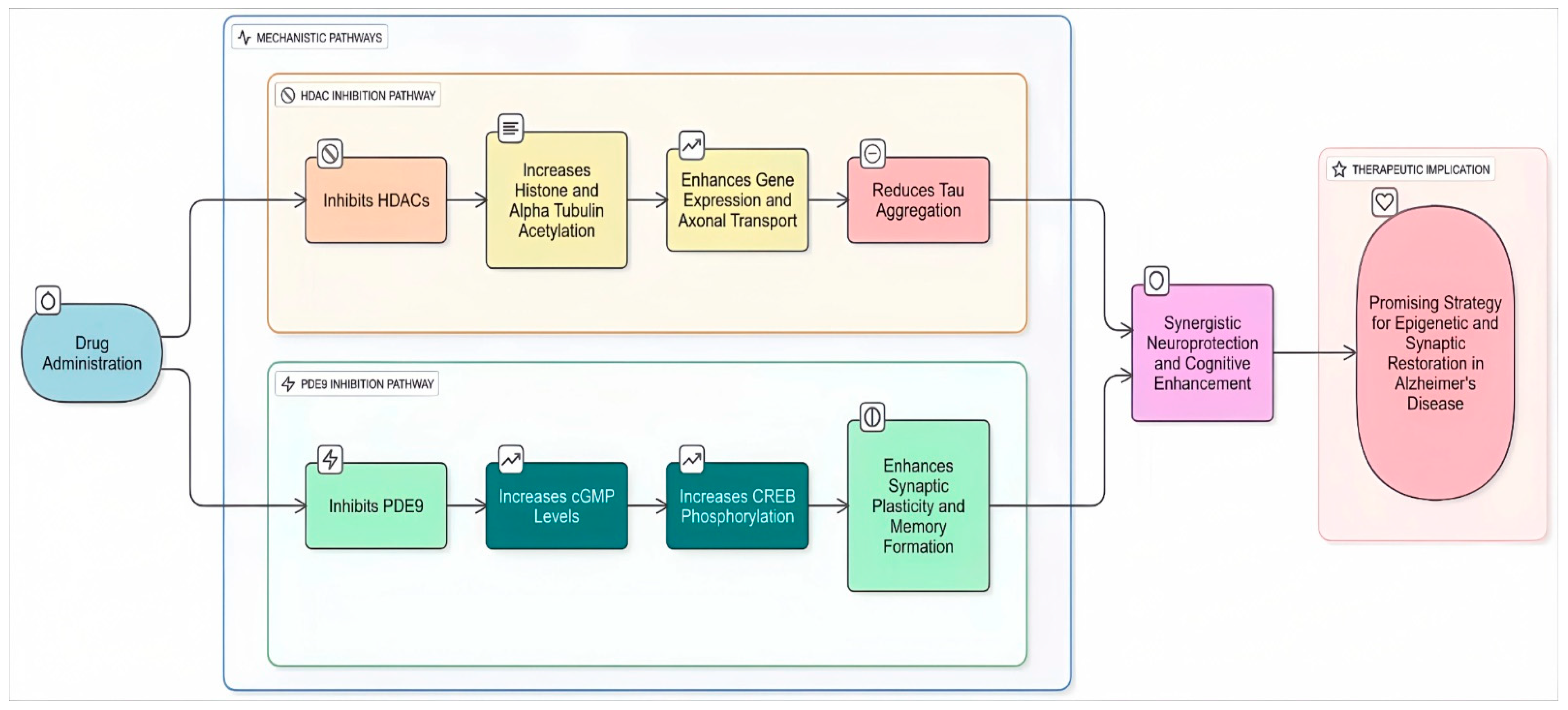
| Compound 10 |  | HDAC + PDE9 | HDAC6: 40 nM | PDE9: 84 nM | Good brain permeability and target engagement | [102] |
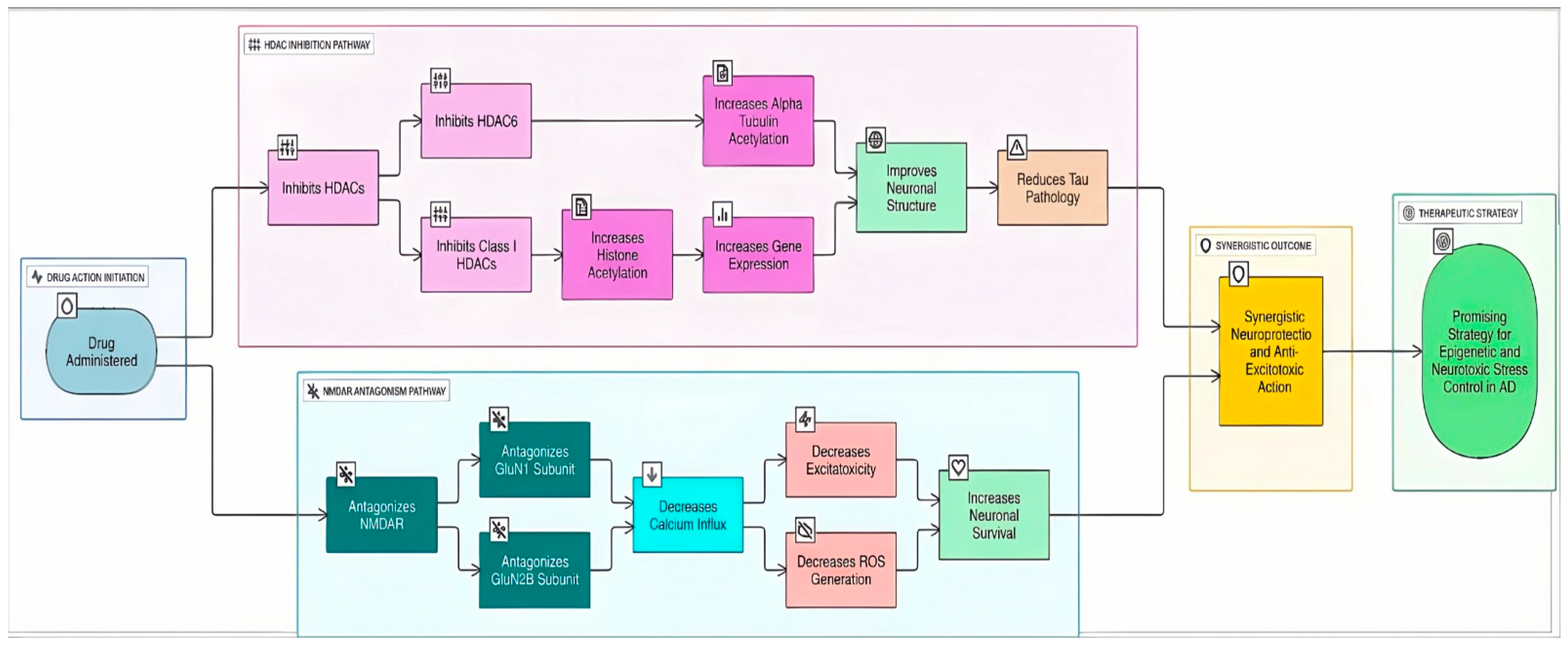
| Compound 11 | 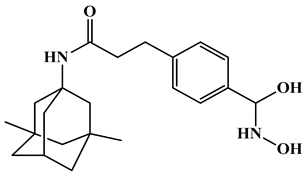 | HDAC + NMDAR | HDAC6: 180 nM | NMDAR: Ki = 590 nM | Neuroprotective; BBB-permeable; low cytotoxicity | [104] |
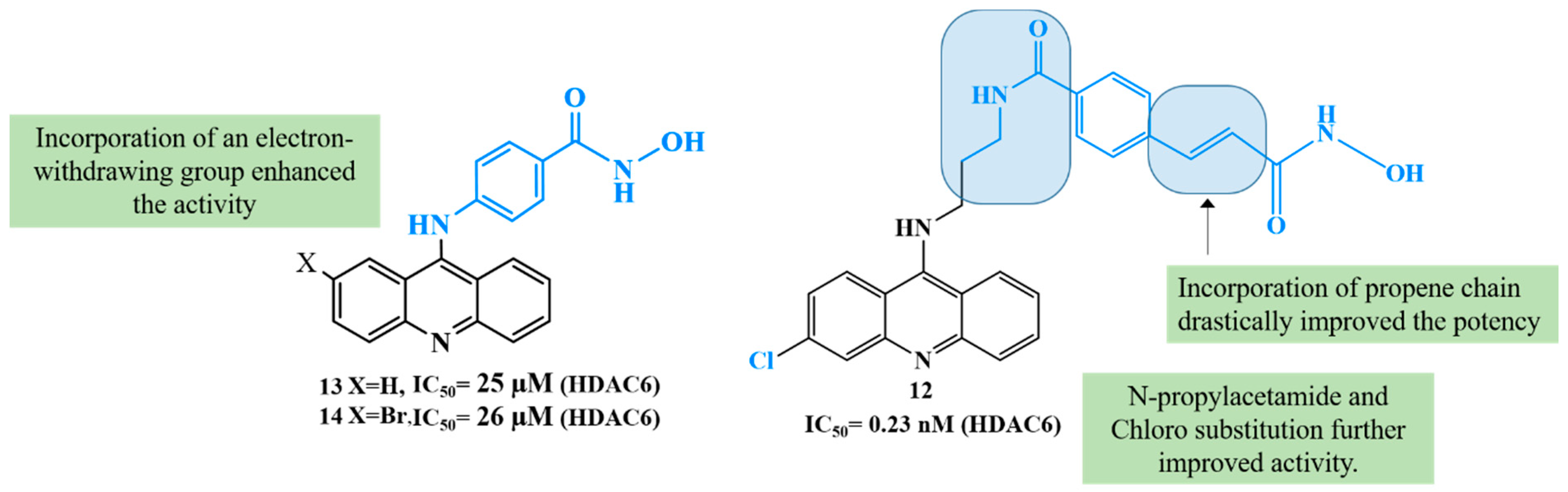
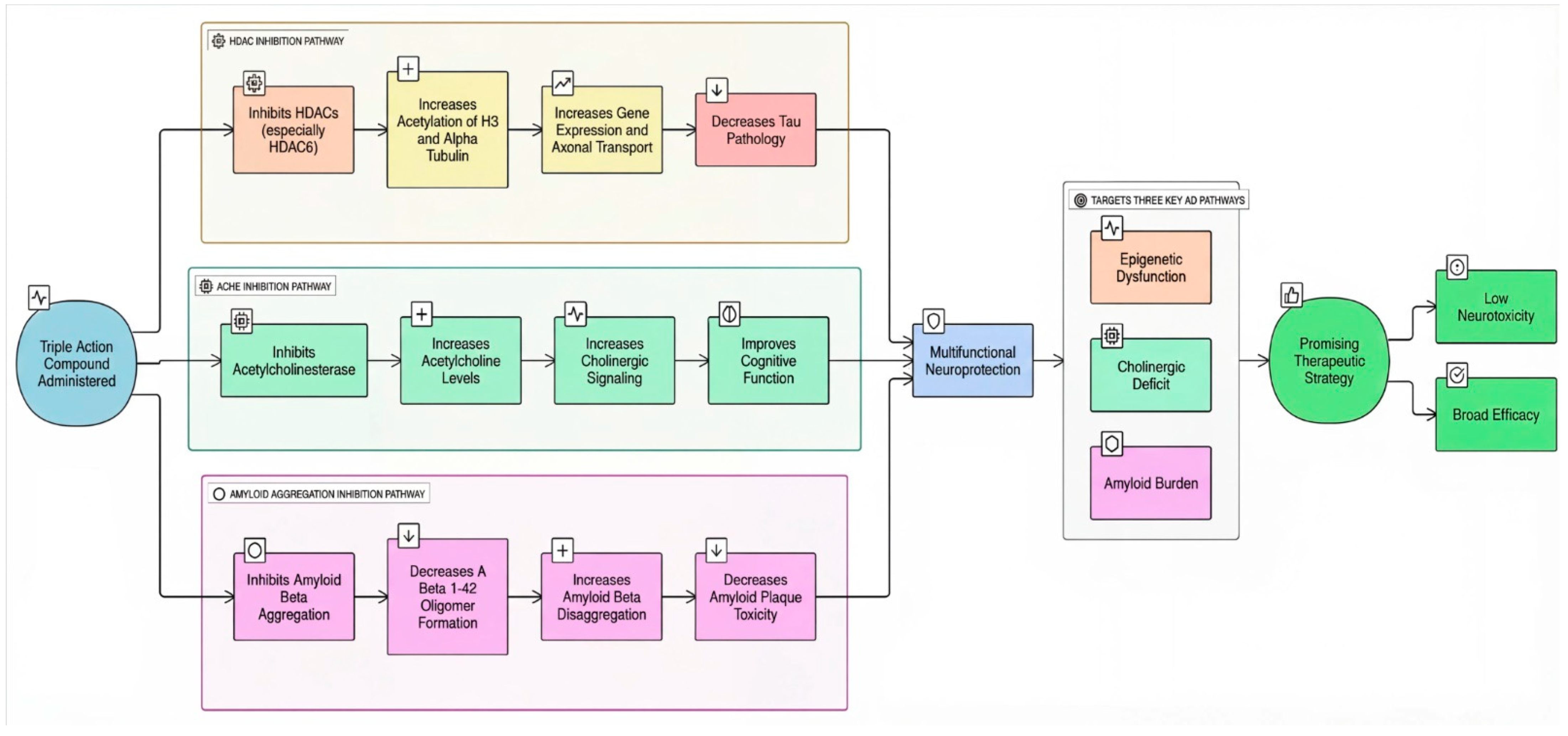
| Compound 12 |  | HDAC + AChE + Aβ | HDAC: 0.23 nM | AChE: 0.12 nM | Strong multi-target effects; antioxidant and metal chelation | [105] |
| Compounds 13, 14 |  13, R = H, 14, R = Br | HDAC + AChE + Aβ | HDAC6: 12 = 25 µM; 13 = 26 µM | AChE: 12 = 600 nM 13 = 800 nM | Aβ aggregation IC50: 1.1–3.0 µM; low neurotoxicity | [108] |
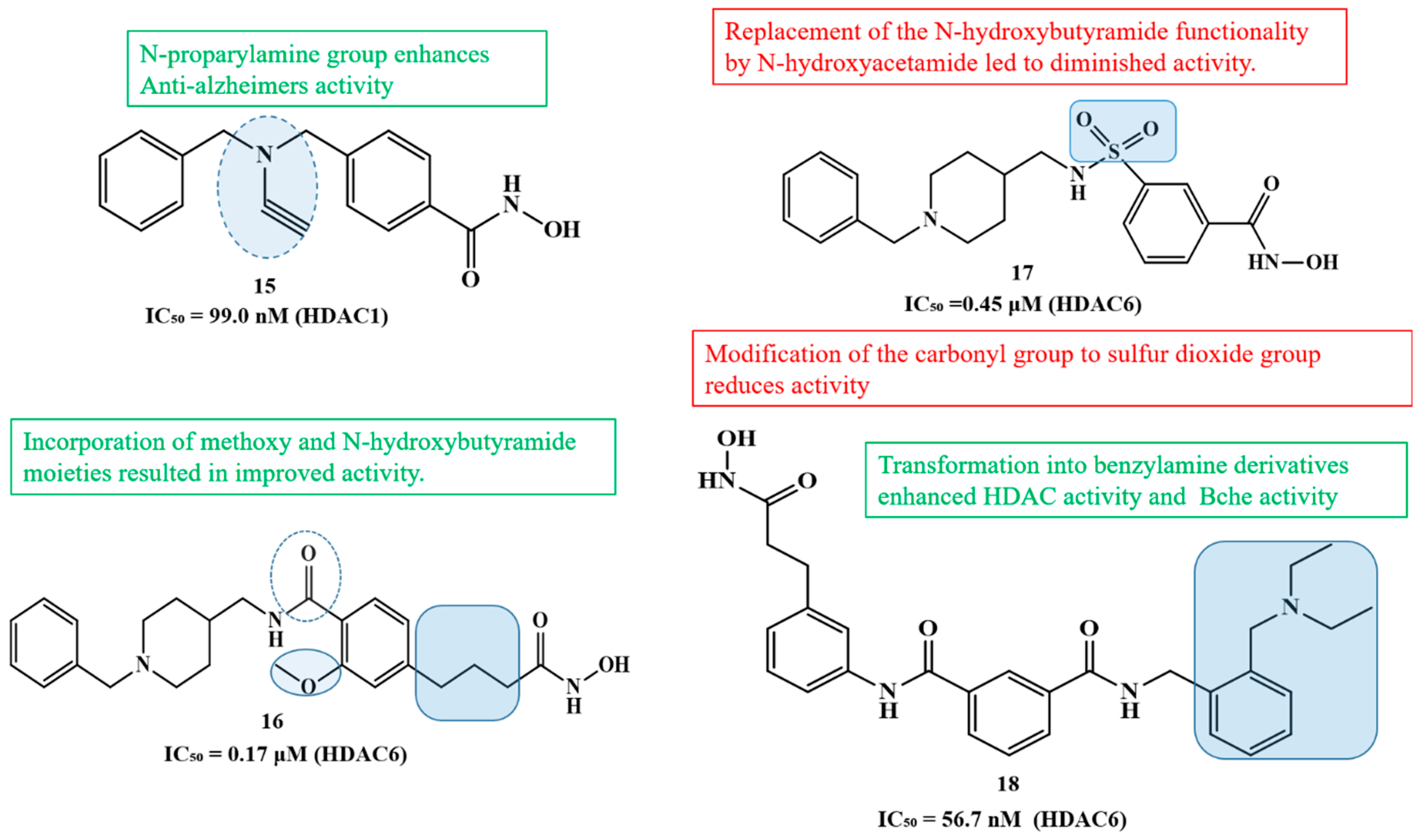
| Compound 15 |  | HDAC + MAO-B | HDAC1: 21.4 nM | MAO-B: 99 nM (MAO-A: 9923 nM) | Excellent selectivity; brain-penetrant; in vivo efficacy | [109] |
| Compounds 16, 17 |  | HDAC + AChE | HDAC6 16 = 170 nM; 17 = 450 nM | AChE 16 = 6.89 µM; 17 = 3.22 µM | Antioxidant, metal chelation, Aβ inhibition; stable Zn2+ coordination confirmed | [110] |
| Compound 18 |  | HDAC6 + BChE | HDAC6: 56.7 nM | BChE: 0.3 nM | Highly potent dual inhibitor; neuroprotective and cognitive benefits | [111] |
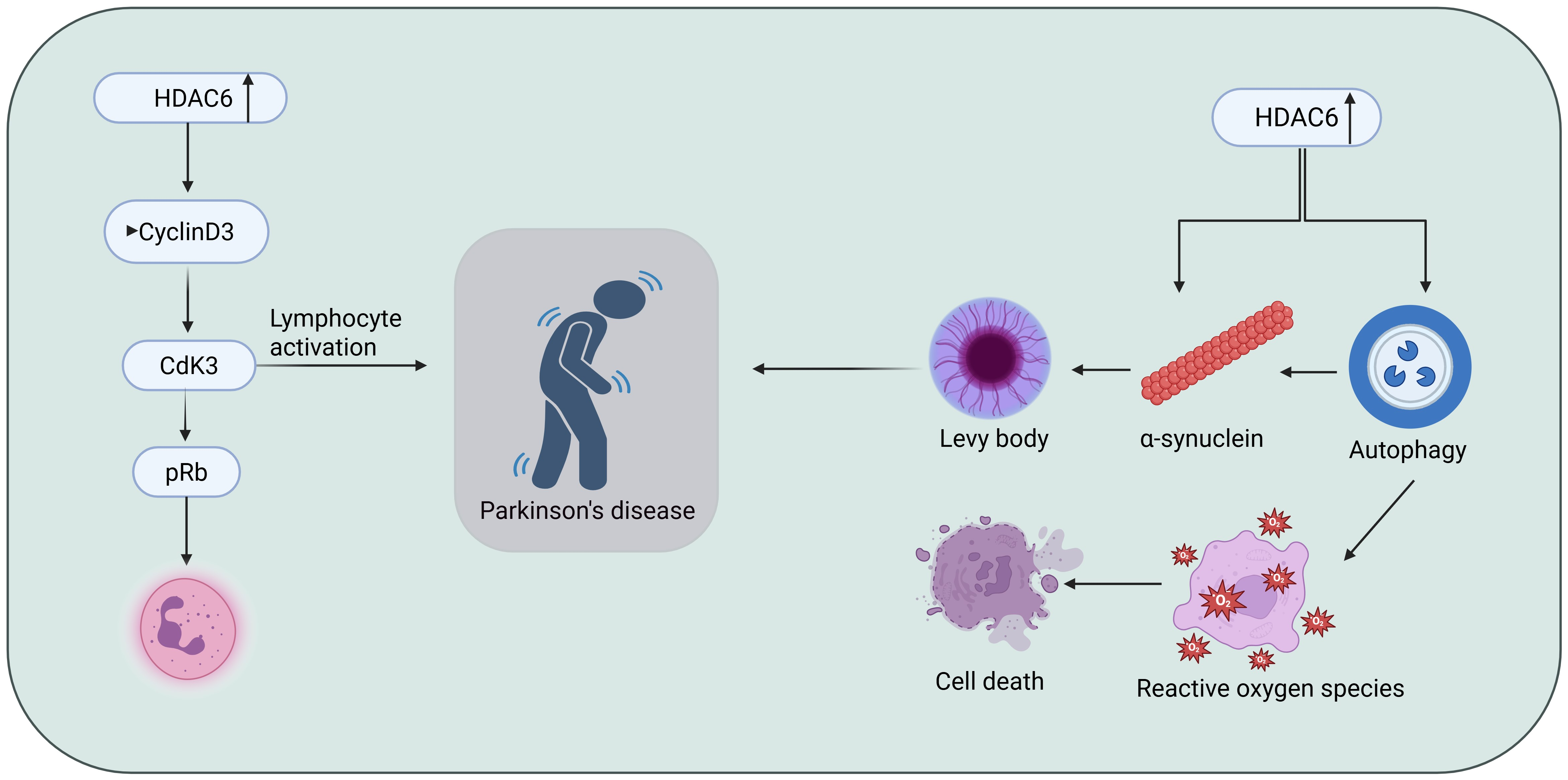
3.2. Parkinson’s Disease
3.2.1. Multi-Target and Selective HDAC Inhibitors in Parkinson’s Disease Therapy
3.2.2. Future Potential for Repurposing HDAC Inhibitors in Parkinson’s Disease
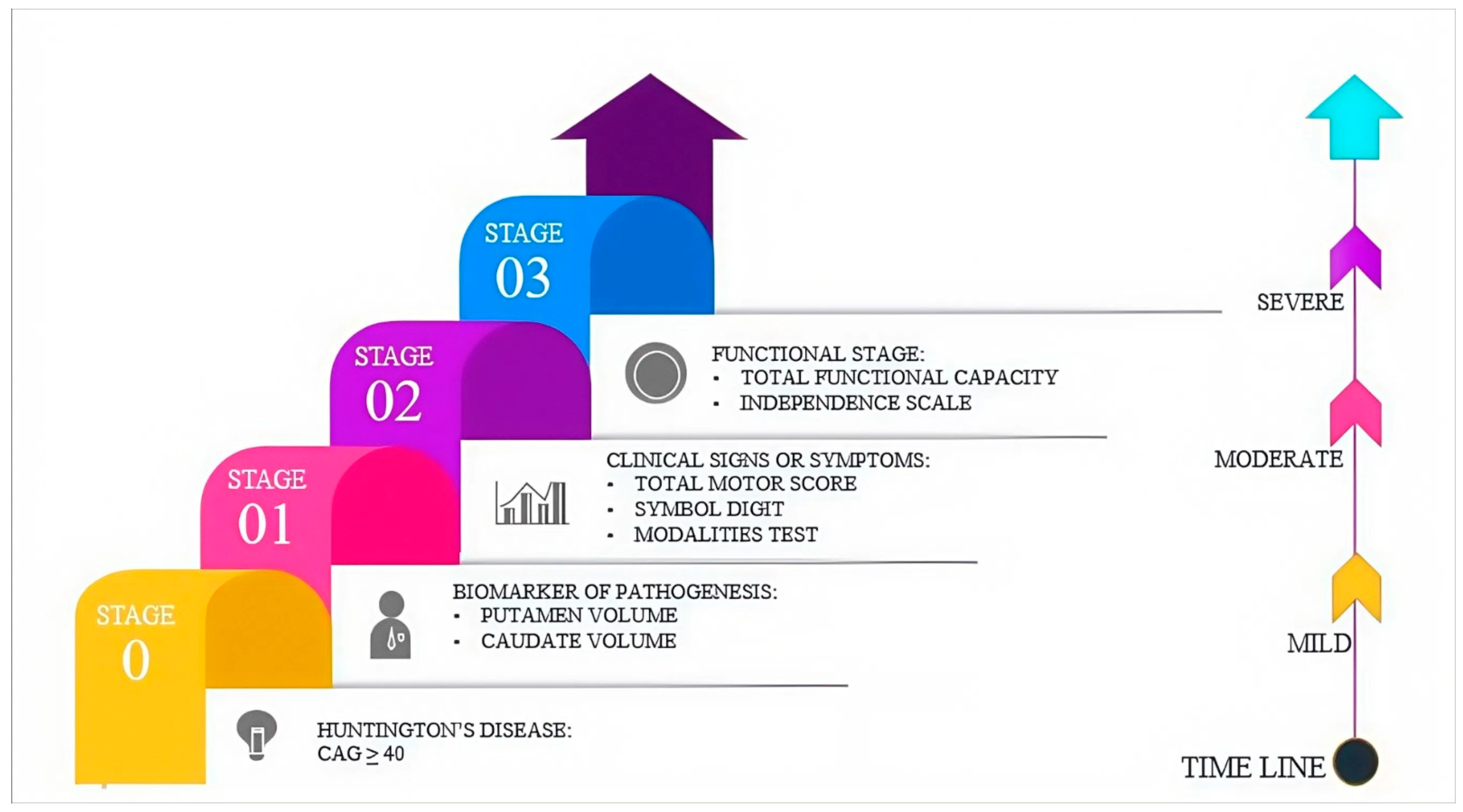
3.3. Huntington’s Disease
- •
- Stage 0: It develops in people with over 39 CAG repeats and may last for decades without any evident structural or clinical abnormalities.
- •
- Stage 1: This marks the beginning of measurable neurodegeneration, detectable through MRI scans. Although still awaiting publication, a recent examination of large datasets suggests that Stage 1 is relatively brief, averaging only 3 to 5 years in duration.
- •
- Stage 2: This stage begins once symptoms become quantifiable on standardized clinical rating scales. It may also include cognitive or motor manifestations of Huntington’s disease and typically lasts for about 7 years.
- •
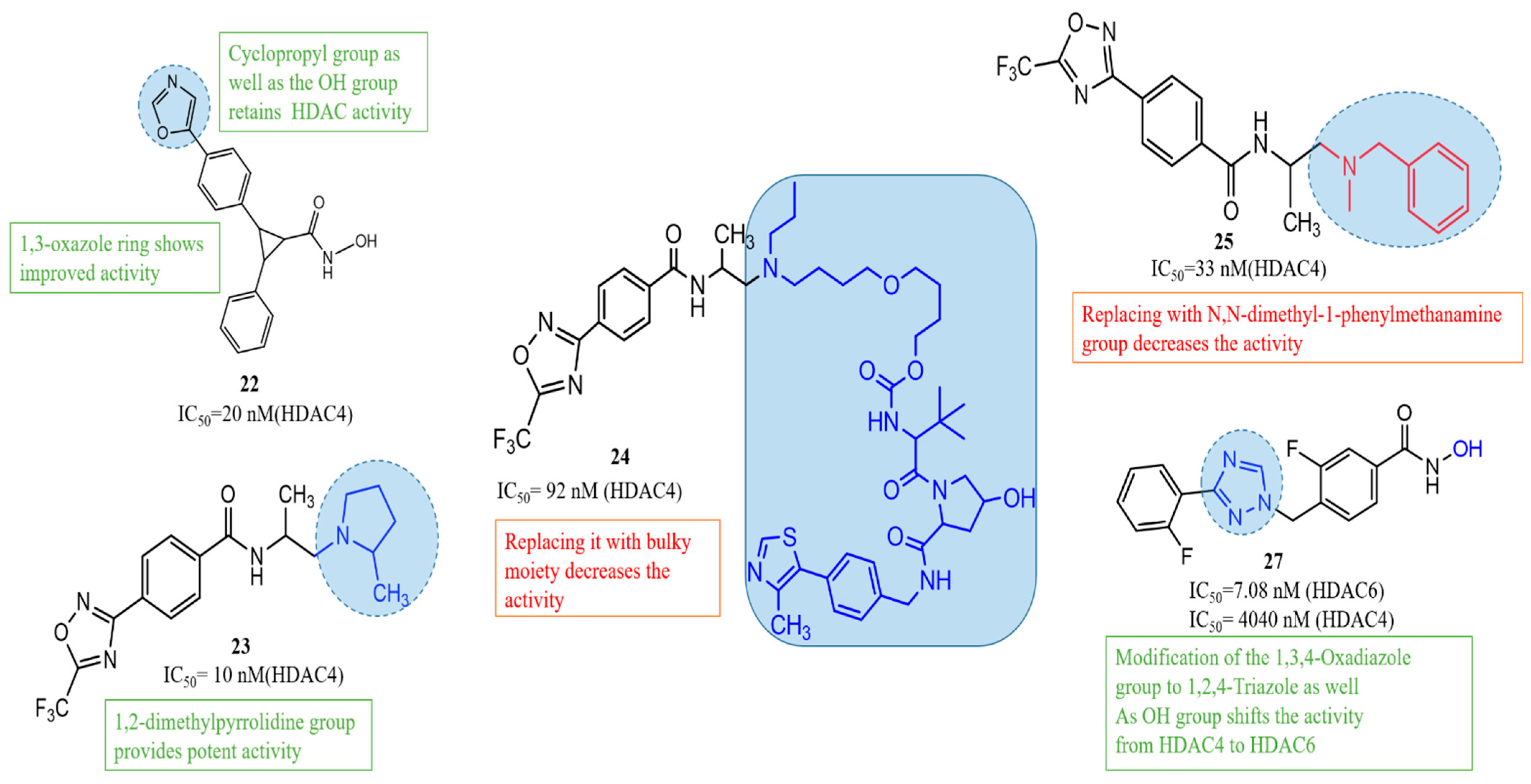
3.3.1. HDAC4-Selective Class IIa Inhibitors for Huntington’s Disease Therapy
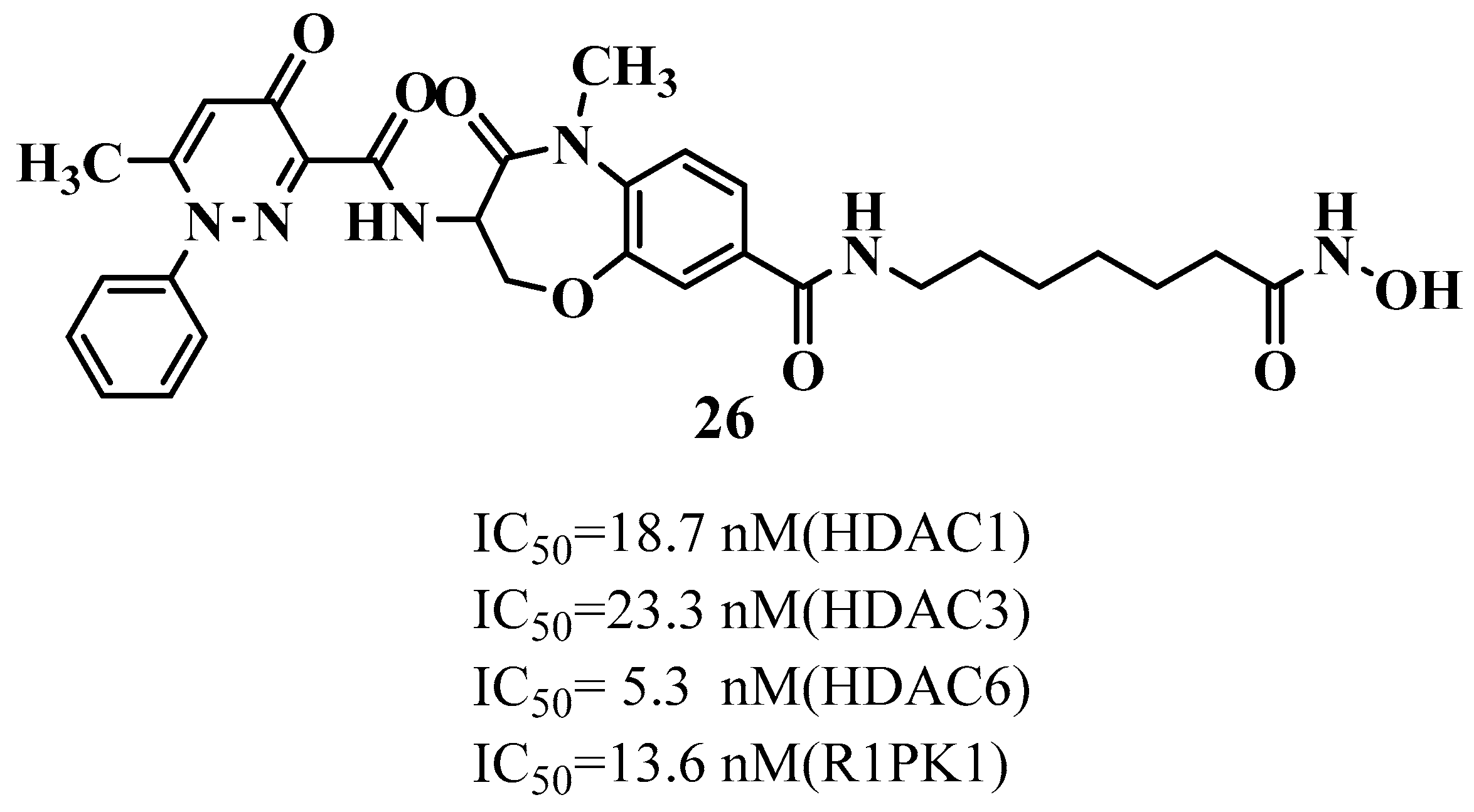
3.3.2. Dual-Target Inhibitors (HDAC + RIPK1)
3.3.3. HDAC6-Selective Class IIb Inhibitors for Huntington’s Disease Therapy
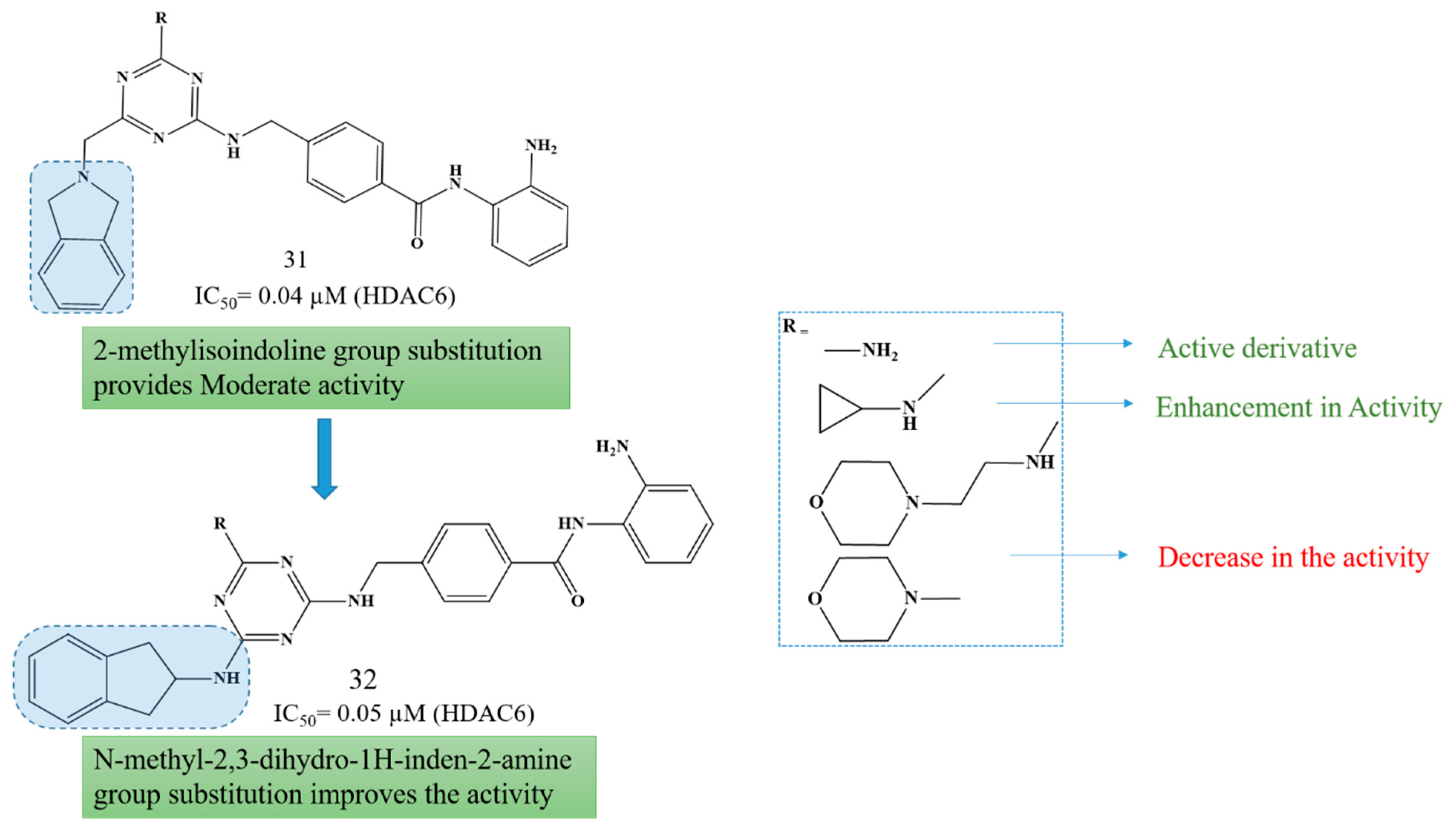
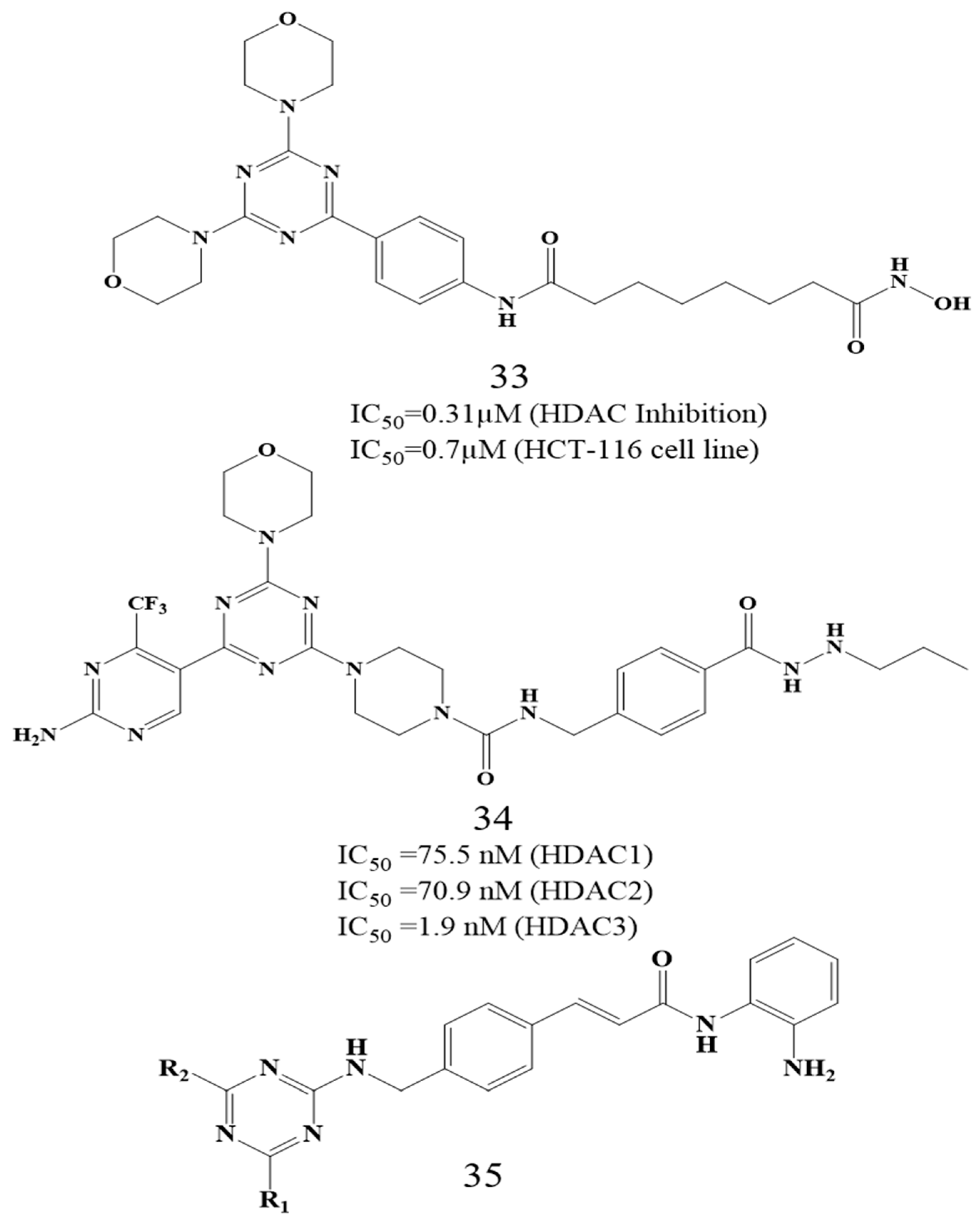
3.4. S-Triazine-Based HDAC Inhibitors in Neurological Disorders
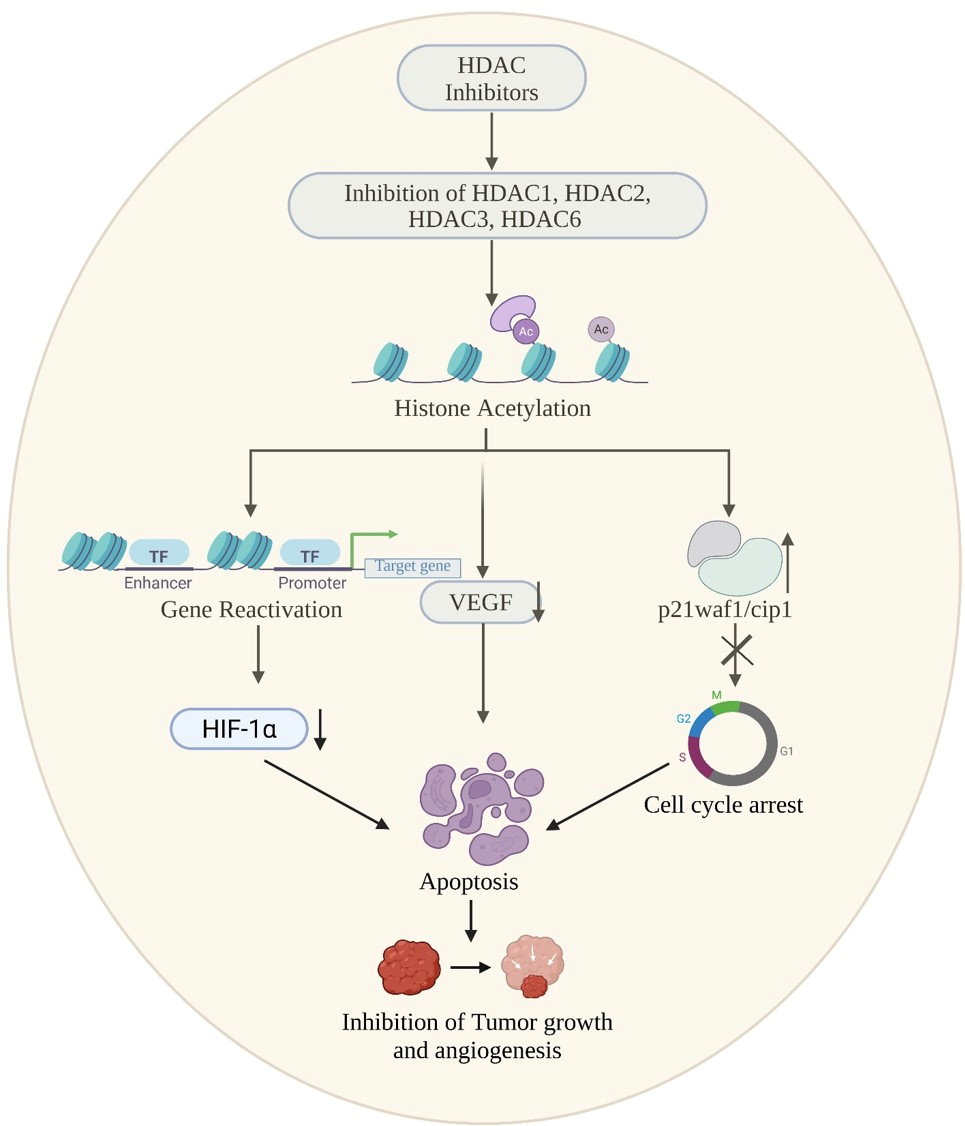
4. HDAC Inhibitors in the Treatment of Neuro-Oncological Disease
4.1. Development and Evaluation of HDAC Inhibitors for Glioblastoma Management
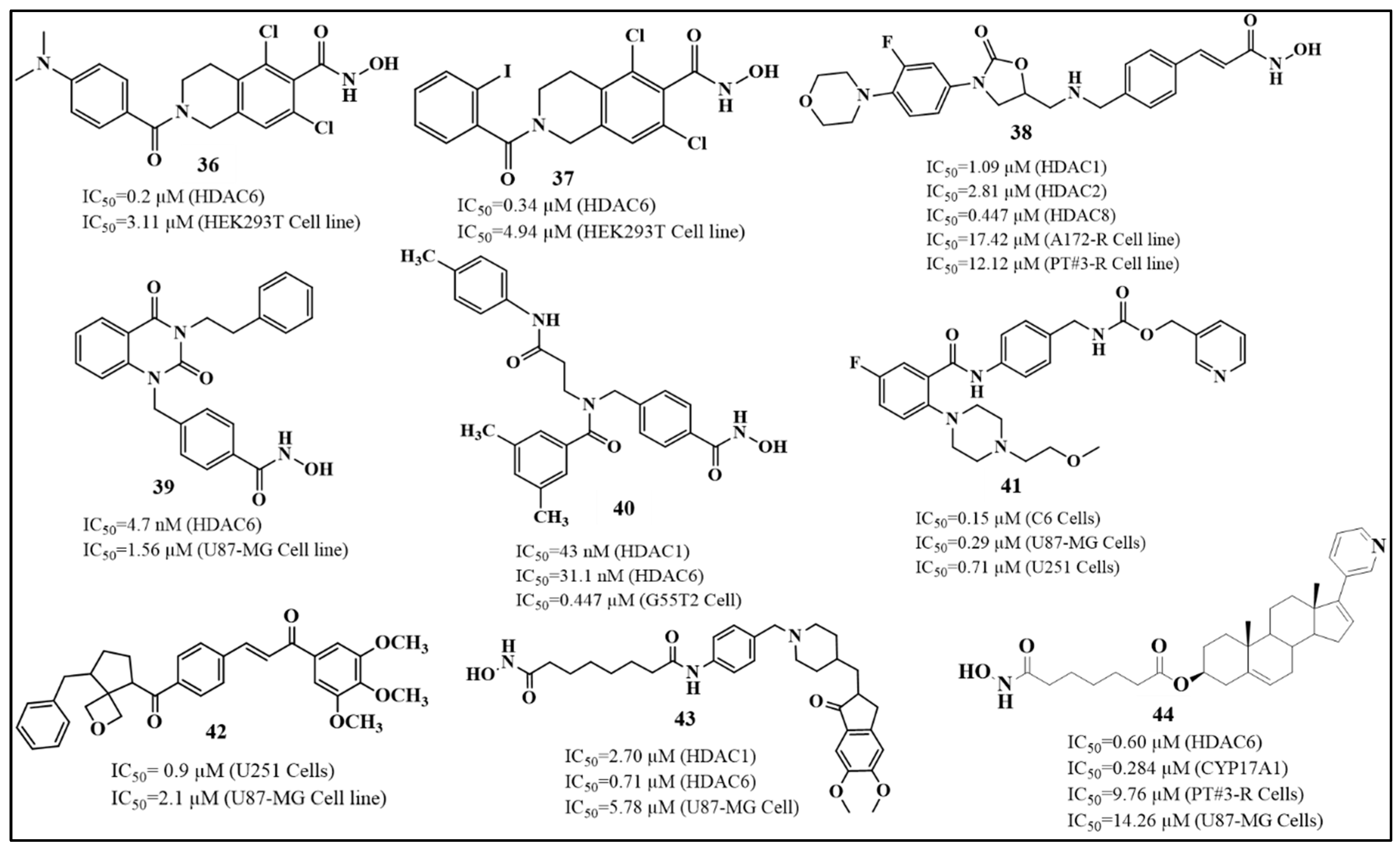
4.2. Multi-Target and Selective HDAC Inhibitors in Glioblastoma Therapy
5. Future Perspective
6. Conclusions
Author Contributions
Funding
Institutional Review Board Statement
Informed Consent Statement
Data Availability Statement
Acknowledgments
Conflicts of Interest
Abbreviations
| Aβ | Amyloid beta |
| AD | Alzheimer’s Disease |
| AChE AFM | Acetylcholinesterase Atomic Force Microscopy |
| AKT | Protein Kinase B |
| ALS | Amyotrophic Lateral Sclerosis |
| Arc | Activity-Regulated Cytoskeleton-Associated Protein |
| BBB | Blood–Brain Barrier |
| BDNF | Brain-Derived Neurotrophic Factor |
| Bcl-2 | B-cell Lymphoma 2 |
| Bcl-xL | B-cell Lymphoma-extra Large |
| CaMK | Calcium/Calmodulin-Dependent Protein Kinase |
| Cap-QuIC | Capillary-Based Quaking-Induced Conversion |
| CAS | Chemical Abstracts Service |
| CNS | Central Nervous System |
| CREB | cAMP Response Element-Binding Protein |
| DLB | Dementia with Lewy Bodies |
| DNA | Deoxyribonucleic Acid |
| EGR1 | Early Growth Response Protein 1 |
| GBM | Glioblastoma Multiforme |
| γH2AX | Phosphorylated Histone H2AX |
| HAT | Histone Acetyltransferase |
| HD | Huntington’s Disease |
| HDAC | Histone Deacetylase |
| HDACi | Histone Deacetylase Inhibitor |
| HGC | Histone Deacetylase 6 Inhibitor HGC |
| HMEC | Human Mammary Epithelial Cells |
| IC50 | Half Maximal Inhibitory Concentration |
| IFN-γ | Interferon Gamma |
| IL | Interleukin |
| JAK/STAT | Janus Kinase/Signal Transducer and Activator of Transcription |
| LRRK2 | Leucine-Rich Repeat Kinase 2 |
| MAPK | Mitogen-Activated Protein Kinase |
| MEF2 | Myocyte Enhancer Factor 2 |
| MRI | Magnetic Resonance Imaging |
| MTDL | Multi-Target-Directed Ligand |
| NDUFV1 | NADH Dehydrogenase [Ubiquinone] Flavoprotein 1 |
| NEP | Neprilysin |
| NF-κB | Nuclear Factor Kappa B |
| NMDAR | N-Methyl-D-Aspartate Receptor |
| PD | Parkinson’s Disease |
| PD-L1 | Programmed Death-Ligand 1 |
| PDE PET | Phosphodiesterase Positron Emission Tomography |
| PI3K | Phosphoinositide 3-Kinase |
| PROTAC | Proteolysis-Targeting Chimera |
| PSD95 | Postsynaptic Density Protein 95 |
| PYK2 | Proline-Rich Tyrosine Kinase 2 |
| SAR | Structure–Activity Relationship |
| SIRT | Sirtuin |
| STAT3 | Signal Transducer and Activator of Transcription 3 |
| TGI | Tumor Growth Inhibition |
| WHO | World Health Organization |
References
- Lima, A.A.; Mridha, M.F.; Das, S.C.; Kabir, M.M.; Islam, R.; Watanobe, Y. A Comprehensive Survey on the Detection, Classification, and Challenges of Neurological Disorders. Biology 2022, 11, 469. [Google Scholar] [CrossRef]
- Giallongo, S.; Longhitano, L.; Denaro, S.; D’aprile, S.; Torrisi, F.; La Spina, E.; Giallongo, C.; Mannino, G.; Furno, D.L.; Zappalà, A.; et al. The Role of Epigenetics in Neuroinflammatory-Driven Diseases. Int. J. Mol. Sci. 2022, 23, 15218. [Google Scholar] [CrossRef]
- Li, Y.; Lv, Z.; Dai, Y.; Yu, L.; Zhang, L.; Wang, K.; Hu, P. The global, regional, and National burden of parkinson’s disease in 204 countries and territories, 1990–2021: A systematic analysis for the global burden of disease study. BMC Public Health 2025, 25, 3047. [Google Scholar] [CrossRef] [PubMed]
- Liu, W.; Deng, W.; Gong, X.; Ou, J.; Yu, S.; Chen, S. Global burden of Alzheimer’s disease and other dementias in adults aged 65 years and over, and health inequality related to SDI, 1990–2021: Analysis of data from GBD. BMC Public Health 2025, 25, 1256. [Google Scholar] [CrossRef] [PubMed]
- Su, D.; Cui, Y.; He, C.; Yin, P.; Bai, R.; Zhu, J.; Lam, J.S.T.; Zhang, J.; Yan, R.; Zheng, X.; et al. Projections for prevalence of Parkinson’s disease and its driving factors in 195 countries and territories to 2050: Modelling study of Global Burden of Disease Study. BMJ 2025, 388, e080952. [Google Scholar] [CrossRef] [PubMed]
- Firdaus, Z.; Li, X. Epigenetic Explorations of Neurological Disorders, the Identification Methods, and Therapeutic Avenues. Int. J. Mol. Sci. 2024, 25, 11658. [Google Scholar] [CrossRef]
- Kumar, V.; Kundu, S.; Singh, A.; Singh, S. Understanding the Role of Histone Deacetylase and Their Inhibitors in Neurodegenerative Disorders: Current Targets and Future Perspective. Curr. Neuropharmacol. 2022, 20, 158–178. [Google Scholar] [CrossRef]
- Christenson, P.R.; Jeong, H.; Ahn, H.; Li, M.; Rowden, G.; Shoemaker, R.L.; Larsen, P.A.; Park, H.Y.; Oh, S.-H. Visual detection of misfolded alpha-synuclein and prions via capillary-based quaking-induced conversion assay (Cap-QuIC). npj Biosens. 2024, 1, 2. [Google Scholar] [CrossRef]
- Jungilligens, J.; Paredes-Echeverri, S.; Popkirov, S.; Barrett, L.F.; Perez, D.L. A new science of emotion: Implications for functional neurological disorder. Brain 2022, 145, 2648–2663. [Google Scholar] [CrossRef]
- Wang, Y.; Liao, W.; Wang, L.; Li, J.; Huang, D.; Cheng, W.; Tian, J.; Luan, P. Advance and Prospect of Positron Emission Tomography in Alzheimer’s disease research. Mol. Psychiatry 2025, 30, 4899–4909. [Google Scholar] [CrossRef]
- Marcuello, C.; Lim, K.; Nisini, G.; Pokrovsky, V.S.; Conde, J.; Ruggeri, F.S. Nanoscale Analysis beyond Imaging by Atomic Force Microscopy: Molecular Perspectives on Oncology and Neurodegeneration. Small Sci. 2025, 5, 2500351. [Google Scholar] [CrossRef] [PubMed]
- Grezenko, H.; Ekhator, C.; Nwabugwu, N.U.; Ganga, H.; Affaf, M.; Abdelaziz, A.M.; Khaliq, A.S.; Rehman, A.; Shehryar, A.A.; Abbasi, F.; et al. Epigenetics in Neurological and Psychiatric Disorders: A Comprehensive Review of Current Understanding and Future Perspectives. Cureus 2023, 15, e43960. [Google Scholar] [CrossRef]
- Kalenik, S.; Zaczek, A.; Rodacka, A. Air Pollution-Induced Neurotoxicity: The Relationship Between Air Pollution, Epigenetic Changes, and Neurological Disorders. Int. J. Mol. Sci. 2025, 26, 3402. [Google Scholar] [CrossRef] [PubMed]
- Olawade, D.B.; Rashad, I.; Egbon, E.; Teke, J.; Ovsepian, S.V.; Boussios, S. Reversing Epigenetic Dysregulation in Neurodegenerative Diseases: Mechanistic and Therapeutic Considerations. Int. J. Mol. Sci. 2025, 26, 4929. [Google Scholar] [CrossRef] [PubMed]
- Xu, Z.; Xu, H.; Shi, J.; Liu, R.; Li, X.; Liu, S.; Wei, W. Inhibitor of Growth Proteins: Epigenetic Regulators Shaping Neurobiology. Biomolecules 2025, 15, 281. [Google Scholar] [CrossRef]
- Zarrilli, B.; Bonanni, R.; Belfiore, M.; Severino, M.; Cariati, I.; Fioravanti, R.; D′Arcangelo, G.; Cappella, G.; Sennato, S.; Frank, C.; et al. Molecular mechanisms at the basis of the protective effect exerted by EPPS on neurodegeneration induced by prefibrillar amyloid oligomers. Sci. Rep. 2024, 14, 26533. [Google Scholar] [CrossRef]
- Wu, T.; Cai, W.; Chen, X. Epigenetic regulation of neurotransmitter signaling in neurological disorders. Neurobiol. Dis. 2023, 184, 106232. [Google Scholar] [CrossRef]
- Lossi, L.; Castagna, C.; Merighi, A. An Overview of the Epigenetic Modifications in the Brain under Normal and Pathological Conditions. Int. J. Mol. Sci. 2024, 25, 3881. [Google Scholar] [CrossRef]
- Prasanth, M.I.; Sivamaruthi, B.S.; Cheong, C.S.Y.; Verma, K.; Tencomnao, T.; Brimson, J.M.; Prasansuklab, A. Role of Epigenetic Modulation in Neurodegenerative Diseases: Implications of Phytochemical Interventions. Antioxidants 2024, 13, 606. [Google Scholar] [CrossRef]
- Ospelt, C. A brief history of epigenetics. Immunol. Lett. 2022, 249, 1–4. [Google Scholar] [CrossRef]
- Park, J.; Lee, K.; Kim, K.; Yi, S.-J. The role of histone modifications: From neurodevelopment to neurodiseases. Signal Transduct. Target. Ther. 2022, 7, 217. [Google Scholar] [CrossRef]
- Kato, K. What is epigenetics? In Inflammation and Oral Cancer; Academic Press: Cambridge, MA, USA, 2022; pp. 79–100. [Google Scholar] [CrossRef]
- Dai, W.; Qiao, X.; Fang, Y.; Guo, R.; Bai, P.; Liu, S.; Li, D.; Jiang, Y.; Wei, S.; Na, Z.; et al. Epigenetics-targeted drugs: Current paradigms and future challenges. Signal Transduct. Target. Ther. 2024, 9, 332. [Google Scholar] [CrossRef]
- Ren, X.; Zhou, Y.; Xue, Z.; Hao, N.; Li, Y.; Guo, X.; Wang, D.; Shi, X.; Li, H. Histone benzoylation serves as an epigenetic mark for DPF and YEATS family proteins. Nucleic Acids Res. 2020, 49, 114–126. [Google Scholar] [CrossRef]
- Maity, S.; Farrell, K.; Navabpour, S.; Narayanan, S.N.; Jarome, T.J. Epigenetic Mechanisms in Memory and Cognitive Decline Associated with Aging and Alzheimer’s Disease. Int. J. Mol. Sci. 2021, 22, 12280. [Google Scholar] [CrossRef]
- Kang, H.; Park, Y.-K.; Lee, J.-Y.; Bae, M. Roles of Histone Deacetylase 4 in the Inflammatory and Metabolic Processes. Diabetes Metab. J. 2024, 48, 340–353. [Google Scholar] [CrossRef]
- Liu, R.; Guo, L.; Zhao, Y.; Wu, D.; Yu, J.; Liu, P. Study on multi-target effects of the novel HDAC6 inhibitor W5 on Aβ/Cu2+-induced Alzheimer’s disease model of rats. Brain Res. 2024, 1832, 148847. [Google Scholar] [CrossRef] [PubMed]
- Leite, J.A.; Ghirotto, B.; Targhetta, V.P.; de Lima, J.; Câmara, N.O.S. Sirtuins as pharmacological targets in neurodegenerative and neuropsychiatric disorders. Br. J. Pharmacol. 2021, 179, 1496–1511. [Google Scholar] [CrossRef] [PubMed]
- Mondal, P.; Bai, P.; Gomm, A.; Bakiasi, G.; Lin, C.J.; Wang, Y.; Choi, S.H.; Tanzi, R.E.; Wang, C.; Zhang, C. Structure-Based Discovery of a Small Molecule Inhibitor of Histone Deacetylase 6 (HDAC6) that Significantly Reduces Alzheimer’s Disease Neuropathology. Adv. Sci. 2023, 11, e2304545. [Google Scholar] [CrossRef]
- Bondarev, A.D.; Attwood, M.M.; Jonsson, J.; Chubarev, V.N.; Tarasov, V.V.; Schiöth, H.B. Recent developments of HDAC inhibitors: Emerging indications and novel molecules. Br. J. Clin. Pharmacol. 2021, 87, 4577–4597. [Google Scholar] [CrossRef] [PubMed]
- Meka, S.T.; Bojja, S.L.; Kumar, G.; Birangal, S.R.; Rao, C.M. Novel HDAC inhibitors provide neuroprotection in the MPTP-induced Parkinson’s disease model of rats. Eur. J. Pharmacol. 2023, 959, 176067. [Google Scholar] [CrossRef] [PubMed]
- Li, H.; Shi, G.; Zha, H.; Zheng, L.; Luo, Z.; Wang, Y. Inhibition of histone deacetylase promotes a neuroprotective mechanism in an experimental model of Parkinson’s disease. Arch. Med. Sci. 2021, 20, 664–674. [Google Scholar] [CrossRef]
- Pham, K.-Y.; Khanal, S.; Bohara, G.; Rimal, N.; Song, S.-H.; Nguyen, T.T.K.; Hong, I.-S.; Cho, J.; Kang, J.-S.; Lee, S.; et al. HDAC6 inhibitor-loaded brain-targeted nanocarrier-mediated neuroprotection in methamphetamine-driven Parkinson’s disease. Redox Biol. 2024, 79, 103457. [Google Scholar] [CrossRef]
- Sangani, N.B.; Koetsier, J.; Mélius, J.; Kutmon, M.; Ehrhart, F.; Evelo, C.T.; Curfs, L.M.G.; Reutelingsperger, C.P.; Eijssen, L.M.T. A novel insight into neurological disorders through HDAC6 protein–protein interactions. Sci. Rep. 2024, 14, 14666. [Google Scholar] [CrossRef] [PubMed]
- Morgado, J.; Diniz, L.P.; Araujo, A.P.; Antônio, L.M.; Araujo, H.P.; Pinheiro, P.D.S.M.; Gomes, F.C. Histone Deacetylase Inhibition Mitigates Cognitive Deficits and Astrocyte Dysfunction Induced by Aβ Oligomers. bioRxiv 2023. [Google Scholar] [CrossRef]
- Baek, S.Y.; Lee, J.; Kim, T.; Lee, H.; Choi, H.-S.; Park, H.; Koh, M.; Kim, E.; Jung, M.E.; Iliopoulos, D.; et al. Development of a novel histone deacetylase inhibitor unveils the role of HDAC11 in alleviating depression by inhibition of microglial activation. Biomed. Pharmacother. 2023, 166, 115312. [Google Scholar] [CrossRef] [PubMed]
- Choudhary, G.; Prajapat, M.; Kaur, G.; Singh, H.; Mahendiratta, S.; Prakash, A.; Medhi, B. Integrated in-silico and in-vitro assessments of HDAC6 inhibitor efficacy in mitigating amyloid beta pathology in Alzheimer’s disease. J. Biomol. Struct. Dyn. 2023, 42, 9720–9730. [Google Scholar] [CrossRef]
- Rahman, A.F.M.T.; Bulbule, S.; Belayet, J.; Benko, A.; Gottschalk, C.G.; Frick, D.N.; Arnold, L.A.; Hossain, M.M.; Roy, A. JRM-28, a Novel HDAC2 Inhibitor, Upregulates Plasticity-Associated Proteins in Hippocampal Neurons and Enhances Morphological Plasticity via Activation of CREB: Implications for Alzheimer’s Disease. Cells 2024, 13, 1964. [Google Scholar] [CrossRef]
- Fan, S.-J.; Huang, F.-I.; Liou, J.-P.; Yang, C.-R. The novel histone de acetylase 6 inhibitor, MPT0G211, ameliorates tau phosphorylation and cognitive deficits in an Alzheimer’s disease model. Cell Death Dis. 2018, 9, 655. [Google Scholar] [CrossRef]
- Kim, A.; Lalonde, K.; Truesdell, A.; Gomes Welter, P.; Brocardo, P.S.; Rosenstock, T.R.; Gil-Mohapel, J. New Avenues for the Treatment of Huntington’s Disease. Int. J. Mol. Sci. 2021, 22, 8363. [Google Scholar] [CrossRef]
- Li, E.; Choi, J.; Sim, H.-R.; Kim, J.; Jun, J.H.; Kyung, J.; Song, J.; Ha, N.; Kim, S.; Ryu, K.H.; et al. A novel HDAC6 inhibitor, CKD-504, is effective in treating preclinical models of huntington’s disease. BMB Rep. 2023, 56, 178–183. [Google Scholar] [CrossRef]
- Macabuag, N.; Esmieu, W.; Breccia, P.; Jarvis, R.; Blackaby, W.; Lazari, O.; Urbonas, L.; Eznarriaga, M.; Williams, R.; Strijbosch, A.; et al. Developing HDAC4-Selective Protein Degraders To Investigate the Role of HDAC4 in Huntington’s Disease Pathology. J. Med. Chem. 2022, 65, 12445–12459. [Google Scholar] [CrossRef] [PubMed]
- Gupta, R.; Ambasta, R.K.; Kumar, P. Pharmacological intervention of histone deacetylase enzymes in the neurodegenerative disorders. Life Sci. 2020, 243, 117278. [Google Scholar] [CrossRef]
- Mead, R.J.; Shan, N.; Reiser, H.J.; Marshall, F.; Shaw, P.J. Amyotrophic lateral sclerosis: A neurodegenerative disorder poised for successful therapeutic translation. Nat. Rev. Drug Discov. 2022, 22, 185–212. [Google Scholar] [CrossRef]
- Ding, Y. Histone deacetylases: The critical enzymes for microglial activation involved in neuropathic pain. Front. Pharmacol. 2025, 16, 1515787. [Google Scholar] [CrossRef]
- Smalley, J.P.; Cowley, S.M.; Hodgkinson, J.T. Bifunctional HDAC Therapeutics: One Drug to Rule Them All? Molecules 2020, 25, 4394. [Google Scholar] [CrossRef]
- Gu, Z.; Lin, S.; Yu, J.; Jin, F.; Zhang, Q.; Xia, K.; Chen, L.; Li, Y.; He, B. Advances in dual-targeting inhibitors of HDAC6 for cancer treatment. Eur. J. Med. Chem. 2024, 275, 116571. [Google Scholar] [CrossRef] [PubMed]
- Parveen, R.; Harihar, D.; Chatterji, B.P. Recent histone deacetylase inhibitors in cancer therapy. Cancer 2023, 129, 3372–3380. [Google Scholar] [CrossRef]
- Athira, K.V.; Sadanandan, P.; Chakravarty, S. Repurposing Vorinostat for the Treatment of Disorders Affecting the Brain. NeuroMolecular Med. 2021, 23, 449–465. [Google Scholar] [CrossRef] [PubMed]
- Di Bello, E.; Noce, B.; Fioravanti, R.; Mai, A. Current HDAC Inhibitors in Clinical Trials. Chimia 2022, 76, 448. [Google Scholar] [CrossRef]
- Gu, X.; Zhang, H.; Jiao, M.; Han, B.; Zhang, Z.; Li, J.; Zhang, Q. Histone deacetylase 6 inhibitors with blood-brain barrier penetration as a potential strategy for CNS-Disorders therapy. Eur. J. Med. Chem. 2022, 229, 114090. [Google Scholar] [CrossRef] [PubMed]
- Wagner, F.F.; Zhang, Y.-L.; Fass, D.M.; Joseph, N.; Gale, J.P.; Weïwer, M.; Holson, E.B.; McCarren, P.; Fisher, S.L.; Kaya, T.; et al. Kinetically selective inhibitors of histone deacetylase 2 (HDAC2) as cognition enhancers. Chem. Sci. 2014, 6, 804–815. [Google Scholar] [CrossRef]
- Yang, S.-S.; Zhang, R.; Wang, G.; Zhang, Y.-F. The development prospection of HDAC inhibitors as a potential therapeutic direction in Alzheimer’s disease. Transl. Neurodegener. 2017, 6, 19. [Google Scholar] [CrossRef]
- Daśko, M.; de Pascual-Teresa, B.; Ortín, I.; Ramos, A. HDAC Inhibitors: Innovative Strategies for Their Design and Applications. Molecules 2022, 27, 715. [Google Scholar] [CrossRef]
- Poziello, A.; Nebbioso, A.; Stunnenberg, H.G.; Martens, J.H.; Carafa, V.; Altucci, L. Recent insights into Histone Acetyltransferase-1: Biological function and involvement in pathogenesis. Epigenetics 2020, 16, 838–850. [Google Scholar] [CrossRef]
- Borcoman, E.; Kamal, M.; Marret, G.; Dupain, C.; Castel-Ajgal, Z.; Le Tourneau, C. HDAC Inhibition to Prime Immune Checkpoint Inhibitors. Cancers 2021, 14, 66. [Google Scholar] [CrossRef] [PubMed]
- Zhang, L.-Y.; Zhang, S.-Y.; Wen, R.; Zhang, T.-N.; Yang, N. Role of histone deacetylases and their inhibitors in neurological diseases. Pharmacol. Res. 2024, 208, 107410. [Google Scholar] [CrossRef]
- Huang, J.; Chen, X.; Lin, H.; Chen, X. β-hydroxybutyrate impairs nasopharyngeal carcinoma cell aggressiveness via histone deacetylase 4 inhibition. Mol. Cell. Toxicol. 2023, 20, 629–640. [Google Scholar] [CrossRef]
- Han, B.; Wang, M.; Li, J.; Chen, Q.; Sun, N.; Yang, X.; Zhang, Q. Perspectives and new aspects of histone deacetylase inhibitors in the therapy of CNS diseases. Eur. J. Med. Chem. 2023, 258, 115613. [Google Scholar] [CrossRef]
- Kim, T.; Song, S.; Park, Y.; Kang, S.; Seo, H. HDAC Inhibition by Valproic Acid Induces Neuroprotection and Improvement of PD-like Behaviors in LRRK2 R1441G Transgenic Mice. Exp. Neurobiol. 2019, 28, 504–515. [Google Scholar] [CrossRef]
- Temgire, P.; Arthur, R.; Kumar, P. Neuroinflammation and the role of epigenetic-based therapies for Huntington’s disease management: The new paradigm. Inflammopharmacology 2024, 32, 1791–1804. [Google Scholar] [CrossRef]
- Mencke, P.; Hanss, Z.; Boussaad, I.; Sugier, P.; Elbaz, A.; Krüger, R. Bidirectional relation between Parkinson’s disease and Glioblastoma multiforme. Front. Neurol. 2020, 11, 898. [Google Scholar] [CrossRef]
- Cao, D.-F.; Zhou, X.-Y.; Guo, Q.; Xiang, M.-Y.; Bao, M.-H.; He, B.-S.; Mao, X.-Y. Unveiling the role of histone deacetylases in neurological diseases: Focus on epilepsy. Biomark. Res. 2024, 12, 142. [Google Scholar] [CrossRef]
- Pan, H.; Cao, J.; Xu, W. Selective Histone Deacetylase Inhibitors. Anti-Cancer Agents Med. Chem. 2012, 12, 247–270. [Google Scholar] [CrossRef]
- Shukla, S.; Tekwani, B.L. Histone Deacetylases Inhibitors in Neurodegenerative Diseases, Neuroprotection and Neuronal Differentiation. Front. Pharmacol. 2020, 11, 537. [Google Scholar] [CrossRef] [PubMed]
- Diniz, L.P.; Pinheiro, P.d.S.M.; Franco, L.S.; Gomes, F.C.A. HDACs in the Brain: From Chromatin Remodeling to Neurodegenerative Disease. Cells 2025, 14, 1338. [Google Scholar] [CrossRef]
- Hagelkruys, A.; Lagger, S.; Krahmer, J.; Leopoldi, A.; Artaker, M.; Pusch, O.; Zezula, J.; Weissmann, S.; Xie, Y.; Schöfer, C.; et al. A single allele of Hdac2 but not Hdac1 is sufficient for normal mouse brain development in the absence of its paralog. Development 2014, 141, 604–616. [Google Scholar] [CrossRef] [PubMed]
- Fukuda, M.; Fujita, Y.; Hino, Y.; Nakao, M.; Shirahige, K.; Yamashita, T. Inhibition of HDAC8 Reduces the Proliferation of Adult Neural Stem Cells in the Subventricular Zone. Int. J. Mol. Sci. 2024, 25, 2540. [Google Scholar] [CrossRef] [PubMed]
- Alrouji, M.; Venkatesan, K.; Alshammari, M.S.; Alhumaydhi, F.A.; Shafi, S.; Sharaf, S.E.; Shahwan, M.; Shamsi, A. Repurposed drugs as histone deacetylase 8 inhibitors: Implications in cancer and neuropathological conditions. Front. Pharmacol. 2024, 15, 1488585. [Google Scholar] [CrossRef]
- Main, P.; Tan, W.J.; Wheeler, D.; Fitzsimons, H.L. Increased Abundance of Nuclear HDAC4 Impairs Neuronal Development and Long-Term Memory. Front. Mol. Neurosci. 2021, 14, 616642. [Google Scholar] [CrossRef]
- Gu, X.; Fu, C.; Lin, L.; Liu, S.; Su, X.; Li, A.; Wang, X.; Wu, Q.; Jia, C.; Zhang, P.; et al. miR-124 and miR-9 mediated downregulation of HDAC5 promotes neurite development through activating MEF2C-GPM6A pathway. J. Cell. Physiol. 2017, 233, 673–687. [Google Scholar] [CrossRef]
- Ganai, S.A. Histone Deacetylase Inhibitors—Epidrugs for Neurological Disorders; Springer: Dordrecht, The Netherlands, 2019. [Google Scholar] [CrossRef]
- Ma, C.; D’MEllo, S.R. Neuroprotection by Histone Deacetylase-7 (HDAC7) Occurs by Inhibition of c-jun Expression through a Deacetylase-independent Mechanism. J. Biol. Chem. 2011, 286, 4819–4828. [Google Scholar] [CrossRef]
- Zhong, L.; Yan, J.; Li, H.; Meng, L. HDAC9 Silencing Exerts Neuroprotection Against Ischemic Brain Injury via miR-20a-Dependent Downregulation of NeuroD1. Front. Cell. Neurosci. 2021, 14, 544285. [Google Scholar] [CrossRef] [PubMed]
- Lu, S.; Li, H.; Li, K.; Fan, X.-D. HDAC9 promotes brain ischemic injury by provoking IκBα/NF-κB and MAPKs signaling pathways. Biochem. Biophys. Res. Commun. 2018, 503, 1322–1329. [Google Scholar] [CrossRef]
- Kim, J.-Y.; Hwang, H.-G.; Lee, J.-Y.; Kim, M.; Kim, J.-Y. Cortactin deacetylation by HDAC6 and SIRT2 regulates neuronal migration and dendrite morphogenesis during cerebral cortex development. Mol. Brain 2020, 13, 105. [Google Scholar] [CrossRef]
- LoPresti, P. HDAC6 in Diseases of Cognition and of Neurons. Cells 2020, 10, 12. [Google Scholar] [CrossRef]
- Khanna, A.; Trigun, S.K. Epigenetic role of sirtuins in neurodegenerative brain disorders. In Sirtuin Biology in Medicine; Academic Press: Cambridge, MA, USA, 2021; pp. 153–173. [Google Scholar] [CrossRef]
- Manjula, R.; Anuja, K.; Alcain, F.J. SIRT1 and SIRT2 Activity Control in Neurodegenerative Diseases. Front. Pharmacol. 2021, 11, 585821. [Google Scholar] [CrossRef] [PubMed]
- Liu, H.; Hu, Q.; Kaufman, A.; D’Ercole, A.J.; Ye, P. Developmental expression of histone deacetylase 11 in the murine brain. J. Neurosci. Res. 2007, 86, 537–543. [Google Scholar] [CrossRef]
- Bai, P.; Mondal, P.; Liu, Y.; Gomm, A.; Suen, C.; Yang, L.; Zhu, B.; Sun, H.; Ran, C.; Shen, S.; et al. HDAC11 displays neuropathological alterations and offers as a novel drug target for Alzheimer’s disease. Alzheimer’s Dement. 2025, 21, e14616. [Google Scholar] [CrossRef] [PubMed]
- Coppedè, F. Epigenetic regulation in Alzheimer’s disease: Is it a potential therapeutic target? Expert Opin. Ther. Targets 2021, 25, 283–298. [Google Scholar] [CrossRef]
- Nikolac Perkovic, M.; Videtic Paska, A.; Konjevod, M.; Kouter, K.; Svob Strac, D.; Nedic Erjavec, G.; Pivac, N. Epigenetics of Alzheimer’s Disease. Biomolecules 2021, 11, 195. [Google Scholar] [CrossRef] [PubMed]
- Pereira, M.; Cruz, M.T.; Fortuna, A.; Bicker, J. Restoring the epigenome in Alzheimer’s disease: Advancing HDAC inhibitors as therapeutic agents. Drug Discov. Today 2024, 29, 104052. [Google Scholar] [CrossRef]
- Guan, J.-S.; Haggarty, S.J.; Giacometti, E.; Dannenberg, J.-H.; Joseph, N.; Gao, J.; Nieland, T.J.F.; Zhou, Y.; Wang, X.; Mazitschek, R.; et al. HDAC2 negatively regulates memory formation and synaptic plasticity. Nature 2009, 459, 55–60. [Google Scholar] [CrossRef]
- Gräff, J.; Rei, D.; Guan, J.-S.; Wang, W.-Y.; Seo, J.; Hennig, K.M.; Nieland, T.J.F.; Fass, D.M.; Kao, P.F.; Kahn, M.; et al. An epigenetic blockade of cognitive functions in the neurodegenerating brain. Nature 2012, 483, 222–226. [Google Scholar] [CrossRef] [PubMed]
- Harold, D.; Abraham, R.; Hollingworth, P.; Sims, R.; Gerrish, A.; Hamshere, M.L.; Pahwa, J.S.; Moskvina, V.; Dowzell, K.; Williams, A.; et al. Genome-wide association study identifies variants at CLU and PICALM associated with Alzheimer’s disease. Nat. Genet. 2009, 41, 1088–1093. [Google Scholar] [CrossRef] [PubMed]
- Hollingworth, P.; Harold, D.; Sims, R.; Gerrish, A.; Lambert, J.-C.; Carrasquillo, M.M.; Abraham, R.; Hamshere, M.L.; Pahwa, J.S.; Moskvina, V.; et al. Common variants at ABCA7, MS4A6A/MS4A4E, EPHA1, CD33 and CD2AP are associated with Alzheimer’s disease. Nat. Genet. 2011, 43, 429–435. [Google Scholar] [CrossRef]
- Rofo, F.; Metzendorf, N.G.; Saubi, C.; Suominen, L.; Godec, A.; Sehlin, D.; Syvänen, S.; Hultqvist, G. Blood–brain barrier penetrating neprilysin degrades monomeric amyloid-beta in a mouse model of Alzheimer’s disease. Alzheimer’s Res. Ther. 2022, 14, 180. [Google Scholar] [CrossRef]
- Asadi, K.; K., R.; Satarker, S.; Gurram, P.C. Histone Deacetylase 2 in Alzheimer’s Disease: A Comprehensive Molecular Blueprint for Therapeutic Targeting. Mol. Neurobiol. 2025, 62, 16489–16511. [Google Scholar] [CrossRef]
- Ng, T.K.S.; Ho, C.S.H.; Tam, W.W.S.; Kua, E.H.; Ho, R.C.-M. Decreased Serum Brain-Derived Neurotrophic Factor (BDNF) Levels in Patients with Alzheimer’s Disease (AD): A Systematic Review and Meta-Analysis. Int. J. Mol. Sci. 2019, 20, 257. [Google Scholar] [CrossRef]
- Agis-Balboa, R.C.; Pavelka, Z.; Kerimoglu, C.; Fischer, A. Loss of HDAC5 Impairs Memory Function: Implications for Alzheimer’s Disease. J. Alzheimer’s Dis. 2012, 33, 35–44. [Google Scholar] [CrossRef]
- Choi, M.A.; Park, S.Y.; Chae, H.Y.; Song, Y.; Sharma, C.; Seo, Y.H. Design, synthesis and biological evaluation of a series of CNS penetrant HDAC inhibitors structurally derived from amyloid-β probes. Sci. Rep. 2019, 9, 13187. [Google Scholar] [CrossRef]
- Romeiro, L.A.S.; Nunes, J.L.d.C.; Miranda, C.d.O.; Cardoso, G.S.H.R.; de Oliveira, A.S.; Gandini, A.; Kobrlova, T.; Soukup, O.; Rossi, M.; Senger, J.; et al. Novel Sustainable-by-Design HDAC Inhibitors for the Treatment of Alzheimer’s Disease. ACS Med. Chem. Lett. 2019, 10, 671–676. [Google Scholar] [CrossRef]
- Hashimoto, K.; Ide, S.; Arata, M.; Nakata, A.; Ito, A.; Ito, T.K.; Kudo, N.; Lin, B.; Nunomura, K.; Tsuganezawa, K.; et al. Discovery of Benzylpiperazine Derivatives as CNS-Penetrant and Selective Histone Deacetylase 6 Inhibitors. ACS Med. Chem. Lett. 2022, 13, 1077–1082. [Google Scholar] [CrossRef] [PubMed]
- Hsu, K.-C.; Chu, J.-C.; Tseng, H.-J.; Liu, C.-I.; Wang, H.-C.; Lin, T.E.; Lee, H.-S.; Hsin, L.-W.; Wang, A.H.-J.; Lin, C.-H.; et al. Synthesis and biological evaluation of phenothiazine derivative-containing hydroxamic acids as potent class II histone deacetylase inhibitors. Eur. J. Med. Chem. 2021, 219, 113419. [Google Scholar] [CrossRef]
- Wang, X.-X.; Xie, F.; Jia, C.-C.; Yan, N.; Zeng, Y.-L.; Wu, J.-D.; Liu, Z.-P. Synthesis and biological evaluation of selective histone deacetylase 6 inhibitors as multifunctional agents against Alzheimer’s disease. Eur. J. Med. Chem. 2021, 225, 113821. [Google Scholar] [CrossRef] [PubMed]
- Chu, J.-C.; Tseng, H.-J.; Lee, S.-B.; Hsu, K.-C.; Hsin, L.-W.; Liang, R.-H.; Lin, T.E.; Gao, N.-C.; Chen, L.-C.; Lu, W.-H.; et al. Synthesis and biological evaluation of C-4 substituted phenoxazine-bearing hydroxamic acids with potent class II histone deacetylase inhibitory activities. J. Enzym. Inhib. Med. Chem. 2023, 38, 2212326. [Google Scholar] [CrossRef]
- Wu, Y.; Li, Z.; Huang, Y.-Y.; Wu, D.; Luo, H.-B. Novel Phosphodiesterase Inhibitors for Cognitive Improvement in Alzheimer’s Disease. J. Med. Chem. 2018, 61, 5467–5483. [Google Scholar] [CrossRef]
- Sharma, V.K.; Singh, T.G.; Singh, S. Cyclic Nucleotides Signaling and Phosphodiesterase Inhibition: Defying Alzheimer’s Disease. Curr. Drug Targets 2020, 21, 1371–1384. [Google Scholar] [CrossRef] [PubMed]
- Sánchez-Arias, J.A.; Rabal, O.; Cuadrado-Tejedor, M.; de Miguel, I.; Pérez-González, M.; Ugarte, A.; Sáez, E.; Espelosin, M.; Ursua, S.; Haizhong, T.; et al. Impact of Scaffold Exploration on Novel Dual-Acting Histone Deacetylases and Phosphodiesterase 5 Inhibitors for the Treatment of Alzheimer’s Disease. ACS Chem. Neurosci. 2017, 8, 638–661. [Google Scholar] [CrossRef]
- Rabal, O.; Sánchez-Arias, J.A.; Cuadrado-Tejedor, M.; de Miguel, I.; Pérez-González, M.; García-Barroso, C.; Ugarte, A.; de Mendoza, A.E.-H.; Sáez, E.; Espelosin, M.; et al. Multitarget Approach for the Treatment of Alzheimer’s Disease: Inhibition of Phosphodiesterase 9 (PDE9) and Histone Deacetylases (HDACs) Covering Diverse Selectivity Profiles. ACS Chem. Neurosci. 2019, 10, 4076–4101. [Google Scholar] [CrossRef] [PubMed]
- Liu, W.; Li, Y.; Zhao, T.; Gong, M.; Wang, X.; Zhang, Y.; Xu, L.; Li, W.; Jia, J. The role of N-methyl-D-aspartate glutamate receptors in Alzheimer’s disease: From pathophysiology to therapeutic approaches. Prog. Neurobiol. 2023, 231, 102534. [Google Scholar] [CrossRef] [PubMed]
- He, F.; Ran, Y.; Li, X.; Wang, D.; Zhang, Q.; Lv, J.; Yu, C.; Qu, Y.; Zhang, X.; Xu, A.; et al. Design, synthesis and biological evaluation of dual-function inhibitors targeting NMDAR and HDAC for Alzheimer’s disease. Bioorganic Chem. 2020, 103, 104109. [Google Scholar] [CrossRef]
- Xu, A.; He, F.; Zhang, X.; Li, X.; Ran, Y.; Wei, C.; Chou, C.J.; Zhang, R.; Wu, J. Tacrine-hydroxamate derivatives as multitarget-directed ligands for the treatment of Alzheimer’s disease: Design, synthesis, and biological evaluation. Bioorganic Chem. 2020, 98, 103721. [Google Scholar] [CrossRef]
- Angelova, V.T.; Stoyanov, B.P.; Simeonova, R. New Insights into the Development of Donepezil-Based Hybrid and Natural Molecules as Multi-Target Drug Agents for Alzheimer’s Disease Treatment. Molecules 2024, 29, 5314. [Google Scholar] [CrossRef]
- Atluri, V.S.R.; Tiwari, S.; Rodriguez, M.; Kaushik, A.; Yndart, A.; Kolishetti, N.; Yatham, M.; Nair, M. Inhibition of Amyloid-Beta Production, Associated Neuroinflammation, and Histone Deacetylase 2-Mediated Epigenetic Modifications Prevent Neuropathology in Alzheimer’s Disease in vitro Model. Front. Aging Neurosci. 2020, 11, 342. [Google Scholar] [CrossRef]
- Tseng, H.-J.; Lin, M.-H.; Shiao, Y.-J.; Yang, Y.-C.; Chu, J.-C.; Chen, C.-Y.; Chen, Y.-Y.; Lin, T.E.; Su, C.-J.; Pan, S.-L.; et al. Synthesis and biological evaluation of acridine-based histone deacetylase inhibitors as multitarget agents against Alzheimer’s disease. Eur. J. Med. Chem. 2020, 192, 112193. [Google Scholar] [CrossRef]
- Yao, C.; Jiang, X.; Zhao, R.; Zhong, Z.; Ge, J.; Zhu, J.; Ye, X.-Y.; Xie, Y.; Liu, Z.; Xie, T.; et al. HDAC1/MAO-B dual inhibitors against Alzheimer’s disease: Design, synthesis and biological evaluation of N-propargylamine-hydroxamic acid/o-aminobenzamide hybrids. Bioorganic Chem. 2022, 122, 105724. [Google Scholar] [CrossRef]
- Qin, P.; Ran, Y.; Xie, F.; Liu, Y.; Wei, C.; Luan, X.; Wu, J. Design, synthesis, and biological evaluation of novel N-Benzyl piperidine derivatives as potent HDAC/AChE inhibitors for Alzheimer’s disease. Bioorganic Med. Chem. 2023, 80, 117178. [Google Scholar] [CrossRef] [PubMed]
- Lv, B.; Wang, Z.; Wang, Q.; Xu, Z.; Tang, J.; Pei, Y.; Bian, Y.; Sun, H.; Chen, Y. Dual inhibitors of butyrylcholinesterase and histone deacetylase 6 for the treatment of Alzheimer’s disease: Design, synthesis, and biological evaluation. Bioorganic Med. Chem. 2025, 127, 118219. [Google Scholar] [CrossRef] [PubMed]
- Morris, H.R.; Spillantini, M.G.; Sue, C.M.; Williams-Gray, C.H. The pathogenesis of Parkinson’s disease. Lancet 2024, 403, 293–304. [Google Scholar] [CrossRef]
- Li, Y.; Gu, Z.; Lin, S.; Chen, L.; Dzreyan, V.; Eid, M.; Demyanenko, S.; He, B. Histone Deacetylases as Epigenetic Targets for Treating Parkinson’s Disease. Brain Sci. 2022, 12, 672. [Google Scholar] [CrossRef]
- Aarsland, D.; Batzu, L.; Halliday, G.M.; Geurtsen, G.J.; Ballard, C.; Chaudhuri, K.R.; Weintraub, D. Parkinson disease-associated cognitive impairment. Nat. Rev. Dis. Prim. 2021, 7, 47. [Google Scholar] [CrossRef]
- Tansey, M.G.; Wallings, R.L.; Houser, M.C.; Herrick, M.K.; Keating, C.E.; Joers, V. Inflammation and immune dysfunction in Parkinson disease. Nat. Rev. Immunol. 2022, 22, 657–673. [Google Scholar] [CrossRef]
- Bottigliengo, D.; Foco, L.; Seibler, P.; Klein, C.; König, I.R.; Del Greco, M.F. A Mendelian randomization study investigating the causal role of inflammation on Parkinson’s disease. Brain 2022, 145, 3444–3453. [Google Scholar] [CrossRef]
- Yan, S.; Wei, X.; Jian, W.; Qin, Y.; Liu, J.; Zhu, S.; Jiang, F.; Lou, H.; Zhang, B. Pharmacological Inhibition of HDAC6 Attenuates NLRP3 Inflammatory Response and Protects Dopaminergic Neurons in Experimental Models of Parkinson’s Disease. Front. Aging Neurosci. 2020, 12, 78. [Google Scholar] [CrossRef] [PubMed]
- Zhao, J.; He, Y.; Duan, Y.; Ma, Y.; Dong, H.; Zhang, X.; Fang, R.; Zhang, Y.; Yu, M.; Huang, F. HDAC6 Deficiency Has Moderate Effects on Behaviors and Parkinson’s Disease Pathology in Mice. Int. J. Mol. Sci. 2023, 24, 9975. [Google Scholar] [CrossRef]
- Liu, G.; Mondal, P.; Sang, N.; Li, Z.; Ding, W.; Yang, L.; Liu, Y.; Birar, V.C.; Gomm, A.; Tanzi, R.E.; et al. Design, synthesis, and anti-inflammatory activity characterization of novel brain-permeable HDAC6 inhibitors. Eur. J. Med. Chem. 2023, 254, 115327. [Google Scholar] [CrossRef] [PubMed]
- Li, B.; Yang, Y.; Wang, Y.; Zhang, J.; Ding, J.; Liu, X.; Jin, Y.; Lian, B.; Ling, Y.; Sun, C. Acetylation of NDUFV1 induced by a newly synthesized HDAC6 inhibitor HGC rescues dopaminergic neuron loss in Parkinson models. iScience 2021, 24, 102302. [Google Scholar] [CrossRef]
- Hiranaka, S.; Tega, Y.; Higuchi, K.; Kurosawa, T.; Deguchi, Y.; Arata, M.; Ito, A.; Yoshida, M.; Nagaoka, Y.; Sumiyoshi, T. Design, Synthesis, and Blood–Brain Barrier Transport Study of Pyrilamine Derivatives as Histone Deacetylase Inhibitors. ACS Med. Chem. Lett. 2018, 9, 884–888. [Google Scholar] [CrossRef]
- Sampaio, C. Huntington disease—Update on ongoing therapeutic developments and a look toward the future. Park. Relat. Disord. 2024, 122, 106049. [Google Scholar] [CrossRef]
- Gadade, D.D.; Sareen, R.; Jain, N.; Shah, K.; Kumar, V.; Modi, A.; Chauhan, N.S. Pharmacology of natural bioactive compounds used for management of Huntington diseases: An overview. Brain Behav. Immun. Integr. 2024, 8, 100091. [Google Scholar] [CrossRef]
- Al Massadi, O.; Labarchède, M.; de Pins, B.; Longueville, S.; Giralt, A.; Irinopoulou, T.; Savariradjane, M.; Subashi, E.; Ginés, S.; Caboche, J.; et al. PYK2 in the dorsal striatum of Huntington’s disease R6/2 mouse model. Neurobiol. Dis. 2025, 207, 106840. [Google Scholar] [CrossRef]
- Oosterloo, M.; de Greef, B.T.; Bijlsma, E.K.; Durr, A.; Tabrizi, S.J.; Estevez-Fraga, C.; de Die-Smulders, C.E.; Roos, R.A. Disease Onset in Huntington’s Disease: When Is the Conversion? Mov. Disord. Clin. Pract. 2021, 8, 352–360. [Google Scholar] [CrossRef] [PubMed]
- Koehler, P.J.; Jennekens, F. Vinken and Bruyn’s Handbook of Clinical Neurology. J. Hist. Neurosci. 2008, 17, 46–55. [Google Scholar] [CrossRef]
- Bates, G.P.; Dorsey, R.; Gusella, J.F.; Hayden, M.R.; Kay, C.; Leavitt, B.R.; Nance, M.; Ross, C.A.; Scahill, R.I.; Wetzel, R.; et al. Huntington Disease. Nat. Rev. Dis. Primers 2015, 1, 1–21. [Google Scholar] [CrossRef]
- Tabrizi, S.J.; Schobel, S.; Gantman, E.C.; Mansbach, A.; Borowsky, B.; Konstantinova, P.A.; Mestre, T.; Panagoulias, J.A.; Ross, C.; Zauderer, M.; et al. A biological classification of Huntington’s disease: The Integrated Staging System. Lancet Neurol. 2022, 21, 632–644. [Google Scholar] [CrossRef] [PubMed]
- Scahill, R.I.; Farag, M.; Murphy, M.J.; Hobbs, N.Z.; Leocadi, M.; Langley, C.; Knights, H.; Ciosi, M.; Fayer, K.; Nakajima, M.; et al. Somatic CAG repeat expansion in blood associates with biomarkers of neurodegeneration in Huntington’s disease decades before clinical motor diagnosis. Nat. Med. 2025, 31, 807–818. [Google Scholar] [CrossRef] [PubMed]
- Grochans, S.; Cybulska, A.M.; Simińska, D.; Korbecki, J.; Kojder, K.; Chlubek, D.; Baranowska-Bosiacka, I. Epidemiology of Glioblastoma Multiforme–Literature Review. Cancers 2022, 14, 2412. [Google Scholar] [CrossRef]
- Gray, S.G. Targeting Huntington’s disease through histone deacetylases. Clin. Epigenetics 2011, 2, 257–277. [Google Scholar] [CrossRef]
- Sharma, S.; Taliyan, R. Transcriptional dysregulation in Huntington’s disease: The role of histone deacetylases. Pharmacol. Res. 2015, 100, 157–169. [Google Scholar] [CrossRef]
- Bürli, R.W.; Luckhurst, C.A.; Aziz, O.; Matthews, K.L.; Yates, D.; Lyons, K.A.; Beconi, M.; McAllister, G.; Breccia, P.; Stott, A.J.; et al. Design, Synthesis, and Biological Evaluation of Potent and Selective Class IIa Histone Deacetylase (HDAC) Inhibitors as a Potential Therapy for Huntington’s Disease. J. Med. Chem. 2013, 56, 9934–9954. [Google Scholar] [CrossRef]
- Stott, A.J.; Maillard, M.C.; Beaumont, V.; Allcock, D.; Aziz, O.; Borchers, A.H.; Blackaby, W.; Breccia, P.; Creighton-Gutteridge, G.; Haughan, A.F.; et al. Evaluation of 5-(Trifluoromethyl)-1,2,4-oxadiazole-Based Class IIa HDAC Inhibitors for Huntington’s Disease. ACS Med. Chem. Lett. 2021, 12, 380–388. [Google Scholar] [CrossRef]
- Turkman, N.; Liu, D.; Pirola, I. Design, synthesis, biochemical evaluation, radiolabeling and in vivo imaging with high affinity class-IIa histone deacetylase inhibitor for molecular imaging and targeted therapy. Eur. J. Med. Chem. 2022, 228, 114011. [Google Scholar] [CrossRef] [PubMed]
- Mifflin, L.; Ofengeim, D.; Yuan, J. Receptor-interacting protein kinase 1 (RIPK1) as a therapeutic target. Nat. Rev. Drug Discov. 2020, 19, 553–571. [Google Scholar] [CrossRef]
- Tang, M.; Zhou, X.; Shen, Q.; Fang, C.; Peng, X.; Ji, Y.; Zhu, G.; Geng, M.; Chen, Y.; Duan, W.; et al. Synthesis and evaluation of hybrid molecules as RIPK1 and HDACs dual inhibitors. J. Mol. Struct. 2024, 1318, 139238. [Google Scholar] [CrossRef]
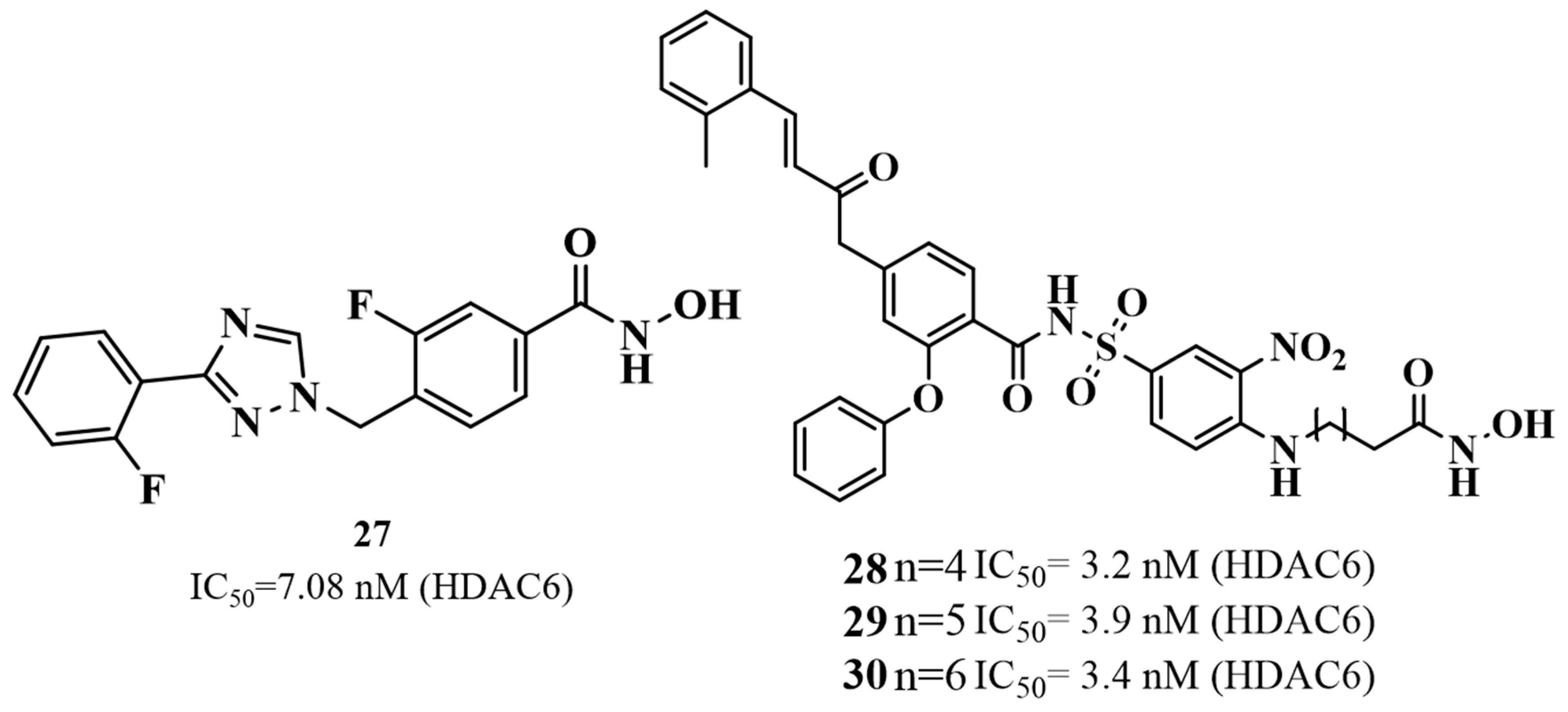
- Kong, S.J.; Nam, G.; Boggu, P.R.; Park, G.M.; Kang, J.E.; Park, H.-J.; Jung, Y.H. Synthesis and biological evaluation of novel N-benzyltriazolyl-hydroxamate derivatives as selective histone deacetylase 6 inhibitors. Bioorganic Med. Chem. 2023, 79, 117154. [Google Scholar] [CrossRef] [PubMed]
- Zhang, T.; Zhao, X.; Sun, X.; Tian, W.; Wang, C.; Wang, M.; Zhang, Y.; Chen, X.; Zheng, C. Design, synthesis, and biological evaluation of novel histone deacetylase 6 selective inhibitors. J. Saudi Chem. Soc. 2022, 26, 101450. [Google Scholar] [CrossRef]
- Mishra, B.; Mishra, R. Triazine: A Scaffold with Never Ending Pharmacological Potential. Int. J. Adv. Pharm. Sci. Res. 2024, 4, 20–34. [Google Scholar] [CrossRef]
- Sharma, A.; Sheyi, R.; de la Torre, B.G.; El-Faham, A.; Albericio, F. S-Triazine: A Privileged Structure for Drug Discovery and Bioconjugation. Molecules 2021, 26, 864. [Google Scholar] [CrossRef]
- Lee, C.R.; Faulds, D. Altretamine. Drugs 1995, 49, 932–953. [Google Scholar] [CrossRef]
- Paquin, I.; Raeppel, S.; Leit, S.; Gaudette, F.; Zhou, N.; Moradei, O.; Saavedra, O.; Bernstein, N.; Raeppel, F.; Bouchain, G.; et al. Design and synthesis of 4-[(s-triazin-2-ylamino)methyl]-N-(2-aminophenyl)-benzamides and their analogues as a novel class of histone deacetylase inhibitors. Bioorganic Med. Chem. Lett. 2008, 18, 1067–1071. [Google Scholar] [CrossRef]
- Zhao, X.; Tan, Q.; Zhang, Z.; Zhao, Y. 1,3,5-Triazine inhibitors of histone deacetylases: Synthesis and biological activity. Med. Chem. Res. 2014, 23, 5188–5196. [Google Scholar] [CrossRef]
- Hou, B.; Jia, G.; Li, Z.; Jiang, Y.; Chen, Y.; Li, X. Discovery of hydrazide-based PI3K/HDAC dual inhibitors with enhanced pro-apoptotic activity in lymphoma cells. Eur. J. Med. Chem. 2025, 292, 117658. [Google Scholar] [CrossRef]
- CAS SciFindern. Substance Search Report: HDAC Targeted Compounds (Exported Data) and Substance Detail Record for CAS RN 503039-90; American Chemical Society: Columbus, OH, USA, 2025. [Google Scholar]
- Barbaro, M.; Fine, H.A.; Magge, R.S. Foundations of Neuro-Oncology: A Multidisciplinary Approach. World Neurosurg. 2021, 151, 392–401. [Google Scholar] [CrossRef] [PubMed]
- Barnett, A.E.; Ozair, A.; Bamashmos, A.S.; Li, H.; Bosler, D.S.; Yeaney, G.; Ali, A.; Peereboom, D.M.; Lathia, J.D.; Ahluwalia, M.S. MGMT Methylation and Differential Survival Impact by Sex in Glioblastoma. Cancers 2024, 16, 1374. [Google Scholar] [CrossRef]
- Shi, M.-Q.; Xu, Y.; Fu, X.; Pan, D.-S.; Lu, X.-P.; Xiao, Y.; Jiang, Y.-Z. Advances in targeting histone deacetylase for treatment of solid tumors. J. Hematol. Oncol. 2024, 17, 37. [Google Scholar] [CrossRef]
- Schaff, L.R.; Mellinghoff, I.K. Glioblastoma and Other Primary Brain Malignancies in Adults: A Review. JAMA 2023, 329, 574–587. [Google Scholar] [CrossRef]
- Ogasawara, C.; Philbrick, B.D.; Adamson, D.C. Meningioma: A Review of Epidemiology, Pathology, Diagnosis, Treatment, and Future Directions. Biomedicines 2021, 9, 319. [Google Scholar] [CrossRef]
- Jackson, K.; Packer, R.J. Recent Advances in Pediatric Medulloblastoma. Curr. Neurol. Neurosci. Rep. 2023, 23, 841–848. [Google Scholar] [CrossRef]
- Smith, H.L.; Wadhwani, N.; Horbinski, C. Major Features of the 2021 WHO Classification of CNS Tumors. Neurotherapeutics 2022, 19, 1691–1704. [Google Scholar] [CrossRef] [PubMed]
- Rizwan, M.; Shabbir, A.; Javed, A.R.; Shabbir, M.; Baker, T.; Obe, D.A.-J. Brain Tumor and Glioma Grade Classification Using Gaussian Convolutional Neural Network. IEEE Access 2022, 10, 29731–29740. [Google Scholar] [CrossRef]
- Han, Y.; Yang, Y.; Shi, Z.-S.; Zhang, A.-D.; Yan, L.-F.; Hu, Y.-C.; Feng, L.-L.; Ma, J.; Wang, W.; Cui, G.-B. Distinguishing brain inflammation from grade II glioma in population without contrast enhancement: A radiomics analysis based on conventional MRI. Eur. J. Radiol. 2021, 134, 109467. [Google Scholar] [CrossRef]
- Gutta, S.; Acharya, J.; Shiroishi, M.; Hwang, D.; Nayak, K. Improved Glioma Grading Using Deep Convolutional Neural Networks. Am. J. Neuroradiol. 2020, 42, 233–239. [Google Scholar] [CrossRef]
- Verdugo, E.; Puerto, I.; Medina, M.Á. An update on the molecular biology of glioblastoma, with clinical implications and progress in its treatment. Cancer Commun. 2022, 42, 1083–1111. [Google Scholar] [CrossRef]
- Jung, E.; Alfonso, J.; Osswald, M.; Monyer, H.; Wick, W.; Winkler, F. Emerging intersections between neuroscience and glioma biology. Nat. Neurosci. 2019, 22, 1951–1960. [Google Scholar] [CrossRef]
- Wen, P.Y.; Weller, M.; Lee, E.Q.; Alexander, B.M.; Barnholtz-Sloan, J.S.; Barthel, F.P.; Batchelor, T.T.; Bindra, R.S.; Chang, S.M.; Chiocca, E.A.; et al. Glioblastoma in adults: A Society for Neuro-Oncology (SNO) and European Society of Neuro-Oncology (EANO) consensus review on current management and future directions. Neuro-Oncol. 2020, 22, 1073–1113. [Google Scholar] [CrossRef] [PubMed]
- Louis, D.N.; Perry, A.; Reifenberger, G.; Von Deimling, A.; Figarella-Branger, D.; Cavenee, W.K.; Ohgaki, H.; Wiestler, O.D.; Kleihues, P.; Ellison, D.W. The 2016 World Health Organization Classification of Tumors of the Central Nervous System: A summary. Acta Neuropathol. 2016, 131, 803–820. [Google Scholar] [CrossRef] [PubMed]
- Mekala, J.R.; Ramalingam, P.S.; Mathavan, S.; Yamajala, R.B.; Moparthi, N.R.; Kurappalli, R.K.; Manyam, R.R. Synthesis, in vitro and structural aspects of cap substituted Suberoylanilide hydroxamic acid analogs as potential inducers of apoptosis in Glioblastoma cancer cells via HDAC/microRNA regulation. Chem.-Biol. Interact. 2022, 357, 109876. [Google Scholar] [CrossRef] [PubMed]
- Pająk, B.; Siwiak-Niedbalska, E.; Jaśkiewicz, A.; Sołtyka, M.; Zieliński, R.; Domoradzki, T.; Fokt, I.; Skóra, S.; Priebe, W. Synergistic Anticancer Effect of Glycolysis and Histone Deacetylases Inhibitors in a Glioblastoma Model. Biomedicines 2021, 9, 1749. [Google Scholar] [CrossRef]
- Azab, M.A. The Potential Role of Histone Modifications in Glioblastoma Therapy: Review Article. J. Mol. Pathol. 2023, 4, 196–212. [Google Scholar] [CrossRef]
- Liang, T.; Wang, F.; Elhassan, R.M.; Cheng, Y.; Tang, X.; Chen, W.; Fang, H.; Hou, X. Targeting histone deacetylases for cancer therapy: Trends and challenges. Acta Pharm. Sin. B 2023, 13, 2425–2463. [Google Scholar] [CrossRef]
- Choubey, S.K.; Kumar, S.; Kumari, M. HDAC inhibitors and their potential towards cancer treatment. Int. J. Bioinform. Res. Appl. 2025, 21, 26–49. [Google Scholar] [CrossRef]
- Pollock, H.S.; Martínez, A.E.; Kelley, J.P.; Touchton, J.M.; Tarwater, C.E. Heterospecific eavesdropping in ant-following birds of the Neotropics is a learned behaviour. Proc. R. Soc. B Biol. Sci. 2017, 284, 20171785. [Google Scholar] [CrossRef]
- Khetmalis, Y.M.; Shree, B.; Kumar, B.V.S.; Schweipert, M.; Debarnot, C.; Ashna, F.; Sankaranarayanan, M.; Trinath, J.; Sharma, V.; Meyer-Almes, F.-J.; et al. Design, synthesis, and biological evaluation of tetrahydroisoquinoline based hydroxamate derivatives as HDAC 6 inhibitors for cancer therapy. J. Mol. Struct. 2023, 1278, 134952. [Google Scholar] [CrossRef]
- Chen, I.-C.; Lin, H.-Y.; Liu, Z.-Y.; Cheng, W.-J.; Yeh, T.-Y.; Yang, W.-B.; Tran, H.Y.; Lai, M.-J.; Wang, C.-H.; Kao, T.-Y.; et al. Repurposing Linezolid in Conjunction with Histone Deacetylase Inhibitor Access in the Realm of Glioblastoma Therapies. J. Med. Chem. 2025, 68, 2779–2803. [Google Scholar] [CrossRef] [PubMed]
- Liu, J.-R.; Yu, C.-W.; Hung, P.-Y.; Hsin, L.-W.; Chern, J.-W. High-selective HDAC6 inhibitor promotes HDAC6 degradation following autophagy modulation and enhanced antitumor immunity in glioblastoma. Biochem. Pharmacol. 2019, 163, 458–471. [Google Scholar] [CrossRef] [PubMed]
- Reßing, N.; Marquardt, V.; Gertzen, C.G.W.; Schöler, A.; Schramm, A.; Kurz, T.; Gohlke, H.; Aigner, A.; Remke, M.; Hansen, F.K. Design, synthesis and biological evaluation of β-peptoid-capped HDAC inhibitors with anti-neuroblastoma and anti-glioblastoma activity. MedChemComm 2019, 10, 1109–1115. [Google Scholar] [CrossRef] [PubMed]
- Lu, Y.; Feng, Y.; Li, Z.; Li, J.; Zhang, H.; Hu, X.; Jiang, W.; Shi, T.; Wang, Z. Novel piperazine based benzamide derivatives as potential anti-glioblastoma agents inhibiting cell proliferation and cell cycle progression. Eur. J. Med. Chem. 2022, 227, 113908. [Google Scholar] [CrossRef]
- Zhu, H.; Song, X.; Pan, Y.; Li, M.; Chen, L.; Xiao, P.; Du, R.; Dong, Z.; Yang, C.-G. Design, synthesis, and biological evaluation of novel spirocyclic compounds as potential anti-glioblastoma agents. Eur. J. Med. Chem. 2023, 258, 115595. [Google Scholar] [CrossRef]
- Nepali, K.; Wu, A.-C.; Lo, W.-L.; Chopra, B.; Lai, M.-J.; Chuang, J.-Y.; Liou, J.-P. Rationally designed donepezil-based hydroxamates modulate Sig-1R and HDAC isoforms to exert anti-glioblastoma effects. Eur. J. Med. Chem. 2023, 248, 115054. [Google Scholar] [CrossRef] [PubMed]
- Sharma, R.; Chiang, Y.-H.; Chen, H.-C.; Lin, H.-Y.; Yang, W.-B.; Nepali, K.; Lai, M.-J.; Chen, K.-Y.; Liou, J.-P.; Hsu, T.-I. Dual inhibition of CYP17A1 and HDAC6 by abiraterone-installed hydroxamic acid overcomes temozolomide resistance in glioblastoma through inducing DNA damage and oxidative stress. Cancer Lett. 2024, 586, 216666. [Google Scholar] [CrossRef] [PubMed]





| Imaging Modality | Molecular/Functional Feature | Neurological Disorder(s) | Pathological Target | Key Applicability/Clinical Relevance |
|---|---|---|---|---|
| PET | Protein aggregation | Alzheimer’s disease, dementia | Amyloid-β, Tau | Early diagnosis, in vivo detection of pathological burden, disease staging |
| PET | Metabolic dysfunction & neuroinflammation | Alzheimer’s disease, multiple sclerosis, epilepsy | Glucose metabolism, microglial activation | Understanding disease mechanisms, monitoring disease progression |
| PET | Neurotransmitter dysfunction | Parkinson’s disease | Dopaminergic system | Differential diagnosis, disease monitoring, treatment response |
| AFM | Nano-imaging & nanomechanics | Alzheimer’s disease | Amyloid-β, Tau | Identification of toxic oligomers, aggregation polymorphism, nanoscale biomarkers |
| AFM | High-resolution imaging & force spectroscopy | Parkinson’s disease | α-Synuclein | Structure–toxicity correlation, membrane interaction and aggregation pathways |
| AFM | Morphological, mechanical & chemical analysis (AFM-IR) | Huntington’s disease | Mutant huntingtin (polyQ-expanded) | PolyQ-length-dependent aggregation, structure–toxicity relationship |
| Feature | Pan-HDAC Inhibitors | Isoenzyme-Selective HDAC Inhibitors | References |
|---|---|---|---|
| Target profile | Broad inhibition of multiple HDAC isoenzymes (Class I, II, and IV) | Selective inhibition of specific HDAC isoenzymes (e.g., HDAC2, HDAC3, HDAC6) | [64,65] |
| Mechanism of action | Global increase in histone and non-histone protein acetylation | Targeted modulation of disease-relevant epigenetic and non-epigenetic pathways | [64,65] |
| Therapeutic efficacy | Effective in preclinical models, but often lacks disease specificity | Enhanced efficacy by selectively targeting pathogenic HDAC isoenzymes | [64,65] |
| Toxicity and side effects | Higher risk of dose-limiting toxicities due to off-target effects | Reduced systemic and neurological toxicity | [64,65] |
| Blood–brain barrier penetration | Frequently limited or suboptimal | Improved BBB penetration through rational molecular design | [64,65] |
| Impact on neuronal function | May disrupt normal gene regulation and neuronal homeostasis | Preserves physiological HDAC functions while correcting pathological signaling | [64,65] |
| Clinical translation | Limited success in neurodegenerative clinical trials | Greater translational potential and ongoing optimization | [64,65] |
| HDAC Class | Subtype | Roles in Nervous System | Effects/Findings | Disease Association | Key References |
|---|---|---|---|---|---|
| Class I | HDAC1 | Regulates neurogenesis and gliogenesis; Redundant with HDAC2 | Deficiency (usually with HDAC2) causes glial dysfunction and impaired myelination by disrupting the NF-κB → Sox10 → Mpz regulatory axis. | Alzheimer’s disease, Huntington’s disease | [66,67] |
| HDAC2 | Controls neural progenitor differentiation; Redundant with HDAC1 | HDAC2 shows lower expression in mature glial cells and functions earlier in neural development compared to HDAC1. | Alzheimer’s disease, Huntington’s disease | [66,67] | |
| HDAC3 | Essential for brain development | Deletion disrupts cortical and cerebellar organization | Alzheimer’s disease, Huntington’s disease | [66,67] | |
| HDAC8 | HDAC8 regulates neural development, inflammation, chromatin structure, and neurogenesis | Deficiency impairs neurogenesis in neural-crest-derived neuronal lineages. | Alzheimer’s disease, Parkinson’s disease | [68,69] | |
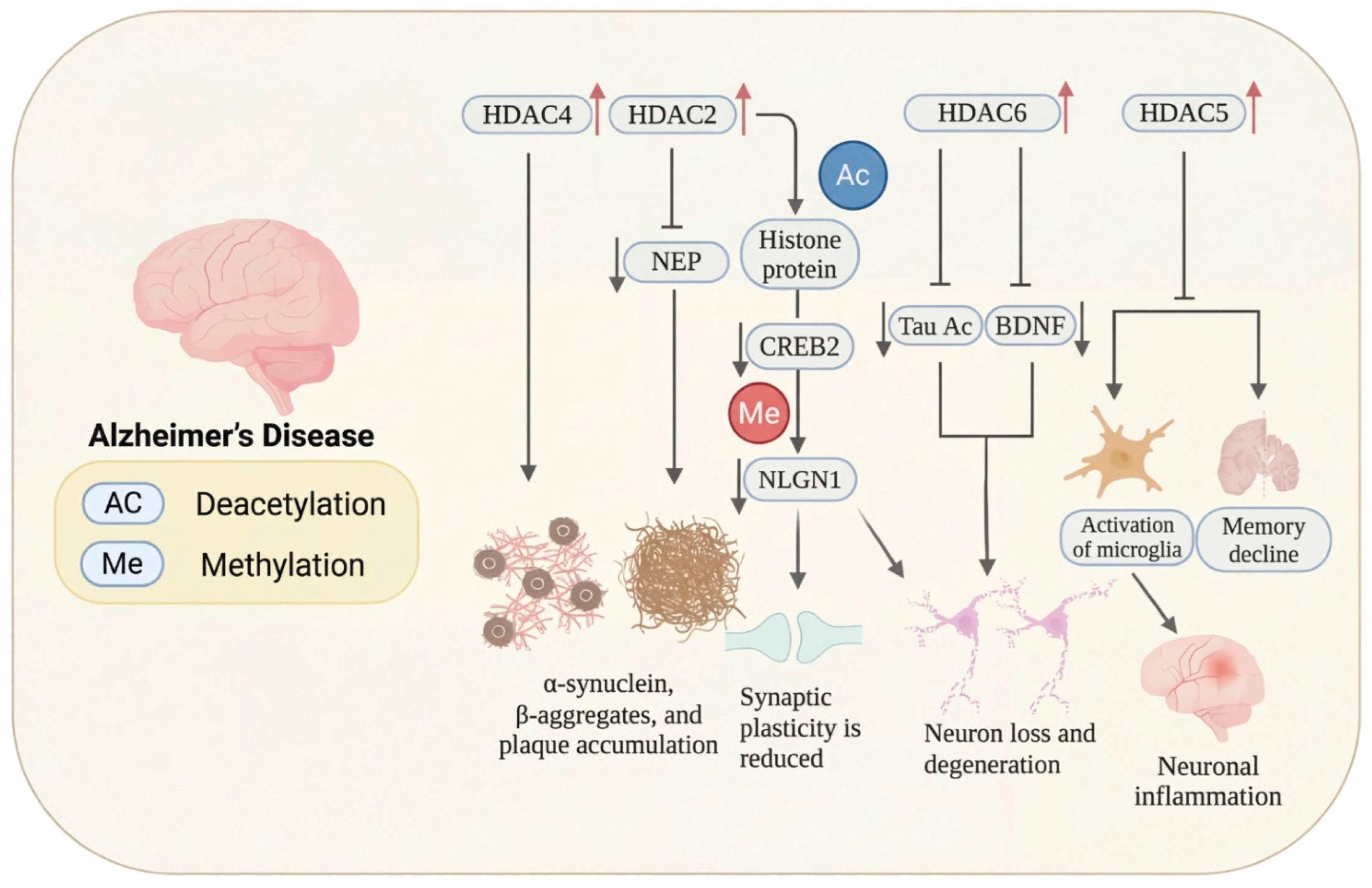
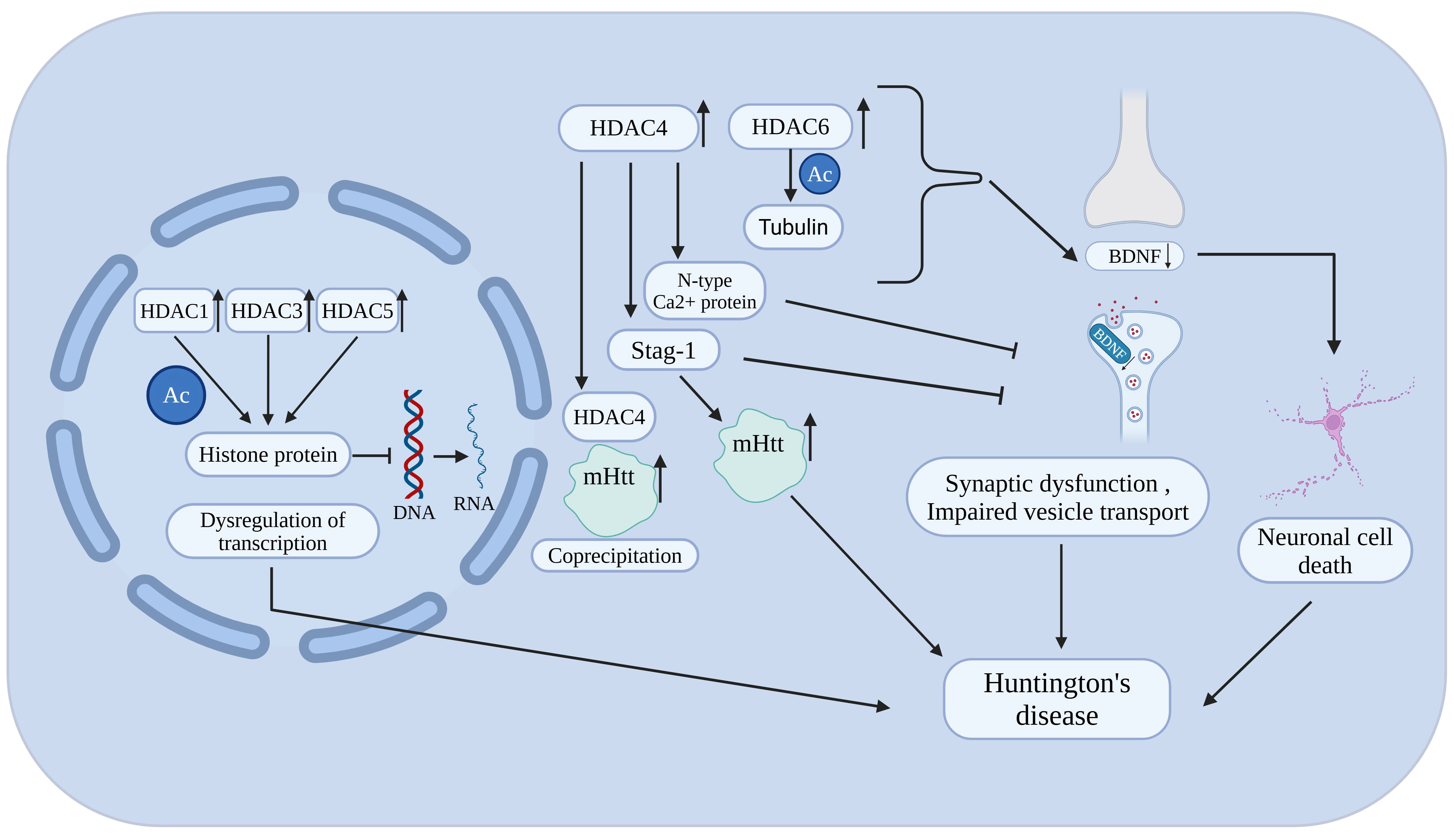
| Class IIa | HDAC4 | Negative regulator of neurodevelopment | Inhibits MEF2/CREB transcription; induces neuronal apoptosis | Alzheimer’s disease, Huntington’s disease | [70] |
| HDAC5 | Promotes neuronal differentiation post-nuclear export, plays a role in the consolidation of contextual and tone dependent fear memories | Triggered via Ca2+-CaMK pathway; supports MEF2 activity. | Alzheimer’s disease | [70,71] | |
| HDAC7 | Neuronal survival | Promotes cell survival by repressing c-Jun/AP-1-dependent pro-apoptotic gene expression. | Parkinson’s disease | [72] | |
| HDAC9 | Found in post-mitotic, mature neurons | Linked to neurological regulation, neuronal differentiation, and stress–response pathway. | Alzheimer’s disease, Parkinson’s disease | [73,74] | |
| Class IIb | HDAC6 | Regulates dendritic development | Deacetylates α-tubulin; aids microtubule remodeling and dendrite formation | Alzheimer’s disease, Huntington’s disease Parkinson’s disease | [75,76] |
| Class III | SIRT1 | Neuroprotection and regulation of neuronal stress response | Delays neurodegeneration; enhances synaptic plasticity; provides protection in Alzheimer’s and Parkinson’s diseases | Alzheimer’s disease, Huntington’s disease Parkinson’s disease | [28,77,78] |
| SIRT2 | Myelin maintenance and cell cycle control | Overexpression linked to oxidative stress; regulates oligodendrocyte maturation and myelination. | Parkinson’s disease, Huntington’s disease | [28,77,78] | |
| SIRT3 | Mitochondrial function in neurons | Protects against oxidative damage; supports energy metabolism in the brain | Alzheimer’s disease, Parkinson’s disease | [77,78] | |
| SIRT4 | Less defined in brain | Involved in metabolism; neuro roles still being studied | - | [77,78] | |
| SIRT5 | Linked to antioxidant defense in neurons | Involved in detoxification pathways (e.g., ammonia control); unclear neural role | Parkinson’s disease | [77,78] | |
| SIRT6 | DNA repair and anti-aging in neurons | Supports genomic stability, protects against neurodegeneration. High amount of sirt6 reduces tau stability and promotes its clearance, whereas sirt6 deficiency increases tau stability, elevates hyperphosphorylation, and accelerates tau-mediated neurodegeneration. | Alzheimer’s disease | [77,78] | |
| SIRT7 | Least understood in the brain | Involved in RNA stability and cellular stress response. | - | [77,78] | |
| Class IV | HDAC11 | Potential role Oligodendrocyte and neuron maturation | Expression increases during brain maturation. | Alzheimer’s disease, Parkinson’s disease | [79,80] |
| Compound | Structural Feature(s) | Mechanism of Action | Key Findings | Ref. |
|---|---|---|---|---|
| Compound 19 |  | Selective HDAC6 (IC50 = 1.8 nM) inhibition; binds Zn2+ monodentately | IC50 = 1.8 nM (HDAC6); >116-fold selectivity; brain/plasma = 2.1; reduces NLRP3 inflammasome-mediated neuroinflammation. | [119] |
 | ||||
| Compound 20 |  | Inhibits HDAC6 (IC50 = 28 nM) and HDAC1; Enhances acetylation of mitochondrial NDUFV1 (K28). | Protects SH-SY5Y and dopaminergic neurons; reduces ROS; rescues MPTP mouse model motor deficits; restores TH expression | [120] |
| Compound 21 |  | Class I HDAC inhibition (IC50 HDAC1 = 1.5 µM); increases histone H3K9 acetylation; transporter-mediated BBB penetration. | PSBBB = 42.4 µL/min/g (3.3× CI-994); sustained epigenetic modulation; proposed strategy for CNS-penetrant HDAC inhibitors | [121] |
| Grade | Malignancy Level | Tumor Characteristics | Median Survival | Example |
|---|---|---|---|---|
| I | Non-malignant | Benign, well-differentiated, often curable with surgery | Long-term (often curable) | Pilocytic astrocytoma |
| II | Relatively non-malignant | Slow-growing, infiltrative, may recur, not aggressive | Varies (years) | Diffuse astrocytoma |
| III | Low-grade malignancy | Actively growing, more aggressive, requires therapy | Intermediate (months–few years) | Anaplastic astrocytoma |
| IV | Highly malignant | Rapid progression, necrosis, high mitotic activity | 6–12 months | Glioblastoma multiforme |
Disclaimer/Publisher’s Note: The statements, opinions and data contained in all publications are solely those of the individual author(s) and contributor(s) and not of MDPI and/or the editor(s). MDPI and/or the editor(s) disclaim responsibility for any injury to people or property resulting from any ideas, methods, instructions or products referred to in the content. |
© 2026 by the authors. Licensee MDPI, Basel, Switzerland. This article is an open access article distributed under the terms and conditions of the Creative Commons Attribution (CC BY) license.
Share and Cite
Pawar, Y.; Kopranovic, A.; C S, R.; Meyer-Almes, F.-J. Epigenetic Dysregulation in Neurodegeneration: The Role of Histone Deacetylases and Emerging Inhibitor Strategies. Biomolecules 2026, 16, 103. https://doi.org/10.3390/biom16010103
Pawar Y, Kopranovic A, C S R, Meyer-Almes F-J. Epigenetic Dysregulation in Neurodegeneration: The Role of Histone Deacetylases and Emerging Inhibitor Strategies. Biomolecules. 2026; 16(1):103. https://doi.org/10.3390/biom16010103
Chicago/Turabian StylePawar, Yogesh, Aleksandra Kopranovic, Ramaa C S, and Franz-Josef Meyer-Almes. 2026. "Epigenetic Dysregulation in Neurodegeneration: The Role of Histone Deacetylases and Emerging Inhibitor Strategies" Biomolecules 16, no. 1: 103. https://doi.org/10.3390/biom16010103
APA StylePawar, Y., Kopranovic, A., C S, R., & Meyer-Almes, F.-J. (2026). Epigenetic Dysregulation in Neurodegeneration: The Role of Histone Deacetylases and Emerging Inhibitor Strategies. Biomolecules, 16(1), 103. https://doi.org/10.3390/biom16010103