Review

The Role of N6-Methyladenosine (m6A) RNA Modification in the Pathogenesis of Parkinson’s Disease


College of Chemistry and Life Science, Beijing University of Technology, 100 Pingleyuan, Chaoyang District, Beijing 100124, China
*
Author to whom correspondence should be addressed.
Biomolecules 2025, 15(5), 617; https://doi.org/10.3390/biom15050617
Submission received: 28 February 2025 / Revised: 9 April 2025 / Accepted: 16 April 2025 / Published: 23 April 2025
(This article belongs to the Section Molecular Biology)

Abstract

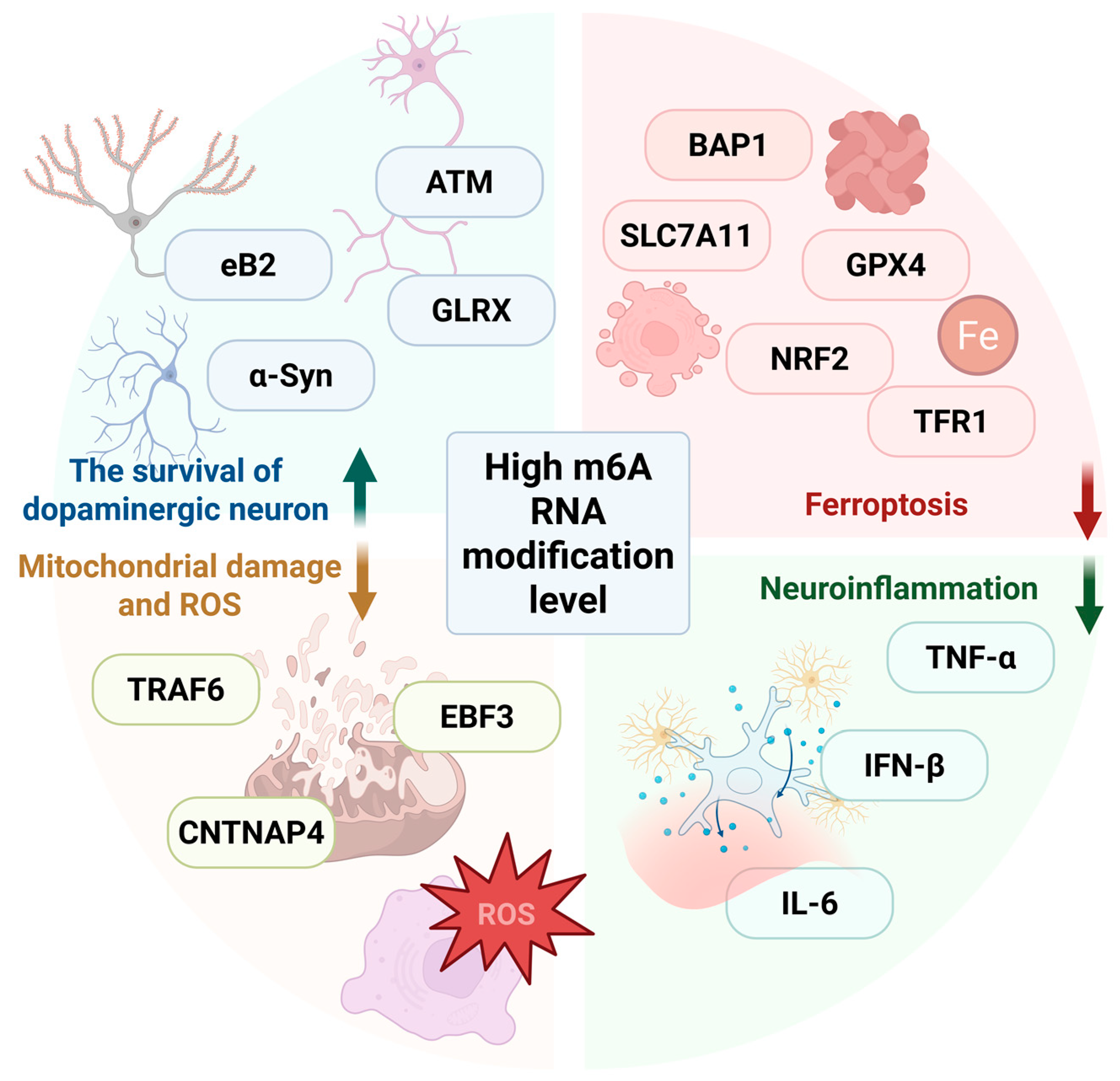
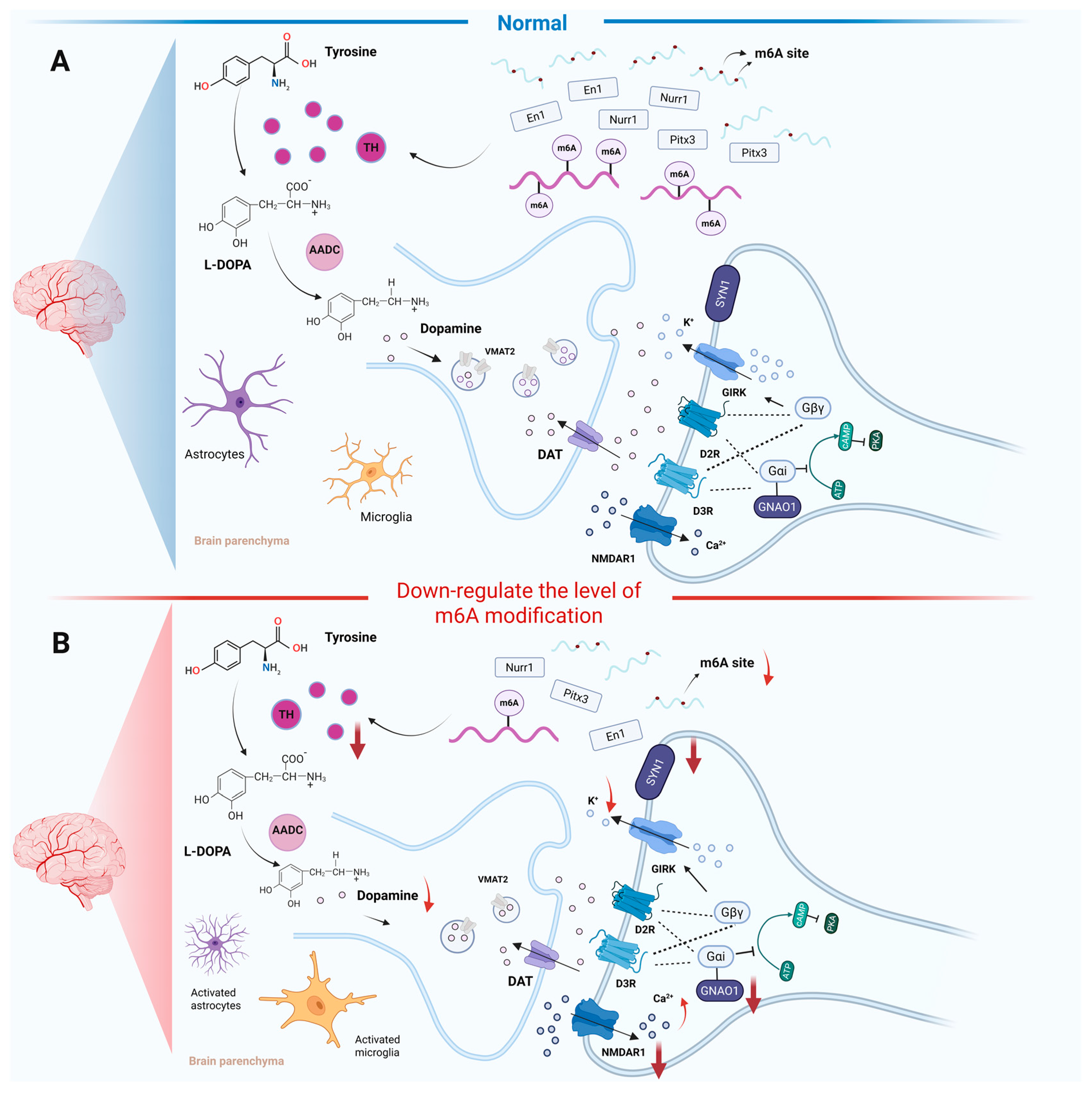
Parkinson’s disease (PD) is a neurodegenerative disease with a high prevalence among the middle-aged and elderly population. The pathogenesis of PD is closely linked to the misfolding and aggregation of α-synuclein, which contributes to the formation of Lewy bodies. These processes are associated with the degeneration of dopaminergic neurons, a key neuropathological change that underlies the motor symptoms of PD. In addition, genetic susceptibility, mitochondrial dysfunction, oxidative stress and neuroinflammation are involved in the progress of the disease. Previous studies indicated that the dysregulation of epigenetic modifications, including DNA methylation and histone acetylation, may be the key pathophysiological factors in PD. N6-methyladenosine (m6A) is a dynamically reversible modification in eukaryotes RNA, and could regulate mRNA degradation, stability, maturation, and translation. Recently, clinical research has shown that the global m6A level is significantly reduced in PD patients as well as the expression changes in m6A-associated proteins. Moreover, the dysregulation of m6A modification was shown to impact dopamine metabolism and damage dopaminergic neurons, indicating that m6A RNA modification may play a critical role in the pathogenesis of PD. In this review, we summarize recent clinical studies on m6A RNA modification in PD patients and discuss the regulatory role of m6A modification in dopamine metabolism and dopaminergic neurons death. Furthermore, based on the different m6A modification databases and prediction websites, we analyzed the potential m6A modification sites on the mRNA of key PD pathogenic genes (SNCA, PRKN, PINK1, and LRRK2) for the first time, aiming to offer new gene targets and perspectives understanding the pathogenesis of PD.
Keywords: m6A RNA modification; Parkinson’s disease; clinical research; dopamine; genetic genes m6A RNA modification; Parkinson’s disease; clinical research; dopamine; genetic genes