Article

Data-Driven Identification of Early Cancer-Associated Genes via Penalized Trans-Dimensional Hidden Markov Models


by
Saeedeh Hajebi Khaniki
1,† and
Farhad Shokoohi
2,*,†
1
Department of Biostatistics, School of Health, Mashhad University of Medical Sciences, Mashhad 9137673119, Iran
2
Department of Mathematical Sciences, University of Nevada Las Vegas, Las Vegas, NV 89154, USA
*
Author to whom correspondence should be addressed.
These authors contributed equally to this work.
Biomolecules 2025, 15(2), 294; https://doi.org/10.3390/biom15020294
Submission received: 16 January 2025 / Revised: 13 February 2025 / Accepted: 13 February 2025 / Published: 16 February 2025
(This article belongs to the Section Molecular Genetics)

Abstract

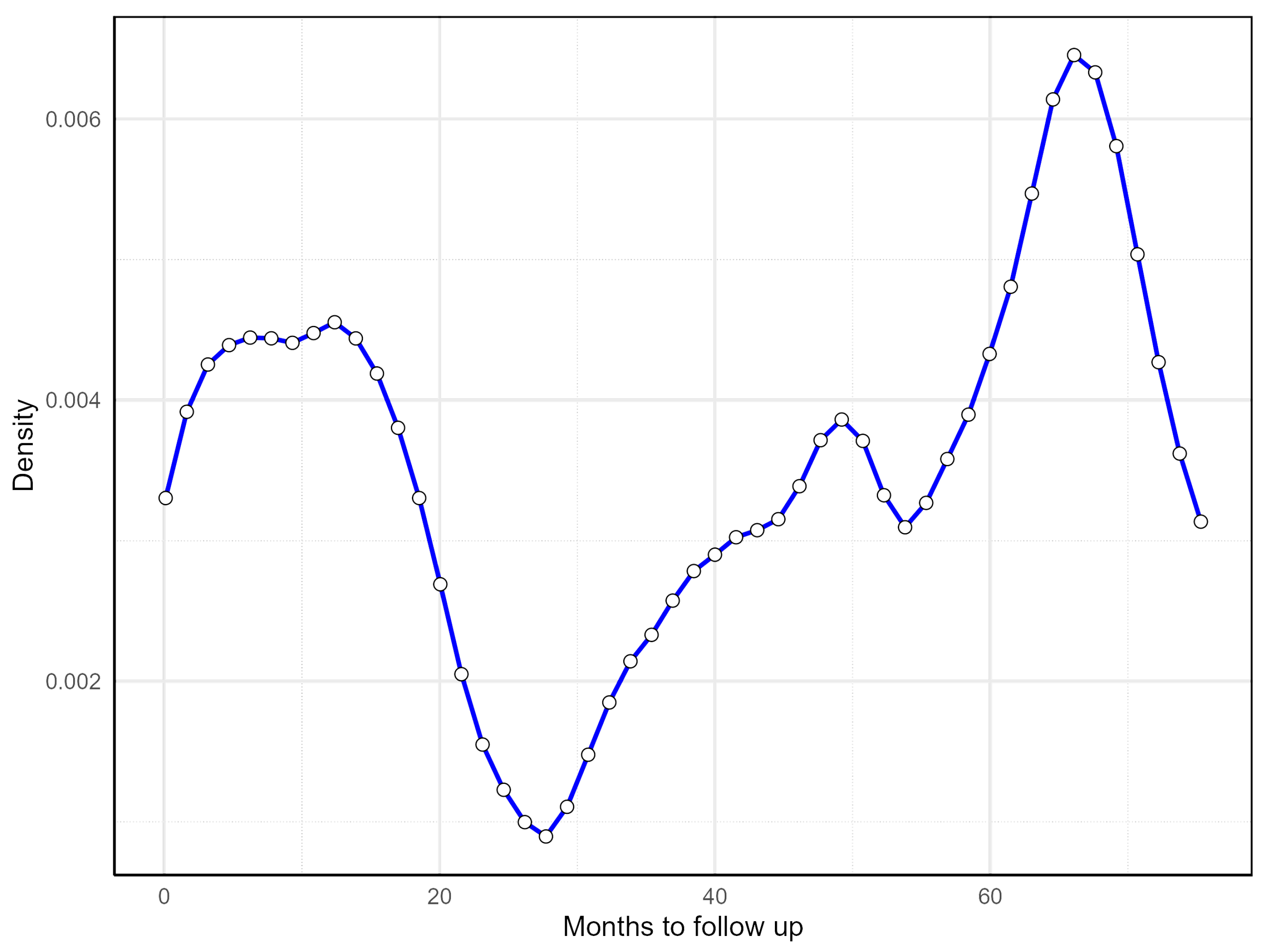
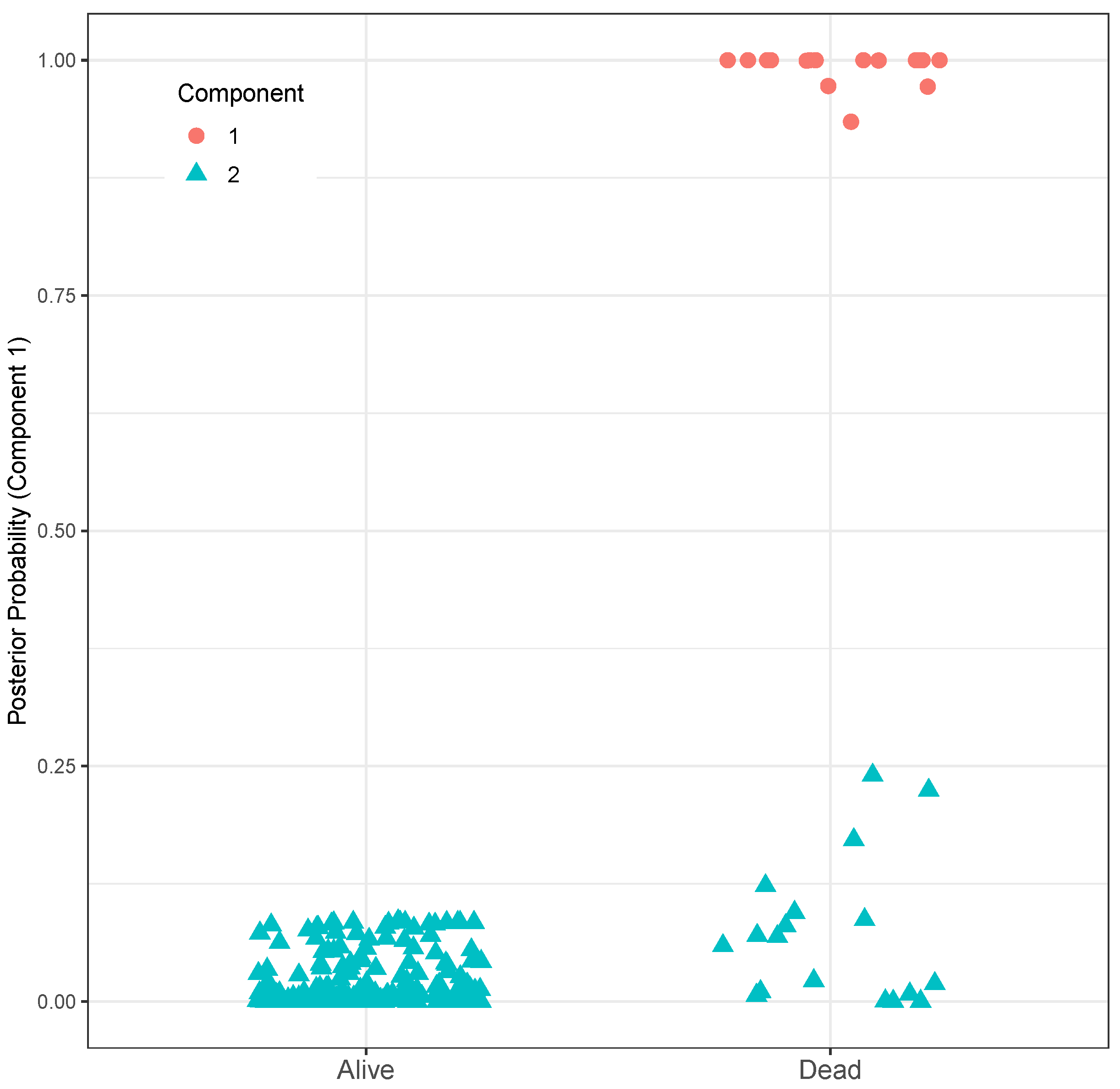
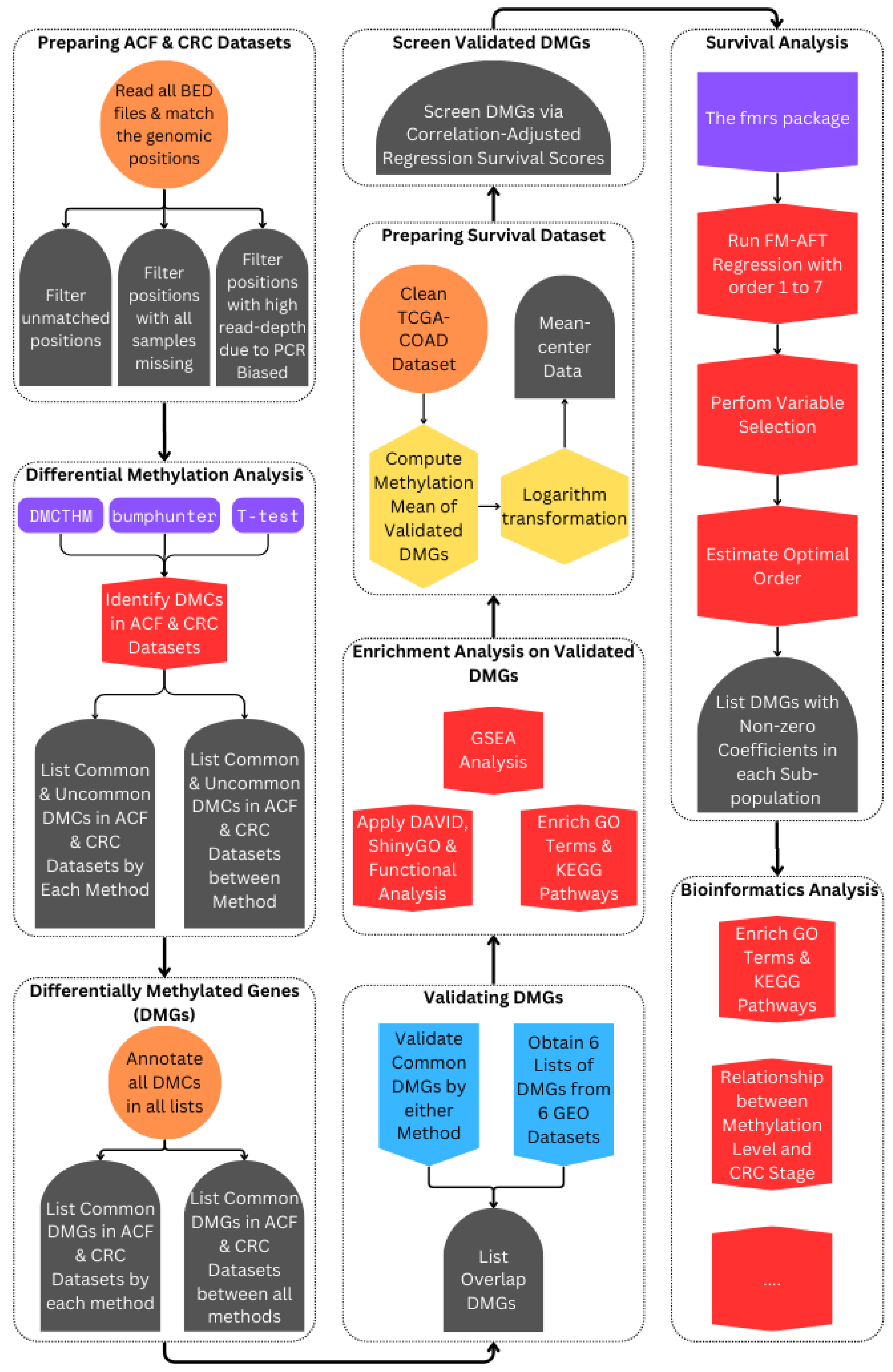
Colorectal cancer (CRC) is a significant worldwide health problem due to its high prevalence, mortality rates, and frequent diagnosis at advanced stages. While diagnostic and therapeutic approaches have evolved, the underlying mechanisms driving CRC initiation and progression are not yet fully understood. Early detection is critical for improving patient survival, as initial cancer stages often exhibit epigenetic changes—such as DNA methylation—that regulate gene expression and tumor progression. Identifying DNA methylation patterns and key survival-related genes in CRC could thus enhance diagnostic accuracy and extend patient lifespans. In this study, we apply two of our recently developed methods for identifying differential methylation and analyzing survival using a sparse, finite mixture of accelerated failure time regression models, focusing on key genes and pathways in CRC datasets. Our approach outperforms two other leading methods, yielding robust findings and identifying novel differentially methylated cytosines. We found that CRC patient survival time follows a two-component mixture regression model, where genes CDH11, EPB41L3, and DOCK2 are active in the more aggressive form of CRC, whereas TMEM215, PPP1R14A, GPR158, and NAPSB are active in the less aggressive form.
Keywords: DNA methylation; accelerated failure time; penalized regression; bisulfite sequencing; survival analysis DNA methylation; accelerated failure time; penalized regression; bisulfite sequencing; survival analysis