Review

PERK-Olating Through Cancer: A Brew of Cellular Decisions

by
Laurent Mazzolini
*,† and
Christian Touriol
*,†
Centre de Recherches en Cancérologie de Toulouse (CRCT), INSERM UMR-1037, CNRS UMR-5071, Université de Toulouse, Avenue Hubert Curien, Oncopole Entrée C, CS 53717, 31037 Toulouse CEDEX 1, France
*
Authors to whom correspondence should be addressed.
These authors contributed equally to this work.
Biomolecules 2025, 15(2), 248; https://doi.org/10.3390/biom15020248
Submission received: 20 December 2024 / Revised: 24 January 2025 / Accepted: 5 February 2025 / Published: 8 February 2025
(This article belongs to the Special Issue Feature Papers in Enzymology—2nd Edition)

Abstract

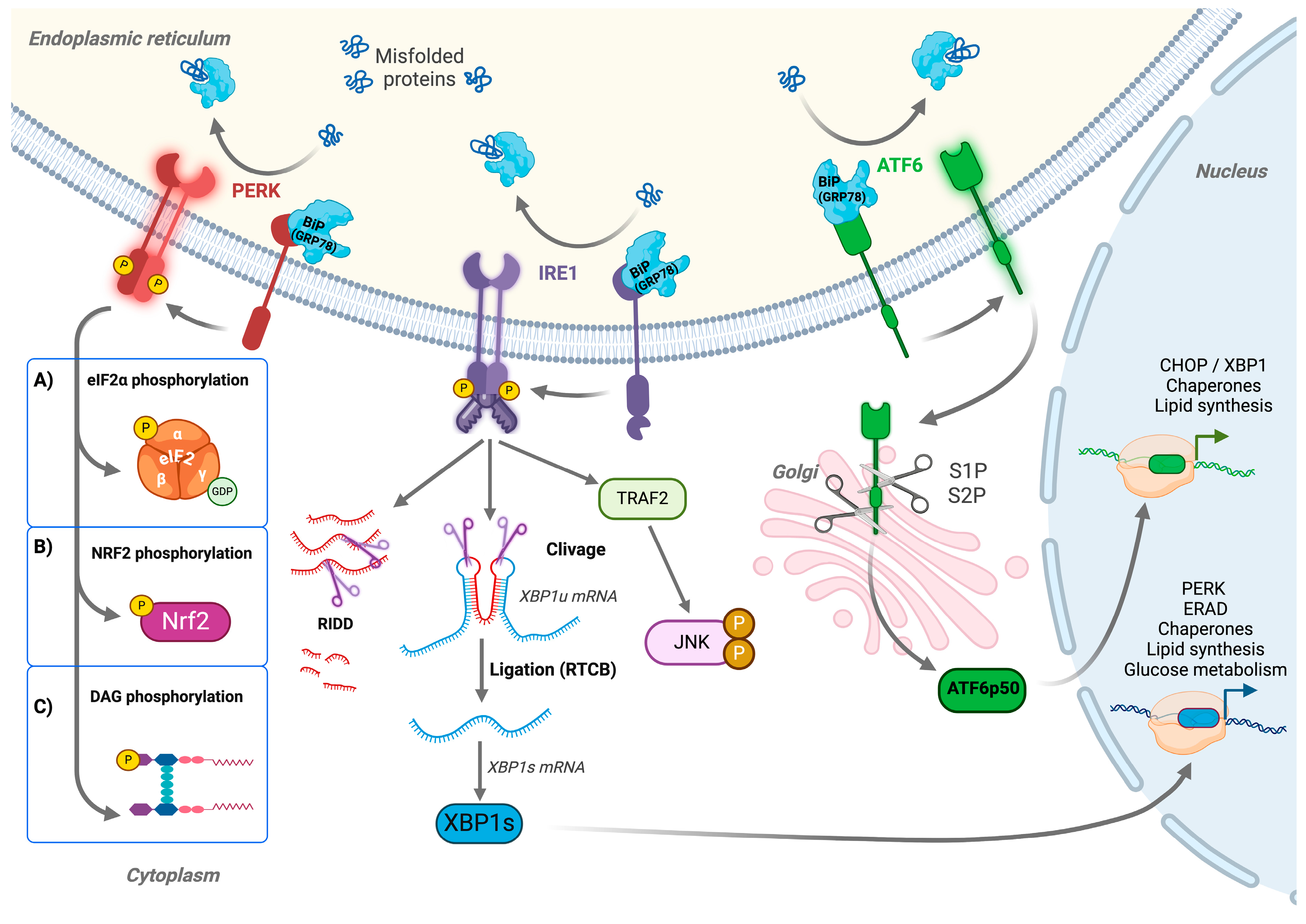
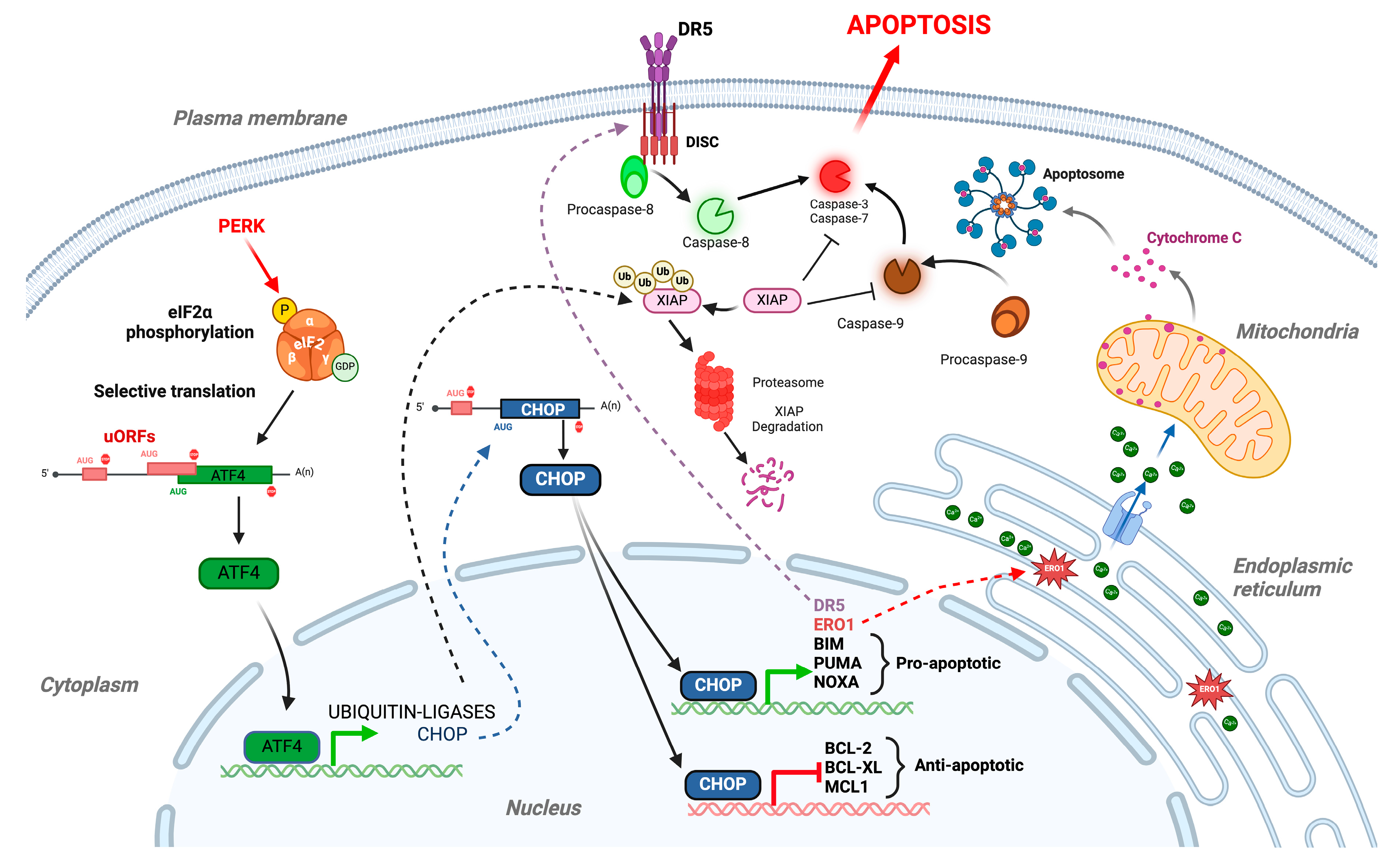
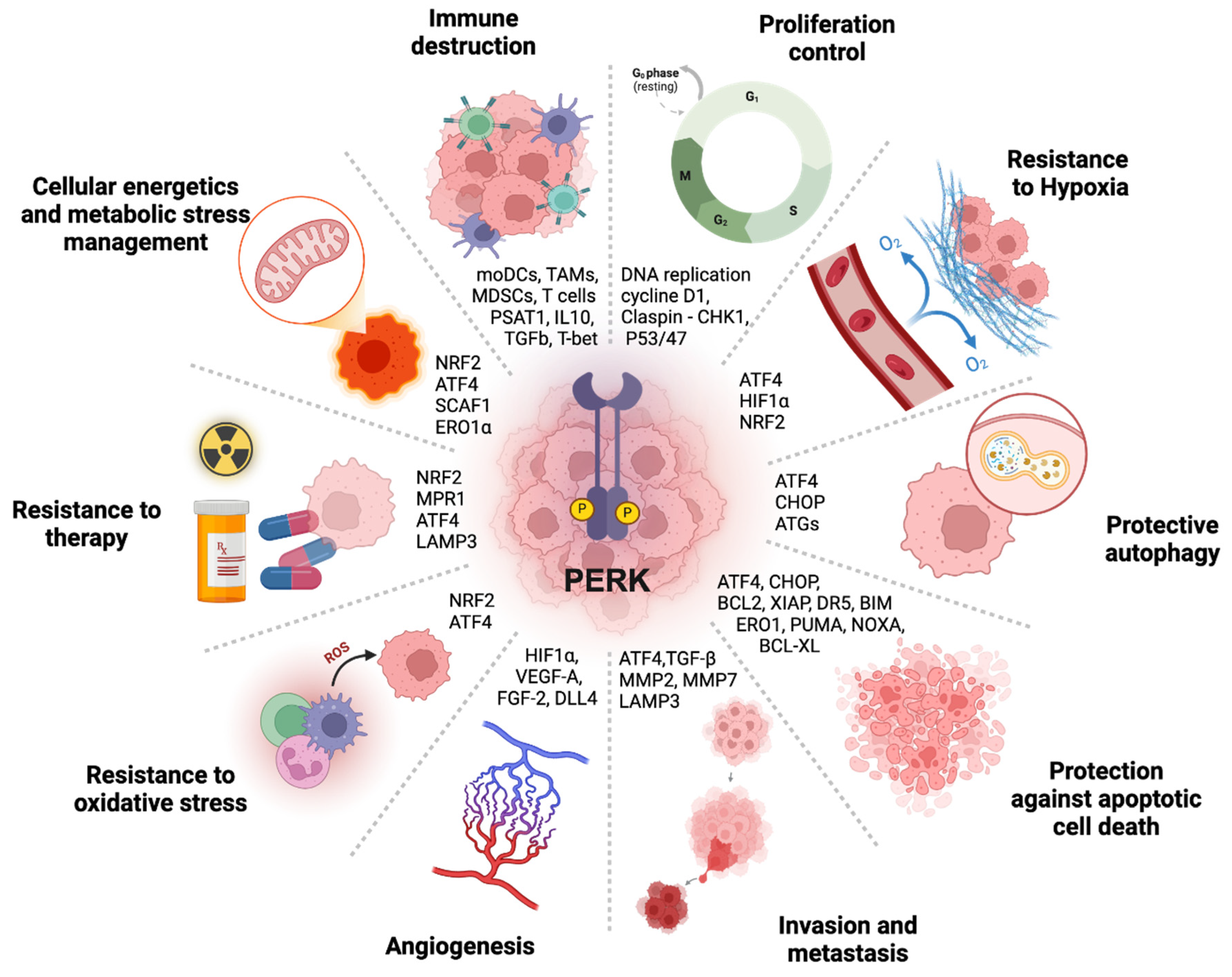
The type I protein kinase PERK is an endoplasmic reticulum (ER) transmembrane protein that plays a multifaceted role in cancer development and progression, influencing tumor growth, metastasis, and cellular stress responses. The activation of PERK represents one of the three signaling pathways induced during the unfolded protein response (UPR), which is triggered, in particular, in tumor cells that constitutively experience various intracellular and extracellular stresses that impair protein folding within the ER. PERK activation can lead to both pro-survival and proapoptotic outcomes, depending on the cellular context and the extent of ER stress. It helps the reprogramming of the gene expression in cancer cells, thereby ensuring survival in the face of oncogenic stress, such as replicative stress and DNA damage, and also microenvironmental challenges, including hypoxia, angiogenesis, and metastasis. Consequently, PERK contributes to tumor initiation, transformation, adaptation to the microenvironment, and chemoresistance. However, sustained PERK activation in cells can also impair cell proliferation and promote apoptotic death by various interconnected processes, including mitochondrial dysfunction, translational inhibition, the accumulation of various cellular stresses, and the specific induction of multifunctional proapoptotic factors, such as CHOP. The dual role of PERK in promoting both tumor progression and suppression makes it a complex target for therapeutic interventions. A comprehensive understanding of the intricacies of PERK pathway activation and their impact is essential for the development of effective therapeutic strategies, particularly in diseases like cancer, where the ER stress response is deregulated in most, if not all, of the solid and liquid tumors. This article provides an overview of the knowledge acquired from the study of animal models of cancer and tumor cell lines cultured in vitro on PERK’s intracellular functions and their impact on cancer cells and their microenvironment, thus highlighting potential new therapeutic avenues that could target this protein.
Keywords: PERK; unfolded protein response (UPR); ER stress; cancer; microenvironment; resistance; cell death PERK; unfolded protein response (UPR); ER stress; cancer; microenvironment; resistance; cell death