Review

Phospholipases A2 (PLA2s) and Related Peptides from Bothrops Snake Venoms: History, Structure, Pharmacology, and Inhibitors


by
Isabela C. dos Santos
1,†,
Marcela Romanazzi
1,†,
Geovanna M. Malachias-Pires
1,
Ariani R. Aragão
2,
Eloise T. M. Filardi
1,
Guilherme Melo-dos-Santos
1,
Lara C. Salvador
2,
Marcos F. Cerveja
1,
Anderson M. Rocha
3,
Ananda Magalhães
3,
Isadora S. de Oliveira
4,
José R. Almeida
5,6,
Norival A. Santos-Filho
1,2 and
Manuela B. Pucca
1,3,7,*
1
Graduate Program in Bioscience and Biotechnology Applied to Pharmacy, School of Pharmaceutical Sciences, São Paulo State University (UNESP), Araraquara 19060-900, Brazil
2
Department of Biochemistry and Organic Chemistry, Institute of Chemistry, São Paulo State University, Araraquara 14800-060, Brazil
3
Graduate Program in Tropical Medicine (PPGMT), Amazonas State University (UEA), Manaus 69065-001, Brazil
4
Department of BioMolecular Sciences, School of Pharmaceutical Sciences of Ribeirão Preto, University of São Paulo, Ribeirão Preto 19040-903, Brazil
5
Biomolecules Discovery Group, Universidad Regional Amazónica Ikiam, Km 7 Via Muyuna, Tena 150150, Ecuador
6
School of Pharmacy, University of Reading, Reading RG6 6UB, UK
7
Department of Clinical Analysis, School of Pharmaceutical Sciences, São Paulo State University, Araraquara 19060-900, Brazil
*
Author to whom correspondence should be addressed.
These authors contributed equally to this work.
Biomolecules 2025, 15(11), 1583; https://doi.org/10.3390/biom15111583
Submission received: 9 September 2025 / Revised: 26 October 2025 / Accepted: 28 October 2025 / Published: 11 November 2025
(This article belongs to the Section Natural and Bio-derived Molecules)

Abstract

Lancehead pitvipers, Bothrops snakes, or, popularly, “jararacas”, are common and broadly distributed in the Americas, especially in Brazil, where they are responsible for causing a high number of snakebite accidents. Their venoms are able to induce local and systemic effects, such as hemorrhaging, acute kidney failure, and shock, that can be fatal. Among the compounds of the venom are phospholipases A2 (PLA2s), which are abundant in some Bothrops species. PLA2s can perform different activities during envenoming, such as neurotoxicity, myotoxicity, and cytotoxicity, among others, through the hydrolysis of the ester bond at the sn-2 position of phospholipids, producing free fatty acids and lysophospholipids. Although different PLA2s can be classified into different PLA2 groups and subgroups, according to structure, function, size, localization and Ca2+ dependence, they converge to be available in biotechnological and therapeutic applications, such as antiviral and antitumor, among others, being relevant molecules to be deeply studied. Here, we provide the state of the art of PLA2s, found in snake venoms, focusing on Bothrops venoms, as well as their potential applications, beyond their inhibitors, that also receive attention due their importance in PLA2 studies and diverse applications.

1. Introduction

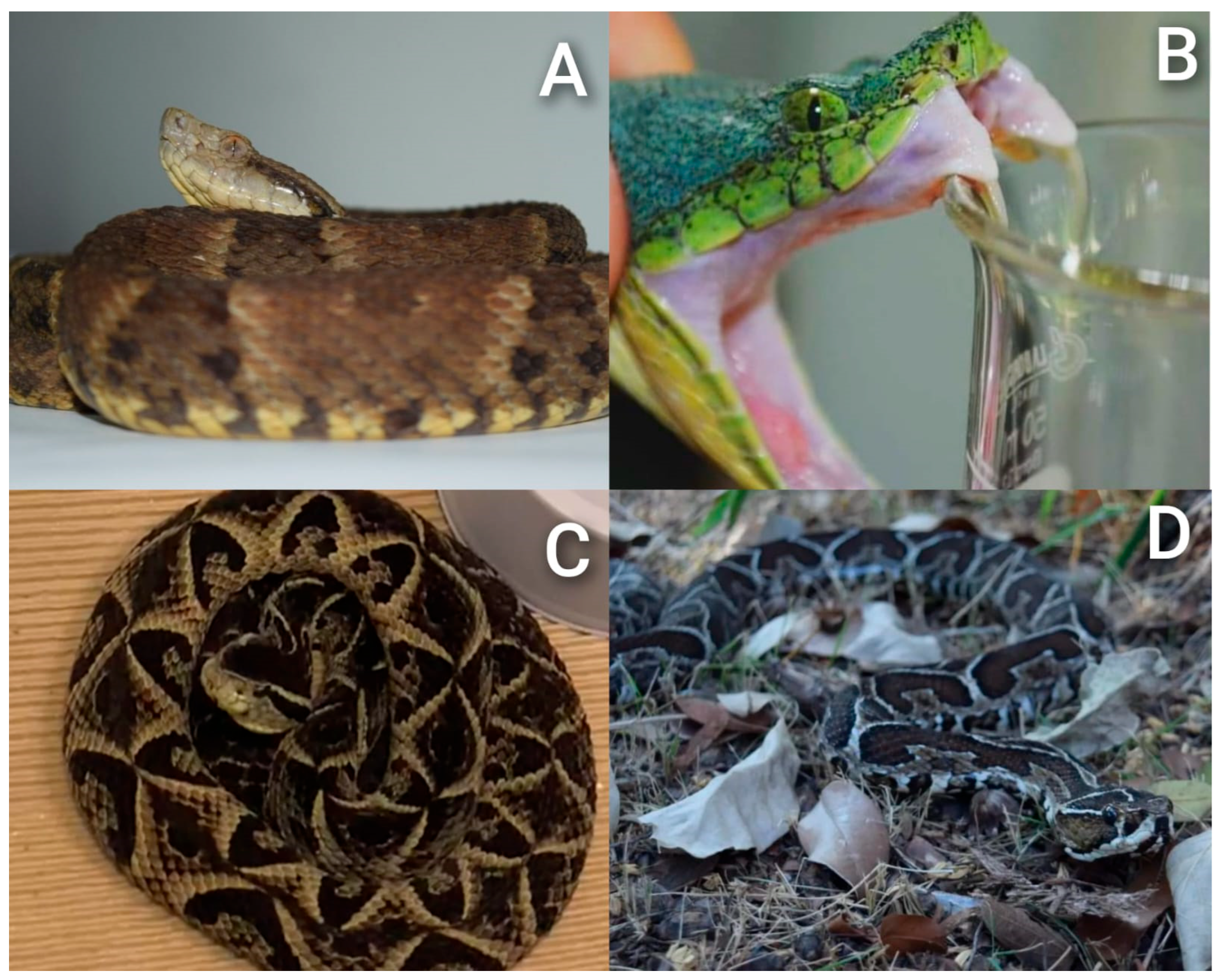
Bothrops genus is the most diverse within the subfamily Crotalinae, which belongs to Viperidae family. The Viperidae family also includes the genus Bothrochophias, which is related to the Bothrops group. Bothrops are popularly known as “lancehead pitvipers” or “jararacas”, in popular context (Figure 1). With the largest number of species, Bothrops has a wide distribution that extends from northeastern Mexico, through Central America, to a broad presence in South America. The genus includes both abundant and widely distributed species, such as Bothrops asper and B. atrox, as well as rare or restricted species, such as B. pirajai, B. muriciensis and B. bilineatus [1,2,3,4,5,6,7].
Most species are continental, terrestrial, and inhabit forest environments, such as B. atrox, B. jararaca, and B. leucurus. However, some are arboreal in tropical forests (e.g., B. bilineatus), and some inhabit open landscapes, such as B. erythromelas [6,8,9,10,11,12]. Some species are also found from sea level to elevations as high as 3500 m (e.g., B. jonathani, B. ammodytoides) [1,2,3,4,5,6]. Currently, there are 63 species of Bothrops recorded worldwide, with more than 30 species of Bothrops and 2 species of the genus Bothrochophias recorded in Brazil [13,14].
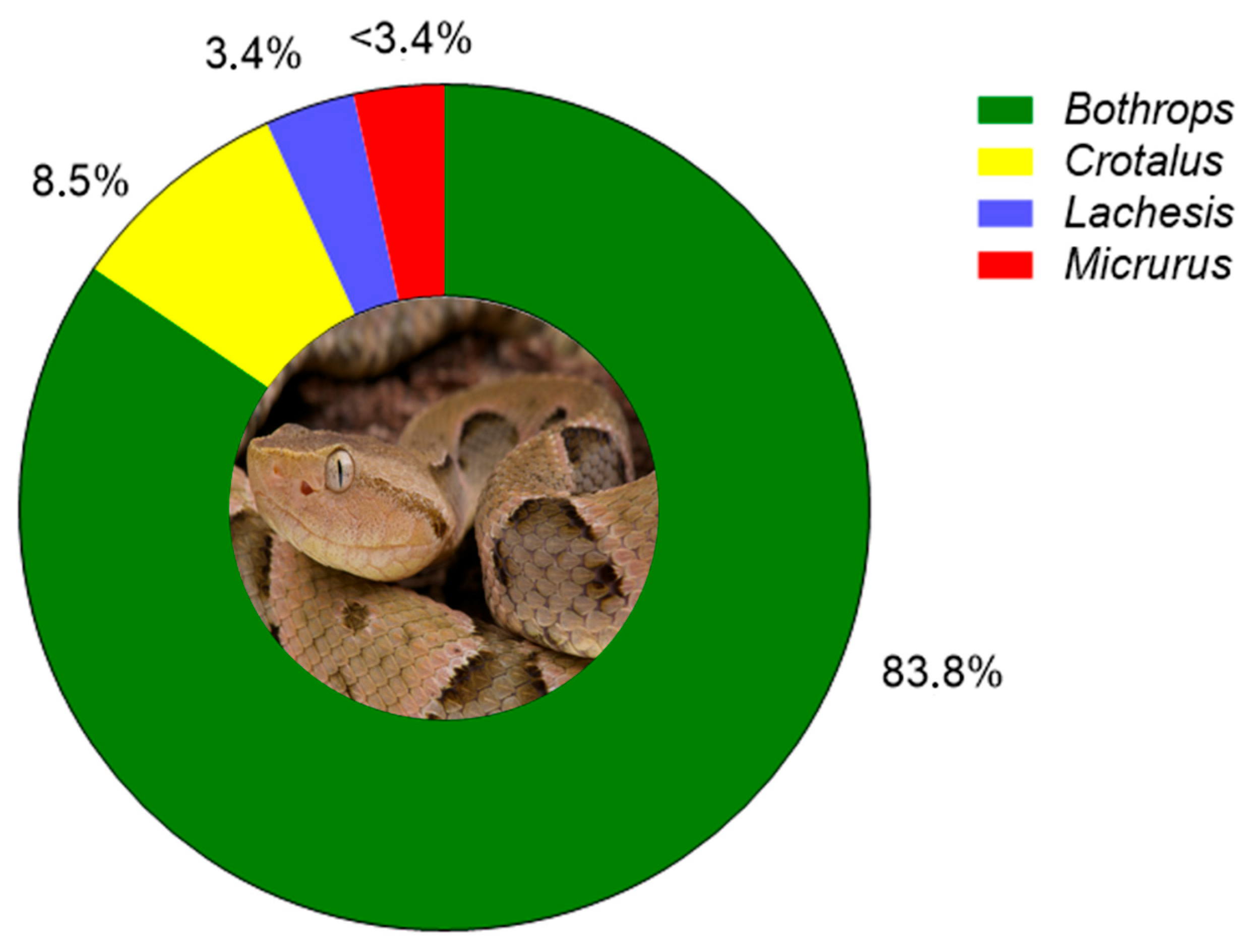
Snakebite accidents are highly neglected and affect millions of people across much of the world. The World Health Organization (WHO) reported that 4.5–5.4 million people are bitten by different snake species each year, resulting in 81–138 thousand deaths, with a number of cases three times greater leading to disabling and permanent sequelae [15,16]. In Brazil, around 30,000 snakebite accidents are reported annually, predominantly caused by Bothrops species, followed by those of the Crotalus, Lachesis, and Micrurus genera (Figure 2) [17].
Snakes use venom primarily for immobilizing and digesting their prey [15]. This high incidence is largely due to their widespread distribution across the country (Table 1), and their remarkable ability to adapt to human-altered environments. Different Bothrops species are of particular epidemiological importance in various regions of Brazil: B. atrox in the Amazon, B. erythromelas in the Northeast, B. jararaca in the South, Southeast, and Midwest, and B. neuwiedi in the Southeast and Midwest [20].
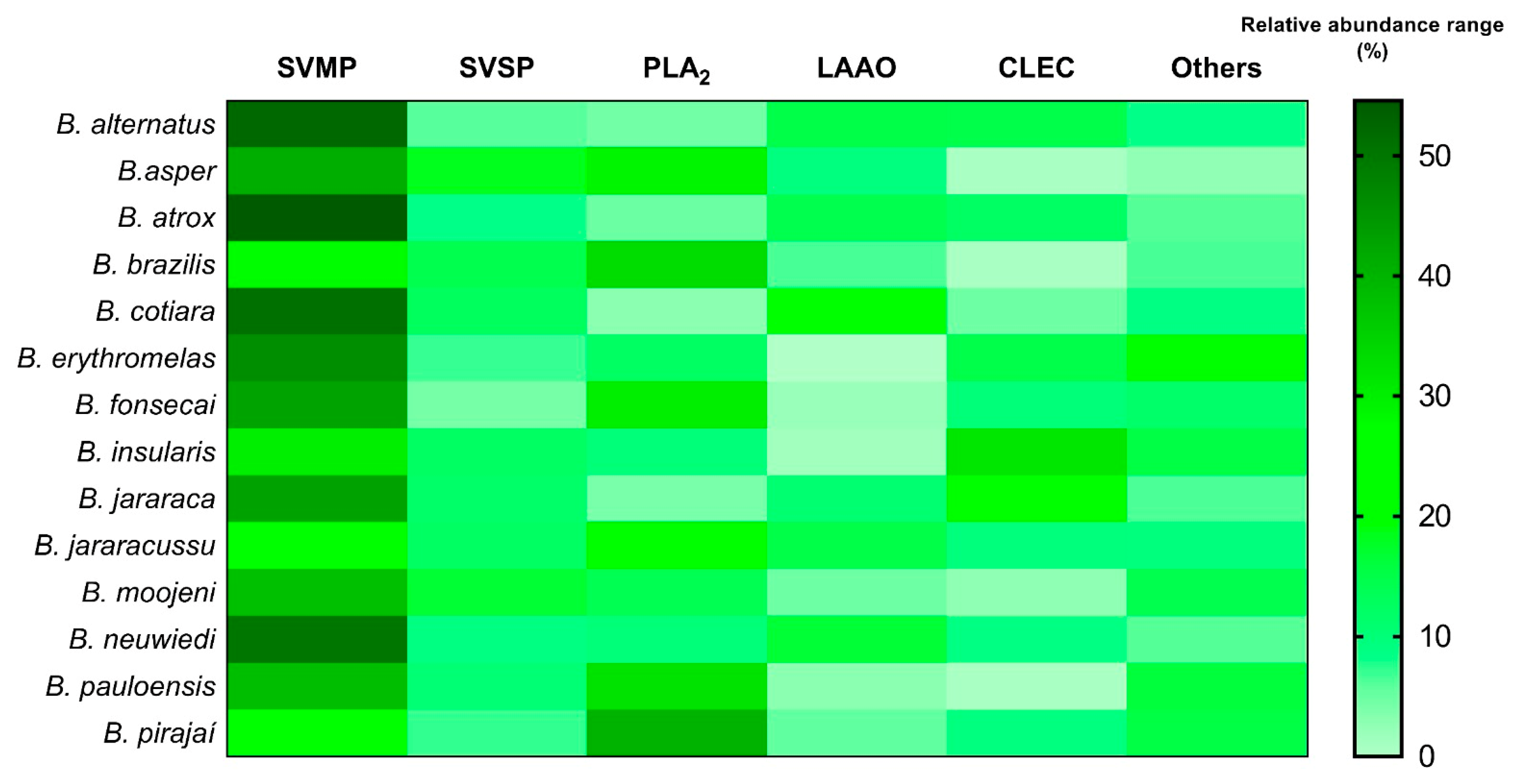
Snake venom comprises various constituents, one of which is a complex of proteins. More than 90% of dried venom is made up of proteins, including a wide variety of enzymes, non-enzymatic toxins, and non-toxic proteins [22]. The non-protein fractions include carbohydrates, lipids, biogenic amines, nucleotides, and free amino acids [23,24]. Despite its complexity, the predominant components in snake venom belong to a small number of protein superfamilies. Members of these superfamilies share similar protein structures, although their biological effects can vary significantly [25]. The main components of bothropic snake venoms include phospholipases A2 (PLA2), snake venom metalloproteinases (SVMPs) and serine proteinases (SVSPs), l-amino acid oxidases (LAOs), nerve growth factor (NGF), C-type lectins (CTLs), and cysteine-rich secretory proteins (CRISP), among others [26,27] (Figure 3).
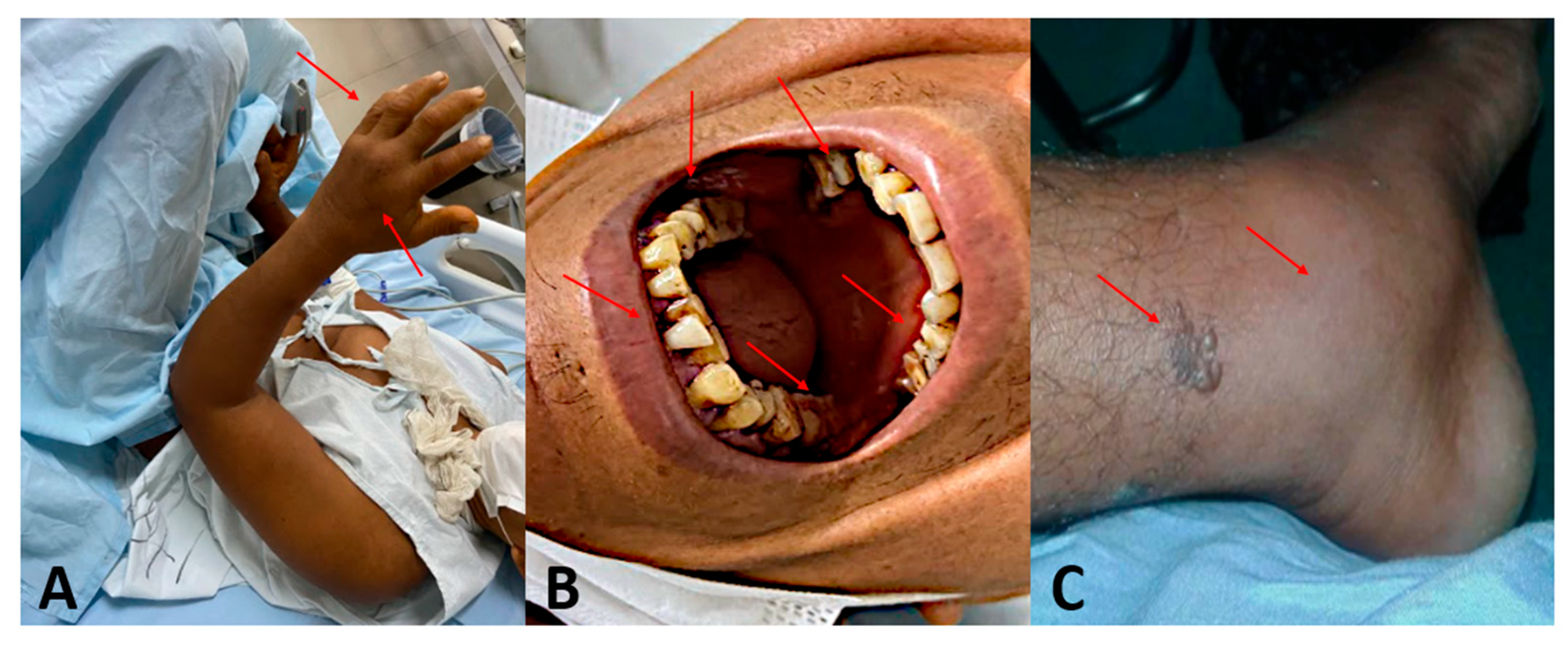
Bothrops venom induces both local and systemic effects (Figure 4) and can be fatal. Local manifestations include bleeding at the bite site, edema, bruising, and pain of varying intensity. Blisters may also develop, containing serous, hemorrhagic, or necrotic fluid. Systemically, the venom is primarily associated with blood incoagulability. In mild to moderate cases, this may present as minor bleeding, such as gingival bleeding, microscopic hematuria, or bleeding from recent wounds. In severe cases, complications can escalate to intense hemorrhaging, acute kidney failure, and shock [29,30,31,32,33].
PLA2s are the most abundant proteins in the venoms of different snake genera, exhibiting a wide variety of activities such as neurotoxicity, myotoxicity, cytotoxicity, anticoagulant, hypotensive, cardiotoxic, edema-inducing, and bactericidal properties [34,35,36]. PLA2s are widely distributed in nature, being found in a variety of organisms, such as plants, animals (mollusks, arthropods, reptiles, and mammals), fungi, bacteria, and viruses [36,37,38,39,40,41].
Initial publications regarding PLA2s from snake venom, by Hanahan et al. (1960) and Doery and Pearson (1961), characterized these enzymes as promoters of the hydrolysis of phosphorylated lipid substrates [42,43]. Subsequently, the discovery of PLA2-like proteins (structurally homologous to enzymatically active PLA2s but lacking catalytic activity) expanded the functional diversity of this toxin family, resulting in a better understanding of their actions and biological functions [36,37,38,39,40,41].

2. PLA2: Classification and Mechanistic Pathway

PLA2 enzyme belongs to the family of lipolytic enzymes that specifically catalyze the hydrolysis of the ester bond at the sn-2 position of phospholipids, producing free fatty acids and lysophospholipids (LPLs) as the main products [44]. PLA2s are amphiphilic and differ from classical water-soluble enzymes in that they act on supramolecular assemblies of phospholipids, such as micelles, vesicles, and liposomes, rather than on soluble substrates. Their catalytic activity is dependent on interaction with the water/lipid interface of these structures, a process referred to as interfacial activation [44,45,46,47].
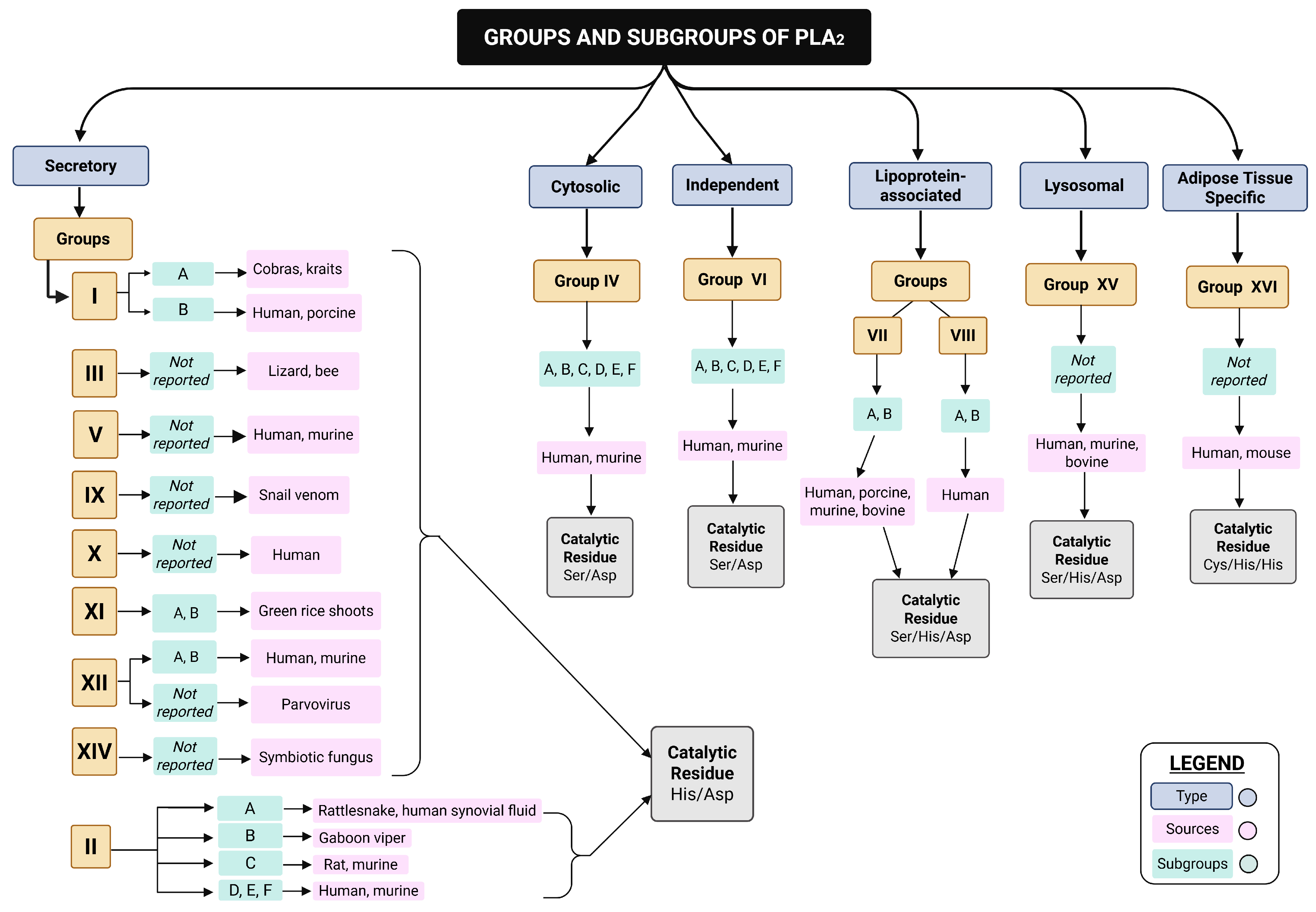
The PLA2 superfamily is organized into 16 main groups (I to XVI) defined chronologically according to their discovery, which are divided into six subfamilies based on their location in the organism, physiological functions and substrate specificity (Table 2). The six subfamilies are named secreted PLA2s (sPLA2s) (groups I, II, III, V, IX, X, XI, XII, XIII, and XIV), cytosolic PLA2s (cPLA2s) (group IV), Ca2+-independent PLA2s (iPLA2s) (group VI), platelet-activating factor acetyl-hydrolase PLA2s (PAF-AH PLA2s) (groups VII and VIII), lysosomal PLA2s (LPLA2s) (group XV), and adipose-tissue-specific PLA2s (AdPLA2s) (group XVI) (Figure 5). Among these subfamilies, sPLA2, cPLA2, and iPLA2 play critical roles in mediating inflammatory processes and the development of neoplasms. In contrast, the PAF-AH PLA2, LPLA2, and AdPLA2 subfamilies are predominantly associated with the progression of conditions such as obesity and atherosclerosis [44,45,47,48,49].
The first three are the most extensively studied [44,50] and the proteins are classified into different groups according to their size, function, sequence, localization, and dependence on the Ca2+ ion in their catalytic activity [51].
Table 2. Groups and subgroups of PLA2s with their respective alternative name, sources, molecular weights and catalytic residues.
TypeGroupSubgroupAlternative NameSourcesCatalytic Residue
SecretoryIAsPLA2Cobras, kraitsHis/Asp
IBHuman, porcine
IIARattlesnake, human synovial fluid
IIBGaboon viper
IICRat, murine
IID, E, FHuman, murine
IIINot reportedLizard/bee
VNot reportedHuman, murine
IXNot reportedSnail venom
XNot reportedHuman
XIA, BGreen rice shoots
XIIA, BHuman, Murine
XIINot reportedParvovirus
XIVNot reportedSymbiotic fungus
CytosolicIVAcPLA2αHuman, murineSer/Asp
CytosolicIVBcPLA2βHuman, murine
CytosolicIVCcPLA2γHuman, murine
CytosolicIVDcPLA2δHuman, murine
CytosolicIVEcPLA2εHuman, murine
CytosolicIVFcPLA2ζHuman, murine
IndependentVIAiPLA2α/iPLA2βHuman, murine
IndependentVIBiPLA2γHuman, murine
IndependentVICiPLA2δHuman, murine
IndependentVIDiPLA2εHuman, murine
IndependentVIEiPLA2ζHuman, murine
IndependentVIFiPLA2ηHuman, murine
Lipoprotein-associatedVIIA, BLp-PLA2/PAF-AHHuman, porcine, murine, bovineSer/His/Asp
VIIIA, BHuman
LysosomalXVNot reportedLPLA2Human, murine, bovine
Adipose Tissue SpecificXVINot reportedAd-PLA2Human, mouseCys/His/His
Table presenting the groups and subgroups of PLA2, characterizing them by type, group, subgroup, alternative names, sources, molecular weights, and catalytic residues. Adapted from [44,52]. Not reported: results were not found for this category.

2.1. Secreted PLA2 (sPLA2)

The first enzymes to be studied and characterized were secreted PLA2 (sPLA2), with research on snake venoms dating back to 1890 [45]. These enzymes are essential components of the venoms of snakes, scorpions, and other venomous reptiles [45]. sPLA2s share common characteristics, such as a reduced molecular mass (13–18 kDa), a high density of disulfide bonds, and a dependence on millimolar concentrations of Ca2+ ions for optimal catalytic activity. These enzymes use a histidine residue in the active site and follow a uniform enzymatic mechanism to cleave the sn-2 ester bond of phospholipids [15,52,53]. sPLA2 can be classified into two main groups based on their origin: Group I, which includes those found in Old World snakes, species of the Elapidae family; and Group II, which comprises those present in New World snakes, such as jararacas, rattlesnakes, and other species of the Viperidae family. This subfamily has shown continuous growth as new PLA2 enzymes are constantly being identified. PLA2 enzymes with high sequence homology are grouped within the same class. When more than one homologous PLA2 enzyme from the same species is found in venom, each paralog is assigned a subgroup letter, as observed in the IVA, IVB, and IVC PLA2 groups [45].
In Bothrops snake venoms, PLA2s play important roles, such as in the metabolism of structural lipids in cell membranes [36,54]. These two groups share other common characteristics, such as the presence of three long α-helices and two double-stranded β-sheets, which are important for maintaining the stability of the structure [44]. Another similarity is the preservation of the Ca2+ binding site, which is important for the performance of the protein’s catalytic function. Meanwhile, Groups I and II of the sPLA2s have important characteristics that differentiate them [45]. These include the presence of six conserved disulfide bonds in both groups and a seventh bond formed between residues 11 and 77 in Group I and between residues 50 and 138 in Group II, which contributes to the structural differences between the groups. Another observed difference is the presence of six or seven additional amino acid residues in the C-terminal region of Group II. These residues are negatively charged, influencing the interaction of Group II proteins with the substrate and even with other molecules [44].
Group I sPLA2, found in the pancreas of mammals and in the venom of snakes from the Colubridae and Elapidae families, is one of the most widely studied groups and is regarded as a significant model for phospholipase A2 enzymology [45]. These enzymes typically contain seven disulfide bridges and molecular masses ranging from 13 to 15 kDa. A distinctive feature of this group is the disulfide bond between the Cys11 and Cys77 residues. In the case of enzymes derived from snake venom, there is a specific structural element known as the elapid loop, which connects the catalytic α-helix to the β-wing. On the other hand, pancreatic PLA2s contain an additional segment of five amino acid residues known as the pancreatic loop (residues 62–67). Therefore, these enzymes are divided into subgroups IA and IB, based on the presence of the elapid or pancreatic loop, respectively [15,55,56]. Group IA PLA2 enzymes from snake venom possess the elapid loop, which connects the catalytic α-helix to the β-wing [55]. PLA2s from subgroup IB, secreted by the pancreas of mammals, are initially released as zymogens. These precursors contain a pro-peptide sequence that is removed by trypsin, enabling enzymatic maturation. In the pancreatic environment, they perform essential functions in the digestion of dietary phospholipids [15,57,58]. The first non-toxic PLA2 was identified in bovine pancreatic juice [47].
PLA2s from Group II, first identified in rattlesnake and viper venoms and characterized as proteins of approximately 120 amino acids and 14 kDa, contain six conserved disulfide bonds and a seventh between positions 50 and 138, and unlike Group I, Group II lacks the elapid loop and is characterized by a long tail in the C-terminal region of the molecule, where Cys-138 is located [15,47]. Additionally, PLA2 enzymes from Group II can be further subdivided based on the amino acid residue present at position 49. Enzymes that have the Aspartic Acid residue at position 49 are called acidic PLA2 or Asp49 PLA2. This residue can be replaced by Lysine, Serine, Arginine and Asparagine, named Lys49, Ser49, Arg49 and Asn49 basic PLA2. These variations lose their catalytic activity, because the substitution of Aspartic Acid at position 49 inhibits the binding of the Ca2+ cofactor to the catalytic site loop, but allows the homologous molecule to play another cytotoxic role [15,47,59,60,61]. Of the so-called homologous PLA2s, the basic PLA2 isoform Lys49 is the most abundant and most commonly studied. Asp49 PLA2s and Lys49 PLA2-like variants may often coexist in the venom of a given Viperidae snake species, and recent studies demonstrated a synergistic myotoxic effects when in combination [62]. The Ca2+ ion plays a crucial role in substrate binding and catalysis by phospholipases, being hepta-coordinated with a pentagonal bipyramidal geometry. Of the seven coordinated interactions, five originate from the protein structure: a bidentate carboxyl group from Asp48 located in a loop of the α-helix and three carbonyl groups (C=O) from the residues Tyr27, Gly29, and Gly31 in the calcium-binding loop. The remaining two interactions involve water molecules, one in the axial region and the other in the equatorial region. The axial water molecule is replaced by the sn-3 phosphate group of the substrate upon binding to the enzyme, while the equatorial water molecule (w5) is polarized and deprotonated by the His47 residue, producing a hydroxide ion that attacks the carbonyl group of the sn-2 ester, forming a tetrahedral intermediate. During this process, His47 becomes protonated via a neighboring water molecule (w6), establishing a proton bridge that reduces the activation energy required for the formation of the intermediate. The decomposition of this tetrahedral intermediate constitutes the rate-limiting step of the enzymatic reaction [15,51,52].
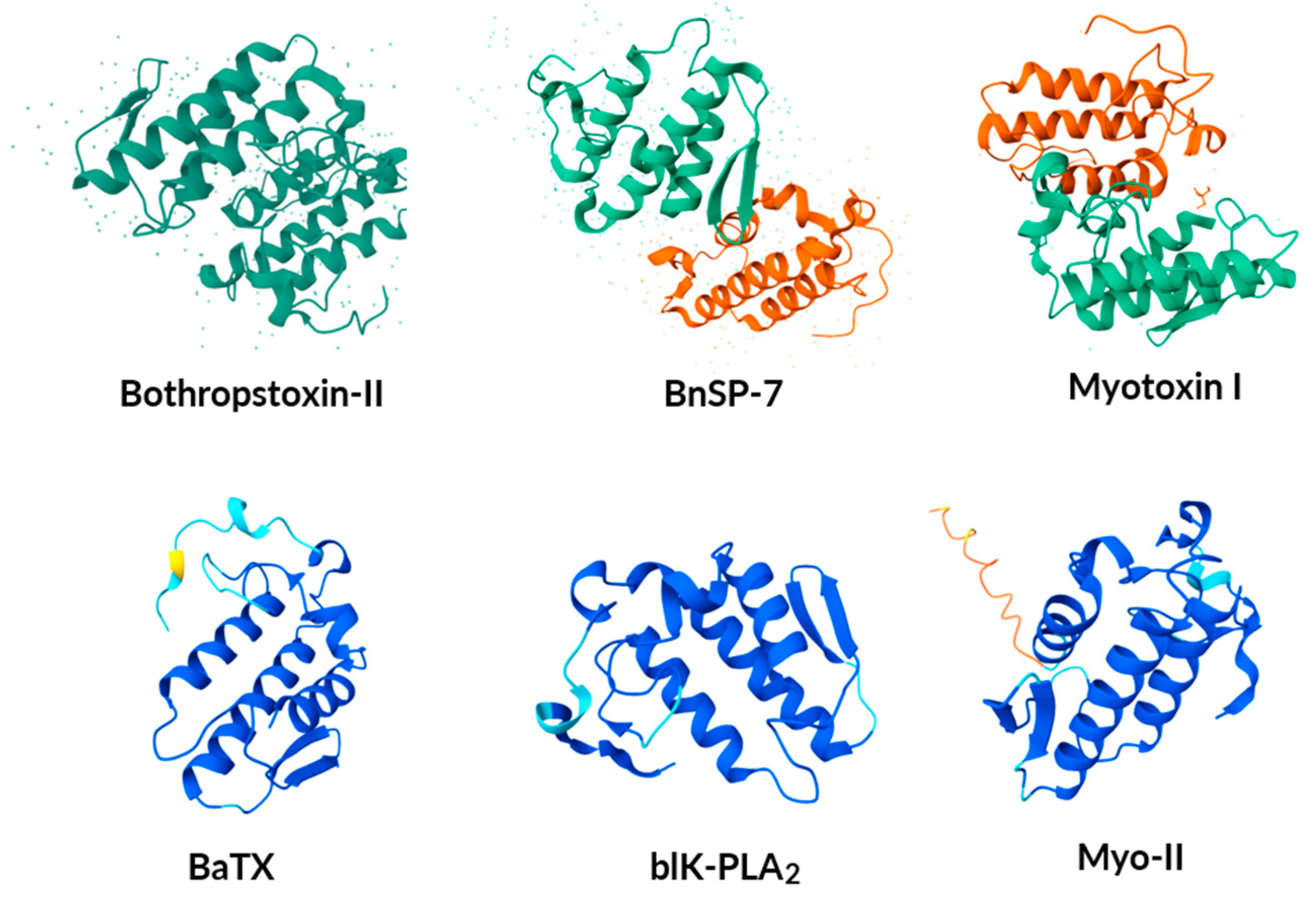
The PLA2 enzymes from Bothrops species, such as Bothropstoxin-II, BnSP-7, Myotoxin I, BaTX, blK-PLA2, and Myo-II, belong to the snake venom phospholipase A2 (svPLA2) group IIA, typical of the Viperidae family. These enzymes share the conserved tertiary structure described for svPLA2-IIA, which includes an N-terminal α-helix (α1), two disulfide-connected α-helices (α2 and α3) containing the catalytic dyad, an antiparallel β-sheet (β-wing), a Ca2+-binding loop, and a flexible C-terminal loop. Unlike the svPLA2-IA enzymes from Elapidae that possess the elapid loop, the svPLA2-IIA enzymes found in Bothrops lack this insertion but feature a C-terminal extension of 5–7 amino acid residues. The highly conserved active site residues (His48, Asp49, Tyr52, Tyr73, and Asp99), as well as the disulfide bonds, maintain the structural integrity essential for catalytic activity and interaction with lipid membranes. This conserved architecture, observed across different snake venom PLA2s, including those from Bothrops, is crucial for their diverse biological effects, such as myotoxicity and inflammation [63,64] (Figure 6). In addition, they are responsible for mediating severe inflammatory responses induced by the venom’s activity, including edema, pain, and leukocyte migration [65]. These enzymes also exhibit anticoagulant, hemolytic, and necrotic properties, they stand out as targets of interest in the study of toxins and in the development of antivenom treatments [34,41,66,67,68].
Table 3. Phospholipases derived from Bothrops snake venom.
PLA2Bothrops SpeciesFunctionLenghtUniProt Entry
BaTXB. alternatusEdema-inducing activities; irreversible neuromuscular blockade.121 aaP86453
Myotoxin IB. asperLocal myotoxic activity; anticoagulant action in plasma; edema-inducing; cytotoxic activity; bactericidal activity.138 aaP20474
Homolog 2Lacks enzymatic activity. It is myotoxic and induces a dose-dependent edema in the mouse foot pad. It also exhibits strong anticoagulant effects by binding to factor Xa (F10) and inhibiting the prothrombinase activity. Additionally, it shows cytotoxic activity against a variety of cell types and bactericidal activity against both Gram-negative and Gram-positive bacteria. It also induces a very rapid release of large amounts of potassium ions and ATP from muscle cells.137 aaP24605
Braziliase-IB. braziliEdematogenic activity; mild cytotoxicity on Trypanosoma cruzi and Leishmania infantum; inhibits ADP- and collagen-induced platelet aggregation.107 aaP0DUN3
Braziliase-II92 aa *P0DUN4
Myotoxin-IExhibits myotoxin and anticoagulant activity; edema-inducing activities; cytotoxic activity against some cell lines and myotubes; antimicrobial activities against E. coli, C. albicans and Leishmania.78 aa *P0DQP9
Basic phospholipase A2 homolog 2Myotoxic and displays edema-inducing activities; cytotoxic activity against myotubes121 aaP0DTS8
Homolog 2Lacks enzymatic activity; myotoxic; edema-inducing; cytotoxic activity; antimicrobial activities against E. coli, C. albicans and Leishmania.121 aaI6L8L6
SnaclecB. diporusInterferes with one step of hemostasis32 aa *C0HJQ0
sPLA2-INot reported138 aaI2DAL4
sPLA2-II138 aaI2DAL5
Myo-II138 aaI2DAL6
BITP01AB. insularisInduces edema; produces neuromuscular blockade in chick biventer cervicis; increases CK release and produces myonecrosis; catalyzes the calcium-dependent hydrolysis of the 2-acyl groups in 3-sn-phosphoglycerides.138 aaQ8QG87
Acidic phospholipase A2Not reported107 aa *P84397
Bothropstoxin-IB. jararacussuLocal myotoxic activity; induces inflammation, edema and leukocytes infiltration; induces NLRP3 NLRP3, ASC (PYCARD), caspase-1 (CASP1), and IL-1beta (IL1B) gene expression in the gastrocnemius muscle, showing that it is able to activate NLRP3 inflammasome also damages artificial and myoblast membranes by a calcium-independent mechanism; bactericidal activity; induces neuromuscular blockade.137 aaQ90249
Bothropstoxin-IIMyotoxic activity; induces indirect hemolysis; anticoagulant properties; cytotoxic activities; induces muscle necrosis; polymorphonuclear cell infiltration; edema.138 aaP45881
BthA-1Edema-inducing activities; inhibits phospholipid-dependent collagen; ADP-induced platelet aggregation; anticoagulant activities; bactericidal activity against E. coli and S. aureus; catalyzes the calcium-dependent hydrolysis of the 2-acyl groups in 3-sn-phosphoglycerides.138 aaQ8AXY1
blK-PLA2B. leucurusMyotoxic and edema-inducing activities.121 aaP8697
Basic phospholipase A2 Cytotoxic; anticoagulant activity; induces Ehrlich tumor growth but not angiogenesis; catalyzes the calcium-dependent hydrolysis of the 2-acyl groups in 3-sn-phosphoglycerides.122 aaP86974
Myotoxin IIB. moojeniHigh myotoxin activities; neurotoxicity; edema-inducing activities; antimicrobial activity against E. coli and C. albicans; antitumoral activity against some human and mice cell lines.122 aaQ9I834
BnpTX-1B. pauloensisIn vitro, shows anticoagulant activity and induces cytotoxicity when tested on C2C12 myoblasts/myotubes. In vivo, when tested on mice, induces myotoxicity (intramuscular injection), edema (injection in the subplantar region) and lethality. Also induces neurotoxic effect on mouse neuromuscular preparations and has bactericidal activity50 aa *P0DM51
BnpTX-2Anticoagulant activity; cytotoxicity when tested on C2C12 myoblasts/myotubes; myotoxicity; edema; catalytic; anticoagulant activities; catalyzes the calcium-dependent hydrolysis of the 2-acyl groups in 3-sn-phosphoglycerides.35 aa *P0DM52
BnSP-7Myotoxic; edema-inducing activity; bactericidal activity; promotes the blockage of the neuromuscular contraction of the chick biventer cervicis muscle; disrupts artificial membranes; tissue damages; edema, necrosis; inflammation; may act as pro-inflammatory mediator.121 aaQ9IAT9
Piratoxin-2B. pirajaiMyotoxic activity and edema-inducing activities.121 aaP82287
(*): Completed sequence were not stablished yet. Values refer to the partial amino acid sequence. Not reported: results at the UniProt database were not found for this category.

Lys49 PLA2-like

In 1984, a new type of basic sPLA2 was first found in the venom of Agkistrodon p. piscivorus, in which the essential Asp49 residue of the catalytic center was replaced by a lysine molecule. By 2023, more than 80 proteins of the same type had been found and characterized in viperid species from the Old and New Worlds, indicating that they form a subgroup of toxins present in many viperid venoms. Initially, the basic isoform of Lys49 was incorrectly classified as having low catalytic activity, but it was later found to be contaminated with low levels of Asp49 sPLA2, since both molecules coexist in the same venom. The substitution of the Asp49 residue, together with other modifications, prevents the binding of the Ca2+ ion, mainly because the epsilon-amino group of Lys49 is located in the region previously occupied by the ion in Asp49 enzymes. Subsequently, by evaluating Lys49 proteins isolated from other snakes, a toxicity screening revealed the myotoxic activity of PLA2-like [69]. This activity was shown to be mainly due to residues located in positions 115–129 of the C-terminal region [70]. Crystallographic, bioinformatic and biophysical studies have shown that dimeric forms are more common in Lys49 PLA2 molecules [71]. The “compacted” dimers are highly stable and have been shown to predominate in solution [62], but studies on the importance of the dimeric form of Lys49 PLA2-like for the observed myotoxic activity are ongoing [69].

2.2. Cytosolic PLA2 (cPLA2)

Cytosolic PLA2s are intracellular enzymes that belong to Group IV of the PLA2 family. They are subdivided into six other groups (A–F), which are named cPLA2α, cPLA2β, cPLA2γ, cPLA2δ, cPLA2ε, and cPLA2ζ. The molecular weight of proteins in this class ranges from 85 to 114 kDA, indicating a larger and more complex structure, which is essential for interaction with substrates and performance of enzymatic activity. Unlike sPLA2s, Ca2+ ions do not contribute to catalytic activity, but bind to two domains that act in these functions: CaLB, formed by eight antiparallel folded β-Sheets, and a catalytic domain composed of 14 β strands and 13 α helices [44].

2.3. Ca2+ Independent PLA2 (iPLA2)

The superfamily of Ca2+-independent PLA2s (iPLA2) consists of Group VI enzymes of phospholipases A2 (A–F), which are also referred to as iPLA2β, iPLA2y, and iPLA2δ. These enzymes possess molecular weights ranging from 27 to 146 kDA and are present in mammals, as are the two previously mentioned classes. iPLA2α are patatins and homologues of patatins found in potato tubers [44]. The structures of iPLA2β can be divided into three segments: the N-terminal domain, nine ankyrin (ANK) repeats (variations in the iPLA2β genome) and the catalytic (CAT) domain. The ANK repeats consist of 33 amino acid residues forming a helix–turn–helix structure followed by a loop. This pattern is only present in two variations, while the others do not have ankyrin repeats. The seventh and eighth ANK repeats form a hydrophobic interaction with the CAT domain, thereby facilitating the formation of a dimer between two iPLA2β molecules. This process helps translocation of iPLA2β from the cytosol to the membrane and plays a significant role in its catalytic activity [44].

3. PLA2s Function in Snakebites

Particularly abundant in species of the Bothrops genus, PLA2s are linked to various biological activities, including acute inflammation, myotoxicity, and nociception. These enzymes degrade phospholipids in cellular membranes, releasing fatty acids such as arachidonic acid, a precursor of key inflammatory mediators like prostaglandins and leukotrienes, which trigger both local and systemic inflammatory responses, contributing to edema and pain observed in snakebite victims. Additionally, PLA2s exhibit significant myotoxicity, driven by membrane degradation and necrotic processes, leading to muscle tissue destruction and elevated blood creatine kinase levels, a marker of muscle injury [63,72,73].
The nociception associated with PLA2s is another critical aspect, arising from the activation of pain receptors and the release of pro-inflammatory mediators in affected tissues. Beyond their toxic effects, certain PLA2 isoforms exhibit unique pharmacological properties, such as anticoagulant activity and the inhibition of platelet aggregation, demonstrating their potential for biomedical applications [74,75].
The PLA2 enzymes present in snake venom exert anticoagulant effects, primarily by hydrolyzing plasma phospholipids and disrupting the formation of coagulation complexes [15,76,77,78,79].
This anticoagulant action can occur either through enzymatic hydrolysis of procoagulant phospholipids or via non-enzymatic interactions, where PLA2s bind to plasma phospholipids or coagulation factors (e.g., Factor Xa, Factor Va, prothrombin, and thrombin), rendering them unavailable for clot formation [15,80]. These enzymes are also capable of hydrolyzing plasma phospholipids and interacting with factors such as Factor Xa, Factor Va, prothrombin, and thrombin, inhibiting the coagulation cascade [15,81,82]. Thus, the mechanisms by which PLA2 enzymes inhibit coagulation are diverse and complex [15].
Anticoagulant PLA2 enzymes from snake venom inhibit the formation of the prothrombinase complex, a critical step in coagulation, by binding to factors Xa and/or X. They compete with other factors for the lipid surface or inhibit thrombin [15,82,83]. Interestingly, the anticoagulant potency of these enzymes is not directly related to their enzymatic activity [80]. For example, the acidic PLA2 from the Russell’s viper venom (RVVA-PLA2-I) inhibits Factor Xa even in the absence of calcium or phospholipids, slowing down the conversion of prothrombin to thrombin [15,76]. The penetrability of PLA2, defined as their ability to interact with membranes and hydrolyze phospholipids, is a key determinant of their anticoagulant efficacy [78]. Enzymes with higher penetrability tend to cause greater damage to plasma membranes due to the high density of phospholipids in these structures [84]. Strongly anticoagulant PLA2 enzymes exhibit low selective hydrolytic activity, while non-specific ones require higher levels of hydrolysis to exert a significant anticoagulant effect [15,76,85].
Additionally, sPLA2 enzymes participate in inflammatory processes by releasing free fatty acids, such as arachidonic acid (AA), which serves as a precursor for pro-inflammatory lipid mediators, including prostaglandins, thromboxane, and leukotrienes. The LPL, a byproduct of hydrolysis, also acts as an inflammatory mediator [86]. sPLA2 can release AA through both heparan sulfate proteoglycan (HSPG)-dependent transport mechanisms and direct interaction with the outer leaflet of the plasma membrane. These enzymes hydrolyze phosphatidylcholine to release fatty acids and LPLs, accumulating on the cell surface through interaction with glypicans, which facilitates their internalization and the release of AA [87]. In addition to eicosanoid synthesis, sPLA2s stimulate inflammatory cells to produce pro-inflammatory cytokines, independently of their hydrolytic activity, as observed in Groups IB, IIA, V, and X [15,88,89,90].
In the context of neurotoxicity, beta-neurotoxins found in snake venom cause paralysis through complex mechanisms, including the increased pre-synaptic release of AA and Ca2+, as well as the activation of PKC, which amplifies acetylcholine (ACh) release and the activity of the protein fusion complex. AA also inhibits the choline uptake transporter, reducing the availability of ACh in the pre-synaptic terminals [15,91,92,93]. These actions contribute to a multifaceted blockade of neuromuscular function, characterized by the desensitization and inactivation of ACh receptors and the depletion of synaptic vesicles. Thus, PLA2, through AA, interferes with both pre- and post-synaptic machinery, leading to a prolonged and profound impairment of neuromuscular activity [94]. Due to their broad functional diversity and clinical significance, PLA2s remain a focal their therapeutic potential in conditions like chronic inflammation and thrombotic disorders [74,75].

4. Review of Phospholipases from Bothrops sp. Described in the Literature

As discussed previously, snake venom sPLA2s are commonly categorized by their source families: Group I predominantly from Elapidae (including sea snakes within Hydrophiinae) and several Colubridae; Group II from Viperidae, encompassing both Crotalinae and Viperinae. svPLA2s isolated from Bothrops species belong to Group II, specifically the IIA subclass. Typically, these enzymes have a molecular mass between 13 and 15 kDa, consist of approximately 120 amino acid residues, and are stabilized by 7–8 disulfide bridges. These enzymes exhibit acidic or basic properties depending on the amino acid at position 49, which classifies them as either Asp-49 or Lys-49 types. The Lys-49 type is also referred to as homologous or PLA2-like. A conserved catalytic site containing the residues His-48, Asp-49, Tyr-52 and Asp-99 is crucial for phospholipid hydrolysis. Additionally, the calcium-binding loop residues coordinate the catalytic reaction, where Asp-49 plays a critical role in binding calcium. Substituting Asp-49 with Lysine disrupts this interaction, leading to a partial or total loss of catalytic activity [74].
Group IIA phospholipases A2 (PLA2s GIIA), which have been identified in the venoms of B. asper, B. neuwiedii, B. jararacussu, and B. insularis, play a central role in the pathophysiology of envenomation, particularly in triggering inflammatory responses. These enzymes are divided into “classical” Asp49-PLA2s, which require Ca2+ for catalytic activity, and “variant” Lys49-PLA2s, which lack enzymatic function but still cause membrane damage through poorly understood Ca2+-independent mechanisms. Both isoforms are known to induce significant local inflammation, characterized by edema, leukocyte infiltration, increased vascular permeability, and the release of inflammatory mediators such as histamine, serotonin, and prostaglandins [72].
The fractionation of venom from B. atrox revealed the presence of three significant PLA2 fractions, as reported by Sousa et al., 2022 [71]. These fractions showed sequence homologies of 82% with BATXPLA002, and coverage percentages of 94% and 87% with BATXPLA006 and BATXPLA001, respectively. This highlights the structural diversity and specificity of PLA2 isoforms within the venom of B. atrox, contributing to its complex toxicological profile and diverse biological activities.
Studies conducted by Marinho et al., 2021 [95], with venom from B. pauloensis demonstrated that both Asp-49 and Lys-49 PLA2 fractions induce significant vascular and functional alterations in isolated kidney systems. The nephrotoxicity caused by these PLA2 fractions is associated with oxidative stress mechanisms. Furthermore, both isoforms contributed to toxicity through the release of inflammatory cytokines, highlighting their role in inflammation and organ damage during envenomation. These findings provide insights into the renal effects of Bothrops venom components and their underlying mechanisms, which could inform treatment strategies for snakebite-induced nephrotoxicity.
Two basic PLA2s, designated PLA2-I and PLA2-II, were purified from B. diporus venom, representing the Asp49 and Lys49 variants, respectively. Both proteins exhibit myotoxicity, cytotoxicity, and the ability to inhibit cell migration. Notably, Lys49 PLA2-II proved to be more potent than Asp49 PLA2-I in all assays performed. Furthermore, the two proteins act synergistically, amplifying the damage to cultured C2C12 myogenic cells, which highlights their collaborative role in the venom’s toxic effects and the complex tissue damage caused during envenomation [96].
BthTX-II is a basic PLA2 isolated from the venom of B. jararacussu, as reported by Borges et al., 2021 [97]. Using mass spectrometry, three variants of BthTX-II were identified. The structure of BthTX-IIa is dimeric in its tense state, with a distorted calcium-binding loop. BthTX-IIb, in contrast, is a monomer in the relaxed state, with a fatty acid present in its hydrophobic channel. In an acidic buffer, BthTX-II predominantly exists as a dimer, whereas in a neutral buffer, it adopts a monomeric form. The dimeric assembly is believed to be associated with the non-catalytic myotoxicity of BthTX-II, suggesting that its role in tissue damage occurs independently of its enzymatic activity.
The venom of B. alternatus is recognized as a natural source of platelet aggregation inhibitors, with metalloproteinases and phospholipases A2 being the primary components responsible for this inhibitory activity. A study by Echeverría et al. (2023) demonstrated that Baltergin, a component of B. alternatus venom, inhibits platelet aggregation but lacks the ability to disaggregate pre-formed platelet thrombi [98]. These findings highlight the therapeutic potential of B. alternatus venom components in developing novel modulators of platelet function, particularly in conditions where platelet aggregation plays a central role.
Research conducted in the UniProt database for “Bothrops phospholipases” identified 43 results. Analyzing the provided results, we identified 24 phospholipases (Table 3), 9 phospholipase inhibitors (see item 7), 3 metalloproteinase, 1 serine proteinase, 1 type-C lectin and other 5 phospholipases derived from different snake genus and species that were once Bothrops sp.

5. Biotechnological and Therapeutic Applications of PLA2s and Peptides Derived from Snake Venom PLA2s

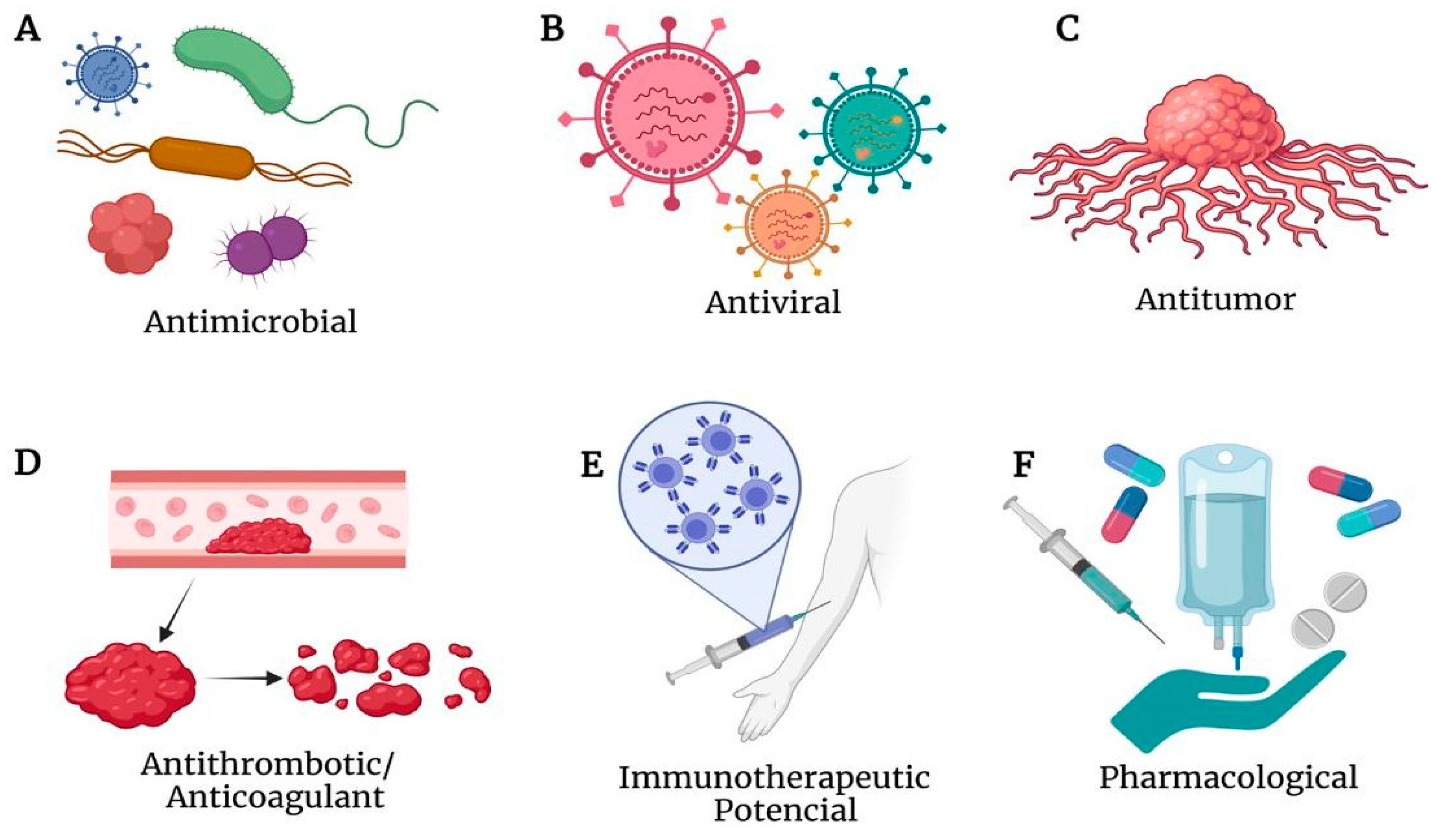
PLA2s from snake venoms are extensively studied enzymes that have gained prominence in the scientific community due to their broad spectrum of associated biotechnological activities [99]. In addition to their numerous characteristics from both biological and structural perspectives, the range of pharmacological activities associated with these enzymes is of significant medical and scientific interest because of their relationship with various human diseases [100]. The adverse effects caused by these enzymes, such as inflammation, cytotoxicity, myotoxicity, neurotoxicity, and hypotension, have become attractive targets for biotechnological and therapeutic research, as PLA2s are considered prime candidates for therapeutic drug targets [101,102,103]. Scientific studies worldwide aim to understand the potential applications of PLA2s from different snake species. Currently, the roles of these enzymes in inducing antitumor, anti-angiogenic, anti-inflammatory, antimicrobial, antiparasitic, hypotensive, antithrombotic, anticoagulant, pharmacological, clinical, and industrial activities are already well documented [36,100,102,103,104,105].
The table below (Table 4) demonstrates the potential biotechnological and therapeutic applications of PLA2s from the venoms of different snake species worldwide, correlating the categories with the potential applications described in the literature and the corresponding bibliographic references.
As previously mentioned, animal venoms are a mixture of complex and bioactive molecules, such as proteins and peptides, with biologically interesting properties that can be studied for the development of new drugs [118]. A notable example is Captopril, one of the most widely used antihypertensives in the world for treating hypertension. It is derived from a bradykinin-potentiating peptide (BPP) found in the venom of B. jararaca. Captopril was the first drug derived from animal toxins to be approved by the FDA (Food and Drug Administration) in 1981 [119,120].
Based on the primary structure of PLA2s, several cationic peptides have been synthesized and have demonstrated antimicrobial, antitumor, and antiparasitic efficacy, showing significant pharmacological interest [121]. The literature provides numerous examples of peptides derived from the C-terminal region of PLA2s.
The Mt-II peptide, derived from the terminal region of the myotoxin Mt-II from B. asper (residues 115–129 KKYRYYLKPLCKK), has demonstrated a variety of biological activities, including antitumor effects and antibacterial potential similar to that of the parental molecule in vitro. This activity occurs through a mechanism involving membrane permeabilization [122,123]. To enhance the peptide’s antimicrobial activity and reduce its toxicity to eukaryotic cells, various modifications to its amino acid sequence were tested. Among these, the analog named pEM-2 (sequence KKWRWWLKALAKK) stood out, showing greater potency and specificity against prokaryotes and lower toxicity to eukaryotic cells [122]. Building on this, another study analyzed the antitumor activity of the pEM-2 analog (D-enantiomer), which demonstrated satisfactory inhibitory effects on EMT6 mammary tumors in mice [124].
Derived from the C-terminal region of bothropstoxin I from B. jararacussu, the peptide p-BthTX-I (residues 115–129 KKYRYHLKPFCKK) demonstrated antimicrobial activity against Gram-positive and Gram-negative bacteria, including multidrug-resistant strains, while showing no activity against Candida albicans, indicating specificity [125,126]. To optimize the activity and production of the peptide, modifications were made to its amino acid sequence, resulting in the dimeric peptide [des-Cys11, Lys12, Lys13-(p-BthTX-I)2K], named (p-BthTX-I)2K. This modified peptide exhibited enhanced antimicrobial activity and low toxicity to eukaryotic cells [126]. Furthermore, the molecule and its analogs showed antiviral activity against SARS-CoV-2, the causative agent of COVID-19, combined with low cytotoxicity and promising selectivity indices [127].
Costa and collaborators (2008) evaluated the cytotoxic effect of synthetic peptides derived from the C-terminal region of myotoxins MTX-I, an Asp49 PLA2, and MTX-II, a Lys49 PLA2, from the venom of B. brazili. The peptides pepMTX-I (residues 115–129 RKYMAYLRVLCKK) and pepMTX-II (residues 115–129 KKYRYHLKPLCKK) demonstrated antimicrobial activity against E. coli and C. albicans, as well as antiparasitic activity against Leishmania sp. and cytotoxicity against JURKAT cell lines [106]. Studies indicate that synthetic peptides derived from PLA2s in snake venoms of the Bothrops genus are promising alternatives for biotechnological applications. These peptides are smaller, easy to obtain, and capable of mimicking the biological activities of the parental molecules [128]. In general, the future prospects for the biotechnological and therapeutic applications of PLA2s (Figure 7) from snake venoms and synthetic peptides derived from PLA2s are encouraging. They hold potential for developing new therapies using these peptides to treat various diseases, as well as for improving and advancing methods and technologies based on recent discoveries.

6. Phospholipase Inhibitors

As previously described in this study, phospholipases constitute a vast group of enzymes with diverse biological functions. In this section, we focus exclusively on phospholipase A2 inhibitors derived from snake venoms. Similarly, the class of PLA2 inhibitors is equally extensive. As of the date of this article, a search for the term “Phospholipase inhibitors” in the UniProt database yields approximately 2000 sequences related to this enzyme class. Also in this database, when searching for Bothrops-derived PLAs, we could identify gamma-type secreted phospholipase (Y PLA) inhibitors also derived from bothropic venom. Most PLA2 inhibitors do not have a described function in the scientific literature. One of the few with a described function is the myotoxin inhibitor protein, which binds directly to phospholipase A2 in the presence or absence of calcium. It exhibits anti-enzymatic, anti-myotoxic, anti-edema, anti-cytotoxic, anti-bactericidal, and anti-lethal properties against both basic and acidic phospholipases A2 from Bothrops venoms [129] (Table 5).
PLA2 enzymes, particularly those from B. jararaca, have been extensively studied, along with their inhibitors. The development of PLA2 inhibitors as potential anti-inflammatory agents has garnered significant attention. This interest stems from the role of PLA2 in the release of arachidonic acid from membrane phospholipids, a rate-limiting step in eicosanoid production. Beyond eicosanoid synthesis, PLA2-mediated hydrolysis of membrane phospholipids also initiates the generation of platelet-activating factor (PAF), a potent inflammatory mediator. Therefore, the inhibition of PLA2 activity presents a theoretically robust strategy for anti-inflammatory intervention [52,130].
The existence of multiple PLA2 isoforms complicates the elucidation of cellular mechanisms that regulate AA release and the subsequent production of eicosanoids. Due to factors influencing PLA2 kinetics and the uncertainty surrounding which PLA2 isoform(s) regulate AA release—potentially involving more than one—it has been challenging to design or isolate specific inhibitors. A brief review of the literature indicates that most PLA2 inhibitors exhibit topical anti-inflammatory activity. This may be attributed to the hydrophobic nature of these inhibitors, which facilitates their absorption through the skin. However, when administered orally, their absorption appears to be limited, potentially reducing their efficacy in systemic applications [131].
In the pursuit of phospholipase inhibitors (PLIs) for diverse applications, such as modulating inflammatory responses and enhancing the neutralization of snake venoms, considerable attention has been directed towards identifying these inhibitors in snakes themselves. This approach stems from the unique immunity of snakes to their own venom, which provides a natural model for resistance. PLIs isolated from snake blood exhibit significant variability among species and are commonly characterized as oligomeric, globular, acidic glycoproteins with molecular weights ranging from 75 to 180 kDa. These distinct molecular features suggest their potential as specialized tools for biochemical and therapeutic applications [132,133,134].
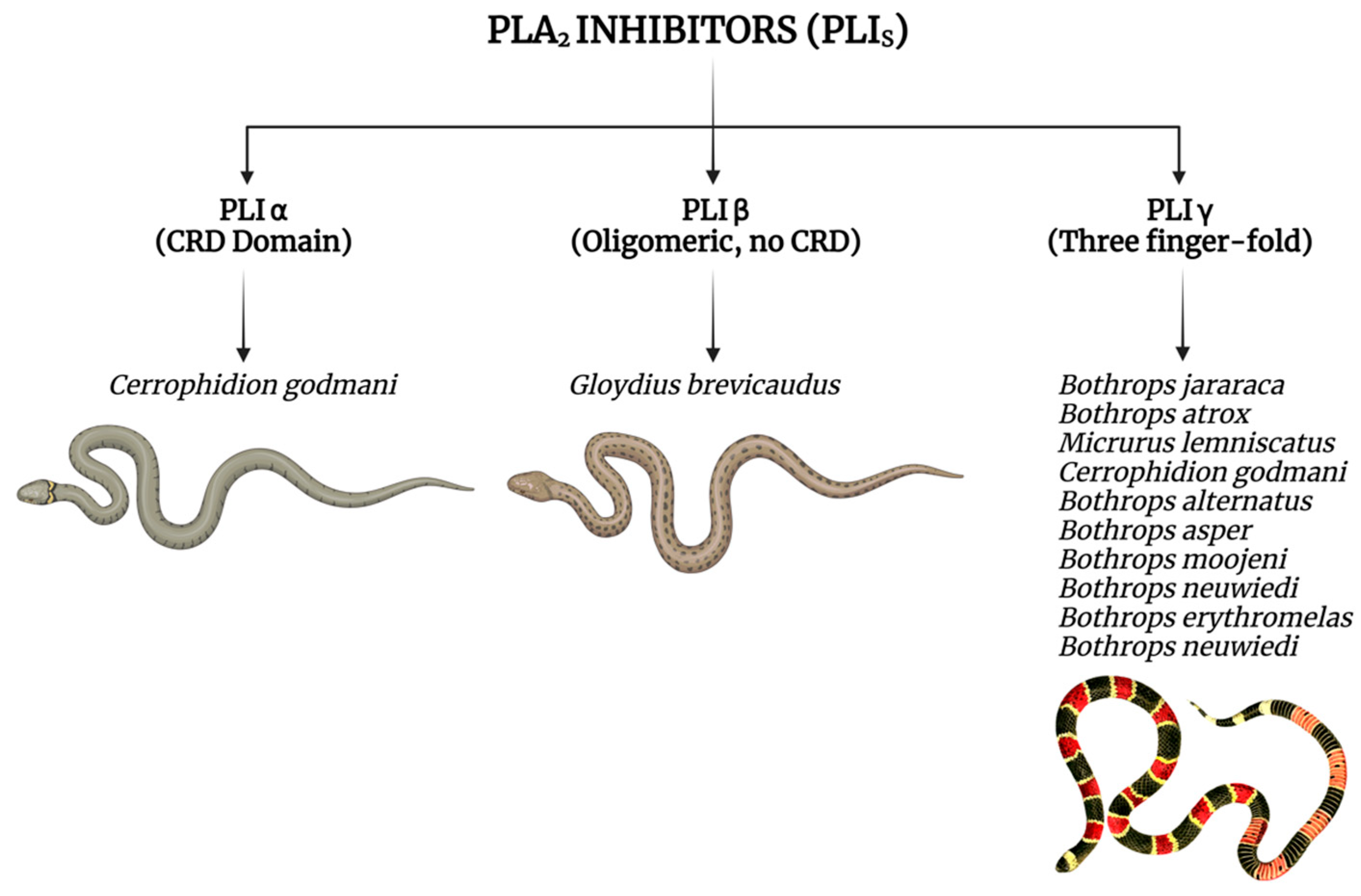
The mechanism of action of secreted PLA2 inhibitors relies on the formation of a soluble complex between the inhibitor and the target enzyme, effectively neutralizing the enzyme’s activity. Structurally, these inhibitors are classified into three groups—α, β, and γ (Figure 8)—based on their unique characteristics. Remarkably, a single snake species, whether venomous or non-venomous, may possess inhibitors from all three groups, underscoring the evolutionary diversity and adaptability of these molecules. Inhibitors from these groups have been successfully isolated from a wide range of snake species across different families, further emphasizing their broad distribution and potential relevance in nature. These findings highlight the utility of snake-derived PLIs as promising candidates for the development of therapeutic agents aimed at controlling PLA2-mediated pathological processes, including inflammation and envenomation [134,135].
PLIβ is a PLA2-inhibitory protein present in the serum of venomous snakes, playing a crucial role in neutralizing toxic PLA2s that may leak into the circulation. Purified from the serum of the Chinese mamushi snake Gloydius brevicaudus (formerly Agkistrodon blomhoffii siniticus), PLIβ contains nine tandem leucine-rich repeats (LRRs) and shares 33% sequence identity with human leucine-rich α2-glycoprotein (LRG), whose function remains unclear. Specifically, PLIβ inhibits group II basic PLA2 from G. brevicaudus venom, without affecting the acidic or neutral forms of the enzyme. Additionally, PLIβs with similar inhibitory spectra have been found in the serum of non-venomous Colubridae snakes, such as Elaphe quadrivirgata and Elaphe climacophora, suggesting a conserved role for this inhibitor across different species. The discovery that PLIβ can tightly bind cytochrome c (Cyt c), a pro-inflammatory and danger-associated molecule, suggests a broader protective function beyond PLA2 inhibition, potentially contributing to regulation of inflammatory processes [136].
PLIβ is a PLA2-inhibitory protein found in the blood of snakes, specifically serving as an ortholog of leucine-rich α2 glycoprotein (LRG). This protein plays a crucial role in neutralizing the toxic effects of PLA2 from the snake’s own venom. In this study, snake LRGs were purified from various snake serum samples using Cyt c affinity chromatography, and it was found that all purified LRGs were dimers linked by disulfide bonds. Among the different snake species analyzed, Elaphe climacophora PLIβ exhibited weaker inhibitory activity against Gloydius brevicauda basic PLA2 than the PLIs from G. brevicauda and Elaphe quadrivirgata, both of which are known to neutralize G. brevicauda basic PLA2 effectively. Notably, P. flavoviridis LRG showed no inhibitory activity against basic venom PLA2, further emphasizing the variation in the inhibitory abilities of PLIβ across different species. Despite its potential to inhibit PLA2, the actual functionality of snake LRG as a PLA2-inhibitory protein (PLIβ) is species-dependent, and its role remains variable among different snakes [137].
Estevão-Costa et al. (2008) conducted an investigation into the presence of γ-PLIs in six Bothrops species: B. alternatus, B. erythromelas, B. jararaca, B. jararacussu, B. moojeni, and B. neuwiedi [138]. They found γ-PLI transcripts in all species analyzed, with the mature proteins composed of 181 amino acid residues, including a 19-residue signal peptide. While the proteins from B. erythromelas and B. neuwiedi differed from the others, the study concluded with the identification of six new γ-PLIs in Brazilian Bothrops species. From a therapeutic perspective, the oligopeptide QPFPGLPLSRPNGYY, observed in this study, stands out as a promising candidate for the development of new PLA2 inhibitors.
In the study conducted by Picelle et al. (2017), the researchers analyzed PLIγs from snake species across various families by aligning amino acid sequences and constructing a phylogenetic tree [134]. The study confirmed the presence of PLIγ inhibitors in B. atrox, showing significant similarity to other known PLIγ sequences. Sequences from M. lemniscatus demonstrated specific similarities with elapid and crotaline snakes at conserved sites. Notably, the three-finger fold characteristic of PLIγs, coupled with the absence of a CRD domain specific to PLIαs, and a tertiary structure similar to CNF, strongly suggest that the inhibitors in question belong to the PLIγ class. This research deepens the understanding of the evolutionary relationships between these inhibitors and their functional roles in snake venom.
In the venom of Cerrophidion godmani (formerly Bothrops godmani), two myotoxin inhibitors, CgMIP-I and CgMIP-II, were directly isolated from the snake’s blood plasma through selective binding to affinity columns containing myotoxins I or II, respectively. Both proteins are glycosylated, acidic (pI = 4), and composed of 20–25 kDa subunits forming 110 kDa (CgMIP-I) or 180 kDa (CgMIP-II) oligomers. In inhibition assays, CgMIP-I specifically neutralized the PLA2, myotoxic, edema-forming, and cytolytic activities of myotoxin I, while CgMIP-II selectively inhibited the toxic properties of myotoxin II. N-terminal amino acid sequencing and cDNA analysis revealed that CgMIP-I resembles γ-type inhibitors, sharing a cysteine residue pattern from the Ly-6 protein superfamily, while CgMIP-II shares sequence identity with α-type inhibitors, containing carbohydrate recognition domains similar to those found in C-type lectins and mammalian PLA2 receptors. These findings highlight the structural and functional diversity of these inhibitors and their potential pharmacological applications [132].
Recent studies have focused on endogenous snake inhibitors, as highlighted by Fernandes et al. (2024), who assessed the inhibition of the A2 fraction of PLA2 from B. jararaca venom using extracts from five Siparuna species [139]. These plants have a long-standing history in traditional medicine for the treatment of snakebites in tropical regions. The extracts showed significant inhibition of the venom’s proteolytic activity (30–96%) and plasma coagulation (75–800s), as well as up to 90% inhibition of PLA2 activity. Moreover, five alkaloids identified within the extracts were found to possess strong antivenom potential, highlighting the therapeutic promise of Siparuna extracts in neutralizing venomous effects.

7. Conclusions

PLA2s from Bothrops snake venoms represent a complex group of enzymes with remarkable structural diversity and significant implications for human health. Their well-documented roles in envenomation, particularly in mediating inflammatory, myotoxic, neurotoxic, and anticoagulant effects, highlight their pathophysiological relevance and the need for continued research on their mechanisms of action. The increasing understanding of their structural variants, such as the Asp49 and Lys49 isoforms, has clarified their synergistic roles in tissue damage and inflammation. Furthermore, the biotechnological and therapeutic potential of PLA2s and their synthetic derivatives is evident in their demonstrated antimicrobial, antiviral, antitumor, and anti-inflammatory properties, as supported by experimental and clinical evidence. The identification of natural and synthetic PLA2 inhibitors, including those derived from Bothrops species themselves, adds another promising dimension for developing novel therapeutic strategies to mitigate PLA2-mediated damage and inflammation. Taken together, the comprehensive characterization and continued exploration of snake venom PLA2s and their inhibitors may not only improve antivenom therapies but also foster the development of new bioactive compounds with potential applications beyond toxinology.

8. Methodology

This review was conducted between November 2024 and July 2025 and aimed to comprehensively analyze the structural, functional, and biological diversity of snake venom phospholipases A2 (PLA2). A systematic literature search was performed across multiple scientific databases, including PubMed, SciELO, and NaBi, using combinations of keywords such as phospholipase A2, snake venom, toxin structure, venomics, and inhibitors. Relevant original research articles, reviews, and proteomic studies published were included. Protein sequences and structural data were retrieved from the UniProt database (https://www.uniprot.org), and three-dimensional structural models were accessed through the AlphaFold Protein Structure Database (https://alphafold.ebi.ac.uk/) via UniProt. Data visualization and figure generation were performed using GraphPad Prism version 8.0.1., GraphPad Software, San Diego, CA, USA) for statistical representation and plotting. Illustrations and schematic diagrams were created with BioRender (https://biorender.com) to support the visualization of molecular mechanisms and structural features. All data collected from these platforms were analyzed qualitatively, and results were organized into thematic categories, including structural diversity, enzymatic mechanisms, biological activities, and therapeutic potential of PLA2 and PLA2-like proteins.

Author Contributions

Conceptualization, I.C.d.S., M.R., N.A.S.-F. and M.B.P.; formal analysis, I.C.d.S., M.R., G.M.M.-P., A.R.A., E.T.M.F., G.M.-d.-S., L.C.S., M.F.C., A.M.R., J.R.A., N.A.S.-F. and M.B.P.; investigation, I.C.d.S., M.R., G.M.M.-P., A.R.A., E.T.M.F., G.M.-d.-S., L.C.S., M.F.C., A.M.R., I.S.d.O., J.R.A., N.A.S.-F. and M.B.P.; writing—original draft preparation, I.C.d.S., M.R., G.M.M.-P., A.R.A., E.T.M.F., G.M.-d.-S., L.C.S., M.F.C., A.M.R., A.M., I.S.d.O., N.A.S.-F. and M.B.P.; writing—review and editing, I.C.d.S., M.R., G.M.M.-P., A.R.A., E.T.M.F., G.M.-d.-S., L.C.S., M.F.C., A.M.R., A.M., I.S.d.O., J.R.A., N.A.S.-F. and M.B.P.; supervision, M.B.P. and N.A.S.-F. All authors have read and agreed to the published version of the manuscript.

Funding

This study was financed by Coordenação de Aperfeiçoamento de Pessoal de Nível Superior—Brasil (CAPES)—Finance Code 001 (scholarships to A.R.A., G.M.-d.-S., L.C.S., M.F.C. and A.M.), Fundação de Amparo à Pesquisa do Estado de São Paulo (FAPESP; scholarship to I.C.d.S. No. 2023/16030-8 and No. 2025/07149-7, M.R. No. 2024/01801-1 and No. 2025/11949-9, G.M.M.-P. No. 2025/00704-5, E.T.M.F. No. 2024/13258-0, and I.S.d.O. No. 2020/13176-3), Fundação de Amparo à Pesquisa do Estado do Amazonas (FAPEAM, scholarship to A.M.R.) and Conselho Nacional de Desenvolvimento Científico e Tecnológico (CNPq, scholarship to M.B.P. No. 305778/2023-4).

Institutional Review Board Statement

Not applicable.

Informed Consent Statement

Written informed consent was obtained from all individuals involved in this study for the use and publication of anonymized clinical images. All procedures were conducted in accordance with institutional ethical guidelines and approved by the Local Ethics Committee at Federal University of Roraima (CAAE n. 24120719.5.0000.5302, approved on 24 November 2020).

Data Availability Statement

No new data were generated in this study. All data discussed are publicly available from the cited literature and online databases such as UniProt, AlphaFold, PubMed, SciELO, and NCBI as properly referenced. Additional information or supporting materials are available from the corresponding author upon request.

Conflicts of Interest

The authors declare no conflicts of interest.

References

  1. Carrasco, P.A.; Harvey, M.B.; Saravia, A.M. The Rare Andean Pitviper Rhinocerophis jonathani (Serpentes: Viperidae: Crotalinae): Redescription with Comments on Its Systematics and Biogeography. Zootaxa 2009, 2283, 1–15. [Google Scholar] [CrossRef]
  2. Carrasco, P.; Leynaud, G.; Scrocchi, G. Redescription of the Southernmost Snake Species, Bothrops ammodytoides (Serpentes: Viperidae: Crotalinae). Amphibia-Reptilia 2010, 31, 323–338. [Google Scholar] [CrossRef]
  3. Harvey, M.B. A New Species Of Montane Pitviper (Serpentes, Viperidae, Bothrops) From Cochabamba, Bolivia. Proc. Biol. Soc. Wash. 1994, 107, 60–66. [Google Scholar]
  4. Lira-da-Silva, R.M.; Mise, Y.F.; Casais-e-Silva, L.L.; Ulloa, J.; Hamdan, B.; Brazil, T.K. Serpentes de importância médica do Nordeste do Brasil. Gaz. Médica Bahia 2009, 79 (Suppl. S1), 7–20. [Google Scholar]
  5. Wallach, V.; Williams, K.L.; Boundy, J. Cobras do Mundo: Um Catálogo de Espécies Vivas e Extintas, 1st ed.; CRC Press-Taylor & Francis Group: Boca Raton, FL, USA, 2014. [Google Scholar]
  6. Wüster, W. The Venomous Reptiles of the Western Hemisphere, Jonathan A. Campbell, William W. Lamar. Comstock. Trans. R. Soc. Trop. Med. Hyg. 2005, 99, 476–477. [Google Scholar] [CrossRef]
  7. Bernarde, P.S.; Pucca, M.B.; Mota-da-Silva, A.; Da Fonseca, W.L.; De Almeida, M.R.N.; De Oliveira, I.S.; Cerni, F.A.; Gobbi Grazziotin, F.; Sartim, M.A.; Sachett, J.; et al. Bothrops bilineatus: An Arboreal Pitviper in the Amazon and Atlantic Forest. Front. Immunol. 2021, 12, 778302. [Google Scholar] [CrossRef]
  8. Barbo, F.E.; Grazziotin, F.G.; Sazima, I.; Martins, M.; Sawaya, R.J. A New and Threatened Insular Species of Lancehead from Southeastern Brazil. Herpetologica 2012, 68, 418–429. [Google Scholar] [CrossRef]
  9. Barbo, F.E.; Gasparini, J.L.; Almeida, A.P.; Zaher, H.; Grazziotin, F.G.; Gusmão, R.B.; Ferrarini, J.M.G.; Sawaya, R.J. Another New and Threatened Species of Lancehead Genus Bothrops (Serpentes, Viperidae) from Ilha Dos Franceses, Southeastern Brazil. Zootaxa 2016, 4097, 511–529. [Google Scholar] [CrossRef]
  10. Guedes, T.B.; Sawaya, R.J.; Zizka, A.; Laffan, S.; Faurby, S.; Pyron, R.A.; Bérnils, R.S.; Jansen, M.; Passos, P.; Prudente, A.L.C.; et al. Patterns, Biases and Prospects in the Distribution and Diversity of Neotropical Snakes. Glob. Ecol. Biogeogr. 2018, 27, 14–21. [Google Scholar] [CrossRef]
  11. Guedes, T.B.; Nogueira, C.; Marques, O.A.V. Diversity, Natural History, and Geographic Distribution of Snakes in the Caatinga, Northeastern Brazil. Zootaxa 2014, 3863, 1–93. [Google Scholar] [CrossRef]
  12. Turci, L.C.B.; Albuquerque, S.D.; Bernarde, P.S.; Miranda, D.B. Uso Do Hábitat, Atividade e Comportamento de Bothriopsis bilineatus e de Bothrops atrox (Serpentes: Viperidae) Na Floresta Do Rio Moa, Acre, Brasil. Biota Neotrop. 2009, 9, 197–206. [Google Scholar] [CrossRef]
  13. Reptile Database the Reptile Database. Available online: https://reptile-database.reptarium.cz/ (accessed on 22 November 2024).
  14. Sociedade Brasileira de Herpetologia. Herpetologia Brasileira. 2023, Volume 12. Available online: https://sbherpetologia.org.br/revista-herpetologia-brasileira (accessed on 22 November 2024).
  15. Sampat, G.H.; Hiremath, K.; Dodakallanavar, J.; Patil, V.S.; Harish, D.R.; Biradar, P.; Mahadevamurthy, R.K.; Barvaliya, M.; Roy, S. Unraveling Snake Venom Phospholipase A2: An Overview of Its Structure, Pharmacology, and Inhibitors. Pharmacol. Rep. 2023, 75, 1454–1473. [Google Scholar] [CrossRef]
  16. WHO Snakebite Envenoming; World Health Organization: Geneva, Switzerland, 2025.
  17. Bernarde, P.S. Serpentes Peçonhentas e Acidentes Ofídicos No Brasil; Anolis Books: São Paulo, Brazil, 2014; ISBN 978-85-65622-04-2. [Google Scholar]
  18. Silva, N.B.; Dias, E.H.V.; Costa, J.D.O.; Mamede, C.C.N. Bothrops moojeni Snake Venom: A Source of Potential Therapeutic Agents Against Hemostatic Disorders. Int. J. Cardiovasc. Sci. 2024, 37, e20220075. [Google Scholar] [CrossRef]
  19. TabNet Win32 3.3: Acidente por Animais Peçonhentos-Notificações Registradas No Sistema de Informação de Agravos de Notificação-Brasil. Available online: http://tabnet.datasus.gov.br/cgi/deftohtm.exe?sinannet/cnv/animaisbr.def (accessed on 17 July 2025).
  20. Melgarejo, A.R. Animais Peçonhentos No Brasil: Biologia, Clínica e Terapêutica dos Acidentes; Sar vier: São Paulo, Brazil, 2003; pp. 33–61. [Google Scholar]
  21. Romanazzi, M.; Filardi, E.T.M.; Pires, G.M.M.; Cerveja, M.F.; Melo-dos-Santos, G.; Oliveira, I.S.; Ferreira, I.G.; Cerni, F.A.; Santos-Filho, N.A.; Monteiro, W.M.; et al. The Versatility of Serine Proteases from Brazilian Bothrops Venom: Their Roles in Snakebites and Drug Discovery. Biomolecules 2025, 15, 154. [Google Scholar] [CrossRef] [PubMed]
  22. Teixeira, S.C.; Da Silva, M.S.; Gomes, A.A.S.; Moretti, N.S.; Lopes, D.S.; Ferro, E.A.V.; Rodrigues, V.D.M. Panacea within a Pandora’s Box: The Antiparasitic Effects of Phospholipases A2 (PLA2s) from Snake Venoms. Trends Parasitol. 2022, 38, 80–94. [Google Scholar] [CrossRef] [PubMed]
  23. Koh, D.C.I.; Armugam, A.; Jeyaseelan, K. Snake Venom Components and Their Applications in Biomedicine. Cell. Mol. Life Sci. CMLS 2006, 63, 3030–3041. [Google Scholar] [CrossRef]
  24. Tu, A.T. Overview of Snake Venom Chemistry. In Natural Toxins 2: Structure, Mechanism of Action, and Detection; Singh, B.R., Tu, A.T., Eds.; Springer: Boston, MA, USA, 1996; pp. 37–62. ISBN 978-1-4613-0361-9. [Google Scholar]
  25. Calvete, J.J.; Juárez, P.; Sanz, L. Snake Venomics. Strategy and Applications. J. Mass Spectrom. 2007, 42, 1405–1414. [Google Scholar] [CrossRef]
  26. Calvete, J.J. Venomics: Digging into the Evolution of Venomous Systems and Learning to Twist Nature to Fight Pathology. J. Proteom. 2009, 72, 121–126. [Google Scholar] [CrossRef]
  27. Mamede, C.C.N.; De Sousa Simamoto, B.B.; Da Cunha Pereira, D.F.; De Oliveira Costa, J.; Ribeiro, M.S.M.; De Oliveira, F. Edema, Hyperalgesia and Myonecrosis Induced by Brazilian Bothropic Venoms: Overview of the Last Decade. Toxicon 2020, 187, 10–18. [Google Scholar] [CrossRef]
  28. Alape-Girón, A.; Sanz, L.; Escolano, J.; Flores-Díaz, M.; Madrigal, M.; Sasa, M.; Calvete, J.J. Snake Venomics of the Lancehead Pitviper Bothrops asper: Geographic, Individual, and Ontogenetic Variations. J. Proteome Res. 2008, 7, 3556–3571. [Google Scholar] [CrossRef]
  29. da Brasil, M.S. Guia-Animais Peçonhentos do Brasil—Ministério da Saúde, 1st ed.; Ministério da Saúde do Brasil: Brasília, Brazil, 2024; ISBN 978-65-5993-598-7. [Google Scholar]
  30. de Leite, R.S.; Targino, I.T.G.; Lopes, Y.A.C.F.; Barros, R.M.; Vieira, A.A. Epidemiology of Snakebite Accidents in the Municipalities of the State of Paraíba, Brazil. Cienc. Saude Coletiva 2013, 18, 1463–1471. [Google Scholar] [CrossRef] [PubMed][Green Version]
  31. Nicoleti, A.F.; Medeiros, C.R.; Duarte, M.R.; de França, F.O.S. Comparison of Bothropoides jararaca bites with and without envenoming treated at the Vital Brazil Hospital of the Butantan Institute, State of São Paulo, Brazil. Rev. Soc. Bras. Med. Trop. 2010, 43, 657–661. [Google Scholar] [CrossRef] [PubMed][Green Version]
  32. Machado, A.S.; Barbosa, F.B.; da Mello, G.S.; de O. Pardal, P.P. Hemorrhagic stroke related to snakebite by Bothrops genus: A case report. Rev. Soc. Bras. Med. Trop. 2010, 43, 602–604. [Google Scholar] [CrossRef] [PubMed]
  33. Otero, R.; Gutiérrez, J.; Beatriz Mesa, M.; Duque, E.; Rodríguez, O.; Luis Arango, J.; Gómez, F.; Toro, A.; Cano, F.; María Rodríguez, L.; et al. Complications of Bothrops, Porthidium, and Bothriechis Snakebites in Colombia. A Clinical and Epidemiological Study of 39 Cases Attended in a University Hospital. Toxicon 2002, 40, 1107–1114. [Google Scholar] [CrossRef]
  34. Gutiérrez, J.M.; Ownby, C.L. Skeletal Muscle Degeneration Induced by Venom Phospholipases A2: Insights into the Mechanisms of Local and Systemic Myotoxicity. Toxicon 2003, 42, 915–931. [Google Scholar] [CrossRef]
  35. Kini, R.M.; Evans, H.J. A Model to Explain the Pharmacological Effects of Snake Venom Phospholipases A2. Toxicon 1989, 27, 613–635. [Google Scholar] [CrossRef]
  36. Manjunatha Kini, R. Excitement Ahead: Structure, Function and Mechanism of Snake Venom Phospholipase A2 Enzymes. Toxicon 2003, 42, 827–840. [Google Scholar] [CrossRef]
  37. Kuchler, K.; Gmachl, M.; Sippl, M.J.; Kreil, G. Analysis of the cDNA for Phospholipase A2 from Honeybee Venom Glands. Eur. J. Biochem. 1989, 184, 249–254. [Google Scholar] [CrossRef]
  38. Lee, H.Y.; Bahn, S.C.; Shin, J.S.; Hwang, I.; Back, K.; Doelling, J.H.; Beungtae Ryu, S. Multiple Forms of Secretory Phospholipase A2 in Plants. Prog. Lipid Res. 2005, 44, 52–67. [Google Scholar] [CrossRef]
  39. McIntosh, J.M.; Ghomashchi, F.; Gelb, M.H.; Dooley, D.J.; Stoehr, S.J.; Giordani, A.B.; Naisbitt, S.R.; Olivera, B.M. Conodipine-M, a Novel Phospholipase A2 Isolated from the Venom of the Marine Snail Conus magus. J. Biol. Chem. 1995, 270, 3518–3526. [Google Scholar] [CrossRef]
  40. Ryu, Y.; Oh, Y.; Yoon, J.; Cho, W.; Baek, K. Molecular Characterization of a Gene Encoding the Drosophila melanogaster Phospholipase A2. Biochim. Biophys. Acta BBA-Gene Struct. Expr. 2003, 1628, 206–210. [Google Scholar] [CrossRef]
  41. Valentin, E.; Lambeau, G. What Can Venom Phospholipases A2 Tell Us about the Functional Diversity of Mammalian Secreted Phospholipases A2? Biochimie 2000, 82, 815–831. [Google Scholar] [CrossRef]
  42. Doery, H.M.; Pearson, J.E. Haemolysins in Venoms of Australian Snakes. Observations on the Haemolysins of the Venoms of Some Australian Snakes and the Separation of Phospholipase A from the Venom of Pseudechis porphyriacus. Biochem. J. 1961, 78, 820–827. [Google Scholar] [CrossRef]
  43. Hanahan, D.J.; Brockerhoff, H.; Barron, E.J. The Site of Attack of Phospholipase (Lecithinase) A on Lecithin: A Re-Evaluation. Position of Fatty Acids on Lecithins and Triglycerides. J. Biol. Chem. 1960, 235, 1917–1923. [Google Scholar] [CrossRef] [PubMed]
  44. Khan, S.A.; Ilies, M.A. The Phospholipase A2 Superfamily: Structure, Isozymes, Catalysis, Physiologic and Pathologic Roles. Int. J. Mol. Sci. 2023, 24, 1353. [Google Scholar] [CrossRef] [PubMed]
  45. Dennis, E.A.; Cao, J.; Hsu, Y.-H.; Magrioti, V.; Kokotos, G. Phospholipase A2 Enzymes: Physical Structure, Biological Function, Disease Implication, Chemical Inhibition, and Therapeutic Intervention | Chemical Reviews. Chem. Rev. 2011, 111, 6130–6185. [Google Scholar] [CrossRef]
  46. Lam, L.; Ilies, M.A. Evaluation of the Impact of Esterases and Lipases from the Circulatory System against Substrates of Different Lipophilicity. Int. J. Mol. Sci. 2022, 23, 1262. [Google Scholar] [CrossRef]
  47. Six, D.A.; Dennis, E.A. The Expanding Superfamily of Phospholipase A2 Enzymes: Classification and Characterization. Biochim. Biophys. Acta BBA-Mol. Cell Biol. Lipids 2000, 1488, 1–19. [Google Scholar] [CrossRef]
  48. Abbott, M.J.; Tang, T.; Sul, H.S. The Role of Phospholipase A2-Derived Mediators in Obesity. Drug Discov. Today Dis. Mech. 2010, 7, e213–e218. [Google Scholar] [CrossRef]
  49. Peng, Z.; Chang, Y.; Fan, J.; Ji, W.; Su, C. Phospholipase A2 Superfamily in Cancer. Cancer Lett. 2021, 497, 165–177. [Google Scholar] [CrossRef]
  50. Balboa, M.A.; Balsinde, J. Phospholipases: From Structure to Biological Function. Biomolecules 2021, 11, 428. [Google Scholar] [CrossRef] [PubMed]
  51. Quach, N.D.; Arnold, R.D.; Cummings, B.S. Secretory Phospholipase A2 Enzymes as Pharmacological Targets for Treatment of Disease. Biochem. Pharmacol. 2014, 90, 338–348. [Google Scholar] [CrossRef] [PubMed]
  52. Meyer, M.C.; Rastogi, P.; Beckett, C.S.; McHowat, J. Phospholipase A2 Inhibitors as Potential Anti-Inflammatory Agents. Curr. Pharm. Des. 2005, 11, 1301–1312. [Google Scholar] [CrossRef] [PubMed]
  53. Garcia Denegri, M.E.; Acosta, O.C.; Huancahuire-Vega, S.; Martins-de-Souza, D.; Marangoni, S.; Maruñak, S.L.; Teibler, G.P.; Leiva, L.C.; Ponce-Soto, L.A. Isolation and Functional Characterization of a New Acidic PLA2 Ba SpII RP4 of the Bothrops alternatus Snake Venom from Argentina. Toxicon 2010, 56, 64–74. [Google Scholar] [CrossRef]
  54. Arni, R.K.; Ward, R.J.; Gutierrez, J.M.; Tulinsky, A. Structure of a Calcium-Independent Phospholipase-like Myotoxic Protein from Bothrops asper Venom. Acta Crystallogr. D Biol. Crystallogr. 1995, 51, 311–317. [Google Scholar] [CrossRef]
  55. Dunn, R.D.; Broady, K.W. Snake Inhibitors of Phospholipase A2 Enzymes. Biochim. Biophys. Acta BBA-Mol. Cell Biol. Lipids 2001, 1533, 29–37. [Google Scholar] [CrossRef]
  56. Gelb, M.H.; Min, J.-H.; Jain, M.K. Do Membrane-Bound Enzymes Access Their Substrates from the Membrane or Aqueous Phase: Interfacial versus Non-Interfacial Enzymes. Biochim. Biophys. Acta BBA-Mol. Cell Biol. Lipids 2000, 1488, 20–27. [Google Scholar] [CrossRef]
  57. Carredano, E.; Westerlund, B.; Persson, B.; Saarinen, M.; Ramaswamy, S.; Eaker, D.; Eklund, H. The Three-Dimensional Structures of Two Toxins from Snake Venom Throw Light on the Anticoagulant and Neurotoxic Sites of Phospholipase A2. Toxicon 1998, 36, 75–92. [Google Scholar] [CrossRef]
  58. Francis, B.R.; Da Silva, N.J.; Seebart, C.; Silva, L.L.C.E.; Schmidt, J.J.; Kaiser, I.I. Toxins Isolated from the Venom of the Brazilian Coral Snake (Micrurus frontalis frontalis) Include Hemorrhagic Type Phospholipases A2 and Postsynaptic Neurotoxins. Toxicon 1997, 35, 1193–1203. [Google Scholar] [CrossRef]
  59. Chijiwa, T.; Tokunaga, E.; Ikeda, R.; Terada, K.; Ogawa, T.; Oda-Ueda, N.; Hattori, S.; Nozaki, M.; Ohno, M. Discovery of Novel [Arg49]Phospholipase A2 Isozymes from Protobothrops elegans Venom and Regional Evolution of Crotalinae Snake Venom Phospholipase A2 Isozymes in the Southwestern Islands of Japan and Taiwan. Toxicon 2006, 48, 672–682. [Google Scholar] [CrossRef]
  60. Tsai, I.-H.; Wang, Y.-M.; Chen, Y.-H.; Tsai, T.-S.; Tu, M.-C. Venom Phospholipases A2 of Bamboo Viper (Trimeresurus stejnegeri): Molecular Characterization, Geographic Variations and Evidence of Multiple Ancestries. Biochem. J. 2004, 377, 215–223. [Google Scholar] [CrossRef] [PubMed]
  61. Corrêa, E.A.; Kayano, A.M.; Diniz-Sousa, R.; Setúbal, S.S.; Zanchi, F.B.; Zuliani, J.P.; Matos, N.B.; Almeida, J.R.; Resende, L.M.; Marangoni, S.; et al. Isolation, Structural and Functional Characterization of a New Lys49 Phospholipase A2 Homologue from Bothrops neuwiedi Urutu with Bactericidal Potential. Toxicon 2016, 115, 13–21. [Google Scholar] [CrossRef]
  62. Salvador, G.H.M.; Dos Santos, J.I.; Lomonte, B.; Fontes, M.R.M. Crystal Structure of a Phospholipase A2 from Bothrops asper Venom: Insights into a New Putative “Myotoxic Cluster”. Biochimie 2017, 133, 95–102. [Google Scholar] [CrossRef] [PubMed]
  63. Castro-Amorim, J.; de Oliveira, A.N.; Silva, S.L.D.; Soares, A.M.; Mukherjee, A.K.; Ramos, M.J.; Fernandes, P.A. Catalytically Active Snake Venom PLA2 Enzymes: An Overview of Its Elusive Mechanisms of Reaction. J. Med. Chem. 2023, 66, 5364–5376. [Google Scholar] [CrossRef] [PubMed]
  64. Zambelli, V.; Picolo, G.; Fernandes, C.; Fontes, M.; Cury, Y. Secreted Phospholipases A2 from Animal Venoms in Pain and Analgesia. Toxins 2017, 9, 406. [Google Scholar] [CrossRef]
  65. Teixeira, S.S.; Silveira, L.B.; da Silva, F.M.N.; Marchi-Salvador, D.P.; Silva, F.P.; Izidoro, L.F.M.; Fuly, A.L.; Juliano, M.A.; dos Santos, C.R.; Murakami, M.T.; et al. Molecular Characterization of an Acidic Phospholipase A2 from Bothrops pirajai Snake Venom: Synthetic C-Terminal Peptide Identifies Its Antiplatelet Region. Arch. Toxicol. 2011, 85, 1219–1233. [Google Scholar] [CrossRef]
  66. Harris, J.B. Myotoxic Phospholipases A2 and the Regeneration of Skeletal Muscles. Toxicon 2003, 42, 933–945. [Google Scholar] [CrossRef]
  67. Maruñak, S.L.; Leiva, L.; Denegri, M.E.; Teibler, P.; Acosta, O. Isolation and Biological Characterization of a Basic Phospholipase A2 from Bothrops jararacussu Snake Venom. Biocell 2007, 31, 355–364. [Google Scholar] [CrossRef]
  68. Ownby, C.L. Structure, Function and Biophysical Aspects of the Myotoxins from Snake Venoms. J. Toxicol. Toxin Rev. 1998, 17, 213–238. [Google Scholar] [CrossRef]
  69. Lomonte, B. Lys49 Myotoxins, Secreted Phospholipase A2-like Proteins of Viperid Venoms: A Comprehensive Review. Toxicon 2023, 224, 107024. [Google Scholar] [CrossRef]
  70. Lomonte, B.; Angulo, Y.; Sasa, M.; Gutiérrez, J.M. The Phospholipase A2 Homologues of Snake Venoms: Biological Activities and Their Possible Adaptive Roles. Protein Pept. Lett. 2009, 16, 860–876. [Google Scholar] [CrossRef] [PubMed]
  71. Sousa, L.F.; Freitas, A.P.; Cardoso, B.L.; Del-Rei, T.H.M.; Mendes, V.A.; Oréfice, D.P.; Rocha, M.M.T.; Prezoto, B.C.; Moura-da-Silva, A.M. Diversity of Phospholipases A2 from Bothrops atrox Snake Venom: Adaptive Advantages for Snakes Compromising Treatments for Snakebite Patients. Toxins 2022, 14, 543. [Google Scholar] [CrossRef] [PubMed]
  72. Moreira, V.; Leiguez, E.; Janovits, P.M.; Maia-Marques, R.; Fernandes, C.M.; Teixeira, C. Inflammatory Effects of Bothrops Phospholipases A2: Mechanisms Involved in Biosynthesis of Lipid Mediators and Lipid Accumulation. Toxins 2021, 13, 868. [Google Scholar] [CrossRef] [PubMed]
  73. Santos, J.D.L. Estudos Estruturais de Fosfolipases A2 Isoladas de Peçonha de Bothrops jararacussu e Descrição de Inibidores Hábeis em Tratamento de Ofidismo. Dissertação de Mestrado, Universidade Federal da Paraíba, Centro de Ciências em Biologia Celular e Molecular, João Pessoa, Brazil, 2013. [Google Scholar]
  74. Conceição Sobrinho, J. Isolamento e Caracterização Bioquímica e Estrutural de Fosfolipases A2 Ácidas do Veneno da Serpente Bothrops brazili. Master’s Dissertation, Graduate Program in Experimental Biology (PGBIOEXP), Federal University of Rondônia (UNIR), Porto Velho, Brazil, 2014. Available online: http://www.ri.unir.br/jspui/handle/123456789/2210 (accessed on 7 September 2025).
  75. Cedro, R.C.A.; Menaldo, D.L.; Costa, T.R.; Zoccal, K.F.; Sartim, M.A.; Santos-Filho, N.A.; Faccioli, L.H.; Sampaio, S.V. Cytotoxic and Inflammatory Potential of a Phospholipase A2 from Bothrops jararaca Snake Venom. J. Venom. Anim. Toxins Trop. Dis. 2018, 24, 33. [Google Scholar] [CrossRef] [PubMed]
  76. Kini, R.M. Anticoagulant Proteins from Snake Venoms: Structure, Function and Mechanism. Biochem. J. 2006, 397, 377–387. [Google Scholar] [CrossRef]
  77. Kini, R.M.; Evans, H.J. Structure-Function Relationships of Phospholipases. The Anticoagulant Region of Phospholipases A2. J. Biol. Chem. 1987, 262, 14402–14407. [Google Scholar] [CrossRef]
  78. Mukherjee, A.K.; Ghosal, S.K.; Maity, C.R. Some Biochemical Properties of Russell’s Viper (Daboia russelli) Venom from Eastern India: Correlation with Clinico-Pathological Manifestation in Russell’s Viper Bite. Toxicon 2000, 38, 163–175. [Google Scholar] [CrossRef]
  79. Saikia, D.; Thakur, R.; Mukherjee, A.K. An Acidic Phospholipase A2 (RVVA-PLA2-I) Purified from Daboia russelli Venom Exerts Its Anticoagulant Activity by Enzymatic Hydrolysis of Plasma Phospholipids and by Non-Enzymatic Inhibition of Factor Xa in a Phospholipids/Ca2+ Independent Manner. Toxicon 2011, 57, 841–850. [Google Scholar] [CrossRef]
  80. Doley, R.; King, G.F.; Mukherjee, A.K. Differential Hydrolysis of Erythrocyte and Mitochondrial Membrane Phospholipids by Two Phospholipase A2 Isoenzymes (NK-PLA2-I and NK-PLA2-II) from the Venom of the Indian Monocled Cobra Naja kaouthia. Arch. Biochem. Biophys. 2004, 425, 1–13. [Google Scholar] [CrossRef]
  81. Mukherjee, A.K. A Major Phospholipase A2 from Daboia russelii russelii Venom Shows Potent Anticoagulant Action via Thrombin Inhibition and Binding with Plasma Phospholipids. Biochimie 2014, 99, 153–161. [Google Scholar] [CrossRef]
  82. Stefansson, S.; Kini, R.M.; Evans, H.J. The Inhibition of Clotting Complexes of the Extrinsic Coagulation Cascade by the Phospholipase A2 Isoenzymes from Naja nigricollis Venom. Thromb. Res. 1989, 55, 481–491. [Google Scholar] [CrossRef]
  83. Dutta, S.; Gogoi, D.; Mukherjee, A.K. Anticoagulant Mechanism and Platelet Deaggregation Property of a Non-Cytotoxic, Acidic Phospholipase A2 Purified from Indian Cobra (Naja naja) Venom: Inhibition of Anticoagulant Activity by Low Molecular Weight Heparin. Biochimie 2015, 110, 93–106. [Google Scholar] [CrossRef] [PubMed]
  84. Osipov, A.V.; Filkin, S.Y.; Makarova, Y.V.; Tsetlin, V.I.; Utkin, Y.N. A New Type of Thrombin Inhibitor, Noncytotoxic Phospholipase A2, from the Naja haje Cobra Venom. Toxicon 2010, 55, 186–194. [Google Scholar] [CrossRef] [PubMed]
  85. Kini, R.M. Structure–Function Relationships and Mechanism of Anticoagulant Phospholipase A2 Enzymes from Snake Venoms. Toxicon 2005, 45, 1147–1161. [Google Scholar] [CrossRef] [PubMed]
  86. Bonfim, V.L.; de Carvalho, D.D.; Ponce-Soto, L.A.; Kassab, B.H.; Marangoni, S. Toxicity of Phospholipases A2 D49 (6-1 and 6-2) and K49 (Bj-VII) from Bothrops jararacussu Venom. Cell Biol. Toxicol. 2009, 25, 523–532. [Google Scholar] [CrossRef]
  87. Murakami, M.; Shimbara, S.; Kambe, T.; Kuwata, H.; Winstead, M.V.; Tischfield, J.A.; Kudo, I. The Functions of Five Distinct Mammalian Phospholipase A2s in Regulating Arachidonic Acid Release: Type IIA and Type V Secretory Phospholipase A2s Are Functionally Redundat and Act in Concert With Cytosolic Phospholipase A2. J. Biol. Chem. 1998, 273, 14411–14423. [Google Scholar] [CrossRef]
  88. Granata, F.; Nardicchi, V.; Loffredo, S.; Frattini, A.; Ilaria Staiano, R.; Agostini, C.; Triggiani, M. Secreted Phospholipases A2: A Proinflammatory Connection between Macrophages and Mast Cells in the Human Lung. Immunobiology 2009, 214, 811–821. [Google Scholar] [CrossRef]
  89. Murakami, M.; Koduri, R.S.; Enomoto, A.; Shimbara, S.; Seki, M.; Yoshihara, K.; Singer, A.; Valentin, E.; Ghomashchi, F.; Lambeau, G.; et al. Distinct Arachidonate-Releasing Functions of Mammalian Secreted Phospholipase A2s in Human Embryonic Kidney 293 and Rat Mastocytoma RBL-2H3 Cells through Heparan Sulfate Shuttling and External Plasma Membrane Mechanisms. J. Biol. Chem. 2001, 276, 10083–10096. [Google Scholar] [CrossRef]
  90. Triggiani, M.; Granata, F.; Frattini, A.; Marone, G. Activation of Human Inflammatory Cells by Secreted Phospholipases A2. Biochim. Biophys. Acta BBA-Mol. Cell Biol. Lipids 2006, 1761, 1289–1300. [Google Scholar] [CrossRef]
  91. Garcia-Martinez, V.; Gimenez-Molina, Y.; Villanueva, J.; Darios, F.D.; Davletov, B.; Gutiérrez, L.M. Emerging Evidence for the Modulation of Exocytosis by Signalling Lipids. FEBS Lett. 2018, 592, 3493–3503. [Google Scholar] [CrossRef]
  92. Pungerčar, J.; Križaj, I. Understanding the Molecular Mechanism Underlying the Presynaptic Toxicity of Secreted Phospholipases A2. Toxicon 2007, 50, 871–892. [Google Scholar] [CrossRef]
  93. Schaechter, J.D.; Benowitz, L.I. Activation of Protein Kinase C by Arachidonic Acid Selectively Enhances the Phosphorylation of GAP-43 in Nerve Terminal Membranes. J. Neurosci. 1993, 13, 4361–4371. [Google Scholar] [CrossRef]
  94. St. John, P.A.; Gordon, H. Agonists Cause Endocytosis of Nicotinic Acetylcholine Receptors on Cultured Myotubes. J. Neurobiol. 2001, 49, 212–223. [Google Scholar] [CrossRef]
  95. Marinho, A.D.; de Silveira, J.A.M.; Chaves Filho, A.J.M.; Jorge, A.R.C.; Nogueira Júnior, F.A.; Pereira, V.B.M.; de Aquino, P.E.A.; Pereira, C.A.S.; Evangelista, J.S.A.M.; Macedo, D.S.; et al. Bothrops pauloensis Snake Venom-Derived Asp-49 and Lys-49 Phospholipases A2 Mediates Acute Kidney Injury by Oxidative Stress and Release of Inflammatory Cytokines. Toxicon 2021, 190, 31–38. [Google Scholar] [CrossRef]
  96. Bustillo, S.; Fernández, J.; Chaves-Araya, S.; Angulo, Y.; Leiva, L.C.; Lomonte, B. Isolation of Two Basic Phospholipases A2 from Bothrops diporus Snake Venom: Comparative Characterization and Synergism between Asp49 and Lys49 Variants. Toxicon 2019, 168, 113–121. [Google Scholar] [CrossRef] [PubMed]
  97. Borges, R.J.; Salvador, G.H.M.; Campanelli, H.B.; Pimenta, D.C.; de Oliveira Neto, M.; Usón, I.; Fontes, M.R.M. BthTX-II from Bothrops jararacussu Venom Has Variants with Different Oligomeric Assemblies: An Example of Snake Venom Phospholipases A2 Versatility. Int. J. Biol. Macromol. 2021, 191, 255–266. [Google Scholar] [CrossRef] [PubMed]
  98. Echeverría, S.M.; Van de Velde, A.C.; Luque, D.E.; Cardozo, C.M.; Kraemer, S.; del Gauna Pereira, M.C.; Gay, C.C. Platelet Aggregation Inhibitors from Bothrops alternatus Snake Venom. Toxicon 2023, 223, 107014. [Google Scholar] [CrossRef] [PubMed]
  99. Sobrinho, J.C.; Simões-Silva, R.; Holanda, R.J.; Alfonso, J.; Gomez, A.F.; Zanchi, F.B.; Moreira-Dill, L.S.; Grabner, A.N.; Zuliani, J.P.; Calderon, L.A.; et al. Antitumoral Potential of Snake Venom Phospholipases A2 and Synthetic Peptides. Curr. Pharm. Biotechnol. 2016, 17, 1201–1212. [Google Scholar] [CrossRef]
  100. Bazaa, A.; Pasquier, E.; Defilles, C.; Limam, I.; Kessentini-Zouari, R.; Kallech-Ziri, O.; Battari, A.E.; Braguer, D.; Ayeb, M.E.; Marrakchi, N.; et al. MVL-PLA2, a Snake Venom Phospholipase A2, Inhibits Angiogenesis through an Increase in Microtubule Dynamics and Disorganization of Focal Adhesions. PLoS ONE 2010, 5, e10124. [Google Scholar] [CrossRef]
  101. de Oliveira, A.L.N.; Lacerda, M.T.; Ramos, M.J.; Fernandes, P.A. Viper Venom Phospholipase A2 Database: The Structural and Functional Anatomy of a Primary Toxin in Envenomation. Toxins 2024, 16, 71. [Google Scholar] [CrossRef]
  102. Frangieh, J.; Rima, M.; Fajloun, Z.; Henrion, D.; Sabatier, J.-M.; Legros, C.; Mattei, C. Snake Venom Components: Tools and Cures to Target Cardiovascular Diseases. Molecules 2021, 26, 2223. [Google Scholar] [CrossRef]
  103. Rodrigues, R.S.; Izidoro, L.F.M.; de Oliveira, R.J., Jr.; Soares, A.M.; Rodrigues, V.M.; Sampaio, S.V. Snake Venom Phospholipases A2: A New Class of Antitumor Agents. Protein Pept. Lett. 2009, 16, 894–898. [Google Scholar] [CrossRef] [PubMed]
  104. Sales, T.A.; Marcussi, S.; Da Cunha, E.F.F.; Kuca, K.; Ramalho, T.C. Can Inhibitors of Snake Venom Phospholipases A2 Lead to New Insights into Anti-Inflammatory Therapy in Humans? A Theoretical Study. Toxins 2017, 9, 341. [Google Scholar] [CrossRef] [PubMed]
  105. Soares, A.M.; Giglio, J.R. Chemical Modifications of Phospholipases A2 from Snake Venoms: Effects on Catalytic and Pharmacological Properties. Toxicon 2003, 42, 855–868. [Google Scholar] [CrossRef] [PubMed]
  106. Costa, T.R.; Menaldo, D.L.; Oliveira, C.Z.; Santos-Filho, N.A.; Teixeira, S.S.; Nomizo, A.; Fuly, A.L.; Monteiro, M.C.; de Souza, B.M.; Palma, M.S.; et al. Myotoxic Phospholipases A2 Isolated from Bothrops brazili Snake Venom and Synthetic Peptides Derived from Their C-Terminal Region: Cytotoxic Effect on Microorganism and Tumor Cells. Peptides 2008, 29, 1645–1656. [Google Scholar] [CrossRef]
  107. Stábeli, R.G.; Amui, S.F.; Sant’Ana, C.D.; Pires, M.G.; Nomizo, A.; Monteiro, M.C.; Romão, P.R.T.; Guerra-Sá, R.; Vieira, C.A.; Giglio, J.R.; et al. Bothrops moojeni Myotoxin-II, a Lys49-Phospholipase A2 Homologue: An Example of Function Versatility of Snake Venom Proteins. Comp. Biochem. Physiol. Part C Toxicol. Pharmacol. 2006, 142, 371–381. [Google Scholar] [CrossRef]
  108. Soares, A.; Fontes, M.; Giglio, J. Phospholipase A2 Myotoxins from Bothrops Snake Venoms: Structure- Function Relationship. Curr. Org. Chem. 2004, 8, 1677–1690. [Google Scholar] [CrossRef]
  109. Siniavin, A.E.; Nikiforova, M.A.; Grinkina, S.D.; Gushchin, V.A.; Starkov, V.G.; Osipov, A.V.; Tsetlin, V.I.; Utkin, Y.N. Snake Venom Phospholipases A2 Possess a Strong Virucidal Activity against SARS-CoV-2 in vitro and Block the Cell Fusion Mediated by Spike Glycoprotein Interaction with the ACE2 Receptor. bioRxiv 2021. [Google Scholar] [CrossRef]
  110. Bultrón, E.; Thelestam, M.; Gutiérrez, J. Effects on Cultured Mammalian Cells of Myotoxin III, a Phospholipase A2 Isolated from Bothrops asper (Terciopelo) Venom. Biochim. Biophys. Acta BBA-Mol. Cell Res. 1993, 1179, 253–259. [Google Scholar] [CrossRef]
  111. Zouari-Kessentini, R.; Luis, J.; Karray, A.; Kallech-Ziri, O.; Srairi-Abid, N.; Bazaa, A.; Loret, E.; Bezzine, S.; El Ayeb, M.; Marrakchi, N. Two Purified and Characterized Phospholipases A2 from Cerastes cerastes Venom, That Inhibit Cancerous Cell Adhesion and Migration. Toxicon 2009, 53, 444–453. [Google Scholar] [CrossRef]
  112. Farooqui, A.A.; Litsky, M.L.; Farooqui, T.; Horrocks, L.A. Inhibitors of Intracellular Phospholipase A2 Activity: Their Neurochemical Effects and Therapeutical Importance for Neurological Disorders. Brain Res. Bull. 1999, 49, 139–153. [Google Scholar] [CrossRef]
  113. Landucci, E.C.T.; Condino-Neto, A.; Perez, A.C.; Hyslop, S.; Corrado, A.P.; Novello, J.C.; Marangoni, S.; Oliveira, B.; Antunes, E.; De Nucci, G. Crotoxin Induces Aggregation of Human Washed Platelets. Toxicon 1994, 32, 217–226. [Google Scholar] [CrossRef]
  114. Silveira, L.B.; Marchi-Salvador, D.P.; Santos-Filho, N.A.; Silva, F.P.; Marcussi, S.; Fuly, A.L.; Nomizo, A.; Da Silva, S.L.; Stábeli, R.G.; Arantes, E.C.; et al. Isolation and Expression of a Hypotensive and Anti-Platelet Acidic Phospholipase A2 from Bothrops moojeni Snake Venom. J. Pharm. Biomed. Anal. 2013, 73, 35–43. [Google Scholar] [CrossRef]
  115. Cañas, C.A.; Castaño-Valencia, S.; Castro-Herrera, F.; Cañas, F.; Tobón, G.J. Biomedical Applications of Snake Venom: From Basic Science to Autoimmunity and Rheumatology. J. Transl. Autoimmun. 2021, 4, 100076. [Google Scholar] [CrossRef] [PubMed]
  116. Cardoso, D.F.; Mota, I. Effect of Crotalus Venom on the Humoral and Cellular Immune Response. Toxicon 1997, 35, 607–612. [Google Scholar] [CrossRef] [PubMed]
  117. Soares, A.M.; Sestito, W.P.; Marcussi, S.; Stábeli, R.G.; Andrião-Escarso, S.H.; Cunha, O.A.B.; Vieira, C.A.; Giglio, J.R. Alkylation of Myotoxic Phospholipases A2 in Bothrops moojeni Venom: A Promising Approach to an Enhanced Antivenom Production. Int. J. Biochem. Cell Biol. 2004, 36, 258–270. [Google Scholar] [CrossRef]
  118. Mohamed Abd El-Aziz, T.; Soares, A.G.; Stockand, J.D. Snake Venoms in Drug Discovery: Valuable Therapeutic Tools for Life Saving. Toxins 2019, 11, 564. [Google Scholar] [CrossRef]
  119. Ferreira, S.H. A Bradykinin-Potentiating Factor (Bpf) Present in the Venom of Bothrops jararaca. Br. J. Pharmacol. Chemother. 1965, 24, 163–169. [Google Scholar] [CrossRef]
  120. Cushman, D.W.; Ondetti, M.A. History of the Design of Captopril and Related Inhibitors of Angiotensin Converting Enzyme. Hypertension 1991, 17, 589–592. [Google Scholar] [CrossRef]
  121. Oliveira, A.L.; Viegas, M.F.; da Silva, S.L.; Soares, A.M.; Ramos, M.J.; Fernandes, P.A. The Chemistry of Snake Venom and Its Medicinal Potential. Nat. Rev. Chem. 2022, 6, 451–469. [Google Scholar] [CrossRef]
  122. Santamaría, C.; Larios, S.; Angulo, Y.; Pizarro-Cerda, J.; Gorvel, J.-P.; Moreno, E.; Lomonte, B. Antimicrobial Activity of Myotoxic Phospholipases A2 from Crotalid Snake Venoms and Synthetic Peptide Variants Derived from Their C-Terminal Region. Toxicon 2005, 45, 807–815. [Google Scholar] [CrossRef] [PubMed]
  123. Lomonte, B.; Angulo, Y.; Moreno, E. Synthetic Peptides Derived from the C-Terminal Region of Lys49 Phospholipase A2 Homologues from Viperidae Snake Venoms: Biomimetic Activities and Potential Applications. Curr. Pharm. Des. 2010, 16, 3224–3230. [Google Scholar] [CrossRef] [PubMed]
  124. Araya, C.; Lomonte, B. Antitumor Effects of Cationic Synthetic Peptides Derived from Lys49 Phospholipase A2 Homologues of Snake Venoms. Cell Biol. Int. 2007, 31, 263–268. [Google Scholar] [CrossRef] [PubMed]
  125. Lomonte, B.; Angulo, Y.; Calderón, L. An Overview of Lysine-49 Phospholipase A2 Myotoxins from Crotalid Snake Venoms and Their Structural Determinants of Myotoxic Action. Toxicon 2003, 42, 885–901. [Google Scholar] [CrossRef]
  126. Santos-Filho, N.A.; Lorenzon, E.N.; Ramos, M.A.S.; Santos, C.T.; Piccoli, J.P.; Bauab, T.M.; Fusco-Almeida, A.M.; Cilli, E.M. Synthesis and Characterization of an Antibacterial and Non-Toxic Dimeric Peptide Derived from the C-Terminal Region of Bothropstoxin-I. Toxicon 2015, 103, 160–168. [Google Scholar] [CrossRef]
  127. Freire, M.C.L.C.; Noske, G.D.; Bitencourt, N.V.; Sanches, P.R.S.; Santos-Filho, N.A.; Gawriljuk, V.O.; de Souza, E.P.; Nogueira, V.H.R.; de Godoy, M.O.; Nakamura, A.M.; et al. Non-Toxic Dimeric Peptides Derived from the Bothropstoxin-I Are Potent SARS-CoV-2 and Papain-like Protease Inhibitors. Molecules 2021, 26, 4896. [Google Scholar] [CrossRef]
  128. Núñez, C.E.; Angulo, Y.; Lomonte, B. Identification of the Myotoxic Site of the Lys49 Phospholipase A2 from Agkistrodon piscivorus piscivorus Snake Venom: Synthetic C-Terminal Peptides from Lys49, but Not from Asp49 Myotoxins, Exert Membrane-Damaging Activities. Toxicon 2001, 39, 1587–1594. [Google Scholar] [CrossRef]
  129. Q8AYA2, PLIA_BOTMO. Available online: https://www.uniprot.org/uniprotkb/Q8AYA2/entry (accessed on 7 September 2025).
  130. UniProt Phospholipase Inhibitors in UniProtKB Search. Available online: https://www.uniprot.org/uniprotkb?query=Phospholipase+inhibitors (accessed on 25 November 2024).
  131. Glaser, K.B. Regulation of Phospholipase A2 Enzymes: Selective Inhibitors and Their Pharmacological Potential. In Advances in Pharmacology; Elsevier: Amsterdam, The Netherlands, 1995; Volume 32, pp. 31–66. ISBN 978-0-12-032933-5. [Google Scholar]
  132. Lizano, S.; Angulo, Y.; Lomonte, B.; Fox, J.W.; Lambeau, G.; Lazdunski, M.; María Gutiérrez, J. Two Phospholipase A2 Inhibitors from the Plasma of Cerrophidion (Bothrops) godmani Which Selectively Inhibit Two Different Group-II Phospholipase A2 Myotoxins from Its Own Venom: Isolation, Molecular Cloning and Biological Properties. Biochem. J. 2000, 346, 631–639. [Google Scholar] [CrossRef]
  133. Okumura, K.; Inoue, S.; Ikeda, K.; Hayashi, K. cDNA Cloning and Bacterial Expression of Phospholipase A2 Inhibitor PLIα from the Serum of the Chinese Mamushi, Agkistrodon blomhoffii siniticus. Biochim. Biophys. Acta BBA-Mol. Cell Biol. Lipids 1999, 1441, 51–60. [Google Scholar] [CrossRef]
  134. Picelli, C.G.; Borges, R.J.; Fernandes, C.A.H.; Matioli, F.M.; Fernandes, C.F.C.; Sobrinho, J.C.; Holanda, R.J.; Ozaki, L.S.; Kayano, A.M.; Calderon, L.A.; et al. Molecular Cloning and Structural Modelling of Gamma-Phospholipase A2 Inhibitors from Bothrops atrox and Micrurus lemniscatus Snakes. Int. J. Biol. Macromol. 2017, 103, 525–532. [Google Scholar] [CrossRef]
  135. Donnini, S.; Finetti, F.; Francese, S.; Boscaro, F.; Dani, F.R.; Maset, F.; Frasson, R.; Palmieri, M.; Pazzagli, M.; De Filippis, V.; et al. A Novel Protein from the Serum of Python sebae, Structurally Homologous with Type-γ Phospholipase A2 Inhibitor, Displays Antitumour Activity. Biochem. J. 2011, 440, 251–262. [Google Scholar] [CrossRef]
  136. Shirai, R.; Gotou, R.; Hirano, F.; Ikeda, K.; Inoue, S. Autologous Extracellular Cytochrome c Is an Endogenous Ligand for Leucine-Rich α2-Glycoprotein and β-Type Phospholipase A2 Inhibitor. J. Biol. Chem. 2010, 285, 21607–21614. [Google Scholar] [CrossRef]
  137. Shirai, R.; Shibata, K.; Fujii, S.; Fukunaga, R.; Inoue, S. One-Step Affinity Purification of Leucine-Rich α2-Glycoproteins from Snake Sera and Characterization of Their Phospholipase A2-Inhibitory Activities as β-Type Phospholipase A2 Inhibitors. Toxins 2024, 16, 126. [Google Scholar] [CrossRef] [PubMed]
  138. Estevão-Costa, M.I.; Rocha, B.C.; de Alvarenga Mudado, M.; Redondo, R.; Franco, G.R.; Fortes-Dias, C.L. Prospection, Structural Analysis and Phylogenetic Relationships of Endogenous γ-Phospholipase A2 Inhibitors in Brazilian Bothrops Snakes (Viperidae, Crotalinae). Toxicon 2008, 52, 122–129. [Google Scholar] [CrossRef]
  139. Fernandes, D.A.; Gomes, B.A.; Mendonça, S.C.; de Pinheiro, C.C.; Sanchez, E.O.F.; Leitão, S.G.; Fuly, A.L.; Leitão, G.G. Alkaloids from Siparuna (Siparunaceae) Are Predicted as the Inhibitors of Proteolysis and Plasma Coagulation Caused by Snake Venom and Potentially Counteract Phospholipase A2 Activity of Bothrops jararaca. J. Ethnopharmacol. 2024, 332, 118349. [Google Scholar] [CrossRef]
Figure 1. Illustration exemplifying four Bothrops species from Brazil. (A) B. atrox or “Jararaca-da-Amazônia”. (B) B. bilineatus or “Jararaca-Papagaia”. (C) B. jararacussu or “Jararacuçu”. (D) B. alternatus or “Urutu Cruzeiro”. Photo credits: (A,B) by Anderson Maciel Rocha, (C,D) by Guilherme Melo-dos-Santos (image archive of the ITox-Lab research group).
Biomolecules 15 01583 g001
Figure 2. Percentage distribution of snakebite accidents according to snake genus. The central image features Bothrops jararaca (popularly known as “jararaca”), the species accountable for the highest incidence of snakebites in Brazil. Among venomous genera, Bothrops accounted for 83.8% of cases, Crotalus for 8.5%, Lachesis for 3.4%, and Micrurus for less than 3.4%. The remaining 0.9% correspond to accidents caused by non-venomous snake genera. Adapted from [18,19].
Biomolecules 15 01583 g002
Figure 3. Heatmap comparing the relative abundance range (in percentage) of the components identified in some bothropic venoms from different species. SVMP: snake venom metalloprotease; SVSP: snake venom serine protease; PLA2: phospholipase A2; CLEC: C-type lectin; LAAO: L-amino acid oxidase; and other minor venom components (disintegrins, vascular endothelial growth factor, peptides, phosphodiesterase, CRISP, nerve growth factor, hyaluronidase, nucleotidase, peptidase, phospholipase inhibitor, glutaminyl cyclase, actin, and undetermined venom components). Adapted from [21,28]. Graphical representations were created using GraphPad Prism version 8.0.1.
Biomolecules 15 01583 g003
Figure 4. Injuries in patients resulting from snakebite accidents caused by Bothrops sp. (A) Hand with edema; (B) Gum bleeding; (C) Ankle with edema and blister formation. Red arrows indicate the affected areas corresponding to the snakebite site or the main local lesions. All images are sourced from the image archive of the ITox-Lab research group. All individuals depicted provided written informed consent for the use and publication of anonymized images, in accordance with institutional ethical guidelines and the approved study protocol (CAAE n. 24120719.5.0000.5302, approved on 24 November 2020).
Biomolecules 15 01583 g004
Figure 5. Illustration representing the groups and subgroups of phospholipases A2 (PLA2) according to their respective alternative names, sources, molecular weights, and catalytic residues. Secretory PLA2s are distributed across groups I–XIV, while cytosolic, independent, lipoprotein-associated, lysosomal, and adipose-tissue-specific PLA2s are represented by groups IV, VI, VII–VIII, XV, and XVI, respectively. Each group includes distinct subgroups (A–F) and representative biological sources (e.g., snakes, mammals, insects, plants, fungi, viruses). Non-reported subgroups are indicated in the figure, as well as the catalytic residues characteristic of each PLA2 class. Not reported: results were not found for this category. Figure created with BioRender.com current release.
Biomolecules 15 01583 g005
Figure 6. AlphaFold-predicted structures of PLA2. Three-dimensional structures of PLA2 from different Bothrops species predicted by AlphaFold of six different PLA2, Bothropstoxin-II (P45881) from B. jararacussu, BnSP-7 (Q9IAT9) from B. pauloensis, Myotoxin I (P20474) from B. asper, BaTX (P86453) from B. alternatus, blK-PLA2 (P86974) from B. leucurus and Myo-II (I2DAL6) from B. diporus. The corresponding three-dimensional structures for additional phospholipases can be accessed on UniProt using the identifier numbers listed in Table 3. Graphical representations were created using UniProt AlphaFold Protein Structure Database current release.
Biomolecules 15 01583 g006
Figure 7. Illustration demonstrating the spectrum of selected biotechnological and therapeutic applications of PLA2s. (A) Antimicrobial potential (Mt-II from B. asper; p-BthTX-I and (p-BthTX-I)2K from B. jararacussu; MTX-I and MTX-II from B. brazili). (B) Antiviral effect ((p-BthTX-I)2K from B. jararacussu). (C) Antitumoral effect (Mt-II and pEM-2 from B. asper). (D) Antithrombotic and anticoagulant agent. (E) Immunotherapeutic potential. (F) Pharmacological potential in the discovery of new drugs and medicines as phospholipases are considered prime candidates for therapeutic drug targets. Figure created with BioRender.com current release.
Biomolecules 15 01583 g007
Figure 8. Classification of PLI types based on snake species. Figure created with BioRender.com current release.
Biomolecules 15 01583 g008
Table 1. Geographic distribution of Bothrops snakes. Global and Brazilian geographic distribution of Bothrops snake species.
Bothrops SpeciesCountryBrazilian RegionBrazilian State
B. alcatrazBrazilSoutheastSP
B. alternatusArgentina, Brazil, and UruguaySouth, Southeast, and MidwestMS, GO, MG, RJ, SP, PR, SC, and RS
B. ammodytoidesArgentinaNa.Na.
B. asperBelize, Colombia, Costa Rica, Ecuador, Guatemala, Honduras, Nicaragua, Mexico, Panama, Peru, and VenezuelaNa.Na.
B. atroxBolivia, Brazil, Colombia, Ecuador, English Guiana, French Guiana, Peru, Suriname, Trinidad, and VenezuelaNorth, Midwest, and NortheastRR, AP, AC, RO, AM, PA, TO, MT, and MA
B. ayerbeiColombiaNa.Na.
B. barnettiPeruNa.Na.
B. bilineatusBolivia, Brazil, Colombia, Ecuador, English Guiana, French Guiana, and SurinameNorth, Northeast, Southeast, and MidwestRR, AP, RO, AM, PA, MT, CE, PE, AL, BA, ES, MG, and RJ
B. braziliBolivia, Brazil, Colombia, English Guiana, French Guiana, Peru, Venezuela, and SurinameNorth, Northeast, and MidwestAC, RO, AM, PA, MT, and MA
B. caribbaeusSaint Lucia and AntillesNa.Na.
B. chloromelasPeruNa.Na.
B. cotiaraArgentina and BrazilSoutheast and SouthSP, PR, SC, and RS
B. diporusArgentina, Bolivia, Brazil, and ParaguaySoutheast and SouthSP, PR, SC, and RS
B. erythromelasBrazilNortheast and SoutheastPI, CE, RN, PB, PE, AL, SE, and BA
B. fonsecaiBrazilNa.MG, RJ, and SP
B. germanoiBrazilSoutheastSP
B. insularisBrazilSoutheastSP
B. itapetiningaeBrazilMidwest, Southeast, and SouthMS, GO, DF, MG, SP, and PR
B. jabrensisBrazilNortheastPB
B. jararacaArgentina, Brazil, and ParaguayMidwest, Southeast, and SouthGO, BA, ES, MG, RJ, SP, PR, SC, and RS
B. jararacussuArgentina, Bolivia, Brazil, and ParaguayNortheast, Southeast, and SouthBA, ES, MG, RJ, SP, PR, SC, RS, and MS
B. jonathaniArgentina and BoliviaNa.Na.
B. lanceolatusAntillesNa.Na.
B. leucurusBrazilNortheast and SoutheastCE, RN, PB, PE, AL, SE, BA, ES, and MG
B. lutziBrazilNorth, Midwest, and SoutheastTO, GO, DF, MA, PI, CE, PE, BA, and MG
B. marajoensisBrazilNorth and NortheastAP, PA, and MA
B. marmoratusBrazilNorth, Midwest, and SoutheastTO, GO, DF, and MG
B. mattogrossensisBolivia and BrazilNorth, Midwest, and SoutheastRO, AM, TO, MT, MS, GO, and SP
B. medusaVenezuelaNa.Na.
B. monsigniferBoliviaNa.Na.
B. moojeniArgentina, Bolivia, Brazil, and ParaguayNorth, Midwest, Southeast, and NortheastTO, MT, MS, GO, DF, MA, PI, BA, MG, SP, and PR
B. muriciensisBrazilNortheastAL
B. neuwiediArgentina and BrazilMidwest, Southeast, and SouthGO, DF, BA, MG, RJ, SP PR, SC, and RS
B. oligobaliusBolivia, Brazil, Colombia, English Guiana, French Guiana, Peru, Venezuela, and SurinameNorthAP, AM, and PA
B. oligolepisPeruNa.Na.
B. osborneiEcuador and PeruNa.Na.
B. otavioiBrazilSoutheastSP
B. pauloensisBolivia and BrazilMidwest and SoutheastMT, MS, GO, DF, MG, SP, and PR
B. pictusPeruNa.Na.
B. pirajaiBrazilNortheastBA
B. pubescensBrazil and UruguaySouthSC and RS
B. pulcherColombia and EcuadorNa.Na.
B. punctatusColombia, Ecuador, and PanamaNa.Na.
B. sanctaecrucisBoliviaNa.Na.
B. sazimaiBrazilSoutheastES
B. smaragdinusBolivia, Brazil, Colombia, Ecuador, English Guiana, French Guiana, and SurinameNorthAC, RO, and AM
B. sonenePeruNa.Na.
B. taeniatusBolivia, Brazil, Colombia, Ecuador, English Guiana, French Guiana, and PeruNorth, Midwest, and NortheastRR, AP, AC, RO, AM, PA, MT, and MA
B. venezuelensisVenezuelaNa.Na.
Bothrops snake’s species that can be found worldwide including specific considerations of the Brazilian territory. RR—Roraima, AP—Amapá, AC—Acre, RO—Rondônia, AM—Amazonas, PA—Pará, TO—Tocantins, MT—Mato Grosso, MS—Mato Grosso do Sul, GO—Goiás, DF—Distrito Federal, MA—Maranhão, PI—Piauí, CE—Ceará, RN—Rio Grande do Norte, PB—Paraíba, PE—Pernambuco, AL—Alagoas, SE—Sergipe, BA—Bahia, ES—Espírito Santo, MG—Minas Gerais, RJ—Rio de Janeiro, SP—São Paulo, PR—Paraná, SC—Santa Catarina, RS—Rio Grande do Sul. Adapted from [21]. Na.: not applicable.
Table 4. Potential biotechnological and therapeutic applications of phospholipases A2 (PLA2s) from snake venoms, organized by application category.
Application CategoryDescriptionRef.
AntimicrobialActivity against pathogenic bacteria, fungi, and protozoa; cytotoxic activity.[106,107]
AntiviralPotent virucidal (neutralizing) activity against SARS-CoV-2; potential HIV inhibitor by blocking host cell invasion.[108,109]
AntitumorInhibition of tumor cell adhesion and migration; inhibition of angiogenesis.[99,110,111]
Anti-inflammatoryModulation of the inflammatory response, reduction/inhibition of cytokines and inflammatory mediators.[55,112]
Antithrombotic/AnticoagulantPrevention of platelet aggregation and blood clot formation.[82,113]
HypotensiveVasodilation and blood pressure reduction.[114]
Immunotherapeutic PotentialLow immunogenicity suggests potential immunosuppressive effects.[115,116]
Industrial ApplicationsUse in bioremediation processes, formulation of antivenom serums, and specific inhibitors.[105,117]
PharmacologicalPLA2 enzymes, by binding to target proteins, may induce their pharmacological effects.[36,105]
Table 5. PLA2 inhibitors derived from bothropic venom.
PLA2 InhibitorSnakeLenghtUniprot Entry
Myotoxin inhibitor proteinB. moojeni166 aaQ8AYA2
PLA2 inhibitorB. jararaca331 aaA0A481S6S6
PLA2 inhibitorB. jararaca332 aaA0A481S7E6
PLA2 inhibitorB. jararacussu331 aaA0A481S718
PLA2 inhibitorB. neuwiedi332 aaA0A481S8C9
PLA2 inhibitorB. neuwiedi332 aaA0A481S6U1
PLA2 inhibitorB. alternatus331 aaA0A481S7I6
PLA2 inhibitorB. alternatus331 aaA0A481S6U8
PLA2 inhibitorB. moojeni331 aaA0A481S725
Disclaimer/Publisher’s Note: The statements, opinions and data contained in all publications are solely those of the individual author(s) and contributor(s) and not of MDPI and/or the editor(s). MDPI and/or the editor(s) disclaim responsibility for any injury to people or property resulting from any ideas, methods, instructions or products referred to in the content.