Review

Parietal Epithelial Cell Behavior and Its Modulation by microRNA-193a

by
Joyita Bharati
1,2,
Praveen N. Chander
3 and
Pravin C. Singhal
1,*
1
Institute of Molecular Medicine, Feinstein Institute for Medical Research and Department of Medicine, Zucker School of Medicine at Hofstra-Northwell, Hempstead, NY 11549, USA
2
Department of Nephrology, Post Graduate Institute of Medical Education and Research, Chandigarh 160012, India
3
New York Medical College, Touro College and University System Valhalla, Valhalla, NY 10595, USA
*
Author to whom correspondence should be addressed.
Biomolecules 2023, 13(2), 266; https://doi.org/10.3390/biom13020266
Submission received: 26 December 2022 / Revised: 12 January 2023 / Accepted: 16 January 2023 / Published: 31 January 2023
(This article belongs to the Collection Feature Papers in Section 'Molecular Medicine')

Abstract

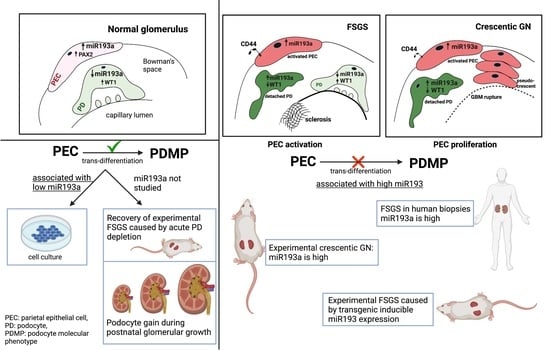
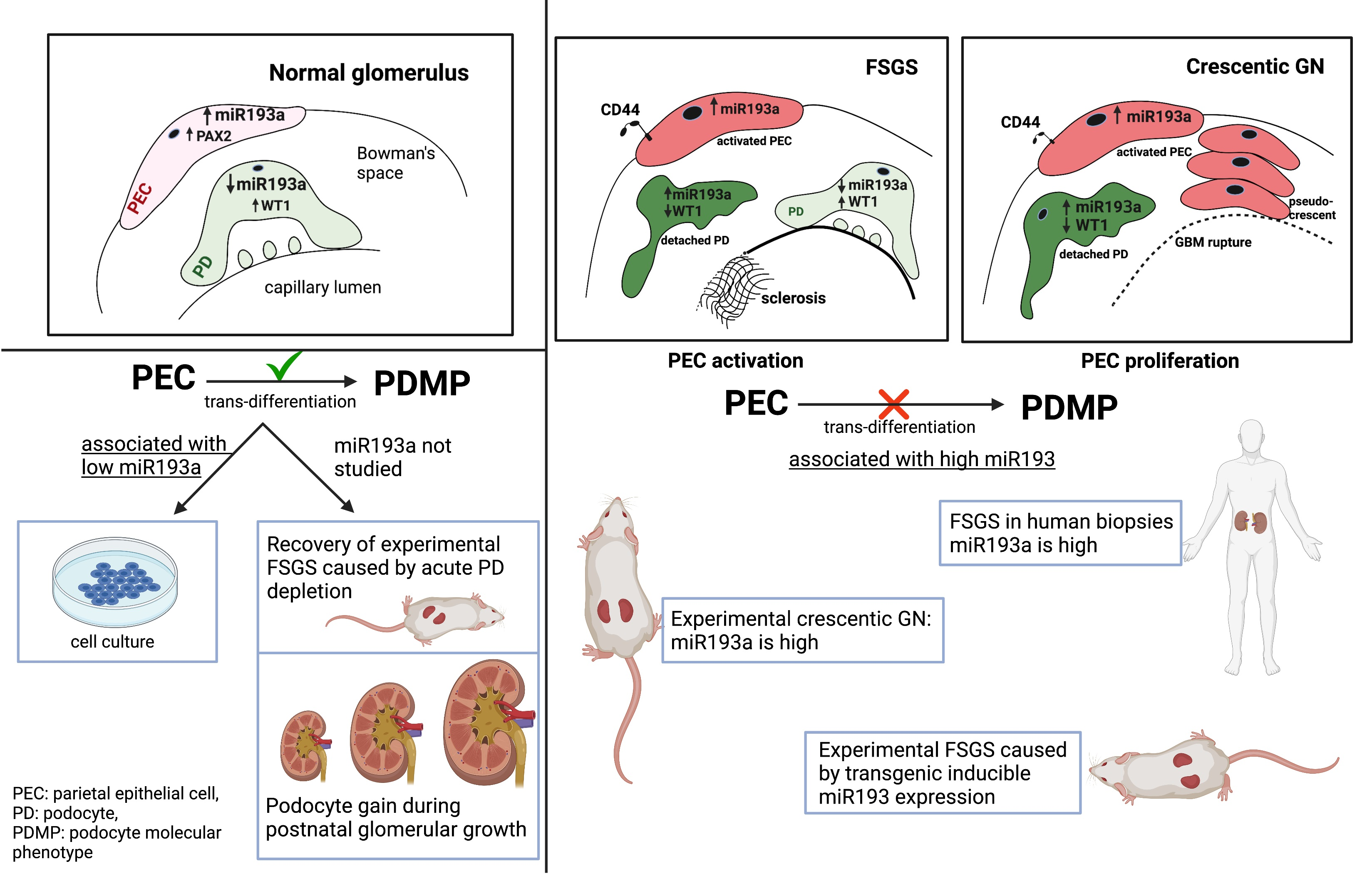
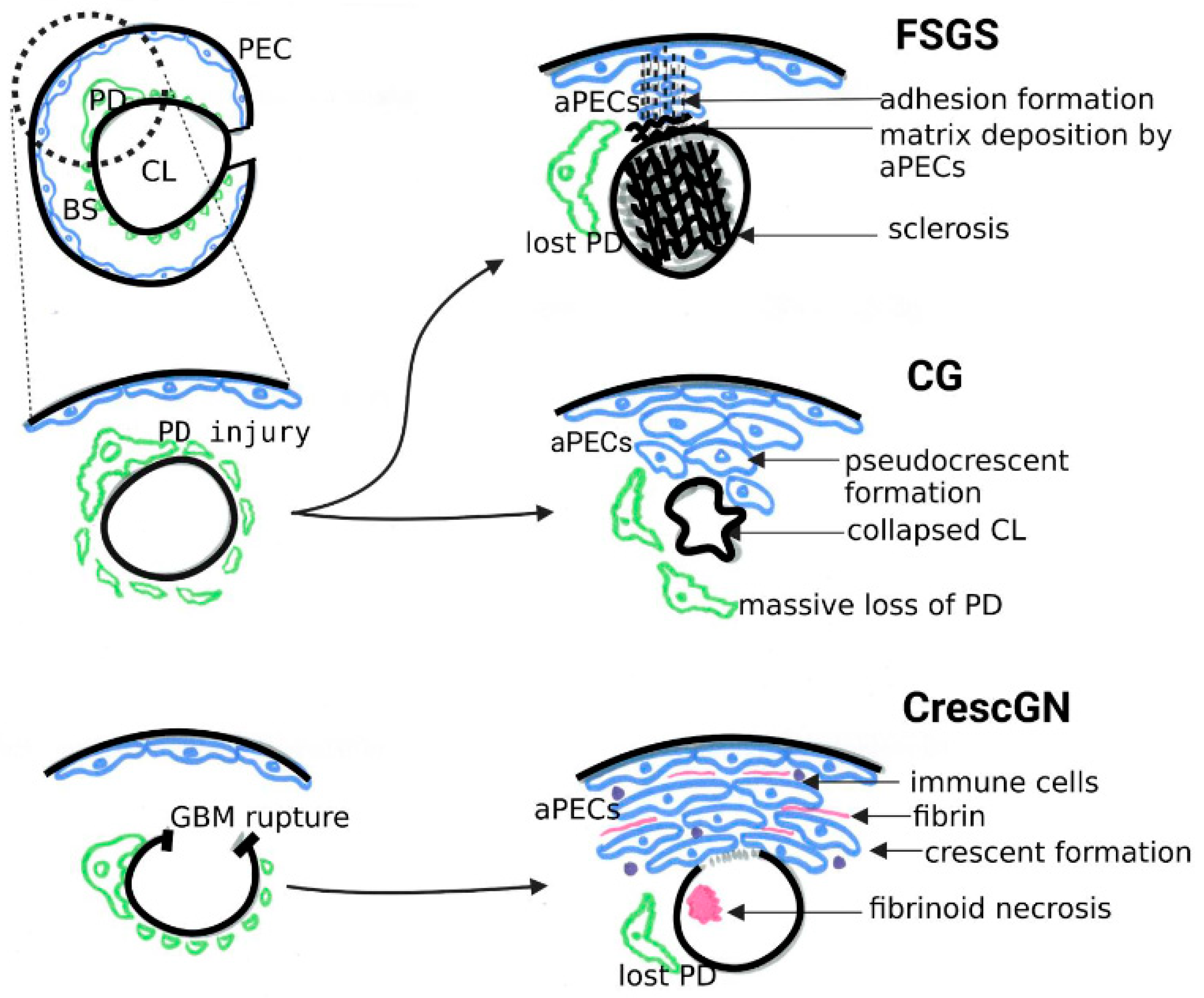
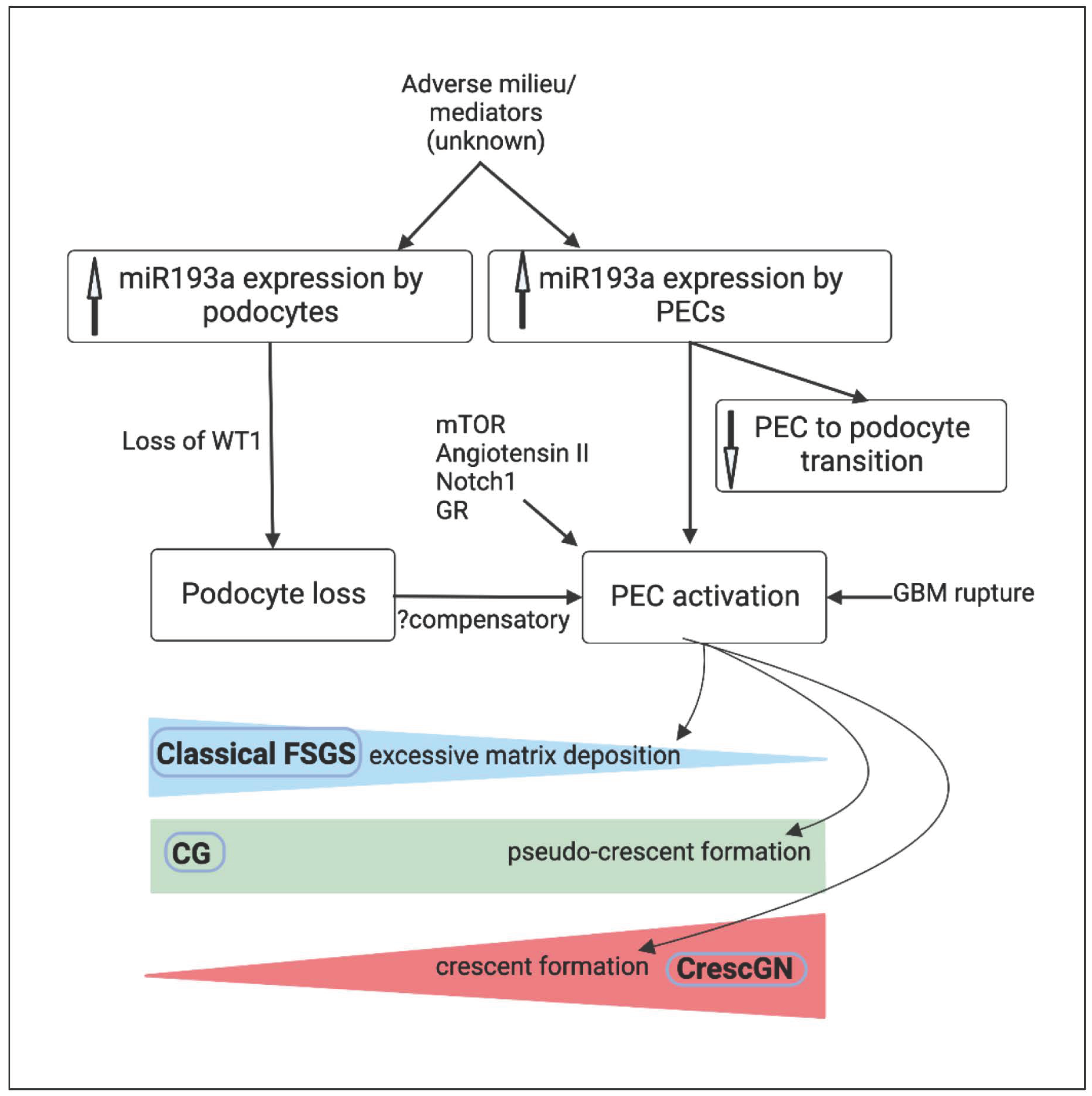
Glomerular parietal epithelial cells (PECs) have been increasingly recognized to have crucial functions. Lineage tracking in animal models showed the expression of a podocyte phenotype by PECs during normal glomerular growth and after acute podocyte injury, suggesting a reparative role of PECs. Conversely, activated PECs are speculated to be pathogenic and comprise extracapillary proliferation in focal segmental glomerulosclerosis (FSGS) and crescentic glomerulonephritis (CrescGN). The reparative and pathogenic roles of PECs seem to represent two sides of PEC behavior directed by the local milieu and mediators. Recent studies suggest microRNA-193a (miR193a) is involved in the pathogenesis of FSGS and CrescGN. In a mouse model of primary FSGS, the induction of miR193a caused the downregulation of Wilms’ tumor protein, leading to the dedifferentiation of podocytes. On the other hand, the inhibition of miR193a resulted in reduced crescent lesions in a mouse model of CrescGN. Interestingly, in vitro studies report that the downregulation of miR193a induces trans-differentiation of PECs into a podocyte phenotype. This narrative review highlights the critical role of PEC behavior in health and during disease and its modulation by miR193a.
Keywords: parietal epithelial cell; podocyte; micro-RNA; FSGS; crescentic glomerulonephritis parietal epithelial cell; podocyte; micro-RNA; FSGS; crescentic glomerulonephritis
Graphical Abstract