Article

Biodefensive Based on Piper nigrum Essential Oil for Controlling of Anopheles aquasalis Larvae: Influence of Temperature (35 °C) and Preservatives

by
Ayná Caroline Marcião Vieira
1,2,
Sidney Gomes Azevedo
1,
Ramon Andrade Linhares
3,
Silvia Cássia Brandão Justiniano
3,
Grafe Oliveira Pontes
3,
Alessandra Ramos Lima
4,
Pedro Henrique Campelo
5,
Jaqueline de Araújo Bezerra
6,
Camila da Costa Pinto
6,
Henrique Duarte da Fonseca Filho
7,
Robert Saraiva Matos
8,
Ştefan Ţălu
9,*,
Vanderlei Salvador Bagnato
4,10,
Natalia Mayumi Inada
4 and
Edgar Aparecido Sanches
1,2
1
Laboratory of Nanostructured Polymers (NANOPOL), Federal University of Amazonas (UFAM), Manaus 69067-005, Brazil
2
Graduate Program in Materials Science and Engineering (PPGCEM), Federal University of Amazonas (UFAM), Manaus 69067-005, Brazil
3
Tropical Medicine Foundation Doctor Heitor Vieira Dourado (FMT-HVD), Manaus 69040-000, Brazil
4
São Carlos Institute of Physics (IFSC), University of São Paulo (USP), São Carlos 13563-120, Brazil
5
Department of Food Technology, Federal University of Viçosa (UFV), Viçosa 36570-900, Brazil
6
Federal Institute of Education, Science and Technology of Amazonas (IFAM), Manaus 69020-120, Brazil
7
Laboratory of Nanomaterials Synthesis and Nanoscopy (LSNN), Federal University of Amazonas (UFAM), Manaus 69067-005, Brazil
8
Amazonian Materials Group, Federal University of Amapá (UNIFAP), Macapá 68903-419, Brazil
9
The Directorate of Research, Development and Innovation Management (DMCDI), Technical University of Cluj-Napoca, 15 Constantin Daicoviciu St., 400020 Cluj-Napoca, Romania
10
Hagler Institute for Advanced Studies, Texas A&M University, College Station, TX 77843-3572, USA
*
Author to whom correspondence should be addressed.
Biomolecules 2022, 12(11), 1711; https://doi.org/10.3390/biom12111711
Submission received: 30 September 2022 / Revised: 11 November 2022 / Accepted: 14 November 2022 / Published: 18 November 2022
(This article belongs to the Special Issue Bioactive Natural Compounds against Animal and Human Pathogens)

Abstract

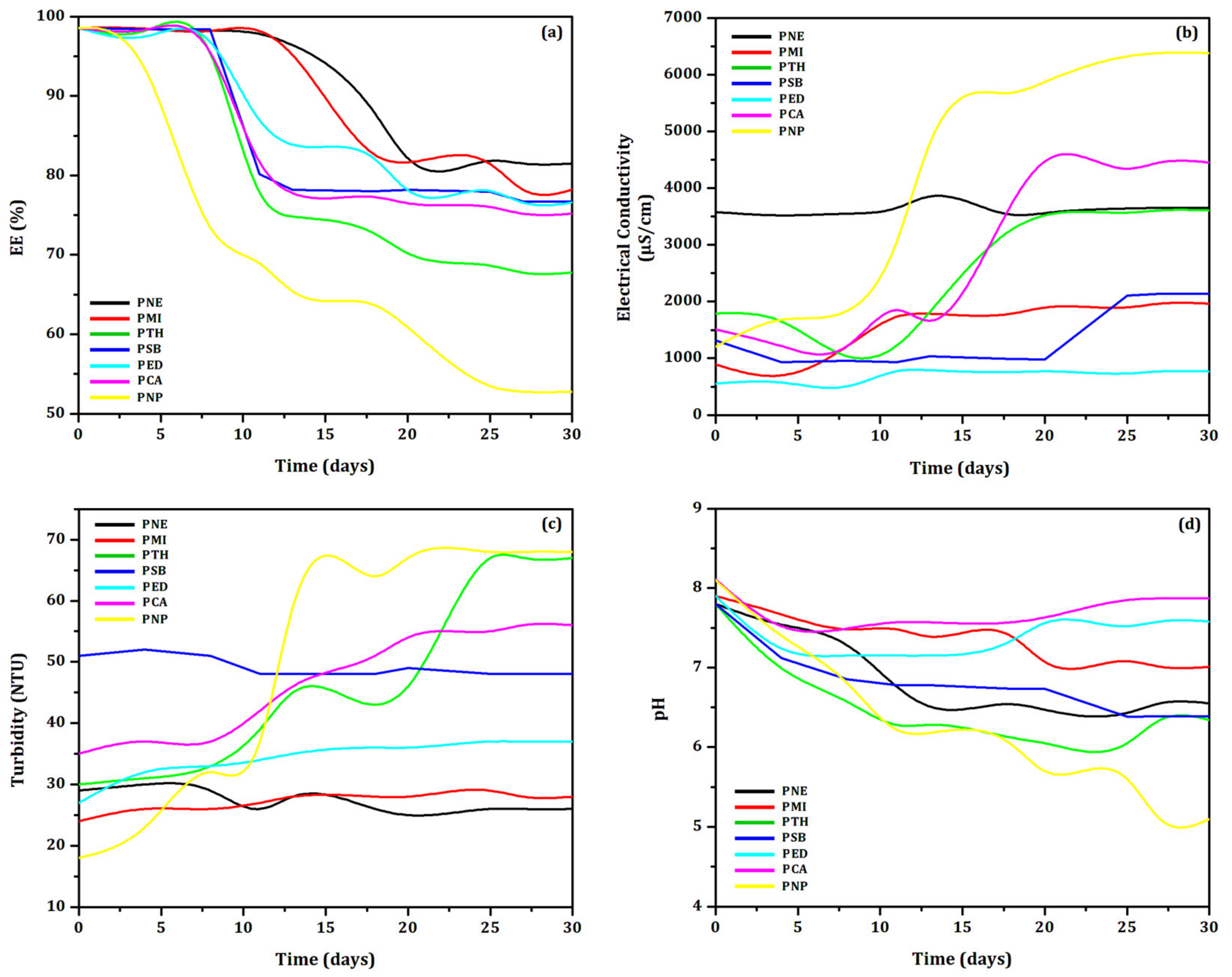
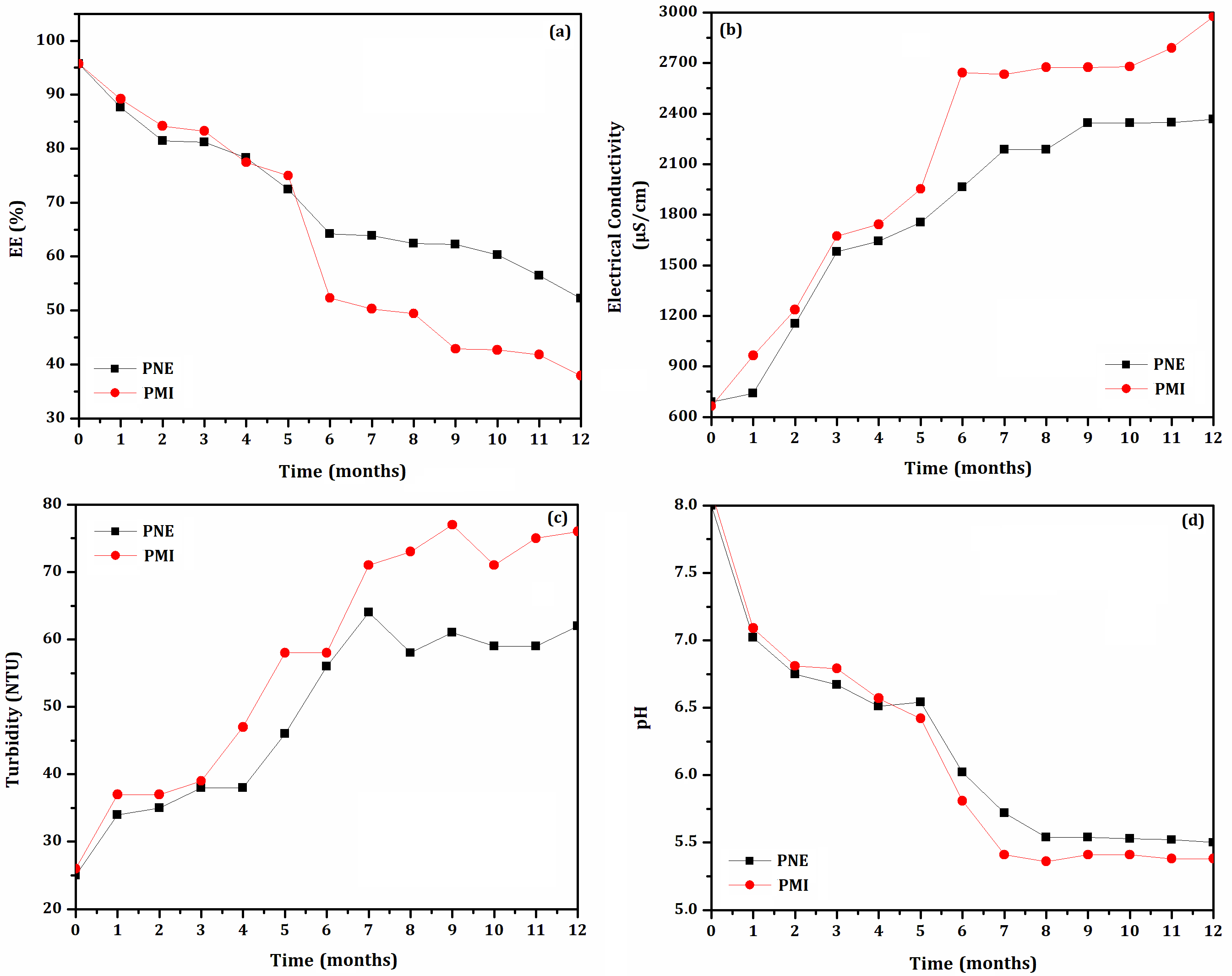
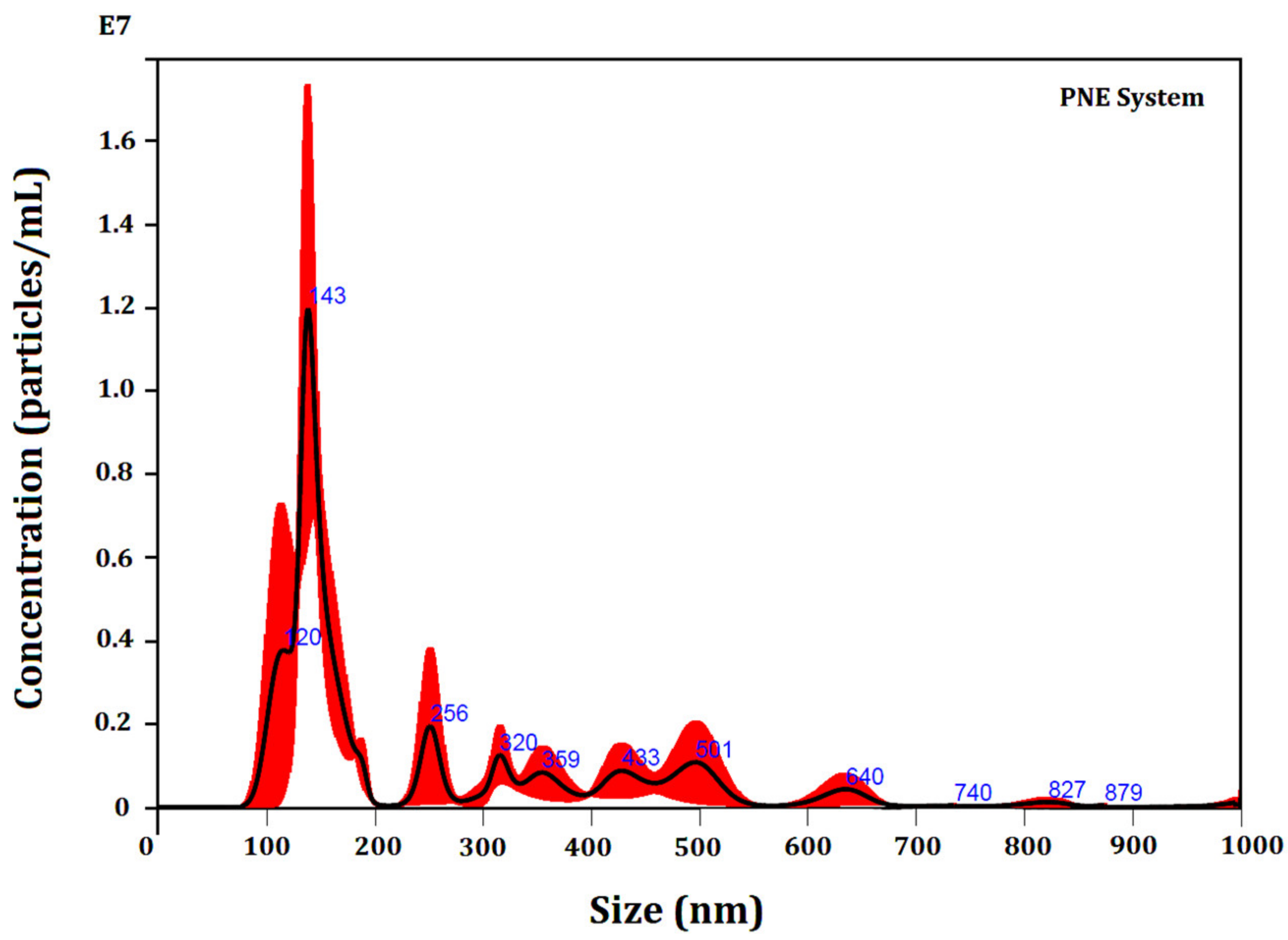
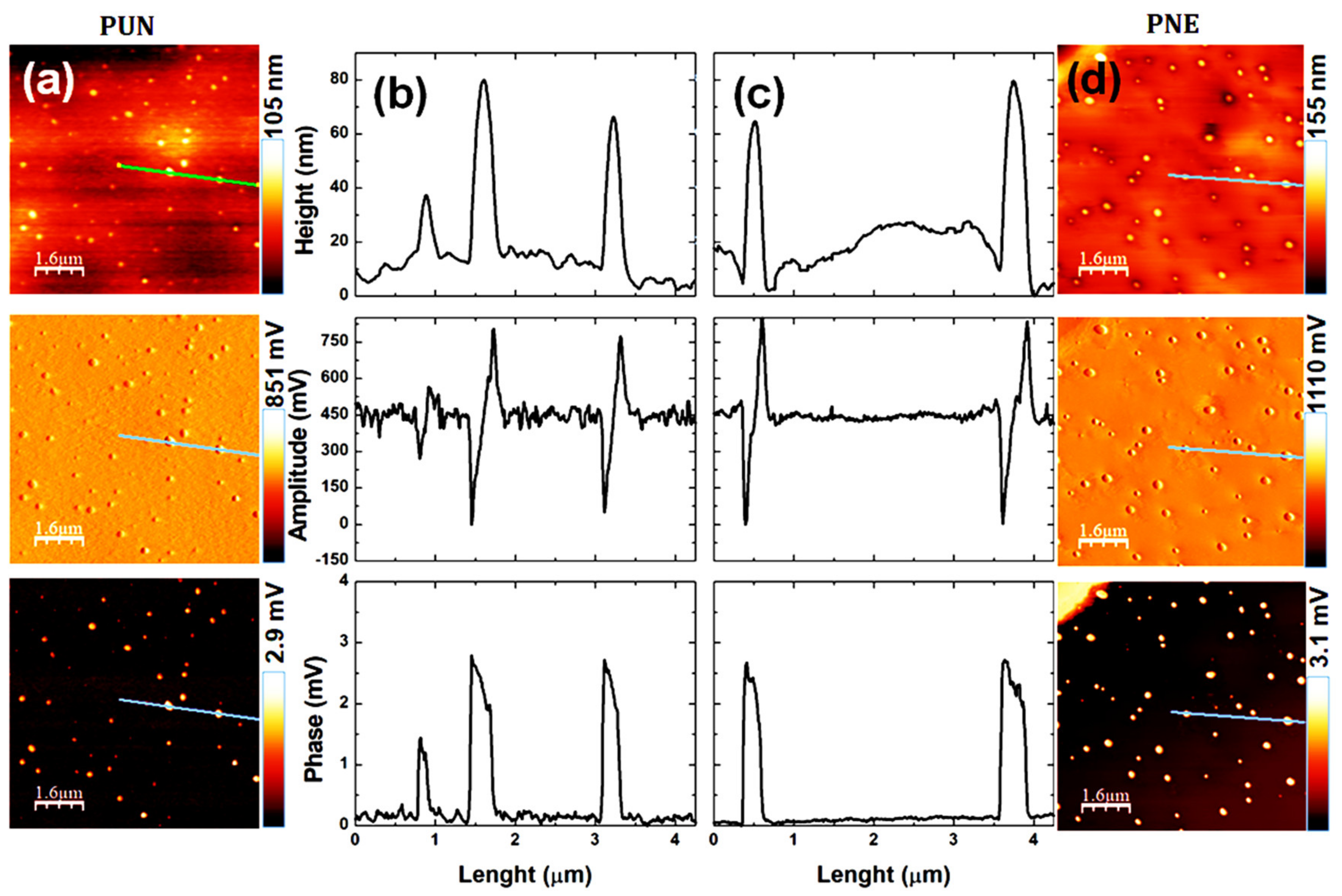
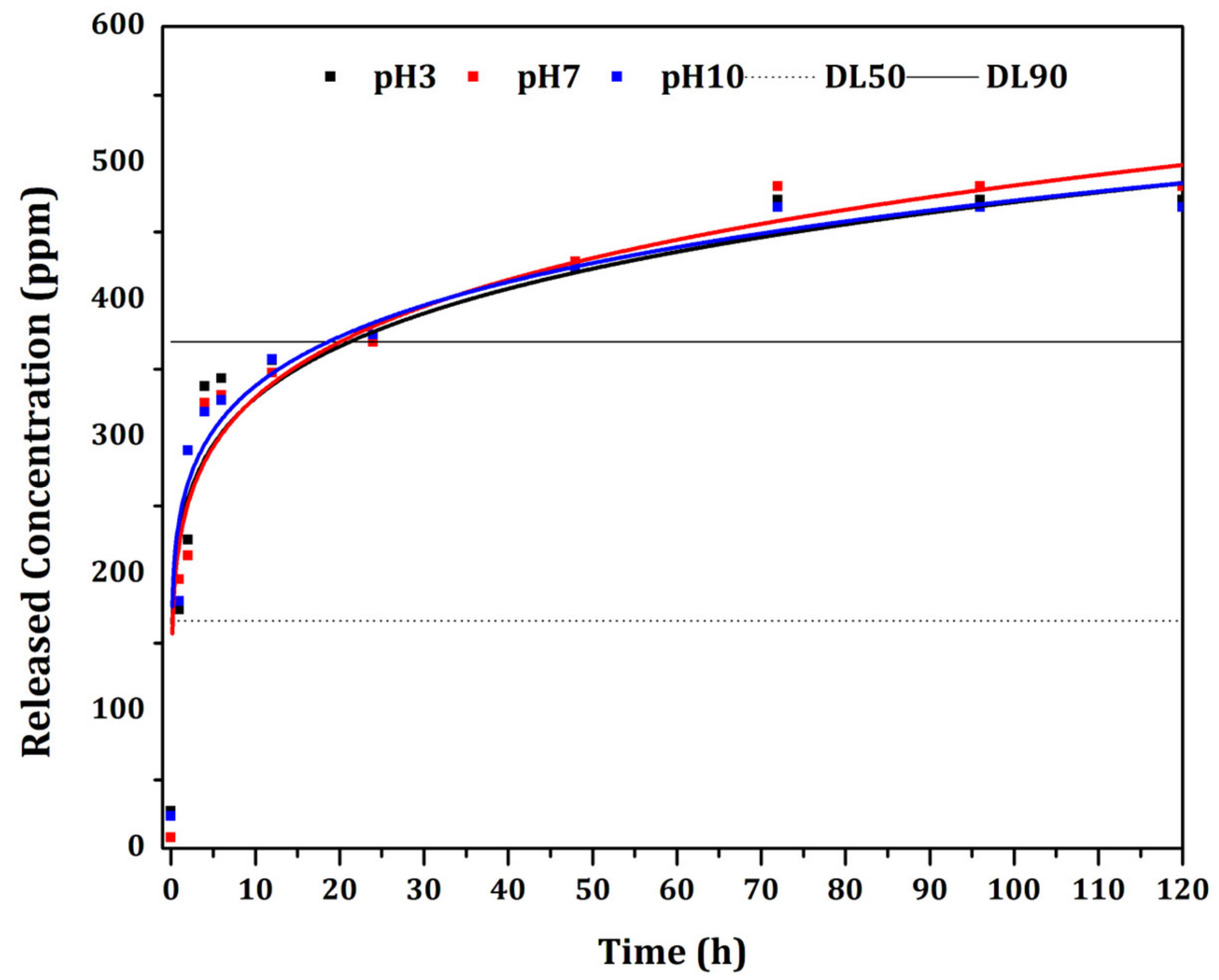
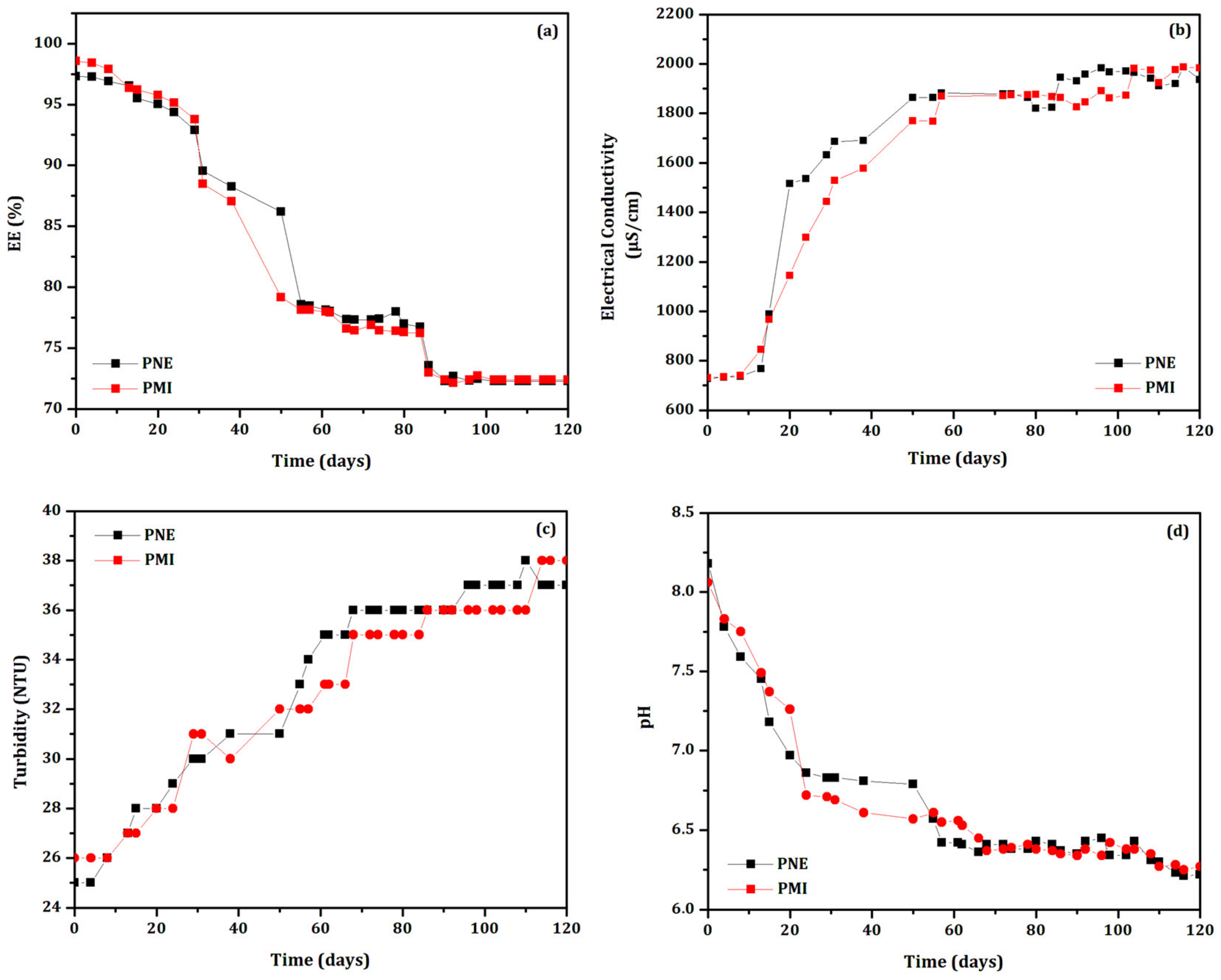
Considerable efforts have been spent on the development of biodefensives based on the encapsulation of essential oils for controlling of urban pests from their larval stage, especially as anopheline controlling agents. The larval source management of Anopheles aquasalis is important for malaria prevention. For this reason, this research proposes larvicidal biodefensives based on polymeric particles loaded with Piper nigrum essential oil, considering the influence of temperature (35 °C) and preservatives on the formulation stability. The biodefensive containing the preservative phenoxyethanol/methylisothiazolinone (PNE) resulted in 5 months of shelf-life storage with an Encapsulation Efficiency (EE%) of essential oil of 70%. The biodefensive PNE (containing 500 µg.mL−1 of encapsulated essential oil) presented a polydisperse particle size distribution, ranging from D10 = (127 ± 10) nm to D90 = (472 ± 78) nm and a particle mean size of (236 ± 34) nm. The AFM images revealed a spherical morphology with an external surface almost regular and smooth. The controlled release of the essential oil was evaluated up to 72 h according to the Korsmeyer-Peppas mathematical model, confirming the anomalous transport (n = 0.64 in pH = 3 and pH = 10, and n = 0.65 in pH = 7). The total larvae mortality on the in loco bioassays was almost reached (92%) after 24 h. However, according to the in vitro bioassays applying the in natura essential oil alone, the concentration of 454 μg.mL−1 resulted on the mortality of 70% of the larvae after 24 h. For this reason, the highest efficiency of the biodefensive PNE may be related to the encapsulation of essential oil, delivering the loaded particles more efficiently inside the larvae. From this perspective, the present study shows that a formulation based on P. nigrum essential oil may be taken into account in the integrated management of disease vector mosquitoes.
Keywords: biodefensive; encapsulation; essential oil; Piper nigrum; Anopheles aquasalis biodefensive; encapsulation; essential oil; Piper nigrum; Anopheles aquasalis