Article

Low-Latitude Ionospheric and Geomagnetic Disturbances Caused by the X7.13 Solar Flare of 25 February 2014


by
Zane Nikia C. Domingo
1,
Ernest P. Macalalad
1,* and
Akimasa Yoshikawa
2
1
Department of Physics, Mapua University, Intramuros, Manila 1002, Philippines
2
International Center for Space Weather Science and Education, Kyushu University, Fukuoka 812-8581, Japan
*
Author to whom correspondence should be addressed.
Universe 2025, 11(2), 70; https://doi.org/10.3390/universe11020070

Submission received: 25 November 2024 / Revised: 20 January 2025 / Accepted: 22 January 2025 / Published: 17 February 2025
(This article belongs to the Special Issue Universe: Feature Papers 2025—Space Science)

Abstract

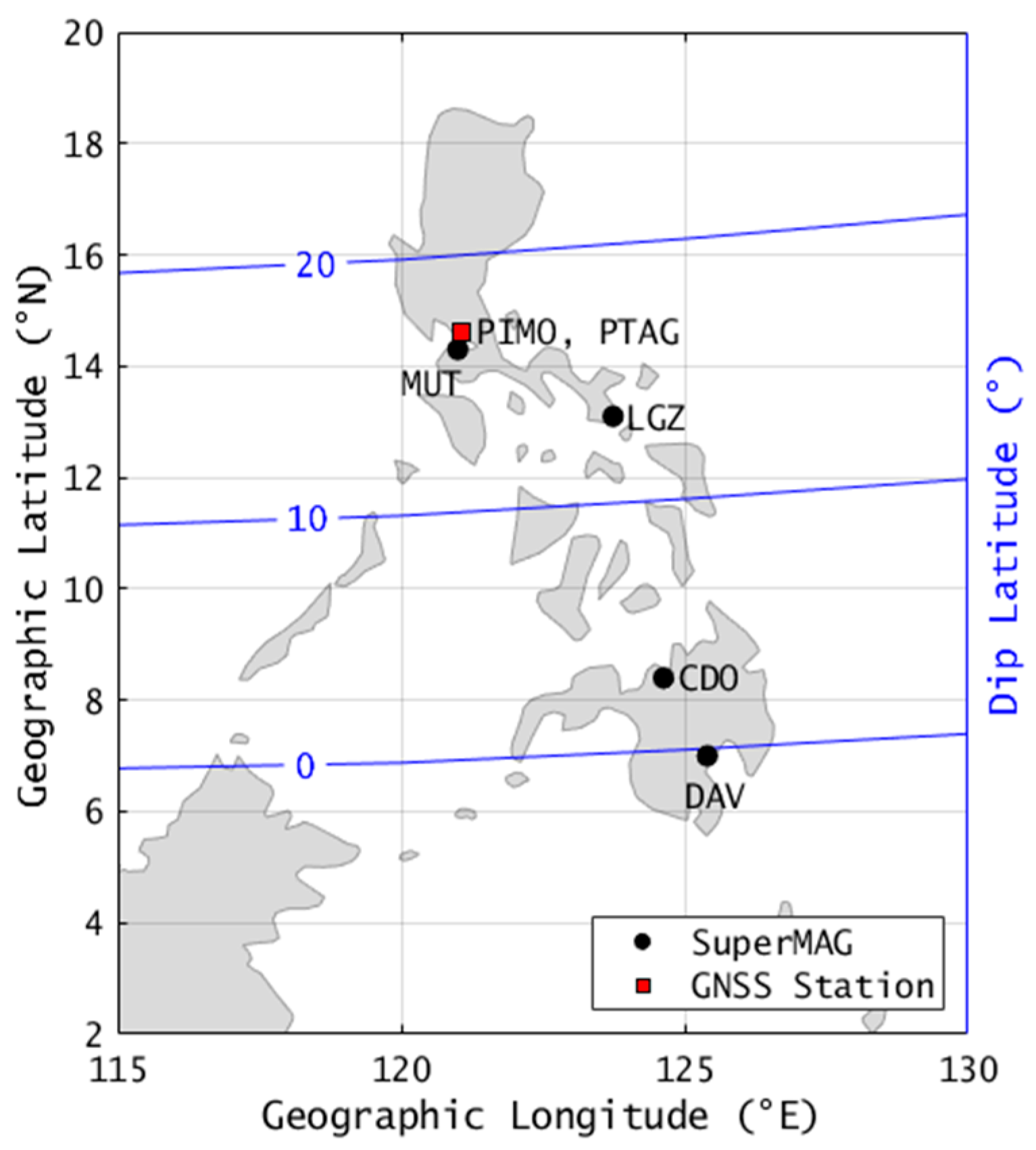
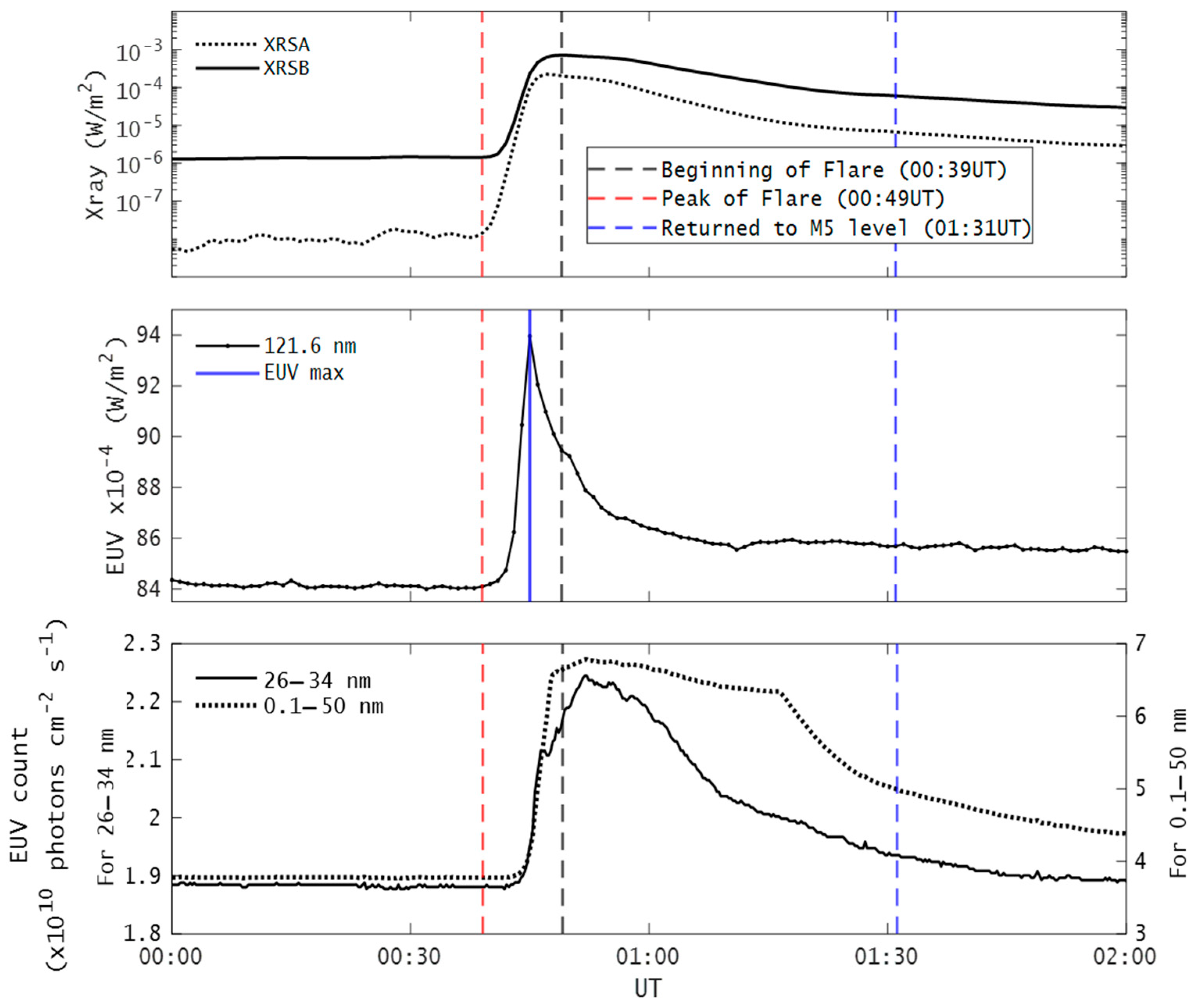
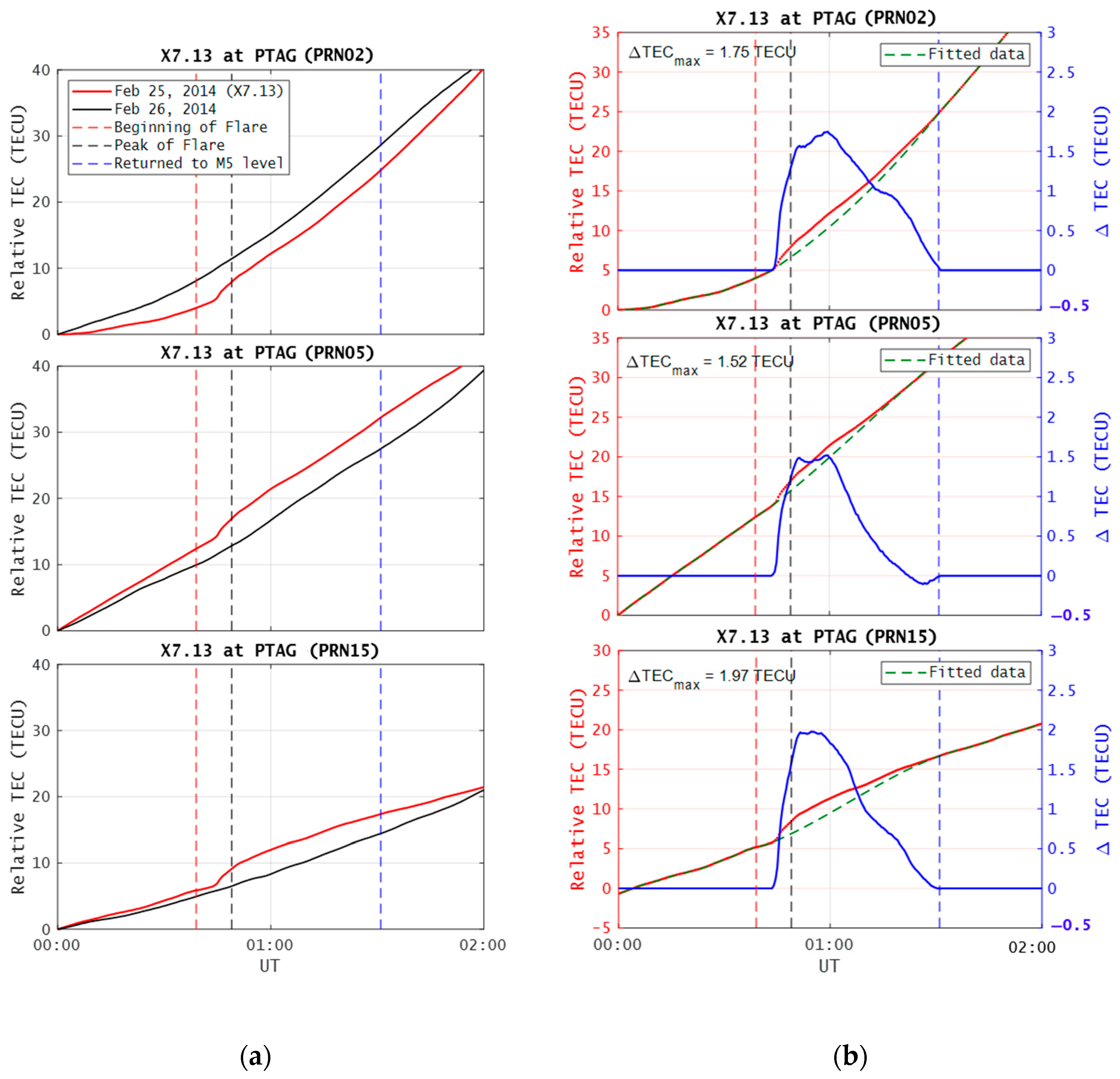
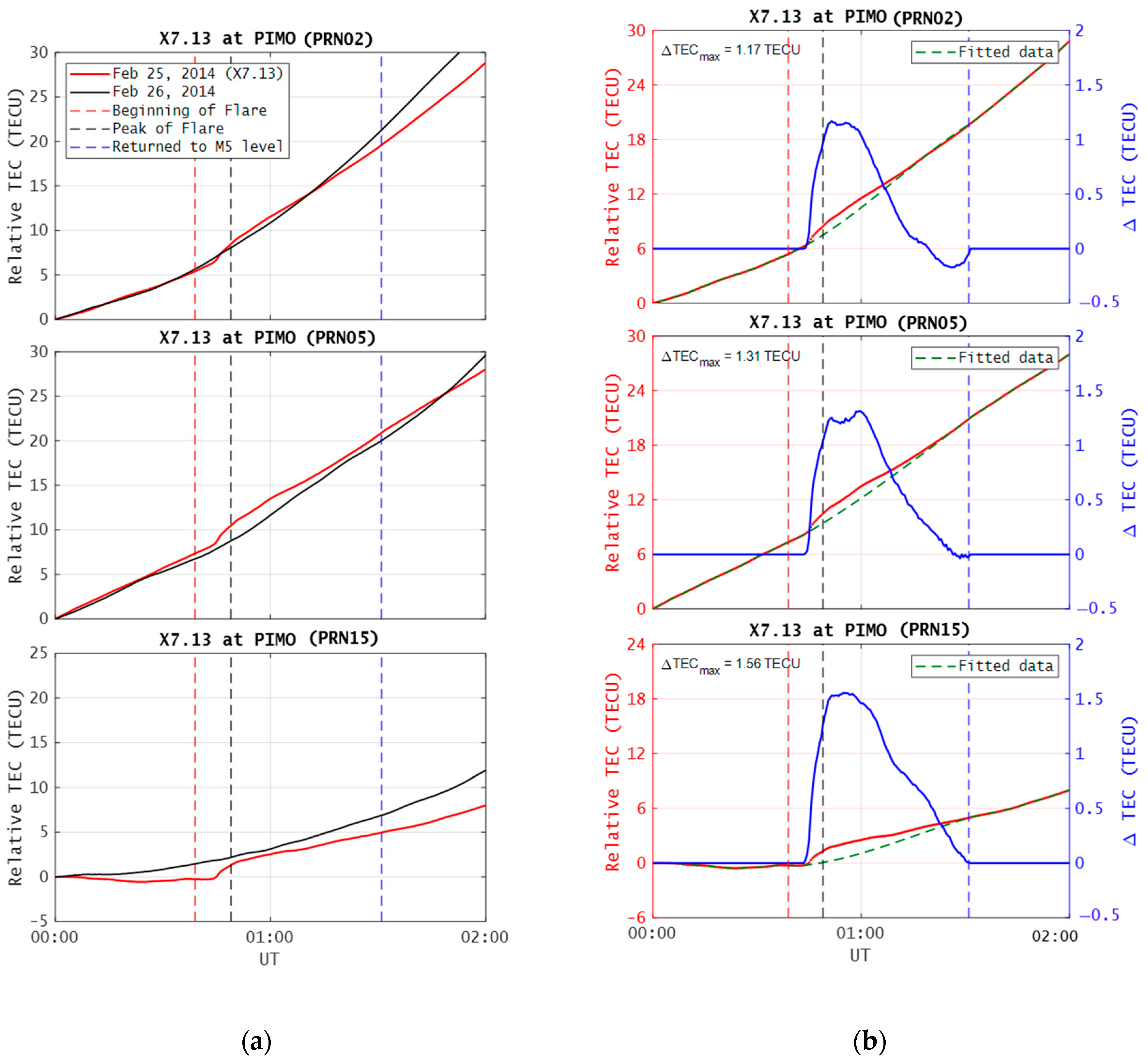
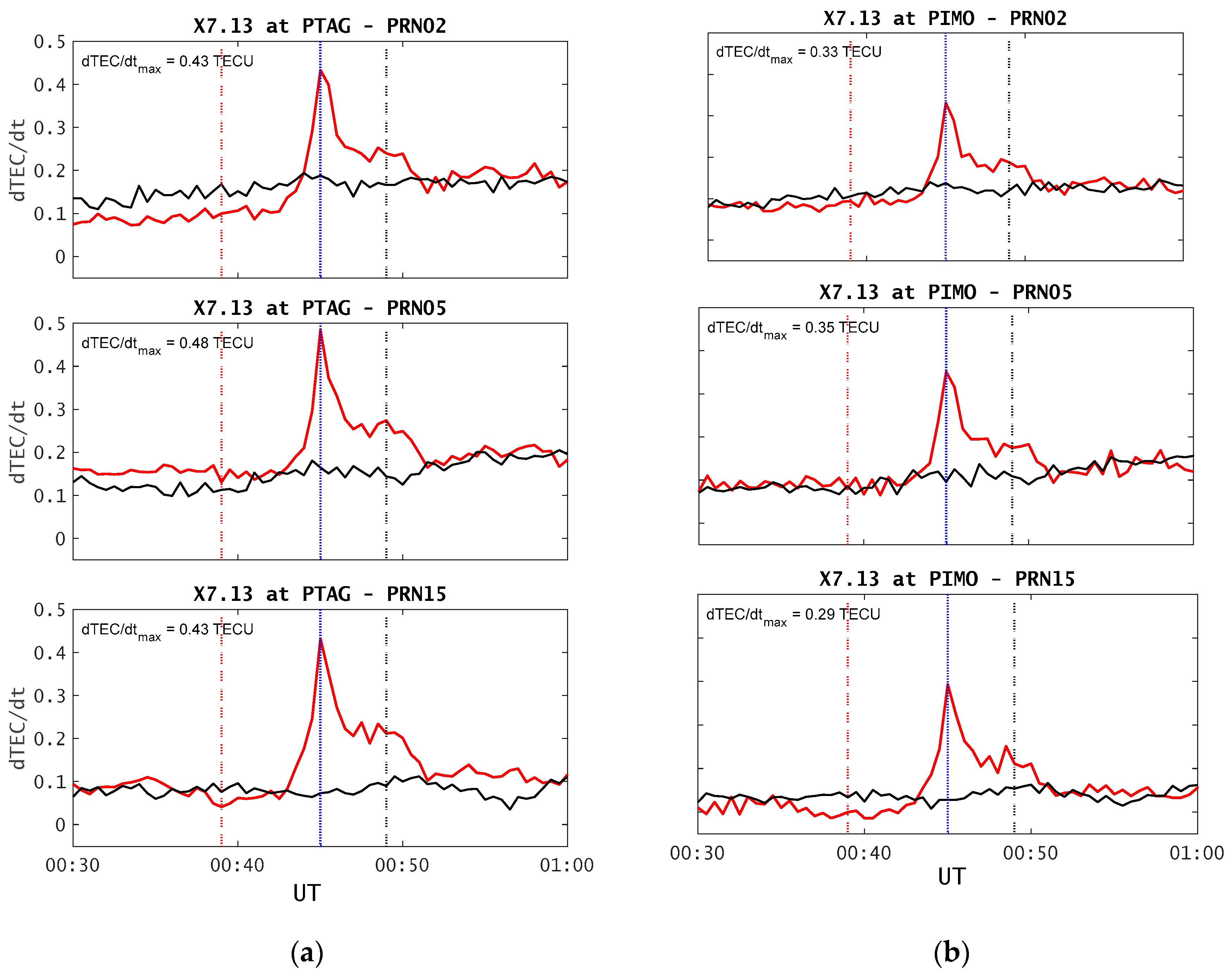
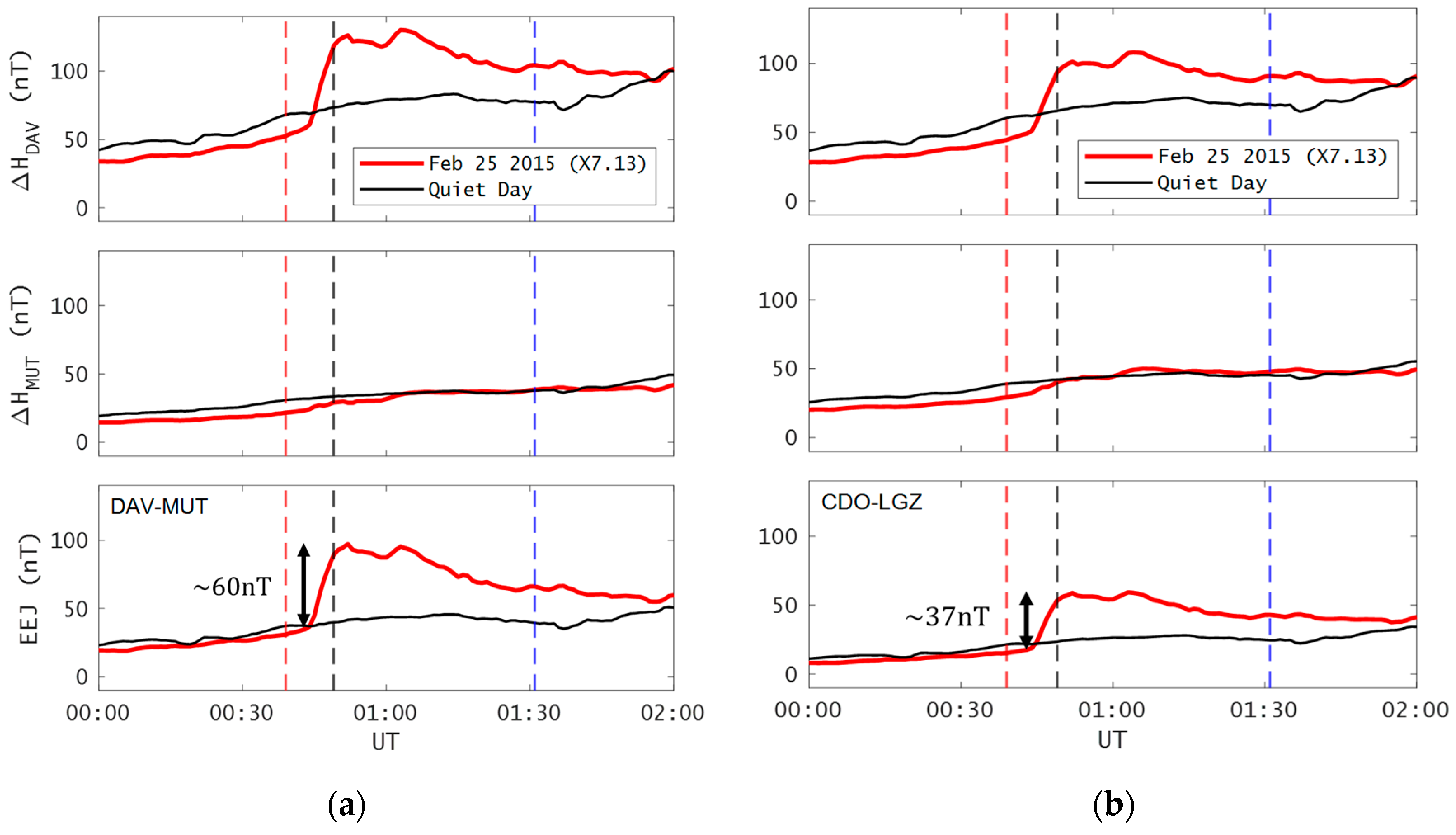
On 25 February 2014 at around 00:39 UT, a major solar flare (code: SOL2014-02-25T00:39) erupted at sunspot region AR11990. Using the updated science quality data of GOES-15, it has been classified as an X7.13 solar flare. This gave rise to the electron density changes that affected the strengths of ionospheric electric currents. In this work, the difference in total electron content (TEC), between the TEC during a flare day and a quiet, fitted TEC, ΔTEC, and rate of change of TEC, dTEC/dt, are determined to observe electron density changes due to the solar flare over a low-latitude region. These stations are at Quezon City (PIMO) and Taguig City (PTAG). Also, responses in the geomagnetic field component, ΔH, are calculated along with the variations in the equatorial electrojet (EEJ) strength. These are observed at equatorial, Davao (DAV) and Cagayan de Oro (CDO), and off-equatorial, Muntinlupa (MUT) and Legazpi (LGZ), stations. The resulting ΔTEC values were 1.17–1.97 TECU while dTEC/dt maxima were 0.29–0.48 TECU/min. The dTEC/dt maxima were found to concur with the time the solar EUV reached peak intensity at 00:45 UT, 4 min before the flare (i.e., X-ray) peaked. Furthermore, the ΔH variations exhibited larger enhancements at the equatorial stations. These are mostly attributed to the EEJ contributing to the geomagnetic field variations. The amplification experienced by the EEJ due to the increased ionospheric conductivity is then reflected in the geomagnetic responses. For the CDO-LGZ stations, the EEJ strength reached ~37 nT, while for the DAV-MUT, this was ~60 nT.
Keywords: solar flare; low latitude; ionosphere; space weather; total electron content; geomagnetic field solar flare; low latitude; ionosphere; space weather; total electron content; geomagnetic field