Article

Spin Tetrad Formalism of Circular Polarization States in Relativistic Jets

by
Ronald Gamble, Jr.
1,2,3
1
NASA Goddard Space Flight Center, Astrophysics Science Division, Greenbelt, MD 20771, USA
2
Department of Astronomy, University of Maryland, College Park, MD 20742, USA
3
Center for Research and Exploration in Space Science and Technology, Greenbelt, MD 20771, USA
Universe 2025, 11(11), 364; https://doi.org/10.3390/universe11110364
Submission received: 20 March 2025 / Revised: 17 October 2025 / Accepted: 24 October 2025 / Published: 4 November 2025
(This article belongs to the Section Compact Objects)

Abstract

Relativistic jets from active galactic nuclei (AGN) have been a topic of peak interest in the high-energy astrophysics community for their uniquely dynamic nature and incredible radiative power emanating from supermassive black holes and similarly accreting compact dense objects. An overall consensus on relativistic jet formation states that accelerated outflow at high Lorentz factors are generated by a complex relationship between the accretion disk of the system and the frame-dragging effects of the rotating massive central object. This paper will provide a basis for which circular polarization states, defined using a spin tetrad formalism, contribute to a description for the angular momentum flux in the jet emanating from the central engine. A representation of the Kerr spacetime is used in formulating the spin tetrad forms. A discussion on unresolved problems in jet formation and how we can use multi-method observations with polarimetry of AGN to direct future theoretical descriptions will also be given.

1. Introduction

1.1. Review

Active galactic nuclei (AGN) are among the largest, most luminous extragalactic objects observed in the known universe. The FERMI-LAT collaboration has generated an extensive catalog of AGN in the high-energy portion of the gamma ray sky [1,2,3,4]. A number of probes and missions are dedicated to the multi-messenger aspects of observing these energetic objects with variable emission [5,6].
Currently, the mechanism for relativistic jet emission associated with active galactic nuclei, and other high-energy astrophysical objects like gamma ray bursts and microquasars, has been a topic of current interest in the astrophysics scientific community. Jet formation theory and emission is a major problem yet to be solved in high-energy astrophysics, with extensive reviews given describing the properties of jets [7,8]. One of the most widely argued models for describing this type of emission is the Blandford–Znajek (BZ) process [9]. The power emitted is generally dominated by contributions from the poloidal magnetic field B ϕ . This is defined as
L B Z = f ( α H ) B ϕ 2 r s 2 ( c 8 π ) 1 ,
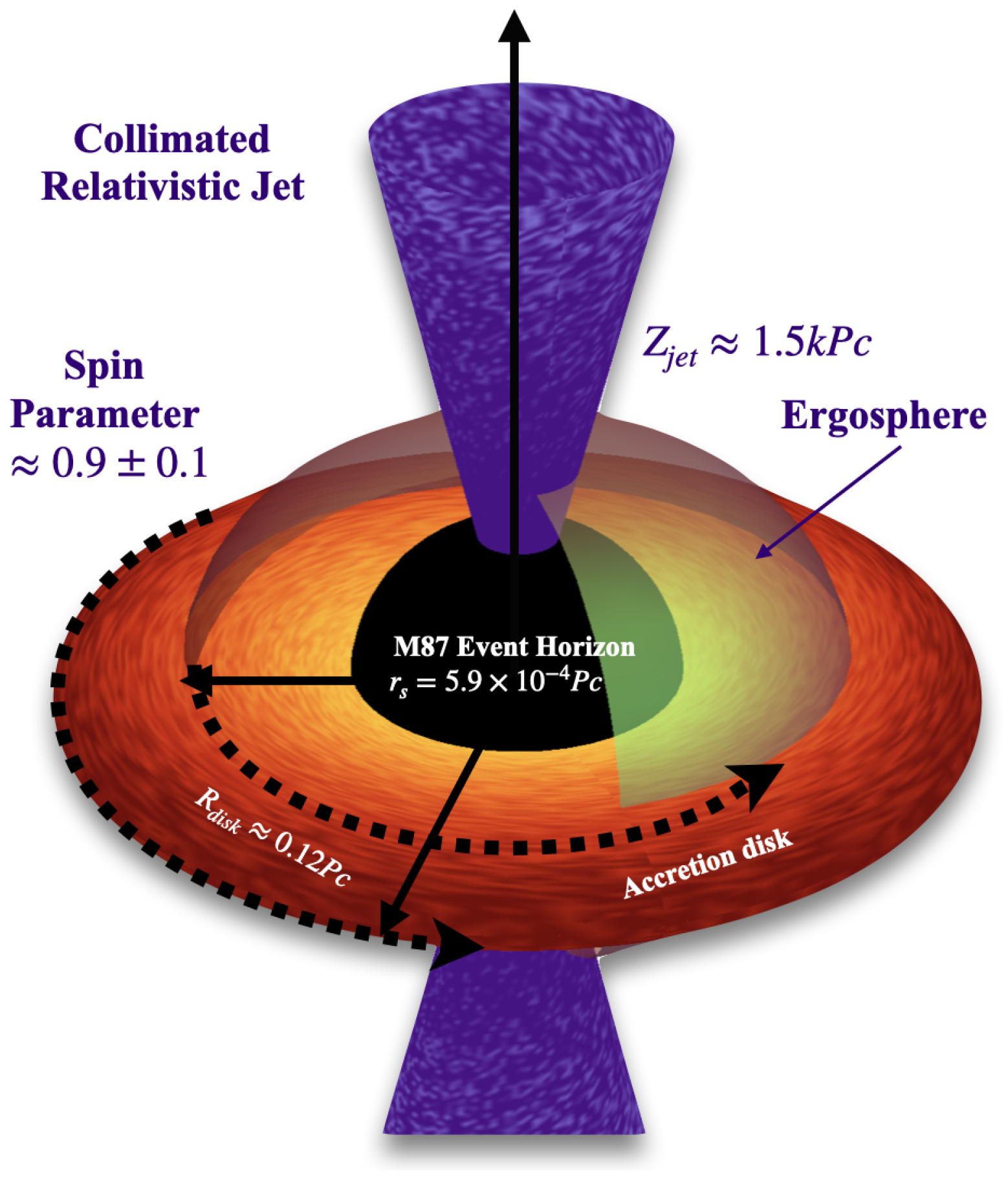
where r s is the Schwarzschild radius of the black hole, c is the speed of light, and f ( α H ) is a function dependent on the black hole spin parameter α H . This process describes the rotational energy extraction from black holes involving the torsion of magnetic field lines resulting in relativistic outflows in which the spine of the jet is parallel to the rotation axis of the central object [9,10] as illustrated in Figure 1. Developed theories and models of matter energy ejection from a central engine feature the emitting power in Equation (1) as a template for comparing magnetic field contributions to the power emitted. The nature of such highly complex energetic emission mechanisms from these systems, which feature event horizons in rotating spacetimes, has been studied extensively over the past few decades [11,12,13,14,15,16]. Recent numerical models incorporating MHD and GRMHD methods have shown that the poloidal magnetic field configurations from relativistic matter accreting to the central object significantly contribute to jet outflows [17,18,19].
Unanswered questions on the relativistic nature of these jets involve figuring out how particles that make up the jet’s content are accelerated to ultra-relativistic speeds whose Lorentz factors are Γ L o r e n t z > 10 . What is the origin of the relativistic particles that produce the non-thermal radiation we observe? And how do these jets become matter loaded? Regarding the theoretical aspects of jet formation mechanisms and high-energy polarizations in extreme gravity environments [20], there are still fundamental questions that continue to remain unresolved. Recent observations of optical circular polarization in blazar jets [21,22] present a regime for probing the material emission lines of these jets. For many years, astronomers have been making significant advances in the discernment of observational data and the synthesis thereof to determine specific polarization fractions in the linear or circular polarization states of AGN jets. By looking at these polarization states with respect to synchrotron emission-dominated sources, we can begin to move closer to probing the global magnetic field structure and orientation within jets. Table 1 below lists the fractional circular polarization of eight VLBA jet-dominated AGN cores at 15 GHz and 23 GHz [23,24]. The handedness of the polarization state is also included, illustrating the sensitive switch of the polarization direction.
Physical attributes of these energetic constructs are further analyzed when observing the higher energy regime of its emission. Both the X-ray Imaging and Spectroscopy Mission (XRISM) [25] and the Imaging X-ray Polarimetry Explorer (IXPE) [6,26] look to examine the X-ray spectra of high-energy sources. Recent studies using these observing missions have seen a growing occurrence of linear polarization transformation to a fractional circular polarization via Faraday conversion methods [20,21]. Another less explored problem with jets is the causal connection of the jet to the exterior Kerr spacetime. A discussion of the causal connection of BZ emission as a factor of a Penrose-type emission has been presented in [27]. An application of the emission processes to alternative or extensions of relativity to include other field-theoretic descriptions of spacetime [28] and the incorporation of spinor representation in [29] has shown the versatility in the decades-old theory but, again, exhibits how the BZ process needs extensions to incorporate the sources of the magnetic fields it describes, as argued in [16,30].
The remainder of this paper is organized as follows: Section 1.2 provides an overview of the importance of incorporating a broader contribution from general relativity in multi-messenger characteristics of AGN, focusing on the non-thermal properties characterizing AGNs and specifically using blazars as a primary type of source. Section 2 provides a brief description of the geometry of a curved spacetime embedding an AGN, as given by a Kerr spacetime metric. This section is then furthered by an introduction to a spin tetrad formalism for null propagating fields, ending with a discussion on the angular momentum coupling between gravitational and electromagnetic fields surrounding a supermassive black hole (SMBH) as a compact host. This gives rise to a fractional degree of circular polarization presented in the spin tetrad frame.

1.2. Incorporating General Relativistic Theory in Jet Physics

A lot can be revealed regarding the phenomena occurring in the environments of AGN using general relativity as a baseline theory. Utilizing this as segue into the subsequent sections, we explore why relativity theory is needed to understand the physical mechanisms taking place in the environment and evolution of AGN. There are numerous instances where formulations of jet emission require geometric constructs from general relativity, especially when near-horizon jet launching environments are considered. More importantly, the work presented in this manuscript is focused on high-energy jets from supermassive black holes (AGN). Almost all matter–energy emission mechanisms intrinsically require the use of general relativity [9,10,14,15,16,28,30]; most importantly, relativistic jets from AGN are those that come from immense sources of gravity due to the supermassive black holes that generate them. With this statement in mind, we describe the radiative characteristics of relativistic jets in the setting of a rotating black hole geometry (the Kerr spacetime). This will allow one to describe the radiation observed from jets within the constructs of a four-dimensional spacetime algebra, incorporating the corresponding mechanics of black holes within the theory.
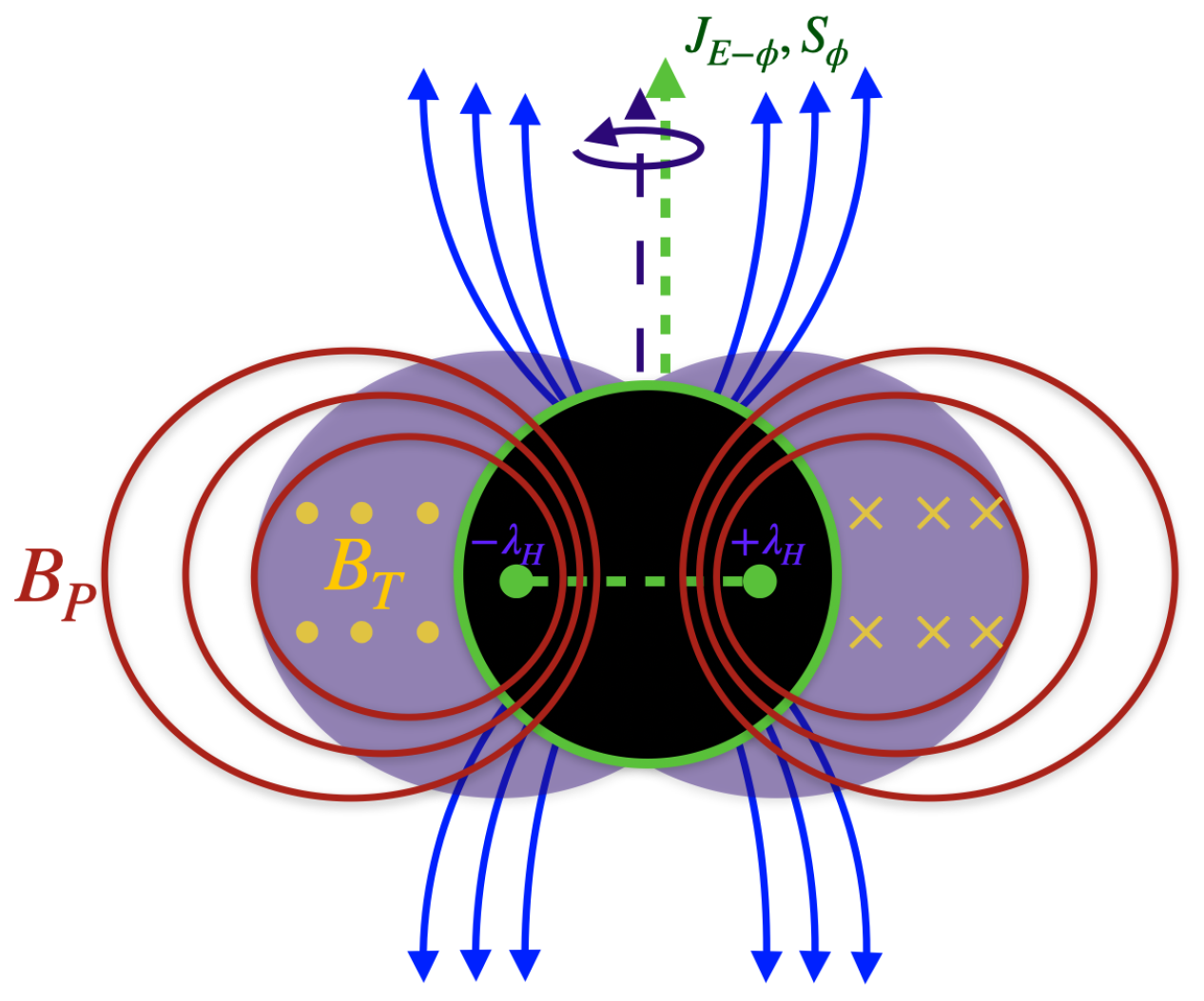
It is widely understood that the nature of such energetic processes require a sufficiently strong relationship between the magnetic field structure and the torsion of spacetime, represented as frame-dragging in the local frame of the black hole. Figure 2 above illustrates this geometric description of the black hole–jet system.
General relativity can be a powerful tool for deciphering the dynamic motion of matter and the physics that influences the observed motion. In light of current efforts in observing the degree of polarization in the relativistic jets of high-energy AGN, we incorporate geometric descriptions of curved spacetime diversifies formulations of jet emissions and particle phenomenology.

2. Geometric Representation of AGN

2.1. Kerr Geometry

As an accurate description of the spacetime surrounding a central compact massive object in the high-energy density regime, we utilize the Kerr metric of spacetime surrounding such an object [32]. We consider the Kerr metric as the spacetime describing the central SMBH in this system.
d s K e r r 2 = 1 r s r ρ 2 c 2 d t 2 ρ 2 Δ d r 2 ρ 2 d θ 2 r 2 + α 2 + r s r α 2 ρ 2 sin 2 θ sin 2 θ d ϕ 2 + 2 r s r α s i n 2 θ ρ 2 c d t d ϕ
For brevity, we define the functions Δ , ρ as ρ = r 2 + α 2 c o s 2 θ and Δ = r 2 r s r + α 2 , respectively. In line with this, the black hole spin parameter is defined as α = J / M H c , with the angular velocity of the horizon as
ω = g t ϕ g ϕ ϕ = r s α r c ρ ( r 2 + α 2 ) + r s r α 2 sin 2 η

2.2. Spin Tetrad Formalism

A systemic way of projecting geometric objects into spin components is to work in a spin tetrad. The spin tetrad representation describes how an object transforms under a projection onto a preferred spin axis. In the case of electromagnetic and gravitational waves, the preferred axis is parallel with an associated Poynting vector for the waves. Beginning with the B-L tetrad, we can write the frame metric in terms of the orthogonal set of veirbien 1-forms, e ν m d x ν
(4a) γ 0 = e ν 0 d x ν = r s r ρ 2 c 2 1 / 2 d t (4b) γ 1 = e ν 1 d x ν = ρ 2 Δ 1 / 2 d r (4c) γ 2 = e ν 2 d x ν = ρ 2 1 / 2 d θ (4d) γ 3 = e ν 3 d x ν = r 2 + α 2 + r s r α 2 ρ 2 sin 2 θ sin 2 θ d ϕ
This tetrad { γ t , γ r , γ θ , γ ϕ } is defined in the Kerr spacetime with the preferred spin axis in the ϕ ^ -direction. The spin tetrad axes are then defined as complex combinations of the transverse axes { γ + , γ } ,
γ + 1 2 γ r + i γ θ
γ 1 2 γ r i γ θ
where the metric of the spin tetrad { γ t , γ ϕ , γ + , γ } can be written as
γ L K = 1 0 0 0 0 1 0 0 0 0 0 1 0 0 1 0 .
Given this definition of the spin tetrad, the spin axes { γ + , γ } are intrinsically null γ + · γ + = γ · γ = 0 , whereas their inner product with respect to each other are nonzero γ + · γ = 1 . Under a right-handed rotation by an angle ψ about the preferred axis γ ϕ , the transverse axes γ r , γ θ transform as
γ r c o s ( ψ ) γ r s i n ( ψ ) γ θ
γ θ s i n ( ψ ) γ r + c o s ( ψ ) γ θ
It follows that the spin axes { γ + , γ } transform under a right-handed rotation about the orthogonal axis γ ϕ as
γ ± e i ψ s γ ±
This transformation identifies the spin axes γ + , γ as having (+) or (−) helicity, respectively. An object can be identified as having spin (s) if it varies by e i ψ s . For the case presented in this paper, we focus on photons of spin | s | = 1 . An interesting, more generalized concept arises due to this definition of spin, in a mathematical and physical sense, that spin may be a more global property attributed to the angular momentum flux from a rotating black hole featuring a relativistic jet. With this in mind, we use this representation to describe the local spacetime frame that is dragged exterior to the event horizon at z H = 1 2 r s r s 2 4 α 2 for z H γ ± .

3. Spin Polarization in the Kerr Spacetime

3.1. Polarization Tensor of a Null Field

To accurately construct a description of the polarization of emitted radiation from high-energy sources, we must derive a description of the Stokes parameters in the setting of general relativity such that these parameters can then be used in the subsequent formulation of the spin and orbital angular momentum carried by these point sources described in previous sections. With this in mind, we follow a brief derivation of the Stokes parameters, carefully presented in [33], as applied to a spin tetrad frame with a Kerr background. A solution to the electromagnetic field equations can be given as the real part of the Maxwell–Faraday tensor as
F α β = Re { U α β e i ψ } .
Here, the field tensor is composed of a function of position in U α β ( x ) and phase ψ ( θ ) to which we can define the null vector k α α ψ with the following properties: (i) k α k α = 0 ; (ii) D k α = 0 . A parameterized directional derivative D can be defined in general for some curve x α ( λ ) as
D D D λ = d x α d λ α
with λ as an affine parameter of a curve x α ( λ ) for parallel propagation of the field along a null geodesic. F α β is then considered a null field satisfying the Killing equation [34]
F α β k α = 0
A corresponding propagation law can be given, satisfying the Lorentz gauge for a source-free null field
D F α β 2 Θ F α β = 0
We can substitute for the expansion of the geodesic null congruence Θ = 1 2 α k α and the definition of the directional derivative in Equation (10) to get the propagation equation below
d x ν d λ ν F α β 2 1 2 ν k ν F α β = 0 .
We can then proceed to describe this representation of the electromagnetic field tensor in terms of the NP-formalism using a null tetrad { k α , l α , m α , m ¯ α } constructed out of pairs of real null vectors, k α and l α , along with a pair of complex conjugate null vectors, m α and m ¯ α [35,36]. The tetrad one-forms satisfy the following normalization conditions k α · l α = 1 and m α · m ¯ α = 1 . The electromagnetic field tensor then has a sufficient representation in this tetrad as
F α β = 1 2 k α m β k β m α + k α m ¯ β k β m ¯ α
A more detailed expansion of this equation and further use within the full context of the Newman–Penrose formalism can be found in [35]. With this, we can write down an electromagnetic polarization tensor, J α β γ σ
J α β γ σ = 1 2 < F α β F ¯ γ σ >
where the < > represent the average over many periods ( τ ) of the propagating wave, where < E α E ¯ β > = lim τ 1 τ 0 τ E α E ¯ β d τ . The polarization tensor then has similar antisymmetric and conjugate properties to that of the field tensor,
J α β γ σ = J [ α β ] [ γ σ ] = J ¯ γ σ α β
g α β g γ σ J α β γ σ = J α β γ σ k β = 0
In the rest frame of an observer (i.e., detector, probe, etc.) P with 4-velocity, u β , the polarization properties of radiation are expressed using the polarization tensor
J α β = J α γ β σ u γ u σ
Consider t w a v e Δ τ τ o b s as the scale at which the observer’s 4-velocity varies slowly with respect to the time-averaging and thus the wave period t w a v e . The condition | ( k α α ) u β | ω | u β | then holds in the geometric-optics limit considered here. The time-averaging with respect to the polarization tensor can then be explicitly written as
< J α γ β σ u γ u σ > = u γ ( τ 0 ) u σ ( τ 0 ) 1 Δ τ τ 0 τ 0 + Δ τ J α γ β σ ( τ ) d τ
This shows that contraction with u β commutes with the averaging as
< J α γ β σ u γ u σ > = u γ u σ < J α γ β σ >
We can write the components of the electric field as E α = F α β u β , for u β = u t , 0 , 0 , 0 , where
J α β = < E α E ¯ β >
satisfies the property J α β u β = J α β k β = 0 . Thus, the period-averaged energy-momentum of the field F α β = Re { U α β e i ψ s } is
< T μ ν > = 1 4 < F μ γ F ¯ ν γ > + < F ¯ μ γ F ν γ > .
With respect to the polarization tensor, the energy is given by the expression
< T μ ν > u μ u ν = J γ μ γ u μ ν u ν = J γ γ = J
This means that the average energy measured by an observer or detector at P is given by an invariant of the radiation polarization tensor, agreeing with the traditional formulation in a specified coordinate basis. This radiation polarization tensor represents the null characteristics of a polarized signal with respect to the electric field. This tensor has suitability in further defining the complete state of polarization of the signal in terms of the Stokes parameters (SP) within a general relativistic setting.

3.2. Formal Discussion of Stokes Parameters

The SP are a systemic way of characterizing the observables of polarized light into a constrained parameter space of four quantities S A = { S 0 , S 1 , S 2 , S 3 } [37,38]. Here, index A spans the list of SP, A = { 0 , 1 , 2 , 3 } . These parameters, in a flat spacetime, can be represented with respect to the polarization ellipse:
E x 2 E 0 x + E y 2 E 0 y 2 E x E y E 0 x E 0 y c o s ( δ ) = s i n 2 ( δ )
and its time ( τ ) average
< E x E y > = lim τ 1 τ 0 τ E x E y d τ .
The SP can then be given as
S = S 0 S 1 S 2 S 3 = E 0 x 2 + E 0 y 2 E 0 x 2 E 0 y 2 2 E 0 x E 0 y c o s ( δ ) 2 E 0 x E 0 y s i n ( δ )
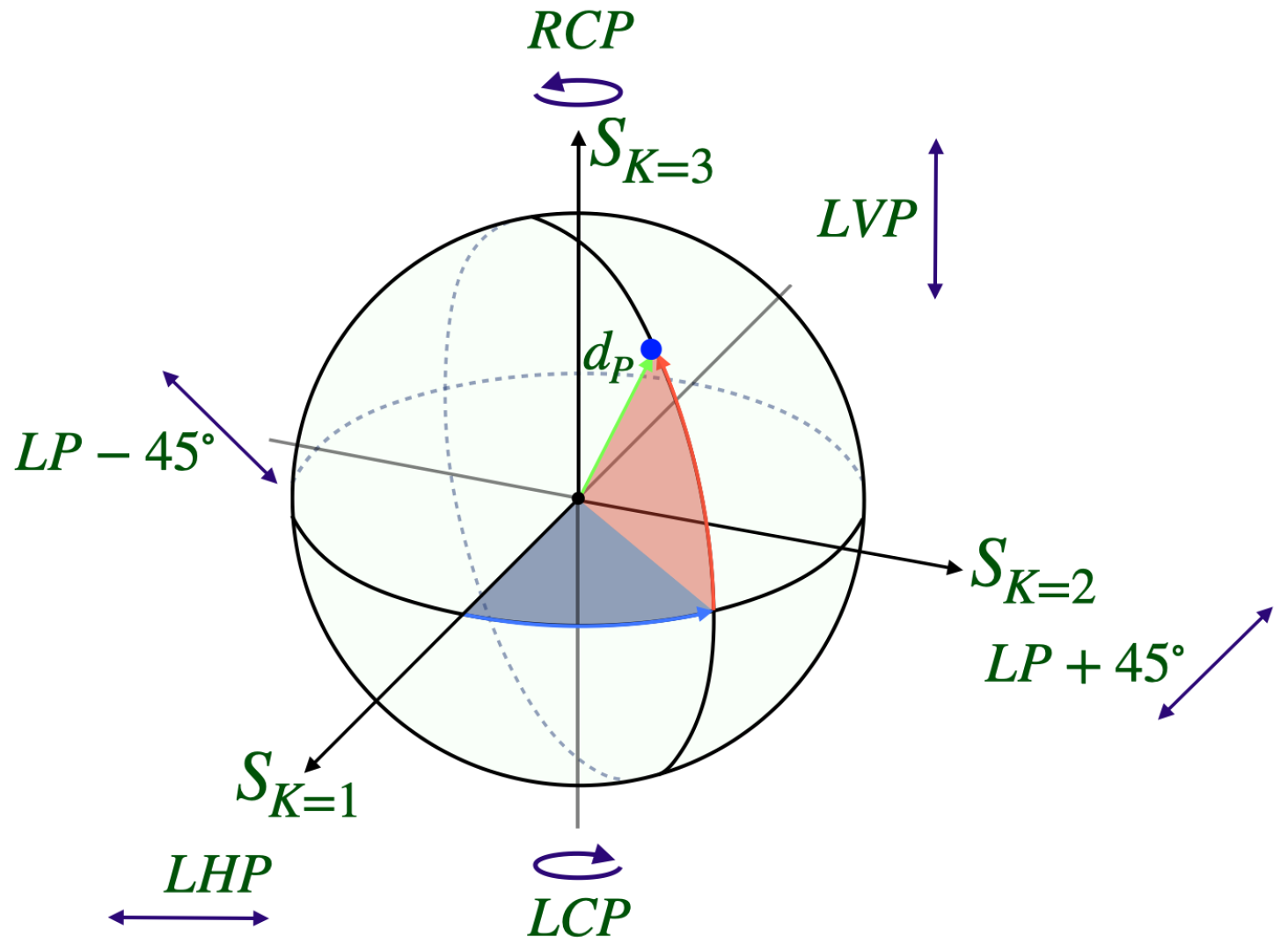
where the angle δ refers to the angle between the left-handed polarization (LHP) S 2 and the right-handed polarization (RHP) S 3 projected on to the Poincare sphere. A rotation of any of the SP components by an angle of 180 leaves them invariant as projected onto the Poincare sphere as visualized in Figure 3 below.
All six degenerate polarization states can be represented as the set of vectors in Equation (26) below. These vectors are normalized to unity against the intensity S 0 [39,40].
S L H P = 1 1 0 0 , S L V P = 1 1 0 0
S L P + 45 = 1 0 1 0 , S L P 45 = 1 0 1 0
S R C P = 1 0 0 1 , S L C P = 1 0 0 1
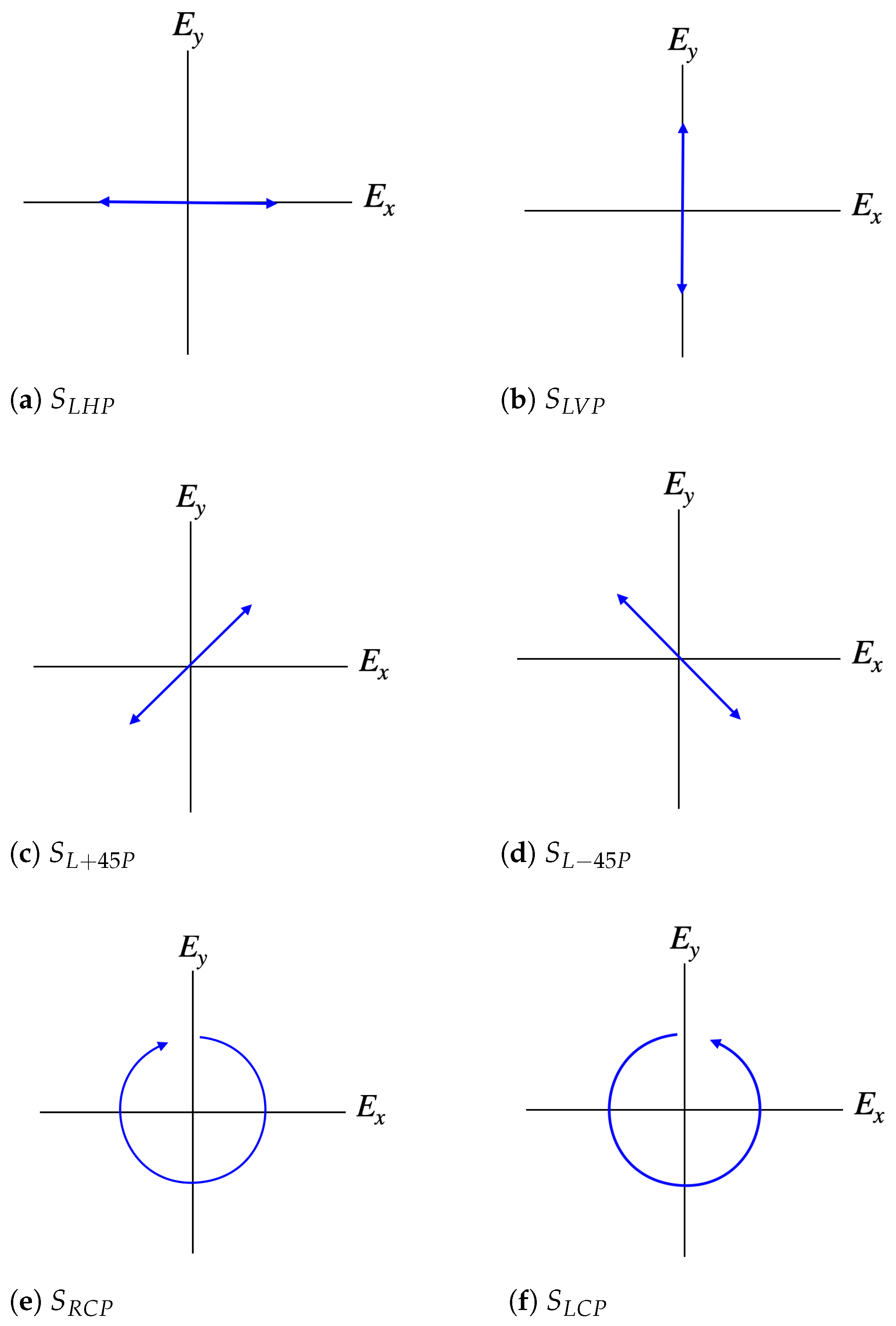
Figure 4 below depicts the orientation of the electric field vector components with respect to these polarization state vectors.
The vectors can be represented in complex form under a linear combination or superposition of states. The Stokes vector can now be represented more concisely as
S A = I Q U V = E 1 2 + E 2 2 E 1 2 E 2 2 E 1 E ¯ 2 + E ¯ 1 E 2 i E 1 E ¯ 2 E ¯ 1 E 2 .
The radius of the spherical projection onto the Poincare sphere is given by the inequality for the most general case of a polychromatic signal I 2 Q 2 + U 2 + V 2 visualized in Figure 3. We can then define a degree of total polarization d p using the ratio
d P = Q 2 + U 2 + V 2 I
We can then further define a degree of circular polarization d C as
d C = V 2 I
and degree of linear polarization d L
d L = Q 2 + U 2 I .

3.3. Stokes Parameters in the Spin Tetrad

Introducing a spin tetrad in this description for the polarization states of propagating signal provides a rather interesting and intuitive definition of the SP as they relate to a system with active flux of angular momentum, such as AGN. The null characteristic of the spin tetrad makes it well-suited for describing null fields, such as electromagnetism, that propagate at the speed of light. With this mechanism in place, we can describe the null characteristics of the electromagnetic field in a rotating spacetime with axial symmetry using the spin tetrad stated in Section 2.2 and considering the γ + and γ tetrad components as complex conjugates of each other.
Transforming to this new tetrad frame provides for a better description of the symmetries attributed to the polarization state of the electric field. Consider the same observer at P who sees the polarized signal propagating in the local z-direction using a spin tetrad e A μ = { l μ , n μ , γ + μ , γ μ } , where the capitalized roman letters label the tetrad frame and Greek letters label the coordinate frame. The substitutions for the complex conjugation of the γ + μ vector can then be γ μ = γ + μ and γ ¯ μ = γ μ . The vectors of this tetrad frame are then defined as the set of axes
l μ = 1 2 ( e t + e ϕ ) μ
n μ = 1 2 ( e t e ϕ ) μ
γ μ = 1 2 ( e r + i e θ ) μ
γ ¯ μ = 1 2 ( e r i e θ ) μ
retaining the property of lying along null trajectories for l μ n μ = γ μ γ ¯ μ = 1 and following the transformation using the NP spin tetrad metric, γ L K , where
γ L K = 1 2 1 0 0 1 1 0 0 1 0 1 i 0 0 1 i 0 .
It is easy to see that we can write down the SP in this frame, capturing information about the geometric properties of spin as it relates to the polarization states. The SP in this frame in terms of the electric field components can be written as
S 0 = < E α E ¯ β > e 1 α e 1 β + e 2 α e 2 β
S 1 = < E α E ¯ β > e 1 α e 1 β e 2 α e 2 β
S 2 = < E α E ¯ β > e 1 α e 2 β + e 2 α e 1 β
S 3 = i < E α E ¯ β > e 1 α e 2 β e 2 α e 1 β .
Thus, we can transform this set of SP using the polarization J α β = < E α E ¯ β > ,
S 0 = J α β e 1 α e 1 β + e 2 α e 2 β
S 1 = J α β e 1 α e 1 β e 2 α e 2 β
S 2 = J α β e 1 α e 2 β + e 2 α e 1 β
S 3 = i J α β e 1 α e 2 β e 2 α e 1 β .
With this set of SP within the framework of a null tetrad, we can move towards formulating a formal relationship between the SP and the flux of angular momentum. The SP will prove to be a valuable tool in a description of the spin and orbital angular momentum of polarized states as it relates back to the rotation of the black hole.

4. Discussion

The Observation–Theory Relationship

As we have seen, a relativistic jet described as a beam of light carries linear momentum and is thus influenced by an appreciable amount of external angular momentum in both the non-relativistic and relativistic regimes. This angular momentum would then be dependent on the origin of an associated coordinate system owing to the intrinsic gauge dependence of angular momentum in fundamental physics descriptions. If we then proceed to describe BL Lac and FSRQ blazars as energetic point sources, we can infer the physical characteristics of the jet emission as relativistic beams transported across galactic distances. These point sources should then inherently carry a rotational symmetry corresponding to rotated field lines with respect to the host black hole. Thus, ew can remove some of the mystery of the physical mechanisms that causes some jets to twist and carry a proportionate amount of angular momentum from the black hole. It is then intuitive to think about how one can infer the mechanisms causing such polarizations in the observed spectra. Observations of blazars and radio-loud sources have shown that polarization states exist in the spectra from these sources [21]. Recent observations of X-ray and gamma ray sources have eluded to the need for more missions that carry polarimetry capabilities [20,21,22,41,42].
A review of the observed features of relativistic jets from radio-loud AGN provides contact with this present work in regard to stitching the mathematical general relativistic theory to observable variables to describe the physics governing the launch mechanisms for these jets. This work contributes to the fundamental description of jets emanating from strong sources of gravity (SMBH) and the influence those sources have on the surrounding environment that the jet is operated in. Relativistic jets, in and of themselves, are extended objects such that they act as beacons of light being pushed out from the edges of the outer event horizons. These objects can extend over large distances ( k p c r M p c scales) and interact with other matter energy in the surrounding environment near the black hole [7,8,43].
The circular polarization parameter S c i r c and subsequent degree of circular polarization in the tetrad frame d C can then also be expanded in terms of the black hole parameters using the metric function ρ ( α , r ) and M b h as
S c i r c = J α β e 1 α e 1 β + e 2 α e 2 β d C K S ˜ K = 1 2 c 2 F 10 F ¯ 10 r 2 + α 2 cos 2 θ r 2 M b h r + α 2 + c 2 F 20 F ¯ 20 ρ 2 d C K S ˜ K
d C = 1 4 c 2 F 10 F ¯ 20 ρ 2 Δ ρ 2 2 c 2 F 20 F ¯ 10 ρ 2 Δ ρ 2 2 1 / 2 1 2 c 2 F 10 F ¯ 10 r 2 + α 2 cos 2 θ r 2 M b h r + α 2 + c 2 F 20 F ¯ 20 ρ 2
It is the intricate relationship between black hole spin, electromagnetic stokes parameters, and the distribution of matter at high energies that is the essence of this work. This paper supports the fundamental understanding of how the spin angular momentum of black holes can have a direct influence on the emission of charged particles at sufficient energy levels. As part of a larger body of work, which is ongoing, this paper provides a portion of the mathematical theory that is needed to lay the foundation for providing predictions or constraints on observational parameters of jets. Lastly, it is no small task to bridge the gap between the physics of black holes, per the mathematical theory of general relativity, to the archived observational data presented in the reviews of AGN catalogs. This work contributes to the overall notion that black holes (curved spacetime) influence the motion and emission of particles with sufficient energy.
The results of this work only scratch the surface of solving outstanding problems in AGN jet physics and particle acceleration. Linear polarization has been a foundational construct in radio astronomy for synchrotron emitting sources, but the circular polarization counterpart has been difficult to discern based on past methodologies [44,45]. Future studies of AGN jet physics will rely heavily on our continued understanding of the poloidal–toroidal magnetic field relationship in the vicinity of the central engine (a Kerr black hole). This relationship shows promise in expanding methodologies to further constrain black hole spin parameters from the partial orthogonality between the magnetic fields and observed jet axis [23,46]. The future of polarization states in jets rests on our ability to develop such missions that can realize theories, like those presented in this work, and others that have immediate testing timelines according to current detection technologies.
Current missions like XRISM and IXPE provide sufficient observational data for linear polarization and conversion measures but are not sufficient for circular polarization observations with current techniques. Another leading issue that concerns polarization states of the synchrotron emission within jets focuses on the by-product of proton–proton interactions that contribute to the neutrino and cosmic ray spectrum of jetted AGN [47]. Ultimately, the presence of these cascades detected by neutrino and Cerenkov telescopes is a prominent clue for finding these relativistic protons in the jet [48,49]. The IceCube Neutrino Observatory [50] has made significant progress in detecting neutrinos of astrophysical origin emanating from blazars. Blazars, such as TXS 0506+056 (4FGL J0509.4+0542) and PKS 0735+178 (4FGL J0738.1+1742), have been extensively studied in recent years [51,52,53]. Multi-messenger observations and their follow-up have thus proven to be powerful methodologies for determining the VHE characteristics of AGN. The All-sky Medium Energy Gamma-ray Observatory (AMEGO-x) [5] is a probe mission concept that will focus on the medium energy-scaled X-ray sky and includes a variety of methods to detect and observe polarimetry from MeV blazars at very high redshift. Additionally, the Compton Spectrometer and Imager (COSI) will be the first gamma ray instrument with sensitivity to make polarization measurements for accreting SMBH in AGN by measuring the azimuthal scattering angle of incoming gamma rays in the energy range of 0.2–5 MeV [54].

5. Conclusions

As we have seen in this work, there are more clues and properties to uncover pertaining to the dynamics of relativistic jets, their polarizations, and formation. A full theoretical description of SAM-OAM coupling for polarization states, where the rotational gauge freedom is all but used, will prove to be a more robust theory. Of note, the resulting derivation of the above theory gives a constrained view of the relationship between the distribution of matter and the rotation of the central black hole. This approach can contribute to scientific predictions for future X-ray and gamma ray polarimetry missions surveying AGN jets by focusing on implementation within simulated observations.
A broader discussion on the flux of total angular momentum from the central black hole requires extending our understanding of energy-momentum emission characteristics from Kerr black holes. Focusing on the theoretical aspects of jet formation mechanisms, there are still fundamental questions that continue to remain unresolved. It is evident that further evaluations of the remaining SP that were not explored in this work (linear and elliptical states) are needed to obtain a complete description of their respective symmetries.

Funding

This research material is based upon work supported by the NASA Goddard Space Flight Center under award number 80GSFC21M0002.

Data Availability Statement

The original contributions presented in this study are included in the article. Further inquiries can be directed to the corresponding author.

Acknowledgments

I would like to thank Rita Sambruna, Demos Kazanas, and Kavic Kumar for their valuable discussions and insights on this topic. In addition, I would like to thank the reviewers for their informative recommendations and review of this manuscript.

Conflicts of Interest

The author declares no conflicts of interest. The funders had no role in the design of the study; in the collection, analyses, or interpretation of data; in the writing of the manuscript; or in the decision to publish the results.

References

  1. Fermi Large Area Telescope Collaboratin. 10-year Fermi LAT point source catalog. Astronomer’s Telegr. 2021, 15110, 1. [Google Scholar]
  2. Abdollahi, S.; Acero, F.; Ackermann, M.; Ajello, M.; Atwood, W.B.; Axelsson, M.; Baldini, L.; Ballet, J.; Barbiellini, G.; Bastieri, D.; et al. Fermi Large Area Telescope Fourth Source Catalog. Astrophys. J. Suppl. Ser. 2020, 247, 33. [Google Scholar] [CrossRef]
  3. Valverde, J.; Horan, D.; Bernard, D.; Fegan, S.; Collaboration, F.L.; Abeysekara, A.U.; Archer, A.; Benbow, W.; Bird, R.; Brill, A.; et al. A Decade of Multiwavelength Observations of the TeV Blazar 1ES 1215+303: Extreme Shift of the Synchrotron Peak Frequency and Long-term Optical-Gamma-Ray Flux Increase. Astrophys. J. 2020, 891, 170. [Google Scholar] [CrossRef]
  4. Fan, J.H.; Yang, J.H.; Liu, Y.; Luo, G.Y.; Lin, C.; Yuan, Y.H.; Xiao, H.B.; Zhou, A.Y.; Hua, T.X.; Pei, Z.Y. The Spectral Energy Distributions of Fermi Blazars. Astrophys. J. Suppl. Ser. 2016, 226, 20. [Google Scholar] [CrossRef]
  5. McEnery, J.; Barrio, J.A.; Agudo, I.; Ajello, M.; Álvarez, J.M.; Ansoldi, S.; Anton, S.; Auricchio, N.; Stephen, J.B.; Baldini, L.; et al. All-sky Medium Energy Gamma-ray Observatory: Exploring the Extreme Multimessenger Universe. arXiv 2019, arXiv:1907.07558. [Google Scholar]
  6. Weisskopf, M.C.; Ramsey, B.; O’Dell, S.; Tennant, A.; Elsner, R.; Soffitta, P.; Bellazzini, R.; Costa, E.; Kolodziejczak, J.; Kaspi, V.; et al. The Imaging X-ray Polarimetry Explorer (IXPE). In Proceedings of the Space Telescopes and Instrumentation 2016: Ultraviolet to Gamma Ray, Edinburgh, UK, 26 June–1 July 2016; den Herder, J.W.A., Takahashi, T., Bautz, M., Eds.; Society of Photo-Optical Instrumentation Engineers (SPIE) Conference Series. SPIE: Bellingham, WA, USA, 2016; Volume 9905, p. 990517. [Google Scholar] [CrossRef]
  7. Harris, D.E.; Krawczynski, H. X-Ray Emission from Extragalactic Jets. Annu. Rev. Astron. Astrophys. 2006, 44, 463–506. [Google Scholar] [CrossRef]
  8. Blandford, R.; Meier, D.; Readhead, A. Relativistic Jets from Active Galactic Nuclei. Annu. Rev. Astron. Astrophys. 2019, 57, 467–509. [Google Scholar] [CrossRef]
  9. Blandford, R.D.; Znajek, R.L. Electromagnetic extraction of energy from Kerr black holes. Mon. Not. R. Astron. Soc. 1977, 179, 433–456. [Google Scholar] [CrossRef]
  10. Znajek, R. Black hole electrodynamics and the Carter tetrad. Mon. Not. R. Astron. Soc. 1977, 179, 457–472. [Google Scholar] [CrossRef]
  11. Kim, J.Y.; Krichbaum, T.P.; Broderick, A.E.; Wielgus, M.; Blackburn, L.; Gómez, J.L.; Johnson, M.D.; Bouman, K.L.; Chael, A.; Akiyama, K.; et al. Event Horizon Telescope imaging of the archetypal blazar 3C 279 at an extreme 20 microarcsecond resolution. Astron. Astrophys. 2020, 640, A69. [Google Scholar] [CrossRef]
  12. Kawashima, T. Structure Formation of Black Hole Jets Triggered by Electron-Scale Physics; Research Square: Durham, NC, USA, 2020. [Google Scholar] [CrossRef]
  13. Doeleman, S.S.; Fish, V.L. Jet-Launching Structure Resolved Near the Supermassive Black Hole in M87. Science 2012, 338, 355. [Google Scholar] [CrossRef]
  14. Williams, R.K. Extracting x rays, γ rays, and relativistic ee+ pairs from supermassive Kerr black holes using the Penrose mechanism. Phys. Rev. D 1995, 51, 5387–5427. [Google Scholar] [CrossRef]
  15. Williams, R.K. Collimated Escaping Vortical Polarie/isup-/supie/isup/supJets Intrinsically Produced by Rotating Black Holes and Penrose Processes. Astrophys. J. 2004, 611, 952–963. [Google Scholar] [CrossRef]
  16. King, A.R.; Pringle, J.E. Can the Blandford–Znajek Mechanism Power Steady Jets? Astrophys. J. Lett. 2021, 918, L22. [Google Scholar] [CrossRef]
  17. Koide, S. Generalized General Relativistic Magnetohydrodynamic Equations for Plasmas of Active Galactic Nuclei in the Era of the Event Horizon Telescope. Astrophys. J. 2020, 899, 95. [Google Scholar] [CrossRef]
  18. Nathanail, A.; Contopoulos, I. Black Hole Magnetospheres. Astrophys. J. 2014, 788, 186. [Google Scholar] [CrossRef]
  19. Komissarov, S.S. Observations of the Blandford-Znajek process and the magnetohydrodynamic Penrose process in computer simulations of black hole magnetospheres. Mon. Not. R. Astron. Soc. 2005, 359, 801–808. [Google Scholar] [CrossRef]
  20. Rani, B.; Zhang, H.; Hunter, S.D.; Kislat, F.; Böttcher, M.; McEnery, J.E.; Thompson, D.J.; Giannios, D.; Guo, F.; Li, H.; et al. High-Energy Polarimetry—A new window to probe extreme physics in AGN jets. arXiv 2019, arXiv:1903.04607. [Google Scholar]
  21. Liodakis, I.; Blinov, D.; Potter, S.B.; Rieger, F.M. Constraints on magnetic field and particle content in blazar jets through optical circular polarization. Mon. Not. R. Astron. Soc. Lett. 2021, 509, L21–L25. [Google Scholar] [CrossRef]
  22. Rieger, F.M.; Mannheim, K. On the Possible Origin of Optical Circular Polarization in Blazars. Chin. J. Astron. Astrophys. 2005, 5, 311–317. [Google Scholar] [CrossRef]
  23. Kramer, J.A.; Müller, H.; Röder, J.; Ros, E. Probing circular polarization and magnetic field structure in active galactic nuclei. Astron. Astrophys. 2025, 697, A66. [Google Scholar] [CrossRef]
  24. Homan, D.C.; Lister, M.L.; Aller, H.D.; Aller, M.F.; Wardle, J.F.C. Full Polarization Spectra of 3C 279. Astrophys. J. 2009, 696, 328–347. [Google Scholar] [CrossRef]
  25. XRISM Science Team. Science with the X-ray Imaging and Spectroscopy Mission (XRISM). arXiv 2020, arXiv:2003.04962.
  26. O’Dell, S.L.; Baldini, L.; Bellazzini, R.; Costa, E.; Elsner, R.F.; Kaspi, V.M.; Kolodziejczak, J.J.; Latronico, L.; Marshall, H.L.; Matt, G.; et al. The Imaging X-ray Polarimetry Explorer (IXPE): Technical overview. In Proceedings of the Space Telescopes and Instrumentation 2018: Ultraviolet to Gamma Ray, Austin, TX, USA, 10–15 June 2018; den Herder, J.W.A., Nikzad, S., Nakazawa, K., Eds.; Society of Photo-Optical Instrumentation Engineers (SPIE) Conference Series. SPIE: Bellingham, WA, USA, 2018; Volume 10699, p. 106991X. [Google Scholar] [CrossRef]
  27. Komissarov, S.S. Electrodynamics of black hole magnetospheres. Mon. Not. R. Astron. Soc. 2004, 350, 427–448. [Google Scholar] [CrossRef]
  28. Pei, G.; Nampalliwar, S.; Bambi, C.; Middleton, M.J. Blandford–Znajek mechanism in black holes in alternative theories of gravity. Eur. Phys. J. C 2016, 76, 534. [Google Scholar] [CrossRef]
  29. De Young, D.S. Relativistic Spinor Formulation of Stokes Parameters with Application to the Inverse Compton Effect. J. Math. Phys. 1966, 7, 1916–1923. [Google Scholar] [CrossRef]
  30. Garofalo, D.; Singh, C.B. The astrophysics of rotational energy extraction from a black hole. Nat. Astron. 2021, 5, 1086–1088. [Google Scholar] [CrossRef]
  31. Gamble, R. On Gravitational Radiation: A Nonlinear Wave Theory in a Viscoelastic Kerr-Lambda Spacetime. Ph.D. Thesis, North Carolina Agricultural & Technical State University, Greensboro, NC, USA, 2017. [Google Scholar]
  32. Kerr, R.P. Gravitational Field of a Spinning Mass as an Example of Algebraically Special Metrics. Phys. Rev. Lett. 1963, 11, 237–238. [Google Scholar] [CrossRef]
  33. Anile, A.M.; Bruer, R.A. Gravitational Stokes Parameters. Astrophys. J. 1974, 189, 39–50. [Google Scholar] [CrossRef]
  34. Thorne, K.S.; Misner, C.W.; Wheeler, J.A. Gravitation; W. H. Freeman: San Francisco, CA, USA, 1973. [Google Scholar]
  35. Chandrasekhar, S.; Chandrasekhar, S. The Mathematical Theory of Black Holes; Oxford University Press: Oxford, UK, 1998; Volume 69. [Google Scholar]
  36. Newman, E.; Penrose, R. An approach to gravitational radiation by a method of spin coefficients. J. Math. Phys. 1962, 3, 566–578. [Google Scholar] [CrossRef]
  37. Jackson, J. Classical Electrodynamics; Wiley: Hoboken, NJ, USA, 1998. [Google Scholar]
  38. Stokes, G.G. On the Composition and Resolution of Streams of Polarized Light from different Sources. Trans. Camb. Philos. Soc. 1851, 9, 399. [Google Scholar]
  39. Collett, E. Field Guide to Polarization; Field Guides; SPIE Press: Bellingham, WA, USA, 2005. [Google Scholar]
  40. Chandrasekhar, S. Radiative Transfer; Dover Books on Physics, Dover Publications: Mineola, NY, USA, 2013. [Google Scholar]
  41. Chauvin, M.; Florén, H.G.; Friis, M.; Jackson, M.; Kamae, T.; Kataoka, J.; Kawano, T.; Kiss, M.; Mikhalev, V.; Mizuno, T.; et al. Shedding new light on the Crab with polarized X-rays. Sci. Rep. 2017, 7, 7816. [Google Scholar] [CrossRef] [PubMed]
  42. Tamburini, F.; Thidé, B.; Della Valle, M. Measurement of the spin of the M87 black hole from its observed twisted light. Mon. Not. R. Astron. Soc. Lett. 2019, 492, L22–L27. [Google Scholar] [CrossRef]
  43. Gorchtein, M.; Profumo, S.; Ubaldi, L. Probing dark matter with active galactic nuclei jets. Phys. Rev. D 2010, 82, 083514. [Google Scholar] [CrossRef]
  44. Myserlis, I.; Jorstad, S.; Marscher, A.; Agudo, I.; Angelakis, E. Circular polarization of the jets of active galactic nuclei. In Proceedings of the 44th COSPAR Scientific Assembly, Athens, Greece, 16–24 July 2022; Volume 44, p. 2076. [Google Scholar]
  45. Park, J.; Algaba, J.C. Polarization Observations of AGN Jets: Past and Future. Galaxies 2022, 10, 102. [Google Scholar] [CrossRef]
  46. Lyutikov, M.; Pariev, V.I.; Gabuzda, D.C. Polarization and structure of relativistic parsec-scale AGN jets. Mon. Not. R. Astron. Soc. 2005, 360, 869–891. [Google Scholar] [CrossRef]
  47. Filipović, M.D.; Smeaton, Z.J.; Bradley, A.C.; Dobie, D.; Koribalski, B.S.; Kothes, R.; Rudnick, L.; Ahmad, A.; Alsaberi, R.Z.E.; Anderson, C.S.; et al. ASKAP and VLASS search for a radio-continuum counterpart of ultra-high-energy neutrino event KM3-230213A. arXiv 2025, arXiv:2503.09108. [Google Scholar] [CrossRef]
  48. Cerruti, M. Leptonic and Hadronic Radiative Processes in Supermassive-Black-Hole Jets. Galaxies 2020, 8, 72. [Google Scholar] [CrossRef]
  49. Muecke, A.; Rachen, J.P.; Engel, R.; Protheroe, R.J.; Stanev, T. Photomeson production in astrophysical sources. arXiv 1999, arXiv:astro-ph/9905153. [Google Scholar]
  50. Aartsen, M.; Ackermann, M.; Adams, J.; Aguilar, J.; Ahlers, M.; Ahrens, M.; Altmann, D.; Andeen, K.; Anderson, T.; Ansseau, I.; et al. The IceCube Neutrino Observatory: Instrumentation and online systems. J. Instrum. 2017, 12, P03012. [Google Scholar] [CrossRef]
  51. IceCube Collaboration; MAGIC; AGILE; ASAS-SN; HAWC; HESS; INTEGRAL; Kanata; Kiso; Kapteyn; et al. Multimessenger observations of a flaring blazar coincident with high-energy neutrino IceCube-170922A. Science 2018, 361, eaat1378. [Google Scholar] [CrossRef]
  52. Padovani, P.; Petropoulou, M.; Giommi, P.; Resconi, E. A simplified view of blazars: The neutrino background. Mon. Not. R. Astron. Soc. 2015, 452, 1877–1887. [Google Scholar] [CrossRef]
  53. Prince, R.; Das, S.; Gupta, N.; Majumdar, P.; Czerny, B. Dissecting the broad-band emission from γ-ray blazar PKS 0735+178 in search of neutrinos. Mon. Not. R. Astron. Soc. 2023, 527, 8746–8754. [Google Scholar] [CrossRef]
  54. Tomsick, J.A.; Boggs, S.E.; Zoglauer, A.; Hartmann, D.; Ajello, M.; Burns, E.; Fryer, C.; Karwin, C.; Kierans, C.; Lowell, A.; et al. The Compton Spectrometer and Imager. arXiv 2023, arXiv:2308.12362. [Google Scholar] [CrossRef]
Figure 1. Illustration of disk–jet model of M87 and the associated relativistic jet, not to scale. The Schwarzschild length scale is r s = 5.9 × 10 4 Pc, the disk radius of R d i s k 0.12 Pc, and the jet length of Z j e t 1.5 kPc.
Universe 11 00364 g001
Figure 2. Geometric representation of the poloidal B p and toroidal B T magnetic fields superimposed on the horizon + ergosphere structures. The current associated with this configuration is denoted as J E ϕ , parallel with the black hole spin axis and jet poynting vector S ϕ in the ϕ ^ direction. The horizon foci located at λ H = ± 1 3 r s [31] identify a proposed inner boundary to magnetic field lines threading the horizon surface.
Universe 11 00364 g002
Figure 3. Schematic diagram of polarization states projected onto the Poincare sphere. The right circular (RCP), left circular (LCP), linear ± 45 (LP ± 45 ), and linear horizontal (LHP) and vertical (LVP) polarization states are visually represented with no correlation to line color.
Universe 11 00364 g003
Figure 4. Projection of Stokes polarization vectors with respect to E x and E y components of the electric field.
Universe 11 00364 g004
Table 1. Fractional circular polarization ( d C = V 2 / I ) in 8 VLBA jet-dominated AGN cores [23].
IAU Name (Common) d C 15 GHz [%] d C 23 GHz [%]Handedness
0059+581 0.44 0.57 LH → LH
0149+218 + 0.15 0.22 RH → LH
0241+622 + 0.30 + 0.27 RH → RH
0528+134 + 0.65 0.29 RH → LH
0748+126 + 0.51 0.37 RH → LH
1127-145 + 0.14 0.49 RH → LH
2136+141 + 0.22 + 1.50 RH → RH
1253-055 (3C 279) * + 1.00 RH
RH/LH denote positive/negative Stokes V (right- or left-handed CP) at each VLBA frequency. * The referenced d C value of 1253-055 (3C 279) at 15 GHz is sourced from [11,24] and references therein.
Disclaimer/Publisher’s Note: The statements, opinions and data contained in all publications are solely those of the individual author(s) and contributor(s) and not of MDPI and/or the editor(s). MDPI and/or the editor(s) disclaim responsibility for any injury to people or property resulting from any ideas, methods, instructions or products referred to in the content.