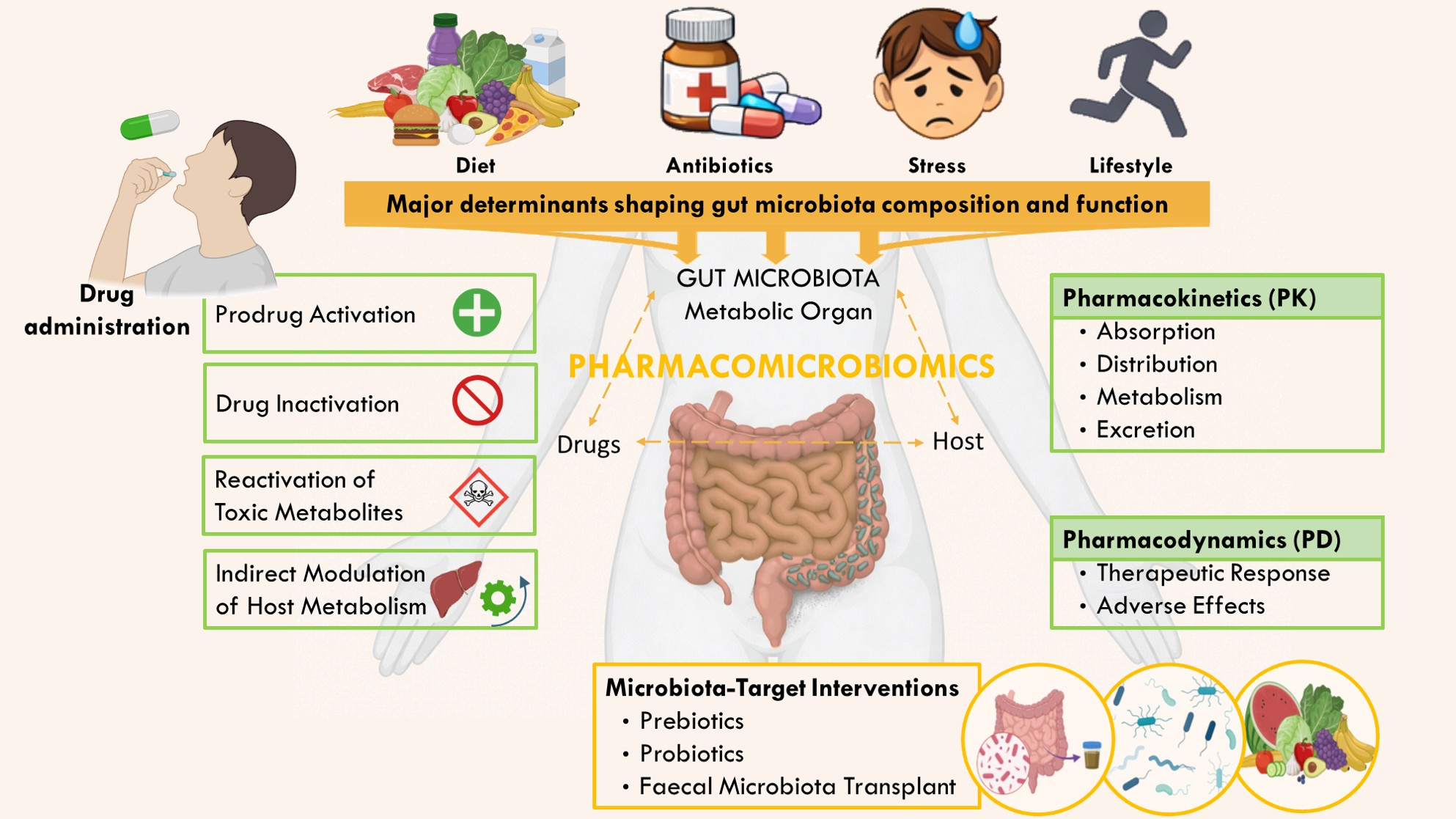

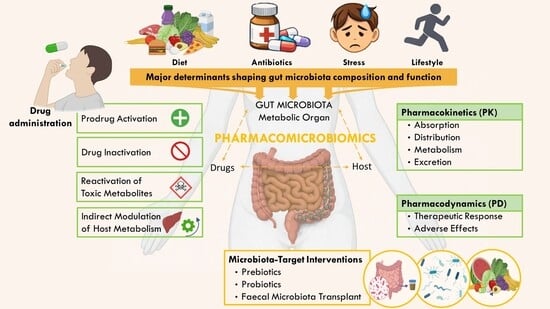
Pharmacomicrobiomics: From Host–Microbiome–Drug Interactions to Clinical Translation in Precision Medicine




Abstract
1. Introduction
2. Human Microbiome: Definition, Functions, and Modulators
3. Microbiome–Drug Interactions: Metabolic and Molecular Mechanisms
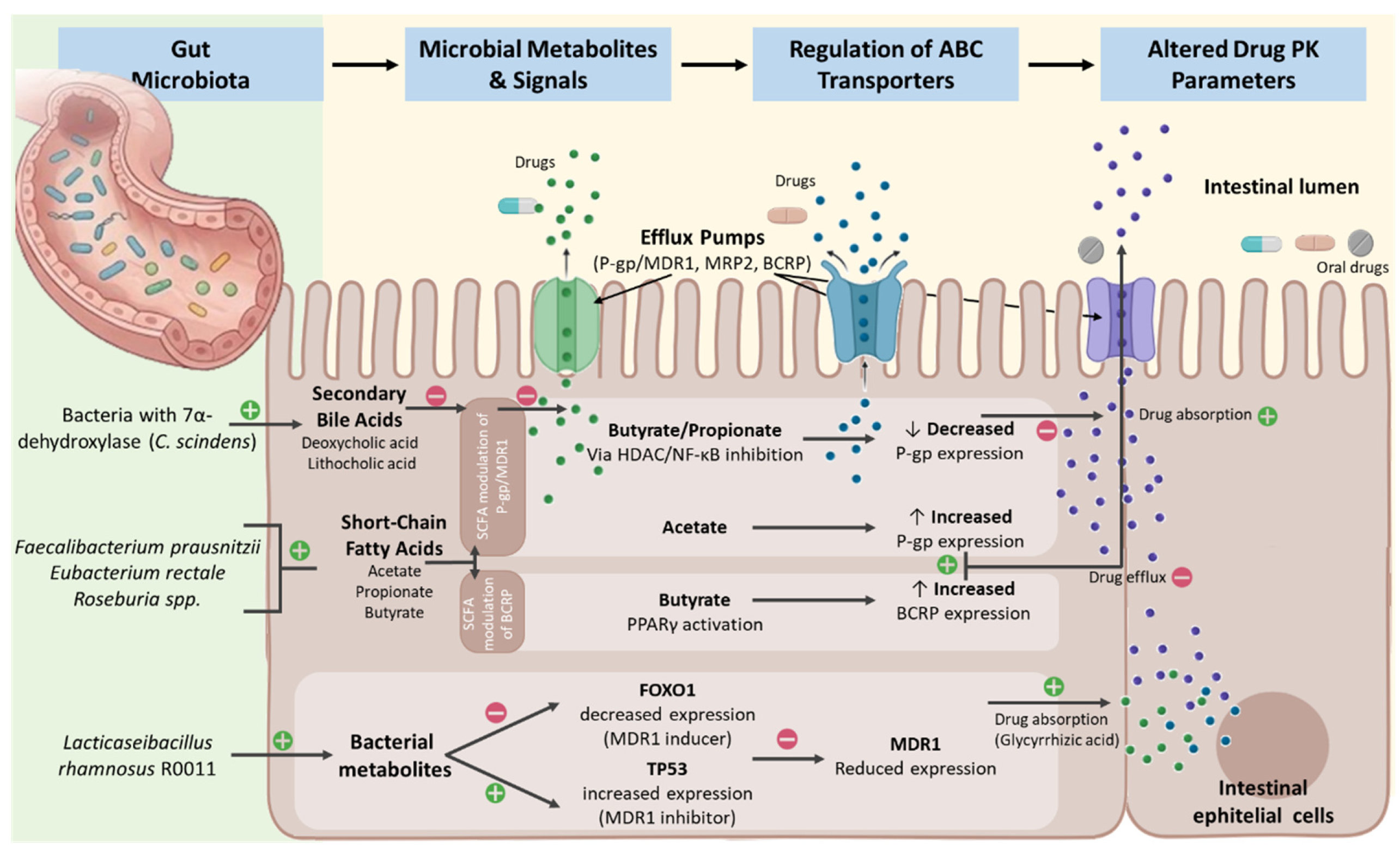
3.1. Influence of the Gut Microbiota on the Pharmacokinetics of Oral Drugs
3.2. Microbial Mechanisms of Drug Biotransformation
3.2.1. Activation of Prodrugs
3.2.2. Inactivation of Active Drugs
3.2.3. Reactivation of Metabolites and Microbiota-Induced Toxicity
3.2.4. Indirect Interference in Drug Metabolism
3.3. Influence of the Gut Microbiota on Pharmacodynamics and Therapeutic Response in Diabetes, Multiple Sclerosis and Oncology
3.3.1. Type 2 Diabetes Mellitus
3.3.2. Multiple Sclerosis
3.3.3. Oncology
4. Therapeutic Modulation of the Gut Microbiota: Implications for Pharmacomicrobiomics
4.1. Prebiotics
4.2. Probiotics
4.3. Faecal Microbiota Transplantation
5. Future Perspectives and Challenges
5.1. Challenges for Clinical Translation
5.2. Future Directions
6. Conclusions
Author Contributions
Funding
Institutional Review Board Statement
Informed Consent Statement
Data Availability Statement
Conflicts of Interest
References
- ElRakaiby, M.; Dutilh, B.E.; Rizkallah, M.R.; Boleij, A.; Cole, J.N.; Aziz, R.K. Pharmacomicrobiomics: The impact of human microbiome variations on systems pharmacology and personalized therapeutics. Omics J. Integr. Biol. 2014, 18, 402–414. [Google Scholar] [CrossRef] [Scilit] [PubMed]
- Zimmermann, M.; Zimmermann-Kogadeeva, M.; Wegmann, R.; Goodman, A.L. Mapping human microbiome drug metabolism by gut bacteria and their genes. Nature 2019, 570, 462–467. [Google Scholar] [CrossRef] [Scilit] [PubMed]
- Wilson, I.D.; Nicholson, J.K. Gut microbiome interactions with drug metabolism, efficacy, and toxicity. Transl. Res. 2017, 179, 204–222. [Google Scholar] [CrossRef] [Scilit] [PubMed]
- Enright, E.F.; Gahan, C.G.; Joyce, S.A.; Griffin, B.T. The impact of the gut microbiota on drug metabolism and clinical outcome. Yale J. Biol. Med. 2016, 89, 375–382. [Google Scholar] [PubMed]
- Cho, I.; Yamanishi, S.; Cox, L.; Methe, B.A.; Zavadil, J.; Li, K.; Gao, Z.; Mahana, D.; Raju, K.; Teitler, I.; et al. Antibiotics in early life alter the murine colonic microbiome and adiposity. Nature 2012, 488, 621–626. [Google Scholar] [CrossRef] [Scilit] [PubMed]
- Nobel, Y.R.; Cox, L.M.; Kirigin, F.F.; Bokulich, N.A.; Yamanishi, S.; Teitler, I.; Chung, J.; Sohn, J.; Barber, C.M.; Goldfarb, D.S.; et al. Metabolic and metagenomic outcomes from early-life pulsed antibiotic treatment. Nat. Commun. 2015, 6, 7486. [Google Scholar] [CrossRef] [Scilit] [PubMed]
- Tsunoda, S.M.; Gonzales, C.; Jarmusch, A.K.; Momper, J.D.; Ma, J.D. Contribution of the gut microbiome to drug disposition, pharmacokinetic and pharmacodynamic variability. Clin. Pharmacokinet. 2021, 60, 971–984. [Google Scholar] [CrossRef] [Scilit] [PubMed]
- Qin, J.; Li, R.; Raes, J.; Arumugam, M.; Burgdorf, K.S.; Manichanh, C.; Nielsen, T.; Pons, N.; Levenez, F.; Yamada, T.; et al. A human gut microbial gene catalogue established by metagenomic sequencing. Nature 2010, 464, 59–65. [Google Scholar] [CrossRef] [Scilit] [PubMed]
- Boulange, C.L.; Neves, A.L.; Chilloux, J.; Nicholson, J.K.; Dumas, M.E. Impact of the gut microbiota on inflammation, obesity, and metabolic disease. Genome Med. 2016, 8, 42. [Google Scholar] [CrossRef] [Scilit] [PubMed]
- Van Hul, M.; Cani, P.D.; Petitfils, C.; De Vos, W.M.; Tilg, H.; El-Omar, E.M. What defines a healthy gut microbiome? Gut 2024, 73, 1893–1908. [Google Scholar] [CrossRef] [Scilit] [PubMed]
- Lima, T.; Costa, V.; Nunes, C.; da Silva, G.J.; Domingues, S. From dysbiosis to cardiovascular disease: The impact of gut microbiota on atherosclerosis and emerging therapies. Appl. Sci. 2025, 15, 7084. [Google Scholar] [CrossRef] [Scilit]
- Singh, R.K.; Chang, H.W.; Yan, D.; Lee, K.M.; Ucmak, D.; Wong, K.; Abrouk, M.; Farahnik, B.; Nakamura, M.; Zhu, T.H.; et al. Influence of diet on the gut microbiome and implications for human health. J. Transl. Med. 2017, 15, 73. [Google Scholar] [CrossRef] [Scilit] [PubMed]
- Zhang, X.; Han, Y.; Huang, W.; Jin, M.; Gao, Z. The influence of the gut microbiota on the bioavailability of oral drugs. Acta Pharm. Sin. B 2021, 11, 1789–1812. [Google Scholar] [CrossRef] [Scilit] [PubMed]
- Shi, T.; Li, H.; Zhang, Z.; Zang, Y.; Jiang, S.; Yuan, T. The effect of gut microbiome perturbation on the bioavailability of glycyrrhizic acid in rats. Pharmaceutics 2025, 17, 457. [Google Scholar] [CrossRef] [Scilit] [PubMed]
- Geng, J.; Ni, Q.; Sun, W.; Li, L.; Feng, X. The links between gut microbiota and obesity and obesity related diseases. Biomed. Pharmacother. 2022, 147, 112678. [Google Scholar] [CrossRef] [Scilit] [PubMed]
- Miyake, S.; Kim, S.; Suda, W.; Oshima, K.; Nakamura, M.; Matsuoka, T.; Chihara, N.; Tomita, A.; Sato, W.; Kim, S.W.; et al. Dysbiosis in the gut microbiota of patients with multiple sclerosis, with a striking depletion of species belonging to Clostridia XIVa and IV clusters. PLoS ONE 2015, 10, e0137429. [Google Scholar] [CrossRef] [Scilit] [PubMed]
- Rinninella, E.; Raoul, P.; Cintoni, M.; Franceschi, F.; Miggiano, G.A.D.; Gasbarrini, A.; Mele, M.C. What is the healthy gut microbiota composition? A changing ecosystem across age, environment, diet, and diseases. Microorganisms 2019, 7, 14. [Google Scholar] [CrossRef] [Scilit] [PubMed]
- Pant, A.; Maiti, T.K.; Mahajan, D.; Das, B. Human gut microbiota and drug metabolism. Microb. Ecol. 2023, 86, 97–111. [Google Scholar] [CrossRef] [Scilit] [PubMed]
- David, L.A.; Maurice, C.F.; Carmody, R.N.; Gootenberg, D.B.; Button, J.E.; Wolfe, B.E.; Ling, A.V.; Devlin, A.S.; Varma, Y.; Fischbach, M.A.; et al. Diet rapidly and reproducibly alters the human gut microbiome. Nature 2014, 505, 559–563. [Google Scholar] [CrossRef] [Scilit] [PubMed]
- Cresci, G.A.; Bawden, E. Gut microbiome: What we do and don’t know. Nutr. Clin. Pract. 2015, 30, 734–746. [Google Scholar] [CrossRef] [Scilit] [PubMed]
- Nooij, S.; Vendrik, K.E.W.; Zwittink, R.D.; Ducarmon, Q.R.; Keller, J.J.; Kuijper, E.J.; Terveer, E.M.; Netherlands Donor Feces Bank Study Group. Long-term beneficial effect of faecal microbiota transplantation on colonisation of multidrug-resistant bacteria and resistome abundance in patients with recurrent Clostridioides difficile infection. Genome Med. 2024, 16, 37. [Google Scholar] [CrossRef] [Scilit] [PubMed]
- Patangia, D.V.; Anthony Ryan, C.; Dempsey, E.; Paul Ross, R.; Stanton, C. Impact of antibiotics on the human microbiome and consequences for host health. MicrobiologyOpen 2022, 11, e1260. [Google Scholar] [CrossRef] [Scilit] [PubMed]
- Power, S.E.; O’Toole, P.W.; Stanton, C.; Ross, R.P.; Fitzgerald, G.F. Intestinal microbiota, diet and health. Br. J. Nutr. 2014, 111, 387–402. [Google Scholar] [CrossRef] [Scilit] [PubMed]
- Zhao, Q.; Chen, Y.; Huang, W.; Zhou, H.; Zhang, W. Drug-microbiota interactions: An emerging priority for precision medicine. Signal Transduct. Target. Ther. 2023, 8, 386. [Google Scholar] [CrossRef] [Scilit] [PubMed]
- Wang, S.; Ju, D.; Zeng, X. Mechanisms and clinical implications of human gut microbiota-drug interactions in the precision medicine era. Biomedicines 2024, 12, 194. [Google Scholar] [CrossRef] [Scilit] [PubMed]
- Cai, J.; Auster, A.; Cho, S.; Lai, Z. Dissecting the human gut microbiome to better decipher drug liability: A once-forgotten organ takes center stage. J. Adv. Res. 2023, 52, 171–201. [Google Scholar] [CrossRef] [Scilit] [PubMed]
- Purdel, C.; Ungurianu, A.; Adam-Dima, I.; Margina, D. Exploring the potential impact of probiotic use on drug metabolism and efficacy. Biomed. Pharmacother. 2023, 161, 114468. [Google Scholar] [CrossRef] [Scilit] [PubMed]
- Matuskova, Z.; Anzenbacherova, E.; Vecera, R.; Tlaskalova-Hogenova, H.; Kolar, M.; Anzenbacher, P. Administration of a probiotic can change drug pharmacokinetics: Effect of E. coli Nissle 1917 on amidarone absorption in rats. PLoS ONE 2014, 9, e87150. [Google Scholar] [CrossRef] [Scilit] [PubMed]
- Saputri, F.A.; Kang, D.; Kusuma, A.S.W.; Rusdiana, T.; Hasanah, A.N.; Mutakin; Surono, I.S.; Koyama, H.; Abdulah, R. Lactobacillus plantarum IS-10506 probiotic administration increases amlodipine absorption in a rabbit model. J. Int. Med. Res. 2018, 46, 5004–5010. [Google Scholar] [CrossRef] [Scilit] [PubMed]
- Yoo, H.H.; Kim, I.S.; Yoo, D.H.; Kim, D.H. Effects of orally administered antibiotics on the bioavailability of amlodipine: Gut microbiota-mediated drug interaction. J. Hypertens. 2016, 34, 156–162. [Google Scholar] [CrossRef] [Scilit] [PubMed]
- Elmer, G.W.; Remmel, R.P. Role of the intestinal microflora in clonazepam metabolism in the rat. Xenobiotica 1984, 14, 829–840. [Google Scholar] [CrossRef] [Scilit] [PubMed]
- Viaud, S.; Saccheri, F.; Mignot, G.; Yamazaki, T.; Daillere, R.; Hannani, D.; Enot, D.P.; Pfirschke, C.; Engblom, C.; Pittet, M.J.; et al. The intestinal microbiota modulates the anticancer immune effects of cyclophosphamide. Science 2013, 342, 971–976. [Google Scholar] [CrossRef] [Scilit] [PubMed]
- Daillere, R.; Vetizou, M.; Waldschmitt, N.; Yamazaki, T.; Isnard, C.; Poirier-Colame, V.; Duong, C.P.M.; Flament, C.; Lepage, P.; Roberti, M.P.; et al. Enterococcus hirae and Barnesiella intestinihominis facilitate cyclophosphamide-induced therapeutic immunomodulatory effects. Immunity 2016, 45, 931–943. [Google Scholar] [CrossRef] [Scilit] [PubMed]
- LoGuidice, A.; Wallace, B.D.; Bendel, L.; Redinbo, M.R.; Boelsterli, U.A. Pharmacologic targeting of bacterial β-glucuronidase alleviates nonsteroidal anti-inflammatory drug-induced enteropathy in mice. J. Pharmacol. Exp. Ther. 2012, 341, 447–454. [Google Scholar] [CrossRef] [Scilit] [PubMed]
- Saitta, K.S.; Zhang, C.; Lee, K.K.; Fujimoto, K.; Redinbo, M.R.; Boelsterli, U.A. Bacterial β-glucuronidase inhibition protects mice against enteropathy induced by indomethacin, ketoprofen or diclofenac: Mode of action and pharmacokinetics. Xenobiotica 2014, 44, 28–35. [Google Scholar] [CrossRef] [Scilit] [PubMed]
- Haiser, H.J.; Gootenberg, D.B.; Chatman, K.; Sirasani, G.; Balskus, E.P.; Turnbaugh, P.J. Predicting and manipulating cardiac drug inactivation by the human gut bacterium Eggerthella lenta. Science 2013, 341, 295–298. [Google Scholar] [CrossRef] [Scilit] [PubMed]
- Baker, J.M.; Al-Nakkash, L.; Herbst-Kralovetz, M.M. Estrogen-gut microbiome axis: Physiological and clinical implications. Maturitas 2017, 103, 45–53. [Google Scholar] [CrossRef] [Scilit] [PubMed]
- Plottel, C.S.; Blaser, M.J. Microbiome and malignancy. Cell Host Microbe 2011, 10, 324–335. [Google Scholar] [CrossRef] [Scilit] [PubMed]
- Jarvenpaa, P.; Kosunen, T.; Fotsis, T.; Adlercreutz, H. In vitro metabolism of estrogens by isolated intestinal micro-organisms and by human faecal microflora. J. Steroid Biochem. 1980, 13, 345–349. [Google Scholar] [CrossRef] [Scilit] [PubMed]
- Geller, L.T.; Barzily-Rokni, M.; Danino, T.; Jonas, O.H.; Shental, N.; Nejman, D.; Gavert, N.; Zwang, Y.; Cooper, Z.A.; Shee, K.; et al. Potential role of intratumor bacteria in mediating tumor resistance to the chemotherapeutic drug gemcitabine. Science 2017, 357, 1156–1160. [Google Scholar] [CrossRef] [Scilit] [PubMed]
- Wallace, B.D.; Wang, H.; Lane, K.T.; Scott, J.E.; Orans, J.; Koo, J.S.; Venkatesh, M.; Jobin, C.; Yeh, L.A.; Mani, S.; et al. Alleviating cancer drug toxicity by inhibiting a bacterial enzyme. Science 2010, 330, 831–835. [Google Scholar] [CrossRef] [Scilit] [PubMed]
- Maini Rekdal, V.; Bess, E.N.; Bisanz, J.E.; Turnbaugh, P.J.; Balskus, E.P. Discovery and inhibition of an interspecies gut bacterial pathway for Levodopa metabolism. Science 2019, 364, 1055. [Google Scholar] [CrossRef] [Scilit] [PubMed]
- Lavrijsen, K.; van Dyck, D.; van Houdt, J.; Hendrickx, J.; Monbaliu, J.; Woestenborghs, R.; Meuldermans, W.; Heykants, J. Reduction of the prodrug loperamide oxide to its active drug loperamide in the gut of rats, dogs, and humans. Drug Metab. Dispos. 1995, 23, 354–362. [Google Scholar] [CrossRef] [Scilit]
- Yoo, D.H.; Kim, I.S.; Van Le, T.K.; Jung, I.H.; Yoo, H.H.; Kim, D.H. Gut microbiota-mediated drug interactions between lovastatin and antibiotics. Drug Metab. Dispos. 2014, 42, 1508–1513. [Google Scholar] [CrossRef] [Scilit] [PubMed]
- Forslund, K.; Hildebrand, F.; Nielsen, T.; Falony, G.; Le Chatelier, E.; Sunagawa, S.; Prifti, E.; Vieira-Silva, S.; Gudmundsdottir, V.; Pedersen, H.K.; et al. Disentangling type 2 diabetes and metformin treatment signatures in the human gut microbiota. Nature 2015, 528, 262–266. [Google Scholar] [CrossRef] [Scilit] [PubMed]
- Wu, H.; Esteve, E.; Tremaroli, V.; Khan, M.T.; Caesar, R.; Manneras-Holm, L.; Stahlman, M.; Olsson, L.M.; Serino, M.; Planas-Felix, M.; et al. Metformin alters the gut microbiome of individuals with treatment-naive type 2 diabetes, contributing to the therapeutic effects of the drug. Nat. Med. 2017, 23, 850–858. [Google Scholar] [CrossRef] [Scilit] [PubMed]
- Koch, R.L.; Chrystal, E.J.; Beaulieu, B.B., Jr.; Goldman, P. Acetamide—A metabolite of metronidazole formed by the intestinal flora. Biochem. Pharmacol. 1979, 28, 3611–3615. [Google Scholar] [CrossRef] [Scilit] [PubMed]
- Zemanova, N.; Lnenickova, K.; Vavreckova, M.; Anzenbacherova, E.; Anzenbacher, P.; Zapletalova, I.; Hermanova, P.; Hudcovic, T.; Kozakova, H.; Jourova, L. Gut microbiome affects the metabolism of metronidazole in mice through regulation of hepatic cytochromes P450 expression. PLoS ONE 2021, 16, e0259643. [Google Scholar] [CrossRef] [Scilit] [PubMed]
- Togao, M.; Kawakami, K.; Otsuka, J.; Wagai, G.; Ohta-Takada, Y.; Kado, S. Effects of gut microbiota on in vivo metabolism and tissue accumulation of cytochrome P450 3A metabolized drug: Midazolam. Biopharm. Drug Dispos. 2020, 41, 275–282. [Google Scholar] [CrossRef] [Scilit] [PubMed]
- Lotsch, J.; Weiss, M.; Kobal, G.; Geisslinger, G. Pharmacokinetics of morphine-6-glucuronide and its formation from morphine after intravenous administration. Clin. Pharmacol. Ther. 1998, 63, 629–639. [Google Scholar] [CrossRef] [Scilit] [PubMed]
- Wang, F.; Meng, J.; Zhang, L.; Johnson, T.; Chen, C.; Roy, S. Morphine induces changes in the gut microbiome and metabolome in a morphine dependence model. Sci. Rep. 2018, 8, 3596. [Google Scholar] [CrossRef] [Scilit] [PubMed]
- Drevland, O.M.; de Muinck, E.J.; Trosvik, P.; Hammerstad, M.; Kvitne, K.E.; Midtvedt, K.; Asberg, A.; Robertsen, I. Microbiome-derived reactivation of mycophenolate explains variations in enterohepatic recirculation in kidney transplant recipients. Microbiome 2025, 13, 169. [Google Scholar] [CrossRef] [Scilit] [PubMed]
- Routy, B.; Le Chatelier, E.; Derosa, L.; Duong, C.P.M.; Alou, M.T.; Daillere, R.; Fluckiger, A.; Messaoudene, M.; Rauber, C.; Roberti, M.P.; et al. Gut microbiome influences efficacy of PD-1-based immunotherapy against epithelial tumors. Science 2018, 359, 91–97. [Google Scholar] [CrossRef] [Scilit] [PubMed]
- Gopalakrishnan, V.; Spencer, C.N.; Nezi, L.; Reuben, A.; Andrews, M.C.; Karpinets, T.V.; Prieto, P.A.; Vicente, D.; Hoffman, K.; Wei, S.C.; et al. Gut microbiome modulates response to anti-PD-1 immunotherapy in melanoma patients. Science 2018, 359, 97–103. [Google Scholar] [CrossRef] [Scilit] [PubMed]
- Willoughby, C.P.; Aronson, J.K.; Agback, H.; Bodin, N.O.; Truelove, S.C. Distribution and metabolism in healthy volunteers of disodium azodisalicylate, a potential therapeutic agent for ulcerative colitis. Gut 1982, 23, 1081–1087. [Google Scholar] [CrossRef] [Scilit] [PubMed]
- Sousa, T.; Yadav, V.; Zann, V.; Borde, A.; Abrahamsson, B.; Basit, A.W. On the colonic bacterial metabolism of azo-bonded prodrugsof 5-aminosalicylic acid. J. Pharm. Sci. 2014, 103, 3171–3175. [Google Scholar] [CrossRef] [Scilit] [PubMed]
- Watanabe, K.; Yamashita, S.; Furuno, K.; Kawasaki, H.; Gomita, Y. Metabolism of omeprazole by gut flora in rats. J. Pharm. Sci. 1995, 84, 516–517. [Google Scholar] [CrossRef] [Scilit] [PubMed]
- Clayton, T.A.; Baker, D.; Lindon, J.C.; Everett, J.R.; Nicholson, J.K. Pharmacometabonomic identification of a significant host-microbiome metabolic interaction affecting human drug metabolism. Proc. Natl. Acad. Sci. USA 2009, 106, 14728–14733. [Google Scholar] [CrossRef] [Scilit] [PubMed]
- Gingell, R.; Bridges, J.W.; Williams, R.T. The role of the gut flora in the metabolism of prontosil and neoprontosil in the rat. Xenobiotica 1971, 1, 143–156. [Google Scholar] [CrossRef] [Scilit] [PubMed]
- Diasio, R.B. Sorivudine and 5-fluorouracil; a clinically significant drug-drug interaction due to inhibition of dihydropyrimidine dehydrogenase. Br. J. Clin. Pharmacol. 1998, 46, 1–4. [Google Scholar] [CrossRef] [Scilit] [PubMed]
- Watabe, T.; Ogura, K.; Nishiyama, T. Molecular toxicological mechanism of the lethal interactions of the new antiviral drug, sorivudine, with 5-fluorouracil prodrugs and genetic deficiency of dihydropyrimidine dehydrogenase. Yakugaku Zasshi J. Pharm. Soc. Jpn. 2002, 122, 527–535. [Google Scholar] [CrossRef] [Scilit] [PubMed]
- Chan, R.P.; Pope, D.J.; Gilbert, A.P.; Sacra, P.J.; Baron, J.H.; Lennard-Jones, J.E. Studies of two novel sulfasalazine analogs, ipsalazide and balsalazide. Dig. Dis. Sci. 1983, 28, 609–615. [Google Scholar] [CrossRef] [Scilit] [PubMed]
- Lee, J.R.; Muthukumar, T.; Dadhania, D.; Taur, Y.; Jenq, R.R.; Toussaint, N.C.; Ling, L.; Pamer, E.; Suthanthiran, M. Gut microbiota and tacrolimus dosing in kidney transplantation. PLoS ONE 2015, 10, e0122399. [Google Scholar] [CrossRef] [Scilit] [PubMed]
- Guo, Y.; Crnkovic, C.M.; Won, K.J.; Yang, X.; Lee, J.R.; Orjala, J.; Lee, H.; Jeong, H. Commensal gut bacteria convert the immunosuppressant tacrolimus to less potent metabolites. Drug Metab. Dispos. 2019, 47, 194–202. [Google Scholar] [CrossRef] [Scilit] [PubMed]
- Chen, W.; Qian, J.; Fu, J.; Wu, T.; Lv, M.; Jiang, S.; Zhang, J. Changes in the gut microbiota may affect the clinical efficacy of oral anticoagulants. Front. Pharmacol. 2022, 13, 860237. [Google Scholar] [CrossRef] [Scilit] [PubMed]
- Xue, L.; Singla, R.K.; Qin, Q.; Ding, Y.; Liu, L.; Ding, X.; Qu, W.; Huang, C.; Shen, Z.; Shen, B.; et al. Exploring the complex relationship between vitamin K, gut microbiota, and warfarin variability in cardiac surgery patients. Int. J. Surg. 2023, 109, 3861–3871. [Google Scholar] [CrossRef] [Scilit] [PubMed]
- Sasaki, K.; Sasaki, D.; Sasaki, K.; Nishidono, Y.; Yamamori, A.; Tanaka, K.; Kondo, A. Growth stimulation of Bifidobacterium from human colon using daikenchuto in an in vitro model of human intestinal microbiota. Sci. Rep. 2021, 11, 4580. [Google Scholar] [CrossRef] [Scilit] [PubMed]
- Hasebe, T.; Ueno, N.; Musch, M.W.; Nadimpalli, A.; Kaneko, A.; Kaifuchi, N.; Watanabe, J.; Yamamoto, M.; Kono, T.; Inaba, Y.; et al. Daikenchuto (TU-100) shapes gut microbiota architecture and increases the production of ginsenoside metabolite compound K. Pharmacol. Res. Perspect. 2016, 4, e00215. [Google Scholar] [CrossRef] [Scilit] [PubMed]
- Wadworth, A.N.; Fitton, A. Olsalazine: A review of its pharmacodynamic and pharmacokinetic properties, and therapeutic potential in inflammatory bowel disease. Drugs 1991, 41, 647–664. [Google Scholar] [CrossRef] [Scilit] [PubMed]
- Elmassry, M.M.; Kim, S.; Busby, B. Predicting drug-metagenome interactions: Variation in the microbial β-glucuronidase level in the human gut metagenomes. PLoS ONE 2021, 16, e0244876. [Google Scholar] [CrossRef] [Scilit] [PubMed]
- Clarke, G.; Sandhu, K.V.; Griffin, B.T.; Dinan, T.G.; Cryan, J.F.; Hyland, N.P. Gut reactions: Breaking down xenobiotic-microbiome interactions. Pharmacol. Rev. 2019, 71, 198–224. [Google Scholar] [CrossRef] [Scilit] [PubMed]
- Nemati, M.H.; Yazdanpanah, E.; Kazemi, R.; Orooji, N.; Dadfar, S.; Oksenych, V.; Haghmorad, D. Microbiota-driven mechanisms in multiple sclerosis: Pathogenesis, therapeutic strategies, and biomarker potential. Biology 2025, 14, 435. [Google Scholar] [CrossRef] [Scilit] [PubMed]
- Yu, Y.; Ding, Y.; Wang, S.; Jiang, L. Gut microbiota dysbiosis and its impact on Type 2 diabetes: From pathogenesis to therapeutic strategies. Metabolites 2025, 15, 397. [Google Scholar] [CrossRef] [Scilit] [PubMed]
- Chrysostomou, D.; Roberts, L.A.; Marchesi, J.R.; Kinross, J.M. Gut microbiota modulation of efficacy and toxicity of cancer chemotherapy and immunotherapy. Gastroenterology 2023, 164, 198–213. [Google Scholar] [CrossRef] [Scilit] [PubMed]
- Jia, L.; Huang, S.; Sun, B.; Shang, Y.; Zhu, C. Pharmacomicrobiomics and type 2 diabetes mellitus: A novel perspective towards possible treatment. Front. Endocrinol. 2023, 14, 1149256. [Google Scholar] [CrossRef] [Scilit] [PubMed]
- Schepici, G.; Silvestro, S.; Bramanti, P.; Mazzon, E. The gut microbiota in multiple sclerosis: An overview of clinical trials. Cell Transplant. 2019, 28, 1507–1527. [Google Scholar] [CrossRef] [Scilit] [PubMed]
- Del Negro, I.; Pez, S.; Versace, S.; Marziali, A.; Gigli, G.L.; Tereshko, Y.; Valente, M. Impact of disease-modifying therapies on gut-brain axis in multiple sclerosis. Medicina 2023, 60, 6. [Google Scholar] [CrossRef] [Scilit] [PubMed]
- Ferri, C.; Castellazzi, M.; Merli, N.; Laudisi, M.; Baldin, E.; Baldi, E.; Mancabelli, L.; Ventura, M.; Pugliatti, M. Gut microbiota changes during dimethyl fumarate treatment in patients with multiple sclerosis. Int. J. Mol. Sci. 2023, 24, 2720. [Google Scholar] [CrossRef] [Scilit] [PubMed]
- Ting, N.L.N.; Lau, H.C.H.; Yu, J. Cancer pharmacomicrobiomics: Targeting microbiota to optimise cancer therapy outcomes. Gut 2022, 71, 1412–1425. [Google Scholar] [CrossRef] [Scilit] [PubMed]
- Dikeocha, I.J.; Al-Kabsi, A.M.; Miftahussurur, M.; Alshawsh, M.A. Pharmacomicrobiomics: Influence of gut microbiota on drug and xenobiotic metabolism. FASEB J. 2022, 36, e22350. [Google Scholar] [CrossRef] [Scilit] [PubMed]
- Hutkins, R.W.; Krumbeck, J.A.; Bindels, L.B.; Cani, P.D.; Fahey, G., Jr.; Goh, Y.J.; Hamaker, B.; Martens, E.C.; Mills, D.A.; Rastal, R.A.; et al. Prebiotics: Why definitions matter. Curr. Opin. Biotechnol. 2016, 37, 1–7. [Google Scholar] [CrossRef] [Scilit] [PubMed]
- Pineiro, M.; Asp, N.G.; Reid, G.; Macfarlane, S.; Morelli, L.; Brunser, O.; Tuohy, K. FAO Technical meeting on prebiotics. J. Clin. Gastroenterol. 2008, 42, S156–S159. [Google Scholar] [CrossRef] [Scilit] [PubMed]
- Roberfroid, M.; Gibson, G.R.; Hoyles, L.; McCartney, A.L.; Rastall, R.; Rowland, I.; Wolvers, D.; Watzl, B.; Szajewska, H.; Stahl, B.; et al. Prebiotic effects: Metabolic and health benefits. Br. J. Nutr. 2010, 104, S1–S63. [Google Scholar] [CrossRef] [Scilit] [PubMed]
- Brahe, L.K.; Astrup, A.; Larsen, L.H. Can we prevent obesity-related metabolic diseases by dietary modulation of the gut microbiota? Adv. Nutr. 2016, 7, 90–101. [Google Scholar] [CrossRef] [Scilit] [PubMed]
- Brubaker, P.L.; Anini, Y. Direct and indirect mechanisms regulating secretion of glucagon-like peptide-1 and glucagon-like peptide-2. Can. J. Physiol. Pharmacol. 2003, 81, 1005–1012. [Google Scholar] [CrossRef] [Scilit] [PubMed]
- Conti, G.; D’Amico, F.; Fabbrini, M.; Brigidi, P.; Barone, M.; Turroni, S. Pharmacomicrobiomics in anticancer therapies: Why the gut microbiota should be pointed out. Genes 2022, 14, 55. [Google Scholar] [CrossRef] [Scilit] [PubMed]
- Salminen, S.; Collado, M.C.; Endo, A.; Hill, C.; Lebeer, S.; Quigley, E.M.M.; Sanders, M.E.; Shamir, R.; Swann, J.R.; Szajewska, H.; et al. The International Scientific Association of Probiotics and Prebiotics (ISAPP) consensus statement on the definition and scope of postbiotics. Nat. Rev. Gastroenterol. Hepatol. 2021, 18, 649–667. [Google Scholar] [CrossRef] [Scilit] [PubMed]
- Food and Agriculture Organization of the United Nations. Probiotics in Food: Health and Nutritional Properties and Guidelines for Evaluation; Food and Agriculture Organization of the United Nations: Rome, Italy, 2006. [Google Scholar]
- Parker, E.A.; Roy, T.; D’Adamo, C.R.; Wieland, L.S. Probiotics and gastrointestinal conditions: An overview of evidence from the Cochrane Collaboration. Nutrition 2018, 45, 125–134.e11. [Google Scholar] [CrossRef] [Scilit] [PubMed]
- Yadav, M.K.; Kumari, I.; Singh, B.; Sharma, K.K.; Tiwari, S.K. Probiotics, prebiotics and synbiotics: Safe options for next-generation therapeutics. Appl. Microbiol. Biotechnol. 2022, 106, 505–521. [Google Scholar] [CrossRef] [Scilit] [PubMed]
- Lee, H.J.; Zhang, H.; Orlovich, D.A.; Fawcett, J.P. The influence of probiotic treatment on sulfasalazine metabolism in rat. Xenobiotica 2012, 42, 791–797. [Google Scholar] [CrossRef] [Scilit] [PubMed]
- Lee, H.J.; Waller, R.D.; Stebbings, S.; Highton, J.; Orlovich, D.A.; Schmierer, D.; Fawcett, J.P. The effects of an orally administered probiotic on sulfasalazine metabolism in individuals with rheumatoid arthritis: A preliminary study. Int. J. Rheum. Dis. 2010, 13, 48–54. [Google Scholar] [CrossRef] [Scilit] [PubMed]
- Li, B.; Kwok, L.Y.; Wang, D.; Li, L.; Guo, S.; Chen, Y. Integrating metabolomics, bionics, and culturomics to study probiotics-driven drug metabolism. Front. Pharmacol. 2023, 14, 1047863. [Google Scholar] [CrossRef] [Scilit] [PubMed]
- Al-Salami, H.; Butt, G.; Fawcett, J.P.; Tucker, I.G.; Golocorbin-Kon, S.; Mikov, M. Probiotic treatment reduces blood glucose levels and increases systemic absorption of gliclazide in diabetic rats. Eur. J. Drug Metab. Pharmacokinet. 2008, 33, 101–106. [Google Scholar] [CrossRef] [Scilit] [PubMed]
- Allegretti, J.R.; Mullish, B.H.; Kelly, C.; Fischer, M. The evolution of the use of faecal microbiota transplantation and emerging therapeutic indications. Lancet 2019, 394, 420–431. [Google Scholar] [CrossRef] [Scilit] [PubMed]
- Cammarota, G.; Ianiro, G.; Tilg, H.; Rajilic-Stojanovic, M.; Kump, P.; Satokari, R.; Sokol, H.; Arkkila, P.; Pintus, C.; Hart, A.; et al. European consensus conference on faecal microbiota transplantation in clinical practice. Gut 2017, 66, 569–580. [Google Scholar] [CrossRef] [Scilit] [PubMed]
- Choi, H.H.; Cho, Y.S. Fecal microbiota transplantation: Current applications, effectiveness, and future perspectives. Clin. Endosc. 2016, 49, 257–265. [Google Scholar] [CrossRef] [Scilit] [PubMed]
- Vindigni, S.M.; Surawicz, C.M. Fecal microbiota transplantation. Gastroenterol. Clin. N. Am. 2017, 46, 171–185. [Google Scholar] [CrossRef] [Scilit] [PubMed]
- Javdan, B.; Lopez, J.G.; Chankhamjon, P.; Lee, Y.J.; Hull, R.; Wu, Q.; Wang, X.; Chatterjee, S.; Donia, M.S. Personalized mapping of drug metabolism by the human gut microbiome. Cell 2020, 181, 1661–1679.e1622. [Google Scholar] [CrossRef] [Scilit] [PubMed]
- Lange, L.; Berg, G.; Cernava, T.; Champomier-Verges, M.C.; Charles, T.; Cocolin, L.; Cotter, P.; D’Hondt, K.; Kostic, T.; Maguin, E.; et al. Microbiome ethics, guiding principles for microbiome research, use and knowledge management. Environ. Microbiome 2022, 17, 50. [Google Scholar] [CrossRef] [Scilit] [PubMed]
- Hardwick, A.; Cummings, C.; Graves, J.; Kuzma, J. Can societal and ethical implications of precision microbiome engineering be applied to the built environment? A systematic review of the literature. Environ. Syst. Decis. 2024, 44, 215–238. [Google Scholar] [CrossRef] [Scilit]
- Jiang, Y.; Qu, Y.; Shi, L.; Ou, M.; Du, Z.; Zhou, Z.; Zhou, H.; Zhu, H. The role of gut microbiota and metabolomic pathways in modulating the efficacy of SSRIs for major depressive disorder. Transl. Psychiatry 2024, 14, 493. [Google Scholar] [CrossRef] [Scilit] [PubMed]
- Elbere, I.; Orlovskis, Z.; Ansone, L.; Silamikelis, I.; Jagare, L.; Birzniece, L.; Megnis, K.; Leskovskis, K.; Vaska, A.; Turks, M.; et al. Gut microbiome encoded purine and amino acid pathways present prospective biomarkers for predicting metformin therapy efficacy in newly diagnosed T2D patients. Gut Microbes 2024, 16, 2361491. [Google Scholar] [CrossRef] [Scilit] [PubMed]
- Guthrie, L.; Kelly, L. Bringing microbiome-drug interaction research into the clinic. eBioMedicine 2019, 44, 708–715. [Google Scholar] [CrossRef] [Scilit] [PubMed]
- Thakur, A. Strategies for Biomarker Identification and Validation in Precision Medicine: Microbial Predictors, Data Integration, Machine Learning, and Clinical Trial Insights. In Microbiota Profiling for Precision Medicine: Biomarker-Targeted Drug Delivery Strategies; Singh, S.K., Vamanu, E., Rai, S.N., Singh, A.K., Eds.; Springer Nature: Singapore, 2025; pp. 281–307. [Google Scholar]


| Drug | Microbial Mechanism | Bacterial Species/Enzymes Involved | Clinical Impact | Level of Evidence | References |
|---|---|---|---|---|---|
| Amiodarone | pH modulation (indirect) | Escherichia coli Nissle 1917 | Increased bioavailability and toxicity risk | Animal (rat) | [28] |
| Amlodipine | Increased bioavailability (dysbiosis) | Not identified | Risk of accumulation and toxicity | Animal (rabbit; rat) Human | [29,30] |
| Clonazepam/Nitrazepam | Nitro-reduction | Nitroreductases | Formation of 7-aminoclonazepam (increased toxicity) | Animal (rat) | [31] |
| Cyclophosphamide | Immune modulation (indirect) | Enterococcus hirae, Lactobacillus spp. | Enhanced antitumour immune response | Animal (mouse) | [32,33] |
| Diclofenac | Glucuronide deconjugation | β-glucuronidases | Increased gastrointestinal toxicity | Animal (mouse) | [34,35] |
| Digoxin | Reduction | Cardiac glycoside reductase (Eggerthella lenta) | Formation of inactive dihydrodigoxin | In vitro + Animal (mouse) | [36] |
| Oestrogens (oral contraceptives) | Glucuronide deconjugation | β-glucuronidases (estrobolome) | Increased enterohepatic recirculation; potential reduced contraceptive efficacy with antibiotics | In vitro | [37,38,39] |
| Gemcitabine | Deamination/inactivation | Cytidine deaminase (Mycoplasma hyorhinis, Enterobacteriaceae) | Reduced antitumour efficacy | Animal (mouse) + human tumour samples | [40] |
| Indomethacin | Glucuronide deconjugation | β-glucuronidases | Increased gastrointestinal toxicity | Animal (mouse) | [34,35] |
| Irinotecan | Glucuronide deconjugation | β-glucuronidases | Reactivation of SN-38 (GI toxicity) | Animal (mouse) | [41] |
| Levodopa | Decarboxylation | Tyrosine decarboxylase (Enterococcus faecalis) | Reduced bioavailability | In vitro + human metagenomic association | [42] |
| Loperamide oxide | Reduction | Not identified | Formation of active loperamide | Animal (rat, dog) + human | [43] |
| Lovastatin | Ester hydrolysis | Esterases (microbial and host) | Formation of active metabolite | Animal (rat) | [44] |
| Metformin | Microbiome modulation | Bacteroidota, Escherichia spp., Akkermansia muciniphila | Improved glycaemic control (SCFA-mediated) | Observational/clinical human + Animal (mouse) | [45,46] |
| Metronidazole | Nitro-reduction | Nitroreductases (Clostridium perfringens) | Formation of active metabolite | Animal (rat, mice) | [47,48] |
| Midazolam | Reduced hepatic metabolism (CYP3A4) | Not identified | Increased plasma levels and toxicity | Animal (mouse) | [49] |
| Morphine | Glucuronide deconjugation | β-glucuronidases | Increased bioavailability and prolonged effect | Clinical human (PK) + Animal (murine) | [50,51] |
| Mycophenolate mofetil | Glucuronide deconjugation | β-glucuronidases | Reactivation of MPA; GI toxicity | Clinical human (kidney transplant) | [52] |
| Nivolumab/Pembrolizumab | Immune modulation (indirect) | Akkermansia muciniphila, Faecalibacterium prausnitzii, Bifidobacterium spp. | Enhanced or reduced antitumour immune response | Animal (mouse) Observational/clinical human | [53,54] |
| Olsalazine | Azo bond reduction | Azoreductases | Formation of active 5-ASA | In vitro + Clinical human | [55,56] |
| Omeprazole | Altered absorption/metabolism (dysbiosis) | Not identified | Variability in bioavailability | Animal (rat) | [57] |
| Paracetamol | Competition in hepatic sulfation (indirect) | Microbial metabolite p-cresol | Increased risk of hepatotoxicity | Clinical human | [58] |
| Prontosil | Azo bond reduction | Azoreductases | Formation of active sulfanilamide | Animal (rat), 1971—historical/foundational | [59] |
| Sorivudine + 5-FU | Microbial metabolism of sorivudine to a DPD inhibitor (BVU) | Not fully defined | Increased 5-FU toxicity (drug–drug interaction) | Clinical (case-based) + mechanistic | [60,61] |
| Sulfasalazine/Balsalazide | Azo bond reduction | Azoreductases (Bacteroides spp., Clostridium spp., Eubacterium spp.) | Release of active 5-ASA | In vitro (human faecal slurry) + animal (mouse, rat, ferret) toxicology/PK | [62] |
| Tacrolimus | Microbial metabolism | Faecalibacterium prausnitzii, Prevotella copri | Altered bioavailability and toxicity risk | Clinical human + in vitro | [63,64] |
| Warfarin | Vitamin K synthesis modulation | Bacteroides spp., Lactobacillus spp., Escherichia spp. Shigella spp., Klebsiella spp. and Enterococcus spp. | Altered anticoagulant effect; INR fluctuation with antibiotic use | Clinical human (cardiac surgery) + Animal (rats) | [24,65,66] |
| Daikenchuto (TU-100) | Glycoside hydrolysis | Gut bacterial glycosidases | Production of bioactive ginsenoside metabolite (compound K) | Animal (mouse) + in vitro (human colonic model) | [67,68] |
| Taxonomic Level | Alteration in MS Patients | Disease Implications |
|---|---|---|
| Phylum: Bacillota | Increase | Elevated during MS relapse |
| Phylum: Bacteroidota | Decrease | Elevated during MS relapse |
| Genus: Prevotella | Decrease | Associated with Th17 cell expansion |
| Genus: Methanobrevibacter | Increase | Promotes inflammation through recruitment of inflammatory cells |
| Genus: Akkermansia | Increase | May damage the intestinal barrier, producing a pro-inflammatory effect |
| Genus: Clostridium | Decrease | Associated with reduced SCFA production, Treg cells, and IL-10 |
| Species: Streptococcus mitis/Streptococcus oralis | Increase | Associated with Th17 cell differentiation |
Disclaimer/Publisher’s Note: The statements, opinions and data contained in all publications are solely those of the individual author(s) and contributor(s) and not of MDPI and/or the editor(s). MDPI and/or the editor(s) disclaim responsibility for any injury to people or property resulting from any ideas, methods, instructions or products referred to in the content. |
© 2026 by the authors. Licensee MDPI, Basel, Switzerland. This article is an open access article distributed under the terms and conditions of the Creative Commons Attribution (CC BY) license.
Share and Cite
Araújo, G.; Domingues, S.; da Silva, G.J.; Lima, T. Pharmacomicrobiomics: From Host–Microbiome–Drug Interactions to Clinical Translation in Precision Medicine. Metabolites 2026, 16, 602. https://doi.org/10.3390/metabo16090602
Araújo G, Domingues S, da Silva GJ, Lima T. Pharmacomicrobiomics: From Host–Microbiome–Drug Interactions to Clinical Translation in Precision Medicine. Metabolites. 2026; 16(9):602. https://doi.org/10.3390/metabo16090602
Chicago/Turabian StyleAraújo, Guilherme, Sara Domingues, Gabriela Jorge da Silva, and Tiago Lima. 2026. "Pharmacomicrobiomics: From Host–Microbiome–Drug Interactions to Clinical Translation in Precision Medicine" Metabolites 16, no. 9: 602. https://doi.org/10.3390/metabo16090602
APA StyleAraújo, G., Domingues, S., da Silva, G. J., & Lima, T. (2026). Pharmacomicrobiomics: From Host–Microbiome–Drug Interactions to Clinical Translation in Precision Medicine. Metabolites, 16(9), 602. https://doi.org/10.3390/metabo16090602