
Geographical Origin Drives Metabolic Divergence in Styphnolobium japonicum cv. Jinhuai: A Widely Targeted Metabolomic Study of Flower Buds from Sichuan and Guangxi, China

 ,
,
Highlights
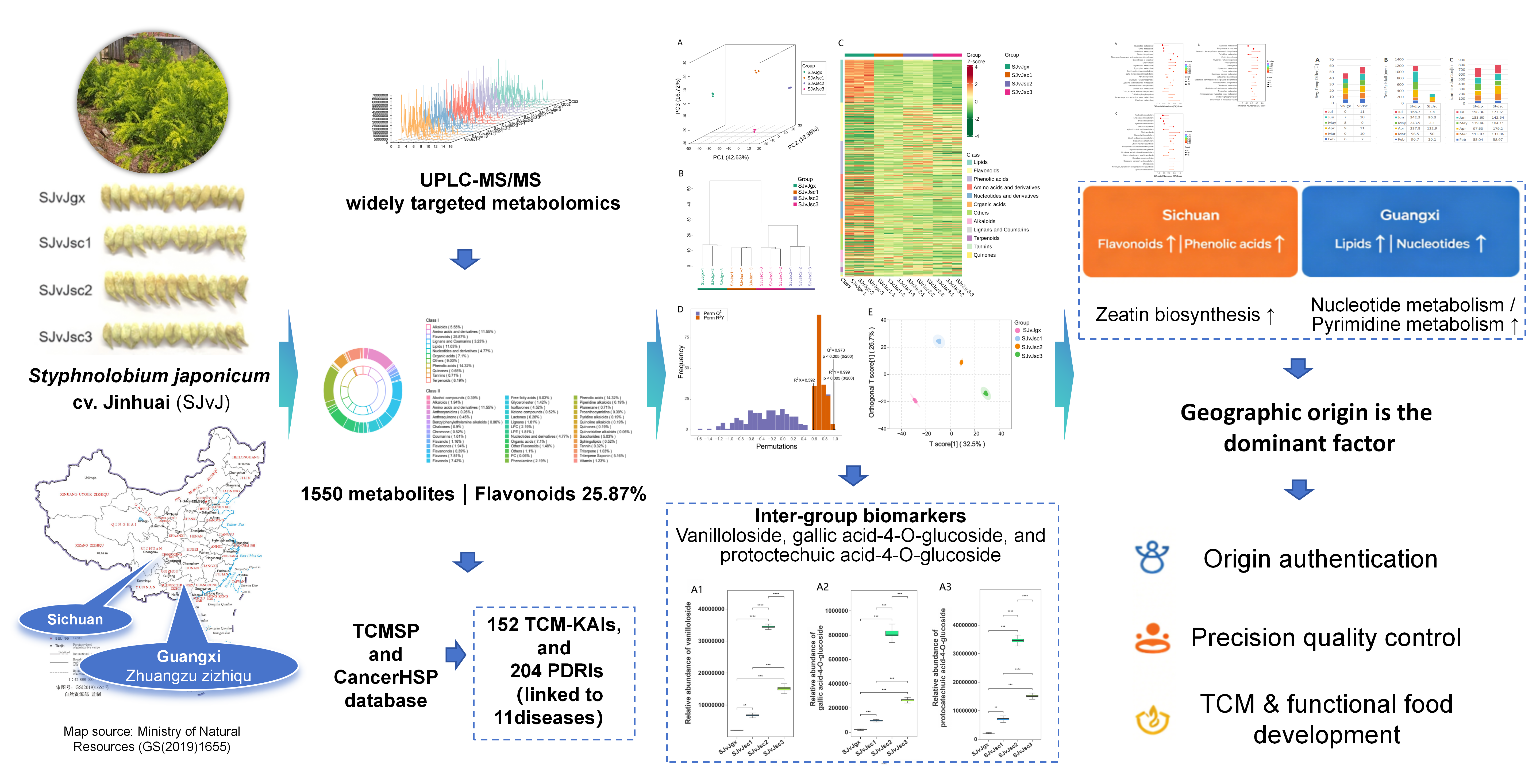
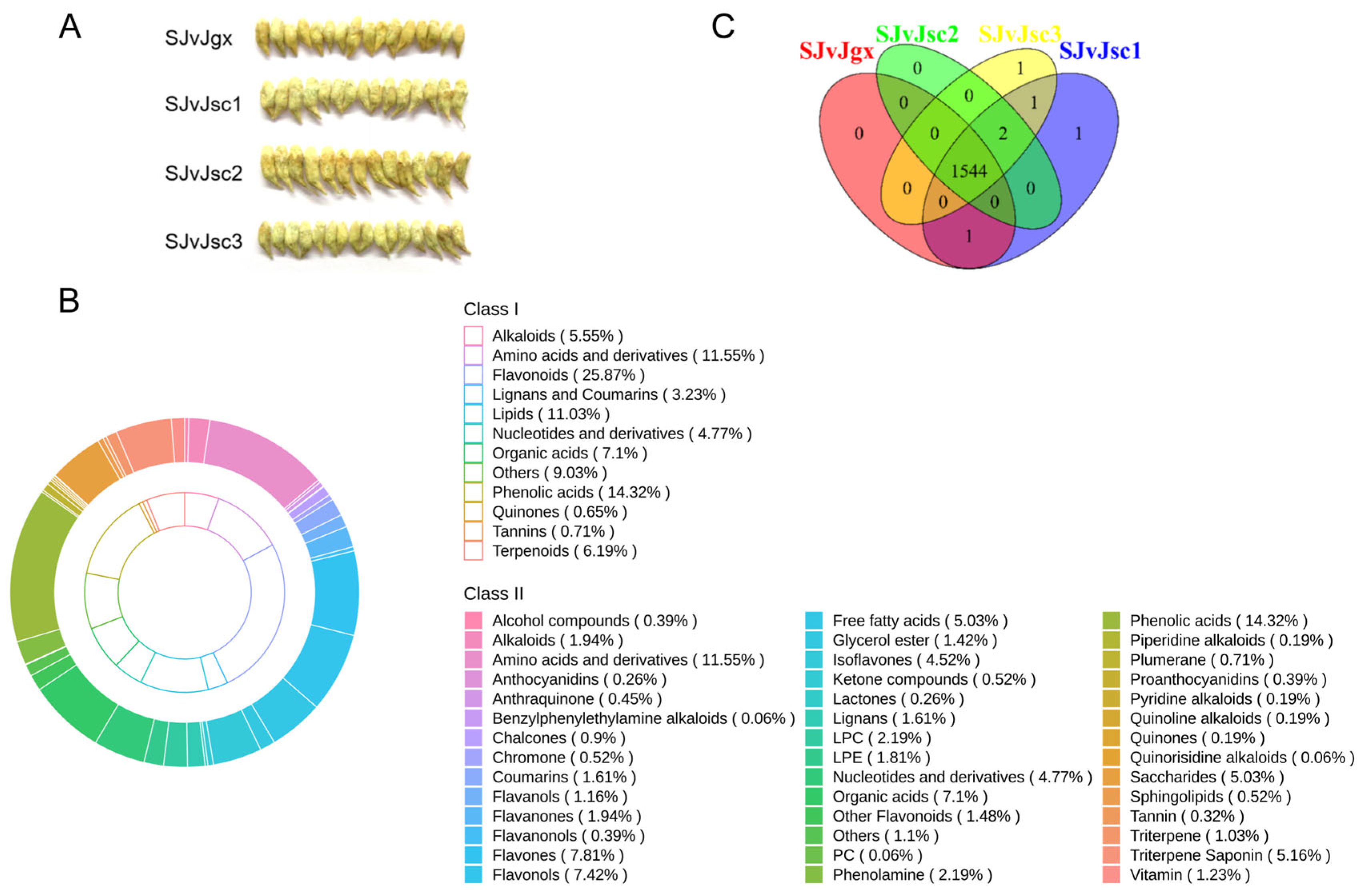
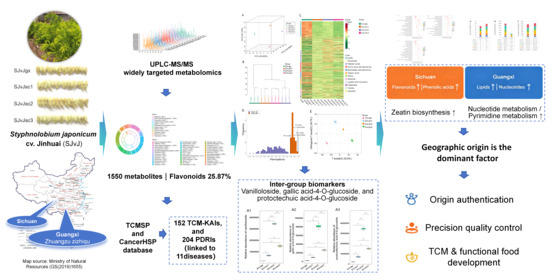
- We identified 1550 metabolites (flavonoid-dominant), 152 key active ingredients of traditional Chinese medicine (TCM-KAIs), and 204 pharmaceutical disease-resistant ingredients (PDRIs) in the flower bud of Styphnolobium japonicum cv. Jinhuai (FBSJvJ).
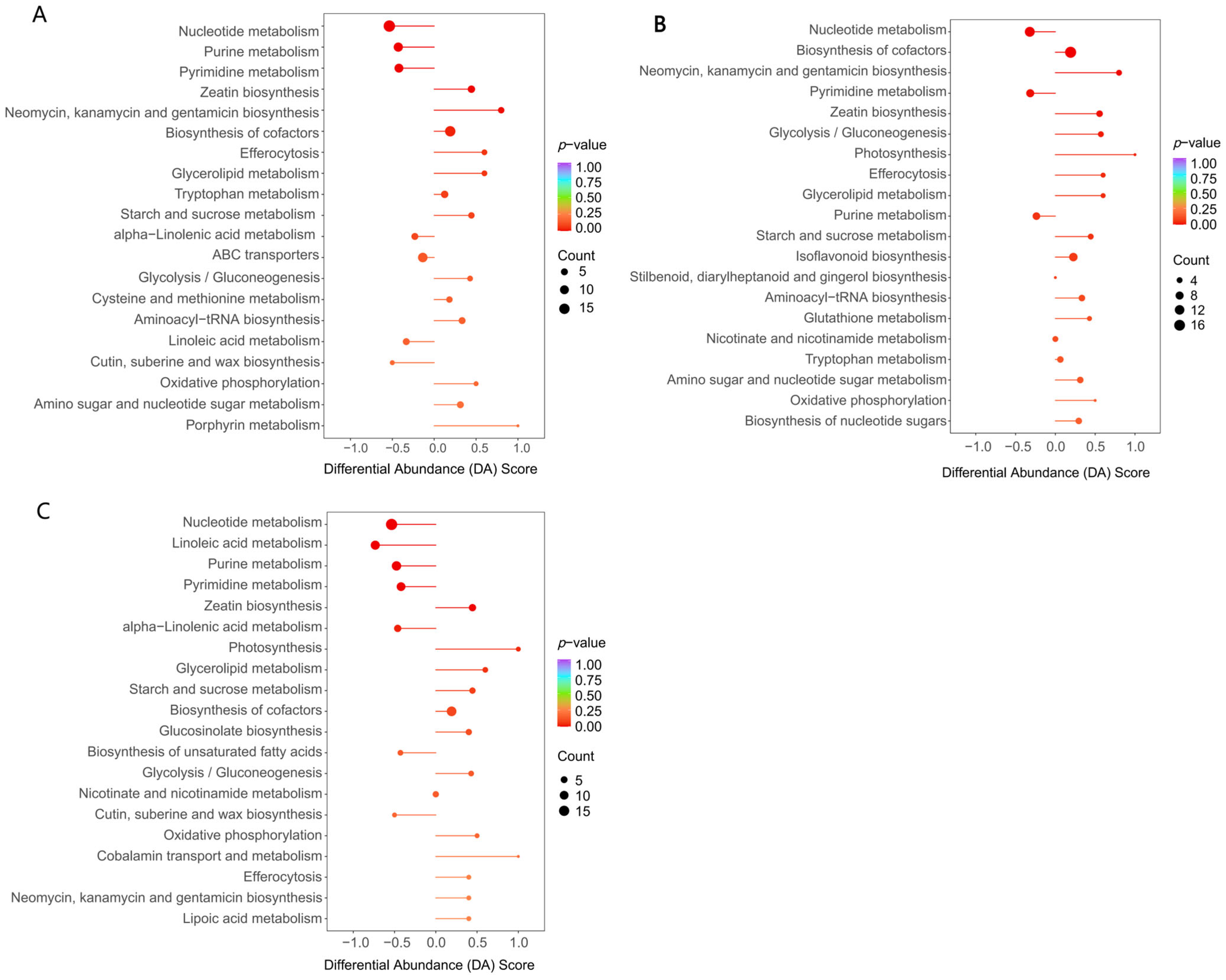
- Geographic origin drove metabolic divergence. Guangxi samples were enriched in lipids and nucleotides, while Sichuan samples were enriched in flavonoids and phenolic acids. In addition, three core biomarkers were identified.
- Biomarkers enable origin authentication and precision quality control compared to a single marker (rutin), supporting traceability and regulatory compliance for food and medicinal products.
- Regional metabolic signatures can help identify functional ingredients and guide product formulation, processing optimization, and cultivar selection for food and medicinal development.
Abstract
1. Introduction
2. Materials and Methods
2.1. Materials
2.2. Sample Preparation and Extraction
2.3. UPLC-MS/MS Analysis
2.3.1. Liquid-Phase Conditions
2.3.2. MS Conditions
2.4. Qualitative Determination of Metabolites
2.5. Identification of Key Active Ingredients in Traditional Chinese Medicine (TCM-KAIs)
2.6. Identification of PDRIs
2.7. MS Data Analysis and Analysis of Metabolic Mechanisms
2.8. KEGG Annotation and Enrichment Analysis
2.9. Data Analysis
3. Results
3.1. Overall Analysis of the Widely Targeted Metabolites of FBSJvJ
3.2. Identification of TCM-KAIs from FBSJvJ
3.3. Identification of Disease-Resistant Active Ingredients of FBSJvJ
3.4. Differential Metabolites in FBSJvJ
3.4.1. Cluster Analysis
3.4.2. OPLS-DA
3.5. Screening of Differential Metabolites of FBSJvJ from Different Groups
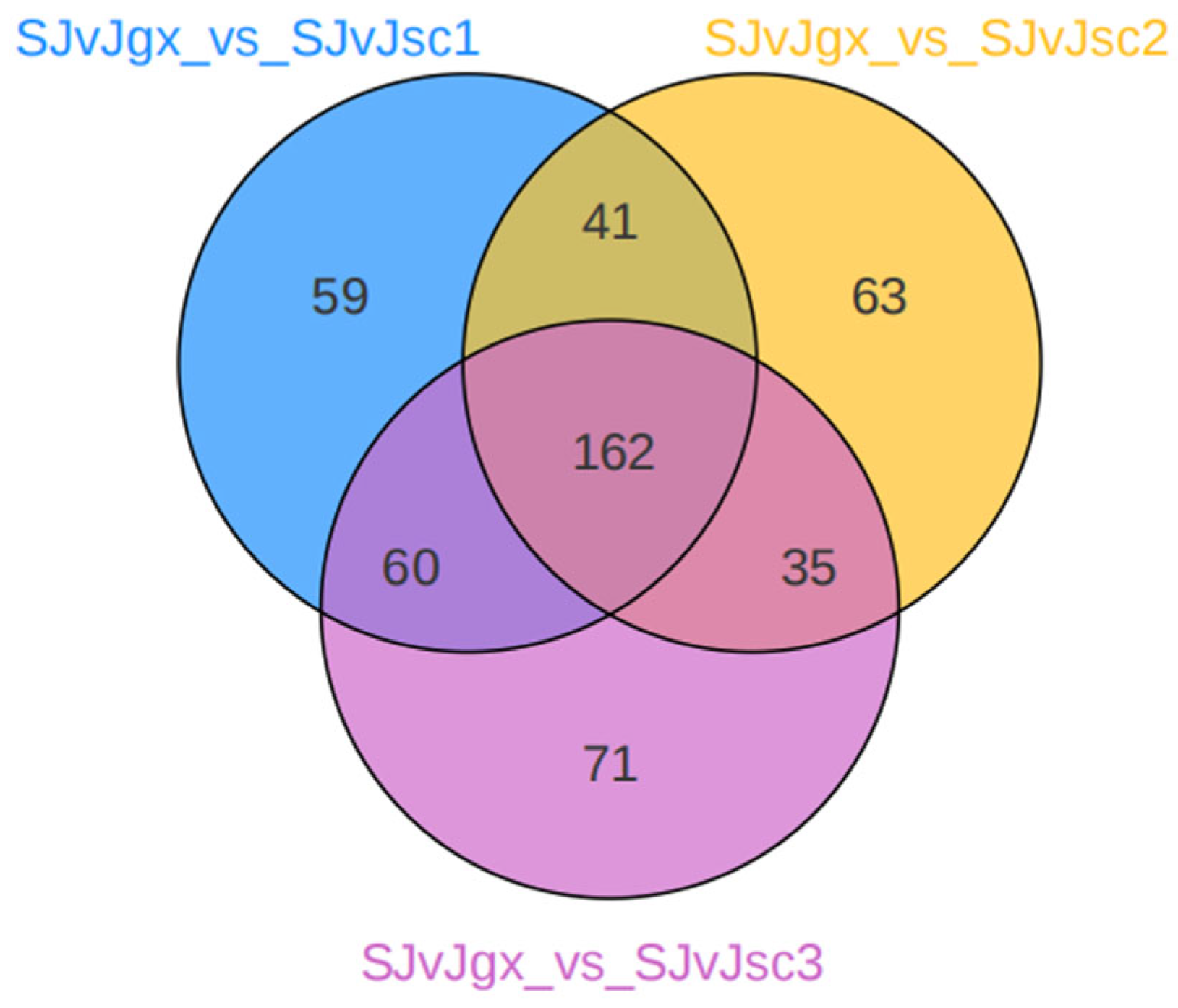
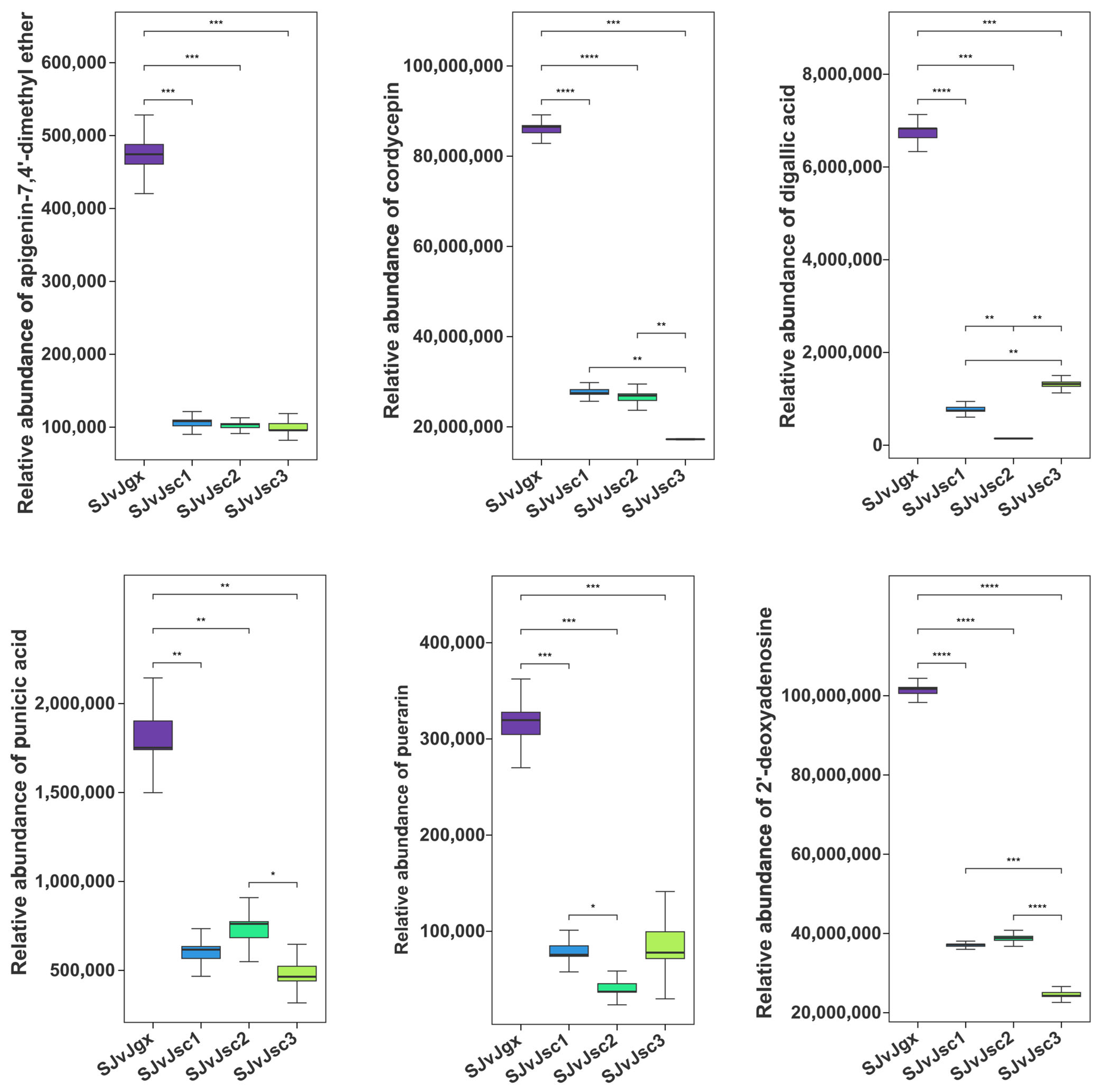
3.5.1. Biomarker Screening Between the Guangxi Group and the Sichuan-Introduced Groups
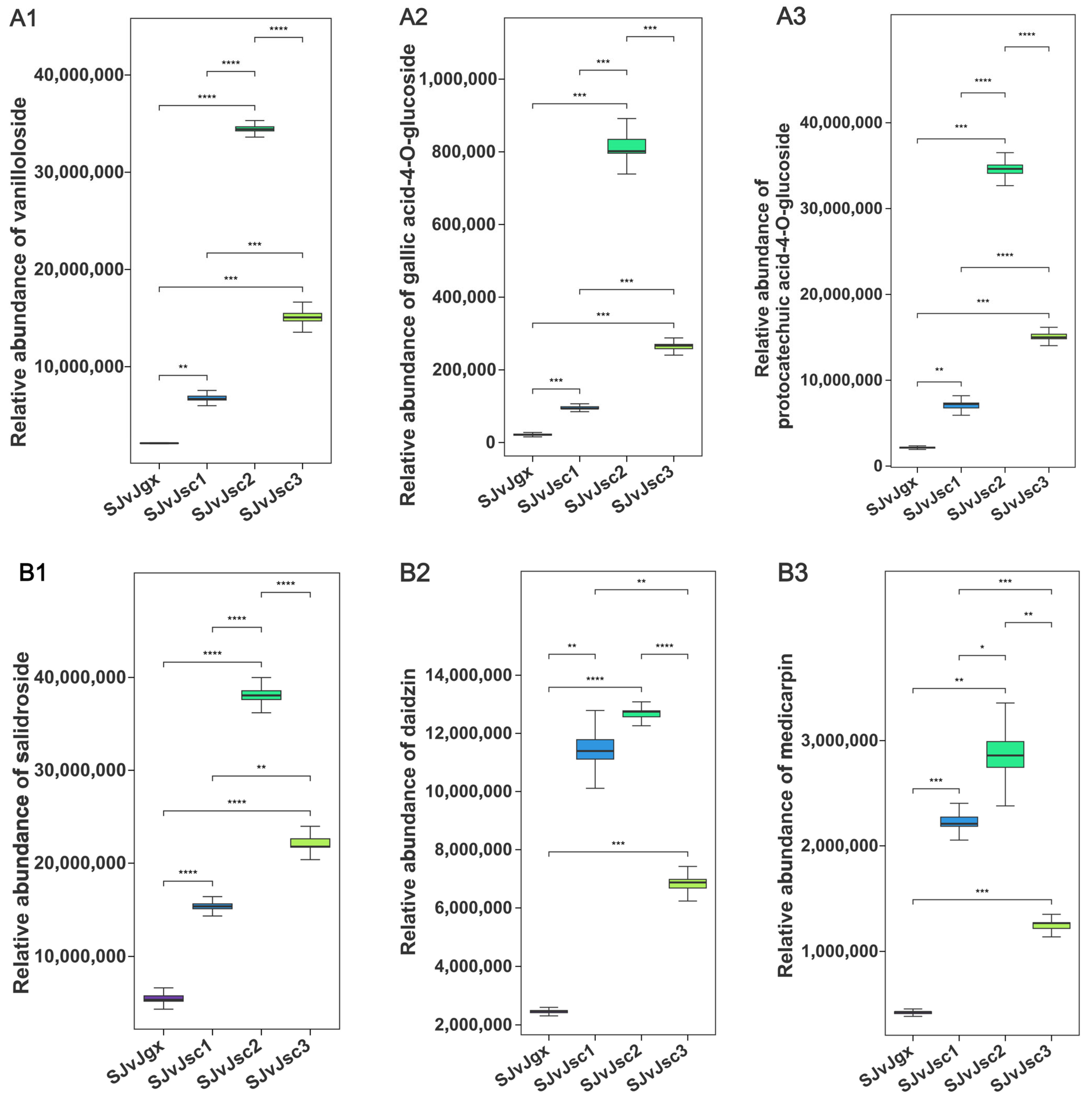
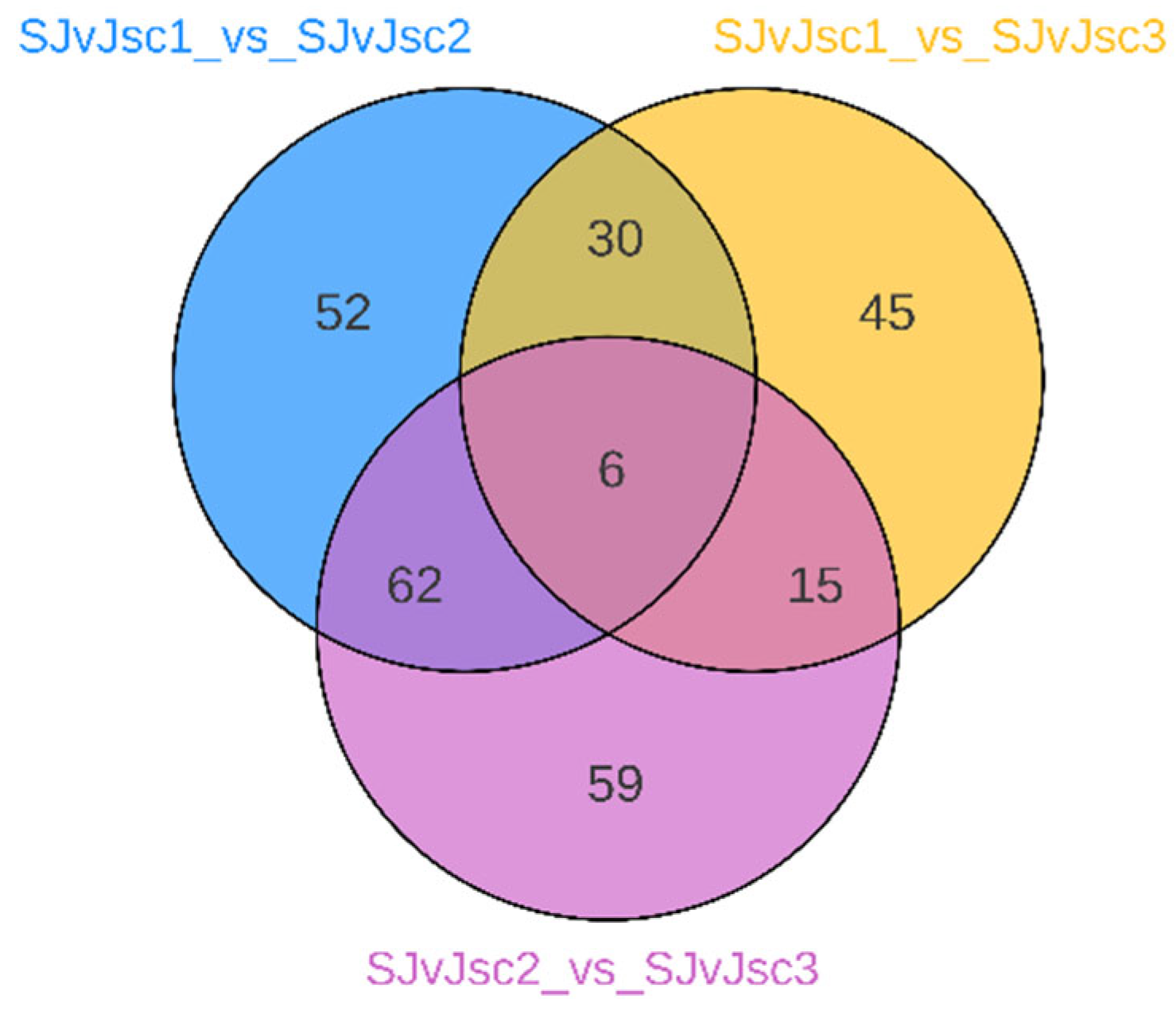
3.5.2. Differential Metabolites Among Sichuan-Introduced FBSJvJ Groups
3.6. KEGG Metabolic Pathway Analysis of Differential Metabolites in FBSJvJ
4. Discussions
5. Conclusions
Supplementary Materials
Author Contributions
Funding
Institutional Review Board Statement
Informed Consent Statement
Data Availability Statement
Acknowledgments
Conflicts of Interest
References
- Zhang, X.; Dias, A.C.P.; Lopes, N.P. Editorial: Edible and medicinal plants: From ethnopharmacological practices to interdisciplinary approaches and regulations. Front. Pharmacol. 2022, 13, 1074511. [Google Scholar] [CrossRef] [PubMed]
- Tang, J.; Liu, M.; Yang, Y.; Zhu, S.; Zou, R.; Jiang, H. Genetic Background Analysis and Rutin Content Evaluation of Guangxi Sophora japonica CV. Jinhuai Germplasm Resources. Appl. Ecol. Environ. Res. 2024, 22, 395–410. [Google Scholar] [CrossRef]
- Commission, N.P. Pharmacopoeia of the People’s Republic of China: Volume 1, 2025th ed.; China Medical Science Press: Beijing, China, 2025. [Google Scholar]
- Feng, X.-C.; Zhang, Q.; Yao, Y.-y.; Kang, N.; Li, G.; Ding, L.-q.; Sun, C.-p.; Qiu, F. Chemical biology study of Chinese material medica based on theory of flavors-take bitter-propertied Chinese material medica as examples. Acta Pharm. Sin. 2026, 61, 21–28. [Google Scholar] [CrossRef]
- Su, C.H.; Cheng, Y.C.; Lai, K.H.; Chang, Y.C.; Sun, C.H.; Tu, P.W.; Lin, C.C.; Hwang, T.L.; Yang, Y.L. Exploring the relationship between metabolite composition and the cold/hot properties ascribed in traditional Chinese medicine by mass spectral molecular networking—A pilot study. J. Food Drug Anal. 2022, 30, 402–416. [Google Scholar] [CrossRef] [PubMed]
- Yu, H.T. Study on Metabonomics, Nutritional Components and Quality Grading Standards of Sophora japonica ‘Jinhuai. Master’s Thesis, Guilin Medical University, Guilin, China, 2023. [Google Scholar]
- Li, Z.Z.; Zhu, H.; Xie, F.; Li, Z.Y. Determination of Rutin in Flos Sophorae From Different Growing Areas. World Chin. Med. 2013, 8, 952–954. [Google Scholar]
- Kim, Y.; Oh, Y.; Lee, H.; Yang, B.; Choi, C.H.; Jeong, H.; Kim, H.; An, W. Prediction of the therapeutic mechanism responsible for the effects of Sophora japonica flower buds on contact dermatitis by network-based pharmacological analysis. J. Ethnopharmacol. 2021, 271, 113843. [Google Scholar] [CrossRef] [PubMed]
- Li, W.F.; Lu, Y.L. Hepatoprotective Effects of Sophoricoside against Fructose-Induced Liver Injury via Regulating Lipid Metabolism, Oxidation, and Inflammation in Mice. J. Food Sci. 2018, 83, 552–558. [Google Scholar] [CrossRef] [PubMed]
- Li, Y.; Xi, P.; Wang, T.; Miao, M. The hypolipidemic effect of Sophora japonica powder on a mouse model of hyperlipidaemia. J. Investig. Med. 2016, 64, A7. [Google Scholar]
- He, X.; Bai, Y.; Zhao, Z.; Wang, X.; Fang, J.; Huang, L.; Zeng, M.; Zhang, Q.; Zhang, Y.; Zheng, X. Local and traditional uses, phytochemistry, and pharmacology of Sophora japonica L.: A review. J. Ethnopharmacol. 2016, 187, 160–182. [Google Scholar] [CrossRef] [PubMed]
- Vos, T.; Lim, S.S.; Abbafati, C.; Abbas, K.M.; Abbasi, M.; Abbasifard, M.; Abbasi-Kangevari, M.; Abbastabar, H.; Abd-Allah, F.; Abdelalim, A.; et al. Global burden of 369 diseases and injuries in 204 countries and territories, 1990–2019: A systematic analysis for the Global Burden of Disease Study 2019. Lancet 2020, 396, 1204–1222. [Google Scholar] [CrossRef] [PubMed]
- Di Cesare, M.; Perel, P.; Taylor, S.; Kabudula, C.; Bixby, H.; Gaziano, T.A.; McGhie, D.V.; Mwangi, J.; Pervan, B.; Narula, J.; et al. The Heart of the World. Glob. Heart 2024, 19, 11. [Google Scholar] [CrossRef] [PubMed]
- Liu, S.; Li, Y.; Zeng, X.; Wang, H.; Yin, P.; Wang, L.; Liu, Y.; Liu, J.; Qi, J.; Ran, S.; et al. Burden of Cardiovascular Diseases in China, 1990–2016: Findings From the 2016 Global Burden of Disease Study. JAMA Cardiol. 2019, 4, 342–352. [Google Scholar] [CrossRef] [PubMed]
- Wang, Z.; Guo, S.; Cai, Y.; Yang, Q.; Wang, Y.; Yu, X.; Sun, W.; Qiu, S.; Li, X.; Guo, Y.; et al. Decoding active compounds and molecular targets of herbal medicine by high-throughput metabolomics technology: A systematic review. Bioorg. Chem. 2024, 144, 107090. [Google Scholar] [CrossRef] [PubMed]
- Du, R.; Wei, Y.; Liu, Z.; Wang, M.; Wang, Z. In-depth analysis of Pseudotargeted metabolomics strategy: Multi-field applications, advantages and challenges. Microchem. J. 2025, 215, 114414. [Google Scholar] [CrossRef]
- Hong, L.-L.; Cui, D.-X.; Wang, H.-D.; Jing, Q.; Li, X.; Hu, Y.; Yao, Y.-Q.; Gao, X.-M.; Guo, D.-A.; Yang, W.-Z. Recent advances in traditional Chinese medicine metabolism: Sample pre-treatment, MS-oriented analytical strategies and typical applications. TrAC Trends Anal. Chem. 2025, 189, 118269. [Google Scholar] [CrossRef]
- Wang, J.-R.; Song, X.-H.; Li, L.-Y.; Gao, S.-J.; Shang, F.-H.; Zhang, X.-M.; Yang, Y. Metabolomic analysis reveals dynamic changes in secondary metabolites of Sophora japonica L. during flower maturation. Front. Plant Sci. 2022, 13, 916410. [Google Scholar] [CrossRef] [PubMed]
- Yang, Y.; Chen, Z.; Zou, R.; Tang, J.; Jiang, Y. Comparative study of endogenous hormone dynamics during the first and second growth cycles in Sophora japonica cv. jinhuai harvested twice a year. J. Biotech. Res. 2023, 14, 59–66. [Google Scholar]
- Zuo, L.; Huang, L.; Sun, H.; Meng, X.; Chen, D.; Wang, J.; Zhao, J.; Shi, F.; Wang, Y.; Meng, R. Integrating Widely Targeted Metabolomics, Network Pharmacology, and Molecular Docking to Investigate the Protective Mechanisms of from Styphnolobium japonicum cv. jinhuai’s Flower Bud against Alcohol-Induced Liver Injury. Sci. Technol. Food Ind. 2025, 46, 384–395. [Google Scholar] [CrossRef]
- Wei, Y.-L.; Shi, Y.-C.; Zou, R.; Tang, J.-M.; Jiang, Y.-S.; Xiong, Z.-C.; Chen, J.-X. Comparison of infrared spectra and rutin content of Sophora japonica ‘Jinhuai’ in Guangxi. Guihaia 2019, 39, 1541–1549. [Google Scholar]
- Wang, P.; Zheng, Y.; Guo, Y.; Liu, B.; Jin, S.; Liu, S.; Zhao, F.; Chen, X.; Sun, Y.; Yang, J.; et al. Widely Targeted Metabolomic and Transcriptomic Analyses of a Novel Albino Tea Mutant of “Rougui”. Forests 2020, 11, 229. [Google Scholar] [CrossRef]
- Fraga, C.G.; Clowers, B.H.; Moore, R.J.; Zink, E.M. Signature-discovery approach for sample matching of a nerve-agent precursor using liquid chromatography-mass spectrometry, XCMS, and chemometrics. Anal. Chem. 2010, 82, 4165–4173. [Google Scholar] [CrossRef] [PubMed]
- Ru, J.; Li, P.; Wang, J.; Zhou, W.; Li, B.; Huang, C.; Li, P.; Guo, Z.; Tao, W.; Yang, Y.; et al. TCMSP: A database of systems pharmacology for drug discovery from herbal medicines. J. Cheminform. 2014, 6, 13. [Google Scholar] [CrossRef] [PubMed]
- Li, H.; Lv, Q.; Liu, A.; Wang, J.; Sun, X.; Deng, J.; Chen, Q.; Wu, Q. Comparative metabolomics study of Tartary (Fagopyrum tataricum (L.) Gaertn) and common (Fagopyrum esculentum Moench) buckwheat seeds. Food Chem. 2022, 371, 131125. [Google Scholar] [CrossRef] [PubMed]
- Kanehisa, M.; Goto, S. KEGG: Kyoto Encyclopedia of Genes and Genomes. Nucleic Acids Res. 2000, 28, 27–30. [Google Scholar] [CrossRef] [PubMed]
- Kanehisa, M.; Sato, Y.; Kawashima, M.; Furumichi, M.; Tanabe, M. KEGG as a reference resource for gene and protein annotation. Nucleic Acids Res. 2016, 44, D457–D462. [Google Scholar] [CrossRef] [PubMed]
- Miletić, N.; Milinčić, D.D.; Pešić, M.B.; Lončar, B.; Petković, M.; Vasilijević, B.; Jevremović, D. Influence of Blueberry Mosaic Disease on Polyphenolic Profile and Antioxidant Capacity of Highbush Blueberry ‘Duke’ Fruits. Antioxidants 2025, 14, 1302. [Google Scholar] [CrossRef] [PubMed]
- Xu, M.; Jin, Z.; Ohm, J.-B.; Schwarz, P.; Rao, J.; Chen, B. Improvement of the Antioxidative Activity of Soluble Phenolic Compounds in Chickpea by Germination. J. Agric. Food Chem. 2018, 66, 6179–6187. [Google Scholar] [CrossRef] [PubMed]
- Ordoñez-Cano, A.J.; Ramírez-Esparza, U.; Méndez-González, F.; Alvarado-González, M.; Baeza-Jiménez, R.; Sepúlveda-Torre, L.; Prado-Barragán, L.A.; Buenrostro-Figueroa, J.J. Recovery of Phenolic Compounds with Antioxidant Capacity Through Solid-State Fermentation of Pistachio Green Hull. Microorganisms 2025, 13, 35. [Google Scholar]
- Iwanycki Ahlstrand, N.; Havskov Reghev, N.; Markussen, B.; Bruun Hansen, H.C.; Eiriksson, F.F.; Thorsteinsdóttir, M.; Rønsted, N.; Barnes, C.J. Untargeted metabolic profiling reveals geography as the strongest predictor of metabolic phenotypes of a cosmopolitan weed. Ecol. Evol. 2018, 8, 6812–6826. [Google Scholar] [CrossRef] [PubMed]
- Yoon, D.; Shin, W.-C.; Oh, S.-M.; Choi, B.-R.; Young Lee, D. Integration of multiplatform metabolomics and multivariate analysis for geographical origin discrimination of Panax ginseng. Food Res. Int. 2022, 159, 111610. [Google Scholar] [CrossRef] [PubMed]
- Tattini, M.; Galardi, C.; Pinelli, P.; Massai, R.; Remorini, D.; Agati, G. Differential accumulation of flavonoids and hydroxycinnamates in leaves of Ligustrum vulgare under excess light and drought stress. New Phytol. 2004, 163, 547–561. [Google Scholar] [CrossRef] [PubMed]
- Liang, Y.; Huang, Y.; Liu, C.; Chen, K.; Li, M. Functions and interaction of plant lipid signalling under abiotic stresses. Plant Biol. 2023, 25, 361–378. [Google Scholar] [CrossRef] [PubMed]
- Sun, M.; Peng, F.; Xiao, Y.; Yu, W.; Zhang, Y.; Gao, H. Exogenous phosphatidylcholine treatment alleviates drought stress and maintains the integrity of root cell membranes in peach. Sci. Hortic. 2020, 259, 108821. [Google Scholar] [CrossRef]
- Mir, R.H.; Masoodi, M.H. Anti-inflammatory Plant Polyphenolics and Cellular Action Mechanisms. Curr. Bioact. Compd. 2020, 16, 809–817. [Google Scholar] [CrossRef]
- Kumar, S.; Abedin, M.M.; Singh, A.K.; Das, S. Role of Phenolic Compounds in Plant-Defensive Mechanisms. In Plant Phenolics in Sustainable Agriculture: Volume 1; Lone, R., Shuab, R., Kamili, A.N., Eds.; Springer: Singapore, 2020; pp. 517–532. [Google Scholar]
- Chaitanya, M.V.N.L.; Patle, D.; Kumar Singh, S.; Mazumder, A.; Kumar Sindhu, R.; Dua, K.; Khurana, N.; Arora, P. Salidroside and inflammation-linked disorders: Integrative insights into the pharmacological effects and mechanistic targets. Inflammopharmacology 2025, 33, 5861–5887. [Google Scholar] [CrossRef] [PubMed]
- Praisthy Lj, C.; Kushwah, R.; Dubey, S.; Kumar, V.; Jain, S. Pharmacotherapeutic potential of daidzein: Insights into mechanisms and clinical relevance. Inflammopharmacology 2025, 33, 5145–5171. [Google Scholar] [CrossRef] [PubMed]
- Tanimoto, M.H.; de Miranda, A.M.; Aldana-Mejía, J.A.; de Araújo, L.S.; de Freitas Pinheiro, A.M.; Trindade, A.F.G.; Fernandes, J.M.; Ross, S.A.; Bastos, J.K. A Comprehensive Review of Medicarpin: A Phytoalexin with Therapeutic Potential. ACS Omega 2025, 10, 53722–53745. [Google Scholar] [CrossRef] [PubMed]
- Jiang, Q.; Lou, Z.; Wang, H.; Chen, C. Antimicrobial effect and proposed action mechanism of cordycepin against Escherichia coli and Bacillus subtilis. J. Microbiol. 2019, 57, 288–297. [Google Scholar] [CrossRef] [PubMed]
- Giannecchini, M.; D’Innocenzo, B.; Pesi, R.; Sgarrella, F.; Iorio, M.; Collecchi, P.; Tozzi, M.G.; Camici, M. 2’-Deoxyadenosine causes apoptotic cell death in a human colon carcinoma cell line. J. Biochem. Mol. Toxicol. 2003, 17, 329–337. [Google Scholar] [CrossRef] [PubMed]
- Cui, L.; Zhao, L.; Shen, G.; Yu, D.; Yuan, T.; Zhang, Y.; Yang, B. Antitumor Mechanism and Therapeutic Potential of Cordycepin Derivatives. Molecules 2024, 29, 483. [Google Scholar] [CrossRef] [PubMed]
- Aqsa, Y.; Masood Sadiq, B.; Sajjad, H.; Muhammad Usmad, S.; Nighat, B.; Ayesha, S. Punicic Acid: A Versatile and Promising Nutraceutical with Potential Health Benefits. RADS J. Food Biosci. 2022, 1, 38–44. [Google Scholar] [CrossRef]
- Sharma, A.; Anurag; Kaur, J.; Kesharwani, A.; Parihar, V.K. Antimicrobial Potential of Polyphenols: An Update on Alternative for Combating Antimicrobial Resistance. Med. Chem. 2024, 20, 576–596. [Google Scholar] [CrossRef] [PubMed]
- Ali, F.; Rahul; Naz, F.; Jyoti, S.; Siddique, Y.H. Health functionality of apigenin: A review. Int. J. Food Prop. 2017, 20, 1197–1238. [Google Scholar] [CrossRef]
- Chauhan, P.; Wadhwa, K.; Mishra, R.; Gupta, S.; Ahmad, F.; Kamal, M.; Iqbal, D.; Alsaweed, M.; Nuli, M.V.; Abomughaid, M.M.; et al. Investigating the Potential Therapeutic Mechanisms of Puerarin in Neurological Diseases. Mol. Neurobiol. 2024, 61, 10747–10769. [Google Scholar] [CrossRef] [PubMed]
- Yu, Z.; Zhang, Q.; Zheng, X.; Huang, X.; Peng, C. Anthocyanin accumulation in juvenile Schima superba leaves is a growth trade-off by consuming energy for adaptation to high light during summer. J. Plant Ecol. 2018, 12, 507–518. [Google Scholar] [CrossRef]
- Tian, J.; Pang, Y.; Zhao, Z. Drought, Salinity, and Low Nitrogen Differentially Affect the Growth and Nitrogen Metabolism of Sophora japonica (L.) in a Semi-Hydroponic Phenotyping Platform. Front. Plant Sci. 2021, 12, 715456. [Google Scholar] [CrossRef] [PubMed]
- Wang, J.R.; Li, L.Y.; Tan, J.; Song, X.H.; Chen, D.X.; Xu, J.; Ding, G. Variations in the Components and Antioxidant and Tyrosinase Inhibitory Activities of Styphnolobium japonicum (L.) Schott Extract during Flower Maturity Stages. Chem. Biodivers. 2019, 16, e1800504. [Google Scholar] [CrossRef] [PubMed]
- Zhou, F.; Wang, J.; Yang, N. Growth responses, antioxidant enzyme activities and lead accumulation of Sophora japonica and Platycladus orientalis seedlings under Pb and water stress. Plant Growth Regul. 2015, 75, 383–389. [Google Scholar] [CrossRef]
- Abd-Alla, H.I.; Souguir, D.; Radwan, M.O. Genus Sophora: A comprehensive review on secondary chemical metabolites and their biological aspects from past achievements to future perspectives. Arch. Pharmacal Res. 2021, 44, 903–986. [Google Scholar] [CrossRef] [PubMed]
- Shahrajabian, M.H.; Kuang, Y.; Cui, H.; Fu, L.; Sun, W. Metabolic changes of active components of important medicinal plants on the basis of traditional Chinese medicine under different environmental stresses. Curr. Org. Chem. 2023, 27, 782–806. [Google Scholar] [CrossRef]
- Zhu, S.; Zhang, X.; Ren, C.; Xu, X.; Comes, H.P.; Jiang, W.; Fu, C.; Feng, H.; Cai, L.; Hong, D.; et al. Chromosome-level reference genome of Tetrastigma hemsleyanum (Vitaceae) provides insights into genomic evolution and the biosynthesis of phenylpropanoids and flavonoids. Plant J. 2023, 114, 805–823. [Google Scholar] [CrossRef] [PubMed]
- Long, S.P.; Zhu, X.-G.; Naidu, S.L.; Ort, D.R. Can improvement in photosynthesis increase crop yields? Plant Cell Environ. 2006, 29, 315–330. [Google Scholar] [CrossRef] [PubMed]
- Huang, J.; Hammerbacher, A.; Forkelová, L.; Hartmann, H. Release of resource constraints allows greater carbon allocation to secondary metabolites and storage in winter wheat. Plant Cell Environ. 2017, 40, 672–685. [Google Scholar] [CrossRef] [PubMed]
- da Fonseca-Pereira, P.; Monteiro-Batista, R.d.C.; Araújo, W.L.; Nunes-Nesi, A. Harnessing enzyme cofactors and plant metabolism: An essential partnership. Plant J. 2023, 114, 1014–1036. [Google Scholar] [CrossRef] [PubMed]



| Classification | Substance Name |
|---|---|
| Phenolic acids | 6-O-Galloyl-β-D-glucose *; Isotachioside; Cryptochlorogenic acid *; Arbutin; Androsin, Neochlorogenic acid *; Digallic acid; Salidroside; Chlorogenic acid *; Bis(2-ethylhexyl)phthalate *; Isomartynoside |
| Nucleotides and their derivatives | 2′-Deoxyadenosine; Guanosine; Cordycepin; Adenosine; Uridine 5′-diphospho-D-glucose; Uridine 5′-monophosphate; Inosine |
| Flavonoids | Ononin; Hispidulin; Diosmetin; Isorhamnetin; 3′-Methoxy-3,4′,5,7-Tetrahydroxyflavone; Robinin; Afrormosin; Naringenin; Pectolinarigenin; Calycosin-7-O-glucoside; Biochanin A; 3′-Methoxydaidzein; Taxifolin; Sophoraflavanone G; 5,7,4′-Trihydroxy-3′-methoxyisoflavone; 3′-O-Methylorobol; Homoplantaginin; Maackiain; Tectorigenin; Wogonin; Luteolin; Apigenin; 4′,5,7-Trihydroxyflavone; Quercetin; Cirsimaritin *; Genistein; Morin; Isoluteolin; Vestitol; Glycitein; 7,4′-Di-O-methyldaidzein; pseudobaptigenin; Astrapterocarpan; Irisolidone; Acacetin; Chrysoeriol-7-O-glucoside; Glycitin; 8-O-methylretusin; Genistin; 6″-O-Malonylglycitin; Kaempferol-7-O-rhamnoside; Isoliquiritin; Pterocarpine; Glycyroside; Eriodictyol-7-O-glucoside; Apigenin-7,4′-dimethyl ether; Formononetin; Kaempferol; Eriodictyol; Genistein-8-C-glucoside; Sexangularetin; 6-Hydroxyluteolin; Catechin; Daidzin; 3′,4′,7-Trihydroxyflavone; Isoquercitrin *; Claussequinone; Sissotrin; Okanin; Glabranine; 3,5,6,7,8,3′,4′-Heptamethoxyflavone; Isoorientin; Epicatechin gallate *; Dihydrokaempferol; Garbanzol; Limocitrin; Medicarpin; Liquiritigenin; 7,4′-Dihydroxyflavone; Prunin; Quercetin-3-O-(2″-O-galactosyl)glucoside; Kaempferol-3,7-O-diglucoside; 5,2′-Dihydroxy-7,8-dimethoxyflavone; Choerospondin; Isobavachin; Liquiritin; Isorhamnetin-3,7-O-diglucoside; 6″-O-Malonyldaidzin; Trifolirhizin; Sophoricoside; 6″-O-Acetylgenistin; 4,4′-Dihydroxy-2-methoxychalcone; Echinatin; Daidzein; Vitexin; Cosmosiin; Nepitrin; 7-O-Methyleriodictyol; Astilbin; 7,3′,4′-Trihydroxyflavone; Kanzonol H; 6″-O-Acetylglycitin; Luteolin-7,3′-di-O-glucoside *; Puerarin; Salvigenin; Eupatilin; Kaempferide; Linarin; Vitexin-2″-O-rhamnoside; Rutin * |
| Quinones | Embelin; Aloe emodin |
| Others | Capillarisin; Riboflavin; Icariside E5; Pentadecanoic acid, 14-methyl-,methyl ester; 5-O-Methylvisammioside |
| Lignans and coumarins | Scopolin; Stevenin; Esculin; Dehydrodiconiferyl alcohol; Syringaresinol-4′-O-glucoside; Acanthoside B; Olivil-4′-O-glucoside |
| Tannins | Procyanidin B1 |
| Terpenes | Soyasapogenol B; 23-Hydroxybetulinic acid; Betulinic acid; Soyasaponin I; Corosolic acid methyl ester; Ursolic acid; Soyasapogenol E; Dehydrosoyasaponin I *; Rubiatriol |
| Lipids | Ricinoleic acid; 9-Hydroxy-10,12,15-octadecatrienoic acid; Punicic acid; 1-Eicosanol; γ-Linolenic Acid *; α-Linolenic Acid *; Hexadecanedioic acid; Vaccenic acid *; Petroselinic acid *; Methyl linolenate; Gingerglycolipid B; 1-Linoleoylglycerol *; Lignoceric acid; Gingerglycolipid A; Eicosenoic acid |
Disclaimer/Publisher’s Note: The statements, opinions and data contained in all publications are solely those of the individual author(s) and contributor(s) and not of MDPI and/or the editor(s). MDPI and/or the editor(s) disclaim responsibility for any injury to people or property resulting from any ideas, methods, instructions or products referred to in the content. |
© 2026 by the authors. Licensee MDPI, Basel, Switzerland. This article is an open access article distributed under the terms and conditions of the Creative Commons Attribution (CC BY) license.
Share and Cite
Zuo, L.; Chen, Y.; Luo, Y.; Yang, H.; Chen, D.; Zhang, Y.; Meng, X.; Watcharin, W. Geographical Origin Drives Metabolic Divergence in Styphnolobium japonicum cv. Jinhuai: A Widely Targeted Metabolomic Study of Flower Buds from Sichuan and Guangxi, China. Metabolites 2026, 16, 475. https://doi.org/10.3390/metabo16070475
Zuo L, Chen Y, Luo Y, Yang H, Chen D, Zhang Y, Meng X, Watcharin W. Geographical Origin Drives Metabolic Divergence in Styphnolobium japonicum cv. Jinhuai: A Widely Targeted Metabolomic Study of Flower Buds from Sichuan and Guangxi, China. Metabolites. 2026; 16(7):475. https://doi.org/10.3390/metabo16070475
Chicago/Turabian StyleZuo, Leilei, Yan Chen, Yuxuan Luo, Huan Yang, Dayi Chen, Ying Zhang, Xiao Meng, and Waralee Watcharin. 2026. "Geographical Origin Drives Metabolic Divergence in Styphnolobium japonicum cv. Jinhuai: A Widely Targeted Metabolomic Study of Flower Buds from Sichuan and Guangxi, China" Metabolites 16, no. 7: 475. https://doi.org/10.3390/metabo16070475
APA StyleZuo, L., Chen, Y., Luo, Y., Yang, H., Chen, D., Zhang, Y., Meng, X., & Watcharin, W. (2026). Geographical Origin Drives Metabolic Divergence in Styphnolobium japonicum cv. Jinhuai: A Widely Targeted Metabolomic Study of Flower Buds from Sichuan and Guangxi, China. Metabolites, 16(7), 475. https://doi.org/10.3390/metabo16070475