1. Introduction
Mass spectrometry–based first-tier newborn screening (NBS) evaluates over 40 clinically significant biomarkers, providing pre-symptomatic detection of over 30 metabolic disorders [
1]. Tandem mass spectrometry–based newborn screening relies on well-established biomarkers for the early detection of serious inherited metabolic disorders, enabling timely treatment before symptom onset and improved clinical outcomes [
2]. After birth, a heel prick is performed, blood is collected on a dried blood spot (DBS) card, and the DBS card is sent to an NBS laboratory for analysis. Most biomarkers are screened using a multiplexed flow injection analysis (FIA) tandem mass spectrometry (MS/MS) assay with a throughput of approximately 2 min per sample; however, sub-2 min sample-to-sample analysis is desired [
3]. Despite the adoption of FIA-MS/MS in NBS more than two decades ago, there has been little major innovation and/or improvement in analysis throughput [
4]. Nevertheless, tandem mass spectrometry continues to expand into new newborn screening applications, including enzymatic assays, steroid profiling, lysosomal disorders, and other emerging targets, increasing the analytical demands placed on existing workflows [
5,
6]. For instance, many laboratories are still using single-injector, single-loop, nominal-resolving mass spectrometers, with high dwell times required to obtain optimal sensitivity for some biomarkers. In recent years, several new NBS disorders have been added to the Recommended Uniform Screening Panel, so new biomarkers are continually being added to these highly multiplexed assays [
7]. The expanding scope of mass spectrometry–based newborn screening now includes biomarkers, enzyme activities, and multiplex assays capable of evaluating disorders traditionally screened using separate analytical platforms [
8]. With the demand to multiplex more analytes in a single assay, issues such as isobaric interferences, matrix effects, and throughput create challenges under FIA-MS/MS conditions [
9]. Therefore, without hardware advancements, one can anticipate increased false positives and increased workload for follow-up activities as new disorders are continually adopted.
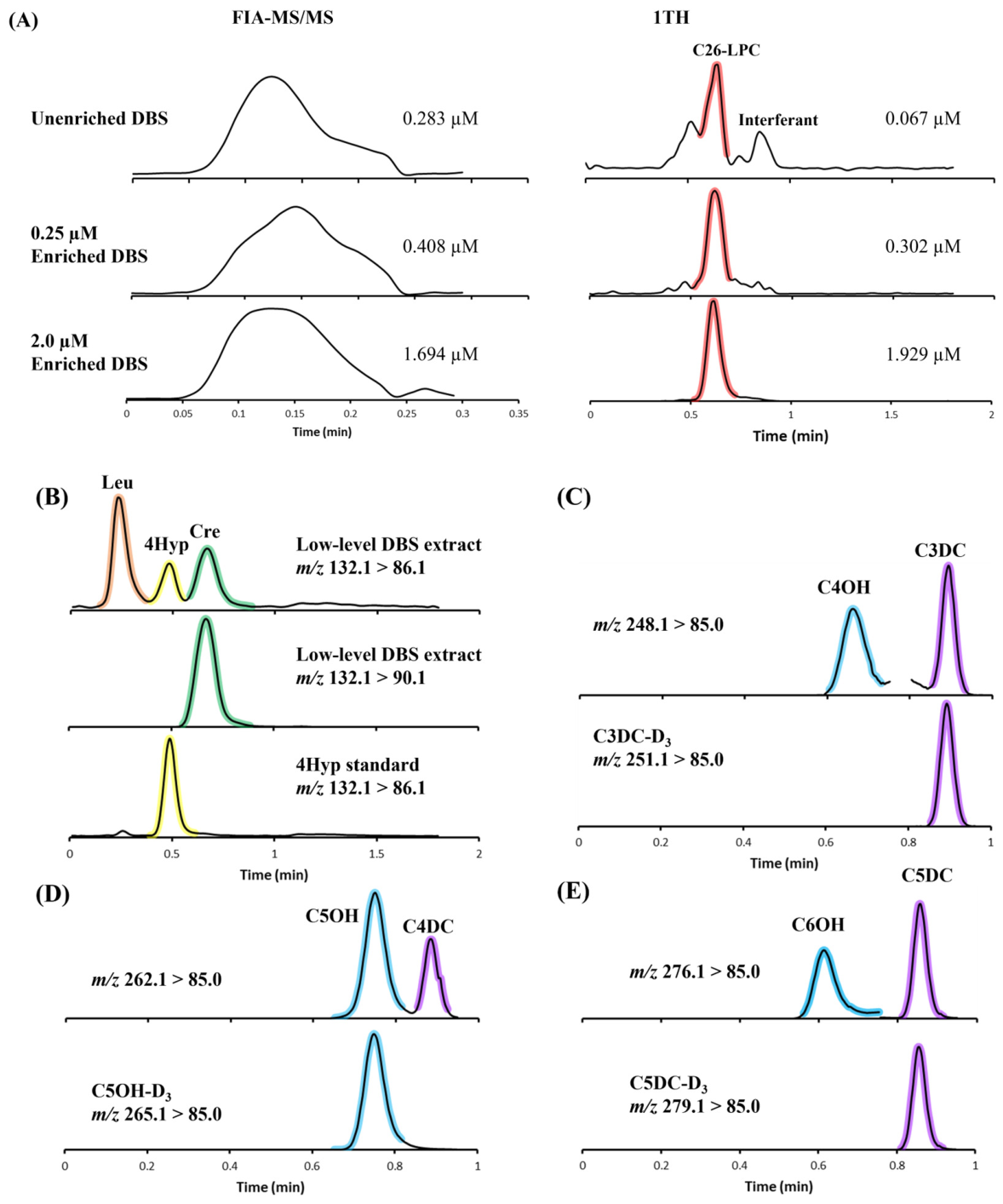
NBS has historically prioritized assay precision, sensitivity, and throughput at the expense of accuracy or specificity. For instance, many current MS-based first-tier assays suffer from inaccuracy due to interferences, use of single-point calibration, use of surrogate internal standards (IS), and the absence of separations prior to analysis (i.e., no chromatography) and calibrators. NBS biomarkers screened by FIA-MS/MS are typically low mass, with isomers and isobars extracted from the DBS or from internal standards [
10], which adds complexity to analyses and can yield inconclusive test results [
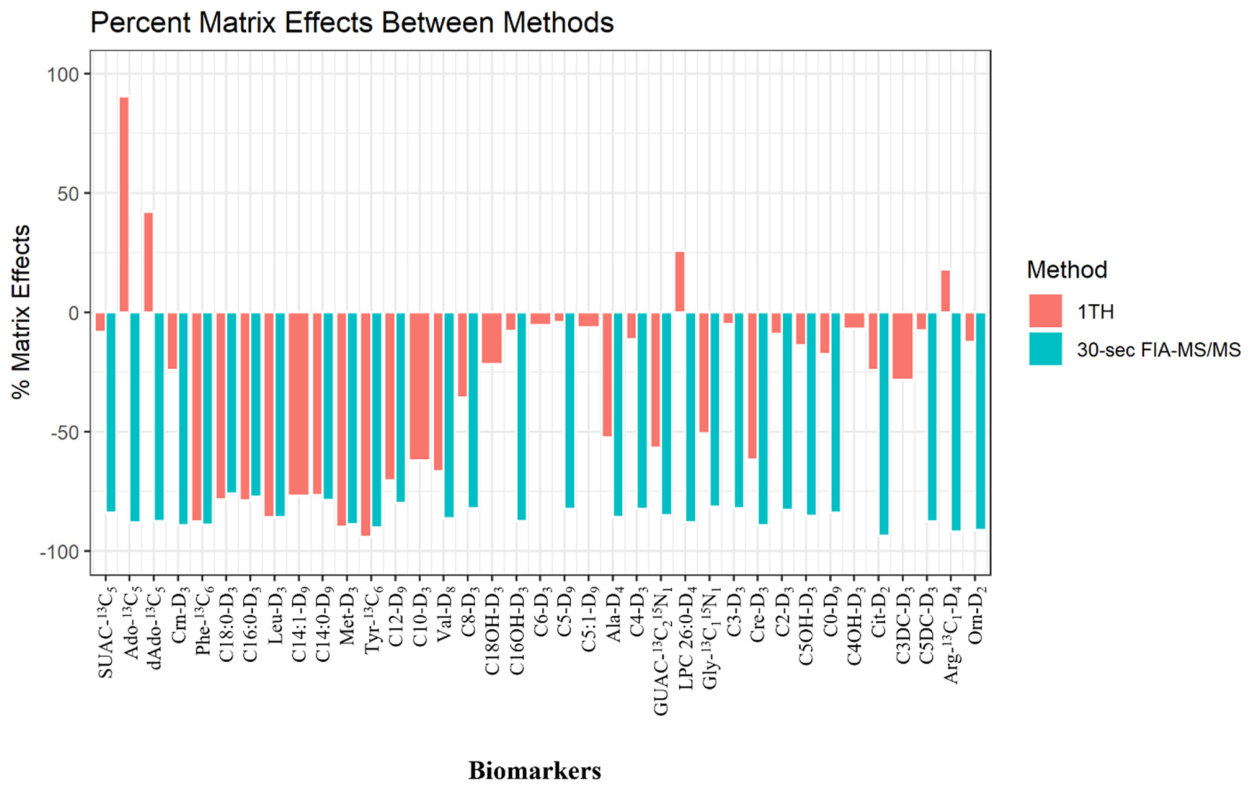
11]. Since DBS extracts undergo no sample clean-up (i.e., no solid phase extraction) and are injected into the MS under FIA conditions, there are matrix effects causing ionization suppression that exceeds 75% for some biomarkers [
10]. NBS assays also use single-point calibration for quantitation, as opposed to a linear set of calibrators, which contributes to inaccuracy, especially when comparing data between laboratories [
12]. The inaccuracy of NBS assays is further compounded by the use of surrogate internal standards (IS), which do not yield accurate biomarker quantification due to different mass spectrometry responses as a result of structural differences and/or differential ionization due to matrix effects under FIA conditions [
13].
The limitations of first-tier NBS are mitigated for some disorders/analytes by employing second-tier screening, which has greatly improved the specificity of MS-based assays [
14,
15,
16,
17]. Second-tier screening or chemical derivatization is often required to separate two isobars or isomers that are indistinguishable during first-tier screening by FIA-MS/MS. Screen-positive results from first-tier screening are flagged for reanalysis, where a second DBS punch is prepared and typically analyzed using a method employing liquid chromatographic (LC) separations with sample-to-sample analysis ranging from 3 to 20 min [
14,
15,
16]. In fact, our group recently developed a universal second-tier screening assay capable of screening 19 biomarkers in under 15 min [
18]. Second-tier screening increases the time for clinicians to receive results, as it is often completed 1–3 days after first-tier NBS, especially if second-tier screening is not performed in-house and is sent to another laboratory for analysis. The ideal first-tier assay would employ rapid separations to maintain or increase throughput and to separate critical biomarker pairs from interferences, minimizing the number of specimens reflexed to second-tier screening.
Recent advances in ultra-high-pressure liquid chromatography and small-particle-size chromatographic packing materials have begun to reshape the analytical landscape for high-throughput screening assays and have enabled an increasing number of first- and second-tier LC-MS/MS screening applications [
5]. For NBS biomarkers such as amino acids, acylcarnitines, succinylacetone, lysophosphatidylcholines and nucleosides, there are several examples of multiplexed assays at 3–7 min; however, these assays focus mainly on a single analyte class or a subset of second-tier screening analytes. For example, Kivilompolo et al. [
19] developed a 7 min LC-MS/MS assay for 12 acylcarnitines, LaMarca et al. [
20] a 5 min assay for a few organic acids and Shigematsu et al. [
21] a 6 min assay for organic acids and homocysteine. Assays that match the FIA-MS/MS (i.e., <2 min) throughput only focused on one analyte and/or disorder [
15,
22,
23]. For some of those assays, although the biomarker of interest may be eluted in <2 min, injection-to-injection throughput was as long as 6 min [
22]. Finally, Pickens et al. [
13] showed that dozens of first- and second-tier screening NBS biomarkers can be analyzed in <2 min using chip-based electrophoresis coupled to mass spectrometry. Limitations of the assay included long reloading times leading to a total analysis time of about 4 min and inability to analyze biomarkers that were negatively charged in solution, as well as lysophosphatidylcholines (LPCs). To our knowledge, there is no assay that can simultaneously analyze amino acids, acylcarnitines, succinylacetone, lysophosphatidylcholines and nucleosides using fast separations in <2 min.
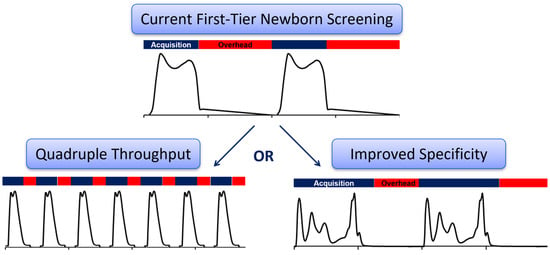
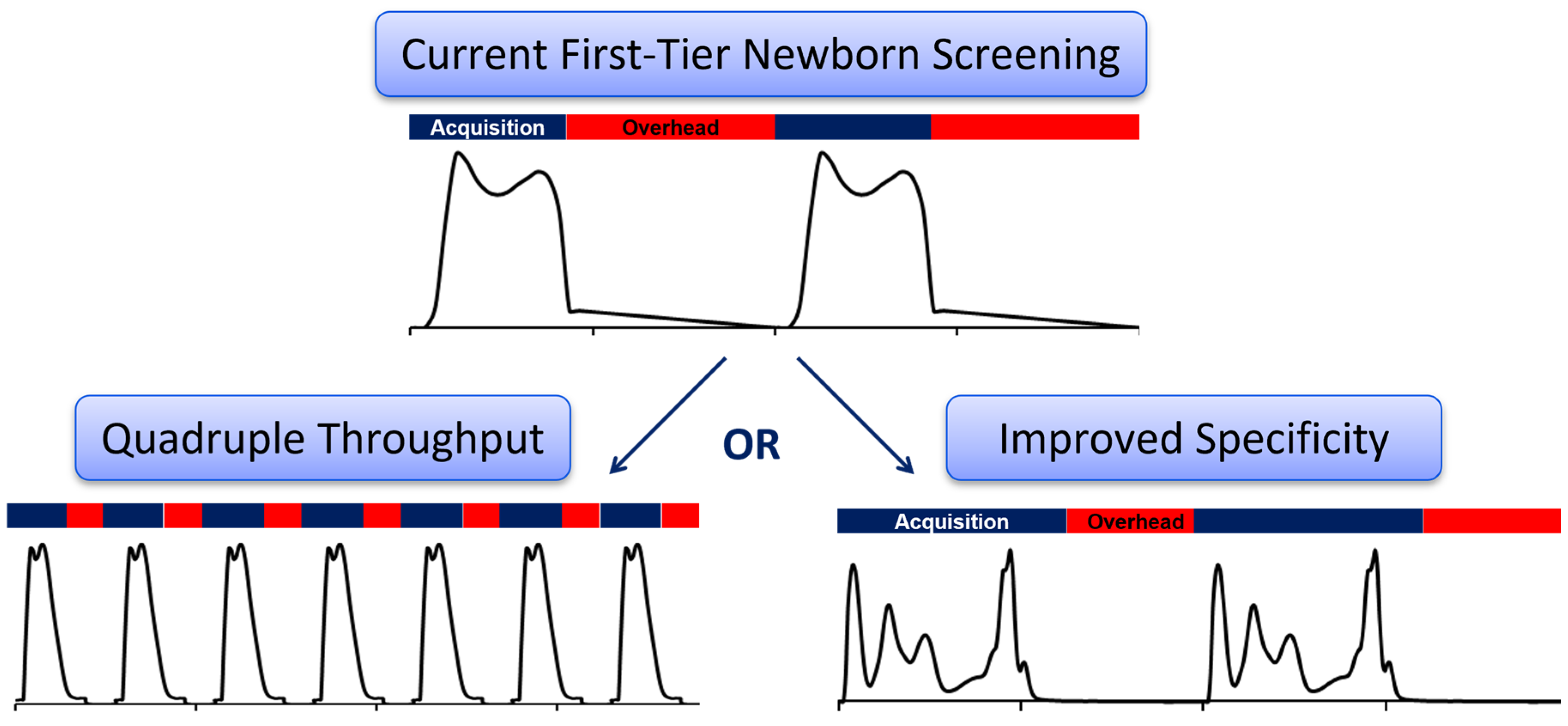
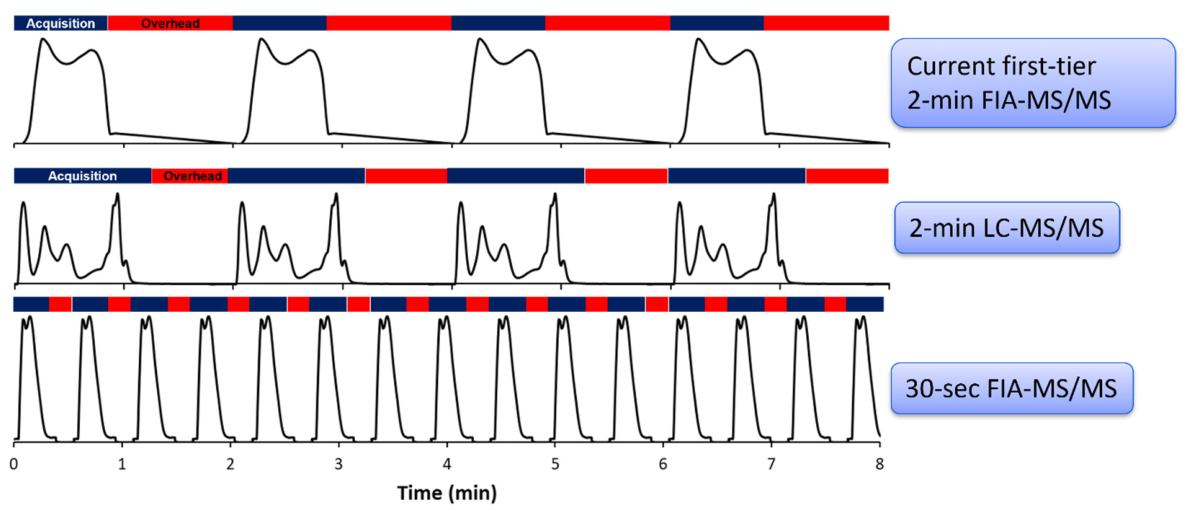
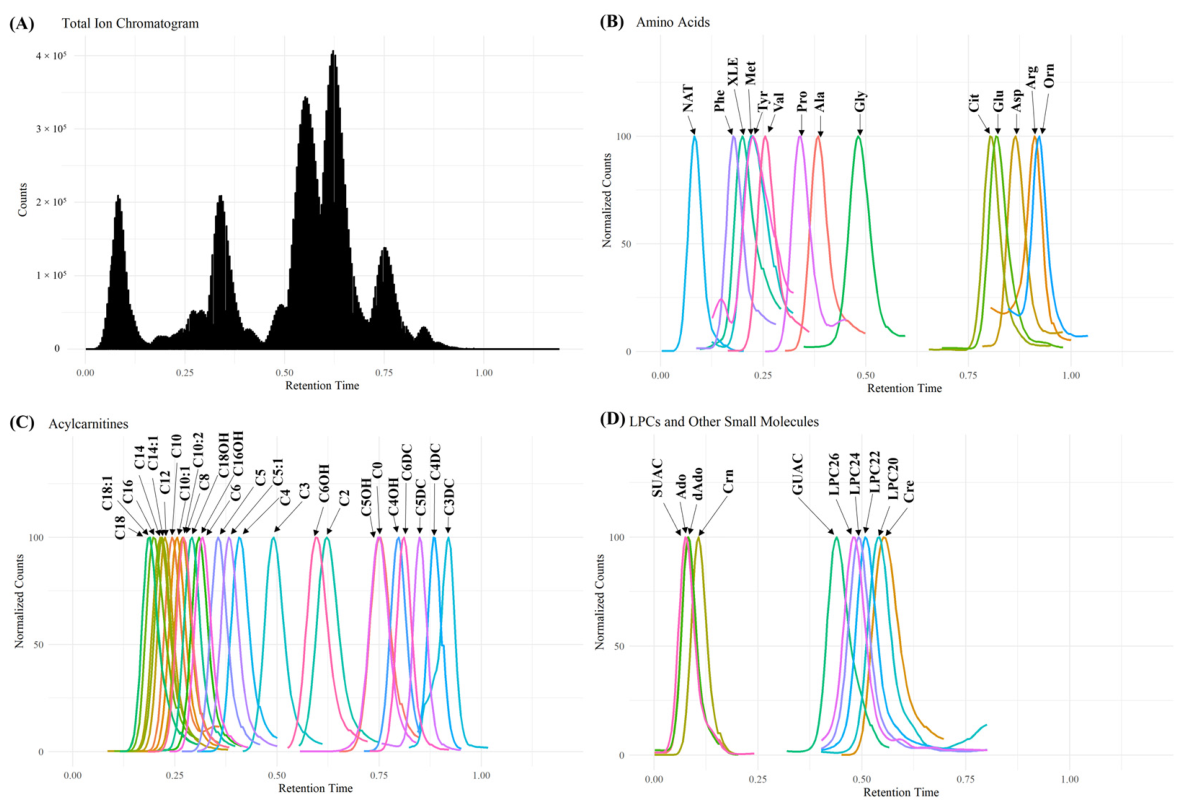
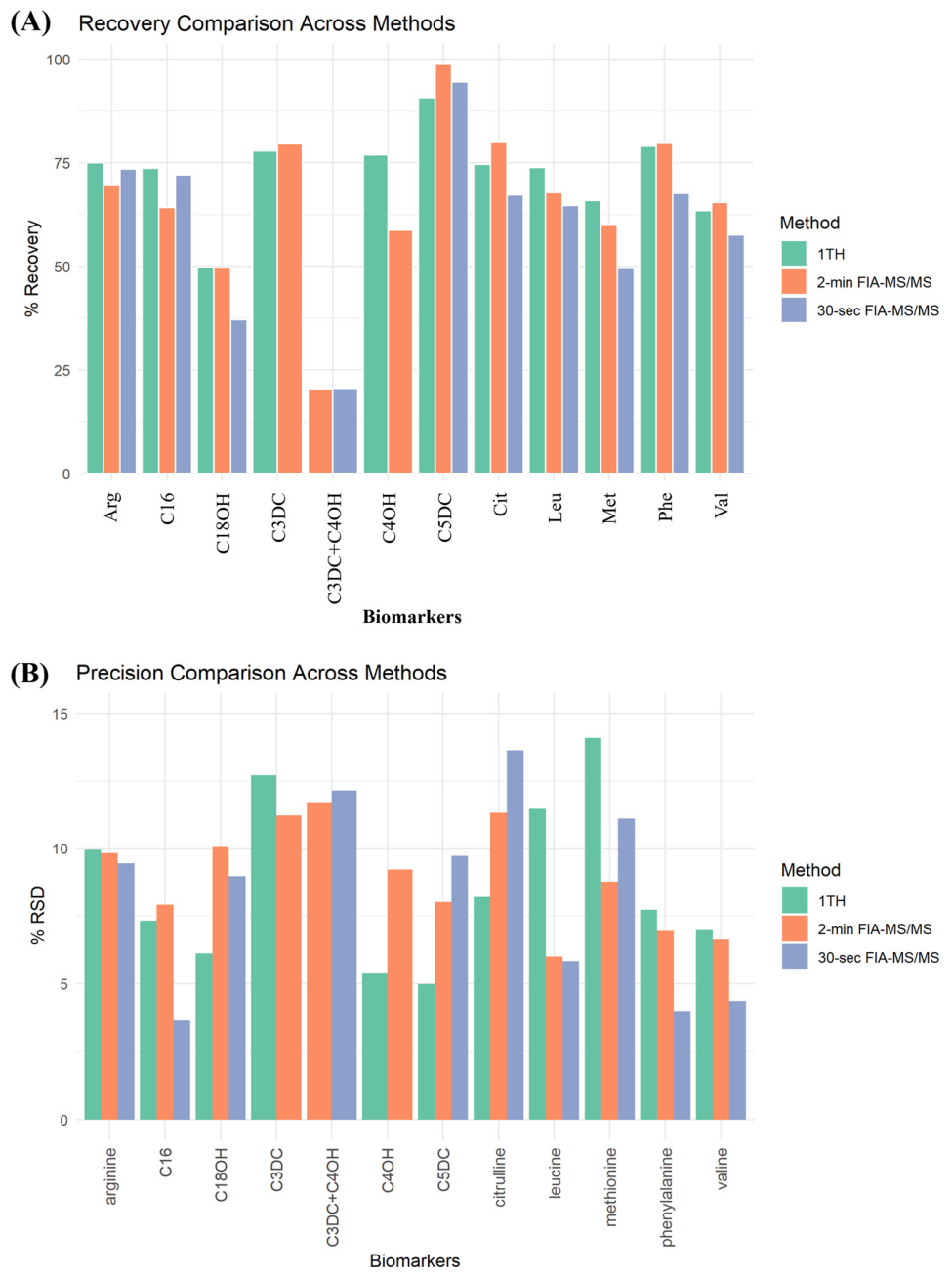
Depending on the specific newborn screening laboratory, some may have a growing need to multiplex more disorders into mass spectrometry–based workflows. Other labs may screen for fewer disorders but have a need for higher throughput. Therefore, we have developed two different first-tier screening approaches to meet the needs of newborn screening labs: (1) quadrupled throughput of FIA-MS/MS and (2) fast LC-MS/MS. The latest generation of LC-MS/MS instrumentation offers the flexibility to either enhance the throughput of FIA-MS/MS analyses or incorporate chromatographic separations to resolve isomers and isobars before mass spectrometric detection. In this study, we quadruple NBS first-tier FIA-MS/MS analysis throughput by utilizing a dual-needle, dual-loop, fast-scanning LC-MS/MS platform, reducing sample-to-sample analysis from 2 min to <30 s. In addition, we developed a rapid first-tier hydrophilic interaction chromatography (HILIC) guard column (1TH) method on the same LC-MS/MS platform, achieving a sample-to-sample throughput of <2 min. This approach increases result accuracy by separating critical biomarker pairs from interferences, thereby reducing the need for second-tier screening for certain biomarkers. Precision, accuracy, and linearity data were generated for both methods and are presented herein. The LC-MS/MS platform used in this study has a small laboratory footprint with a 16-plate-capacity autosampler, maximizing the analysis capability per square foot of an NBS laboratory. In conclusion, NBS labs could increase throughput, specificity, and accuracy within the same timeframe as the current method by adopting the methods and platform presented in our study.
4. Discussion
In our current study, we demonstrate the advantages of using a dual-injector, dual-loop, fast-scanning instrument to quadruple first-tier throughput (i.e., 30 s FIA-MS/MS) or improve specificity and accuracy with similar throughput to current first-tier assays, while reducing reflex rates to second-tier assays (i.e., 1TH). Both of these MS methods performed similarly to or better than current methods and technologies used in routine NBS. Other advantages of the LC-MS/MS system used were the small laboratory footprint compared with all current quadrupole-based systems and large autosampler capacity (i.e., 16 plates) integrated into the autosampler. Physical laboratory space constraints are one of the common concerns among NBS laboratories. As more diseases are adopted for routine screening, and as annual births continue rising in many states, there is a limit to the amount of MS instrumentation that can fit into a single room or building. For example, lysosomal disorders recently added to the US Recommended Uniform Screening Panel are mostly screened by MS, which has doubled the number of MS instruments required per NBS laboratory. High-throughput multiplexed assays are critical to the future of biochemical screening in NBS, along with compact, sensitive fast-scanning MS systems with a small laboratory footprint.
While the faster FIA-MS/MS described in the study requires a faster autosampler, the 1TH requires minimal modifications to current instrumentation used in newborn screening labs, only requiring a binary or quaternary LC pump and the installation of a guard column between the autosampler and mass spectrometer inlet. As such, the method is easily translatable across LC-MS/MS instrumentation from various manufacturers. In fact, several NBS laboratories that have inquired about our 1TH method and one US public health laboratory are working toward clinically validating a slightly modified version of the current assay. Advantages of the 1TH assay over FIA approaches include improved specificity, decreased need for second-tier screening, reduced ion suppression, and improved ability to multiplex additional analytes. One of the considerations of 1TH includes the need for actual IS for quantification, as surrogate IS can be chromatographically resolved from the analyte of interest. Also, implementing 1TH in an NBS laboratory introduces the need for peak review, which is not typical in an FIA workflow. Another limitation is the need for additional laboratory technician training. The burden of peak review can be reduced by using a quantification platform with a “review-by-exception” option. Overall, the benefits outweigh the additional considerations of employing separations in first-tier newborn screening, especially with the growing demand to multiplex more analytes in MS-based newborn screening.
Further improvements to 1TH will include multiplexing dozens of additional biomarkers that are relevant to newborn screening, as well as adding polarity switching for analytes that perform better in negative mode, such as organic acids, LPCs, and sulfatides. The extraction conditions will also be further optimized to ensure acceptable recovery of the added biomarkers from dried blood spots. We are also developing an internal standard kit that will contain all the internal standards required in 2–3 vials to facilitate adoption of the method. Finally, we plan to analytically validate the assay and continue to assist laboratories interested in clinical validation. Successful implementation of either approach will depend on laboratory-specific considerations, including instrument compatibility, method validation, workflow integration, and adherence to applicable regulatory and quality assurance requirements.
As additional disorders are considered for inclusion in newborn screening panels, analytical platforms must support increasing multiplexing demands without compromising turnaround times. The approaches presented here provide a pathway for accommodating future biomarkers while maintaining workflows compatible with high-volume public health laboratories.
Author Contributions
Conceptualization, S.L.I. and K.P.; methodology, S.L.I. and C.A.P.; software, S.L.I.; validation, S.L.I. and C.A.P.; formal analysis, S.L.I.; investigation, S.L.I.; resources, K.P.; data curation, S.L.I.; writing—original draft preparation, S.L.I. and C.A.P.; writing—review and editing, S.L.I., C.A.P., R.L., C.C. and K.P.; visualization, S.L.I. and C.A.P.; supervision, K.P., R.L. and C.C.; project administration, K.P.; funding acquisition, C.C. All authors have read and agreed to the published version of the manuscript.
Funding
This research received no external funding.
Institutional Review Board Statement
This activity was reviewed by the CDC, was deemed research not involving human subjects, and was conducted in accordance with applicable federal law and CDC policy.
Informed Consent Statement
Informed consent was obtained from all subjects involved in the study.
Data Availability Statement
The original contributions presented in this study are included in the article/
Supplementary Material. Further inquiries can be directed to the corresponding author.
Acknowledgments
The authors thank the Biochemical Mass Spectrometry Laboratory (BMSL) lab staff for producing and certifying the QC DBS materials used in this study.
Conflicts of Interest
The authors declare no conflicts of interest.
Abbreviations
The following abbreviations are used in this manuscript:
| NBS | Newborn screening |
| DBS | Dried blood spot |
| FIA | Flow injection analysis |
| MS/MS | Tandem mass spectrometry |
| IS | Internal standard(s) |
| LC | Liquid chromatography |
| LPC | Lysophosphatidylcholine(s) |
| HILIC | Hydrophilic interaction chromatography |
| 1TH | Fast first-tier screening using HILIC guard column |
| NSQAP | The Centers for Disease Control and Prevention’s Newborn Screening Quality Assurance Program |
| QC | Quality control |
| MPA | Mobile phase A |
| MPB | Mobile phase B |
| dMRM | Dynamic MRM |
| XIC | Extracted ion chromatogram |
| AA | Amino acid(s) |
| NAT | N-acetyltyrosine |
| %RSD | Percent relative standard deviation |
| AC | Acylcarnitine(s) |
| XLE | Leucine isomers |
| 4Hyp | 4-hydroxyproline |
| Cre | Creatine |
References
- Wilcken, B.; Wiley, V. Fifty years of newborn screening. J. Paediatr. Child Health 2015, 51, 103–107. [Google Scholar] [CrossRef] [PubMed]
- Wan, Z.; Han, J.; Yang, H.S.; Luo, R.Y.; Xie, J.; Zhai, Y.; Kong, Y.; Cao, Z. Tandem mass spectrometry in newborn screening for inherited metabolic diseases: A comprehensive review. Innov. Med. 2026, 4, 100215. [Google Scholar] [CrossRef]
- Pickens, C.A.; Petritis, K. High resolution mass spectrometry newborn screening applications for quantitative analysis of amino acids and acylcarnitines from dried blood spots. Anal. Chim. Acta 2020, 1120, 85–96. [Google Scholar] [CrossRef] [PubMed]
- Chace, D.L.; Kalas, T.A.; Naylor, E.W. Use of tandem mass spectrometry for multianalyte screening of dried blood specimens from newborns. Clin. Chem. 2003, 49, 1797–1817. [Google Scholar] [CrossRef] [PubMed]
- Millington, D.S. How mass spectrometry revolutionized newborn screening. J. Mass Spectrom. Adv. Clin. Lab 2024, 32, 1–10. [Google Scholar] [CrossRef] [PubMed]
- Rinaldo, P.; Tortorelli, S.; Matern, D. Recent developments and new applications of tandem mass spectrometry in newborn screening. Curr. Opin. Pediatr. 2004, 16, 427–433. [Google Scholar] [CrossRef] [PubMed]
- American College of Medical Genetics Newborn Screening Expert Group; Watson, M.S.; Mann, M.Y.; Lloyd-Puryear, M.A.; Rinaldo, P.; Howell, R. Newborn screening: Toward a uniform screening panel and system--executive summary. Pediatrics 2006, 117, S296–S307. [Google Scholar]
- Hong, X.; Kumar, A.B.; Ronald Scott, C.; Gelb, M.H. Multiplex tandem mass spectrometry assay for newborn screening of X-linked adrenoleukodystrophy, biotinidase deficiency, and galactosemia with flexibility to assay other enzyme assays and biomarkers. Mol. Genet. Metab. 2018, 124, 101–108. [Google Scholar] [CrossRef] [PubMed]
- Tarini, B.A.; Christakis, D.A.; Welch, H.G. State newborn screening in the tandem mass spectrometry era: More tests, more false-positive results. Pediatrics 2006, 118, 448–456. [Google Scholar] [CrossRef] [PubMed]
- Pickens, C.A.; Courtney, E.; Isenberg, S.L.; Cuthbert, C.; Petritis, K. Multiplexing Homocysteine into First-Tier Newborn Screening Mass Spectrometry Assays Using Selective Thiol Derivatization. Clin. Chem. 2023, 69, 470–481. [Google Scholar] [CrossRef] [PubMed]
- De Jesus, V.R.; Chace, D.H.; Lim, T.H.; Mei, J.V.; Hannon, W.H. Comparison of amino acids and acylcarnitines assay methods used in newborn screening assays by tandem mass spectrometry. Clin. Chim. Acta 2010, 411, 684–689. [Google Scholar] [CrossRef] [PubMed]
- Pickens, C.A.; Sternberg, M.; Seeterlin, M.; De Jesus, V.R.; Morrissey, M.; Manning, A.; Bhakta, S.; Held, P.K.; Mei, J.; Cuthbert, C.; et al. Harmonizing Newborn Screening Laboratory Proficiency Test Results Using the CDC NSQAP Reference Materials. Int. J. Neonatal Screen. 2020, 6, 75. [Google Scholar] [CrossRef] [PubMed]
- Pickens, C.A.; Isenberg, S.L.; Cuthbert, C.; Petritis, K. Combining First and Second-Tier Newborn Screening in a Single Assay Using High-Throughput Chip-Based Capillary Electrophoresis Coupled to High-Resolution Mass Spectrometry. Clin. Chem. 2021, 67, 1709–1720. [Google Scholar]
- Turgeon, C.T.; Magera, M.J.; Cuthbert, C.D.; Loken, P.R.; Gavrilov, D.K.; Tortorelli, S.; Raymond, K.M.; Oglesbee, D.; Rinaldo, P.; Matern, D. Determination of total homocysteine, methylmalonic acid, and 2-methylcitric acid in dried blood spots by tandem mass spectrometry. Clin. Chem. 2010, 56, 1686–1695. [Google Scholar] [CrossRef] [PubMed]
- Oglesbee, D.; Sanders, K.A.; Lacey, J.M.; Magera, M.J.; Casetta, B.; Strauss, K.A.; Tortorelli, S.; Rinaldo, P.; Matern, D. Second-tier test for quantification of alloisoleucine and branched-chain amino acids in dried blood spots to improve newborn screening for maple syrup urine disease (MSUD). Clin. Chem. 2008, 54, 542–549. [Google Scholar] [PubMed]
- Haynes, C.A.; De Jesus, V.R. Improved analysis of C26:0-lysophosphatidylcholine in dried-blood spots via negative ion mode HPLC-ESI-MS/MS for X-linked adrenoleukodystrophy newborn screening. Clin. Chim. Acta 2012, 413, 1217–1221. [Google Scholar] [PubMed]
- de Hora, M.; Heather, N.; Webster, D.; Albert, B.; Hofman, P. The use of liquid chromatography-tandem mass spectrometry in newborn screening for congenital adrenal hyperplasia: Improvements and future perspectives. Front. Endocrinol. 2023, 14, 1226284. [Google Scholar] [CrossRef]
- Kilgore, M.B.; Platis, D.; Lim, T.; Isenberg, S.; Pickens, C.A.; Cuthbert, C.; Petritis, K. Development of a Universal Second-Tier Newborn Screening LC-MS/MS Method for Amino Acids, Lysophosphatidylcholines, and Organic Acids. Anal. Chem. 2023, 95, 3187–3194. [Google Scholar] [PubMed]
- Kivilompolo, M.; Ohrnberg, L.; Oresic, M.; Hyotylainen, T. Rapid quantitative analysis of carnitine and acylcarnitines by ultra-high performance-hydrophilic interaction liquid chromatography-tandem mass spectrometry. J. Chromatogr. A 2013, 1292, 189–194. [Google Scholar] [PubMed]
- la Marca, G.; Malvagia, S.; Pasquini, E.; Innocenti, M.; Donati, M.A.; Zammarchi, E. Rapid 2nd-tier test for measurement of 3-OH-propionic and methylmalonic acids on dried blood spots: Reducing the false-positive rate for propionylcarnitine during expanded newborn screening by liquid chromatography-tandem mass spectrometry. Clin. Chem. 2007, 53, 1364–1369. [Google Scholar] [PubMed]
- Shigematsu, Y.; Yuasa, M.; Ishige, N.; Nakajima, H.; Tajima, G. Development of Second-Tier Liquid Chromatography-Tandem Mass Spectrometry Analysis for Expanded Newborn Screening in Japan. Int. J. Neonatal. Screen. 2021, 7, 44. [Google Scholar] [PubMed]
- Masse, R.; Skrinska, V.; Younes, N.; Hassan, L.; Mitri, R.; Matern, D.; Rinaldo, P.; Turgeon, C.T. A Rapid Screening Method for the Measurement of Neonatal Total Homocysteine in Dried Blood Spots by Liquid Chromatography-Tandem Mass Spectrometry. Int. J. Neonatal Screen. 2017, 3, 32. [Google Scholar] [CrossRef]
- Fingerhut, R.; Roschinger, W.; Heck, M. A Rapid and Sensitive UPLC-MS/MS-Method for the Separation and Quantification of Branched-Chain Amino Acids from Dried Blood Samples of Patients with Maple Syrup Urine Disease (MSUD). Int. J. Neonatal Screen. 2019, 2, 2. [Google Scholar]
- De Jesus, V.R.; Mei, J.V.; Cordovado, S.K.; Cuthbert, C.D. The Newborn Screening Quality Assurance Program at the Centers for Disease Control and Prevention: Thirty-five Year Experience Assuring Newborn Screening Laboratory Quality. Int. J. Neonatal Screen. 2015, 1, 13–26. [Google Scholar] [CrossRef] [PubMed]
- Pickens, C.A.; Sah, S.; Chandrappa, R.; Isenberg, S.L.; Courtney, E.R.; Lim, T.; Chace, D.H.; Lee, R.; Cuthbert, C.; Petritis, K. N-Acetyltyrosine as a Biomarker of Parenteral Nutrition Administration in First-Tier Newborn Screening Assays. Int. J. Neonatal Screen. 2024, 10, 81. [Google Scholar] [CrossRef] [PubMed]
- Asef, C.K.; Khaksarfard, K.M.; De Jesus, V.R. Non-derivatized Assay for the Simultaneous Detection of Amino Acids, Acylcarnitines, Succinylacetone, Creatine, and Guanidinoacetic Acid in Dried Blood Spots by Tandem Mass Spectrometry. Int. J. Neonatal Screen. 2016, 2, 13. [Google Scholar] [CrossRef] [PubMed]
- R Core Team. R: A Language and Environment for Statistical Computing; R Foundation for Statistical Computing: Vienna, Austria, 2017. [Google Scholar]
| Disclaimer/Publisher’s Note: The statements, opinions and data contained in all publications are solely those of the individual author(s) and contributor(s) and not of MDPI and/or the editor(s). MDPI and/or the editor(s) disclaim responsibility for any injury to people or property resulting from any ideas, methods, instructions or products referred to in the content. |