

Identification and Transcriptomic Analysis of Mitochondria-Related Gene Signatures in Obesity


Abstract
1. Introduction
2. Materials and Methods
2.1. Acquisition and Preprocessing of Microarray Datasets
2.2. Inclusion and Exclusion Criteria
2.3. Identification of Differentially Expressed Genes
2.4. Identification of Mitochondria-Related Genes
2.5. Functional Enrichment Analysis
2.6. Construction of the Protein–Protein Interaction Network
2.7. Machine Learning-Based Screening of Feature Genes
2.7.1. LASSO Regression Analysis
2.7.2. Random Forest Analysis
2.8. Determination of Hub MRGs
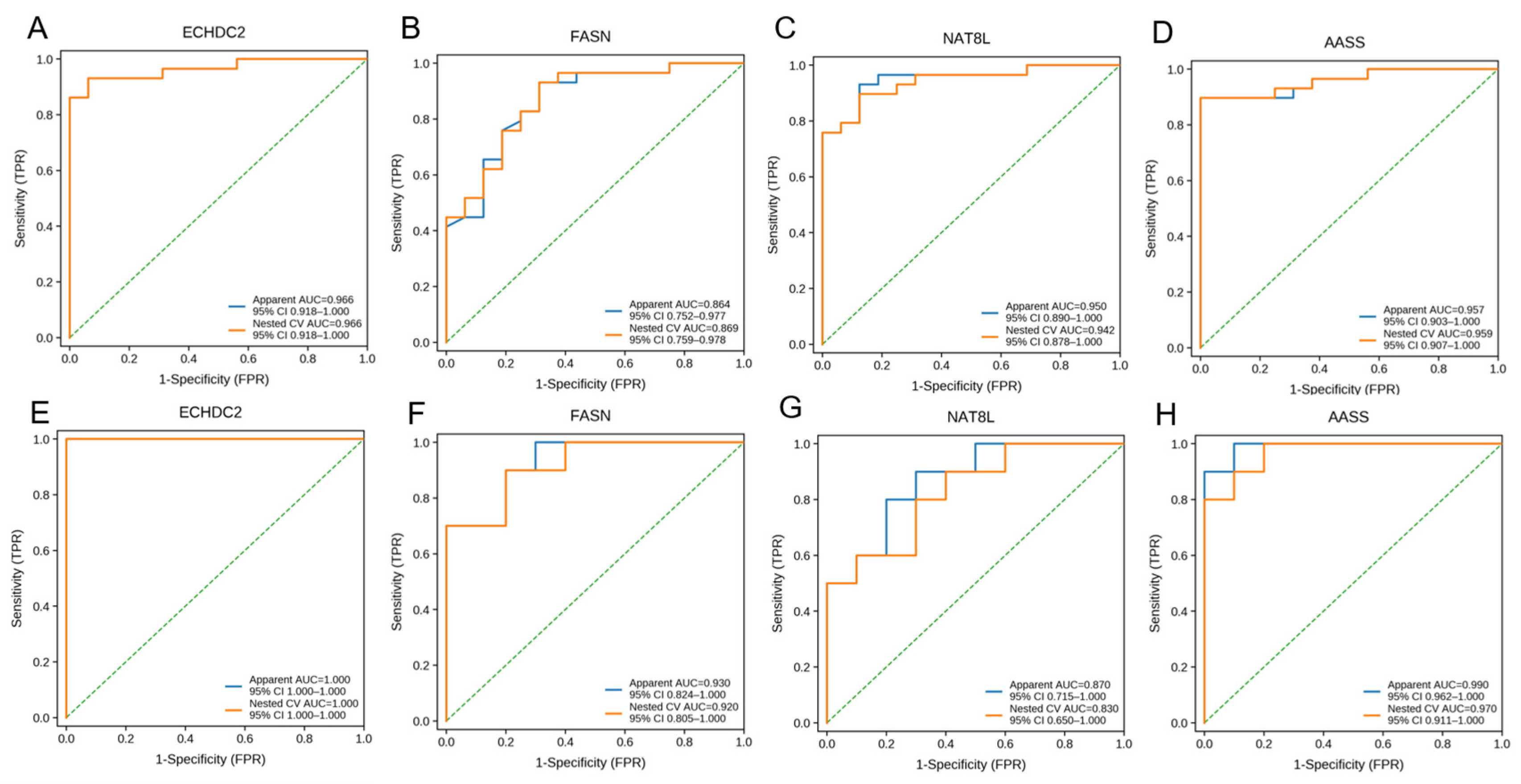
2.9. Evaluation of the Diagnostic Performance of Key Biomarkers
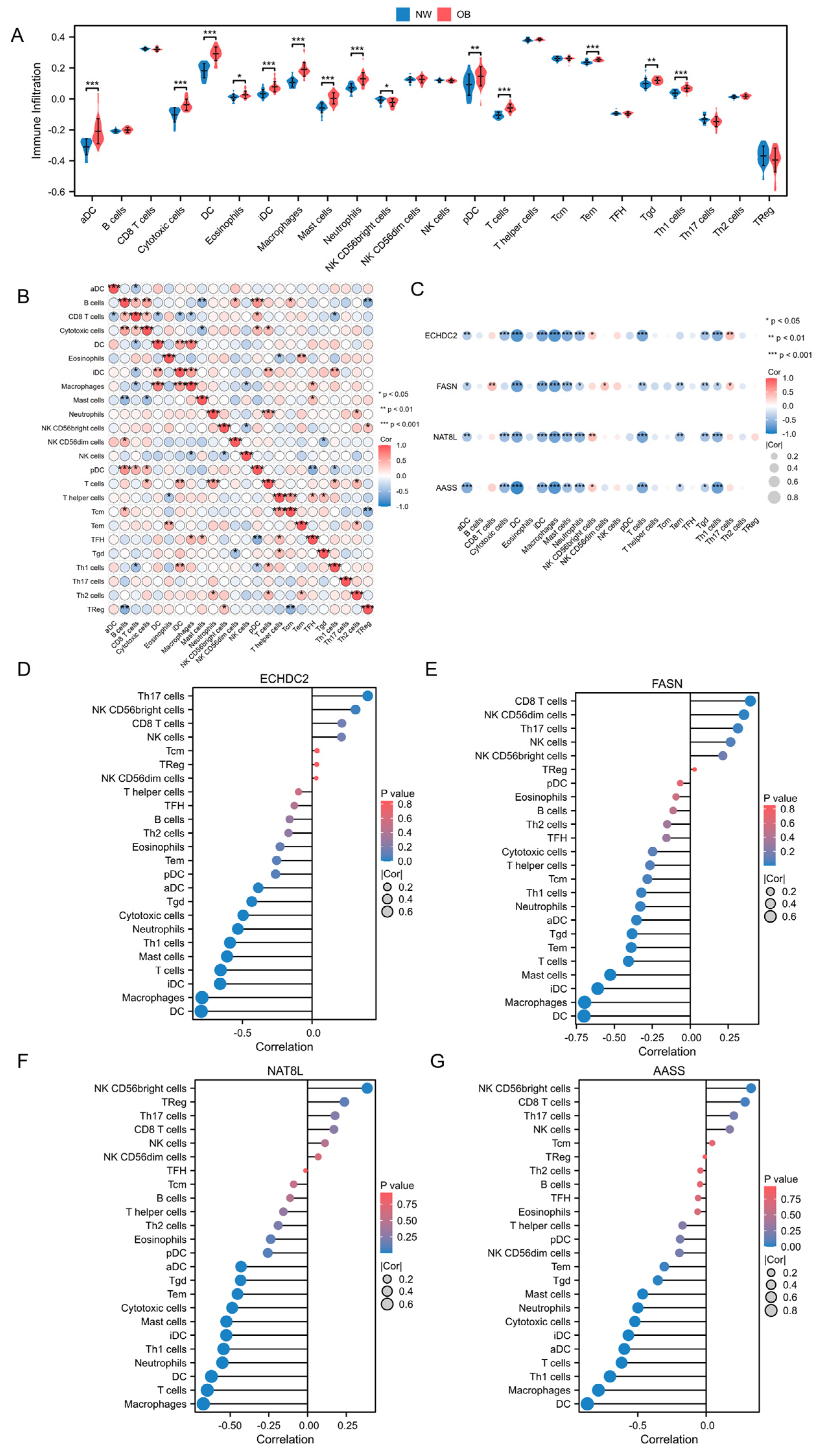
2.10. Immune Cell Infiltration Analysis
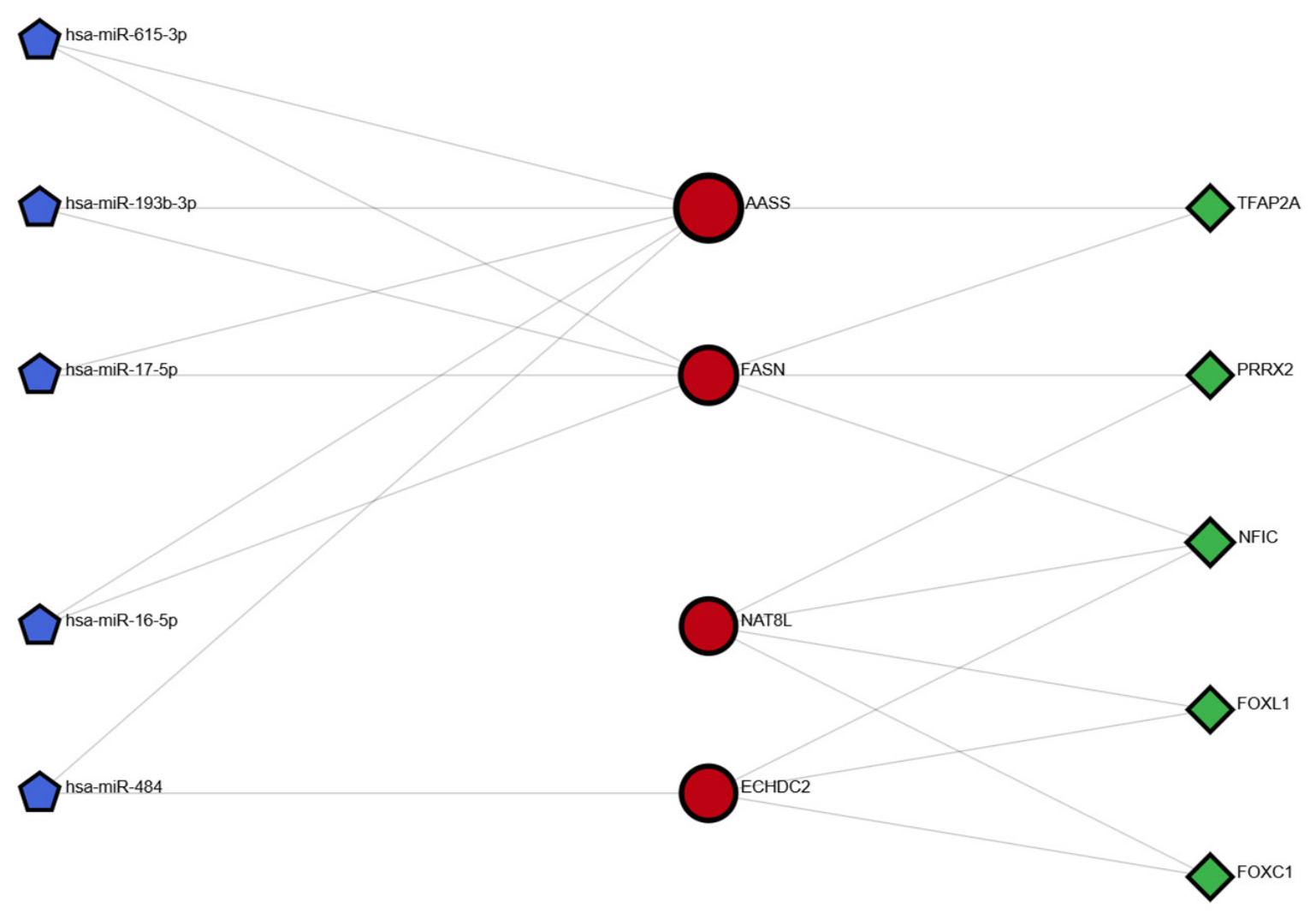
2.11. Construction of the Transcription Factor–mRNA–miRNA Regulatory Network
2.12. Screening of Potential Drugs
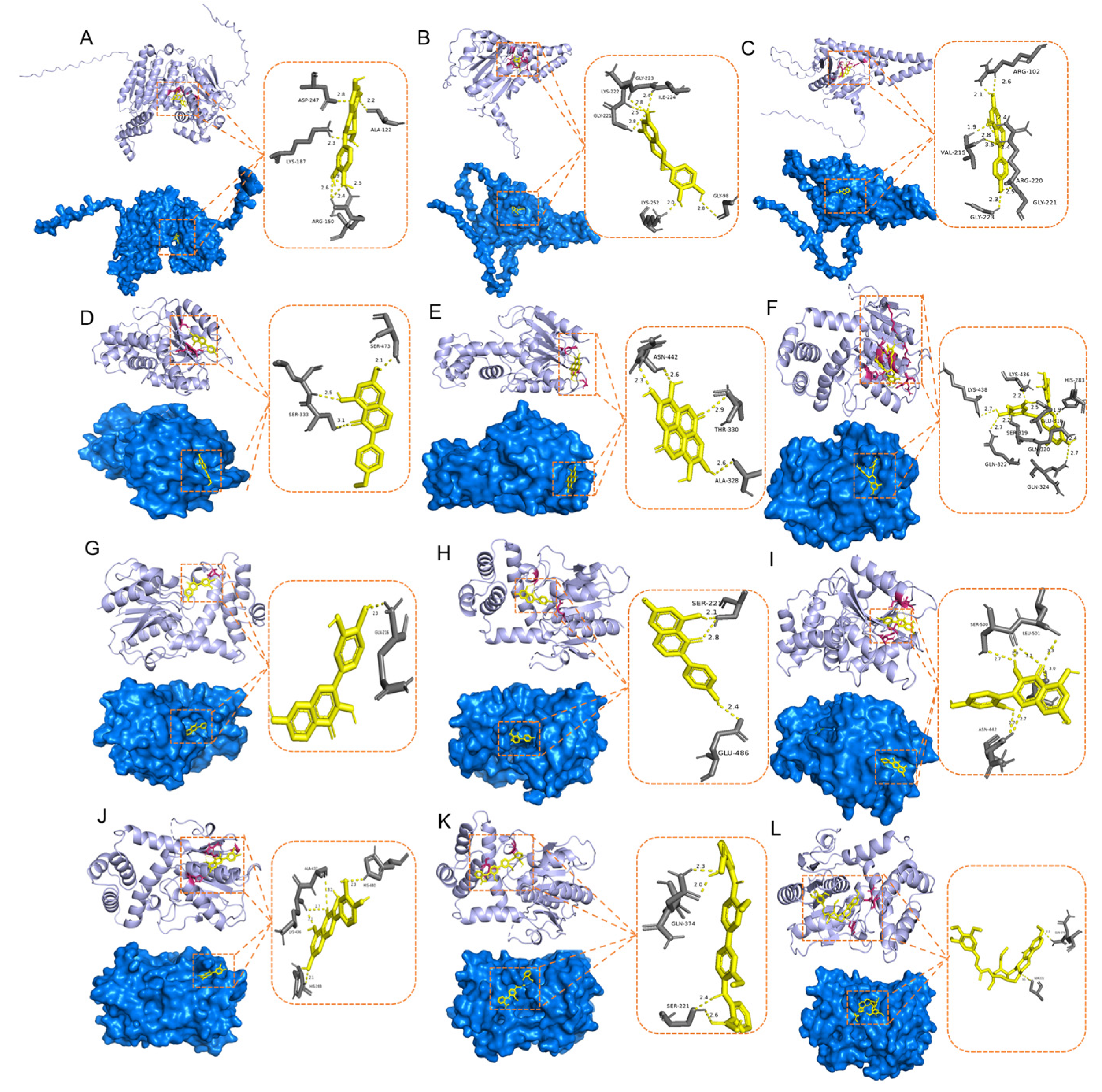
2.13. Molecular Docking Analysis of Predicted Drugs and Target Proteins
3. Results
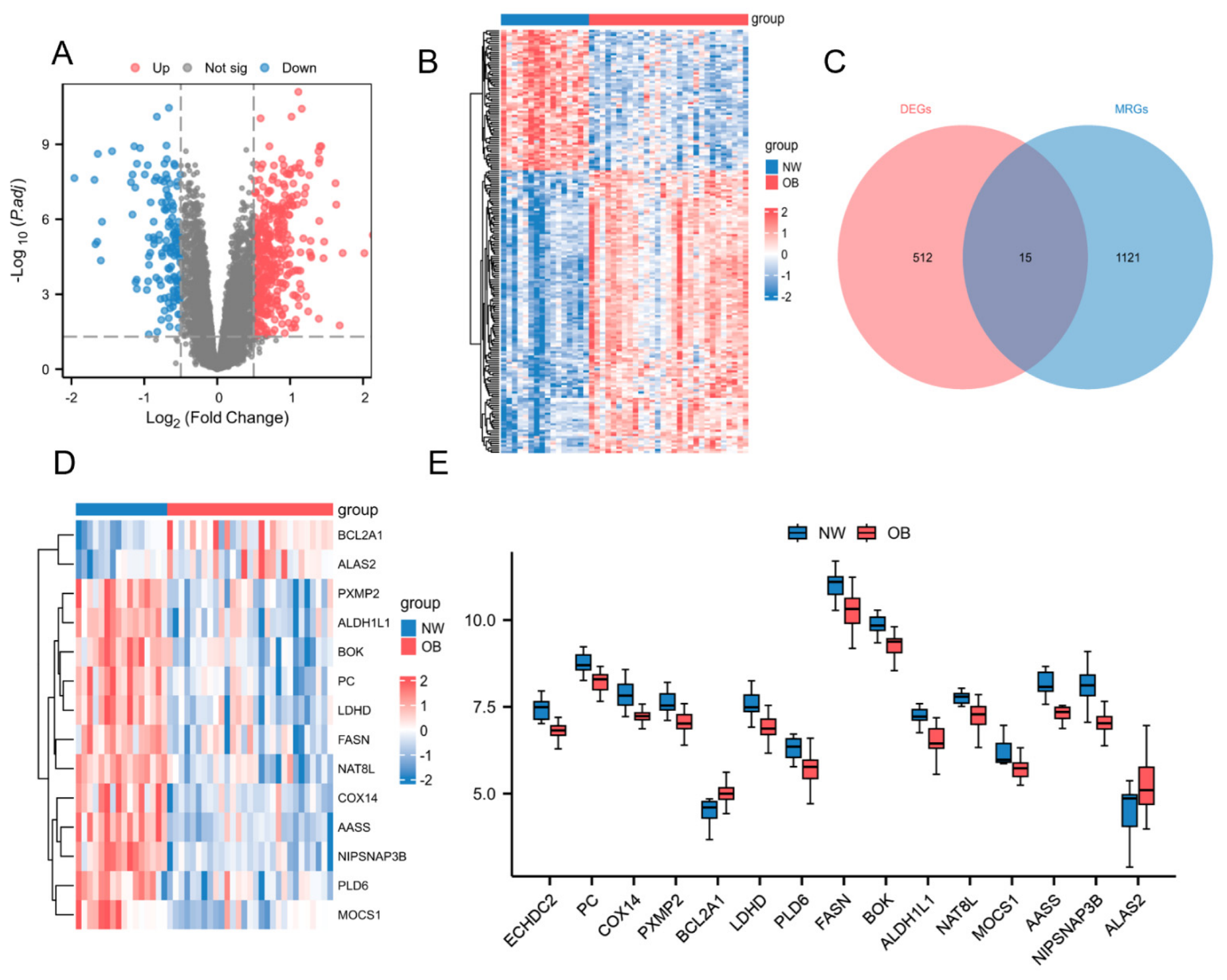
3.1. Data Preprocessing and Identification of Differentially Expressed Genes
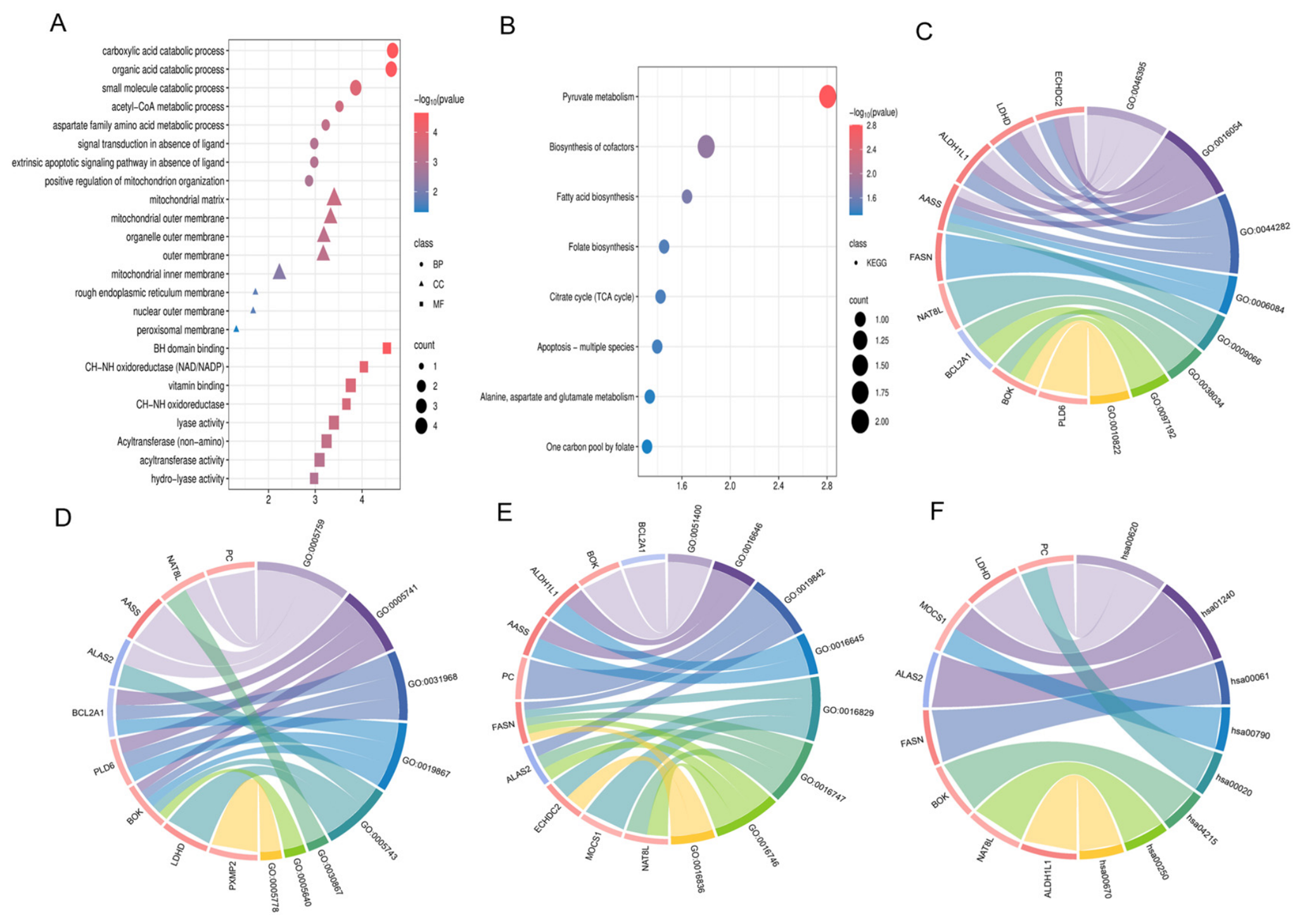
3.2. Identification and Functional Enrichment Analysis of Differentially Expressed MRGs
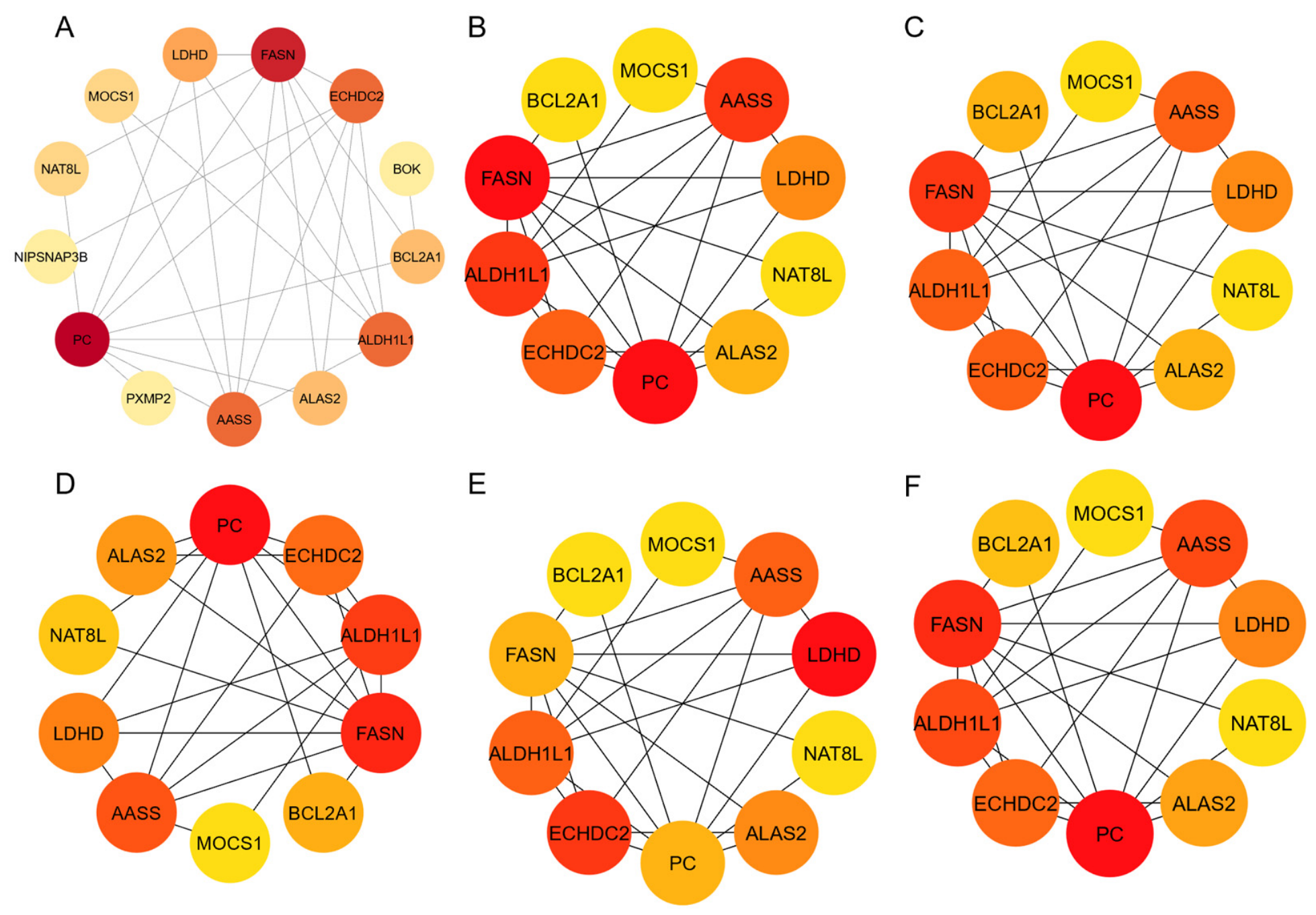
3.3. Construction of the PPI Network and Screening of Hub Genes
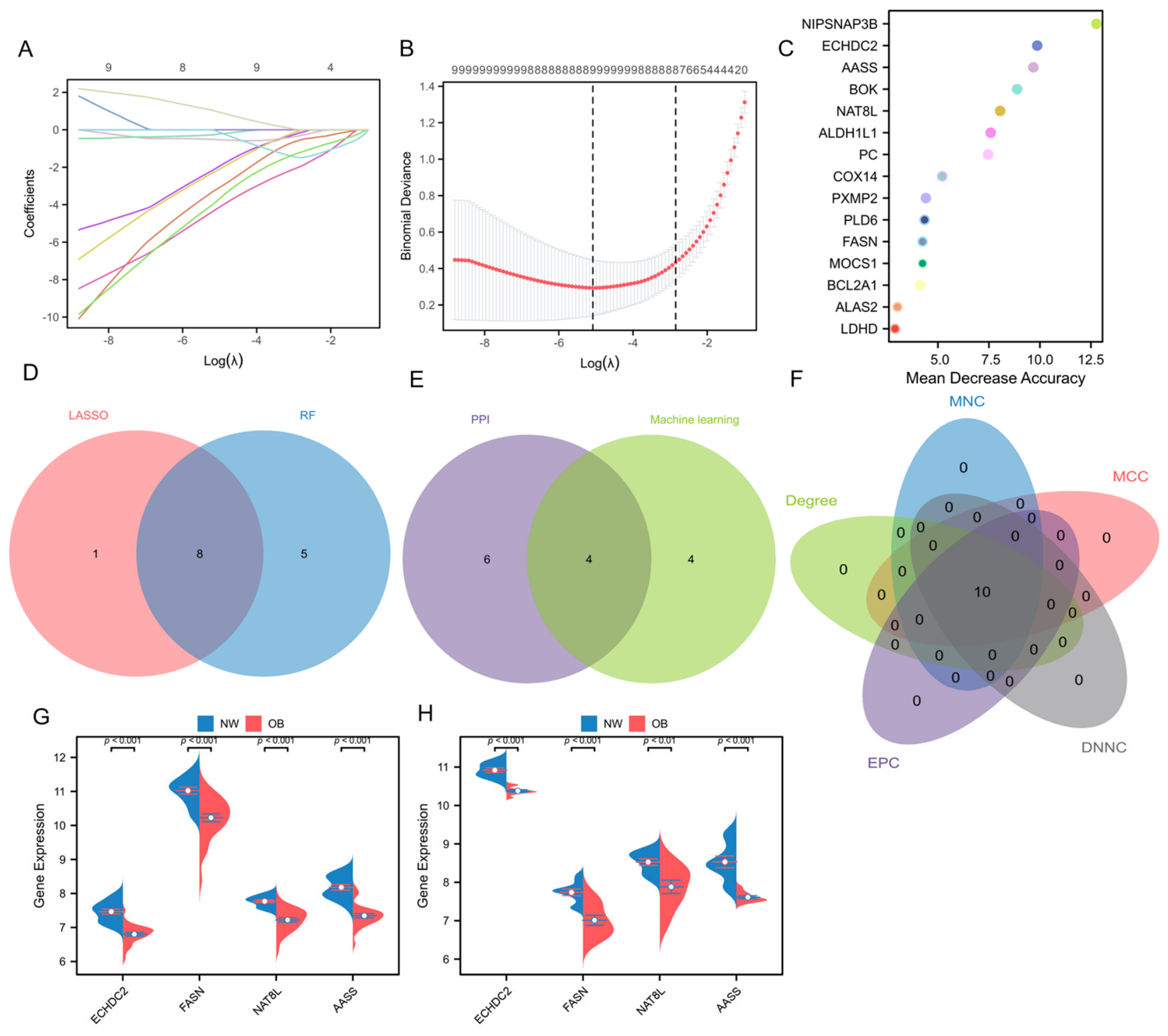
3.4. Machine Learning-Based Screening of Candidate Feature Genes
3.5. Integrated Screening of Core MRGs
3.6. Evaluation of Transcriptome-Based Discriminatory Performance in Training and External Validation Datasets
3.7. Construction of the miRNA–MRG–TF Regulatory Network
3.8. Results of Immune Cell Infiltration Analysis
3.9. Correlation Analysis Between Immune Cell Subsets and MRGs
3.10. Candidate Small-Molecule Screening and Molecular Docking
3.11. Molecular Docking Between Candidate Drugs and Key Targets
4. Discussion
5. Conclusions
6. Limitations
Supplementary Materials
Author Contributions
Funding
Institutional Review Board Statement
Informed Consent Statement
Data Availability Statement
Acknowledgments
Conflicts of Interest
References
- Song, X.; Cui, X.; Su, W.; Shang, X.; Tao, M.; Wang, J.; Liu, C.; Sun, Y.; Yun, H. Comparative effects of high-intensity interval training and moderate-intensity continuous training on weight and metabolic health in college students with obesity. Sci. Rep. 2024, 14, 16558. [Google Scholar] [CrossRef] [Scilit] [PubMed]
- Phelps, N.H.; Singleton, R.K.; Zhou, B.; Heap, R.A.; Mishra, A.; Bennett, J.E.; Paciorek, C.J.; Lhoste, V.P.F.; Carrillo-Larco, R.M.; Stevens, G.A.; et al. Worldwide trends in underweight and obesity from 1990 to 2022: A pooled analysis of 3663 population-representative studies with 222 million children, adolescents, and adults. Lancet 2024, 403, 1027–1050. [Google Scholar] [CrossRef] [Scilit]
- Sun, Y.; Lu, B.; Su, W.; Song, X.; Shang, X.; Zheng, J.; Wang, J.; Yun, H. Comprehensive assessment of the effects of concurrent strength and endurance training on lipid profile, glycemic control, and insulin resistance in type 2 diabetes: A meta-analysis. Medicine 2024, 103, e37494. [Google Scholar] [CrossRef] [Scilit]
- Chew, N.W.S.; Pan, X.H.; Chong, B.; Chandramouli, C.; Muthiah, M.; Lam, C.S.P. Type 2 diabetes mellitus and cardiometabolic outcomes in metabolic dysfunction-associated steatotic liver disease population. Diabetes Res. Clin. Pract. 2024, 211, 111652. [Google Scholar] [CrossRef] [Scilit] [PubMed]
- Milanović, M.; Milošević, N.; Ružić, M.; Abenavoli, L.; Milić, N. Whey Proteins and Metabolic Dysfunction-Associated Steatotic Liver Disease Features: Evolving the Current Knowledge and Future Trends. Metabolites 2025, 15, 516. [Google Scholar] [CrossRef] [Scilit]
- Mellemkjær, A.; Kjær, M.B.; Haldrup, D.; Grønbæk, H.; Thomsen, K.L. Management of cardiovascular risk in patients with metabolic dysfunction-associated steatotic liver disease. Eur. J. Intern. Med. 2024, 122, 28–34. [Google Scholar] [CrossRef] [Scilit]
- Soták, M.; Clark, M.; Suur, B.E.; Börgeson, E. Inflammation and resolution in obesity. Nat. Rev. Endocrinol. 2025, 21, 45–61. [Google Scholar] [CrossRef] [Scilit]
- Boutens, L.; Hooiveld, G.J.; Dhingra, S.; Cramer, R.A.; Netea, M.G.; Stienstra, R. Unique metabolic activation of adipose tissue macrophages in obesity promotes inflammatory responses. Diabetologia 2018, 61, 942–953. [Google Scholar] [CrossRef] [Scilit]
- Hagberg, C.E.; Spalding, K.L. White adipocyte dysfunction and obesity-associated pathologies in humans. Nat. Rev. Mol. Cell Biol. 2024, 25, 270–289. [Google Scholar] [CrossRef] [Scilit] [PubMed]
- Koranteng, J.; Chung, K.F.; Michaeloudes, C.; Bhavsar, P. The role of mitochondria in eosinophil function: Implications for severe asthma pathogenesis. Front. Cell Dev. Biol. 2024, 12, 1360079. [Google Scholar] [CrossRef] [Scilit]
- Li, Y.; Zhang, H.; Yu, C.; Dong, X.; Yang, F.; Wang, M.; Wen, Z.; Su, M.; Li, B.; Yang, L. New Insights into Mitochondria in Health and Diseases. Int. J. Mol. Sci. 2024, 25, 9975. [Google Scholar] [CrossRef] [Scilit] [PubMed]
- Zheng, Y.; Yang, N.; Pang, Y.; Gong, Y.; Yang, H.; Ding, W.; Yang, H. Mitochondria-associated regulation in adipose tissues and potential reagents for obesity intervention. Front. Endocrinol. 2023, 14, 1132342. [Google Scholar] [CrossRef] [Scilit] [PubMed]
- Tian, S.; Xie, H.; Zhong, Q.; Sun, C.; Yuan, P.; Xu, F.; Lu, L.; Cao, J.; Li, M.; Li, H. Mitochondria-Targeted Liposomes Boost Thermogenesis for Adipose Tissue Regulation. Adv. Healthc. Mater. 2026, e05925. [Google Scholar] [CrossRef] [Scilit] [PubMed]
- Xu, S.; Lu, F.; Gao, J.; Yuan, Y. Inflammation-mediated metabolic regulation in adipose tissue. Obes. Rev. 2024, 25, e13724. [Google Scholar] [CrossRef] [Scilit]
- Das, S.; Mukhuty, A.; Mullen, G.P.; Rudolph, M.C. Adipocyte Mitochondria: Deciphering Energetic Functions across Fat Depots in Obesity and Type 2 Diabetes. Int. J. Mol. Sci. 2024, 25, 6681. [Google Scholar] [CrossRef] [Scilit]
- Rath, S.; Sharma, R.; Gupta, R.; Ast, T.; Chan, C.; Durham, T.J.; Goodman, R.P.; Grabarek, Z.; Haas, M.E.; Hung, W.H.W.; et al. MitoCarta3.0: An updated mitochondrial proteome now with sub-organelle localization and pathway annotations. Nucleic Acids Res. 2021, 49, D1541–D1547. [Google Scholar] [CrossRef] [Scilit]
- Szklarczyk, D.; Kirsch, R.; Koutrouli, M.; Nastou, K.; Mehryary, F.; Hachilif, R.; Gable, A.L.; Fang, T.; Doncheva, N.T.; Pyysalo, S.; et al. The STRING database in 2023: Protein-protein association networks and functional enrichment analyses for any sequenced genome of interest. Nucleic Acids Res. 2023, 51, D638–D646. [Google Scholar] [CrossRef] [Scilit]
- Çorbacıoğlu, Ş.K.; Aksel, G. Receiver operating characteristic curve analysis in diagnostic accuracy studies: A guide to interpreting the area under the curve value. Turk. J. Emerg. Med. 2023, 23, 195–198. [Google Scholar] [CrossRef] [Scilit]
- Robin, X.; Turck, N.; Hainard, A.; Tiberti, N.; Lisacek, F.; Sanchez, J.C.; Müller, M. pROC: An open-source package for R and S+ to analyze and compare ROC curves. BMC Bioinform. 2011, 12, 77. [Google Scholar] [CrossRef] [Scilit]
- Barbie, D.A.; Tamayo, P.; Boehm, J.S.; Kim, S.Y.; Moody, S.E.; Dunn, I.F.; Schinzel, A.C.; Sandy, P.; Meylan, E.; Scholl, C.; et al. Systematic RNA interference reveals that oncogenic KRAS-driven cancers require TBK1. Nature 2009, 462, 108–112. [Google Scholar] [CrossRef] [Scilit]
- Aran, D.; Hu, Z.; Butte, A.J. xCell: Digitally portraying the tissue cellular heterogeneity landscape. Genome Biol. 2017, 18, 220. [Google Scholar] [CrossRef] [Scilit]
- Norreen-Thorsen, M.; Struck, E.C.; Öling, S.; Zwahlen, M.; Von Feilitzen, K.; Odeberg, J.; Lindskog, C.; Pontén, F.; Uhlén, M.; Dusart, P.J.; et al. A human adipose tissue cell-type transcriptome atlas. Cell Rep. 2022, 40, 111046. [Google Scholar] [CrossRef] [Scilit]
- Zhou, G.; Soufan, O.; Ewald, J.; Hancock, R.E.W.; Basu, N.; Xia, J. NetworkAnalyst 3.0: A visual analytics platform for comprehensive gene expression profiling and meta-analysis. Nucleic Acids Res. 2019, 47, W234–W241. [Google Scholar] [CrossRef] [Scilit] [PubMed]
- Trott, O.; Olson, A.J. AutoDock Vina: Improving the speed and accuracy of docking with a new scoring function, efficient optimization, and multithreading. J. Comput. Chem. 2010, 31, 455–461. [Google Scholar] [CrossRef] [Scilit] [PubMed]
- Eirin, A.; Thaler, R.; Glasstetter, L.M.; Xing, L.; Zhu, X.Y.; Osborne, A.C.; Mondesir, R.; Bhagwate, A.V.; Lerman, A.; van Wijnen, A.J.; et al. Obesity-driven mitochondrial dysfunction in human adipose tissue-derived mesenchymal stem/stromal cells involves epigenetic changes. Cell Death Dis. 2024, 15, 387. [Google Scholar] [CrossRef] [Scilit] [PubMed]
- Bournat, J.C.; Brown, C.W. Mitochondrial dysfunction in obesity. Curr. Opin. Endocrinol. Diabetes Obes. 2010, 17, 446–452. [Google Scholar] [CrossRef] [Scilit]
- Chavakis, T.; Alexaki, V.I.; Ferrante, A.W. Macrophage function in adipose tissue homeostasis and metabolic inflammation. Nat. Immunol. 2023, 24, 757–766. [Google Scholar] [CrossRef] [Scilit]
- Mayas, M.D.; Ortega, F.J.; Macías-González, M.; Bernal, R.; Gómez-Huelgas, R.; Fernández-Real, J.M.; Tinahones, F.J. Inverse relation between FASN expression in human adipose tissue and the insulin resistance level. Nutr. Metab. 2010, 7, 3. [Google Scholar] [CrossRef] [Scilit]
- Berndt, J.; Kovacs, P.; Ruschke, K.; Klöting, N.; Fasshauer, M.; Schön, M.R.; Körner, A.; Stumvoll, M.; Blüher, M. Fatty acid synthase gene expression in human adipose tissue: Association with obesity and type 2 diabetes. Diabetologia 2007, 50, 1472–1480. [Google Scholar] [CrossRef] [Scilit]
- Guiu-Jurado, E.; Auguet, T.; Berlanga, A.; Aragonès, G.; Aguilar, C.; Sabench, F.; Armengol, S.; Porras, J.A.; Martí, A.; Jorba, R.; et al. Downregulation of de Novo Fatty Acid Synthesis in Subcutaneous Adipose Tissue of Moderately Obese Women. Int. J. Mol. Sci. 2015, 16, 29911–29922. [Google Scholar] [CrossRef] [Scilit]
- Weng, L.; Tang, W.-S.; Wang, X.; Gong, Y.; Liu, C.; Hong, N.-N.; Tao, Y.; Li, K.-Z.; Liu, S.-N.; Jiang, W.; et al. Surplus fatty acid synthesis increases oxidative stress in adipocytes and induces lipodystrophy. Nat. Commun. 2024, 15, 133. [Google Scholar] [CrossRef] [Scilit]
- Rowland, L.A.; Guilherme, A.; Henriques, F.; DiMarzio, C.; Munroe, S.; Wetoska, N.; Kelly, M.; Reddig, K.; Hendricks, G.; Pan, M.; et al. De novo lipogenesis fuels adipocyte autophagosome and lysosome membrane dynamics. Nat. Commun. 2023, 14, 1362. [Google Scholar] [CrossRef] [Scilit]
- Huber, K.; Hofer, D.C.; Trefely, S.; Pelzmann, H.J.; Madreiter-Sokolowski, C.; Duta-Mare, M.; Schlager, S.; Trausinger, G.; Stryeck, S.; Graier, W.F.; et al. N-acetylaspartate pathway is nutrient responsive and coordinates lipid and energy metabolism in brown adipocytes. Biochim. Biophys. Acta Mol. Cell Res. 2019, 1866, 337–348. [Google Scholar] [CrossRef] [Scilit] [PubMed]
- Pessentheiner, A.R.; Pelzmann, H.J.; Walenta, E.; Schweiger, M.; Groschner, L.N.; Graier, W.F.; Kolb, D.; Uno, K.; Miyazaki, T.; Nitta, A.; et al. NAT8L (N-acetyltransferase 8-like) accelerates lipid turnover and increases energy expenditure in brown adipocytes. J. Biol. Chem. 2013, 288, 36040–36051. [Google Scholar] [CrossRef] [Scilit] [PubMed]
- Leandro, J.; Houten, S.M. The lysine degradation pathway: Subcellular compartmentalization and enzyme deficiencies. Mol. Genet. Metab. 2020, 131, 14–22. [Google Scholar] [CrossRef] [Scilit]
- Muñoz, F.; Gao, Q.; Mattanovich, M.; Trost, K.; Hodek, O.; Lindqvist, A.; Wierup, N.; Fex, M.; Moritz, T.; Mulder, H.; et al. Lysine potentiates insulin secretion via AASS-dependent catabolism and regulation of GABA content and signaling. Metab. Clin. Exp. 2026, 174, 156423. [Google Scholar] [CrossRef] [Scilit]
- Du, J.; Li, Z.; Li, Q.Z.; Guan, T.; Yang, Q.; Xu, H.; Pritchard, K.A.; Camara, A.K.; Shi, Y. Enoyl coenzyme a hydratase domain-containing 2, a potential novel regulator of myocardial ischemia injury. J. Am. Heart Assoc. 2013, 2, e000233. [Google Scholar] [CrossRef] [Scilit]
- Jacks, R.D.; Lumeng, C.N. Macrophage and T cell networks in adipose tissue. Nat. Rev. Endocrinol. 2024, 20, 50–61. [Google Scholar] [CrossRef] [Scilit]
- Xiao, Y.; Yang, Y.; Xiong, H.; Dong, G. The implications of FASN in immune cell biology and related diseases. Cell Death Dis. 2024, 15, 88. [Google Scholar] [CrossRef] [Scilit] [PubMed]
- Zhou, J.; Wang, S.; Qi, Q.; Yang, X.; Zhu, E.; Yuan, H.; Li, X.; Liu, Y.; Li, X.; Wang, B. Nuclear factor I-C reciprocally regulates adipocyte and osteoblast differentiation via control of canonical Wnt signaling. FASEB J. 2017, 31, 1939–1952. [Google Scholar] [CrossRef] [Scilit]
- Du, B.; Cawthorn, W.P.; Su, A.; Doucette, C.R.; Yao, Y.; Hemati, N.; Kampert, S.; McCoin, C.; Broome, D.T.; Rosen, C.J.; et al. The transcription factor paired-related homeobox 1 (Prrx1) inhibits adipogenesis by activating transforming growth factor-β (TGFβ) signaling. J. Biol. Chem. 2013, 288, 3036–3047. [Google Scholar] [CrossRef] [Scilit]
- Dankel, S.N.; Grytten, E.; Bjune, J.I.; Nielsen, H.J.; Dietrich, A.; Blüher, M.; Sagen, J.V.; Mellgren, G. COL6A3 expression in adipose tissue cells is associated with levels of the homeobox transcription factor PRRX1. Sci. Rep. 2020, 10, 20164. [Google Scholar] [CrossRef] [Scilit]
- Omatsu, Y.; Seike, M.; Sugiyama, T.; Kume, T.; Nagasawa, T. Foxc1 is a critical regulator of haematopoietic stem/progenitor cell niche formation. Nature 2014, 508, 536–540. [Google Scholar] [CrossRef] [Scilit]
- Nakae, J.; Kitamura, T.; Kitamura, Y.; Biggs, W.H.; Arden, K.C.; Accili, D. The Forkhead Transcription Factor Foxo1 Regulates Adipocyte Differentiation. Dev. Cell 2003, 4, 119–129. [Google Scholar] [CrossRef] [Scilit]
- Pirone, L.; Smaldone, G.; Spinelli, R.; Barberisi, M.; Beguinot, F.; Vitagliano, L.; Miele, C.; Di Gaetano, S.; Raciti, G.A.; Pedone, E. KCTD1: A novel modulator of adipogenesis through the interaction with the transcription factor AP2α. Biochim. Biophys. Acta Mol. Cell Biol. Lipids 2019, 1864, 158514. [Google Scholar] [CrossRef] [Scilit]
- Li, Z.; Zhang, C.; Huang, G.; Zhang, Z.; Wang, Q.; Liu, X.; Qin, Y.; Zhou, H.; Hou, A.; He, J.; et al. Deletion of Tfap2a in hepatocytes and macrophages promotes the progression of hepatocellular carcinoma by regulating SREBP1/FASN/ACC pathway and anti-inflammatory effect of IL10. Cell Death Dis. 2025, 16, 245. [Google Scholar] [CrossRef] [Scilit] [PubMed]
- Xu, J.; Zhang, L.; Shu, G.; Wang, B. microRNA-16-5p promotes 3T3-L1 adipocyte differentiation through regulating EPT1. Biochem. Biophys. Res. Commun. 2019, 514, 1251–1256. [Google Scholar] [CrossRef] [Scilit] [PubMed]
- Tian, L.; Song, Z.; Shao, W.; Du, W.W.; Zhao, L.R.; Zeng, K.; Yang, B.B.; Jin, T. Curcumin represses mouse 3T3-L1 cell adipogenic differentiation via inhibiting miR-17-5p and stimulating the Wnt signalling pathway effector Tcf7l2. Cell Death Dis. 2017, 8, e2559. [Google Scholar] [CrossRef] [Scilit]
- Yang, M.; Gao, X.; Hu, C.; Wang, S.; Sheng, H.; Ma, Y. Bta-miR-484 Targets SFRP1 and Affects Preadipocytes Proliferation, Differentiation, and Apoptosis. Int. J. Mol. Sci. 2023, 24, 12710. [Google Scholar] [CrossRef] [Scilit]
- Sun, L.; Xie, H.; Mori, M.A.; Alexander, R.; Yuan, B.; Hattangadi, S.M.; Liu, Q.; Kahn, C.R.; Lodish, H.F. Mir193b-365 is essential for brown fat differentiation. Nat. Cell Biol. 2011, 13, 958–965. [Google Scholar] [CrossRef] [Scilit] [PubMed]
- Miyamoto, Y.; Mauer, A.S.; Kumar, S.; Mott, J.L.; Malhi, H. Mmu-miR-615-3p regulates lipoapoptosis by inhibiting C/EBP homologous protein. PLoS ONE 2014, 9, e109637. [Google Scholar] [CrossRef] [Scilit]
- Ansari, A.; Yadav, P.K.; Valmiki, S.; Laine, A.; Rimbert, A.; Islam, S.; Osman, I.; Najafi-Shoushtari, S.H.; Hussain, M.M. MicroRNA-615-3p decreases apo B expression in human liver cells. J. Lipid Res. 2024, 65, 100659. [Google Scholar] [CrossRef] [Scilit] [PubMed]
- Wang, Y.; Wang, H.; Yu, X.; Wu, Q.; Lv, X.; Zhou, X.; Chen, Y.; Geng, S. Identification of metabolism related biomarkers in obesity based on adipose bioinformatics and machine learning. J. Transl. Med. 2024, 22, 986. [Google Scholar] [CrossRef] [Scilit]
- Hua, Y.; Xie, D.; Zhang, Y.; Wang, M.; Wen, W.; Sun, J. Identification and analysis of key genes in adipose tissue for human obesity based on bioinformatics. Gene 2023, 888, 147755. [Google Scholar] [CrossRef] [Scilit]
- Sato, S.; Mukai, Y. Modulation of Chronic Inflammation by Quercetin: The Beneficial Effects on Obesity. J. Inflamm. Res. 2020, 13, 421–431. [Google Scholar] [CrossRef] [Scilit]
- Yan, R.; Cao, Y. The Safety and Efficacy of Dietary Epigallocatechin Gallate Supplementation for the Management of Obesity and Non-Alcoholic Fatty Liver Disease: Recent Updates. Biomedicines 2025, 13, 206. [Google Scholar] [CrossRef] [Scilit]
- Vásquez-Reyes, S.; Vargas-Castillo, A.; Noriega, L.G.; Velázquez-Villegas, L.A.; Pérez, B.; Sánchez-Tapia, M.; Ordaz, G.; Suárez-Monroy, R.; Ulloa-Aguirre, A.; Offner, H.; et al. Genistein Stimulation of White Adipose Tissue Thermogenesis Is Partially Dependent on GPR30 in Mice. Mol. Nutr. Food Res. 2022, 66, e2100838. [Google Scholar] [CrossRef] [Scilit] [PubMed]
- Aragão, J.; Heimfarth, L.; Neres, W.S.; Felix, F.B.; Santos, P.R.D.; Abreu, F.F.; Cercato, L.M.; Nascimento, A.C.S.; Vasconcelos, A.B.S.; Soares, R.C.; et al. Biochanin A exerts an anti-inflammatory effect on adipose tissue and liver of ovariectomized obese mice. Braz. J. Med. Biol. Res. 2025, 58, e14737. [Google Scholar] [CrossRef] [Scilit]
- Zhao, P.; Mao, J.M.; Zhang, S.Y.; Zhou, Z.Q.; Tan, Y.; Zhang, Y. Quercetin induces HepG2 cell apoptosis by inhibiting fatty acid biosynthesis. Oncol. Lett. 2014, 8, 765–769. [Google Scholar] [CrossRef] [Scilit]
- Wu, D.; Ma, X.; Tian, W. Pomegranate husk extract, punicalagin and ellagic acid inhibit fatty acid synthase and adipogenesis of 3T3-L1 adipocyte. J. Funct. Foods 2013, 5, 633–641. [Google Scholar] [CrossRef] [Scilit]



| GEO Accession | Platform | Tissue Sample | Gene Expression Microarray Platform | Submission Date | Country | OB Samples | NW Samples | Total Samples |
|---|---|---|---|---|---|---|---|---|
| GSE94752 | GPL11532 | Subcutaneous adipose tissue | Affymetrix Human Gene 1.1 ST Array | 2017 | Sweden | 21 | 9 | 30 |
| GSE55200 | GPL17692 | Subcutaneous adipose tissue | Affymetrix Human Gene 2.1 ST Array | 2014 | Canada | 8 | 7 | 15 |
| GSE151839 | GPL570 | Subcutaneous adipose tissue | Affymetrix Human Genome U133 Plus 2.0 Array | 2020 | USA | 10 | 10 | 20 |
| Name | Molecular Formula | p-Value | Structure | Related Genes |
|---|---|---|---|---|
| Rescinnamin | C35H42N2O9 | 2.60 × 10³ |  | FASN |
| Fisetin | C15H10O6 | 4.19 × 10³ |  | FASN |
| Biochanin A | C16H12O5 | 4.99 × 10³ |  | FASN |
| Quercetin | C15H10O7 | 6.78 × 10³ |  | FASN |
| (−)-Epigallocatechin gallate | C22H18O11 | 5.99 × 10³ |  | FASN |
| Ellagic Acid | C14H6O8 | 1.53 × 10² |  | FASN |
| Morin | C15H10O7 | 5.39 × 10³ |  | FASN |
| Genistein | C15H10O5 | 2.09 × 10² |  | FASN; NAT8L |
| Redoxal | C28H24N2O6 | 7.58 × 10³ |  | FASN |
| Cianidanol | C15H14O6 | 1.07 × 10² |  | ECHDC2; NAT8L |
| Small-Molecule Ligand | Target Receptor Protein | Binding Free Energy (kcal/mol) |
|---|---|---|
| Cianidanol | ECHDC2 | −8.317 |
| Cianidanol | NAT8L | −8.033 |
| Genistein | NAT8L | −8.89 |
| Biochanin A | FASN | −7.29 |
| Ellagic Acid | FASN | −8.265 |
| (−)-Epigallocatechin gallate | FASN | −8.313 |
| Fisetin | FASN | −7.835 |
| Genistein | FASN | −7.456 |
| Morin | FASN | −7.63 |
| Quercetin | FASN | −7.456 |
| Redoxal | FASN | −8.03 |
| Rescinnamin | FASN | −7.234 |
Disclaimer/Publisher’s Note: The statements, opinions and data contained in all publications are solely those of the individual author(s) and contributor(s) and not of MDPI and/or the editor(s). MDPI and/or the editor(s) disclaim responsibility for any injury to people or property resulting from any ideas, methods, instructions or products referred to in the content. |
© 2026 by the authors. Licensee MDPI, Basel, Switzerland. This article is an open access article distributed under the terms and conditions of the Creative Commons Attribution (CC BY) license.
Share and Cite
Yun, H.; Liu, C.; Gao, B.; Chen, P. Identification and Transcriptomic Analysis of Mitochondria-Related Gene Signatures in Obesity. Metabolites 2026, 16, 419. https://doi.org/10.3390/metabo16060419
Yun H, Liu C, Gao B, Chen P. Identification and Transcriptomic Analysis of Mitochondria-Related Gene Signatures in Obesity. Metabolites. 2026; 16(6):419. https://doi.org/10.3390/metabo16060419
Chicago/Turabian StyleYun, Hezhang, Chang Liu, Binghong Gao, and Peijie Chen. 2026. "Identification and Transcriptomic Analysis of Mitochondria-Related Gene Signatures in Obesity" Metabolites 16, no. 6: 419. https://doi.org/10.3390/metabo16060419
APA StyleYun, H., Liu, C., Gao, B., & Chen, P. (2026). Identification and Transcriptomic Analysis of Mitochondria-Related Gene Signatures in Obesity. Metabolites, 16(6), 419. https://doi.org/10.3390/metabo16060419