
Relationship Between Adipose Tissue and Liver Dysfunction in Women with Polycystic Ovary Syndrome and Metabolic Syndrome


Abstract
1. Introduction
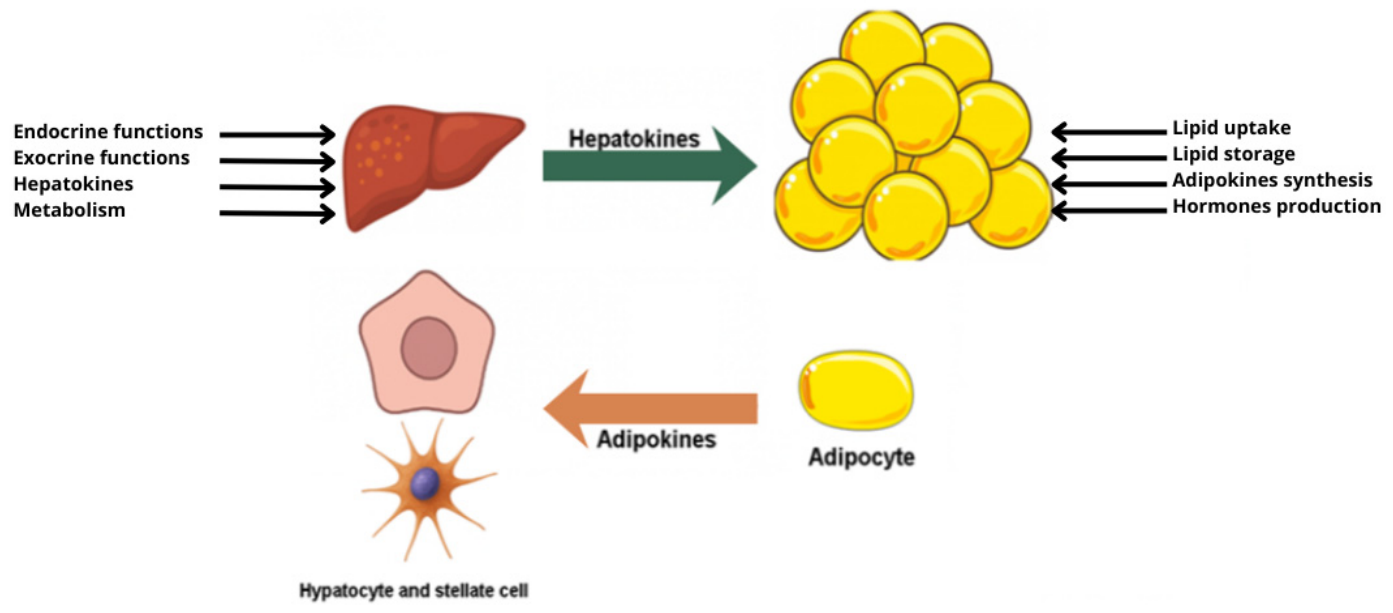
2. Crosstalk Between Hepatocytes and Adipocytes
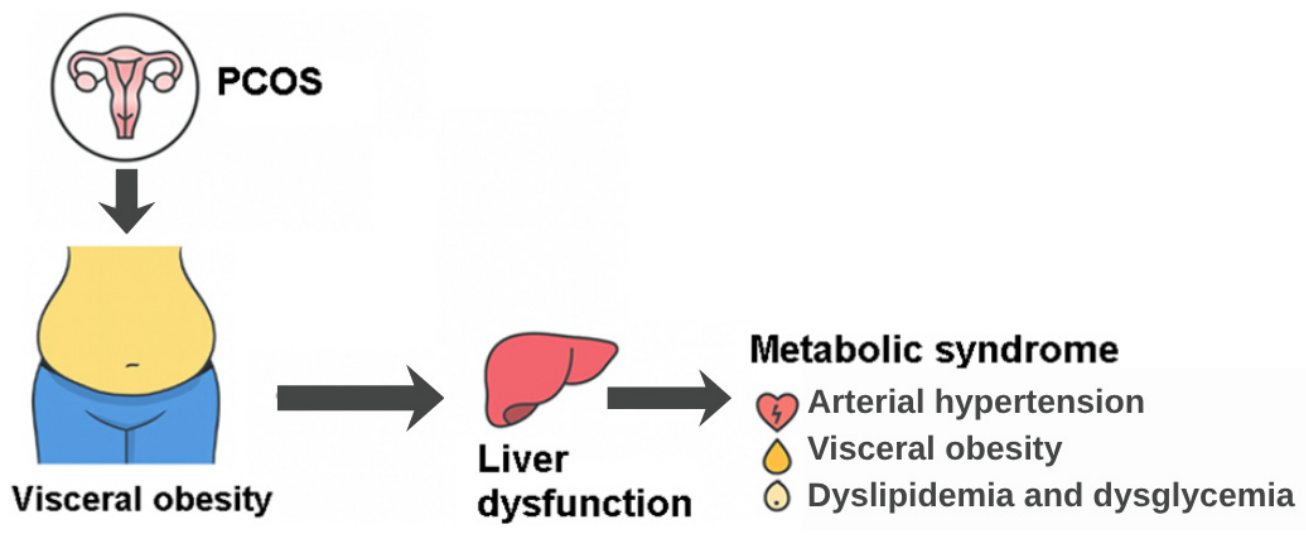
3. Liver and Metabolic Dysfunction in Women with PCOS
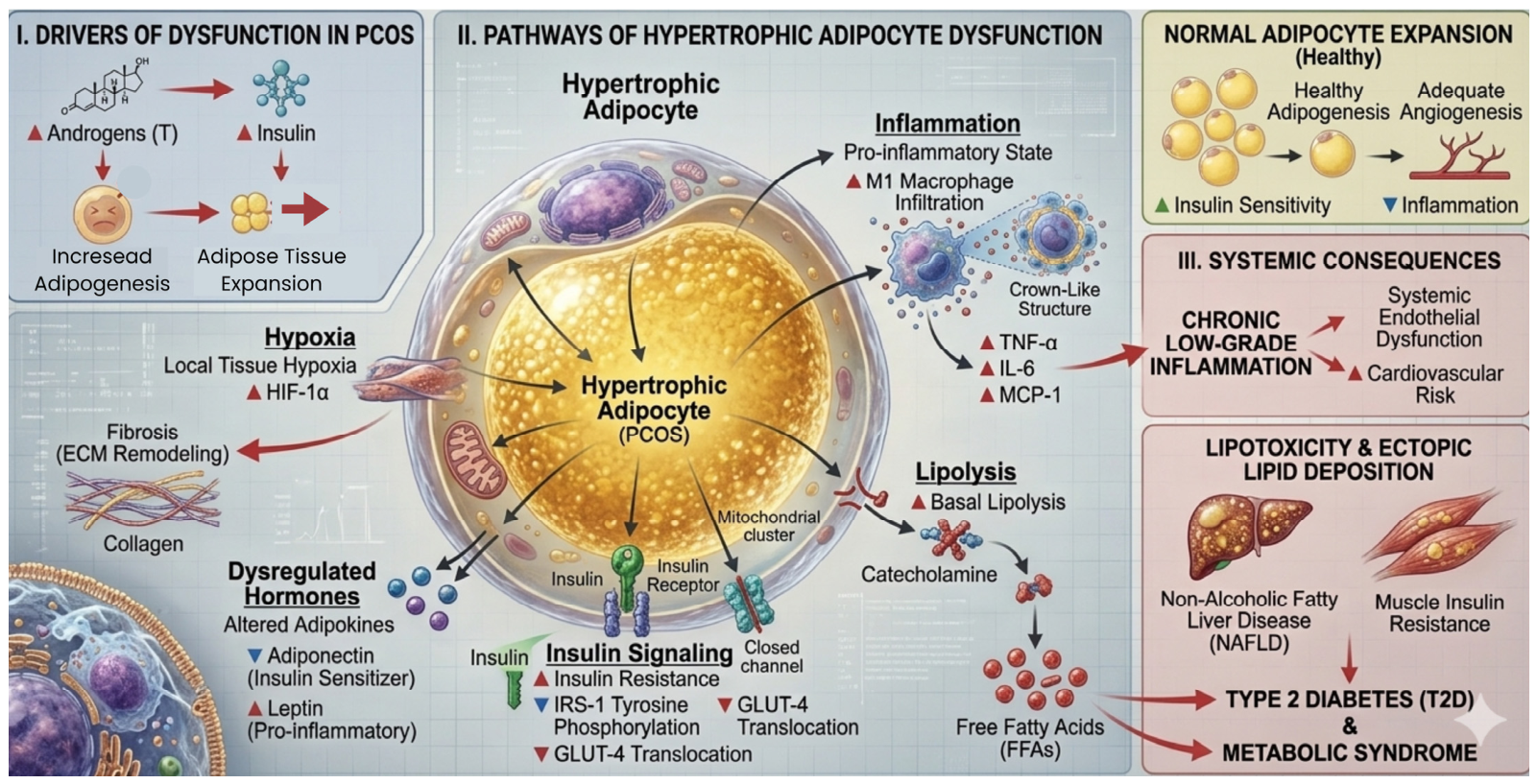
4. Adipocyte and Metabolic Dysfunction in Women with PCOS
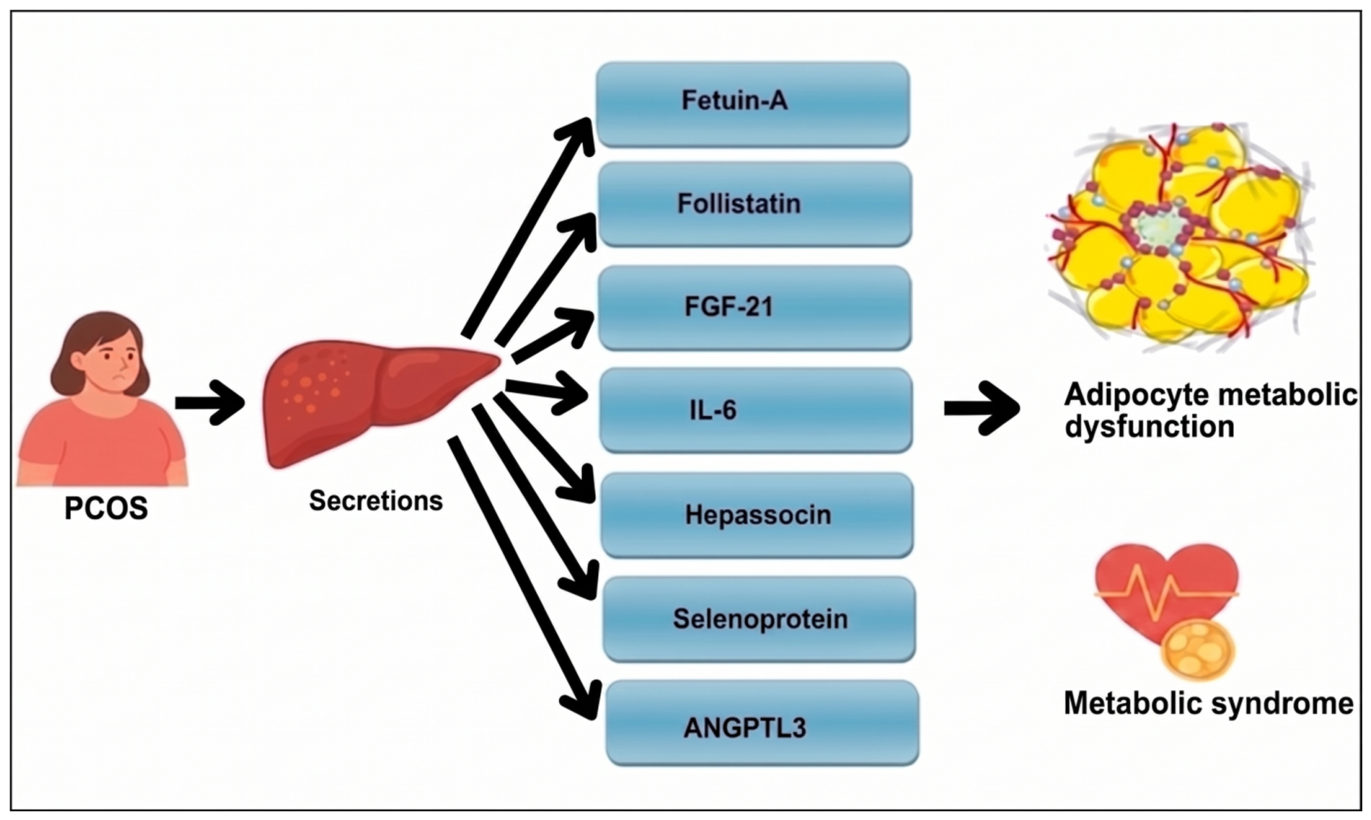
5. The Role of Hepatokines in Metabolic Dysfunction in Women with PCOS
5.1. Hepatokines with Beneficial or Dual Effects
5.2. Hepatokines with Harmful Effects
6. The Role of Adipokines in Metabolic Dysfunction in PCOS
6.1. Adipokines with Beneficial or Dual Effects
6.2. Adipokines with Harmful Effects
7. The Role of Adipokines/Hepatokines in the Development of Metabolic Syndrome in Women with PCOS
7.1. Effect of Adipokines on Coexistence of Polycystic Ovary Syndrome and Metabolic Syndrome
7.2. The Effect of Hepatokines on the Coexistence of Polycystic Ovary Syndrome and Metabolic Syndrome
8. Study Limitations
9. Concluding Remarks
Author Contributions
Funding
Institutional Review Board Statement
Informed Consent Statement
Data Availability Statement
Conflicts of Interest
References
- Zhang, Z.; Pang, Y.; Shen, J.; Chen, W.; Hao, C.; Lei, Z. The new definition of metabolic syndrome including hyperuricemia improves its prognostic value: Results from NHANES database. BMC Cardiovasc. Disord. 2025, 25, 93. [Google Scholar] [CrossRef] [Scilit]
- Apridonidze, T.; Essah, P.A.; Iuorno, M.J.; Nestler, J.E. Prevalence and characteristics of the metabolic syndrome in women with polycystic ovary syndrome. J. Clin. Endocrinol. Metab. 2005, 90, 1929–1935. [Google Scholar] [CrossRef] [Scilit] [PubMed]
- Zaeemzadeh, N.; Sadatmahalleh, S.J.; Ziaei, S.; Kazemnejad, A.; Mottaghi, A.; Mohamadzadeh, N.; Movahedinejad, M. Prevalence of metabolic syndrome in four phenotypes of PCOS and its relationship with androgenic components among Iranian women: A cross-sectional study. Int. J. Reprod. Biomed. 2020, 18, 253–264. [Google Scholar] [CrossRef] [Scilit] [PubMed]
- Igumnov, I.A.; Kurashova, N.A.; Belenkaya, L.V.; Vilson, N.I.; Suturina, L.V. Prevalence of metabolic syndrome in PCOS patients. Int. J. Biomed. 2022, 12, 95–99. [Google Scholar] [CrossRef] [Scilit]
- Giri, A.; Joshi, A.; Shrestha, S.; Chaudhary, A. Metabolic syndrome among patients with polycystic ovarian syndrome presenting to a tertiary care hospital: A descriptive cross-sectional study. JNMA J. Nepal. Med. Assoc. 2022, 60, 137–141. [Google Scholar] [CrossRef] [Scilit]
- Ghafari, A.; Maftoohi, M.; Samarin, M.E.; Barani, S.; Banimohammad, M.; Samie, R. The last update on polycystic ovary syndrome (PCOS), diagnosis criteria, and novel treatment. Endocr. Metab. Sci. 2025, 17, 100228. [Google Scholar] [CrossRef] [Scilit]
- Teede, H.J.; Khomami, M.B.; Morman, R.; Laven, J.S.; Joham, A.E.; Costello, M.F.; Patil, M.; Rees, D.A.; Berry, L.; Cree, M.G.; et al. Polyendocrine metabolic ovarian syndrome, the new name for polycystic ovary syndrome: A multistep global consensus process. Lancet 2026, 407, 1–10. [Google Scholar] [CrossRef] [Scilit]
- Zhao, H.; Zhang, J.; Cheng, X.; Nie, X.; He, B. Insulin resistance in polycystic ovary syndrome across various tissues: An updated review of pathogenesis, evaluation, and treatment. J. Ovarian Res. 2023, 16, 9. [Google Scholar] [CrossRef] [Scilit] [PubMed]
- Lim, S.S.; Davies, M.J.; Norman, R.J.; Moran, L.J. Overweight, obesity and central obesity in women with polycystic ovary syndrome: A systematic review and meta-analysis. Hum. Reprod. Update 2012, 18, 618–637. [Google Scholar] [CrossRef] [Scilit]
- Behboudi-Gandevani, S.; Amiri, M.; Yarandi, R.B.; Noroozzadeh, M.; Farahmand, M.; Dovom, M.R.; Tehrani, F.R. The risk of metabolic syndrome in polycystic ovary syndrome: A systematic review and meta-analysis. Clin. Endocrinol. 2018, 88, 169–184. [Google Scholar] [CrossRef] [Scilit]
- Ni, M.; Lei, H.; Ye, T.; Wang, Y. Adipose-androgen crosstalk in polycystic ovary syndrome: Mechanisms and therapeutic implications. Front. Endocrinol. 2025, 16, 1731179. [Google Scholar] [CrossRef] [Scilit] [PubMed]
- Azzu, V.; Vacca, M.; Virtue, S.; Allison, M.; Vidal-Puig, A. Adipose tissue-liver cross talk in the control of whole-body metabolism: Implications in nonalcoholic fatty liver disease. Gastroenterology 2020, 158, 1899–1912. [Google Scholar] [CrossRef] [Scilit]
- Parker, R. The role of adipose tissue in fatty liver diseases. Liver Res. 2018, 2, 35–42. [Google Scholar] [CrossRef] [Scilit]
- Lundbom, J. Adipose tissue and liver. J. Appl. Physiol. 2018, 124, 162–167. [Google Scholar] [CrossRef] [Scilit]
- Wang, F.; So, K.F.; Xiao, J.; Wang, H. Organ-organ communication: The liver’s perspective. Theranostics 2021, 11, 3317–3330. [Google Scholar] [CrossRef] [Scilit]
- Baldini, F.; Diab, F.; Serale, N.; Zeaiter, L.; Portincasa, P.; Diaspro, A.; Vergani, L. Adipocyte-hepatocyte crosstalk in cellular models of obesity: Role of soluble factors. Life Sci. 2023, 317, 121464. [Google Scholar] [CrossRef] [Scilit]
- Duan, Y.; Yang, Y.; Zhao, S.; Bai, Y.; Yao, W.; Gao, X.; Yin, J. Crosstalk in extra hepatic and hepatic system in NAFLD/NASH. Liver Int. 2024, 44, 1856–1871. [Google Scholar] [CrossRef] [Scilit]
- Yoo, H.J.; Choi, K.M. Hepatokines as a link between obesity and cardiovascular diseases. Diabetes Metab. J. 2015, 39, 10–15. [Google Scholar] [CrossRef] [Scilit] [PubMed]
- Jensen-Cody, S.O.; Potthoff, M.J. Hepatokines and metabolism: Deciphering communication from the liver. Mol. Metab. 2021, 44, 101138. [Google Scholar] [CrossRef] [Scilit]
- Nguyen-Lefebvre, A.T.; Horuzsko, A. Kupffer cell metabolism and function. J. Enzymol. Metab. 2015, 1, 101. [Google Scholar] [PubMed]
- Alhermi, A.; Perks, H.; Nigi, V.; Altahoo, N.; Atkin, S.L.; Butler, A.E. The role of the liver in the pathophysiology of PCOS: Aliterature review. Biomolecules 2025, 15, 51. [Google Scholar] [CrossRef] [Scilit]
- Iglesias, P. The endocrine role of hepatokines: Implications for human health and disease. Front. Endocrinol. 2025, 16, 1663353. [Google Scholar] [CrossRef] [Scilit] [PubMed]
- Zhang, Y.; Wang, Y.; Liu, J. Friend or foe for obesity: How hepatokines remodel adipose tissues and translational perspective. Genes. Dis. 2023, 10, 825–847. [Google Scholar] [CrossRef] [Scilit]
- Nagarajan, S.R.; Paul-Heng, M.; Krycer, J.R.; Fazakerley, D.J.; Sharland, A.F.; Hoy, A.J. Lipid and glucose metabolism in hepatocyte cell lines and primary mouse hepatocytes: A comprehensive resource for in vitro studies of hepatic metabolism. Am. J. Physiol. Endocrinol. Metab. 2019, 316, E578–E589. [Google Scholar] [CrossRef] [Scilit]
- Dutta, S.; Mishra, S.P.; Sahu, A.K.; Mishra, K.; Kashyap, P.; Sahu, B. Hepatocytes and their role in metabolism. In Drug Metabolism; Dunnington, K., Ed.; IntechOpen: London, UK, 2021. [Google Scholar] [CrossRef] [Scilit]
- Higashi, T.; Friedman, S.L.; Hoshida, Y. Hepatic stellate cells as key target in liver fibrosis. Adv. Drug Deliv. Rev. 2017, 121, 27–42. [Google Scholar] [CrossRef] [Scilit]
- Friedman, S.L. Hepatic stellate cells: Protean, multifunctional, and enigmatic cells of the liver. Physiol. Rev. 2008, 88, 125–172. [Google Scholar] [CrossRef] [Scilit]
- Stefan, N.; Häring, H.U. The role of hepatokines in metabolism. Nat. Rev. Endocrinol. 2013, 9, 144–152. [Google Scholar] [CrossRef] [Scilit]
- Sharma, V.M.; Ntambi, J.M.; Puri, V. Chapter2—Intra cellular lipid storage and utilization in adipocytes. In Cellular Lipid in Health and Disease; Academic Press: Cambridge, MA, USA, 2023; pp. 67–97. [Google Scholar]
- Slawik, M.; Vidal-Puig, A.J. Adipose tissue expand ability and metabolic syndrome. Genes. Nutr. 2007, 2, 41–45. [Google Scholar] [CrossRef] [Scilit]
- Lafontan, M.; Girard, J. Impact of visceral adipose tissue on liver metabolism. Part. I: Heterogeneity of adipose tissue and functional properties of visceral adipose tissue. Diabetes Metab. 2008, 34, 317–327. [Google Scholar] [CrossRef] [Scilit] [PubMed]
- Aksun, S.; Eroğlu, B.Ç.; Gunesli, I.; Idilman, I.; Karçaaltınçaba, M.; Yildiz, B.O. Divergent fat deposition in PCOS: A preliminary comparative analysis of pancreatic and hepatic steatosis in aging clinical and unselected populations. Maturitas 2025, 205, 108810. [Google Scholar] [CrossRef] [Scilit] [PubMed]
- Sandby, K.; Krarup, T.; Chabanova, E.; Geiker, N.R.W.; Magkos, F. Liver fat accumulation is associated with increased insulin secretion independent of total, visceral, and pancreatic fat. J. Clin. Endocrinol. Metab. 2025, 110, e1395–e1403. [Google Scholar] [CrossRef] [Scilit]
- Ren, Y.; Zhao, H.; Yin, C.; Lan, X.; Wu, L.; Du, X.; Griffiths, H.R.; Gao, D. Adipokines, Hepatokines and Myokines: Focus on Their Role and Molecular Mechanisms in Adipose Tissue Inflammation. Front. Endocrinol. 2022, 13, 873699. [Google Scholar] [CrossRef] [Scilit]
- Pezzino, S.; Puleo, S.; Luca, T.; Castorina, M.; Castorina, S. Adipokine and hepatokines in metabolic dysfunction-associated steatotic liver disease (MASLD): Current and developing trends. Biomedicines 2025, 13, 1854. [Google Scholar] [CrossRef] [Scilit] [PubMed]
- Miao, X.; Alidadipour, A.; Saed, V.; Sayyadi, F.; Jadidi, Y.; Davoudi, M.; Amraee, F.; Jadidi, N.; Afrisham, R. Hepatokines: Unveiling the molecular and cellular mechanisms connecting hepatic tissue to insulin resistance and inflammation. Acta Diabetol. 2024, 61, 1339–1361. [Google Scholar] [CrossRef] [Scilit] [PubMed]
- Björntorp, P. “Portal” adipose tissue as a generator of risk factors for cardiovascular disease and diabetes. Arterioscleroris 1990, 10, 493–496. [Google Scholar] [CrossRef] [Scilit]
- Wang, S.; Liu, Y.; Chen, J.; He, Y.; Ma, W.; Liu, X.; Sun, X. Effects of multi-organ crosstalk on the physiology and pathology of adipose tissue. Front. Endocrinol. 2023, 14, 1198984. [Google Scholar] [CrossRef] [Scilit]
- Wree, A.; Kahraman, A.; Gerken, G.; Canbay, A. Obesity affects the liver—The link between adipocytes and hepatocytes. Digestion 2011, 83, 124–133. [Google Scholar] [CrossRef] [Scilit]
- Dey, R.; Bhattacharya, K.; Basak, A.K.; Paul, N.; Bandyopadhyay, R.; Chaudhuri, G.R.; Purkait, M.P.; Bhattacharjee, A.; Bose, C.; Shukla, N.; et al. Inflammatory perspectives of polycystic ovary syndrome: Role of specific mediators and markers. Middle East Fertil. Soc. J. 2023, 28, 33. [Google Scholar] [CrossRef] [Scilit]
- Jouy, S.H.; Mohan, S.; Scichilone, G.; Mostafa, A.; Mahmoud, A.M. Adipokines in the crosstalk between adipose tissues and other organs: Implications in cardiometabolic diseases. Biomedicines 2024, 12, 2129. [Google Scholar] [CrossRef] [Scilit]
- Zhao, K.; Zhang, H.; Ding, W.; Yu, X.; Hou, Y.; Liu, X.; Li, X.; Wang, X. Adipokines regulates the development and progression of MASLD through organellar oxidative stress. Hepatol. Commun. 2025, 9, e0639. [Google Scholar] [CrossRef] [Scilit]
- Legro, R.S. Polycystic ovary syndrome: The new millennium. Mol. Cell. Endocrinol. 2001, 184, 87–93. [Google Scholar] [CrossRef] [Scilit]
- Chen, M.J.; Ho, H.N. Hepatic manifestations of women with polycystic ovary syndrome. Best. Pract. Res. Clin. Obstet. Gynaecol. 2016, 37, 119–128. [Google Scholar] [CrossRef] [Scilit] [PubMed]
- Alfonso-Vergel, D.C.; Suárez-Quintero, Y. Association Between Polycystic Ovary Syndrome and Fatty Liver Disease in Women: A Literature Review. Rev. Colomb. Gastroenterol. 2025, 40, 186–195. [Google Scholar] [CrossRef] [Scilit]
- Wilson, C. High risk of liver disease in women with polycystic ovary syndrome. Nat. Rev. Endocrinol. 2010, 6, 122. [Google Scholar] [CrossRef] [Scilit]
- Brennan, K.M.; Kroener, L.L.; Chazenbalk, G.D.; Dumesic, D.A. Polycystic ovary syndrome: Impact of lipotoxicity on metabolic and reproductive health. Obstet. Gynecol. Surv. 2019, 74, 223–231. [Google Scholar] [CrossRef] [Scilit] [PubMed]
- Bril, F.; Barb, D.; Portillo-Sanchez, P.; Biernacki, D.; Lomonaco, R.; Suman, A.; Weber, M.H.; Budd, J.T.; Lupi, M.E.; Cusi, K. Metabolic and histological implications of intrahepatic triglyceride content in nonalcoholic fatty liver disease. Hepatology 2017, 65, 1132–1144. [Google Scholar] [CrossRef] [Scilit]
- Hong, X.; Guo, Z.; Yu, Q. Hepatic steatosis in women with polycystic ovary syndrome. BMC Endocr. Disord. 2023, 23, 207. [Google Scholar] [CrossRef] [Scilit]
- Rosso, C.; Kazankov, K.; Younes, R.; Esmaili, S.; Marietti, M.; Sacco, M.; Carli, F.; Gaggini, M.; Salomone, F.; Møller, H.J.; et al. Crosstalk between adipose tissue insulin resistance and liver macrophages in non-alcoholic fatty liver disease. J. Hepatol. 2019, 71, 1012–1021. [Google Scholar] [CrossRef] [Scilit]
- Bevilacqua, S.; Bonadonna, R.; Buzzigoli, G.; Ciociaro, D.; Maccari, F.; Giorico, M.A.; Ferrannini, E. Acute elevation of free fatty acid levels leads to hepatic insulin resistance in obese subjects. Metabolism 1987, 36, 502–506. [Google Scholar] [CrossRef] [Scilit]
- Duarte, N.; Coelho, I.C.; Patarrão, R.S.; Almeida, J.I.; Penha-Gonçalves, C.; Macedo, M.P. How inflammation impinges on NAFLD: A role for kupffer cells. Biomed. Res. Int. 2015, 2015, 984578. [Google Scholar] [CrossRef] [Scilit]
- Ritz, T.; Krenkel, O.; Tacke, F. Dynamic plasticity of macrophage functions in diseased liver. Cell. Immunol. 2018, 330, 175–182. [Google Scholar] [CrossRef] [Scilit]
- Boden, G.; She, P.; Mozzoli, M.; Cheung, P.; Gumireddy, K.; Reddy, P.; Xiang, X.; Luo, Z.; Ruderman, N. Free fatty acids produce insulin resistance and activate the proinflammatory nuclear factor-kappaB pathway in rat liver. Diabetes 2005, 54, 3458–3465. [Google Scholar] [CrossRef] [Scilit]
- Murri, M.; Luque-Ramírez, M.; Insenser, M.; Ojeda-Ojeda, M.; Escobar-Morreale, H.F. Circulating markers of oxidative stress and polycystic ovary syndrome (PCOS): A systematic review and meta-analysis. Hum. Reprod. Update 2013, 19, 268–288. [Google Scholar] [CrossRef] [Scilit] [PubMed]
- Fujimoto, T.; Ohsaki, Y.; Cheng, J.; Suzuki, M.; Shinohara, Y. Lipiddroplets: A classic organelle with new outfits. Histochem. Cell Biol. 2008, 130, 263–279. [Google Scholar] [CrossRef] [Scilit] [PubMed]
- Zuo, T.; Zhu, M.; Xu, W. Roles of oxidative stress in polycystic ovary syndrome and cancers. Oxid. Med. Cell. Longev. 2016, 2016, 8589318. [Google Scholar] [CrossRef] [Scilit] [PubMed]
- Uyanikoglu, H.; Sabuncu, T.; Dursun, H.; Sezen, H.; Aksoy, N. Circulating levels of apoptotic markers and oxidative stress parameters in women with polycystic ovary syndrome: A case-controlled descriptive study. Biomarkers 2017, 22, 643–647. [Google Scholar] [CrossRef] [Scilit]
- Uçkan, K.; Demir, H.; Turan, K.; Sarıkaya, E.; Demir, C. Role of oxidative stress in obese and nonobese PCOS patients. Int. J. Clin. Pract. 2022, 2022, 4579831. [Google Scholar] [CrossRef] [Scilit]
- Arner, P. Effects of testosterone on fat cell lipolysis. Species differences and possible role in polycystic ovarian syndrome. Biochimie 2005, 87, 39–43. [Google Scholar] [CrossRef] [Scilit]
- Jia, Y.; Lacombe, M.; Muller, C.; Milhas, D. Adiposetissueandandrogens: The ins and outs. Adipocyte 2025, 14, 2508885. [Google Scholar] [CrossRef] [Scilit]
- Crisosto, N.; Flores, C.; Maliqueo, M.; Echiburú, B.; Vásquez, J.; Maluenda, F.; Sir-Petermann, T. Testosterone increases CCL-2 expression in visceral adipose tissue from obese women of reproductive age. Mol. Cell. Endocrinol. 2017, 444, 59–66. [Google Scholar] [CrossRef] [Scilit]
- Dumesic, D.A.; Akopians, A.L.; Madrigal, V.K.; Ramirez, E.; Margolis, D.J.; Sarma, M.K.; Thomas, A.M.; Grogan, T.R.; Haykal, R.; Schooler, T.A.; et al. Hyperandrogenism accompanies increased intra-abdominal fat storage in normal weight polycystic ovary syndrome women. J. Clin. Endocrinol. Metab. 2016, 101, 4178–4188. [Google Scholar] [CrossRef] [Scilit]
- Newell-Fugate, A.E. The role of sex steroids in white adipose tissue adipocyte function. Reproduction 2017, 153, R133–R149. [Google Scholar] [CrossRef] [Scilit] [PubMed]
- O’Reilly, M.W.; House, P.J.; Tomlinson, J.W. Understanding androgen action in adipose tissue. J. Steroid Biochem. Mol. Biol. 2014, 143, 277–284. [Google Scholar] [CrossRef] [Scilit] [PubMed]
- Echiburú, B.; Pérez-Bravo, F.; Galgani, J.E.; Sandoval, D.; Saldías, C.; Crisosto, N.; Maliqueo, M.; Sir-Petermann, T. Enlarged adipocytes in subcutaneous adipose tissue associated to hyperandrogenism and visceral adipose tissue volume in women with polycystic ovary syndrome. Steroids 2018, 130, 15–21. [Google Scholar] [CrossRef] [Scilit] [PubMed]
- Longo, M.; Zatterale, F.; Naderi, J.; Parrillo, L.; Formisano, P.; Raciti, G.A.; Beguinot, F.; Miele, C. Adipose tissue dysfunction as determinant of obesity-associated metabolic complications. Int. J. Mol. Sci. 2019, 20, 2358. [Google Scholar] [CrossRef] [Scilit]
- Kempegowda, P.; Melson, E.; Manolopoulos, K.N.; Arlt, W.; O’Reilly, M.W. Implicating androgen excessin propagating metabolic disease in polycystic ovary syndrome. Ther. Adv. Endocrinol. Metab. 2020, 11, 2042018820934319. [Google Scholar] [CrossRef] [Scilit]
- de Medeiros, S.F.; Barbosa, B.B.; Yamamoto, A.K.L.W.; Yamamoto, M.M.W.; de Medeiros, M.A.S.; Junior, J.M.S. The interplay between androgens and adipocytes: The foundation of comorbidities of polycystic ovary syndrome. Gynecol. Reprod. Endocrinol. Metab. 2022, 3, 2–8. [Google Scholar]
- Castela, I.; Morais, J.; Barreiros-Mota, I.; Silvestre, M.P.; Marques, C.; Rodrigues, C.; Ismael, S.; Araújo, J.R.; Ângelo-Dias, M.; Martins, C.; et al. Decreasedadiponectin/leptinratiorelatestoinsulinresistanceinadultswith obesity. Am. J. Physiol. Endocrinol. Metab. 2023, 324, E115–E119. [Google Scholar] [CrossRef] [Scilit]
- Marra, F.; Bertolani, C. Adipokinesinliverdiseases. Hepatology 2009, 50, 957–969. [Google Scholar] [CrossRef] [Scilit]
- Stefan, N.; Schick, F.; Birkenfeld, A.L.; Häring, H.U.; White, M.F. The role of hepatokines in NAFLD. Cell Metab. 2023, 35, 236–252. [Google Scholar] [CrossRef] [Scilit]
- Panera, N.; Corte, C.D.; Crudele, A.; Stronati, L.; Nobili, V.; Alisi, A. Recent advances in understanding the role of adipocytokines during non-alcoholic fatty liver disease pathogenesis and their link with hepatokines. Expert. Rev. Gastroenterol. Hepatol. 2016, 10, 393–403. [Google Scholar] [CrossRef] [Scilit]
- Mutanen, A.; Heikkilä, P.; Lohi, J.; Raivio, T.; Jalanko, H.; Pakarinen, M.P. Serum FGF21 increases with hepatic fat accumulation in pediatric onset intestinal failure. J. Hepatol. 2014, 60, 183–190. [Google Scholar] [CrossRef] [Scilit]
- Chau, M.D.; Gao, J.; Yang, Q.; Wu, Z.; Gromada, J. Fibroblast growth factor 21 regulates energy metabolism by activating the AMPK–SIRT1–PGC-1alpha pathway. Proc. Natl. Acad. Sci. USA 2010, 107, 12553–12558. [Google Scholar] [CrossRef] [Scilit]
- Arner, P.; Petterson, A.; Michell, P.J.; Dunbar, J.D.; Kharitonenkov, A.; Rydén, M. FGF21 attenuates lipolysis in human adipocytes—A possible link to improved insulin sensitivity. FEBS Lett. 2008, 582, 1725–1730. [Google Scholar] [CrossRef] [Scilit]
- Keuper, M.; Häring, H.U.; Staiger, H. Circulating FGF21 levels in human health and metabolic disease. Exp. Clin. Endocrinol. Diabetes 2020, 128, 752–770. [Google Scholar] [CrossRef] [Scilit]
- Falamarzi, K.; Malekpour, M.; Tafti, M.F.; Azarpira, N.; Behboodi, M.; Zarei, M. The role of FGF21 and its analogs on liver associated diseases. Front. Med. 2022, 9, 967375. [Google Scholar] [CrossRef] [Scilit]
- Ye, D.; Wang, Y.; Li, H.; Jia, W.; Man, K.; Lo, C.M.; Wang, Y.; Lam, K.S.; Xu, A. Fibroblast growth factor 21 protects against acetaminophen-induced hepatotoxicity by potentiating peroxisome proliferator-activated receptor coactivator protein-1α-mediated antioxidant capacity in mice. Hepatology 2014, 60, 977–989. [Google Scholar] [CrossRef] [Scilit]
- Hotta, Y.; Nakamura, H.; Konishi, M.; Murata, Y.; Takagi, H.; Matsumura, S.; Inoue, K.; Fushiki, T.; Itoh, N. Fibroblast growth factor 21 regulates lipolysis in white adipose tissue but is not required for ketogenesis and triglyceride clearance in liver. Endocrinology 2009, 150, 4625–4633. [Google Scholar] [CrossRef] [Scilit]
- Meex, R.C.R.; Watt, M.J. Hepatokines: Linking nonalcoholic fatty liver diseases and insulin resistance. Nat. Rev. Endocrinol. 2017, 13, 509–520. [Google Scholar] [CrossRef] [Scilit]
- Yoost, J.L.; Ruley, M.; Smith, K.; Santanam, N.; Cyphert, H.A. Diagnostic value of bile acids and fibroblast growth factor 21 in women with polycystic ovary syndrome. Womens Health Rep. 2022, 3, 803–812. [Google Scholar] [CrossRef] [Scilit]
- Gorar, S.; Culha, C.; Uc, Z.A.; Dellal, F.D.; Serter, R.; Aral, S.; Aral, Y. Serum fibroblast growth factor 21 levels in polycystic ovary syndrome. Gynecol. Endocrinol. 2010, 26, 819–826. [Google Scholar] [CrossRef] [Scilit]
- Dushay, J.; Chui, P.C.; Gopalakrishnan, G.S.; Varela-Rey, M.; Crawley, M.; Fisher, F.M.; Badman, M.K.; Martinez-Chantar, M.L.; Maratos-Flier, E. Increased fibroblast growth factor 21 in obesity and nonalcoholic fatty liver disease. Gastroenterology 2010, 139, 456–463. [Google Scholar] [CrossRef] [Scilit]
- Chavez, A.O.; Molina-Carrion, M.; Abdul-Ghani, M.A.; Folli, F.; DeFronzo, R.A.; Tripathy, D. Circulating fibroblast growth factor-21 is elevated in impaired glucose tolerance and type 2 diabetes and correlates with muscle and hepatic insulin resistance. Diabetes Care 2009, 32, 1542–1546. [Google Scholar] [CrossRef] [Scilit]
- Berti, L.; Lukas, C.; Irmler, M.; Beckers, J.; Staiger, H.; Häring, H.U.; Angelis, M.H. FGF-21 inhibits adiponectin secretion in human adipocytes. Exp. Clin. Endocrinol. Diabetes 2014, 122, OP4_11. [Google Scholar] [CrossRef] [Scilit]
- Zhang, W.; Wu, T.; Zhao, X.; Ma, Y.; Han, X. Follistatinlevelsandendocrinedisorders: A two-sample Mendelian randomization study. Medicine 2025, 104, e45566. [Google Scholar] [CrossRef] [Scilit]
- Takata, H.; Ikeda, Y.; Suehiro, T.; Ishibashi, A.; Inoue, M.; Kumon, Y.; Terada, Y. High glucose induces transactivation of the alpha2-hsglycoprotein gene through the ERK1/2 signaling pathway. J. Atheroscler. Thromb. 2009, 16, 448–456. [Google Scholar] [CrossRef] [Scilit]
- Hansen, J.S.; Rutti, S.; Arous, C.; Clemmesen, J.O.; Secher, N.H.; Drescher, A.; Gonelle-Gispert, C.; Halban, P.A.; Pedersen, B.K.; Weigert, C.; et al. Circulating follistatin is liver-derived and regulated by the glucagon-to-insulin ratio. J. Clin. Endocrinol. Metab. 2016, 101, 550–560. [Google Scholar] [CrossRef] [Scilit]
- Eldar-Geva, T.; Spitz, I.M.; Groome, N.P.; Margalioth, E.J.; Homburg, R. Follistatin and activin A serum concentrations in obese and non-obese patients with polycystic ovary syndrome. Hum. Reprod. 2001, 16, 2552–2556. [Google Scholar] [CrossRef] [Scilit]
- Chen, M.J.; Chen, H.F.; Chen, S.U.; Ho, H.N.; Yang, Y.S.; Yang, W.S. The relationship between follistatin and chronic low-grade inflammation in women with polycystic ovary syndrome. Fertil. Steril. 2009, 92, 2041–2044. [Google Scholar] [CrossRef] [Scilit]
- Teede, H.; Ng, S.; Hedger, M.; Moran, L. Follistatin and activins in polycystic ovary syndrome: Relationship to metabolic and hormonal markers. Metabolism 2013, 62, 1394–1400. [Google Scholar] [CrossRef] [Scilit]
- Raeisi, T.; Rezaie, H.; Darand, M.; Taheri, A.; Garousi, N.; Razi, B.; Roever, L.; Mohseni, R.; Mohammed, S.H.; Alizadeh, S. Circulating resistin and follistatin levels in obese and non-obese women with polycystic ovary syndrome: A systematic review and meta-analysis. PLoS ONE 2021, 16, e0246200. [Google Scholar] [CrossRef] [Scilit]
- Díaz, M.; de Zegher, F.; Ibáñez, L. Circulating follistatin concentrations in adolescent PCOS: Divergent effects of randomized treatments. Front. Endocrinol. 2023, 14, 1125569. [Google Scholar] [CrossRef] [Scilit]
- Niepsuj, J.; Piwowar, A.; Franik, G.; Bizoń, A. The concentration of follistatin and activin A in serum and selected biochemical parameters in women with polycystic ovary syndrome: Stratification by tobacco smoke exposure, insulin resistance, and overweight/obesity. J. Clin. Med. 2024, 13, 5316. [Google Scholar] [CrossRef] [Scilit]
- Perakakis, N.; Kokkinos, A.; Peradze, N.; Tentolouris, N.; Ghaly, W.; Tsilingiris, D.; Alexandrou, A.; Mantzoros, C.S. Follistatins in glucose regulation in healthy and obese individuals. Diabetes Obes. Metab. 2019, 21, 683–690. [Google Scholar] [CrossRef] [Scilit]
- Widjaja, A.A.; Chothani, S.P.; Cook, S.A. Different roles of interleukin 6 and interleukin 11 in the liver: Implications for therapy. Hum. Vaccin. Immunother. 2020, 16, 2357–2362. [Google Scholar] [CrossRef] [Scilit]
- Schmidt-Arras, D.; Rose-John, S. IL-6 pathway in the liver: From physiopathology to therapy. J. Hepatol. 2016, 64, 1403–1415. [Google Scholar] [CrossRef] [Scilit]
- Bode, J.G.; Albrecht, U.; Häussinger, D.; Heinrich, P.C.; Schaper, F. Hepatic acute phase proteins--regulation by IL-6-and IL-1-type cytokines involving STAT3 and its crosstalk with NF-κB-dependent signaling. Eur. J. Cell Biol. 2012, 91, 496–505. [Google Scholar] [CrossRef] [Scilit]
- Schaefer, E.; Wu, W.; Mark, C.; Yang, A.; DiGiacomo, E.; Carlton-Smith, C.; Salloum, S.; Brisac, C.; Lin, W.; Corey, K.E.; et al. Intermittent hypoxia is a proinflammatory stimulus resulting in IL-6 expression and m1 macrophage polarization. Hepatol. Commun. 2017, 1, 326–337. [Google Scholar] [CrossRef] [Scilit]
- Klover, P.J.; Zimmers, T.A.; Koniaris, L.G.; Mooney, R.A. Chronic exposure to interleukin-6 causes hepatic insulin resistance in mice. Diabetes 2003, 52, 2784–2789. [Google Scholar] [CrossRef] [Scilit]
- Hong, F.; Radaeva, S.; Pan, H.; Tian, Z.; Veech, R.; Gao, B. Interleukin 6 alleviates hepatic steatosis and ischemia/reperfusion injury in mice with fatty liver disease. Hepatology 2004, 40, 933–941. [Google Scholar] [CrossRef]
- Caparrós, E.; Francés, R. The interleukin-20 cytokine family in liver disease. Front. Immunol. 2018, 9, 1155. [Google Scholar] [CrossRef] [Scilit]
- Wueest, S.; Konrad, D. The controversial role of IL-6 in adipose tissue on obesity-induced dysregulation of glucose metabolism. Am. J. Physiol. Endocrinol. Metab. 2020, 1, E607–E613. [Google Scholar] [CrossRef] [Scilit]
- Gencer, F.K.; Yuksel, S.; Celik, H.G. Do serum hepassocin levels change in women with polycystic ovarysyndrome? Eur. J. Obstet. Gynecol. Reprod. Biol. 2021, 267, 137–141. [Google Scholar] [CrossRef] [Scilit]
- Alshammari, G.; Khan, R.; Brameld, J.; Amer, S.; Lomax, M.A. Gene expression of inflammatory markers in adipose tissue between obese women with polycystic ovary and normal obese women. Eur. Rev. Med. Pharmacol. Sci. 2017, 21, 1099–1105. [Google Scholar]
- Temur, M.; Taşgöz, F.N.; Ertürk, N.K. Elevated circulating Selenoprotein P levels in patients with polycystic ovary syndrome levels in patients with polycystic ovary syndrome. J. Obstet. Gynaecol. 2022, 42, 289–293. [Google Scholar] [CrossRef] [Scilit]
- Misu, H.; Takamura, T.; Takayama, H.; Hayashi, H.; Matsuzawa-Nagata, N.; Kurita, S.; Ishikura, K.; Ando, H.; Takeshita, Y.; Ota, T.; et al. Aliver-derived secretory protein, selenoprotein P, causes insulin resistance. Cell Metab. 2010, 12, 483–495. [Google Scholar] [CrossRef] [Scilit]
- Conklin, D.; Gilbertson, D.; Taft, D.W.; Maurer, M.F.; Whitmore, T.E.; Smith, D.L.; Walker, K.M.; Chen, L.H.; Wattler, S.; Nehls, M.; et al. Identification of a mammalian angiopoietin-related protein expressed specifically in liver. Genomics 1999, 62, 477–482. [Google Scholar] [CrossRef] [Scilit]
- Tikka, A.; Jauhiainen, M. The role of ANGPTL3 in controlling lipoprotein metabolism. Endocrine 2016, 52, 187–193. [Google Scholar] [CrossRef] [Scilit]
- Wang, Y.; McNutt, M.C.; Banfi, S.; Levin, M.G.; Holland, W.L.; Gusarova, V.; Gromada, J.; Cohen, J.C.; Hobbs, H.H. HepaticANGPTL3regulatesadiposetissueenergyhomeostasis. Proc. Natl. Acad. Sci. USA 2015, 112, 11630–11635. [Google Scholar] [CrossRef] [Scilit]
- Adam, R.C.; Mintah, I.J.; Alexa-Braun, C.A.; Shihanian, L.M.; Lee, J.S.; Banerjee, P.; Hamon, S.C.; Kim, H.I.; Cohen, J.C.; Hobbs, H.H.; et al. Angiopoietin-like protein 3governs LDL-cholesterol levels through endothelial lipase-dependent VLDL clearance. J. Lipid Res. 2020, 61, 1271–1286. [Google Scholar] [CrossRef] [Scilit]
- Smith, U.; Kahn, B.B. Adipose tissue regulates insulin sensitivity: Role of adipogenesis, de novo lipogenesis and novel lipids. J. Intern. Med. 2016, 280, 465–475. [Google Scholar] [CrossRef] [Scilit]
- Inukai, K.; Nakashima, Y.; Watanabe, M.; Kurihara, S.; Awata, T.; Katagiri, H.; Oka, Y.; Katayama, S. ANGPTL3 in increased in both insulin-deficient and -resistant diabetic states. Biochem. Biophys. Res. Commun. 2004, 317, 1075–1079. [Google Scholar] [CrossRef] [Scilit]
- Yilmaz, Y.; Ulukaya, E.; Atug, O.; Dolar, E. Serum concentrations of human angiopoietin-like protein3 in patients with nonalcoholic fatty liver disease: Association with insulin resistance. Eur. J. Gastroenterol. Hepatol. 2009, 21, 1247–1251. [Google Scholar] [CrossRef] [Scilit]
- Romeo, S.; Yin, W.; Kozlitina, J.; Pennacchio, L.A.; Boerwinkle, E.; Hobbs, H.H.; Cohen, J.C. Rareloss-of-function mutations in ANGPTL family members contribute to plasma triglyceride levels in human. J. Clin. Investig. 2009, 199, 70–79. [Google Scholar]
- Vatannejad, A.; Salimi, F.; Moradi, N.; Fouani, F.Z.; Zandieh, Z.; Ansaripour, S.; Sadeghi, A.; Fadaei, R. Evaluation of angiopoietin-like protein 3 (ANGPTL3) levels in polycystic ovary syndrome. Life Sci. 2020, 263, 118595. [Google Scholar] [CrossRef] [Scilit] [PubMed]
- Kosakowski, J.; Jeske, W.; Zgliczyński, W. Fetuin-a levels in lean and obese women with polycystic ovary syndrome. Endokrynol. Pol. 2014, 65, 371–376. [Google Scholar]
- BourebabaLMarycz, K. Pathophysiological implication of fetuin-a glycoprotein in the development of metabolic disorders: A concise review. J. Clin. Med. 2019, 8, 2033. [Google Scholar] [CrossRef] [Scilit]
- Lebensztejn, D.M.; Białokoz-Kalinowska, I.; Kłusek-Oksiuta, M.; Tarasów, E.; Wojtkowska, M.; Kaczmarski, M. Serum fetuin A concentration is elevated in children with non-alcoholic fatty liver disease. Adv. Med. Sci. 2014, 59, 81–84. [Google Scholar] [CrossRef] [Scilit]
- Ren, G.; Kim, T.; Papizan, J.B.; Okerberg, C.K.; Kothari, V.M.; Zaid, H.; Bilan, P.J.; Araya-Ramirez, F.; Littlefield, L.A.; Bowers, R.L.; et al. Phosphorylation status of fetuin-A is critical for inhibition of insulin action and is correlated with obesity and insulin resistance. Am. J. Physiol. Endocrinol. Metab. 2019, 317, E250–E260. [Google Scholar] [CrossRef] [Scilit] [PubMed]
- Sak, S.; Uyanikoglu, H.; Incebiyik, A.; Incebiyik, H.; Hilali, N.G.; Sabuncu, T.; Sak, E. Associations of serum fetuin-a and oxidative stress parameters with polycystic ovary syndrome. Clin. Exp. Reprod. Med. 2018, 45, 116–121. [Google Scholar] [CrossRef] [Scilit]
- Ramanjaneya, M.; Bensila, M.; Bettahi, I.; Jerobin, J.; Samra, T.A.; Aye, M.M.; Alkasem, M.; Siveen, K.S.; Sathyapalan, T.; Skarulis, M.; et al. Dynamic changes in circulating endocrine FGF 19 subfamily and fetuin-a in response to intralipid and insulin infusions in healthy and PCOS women. Front. Endocrinol. 2020, 11, 568500. [Google Scholar] [CrossRef] [Scilit]
- Aghilla, M.; Adya, R.; Tan, B.; Lehnert, H.; Ashawesh, K.; Randeva, H. The Hepatokine Fetuin-A is increased in PCOS women. Association with metabolic syndrome and regulation by metformin. Endocr. Abst 2012, 28, 167. [Google Scholar]
- Mahmmoed, B.; Hilal, N.; Sarhat, E. Evaluation of fetuin-a level in polycystic ovary syndrome and its association with asprosin and some biochemical parameters. Georgian Med. News 2023, 341, 63–66. [Google Scholar] [CrossRef] [Scilit]
- Enli, Y.; Fenkci, S.M.; Fenkci, V.; Oztekin, O. SerumFetuin-A levels, insulin resistance andoxidative stress in women with polycystic ovary syndrome. Gynecol. Endocrinol. 2013, 29, 1036–1039. [Google Scholar] [CrossRef] [Scilit]
- Kulik-Kupka, K.; Jabczyk, M.; Nowak, J.; Jagielski, P.; Hudzik, B.; Zubelewicz-Szkodzińska, B. Fetuin-a anditsassociationwithan thropometric, at herogenic, and biochemical parameters and indices among women with polycystic ovary syndrome. Nutrients 2022, 14, 4034. [Google Scholar] [CrossRef] [Scilit]
- Rittig, K.; Thamer, C.; Haupt, A.; Machann, J.; Peter, A.; Balletshofer, B.; Fritsche, A.; Haring, H.U.; Stefan, N. High plasma fetuin-a is associated with increased carotid intima-media thickness in a middle-aged population. Atherosclerosis 2009, 207, 341–342. [Google Scholar] [CrossRef] [Scilit]
- Pan, X.; Wen, S.W.; Bestman, P.L.; Kaminga, A.C.; Acheampong, K.; Liu, A. Fetuin-A in Metabolic syndrome: A systematic review and meta-analysis. PLoS ONE 2020, 15, e0229776. [Google Scholar] [CrossRef] [Scilit] [PubMed]
- Schüler-Toprak, S.; Ortmann, O.; Buechler, C.; Treeck, O. The Complex Roles of Adipokines in Polycystic Ovary Syndrome and Endometriosis. Biomedicines 2022, 10, 2503. [Google Scholar] [CrossRef] [Scilit] [PubMed]
- Pasmans, K.; Goossens, G.H.; Groenhuijzen, E.; Kemper, E.J.; Reijnders, D.; Most, J.; Blaak, E.E.; Watt, M.J.; Meex, R.C. FetuinB in white adipose tissue induces inflammation an disassociated with peripheral insulin resistance in mice and humans. Obesity 2024, 32, 517–527. [Google Scholar] [CrossRef] [Scilit]
- Li, K.; Li, L.; Yang, G. Circulating fetuin-β is associated with insulin resistance in polycystic ovary syndrome woman and is regulated by liraglutide treatment. Diabetologia 2019, 62, S240–S241. [Google Scholar]
- Adamska, A.; Polak, A.M.; Krentowska, A.; Łebkowska, A.; Hryniewicka, J.; Leśniewska, M.; Kowalska, I. Increased serum fetuin-b concentrations is associated with HOMA-β and indices of liver steatosis in women with polycystic ovary syndrome: A pilot study. Endocr. Connect. 2019, 8, 1159–1167. [Google Scholar] [CrossRef] [Scilit]
- Mokou, M.; Yang, S.; Zhan, B.; Geng, S.; Li, K.; Yang, M.; Yang, G.; Deng, W.; Liu, H.; Liu, D.; et al. Elevated circulating fetuin-b levels are associated with insulin resistance and reduced by GLP-1RA in newly diagnosed PCOS women. Mediat. Inflamm. 2020, 2020, 2483435. [Google Scholar] [CrossRef] [Scilit] [PubMed]
- Bayındır, A.; Unal, G.; Imamoğlu, C.; Alan, Y. Increased fetuin-β levels are associated with carotid intima media thickness and hormonal-metabolic disturbances in women with polycystic ovary syndrome. Zeynep Kamil Tip. Bülteni 2020, 51, 106–112. [Google Scholar]
- Kushwah, J.; Dharwadkar, K.; Khare, J.; Jain, A.; Pandey, A.S. Serum leptin level in obese and non-obese women with polycystic ovary syndrome and its relation to insulin resistance. Int. J. Pharm. Bio Sci. 2022, 13, 109–115. [Google Scholar]
- Hackl, M.T.; Fürnsinn, C.; Schuh, C.M.; Krssak, M.; Carli, F.; Guerra, S.; Freudenthaler, A.; Baumgartner- Pazer, S.; Helbich, T.H.; Luger, A.; et al. Brain leptin reduces liver lipids by increasing hepatic triglyceride secretion and lowering lipogenesis. Nat. Commun. 2019, 10, 2717. [Google Scholar] [CrossRef] [Scilit] [PubMed]
- Martinez-Uña, M.; López- Macheño, Y.; Diéguez, C.; Fernández-Rojo, M.A.; Novelle, M.G. Unraveling the role of leptin in liver function and its relationship with liver diseases. Int. J. Mol. Sci. 2020, 21, 9368. [Google Scholar] [CrossRef] [Scilit]
- Saxena, N.K.; Titus, M.A.; Ding, X.; Floyd, J.; Srinivasan, S.; Sitaraman, S.V.; Anania, F.A. Leptin as a novel profibrogenic cytokines in hepatic stellate cells: Mitogenesis and inhibition of apoptosis mediated by extracellular regulated kinase (erk) and akt phosphorylation. FASEB J. 2004, 18, 1612–1614. [Google Scholar] [CrossRef] [Scilit]
- Chapman, I.M.; Wittert, G.A.; Norman, R.J. Circulating leptin concentrations in polycystic ovary syndrome: Relation to anthropometric and metabolic parameters. Clin. Endocrinol. 1997, 46, 175–181. [Google Scholar] [CrossRef] [Scilit]
- Cao, H. Adipocytokines in obesity and metabolic disease. J. Endocrinol. 2014, 220, T47–T59. [Google Scholar] [CrossRef] [Scilit]
- Oben, J.A.; Roskams, T.; Yang, S.; Lin, H.; Sinelli, N.; Li, Z.; Torberson, M.; Thomas, S.A.; Diehl, A.M. Norepinephrine induces hepatic fibrogenesis in leptin deficient ob/ob mice. Biochem. Biophys. Res. Commun. 2003, 308, 284–292. [Google Scholar] [CrossRef] [Scilit]
- Kieffer, T.J.; Habener, J.F. Theadipoinsularaxis: Effects of leptin on pancreatic beta-cells. Am. J. Physiol. Endocrinol. Metab. 2000, 278, E1–E14. [Google Scholar] [CrossRef] [Scilit] [PubMed]
- Shimabukuro, M.; Wang, M.Y.; Zhou, Y.T.; Newgard, C.B.; Unger, R.H. Protection against lipoapoptosis of beta cell through leptin-dependent maintenance of Bcl-2 expression. Proc. Natl. Acad. Sci. USA 1998, 95, 9558–9561. [Google Scholar] [CrossRef] [Scilit]
- Müller, G.; Ertl, J.; Gerl, M.; Preibisch, G. Leptin impairs metabolic actions of insulin in isolated rat adipocytes. J. Biol. Chem. 1997, 272, 10585–10593. [Google Scholar] [CrossRef] [Scilit] [PubMed]
- Aiston, S.; Agius, L. Leptin enhances glycogen storage in hepatocytes by inhibition of phosphorylase and exerts an additive effect with insulin. Diabetes 1999, 48, 15–20. [Google Scholar] [CrossRef] [Scilit]
- Metlakunta, A.; Huang, W.; Stefanovic-Racic, M.; Dedousis, N.; Sipula, I.; O’Doherty, R.M. Kupffer cells facilitate the acute effects of leptin on hepatic lipid metabolism. Am. J. Physiol. Endocrinol. Metab. 2017, 312, E11–E18. [Google Scholar] [CrossRef] [Scilit]
- Holland, W.I.; Xia, J.Y.; Johnson, J.A.; Sun, K.; Pearson, M.J.; Sharma, A.X.; Quittner-Strom, E.; Tippetts, T.S.; Gordillo, R.; Scherer, P.E. Inducible overexpression of adiponectin receptors highlights the roles of adiponectin-induced ceramidase signaling in lipid and glucose homeostasis. Mol. Metab. 2017, 6, 267–275. [Google Scholar] [CrossRef] [Scilit]
- Alzahrani, B.; Iseli, T.; Ramezani-Moghadam, M.; Ho, V.; Wankell, M.; Sun, E.J.; Qiao, L.; George, J.; Hebbard, L.W. The role of adipoR1 and adipoR2 in liver fibrosis. Biochim. Biophys. Acta Mol. Basis Dis. 2018, 1864, 700–708. [Google Scholar] [CrossRef] [Scilit]
- Ouchi, N.; Walsh, K. Adiponectin as an anti-inflammatory factor. Clin. Chim. Acta 2007, 380, 24–30. [Google Scholar] [CrossRef] [Scilit] [PubMed]
- Groth, S.W. Adiponectin and polycystic ovary syndrome. Biol. Res. Nurs. 2010, 12, 62–72. [Google Scholar] [CrossRef] [Scilit]
- Mishra, P.; Mittal, P.; Rani, A.; Bharti, R.; Agarwal, V.; Suri, J. Adiponectin to leptin ratio and its association with insulin resistance in women with polycystic ovarian syndrome. Indian. J. Endocrinol. Metab. 2022, 26, 239–244. [Google Scholar] [CrossRef] [Scilit]
- Momo, A.S.; Moor, V.J.; Tankeu, A.T.; Amazia, F.; Wafeu, G.S.; Guewo-Fokeng, M.; Samba, E.A.; Nkeck, J.R.; Djieka, Y.; Nkonpawa, C.C.; et al. Adiponectin levels and its relationship with insulin secretion and insulin sensitivity in a group ofsub-Saharan African women with polycystic ovary syndrome. BMC Res. Notes 2022, 15, 24. [Google Scholar] [CrossRef] [Scilit]
- Ryo, M.; Nakamura, T.; Kihara, S.; Kumada, M.; Shibazaki, S.; Takahashi, M.; Nagai, M.; Matsuzawa, Y.; Funahashi, T. Adiponectin as a biomarker of the metabolic syndrome. Circ. J. 2004, 68, 975–981. [Google Scholar] [CrossRef] [Scilit]
- Gulcelik, N.E.; Aral, Y.; Serter, R.; Koc, G. Association of hypoadiponectinemia with metabolic syndrome in patients with polycystic ovary syndrome. J. Natl. Med. Assoc. 2008, 100, 64–68. [Google Scholar] [CrossRef] [Scilit] [PubMed]
- Koleva-Tyutyundzhieva, D.; Ilieva-Gerova, M.; Deneva, T.; Orbetzova, M. Metabolic and Inflammatory Adipokine Profiles in PCOS: A Focus on Adiposity, Insulin Resistance, and Atherogenic Risk. Int. J. Mol. Sci. 2025, 26, 9702. [Google Scholar] [CrossRef] [Scilit] [PubMed]
- Razavi, S.A.; Hashemi, F.; Emadi, M.; Saadati, N.; Haghighi, S.; Hedayati, M. Association between serum levels of adipokines and polycystic ovary syndrome: Review article. Horm. Med. J. 2016, 19, 356–364. [Google Scholar]
- Patil, S.; Goud, G.K.; Shivashankar, R.N.; Anusuya, S.K.; Ganesh, V. Association of adiponectin levels with polycystic ovary syndrome among Indian women. Bioinformation 2022, 18, 864–869. [Google Scholar] [CrossRef] [Scilit]
- Kukla, M.; Zwirska-Korczala, K.; Hartleb, M.; Waluga, M.; Chwist, A.; Kajor, M.; Ciupinska-Kajor, M.; Berdowska, A.; Wozniak-Grygiel, E.; Buldak, R. Serum chemerin and vaspin in non-alcoholic fatty liver disease. Scand. J. Gastroenterol. 2010, 45, 235–242. [Google Scholar] [CrossRef] [Scilit]
- Chu, S.H.; Lee, M.K.; Ahn, K.Y.; Im, J.A.; Park, M.S.; Lee, D.C.; Jeon, J.Y.; Lee, J.W. Chemerin and adiponectin contribute reciprocally to metabolic syndrome. PLoS ONE 2012, 7, e34710. [Google Scholar] [CrossRef] [Scilit]
- Bozaoglu, K.; Curran, J.E.; Stocker, C.J.; Zaibi, M.S.; Segal, D.; Konstantopoulos, N.; Morrison, S.; Carless, M.; Dyer, T.D.; Cole, S.A.; et al. Chemerin, a novel adipokine in the regulation of angiogenesis. J. Clin. Endocrinol. Metab. 2010, 95, 2476–2485. [Google Scholar] [CrossRef] [Scilit] [PubMed]
- Takahashi, M.; Takahashi, Y.; Takahashi, K.; Zolotaryov, F.N.; Hong, K.S.; Kitazawa, R.; Iida, K.; Okimura, Y.; Kaji, H.; Kitazawa, S.; et al. Chemerinenhances insulin signaling and potentiates insulin-stimulated glucose uptake in 3T3-L1 adipocytes. FEBS Lett. 2008, 582, 573–578. [Google Scholar] [CrossRef] [Scilit]
- Döcke, S.; Lock, J.F.; Birkenfeld, A.L.; Hoppe, S.; Lieske, S.; Rieger, A.; Raschzok, N.; Sauer, I.M.; Florian, S.; Osterhoff, M.A.; et al. Elevated hepatic chemerin mRNA expression in human non-alcoholic fatty liver disease. Eur. J. Endocrinol. 2013, 169, 547–557. [Google Scholar] [CrossRef] [Scilit]
- Sell, H.; Divoux, A.; Poitou, C.; Basdevant, A.; Bouillot, J.L.; Bedossa, P.; Tordjman, J.; Eckel, J.; Clément, K. Chemerin correlates with markers for fatty liver in morbidly obese patients and strongly decreases after weight loss induced by bariatric surgery. J. Clin. Endocrinol. Metab. 2010, 95, 2892–2896. [Google Scholar] [CrossRef] [Scilit]
- Aravindraj, R.; Renuka, P.; Vinodhini, V.M.; Meenakshi, S.N. Circulating chemerin levels in obese and non-obese individuals and its association with obesity in metabolic dysfunction- associated fatty liver disease. Cureus 2024, 16, e68105. [Google Scholar] [CrossRef] [Scilit]
- Palomba, S.; Seminara, G.; Costanzi, F.; Caserta, D.; Aversa, A. Chemerin and polycystic ovary syndrome: A comprehensive review of its role as a biomarker and therapeutic target. Biomedicines 2024, 12, 2859. [Google Scholar] [CrossRef] [Scilit]
- Chen, P.; Jia, R.; Liu, Y.; Cao, M.; Zhou, L.; Zao, Z. Progress of adipokines in the female reproductive system: A focus on polycystic ovary syndrome. Front. Endocrinol. 2022, 13, 881684. [Google Scholar] [CrossRef] [Scilit]
- Wang, Q.; Kim, J.Y.; Xue, K.; Liu, J.Y.; Leader, A.; Tsang, B.K. Chemerin, a novel regulator of follicular steroidogenesis and its potential involvement in polycystic ovarian syndrome. Endocrinology 2012, 153, 5600–5611. [Google Scholar] [CrossRef] [Scilit]
- Lateef, Z.A.; Hassan, E.A. Ometin-1 as predictors for cardiovascular disease in polycystic ovarian syndrome. J. Obstet. Gynecol. Cancer Res. 2025, 10, 181–188. [Google Scholar] [CrossRef] [Scilit]
- Salvoza, N.; Giraudi, P.; Gazzin, S.; Bonazza, D.; Palmisano, S.; de Manzini, N.; Zanconati, F.; Raseni, A.; Sirianni, F.; Tiribelli, C.; et al. The potential role of omentin-1 in obesity-related metabolic dysfunction-associated steatotic liver disease: Evidence from translational studies. J. Transl. Med. 2023, 21, 906. [Google Scholar] [CrossRef] [Scilit]
- Rathwa, N.; Patel, R.; Palit, S.P.; Jadeja, S.D.; Narwaria, M.; Ramachandran, A.V.; Begum, R. Circulatory omentin-1 levels but not genetic variants influence the pathophysiology of type 2 diabetes. Cytokine 2019, 199, 144–151. [Google Scholar] [CrossRef] [Scilit]
- Suliga, E.; Wawszczak, M.; Gluszek, S. The roles of vaspin, chemerin, and ometin in the determination of metabolic syndrome. Med. Stud. 2018, 34, 160–177. [Google Scholar] [CrossRef] [Scilit]
- Bongrani, A.; Mellouk, N.; Rame, C.; Cornuau, M.; Guérif, F.; Froment, P.; Dupont, J. Ovarianexpressionofadipokinesinpolycysticovarysyndrome: A role for chemerin, omentin, and apelin in follicular growth arrest and ovulatory dysfunction? Int. J. Mol. Sci. 2019, 20, 3778. [Google Scholar] [CrossRef] [Scilit]
- Heiker, J.T. Vaspin (serpinA12) in obesity, insulin resistance, and inflammation. J. Pept. Sci. 2014, 20, 299–306. [Google Scholar] [CrossRef] [Scilit]
- Franik, G.; Plinta, R.; Madej, P.; Owczarek, A.; Bozentowicz-Wikarek, M.; Chudek, J.; Skrzypulec-Plinta, V.; Olszanecka-Glinianowicz, M. Circulating vaspin levels and nutritional status and insulin resistance in polycystic ovary syndrome. Ginekol. Pol. 2020, 91, 251–255. [Google Scholar] [CrossRef] [Scilit]
- Dimova, R.; Tankova, T. The role of vaspin in the development of metabolic and glucose tolerance disorders and atherosclerosis. Biomed. Res. Int. 2015, 2015, 823481. [Google Scholar] [CrossRef] [Scilit]
- Dogan, K.; Helvacioglu, C.; Baghaki, S.; Ekin, M. Comparison of body mass index and metabolic parameters with serum vaspin levels in women with polycystic ovary syndrome. Diabetes Metab. Syndr. 2020, 14, 137–139. [Google Scholar] [CrossRef] [Scilit]
- Cekmez, F.; Cekmez, Y.; Pirgon, O.; Canpolat, F.E.; Aydinöz, S.; Ipcioglu, O.M.; Karademir, F. Evaluation of new adipocytokines and insulin resistance in adolescents with polycystic ovary syndrome. Eur. Cytokine Netw. 2011, 22, 32–37. [Google Scholar] [CrossRef] [Scilit]
- Cakal, E.; Ustun, Y.; Engin-Ustun, Y.; Ozkaya, M.; Kilinç, M. Serum vaspin and C-reactive protein levels in women with polycystic ovaries and polycystic ovary syndrome. Gynecol. Endocrinol. 2011, 27, 491–495. [Google Scholar] [CrossRef] [Scilit]
- Youn, B.S.; Klöting, N.; Kratzsch, J.; Lee, N.; Park, J.W.; Song, E.S.; Ruschke, K.; Oberbach, A.; Fasshauer, M.; Stumvoll, M.; et al. Serum vaspin concentrations in human obesity and type 2 diabetes. Diabetes 2008, 57, 372–377. [Google Scholar] [CrossRef] [Scilit]
- Hao, F.; Zhang, H.; Zhu, J.; Kuang, H.; Yu, Q.; Bai, M.; Mu, J. Association between vaspin level and coronary artery disease patients with type 2 diabetes. Diabetes Res. Clin. Pract. 2016, 113, 26–32. [Google Scholar] [CrossRef] [Scilit]
- Suliga, E.; Kozieł, D.; Cieśla, E.; Rębak, D.; Wawszczak, M.; Adamus-Białek, W.; Naszydłowska, E.; Piechowska, A.; Głuszek, S. Associations between Vaspin Rs2236242 gene polymorphism, walking time and the risk of metabolic syndrome. Balkan J. Med. Genet. 2019, 22, 41–48. [Google Scholar] [CrossRef] [Scilit]
- Dravecká, I.; Figurová, J.; Lazúrová, I. Is Apelin a new biomarker in patients with polycystic ovary syndrome? Physiol. Res. 2021, 70, S635–S641. [Google Scholar] [CrossRef] [Scilit]
- Akbari, H.; Hosseini-Bensenjan, M.; Salahi, S.; Moazzen, F.; Aria, H.; Manafi, A.; Hosseini, S.; Niknam, M.; Asadikaram, G. Apelin and its ratio to lipid factors are associated with cardiovascular diseases: A systematic review and meta-analysis. PLoS ONE 2022, 17, e0271899. [Google Scholar] [CrossRef] [Scilit]
- Cavallo, M.G.; Sentinelli, F.; Barchetta, I.; Costantino, C.; Incani, M.; Perra, L.; Capoccia, D.; Romeo, S.; Cossu, E.; Leonetti, F. Altered glucose homeostasis is associated with increased serum apelin levels in type 2 diabetes mellitus. PLoS ONE 2012, 7, e51236. [Google Scholar] [CrossRef] [Scilit]
- Chang, C.Y.; Tsai, Y.C.; Lee, C.H.; Chan, T.F.; Wang, S.H.; Su, J.H. Lower serum apelin levels in women with polycystic ovary syndrome. Fertil. Steril. 2011, 95, 2520–2523. [Google Scholar] [CrossRef] [Scilit]
- Dray, C.; Knauf, C.; Daviaud, D.; Waget, A.; Boucher, J.; Buléon, M.; Cani, P.D.; Attané, C.; Guigné, C.; Carpéné, C.; et al. Apelin stimulates glucose utilization in normal and obese insulin-resistant mice. Cell Metabol. 2008, 8, 437–445. [Google Scholar] [CrossRef] [Scilit]
- Xu, S.; Tsao, P.S.; Yue, P. Apelin and insulin resistance: Another arrow for the quiver? J. Diabetes 2011, 3, 225–231. [Google Scholar] [CrossRef] [Scilit]
- Saadi, H.A.H.; Safarzad, M.; Poursharifi, N.; Tatari, M.; Marjani, A. Serum apelin level in type 2 diabetic mellitus patients and its association with metabolic syndrome components. J. Endocrinol. Metab. 2023, 13, 81–87. [Google Scholar] [CrossRef] [Scilit]
- Altinkaya, S.Ö.; Nergiz, S.; Küçük, M.; Yüksel, H. Apelin levels in relation with hormonal and metabolic profile in patients with polycystic ovary syndrome. Eur. J. Obstet. Gynecol. Reprod. Biol. 2014, 176, 168–172. [Google Scholar] [CrossRef] [Scilit]
- Gao, Y.; Xin, C.; Fan, H.; Sun, X.; Wang, H. Circulating apelin and chemerin levels in patients with polycystic ovary syndrome: A meta-analysis. Front. Endocrinol. 2023, 13, 1076951. [Google Scholar] [CrossRef] [Scilit]
- Gören, K.; Sağsöz, N.; Noyan, V.; Yücel, A.; Cağlayan, O.; Bostancı, M.S. Plasma apelin levels in patients with polycystic ovary syndrome. J. Turk. Ger. Gynecol. Assoc. 2012, 13, 27–31. [Google Scholar] [CrossRef] [Scilit]
- Kuai, D.; Tang, Q.; Wang, X.; Yan, Q.; Tian, W.; Zhang, H. Relationship between serum apelin, visfatin levels, and body composition in Polycystic Ovary Syndrome patients. Eur. J. Obstet. Gynecol. Reprod. Biol. 2024, 297, 24–29. [Google Scholar] [CrossRef] [Scilit]
- Curat, C.A.; Wegner, V.; Sengenès, C.; Miranville, A.; Tonus, C.; Busse, R.; Bouloumié, A. Macrophages in human visceral adipose tissue: Increased accumulation in obesity and a source of resistin and visfatin. Diabetologia 2006, 49, 744–747. [Google Scholar] [CrossRef] [Scilit]
- Al-Mayoofee, S.H.B.; Al-Snafi, A.E.; Missaoui, N.; Hmissa, S. Serum resistin and adiponectin levels in relation with metabolic changes in PCO patients. Thi-Qar Med. J. 2024, 27, 91–98. [Google Scholar]
- Seow, K.M.; Juan, C.C.; Wu, L.Y.; Hsu, Y.P.; Yang, W.M.; Tsai, Y.L.; Hwang, J.L.; Ho, L.T. Serum and adipocyte resistin in polycystic ovary syndrome with insulin resistance. Hum. Reprod. 2004, 19, 48–53. [Google Scholar] [CrossRef] [Scilit]
- Panidis, D.; Farmakiotis, D.; Kourtis, A.; Rousso, D. Resistin as a local factor in polycystic ovary syndrome: A novel view of “adipo(cyto)kines”? Hum. Reprod. 2004, 19, 1681. [Google Scholar] [CrossRef] [Scilit]
- Escobar-Morreale, H.F.; Villuendas, G.; Botella-Carretero, J.I.; Alvarez-Blasco, F.; Sanchón, R.; Luque-Ramírez, M.; San Millán, J.L. Adiponectin and resistin in PCOS: A clinical, biochemical and molecular genetic study. Hum. Reprod. 2006, 21, 2257–2265. [Google Scholar] [CrossRef] [Scilit]
- Koleva, D.; Orbetzova, M.; Nyagolova, P.; Konsoulova, P.; Atanassova, I. Resistin and insulin resistance in women with polycystic ovary syndrome. Bulg. Soc. Endocrinol. 2016, 21, 217–222. [Google Scholar]
- Zhang, Y.; Li, Y.; Yu, L.; Zhou, L. Association between serum resistin concentration and hypertension: A systematic review and meta-analysis. Oncotarget 2017, 8, 41529–41537. [Google Scholar] [CrossRef] [Scilit]
- Han, D.; Chen, J.; Liu, S.; Zhang, Z.; Zhao, Z.; Jin, W.; Xin, Y. Serum resistin levels in adult patients with nonalcoholic fatty liver disease: A systematic review and meta-analysis. J. Clin. Transl. Hepatol. 2021, 9, 484–493. [Google Scholar] [CrossRef] [Scilit]
- Bajaj, M.; Suraamornkul, S.; Hadies, L.J.; Pratipanawatr, T.; DeFronzo, R.A. Plasma resistin concentration, hepatic fat content, and hepatic and peripheral insulin resistance in pioglitazone-treated type II diabetic patients. Int. J. Obes. Relat. Metab. Disord. 2004, 28, 783–789. [Google Scholar] [CrossRef] [Scilit]
- Chu, Y.; Cui, Q.; Feng, G.; Song, Z.; Jiang, X. The expression of resistin in adipose tissues patients with polycystic ovary syndrome and insulin resistance. J. Huazhong Univ. Sci. Technol. Med. Sci. 2009, 29, 642–645. [Google Scholar] [CrossRef] [Scilit]
- Banerjee, R.R.; Rangwala, S.M.; Shapiro, J.S.; Rich, A.S.; Rhoades, B.; Qi, Y.; Wang, J.; Rajala, M.W.; Pocai, A.; Scherer, P.E.; et al. Regulation of fasted blood glucose by resistin. Science 2004, 303, 1195–1198. [Google Scholar] [CrossRef] [Scilit] [PubMed]
- Samal, B.; Sun, Y.; Stearns, G.; Xie, C.; Suggs, S.; McNiece, I. Cloning and characterization of the cDNA encoding a novel human pre-b-cell colony enhancing factor. Mol. Cell. Biol. 1994, 14, 1431–1437. [Google Scholar] [PubMed]
- Mousavi, Z.; Ganji, A.; Tehrani, D.F.; Bahari, A.; EsmaeilZadeh, A.; Delghandi, M. Correlation of visfatin level with non-alcoholic fatty liver metabolic syndrome. Med. J. Islam. Repub. Iran. 2017, 31, 28. [Google Scholar] [CrossRef] [Scilit]
- Moschen, A.R.; Gerner, R.R.; Tilg, H. Pre-b cell colony enhancing factor/NAMPT/visfatin inflammation and obesity-related disorders. Curr. Pharm. Des. 2010, 16, 1913–1920. [Google Scholar] [CrossRef] [Scilit]
- Revollo, J.R.; Körner, A.; Mills, K.F.; Satoh, A.; Wang, T.; Garten, A.; Dasgupta, B.; Sasaki, Y.; Wolberger, C.; Townsend, R.R.; et al. NAMPT/PBEF/visfatin regulates insulin secretion in beta cells as a systematic NAD biosynthetic enzyme. Cell Metab. 2007, 6, 363–375. [Google Scholar] [CrossRef] [Scilit]
- Chang, Y.H.; Chang, D.M.; Lin, K.C.; Shin, S.J.; Lee, Y.J. Visfatin in overwigth/obesity type 2 diabetes mellitus, insulin resistance, metabolic syndrome and cardiovascular diseases: A meta-analysis and systemic review. Diabetes Metab. Res. Rev. 2011, 27, 515–527. [Google Scholar] [CrossRef] [Scilit] [PubMed]
- Dakroub, A.; Nasser, S.A.; Younis, N.; Bhagani, H.; Al-Dhaheri, Y.; Pintus, G.; Eid, A.A.; El-Yazbi, A.F.; Eid, A.H. Visfatin: A Possible Role in Cardiovasculo-Metabolic Disorders. Cells 2020, 9, 2444. [Google Scholar] [CrossRef] [Scilit]
- Gul, O.O.; Cander, S.; Gul, B.; Açikgoz, E.; Sarandol, E.; Ersoy, C. Evaluation of insulin resistance and plasma levels for visfatin and resistin in obese and non-obese patients with polycystic ovary syndrome. Eur. Cytokine Netw. 2015, 26, 73–78. [Google Scholar] [CrossRef] [Scilit]
- Kowalska, I.; Straczkowski, M.; Nikolajuk, A.; Adamska, A.; Karczewska-Kupczewska, M.; Otziomek, E.; Wolczynski, S.; Gorska, M. Serum visfatin in relation to insulin resistance and markers of hyperandrogenism in lean and obese women with polycystic ovary syndrome. Hum. Reprod. 2007, 22, 1824–1829. [Google Scholar] [CrossRef] [Scilit]
- Polak, K.; Czyzyk, A.; Simoncini, T.; Meczekalski, B. New markers of insulin resistance in polycystic ovary syndrome. J. Endocrinol. Investig. 2017, 40, 1–8. [Google Scholar] [CrossRef] [Scilit]
- Klöting, N.; Graham, T.E.; Berndt, J.; Kralisch, S.; Kovacs, P.; Wason, C.J.; Fasshauer, M.; Schön, M.R.; Stumvoll, M.; Blüher, M.; et al. Serum retinol- binding protein is more highly expressed in visceral than in subcutaneous adipose tissue and is a marker of intra-abdominal fat mass. Cell Metab. 2007, 6, 79–87. [Google Scholar] [CrossRef] [Scilit] [PubMed]
- Huang, H.; Xu, C. Retinol-binding protein-4 and nonalcoholic fatty liver disease. Chin. Med. J. 2022, 135, 1182–1189. [Google Scholar] [CrossRef] [Scilit] [PubMed]
- Muenzner, M.; Tuvia, N.; Deutschmann, C.; Witte, N.; Tolkachov, A.; Valai, A.; Henze, A.; Sander, L.E.; Raila, J.; Schupp, M. Retinol-binding protein 4 and its membrane receptor STRA6 control adipogenesis by regulating cellular retinoid homeostasis and retinoic acid receptor α activity. Mol. Cell. Biol. 2013, 33, 4068–4082. [Google Scholar] [CrossRef] [Scilit] [PubMed]
- Maher, J.J. Retinolbindingprotection4andfattyliver: A direct link? Hepatology 2013, 58, 477–479. [Google Scholar] [CrossRef] [Scilit]
- Yang, Q.; Graham, T.E.; Mody, N.; Preitner, F.; Peroni, O.D.; Zabolotny, J.M.; Kotani, K.; Quadro, L.; Kahn, B.B. Serum retinol binding protein 4 contributes to insulin resistance in obesity and type 2 diabetes. Nature 2005, 436, 356–362. [Google Scholar] [CrossRef] [Scilit]
- Graham, T.E.; Yang, Q.; Blüher, M.; Hammarstedt, A.; Ciaraldi, T.P.; Henry, R.R.; Wason, C.J.; Oberbach, A.; Jansson, P.A.; Smith, U.; et al. Retinol-binding protein 4 and insulin resistance in lean, obese, and diabetic subjects. N. Engl. J. Med. 2006, 354, 2552–2563. [Google Scholar] [CrossRef] [Scilit]
- Christou, G.A.; Tselepis, A.D.; Kiortsis, D.N. The metabolic role of retinol binding protein 4: An update. Horm. Metab. Res. 2012, 44, 6–14. [Google Scholar] [CrossRef] [Scilit]
- Nobili, V.; Carpino, G.; Alisi, A.; Franchitto, A.; Alpini, G.; De Vito, R.; Onori, P.; Alvaro, D.; Gaudio, E. Hepatic progenitor cells activation, fibrosis, and adipokines production in pediatric nonalcoholic fatty liver disease. Hepatology 2021, 56, 2142–2153. [Google Scholar] [CrossRef] [Scilit]
- Hutchison, S.K.; Harrison, C.; Stepto, N.; Meyer, C.; Teede, H.J. Retinol-binding protein 4 and insulin resistance in polycystic ovary syndrome. Diabetes Care 2008, 31, 1427–1432. [Google Scholar] [CrossRef] [Scilit]
- Alkhouri, N.; Lopez, R.; Berk, M.; Feldstein, A.E. Serum retinol-binding protein 4 levels in patients with nonalcoholic fatty liver disease. J. Clin. Gastroenterol. 2009, 43, 985–989. [Google Scholar] [CrossRef] [Scilit]
- Qi, Q.; Yu, Z.; Ye, X.; Zhao, F.; Huang, P.; Hu, F.B.; Franco, O.H.; Wang, J.; Li, H.; Liu, Y.; et al. Elevated retinol- binding protein 4 levels are associated with metabolic syndrome in Chinese people. Clin. Endocrinol. Metab. 2007, 92, 4827–4834. [Google Scholar] [CrossRef] [Scilit]
- Zhou, Z.; Chen, H.; Ju, H.; Sun, M. Circulating retinol binding protein 4 levels in nonalcoholic fatty liver disease: A systematic review and meta-analysis. Lipids Health Dis. 2017, 16, 180. [Google Scholar] [CrossRef] [Scilit] [PubMed]
- Liu, Y.; Mu, D.; Chen, H.; Li, D.; Song, J.; Zhong, Y.; Xia, M. Retinol-binding protein 4 induces hepatic mitochondrial dysfunction and promotes hepatic steatosis. J. Endocrinol. Metab. 2016, 101, 4338–4348. [Google Scholar] [CrossRef] [Scilit]
- Chan, T.F.; Tsai, Y.C.; Chiu, P.R.; Chen, Y.L.; Lee, C.H.; Tsai, E.M. Serum retinol-binding protein 4 levels in nonobese women with polycystic ovary syndrome. Fertil. Steril. 2010, 93, 869–873. [Google Scholar] [CrossRef] [Scilit] [PubMed]
- Lingaiah, S.; Morin-Papunen, L.; Piltonen, T.; Sundström-Poromaa, I.; Stener-Victorin, E.; Tapanainen, J.S. Serum retinol-binding protein 4 levels in polycystic ovary syndrome. Endocr. Connect. 2019, 8, 709–717. [Google Scholar] [CrossRef] [Scilit]
- Mellati, A.A.; Sharifi, F.; Sajadinejad, M.; Sohrabi, D.; Mazloomzadeh, S. The relationship between retinol-binding protein 4 levels, insulin resistance, and rogen hormones and polycystic ovary syndrome. Scand. J. Clin. Lab. Investig. 2012, 72, 39–44. [Google Scholar] [CrossRef] [Scilit]
- Weiping, L.; Qinfeng, C.; Shikun, M.; Xiurong, L.; Hua, Q.; Xiaoshu, B.; Suhua, Z.; Qifu, L. Elevated serum RBP4 is associated with insulin resistance in women with polycystic ovary syndrome. Endocrine 2006, 30, 283–287. [Google Scholar] [CrossRef] [Scilit]
- Baber, T.M.; Golding, S.J.; Alvey, C.; Wass, J.A.; Karpe, F.; Franks, S.; McCarthy, M.I. Global adiposity rather than abnormal regional fat distribution characterizes women with polycystic ovary syndrome. J. Clin. Endocrinol. Metab. 2008, 93, 999–1004. [Google Scholar] [CrossRef] [Scilit]
- Hahn, S.; Backhaus, M.; Broecker-Preuss, M.; Tan, S.; Dietz, T.; Kimmig, R.; Schmidt, M.; Mann, K.; Janssen, O.E. Retinol-binding protein 4 levels are elevated in polycystic ovary syndrome women with obesity and impaired glucose metabolism. Eur. J. Endocrinol. 2007, 157, 201–207. [Google Scholar] [CrossRef] [Scilit] [PubMed]
- Chen, J.; Chen, G.; Xu, X.; Zhang, J.; Liu, F. Retinol-binding protein 4 in cardiovascular diseases: Mechanisms and therapeutic perspectives. Front. Cardiovasc. Med. 2026, 13, 1703840. [Google Scholar] [CrossRef] [Scilit]
- Mannerãs-Holm, L.; Leonhardt, H.; Kullberg, J.; Jennische, E.; Odén, A.; Holm, G.; Hellström, M.; Lönn, L.; Olivecrona, G.; Stener-Victorin, E.; et al. Adipose tissue has aberrant morphology and function in PCOS: Enlarged adipocytes and low serum adiponectin, but not circulating sex steroids, are strongly associated with insulin resistance. J. Endocrinol. Metab. 2011, 96, E304–E311. [Google Scholar] [CrossRef] [Scilit]
- Möhlig, M.; Weickert, M.O.; Ghadamgahi, E.; Arafat, A.M.; Spranger, J.; Pfeiffer, A.F.; Schöfl, C. Retinol-binding protein 4 is associated with insulin resistance, but appears unsuited for metabolic screening in women with polycystic ovary syndrome. Eur. J. Endocrinol. 2008, 158, 517–523. [Google Scholar] [CrossRef] [Scilit]
- Tan, B.K.; Chen, J.; Lehnert, H.; Kennedy, R.; Randeva, H.S. Raised serum, adipocyte, and adipose tissue retinol-binding protein 4 in overweight women with polycystic ovary syndrome: Effects of gonadal and adrenal steroids. J. Clin. Endocrinol. Metab. 2007, 92, 2764–2772. [Google Scholar] [CrossRef] [Scilit] [PubMed]
- Webber, E.M.; Wu, J.C.; Wang, L.; Merlino, G.; Fausto, N. Overexpression of transforming growth factor-alpha causes liver enlargement and increased hepatocyte proliferation in transgenic mice. Am. J. Pathol. 1994, 145, 398–408. [Google Scholar]
- Verma, B.; Verma, P.; Nair, S.S.; Bosco, S.J.; Kathiresan, S.; Kshatri, A.H.S.; Tiwari, A.K.; Kenche, A.R.; Bashichandra, P.; Kumar, S.K.I.; et al. Tumor necrosis factor-alpha (TNF-α) levels in women with polycystic ovary syndrome (PCOS): A systematic review and meta-analysis of observational studies. Cureus 2025, 17, e99677. [Google Scholar] [CrossRef] [Scilit] [PubMed]
- Evarts, R.P.; Nakatsukasa, H.; Marsden, E.R.; Hu, Z.; Thorgeirsson, S.S. Expression of transforming growth factor- alpha inregeneratin gliver and during hepatic differentiation. Mol. Carcinog. 1992, 5, 25–31. [Google Scholar] [CrossRef] [Scilit] [PubMed]
- Gonzalez, F.; Thusu, K.; Abdel-Rahman, E.; Prabhala, A.; Tomani, M.; Dandona, P. Elevated serum levels of tumor necrosis factor alpha in normal- weight women with polycystic ovary syndrome. Metabolism 1999, 48, 437–441. [Google Scholar] [CrossRef] [Scilit]
- Nilsson, J.; Jovinge, S.; Niemann, A.; Reneland, R.; Lithell, H. Relation between plasma tumor necrosis factor-alpha and insulin sensitivity in elderly men with non- insulin- dependent diabetes mellitus. Arterioscler. Thromb. Vasc. Biol. 1998, 18, 1199–1202. [Google Scholar] [CrossRef] [Scilit]
- Alissa, E.M.; Algarni, S.A.; Khaffji, A.; Al Mansouri, N.M. Role of inflammatory markers in polycystic ovaries syndrome: In relation to insulin resistance. J. Obstet. Gynaecol. Res. 2021, 47, 1409–1415. [Google Scholar] [CrossRef] [Scilit]
- Halberg, N.; Wernstedt-Asterholm, I.; Scherer, P.E. The adipocyte as an endocrine cell. Endocrinol. Metab. Clin. N. Am. 2008, 37, 753–768. [Google Scholar] [CrossRef] [Scilit]
- Carmina, E. Obesity, adipokines and metabolic syndrome in polycystic ovary syndrome. Front. Horm. Res. 2013, 40, 40–50. [Google Scholar] [PubMed]
- van der Ham, K.; Louwers, Y.V.; Laven, J.S.E. Cardiometabolic biomarkers in women with polycystic ovary syndrome. Fertil. Steril. 2022, 177, 887–896. [Google Scholar] [CrossRef] [Scilit] [PubMed]
- Gupta, V. Role of adipokines in development of metabolic syndrome. Ann. Natl. Acad. Med. Sci. 2018, 54, 194–202. [Google Scholar] [CrossRef] [Scilit]
- Nagandla, K.; Banerjee, I.; Ismail, N.B. Adipocytokines in polycystic ovary syndrome (PCOS): A systematic review and meta-analysis. Med. Sci. 2023, 10, 178–195. [Google Scholar] [CrossRef] [Scilit]
- Maitra, C.; Maitra, A. Role of adipokines in the development of metabolic syndrome in patients with polycystic ovary syndrome. Cureus 2025, 17, e82355. [Google Scholar] [CrossRef] [Scilit]
- Essah, P.A.; Nestler, J.E. The metabolic syndrome in polycystic ovary syndrome. J. Endocrinol. Investig. 2006, 29, 270–280. [Google Scholar] [CrossRef] [Scilit]
- de Medeiros, S.F.; Rodgers, R.J.; Norman, R.J. Adipocyte and steroidogenic cell cross-talk in polycystic ovary syndrome. Human. Reprod. Update 2021, 27, 771–796. [Google Scholar] [CrossRef] [Scilit]
- Shetty, S.S.; Suchetha, K.N.; Pravesh, H.; Roopashree, P.G.; Suhasini, P.C. Leptin gene polymorphism Rs7799039;G2548A, metabolic and oxidative stress markers in polycystic ovarian syndrome. J. King Saud Univ.-Sci. 2022, 34, 102222. [Google Scholar] [CrossRef] [Scilit]
- Tsai, J.P. The association of serum leptin levels with metabolic diseases. Tzu Chi Med. J. 2017, 29, 192–196. [Google Scholar] [CrossRef] [Scilit]
- Dong, M.; Ren, J. What fans the fire: Insights into mechanisms of leptin in metabolic syndrome-associated heart diseases. Curr. Pharm. Des. 2014, 20, 652–658. [Google Scholar] [CrossRef] [Scilit]
- Naghshband, Z.; Malini, S.S. Hyperleptinemia is correlated with metabolic syndrome risk factors in women with polycystic ovarian syndrome. Bull. Pure Appl. Sci. Zool. 2021, 40, 324–333. [Google Scholar] [CrossRef] [Scilit]
- Garruti, G.; Depalo, R.; Vita, M.G.; Lorusso, F.; Giampetruzzi, F.; Damato, A.B.; Giorgino, F. Adipose tissue, metabolic syndrome and polycystic ovary syndrome: From pathophysiology to treatment. Reprod. Biomed. Online 2009, 19, 552–563. [Google Scholar] [CrossRef] [Scilit]
- Ersan, F.; Aslan, E.; Esmer, A.Ç.; Aydın, S.; Gedikbaşi, A.; Gedikbaşı, A.; Alkiş, I.; Ark, C. Prediction of metabolic syndrome in women with polycystic ovary syndrome. J. Turk. Ger. Gynecol. Assoc. 2012, 13, 178–183. [Google Scholar] [CrossRef] [Scilit]
- Gennarelli, G.; Holte, J.; Wide, L.; Berne, C.; Lithell, H. Is there a role for leptin in the endocrine and metabolic aberrations of polycystic ovary syndrome? Hum. Reprod. 1998, 13, 535–541. [Google Scholar] [CrossRef] [Scilit]
- Aquilante, C.L.; Kosmiski, L.A.; Knutsen, S.D.; Zineh, I. Relationship between plasma resistin concentrations, inflammatoryche’mokines, and components of the metabolic syndrome in adults. Metabolism 2008, 57, 494–501. [Google Scholar] [CrossRef] [Scilit]
- Boumaiza, I.; Omezzine, A.; Rejeb, J.; Rebhi, L.; Ben Rejeb, N.; Nabli, N.; Ben Abdelaziz, A.; Bouslama, A. Association between four resistin polymorphisms, obesity, and metabolic syndrome parameters in Tunisian volunteers. Genet. Test. Mol. Biomark. 2012, 16, 1356–1362. [Google Scholar] [CrossRef] [Scilit]
- Al-Awadi, A.M.; Saldhana, F.L.; Bauyrzhanova, Z.; Nemr, R.; Mahmood, N.A.; Almawi, W.Y. Relation of resistin gene variants to resistin plasma levels and altered susceptibility to polycystic ovary syndrome: A case control study. Am. J. Reprod. Immunol. 2023, 90, e13731. [Google Scholar] [CrossRef] [Scilit]
- Senateş, E.; Colak, Y.; Yeşil, A.; Coşkunpinar, E.; Sahin, O.; Kahraman, O.T.; Şenateş, B.E.; Tuncer, I. Circulating resistin is elevated in pacients with non-alcoholic fally liver diseases and is associated with steatosis, portal inflammation, insulin resistance and nonalcoholic steatohepatitis scores. Minerva Med. 2012, 103, 369–376. [Google Scholar]
- Steppan, C.M.; Bailey, S.T.; Bhat, S.; Brown, E.J.; Banerjee, R.R.; Wright, C.M.; Patel, H.R.; Ahima, R.S.; Lazar, M.A. The hormone resistin links obesity to diabetes. Nature 2001, 409, 307–312. [Google Scholar] [CrossRef] [Scilit]
- Chen, W.; Pang, Y. Metabolic Syndrome and PCOS: Pathogenesis and the role of metabolites. Metabolites 2021, 11, 869. [Google Scholar] [CrossRef] [Scilit]
- Filippatos, T.D.; Derdemezis, C.S.; Kiortsis, D.N.; Tselepis, A.D.; Elisaf, M.S. Increased plasma levels of visfatin/pre-b cell colony-enhancing factorin obese and overweight patients with metabolic syndrome. J. Endocrinol. Investig. 2007, 30, 323–326. [Google Scholar] [CrossRef] [Scilit]
- Kim, J.J.; Choi, Y.M.; Hong, M.A.; Kim, M.J.; Chae, S.J.; Kim, S.M.; Hwang, K.R.; Yoon, S.H.; Ku, S.Y.; Suh, C.S.; et al. Serum visfatin levels in non-obese women with polycystic ovary syndrome and matched controls. Obstet. Gynecol. Sci. 2018, 61, 253–260. [Google Scholar] [CrossRef] [Scilit]
- Esteghamati, A.; Morteza, A.; Zandieh, A.; Jafari, S.; Rezaee, M.; Nakhjavani, M.; Jamali, A.; Esteghamati, A.R.; Khalilzadeh, O. The value of visfatin in the prediction of metabolic syndrome: A multi-factorial analysis. J. Cardiovasc. Transl. Res. 2012, 5, 541–546. [Google Scholar] [CrossRef] [Scilit]
- Spritzer, P.M.; Lecke, S.B.; Satler, F.; Morsch, D.M. Adipose tissue dysfunction, adipokines, and low-grade chronic inflammation in polycystic ovary syndrome. Reproduction 2015, 149, R219–R227. [Google Scholar] [CrossRef] [Scilit]
- Jialal, I. Chemerinlevelsinmetabolicsyndrome: A promising biomarker. Arch. Physiol. Biochem. 2023, 129, 1009–1011. [Google Scholar] [CrossRef] [Scilit]
- Ozyalcin, B.; Sanlier, N. Chemerin and as prosinas promising biomarkers of metabolic syndrome: A scoping review. Curr. Obes. Rep. 2025, 14, 75. [Google Scholar] [CrossRef] [Scilit]
- Kaur, J.; Mattu, H.S.; Chatha, K.; Randeva, H.S. Chemerin in human cardio vascular disease. Vascul. Pharmacol. 2018, 110, 1–6. [Google Scholar] [CrossRef] [Scilit]
- Roguska, J.; Zubkiewicz-Kucharska, A. Chemerin as an early marker of metabolic syndrome. Pediatr. Endocrinol. Diabetes Metab. 2018, 24, 45–51. [Google Scholar] [CrossRef] [Scilit]
- Hashemi, M.; Rezaei, H.; Eskandari-Nasab, E.; Kaykhaei, M.A.; Zakeri, Z.; Taheri, M. Association between chemerin rs17173608 and vaspin rs2236242 gene polymorphisms and metabolic syndrome, a preliminary report. Gene 2012, 510, 113–117. [Google Scholar] [CrossRef] [Scilit]
- Mehanna, E.T.; Mesbah, N.M.; Ghattas, M.H.; Saleh, S.M.; Abo-Elmatty, D.M. Association of chemerin Rs17173608 and vaspin Rs2236242 gene polymorphisms with metabolic syndrome in Egyptian women. Endocr. Res. 2016, 41, 43–48. [Google Scholar] [CrossRef] [Scilit]
- Bose, C.; Mukherjee, B.; Mukherjee, A.; Pramanik, S.; Saha, C.; Mondal, A.; Mukhopadhyay, S. Serumchemerinlevelscorrelatewithseverityofdysglycemiainyoungadultwomenwithpolycysticovarysyndrome. J. Endocr. Soc. 2024, 8, bvae023. [Google Scholar] [CrossRef] [Scilit]
- Ünal, Ö.; Karadeniz, O.; Kurdoglu, Z. Investigation of relationship between nesfatin’s, chemerin’s, apelin’s levels and insulin resistance and metabolic syndrome in polycystic ovary syndrome patients. J. Exp. Clin. Med. 2023, 40, 284–289. [Google Scholar]
- Thathapudi, S.; Kodati, V.; Erukkambattu, J.; Katragadda, A.; Addepally, U.; Hasan, Q. Tumor necrosis factor-alpha and polycystic ovarian syndrome: Clinical, biochemical, and molecular genetic study. Genet. Test. Mol. Biomark. 2014, 18, 605–609. [Google Scholar] [CrossRef] [Scilit]
- Cai, D.; Yuan, M.; Frantz, D.F.; Melendez, P.A.; Hansen, L.; Lee, J.; Shoelson, S.E. Local and systemic insulin resistance resulting from hepatic activation of IKK-beta and NK-kappa B. Nat. Med. 2005, 11, 183–190. [Google Scholar] [CrossRef] [Scilit]
- Yousuf, S.D.; Rashid, F.; Zargar, M.A.; Mudassar, S.; Islam, K.U.; Nazir, S.M.; Bhat, A.B.; Ganie, M.A. Title of study: Genotypic and metabolic implications of tumor necrosis factor-α (TNF-α)—1031 (T/C) polymorphism is Kashmiri women with polycystic ovary syndrome (PCOS): A case-control study. Egypt. J. Med. Hum. Genet. 2025, 26, 150. [Google Scholar] [CrossRef] [Scilit]
- Gowthan, P.; Harini, K.; Thirumalai, A.; Pallavi, P.; Girigoswami, K.; Girigoswami, A. Possible association of three polymorphisms in cytokine TNF-alpha(238G/A,308G/A,1031T/C) with polycystic ovary syndrome: A systematic review and meta-analysis. Biomed. Res. Ther. 2023, 10, 5972–5986. [Google Scholar] [CrossRef] [Scilit]
- Lõrincz, C.E.; Börzsei, D.; Hoffmann, A.; Varga, C.; Szabó, R. Mechanisms and target parameters in relation to polycystic ovary syndrome and physical exercise: Focus on the master triad of hormonal changes, oxidative stress, and inflammation. Biomedicines 2024, 12, 560. [Google Scholar] [CrossRef] [Scilit]
- Szczuko, M.; Zapałowska-Chwyć, M.; Maciejewska, D.; Drozd, A.; Starczewski, A.; Stachowska, E. Highglycemic index dietin PCOS patients. The analysis of IGF I and TNF-α pathways in metabolic disorders. Med. Hypotheses 2016, 96, 42–47. [Google Scholar] [CrossRef] [Scilit]
- Pasquali, R.; Gambineri, A.; Anconetani, B.; Vicennati, V.; Colitta, D.; Caramelli, E.; Casimirri, F.; Morselli-Labate, A.M. The natural history of the metabolic syndrome in young women with polycystic ovary syndrome and effect of long- termo estrogen-progestagen treatment. Clin. Endocrinol. 1999, 50, 517–527. [Google Scholar] [CrossRef] [Scilit]
- Xu, Q.; Zhang, J.; Lu, Y.; Wu, L. Association of metabolic-dysfunction associated steatotic liver disease with polycystic ovary syndrome. iScience 2024, 27, 108783. [Google Scholar] [CrossRef] [Scilit] [PubMed]
- Lang, Q.; Yidong, X.; Xueguang, Z.; Sixian, W.; Wenming, X.; Tao, Z. ETA-mediated anti-TNF-α therapy ameliorates the phenotype of PCOS model induced by letrozole. PLoS ONE 2019, 14, e0217495. [Google Scholar] [CrossRef] [Scilit]
- Iroz, A.; Couty, J.P.; Postic, C. Hepatokines: Unlocking the multi-organ network in metabolic diseases. Diabetologia 2015, 58, 1699–1703. [Google Scholar] [CrossRef] [Scilit]
- Kishimoto, T. Interleukin-6: From basic science to medicine—40 years in immunology. Annu. Rev. Immunol. 2005, 23, 1–21. [Google Scholar] [CrossRef] [Scilit] [PubMed]
- Palermo, B.J.; Wilkinson, K.S.; Plane, T.B.; Nicoli, C.D.; Judd, S.E.; Mukaz, D.K.; Long, D.L.; Olson, N.C.; Cushman, M. Interleukin-6, diabetes, and metabolic syndrome in a biracial cohort: The reasons for geographic and racial differences in stroke cohort. Diabetes Care 2024, 47, 491–500. [Google Scholar] [CrossRef] [Scilit] [PubMed]
- Isaksson, O.G. The relation between interleukin-6 and the metabolic syndrome: An unsettled issue. Growth Horm. IGF Res. 2003, 13, S27. [Google Scholar] [CrossRef] [Scilit]
- Parihar, A.; Gupta, R.; Singh, M.; Chaudhary, E. Interleukin-6 levels in polycystic ovary syndrome and their clinical correlation: A prospective study. Int. J. Curr. Pharm. Rev. Res. 2025, 17, 690–696. [Google Scholar]
- Zeb, S.; Gul, R.; Ashraf; Rumman. Comparative analysis of interleukin-6 levels in polycystic ovary syndrome (PCOS) patients with and without insulin resistance. Cureus 2025, 17, e81878. [Google Scholar] [CrossRef] [Scilit]
- Kaya, C.; Pabucçu, R.; Koca, C.; Oğuz, A.K.; Erkan, A.F.; Korkmaz, A.; Erbaş, D. Relationship between interleukin-6 levels and ambulatory blood pressure in women with polycystic ovary syndrome. Fertil. Steril. 2010, 94, 1437–1443. [Google Scholar] [CrossRef] [Scilit]
- Hussein, Z.E.; Mohammed, R.J.; Wahid, A.; Hameedah, H. Evaluation of the level of the inflammatory factor interleukin-6 in patients with polycystic ovaries and insulin resistance. Med. J. Babylon. 2023, 20, 844–846. [Google Scholar] [CrossRef] [Scilit]
- Küçük, M.; Altınkaya, S.Ö.; Nergiz, S.; Sezer, S.D.; Yüksel, H.; Bağlı, İ.; Yıldız, G. Interleukin-6 levels in relation with hormonal and metabolic profile in patients with polycystic ovary syndrome. Gynecol. Endocrinol. 2014, 30, 423–427. [Google Scholar] [CrossRef] [Scilit]
- Senn, J.J.; Klover, P.J.; Nowak, I.A.; Zimmers, T.A.; Koniaris, L.G.; Furlanetto, R.W.; Mooney, R.A. Suppress or of cytokine signaling-3 (SOCS-3), a potential mediator of interleukin-6-dependent insulin resistance in hepatocytes. J. Biol. Chem. 2003, 278, 13740–13746. [Google Scholar] [CrossRef] [Scilit]
- Patt, M.; Karkossa, I.; Krieg, L.; Massier, L.; Makki, K.; Tabei, S.; Karlas, T.; Dietrich, A.; Gericke, M.; Stumvoll, M.; et al. FGF21 and its underlying adipose tissue–liver axis inform cardiometabolic burden and improvement in obesity after metabolic surgery. eBioMedicine 2024, 110, 105458. [Google Scholar] [CrossRef] [Scilit]
- Gautam, P.K.; Saxena, P.; Tripathi, S.; Tomar, S. Comparative analysis of serum fetuin-a levels in women with PCOS and controls. Eur. J. Cardiovasc. Med. 2025, 15, 174–178. [Google Scholar]
- von Loeffelholz, C.; Horn, P.; Birkenfeld, A.L.; Claus, R.A.; Metzing, B.U.; Döcke, S.; Jahreis, G.; Heller, R.; Hoppe, S.; Stockmann, M.; et al. Fetuin A is a predictor of liver fat in preoperative patients with nonalcoholic fatty liver disease. J. Investig. Surg. 2016, 29, 266–274. [Google Scholar] [CrossRef] [Scilit] [PubMed]
- Gavril, O.I.; Adam, C.A.; Stamate, T.C.; Gavril, R.S.; Zota, M.I.; Jigoranu, A.R.; Drugescu, A.; Costache, A.D.; Esanu, I.M.; Arhire, L.I.; et al. Fetuin-A as a link between dyslipidemia and cardiovascular risk in type 2 diabetes: A metabolic insight for clinical practice. Biomedicines 2025, 13, 2098. [Google Scholar] [CrossRef] [Scilit] [PubMed]
- El-Deeb, T.S.; Bakkar, S.M.; Eltoony, L.; Zakhary, M.M.; Kamel, A.A.; Nafee, A.M.; Hetta, H.F. The adipokine chemerin and fetuin-a serum levels in type 2 diabetes mellitus: Relation to obesity and inflammatory markers. Egypt. J. Immunol. 2018, 25, 191–202. [Google Scholar]
- Jemal, M.; Waritu, N.C.; Baylie, T.; Sinamaw, D.; Mengistu, E.F.; Osman, E.E.; Baye, G.; Tegegne, B.A.; Amare, G.A.; Teffera, Z.H.; et al. The evolving roles of fetuin-A in type 2 diabetes mellitus and its potential clinical implications: A review. Ther. Adv. Chronic Dis. 2025, 16, 20406223251389795. [Google Scholar] [CrossRef] [Scilit]
- Ix, J.H.; Shlipak, M.G.; Brandenburg, V.M.; Ali, S.; Ketteler, M.; Whooley, M.A. Association between human fetuin-a and the metabolic syndrome: Data from the heart and soul study. Circulation 2006, 113, 1760–1767. [Google Scholar] [CrossRef] [Scilit]
- Berezin, A.A.; Poliansyi, V.A.; Kovalevskaya, L.A.; Ivanchenko, S.A.; Pahlevanzade, A.; Panigrahi, P.K.; Berezin, A.E. Fetuin-a as metabolic biomarker in patients at higher risk of heart failure. J. Biochem. Technol. 2021, 12, 59–66. [Google Scholar] [CrossRef] [Scilit]
- Półkośnik, K.; Łebkowska, A.; Kowalska, I.; Lebensztejn, D.M. Unraveling the interplay between nonalcoholic fatty liver disease and polycystic ovary syndrome in adolescents: Pathogenesis, prevalence, and management strategies. Med. Sci. Monit. 2023, 29, e940398. [Google Scholar] [CrossRef] [Scilit]
- Gharipour, M.; Sadeghi, M.; Salehi, M.; Behmanesh, M.; Khosravi, E.; Dianatkhan, M.; Javanmard, S.H.; Razavi, R.; Gharipour, A. Association of expression of selenoprotein P in mRNA and protein levels with metabolic syndrome in subjects with cardiovascular disease: Results of the selenegene study. J. Gene Med. 2017, 19, e2945. [Google Scholar] [CrossRef] [Scilit] [PubMed]
- Özderya, A.; Yilmaz, I.; Demir, Ş.; Temizkan, Ş.; Sargin, M.; Aliustaoğlu, M.; Aydın, K. Evaluation of the relationship between insulin resistance and selenoproteinP in patients with polycystic ovary syndrome. South. Clin. Euras. 2017, 28, 99–104. [Google Scholar] [CrossRef] [Scilit]
- Yu, R.; Wang, Z.; Ma, M.; Xu, P.; Liu, L.; Tinkov, A.A.; Lei, X.G.; Zhou, J.C. Associations between circulating seleno P level and disorders of glucose and lipid metabolism: A meta-analysis. Antioxidants 2022, 11, 1263. [Google Scholar] [CrossRef] [Scilit]
- Caviglia, G.P.; Rosso, C.; Armandi, A.; Gaggini, M.; Carli, F.; Abate, M.L.; Olivero, A.; Ribaldone, D.G.; Saracco, G.M.; Gastaldelli, A.; et al. Interplay between oxidative stress and metabolic derangements in non-alcoholic fatty liver disease: The role of selenoprotein P. Int. J. Mol. Sci. 2020, 21, 8838. [Google Scholar] [CrossRef] [Scilit] [PubMed]
- Chen, Y.; He, X.; Chen, X.; Li, Y.; Ke, Y. SeP is elevated in NAFLD and participates in NAFLD pathogenesis through AMPK/ACC pathway. J. Cell. Physiol. 2021, 236, 3800–3807. [Google Scholar] [CrossRef] [Scilit]
- di Giuseppe, R.; Koch, M.; Schlesinger, S.; Borggrefe, J.; Both, M.; Müller, H.P.; Kassubek, J.; Jacobs, G.; Nöthlings, U.; Lieb, W. Circulating selenoprotein P levels in relation to MRI-derived body fat volumes, liver fat content, and metabolic disorders. Obesity 2017, 25, 1128–1135. [Google Scholar] [CrossRef] [Scilit]
- Amirkhizi, F.; Khalese-Ranjbar, B.; Mansouri, E.; Hamedi-Shahraki, S.; Asghari, S. Correlations of selenium and selenoprotein p with a symmetric dimethylarginine and lipid profile in patients with polycystic ovary syndrome. J. Trace Elem. Med. Biol. 2023, 75, 127101. [Google Scholar] [CrossRef] [Scilit]
- Zhang, X.; Yeung, D.C.; Karpisek, M.; Stejskal, D.; Zhou, Z.G.; Liu, F.; Wong, R.L.; Chow, W.S.; Tso, A.W.; Lam, K.S.; et al. Serum FGF21 levels are increased in obesity and are independently associated with metabolic syndrome in humans. Diabetes 2008, 57, 1246–1253. [Google Scholar] [CrossRef] [Scilit]
- Markan, K.R. Defining “FGF21 resistance” during obesity: Controversy, criteria and unresolved questions. F1000Res 2018, 7, 289. [Google Scholar] [CrossRef] [Scilit] [PubMed]
- Raheem, T.H.; Mohammed, M.J. Elevated serum fibroblast growth factor 21 and lipid profile alterations in polycystic ovary syndrome: A case-control study. Babcock Univ. Med. J. 2025, 8, 132–139. [Google Scholar] [CrossRef]
- Olszanecka-Glinianowicz, M.; Madej, P.; Wdowczyk, M.; Owczarek, A.; Chudek, J. Circulating FGF21 levels are related to nutritional status and metabolic but not hormonal disturbances in polycystic ovary syndrome. Eur. J. Endocrinol. 2015, 172, 173–179. [Google Scholar] [CrossRef] [Scilit]
- Gan, J.; Duan, Z.; Tang, L.; Liu, Z.; Tian, H.; Wu, M.; Bi, Y.; Pan, X.; Wang, W.; Gao, X.; et al. Fibroblast growth factor 21 resistance is associated with body shape in patients with type 2 diabetes complicating hypertension. Front. Cardiovasc. Med. 2023, 10, 1168047. [Google Scholar] [CrossRef] [Scilit]
- Harrison, S.A.; Rolph, T.; Knott, M.; Dubourg, J. FGF21 agonists: An emerging therapeutic for metabolic dysfunction-associated steatohepatitis and beyond. J. Hepatol. 2024, 81, 562–576. [Google Scholar] [CrossRef] [Scilit]
- Namkung, J.; Koh, S.B.; Kong, I.D.; Choi, J.W.; Yeh, B.I. Serum levels of angiopoietin-related growth factor are increased in metabolic syndrome. Metabolism 2011, 60, 564–568. [Google Scholar] [CrossRef] [Scilit]
- Karaca, Ö.A.; Ozgen, G.; Dogan, O.; Dincgez, B. The discriminative role of angiopoietin-like protein-3 for metabolic syndrome in polycystic ovary syndrome. Rev. Assoc. Med. Bras. 2026, 72. [Google Scholar] [CrossRef] [Scilit] [PubMed]
- Boztosun, A.; Deveci, K.; Klçl, F.; Söylemez, M.S.; Muhtaroğlu, S.; Müderris, I.I. Serum levels of angiopoietin-related growth factor (AGF) are increased in polycystic ovary syndrome. J. Investig. Med. 2012, 60, 813–817. [Google Scholar] [CrossRef] [Scilit] [PubMed]
- Foss-Freitas, M.C.; Akinci, B.; Neidert, A.; Bartlett, V.J.; Hurh, E.; Karwatowska-Prokopczuk, E.; Oral, E.A. Selective targeting of angiopoietin-like 3 (ANGPTL3) with vupanorsen for the treatment of patients with familial partial lipodystrophy (FPLD): Results of a proof-of-concept study. Lipids Health Dis. 2021, 20, 174. [Google Scholar] [CrossRef] [Scilit]
- Suzuki, K.; Tsujiguchi, H.; Hara, A.; Takeshita, Y.; Goto, H.; Nakano, Y.; Yamamoto, R.; Takayama, H.; Tajima, A.; Yamashita, T.; et al. Hepatokine leukocyte cell-derived chemotaxin 2 as a biomarker of insulin resistance, liver enzymes, and metabolic dysfunction- associated steatotic liver disease in the general population. J. Diabetes Investig. 2025, 16, 298–308. [Google Scholar] [CrossRef] [Scilit]
- Jung, T.W.; Chung, Y.H.; Kim, H.C.; Abd El-Aty, A.M.; Jeong, J.H. LECT2 promotes inflammation and insulin resistance in adipocytes via P38 pathways. J. Mol. Endocrinol. 2018, 61, 37–45. [Google Scholar] [CrossRef] [Scilit] [PubMed]
- Lan, F.; Misu, H.; Chikamoto, K.; Takayama, H.; Kikuchi, A.; Mohri, K.; Takata, N.; Hayashi, H.; Matsuzawa-Nagata, N.; Takeshita, Y.; et al. LECT2 functions as a hepatokine that links obesity to skeletal muscle insulin resistance. Diabetes 2014, 63, 1649–1664. [Google Scholar] [CrossRef] [Scilit]
- Okumura, A.; Unoki-Kubota, H.; Matsushita, Y.; Shiga, T.; Moriyoshi, Y.; Yamagoe, S.; Kaburagi, Y. Increased serum leukocyte cell-derived chemotaxin 2 (LECT2) levels in obesity and fatty liver. Biosci. Trends 2013, 7, 276–283. [Google Scholar] [CrossRef] [Scilit]
- Yoo, H.J.; Hwang, S.Y.; Choi, J.H.; Lee, H.J.; Chung, H.S.; Seo, J.A.; Kim, S.G.; Kim, N.H.; Baik, S.H.; Choi, D.S.; et al. Association of leukocyte cell-derived chemotaxin 2 (LECT2) with NAFLD, metabolic syndrome, and atherosclerosis. PLoS ONE 2017, 12, e0174717. [Google Scholar] [CrossRef] [Scilit]
- Tanisawa, K.; Taniguchi, H.; Sun, X.; Ito, T.; Kawakami, R.; Sakamoto, S.; Higuchi, M. Visceral fata area is a strong predictor of leukocyte cell-derived chemotaxin 2, a potential biomarker of dyslipidemia. PLoS ONE 2017, 12, e0173310. [Google Scholar] [CrossRef] [Scilit]
- Zheng, X.; Lu, J.; Xiang, S.; Zou, P.; Chen, H.; Liu, J.; Zeng, C.; He, Y. Elevated serum levels of leukocyte cell-derived chemotaxin 2 are associated with the prevalence of metabolic syndrome. Acta Diabetol. 2024, 61, 643–655. [Google Scholar] [CrossRef] [Scilit]



| Metabolic Benefit | Actions |
|---|---|
| FGF21 | Decreases fatty mass Decreases oxidative stress Decreases triglycerides Decreases apoptosis Increases insulinsensitivity Decreases steatosis |
| MANF | Decreases inflammation Decreases lipolysis Increases energy expenditure Insulin resistance |
| ORM | Decreases adipogenesis Decreases fibrosis adipose tissue |
| Activin | Decreases thermogenesis Regulates glucose metabolism Improves insulin sensitivity |
| Follistatin | Increases glucose uptake Decreases insulin sensitivity |
| Metabolic Harm | Actions |
| ANGPTL3 | Promotes hyperglycemia Promotes hyperlipidemia Increases insulin resistance Increases release FFAs |
| Fetuin-A | Increases inflammation Blocks glucose uptake Increases insulin resistance |
| Follistatin (high levels) | Positive correlation with insulin, TC, LDL-C, TG, HOMA-IR Negative correlation with HDL-C |
| FGF-21 (high levels) | Promotes liver injury Induces insulin resistance Promotes liver inflammation |
| GPNMB | Favors fat accumulation Increases expression lipogenic genes Increases insulin resistance |
| Metabolic Benefits | Actions |
|---|---|
| Omentin | Reduces oxidative stress Reduces apoptosis Increases glucose uptake |
| Apelin | Decreases steatosis Decreases oxidative stress |
| Adiponectin | Decreases hepatic fibrosis Anti-inflammatory effect Decreases cell damage Reduces TNF-α production Promotes fatty acid oxidation Increases insulin sensitivity |
| Chemerin | Decreases oxidative stress Anti-inflammatory effect |
| Leptin | Reduces lipid accumulation Prevents steatosis Promotes lipid metabolization |
| Vaspin | Suppresses apoptosis Increases insulin sensitivity Decreases oxidative stress Anti-inflammatory effects |
| Metabolic Harm | Actions |
| Visfatin | Proinflammatory activity Promotes insulin resistance Increases apoptosis Promotes steatosis Promotes fibrosis |
| TNF-α | Promotes hepatic fibrosis Favors lipid peroxidation Promotes apoptosis Promotes necrosis |
| Leptin (high levels) | Promotes hepatic fibrosis Increases oxidative stress Promotes steatosis Promotes lipolysis Inhibits insulin action |
| Resistin | Increases lipid accumulation Increases proinflammatory cytokines |
| RBP-4 | Increases lipogenesis Promotes steatosis Induces proinflammatory effect |
| IL-6 | Promotes hepatic fibrosis Promotes inflammatory effect Suppresses gene adiponectin Suppresses gene visfatin |
Disclaimer/Publisher’s Note: The statements, opinions and data contained in all publications are solely those of the individual author(s) and contributor(s) and not of MDPI and/or the editor(s). MDPI and/or the editor(s) disclaim responsibility for any injury to people or property resulting from any ideas, methods, instructions or products referred to in the content. |
© 2026 by the authors. Licensee MDPI, Basel, Switzerland. This article is an open access article distributed under the terms and conditions of the Creative Commons Attribution (CC BY) license.
Share and Cite
de Medeiros, S.F.; Maciel, G.A.R. Relationship Between Adipose Tissue and Liver Dysfunction in Women with Polycystic Ovary Syndrome and Metabolic Syndrome. Metabolites 2026, 16, 393. https://doi.org/10.3390/metabo16060393
de Medeiros SF, Maciel GAR. Relationship Between Adipose Tissue and Liver Dysfunction in Women with Polycystic Ovary Syndrome and Metabolic Syndrome. Metabolites. 2026; 16(6):393. https://doi.org/10.3390/metabo16060393
Chicago/Turabian Stylede Medeiros, Sebastião Freitas, and Gustavo Arantes Rosa Maciel. 2026. "Relationship Between Adipose Tissue and Liver Dysfunction in Women with Polycystic Ovary Syndrome and Metabolic Syndrome" Metabolites 16, no. 6: 393. https://doi.org/10.3390/metabo16060393
APA Stylede Medeiros, S. F., & Maciel, G. A. R. (2026). Relationship Between Adipose Tissue and Liver Dysfunction in Women with Polycystic Ovary Syndrome and Metabolic Syndrome. Metabolites, 16(6), 393. https://doi.org/10.3390/metabo16060393