
Unravelling Mechanisms of Oxinflammation Induced by Heavy Metals

 ,
,  , and
, and
Abstract
1. Introduction
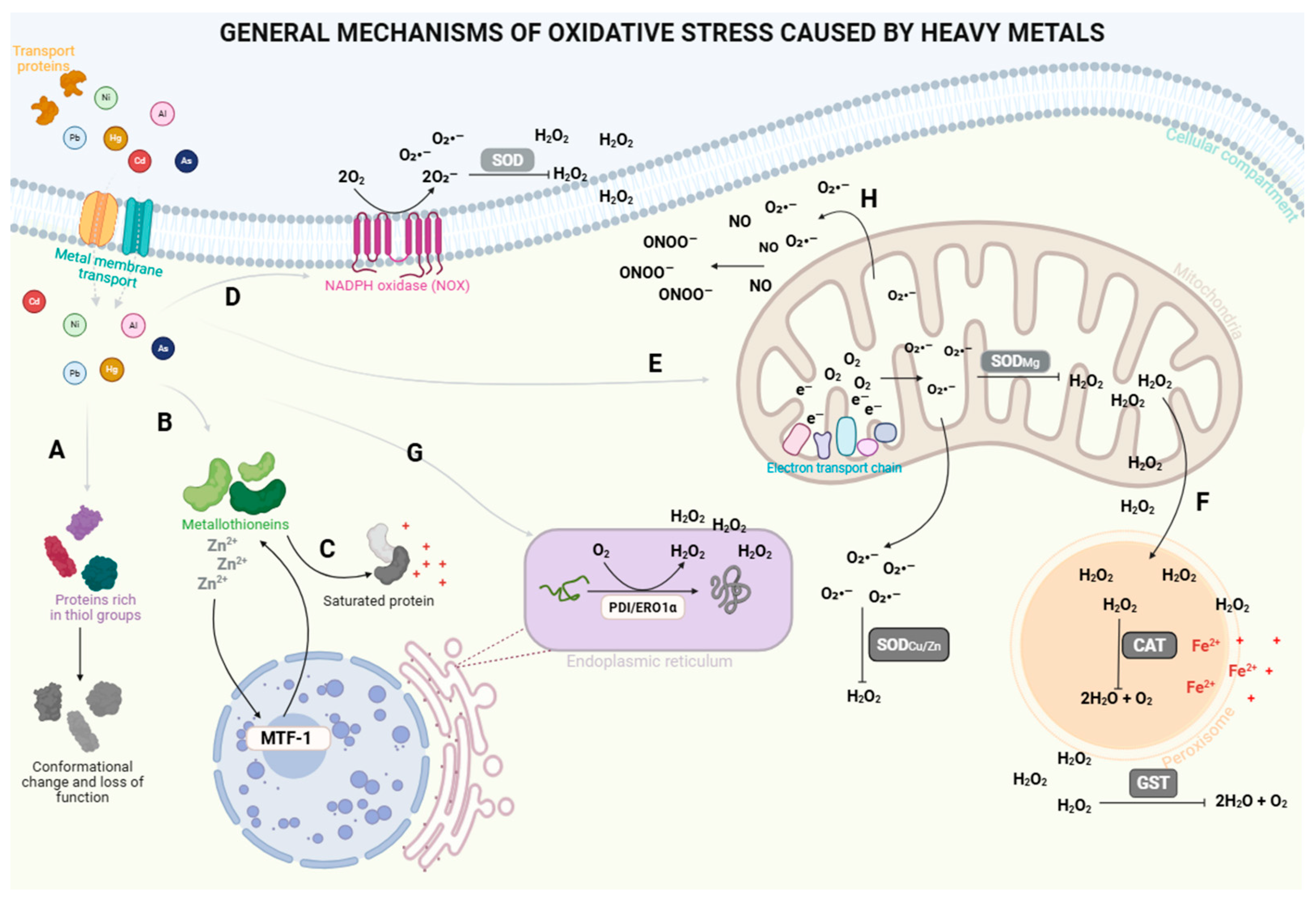
2. General Mechanisms of Oxidative Stress Induced by Heavy Metals
3. Oxidative Metabolites Generated by a Pro-Oxidant Environment Mediated by Heavy Metals
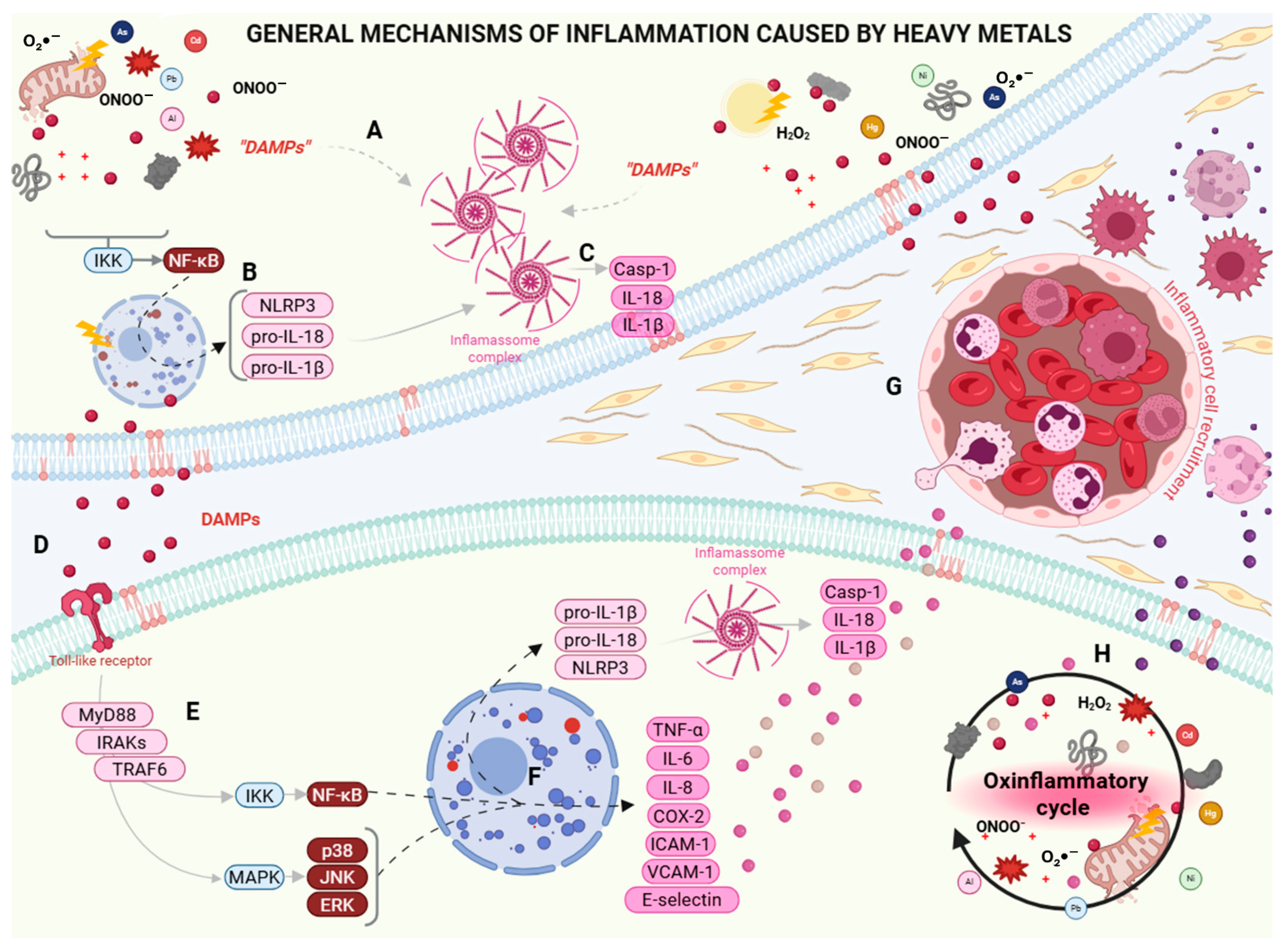
4. Inflammatory Mechanisms Mediated by Metabolites Generated by Heavy Metal-Induced Oxidative Stress
5. Altered Metabolites and Metabolic Signatures Following Heavy Metal Contamination
6. Consequences of Heavy Metal-Induced Oxinflammation in Biological Systems
6.1. Aluminum
6.2. Arsenic
6.3. Cadmium
6.4. Lead
6.5. Mercury
6.6. Nickel
7. Conclusions
Author Contributions
Funding
Institutional Review Board Statement
Informed Consent Statement
Data Availability Statement
Acknowledgments
Conflicts of Interest
Abbreviations
| 4-HNE | 4-hydroxynonenal |
| 8-Oxo-dG | 8-oxo-2′-deoxyguanosine |
| ASC | Apoptosis-associated granule-like protein containing a CARD domain |
| Casp-1 | Caspase-1 |
| CAT | Catalase |
| COX-2 | Cyclooxygenase-2 |
| DAMPs | Damage-associated molecular patterns |
| DMT1 | Divalent metal transporter 1 |
| eNOS | Endothelial NOS |
| ER | Endoplasmic reticulum |
| ERK | Extracellular signal-regulated kinase |
| ERO1 | Endoplasmic reticulum oxidoreductin 1 |
| ETC | Electron transport chain |
| FAD | Flavin adenine dinucleotide |
| GPx | Glutathione peroxidase |
| GR | Glutathione reductase |
| GSH | Reduced glutathione |
| GSSG | GSH/oxidized glutathione |
| GST | Glutathione S-transferase |
| H2O2 | Hydrogen peroxide |
| ICAM-1 | Intercellular adhesion molecule 1 |
| IL-6 | Interleukin-6 |
| IL-8 | Interleukin-8 |
| IL-18 | Interleukin-18 |
| IL-1β | Interleukin-1 beta |
| IKK | IκB kinase complex |
| iNOS | Inducible nitric oxide synthase |
| IP3R | Inositol triphosphate receptor |
| IRAK | IL-1 receptor-associated kinases |
| IsoLGs | Isolevuglandins |
| IκBα | Inhibitor of NF-κB |
| JNK | c-Jun N-terminal kinase |
| Keap1 | Kelch-like ECH-associated protein 1 |
| MAPKs | Mitogen-Activated Protein Kinases |
| MDA | Malondialdehyde |
| MREs | Metal-responsive elements |
| MTF-1 | Metal-responsive transcription factor-1 |
| MTs | Metallothioneins |
| MyD88 | Myeloid Differentiation Primary Response 88 |
| NF-κB | Nuclear factor-κB |
| NLRP3 | NOD-like receptor family pyrin domain-containing 3 |
| NO | Nitric oxide |
| NOXs | NADPH oxidases |
| Nrf2 | Nuclear erythroid factor 2-related factor 2 |
| O2•− | Superoxide radical |
| PDI | Protein disulfide isomerase |
| PKC | Protein kinase C |
| PPARα | Peroxisome proliferator-activated receptor alpha |
| PRRs | Pattern recognition receptors |
| PUFAs | Polyunsaturated fatty acids |
| QH2/Q | Ubiquinol/ubiquinone ratio |
| RET | Reverse electron transport |
| RIRR | ROS-induced ROS release |
| RNS | Reactive nitrogen species |
| ROS | Reactive oxygen species |
| SIRT1 | Sirtuin 1 |
| SOD | Superoxide dismutase |
| TLRs | Toll-like receptors |
| TNF-α | Tumor necrosis factor alpha |
| TRPV | Transient receptor potential channels, vanilloid subtype |
| UPR | Unfolded protein response |
| UPR | Flavin adenine dinucleotide |
| VCAM-1 | Vascular cell adhesion molecule 1 |
| ΔΨm | Reverse electron transport |
| ΔΨm | Mitochondrial membrane potential |
| δ-ALAD | δ-aminolevulinate dehydratase |
| δ-ALAS | δ-aminolevulinate synthase |
References
- Witkowska, D.; Słowik, J.; Chilicka, K. Review Heavy Metals and Human Health: Possible Exposure Pathways and the Competition for Protein Binding Sites. Molecules 2021, 26, 6060. [Google Scholar] [CrossRef]
- Duffus, J.H. “heavy Metals”—A Meaningless Term? (IUPAC Technical Report). Pure Appl. Chem. 2002, 74, 793–807. [Google Scholar] [CrossRef]
- Balali-Mood, M.; Naseri, K.; Tahergorabi, Z.; Khazdair, M.R.; Sadeghi, M. Toxic Mechanisms of Five Heavy Metals: Mercury, Lead, Chromium, Cadmium, and Arsenic. Front. Pharmacol. 2021, 12, 643972. [Google Scholar] [CrossRef]
- Haidar, Z.; Fatema, K.; Shoily, S.S.; Sajib, A.A. Disease-Associated Metabolic Pathways Affected by Heavy Metals and Metalloid. Toxicol. Rep. 2023, 10, 554–570. [Google Scholar] [CrossRef] [PubMed]
- Zhou, W.; Li, M.; Achal, V. A Comprehensive Review on Environmental and Human Health Impacts of Chemical Pesticide Usage. Emerg. Contam. 2025, 11, 100410. [Google Scholar] [CrossRef]
- Jaishankar, M.; Tseten, T.; Anbalagan, N.; Mathew, B.B.; Beeregowda, K.N. Toxicity, Mechanism and Health Effects of Some Heavy Metals. Interdiscip. Toxicol. 2014, 7, 60–72. [Google Scholar] [CrossRef]
- Briffa, J.; Sinagra, E.; Blundell, R. Heavy Metal Pollution in the Environment and Their Toxicological Effects on Humans. Heliyon 2020, 6, e04691. [Google Scholar] [CrossRef]
- Tchounwou, P.B.; Yedjou, C.G.; Patlolla, A.K.; Sutton, D.J. Molecular, Clinical and Environmental Toxicicology Volume 3: Environmental Toxicology. Mol. Clin. Environ. Toxicol. 2012, 101, 133–164. [Google Scholar] [CrossRef]
- Cheng, Y.; Zhao, Y.; Chen, C.; Zhang, F. Heavy Metals Toxicity: Mechanism, Health Effects, and Therapeutic Interventions. MedComm 2025, 6, e70241. [Google Scholar] [CrossRef] [PubMed]
- Azeh Engwa, G.; Udoka Ferdinand, P.; Nweke Nwalo, F.; Unachukwu, M.N. Mechanism and Health Effects of Heavy Metal Toxicity in Humans. In Poisoning in the Modern World-New Tricks for an Old Dog? IntechOpen: London, UK, 2019. [Google Scholar] [CrossRef]
- Mititelu, M.; Neacșu, S.M.; Busnatu, Ș.S.; Scafa-Udriște, A.; Andronic, O.; Lăcraru, A.E.; Ioniță-Mîndrican, C.B.; Lupuliasa, D.; Negrei, C.; Olteanu, G. Assessing Heavy Metal Contamination in Food: Implications for Human Health and Environmental Safety. Toxics 2025, 13, 333. [Google Scholar] [CrossRef] [PubMed]
- Khalid, M.; Hassani, S.; Abdollahi, M. Metal-Induced Oxidative Stress: An Evidence-Based Update of Advantages and Disadvantages. Curr. Opin. Toxicol. 2020, 20–21, 55–68. [Google Scholar] [CrossRef]
- Ma, Y.; Su, Q.; Yue, C.; Zou, H.; Zhu, J.; Zhao, H.; Song, R.; Liu, Z. The Effect of Oxidative Stress-Induced Autophagy by Cadmium Exposure in Kidney, Liver, and Bone Damage, and Neurotoxicity. Int. J. Mol. Sci. 2022, 23, 13491. [Google Scholar] [CrossRef]
- Vona, R.; Pallotta, L.; Cappelletti, M.; Severi, C.; Matarrese, P. The Impact of Oxidative Stress in Human Pathology: Focus on Gastrointestinal Disorders. Antioxidants 2021, 10, 201. [Google Scholar] [CrossRef] [PubMed]
- Wang, Y.; Wang, Y.; Li, R.; Ni, B.; Chen, R.; Huang, Y.; Cheng, R.; Li, P.; Li, H.; Peng, Y.; et al. Low-Grade Systemic Inflammation Links Heavy Metal Exposures to Mortality: A Multi-Metal Inflammatory Index Approach. Sci. Total Environ. 2024, 947, 174537. [Google Scholar] [CrossRef] [PubMed]
- Zhao, S.; Yin, G.; Zhao, M.; Wu, J.; Liu, X.; Wei, L.; Xu, Q.; Xu, J. Inflammation as a Pathway for Heavy Metal-Induced Liver Damage—Insights from a Repeated-Measures Study in Residents Exposed to Metals and Bioinformatics Analysis. Int. J. Hyg. Environ. Health 2024, 261, 114417. [Google Scholar] [CrossRef] [PubMed]
- Kolawole, T.A.; Palacios, J.; Husaini, D.C.; Nwokocha, C.R. Inflammation and Oxidative Stress Biomarkers in Heavy Metal Toxicity: Bridging the Gap to Personalized Clinical Interventions. J. Appl. Toxicol. 2025, 45, 2546–2579. [Google Scholar] [CrossRef]
- Machado-Neves, M. Effect of Heavy Metals on Epididymal Morphology and Function: An Integrative Review. Chemosphere 2022, 291, 133020. [Google Scholar] [CrossRef]
- Duan, H.; Liang, F.; Deng, L.; Liu, S.; Ren, Z.; Li, J. Environmental Pollutants as Emerging Risk Factors in Osteoarthritis: Mechanistic and Epidemiological Evidence. Ecotoxicol. Environ. Saf. 2026, 309, 119453. [Google Scholar] [CrossRef]
- Parchwani, D.N.; Sharma, P.; Singh, R. Oxidative-Inflammo Mechanism of Heavy Metal Toxicity. Indian J. Clin. Biochem. 2025. [Google Scholar] [CrossRef]
- Jomova, K.; Alomar, S.Y.; Nepovimova, E.; Kuca, K.; Valko, M. Heavy metals: Toxicity and human health effects. Arch. Toxicol. 2025, 99, 153–209. [Google Scholar] [CrossRef]
- Jomova, K.; Alomar, S.Y.; Valko, R.; Nepovimova, E.; Kuca, K.; Valko, M. The Role of Redox-Active Iron, Copper, Manganese, and Redox-Inactive Zinc in Toxicity, Oxidative Stress, and Human Diseases. EXCLI J. 2025, 24, 880–954. [Google Scholar] [CrossRef]
- Bressler, J.P.; Olivi, L.; Cheong, J.H.; Kim, Y.; Bannon, D. Divalent Metal Transporter 1 in Lead and Cadmium Transport. Ann. N. Y. Acad. Sci. 2004, 1012, 142–152. [Google Scholar] [CrossRef]
- Aydemir, T.B.; Cousins, R.J. The Multiple Faces of the Metal Transporter ZIP14 (SLC39A14). J. Nutr. 2018, 148, 174–184. [Google Scholar] [CrossRef]
- Fujishiro, H.; Himeno, S. New Insights into the Roles of ZIP8, a Cadmium and Manganese Transporter, and Its Relation to Human Diseases. Biol. Pharm. Bull. 2019, 42, 1076–1082. [Google Scholar] [CrossRef]
- Peng, J.-B.; Suzuki, Y.; Gyimesi, G.; Hediger, M.A. TRPV5 and TRPV6 Calcium-Selective Channels; Kozak, J.A., Putney, J.W.J., Eds.; CRC Press: Boca Raton, FL, USA, 2017; pp. 241–274. [Google Scholar]
- da Silva, I.V.; Garra, S.; Calamita, G.; Soveral, G. The Multifaceted Role of Aquaporin-9 in Health and Its Potential as a Clinical Biomarker. Biomolecules 2022, 12, 897. [Google Scholar] [CrossRef] [PubMed]
- Scanga, R.; Scalise, M.; Marino, N.; Parisi, F.; Barca, D.; Galluccio, M.; Brunocilla, C.; Console, L.; Indiveri, C. LAT1 (SLC7A5) Catalyzes Copper(Histidinate) Transport Switching from Antiport to Uniport Mechanism. iScience 2023, 26, 107738. [Google Scholar] [CrossRef]
- Lopes, A.C.B.A.; Peixe, T.S.; Mesas, A.E.; Paoliello, M.M.B. Lead Exposure and Oxidative Stress: A Systematic Review. In Reviews of Environmental Contamination and Toxicology; Springer Nature: Berlin/Heidelberg, Germany, 2016; Volume 236, pp. 193–238. [Google Scholar]
- Patra, R.C.; Rautray, A.K.; Swarup, D. Oxidative Stress in Lead and Cadmium Toxicity and Its Amelioration. Vet. Med. Int. 2011, 2011, 457327. [Google Scholar] [CrossRef]
- Ajsuvakova, O.P.; Tinkov, A.A.; Aschner, M.; Rocha, J.B.T.; Michalke, B.; Skalnaya, M.G.; Skalny, A.V.; Butnariu, M.; Dadar, M.; Sarac, I.; et al. Sulfhydryl Groups as Targets of Mercury Toxicity. Coord. Chem. Rev. 2020, 417, 213343. [Google Scholar] [CrossRef] [PubMed]
- Spiller, H.A. Rethinking Mercury: The Role of Selenium in the Pathophysiology of Mercury Toxicity. Clin. Toxicol. 2018, 56, 313–326. [Google Scholar] [CrossRef] [PubMed]
- Das, K.K.; Das, S.N.; Dhundasi, S.A. Nickel, Its Adverse Health Effects & Oxidative Stress. Indian J. Med. Res. 2008, 128, 412–425. [Google Scholar]
- Jozefczak, M.; Remans, T.; Vangronsveld, J.; Cuypers, A. Glutathione Is a Key Player in Metal-Induced Oxidative Stress Defenses. Int. J. Mol. Sci. 2012, 13, 3145–3175. [Google Scholar] [CrossRef] [PubMed]
- Rubino, F.M. Toxicity of Glutathione-Binding Metals: A Review of Targets and Mechanisms. Toxics 2015, 3, 20–62. [Google Scholar] [CrossRef]
- Perry, J.J.P.; Shin, D.S.; Getzoff, E.D.; Tainer, J.A. The Structural Biochemistry of the Superoxide Dismutases. Biochim. Biophys. Acta-Proteins Proteom. 2010, 1804, 245–262. [Google Scholar] [CrossRef] [PubMed]
- Casalino, E.; Calzaretti, G.; Sblano, C.; Landriscina, C. Molecular Inhibitory Mechanisms of Antioxidant Enzymes in Rat Liver and Kidney by Cadmium. Toxicology 2002, 179, 37–50. [Google Scholar] [CrossRef]
- Kumar, A.; Khushboo; Pandey, R.; Sharma, B. Modulation of Superoxide Dismutase Activity by Mercury, Lead, and Arsenic. Biol. Trace Elem. Res. 2020, 196, 654–661. [Google Scholar] [CrossRef]
- Lidsky, T.I.; Schneider, J.S. Lead Neurotoxicity in Children: Basic Mechanisms and Clinical Correlates. Brain 2003, 126, 5–19. [Google Scholar] [CrossRef]
- Genchi, G.; Carocci, A.; Lauria, G.; Sinicropi, M.S.; Catalano, A. Nickel: Human Health and Environmental Toxicology. Int. J. Environ. Res. Public Health 2020, 17, 679. [Google Scholar] [CrossRef]
- de Sautu, M.; Saffioti, N.A.; Ferreira-Gomes, M.S.; Rossi, R.C.; Rossi, J.P.F.C.; Mangialavori, I.C. Aluminum Inhibits the Plasma Membrane and Sarcoplasmic Reticulum Ca 2+ -ATPases by Different Mechanisms. Biochim. Biophys. Acta-Biomembr. 2018, 1860, 1580–1588. [Google Scholar] [CrossRef]
- Kessler, A.; Hedberg, J.; Blomberg, E.; Odnevall, I. Reactive Oxygen Species Formed by Metal and Metal Oxide Nanoparticles in Physiological Media—A Review of Reactions of Importance to Nanotoxicity and Proposal for Categorization. Nanomaterials 2022, 12, 1922. [Google Scholar] [CrossRef] [PubMed]
- Günther, V.; Lindert, U.; Schaffner, W. The Taste of Heavy Metals: Gene Regulation by MTF-1. Biochim. Biophys. Acta-Mol. Cell Res. 2012, 1823, 1416–1425. [Google Scholar] [CrossRef]
- Wooten, D.C.; Starr, C.R.; Lyon, W.J. A Plasmid Containing the Human Metallothionein II Gene Can Function as an Antibody-Assisted Electrophoretic Biosensor for Heavy Metals. J. Immunotoxicol. 2016, 13, 55–63. [Google Scholar] [CrossRef] [PubMed]
- Yang, R.; Roshani, D.; Gao, B.; Li, P.; Shang, N. Metallothionein: A Comprehensive Review of Its Classification, Structure, Biological Functions, and Applications. Antioxidants 2024, 13, 825. [Google Scholar] [CrossRef]
- Ruttkay-Nedecky, B.; Nejdl, L.; Gumulec, J.; Zitka, O.; Masarik, M.; Eckschlager, T.; Stiborova, M.; Adam, V.; Kizek, R. The Role of Metallothionein in Oxidative Stress. Int. J. Mol. Sci. 2013, 14, 6044–6066. [Google Scholar] [CrossRef]
- Nordberg; M. Nordberg, G.F. Metallothionein and Cadmium Toxicology—Historical Review and Commentary. Biomolecules 2022, 12, 360. [Google Scholar] [CrossRef]
- Miyazaki, I.; Asanuma, M. Multifunctional Metallothioneins as a Target for Neuroprotection in Parkinson’s Disease. Antioxidants 2023, 12, 894. [Google Scholar] [CrossRef] [PubMed]
- Greatorex, S.; Kaur, S.; Xirouchaki, C.E.; Goh, P.K.; Wiede, F.; Genders, A.J.; Tran, M.; Jia, Y.Y.; Raajendiran, A.; Brown, W.A.; et al. Mitochondria- and NOX4-Dependent Antioxidant Defense Mitigates Progression to Nonalcoholic Steatohepatitis in Obesity. J. Clin. Investig. 2024, 134, 13–15. [Google Scholar] [CrossRef] [PubMed]
- Imlay, J.A. The Mismetallation of Enzymes during Oxidative Stress. J. Biol. Chem. 2014, 289, 28121–28128. [Google Scholar] [CrossRef]
- Yang, F.; Smith, M.J. Metal Profiling in Coronary Ischemia-Reperfusion Injury: Implications for KEAP1/NRF2 Regulated Redox Signaling. Free Radic. Biol. Med. 2024, 210, 158–171. [Google Scholar] [CrossRef]
- Hare, J.M.; Beigi, F.; Tziomalos, K. Chapter 21 Nitric Oxide and Cardiobiology-Methods for Intact Hearts and Isolated Myocytes; Elsevier Masson SAS: Amsterdam, The Netherlands, 2008; Volume 441. [Google Scholar]
- Vermot, A.; Petit-Härtlein, I.; Smith, S.M.E.; Fieschi, F. Nadph Oxidases (Nox): An Overview from Discovery, Molecular Mechanisms to Physiology and Pathology. Antioxidants 2021, 10, 890. [Google Scholar] [CrossRef]
- Hu, Y.; Li, J.; Lou, B.; Wu, R.; Wang, G.; Lu, C.; Wang, H.; Pi, J.; Xu, Y. The Role of Reactive Oxygen Species in Arsenic Toxicity. Biomolecules 2020, 10, 240. [Google Scholar] [CrossRef]
- Souza-Arroyo, V.; Fabián, J.J.; Bucio-Ortiz, L.; Miranda-Labra, R.U.; Gomez-Quiroz, L.E.; Gutiérrez-Ruiz, M.C. The Mechanism of the Cadmium-Induced Toxicity and Cellular Response in the Liver. Toxicology 2022, 480, 153339. [Google Scholar] [CrossRef] [PubMed]
- Kamer, K.J.; Sancak, Y.; Fomina, Y.; Meisel, J.D.; Chaudhuri, D.; Grabarek, Z.; Mootha, V.K. MICU1 Imparts the Mitochondrial Uniporter with the Ability to Discriminate between Ca2+ and Mn2+. Proc. Natl. Acad. Sci. USA 2018, 115, E7960–E7969. [Google Scholar] [CrossRef]
- Pearson, S.A.; Cowan, J.A. Glutathione-Coordinated Metal Complexes as Substrates for Cellular Transporters. Metallomics 2021, 13, mfab015. [Google Scholar] [CrossRef]
- Mailloux, R.J.; Hamel, R.; Appanna, V.D. Aluminum Toxicity Elicits a Dysfunctional TCA Cycle and Succinate Accumulation in Hepatocytes. J. Biochem. Mol. Toxicol. 2006, 20, 198–208. [Google Scholar] [CrossRef]
- Jin, X.; Xu, Z.; Zhao, X.; Chen, M.; Xu, S. The Antagonistic Effect of Selenium on Lead-Induced Apoptosis via Mitochondrial Dynamics Pathway in the Chicken Kidney. Chemosphere 2017, 180, 259–266. [Google Scholar] [CrossRef]
- Yin, H.; Li, X.; Wang, C.; Li, X.; Liu, J. Nickel Induces Mitochondrial Damage in Renal Cells in Vitro and in Vivo through Its Effects on Mitochondrial Biogenesis, Fusion, and Fission. Chem. Biol. Interact. 2024, 394, 110975. [Google Scholar] [CrossRef]
- Chavda, V.; Lu, B. Reverse Electron Transport at Mitochondrial Complex I in Ischemic Stroke, Aging, and Age-Related Diseases. Antioxidants 2023, 12, 895. [Google Scholar] [CrossRef]
- Husen, P.; Solov’yov, I.A. Modeling the Energy Landscape of Side Reactions in the Cytochrome Bc1 Complex. Front. Chem. 2021, 9, 643796. [Google Scholar] [CrossRef]
- Ding, L.; Sun, W.; Balaz, M.; He, A.; Klug, M.; Wieland, S.; Caiazzo, R.; Raverdy, V.; Pattou, F.; Lefebvre, P.; et al. Peroxisomal β-Oxidation Acts as a Sensor for Intracellular Fatty Acids and Regulates Lipolysis. Nat. Metab. 2021, 3, 1648–1661. [Google Scholar] [CrossRef]
- Hansberg, W. Monofunctional Heme-Catalases. Antioxidants 2022, 11, 2173. [Google Scholar] [CrossRef] [PubMed]
- Zandalinas, S.I.; Mittler, R. ROS-Induced ROS Release in Plant and Animal Cells. Free Radic. Biol. Med. 2018, 122, 21–27. [Google Scholar] [CrossRef]
- Gilady, S.Y.; Bui, M.; Lynes, E.M.; Benson, M.D.; Watts, R.; Vance, J.E.; Simmen, T. Ero1α Requires Oxidizing and Normoxic Conditions to Localize to the Mitochondria-Associated Membrane (MAM). Cell Stress Chaperones 2010, 15, 619–629. [Google Scholar] [CrossRef]
- Jha, V.; Kumari, T.; Manickam, V.; Assar, Z.; Olson, K.L.; Min, J.K.; Cho, J. ERO1-PDI Redox Signaling in Health and Disease. Antioxid. Redox Signal. 2021, 35, 1093–1115. [Google Scholar] [CrossRef] [PubMed]
- Zheng, Z.; Kawakami, K.; Zhang, D.; Negishi, L.; Abomosallam, M.; Asakura, T.; Nagata, K.; Suzuki, M. Identification and Functional Analysis of Cadmium-Binding Protein in the Visceral Mass of Crassostrea Gigas. Sci. Rep. 2021, 11, 11306. [Google Scholar] [CrossRef]
- Mishra, S. Cadmium Toxicity on Endoplasmic Reticulum Functioning. Int. J. Biochem. Mol. Biol. 2024, 15, 107–117. [Google Scholar] [CrossRef] [PubMed]
- Joseph, S.K.; Booth, D.M.; Young, M.P.; Hajnóczky, G. Redox Regulation of ER and Mitochondrial Ca2+ Signaling in Cell Survival and Death. Cell Calcium 2019, 79, 89–97. [Google Scholar] [CrossRef]
- Ahumada-Castro, U.; Puebla-Huerta, A.; Cuevas-Espinoza, V.; Lovy, A.; Cardenas, J.C. Keeping Zombies Alive: The ER-Mitochondria Ca2+ Transfer in Cellular Senescence. Biochim. Biophys. Acta-Mol. Cell Res. 2021, 1868, 119099. [Google Scholar] [CrossRef]
- Truong, T.T.; Singh, A.A.; Bang, N.V.; Vu, N.M.H.; Na, S.; Choi, J.; Oh, J.; Mondal, S. Mitochondria-Associated Membrane Dysfunction in Neurodegeneration and Its Effects on Lipid Metabolism, Calcium Signaling, and Cell Fate. Membranes 2025, 15, 263. [Google Scholar] [CrossRef] [PubMed]
- Bartesaghi, S.; Radi, R. Fundamentals on the Biochemistry of Peroxynitrite and Protein Tyrosine Nitration. Redox Biol. 2018, 14, 618–625. [Google Scholar] [CrossRef]
- Castro, L.; Tórtora, V.; Mansilla, S.; Radi, R. Aconitases: Non-redox Iron-Sulfur Proteins Sensitive to Reactive Species. Acc. Chem. Res. 2019, 52, 2609–2619. [Google Scholar] [CrossRef]
- Huang, Q.; Luo, L.; Alamdar, A.; Zhang, J.; Liu, L.; Tian, M.; Eqani, S.A.M.A.S.; Shen, H. Integrated Proteomics and Metabolomics Analysis of Rat Testis: Mechanism of Arsenic-Induced Male Reproductive Toxicity. Sci. Rep. 2016, 6, 32518. [Google Scholar] [CrossRef] [PubMed]
- Ma, G.; Yan, X.; Wang, C.; Ran, X.; Liang, Z.; Chen, X.; Hu, T.; Tang, X.; Zhuang, H.; Huang, Y.; et al. Mechanism of Arsenic-Induced Liver Injury in Rats Revealed by Metabolomics and Ionomics Based Approach. Ecotoxicol. Environ. Saf. 2025, 293, 118038. [Google Scholar] [CrossRef] [PubMed]
- Gu, P.; Xu, Y.; Li, X. Chronic Low-Dose Cadmium Exposure Disrupts Gut Microbiota and Lipid Metabolism to Induce Liver Injury. Food Chem. Toxicol. 2025, 203, 115603. [Google Scholar] [CrossRef]
- Nuran Ercal, B.S.P.; Hande Gurer-Orhan, B.S.P.; Nukhet Aykin-Burns, B.S.P. Toxic Metals and Oxidative Stress Part I: Mechanisms Involved in Me-Tal Induced Oxidative Damage. Curr. Top. Med. Chem. 2005, 1, 529–539. [Google Scholar] [CrossRef]
- Aranda-Rivera, A.K.; Cruz-Gregorio, A.; Arancibia-Hernández, Y.L.; Hernández-Cruz, E.Y.; Pedraza-Chaverri, J. RONS and Oxidative Stress: An Overview of Basic Concepts. Oxygen 2022, 2, 437–478. [Google Scholar] [CrossRef]
- Su, L.J.; Zhang, J.H.; Gomez, H.; Murugan, R.; Hong, X.; Xu, D.; Jiang, F.; Peng, Z.Y. Reactive Oxygen Species-Induced Lipid Peroxidation in Apoptosis, Autophagy, and Ferroptosis. Oxid. Med. Cell. Longev. 2019, 2019, 5080843. [Google Scholar] [CrossRef]
- Balakrishnan, M.; Kenworthy, A.K. Lipid Peroxidation Drives Liquid-Liquid Phase Separation and Disrupts Raft Protein Partitioning in Biological Membranes. J. Am. Chem. Soc. 2024, 146, 1374–1387. [Google Scholar] [CrossRef]
- Paradies, G.; Paradies, V.; Ruggiero, F.M.; Petrosillo, G. Oxidative Stress, Cardiolipin and Mitochondrial Dysfunction in Nonalcoholic Fatty Liver Disease. World J. Gastroenterol. 2014, 20, 14205–14218. [Google Scholar] [CrossRef] [PubMed]
- Terman, A.; Kurz, T. Lysosomal Iron, Iron Chelation, and Cell Death. Antioxid. Redox Signal. 2013, 18, 888–898. [Google Scholar] [CrossRef]
- Cai, Z.; Yan, L.-J. Protein Oxidative Modifications: Beneficial Roles in Disease and Health. J. Biochem. Pharmacol. Res. 2013, 1, 15–26. [Google Scholar]
- Reichmann, D.; Voth, W.; Jakob, U. Maintaining a Healthy Proteome during Oxidative Stress. Mol. Cell 2018, 69, 203–213. [Google Scholar] [CrossRef]
- Demasi, M.; Augusto, O.; Bechara, E.J.H.; Bicev, R.N.; Cerqueira, F.M.; Da Cunha, F.M.; Denicola, A.; Gomes, F.; Miyamoto, S.; Netto, L.E.S.; et al. Oxidative Modification of Proteins: From Damage to Catalysis, Signaling, and Beyond. Antioxid. Redox Signal. 2021, 35, 1016–1080. [Google Scholar] [CrossRef]
- Jena, N.R. DNA Damage by Reactive Species: Mechanisms, Mutation and Repair. J. Biosci. 2012, 37, 503–517. [Google Scholar] [CrossRef]
- Soto-Palma, C.; Niedernhofer, L.J.; Faulk, C.D.; Dong, X. Epigenetics and DNA Damage. J. Clin. Investig. 2022, 132, 139–156. [Google Scholar] [CrossRef]
- Alexeyev, M.; Shokolenko, I.; Wilson, G.; LeDoux, S. The Maintenance of Mitochondrial DNA Integrity-Critical Analysis and Update. Cold Spring Harb. Perspect. Biol. 2013, 5, a012641. [Google Scholar] [CrossRef] [PubMed]
- Anwar, S.; Alharbi, H.O.A.; Babiker, A.Y.; Rahmani, A.H. Oxidative Stress in Health and Disease: Mechanisms and Therapeutic Perspectives. Int. J. Mol. Sci. 2026, 27, 2681. [Google Scholar] [CrossRef] [PubMed]
- Barrera, G.; Pizzimenti, S.; Daga, M.; Dianzani, C.; Arcaro, A.; Cetrangolo, G.P.; Giordano, G.; Cucci, M.A.; Graf, M.; Gentile, F. Lipid Peroxidation-Derived Aldehydes, 4-Hydroxynonenal and Malondialdehyde in Aging-Related Disorders. Antioxidants 2018, 7, 102. [Google Scholar] [CrossRef] [PubMed]
- Pérez de la Lastra, J.M.; Juan, C.A.; Plou, F.J.; Pérez-Lebeña, E. The Nitration of Proteins, Lipids and DNA by Peroxynitrite Derivatives-Chemistry Involved and Biological Relevance. Stresses 2022, 2, 53–64. [Google Scholar] [CrossRef]
- Davies, S.S.; May-Zhang, L.S. Isolevuglandins and Cardiovascular Disease. Prostaglandins Other Lipid Mediat. 2018, 139, 29–35. [Google Scholar] [CrossRef]
- Aschner, M.; Nguyen, T.T.; Sinitskii, A.I.; Santamaría, A.; Bornhorst, J.; Ajsuvakova, O.P.; da Rocha, J.B.T.; Skalny, A.V.; Tinkov, A.A. Isolevuglandins (IsoLGs) as Toxic Lipid Peroxidation Byproducts and Their Pathogenetic Role in Human Diseases. Free Radic. Biol. Med. 2021, 162, 266–273. [Google Scholar] [CrossRef]
- Davies, S.D.; May-Zhang, L.S.; Boutaud, O.; Amarnath, V.; Kirabo, A.; Harrison, D.G. Isolevuglandins as Mediators of Disease and the Development of Dicarbonyl Scavengers as Pharmaceutical Interventions. Physiol. Behav. 2020, 205, 107418. [Google Scholar] [CrossRef]
- Tripathi, S.; Kharkwal, G.; Mishra, R.; Singh, G. Nuclear Factor Erythroid 2-Related Factor 2 (Nrf2) Signaling in Heavy Metals-Induced Oxidative Stress. Heliyon 2024, 10, e37545. [Google Scholar] [CrossRef]
- Baird, L.; Yamamoto, M. The Molecular Mechanisms Regulating the KEAP1-NRF2 Pathway. Am. Soc. Microbiol. 2020, 40, e00099-20. [Google Scholar] [CrossRef]
- Ma, Q. Role of Nrf2 in Oxidative Stress and Toxicity. Annu. Rev. Pharmacol. Toxicol. 2013, 53, 401–426. [Google Scholar] [CrossRef]
- Buha, A.; Baralić, K.; Djukic-Cosic, D.; Bulat, Z.; Tinkov, A.; Panieri, E.; Saso, L. The Role of Toxic Metals and Metalloids in Nrf2 Signaling. Antioxidants 2021, 10, 630. [Google Scholar] [CrossRef]
- Ma, M.; Jiang, W.; Zhou, R. DAMPs and DAMP-Sensing Receptors in Inflammation and Diseases. Immunity 2024, 57, 752–771. [Google Scholar] [CrossRef] [PubMed]
- Kelley, N.; Jeltema, D.; Duan, Y.; He, Y. The NLRP3 Inflammasome: An Overview of Mechanisms of Activation and Regulation Nathan. Int. J. Mol. Sci. 2019, 20, 3328. [Google Scholar] [CrossRef] [PubMed]
- Rosa, C.P.; Belo, T.C.A.; de Melo Santos, N.C.; Silva, E.N.; Gasparotto, J.; Corsetti, P.P.; de Almeida, L.A. Reactive Oxygen Species Trigger Inflammasome Activation after Intracellular Microbial Interaction. Life Sci. 2023, 331, 122076. [Google Scholar] [CrossRef]
- Zhong, Z.; Liang, S.; Sanchez-Lopez, E.; He, F.; Shalapour, S.; Lin, X.-J.; Wong, J.; Ding, S.; Seki, E.; Schnabl, B.; et al. New Mitochondrial DNA Synthesis Enables NLRP3 Inflammasome Activation. Nature 2018, 560, 198–203. [Google Scholar] [CrossRef] [PubMed]
- Moloudizargari, M.; Moradkhani, F.; Asghari, N.; Fallah, M.; Asghari, M.H.; Moghadamnia, A.A.; Abdollahi, M. NLRP Inflammasome as a Key Role Player in the Pathogenesis of Environmental Toxicants. Life Sci. 2019, 231, 116585. [Google Scholar] [CrossRef]
- Wang, L.; Zhang, J.; Zhao, Y.; Li, J.; Lu, X.; Song, J.; Zhang, L.; Niu, Q. Nuclear Factor Kappa B (NF-ΚB) Participates in the Aluminum-Induced down-Regulation of MiR29a/B1. J. Trace Elem. Med. Biol. 2023, 80, 127309. [Google Scholar] [CrossRef]
- Ruiz-Ramos, R.; Lopez-Carrillo, L.; Rios-Perez, A.D.; De Vizcaya-Ruíz, A.; Cebrian, M.E. Sodium Arsenite Induces ROS Generation, DNA Oxidative Damage, HO-1 and c-Myc Proteins, NF-ΚB Activation and Cell Proliferation in Human Breast Cancer MCF-7 Cells. Mutat. Res.-Genet. Toxicol. Environ. Mutagen. 2009, 674, 109–115. [Google Scholar] [CrossRef]
- Mahmoud, A.M.; Wilkinson, F.L.; Sandhu, M.A.; Lightfoot, A.P. The Interplay of Oxidative Stress and Inflammation: Mechanistic Insights and Therapeutic Potential of Antioxidants. Oxid. Med. Cell. Longev. 2021, 2021, 9851914. [Google Scholar] [CrossRef]
- Gan, X.; Zhang, X.; Qiannan, E.; Zhang, Q.; Ye, Y.; Cai, Y.; Han, A.; Tian, M.; Wang, C.; Su, Z.; et al. Nano-Selenium Attenuates Nickel-Induced Testosterone Synthesis Disturbance through Inhibition of MAPK Pathways in Sprague-Dawley Rats. Environ. Toxicol. 2019, 34, 968–978. [Google Scholar] [CrossRef] [PubMed]
- Guo, Q.; Jin, Y.; Chen, X.; Ye, X.; Shen, X.; Lin, M.; Zeng, C.; Zhou, T.; Zhang, J. NF-ΚB in Biology and Targeted Therapy: New Insights and Translational Implications. Signal Transduct. Target. Ther. 2024, 9, 53. [Google Scholar] [CrossRef]
- Liu, T.; Zhang, L.; Joo, D.; Sun, S.C. NF-ΚB Signaling in Inflammation. Signal Transduct. Target. Ther. 2017, 2, 17023. [Google Scholar] [CrossRef]
- Dadkhah, M.; Sharifi, M. The NLRP3 Inflammasome: Mechanisms of Activation, Regulation, and Role in Diseases. Int. Rev. Immunol. 2025, 44, 98–111. [Google Scholar] [CrossRef]
- Chevriaux, A.; Pilot, T.; Derangère, V.; Simonin, H.; Martine, P.; Chalmin, F.; Ghiringhelli, F.; Rébé, C. Cathepsin B Is Required for NLRP3 Inflammasome Activation in Macrophages, Through NLRP3 Interaction. Front. Cell Dev. Biol. 2020, 8, 167. [Google Scholar] [CrossRef] [PubMed]
- Swanson, K.V.; Deng, M.; Ting, J.P.Y. The NLRP3 Inflammasome: Molecular Activation and Regulation to Therapeutics. Nat. Rev. Immunol. 2019, 19, 477–489. [Google Scholar] [CrossRef]
- Tang, D.; Kang, R.; Coyne, C.B.; Zeh, H.J.; Lotze, M.T. PAMPs and DAMPs: Signal 0s That Spur Autophagy and Immunity. Immunol. Rev. 2012, 249, 158–175. [Google Scholar] [CrossRef]
- Lin, H.; Xiong, W.; Fu, L.; Yi, J.; Yang, J. Damage-Associated Molecular Patterns (DAMPs) in Diseases: Implications for Therapy. Mol. Biomed. 2025, 6, 60. [Google Scholar] [CrossRef]
- Ren, W.; Zhao, L.; Sun, Y.; Wang, X.; Shi, X. HMGB1 and Toll-like Receptors: Potential Therapeutic Targets in Autoimmune Diseases. Mol. Med. 2023, 29, 117. [Google Scholar] [CrossRef] [PubMed]
- Chen, R.; Zou, J.; Zhong, X.; Liu, J.; Kang, R.; Tang, D. The DAMP Theory: Concepts, Evidence, and Implications. Authorea 2024, 1–91. [Google Scholar] [CrossRef]
- Midwood, K.S.; Piccinini, A.M. DAMPening Inflammation by Modulating TLR Signalling. Mediat. Inflamm. 2010, 2010, 672395. [Google Scholar] [CrossRef]
- Sharma, A.; Sanjay; Jaiswal, V.; Park, M.; Lee, H.J. Biogenic Silver NPs Alleviate LPS-Induced Neuroinflammation in a Human Fetal Brain-Derived Cell Line: Molecular Switch to the M2 Phenotype, Modulation of TLR4/MyD88 and Nrf2/HO-1 Signaling Pathways, and Molecular Docking Analysis. Biomater. Adv. 2023, 148, 213363. [Google Scholar] [CrossRef]
- Cao, X.; Zheng, S.; Zeng, Y.; Shi, Y.; Du, J.; Huang, C.; Shen, Y.; Liu, P.; Guo, X.; Gao, X. Effects of Chronic Cr and Ni Co-Exposure on Liver Inflammation and Autophagy in Mice by Regulating the TLR4/MTOR Pathway. Sci. Total Environ. 2024, 926, 171921. [Google Scholar] [CrossRef] [PubMed]
- Hu, H.; Hayat, M.F.; Zahara, S.S.; Akbar, A.; Alzahrani, K.J.; Alsharif, K.F.; Alzahrani, F.M.; Al-Emam, A. Pharmacotherapeutic Role of Astringin against Chromium Induced Nephrotoxicity via Modulating TLR4/MyD88, HMGB1/RAGE and NF-ΚB Pathway: A Biochemical and Pharmacokinetic Approach. J. Trace Elem. Med. Biol. 2025, 89, 127666. [Google Scholar] [CrossRef]
- Duan, T.; Du, Y.; Xing, C.; Wang, H.Y.; Wang, R.F. Toll-Like Receptor Signaling and Its Role in Cell-Mediated Immunity. Front. Immunol. 2022, 13, 812774. [Google Scholar] [CrossRef] [PubMed]
- Jia, W. TRAF6 Initiates Inflammatory Signaling via Organizing Membraneless Cytoplasmic Condensates. bioRxiv 2023. [Google Scholar] [CrossRef]
- Cargnello, M.; Roux, P.P. Activation and Function of the MAPKs and Their Substrates, the MAPK-Activated Protein Kinases. Microbiol. Mol. Biol. Rev. 2011, 75, 50–83. [Google Scholar] [CrossRef] [PubMed]
- Hadjadji, C.; Devalloir, Q.; Gaillard, C.; van den Brink, N.W.; Scheifler, R. Evidence Linking Cadmium and/or Lead Exposure to Immunomodulatory Effects in Mammals Based upon an Adverse Outcome Pathways Approach, and Research Perspectives. Chemosphere 2025, 371, 144056. [Google Scholar] [CrossRef]
- Lamb, F.S.; Choi, H.; Miller, M.R.; Stark, R.J. TNFα and Reactive Oxygen Signaling in Vascular Smooth Muscle Cells in Hypertension and Atherosclerosis. Am. J. Hypertens. 2020, 33, 902–913. [Google Scholar] [CrossRef] [PubMed]
- Tanaka, T.; Narazaki, M.; Kishimoto, T. IL-6 in Inflammation, Immunity, and Disease; 2014; p. 6. [Google Scholar]
- Cambier, S.; Gouwy, M.; Proost, P. The Chemokines CXCL8 and CXCL12: Molecular and Functional Properties, Role in Disease and Efforts towards Pharmacological Intervention. Cell. Mol. Immunol. 2023, 20, 217–251. [Google Scholar] [CrossRef]
- Medina-leyte, D.J.; Zepeda-garc, O.; Dom, M. Endothelial Dysfunction, Inflammation and Coronary Artery Disease: Potential Biomarkers and Promising Therapeutical Approaches and New Pharmacological and Non-Pharmacological Promising Th The Endothelium Is Formed by a Single Layer of EC Located about 1. Int. J. Mol. Sci. 2021, 22, 3850. [Google Scholar] [CrossRef]
- Salvemini, D.; Kim, S.F.; Mollace, V. Reciprocal Regulation of the Nitric Oxide and Cyclooxygenase Pathway in Pathophysiology: Relevance and Clinical Implications. Am. J. Physiol.-Regul. Integr. Comp. Physiol. 2013, 304, R473–R487. [Google Scholar] [CrossRef]
- Nuray Üremiş, M.M.Ü. Oxidative/Nitrosative Stress, Apoptosis, and Redox Signaling: Key Players in Neurodegenerative Diseases. J. Biochem. Mol. Toxicol. Rev. 2025, 39, e70133. [Google Scholar] [CrossRef]
- Kany, S.; Vollrath, J.T.; Relja, B. Cytokines in Inflammatory Disease. Int. J. Mol. Sci. 2019, 20, 6008. [Google Scholar] [CrossRef]
- Liu, S.; Huang, B.; Cao, J.; Wang, Y.; Xiao, H.; Zhu, Y.; Zhang, H. ROS Fine-Tunes the Function and Fate of Immune Cells. Int. Immunopharmacol. 2023, 119, 110069. [Google Scholar] [CrossRef] [PubMed]
- Manoharan, R.R.; Prasad, A.; Pospíšil, P.; Kzhyshkowska, J. ROS Signaling in Innate Immunity via Oxidative Protein Modifications. Front. Immunol. 2024, 15, 1359600. [Google Scholar] [CrossRef]
- Mishra, S.R.; Mahapatra, K.K.; Behera, B.P.; Patra, S.; Bhol, C.S.; Panigrahi, D.P.; Praharaj, P.P.; Singh, A.; Patil, S.; Dhiman, R.; et al. Mitochondrial Dysfunction as a Driver of NLRP3 Inflammasome Activation and Its Modulation through Mitophagy for Potential Therapeutics. Int. J. Biochem. Cell Biol. 2021, 136, 106013. [Google Scholar] [CrossRef]
- Valacchi, G.; Virgili, F.; Cervellati, C.; Pecorelli, A. OxInflammation: From Subclinical Condition to Pathological Biomarker. Front. Physiol. 2018, 9, 858. [Google Scholar] [CrossRef]
- Subramaniam, N.K.; Mann, K.K. Mechanisms of Metal-Induced Hepatic Inflammation. Curr. Environ. Health Rep. 2024, 11, 547–556. [Google Scholar] [CrossRef]
- Nathan, C.; Ding, A. Nonresolving Inflammation. Cell 2010, 140, 871–882. [Google Scholar] [CrossRef]
- Xu, X.; Pang, Y.; Fan, X. Mitochondria in Oxidative Stress, Inflammation and Aging: From Mechanisms to Therapeutic Advances. Signal Transduct. Target. Ther. 2025, 10, 190. [Google Scholar] [CrossRef]
- Rembiałkowska, N.; Kocik, Z.; Kłosińska, A.; Kübler, M.; Pałkiewicz, A.; Rozmus, W.; Sędzik, M.; Wojciechowska, H.; Gajewska-Naryniecka, A. Inflammation-Driven Genomic Instability: A Pathway to Cancer Development and Therapy Resistance. Pharmaceuticals 2025, 18, 1406. [Google Scholar] [CrossRef]
- García-Sevillano, M.A.; García-Barrera, T.; Navarro, F.; Gailer, J.; Gómez-Ariza, J.L. Use of Elemental and Molecular-Mass Spectrometry to Assess the Toxicological Effects of Inorganic Mercury in the Mouse Mus Musculus. Anal. Bioanal. Chem. 2014, 406, 5853–5865. [Google Scholar] [CrossRef] [PubMed]
- Araújo, A.M.; Carvalho, F.; De Pinho, P.G.; Carvalho, M. Toxicometabolomics: Small Molecules to Answer Big Toxicological Questions. Metabolites 2021, 11, 692. [Google Scholar] [CrossRef] [PubMed]
- Wang, Z.; Lu, S.; Ma, Y.; Sun, Y.; Sun, R. Metabolomics-Based Insights Into the Toxicological Effects and Mechanisms of Microplastics: A Comprehensive Review. J. Appl. Toxicol. 2026, 46, 1723–1749. [Google Scholar] [CrossRef] [PubMed]
- Shoaib, S.M.; Afzal, S.; Feezan, A.; Akash, M.S.H.; Nadeem, A.; Mir, T.M. Metabolomics Analysis and Biochemical Profiling of Arsenic-Induced Metabolic Impairment and Disease Susceptibility. Biomolecules 2023, 13, 1424. [Google Scholar] [CrossRef]
- Zhang, X.; Xu, Y.; Zhou, L.; Zhang, C.; Meng, Q.; Wu, S.; Wang, S.; Ding, Z.; Chen, X.; Li, X.; et al. Sex-Dependent Depression-like Behavior Induced by Respiratory Administration of Aluminum Oxide Nanoparticles. Int. J. Environ. Res. Public Health 2015, 12, 15692–15705. [Google Scholar] [CrossRef]
- Dong, L.; Tang, S.; Deng, F.; Gong, Y.; Zhao, K.; Zhou, J.; Liang, D.; Fang, J.; Hecker, M.; Giesy, J.P.; et al. Shape-Dependent Toxicity of Alumina Nanoparticles in Rat Astrocytes. Sci. Total Environ. 2019, 690, 158–166. [Google Scholar] [CrossRef] [PubMed]
- Feng, R.; Fan, Y.; Chen, L.; Ge, Q.; Xu, J.; Yang, M.; Chen, K. Based on 16 S RRNA Sequencing and Metabonomics to Reveal the New Mechanism of Aluminum Potassium Sulfate Induced Inflammation and Abnormal Lipid Metabolism in Mice. Ecotoxicol. Environ. Saf. 2022, 247, 114214. [Google Scholar] [CrossRef]
- Li, M.; Deng, F.; Dong, L.; Wang, X.; Jiang, H.; Yao, S.; Chen, Y.; Duan, L.; Du, H.; Qin, G.; et al. Phase-Dependent Hepatotoxicity of Aluminum Oxide Nanoparticles Mediated through the Intestinal Microbiota. Environ. Int. 2025, 198, 109398. [Google Scholar] [CrossRef] [PubMed]
- García-Sevillano, M.A.; Contreras-Acuña, M.; García-Barrera, T.; Navarro, F.; Gómez-Ariza, J.L. Metabolomic Study in Plasma, Liver and Kidney of Mice Exposed to Inorganic Arsenic Based on Mass Spectrometry. Anal. Bioanal. Chem. 2014, 406, 1455–1469. [Google Scholar] [CrossRef]
- Du, X.; Zhang, J.; Zhang, X.; Schramm, K.W.; Nan, B.; Huang, Q.; Tian, M.; Shen, H. Persistence and Reversibility of Arsenic-Induced Gut Microbiome and Metabolome Shifts in Male Rats after 30-Days Recovery Duration. Sci. Total Environ. 2021, 776, 145972. [Google Scholar] [CrossRef] [PubMed]
- Xu, M.Y.; Wang, P.; Sun, Y.J.; Wu, Y.J. Metabolomic Analysis for Combined Hepatotoxicity of Chlorpyrifos and Cadmium in Rats. Toxicology 2017, 384, 50–58. [Google Scholar] [CrossRef]
- Li, Y.; Zhang, J.; Zhang, Y.; Zhang, B.; Wang, Z.; Wu, C.; Zhou, Z.; Chang, X. Integrated Metabolomic and Transcriptomic Analysis Reveals Perturbed Glycerophospholipid Metabolism in Mouse Neural Stem Cells Exposed to Cadmium. Ecotoxicol. Environ. Saf. 2023, 264, 115411. [Google Scholar] [CrossRef]
- Wu, J.; Yin, Q.; Wang, Y.; Wang, R.; Gong, W.; Chen, Y.; Zhang, M.; Liu, Y.; Ji, Y. Integrated Transcriptome and Metabolomic Analyses Uncover the Mechanism of Cadmium-Caused Mouse Spermatogonia Apoptosis via Inducing Endoplasmic Reticulum Stress. Reprod. Toxicol. 2024, 129, 108664. [Google Scholar] [CrossRef]
- Gao, B.; Chi, L.; Mahbub, R.; Bian, X.; Tu, P.; Ru, H.; Lu, K. Multi-Omics Reveals That Lead Exposure Disturbs Gut Microbiome Development, Key Metabolites, and Metabolic Pathways. Chem. Res. Toxicol. 2017, 30, 996–1005. [Google Scholar] [CrossRef]
- Liu, A.; Li, Y.; Li, L.; Chen, K.; Tan, M.; Zou, F.; Zhang, X.; Meng, X. Bile Acid Metabolism Is Altered in Learning and Memory Impairment Induced by Chronic Lead Exposure. J. Hazard. Mater. 2024, 471, 134360. [Google Scholar] [CrossRef]
- Du, Z.; Sun, Y.; Zhu, X.; Liang, M.; Shi, D.; Zhang, C.; Ji, C.; Cui, H.; Xue, J.; Li, R.; et al. Astaxanthin Alleviates Lead-Induced Toxicity by Restoring Hepatic and Gut–Liver Axis Homeostasis Through Multidimensional Metabolic and Antioxidative Pathways. Food Sci. Nutr. 2025, 13, e70971. [Google Scholar] [CrossRef] [PubMed]
- García-Sevillano, M.A.; García-Barrera, T.; Navarro, F.; Abril, N.; Pueyo, C.; López-Barea, J.; Gómez-Ariza, J.L. Combination of Direct Infusion Mass Spectrometry and Gas Chromatography Mass Spectrometry for Toxicometabolomic Study of Red Blood Cells and Serum of Mice Mus Musculus after Mercury Exposure. J. Chromatogr. B Anal. Technol. Biomed. Life Sci. 2015, 985, 75–84. [Google Scholar] [CrossRef]
- Lin, X.; Zhao, J.; Zhang, W.; He, L.; Wang, L.; Chang, D.; Cui, L.; Gao, Y.; Li, B.; Chen, C.; et al. Acute Oral Methylmercury Exposure Perturbs the Gut Microbiome and Alters Gut-Brain Axis Related Metabolites in Rats. Ecotoxicol. Environ. Saf. 2020, 190, 110130. [Google Scholar] [CrossRef]
- Gu, Y.; Zheng, S.; Huang, C.; Cao, X.; Liu, P.; Zhuang, Y.; Li, G.; Hu, G.; Gao, X.; Guo, X. Microbial Colony Sequencing Combined with Metabolomics Revealed the Effects of Chronic Hexavalent Chromium and Nickel Combined Exposure on Intestinal Inflammation in Mice. Sci. Total Environ. 2024, 915, 169853. [Google Scholar] [CrossRef] [PubMed]
- Tang, J.; Zhao, H.; Li, K.; Zhou, H.; Chen, Q.; Wang, H.; Li, S.; Xu, J.; Sun, Y.; Chang, X. Intestinal Microbiota Promoted NiONPs-Induced Liver Fibrosis via Effecting Serum Metabolism. Ecotoxicol. Environ. Saf. 2024, 270, 115943. [Google Scholar] [CrossRef]
- Du, A.; Zhou, X.; Chen, S.; Yang, Y.; Tang, J.; Yuan, S.; Wu, B. Acute Nickel Exposure Alters the Gut Microbiota–Metabolite–Immune Axis in a Route-Dependent Manner. Ecotoxicol. Environ. Saf. 2025, 306, 119347. [Google Scholar] [CrossRef]
- Wang, Y.; Cheng, W.; Wang, X.; He, T.; Liu, J.; Chen, S.; Zhang, J. Integrated Metabolomics and Network Pharmacology Revealing the Mechanism of Arsenic-Induced Hepatotoxicity in Mice. Food Chem. Toxicol. 2023, 178, 113913. [Google Scholar] [CrossRef]
- Liu, Q.; Li, P.; Ma, J.; Zhang, J.; Li, W.; Liu, Y.; Liu, L.; Liang, S.; He, M. Arsenic Exposure at Environmentally Relevant Levels Induced Metabolic Toxicity in Development Mice: Mechanistic Insights from Integrated Transcriptome and Metabolome. Environ. Int. 2024, 190, 108819. [Google Scholar] [CrossRef]
- Nielsen, K.M.; Zhang, Y.; Curran, T.E.; Magnuson, J.T.; Venables, B.J.; Durrer, K.E.; Allen, M.S.; Roberts, A.P. Alterations to the Intestinal Microbiome and Metabolome of Pimephales Promelas and Mus Musculus Following Exposure to Dietary Methylmercury. Environ. Sci. Technol. 2018, 52, 8774–8784. [Google Scholar] [CrossRef]
- Renke, G.; Almeida, V.B.P.; Souza, E.A.; Lessa, S.; Teixeira, R.L.; Rocha, L.; Sousa, P.L.; Starling-Soares, B. Clinical Outcomes of the Deleterious Effects of Aluminum on Neuro-Cognition, Inflammation, and Health: A Review. Nutrients 2023, 15, 2221. [Google Scholar] [CrossRef] [PubMed]
- Exley, C.; Mold, M.J. The Binding, Transport and Fate of Aluminium in Biological Cells. J. Trace Elem. Med. Biol. 2015, 30, 90–95. [Google Scholar] [CrossRef]
- Zatta, P.; Kiss, T.; Suwalsky, M.; Berthon, G. Aluminium(III) as a Promoter of Cellular Oxidation. Coord. Chem. Rev. 2002, 228, 271–284. [Google Scholar] [CrossRef]
- Machado-Neves, M.; Dias, F.C.R.; de Almeida Lima, G.D.; Ribeiro, I.M. The Effect of Aluminum on Mitochondrial Dysfunctions. Mitochondrial Intox. 2022, 205–234. [Google Scholar]
- Xu, F.; Liu, Y.; Zhao, H.; Yu, K.; Song, M.; Zhu, Y.; Li, Y. Aluminum Chloride Caused Liver Dysfunction and Mitochondrial Energy Metabolism Disorder in Rat. J. Inorg. Biochem. 2017, 174, 55–62. [Google Scholar] [CrossRef]
- Ali, F.E.M.; Badran, K.S.A.; Baraka, M.A.; Althagafy, H.S.; Hassanein, E.H.M. Mechanism and Impact of Heavy Metal-Aluminum (Al) Toxicity on Male Reproduction: Therapeutic Approaches with Some Phytochemicals. Life Sci. 2024, 340, 122461. [Google Scholar] [CrossRef]
- Fu, Y.; Jia, F.B.; Wang, J.; Song, M.; Liu, S.M.; Li, Y.F.; Liu, S.Z.; Bu, Q.W. Effects of Sub-Chronic Aluminum Chloride Exposure on Rat Ovaries. Life Sci. 2014, 100, 61–66. [Google Scholar] [CrossRef]
- Li, H.; Liu, J.; Nong, W.; Shen, M.; Dou, S.; Sun, S.; Wang, J. Aluminum Exposure Impairs Oocyte Quality via Subcellular Structure Disruption and DNA Damage-Related Apoptosis in Mice. J. Environ. Sci. 2024, 139, 308–319. [Google Scholar] [CrossRef]
- Martinez, C.S.; Piagette, J.T.; Escobar, A.G.; Martín, Á.; Palacios, R.; Peçanha, F.M.; Vassallo, D.V.; Exley, C.; Alonso, M.J.; Miguel, M.; et al. Aluminum Exposure at Human Dietary Levels Promotes Vascular Dysfunction and Increases Blood Pressure in Rats: A Concerted Action of NAD(P)H Oxidase and COX-2. Toxicology 2017, 390, 10–21. [Google Scholar] [CrossRef] [PubMed]
- Hao, W.; Zhu, X.; Liu, Z.; Song, Y.; Wu, S.; Lu, X.; Yang, J.; Jin, C. Aluminum Exposure Induces Central Nervous System Impairment via Activating NLRP3-Medicated Pyroptosis Pathway. Ecotoxicol. Environ. Saf. 2023, 264, 115401. [Google Scholar] [CrossRef] [PubMed]
- Kadhim, A.; Ben Slima, A.; Alneamah, G.; Makni, M. Assessment of Histopathological Alterations and Oxidative Stress in the Liver and Kidney of Male Rats Following Exposure to Aluminum Chloride. J. Toxicol. 2024, 2024, 3997463. [Google Scholar] [CrossRef]
- Hughes, M.F.; Beck, B.D.; Chen, Y.; Lewis, A.S.; Thomas, D.J. Arsenic Exposure and Toxicology: A Historical Perspective. Toxicol. Sci. 2011, 123, 305–332. [Google Scholar] [CrossRef] [PubMed]
- Genchi, G.; Lauria, G.; Catalano, A.; Carocci, A.; Sinicropi, M.S. Arsenic: A Review on a Great Health Issue Worldwide. Appl. Sci. 2022, 12, 6184. [Google Scholar] [CrossRef]
- Bergquist, E.R.; Fischer, R.J.; Sugden, K.D.; Martin, B.D. Inhibition by Methylated Organoarsenicals of the Respiratory 2-Oxo-Acid Dehydrogenases. J. Organomet. Chem. 2009, 694, 973–980. [Google Scholar] [CrossRef]
- Jia, X.; Qiu, T.; Yao, X.; Jiang, L.; Wang, N.; Wei, S.; Tao, Y.; Pei, P.; Wang, Z.; Zhang, J.; et al. Arsenic Induces Hepatic Insulin Resistance via MtROS-NLRP3 Inflammasome Pathway. J. Hazard. Mater. 2020, 399, 123034. [Google Scholar] [CrossRef] [PubMed]
- Liu, S.; Liu, Y.; Li, J.; Wang, M.; Chen, X.; Gan, F.; Wen, L.; Huang, K.; Liu, D. Arsenic Exposure-Induced Acute Kidney Injury by Regulating SIRT1/PINK1/Mitophagy Axis in Mice and in HK-2 Cells. J. Agric. Food Chem. 2023, 71, 15809–15820. [Google Scholar] [CrossRef] [PubMed]
- Farzan, S.F.; Eunus, H.M.; Haque, S.E.; Sarwar, G.; Hasan, A.R.; Wu, F.; Islam, T.; Ahmed, A.; Shahriar, M.; Jasmine, F.; et al. Arsenic Exposure from Drinking Water and Endothelial Dysfunction in Bangladeshi Adolescents. Environ. Res. 2022, 208, 112697. [Google Scholar] [CrossRef]
- Druwe, I.L.; Sollome, J.J.; Sanchez-Soria, P.; Hardwick, R.N.; Camenisch, T.D.; Vaillancourt, R.R. Arsenite Activates NFκB through Induction of C-Reactive Protein. Toxicol. Appl. Pharmacol. 2012, 261, 263–270. [Google Scholar] [CrossRef]
- Zargari, F.; Rahaman, M.S.; KazemPour, R.; Hajirostamlou, M. Arsenic, Oxidative Stress and Reproductive System. J. Xenobiotics 2022, 12, 214–222. [Google Scholar] [CrossRef]
- Machado-Neves, M. Arsenic Exposure and Its Implications in Male Fertility. Anim. Reprod. 2022, 19, e20220119. [Google Scholar] [CrossRef]
- Vitelli, V.; Giamborino, A.; Bertolini, A.; Saba, A.; Andreucci, A. Cadmium Stress Signaling Pathways in Plants: Molecular Responses and Mechanisms. Curr. Issues Mol. Biol. 2024, 46, 6052–6068. [Google Scholar] [CrossRef]
- Mashhadikhan, S.; Ebadi Amooghin, A.; Sanaeepur, H.; Shirazi, M.M.A. A Critical Review on Cadmium Recovery from Wastewater towards Environmental Sustainability. Desalination 2022, 535, 115815. [Google Scholar] [CrossRef]
- Salama, S.A.; Arab, H.H.; Hassan, M.H.; Al Robaian, M.M.; Maghrabi, I.A. Cadmium-Induced Hepatocellular Injury: Modulatory Effects of γ-Glutamyl Cysteine on the Biomarkers of Inflammation, DNA Damage, and Apoptotic Cell Death. J. Trace Elem. Med. Biol. 2019, 52, 74–82. [Google Scholar] [CrossRef]
- Tuffour, A.; Adebayiga Kosiba, A.; Addai Peprah, F.; Gu, J.; Zhou, Y.; Shi, H. Cadmium-Induced Stress: A Close Look at the Relationship between Autophagy and Apoptosis. Toxicol. Sci. 2023, 194, 1–12. [Google Scholar] [CrossRef] [PubMed]
- Peana, M.; Pelucelli, A.; Chasapis, C.T.; Perlepes, S.P.; Bekiari, V.; Medici, S.; Zoroddu, M.A. Biological Effects of Human Exposure to Environmental Cadmium. Biomolecules 2023, 13, 36. [Google Scholar] [CrossRef]
- Bautista, C.J.; Arango, N.; Plata, C.; Mitre-aguilar, I.B.; Trujillo, J.; Ramírez, V. Mechanism of Cadmium-Induced Nephrotoxicity. Toxicology 2024, 502, 153726. [Google Scholar] [CrossRef]
- Genchi, G.; Sinicropi, M.; Lauria, G.; Carocci, A.; Catalano, A. The Effects of Cadmium Toxicity. Int. J. Environ. Res. Public Health 2020, 17, 3782. [Google Scholar] [CrossRef]
- Lin, H.-C.; Hao, W.-M.; Chu, P.-H. Cadmium and Cardiovascular Disease: An Overview of Pathophysiology, Epidemiology, Therapy, and Predictive Value. Rev. Port. Cardiol. (Engl. Ed. ) 2021, 40, 611–617. [Google Scholar] [CrossRef] [PubMed]
- Wen, S.; Wang, L. Cadmium Neurotoxicity and Therapeutic Strategies. J. Biochem. Mol. Toxicol. 2024, 38, e23670. [Google Scholar] [CrossRef] [PubMed]
- Kumar, S.; Sharma, A. Cadmium Toxicity: Effects on Human Reproduction and Fertility. Rev. Environ. Health 2019, 34, 327–338. [Google Scholar] [CrossRef]
- da Silva, J.; Gonçalves, R.V.; de Melo, F.C.S.A.; Sarandy, M.M.; da Matta, S.L.P. Cadmium Exposure and Testis Susceptibility: A Systematic Review in Murine Models. Biol. Trace Elem. Res. 2021, 199, 2663–2676. [Google Scholar] [CrossRef] [PubMed]
- Torres-Mendoza, B.M.; Garibaldi-Ríos, A.F.; Rizo De La Torre, L.D.C.; Puebla-Pérez, A.M.; Figuera, L.E.; Zúñiga-González, G.M.; Gómez-Meda, B.C.; Gutiérrez-Hurtado, I.A.; Scott-López, E.H.; Vázquez-González, V.; et al. Lead Poisoning in the Americas: Sources, Regulations, Health Impacts, and Molecular Mechanisms. J. Xenobiotics 2025, 15, 134. [Google Scholar] [CrossRef] [PubMed]
- Kerper, L.E.; Hinkle, P.M. Cellular Uptake of Lead Is Activated by Depletion of Intracellular Calcium Stores. J. Biol. Chem. 1997, 272, 8346–8352. [Google Scholar] [CrossRef]
- Ahamed, M.; Siddiqui, M.K.J. Low Level Lead Exposure and Oxidative Stress: Current Opinions. Clin. Chim. Acta 2007, 383, 57–64. [Google Scholar] [CrossRef]
- Gurer-Orhan, H.; Sabir, H.U.; Özgüneş, H. Correlation between Clinical Indicators of Lead Poisoning and Oxidative Stress Parameters in Controls and Lead-Exposed Workers. Toxicology 2004, 195, 147–154. [Google Scholar] [CrossRef] [PubMed]
- Flora, G.; Gupta, D.; Tiwari, A. Toxicity of Lead: A Review with Recent Updates. Interdiscip. Toxicol. 2012, 5, 47–58. [Google Scholar] [CrossRef]
- Ma, L.; Liu, J.Y.; Dong, J.X.; Xiao, Q.; Zhao, J.; Jiang, F.L. Toxicity of Pb2+ on Rat Liver Mitochondria Induced by Oxidative Stress and Mitochondrial Permeability Transition. Toxicol. Res. 2017, 6, 822–830. [Google Scholar] [CrossRef]
- Abdalla Hassan Elsheikh, N.; Abd elwahid Omer, N.; Wang, G.-L.; Professor, A. Lead induced oxidative stress and affected the expression of steroidogenesis-related genes in testis of male mice. Indian J. Forensic Med. Toxicol. 2022, 16, 248–254. [Google Scholar] [CrossRef]
- Vaziri, N.D.; Sica, D.A. Lead-Induced Hypertension: Role of Oxidative Stress. Curr. Hypertens. Rep. 2004, 6, 314–320. [Google Scholar] [CrossRef]
- Vaziri, N.D. Mechanisms of Lead-Induced Hypertension and Cardiovascular Disease. Am. J. Physiol. -Heart Circ. Physiol. 2008, 295, 454–465. [Google Scholar] [CrossRef] [PubMed]
- Kang, B.; Wang, J.; Guo, S.; Yang, L. Mercury-Induced Toxicity: Mechanisms, Molecular Pathways, and Gene Regulation. Sci. Total Environ. 2024, 943, 173577. [Google Scholar] [CrossRef] [PubMed]
- Bridges, C.C.; Zalups, R.K. Molecular and Ionic Mimicry and the Transport of Toxic Metals. Toxicol. Appl. Pharmacol. 2005, 204, 274–308. [Google Scholar] [CrossRef]
- Clarkson, T.W.; Magos, L. The Toxicology of Mercury and Its Chemical Compounds. Crit. Rev. Toxicol. 2006, 36, 609–662. [Google Scholar] [CrossRef]
- Takanezawa, Y.; Ishikawa, K.; Nakayama, S.; Nakamura, R.; Ohshiro, Y.; Uraguchi, S.; Kiyono, M. Conversion of Methylmercury into Inorganic Mercury via Organomercurial Lyase (MerB) Activates Autophagy and Aggresome Formation. Sci. Rep. 2023, 13, 19958. [Google Scholar] [CrossRef]
- Bridges, C.C.; Zalups, R.K. Mechanisms Involved in the Transport of Mercuric Ions in Target Tissues. Arch. Toxicol. 2017, 91, 63–81. [Google Scholar] [CrossRef]
- Li, X.; Ma, K.; Tian, T.; Pang, H.; Liu, T.; Li, M.; Li, J.; Luo, Z.; Hu, H.; Hou, S.; et al. Methylmercury Induces Inflammatory Response and Autophagy in Microglia through the Activation of NLRP3 Inflammasome. Environ. Int. 2024, 186, 108631. [Google Scholar] [CrossRef] [PubMed]
- Li, S.; Shi, M.; Wan, Y.; Wang, Y.; Zhu, M.; Wang, B.; Zhan, Y.; Ran, B.; Wu, C. Inflammasome/NF-ΚB Translocation Inhibition via PPARγ Agonist Mitigates Inorganic Mercury Induced Nephrotoxicity. Ecotoxicol. Environ. Saf. 2020, 201, 110801. [Google Scholar] [CrossRef]
- Gao, P.C.; Chu, J.H.; Chen, X.W.; Li, L.X.; Fan, R.F. Selenium Alleviates Mercury Chloride-Induced Liver Injury by Regulating Mitochondrial Dynamics to Inhibit the Crosstalk between Energy Metabolism Disorder and NF-ΚB/NLRP3 Inflammasome-Mediated Inflammation. Ecotoxicol. Environ. Saf. 2021, 228, 113018. [Google Scholar] [CrossRef]
- Wu, Y.S.; Osman, A.I.; Hosny, M.; Elgarahy, A.M.; Eltaweil, A.S.; Rooney, D.W.; Chen, Z.; Rahim, N.S.; Sekar, M.; Gopinath, S.C.B.; et al. The Toxicity of Mercury and Its Chemical Compounds: Molecular Mechanisms and Environmental and Human Health Implications: A Comprehensive Review. ACS Omega 2024, 9, 5100–5126. [Google Scholar] [CrossRef]
- Palomar, A.; Quiñonero, A.; Medina-Laver, Y.; Gonzalez-Martin, R.; Pérez-Debén, S.; Alama, P.; Domínguez, F. Antioxidant Supplementation Alleviates Mercury-Induced Cytotoxicity and Restores the Implantation-Related Functions of Primary Human Endometrial Cells. Int. J. Mol. Sci. 2023, 24, 8799. [Google Scholar] [CrossRef] [PubMed]
- Owumi, S.; Otunla, M.; Akindipe, P.; Arunsi, U.; Babalola, J.O.; Irozuru, C.E.; Altayyar, A.; Oluwawibe, B.; Owoeye, O.; Oyelere, A.K. Thymoquinone Protective Effect Against Mercury-Induced Reproductive Derangement in Rats: In Vivo and In Silico Investigation. Toxics 2025, 13, 896. [Google Scholar] [CrossRef]
- Dilshara, P.; Abeysinghe, B.; Premasiri, R.; Dushyantha, N.; Ratnayake, N.; Senarath, S.; Sandaruwan Ratnayake, A.; Batapola, N. The Role of Nickel (Ni) as a Critical Metal in Clean Energy Transition: Applications, Global Distribution and Occurrences, Production-Demand and Phytomining. J. Asian Earth Sci. 2024, 259, 105912. [Google Scholar] [CrossRef]
- Begum, W.; Rai, S.; Banerjee, S.; Bhattacharjee, S.; Mondal, M.H.; Bhattarai, A.; Saha, B. A Comprehensive Review on the Sources, Essentiality and Toxicological Profile of Nickel. RSC Adv. 2022, 12, 9139–9153. [Google Scholar] [CrossRef] [PubMed]
- Muñoz, A.; Costa, M. Elucidating the Mechanisms of Nickel Compound Uptake: A Review of Particulate and Nano-Nickel Endocytosis and Toxicity. Toxicol. Appl. Pharmacol. 2012, 260, 1–16. [Google Scholar] [CrossRef]
- Guo, H.; Yang, Y.; Lou, Y.; Zuo, Z.; Cui, H.; Deng, H.; Zhu, Y.; Fang, J. Apoptosis and DNA Damage Mediated by ROS Involved in Male Reproductive Toxicity in Mice Induced by Nickel. Ecotoxicol. Environ. Saf. 2023, 268, 115679. [Google Scholar] [CrossRef] [PubMed]
- Kong, L.; Hu, W.; Lu, C.; Cheng, K.; Tang, M. Mechanisms Underlying Nickel Nanoparticle Induced Reproductive Toxicity and Chemo-Protective Effects of Vitamin C in Male Rats. Chemosphere 2019, 218, 259–265. [Google Scholar] [CrossRef]
- Adedara, I.A.; Abiola, M.A.; Adegbosin, A.N.; Odunewu, A.A.; Farombi, E.O. Impact of Binary Waterborne Mixtures of Nickel and Zinc on Hypothalamic-Pituitary-Testicular Axis in Rats. Chemosphere 2019, 237, 124501. [Google Scholar] [CrossRef]
- Zhao, S.C.; Xu, Z.R.; Xu, C.L.; He, Q.K.; Yang, G.M.; Li, Y.P.; Luo, Y.S.; Wang, H.L.; Qi, Z.Q.; Liu, Y. Nickel Sulfate Exposure Induces Ovarian Inflammation and Fibrosis and Decreases Oocyte Quality in Mice. Ecotoxicol. Environ. Saf. 2021, 224, 112634. [Google Scholar] [CrossRef]
- Liu, Y.; Luo, X.; Peng, Y.; Cai, L. Cardio-Metabolic Effects of Nickel: A Narrative Review. Cardiovasc. Toxicol. 2025, 25, 944–954. [Google Scholar] [CrossRef]
- Mehanna, S.; Hassan, N.H.; Ibrahim, M.A.; Mohammed, F.F.; Hassanen, E.I. Neurobehavioral and Neuropathological Alterations Induced by Nickel Sulphate Toxicity in Rats: Molecular Mechanisms and Prophylaxis with Curcumin Supplementation. Biol. Trace Elem. Res. 2025, 203, 6481–6490. [Google Scholar] [CrossRef] [PubMed]
- Karaboduk, H.; Adiguzel, C.; Apaydin, F.G.; Kalender, S.; Kalender, Y. Investigating the Impact of Different Routes of Nano and Micro Nickel Oxide Administration on Rat Kidney Architecture, Apoptosis Markers, Oxidative Stress, and Histopathology. J. Mol. Histol. 2024, 55, 675–686. [Google Scholar] [CrossRef] [PubMed]



| Heavy Metal | Sample (Murine Model/Organ) | Dose and Exposure Time | Metabolomics and Other Omics Approaches | Main Altered Metabolites | Main Changes in Metabolic Profiles and Other Aspects | Reference |
|---|---|---|---|---|---|---|
| Aluminum | Mouse; brain cortex | 0.5 mg/m3 (whole-body inhalation, 6 h/day for 28 days) * | GC-MS-based untargeted metabolomics | Glutamate metabolism-related molecules (e.g., L-glutamic acid and pyroglutamic acid); acetyl-L-carnitine and riboflavin | Alterations in glutamate metabolism and neurotransmitter-related metabolites | [145] |
| Mouse; astrocytes | 125 μg/mL for 72 h in vitro * | LC-MS/MS-based untargeted metabolomics | Inflammatory responses (e.g., tyrosine, tryptophan, arginine, proline, and glycerophospholipids metabolic pathways) and oxidative stress (e.g., biosynthesis of valine, leucine and isoleucine and metabolism of tryptophan and phenylalanine) | Disturbances in amino acids, lipids, purine and pyrimidine metabolism associated with oxidative stress and inflammation | [146] | |
| Mouse; gut content | 20 and 50 g/kg in the diet for 120 days | GC-MS-based untargeted metabolomics and microbiome integration | Amino acid metabolism (e.g., lysine, proline and putrescine), serotonin, and cholesterol | Changes in amino acids in the gut content, including cholesterol metabolism in the liver, and inflammatory pathways in the brain | [147] | |
| Rat; serum, gut content | 1, 10, and 100 mg/kg by gavage for 28 days * | LC-MS/MS-based untargeted metabolomics and microbiome integration | Amino acid metabolism (e.g., D-proline, L-threonine, and L-phenylalanine); lipid metabolism (e.g., erucic acid, stearic acid, arachidonic acid) | Alterations in microbiota composition involved lipid and amino acid metabolism | [148] | |
| Arsenic | Mouse; plasma, liver, kidney | 3 mg/kg/day for 12 days | Direct infusion MS-based metabolomics (DIMS) | Energy metabolism (e.g., glucose, glyceraldehyde-3-phosphate, pyruvate, and citric acid); amino acid metabolism (e.g., arginine, tryptophan, cysteine, glutamic acid, and methionine); lipid metabolism (e.g., choline and phosphorylcholine) | Alterations in energy metabolism (glycolysis and TCA cycle), amino acid metabolism, purine metabolism and membrane phospholipid metabolism | [149] |
| Rat; testis | 1, 5, and 25 mg/L for 6 months | UPLC-MS-based metabolomics and proteomics integration | Amino acid metabolism (e.g., L-leucine and L-methionine); purine metabolism (e.g., hypoxanthine and inosine); L-acetylcarnitine | Alterations in metabolites associated with spermatogenesis and fertilization | [75] | |
| Rat; gut content | 0.05, 0.25, 1.25, and 6.25 mg/L for 30 days | UPLC-MS-based untargeted metabolomics and microbiome integration | Lipid profile changes (e.g., lysoPC, lysoPE, PC and diacylglycerol); amino acid metabolism (e.g., L-arginine, glutathione and trimethyllysine) | Changes in glycerophospholipid metabolism, linoleic acid metabolism and amino acid biosynthesis | [150] | |
| Rat; liver | 50 mg/kg for 90 days | LC-MS/MS-based untargeted metabolomics and ICP-MS-based ionomics integration | Porphyrin metabolism (e.g., coproporphyrin III and protoporphyrinogen); steroid hormone (e.g., progesterone, androsterone glucuronide and 7α,25-dihydroxycholesterol); taurine and hypotaurine metabolism (e.g., 3-sulfino-L-alanine and 5-L-glutamyl-taurine) | Disturbances in nicotinate and nicotinamide metabolism, one-carbon pool of folate, porphyrin metabolism, steroid hormone biosynthesis, and taurine/hypotaurine metabolism | [76] | |
| Cadmium | Rat; liver | 0.7, 2, and 6 mg/kg/day by gavage for 90 days | GC-MS-based untargeted metabolomics | Amino acid metabolism (e.g., L-aspartic acid, L-proline and L-lysine); energy metabolism (e.g., butanedioic acid and malic acid); lipid metabolism (e.g., linolenic acid) | Alterations in amino acids, fatty acid and energy metabolism, and oxidative damage in the liver | [151] |
| Mouse; neural stem cells | 1.5 μM for 24 h in vitro | UPLC-MS-based untargeted metabolomics and transcriptomics integration | Lipid metabolism (e.g., ethanolamine and phosphatidylethanolamine); amino acid metabolism (e.g., arginine and proline) | Changes in arginine and proline metabolism, particularly glycerophospholipid metabolism, leading to a perturbed membrane function and signal transduction | [152] | |
| Mouse; spermatogonia | 20 μM for 24 h in vitro | LC-MS-based untargeted metabolomics and transcriptomics integration | Amino acid metabolism (e.g., histidine, isoleucine, aspartic acid, proline and tyrosine) | Changes in amino acid metabolism and metabolic pathways linked to ER stress and apoptosis | [153] | |
| Mouse; liver, gut content | 100 nM in drinking water for 12 weeks | LC-MS-based untargeted metabolomics and metagenomics integration | Bile acid metabolism (e.g., deoxycholic acid 3-glucuronide and cholic acid glucuronide); lipid metabolism (e.g., phosphatidylcholine, lysoPC, phosphatidylglycerols and dicarboxylic acids) | Disruption of gut microbiota, bile acid metabolism and lipid metabolic pathways, driving liver injury | [77] | |
| Lead | Mouse; gut content | 10 ppm in drinking water for 13 weeks | GC-MS-based untargeted metabolomics and microbiome integration | Vitamin E (α-tocopherol and γ-tocopherol); bile acid metabolism (e.g., cholic acid, ursodeoxycholic acid and deoxycholic acid); energy metabolism (e.g., glycerol-3-phosphate) | Disruptions in energy metabolism, vitamin E, bile acids, and nitrogen metabolism, impairments in the defense/detoxification mechanism and in oxidative stress pathways | [154] |
| Mouse; serum, gut content | 100 mg/L in drinking water for 12 weeks | LC-MS/MS-based untargeted metabolomics and microbiome integration | Bile acid metabolism (e.g., lithocholic acid, taurohyodeoxycholic acid and taurochenodeoxycholic) | Alterations in bile acid metabolism and gut microbiota composition linked to neuroinflammation | [155] | |
| Mouse; liver, gut content | 50 mg/kg for 4 weeks | LC-MS/MS-based metabolomics, transcriptomics, and microbiome integration | Lipid metabolism (e.g., carnitine); antioxidant metabolites (e.g., glutathione, 11-cis-retinol, all-trans-13,14-dihydroretinol and ferulic acid) | Changes in lipid, amino acid, and nucleotide metabolism and enhancing oxidative and inflammatory pathways and detoxification capacities | [156] | |
| Mercury | Mouse; blood | 0.2 mg/kg/day subcutaneous injection for 10 days | QTOF-MS untargeted metabolomics | Energy metabolism (e.g., glucose and lactic acid); lipid metabolism (e.g., choline, phosphocholine, L-carnitine and diacylglycerol); amino acid metabolism (e.g., valine, arginine, creatine and glutamine) | Changes in energy metabolism, amino acid metabolism, membrane phospholipid breakdown and oxidative stress-related metabolites | [157] |
| Rat; gut content | 0.4 μg/mL for 24 h | UPLC-QTOF-MS-based untargeted metabolomics | Amino acids/neurotransmitter metabolism (e.g., serine, GABA, glutamate, L-tyrosine, glycine and aspartic acid) | Changes in neurotransmitter metabolism and amino acids induce inflammatory and immunological responses | [158] | |
| Nickel | Mouse; colon | 450 mg/L in drinking water for 16 weeks | LC-MS/MS-based untargeted metabolomics and microbiome integration | Amino acid metabolism (e.g., valine, tryptophan, lysine and pyroglutamic acid); lipid metabolism (e.g., arachidonic acid and stearidonic acid) | Changes in amino acid metabolism and lipid metabolic pathways | [159] |
| Rat; serum | 0.015, 0.06, and 0.24 mg/mL for 9 weeks * | LC-MS-based untargeted metabolomics and metagenomics integration | Lipid metabolism (e.g., linoleic acid docosapentaenoic acid and phosphatidylcholine); progesterone; ascorbate and aldarate metabolism | Alterations in lipid metabolism, bile acid metabolism, amino acid metabolism, nucleotide metabolism, and carbohydrate and progesterone metabolic pathways | [160] | |
| Mouse; serum and gut content | 20 mg/kg every other day for 15 days via gavage, intraperitoneal injection, or nasal instillation | GC-MS-based targeted SCFA metabolomics | Lipid metabolism (e.g., acetate, propionate, isovalerate, and butyrate) | Disturbances in short-chain fatty acids metabolism and inflammatory signaling pathways | [161] |
Disclaimer/Publisher’s Note: The statements, opinions and data contained in all publications are solely those of the individual author(s) and contributor(s) and not of MDPI and/or the editor(s). MDPI and/or the editor(s) disclaim responsibility for any injury to people or property resulting from any ideas, methods, instructions or products referred to in the content. |
© 2026 by the authors. Licensee MDPI, Basel, Switzerland. This article is an open access article distributed under the terms and conditions of the Creative Commons Attribution (CC BY) license.
Share and Cite
Guimarães-Ervilha, L.O.; Assis, M.Q.; Lopes, I.d.S.; Iasbik-Lima, T.; Faria, J.V.L.; Souza, A.C.F.; Machado-Neves, M. Unravelling Mechanisms of Oxinflammation Induced by Heavy Metals. Metabolites 2026, 16, 319. https://doi.org/10.3390/metabo16050319
Guimarães-Ervilha LO, Assis MQ, Lopes IdS, Iasbik-Lima T, Faria JVL, Souza ACF, Machado-Neves M. Unravelling Mechanisms of Oxinflammation Induced by Heavy Metals. Metabolites. 2026; 16(5):319. https://doi.org/10.3390/metabo16050319
Chicago/Turabian StyleGuimarães-Ervilha, Luiz Otávio, Mírian Quintão Assis, Izabela da Silva Lopes, Thainá Iasbik-Lima, João Victor Leles Faria, Ana Cláudia Ferreira Souza, and Mariana Machado-Neves. 2026. "Unravelling Mechanisms of Oxinflammation Induced by Heavy Metals" Metabolites 16, no. 5: 319. https://doi.org/10.3390/metabo16050319
APA StyleGuimarães-Ervilha, L. O., Assis, M. Q., Lopes, I. d. S., Iasbik-Lima, T., Faria, J. V. L., Souza, A. C. F., & Machado-Neves, M. (2026). Unravelling Mechanisms of Oxinflammation Induced by Heavy Metals. Metabolites, 16(5), 319. https://doi.org/10.3390/metabo16050319