
HbA1c as a Continuous Marker of Microvascular Vulnerability: Development of a Non-Linear Risk Framework in a Real-World Cohort

 , , , and
Abstract
1. Introduction
2. Materials and Methods
2.1. Study Design and Population
2.2. Clinical and Metabolic Assessment
2.3. Assessment of Diabetes-Related Complications
- peripheral neuropathy;
- diabetic retinopathy;
- diabetic nephropathy;
- peripheral arteriopathy.
2.4. Development and Internal Validation of the HbA1c-Based Microvascular Risk Algorithm
- age (years)
- sex (male/female)
- hypertension (yes/no)
- dyslipidemia (yes/no)
- obesity (BMI-defined, yes/no)
2.4.1. Cumulative Microvascular Load Modeling Methods
2.4.2. Internal Validation
2.4.3. Risk Presentation
2.5. Statistical Analysis
2.6. Ethical Considerations
3. Results
3.1. Continuous Associations Between HbA1c and Metabolic Parameters
3.2. HbA1c and Cumulative Complication Burden
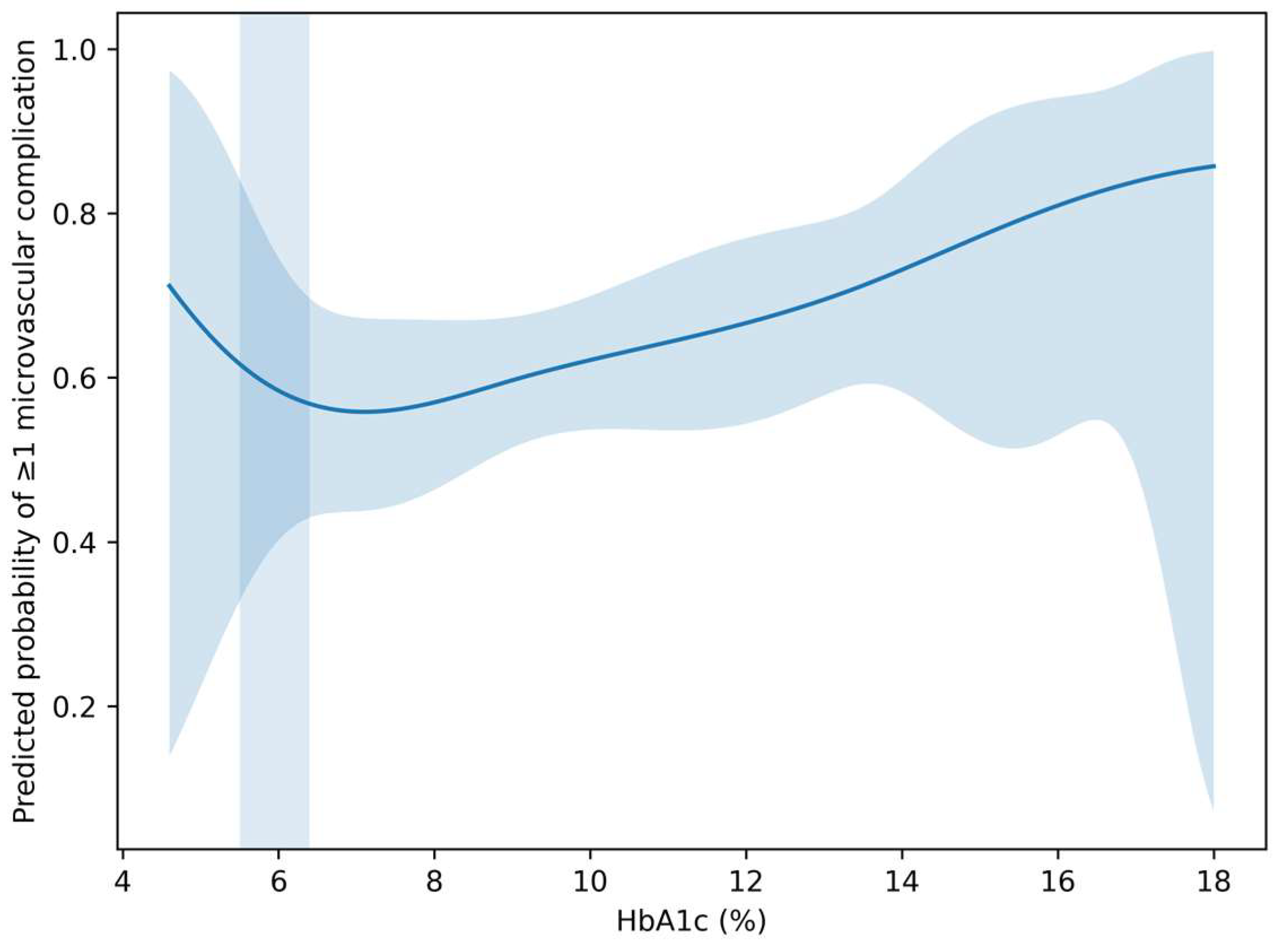
3.3. Non-Linear Risk Patterns and the “Gray Zone”
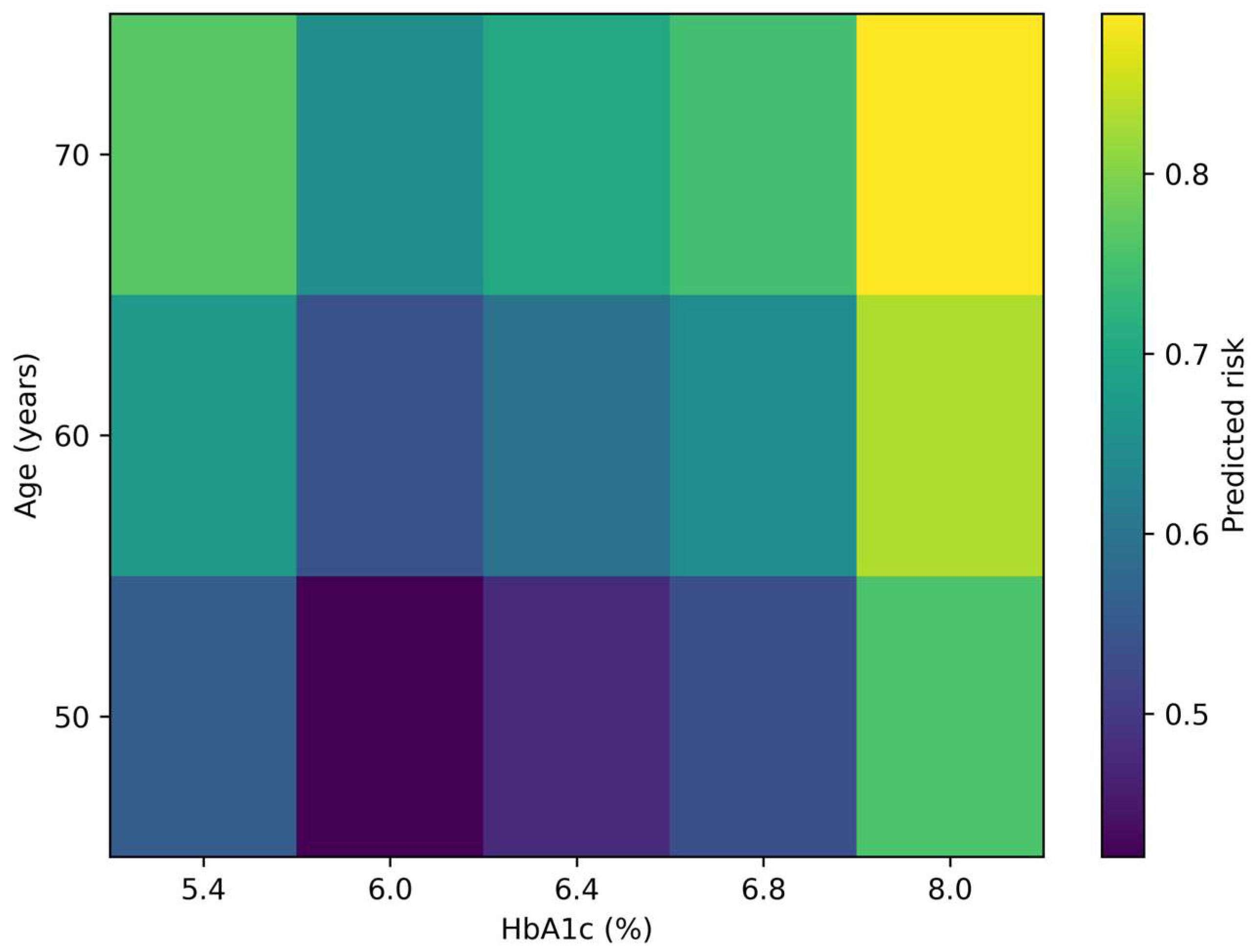
3.4. Risk Estimation Within the HbA1c Gray Zone (5.5–6.4%)
3.5. Development and Performance of the HbA1c-Based Microvascular Risk Algorithm
3.5.1. Multivariable Model for ≥1 Microvascular Complication
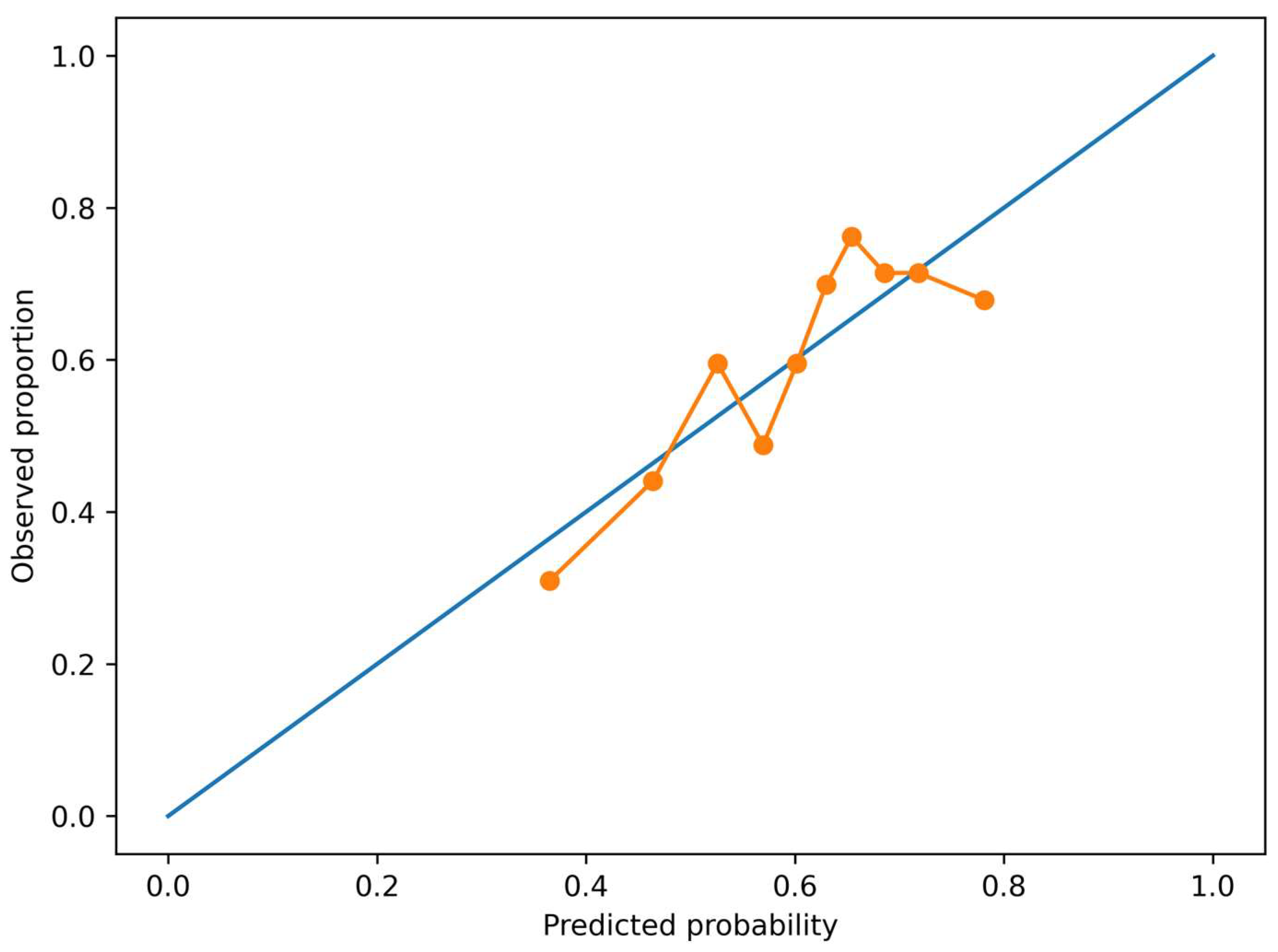
3.5.2. Model Discrimination and Calibration
3.5.3. Risk Estimates Across the HbA1c Spectrum
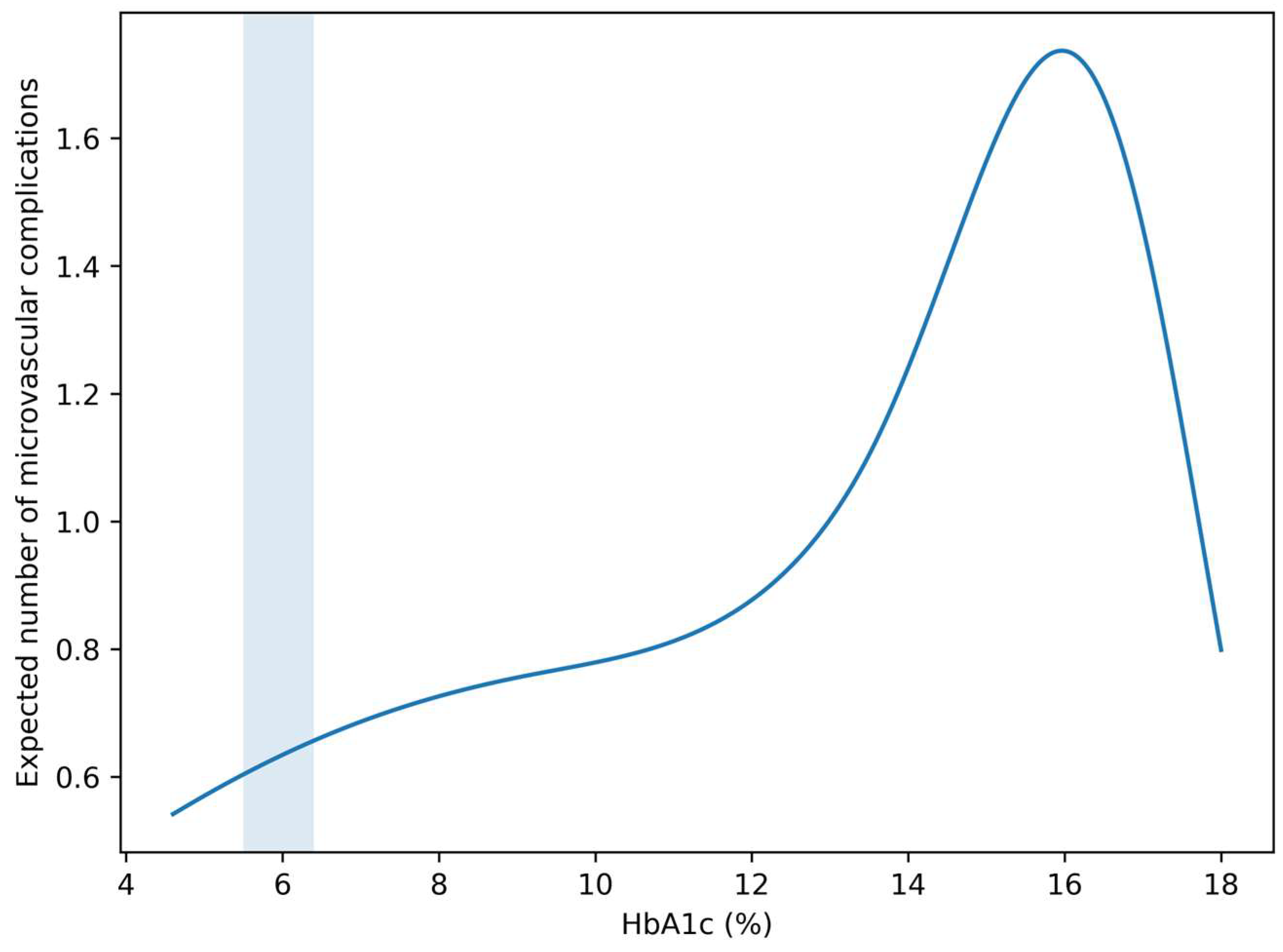
3.5.4. Modeling of Cumulative Microvascular Burden
3.5.5. Clinical Translation
4. Discussion
4.1. Continuous HbA1c Variation and Metabolic Stress
4.2. Non-Linear Risk Patterns and the Biological Relevance of the Gray Zone
Clinical Relevance of Optimal HbA1c Beyond Diabetes Diagnosis
4.3. Clinical and Methodological Implications
4.4. Strengths and Limitations
4.5. Future Directions
5. Conclusions
Supplementary Materials
Author Contributions
Funding
Institutional Review Board Statement
Informed Consent Statement
Data Availability Statement
Acknowledgments
Conflicts of Interest
Abbreviations
| BMI | Body Mass Index |
| CI | Confidence Interval |
| HbA1c | Glycated Hemoglobin |
| HTN | Hypertension |
| OR | Odds Ratio |
| SD | Standard Deviation |
References
- Chiu, C.-J.; Taylor, A. Dietary hyperglycemia, glycemic index and metabolic retinal diseases. Prog. Retin. Eye Res. 2011, 30, 18–53. [Google Scholar] [CrossRef]
- Stranieri, A.; Yatsko, A.; Jelinek, H.; Venkatraman, S. Data-analytically derived flexible HbA1c thresholds for type 2 diabetes mellitus diagnostic. Aritificial Intell. Res. 2015, 5, 111–134. [Google Scholar] [CrossRef][Green Version]
- Wisniewski, A.; DeLouize, A.M.; Walker, T.; Chatterji, S.; Naidoo, N.; Kowal, P.; Snodgrass, J.J. Sustained metabolic dysregulation and the emergence of diabetes: Associations between HbA1c and metabolic syndrome components in Tunisian diabetic and nondiabetic groups. J. Physiol. Anthropol. 2024, 43, 18. [Google Scholar] [CrossRef] [PubMed]
- Bazyar, H.; Sadeghi, R.; Masoudi, M.R.; Azadbakht, M.K.; Dayani, M.; Ghani, M.H.; Karimi, M.; Amiri, M.M.; Dianati, M. Establishing optimal cut-offs of cardio-metabolic indices for diagnosing metabolic syndrome in type 2 diabetes. BMC Endocr. Disord. 2025, 25, 241. [Google Scholar] [CrossRef]
- Bhati, P.; Alam, R.; Moiz, J.A.; Hussain, M.E. Subclinical inflammation and endothelial dysfunction are linked to cardiac autonomic neuropathy in type 2 diabetes. J. Diabetes Metab. Disord. 2019, 18, 419–428. [Google Scholar] [CrossRef] [PubMed]
- Hsu, J.-C.; Yang, Y.-Y.; Chuang, S.-L.; Lee, J.-K.; Lin, L.-Y. Prediabetes increases the risk of major limb and cardiovascular events. Cardiovasc. Diabetol. 2023, 22, 348. [Google Scholar] [CrossRef]
- Darouei, B.; Amani-Beni, R.; Kakavand, N.; Seifnezhad, A.; Mazaheri-Tehrani, S.; Shekarian, A.; Eshraghi, R.; Bahrami, A.; Amini-Salehi, E.; Hashemi, S.M.; et al. The prognostic role of glycemic variability in predicting the risk of adverse cardiovascular events in patients with cardiovascular diseases: A meta-analysis. Diabetol. Metab. Syndr. 2025, 17, 463. [Google Scholar] [CrossRef]
- Akşit, M.; Demirci, F. Measurement Uncertainty of HbA1c and Glucose Parameters, Which Are Diabetes Mellitus Diagnostic Tests. Anatol. J. Gen. Med. Res. 2024, 34, 84–90. [Google Scholar] [CrossRef]
- Ozcan Cetin, E.H.; Cetin, M.S.; Diker, E. A gray zone population: Prediabetes—It Is Not as Easy as Its Look. Angiology 2019, 70, 181. [Google Scholar] [CrossRef]
- Tuzcu, E.M.; Puri, R. Unraveling the Cardiovascular PROSPECTs of Patients With Prediabetes. JACC Cardiovasc. Imaging 2019, 12, 742–744. [Google Scholar] [CrossRef]
- Boye, K.S.; Thieu, V.T.; Lage, M.J.; Miller, H.; Paczkowski, R. The Association Between Sustained HbA1c Control and Long-Term Complications Among Individuals with Type 2 Diabetes: A Retrospective Study. Adv. Ther. 2022, 39, 2208–2221. [Google Scholar] [CrossRef] [PubMed]
- Roy, B. Pathophysiological Mechanisms of Diabetes-Induced Macrovascular and Microvascular Complications: The Role of Oxidative Stress. Med. Sci. 2025, 13, 87. [Google Scholar] [CrossRef] [PubMed]
- Almeshari, H.F.; Aljehani, M.O.; Almutairi, W.M.; Alqahtani, A.A.; Al Mutairi, H.H.; Alaws, A.S.; Hajij, N.K.; Alfreh, F.A.; Alhammad, R.K.; Alhamdan, S.S. Correlation between Hemoglobin A1c Levels and Microvascular Complications in Type 2 Diabetes. Int. J. Sci. Technol. 2024, 15, 2690–2694. [Google Scholar] [CrossRef]
- Paduraru, L.; Pascalau, A.V.; Camarasan, A.; Muresan, M.M.; Pop, O.L.; Brata, R. The Impact of Dyslipidemia on the Clinical Profile of Patients with Uncontrolled Diabetes. In Vivo 2025, 39, 2243–2258. [Google Scholar] [CrossRef]
- Ahmed, U. Prevalence of chronic complications and associated factors in type 2 diabetes. J. Pak. Med. Assoc. 2004, 54, 54–59. [Google Scholar]
- Popoviciu, M.S.; Marin, V.N.; Vesa, C.M.; Stefan, S.D.; Stoica, R.A.; Serafinceanu, C.; Merlo, E.M.; Rizvi, A.A.; Rizzo, M.; Busnatu, S.; et al. Correlations between Diabetes Mellitus Self-Care Activities and Glycaemic Control in the Adult Population: A Cross-Sectional Study. Healthcare 2022, 10, 174. [Google Scholar] [CrossRef]
- Zhu, Y.; Jun, M.; Fletcher, R.A.; Arnott, C.; Neuen, B.L.; Kotwal, S.S. Variability in HbA1c and the risk of major clinical outcomes in type 2 diabetes with chronic kidney disease: Post hoc analysis from the CREDENCE trial. Diabetes Obes. Metab. 2025, 27, 3531–3535. [Google Scholar] [CrossRef] [PubMed]
- Ehtewish, H.; Arredouani, A.; El-Agnaf, O. Diagnostic, Prognostic, and Mechanistic Biomarkers of Diabetes Mellitus-Associated Cognitive Decline. Int. J. Mol. Sci. 2022, 23, 6144. [Google Scholar] [CrossRef]
- Hu, Y.; Li, W.; Nie, J.; Zhang, C.; Zhou, J.; Hu, Z.; Zhou, H.; Lei, X. Association between the atherogenic index of plasma and major adverse cardiovascular events in individuals with metabolic syndrome: Findings from the UK biobank. Cardiovasc. Diabetol. 2025, 24, 444. [Google Scholar] [CrossRef]
- Açar, B.; Ozeke, O.; Karakurt, M.; Ozen, Y.; Özbay, M.B.; Unal, S.; Karanfil, M.; Yayla, C.; Cay, S.; Maden, O.; et al. Association of Prediabetes with Higher Coronary Atherosclerotic Burden Among Patients with First Diagnosed Acute Coronary Syndrome. Angiology 2019, 70, 174–180. [Google Scholar] [CrossRef]
- Edwards, C.M.; Cusi, K. Prediabetes: A Worldwide Epidemic. Endocrinol. Metab. Clin. N. Am. 2016, 45, 751–764. [Google Scholar] [CrossRef]
- Kalra, S.; Malik, S.; John, M. Gestational diabetes mellitus: A window of opportunity. Indian J. Endocrinol. Metab. 2011, 15, 149–151. [Google Scholar] [CrossRef]
- Er, E.; Ata, A.; Evin, F.; Altınok, Y.A.; Demir, G.; Özen, S.; Darcan, Ş.; Gökşen, D. Glycated hemoglobin variability and microvascular complications in patients with type 1 diabetes mellitus. J. Pediatr. Endocrinol. Metab. 2020, 33, 1533–1537. [Google Scholar] [CrossRef] [PubMed]
- Butler, A.E.; English, E.; Kilpatrick, E.S.; Östlundh, L.; Chemaitelly, H.S.; Abu-Raddad, L.J.; Alberti, K.; Atkin, S.L.; John, W.G. Diagnosing type 2 diabetes using Hemoglobin A1c: A systematic review and meta-analysis of the diagnostic cutpoint based on microvascular complications. Acta Diabetol. 2021, 58, 279–300. [Google Scholar] [CrossRef]
- Perais, J.; Agarwal, R.; Evans, J.R.; Loveman, E.; Colquitt, J.L.; Owens, D.; Hogg, R.E.; Lawrenson, J.G.; Takwoingi, Y.; Lois, N. Prognostic factors for the development and progression of proliferative diabetic retinopathy in people with diabetic retinopathy. Cochrane Database Syst. Rev. 2023, 2, Cd013775. [Google Scholar] [CrossRef] [PubMed]
- Badacz, R.; Kabłak-Ziembicka, A.; Rosławiecka, A.; Rzeźnik, D.; Baran, J.; Trystuła, M.; Legutko, J.; Przewłocki, T. The Maintained Glycemic Target Goal and Renal Function Are Associated with Cardiovascular and Renal Outcomes in Diabetic Patients Following Stent-Supported Angioplasty for Renovascular Atherosclerotic Disease. J. Pers. Med. 2022, 12, 537. [Google Scholar] [CrossRef]
- Moran, C.; Whitmer, R.A.; Dove, Z.; Lacy, M.E.; Soh, Y.; Tsai, A.L.; Quesenberry, C.P.; Karter, A.J.; Adams, A.S.; Gilsanz, P. HbA(1c) variability associated with dementia risk in people with type 2 diabetes. Alzheimer’s Dement. 2024, 20, 5561–5569. [Google Scholar] [CrossRef] [PubMed]
- Mao, Y.; Zhong, W. HbA1c Variability as an Independent Risk Factor for Microvascular Complications in Type 1 Diabetes. J. Diabetes Sci. Technol. 2024, 18, 380–388. [Google Scholar] [CrossRef] [PubMed]
- Aldafas, R.; Vinogradova, Y.; Crabtree, T.S.J.; Gordon, J.; Idris, I. The legacy effect of early HbA1c control on microvascular complications and hospital admissions in type 2 diabetes: Findings from a large UK study. Ther. Adv. Endocrinol. Metab. 2025, 16, 20420188251350897. [Google Scholar] [CrossRef]
- Mitroi Sakizlian, D.D.; Boldeanu, L.; Mitrea, A.; Clenciu, D.; Vladu, I.M.; Ciobanu Plasiciuc, A.E.; Șarla, A.V.; Siloși, I.; Boldeanu, M.V.; Assani, M.-Z.; et al. The Interplay of Cardiometabolic Syndrome Phenotypes and Cardiovascular Risk Indices in Patients Diagnosed with Diabetes Mellitus. Int. J. Mol. Sci. 2025, 26, 6227. [Google Scholar] [CrossRef]
- Wang, J.M.; Miao, M.Y.; Jia, Y.P.; Wang, X.W.; Wu, X.B.; Wan, Z.X.; Zheng, Y.; Qin, L.Q.; Li, F.R.; Chen, G.C. Effects of intensive glycemic control on microvascular outcomes in type 2 diabetes mellitus are modified by long-term HbA(1c) variability: A post hoc analysis of the ACCORD trial. Diabetes Res. Clin. Pract. 2024, 208, 111100. [Google Scholar] [CrossRef]
- Askin, L.; Yuce, E.; Tanriverdi, O. Myocardial performance index and cardiovascular diseases. Echocardiography 2023, 40, 720–725. [Google Scholar] [CrossRef] [PubMed]



| Variable | Value |
|---|---|
| Number of participants | 839 |
| Age (years), mean ± SD | 63.1 ± 10.2 |
| Age range (years) | 27–90 |
| Sex, n (%) | |
| Male | 407 (48.5%) |
| Female | 432 (51.5%) |
| HbA1c (%), mean ± SD | 7.63 ± 1.78 |
| HbA1c range (%) | 4.6–18.0 |
| Fasting glucose (mg/dL), mean ± SD | 156.8 ± 59.0 |
| HTN, n (%) | 557 (66.4%) |
| Dyslipidemia | 556 (66.3%) |
| Nephropathies | 201 (24.0%) |
| Retinopathies | 124 (14.8%) |
| Weight status | |
| Normal | 192 (22.9%) |
| Overweight | 198 (23.6%) |
| Obesity degree I | 270 (32.2%) |
| Obesity degree II | 124 (14.8%) |
| Obesity degree III | 55 (6.6%) |
| Number of complications | |
| 0 | 336 (40.0%) |
| 1 | 364 (43.4%) |
| 2 | 110 (13.1%) |
| 3 | 28 (3.3%) |
| 4 | 1 (0.1%) |
| Predictor | Outcome | β (Slope) | Standard Error | r | p-Value |
|---|---|---|---|---|---|
| HbA1c (%) | Number of complications | 0.016 | 0.006 | 0.09 | 0.009 |
Disclaimer/Publisher’s Note: The statements, opinions and data contained in all publications are solely those of the individual author(s) and contributor(s) and not of MDPI and/or the editor(s). MDPI and/or the editor(s) disclaim responsibility for any injury to people or property resulting from any ideas, methods, instructions or products referred to in the content. |
© 2026 by the authors. Licensee MDPI, Basel, Switzerland. This article is an open access article distributed under the terms and conditions of the Creative Commons Attribution (CC BY) license.
Share and Cite
Popoviciu, M.S.; Pop, A.M.; Ghitea, T.C.; Dorobantu, F.R.; Pantis, C.; Pop, N.O.; Brata, R.D. HbA1c as a Continuous Marker of Microvascular Vulnerability: Development of a Non-Linear Risk Framework in a Real-World Cohort. Metabolites 2026, 16, 197. https://doi.org/10.3390/metabo16030197
Popoviciu MS, Pop AM, Ghitea TC, Dorobantu FR, Pantis C, Pop NO, Brata RD. HbA1c as a Continuous Marker of Microvascular Vulnerability: Development of a Non-Linear Risk Framework in a Real-World Cohort. Metabolites. 2026; 16(3):197. https://doi.org/10.3390/metabo16030197
Chicago/Turabian StylePopoviciu, Mihaela Simona, Alina Manuela Pop, Timea Claudia Ghitea, Florica Ramona Dorobantu, Carmen Pantis, Nicolae Ovidiu Pop, and Roxana Daniela Brata. 2026. "HbA1c as a Continuous Marker of Microvascular Vulnerability: Development of a Non-Linear Risk Framework in a Real-World Cohort" Metabolites 16, no. 3: 197. https://doi.org/10.3390/metabo16030197
APA StylePopoviciu, M. S., Pop, A. M., Ghitea, T. C., Dorobantu, F. R., Pantis, C., Pop, N. O., & Brata, R. D. (2026). HbA1c as a Continuous Marker of Microvascular Vulnerability: Development of a Non-Linear Risk Framework in a Real-World Cohort. Metabolites, 16(3), 197. https://doi.org/10.3390/metabo16030197