
The Effects of Adding Walnut Green Husk on the Quality of Alfalfa Mixed Silage, Protein Degradation, Microbial Community, and Their Interrelationships

Highlights
- Adding walnut green husk (WGH) to alfalfa silage significantly improves fermentation quality, characterized by reduced organic acid content and the absence of mold.
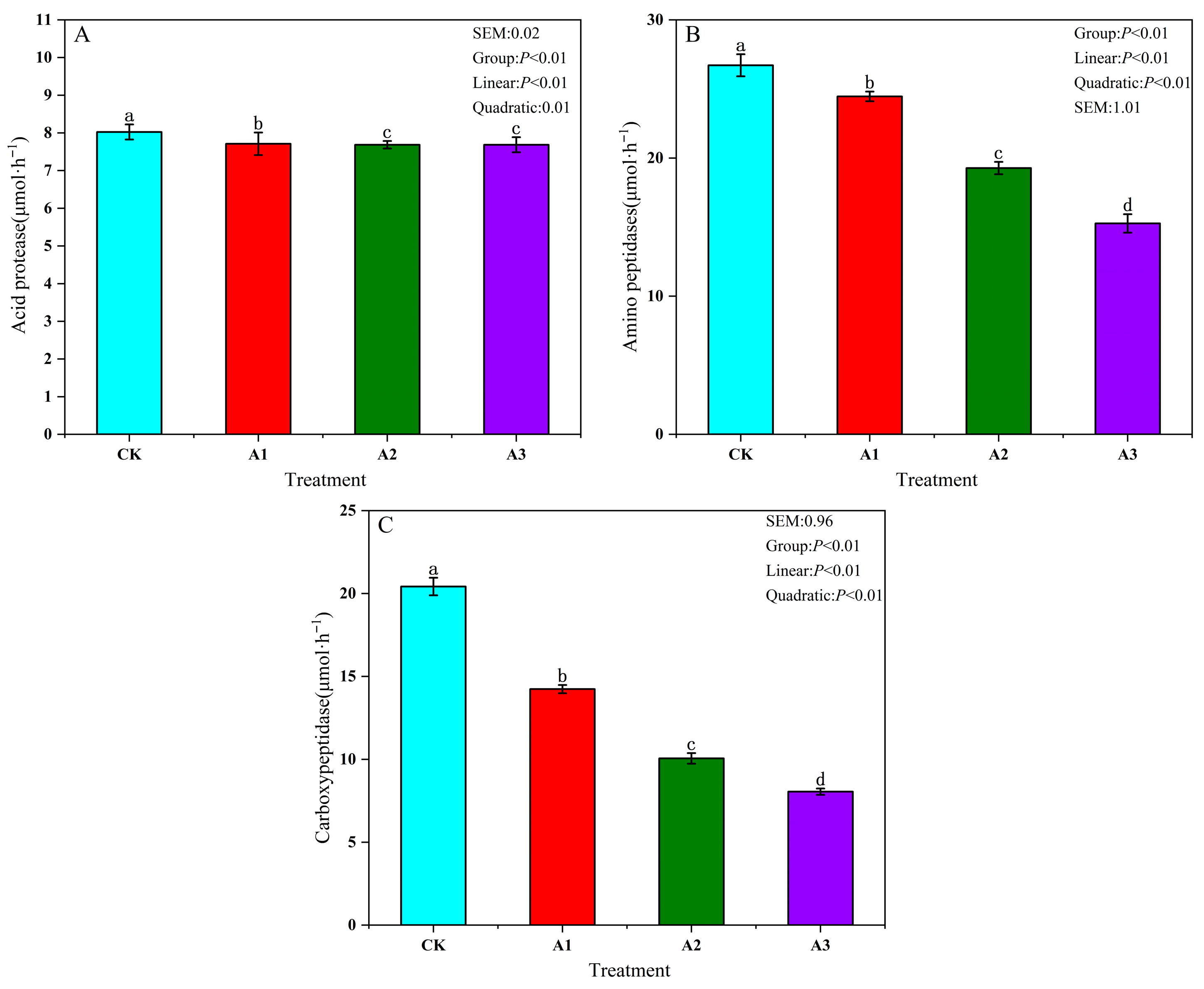
- WGH addition linearly decreases non-protein nitrogen (NPN), protease activity, and slowly degradable protein (PB3), while linearly increasing rapidly degradable protein (PB1) and in vitro dry matter digestibility (IVDMD).
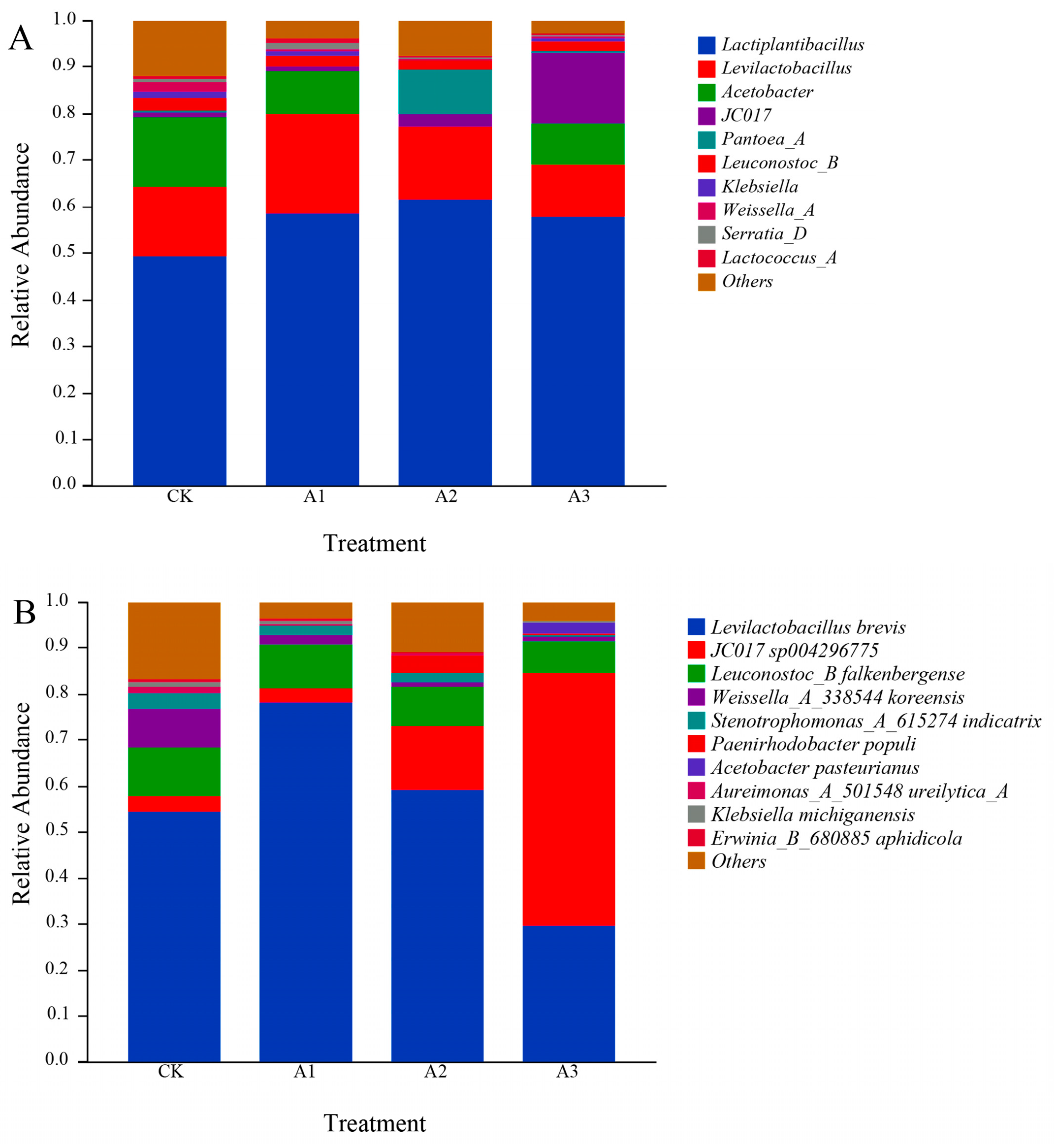
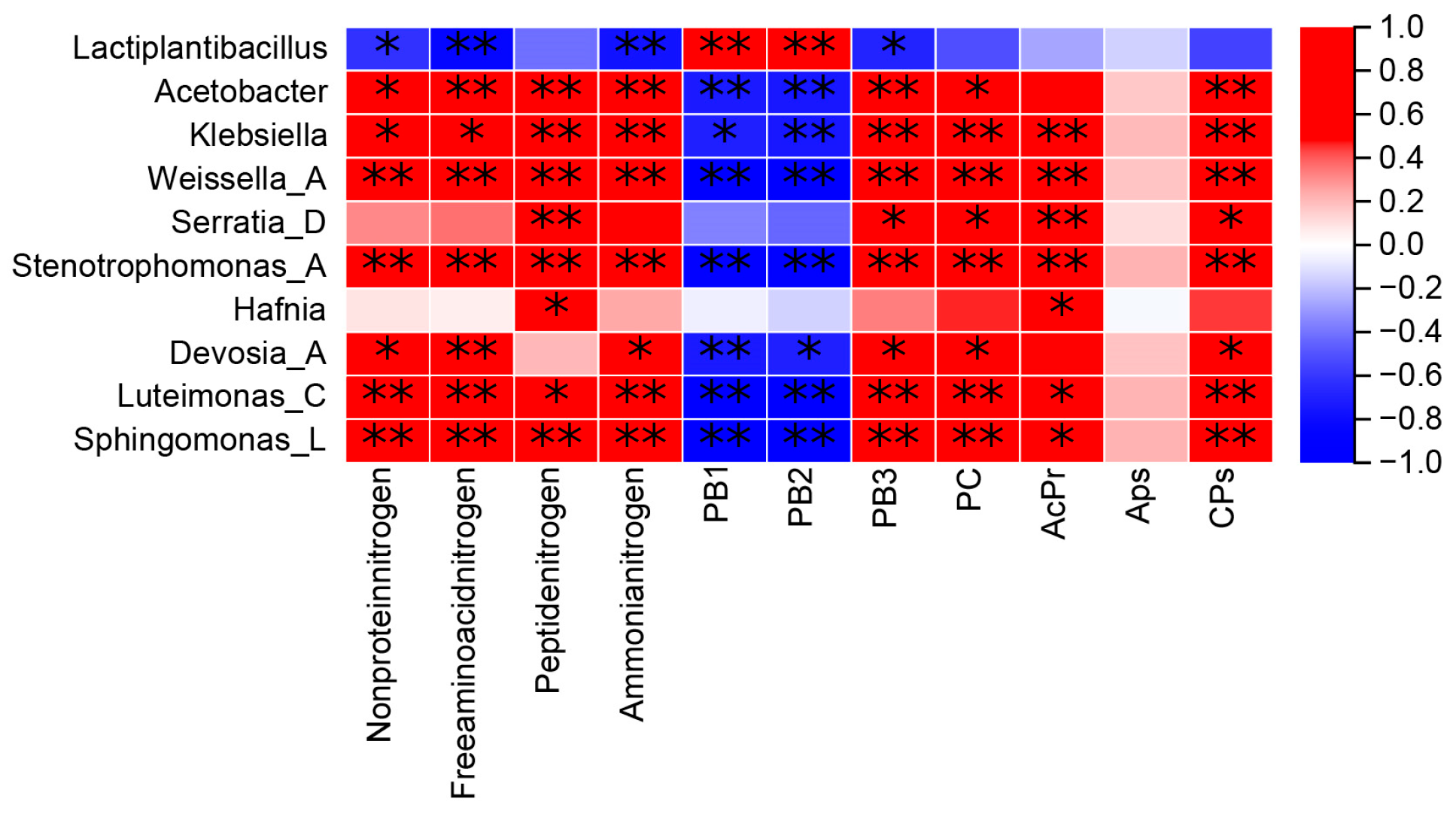
- WGH enriches the microbial community by increasing the relative abundance of beneficial Lactiplantibacillus and Levilactobacillus, which are negatively correlated with protein degradation factors.
- This study identifies WGH, an agricultural by-product, as an effective silage additive that mitigates protein degradation, offering a strategy to improve the utilization efficiency of alfalfa protein in ruminant production.
- The findings support a sustainable approach to waste management by recycling walnut green husks, contributing to a circular economy model in agriculture.
- The optimal inclusion level of 120 g/kg WGH provides a practical guideline for farmers to enhance silage nutritional value and reduce feed costs.
Abstract
1. Introduction
2. Materials and Methods
2.1. Raw Materials and Additives
2.2. Silage Preparation
2.3. Silage Quality Analysis
2.4. Analysis of Nitrogen Fractions
2.5. Analysis of Protein Components and Protease Activity
2.6. Bacterial Community Analysis
2.6.1. Sample Preparation, DNA Extraction, and PCR Amplification
2.6.2. Library Construction and Sequencing
2.7. Statistical Analysis
3. Results
3.1. Effect of WGH on the Quality of Alfalfa Silage

| Items | CK | A1 | A2 | A3 | SEM | Group | Linear | Quadratic |
|---|---|---|---|---|---|---|---|---|
| DM (%FM) | 28.8 d | 34.6 c | 37.0 b | 38.1 a | 1.12 | p < 0.01 | p < 0.01 | 0.01 |
| CP (%DM) | 18.4 a | 17.2 b | 16.8 b | 16.4 c | 0.74 | p < 0.01 | p < 0.01 | p < 0.01 |
| IVDMD (%DM) | 64.6 b | 65.2 b | 65.9 a | 64.7 b | 1.69 | 0.721 | 0.546 | 0.367 |
| pH | 4.62 c | 4.81 b | 4.85 b | 4.97 a | 0.06 | p < 0.01 | p < 0.01 | p < 0.01 |
| LA (%DM) | 5.87 a | 5.56 b | 4.31 bc | 3.41 c | 0.30 | p < 0.01 | p < 0.01 | p < 0.01 |
| AA (%DM) | 1.60 a | 1.55 a | 1.02 b | 0.61 c | 0.12 | p < 0.01 | p < 0.01 | p < 0.01 |
| PA (%DM) | 0.65 a | 0.35 ab | 0.33 ab | 0.27 b | 0.05 | p < 0.01 | p < 0.01 | p < 0.01 |
| BA (%DM) | ND | ND | ND | ND | ||||
| LAB (log10CFU/g) | 7.17 a | 7.18 a | 7.23 a | 7.25 a | 0.03 | 0.753 | 0.379 | 0.851 |
| Yeast (log10CFU/g) | 4.06 c | 4.17 b | 4.40 a | 4.43 a | 0.04 | p < 0.01 | p < 0.01 | 0.071 |
| Mold (log10CFU/g) | 5.65 | ND | ND | ND |
3.2. Effect of WGH on Nitrogen Distribution of Alfalfa Silage
| Items | CK | A1 | A2 | A3 | SEM | Group | Linear | Quadratic |
|---|---|---|---|---|---|---|---|---|
| NPN (%/TN) | 72.9 a | 68.1 b | 67.7 b | 67.6 b | 1.33 | 0.031 | 0.014 | 0.067 |
| Peptide-N (%/TN) | 34.2 a | 33.6 b | 31.1 b | 31.8 b | 0.36 | p < 0.01 | p < 0.01 | p < 0.01 |
| FAA-N (%/TN) | 33.1 a | 31.1 b | 30.9 c | 30.9 c | 0.26 | p < 0.01 | p < 0.01 | p < 0.01 |
| NH3-N (%/TN) | 6.30 a | 5.51 b | 5.21 b | 5.33 c | 0.32 | p < 0.01 | p < 0.01 | p < 0.01 |
3.3. Effect of WGH on CNCPS Protein Fractions of Alfalfa Silage
| Items | CK | A1 | A2 | A3 | SEM | Group | Linear | Quadratic |
|---|---|---|---|---|---|---|---|---|
| NPN (%/TN) | 72.9 a | 68.1 b | 67.7 b | 67.6 b | 1.33 | 0.031 | 0.014 | 0.067 |
| PB1 (%/TN) | 2.60 b | 3.52 a | 3.56 a | 3.58 a | 0.12 | p < 0.01 | p < 0.01 | p < 0.01 |
| PB2 (%/TN) | 15.9 b | 20.9 a | 21.6 a | 21.7 a | 0.70 | p < 0.01 | p < 0.01 | p < 0.01 |
| PB3 (%/TN) | 2.32 a | 1.59 b | 1.27 c | 1.23 c | 0.13 | p < 0.01 | p < 0.01 | p < 0.01 |
| PC (%/TN) | 6.17 a | 5.96 b | 5.83 c | 5.70 d | 0.05 | p < 0.01 | p < 0.01 | p < 0.01 |
3.4. Effect of WGH on Protease Activity in Alfalfa Silage

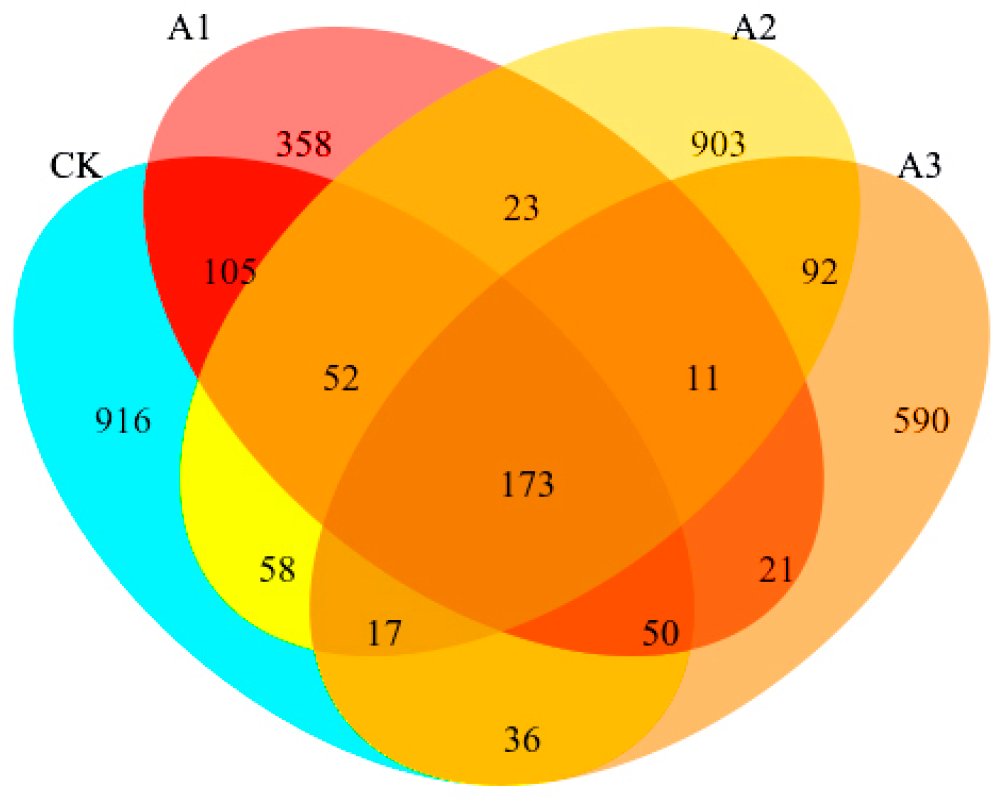
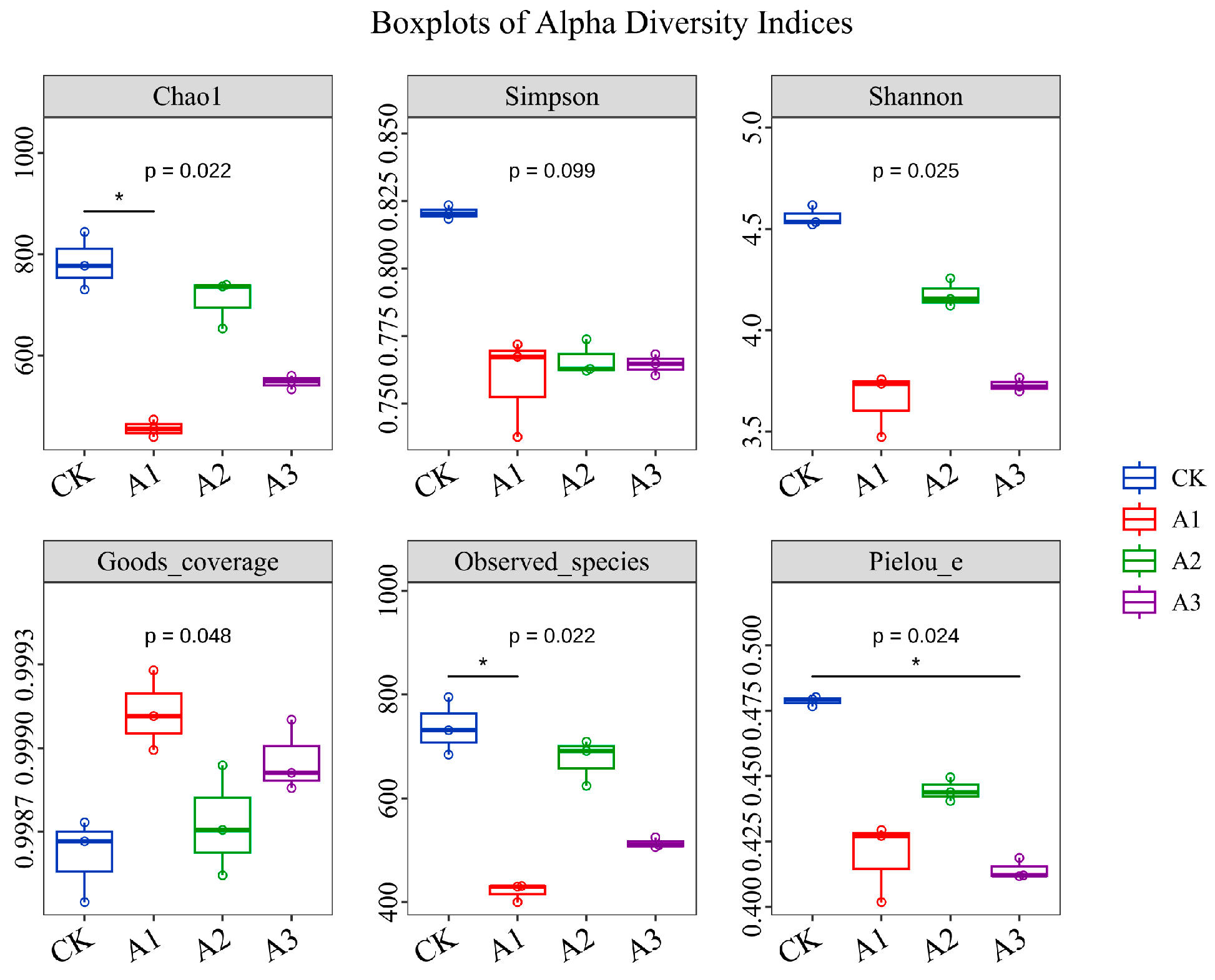
3.5. Effects of WGH on Bacterial Community Structure of Alfalfa Silage
4. Discussion
4.1. Effect of WGH Addition on the Quality of Alfalfa Silage
4.2. Effect of WGH Addition on Nitrogen Fraction of Alfalfa Silage
4.3. Effects of Adding WGH on Bacterial Community of Alfalfa Silage
5. Conclusions
Author Contributions
Funding
Institutional Review Board Statement
Informed Consent Statement
Data Availability Statement
Acknowledgments
Conflicts of Interest
References
- Fang, Q.; Li, X.; Wang, M.; Qiao, X.; Huang, F.; Hu, C.; Xue, Y.; Zhao, S.; Lin, Y. Walnut green husk ethanol extract improves gut microbiota and their metabolites associated with NLRP3 in non-alcoholic steatohepatitis. Food Func. 2022, 13, 6387–6403. [Google Scholar] [CrossRef] [PubMed]
- Ivanovska, A.; Savić Gajić, I.; Mravik, Ž.; Reljić, M.; Ilić-Tomić, T.; Savić, I.; Luxbacher, T.; Lađarević, J. Transforming discarded walnut green husk into a resource of valuable compounds for colored bioactive textiles with a focus on circular economy concept. Dye. Pigment. 2024, 231, 112406. [Google Scholar] [CrossRef]
- Fernández-Agulló, A.; Pereira, E.; Freire, M.S.; Valentão, P.; Andrade, P.B.; González-Álvarez, J.; Pereira, J.A. Influence of solvent on the antioxidant and antimicrobial properties of walnut (Juglans regia L.) green husk extracts. Ind. Crop Prod. 2013, 42, 126–132. [Google Scholar] [CrossRef]
- Chen, W.; Chen, B.-L.; Yang, D.-L. Effect of Walnut Green Husk Extract on ruminal fermentation of sheep with subacute ruminal acidosis. Chin. J. Anim. Nutr. 2022, 34, 3824–3834. Available online: https://kns.cnki.net/kcms/detail/11.5461.S.20220317.1053.034.html (accessed on 8 January 2026).
- Ke, W.; Zhang, H.; Li, S.; Xue, Y.; Wang, Y.; Dong, W.; Cai, Y.; Zhang, G. Influence of Condensed and Hydrolysable Tannins on the Bacterial Community, Protein Degradation, and Fermentation Quality of Alfalfa Silage. Animals 2022, 12, 831. [Google Scholar] [CrossRef]
- Makoni, N.-F.; Shelford, J.-A.; Fisher, L.J. Initial Rates of Degradation of Protein Fractions from Fresh, Wilted, and Ensiled Alfalfa. J. Dairy Sci. 1994, 77, 1598–1603. [Google Scholar] [CrossRef]
- Tian, J.; Li, Z.; Yu, Z.; Zhang, Q.; Li, X. Interactive effect of inoculant and dried jujube powder on the fermentation quality and nitrogen fraction of alfalfa silage. Anim. Sci. J. 2017, 88, 633–642. [Google Scholar] [CrossRef]
- Li, X.; Tian, J.; Zhang, Q.; Jiang, Y.; Wu, Z.; Yu, Z. Effects of mixing red clover with alfalfa at different ratios on dynamics of proteolysis and protease activities during ensiling. J. Dairy Sci. 2018, 101, 8954–8964. [Google Scholar] [CrossRef]
- Cai, Y.; Benno, Y.; Ogawa, M.; Kumai, S. Effect of applying lactic acid bacteria isolated from forage crops on fermentation characteristics and aerobic deterioration of silage. J. Dairy Sci. 1999, 82, 520–526. [Google Scholar] [CrossRef]
- GB/T 27985-2011; Determination of tannin in feeds—Spectrophotometry. China Standard Press: Beijing, China, 2011. Available online: https://www.chinesestandard.net/PDF.aspx/GBT27985-2011 (accessed on 8 January 2026).
- Broderick, G.-A.; Kang, J.-H. Automated simultaneous determination of ammonia and total amino acids in ruminal fluid and in vitro media. J. Dairy Sci. 1980, 63, 64–75. [Google Scholar] [CrossRef]
- Licitra, G.; Hernandez, T.-M.; Van Soest, P.-J. Standardization of procedures for nitrogen fractionation of ruminant feeds. Anim. Feed. Sci. Tech. 1996, 57, 347–358. [Google Scholar] [CrossRef]
- Sniffen, C.-J.; O’Connor, J.-D.; Van Soest, P.-J.; Fox, D.G.; Russell, J.-B. A net carbohydrate and protein system for evaluating cattle diets: II. Carbohydrate and protein availability. J. Anim. Sci. 1992, 70, 3562–3577. [Google Scholar] [CrossRef]
- Muck Richard, E. Silage microbiology and its control through additives. Rev. Braszootecn 2010, 39, 183–191. [Google Scholar] [CrossRef]
- Lynch, J.P.; Jin, L.; Lara, E.C.; Baah, J.; Beauchemin, K.A. The effect of exogenous fibrolytic enzymes and a ferulic acid esterase-producing inoculant on the fibre degradability, chemical composition and conservation characteristics of alfalfa silage. Anim. Feed. Sci. Technol. 2014, 193, 21–31. [Google Scholar] [CrossRef]
- Tao, Y.; Sun, Q.; Li, F.; Xu, C.; Cai, Y. Comparative analysis of ensiling characteristics and protein degradation of alfalfa silage prepared with corn or sweet sorghum in semiarid region of Inner Mongolia. Anim. Sci. J. 2020, 91, e13321. [Google Scholar] [CrossRef] [PubMed]
- Lu, Y.; Li, P.; Bai, S.; Chen, S.; Zhao, M.; Gou, W.; You, M.; Cheng, Q. Effect of phenyllactic acid on silage fermentation and bacterial community of reed canary grass on the Qinghai Tibetan Plateau. BMC Microbiol. 2022, 22, 83. [Google Scholar] [CrossRef]
- He, L.; Lv, H.; Xing, Y.; Wang, C.; Zhang, Q. The nutrients in Moringa oleifera leaf contribute to the improvement of stylo and alfalfa silage: Fermentation, nutrition and bacterial community. Bioresour. Technol. 2020, 301, 122733. [Google Scholar] [CrossRef] [PubMed]
- Yang, M.; Wang, F.; Xu, W.; Li, X.; Yin, H.; Tuluhong, M.; Qiu, R.; Li, B.; Cui, G. Effects of the fermentation quality and microbial community of waxy maize mixed with fodder soybean silage. Front. Microbiol. 2024, 15, 1405018. [Google Scholar] [CrossRef]
- Tabacco, E.; Borreani, G.; Crovetto, G.-M.; Galassi, G.; Colombo, D.; Cavallarin, L. Effect of chestnut tannin on fermentation quality, proteolysis, and protein rumen degradability of alfalfa silage. J. Dairy Sci. 2006, 89, 4736–4746. [Google Scholar] [CrossRef]
- Broderick, G.-A.; Bradford Ricker, D.; Spence Driver, L. Expeller Soybean Meal and Corn By-Products Versus Solvent Soybean Meal for Lactating Dairy Cows Fed Alfalfa Silage as Sole Forage1. J. Dairy Sci. 1990, 73, 453–462. [Google Scholar] [CrossRef]
- Kung, L.; Shaver, R.-D., Jr.; Grant, R.-J.; Schmidt, R.-J. Silage review: Interpretation of chemical, microbial, and organoleptic components of silages. J. Dairy Sci. 2018, 101, 4020–4033. [Google Scholar] [CrossRef]
- Huang, Q.; Liu, X.; Zhao, G.; Hu, T.; Wang, Y. Potential and challenges of tannins as an alternative to in-feed antibiotics for farm animal production. Anim. Nutr. 2018, 4, 137–150. [Google Scholar] [CrossRef]
- Henderson, A.-R.; McDonald, P.; Anderson, D.-H. The effect of silage additives containing formaldehyde on the fermentation of ryegrass ensiled at different dry matter levels and on the nutritive value of direct-cut silage. Anim. Feed. Sci. Technol. 1982, 7, 303–314. [Google Scholar] [CrossRef]
- Rooke, J.-A.; Armstrong, D.-G. The importance of the form of nitrogen on microbial protein synthesis in the rumen of cattle receiving grass silage and continuous intrarumen infusions of sucrose. Br. J. Nutr. 1989, 61, 113–121. [Google Scholar] [CrossRef]
- Li, X.; Zhang, Y.; Yu, P. Association of Bio-energy Processing-Induced Protein Molecular Structure Changes with CNCPS-Based Protein Degradation and Digestion of Co-products in Dairy Cows. J. Agric. Food Chem. 2016, 64, 4086–4094. [Google Scholar] [CrossRef] [PubMed]
- Dong, M.; Li, Q.; Xu, F.; Wang, S.; Li, W. Effects of microbial inoculants on the fermentation characteristics and microbial communities of sweet sorghum bagasse silage. Sci. Rep. 2020, 10, 837. [Google Scholar] [CrossRef] [PubMed]
- Bai, J.; Xie, D.; Wang, M.; Li, Z.; Guo, X. Effects of antibacterial peptide-producing Bacillus subtilis and Lactobacillus buchneri on fermentation, aerobic stability, and microbial community of alfalfa silage. Bioresour. Technol. 2020, 315, 123881. [Google Scholar] [CrossRef]
- Yang, L.; Yuan, X.; Li, J.; Dong, Z.; Tao, S. Dynamics of microbial community and fermentation quality during ensiling of sterile and nonsterile alfalfa with or without Lactobacillus plantarum inoculant. Bioresour. Technol. 2019, 275, 280–287. [Google Scholar] [CrossRef]
- Keshri, J.; Chen, Y.; Pinto, R.; Kroupitski, Y.; Weinberg, Z.-G.; Saldinger, S.S. Microbiome dynamics during ensiling of corn with and without Lactobacillus plantarum inoculant. Appl. Microbiol. Biot. 2018, 102, 4025–4037. [Google Scholar] [CrossRef]


| Items | Alfalfa | WGH |
|---|---|---|
| DM (%) | 29.5 ± 0.32 | 92.3 ± 0.41 |
| Ash (%) | 11.3 ± 0.21 | 17.2 ± 0.18 |
| CP (%) | 18.4 ± 0.25 | 13.2 ± 0.19 |
| WSC (%) | 2.51 ± 0.08 | 7.54 ± 0.12 |
| NDF (%) | 36.8 ± 0.54 | 50.3 ± 0.62 |
| ADF (%) | 30.2 ± 0.48 | 47.7 ± 0.55 |
| Tannin(mg/g) | — | 12.2 ± 0.15 |
Disclaimer/Publisher’s Note: The statements, opinions and data contained in all publications are solely those of the individual author(s) and contributor(s) and not of MDPI and/or the editor(s). MDPI and/or the editor(s) disclaim responsibility for any injury to people or property resulting from any ideas, methods, instructions or products referred to in the content. |
© 2026 by the authors. Licensee MDPI, Basel, Switzerland. This article is an open access article distributed under the terms and conditions of the Creative Commons Attribution (CC BY) license.
Share and Cite
Abulaiti, N.; Aiyisirehong, G.; Yimamu, A. The Effects of Adding Walnut Green Husk on the Quality of Alfalfa Mixed Silage, Protein Degradation, Microbial Community, and Their Interrelationships. Metabolites 2026, 16, 187. https://doi.org/10.3390/metabo16030187
Abulaiti N, Aiyisirehong G, Yimamu A. The Effects of Adding Walnut Green Husk on the Quality of Alfalfa Mixed Silage, Protein Degradation, Microbial Community, and Their Interrelationships. Metabolites. 2026; 16(3):187. https://doi.org/10.3390/metabo16030187
Chicago/Turabian StyleAbulaiti, Naibi, Gulinigaer Aiyisirehong, and Aibibula Yimamu. 2026. "The Effects of Adding Walnut Green Husk on the Quality of Alfalfa Mixed Silage, Protein Degradation, Microbial Community, and Their Interrelationships" Metabolites 16, no. 3: 187. https://doi.org/10.3390/metabo16030187
APA StyleAbulaiti, N., Aiyisirehong, G., & Yimamu, A. (2026). The Effects of Adding Walnut Green Husk on the Quality of Alfalfa Mixed Silage, Protein Degradation, Microbial Community, and Their Interrelationships. Metabolites, 16(3), 187. https://doi.org/10.3390/metabo16030187