
Circulating CCDC3 as an Indicator of Visceral Fat Accumulation in Patients with Type 2 Diabetes Mellitus
 ,
,
Abstract
1. Introduction
2. Materials and Methods
2.1. Microarray Data Collection and Bioinformatic Analysis
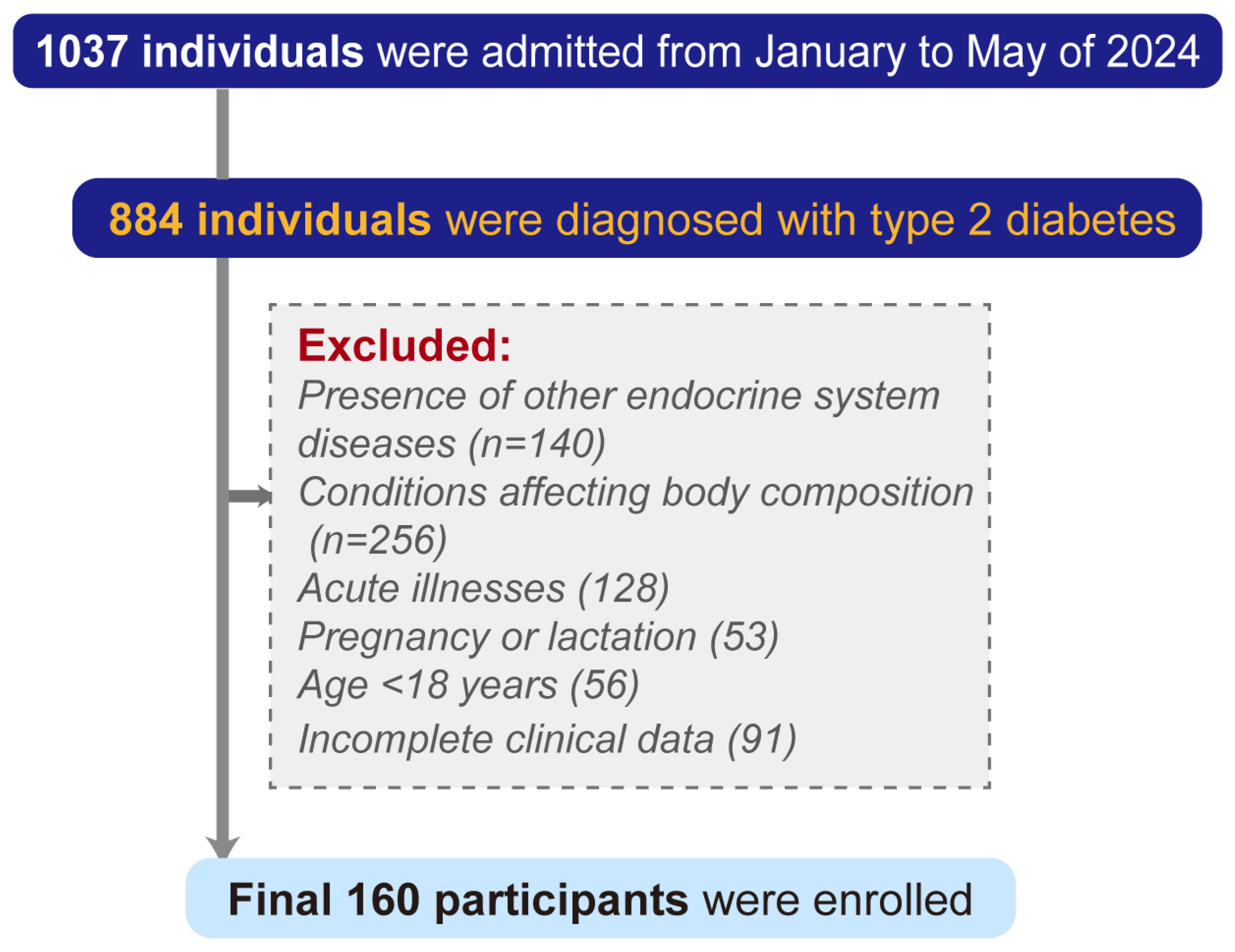
2.2. Study Design and Participants
2.3. Clinical Data Collection
2.4. VFA Measurement by DXA and Group
2.5. Statistical Analysis and Interpretation of Models
3. Results
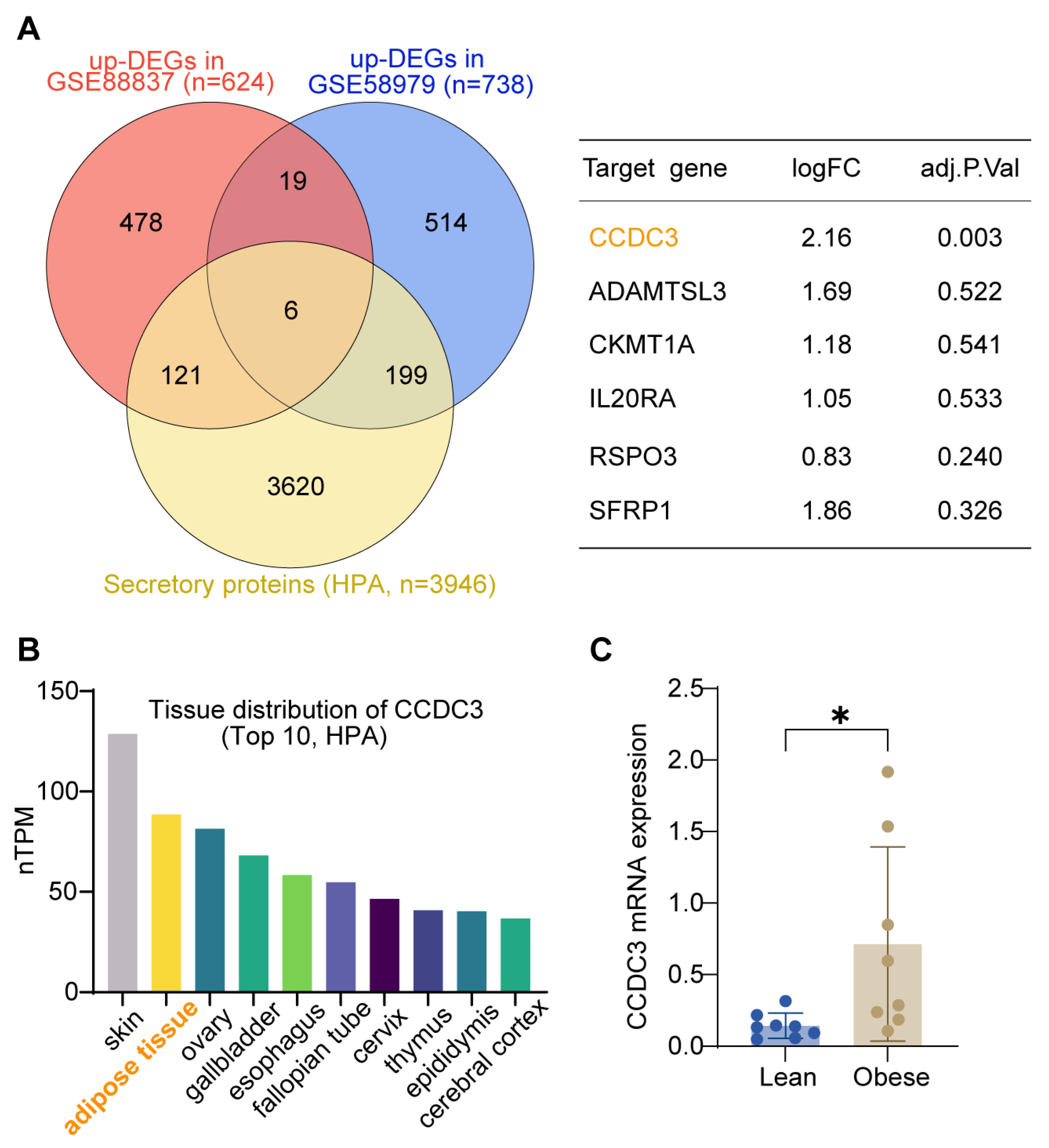
3.1. Identification of CCDC3 as a VAT-Enriched Secretory Gene
3.2. Clinical Characteristics of Participants
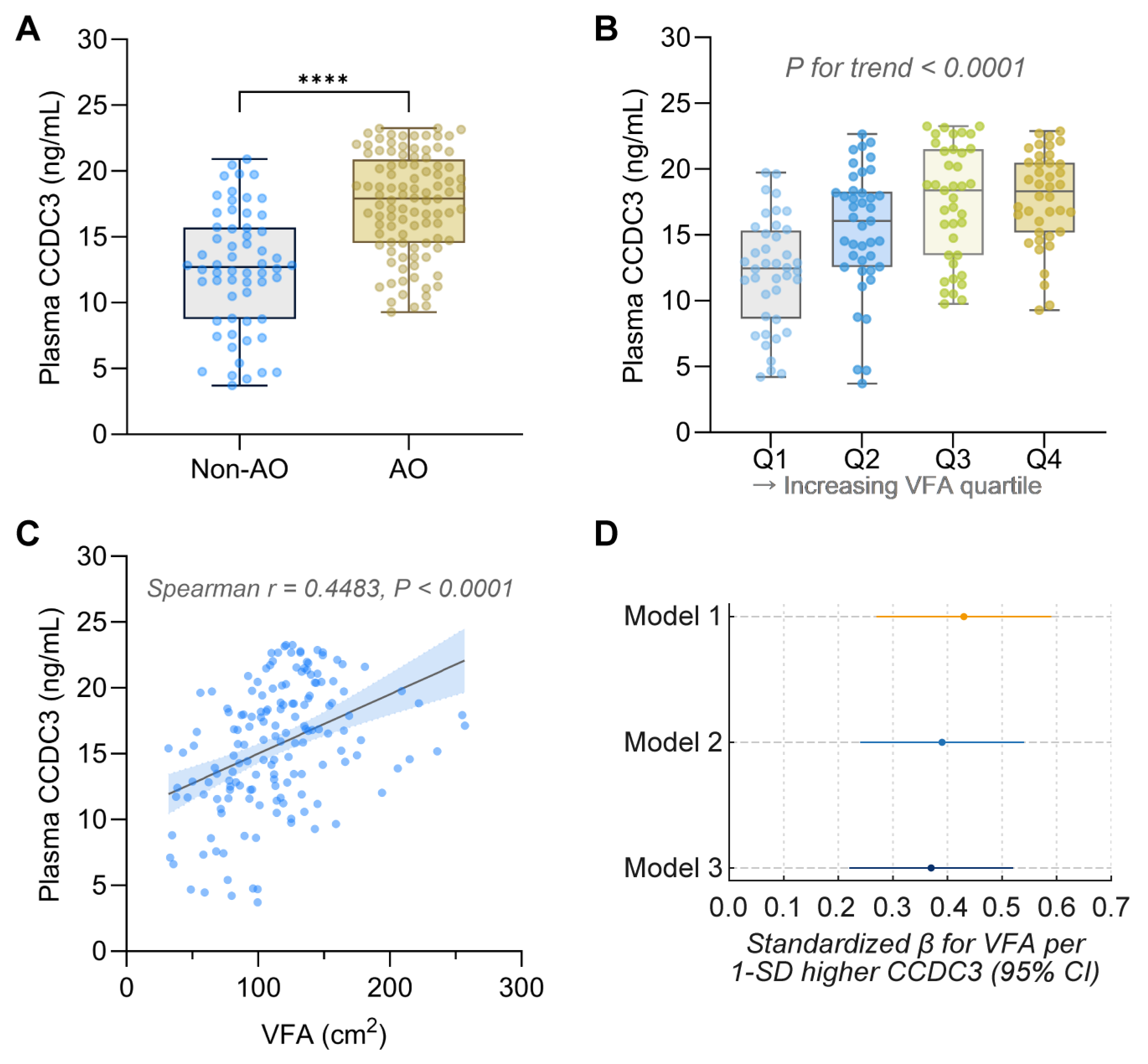
3.3. Association Between Plasma CCDC3 Levels and VFA
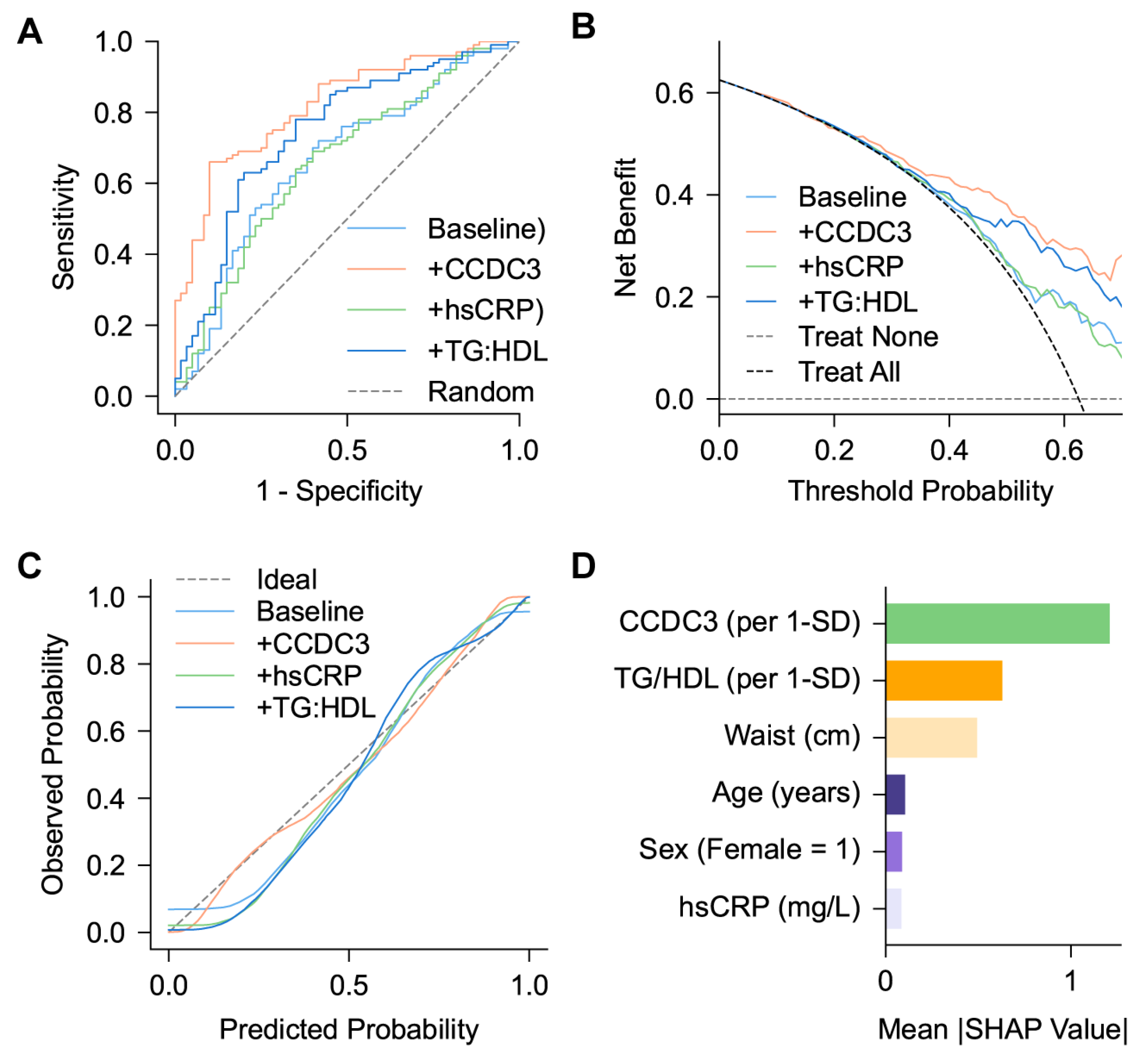
3.4. Clinical Utility of Circulating CCDC3 in Abdominal Obesity
4. Discussion
5. Conclusions
Supplementary Materials
Author Contributions
Funding
Institutional Review Board Statement
Informed Consent Statement
Data Availability Statement
Acknowledgments
Conflicts of Interest
References
- Dhokte, S.; Czaja, K. Visceral Adipose Tissue: The Hidden Culprit for Type 2 Diabetes. Nutrients 2024, 16, 1015. [Google Scholar] [CrossRef]
- Artasensi, A.; Mazzolari, A.; Pedretti, A.; Vistoli, G.; Fumagalli, L. Obesity and Type 2 Diabetes: Adiposopathy as a Triggering Factor and Therapeutic Options. Molecules 2023, 28, 3094. [Google Scholar] [CrossRef] [PubMed]
- Boutari, C.; DeMarsilis, A.; Mantzoros, C.S. Obesity and diabetes. Diabetes Res. Clin. Pract. 2023, 202, 110773. [Google Scholar] [CrossRef]
- Shen, F.; Guo, C.; Zhang, D.; Liu, Y.; Zhang, P. Visceral adiposity index as a predictor of type 2 diabetes mellitus risk: A systematic review and dose–response meta-analysis. Nutr. Metab. Cardiovasc. Dis. 2024, 34, 811–822. [Google Scholar] [CrossRef] [PubMed]
- Piché, M.-E.; Tchernof, A.; Després, J.-P. Obesity Phenotypes, Diabetes, and Cardiovascular Diseases. Circ. Res. 2020, 126, 1477–1500. [Google Scholar] [CrossRef]
- Zhou, H.; Li, T.; Li, J.; Zhuang, X.; Yang, J. The association between visceral adiposity index and risk of type 2 diabetes mellitus. Sci. Rep. 2024, 14, 16634. [Google Scholar] [CrossRef] [PubMed]
- Fu, X.; Zhao, Y.; Wu, Y.; Wen, L.; Huo, W.; Zhang, D.; Zhang, Y.; Li, J.; Lu, X.; Hu, F.; et al. Relationship between trajectory of Chinese visceral adiposity index and risk of type 2 diabetes mellitus: Evidence from the China-PAR project. Diabetes Obes. Metab. 2024, 27, 785–794. [Google Scholar] [CrossRef]
- Michel, S.; Linder, N.; Linder, A.; Eggebrecht, T.; Schaudinn, A.; Blüher, M.; Dietrich, A.; Denecke, T.; Busse, H. Anthropometric estimators of abdominal fat volume in adults with overweight and obesity. Int. J. Obes. 2023, 47, 306–312. [Google Scholar] [CrossRef]
- Department of Medical Administration, National Health Commission of the People’s Republic of China. Chinese Guidelines for the Clinical Management of Obesity (2024 Edition). Med. J. Peking Union Med. Coll. Hosp. 2025, 16, 90–108. [Google Scholar] [CrossRef]
- Vilalta, A.; Gutiérrez, J.A.; Chaves, S.; Hernández, M.; Urbina, S.; Hompesch, M. Adipose tissue measurement in clinical research for obesity, type 2 diabetes and NAFLD/NASH. Endocrinol. Diabetes Metab. 2022, 5, e00335. [Google Scholar] [CrossRef]
- Tilg, H.; Ianiro, G.; Gasbarrini, A.; Adolph, T.E. Adipokines: Masterminds of metabolic inflammation. Nat. Rev. Immunol. 2024, 25, 250–265. [Google Scholar] [CrossRef]
- Nimptsch, K.; Konigorski, S.; Pischon, T. Diagnosis of obesity and use of obesity biomarkers in science and clinical medicine. Metabolism 2019, 92, 61–70. [Google Scholar] [CrossRef]
- Taylor, E.B. The complex role of adipokines in obesity, inflammation, and autoimmunity. Clin. Sci. 2021, 135, 731–752. [Google Scholar] [CrossRef]
- Picó, C.; Palou, M.; Pomar, C.A.; Rodríguez, A.M.; Palou, A. Leptin as a key regulator of the adipose organ. Rev. Endocr. Metab. Disord. 2021, 23, 13–30. [Google Scholar] [CrossRef]
- Korac, A.; Srdic-Galic, B.; Stancic, A.; Otasevic, V.; Korac, B.; Jankovic, A. Adipokine signatures of subcutaneous and visceral abdominal fat in normal-weight and obese women with different metabolic profiles. Arch. Med. Sci. 2021, 17, 323–336. [Google Scholar] [CrossRef] [PubMed]
- Hagberg, C.E.; Spalding, K.L. White adipocyte dysfunction and obesity-associated pathologies in humans. Nat. Rev. Mol. Cell Biol. 2023, 25, 270–289. [Google Scholar] [CrossRef]
- Ugi, S.; Maeda, S.; Kawamura, Y.; Kobayashi, M.a.; Imamura, M.; Yoshizaki, T.; Morino, K.; Sekine, O.; Yamamoto, H.; Tani, T.; et al. CCDC3 is specifically upregulated in omental adipose tissue in subjects with abdominal obesity. Obesity 2013, 22, 1070–1077. [Google Scholar] [CrossRef]
- Liao, W.; Liu, H.; Zhang, Y.; Jung, J.H.; Chen, J.; Su, X.; Kim, Y.C.; Flores, E.R.; Wang, S.M.; Czarny-Ratajczak, M.; et al. Ccdc3: A New P63 Target Involved in Regulation Of Liver Lipid Metabolism. Sci. Rep. 2017, 7, 9020. [Google Scholar] [CrossRef] [PubMed]
- Omari, S.; Lee, H.; Wang, J.; Zeng, S.X.; Lu, H.; Wu, J. Extracellular and intracellular functions of coiled-coil domain containing 3. J. Mol. Cell Biol. 2023, 15, mjad037. [Google Scholar] [CrossRef]
- Clough, E.; Barrett, T.; Wilhite, S.E.; Ledoux, P.; Evangelista, C.; Kim, I.F.; Tomashevsky, M.; Marshall, K.A.; Phillippy, K.H.; Sherman, P.M.; et al. NCBI GEO: Archive for gene expression and epigenomics data sets: 23-year update. Nucleic Acids Res. 2024, 52, D138–D144. [Google Scholar] [CrossRef] [PubMed]
- Ritchie, M.E.; Phipson, B.; Wu, D.; Hu, Y.; Law, C.W.; Shi, W.; Smyth, G.K. limma powers differential expression analyses for RNA-sequencing and microarray studies. Nucleic Acids Res. 2015, 43, e47. [Google Scholar] [CrossRef]
- Pontén, F.; Schwenk, J.M.; Asplund, A.; Edqvist, P.H.D. The Human Protein Atlas as a proteomic resource for biomarker discovery. J. Intern. Med. 2011, 270, 428–446. [Google Scholar] [CrossRef]
- Alberti, K.G.; Zimmet, P.Z. Definition, diagnosis and classification of diabetes mellitus and its complications. Part 1: Diagnosis and classification of diabetes mellitus provisional report of a WHO consultation. Diabet Med. 1998, 15, 539–553. [Google Scholar] [CrossRef]
- Goldberg, E.K.; Fung, E.B. Precision of the Hologic DXA in the Assessment of Visceral Adipose Tissue. J. Clin. Densitom. 2020, 23, 664–672. [Google Scholar] [CrossRef] [PubMed]
- Kawai, T.; Autieri, M.V.; Scalia, R. Adipose tissue inflammation and metabolic dysfunction in obesity. Am. J. Physiol.-Cell Physiol. 2021, 320, C375–C391. [Google Scholar] [CrossRef] [PubMed]
- Vilariño-García, T.; Polonio-González, M.; Pérez-Pérez, A.; Ribalta, J.; Arrieta, F.; Aguilar, M.; Obaya, J.; Gimeno-Orna, J.; Iglesias, P.; Navarro, J.; et al. Role of Leptin in Obesity, Cardiovascular Disease, and Type 2 Diabetes. Int. J. Mol. Sci. 2024, 25, 2338. [Google Scholar] [CrossRef]
- Wang, F.; Jin, F.; Peng, S.; Li, C.; Wang, L.; Wang, S. Adipocyte-derived CCDC3 promotes tumorigenesis in epithelial ovarian cancer through the Wnt/ß-catenin signalling pathway. Biochem. Biophys. Rep. 2023, 35, 101507. [Google Scholar] [CrossRef]
- Ross, R.; Neeland, I.J.; Yamashita, S.; Shai, I.; Seidell, J.; Magni, P.; Santos, R.D.; Arsenault, B.; Cuevas, A.; Hu, F.B.; et al. Waist circumference as a vital sign in clinical practice: A Consensus Statement from the IAS and ICCR Working Group on Visceral Obesity. Nat. Rev. Endocrinol. 2020, 16, 177–189. [Google Scholar] [CrossRef] [PubMed]
- Neeland, I.J.; Yokoo, T.; Leinhard, O.D.; Lavie, C.J. 21st Century Advances in Multimodality Imaging of Obesity for Care of the Cardiovascular Patient. JACC Cardiovasc. Imaging 2021, 14, 482–494. [Google Scholar] [CrossRef]
- Kracht, C.L.; Katzmarzyk, P.T.; Staiano, A.E. Comparison of abdominal visceral adipose tissue measurements in adolescents between magnetic resonance imaging and dual-energy X-ray absorptiometry. Int. J. Obes. 2020, 45, 104–108. [Google Scholar] [CrossRef]
- Chan, B.; Yu, Y.; Huang, F.; Vardhanabhuti, V. Towards visceral fat estimation at population scale: Correlation of visceral adipose tissue assessment using three-dimensional cross-sectional imaging with BIA, DXA, and single-slice CT. Front. Endocrinol. 2023, 14, 1211696. [Google Scholar] [CrossRef] [PubMed]



| Parameters | Total (n = 160) | Non-AO (n = 60) | AO (n = 100) | p Value |
|---|---|---|---|---|
| Demographic characteristics | ||||
| Age (years) | 66 (58–72) | 64 (58–73) | 67 (58–72) | 0.61 |
| Female n (%) | 82 (51.2) | 30 (50.0) | 52 (52.0) | 0.81 |
| BMI (kg/m2) | 23.4 (21.5–25.7) | 21.2 (19.7–23.3) | 24.7 (22.9–26.8) | <0.001 |
| Waist circumference (cm) | 89.6 (83.2–96.3) | 81.3 (77.4–85.7) | 94.2 (89.0–99.5) | <0.001 |
| Metabolic profile | ||||
| HbA1c (%) | 9.2 (7.0–10.8) | 9.3 (6.8–10.9) | 8.9 (7.0–10.8) | 0.61 |
| eGFR (mL/min/1.73 m2) | 96.7 (73.1–121.8) | 112.5 (81.9–123.9) | 89.2 (66.0–114.9) | 0.01 |
| Uric acid (μmol/L) | 297 (251–356) | 281 (212–325) | 305 (269–386) | 0.002 |
| Triglyceride (mmol/L) | 1.26 (0.89–1.69) | 0.98 (0.67–1.38) | 1.34 (1.05–1.87) | <0.001 |
| HDL-C (mmol/L) | 1.14 (0.95–1.35) | 1.25 (1.05–1.48) | 1.05 (0.90–1.24) | <0.001 |
| hsCRP (mg/L) | 0.91 (0.45–2.29) | 0.52 (0.34–1.76) | 0.93 (0.56–2.90) | 0.007 |
| Diabetes-related characteristics | ||||
| Diabetes duration (years) | 10.5 (6.0–17.0) | 10.0 (6.0–16.8) | 11.5 (4.3–17.0) | 0.89 |
| Diabetic retinopathy n (%) | 49 (30.6) | 20 (33.3) | 29 (29.0) | 0.56 |
| Diabetic kidney disease n (%) | 39 (24.4) | 10 (16.7) | 29 (29.0) | 0.08 |
| Hypertension n (%) | 93 (58.1) | 29 (48.3) | 64 (64.0) | 0.05 |
Disclaimer/Publisher’s Note: The statements, opinions and data contained in all publications are solely those of the individual author(s) and contributor(s) and not of MDPI and/or the editor(s). MDPI and/or the editor(s) disclaim responsibility for any injury to people or property resulting from any ideas, methods, instructions or products referred to in the content. |
© 2026 by the authors. Licensee MDPI, Basel, Switzerland. This article is an open access article distributed under the terms and conditions of the Creative Commons Attribution (CC BY) license.
Share and Cite
Zhu, L.; Fan, X.; Lu, J.; He, Y.; Gao, Y.; He, S.; Lai, L.; Zhao, R.; Cheng, R.; Li, X.; et al. Circulating CCDC3 as an Indicator of Visceral Fat Accumulation in Patients with Type 2 Diabetes Mellitus. Metabolites 2026, 16, 111. https://doi.org/10.3390/metabo16020111
Zhu L, Fan X, Lu J, He Y, Gao Y, He S, Lai L, Zhao R, Cheng R, Li X, et al. Circulating CCDC3 as an Indicator of Visceral Fat Accumulation in Patients with Type 2 Diabetes Mellitus. Metabolites. 2026; 16(2):111. https://doi.org/10.3390/metabo16020111
Chicago/Turabian StyleZhu, Lin, Xiaodie Fan, Jiangang Lu, Yutao He, Youyuan Gao, Sirong He, Longbin Lai, Ruobei Zhao, Rui Cheng, Xi Li, and et al. 2026. "Circulating CCDC3 as an Indicator of Visceral Fat Accumulation in Patients with Type 2 Diabetes Mellitus" Metabolites 16, no. 2: 111. https://doi.org/10.3390/metabo16020111
APA StyleZhu, L., Fan, X., Lu, J., He, Y., Gao, Y., He, S., Lai, L., Zhao, R., Cheng, R., Li, X., Chuan, F., & Wang, B. (2026). Circulating CCDC3 as an Indicator of Visceral Fat Accumulation in Patients with Type 2 Diabetes Mellitus. Metabolites, 16(2), 111. https://doi.org/10.3390/metabo16020111