Article

Chemical Attributes of UK-Grown Tea and Identifying Catechin and Metabolite Dynamics in Green and Black Tea Using Metabolomics and Machine Learning


Department of Life Sciences, Aberystwyth University, Aberystwyth SY23 3FL, UK
*
Author to whom correspondence should be addressed.
Metabolites 2026, 16(1), 84; https://doi.org/10.3390/metabo16010084
Submission received: 1 November 2025 / Revised: 20 November 2025 / Accepted: 19 January 2026 / Published: 21 January 2026
(This article belongs to the Section Food Metabolomics)

Abstract

The Dartmoor Estate Tea plantation in Devon, UK, benefits from a unique microclimate and diverse soil conditions, which, together with its different processing methods, contribute to the distinctive flavours and chemical profiles of its teas. Objectives: The chemical diversity of Dartmoor tea was assessed via samples collected during processing of green and black tea. Methods: Leaf samples were collected during the processing of green and black tea and analysed using Flow Infusion Electrospray Ionisation Mass Spectrometry (FIE-MS). Results: For green tea processing, random forest regression identified features associated with the processing steps, resulting in a total of 272 m/z explanatory features. The analysis of black tea processing (4 h and overnight oxidation prior to roasting) yielded 209 discriminatory m/z features (4 h) and the model for the overnight oxidation and roasting treatments yielded 605 discriminatory m/z features. K-means clustering was performed on the percentage of relative abundance of the discriminatory m/z features. This grouped the discriminatory m/z features into 15 clusters of features showing similar trends across the processing stages. Functional and structural enrichment analysis was performed on each of the clusters and significant metabolic pathways included metabolism and biosynthesis of flavonoids, amino acids and lipids, the Pentose phosphate pathway, and the TCA cycle. Many discriminatory features were putatively classified as catechin-derived flavan-3-ols and flavonol glycosides. Conclusions: This research highlights the complex role that processing plays in shaping tea quality. It provides valuable insights into the metabolic pathways that influence tea production and emphasises how these factors determine the final chemical profile and sensory characteristics of tea.

1. Introduction

Tea is widely consumed in the UK and is made from the plant Camellia sinensis L. Regular tea consumption is associated with improved wellbeing, particularly healthy ageing, and a reduced risk of cardiovascular disease, certain cancers, liver disorders, obesity, and type 2 diabetes [1,2]. These benefits are largely attributed to the diverse bioactive compounds present in tea, which have been the subject of extensive research.
Tea contains an array of secondary metabolites, including polyphenols, which contribute significantly to its health-promoting properties. These metabolites, however, are influenced by several factors, such as plucking season, shading conditions, growth altitude, soil composition, climate, and the variety or cultivar of the tea plant, as well as the processing methods used [3,4]. These factors influence not only the chemical composition of tea but also its sensory qualities, including flavour, aroma, and colour, highlighting the complexity of tea as a functional food.
The health-promoting chemistry of tea includes catechins ((-)-epicatechin (EC), (-)-epigallocatechin (EGC), (-)-epicatechin-3-gallate (ECG), and (-)-epigallocatechin-3-gallate (EGCG)), theaflavins, thearubigins (tannins), and amino acids such as theanine [5]. These compounds contribute to the antioxidative, anti-inflammatory, and metabolic regulatory effects of tea. The processing of freshly plucked tea leaves into black (fermented), oolong (semi-fermented), green, and white (unfermented) teas further alters these bioactive compounds. Fermentation, for instance, involves enzymatic oxidation of catechins by endogenous polyphenol oxidases and peroxidases, leading to the formation of theaflavins and thearubigins. Previous work has shown that this process results in substantial catechin losses and transient peaks in theaflavins during black tea processing [6]. This process is accelerated by mechanical rolling, which ruptures the withered tea leaves, allowing the enzymes to react more efficiently with oxygen. In contrast, unfermented teas prevent enzymatic oxidation by inactivating these enzymes through steaming or pan-frying before rolling and drying [7,8].
The stages of tea processing, including withering, fixing/steaming (green tea), rolling, resting (a brief non-enzymatic relaxation period after rolling), and oxidation and drying (roasting), significantly influence the chemical composition and, consequently, the health benefits of the final product. Variations in processing methods affect the levels of key chemical constituents, such as polyphenols, as well as the sensory and functional attributes of tea [9,10,11].
Metabolomics has become a key tool for assessing the quality and authenticity of tea products. This advanced analytical approach enables unbiased screening of chemical compounds, allowing researchers to detect differences between tea samples based on their origin, processing methods, and storage conditions. Research has shown that metabolomics is highly effective for distinguishing tea varieties and identifying key quality markers [11,12,13,14]. Coupling metabolomics with traditional sensory evaluation and modern analytical techniques offers a complete picture of tea’s complexity and its potential health benefits.
Tea is both a part of cultural heritage and a functional beverage with many health benefits. Ongoing research into its bioactive compounds continues to reveal its diverse advantages, reinforcing its importance in both everyday diets and therapeutic contexts. The objective of this study was to characterise the chemical transformations occurring during green and black tea processing, with a particular focus on catechin dynamics and associated metabolic pathways, using an integrated untargeted metabolomics and machine learning approach applied to UK-grown tea.

2. Materials and Methods

2.1. Sample Collection

Fresh tea was picked from Dartmoor Estate Tea from two gardens on a morning in September 2023 where the air humidity was 58–65%, pressure 1016 hPa, and temperature 22 °C. Two leaves and a bud were selected and picked over a 3 h period, yielding over 12 kg of fresh leaf material. All harvested leaf material was thoroughly mixed and then divided into two batches intended for green tea processing and black tea processing, respectively. Throughout this section, “leaf” refers to the freshly plucked tea leaf, while “processed tea” refers to samples collected at specific stages of green or black tea manufacture.
For green tea, the leaf underwent a 4 h withering step (to approximately 90% moisture), followed by fixation in a wok (350 g batches, 5 min at 230 °C) to deactivate oxidative enzymes. The fixed leaf was then rolled for 1 h, allowed to rest briefly (non-enzymatic oxidation), and subsequently roasted at 75–115 °C for 3 h.
For black tea, withering samples were collected at three defined moisture levels—85% (9 h), 70% (23 h), and 60% (30 h). After withering, the leaf was rolled for 1 h and then divided into two oxidation treatments: a 4 h oxidation and an overnight (12 h) oxidation. Both oxidation treatments were followed by roasting at 75–115 °C for 3 h.
At each processing stage, leaf or processed tea samples were collected and immediately frozen in liquid nitrogen in 25 mL tubes for both green tea (picking; withering 90%; fixation; rolling; oxidation; roasting) and black tea (picking; withering 85%, 70%, 60%; rolling; 4 h or overnight oxidation; roasting). All samples were transported on dry ice and stored at −80 °C until analysis.

2.2. Chemicals and Reagents

Methanol, acetonitrile and formic acid of LC–MS grade were purchased from Fisher Scientific (Loughborough, UK). Ultrapure water was produced using a Milli-Q purification system (Millipore, Burlington, MA, USA). Four catechin standards—epicatechin (EC), epigallocatechin (EGC), epicatechin gallate (ECG), and epigallocatechin gallate (EGCG)—were purchased from Merck. Bligh and Dyer extraction reagents (chloroform, methanol, and water) were LC–MS or analytical grade. All chemicals were handled and stored according to the manufacturers’ instructions.

2.3. Sample Preparation and Extraction

The material collected at each processing stage for black and green tea varied in both size and moisture content. Therefore, a method was used to adjust all samples for weight and moisture content to allow direct comparison in the subsequent analyses. All procedures were carried out on ice. Prior to milling, one of the four replicates of each sample was weighed, freeze-dried and re-weighed, to determine the moisture content for this sample type. Mixer mill sample holders were pre-chilled at −80° and Bligh and Dyer extraction mix (chloroform/methanol/water 2:5:2) was prepared in advance and chilled to −20 °C, then stored on ice. The remaining three replicates were milled using a Retsch mixer mill with a stainless-steel ball. All sample tubes were first placed in liquid nitrogen before transferring to pre-chilled mixer mill holders, to prevent defrosting during milling. The samples were milled for 30 s at 30 Hz, then placed in liquid nitrogen once more. If necessary, the milling process was repeated until a visually homogeneous fine powder was obtained, with no visible leaf fragments larger than approximately 1 mm. A consistent amount (50 mg) of the milled material was spooned into pre-prepared weighed and labelled 2 mL Eppendorf tubes that contained 1 mL of chilled Bligh and Dyer extraction mix. The samples were then re-weighed to determine the exact amount of material added. All samples were vortexed, then shaken at 4 °C for 20 min before centrifugation at 13,000 rpm (~16,000× g) and 4 °C for 5 min. The supernatants were transferred into new labelled Eppendorf tubes and stored at −80 °C prior to analysis. Using both the moisture content and extraction weight data, adjustments were made to each sample, to normalise all extracts to the sample of lowest weight.

2.4. Sample Preparation for Analysis by Flow Infusion Electrospray Ionisation Mass Spectrometry (FIE-MS)

The tea leaf extracts were defrosted, vortexed, and spun down (13,000 rpm. (~16,000× g) and 4 °C for 5 min) before aliquoting. A preliminary trial had demonstrated that the optimum dilution for the samples was 1:10, so dilutions were prepared using Bligh and Dyer extraction mix before aliquoting 100 µL into HPLC vials with 200 µL inserts. For each FIE-MS sequence run, a quality control (QC) sample was prepared by combining 20 µL aliquots from all diluted samples in the run in a separate 5 mL Eppendorf tube and mixing before transferring 200 µL into an HPLC vial. Bligh and Dyer extraction mix (200 µL) was used as the control.

2.5. Flow Infusion Electrospray Ionisation Mass Spectrometry (FIE-MS)

FIE-MS was performed using an Exploris 120 mass analyser equipped with a Dionex Vanquish UHPLC system (Thermo Scientific, Waltham, MA, USA). Metabolite fingerprints were generated in both positive and negative ionisation modes, in a single run [15].
All samples were randomised to minimise batch effects. Samples (20 µL) were injected into a flow of 100 µL min−1 methanol/water (70:30, v/v). Ion intensities were acquired between m/z 55 and 1200 for 3.5 min at a resolution setting of 120,000, resulting in 3 (±1) ppm mass accuracy. Tuning and ESI source parameters were set according to manufacturer’s recommendations. Following data acquisition, Chromeleon.cmbx files were exported to .raw files and then converted to the .mzML open file format and centroided [16] using msconvert (TransProteomicPipeline 7.2.0) [17]. Spectral binning was applied using the R package binneR [18], and then standard post-acquisition processing routines were applied, including occupancy and QC filtering. Putative Molecular formulas were generated by using MZedDB V2.1 [19], an Aberystwyth University database for accurate mass annotation. The ionisation products of the assigned molecular formulas were initially searched against the KEGG compound database specific to Camellia sinensis for putative matches. Initial data analysis, including classification, was performed in R package metabolyseR.

2.6. Ultra-High-Performance Liquid Chromatography Coupled with Triple-Quadrupole Tandem Mass Spectrometry

To prepare the samples for HPLC-MS/MS analysis, once defrosted on ice they were vortexed to mix then spun down at 1250× g for 5 min at 4 °C. Each sample was diluted 50:50 using a solution of 70% acetonitrile plus 0.05% formic acid directly into 2 mL amber HPLC vials with inserts and crimp sealed. These were stored at 4 °C prior to analysis on the same day. Four standards were as follows: epicatechin (EC), epicatechin gallate (ECG), epigallocatechin (EGC) and epigallocatechin gallate (EGCG). Stock solutions (1 mg/mL) were prepared in 70% acetonitrile containing 0.05% formic acid. Sequential dilutions (1:10) were prepared to give standards at 0.01, 0.001, and 0.0001 mg/mL, which were used to construct standard curves for each catechin by HPLC-MS-MS analysis.
HPLC-MS/MS analysis was performed on a Thermo Scientific Vanquish UPLC system coupled with a TSQ Quantis triple-stage quadrupole mass spectrometer (Thermo Scientific), which was connected by an electrospray ionisation (ESI) source. The sheath gas was set at 50, the auxiliary gas at 10 and the sweep gas at 1 mL/min. The ion transfer tube temperature was 300 °C and the vaporizer temperature was set at 350 °C. MRM in positive ion mode was selected. Collision energies (eV) were optimised for each catechin standard, and the experiments were carried out monitoring the most intense transitions (Table 1 below).
Standards and samples were injected onto a Kinetex EVO C18 100A (2.1 mm × 150 mm, 1.7 µm) column (Phenomenex, Torrance, CA, USA). The flow rate was 0.25 mL/min and the column temperature was set at 30 °C. The sample volume was 5 µL. The HPLC conditions for the separation of catechins was based on the gradient method [20] For the separations, the mobile phase consisted of 0.1% aqueous formic acid (A) and methanol (B) in gradient elution at a flow rate of 0.25 mL/min. The optimised gradient elution was as follows: ramp from 0.0 to 25% B over 3 min and after a 3 min hold, the percentage of B was ramped to 30% over 10 min; then, at 17 min it was ramped to 100% B and held for 3 min before returning to 0% at 21 min, holding for 3 min. Using this chromatographic programme, the four catechins separated in the first 11 min and eluted in the order EGC, EC, EGCG, and ECG (Supplement S1). This methodology was used to confirm the catechins to Metabolomics Standards Initiative (MSI) Level 1.

2.7. Data Analysis

Data obtained was analysed using spectral binning [18] and further down-stream analysis. To provide a chemical overview of the samples, consensus structural classifications were compiled for each of the m/z features that were assigned a molecular formula, using the R package assignments which were developed as a ‘first pass’ automated assignment of molecular formulas to mass spectra acquired from FIE-MS (freely available from https://github.com/aberHRML/assignments, accessed 18 March 2024). The molecular formulas were initially searched against the KEGG compound database, and matching compounds were then filtered based on their ability to form the relevant adducts using MZedDB ionisation rules [19]. In MZedDB, the user can select appropriate rules manually from the adduct rules provided in the referenced MZedDB. For example, if the mobile phase does not contain NH4+ ions, then the rule {M + NH4+]+ is not appropriate and will not be included. Other automatic checks are applied, for example, if the molecular formula does not contain ‘N’, then the adduct rule [M + H-NH3]+ is not used. Where no compound matches were found in the KEGG compound database, the molecular formula was then searched in the PubChem compound database. Structural chemical classifications, based on the CHEMONT chemical taxonomy, were retrieved from the ClassyFire database for the matched compounds [21]. For each adduct linked to an assigned molecular formula, putative structural classifications were determined to a depth based on a consensus of 66% or higher among the matched compounds. FIE-MS are putative and fall under Metabolomics Standards Initiative (MSI) Level 3 (putatively characterised compound classes).
Random forest regression was used to identify m/z features related to processing steps. K-means clustering was performed on the percentage relative abundance of discriminatory m/z features. The number of clusters (k = 15) was selected based on a combination of the silhouette coefficient, inspection of within-cluster sum of squares (WCSS), and biological interpretability. Functional and structural enrichment analysis was carried out on each cluster to identify potential chemical classes and biological functions associated with cluster trends. Functional enrichment was performed using the PageRank approach implemented in the FELLA R package [22,23]. Structural enrichment was carried out on each cluster using over-representation analysis with Fisher’s exact test.
Welch’s t-test was performed on each of the m/z features to identify features that were significantly different between the 4 h and overnight oxidation treatments and between the roasted samples that had been subjected to 4 h and overnight oxidation. p-values were adjusted for multiple testing using the Benjamini–Hochberg false discovery rate (FDR) method.

3. Results

3.1. Results

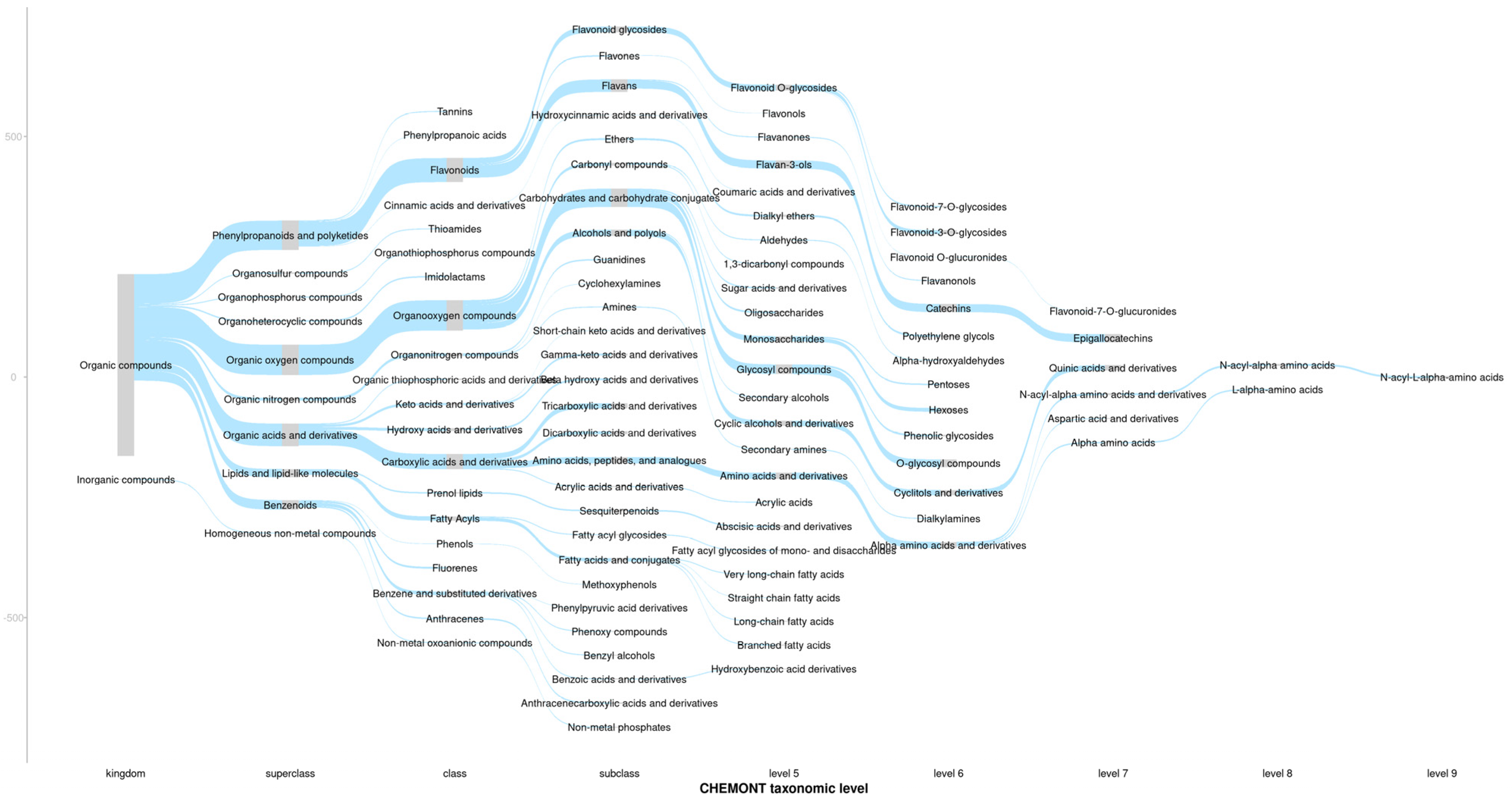
The Sankey diagram (Figure 1) provides a compositional overview of the frequencies of the putative structural chemical classes assigned to the m/z features obtained from the samples. These frequencies are represented by the grey bars and blue flows within the diagram at each CHEMONT taxonomic level. There was a high frequency of m/z features putatively classified as phenylpropanoids and polyketides, as well as organic oxygen compounds and organic acids and their derivatives. These features indicated a high abundance of compounds commonly associated with tea quality and health benefits [24].

3.2. Green Tea

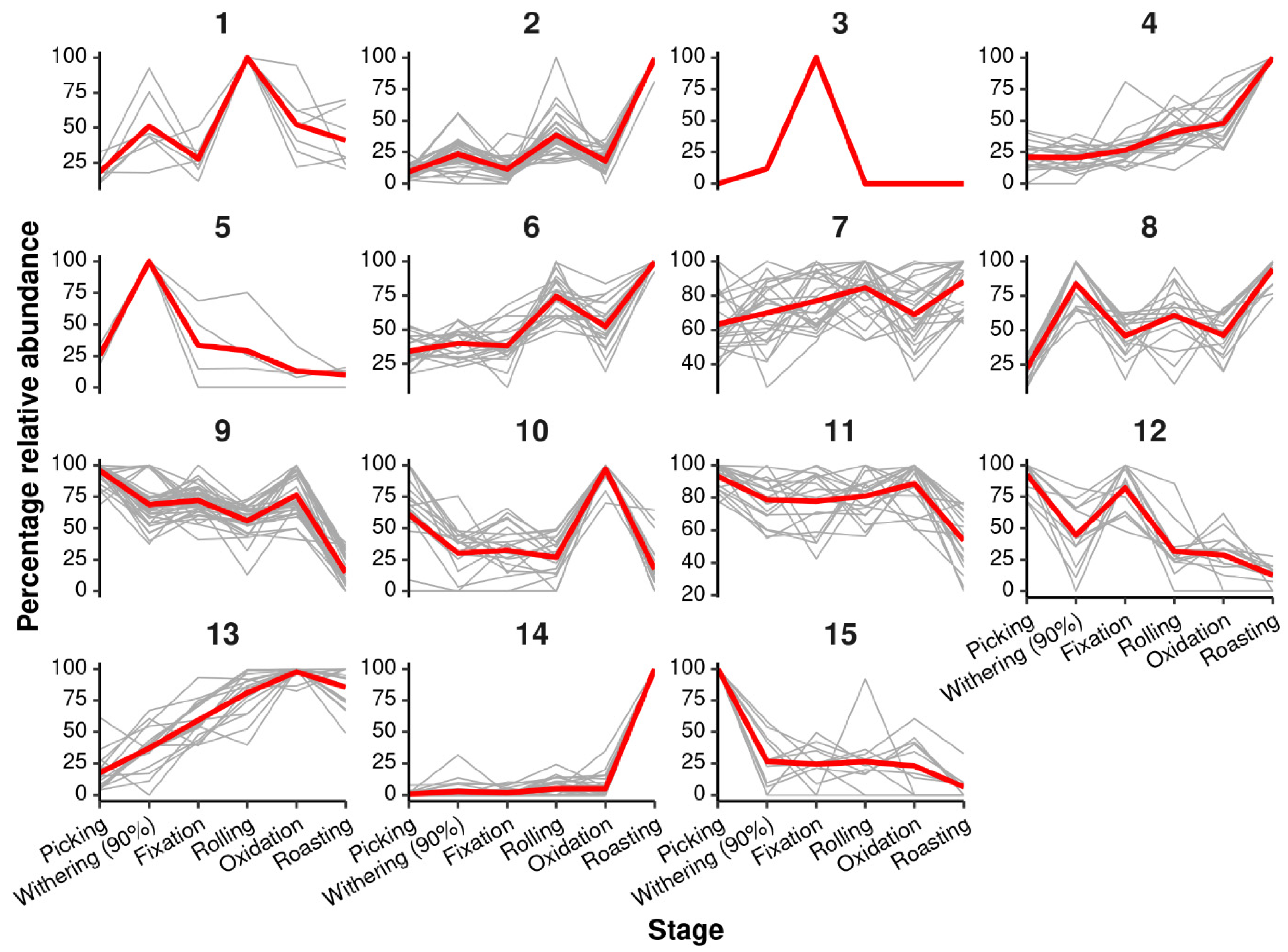
Random forest regression was used to identify m/z features related to green tea processing steps. This yielded a strong model with a significant R2 value of 0.724 (p < 0.01, 3000 permutations). There were 272 m/z features that were found to be explanatory (% increase in mean squared error, p < 0.05, 3000 permutations). K-means clustering was performed on the percentage relative abundance of the discriminatory m/z features. This grouped the discriminatory m/z features into 15 clusters of features, showing similar trends across the processing steps. An overview of the clusters is shown in Figure 2. Significant putative metabolic pathways include Cluster 2 (Biosynthesis of amino acids), 4 (Flavonoid biosynthesis), 6 (Flavonoid and Carotenoid biosynthesis), 7 (Pentose phosphate pathway, Starch and sucrose metabolism, lipid metabolism), 8 (Starch and sucrose metabolism, lipid metabolism), 9 (TCA cycle, Lysine biosynthesis, C5-Branched dibasic acid metabolism), and 11 (TCA cycle, amino acid metabolism), as shown in full in Table 1. The prominence of flavonoid biosynthesis and carbohydrate metabolism pathways indicates that green tea processing preserves bioactive compounds beneficial for health (Table 1) [25]. Within the flavonoid-enriched clusters (e.g., Clusters 4 and 6), many discriminatory m/z features were putatively annotated (MSI level 3) as catechin-like flavan-3-ols and flavonol glycosides, whereas clusters associated with carbohydrate metabolism (e.g., Clusters 7 and 8) were dominated by features consistent with mono- and disaccharide-related metabolites. These representative metabolite classes help to contextualise the cluster trends across green tea processing.

3.3. Black Tea

Analysis of the black tea processing samples was more complex due to the presence of two branches of the process that included 4 h and overnight oxidation prior to roasting. To analyse this, random forest regression was performed by separately including the 4 h and overnight oxidation and roasting treatments with the prior process stages to identify chemistry of interest across the process in each case. The separate oxidation and roasting treatments were then compared directly using t-tests to identify the chemistry specifically related to these treatments.

3.4. Black Tea—4 h

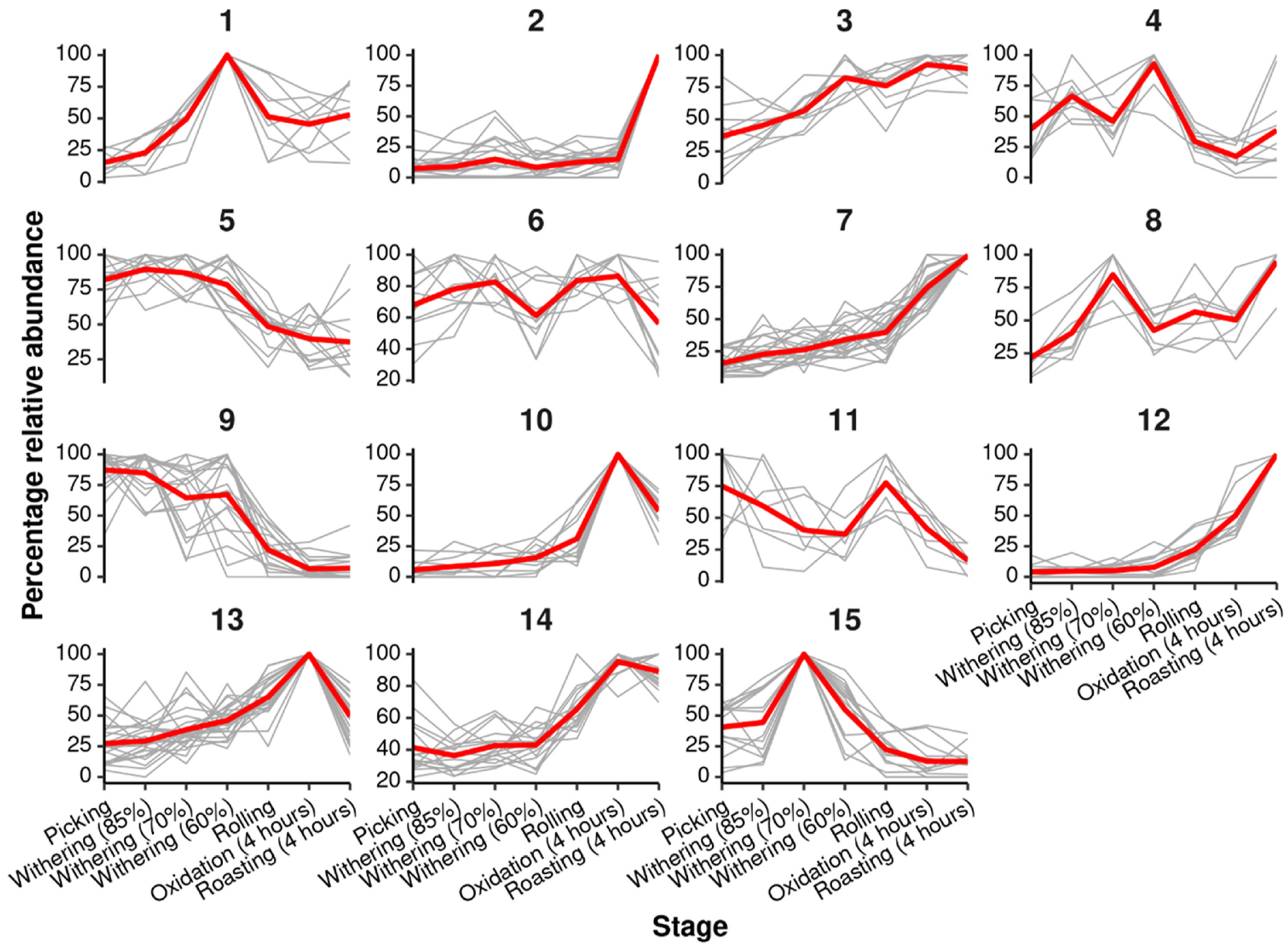
Random forest regression was performed using the process steps and the 4 h oxidation and roasting treatments. This yielded a very strong model with a significant R2 value of 0.92 (p < 0.01, 3000 permutations). There were 209 m/z features that were found to be discriminatory (% increase in mean squared error, p < 0.05, 3000 permutations). k-means clustering was performed on the percentage relative abundance of the discriminatory m/z features. This grouped the discriminatory m/z features into 15 clusters of features, showing similar trends across the processing stages. An overview of the clusters is shown Figure 3. Functional and structural enrichment analysis was performed on each of the clusters. Discriminatory m/z clusters include Cluster 3 (TCA cycle, Pentose phosphate pathway, Carbon metabolism, amino acid metabolism), 5 (C5-Branched dibasic acid metabolism, Ascorbate and aldarate metabolism), 7 (Tyrosine metabolism, Phenylpropanoid biosynthesis, Ubiquinone and other terpenoid-quinone biosynthesis), 8 (Flavonoid biosynthesis, Flavone and flavonol biosynthesis), 9 (Flavone and flavonol biosynthesis), 10 (Arginine biosynthesis, Glyoxylate and dicarboxylate metabolism), 12 (Fructose and mannose metabolism, Galactose metabolism, N-glycan biosynthesis, lipid metabolism, Protein processing), 13 (Pentose and glucuronate interconversions, amino acid metabolism, Nucleotide metabolism), 14 (amino acid metabolism, Biosynthesis of secondary metabolites, Butanoate metabolism, 2-Oxocarboxylic acid metabolism), and 15 (Flavonoid biosynthesis), as shown in full in Table 1. In the 4 h oxidation branch, clusters linked to phenylpropanoid and flavonoid biosynthesis (e.g., clusters 7–9 and 15) contained discriminatory features putatively annotated as phenolic acids, catechin-like flavan-3-ols and flavonol glycosides. By contrast, clusters enriched for saccharide and N-glycan pathways (e.g., cluster 12) were dominated by sugar- and glycan-related features. These representative metabolite classes illustrate how early oxidation and roasting reshape both phenolic and carbohydrate-related chemistry.

3.5. Black Tea—Overnight

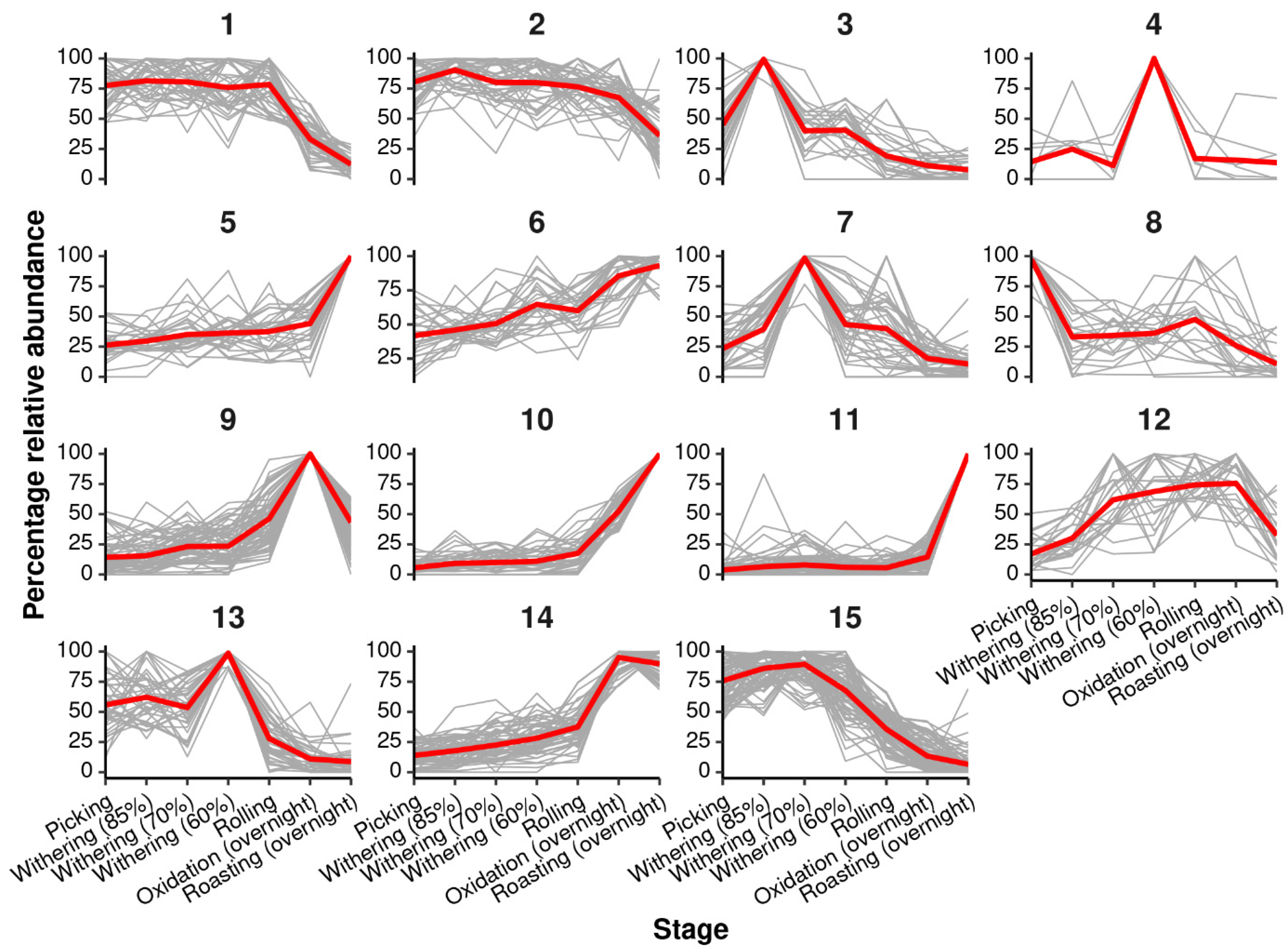
Random forest regression was performed using the process steps and the overnight oxidation and roasting treatments. This yielded a very strong model with a significant R2 value of 0.883 (p < 0.01, 3000 permutations). There were 605 m/z features that were found to be discriminatory (% increase in mean squared error, p < 0.05, 3000 permutations). K-means clustering was performed on the percentage relative abundance of the discriminatory m/z features. This grouped the discriminatory m/z features into 15 clusters of features, showing similar trends across the processing stages. An overview of the clusters is shown in Figure 4. Functional and structural enrichment analysis was performed on each of the clusters. Discriminatory m/z clusters include 1 (TCA cycle, Ascorbate and aldarate metabolism, C5-Branched dibasic acid metabolism), 2 (TCA cycle, amino acid metabolism/biosynthesis, C5-Branched dibasic acid metabolism), 3 (TCA cycle, Starch and sucrose metabolism, lipid metabolism, ABC transporters), 5 (Fructose and mannose metabolism, N-Glycan biosynthesis, Protein processing in endoplasmic reticulum), 6 (Pentose phosphate pathway, Fructose and mannose metabolism, amino acid degradation/biosynthesis, Amino sugar and nucleotide sugar metabolism), 7 (Flavonoid biosynthesis), 8 (Tyrosine metabolism), 9 (Pentose phosphate pathway, Pentose and glucuronate interconversions, amino acid biosynthesis, Tropane, piperidine and pyridine alkaloid), 11 (Biosynthesis of secondary metabolites), 12 (amino acid biosynthesis, Glyoxylate and dicarboxylate metabolism, Pantothenate and CoA biosynthesis), 13 (Biosynthesis of secondary metabolites), 14 (Pentose phosphate pathway, Vitamin B6 metabolism, amino acid biosynthesis/degradation/metabolism, Phenylpropanoid biosynthesis), and 15 (TCA cycle, amino acid biosynthesis, C5-Branched dibasic acid metabolism, 2-Oxocarboxylic acid metabolism), as shown in full in Table 1. The overnight oxidation treatment led to further biochemical transformations, particularly in flavonoid biosynthesis and the TCA cycle, with increased metabolic diversity observed in overnight oxidation compared to the 4 h treatment. For the overnight oxidation branch, flavonoid-enriched clusters (e.g., Cluster 7) were characterised by features putatively annotated as flavan-3-ols and their oxidised derivatives, whereas clusters associated with the TCA cycle and related energy metabolism (e.g., Clusters 1–3 and 15) contained small organic and dicarboxylic acid-like features. These representative examples support the view that extended oxidation drives both deeper polyphenol transformation and broader shifts in core carbon metabolism.

3.6. Oxidation and Roasting

Welch’s t-test was performed on each of the m/z features to identify features that were significantly different between the 4 h and overnight oxidation treatments, and between the roasted samples that had been subjected to 4 h and overnight oxidation. Between the 4 h and overnight oxidation treatments identified, a total of 307 features were significantly different. Between the roasted samples that had been subjected to 4 h and overnight oxidation, there was a total of 701 features that were significantly different. Functional enrichment analysis was performed separately on the m/z features that were found to be increased or decreased in each comparison. The significantly enriched metabolic pathways are shown in Table 2. Similarly, structural enrichment analysis was performed to identify the structural classes of interest amongst the features that were increased or decreased in the overnight oxidation treatment compared to the 4 h oxidation treatment and in the overnight treatment compared to the 4 h treatment. Flavonoids, amino acids, and lipids appeared to show changes, among other chemical reactions, between Oxidation (4 h)~Oxidation (overnight) and Roasting (4 h)~Roasting (overnight) (Table 2). Overnight oxidation resulted in a notable reduction in catechins and an increase in flavonoid derivatives, likely due to extended enzymatic oxidation [26].

3.7. Catechins in Black and Green Tea

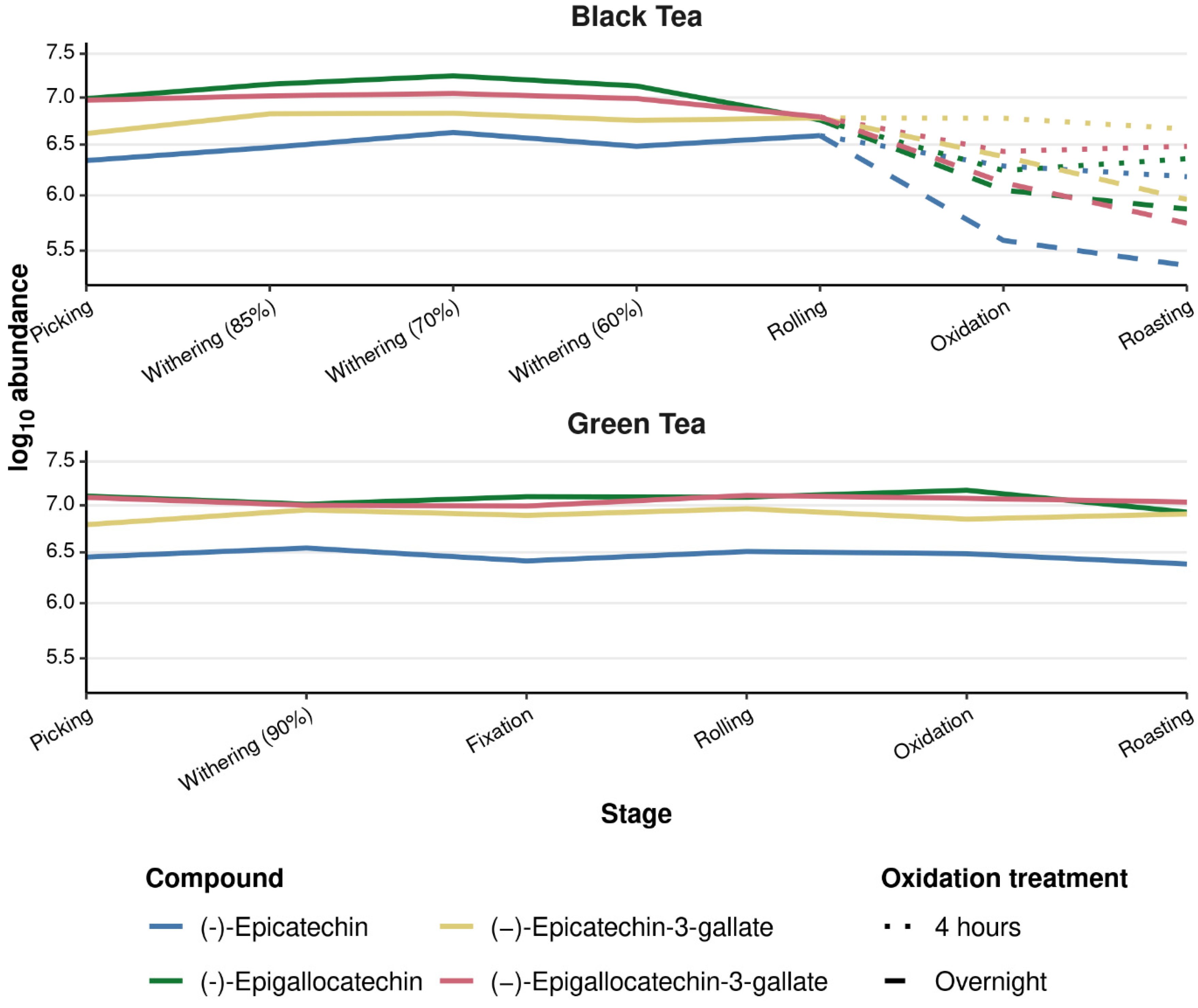
Using targeted HPLC-MS/MS, the four major catechins—(-)-epicatechin (EC), (-)-epigallocatechin (EGC), (-)-epicatechin-3-gallate (ECG) and (-)-epigallocatechin-3-gallate (EGCG)—were confirmed and quantified across all processing stages (Figure 5). In black tea, log10-transformed abundances at picking ranged from approximately 6.4 for EC to around 7.1–7.2 for EGC and EGCG, indicating that all four catechins were present at relatively high and comparable levels. During withering (85–60%), a slight increase of about 0.1–0.3 log10 units was observed for each catechin, consistent with a modest concentration effect and limited oxidative loss at this stage.
Subsequent processing produced clear differences between the 4 h and overnight oxidation treatments. After rolling, catechin levels began to decline, but in the 4 h oxidation branch, EC, EGC, ECG, and EGCG decreased only gradually, by roughly 0.2–0.3 log10 units over oxidation and roasting. In contrast, overnight oxidation caused a pronounced depletion of all four catechins. By the end of roasting, EC showed almost a 1 log10 unit decrease relative to the rolled leaf, while EGC and EGCG decreased by approximately 0.5–0.7 log10 units and ECG by about 0.4 log10 units. Because these values are log-transformed, the observed decreases correspond to several-fold reductions in catechin abundance, indicating extensive oxidative conversion of monomeric flavan-3-ols into higher-molecular-weight oxidation products such as theaflavins and thearubigins [6,26].
Green tea displayed a markedly different behaviour. Across picking, withering (90%), fixation, rolling, oxidation, and roasting, the abundances of all four catechins remained within a narrow range (generally <0.2 log10 units variation), with EGC and EGCG consistently the most abundant, followed by ECG and EC. These stable profiles show that green tea processing, which involves early enzyme inactivation during fixation, effectively preserves catechins and prevents the extensive oxidative degradation seen in black tea. Overall, the established concentration levels and processing-dependent trends for each catechin underline their central role in determining the biological potential of tea and support the view that stronger oxidation reduces catechin-derived bioactivity while contributing to the formation of characteristic black tea pigments [26].

4. Discussion

This study provided an exploration of the chemical diversity and transformation of tea during its processing stages, focusing on green and black tea from Dartmoor Estate Tea. The findings revealed important insights into the metabolic pathways and chemical changes associated with the processing steps. For green tea, metabolomic analysis putatively identified significant m/z features associated with the processing steps, which were enriched in pathways such as flavonoid biosynthesis, starch and sucrose metabolism, lipid metabolism, and the TCA cycle. These pathways are essential for maintaining the antioxidant properties and overall bioactive profile of green tea, which have been linked to various health benefits, including anti-inflammatory and cardioprotective effects [24,25].
The results indicate that green tea processing preserves catechins and other polyphenols crucial for its functional properties. The retention of these compounds aligns with previous studies demonstrating that non-fermented tea varieties maintain higher levels of antioxidants compared to black tea, where oxidation leads to significant chemical transformations [26]. Understanding these metabolic pathways provides a foundation for optimising tea processing methods to enhance the retention of health-promoting compounds, supporting consumer demand for high-quality, functional beverages.
The interplay between lipid metabolism and flavonoid biosynthesis suggests that tea processing affects not only the phenolic profile but also lipid-derived volatiles, which contribute to aroma and taste. These findings highlight the need for further research into the role of lipid transformations in shaping the sensory attributes of tea products, particularly in relation to consumer preferences and potential therapeutic applications.
Black tea demonstrated greater chemical complexity, with its polyphenolic profile strongly shaped by oxidation duration and subsequent roasting. HPLC-MS/MS analysis showed that while green tea retained its catechins throughout processing, black tea exhibited substantial catechin loss—most notably under overnight oxidation, whereas a 4 h oxidation caused only a slight decline. This pronounced reduction aligns with previous studies indicating that extended oxidation promotes the enzymatic and non-enzymatic conversion of catechins into theaflavins and thearubigins, compounds responsible for black tea’s colour, flavour, and characteristic astringency [6,7,8]. Studies on black tea manufacture have reported >90% losses of key catechins alongside transient peaks in theaflavins during fermentation, illustrating the scale of these oxidative transformations [6]. These oxidation-derived transformations not only define black tea’s sensory attributes and flavour complexity but also influence its antioxidant activity and overall functional properties, underscoring the need for precise control of oxidation conditions to optimise both quality and potential health benefits.
A more detailed inspection of the individual catechins supports these observations. The non-gallated catechins (EC and EGC) showed moderate declines under both oxidation treatments, whereas the gallated catechins (ECG and EGCG) exhibited much greater reductions—particularly under overnight oxidation. This reflects the higher oxidative susceptibility of gallated catechins, whose additional galloyl moieties enhance their reactivity with polyphenol oxidase and peroxidase, accelerating their conversion to theaflavin-3-gallate, theaflavin-3,3′-digallate, and subsequent thearubigin polymers. While theaflavins and thearubigins were not directly quantified, the observed patterns are consistent with established oxidative transformations during tea processing. The pronounced depletion of EGCG and EGC therefore highlights their central roles as primary substrates driving the formation of oxidation-derived pigments that shape black tea’s colour and briskness. In contrast, green tea showed stable levels of all four catechins across processing, confirming that early heat fixation effectively inactivates oxidative enzymes, thereby preserving flavan-3-ols that underpin green tea’s antioxidant potential. Together, these catechin-specific transformations provide deeper insight into how processing intensity modulates the sensory profile and biological functionality of tea, linking oxidation-driven chemistry to differences in health-promoting potential between black and green teas.
Functional enrichment analysis putatively revealed that pathways such as amino acid metabolism, flavonoid biosynthesis, and the pentose phosphate pathway played significant roles. These pathways play a critical role in shaping the chemical profile of black tea [24,25]. The pentose phosphate pathway, in particular, is linked to the generation of NADPH, which facilitates redox balance during oxidation and contributes to the biochemical stability of flavonoid compounds. Understanding these metabolic shifts provides valuable insight into the role of oxidation in defining the final composition and quality of black tea, emphasising the importance of controlled processing.
Advanced metabolomic tools, including random forest regression, k-means clustering, and enrichment analysis, provided a powerful framework for identifying chemical changes and pathway enrichments associated with tea processing. These techniques facilitated the detection of key metabolic shifts that would otherwise remain missed in targeted analyses, highlighting the dynamic transformations occurring during oxidation and roasting [12,13]. The integration of machine learning algorithms, such as random forest regression, allowed for the precise classification of tea processing stages based on metabolite profiles, demonstrating the effectiveness of predictive modelling in food metabolomics [14]. Enrichment analysis provided valuable insights into the functional implications of observed metabolic alterations, particularly in relation to flavonoid biosynthesis, amino acid metabolism, and carbohydrate pathways. These findings indicate the robustness of metabolomics in uncovering subtle variations in the chemical composition of tea, reinforcing its role as an essential tool for quality assessment, authentication, and process optimisation in tea production [24,25].
Furthermore, this research highlights the pivotal role of tea processing in determining its chemical and functional profiles. Refining processing techniques can enhance the retention of specific health-promoting compounds, offering opportunities for tailored production to meet increasing consumer demand for functional beverages [24]. Additionally, integrating metabolomic insights with sensory evaluation provides a holistic approach to tea quality assessment, bridging the gap between chemical diversity and consumer preferences and ultimately contributing to improved tea quality and product innovation [12,14].

5. Conclusions

This study provides new insight by integrating untargeted metabolomics with machine learning to putatively characterise, for the first time, the chemical transformations that occur during the processing of UK-grown tea. We identify previously unreported differences in catechin depletion between short and extended oxidation, alongside novel enrichment patterns across amino acid, carbohydrate, and flavonoid pathways. These findings offer a more detailed understanding of how processing duration modulates the metabolic landscape of both green and black tea. Together, these advancements extend the current knowledge of tea chemistry and highlight opportunities to refine processing strategies to enhance product quality and functional properties. Further work examining how environmental variables—including soil, climate, and microclimate—interact with processing conditions will help to deepen our understanding of factors shaping the chemical and sensory characteristics of UK-grown tea.

Supplementary Materials

The following supporting information can be downloaded at: https://www.mdpi.com/article/10.3390/metabo16010084/s1, Supplementary S1.

Author Contributions

The study protocol was designed by A.J.L. and A.W.-W. Sample collection and data collection was carried out by A.J.L. and A.W.-W., M.P.M.M., L.L., M.B. and A.W. provided metabolomic analysis. T.W. and J.F. provided statistical analysis. A.J.L. wrote the first draft of the manuscript. The manuscript was critically reviewed by M.B. All authors have read and agreed to the published version of the manuscript.

Funding

Funded by Welsh Government Covid Recovery Challenge Fund (part of the Welsh Government’s Food and Drink Division funding), alongside Innovate UK Better Food for all (10068218), and the Joy Welch Research Fund (Aberystwyth University internal).

Institutional Review Board Statement

Not applicable.

Informed Consent Statement

Not applicable.

Data Availability Statement

The metabolomics and metadata reported in this paper are available on request.

Acknowledgments

We would like to thank Tetrim Teas (Mari Arthur and Steffan Mcallister) and Dartmoor Estate Tea (Jo Harper and Kathryn Bennet) for their huge amount of support and use of facilities.

Conflicts of Interest

The authors declare no conflicts of interest. The funders had no role in the design of the study; in the collection, analyses, or interpretation of data; in the writing of the manuscript; or in the decision to publish the results.

Abbreviations

FIE-MSFlow Infusion Electrospray Ionisation Mass Spectrometry
EC(-)-epicatechin
EGC(-)-epigallocatechin
ECG(-)-epicatechin-3-gallate
EGCG(-)-epigallocatechin-3-gallate
HPLCHigh-performance liquid chromatography
MSMass Spectrometry

References

  1. Samanta, S. Potential Bioactive Components and Health Promotional Benefits of Tea (Camellia sinensis). J. Am. Nutr. Assoc. 2022, 41, 65–93. [Google Scholar] [CrossRef] [PubMed]
  2. Cabrera, C.; Artacho, R.; Giménez, R. Beneficial effects of green tea—A review. J. Am. Coll. Nutr. 2006, 25, 79–99. [Google Scholar] [CrossRef] [PubMed]
  3. Farag, M.A.; Elmetwally, F.; Elghanam, R.; Kamal, N.; Hellal, K.; Hamezah, H.S.; Zhao, C.; Mediani, A. Metabolomics in tea products; a compile of applications for enhancing agricultural traits and quality control analysis of Camellia sinensis. Food Chem. 2023, 404, 134628. [Google Scholar] [CrossRef] [PubMed]
  4. Ahmed, S.; Griffin, T.S.; Kraner, D.; Schaffner, M.K.; Sharma, D.; Hazel, M.; Leitch, A.R.; Orians, C.M.; Han, W.; Stepp, J.R.; et al. Environmental Factors Variably Impact Tea Secondary Metabolites in the Context of Climate Change. Front. Plant Sci. 2019, 10, 939. [Google Scholar] [CrossRef]
  5. Bag, S.; Mondal, A.; Majumder, A.; Banik, A. Tea and its phytochemicals: Hidden health benefits & modulation of signaling cascade by phytochemicals. Food Chem. 2022, 371, 131098. [Google Scholar] [CrossRef]
  6. Deka, H.; Sarmah, P.P.; Devi, A.; Tamuly, P.; Karak, T. Changes in major catechins, caffeine, and antioxidant activity during CTC processing of black tea from North East India. RSC Adv. 2021, 11, 11457–11467. [Google Scholar] [CrossRef]
  7. Mozumder, N.H.M.R.; Hwang, K.H.; Lee, M.-S.; Kim, E.-H.; Hong, Y.-S. Metabolic Evidence on Vintage Effect in Tea (Camellia sinensis L.) Plants. Appl. Biol. Chem. 2023, 66, 86. [Google Scholar] [CrossRef]
  8. Li, N.; Xu, J.; Zhao, Y.; Zhao, M.; Liu, Z.; Wang, K.; Huang, J.; Zhu, M. The influence of processing methods on polyphenol profiling of tea leaves from the same large-leaf cultivar (Camellia sinensis var. assamica cv. Yunkang-10): Nontargeted/targeted polyphenomics and electronic sensory analysis. Food Chem. 2024, 460, 140515. [Google Scholar] [CrossRef]
  9. Higdon, J.V.; Frei, B. Tea catechins and polyphenols: Health effects, metabolism, and antioxidant functions. Crit. Rev. Food Sci. Nutr. 2003, 43, 89–143. [Google Scholar] [CrossRef]
  10. Sang, S.; Lambert, J.D.; Ho, C.; Yang, C.S. The chemistry and biotransformation of tea constituents. Pharmacol. Res. 2011, 64, 87–99. [Google Scholar] [CrossRef]
  11. Lloyd, A.J.; Warren-Walker, A.; Finch, J.; Harper, J.; Bennet, K.; Watson, A.; Lyons, L.; Martin, P.M.; Wilson, T.; Beckmann, M. Chemical Diversity of UK Grown Tea Explored Using Metabolomics and Machine Learning. Metabolites 2025, 15, 52. [Google Scholar] [CrossRef]
  12. Lee, J.E.; Lee, B.J.; Chung, J.O.; Kim, H.N.; Kim, E.H.; Jung, S.; Lee, H.; Lee, S.-J.; Hong, Y.-S. Metabolomic unveiling of a diverse range of green tea (Camellia sinensis) metabolites dependent on geography. Food Chem. 2015, 174, 452–459. [Google Scholar] [CrossRef]
  13. Li, J.; Wang, Y.; Suh, J.H. Multi-omics approach in tea polyphenol research regarding tea plant growth, development and tea processing: Current technologies and perspectives. Food Sci. Hum. Wellness 2022, 11, 524–536. [Google Scholar] [CrossRef]
  14. Fang, X.; Xue, R.; Xiao, J.; Pu, Q.; Wang, Y.; Yuan, Y.; Liu, B.; Sui, M.; Jiang, G.; Niaz, R.; et al. Effects of different fermentation modes on tea leaves: Revealing the metabolites modification by quasi-targeted metabolomics. Food Biosci. 2024, 62, 105223. [Google Scholar] [CrossRef]
  15. Beckmann, M.; Parker, D.; Enot, D.P.; Duval, E.; Draper, J. High-throughput, nontargeted metabolite fingerprinting using nominal mass flow injection electrospray mass spectrometry. Nat. Protoc. 2008, 3, 486–504. [Google Scholar] [CrossRef]
  16. Martens, L.; Chambers, M.; Sturm, M.; Kessner, D.; Levander, F.; Shofstahl, J.; Tang, W.H.; Römpp, A.; Neumann, S.; Pizarro, A.D.; et al. mzML—A Community Standard for Mass Spectrometry Data. Mol. Cell Proteom. 2011, 10, R110.000133. [Google Scholar] [CrossRef]
  17. Chambers, M.C.; Maclean, B.; Burke, R.; Amodei, D.; Ruderman, D.L.; Neumann, S.; Gatto, L.; Fischer, B.; Pratt, B.; Egertson, J.; et al. A Cross-platform Toolkit for Mass Spectrometry and Proteomics. Nat. Biotechnol. 2012, 30, 918–920. [Google Scholar] [CrossRef] [PubMed]
  18. Finch, J.P.; Wilson, T.; Lyons, L.; Phillips, H.; Beckmann, M.; Draper, J. Spectral binning as an approach to post-acquisition processing of high resolution FIE-MS metabolome fingerprinting data. Metabolomics 2022, 18, 64. [Google Scholar] [CrossRef] [PubMed]
  19. Draper, J.; Enot, D.P.; Parker, D.; Beckmann, M.; Snowdon, S.; Lin, W.; Zubair, H. Metabolite signal identification in accurate mass metabolomics data with MZedDB, an interactive m/z annotation tool utilising predicted ionisation behaviour ‘rules’. BMC Bioinform. 2009, 10, 227. [Google Scholar] [CrossRef]
  20. Tao, W.; Zhou, Z.; Zhao, B.; Wei, T. Simultaneous determination of eight catechins and four theaflavins in green, black and oolong tea using new HPLC-MS-MS method. J. Pharm. Biomed. Anal. 2016, 131, 140–145. [Google Scholar] [CrossRef]
  21. Djoumbou Feunang, Y.; Eisner, R.; Knox, C.; Chepelev, L.; Hastings, J.; Owen, G.; Fahy, E.; Steinbeck, C.; Subramanian, S.; Bolton, E.; et al. ClassyFire: Automated chemical classification with a comprehensive, computable taxonomy. J. Cheminform. 2016, 8, 61. [Google Scholar] [CrossRef] [PubMed]
  22. Picart-Armada, S.; Fernández-Albert, F.; Vinaixa, M.; Rodríguez, M.A.; Aivio, S.; Stracker, T.H.; Yanes, O.; Perera-Lluna, A. Null diffusion-based enrichment for metabolomics data. PLoS ONE 2017, 12, e0189012. [Google Scholar] [CrossRef]
  23. Picart-Armada, S.; Fernández-Albert, F.; Vinaixa, M.; Yanes, O.; Perera-Lluna, A. FELLA: An R package to enrich metabolomics data. BMC Bioinform. 2018, 19, 538. [Google Scholar] [CrossRef]
  24. Wang, Z.; He, T.; Fang, Y.; Lan, Z.; Liu, B.; Kong, K.W.; Sun, J.; He, X. Impact of processing methods in shaping taste, flavor, antioxidants, and metabolites in teas (Camellia sinensis): A multi-method analysis. Food Res. Int. 2025, 208, 116060. [Google Scholar] [CrossRef]
  25. Tang, G.-Y.; Meng, X.; Gan, R.-Y.; Zhao, C.-N.; Liu, Q.; Feng, Y.-B.; Li, S.; Wei, X.-L.; Atanasov, A.G.; Corke, H.; et al. Health Functions and Related Molecular Mechanisms of Tea Components: An Update Review. Int. J. Mol. Sci. 2019, 20, 6196. [Google Scholar] [CrossRef] [PubMed]
  26. Abudureheman, B.; Yu, X.; Fang, D.; Zhang, H. Enzymatic Oxidation of Tea Catechins and Its Mechanism. Molecules 2022, 27, 942. [Google Scholar] [CrossRef] [PubMed]
Figure 1. A Sankey plot providing an overview for the consensus structural classes of the assigned molecular formulas. Where grey bars show the frequencies of m/z features for each structural class.
Metabolites 16 00084 g001
Figure 2. Clusters of discriminatory m/z features trends across processing steps of green tea. Where clusters were identified using k-means clustering and average clusters are shown in red. Withering to approximately 90% moisture.
Metabolites 16 00084 g002
Figure 3. Clusters of discriminatory m/z features trends across processing steps of black tea (4 h oxidation). Where clusters were identified using k-means clustering and average clusters are shown in red. moisture levels 85% (9 h), 70% (23 h), and 60% (30 h). 4 h oxidation and an overnight (12 h) oxidation.
Metabolites 16 00084 g003
Figure 4. Clusters of discriminatory m/z feature trends across processing steps of black tea (overnight oxidation), where clusters were identified using k-means clustering and average clusters are shown in red. moisture levels 85% (9 h), 70% (23 h), and 60% (30 h). 4 h oxidation and an overnight (12 h) oxidation.
Metabolites 16 00084 g004
Figure 5. Using HPLC-MS/MS, the four catechins, EC, ECG, EGC, and EGCG, were confirmed and quantified in green and black tea over processing, where units = log10-transformed normalised peak area.
Metabolites 16 00084 g005
Table 1. Functional and structural enrichment analysis was carried out on each cluster to identify putative chemical classes and biological functions associated with cluster trends, including those observed in green tea, black tea, and overnight processing.
ClusterKEGG IdKEGG Namep-Score
Green Tea2csin00290Valine, leucine and isoleucine biosynthesis0.000
2csin012102-Oxocarboxylic acid metabolism0.000
2csin01230Biosynthesis of amino acids0.000
2csin01240Biosynthesis of cofactors0.000
4csin00941Flavonoid biosynthesis0.000
6csin00906Carotenoid biosynthesis0.000
6csin00941Flavonoid biosynthesis0.000
6csin01110Biosynthesis of secondary metabolites0.000
6csin04075Plant hormone signal transduction0.000
7csin00030Pentose phosphate pathway0.000
7csin00052Galactose metabolism0.000
7csin00280Valine, leucine and isoleucine degradation0.001
7csin00500Starch and sucrose metabolism0.000
7csin00511Other glycan degradation0.010
7csin00561Glycerolipid metabolism0.000
7csin00600Sphingolipid metabolism0.000
7csin00603Glycosphingolipid biosynthesis0.000
7csin00604Glycosphingolipid biosynthesis0.007
7csin00620Pyruvate metabolism0.041
7csin00640Propanoate metabolism0.000
7csin00945Stilbenoid, diarylheptanoid and gingerol bios…0.001
7csin02010ABC transporters0.000
8csin00052Galactose metabolism0.000
8csin00500Starch and sucrose metabolism0.000
8csin00600Sphingolipid metabolism0.000
8csin00603Glycosphingolipid biosynthesis0.000
8csin01110Biosynthesis of secondary metabolites0.000
8csin02010ABC transporters0.000
9csin00020Citrate cycle (TCA cycle)0.000
9csin00053Ascorbate and aldarate metabolism0.000
9csin00300Lysine biosynthesis0.000
9csin00480Glutathione metabolism0.000
9csin00620Pyruvate metabolism0.000
9csin00640Propanoate metabolism0.000
9csin00660C5-Branched dibasic acid metabolism0.027
9csin00941Flavonoid biosynthesis0.000
9csin01200Carbon metabolism0.000
9csin012102-Oxocarboxylic acid metabolism0.000
9csin01230Biosynthesis of amino acids0.000
11csin00020Citrate cycle (TCA cycle)0.000
11csin00250Alanine, aspartate and glutamate metabolism0.036
11csin00290Valine, leucine and isoleucine biosynthesis0.043
11csin00660C5-Branched dibasic acid metabolism0.000
11csin00860Porphyrin metabolism0.000
11csin00920Sulphur metabolism0.000
11csin00941Flavonoid biosynthesis0.000
11csin00966Glucosinolate biosynthesis0.019
Black tea3csin00020Citrate cycle (TCA cycle)0.026
3csin00030Pentose phosphate pathway0.000
3csin00250Alanine, aspartate and glutamate metabolism0.001
3csin00350Tyrosine metabolism0.012
3csin00650Butanoate metabolism0.000
3csin00760Nicotinate and nicotinamide metabolism0.000
3csin01100Metabolic pathways0.017
3csin01200Carbon metabolism0.014
5csin00053Ascorbate and aldarate metabolism0.000
5csin00660C5-Branched dibasic acid metabolism0.000
7csin00053Ascorbate and aldarate metabolism0.002
7csin00130Ubiquinone and other terpenoid-quinone biosyn…0.000
7csin00350Tyrosine metabolism0.004
7csin00360Phenylalanine metabolism0.000
7csin00460Cyanoamino acid metabolism0.029
7csin00940Phenylpropanoid biosynthesis0.000
7csin00999Biosynthesis of various plant secondary metab…0.000
8csin00941Flavonoid biosynthesis0.000
8csin00944Flavone and flavonol biosynthesis0.000
9csin00944Flavone and flavonol biosynthesis0.000
10csin00220Arginine biosynthesis0.034
10csin00330Arginine and proline metabolism0.000
10csin00630Glyoxylate and dicarboxylate metabolism0.000
10csin00710Carbon fixation in photosynthetic organisms0.000
12csin00010Glycolysis/Gluconeogenesis0.000
12csin00051Fructose and mannose metabolism0.000
12csin00052Galactose metabolism0.000
12csin00510N-Glycan biosynthesis0.000
12csin00511Other glycan degradation0.000
12csin00513Various types of N-glycan biosynthesis0.000
12csin00531Glycosaminoglycan degradation0.000
12csin00562Inositol phosphate metabolism0.000
12csin00600Sphingolipid metabolism0.000
12csin00603Glycosphingolipid biosynthesis0.002
12csin00604Glycosphingolipid biosynthesis0.000
12csin02010ABC transporters0.000
12csin04070Phosphatidylinositol signalling system0.000
12csin04141Protein processing in endoplasmic reticulum0.000
13csin00040Pentose and glucuronate interconversions0.000
13csin00250Alanine, aspartate and glutamate metabolism0.000
13csin00460Cyanoamino acid metabolism0.000
13csin00470D-Amino acid metabolism0.000
13csin00543Exopolysaccharide biosynthesis0.000
13csin00908Zeatin biosynthesis0.000
13csin01232Nucleotide metabolism0.000
13csin04122Sulphur relay system0.000
14csin00220Arginine biosynthesis0.000
14csin00290Valine, leucine and isoleucine biosynthesis0.000
14csin00650Butanoate metabolism0.000
14csin01110Biosynthesis of secondary metabolites0.000
14csin012102-Oxocarboxylic acid metabolism0.000
14csin01230Biosynthesis of amino acids0.000
14csin01240Biosynthesis of cofactors0.000
15csin00941Flavonoid biosynthesis0.000
Overnight1csin00020Citrate cycle (TCA cycle)0.000
1csin00053Ascorbate and aldarate metabolism0.000
1csin00480Glutathione metabolism0.000
1csin00660C5-Branched dibasic acid metabolism0.000
1csin00945Stilbenoid, diarylheptanoid and gingerol bios…0.000
1csin00999Biosynthesis of various plant secondary metab…0.001
2csin00020Citrate cycle (TCA cycle)0.000
2csin00250Alanine, aspartate and glutamate metabolism0.036
2csin00290Valine, leucine and isoleucine biosynthesis0.000
2csin00660C5-Branched dibasic acid metabolism0.000
2csin00860Porphyrin metabolism0.000
2csin00966Glucosinolate biosynthesis0.000
3csin00020Citrate cycle (TCA cycle)0.000
3csin00052Galactose metabolism0.000
3csin00053Ascorbate and aldarate metabolism0.000
3csin00500Starch and sucrose metabolism0.000
3csin00511Other glycan degradation0.001
3csin00531Glycosaminoglycan degradation0.003
3csin00561Glycerolipid metabolism0.031
3csin00600Sphingolipid metabolism0.000
3csin00603Glycosphingolipid biosynthesis0.000
3csin00604Glycosphingolipid biosynthesis0.000
3csin00620Pyruvate metabolism0.000
3csin01200Carbon metabolism0.035
3csin02010ABC transporters0.000
5csin00010Glycolysis/Gluconeogenesis0.000
5csin00051Fructose and mannose metabolism0.000
5csin00052Galactose metabolism0.000
5csin00510N-Glycan biosynthesis0.000
5csin00511Other glycan degradation0.000
5csin00513Various types of N-glycan biosynthesis0.000
5csin00562Inositol phosphate metabolism0.000
5csin02010ABC transporters0.000
5csin04070Phosphatidylinositol signalling system0.000
5csin04141Protein processing in endoplasmic reticulum0.000
6csin00010Glycolysis/Gluconeogenesis0.000
6csin00030Pentose phosphate pathway0.000
6csin00051Fructose and mannose metabolism0.031
6csin00280Valine, leucine and isoleucine degradation0.000
6csin00400Phenylalanine, tyrosine and tryptophan biosyn…0.048
6csin00410beta-Alanine metabolism0.005
6csin00520Amino sugar and nucleotide sugar metabolism0.000
6csin00620Pyruvate metabolism0.000
6csin00630Glyoxylate and dicarboxylate metabolism0.000
6csin00640Propanoate metabolism0.001
6csin00650Butanoate metabolism0.000
6csin00710Carbon fixation in photosynthetic organisms0.000
6csin00920Sulphur metabolism0.001
6csin01100Metabolic pathways0.002
6csin01200Carbon metabolism0.000
6csin01250Biosynthesis of nucleotide sugars0.040
6csin04148Efferocytosis0.000
7csin00941Flavonoid biosynthesis0.000
8csin00350Tyrosine metabolism0.000
8csin01100Metabolic pathways0.017
9csin00030Pentose phosphate pathway0.000
9csin00040Pentose and glucuronate interconversions0.000
9csin00220Arginine biosynthesis0.000
9csin00290Valine, leucine and isoleucine biosynthesis0.000
9csin00945Stilbenoid, diarylheptanoid and gingerol bios…0.000
9csin00960Tropane, piperidine and pyridine alkaloid bio…0.000
11csin01100Metabolic pathways0.017
11csin01110Biosynthesis of secondary metabolites0.000
12csin00260Glycine, serine and threonine metabolism0.000
12csin00330Arginine and proline metabolism0.004
12csin00410beta-Alanine metabolism0.000
12csin00630Glyoxylate and dicarboxylate metabolism0.000
12csin00770Pantothenate and CoA biosynthesis0.046
13csin01100Metabolic pathways0.017
13csin01110Biosynthesis of secondary metabolites0.000
14csin00030Pentose phosphate pathway0.000
14csin00130Ubiquinone and other terpenoid-quinone biosyn…0.000
14csin00290Valine, leucine and isoleucine biosynthesis0.000
14csin00310Lysine degradation0.012
14csin00350Tyrosine metabolism0.005
14csin00360Phenylalanine metabolism0.000
14csin00400Phenylalanine, tyrosine and tryptophan biosyn…0.000
14csin00562Inositol phosphate metabolism0.000
14csin00650Butanoate metabolism0.006
14csin00750Vitamin B6 metabolism0.000
14csin00940Phenylpropanoid biosynthesis0.000
14csin00944Flavone and flavonol biosynthesis0.000
14csin00950Isoquinoline alkaloid biosynthesis0.000
14csin012102-Oxocarboxylic acid metabolism0.016
14csin01230Biosynthesis of amino acids0.000
14csin04075Plant hormone signal transduction0.007
15csin00020Citrate cycle (TCA cycle)0.000
15csin00053Ascorbate and aldarate metabolism0.000
15csin00300Lysine biosynthesis0.000
15csin00480Glutathione metabolism0.000
15csin00620Pyruvate metabolism0.000
15csin00640Propanoate metabolism0.000
15csin00660C5-Branched dibasic acid metabolism0.000
15csin00941Flavonoid biosynthesis0.000
15csin01200Carbon metabolism0.004
15csin012102-Oxocarboxylic acid metabolism0.003
15csin01230Biosynthesis of amino acids0.000
Table 2. Functional and structural enrichment analysis was performed on the m/z features that were found to be increased or decreased in the overnight treatments compared to the 4 h oxidation treatments and after roasting. The putatively identified, significantly enriched metabolic pathways are shown.
ComparisonTrendKEGG IDKEGG Namep-Score
Oxidation (4 h)~Oxidation (overnight)decreasedcsin00052Galactose metabolism0.000001
decreasedcsin00350Tyrosine metabolism0.00094
decreasedcsin00360Phenylalanine metabolism0.00158
decreasedcsin00500Starch and sucrose metabolism0.000001
decreasedcsin00600Sphingolipid metabolism0.000001
decreasedcsin00603Glycosphingolipid biosynthesis0.000001
decreasedcsin00940Phenylpropanoid biosynthesis0.0000405
decreasedcsin00941Flavonoid biosynthesis0.000001
decreasedcsin00944Flavone and flavonol biosynthesis0.000941
decreasedcsin00999Biosynthesis of various plant secondary metabolite.0.000001
decreasedcsin02010ABC transporters0.000001
increasedcsin00040Pentose and glucuronate interconversions0.000001
increasedcsin00051Fructose and mannose metabolism0.000001
increasedcsin00053Ascorbate and aldarate metabolism0.000001
increasedcsin00290Valine, leucine and isoleucine biosynthesis0.000001
increasedcsin00310Lysine degradation0.000001
increasedcsin00562Inositol phosphate metabolism0.000001
increasedcsin00630Glyoxylate and dicarboxylate metabolism0.0000296
increasedcsin00660C5-Branched dibasic acid metabolism0.000001
increasedcsin00750Vitamin B6 metabolism0.00000455
increasedcsin00760Nicotinate and nicotinamide metabolism0.000001
increasedcsin00770Pantothenate and CoA biosynthesis0.000001
increasedcsin00906Carotenoid biosynthesis0.000001
increasedcsin00945Stilbenoid, diarylheptanoid and gingerol biosynthe…0.0000448
increasedcsin01230Biosynthesis of amino acids0.0000232
Roasting (4 h)~Roasting (overnight)decreasedcsin00020Citrate cycle (TCA cycle)0.000001
decreasedcsin00052Galactose metabolism0.0000184
decreasedcsin00053Ascorbate and aldarate metabolism0.000001
decreasedcsin00062Fatty acid elongation0.00129
decreasedcsin00500Starch and sucrose metabolism0.000001
decreasedcsin00600Sphingolipid metabolism0.0000352
decreasedcsin00603Glycosphingolipid biosynthesis0.000001
decreasedcsin00620Pyruvate metabolism0.0228
decreasedcsin00941Flavonoid biosynthesis0.000001
decreasedcsin00944Flavone and flavonol biosynthesis0.0183
decreasedcsin00999Biosynthesis of various plant secondary metabolite.0.000001
decreasedcsin02010ABC transporters0.00000268
increasedcsin00010Glycolysis/Gluconeogenesis0.00000109
increasedcsin00040Pentose and glucuronate interconversions0.000001
increasedcsin00051Fructose and mannose metabolism0.000001
increasedcsin00053Ascorbate and aldarate metabolism0.000001
increasedcsin00290Valine, leucine and isoleucine biosynthesis0.000001
increasedcsin00310Lysine degradation0.000001
increasedcsin00562Inositol phosphate metabolism0.000001
increasedcsin00630Glyoxylate and dicarboxylate metabolism0.000001
increasedcsin00650Butanoate metabolism0.000001
increasedcsin00760Nicotinate and nicotinamide metabolism0.000001
increasedcsin02010ABC transporters0.000001
Disclaimer/Publisher’s Note: The statements, opinions and data contained in all publications are solely those of the individual author(s) and contributor(s) and not of MDPI and/or the editor(s). MDPI and/or the editor(s) disclaim responsibility for any injury to people or property resulting from any ideas, methods, instructions or products referred to in the content.