Article

Changes in microRNAs during Storage and Processing of Breast Milk

1
Department of Pediatrics, Chung-Ang University Hospital, Seoul 06973, Republic of Korea
2
College of Medicine, Chung-Ang University, Seoul 06972, Republic of Korea
3
College of Pharmacy, Chung-Ang University, Seoul 06972, Republic of Korea
4
Chung-Ang University Industry Academic Cooperation Foundation, Seoul 06972, Republic of Korea
5
Departments of Internal Medicine, Section of Rheumatology, Allergy & Immunology, Yale University School of Medicine, S525C TAC, 300 Cedar Street, New Haven, CT 06520, USA
*
Author to whom correspondence should be addressed.
Metabolites 2023, 13(2), 139; https://doi.org/10.3390/metabo13020139

Submission received: 1 December 2022 / Revised: 31 December 2022 / Accepted: 12 January 2023 / Published: 17 January 2023

Abstract

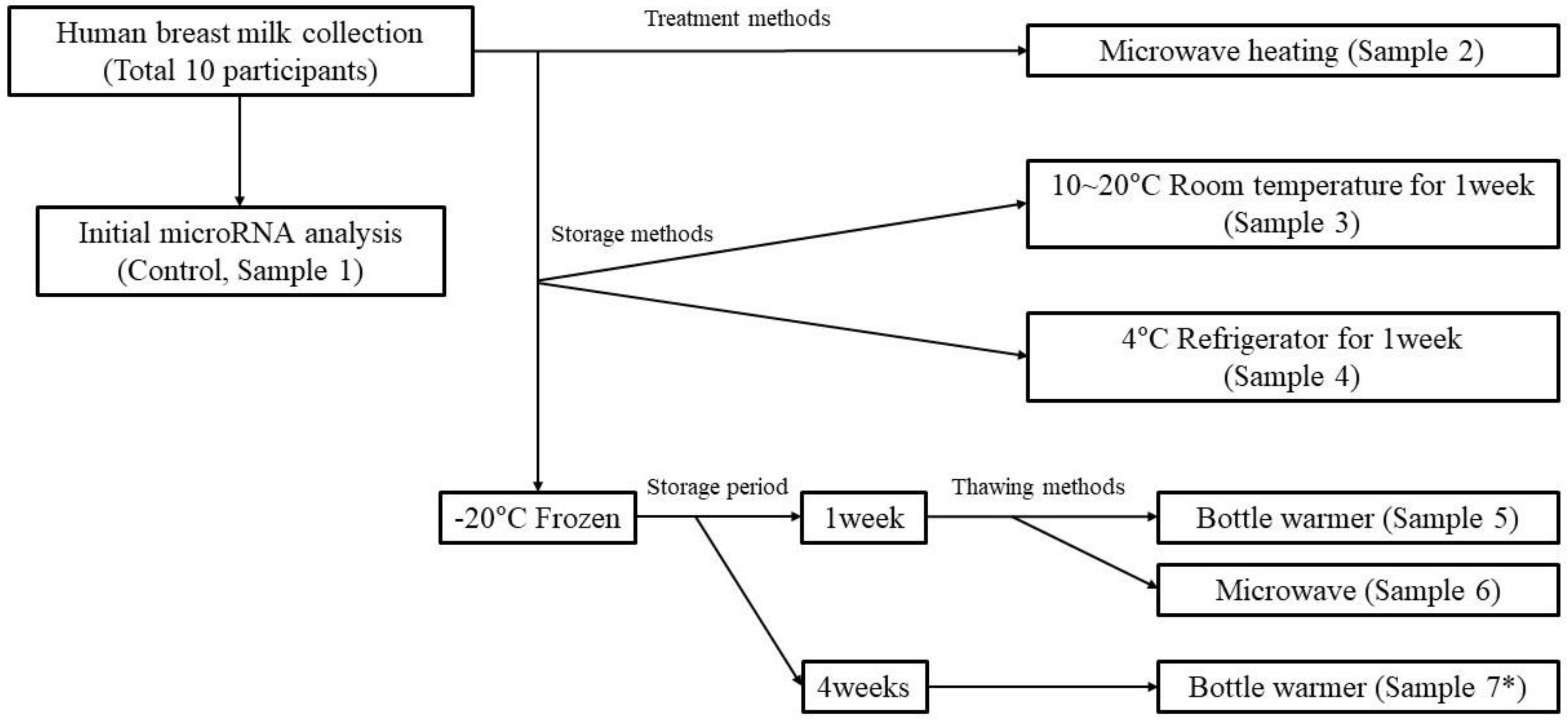
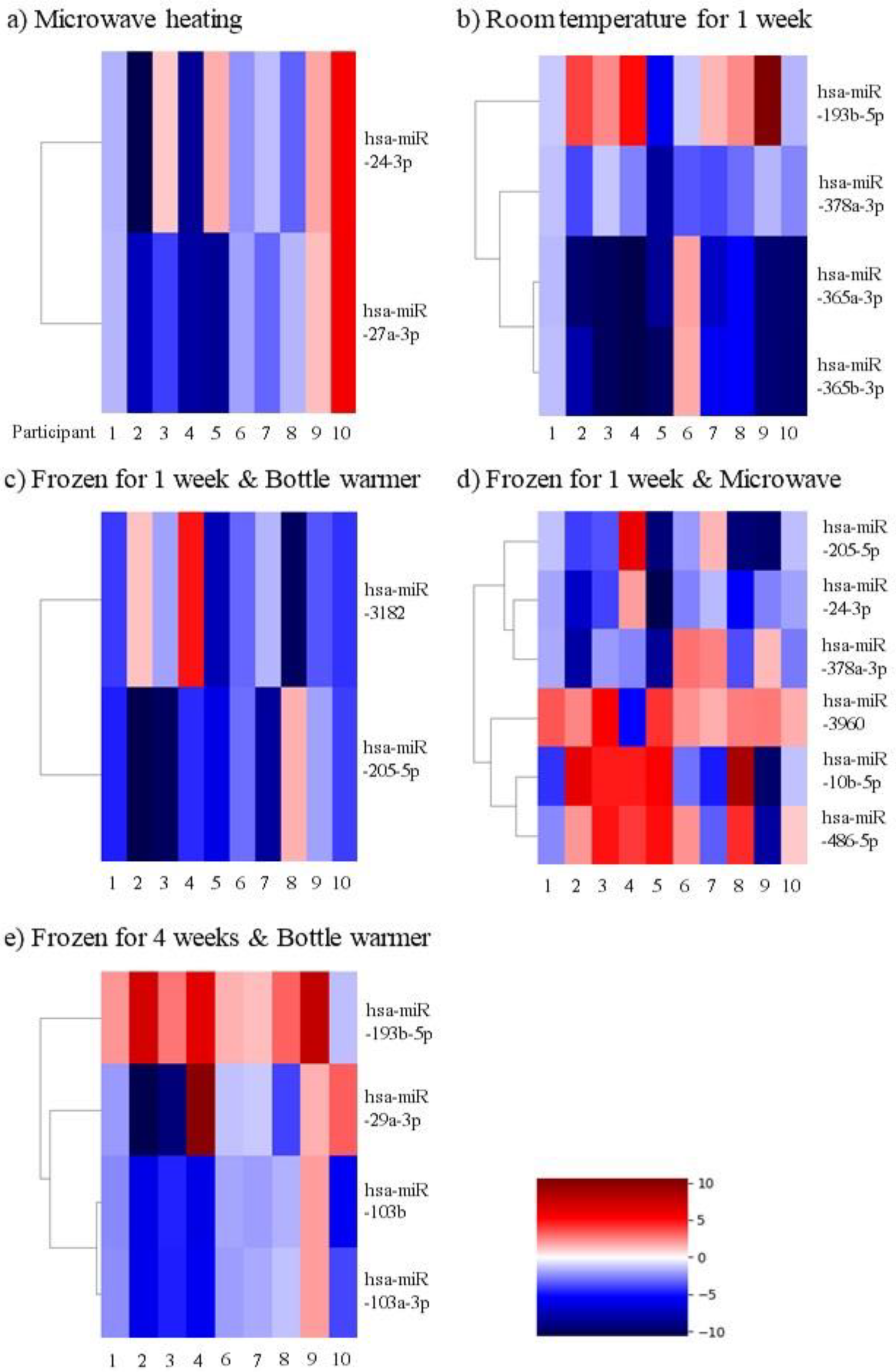
Human breast milk (HBM) is the ideal source of nutrients for infants and is rich in microRNA (miRNA). In recent years, expressed breast milk feeding rather than direct breastfeeding has become increasingly prevalent for various reasons. Expressed HBM requires storage and processing, which can cause various changes in the ingredients. We investigated how the miRNAs in HBM change due to processes often used in real life. HBM samples collected from 10 participants were each divided into seven groups according to the storage temperature, thawing method, and storage period. In addition, we analyzed the miRNA changes in each group. The number of microRNAs that showed significant expression was not large compared to the thousands of miRNAs contained in breast milk. Therefore, it is difficult to suggest that the various storage and thawing processes have a great influence on the overall expression of miRNA. However, a short-term refrigeration storage method revealed little change in nutrients compared to other storage and thawing methods. Taking all factors into consideration, short-term refrigeration is recommended to minimize changes in the composition or function of breast milk.
Keywords: human milk; microRNAs; freezing human milk; microRNAs; freezing