
Discovery of Potential Antihypertensive Agents from the Marine Microalga Phaeodactylum tricornutum Through Metabolite Profiling and In Silico Analysis

 , , , , ,
  , , ,
, , ,
Abstract
1. Introduction
2. Materials and Methods
2.1. Biologic Materials of Phaeodactylum tricornutum
2.2. Microalgae Culture Condition and Biomass Processing
2.3. Preparation of the Biomass Methanolic Extract
2.4. Procedure of Non-Targeted Metabolomic Analysis
2.5. Molecular Docking Analysis of ACE
2.6. Redocking Validation Using RMSD Analysis
2.7. Prediction of Biological Activity
2.8. In Silico Physicochemical and ADME Profiling, and Toxicity Prediction
3. Results
3.1. Non-Targeted Metabolomic Analysis
3.2. Molecular Docking Screening
3.3. Interaction of the Ligands with the Amino Acid Residues of ACE
3.4. PASS Biological Prediction of Vasoactive and Antihypertensive Potential
3.5. In Silico ADME and Drug-Likeness Evaluation
3.6. Prediction Toxicological Profile and Acute Oral Toxicity Assessment
4. Discussion
Study Limitations
5. Conclusions
Supplementary Materials
Author Contributions
Funding
Institutional Review Board Statement
Informed Consent Statement
Data Availability Statement
Acknowledgments
Conflicts of Interest
Abbreviations
| ACE | Angiotensin-Converting Enzyme |
| UPLC | Ultra-Performance Liquid Chromatography |
| ESI | Electrospray Ionization |
| HRMS | High-Resolution Mass Spectrometry |
| ADMET | Absorption, Distribution, Metabolism, Excretion and toxicity |
| ACEI | Angiotensin-Converting Enzyme Inhibitor |
| RAAS | Renin–Angiotensin–Aldosterone System |
| CIASAP | Centro de Investigación Aplicada a la Salud Pública |
| FDA | Food and Drug Administration |
| CICESE | Centro de Investigación Científica y de Educación Superior de Ensenada |
| PDB | Protein Data Bank |
| RMSD | Root-Mean-Square Deviation |
| SMILES | Simplified Molecular Input Line Entry System |
| PASS | Prediction of Activity Spectra for Substances |
| ACEIPs | Angiotensin-Converting Enzyme Inhibitory Peptides |
| PAINS | Pan-Assay Interference compounds |
| BRENK | Brenk structural alerts (Brenk filters) |
| TPSA | Topological Polar Surface Area |
| Da | Dalton |
| BBB | Blood–Brain Barrier |
| BBBP | Blood–Brain Barrier Permeability |
| CNS | Central Nervous System |
| MDR | Multidrug Resistance |
| AOT | Acute Oral Toxicity |
| CYP | Cytochrome P450 |
References
- World Health Organization. Global Report on Hypertension: The Race Against a Silent Killer; World Health Organization: Geneva, Switzerland, 2023. [Google Scholar]
- World Health Organization. Guideline for the Pharmacological Treatment of Hypertension in Adults; World Health Organization: Geneva, Switzerland, 2021. [Google Scholar]
- Sudano, I.; Suter, P.; Beuschlein, F. Secondary hypertension as a cause of treatment resistance. Blood Press. 2023, 32, 2224898. [Google Scholar] [CrossRef] [Scilit]
- Oparil, S.; Acelajado, M.C.; Bakris, G.L.; Berlowitz, D.R.; Cífková, R.; Dominiczak, A.F.; Grassi, G.; Jordan, J.; Poulter, N.R.; Rodger, A.; et al. Hypertension. Nat. Rev. Dis. Primers 2019, 22, 18014. [Google Scholar] [CrossRef] [Scilit]
- Charchar, F.J.; Prestes, P.R.; Mills, C.; Ching, S.M.; Neupane, D.; Marques, F.Z.; Sharman, J.E.; Vogt, L.; Burrell, L.M.; Korostovtseva, L.; et al. Lifestyle management of hypertension: Interna-tional Society of Hypertension position paper endorsed by the World Hypertension League and European Society of Hy-pertension. J. Hypertens. 2024, 42, 23–49. [Google Scholar] [CrossRef] [Scilit]
- Marin-Couture, E.; Moulin, J.A.; Thibault, A.S.; Poirier, P.; Després, J.P.; Gallant, A.; Lamarre, V.; Alméras, N.; Lemieux, I.; Chabot, C.; et al. Impact of lifestyle medicine interventions on the management of systemic hypertension in primary care: A Canadian randomized controlled trial. Am. J. Lifestyle Med. 2024, 18, 703–720. [Google Scholar] [CrossRef] [Scilit]
- Wang, M.Y.; Dandoy, C.E.; Smith, D.F.; Hogenesch, J.B. Go to bed!: Sleep as a risk factor for adolescent hypertension. Prog. Pediatr. Cardiol. 2023, 68, 101613. [Google Scholar] [CrossRef] [Scilit]
- Beetul, K.; Gopeechund, A.; Kaullysing, D.; Mattan-Moorgawa, S.; Puchooa, D.; Bhagooli, R. Challenges and opportunities in the present era of marine algal applications. In Algae—Organisms for Imminent Biotechnology; IntechOpen: London, UK, 2016; Volume 40. [Google Scholar] [CrossRef] [Scilit]
- Leu, S.; Boussiba, S. Advances in the production of high-value products by microalgae. Ind. Biotechnol. 2014, 10, 169–183. [Google Scholar] [CrossRef] [Scilit]
- Barkia, I.; Saari, N.; Manning, S.R. Microalgae for high-value products towards human health and nutrition. Mar. Drugs 2019, 17, 304. [Google Scholar] [CrossRef] [Scilit]
- Brown, M.J.; Cruickshank, J.K.; Dominiczak, A.F.; MacGregor, G.A.; Poulter, N.R.; Russell, G.I.; Thom, S.; Williams, B. Better blood pressure control: How to combine drugs. J. Hum. Hypertens. 2003, 17, 81–86. [Google Scholar] [CrossRef] [Scilit] [PubMed]
- Ondetti, M.A.; Rubin, B.; Cushman, D.W. Design of specific inhibitors of angiotensin-converting enzyme: New class of orally active antihypertensive agents. Science 1977, 196, 441–444. [Google Scholar] [CrossRef] [Scilit] [PubMed]
- Ulm, E.H.; Hichens, M.; Gómez, H.J.; Till, A.E.; Hand, E.; Vassil, T.C.; Biollaz, J.; Brunner, H.R.; Schelling, J.L. Enalapril maleate and a lysine analogue (MK-521): Disposition in man. Br. J. Clin. Pharmacol. 1982, 14, 357–362. [Google Scholar] [CrossRef] [Scilit]
- Song, J.C.; White, C.M. Clinical pharmacokinetics and selective pharmacodynamics of new angiotensin converting enzyme inhibitors: An update. Clin. Pharm. 2002, 41, 207–224. [Google Scholar] [CrossRef] [Scilit]
- Ahmad, H.; Khan, H.; Haque, S.; Ahmad, S.; Srivastava, N.; Khan, A. Angiotensin-converting enzyme and hypertension: A systemic analysis of various ACE inhibitors, their side effects, and bioactive peptides as a putative therapy for hypertension. J. Renin-Angiotensin-Aldosterone Syst. 2023, 2023, 7890188. [Google Scholar] [CrossRef] [Scilit]
- Rossi, G.P.; Seccia, T.M.; Maniero, C.; Pessina, A.C. Drug-related hypertension and resistance to antihypertensive treatment: A call for action. J. Hypertens. 2011, 29, 2295–2309. [Google Scholar] [CrossRef] [Scilit]
- Kyoung, J.; Atluri, R.R.; Yang, T. Resistance to antihypertensive drugs: Is gut microbiota the missing link? Hypertension 2022, 79, 2138–2147. [Google Scholar] [CrossRef] [Scilit]
- Yi, X.; Yang, S.; Yang, J.; Chen, X.; Zhang, A.; Zeng, Q.; Luo, W.; Li, Q.; Hu, J. Renin-angiotensin-aldosterone system modulators in adults with hypertension: A network meta-analysis of randomized controlled trials. Drugs 2024, 84, 1445–1462. [Google Scholar] [CrossRef] [Scilit] [PubMed]
- Miura, S.I.; Matsuo, Y.; Seumatsu, Y. Renin-angiotensin-aldosterone system and its relation to hypertension. Hypertens. Res. 2025, 48, 2209–2217. [Google Scholar] [CrossRef] [Scilit] [PubMed]
- Adhikari, A.; Sharma, C.; Sherpa, M.L.; Karaunakran, G.; Dhakal, M.; Sharma, A. Impact of Renin–Angiotensin–Aldosterone System (RAAS) gene polymorphism in essential hypertension and antihypertensive drug therapy: A review. Int. J. Hypertens. 2025, 2025, 5530265. [Google Scholar] [CrossRef] [Scilit] [PubMed]
- Lu, H.; Cassis, L.A.; Vander-Kooi, C.W.; Daugherty, A. Structure and functions of angiotensinogen. Hypertens. Res. 2016, 39, 492–500. [Google Scholar] [CrossRef] [Scilit]
- Ichihara, A.; Yatabe, M.S. The (pro) renin receptor in health and disease. Nat. Rev. Nephrol. 2019, 15, 693–712. [Google Scholar] [CrossRef] [Scilit]
- Fountain, J.H.; Kaur, J.; Lappin, S.L. Physiology, Renin Angiotensin System [Updated 2023-Mar-12]; StatPearls Publishin: Treasure Island, FL, USA, 2023. [Google Scholar]
- Ciau-Solís, N.; Betancur-Ancona, D. Sistema renina-angiotensina (SRA) en las patologías cardiovasculares: Papel sobre la hipertensión arterial. J. Negat. No Posit. Results 2021, 6, 163–176. [Google Scholar] [CrossRef] [Scilit]
- Lew, R.A. The zinc metallopeptidase family: New faces, new functions. Protein Pept. Lett. 2004, 11, 407–414. [Google Scholar] [CrossRef] [Scilit]
- Norzagaray-Valenzuela, C.D.; Valdez-Ortiz, Á.; Shelton, L.M.; Jiménez-Edeza, M.; Rivera-López, J.; Valdez-Flores, M.A.; Germán-Báez, L.J. Residual biomasses and protein hydrolysates of three green microalgae species exhibit antioxidant and anti-aging activity. J. Appl. Phycol. 2016, 29, 189–198. [Google Scholar] [CrossRef] [Scilit]
- Guillard, R.R.; Ryther, J.H. Studies of marine planktonic diatoms: I. Cyclotella nana Hustedt, and Detonula confervacea (Cleve) Gran. Can. J. Microbiol. 1962, 8, 229–239. [Google Scholar] [CrossRef] [Scilit]
- Sirin, S.; Trobajo, R.; Ibanez, C.; Salvadó, J. Harvesting the microalgae Phaeodactylum tricornutum with polyaluminum chloride, aluminium sulphate, chitosan and alkalinity-induced flocculation. J. Appl. Phycol. 2012, 24, 1067–1080. [Google Scholar] [CrossRef] [Scilit]
- Pereira, H.; Custódio, L.; Rodrigues, M.J.; De Sousa, C.B.; Oliveira, M.; Barreira, L.; Neng, N.D.R.; Nogueira, J.M.F.; Alrokayan, S.A.; Mouffouk, F.; et al. Biological activities and chemical composition of methanolic extracts of selected autochthonous microalgae strains from the Red Sea. Mar. Drugs 2015, 13, 3531–3549. [Google Scholar] [CrossRef] [Scilit]
- Hernández-Peña, R.; Lorenzo-Manzanarez, J.L.; Cruz-Ramírez, L.A.; Reyes-López, D.; Hernández-Domínguez, C.; Pascual-Ramírez, F.; Ordaz-Ortiz, J.J. Unravelling Vanillin Biosynthesis: Integrative Transcriptomic and Metabolomic Insights into Vanilla planifolia Pod Development. J. Agric. Food Chem. 2025, 73, 19094–19106. [Google Scholar] [CrossRef] [Scilit] [PubMed]
- Rodríguez-Castillo, A.J.; González-Chávez, S.A.; Portillo-Pantoja, I.; Cruz-Hermosillo, E.; Pacheco-Tena, C.; Chávez-Flores, D.; Delgado-Gardea, M.C.E.; Infante-Ramírez, R.; Ordaz-Ortiz, J.J.; Sánchez-Ramírez, B. Aqueous extracts of Rhus trilobata inhibit the lipopolysaccharide-induced inflammatory response in vitro and in vivo. Plants 2024, 13, 2840. [Google Scholar] [CrossRef] [Scilit] [PubMed]
- Polakovičová, M.; Jampílek, J. Advances in structural biology of ACE and development of domain selective ACE-inhibitors. J. Med. Chem. 2019, 15, 574–587. [Google Scholar] [CrossRef] [Scilit] [PubMed]
- Natesh, R.; Schwager, S.L.; Evans, H.R.; Sturrock, E.D.; Acharya, K.R. Structural details on the binding of antihypertensive drugs captopril and enalaprilat to human testicular angiotensin I-converting enzyme. Biochem 2004, 43, 8718–8724. [Google Scholar] [CrossRef] [Scilit]
- O’Boyle, N.M.; Banck, M.; James, C.A.; Morley, C.; Vandermeersch, T.; Hutchison, G.R. Open Babel: An open chemical toolbox. J. Cheminform. 2011, 3, 33. [Google Scholar] [CrossRef] [Scilit]
- Alves, M.J.; Froufe, H.J.C.; Costa, A.F.T.; Santos, A.F.; Oliveira, L.G.; Osório, S.R.M.; Abreu, R.M.V.; Pintado, M.; Ferreira, I.C.F.R. Docking studies in target proteins involved in antibacterial action mechanisms: Extending the knowledge on standard antibiotics to antimicrobial mushroom compounds. Molecules 2014, 19, 1672–1684. [Google Scholar] [CrossRef] [Scilit]
- Obikeze, K.; Sasi, A.A.; Raji, I. In-silico and in-vivo evaluation of the cardiovascular effects of five Leonotis leonurus diterpenes. Sci. Afr. 2023, 19, e01510. [Google Scholar] [CrossRef] [Scilit]
- Sanner, M.F. Python: A programming language for software integration and development. J. Mol. Graph. Model 1999, 17, 57–61. [Google Scholar]
- Qiu, J.; Xu, M.; Ren, R.; Zhao, Y.; Liu, L.; Li, X.; Zhu, X.; Ji, H.; Geng, Y.; Huang, X.; et al. Identification, inhibition modes, and molecular docking of ACE inhibitory peptides derived from Cheddar cheese. LWT 2024, 203, 116326. [Google Scholar] [CrossRef] [Scilit]
- Zarei, M.; Ghanbari, R.; Zainal, N.; Ovissipour, R.; Saari, N. Inhibition kinetics, molecular docking, and stability studies of papa-in-generated peptides from palm kernel cake proteins on angiotensin-converting enzyme (ACE). Food. Chem. Mol. Sci. 2022, 5, 100147. [Google Scholar] [CrossRef] [Scilit]
- Santos-Martins, D.; Forli, S.; Ramos, M.J.; Olson, A.J. AutoDock4Zn: An improved AutoDock force field for small-molecule docking to zinc metalloproteins. J. Chem. Inf. Model. 2014, 54, 2371–2379. [Google Scholar] [CrossRef] [Scilit] [PubMed]
- Dankwa, B.; Broni, E.; Enninful, K.S.; Kwofie, S.K.; Wilson, D. Consensus docking and MM-PBSA computations identify putative furin protease inhibitors for developing potential therapeutics against COVID-19. Struct. Chem. 2022, 33, 2221–2241. [Google Scholar] [CrossRef] [Scilit] [PubMed]
- Schrödinger, LLC. The PyMOL Molecular Graphics System, Version 3.1.6.1; Schrödinger, LLC: New York, NY, USA, 2023. Available online: https://www.pymol.org/ (accessed on 18 November 2025).
- Ramírez, D.; Caballero, J. Is it reliable to take the molecular docking top scoring position as the best solution without con-sidering available structural data? Molecules 2018, 23, 1038. [Google Scholar] [CrossRef] [Scilit]
- Dalton, J.A.; Jackson, R.M. Hmology-modelling protein–ligand interactions: Allowing for ligand-induced conformational change. J. Mol. Biol. 2010, 399, 645–661. [Google Scholar] [CrossRef] [Scilit] [PubMed]
- Jaundoo, R.; Bohmann, J.; Gutierrez, G.E.; Klimas, N.; Broderick, G.; Craddock, T.J.A. Using a consensus docking approach to predict adverse drug reactions in combination drug therapies for Gulf War Illness. Int. J. Mol. Sci. 2018, 19, 3355. [Google Scholar] [CrossRef] [Scilit]
- Filimonov, D.A.; Lagunin, A.A.; Gloriozova, T.A.; Rudik, A.V.; Druzhilovskii, D.S.; Pogodin, P.V.; Poroikov, V.V. Prediction of the biological activity spectra of organic compounds using the PASS Online web resource. Chem. Heterocycl. Compd. 2014, 50, 444–457. [Google Scholar] [CrossRef] [Scilit]
- Uc-Chuc, M.A.; Cigarroa-Toledo, N.; Acosta-Viana, K.Y.; Chan-Pérez, J.I.; Pineda-Cortes, J.C.; Villanueva-Alonzo, H.J. Identification of potential Trypanosoma cruzi trans-sialidase inhibitors by computational drug repositioning approaches. Sci. Pharm. 2024, 92, 40. [Google Scholar] [CrossRef] [Scilit]
- Daina, A.; Michielin, O.; Zoete, V. SwissADME: A free web tool to evaluate pharmacokinetics, drug-likeness and medicinal chemistry friendliness of small molecules. Sci. Rep. 2017, 7, 42717. [Google Scholar] [CrossRef] [Scilit] [PubMed]
- Banerjee, P.; Kemmler, E.; Dunkel, M.; Preissner, R. ProTox 3.0: A webserver for the prediction of toxicity of chemicals. Nucleic Acids Res. 2024, 5, 513–520. [Google Scholar] [CrossRef] [Scilit]
- Nieri, P.; Carpi, S.; Esposito, R.; Costantini, M.; Zupo, V. Bioactive molecules from marine diatoms and their value for the nutraceutical industry. Nutrients 2023, 15, 464. [Google Scholar] [CrossRef] [Scilit] [PubMed]
- Tonon, T.; Harvey, D.; Larson, T.R.; Graham, I.A. Long chain polyunsaturated fatty acid biosynthesis in microalgae: Cloning, functional characterization and cellular localization of an eicosapentaenoic acid elongase (PhELO1) from the marine microalga Phaeodactylum tricornutum. Phytochemistry 2002, 61, 15–24. [Google Scholar] [CrossRef] [Scilit] [PubMed]
- Stiefvatter, L.; Lehnert, K.; Frick, K.; Montoya-Arroyo, A.; Frank, J.; Vetter, W.; Schmid-Staiger, U.; Bischoff, S.C. Oral Bioa-vailability of Omega-3 Fatty Acids and Carotenoids from the Microalgae Phaeodactylum tricornutum in Healthy Young Adults. Mar. Drugs 2021, 19, 700. [Google Scholar] [CrossRef] [Scilit]
- Dickerson, B.; Maury, J.; Jenkins, V.; Nottingham, K.; Xing, D.; Gonzalez, D.E.; Leonard, M.; Kendra, J.; Ko, J.; Yoo, C.; et al. Effects of Supplementation with Microalgae Extract from Phaeodactylum tricornutum (Mi136) to Support Benefits from a Weight Management Intervention in Overweight Women. Nutrients 2024, 16, 990. [Google Scholar] [CrossRef] [Scilit]
- Maret, W. The Extracellular Metallometabolome: Metallophores, Metal Ionophores, and Other Chelating Agents as Natural Products. Nat. Prod. Commun. 2024, 19, 1934578X241271701. [Google Scholar] [CrossRef] [Scilit]
- Dar, A.M.; Mir, S. Molecular Docking: Approaches, Types, Applications and Basic Challenges. J. Anal. Bioanal. Tech. 2017, 8, 1–3. [Google Scholar] [CrossRef]
- Raval, K.; Ganatra, T. Basics, types and applications of molecular docking: A review. IP Int. J. Compr. Adv. Pharmacol. 2022, 7, 12–16. [Google Scholar] [CrossRef] [Scilit]
- Kuntz, I.D.; Blaney, J.M.; Oatley, S.J.; Langridge, R.; Ferrin, T.E. A geometric approach to macromolecule-ligand interactions. J. Mol. Biol. 1982, 161, 269–288. [Google Scholar] [CrossRef] [Scilit]
- Nivatya, H.K.; Singh, A.; Kumar, N.; Sonam; Sharma, L.; Singh, V.; Mishra, R.; Gaur, N.; Mishra, A.K. Assessing molecular docking tools: Understanding drug discovery and design. Future J. Pharm. Sci. 2025, 11, 111. [Google Scholar] [CrossRef] [Scilit]
- Bitencourt-Ferreira, G.; de Azevedo, W.F. Exploring the Scoring Function Space. In Docking Screens for Drug Discovery; de Azevedo, W.F., Jr., Ed.; Springer: New York, NY, USA, 2019; pp. 275–281. [Google Scholar]
- Muhammad, S.A.; Fatima, N. In silico analysis and molecular docking studies of potential angiotensin-converting enzyme inhibitor using quercetin glycosides. Pharmacogn. Mag. 2015, 11, 123–126. [Google Scholar] [CrossRef] [Scilit]
- Suo, S.K.; Zheng, S.L.; Chi, C.F.; Luo, H.Y.; Wang, B. Novel angiotensin-converting enzyme inhibitory peptides from tuna byproducts—Milts: Preparation, characterization, molecular docking study, and antioxidant function on H2O2-damaged human umbilical vein endothelial cells. Front. Nutr. 2022, 9, 957778. [Google Scholar] [CrossRef] [Scilit]
- Wang, S.; Zhang, L.; Wang, H.; Liu, J.; Hu, Y.; Tu, Z. Angiotensin converting enzyme (ACE) inhibitory peptide from the tuna (Thunnus thynnus) muscle: Screening, interaction mechanism and stability. Int. J. Biol. Macromol. 2024, 279, 135469. [Google Scholar] [CrossRef] [Scilit]
- Wang, X.; Chen, H.; Fu, X.; Li, S.; Wei, J.A. novel antioxidant and ACE inhibitory peptide from rice bran protein: Biochemical characterization and molecular docking study. LWT 2017, 75, 93–99. [Google Scholar] [CrossRef] [Scilit]
- Xu, Z.; Wu, C.; Sun-Waterhouse, D.; Zhao, T.; Waterhouse, G.I.; Zhao, M.; Su, G. Identification of post-digestion angiotensin-I converting enzyme (ACE) inhibitory peptides from soybean protein isolate: Their production conditions and in silico molecular docking with ACE. Food. Chem. 2021, 345, 128855. [Google Scholar] [CrossRef] [Scilit]
- Wei, G.; Zhao, Q.; Wang, D.; Fan, Y.; Shi, Y.; Huang, A. Novel ACE inhibitory, antioxidant and α-glucosidase inhibitory peptides identified from fermented rubing cheese through peptidomic and molecular docking. LWT 2022, 159, 113196. [Google Scholar] [CrossRef] [Scilit]
- Rohit, A.C.; Sathisha, K.; Aparna, H.S.A. Variant peptide of buffalo colostrum β-lactoglobulin inhibits angiotensin I-converting enzyme activity. Eur. J. Med. Chem. 2012, 53, 211–219. [Google Scholar] [CrossRef] [Scilit] [PubMed]
- Wu, Q.; Jia, J.; Yan, H.; Du, J.; Gui, Z. A novel angiotensin-I converting enzyme (ACE) inhibitory peptide from gastrointestinal protease hydrolysate of silkworm pupa (Bombyx mori) protein: Biochemical characterization and molecular docking study. Peptides 2015, 68, 17–24. [Google Scholar] [CrossRef] [Scilit] [PubMed]
- Fu, W.; Chen, C.; Zeng, H.; Lin, J.; Zhang, Y.; Hu, J.; Zheng, B. Novel angiotensin-converting enzyme inhibitory peptides derived from Trichiurus lepturus myosin: Molecular docking and surface plasmon resonance study. LWT 2019, 110, 54–63. [Google Scholar] [CrossRef] [Scilit]
- Ye, S.; Chen, Q.; Li, D.; Zhou, H.; Chen, Y.; Meng, C.; Hong, J. Isolation and identification of novel angiotensin I-converting enzyme (ACE) inhibitory peptides from pony seed and evaluation of the inhibitory mechanisms. J. Funct. Foods 2022, 95, 105151. [Google Scholar] [CrossRef] [Scilit]
- Pietruś, W.; Kafel, R.; Bojarski, A.J.; Kurczab, R. Hydrogen Bonds with Fluorine in Ligand-Protein Complexes- the PDB Analysis and Energy Calculations. Molecules 2022, 27, 1005. [Google Scholar] [CrossRef] [Scilit]
- Israelachvili, J.N. Intermolecular and surface forces. In Intermolecular and Surface Forces, 3rd ed.; Academic Press: London, UK, 2011; Volume 3, pp. 635–660. [Google Scholar]
- Qi, C.; Zhang, R.; Liu, F.; Zheng, T.; Wu, W. Molecular mechanism of interactions between inhibitory tripeptide GEF and angiotensin-converting enzyme in aqueous solutions by molecular dynamic simulations. J. Mol. Liq. 2018, 249, 389–396. [Google Scholar] [CrossRef] [Scilit]
- Vermeirssen, V.; Van Camp, J.; Verstraete, W. Bioavailability of angiotensin I converting enzyme inhibitory peptides. Br. J. Nutr. 2004, 92, 357–366. [Google Scholar] [CrossRef] [Scilit]
- Ondetti, M.A.; Cushman, D.W. Enzymes of the renin-angiotensin system and their inhibitors. Annu. Rev. Biochem. 1982, 51, 283–308. [Google Scholar] [CrossRef] [Scilit]
- Parellada, J.; Suárez, G.; Guinea, M. Inhibition of zinc metallopeptidases by flavonoids and related phenolic compounds: Structure-activity relationships. J. Enzym. Inhib. 1998, 13, 347–359. [Google Scholar] [CrossRef] [Scilit]
- Hrubša, M.; Tvrdý, V.; Kutý, M.; Valentová, K.; Křen, V.; Mladěnka, P. Interaction of Flavonoids with Zinc and Zinc-Containing Enzymes. J. Agric. Food. Chem. 2022, 27, 6134–6144. [Google Scholar] [CrossRef] [Scilit] [PubMed]
- Guerrero, L.; Castillo, J.; Quiñones, M.; Garcia-Vallvé, S.; Arola, L.; Pujadas, G.; Muguerza, B. Inhibition of angiotensin-converting enzyme activity by flavonoids: Structure-activity relationship studies. PLoS ONE 2012, 7, e49493. [Google Scholar] [CrossRef] [Scilit]
- Preciado, L.M.; Comer, J.; Núñez, V.; Rey-Súarez, P.; Pereañez, J.A. Inhibition of a Snake Venom Metalloproteinase by the Flavonoid Myricetin. Molecules 2018, 23, 2662. [Google Scholar] [CrossRef] [Scilit]
- Chen, H.; Chen, Y.; Zheng, H.; Xiang, X.; Xu, L. A novel angiotensin-I-converting enzyme inhibitory peptide from oyster: Simulated gastro-intestinal digestion, molecular docking, inhibition kinetics and antihypertensive effects in rats. Front. Nutr. 2022, 9, 981163. [Google Scholar] [CrossRef] [Scilit]
- Nong, N.T.P.; Sutopo, C.C.Y.; Hung, W.-T.; Wu, P.-H.; Hsu, J.-L. The Molecular Docking and Inhibition Kinetics of Angiotensin I-Converting Enzyme Inhibitory Peptides Derived from Soft-Shelled Turtle Yolk. Appl. Sci. 2022, 12, 12340. [Google Scholar] [CrossRef] [Scilit]
- Ramlal, A.; Bhat, I.; Nautiyal, A.; Baweja, P.; Mehta, S.; Kumar, V.; Mallikarjuna, B.P. In Silico Analysis of Angiotensin Converting Enzyme Inhibitory Compounds Obtained from Soybean [Glycine max (L.) Merr.]. Front. Physiol. 2023, 14, 1172684. [Google Scholar] [CrossRef] [Scilit] [PubMed]
- Jo, D.-M.; Khan, F.; Park, S.-K.; Ko, S.-C.; Kim, K.W.; Yang, D.; Kim, J.-Y.; Oh, G.-W.; Choi, G.; Lee, D.-S.; et al. From Sea to Lab: Angiotensin I-Converting Enzyme Inhibition by Marine Peptides—Mechanisms and Applications. Mar. Drugs 2024, 22, 449. [Google Scholar] [CrossRef] [Scilit]
- Sun, S.; Xu, X.; Sun, X.; Zhang, X.; Chen, X.; Xu, N. Preparation and Identification of ACE Inhibitory Peptides from the Marine Macroalga Ulva intestinalis. Mar. Drugs 2019, 17, 179. [Google Scholar] [CrossRef] [Scilit] [PubMed]
- Deng, Z.; Liu, Y.; Wang, J.; Wu, S.; Geng, L.; Sui, Z.; Zhang, Q. Antihypertensive Effects of Two Novel Angiotensin I-Converting Enzyme (ACE) Inhibitory Peptides from Gracilariopsis lemaneiformis (Rhodophyta) in Spontaneously Hypertensive Rats (SHRs). Mar. Drugs 2018, 16, 299. [Google Scholar] [CrossRef] [Scilit]
- Ko, S.-C.; Kang, N.; Kim, E.-A.; Kang, M.C.; Lee, S.-H.; Kang, S.-M.; Lee, J.-B.; Jeon, B.-T.; Kim, S.-K.; Park, S.-J.; et al. A novel angiotensin I-converting enzyme (ACE) inhibitory peptide from a marine Chlorella ellipsoidea and its antihypertensive effect in spontaneously hypertensive rats. Process Biochem. 2012, 47, 2005–2011. [Google Scholar] [CrossRef] [Scilit]
- Hayes, M.; Mora, L.; Lucakova, S. Identification of Bioactive Peptides from Nannochloropsis oculata Using a Combination of Enzymatic Treatment, in Silico Analysis and Chemical Synthesis. Biomolecules 2022, 12, 1806. [Google Scholar] [CrossRef] [Scilit]
- Jung, H.A.; Hyun, S.K.; Kim, H.R.; Choi, J.S. Angiotensin-converting enzyme I inhibitory activity of phlorotannins from Ecklonia stolonifera. Fish. Sci. 2006, 72, 1292–1299. [Google Scholar] [CrossRef] [Scilit]
- Mohammadi, M.; Hajhossein-Talasaz, A.; Alidoosti, M. Preventive effect of l-carnitine and its derivatives on endothelial dysfunction and platelet aggregation. Clin. Nutr. ESPEN 2016, 15, 1–10. [Google Scholar] [CrossRef] [Scilit] [PubMed]
- Alvarez de Sotomayor, M.; Bueno, R.; Pérez-Guerrero, C.; Herrera, M.D. Effect of L-Carnitine and Propionyl-L-Carnitine on Endothelial Function of Small Mesenteric Arteries from SHR. J. Vasc. Res. 2007, 44, 354–364. [Google Scholar] [CrossRef] [Scilit] [PubMed]
- Bisi, A.; Gobbi, S.; Belluti, F.; Rampa, A. Design of multifunctional compounds for cardiovascular disease: From natural scaffolds to “classical” multitarget approach. J. Curr. Med. Chem. 2013, 2013, 1759–1782. [Google Scholar] [CrossRef] [Scilit]
- Luna-Vázquez, F.J.; Ibarra-Alvarado, C.; Rojas-Molina, A.; Rojas-Molina, I.; Zavala-Sánchez, M.Á. Vasodilator Compounds Derived from Plants and Their Mechanisms of Action. Molecules 2013, 18, 5814–5857. [Google Scholar] [CrossRef] [Scilit]
- Nádasy, G.L.; Balla, A.; Dörnyei, G.; Hunyady, L.; Szekeres, M. Direct Vascular Effects of Angiotensin II (A Systematic Short Review). Int. J. Mol. Sci. 2025, 26, 113. [Google Scholar] [CrossRef] [Scilit]
- Matin, M.M.; Uzzaman, M.; Chowdhury, S.A.; Bhuiyan, M.H. In vitro antimicrobial, physicochemical, pharmacokinetics and molecular docking studies of benzoyl uridine esters against SARS-CoV-2 main protease. J. Biomol. Struct. Dyn. 2022, 40, 3668–3680. [Google Scholar] [CrossRef] [Scilit] [PubMed]
- Islam, S.; Hosen, M.A.; Ahmad, S.; ul Qamar, M.T.; Dey, S.; Hasan, I.; Fujii, Y.; Ozeki, Y.; Kawsar, S.M.A. Synthesis, antimicrobial, anticancer activities, PASS prediction, molecular docking, molecular dynamics and pharmacokinetic studies of designed methyl α-D-glucopyranoside esters. J. Mol. Struct. 2022, 1260, 132761. [Google Scholar] [CrossRef] [Scilit]
- Alam, S.; Rashid, M.A.; Sarker, M.M.R.; Emon, N.U.; Arman, M.; Mohamed, I.N.; Haque, M.R. Antidiarrheal, antimicrobial and antioxidant potentials of methanol extract of Colocasia gigantea Hook. f. leaves: Evidenced from in vivo and in vitro studies along with computer-aided approaches. BMC Complement. Med. Ther. 2021, 21, 119. [Google Scholar] [CrossRef] [Scilit]
- Stielow, M.; Witczyńska, A.; Kubryń, N.; Fijałkowski, Ł.; Nowaczyk, J.; Nowaczyk, A. The Bioavailability of Drugs—The Current State of Knowledge. Molecules 2023, 28, 8038. [Google Scholar] [CrossRef] [Scilit]
- Prasad, V.; De Jesús, K.; Mailankody, S. The High Price of Anticancer Drugs: Origins, Implications, Barriers, Solutions. Nat. Rev. Clin. Oncol. 2017, 14, 381–390. [Google Scholar] [CrossRef] [Scilit]
- Alqahtani, M.S.; Kazi, M.; Alsenaidy, M.A.; Ahmad, M.Z. Advances in Oral Drug Delivery. Front. Pharmacol. 2021, 12, 618411. [Google Scholar] [CrossRef] [Scilit] [PubMed]
- Ali, J.; Camilleri, P.; Brown, M.B.; Hutt, A.J.; Kirton, S.B. Revisiting the general solubility equation: In silico prediction of aqueous solubility incorporating the effect of topographical polar surface area. J. Chem. Inf. Model. 2012, 52, 420–428. [Google Scholar] [CrossRef] [Scilit]
- Lipinski, C.A.; Lombardo, F.; Dominy, B.W.; Feeney, P.J. Experimental and computational approaches to estimate solubility and permeability in drug discovery and development settings. Adv. Drug Deliv. Rev. 2001, 46, 3–26. [Google Scholar] [CrossRef] [Scilit]
- Di, L.; Artursson, P.; Avdeef, A.; Benet, L.Z.; Houston, J.B.; Kansy, M.; Kerns, E.H.; Lennernäs, H.; Smith, D.A.; Sugano, K. The Critical Role of Passive Permeability in Designing Successful Drugs. Chem. Med. Chem. 2020, 15, 1862–1874. [Google Scholar] [CrossRef] [Scilit]
- O’Donovan, D.H.; De Fusco, C.; Kuhnke, L.; Reichel, A. Trends in Molecular Properties, Bioavailability, and Permeability across the Bayer Compound Collection. J. Med. Chem. 2023, 66, 2347–2360. [Google Scholar] [CrossRef] [Scilit]
- Feng, Q.; De Chavez, D.; Kihlberg, J.; Poongavanam, V. A Membrane Permeability Database for Nonpeptidic Macrocycles. Sci. Data 2025, 12, 10. [Google Scholar] [CrossRef] [Scilit]
- Kumar, R.; Sharma, A.; Alexiou, A.; Bilgrami, A.L.; Kamal, M.A.; Ashraf, G.M. DeePred-BBB: A Blood–Brain Barrier Permea-bility Prediction Model with Improved Accuracy. Front. Neurosci. 2022, 16, 858126. [Google Scholar] [CrossRef] [Scilit]
- Lochhead, J.J.; Yang, J.; Ronaldson, P.T.; Davis, T.P. Structure, Function, and Regulation of the Blood–Brain Barrier Tight Junction in Central Nervous System Disorders. Front. Physiol. 2020, 11, 914. [Google Scholar] [CrossRef] [Scilit]
- Faramarzi, S.; Kim, M.T.; Volpe, D.A.; Cross, K.P.; Chakravarti, S.; Stavitskaya, L. Development of QSAR Models to Predict Blood–Brain Barrier Permeability. Front. Pharmacol. 2022, 13, 1040838. [Google Scholar] [CrossRef] [Scilit] [PubMed]
- Cosarderelioglu, C.; Nidadavolu, L.S.; George, C.J.; Oh, E.S.; Bennett, D.A.; Walston, J.D.; Abadir, P.M. Brain Renin–Angiotensin System at the Intersect of Physical and Cognitive Frailty. Front. Neurosci. 2020, 14, 586314. [Google Scholar] [CrossRef] [Scilit] [PubMed]
- Jo, Y.; Kim, S.; Ye, B.S.; Lee, E.; Yu, Y.M. Protective Effect of Renin–Angiotensin System Inhibitors on Parkinson’s Disease: A Nationwide Cohort Study. Front. Pharmacol. 2022, 13, 837890. [Google Scholar] [CrossRef] [Scilit]
- Cox, B.; Nicolaï, J.; Williamson, B. The role of the efflux transporter, P-glycoprotein, at the blood-brain barrier in drug discovery. Bio. Drug Dispos. 2023, 44, 113–126. [Google Scholar] [CrossRef] [Scilit]
- Wu, D.; Chen, Q.; Chen, X.; Han, F.; Chen, Z.; Wang, Y. The blood-brain barrier: Structure, regulation, and drug delivery. Signal Transduct. Target. Ther. 2023, 8, 217. [Google Scholar] [CrossRef] [Scilit] [PubMed]
- Cascorbi, I. P-glycoprotein: Tissue Distribution, Substrates, and Functional Consequences of Genetic Variations. In Drug Transporters; Fromm, M.F., Kim, R.B., Eds.; Springer: Berlin/Heidelberg, Germany, 2011; pp. 261–283. [Google Scholar]
- Ahmed-Juvale, I.I.; Abdul-Hamid, A.A.; Abd-Halim, K.B.; Che-Has, A.T. P-glycoprotein: New insights into structure, physiological function, regulation and alterations in disease. Heliyon 2022, 8, e09777. [Google Scholar] [CrossRef] [Scilit]
- Blaze, C.; Shu, Y. Beyond ADME: The Endogenous Functions of Drug Transporters and Its Impact on Human Disease. Pharmaceutics 2025, 17, 685. [Google Scholar] [CrossRef] [Scilit] [PubMed]
- Kreisl, W.C.; Liow, J.S.; Kimura, N.; Seneca, N.; Zoghbi, S.S.; Morse, C.L.; Pike, V.W.; Innis, R.B. P-glycoprotein Function at the Blood–Brain Barrier in Humans: Chemical Inhibition and Genotype Influence. J. Cereb. Blood Flow Metab. 2010, 30, 559–566. [Google Scholar] [CrossRef] [Scilit]
- Ferreira, A.; Pousinho, S.; Fortuna, A.; Falcão, A. Flavonoid Compounds as Reversal Agents of the P-glycoprotein-Mediated Multidrug Resistance: Biology, Chemistry and Pharmacology. Phytochem. Rev. 2015, 14, 735–764. [Google Scholar] [CrossRef] [Scilit]
- Bai, J.; Zhao, S.; Fan, X.; Chen, Y.; Zou, X.; Hu, M.; Wang, B.; Jin, J.; Wang, X.; Hu, J.; et al. Inhibitory effects of flavonoids on P-glycoprotein in vitro and in vivo: Food/herb-drug interactions and structure-activity relationships. Toxicol. Appl. Pharmacol. 2019, 369, 49–59. [Google Scholar] [CrossRef] [Scilit]
- Cho, H.-J.; Yoon, I.-S. Pharmacokinetic Interactions of Herbs with Cytochrome P450 and P-Glycoprotein. Evid.-Based Complement. Altern. Med. 2015, 1, 736431. [Google Scholar] [CrossRef] [Scilit]
- Zhao, M.; Ma, J.; Li, M.; Zhang, Y.; Jiang, B.; Zhao, X.; Huai, C.; Shen, L.; Zhang, N.; He, L.; et al. Cytochrome P450 Enzymes and Drug Metabolism in Humans. Int. J. Mol. Sci. 2021, 22, 12808. [Google Scholar] [CrossRef] [Scilit]
- Jaladanki, C.K.; Gahlawat, A.; Rathod, G.; Sandhu, H.; Jahan, K.; Bharatam, P.V. Mechanistic studies on the drug metabolism and toxicity originating from cytochromes P450. Drug Metab. Rev. 2020, 52, 366–394. [Google Scholar] [CrossRef] [Scilit]
- Banerjee, P.; Eckert, A.O.; Schrey, A.K.; Preissner, R. ProTox-II: A webserver for the prediction of toxicity of chemicals. Nucleic Acids Res. 2018, 46, W257–W263. [Google Scholar] [CrossRef] [Scilit] [PubMed]
- Panickar, A.; Manoharan, A.; Ramaiah, S. Machine learning-based virtual screening and density functional theory characterisation of natural inhibitors targeting mutant PBP2x in Streptococcus pneumoniae. Sci. Rep. 2025, 15, 39164. [Google Scholar] [CrossRef] [Scilit]
- Supandi, Y.; Merdekawati, F. In Silico Study of Pyrazolylaminoquinazoline Toxicity by Lazar, Protox, and Admet Predictor. J. Appl. Pharm. Sci. 2018, 8, 119–129. [Google Scholar] [CrossRef] [Scilit]
- Shi, Z.; Liu, N.; Zhao, F.; Kang, D.; De Jonghe, S.; Neyts, J.; Gao, N.; Liu, X. Discovery of Small Molecules Targeting Norovirus 3CL Protease by Multi-Stage Virtual Screening. Int. J. Mol. Sci. 2025, 26, 5625. [Google Scholar] [CrossRef] [Scilit]
- Alderawy, M.Q.; Al-Hakiem, M.M.; Al-Anssari, R.A.; Elias, R.S. Comprehensive molecular docking, cytotoxicity, and ADMET analysis of documented curcuminoid derivatives on the A549 cell line. Pharmacia 2025, 72, 1–10. [Google Scholar] [CrossRef] [Scilit]
- Sharma, V.; Rengasamy, G.; Sekaran, S.; Sankaran, K.; Veeraraghavan, V.P.; Eswaramoorthy, R. Molecular docking analysis of the tumor protein beta arrestin-1 with oxadiazole compounds. Bioinformation 2023, 19, 111–116. [Google Scholar] [CrossRef] [Scilit]
- Tonoyan, L.; Siraki, A.G. Machine learning in toxicological sciences: Opportunities for assessing drug toxicity. Front. Drug Discov. 2024, 4, 1336025. [Google Scholar] [CrossRef] [Scilit]
- OECD. Test No. 425: Acute Oral Toxicity—Up-and-Down Procedure; OECD Publishing: Paris, France, 2008. [Google Scholar]
- Sumner, L.W.; Amberg, A.; Barrett, D.; Beale, M.H.; Beger, R.; Daykin, C.A.; Fan, T.W.M.; Fiehn, O.; Goodacre, R.; Griffin, J.L.; et al. Proposed minimum reporting standards for chemical analysis. Metabolomics 2007, 3, 211–221. [Google Scholar] [CrossRef] [Scilit] [PubMed]
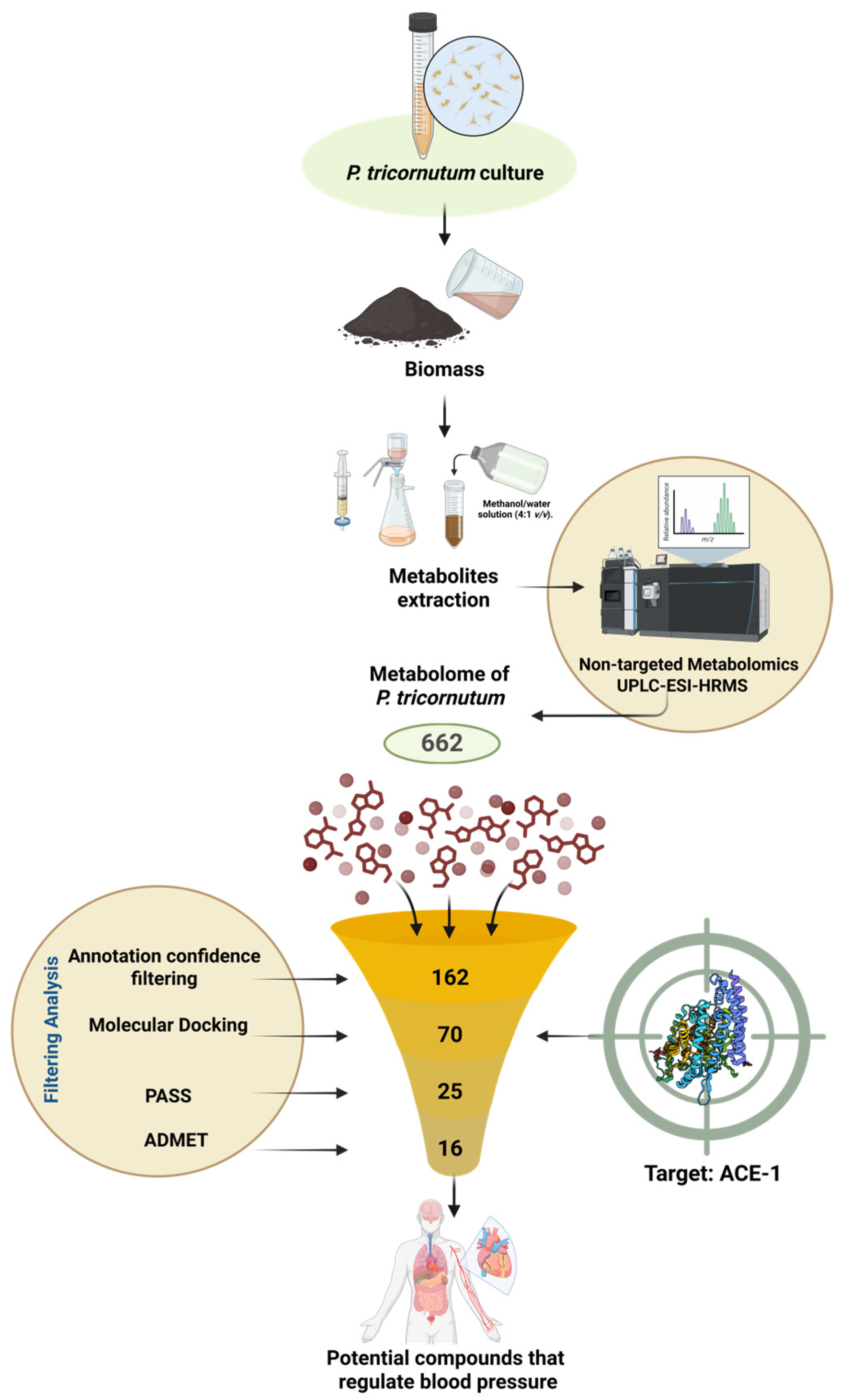


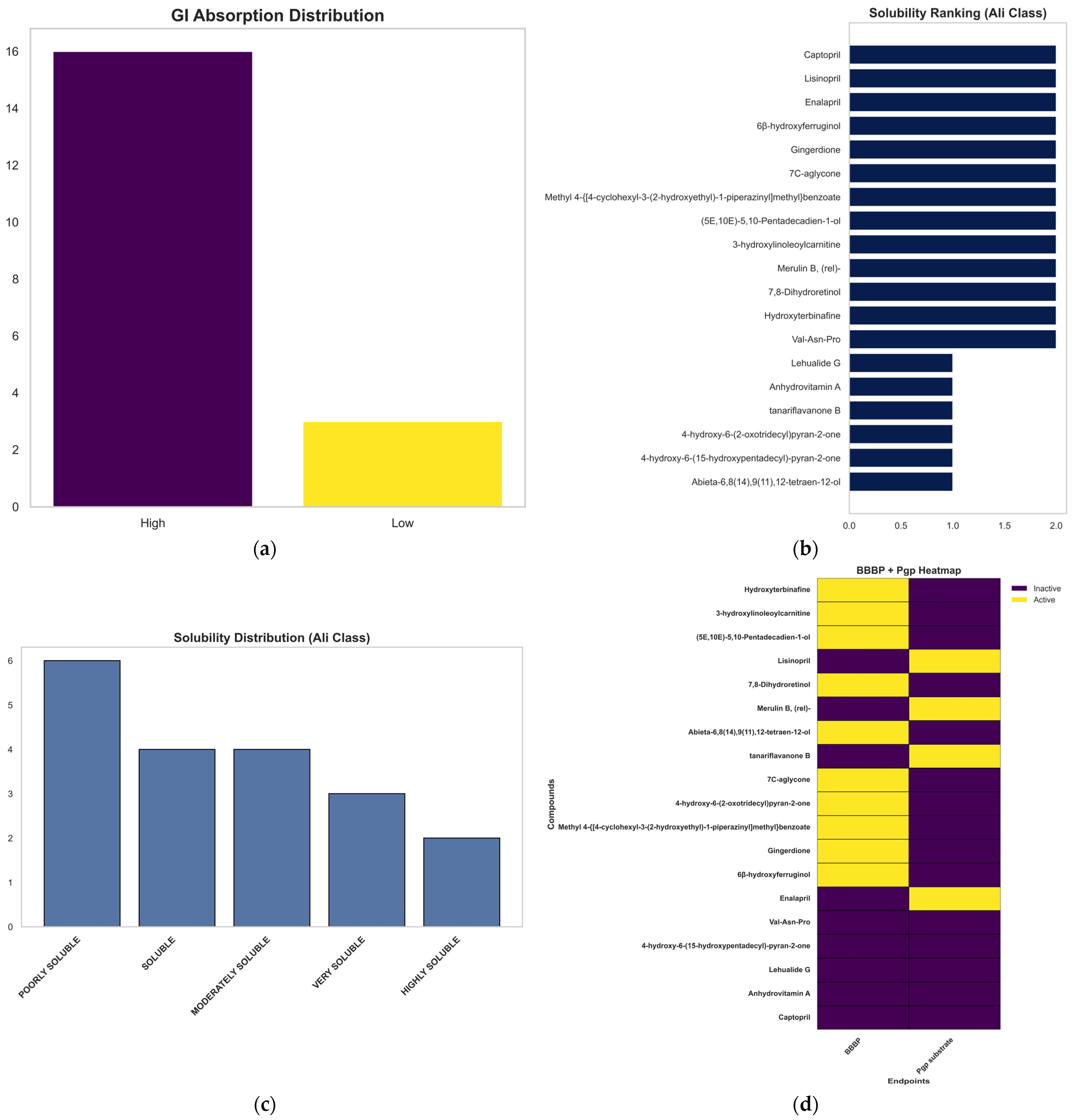


| PUBCHEM CID | Molecular Formula | Compound | Binding Affinity ΔG (kcal.mol−1) | Two-Dimensional Structure |
|---|---|---|---|---|
| 71728359 | C14H24N4O5 | Val-Asn-Pro | −8.178 |  |
| 21917706 | C21H25NO | Hydroxyterbinafine | −7.900 | 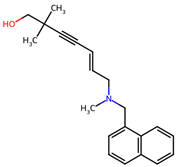 |
| 71464556 | C25H45NO5 | 3-hydroxylinoleoylcarnitine | −7.380 |  |
| 24771804 | C16H24O | (5E,10E)-5,10-Pentadecadien-1-ol | −7.064 |  |
| 13730286 | C20H32O | 7,8-Dihydroretinol | −7.741 |  |
| 70698171 | C15H24O5 | Merulin B, (rel)- | −7.374 |  |
| 14165048 | C22H30O2 | Abieta-6,8(14),9(11),12-tetraen-12-ol | −7.642 |  |
| 91825614 | C20H34O4 | 4-hydroxy-6-(15-hydroxypentadecyl)-pyran-2-one | −7.780 |  |
| 11113726 | C30H34O6 | Tanariflavanone B | −8.105 |  |
| 20348793 | C18H18O4 | 7C-aglycone | −7.425 |  |
| 85908104 | C18H28O4 | 4-hydroxy-6-(2-oxotridecyl)pyran-2-one | −7.781 |  |
| 16190788 | C21H32N2O3 | Methyl 4-([4-cyclohexyl-3-(2-hydroxyethyl)-1-piperazinyl]methyl)benzoate | −7.382 | 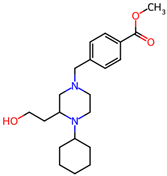 |
| 0698273 | C20H30O2 | 6β-hydroxyferruginol | −7.759 |  |
| 162952 | C17H24O4 | Gingerdione | −7.283 |  |
| 54733285 | C25H34O4 | Lehualide G | −8.429 | 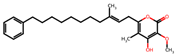 |
| 5287678 | C20H28 | Anhydrovitamin A | −7.792 |  |
| 5388962 | C20H28N2O5 | Enalapril | −9.438 |  |
| 5362119 | C21H31N3O5 | Lisinopril | −8.449 |  |
| 447055 | C9H15NO3S | Captopril | −7.651 |  |
| VP | VC | V | AHT | ||||||
|---|---|---|---|---|---|---|---|---|---|
| Molecular Formula | Compound | Pa | Pi | Pa | Pi | Pa | Pi | Pa | Pi |
| C14H24N4O5 | Val-Asn-Pro | 0.234 | 0.222 | 0.372 | 0.071 | - | - | 0.268 | 0.095 |
| C21H25NO | Hydroxyterbinafine | 0.255 | 0.198 | 0.371 | 0.071 | - | - | - | - |
| C25H45NO5 | 3-hydroxylinoleoylcarnitine | 0.975 | 0.002 | 0.231 | 0.204 | 0.905 | 0.004 | 0.454 | 0.028 |
| C16H24O | (5E,10E)-5,10-Pentadecadien-1-ol | 0.270 | 0.180 | - | - | - | - | - | - |
| C20H32O | 7,8-Dihydroretinol | 0.296 | 0.150 | 0.269 | 0.153 | - | - | - | - |
| C15H24O5 | Merulin B, (rel)- | 0.244 | 0.211 | - | - | - | - | - | - |
| C20H28O | Abieta-6,8(14),9(11),12-tetraen-12-ol | 0.388 | 0.088 | - | - | - | - | - | - |
| C20H34O4 | 4-hydroxy-6-(15-hydroxypentadecyl)-pyran-2-one | 0.504 | 0.025 | - | - | 0.409 | 0.036 | - | - |
| C30H34O6 | Tanariflavanone B | - | - | - | - | 0.193 | 0.155 | ||
| C18H18O4 | 7C-aglycone | 0.314 | 0.135 | 0.296 | 0.123 | 0.366 | 0.048 | - | - |
| C18H28O4 | 4-hydroxy-6-(2-oxotridecyl)pyran-2-one | 0.255 | 0.197 | 0.383 | 0.065 | 0.497 | 0.022 | - | - |
| C21H32N2O3 | Methyl 4-{[4-cyclohexyl-3-(2-hydroxyethyl)-1-piperazinyl]methyl}benzoate | 0.317 | 0.132 | 0.267 | 0.156 | 0.197 | 0.151 | 0.208 | 0.144 |
| C20H30O2 | 6β-hydroxyferruginol | 0.516 | 0.041 | - | - | - | - | - | - |
| C17H24O4 | Gingerdione | 0.642 | 0.016 | 0.339 | 0.090 | 0.427 | 0.032 | - | - |
| C25H34O4 | Lehualide G | - | - | 0.462 | 0.033 | 0.414 | 0.035 | - | - |
| C20H28 | Anhydrovitamin A | 0.456 | 0.055 | - | - | - | - | - | - |
| C9H15NO3S | Captopril | - | - | 0.661 | 0.010 | 0.297 | 0.073 | - | - |
| C21H31N3O5 | Lisinopril | - | - | 0.534 | 0.021 | - | - | - | - |
| C20H28N2O5 | Enalapril | - | - | 0.740 | 0.006 | - | - | - | - |
| Molecular Formula | Compound | MW | HBA | HBD | RB | iLOGP | LP | PAINS | BRENK |
|---|---|---|---|---|---|---|---|---|---|
| C14H24N4O5 | Val-Asn-Pro | 328.36 | 6 | 4 | 9 | 0.87 | 0 | 0 | 0 |
| C21H25NO | Hydroxyterbinafine | 307.43 | 2 | 1 | 5 | 3.88 | 0 | 0 | 1 |
| C25H45NO5 | 3-hydroxylinoleoylcarnitine | 439.63 | 5 | 1 | 20 | 3.17 | 2 | 0 | 1 |
| C16H24O | (5E,10E)-5,10-Pentadecadien-1-ol | 232.36 | 1 | 0 | 2 | 3.07 | 0 | 0 | 1 |
| C20H32O | 7,8-Dihydroretinol | 288.47 | 1 | 1 | 6 | 3.07 | 0 | 0 | 1 |
| C15H24O5 | Merulin B, (rel)- | 284.35 | 5 | 2 | 1 | 1.98 | 0 | 0 | 1 |
| C20H28O | Abieta-6,8(14),9(11),12-tetraen-12-ol | 284.44 | 1 | 1 | 1 | 3.58 | 1 | 0 | 0 |
| C20H34O4 | 4-hydroxy-6-(15-hydroxypentadecyl)-pyran-2-one | 338.48 | 4 | 2 | 15 | 4.09 | 0 | 0 | 0 |
| C30H34O6 | tanariflavanone B | 490.59 | 6 | 3 | 6 | 4.98 | 0 | 0 | 1 |
| C18H18O4 | 7C-aglycone | 298.33 | 4 | 1 | 5 | 2.33 | 0 | 1 | 1 |
| C18H28O4 | 4-hydroxy-6-(2-oxotridecyl)pyran-2-one | 308.41 | 4 | 1 | 12 | 3.17 | 0 | 0 | 0 |
| C21H32N2O3 | Methyl 4-{[4-cyclohexyl-3-(2-hydroxyethyl)-1-piperazinyl]methyl]benzoate | 360.49 | 5 | 1 | 7 | 3.97 | 0 | 0 | 0 |
| C20H30O2 | 6β-hydroxyferruginol | 302.45 | 2 | 2 | 1 | 3.31 | 0 | 0 | 0 |
| C17H24O4 | Gingerdione | 292.37 | 4 | 1 | 10 | 3.14 | 0 | 0 | 0 |
| C25H34O4 | Lehualide G | 398.54 | 4 | 1 | 12 | 4.83 | 0 | 0 | 1 |
| C20H28 | Anhydrovitamin A | 268.44 | 0 | 0 | 4 | 4.26 | 1 | 0 | 1 |
Disclaimer/Publisher’s Note: The statements, opinions and data contained in all publications are solely those of the individual author(s) and contributor(s) and not of MDPI and/or the editor(s). MDPI and/or the editor(s) disclaim responsibility for any injury to people or property resulting from any ideas, methods, instructions or products referred to in the content. |
© 2026 by the authors. Published by MDPI on behalf of the Österreichische Pharmazeutische Gesellschaft. Licensee MDPI, Basel, Switzerland. This article is an open access article distributed under the terms and conditions of the Creative Commons Attribution (CC BY) license.
Share and Cite
Guzmán-Rodríguez, M.E.; Valdez-Flores, M.A.; Ayón-Fernandez, C.; Ordaz-Ortiz, J.J.; Guadrón-Llanos, A.M.; Magaña-Gómez, J.; de la Herrán-Arita, A.K.; Camberos-Barraza, J.; Picos-Cárdenas, V.J.; Osuna-Ramos, J.F.; et al. Discovery of Potential Antihypertensive Agents from the Marine Microalga Phaeodactylum tricornutum Through Metabolite Profiling and In Silico Analysis. Sci. Pharm. 2026, 94, 43. https://doi.org/10.3390/scipharm94020043
Guzmán-Rodríguez ME, Valdez-Flores MA, Ayón-Fernandez C, Ordaz-Ortiz JJ, Guadrón-Llanos AM, Magaña-Gómez J, de la Herrán-Arita AK, Camberos-Barraza J, Picos-Cárdenas VJ, Osuna-Ramos JF, et al. Discovery of Potential Antihypertensive Agents from the Marine Microalga Phaeodactylum tricornutum Through Metabolite Profiling and In Silico Analysis. Scientia Pharmaceutica. 2026; 94(2):43. https://doi.org/10.3390/scipharm94020043
Chicago/Turabian StyleGuzmán-Rodríguez, Miguel Ernesto, Marco Antonio Valdez-Flores, Cinthia Ayón-Fernandez, José Juan Ordaz-Ortiz, Alma Marlene Guadrón-Llanos, Javier Magaña-Gómez, Alberto Kousuke de la Herrán-Arita, Josué Camberos-Barraza, Verónica Judith Picos-Cárdenas, Juan Fidel Osuna-Ramos, and et al. 2026. "Discovery of Potential Antihypertensive Agents from the Marine Microalga Phaeodactylum tricornutum Through Metabolite Profiling and In Silico Analysis" Scientia Pharmaceutica 94, no. 2: 43. https://doi.org/10.3390/scipharm94020043
APA StyleGuzmán-Rodríguez, M. E., Valdez-Flores, M. A., Ayón-Fernandez, C., Ordaz-Ortiz, J. J., Guadrón-Llanos, A. M., Magaña-Gómez, J., de la Herrán-Arita, A. K., Camberos-Barraza, J., Picos-Cárdenas, V. J., Osuna-Ramos, J. F., Norzagaray-Valenzuela, C. D., & Calderón-Zamora, L. (2026). Discovery of Potential Antihypertensive Agents from the Marine Microalga Phaeodactylum tricornutum Through Metabolite Profiling and In Silico Analysis. Scientia Pharmaceutica, 94(2), 43. https://doi.org/10.3390/scipharm94020043