Article

Strength and Structure: The Role of Different Hydrogel Matrices in Determining the Textural Properties of Jojoba Oil Bigels


Department of Pharmaceutical Technologies, Faculty of Pharmacy, Medical University of Varna, 84 Tsar Osvoboditel Blvd., 9000 Varna, Bulgaria
Sci. Pharm. 2026, 94(1), 22; https://doi.org/10.3390/scipharm94010022
Submission received: 26 January 2026 / Revised: 26 February 2026 / Accepted: 4 March 2026 / Published: 6 March 2026

Abstract

Jojoba oil is a well-established skin-beneficial liquid wax with high value in topical formulations. Bigels, as preferred semi-solid dosage forms, serve as versatile platforms by incorporating hydrogels and oleogels to leverage their advantages and address their limitations. In this study, jojoba oil bigels were developed using sorbitan monostearate (20%, w/w) as an oleogelator and different hydrophilic bases, 1% Carbomer 940, 6% methylcellulose, or 20% Poloxamer 407 gel, with all concentrations expressed relative to the corresponding phase. Nine bigels were obtained by varying hydrogel-to-oleogel ratios (90:10–70:30). They were evaluated in terms of their organoleptic, microstructural, and textural characteristics. Both the hydrogel matrix type and the phase proportion impacted the studied properties. Carbomer bigels displayed the highest spreadability, methylcellulose formulations showed the greatest adhesiveness, and poloxamer systems exhibited maximum firmness and cohesiveness, with a comparatively more homogeneous phase distribution. The increase in oleogel content enhanced firmness and cohesiveness while modulating spreadability and adhesiveness in a hydrogel-dependent manner. Moreover, all designed formulations remained physically stable after centrifugation, but only those containing 80% carbomer gel or 70% or 80% poloxamer gel preserved their mechanical characteristics without significant changes after freeze-thawing. Besides identifying three promising biphasic dermal drug delivery platforms, these findings reinforce the tunability of bigels through the careful component selection.

1. Introduction

Bigels have attracted continuous scientific interest since their introduction in the 1990s, having already established a place in the food, cosmetic, and pharmaceutical industries [1,2]. In the food sector, they are primarily utilized as fat replacers and as nutritional enrichment systems [3,4]. In cosmetics, these biphasic systems are particularly valued due to their moisturizing effect [4]. Regarding the pharmaceutical field, bigels have been exploited as delivery platforms in various routes of administration: ocular, buccal and sublingual, vaginal, oral, and dermal [5,6,7,8,9,10,11].
For topical application in particular, bigels offer numerous advantages compared to other vehicles: (i) superior physical stability in contrast to their liquid counterparts, i.e., emulsions; (ii) increased skin hydration capacity; (iii) ability to simultaneously incorporate hydrophilic and lipophilic payloads; (iv) enhanced drug penetrability through the skin; (v) eased application and removal; and (vi) high patient acceptability [1,11,12,13]. The complementary characteristics of the two key components of bigels, viz., hydrogels and oleogels, stand behind all the mentioned benefits. Hydrogels reduce the intrinsic greasiness of oleogels, thus improving spreadability, facilitating washability, and increasing patient approval [13,14]. Oleogels ensure skin occlusion and hydration and promote drug permeation, while the presence of both phases enables simultaneous delivery of hydrophilic and lipophilic compounds across the stratum corneum [13,15].
A key step in designing bigels is the careful selection of the hydrophilic and lipophilic phase components. In particular, the choice of the oleogel base is crucial in these topical systems. Natural oils are often the first choice as bases due to their good skin compatibility [16,17]. Among the various representatives used for this purpose, Simmondsia chinensis (Link) Schneider seed oil, commonly known as jojoba oil, has attracted particular attention owing to its similarity to human sebum, its distinctive chemical composition, and its dermatological benefits [18,19]. Unlike most natural oils, jojoba oil is a liquid wax mainly consisting of long, straight-chain cis-monounsaturated (ω-9) esters, which confer excellent chemical stability, particularly against oxidation [20]. This resistance towards rancidity also stems from the presence of α-, β-, and γ-tocopherols in the oil [20,21,22]. From a pre-formulation perspective, the latter eliminates the need for antioxidant incorporation, while, in terms of skin benefits, it provides potent defense against reactive oxygen species [20,22]. Its emollient, anti-inflammatory, and antimicrobial properties make jojoba oil even more valuable for topical use [18,23,24,25,26]. The oil supports skin barrier properties, alleviates dryness and irritation, and may aid inflammatory conditions such as acne vulgaris or dermatitis [24,27].
Alongside the oleogel phase, the selection of the hydrogel matrix is equally fundamental for achieving the desired application performance (i.e., mechanical properties) and high patient acceptance (by ensuring appropriate organoleptic characteristics) of bigel systems. Among the numerous gelling agents, carbomers, poloxamers, and hydrophilic cellulose derivatives are among the most widely utilized and have already established their place in the formulation of dermal delivery systems [28,29,30,31,32].
Carbomers are high-molecular-weight, acrylic acid-based polymers with a pH-dependent gelling manner [28,33]. Their aqueous dispersions are acidic and structuralize upon neutralization, resulting in transparent gels [34]. Among the most promising features of these gels are their ability to form at low polymer concentrations (0.5–3%), their bioadhesiveness, and their high compatibility with active pharmaceutical ingredients [33,35,36,37].
Poloxamers, non-ionic triblock copolymers composed of a central hydrophobic polypropylene oxide core surrounded by two hydrophilic polyethylene oxide chains, represent another widely exploited class of excipients in topical delivery systems [38,39]. As amphiphilic compounds, poloxamers are primarily known for their surface-active properties; however, they also exhibit concentration-dependent thermoresponsive gelation [40,41]. At concentrations above the critical gelling concentration and at low temperatures, poloxamer dispersions remain liquid. Increasing the temperature above the critical gelation point, however, induces micellar aggregation and gel formation, enabling the development of in situ gelling systems with improved skin residence times [40,42,43].
Lastly, methylcellulose, a water-soluble cellulose derivative obtained through partial methoxylation of cellulose hydroxyl groups, constitutes another broadly employed hydrogelator [44]. When heated above 60 °C, its aqueous dispersions undergo reversible gelation [45], and the resulting gels exhibit biocompatibility and non-cytotoxicity, along with adjustable mechanical characteristics and mucoadhesive properties [45,46,47].
The purpose of this study is to develop stable jojoba oil-based bigels using different hydrogel matrices (i.e., carbomer, poloxamer, or methylcellulose gel) and varying hydrogel-to-oleogel ratios. In contrast to most existing research, which typically focuses on a single hydrogel base and the influence of different hydrogel-to-oleogel ratios, variation in the processing parameters, or incorporation of biologically active substance(s), the present work provides a direct cross-matrix comparison. This approach provides clearer insight into how hydrogel type governs bigel microstructure, textural properties, and physical stability under accelerated conditions, and allows the identification of hydrogel-dependent responses to phase-ratio changes.

2. Materials and Methods

2.1. Materials

Jojoba oil was purchased from Alteya Organics (Yagoda, Stara Zagora, Bulgaria), and 2-phenoxyethanol was supplied from Dobika Trend Ltd. (Sofia, Bulgaria). Methylcellulose (with a defined 2% aqueous solution viscosity of 4000 cPa at 20 °C), carbomer 940, and sorbitan monostearate were obtained from Thermo Fischer Scientific (Waltham, MA, USA), and poloxamer 407 (Kolliphor® P407) was sourced from Sigma-Aldrich (St. Louis, MO, USA).

2.2. Methods

2.2.1. Bigel Development

The main bigel components, viz., hydrogel and oleogel, were prepared separately.
Oleogel Preparation
Jojoba oil was selected as the oleogel base, with sorbitan monostearate serving as the structuring agent. Oleogels were obtained by dissolving the ester at concentrations ranging from 10 to 25% (w/w) in 5% increments in oil preheated to 60 ± 1 °C. Afterward, to confirm the formation of a semi-solid structure and select the optimal formulation, the tube inversion test was applied.
Hydrogel Preparation
The preparation of the hydrophilic matrices sequence varied depending on the gelling agent, as described below:
  • Carbomer 940: The acrylic acid polymer (1%, w/w) was hydrated in distilled water at 40 ± 1 °C for 1 h under stirring at 500 rpm. After tempering, the dispersion was gelled by adding a 10% (w/w) NaOH solution at 100 rpm until the pH reached approximately 6.5.
  • Poloxamer 407: A 20% poloxamer (w/w) dispersion was prepared by mixing the polymer with distilled water and allowing it to hydrate for 24 h at 4 ± 1 °C. Once the resultant sol was equilibrated to room temperature, a gel was formed.
  • Methylcellulose: The cellulose derivative (6%, w/w) was dispersed in distilled water preheated to 80 ± 1 °C at 500 rpm for 30 min. The resulting milky-white dispersion was cooled to room temperature under continuous stirring at 100 rpm, then fully hydrated for 24 h at 4 ± 1 °C while simultaneously undergoing passive deaeration.
The selected polymer concentrations were chosen based on commonly reported ranges for dermal gel formulations [48,49,50].
Finished Formulation Preparation
Bigels were produced by gradually adding the hot lipophilic phase (maintained at 60 ± 1 °C) to the hydrophilic matrix (equilibrated to 25 ± 1 °C) under stirring at 5000 rpm for 10 min. Nine formulations with hydrogel-to-oleogel ratios ranging from 90:10 to 70:30 were obtained using this protocol. In all biphasic gels, 2-phenoxyethanol (0.5%, w/w) was incorporated as a preservative.

2.2.2. Bigel Characterization

Physical Appearance
The qualitative characteristics of the bigels, including color, odor, uniformity, and consistency, were visually assessed. The tube inversion test was performed to confirm the structuring of the systems.
pH
The pH value of each bigel was determined using pH 70 Vio (XS Instruments, Carpi, Italy). Before the measurements, a 10% aqueous dispersion of each bigel was prepared and passed through a paper filter. All measurements were performed in triplicate.
Morphological Characteristics
The microstructure of the semi-solid formulations was assessed via optical microscopy. For this purpose, all bigels were diluted 10-fold in distilled water and homogenized at 200 rpm. Then, 10 µL aliquots of each dispersion were placed on a microscope slide and observed at 10× and/or 40× magnification using a Leica DM1000 microscope (Leica Microsystems, Wetzlar, Germany), equipped with a Leica ICC50W camera. Images were captured using the Leica Application Suite version 3.4.0.
Mechanical Properties
Spreadability
The spreadability of the bigels was evaluated using the parallel-plate method. Each sample (1.0 ± 0.1 g) was pressed for 1 min between two glass plates, with the upper one weighing 125.0 g. The resulting spreading diameter was recorded as the mean of threefold measurements.
Firmness, Cohesiveness, and Adhesiveness
The firmness, cohesiveness, and adhesiveness of the bigels were measured using a Belle texture analyzer (Agrosta Overseas, Serqueux, France), fitted with an 18 mm-diameter cylindrical probe operating in single-compression mode. Triplicate measurements were conducted under pretest and test speeds of 3 mm/s and a 5 mm insertion depth.
Physical Stability
Centrifugation
About 1.0 g of each bigel was subjected to two cycles of centrifugation using a microcentrifuge (D2012 Plus, DLAB Scientific, Rowland St., City of Industry, CA, USA): first at 4000 rpm for 10 min, then at 5000 rpm for 10 min, both at ambient temperature.
Freeze-Thawing
The physical stability of the bigels was further tested using a freeze–thaw procedure based on the protocol by Cho et al. [51]. Samples were placed at −18 °C for 24 h, followed by a 22-h equilibration period at room temperature. After an additional five h, all formulations were visually inspected for instabilities such as phase separation, and their mechanical characteristics were re-evaluated.

2.2.3. Statistical Analysis

The means and standard deviations (SDs) were determined using SPSS version 26 (IBM Corp., Armonk, NY, USA) to analyze all the obtained data. The impact of the hydrogel matrix type, hydrogel-to-oleogel ratio, and their interaction on the bigels’ textural properties was assessed using two-way ANOVA. Tukey’s post hoc test was applied for multiple comparisons where significant effects (p < 0.05) were detected. The influence of freeze-thawing on the mechanical characteristics of the bigels was estimated by using a paired-samples t-test, and measurements were performed on the samples before and after the stress test (p < 0.05).

3. Results and Discussion

3.1. Bigel Preparation

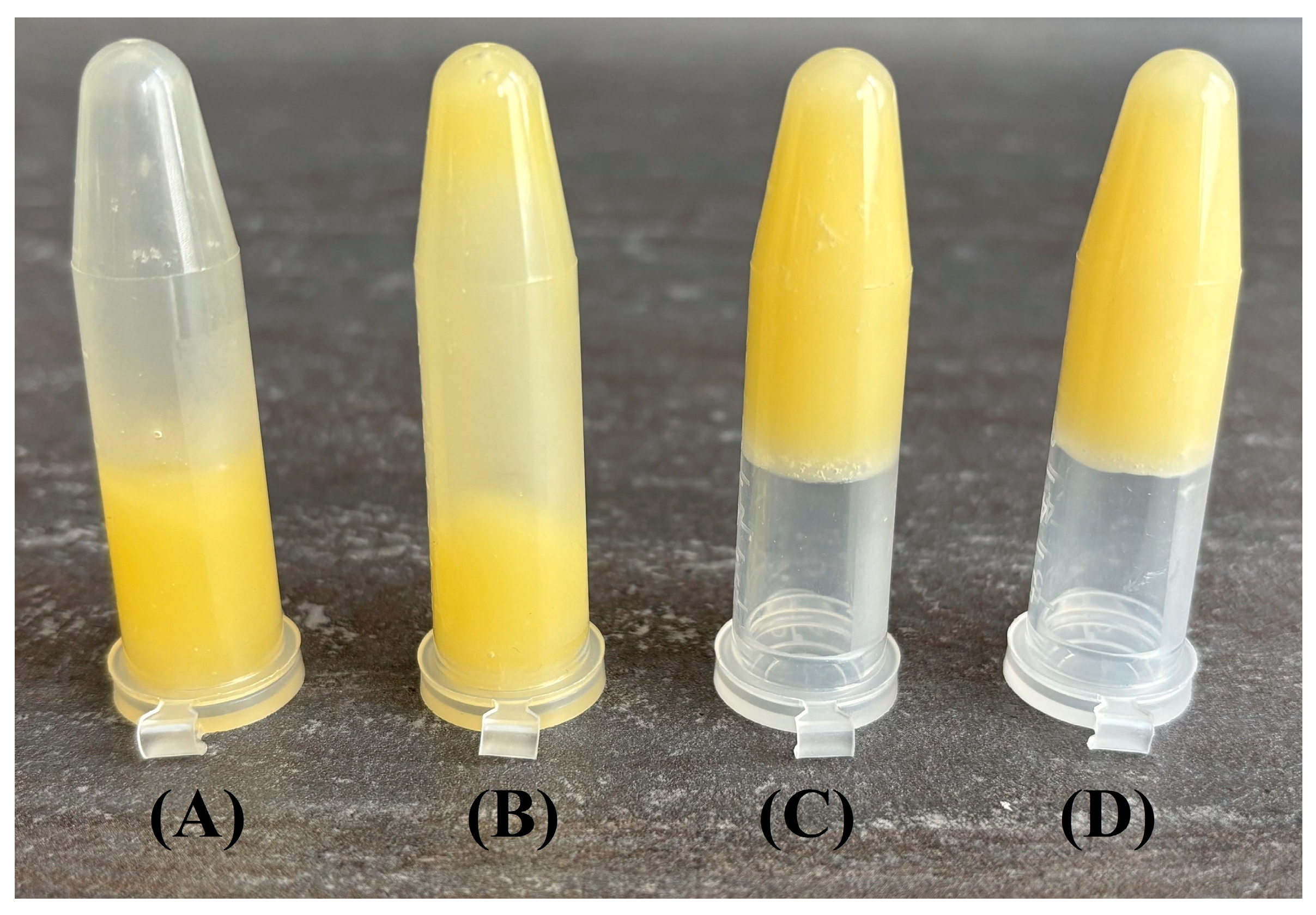
The first objective of this study was to determine the critical gelation concentration of sorbitan monostearate in jojoba oil. To this end, all prepared organogels underwent the tube inversion test, a standard protocol for confirming the formation of a semi-solid structure. The optimal formulation was defined as the one with the lowest concentration of oleogelator that exhibited no flow of the gel upon inversion [1]. Although sorbitan monostearate is typically used as a surfactant, it also serves as an oleogelator at concentrations ranging from 1 to 22% [52]. For instance, alkanes (C6–18), alkenes, and synthetic long-chain esters can be gelled using 1–10% sorbitan monostearate [53], whereas vegetable oils such as sesame, olive, sunflower, soybean, almond, and borage oils require higher concentrations [13,54,55,56,57,58]. Consistent with this trend, the present study found that at least 20% sorbitan monostearate was necessary to structure liquid jojoba wax (Figure 1).
Afterward, nine bigels were designed by combining the optimized oleogel with three established hydrogel formulations—Carbopol 940-, Poloxamer 407-, and methylcellulose-based gels—at varying hydrogel-to-oleogel ratios (Table 1).

3.2. Bigel Characterization

3.2.1. Qualitative Characteristics and pH Values

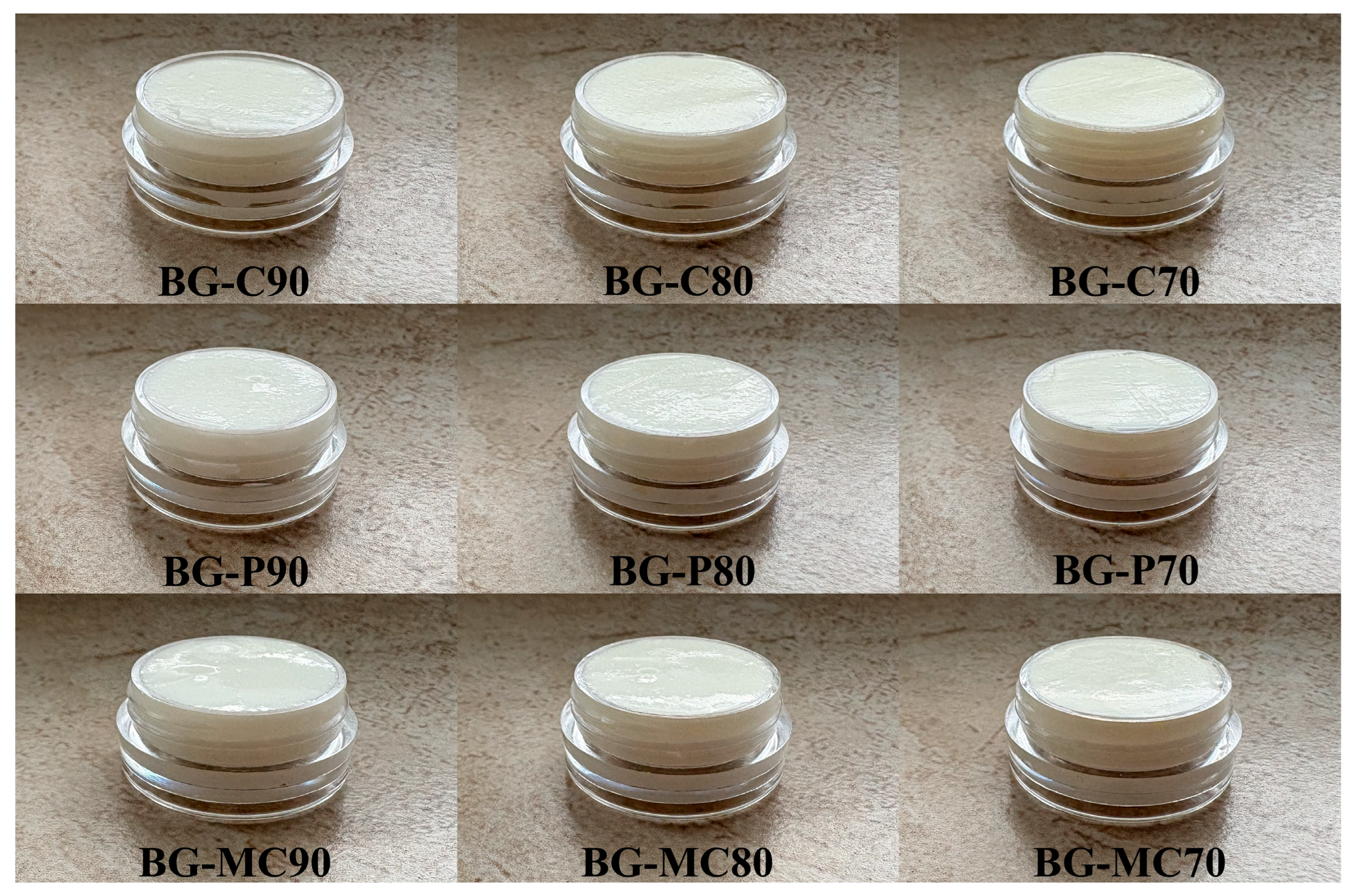
Immediately after preparation, the bigels were visually inspected for their qualitative characteristics. All formulations appeared off-white to light yellow, with a matte to glossy surface, depending on the hydrogel matrix type and oleogel content (Figure 2, Table 2). They exhibited a homogeneous, creamy texture and a slight rose-like scent, attributable to the presence of 2-phenoxyethanol.
The measured pH values showed only minor variations between formulations; all bigels remained within the physiologically acceptable range for skin, regardless of hydrogel type or phase ratio.
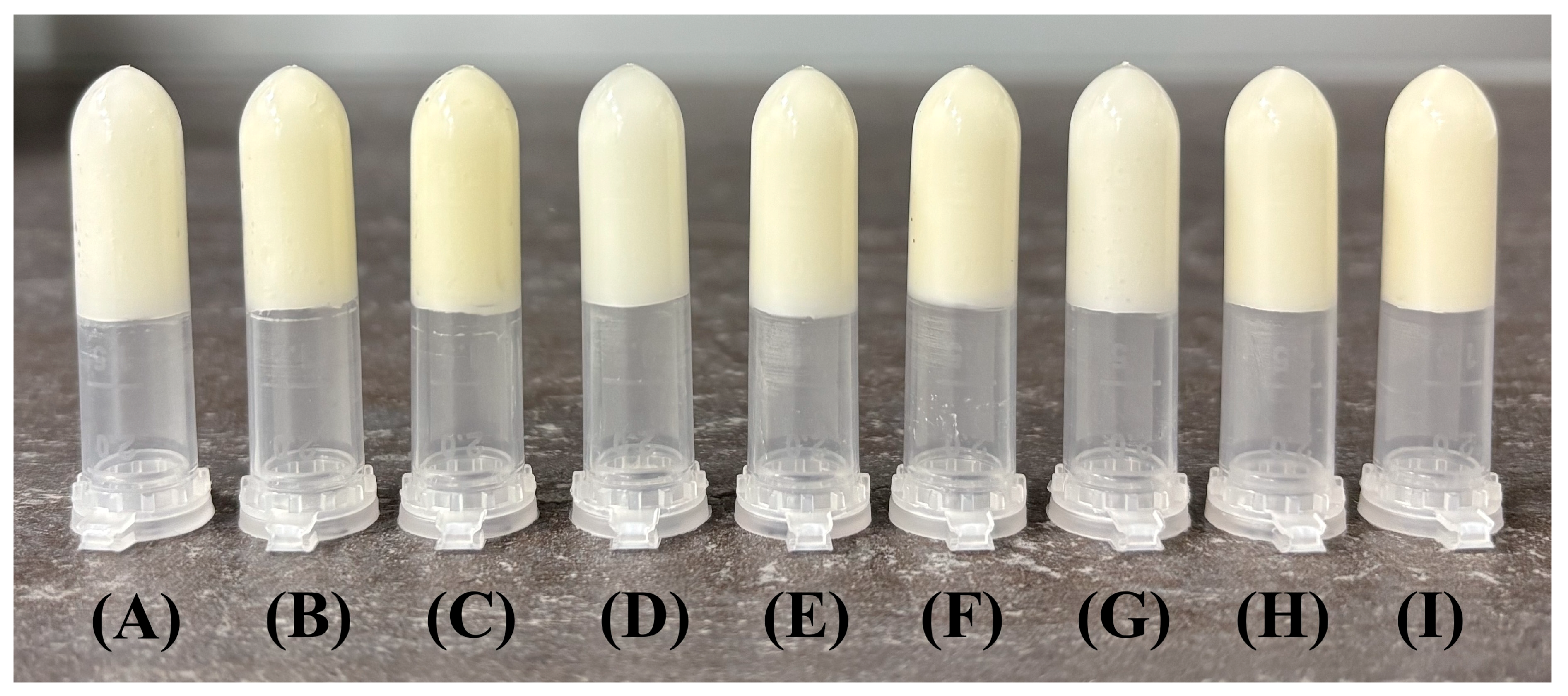
The formation of a stable gel structure was confirmed for all nine samples using the tube inversion test (Figure 3).

3.2.2. Morphological Characteristics

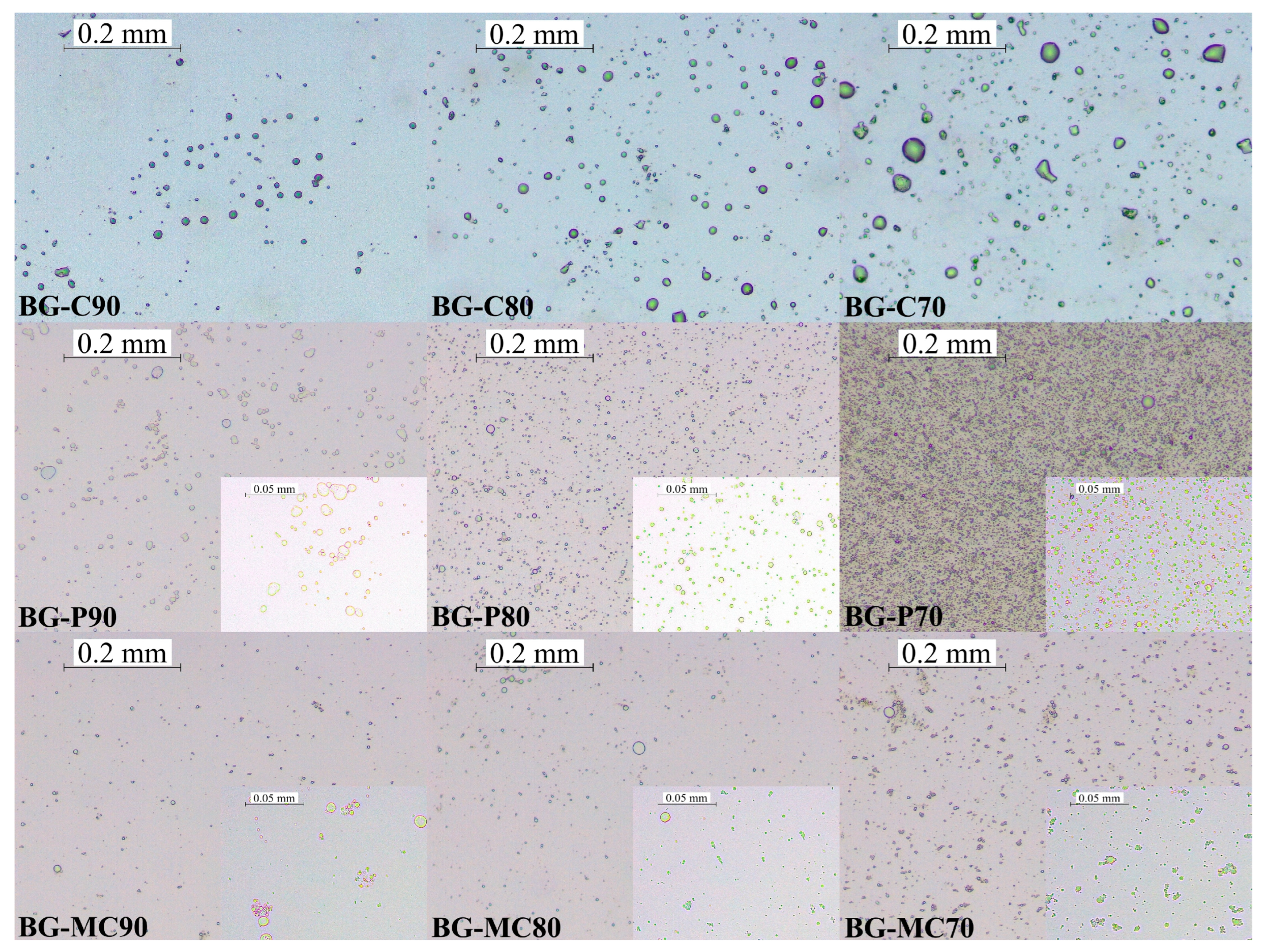
Among the evaluated bigels, carbomer-based formulations appeared to contain comparatively larger dispersed oleogel droplets (Figure 4). Within this group, BG-C80 showed the most uniform visual distribution of the lipophilic phase. However, in the poloxamer-containing formulations, the lipophilic phase appeared more homogenously distributed (except for BG-P90, where larger dispersed oleogel domains were observed). In contrast, all three methylcellulose-based systems exhibited less uniform phase organization, with larger individual droplets alongside oleogel aggregates.
It should be noted that optical microscopy was performed on 10-fold diluted samples to allow for optical evaluation. Therefore, the observations provide qualitative comparative information rather than an exact representation of native microstructure.

3.2.3. Mechanical Properties

Spreadability
Two-way ANOVA revealed that both the hydrophilic matrix (F(2,45) = 334.63, p < 0.001, ηp2 = 0.937) and the hydrogel-to-oleogel ratio (F(2,45) = 5.01, p = 0.011, ηp2 = 0.182) had notable main effects on spreadability. A significant interaction between the factors was also observed (F(4,45) = 33.23, p < 0.001, ηp2 = 0.747), indicating that the impact of the oleogel fraction depended on the hydrogel type.
According to Tukey’s post hoc test, carbomer-based bigels showed the highest spreadability, followed by those containing methylcellulose and poloxamer (p < 0.001; Table 3). Additionally, when investigating the effect of the phase ratio, it was found that systems with 30% oleogel content exhibited significantly lower spreading diameters than those containing 20% and 10% (p < 0.05), with the latter being comparable. A progressive decrease in spreadability was noted as the lipophilic fraction increased in both methylcellulose- and poloxamer-based bigels. The latter can be defined as a predictable response, as higher oleogel content generally increases viscosity, reinforcing the bigel structure and reducing spreadability [59]. However, carbomer formulations showed a distinct trend: low spreadability at a 90:10 ratio, but a marked increase at 80:20 and 70:30. Based on this observation, it is hypothesized that the system with the lowest oleogel content behaves as a strongly structured carbomer gel, whereas higher oleogel fractions disrupt the polymer network, leading to increased spreadability.
Firmness
According to two-way ANOVA, both hydrogel base type (F(2,18) = 75.69, p < 0.001, ηp2 = 0.894) and phase ratio (F(2,18) = 19.45, p < 0.001, ηp2 = 0.684) markedly influenced the firmness of the bigels. The interaction between the factors was also significant (F(4,18) = 5.19, p = 0.006, ηp2 = 0.535), implying that the impact of the oleogel fraction varied in different hydrogels.
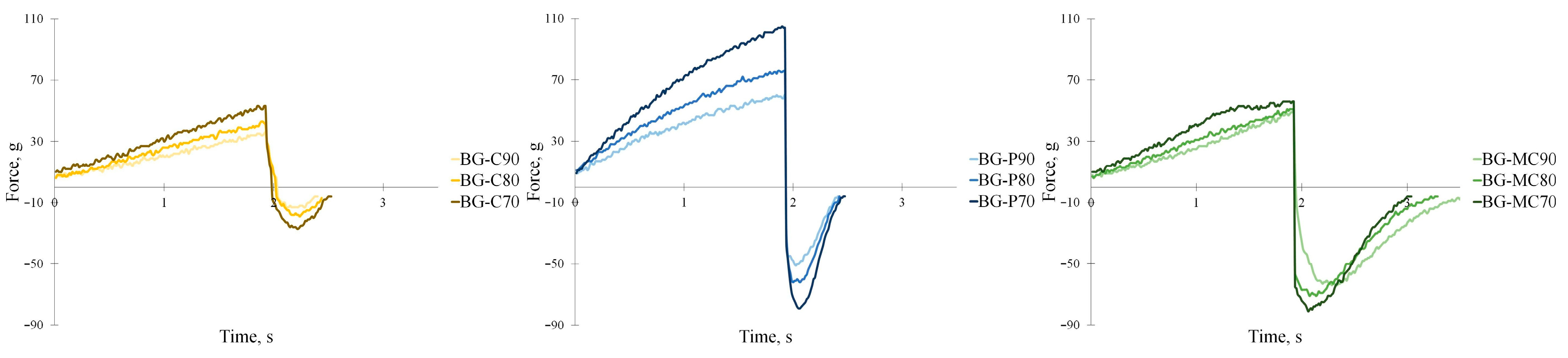
Firmness of the developed bigels significantly decreased (Tukey’s test; p < 0.001) in the following order: poloxamer-, methylcellulose-, carbomer-based bigels (Table 3; Figure 5), in accordance with the well-known inverse relationship between spreadability and firmness [60]. Beyond the hydrogel matrix type, the quantity of the oleogel fraction also affected firmness, with each 10% increase resulting in substantially firmer formulations (p < 0.05). This effect was not equally evident across all formulations: poloxamer bigels showed the strongest correlation, carbomer formulations exhibited a moderate increase, and methylcellulose exhibited the least change in firmness.
Cohesiveness
Both the hydrophilic phase (F(2,18) = 144.69, p < 0.001, ηp2 = 0.941) and the hydrogel-to-oleogel ratio (F(2,18) = 32.02, p < 0.001, ηp2 = 0.781) had a significant effect on cohesiveness, with a notable interaction also detected (F(4,18) = 4.24, p = 0.014, ηp2 = 0.485), demonstrating that the impact of phase ratio differed across hydrogel matrices.
The cohesiveness of the poloxamer-containing bigels was markedly higher than that of the other formulations (Tukey’s test; p < 0.001) (Table 3; Figure 5). These data correspond to their previously observed higher firmness, confirming the direct correlation between these two textural properties [6]. Further evidence of this relationship is that methylcellulose-containing bigels exhibited greater cohesiveness than carbomer-based formulations (p < 0.05). Moreover, the lower hydrogel-to-oleogel ratio resulted in more cohesive formulations, with poloxamer bigels showing the most pronounced variation, followed by those containing methylcellulose and carbomer.
Adhesiveness
Two-way ANOVA showed a significant main effect of the hydrogel type (F(2,18) = 653.68, p < 0.001, ηp2 = 0.986), identifying it as the primary determinant of adhesiveness. In contrast, the hydrogel-to-oleogel ratio showed no significant main effect (F(2,18) = 0.37, p = 0.696, ηp2 = 0.039). However, a notable interaction between the factors was observed (F(4,18) = 4.37, p = 0.012, ηp2 = 0.493).
The adhesiveness of the bigels was substantially dependent on the employed hydrogel matrix: methylcellulose-containing formulations revealed the highest values of the parameter in question, followed by poloxamer- and carbomer-based samples (Tukey’s test; p < 0.001) (Table 3; Figure 5). The phase ratio per se did not significantly affect adhesiveness, but it did exhibit a hydrogel-dependent effect. Carbomer and poloxamer bigels showed a marked increase in adhesiveness as the hydrogel fraction decreased. Conversely, methylcellulose systems became less adhesive as the quantity of the hydrophilic phase decreased.

3.2.4. Physical Stability

Centrifugation
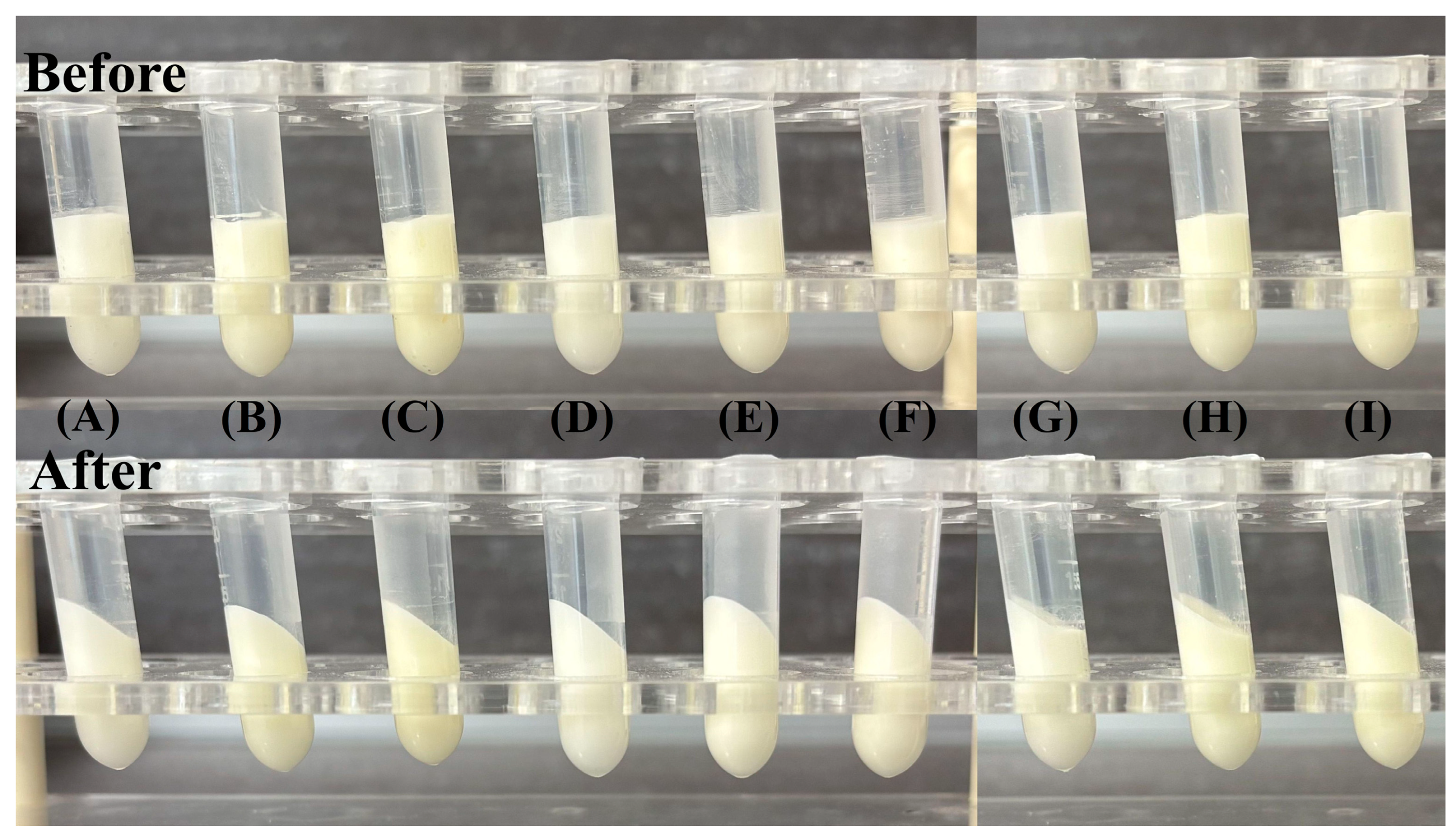
Figure 6 compiles photographs of the biphasic gels immediately before and after the centrifugation protocol. Phase separation was not observed in any of the formulations after either test cycle. The formulations maintained their structural integrity and can therefore be considered physically stable.
Freeze-Thawing
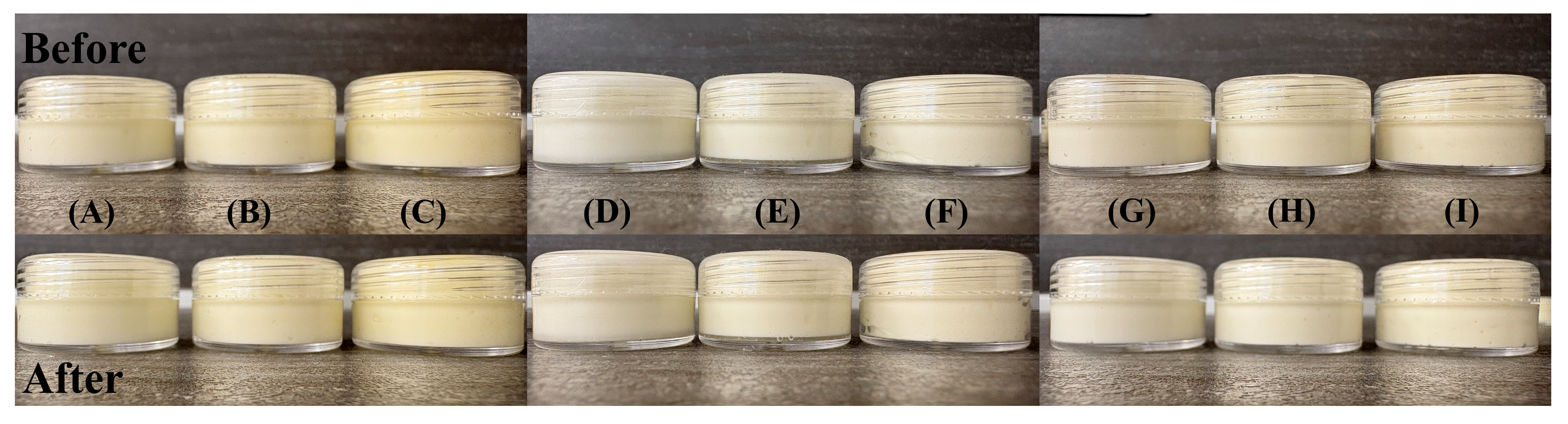
The freeze–thaw test was conducted to evaluate the physical stability of the bigels further. All samples retained their visual appearance throughout the experiment, presenting no signs of phase separation or syneresis (Figure 7). The absence of visible changes also indicates the satisfactory physical stability of the formulations.
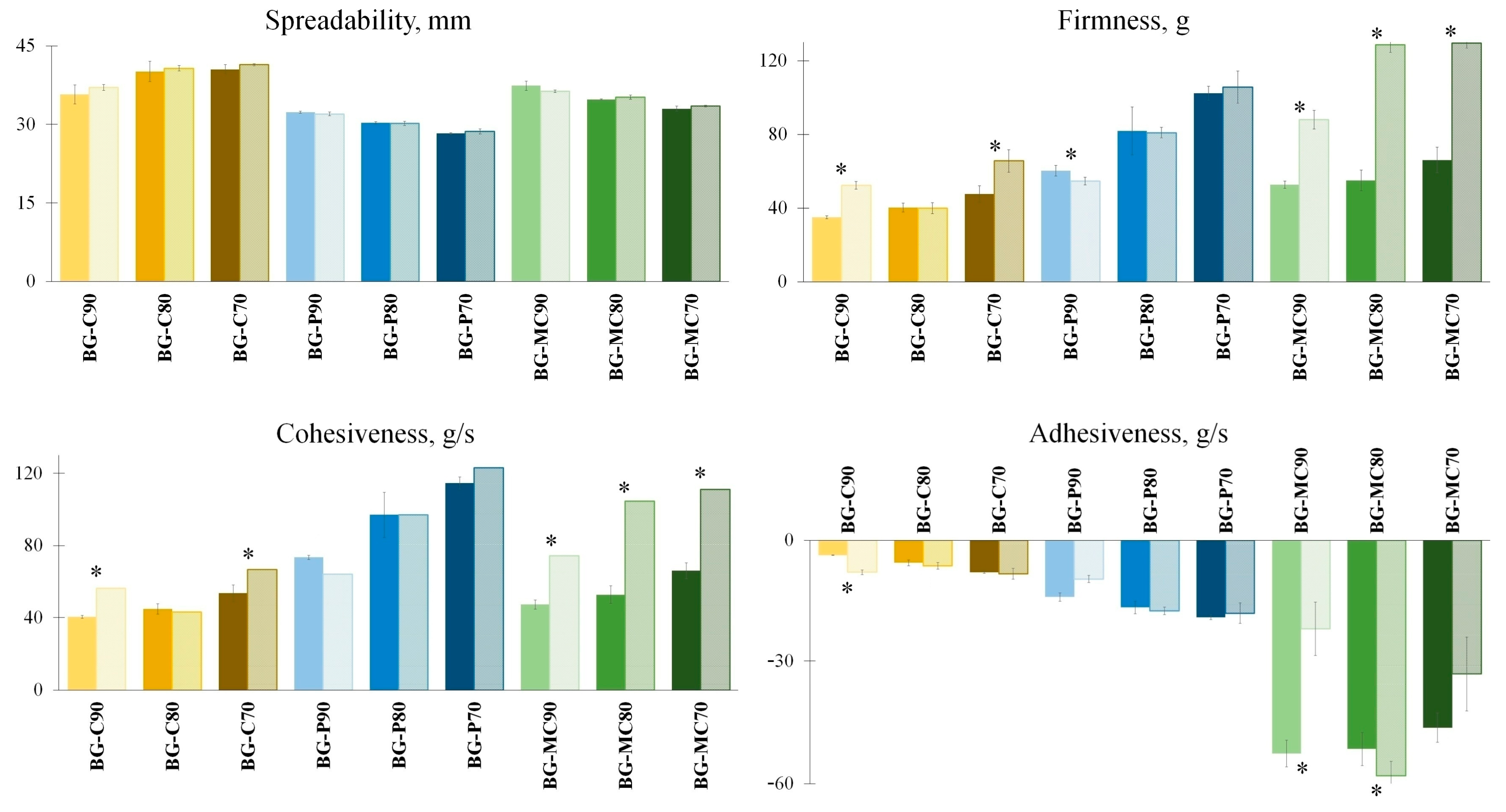
The impact of the freeze–thaw procedure on the mechanical properties of the bigels was also assessed. Formulations were considered to have retained their textural characteristics when no statistically significant differences (p > 0.05) were observed after the thermal stress. Following the protocol, the spreadability of any sample was not substantially affected (Figure 8). However, the firmness of BG-C90, BG-C70, and BG-P90, as well as that of all methylcellulose-based formulations, increased markedly. Moreover, BG-MC-coded systems, along with BG-C90 and BG-C70, were more cohesive after freeze-thaw. In terms of adhesiveness, the thermal treatment significantly affected BG-C90 and the methylcellulose-based bigels with 10% and 20% oleogel content.

4. Conclusions

In this study, nine jojoba oil bigels were successfully developed using different hydrophilic bases, viz., Carbomer 940, methylcellulose, and Poloxamer 407 hydrogels, at varying hydrogel-to-oleogel ratios (ranging from 90:10 to 70:30). Their qualitative characteristics, microstructural features, and textural properties were strongly influenced by both the type of the utilized hydrogel matrix and its relative proportion within the lipophilic phase. From a translational standpoint, the ability to easily modulate the mechanical characteristics through rational formulation design is highly relevant for dermal product development, where patient perception is a primary determinant of compliance.
Despite all designed samples exhibiting suitable characteristics for dermal application, only three of them, i.e., BG-C80, BG-P80, and BG-P70, retained their textural properties with insignificant changes after short-term application of thermal stress, suggesting sufficient physical integrity. Nevertheless, comprehensive long-term stability studies remain necessary to establish their stability under practical storage conditions and will form part of the following investigations. Future work will also focus on the inclusion of biologically active compounds, evaluating their in vitro release profiles and/or ex vivo permeation, and assessing their therapeutic efficacy in relevant in vivo skin models.

Funding

This research received no external funding.

Institutional Review Board Statement

Not applicable.

Informed Consent Statement

Not applicable.

Data Availability Statement

The data presented in this study are available on request from the corresponding author.

Acknowledgments

Grateful acknowledgment is given to the National Program “Young Scientists and Post-Doctoral Researchers-2,” Bulgaria.

Conflicts of Interest

The author declares no conflicts of interest.

References

  1. Martín-Illana, A.; Notario-Pérez, F.; Cazorla-Luna, R.; Ruiz-Caro, R.; Bonferoni, M.C.; Tamayo, A.; Veiga, M.D. Bigels as drug delivery systems: From their components to their applications. Drug. Discov. Today 2022, 27, 1008–1026. [Google Scholar] [CrossRef] [PubMed]
  2. Srivastava, S.; Singh, A. Bigels: A review on formulation, characterization, and application in the food industry. Trends Food Sci. Technol. 2025, 165, 105285. [Google Scholar] [CrossRef]
  3. Zampouni, K.; Dimakopoulou-Papazoglou, D.; Katsanidis, E. Food-Grade Bigel Systems: Formulation, Characterization, and Applications for Novel Food Product Development. Gels 2024, 10, 712. [Google Scholar] [CrossRef] [PubMed]
  4. Francavilla, A.; Corradini, M.G.; Joye, I.J. Bigels as Delivery Systems: Potential Uses and Applicability in Food. Gels 2023, 9, 648. [Google Scholar] [CrossRef] [PubMed]
  5. Habibullah, S.; Das, M.; Ghosh, S.; Das, T.; Swain, R.; Mohanty, B.; Mallick, S. Effect of beeswax-cottonseed oil based oleogel contribution in nanocellulosic bigel for ophthalmic moxifloxacin delivery. J. Drug Deliv. Sci. Technol. 2025, 112, 107287. [Google Scholar] [CrossRef]
  6. Wróblewska, M.; Szymańska, E.; Szekalska, M.; Winnicka, K. Different Types of Gel Carriers as Metronidazole Delivery Systems to the Oral Mucosa. Polymers 2020, 12, 680. [Google Scholar] [CrossRef]
  7. Gościniak, A.; Kocaj, F.; Stasiłowicz-Krzemień, A.; Szymański, M.; Karpiński, T.M.; Cielecka-Piontek, J. 3D Printed Bigel: A Novel Delivery System for Cannabidiol-Rich Hemp Extract. Gels 2024, 10, 770. [Google Scholar] [CrossRef]
  8. Ilomuanya, M.O.; Hameedat, A.T.; Akang, E.N.; Ekama, S.O.; Silva, B.O.; Akanmu, A.S. Development and evaluation of mucoadhesive bigel containing tenofovir and maraviroc for HIV prophylaxis. Futur. J. Pharm. Sci. 2020, 6, 81. [Google Scholar] [CrossRef]
  9. Martín-Illana, A.; Notario-Pérez, F.; Cazorla-Luna, R.; Ruiz-Caro, R.; Veiga, M.D. Smart Freeze-Dried Bigels for the Prevention of the Sexual Transmission of HIV by Accelerating the Vaginal Release of Tenofovir during Intercourse. Pharmaceutics 2019, 11, 232. [Google Scholar] [CrossRef] [PubMed]
  10. Wu, Y.; Jiang, Y.; He, Y.; Luo, Y.; Gu, Z.; Xiu, Y.; Wang, B.; Huang, Y. A bigel co-delivering highly hydrophilic and hydrophobic natural compounds for enhanced ulcerative colitis therapy. Int. J. Pharm. 2025, 678, 125706. [Google Scholar] [CrossRef]
  11. Peréz-Salas, J.L.; Moreno-Jiménez, M.R.; Medina-Torres, L.; Rocha-Guzmán, N.E.; Bernad-Bernad, M.J.; González-Laredo, R.F.; Gallegos-Infante, J.A. Development and Characterization of Bigels for the Topical Delivery of Curcumin. Sci. Pharm. 2025, 93, 28. [Google Scholar] [CrossRef]
  12. Sotirova, Y.; Kiselova-Kaneva, Y.; Vankova, D.; Tasinov, O.; Ivanova, D.; Popov, H.; Hristova, M.; Nikolova, K.; Andonova, V. Tissue Regeneration and Remodeling in Rat Models after Application of Hypericum perforatum L. Extract-Loaded Bigels. Gels 2024, 10, 341. [Google Scholar] [CrossRef]
  13. Sotirova, Y.; Gugleva, V.; Stoeva, S.; Kolev, I.; Nikolova, R.; Marudova, M.; Nikolova, K.; Kiselova-Kaneva, Y.; Hristova, M.; Andonova, V. Bigel Formulations of Nanoencapsulated St. John’s Wort Extract—An Approach for Enhanced Wound Healing. Gels 2023, 9, 360. [Google Scholar] [CrossRef] [PubMed]
  14. Iqra, S.; Vyas, J.; Upadhyay, U. Bigel: An opportunity for topical applications. Nat. J. Pharm. Sci. 2022, 2, 37–42. Available online: https://www.pharmajournal.net/article/44/2-2-1-208.pdf (accessed on 20 January 2026).
  15. Kulawik-Pióro, A.; Miastkowska, M. Polymeric Gels and Their Application in the Treatment of Psoriasis Vulgaris: A Review. Int. J. Mol. Sci. 2021, 22, 5124. [Google Scholar] [CrossRef]
  16. Pawar, V.U.; Dessai, A.D.; Nayak, U.Y. Oleogels: Versatile Novel Semi-Solid System for Pharmaceuticals. AAPS PharmSciTech 2024, 25, 146. [Google Scholar] [CrossRef] [PubMed]
  17. Poljšak, N.; Kočevar Glavač, N. Vegetable Butters and Oils as Therapeutically and Cosmetically Active Ingredients for Dermal Use: A Review of Clinical Studies. Front. Pharmacol. 2022, 13, 868461. [Google Scholar] [CrossRef]
  18. Matsumoto, Y.; Ma, S.; Tominaga, T.; Yokoyama, K.; Kitatani, K.; Horikawa, K.; Suzuki, K. Acute Effects of Transdermal Administration of Jojoba Oil on Lipid Metabolism in Mice. Medicina 2019, 55, 594. [Google Scholar] [CrossRef] [PubMed]
  19. Tietel, Z.; Kahremany, S.; Cohen, G.; Ogen-Shtern, N. Medicinal properties of jojoba (Simmondsia chinensis). Isr. J. Plant Sci. 2021, 68, 38–47. [Google Scholar] [CrossRef]
  20. Gad, H.A.; Roberts, A.; Hamzi, S.H.; Gad, H.A.; Touiss, I.; Altyar, A.E.; Kensara, O.A.; Ashour, M.L. Jojoba Oil: An Updated Comprehensive Review on Chemistry, Pharmaceutical Uses, and Toxicity. Polymers 2021, 13, 1711. [Google Scholar] [CrossRef]
  21. Awad, N.A.; Eliraq, M.; El-Bassel, E.H.; Ismail, A.S.M.; Abd El-Aziz, Y.S.G.; Gawish, M.S.; Zewail, R.M.Y.; Sami, R.; Khojah, E.; Hilary, U.; et al. Evaluation of the Effect of Elite Jojoba Lines on the Chemical Properties of their Seed Oil. Molecules 2022, 27, 3904. [Google Scholar] [CrossRef]
  22. Tietel, Z.; Melamed, S.; Ogen-Shtern, N.; Eretz-Kdosha, N.; Silberstein, E.; Ayzenberg, T.; Dag, A.; Cohen, G. Topical application of jojoba (Simmondsia chinensis L.) wax enhances the synthesis of pro-collagen III and hyaluronic acid and reduces inflammation in the ex-vivo human skin organ culture model. Front. Pharmacol. 2024, 15, 1333085. [Google Scholar] [CrossRef] [PubMed]
  23. Matsumoto, Y.; Suzuki, K. Topical Application of Jojoba Oil Suppresses Exercise-Induced Inflammatory Gene Expression in Mouse Skeletal Muscle. Biomolecules 2025, 15, 1394. [Google Scholar] [CrossRef] [PubMed]
  24. Abdalla, S.; Aroua, M.K.; Gew, L.T. A Comprehensive Review of Plant-Based Cosmetic Oils (Virgin Coconut Oil, Olive Oil, Argan Oil, and Jojoba Oil): Chemical and Biological Properties and Their Cosmeceutical Applications. ACS Omega 2024, 9, 44019–44032. [Google Scholar] [CrossRef]
  25. Al-Ghamdi, A.; Elkholy, T.; Abuhelal, S.; Al-Abbadi, H.; Qahwaji, D.; Khalefah, N.; Sobhy, H.; Abu-Hilal, M. Antibacterial and Antifungal Activity of Jojoba Wax Liquid (Simmondsia chinensis). Pharmacogn. J. 2019, 11, 191–194. [Google Scholar] [CrossRef]
  26. Pooja Umaiyal, M.; Gayathri, R.; Vishnupriya, V.; Geetha, R.V. Anti microbial activity of jojoba oil against selected microbes: An invitro study. J. Pharm. Sci. Res. 2016, 8, 528. [Google Scholar]
  27. Assaf, S.M.; Maaroof, K.T.; Altaani, B.M.; Ghareeb, M.M.; Abu Alhayyal, A.A. Jojoba oil-based microemulsion for transdermal drug delivery. Res. Pharm. Sci. 2021, 16, 326–340. [Google Scholar] [CrossRef]
  28. Đekić, L.; Milinković Budinčić, J.; Stanić, D.; Fraj, J.; Petrović, L. Carbomer Hydrogels with Microencapsulated α-Tocopherol: Focus on the Biocompatibility of the Microcapsules, Topical Application Attributes, and In Vitro Release Study. Pharmaceutics 2024, 16, 628. [Google Scholar] [CrossRef]
  29. Russo, E.; Villa, C. Poloxamer Hydrogels for Biomedical Applications. Pharmaceutics 2019, 11, 671. [Google Scholar] [CrossRef] [PubMed]
  30. Amanzholkyzy, A.; Zhumagaliyeva, S.; Sultanova, N.; Abilov, Z.; Ongalbek, D.; Donbayeva, E.; Niyazbekova, A.; Mukazhanova, Z. Hydrogel Delivery Systems for Biological Active Substances: Properties and the Role of HPMC as a Carrier. Molecules 2025, 30, 1354. [Google Scholar] [CrossRef]
  31. Cheng, S.; Wang, H.; Pan, X.; Zhang, C.; Zhang, K.; Chen, Z.; Dong, W.; Xie, A.; Qi, X. Dendritic Hydrogels with Robust Inherent Antibacterial Properties for Promoting Bacteria-Infected Wound Healing. ACS Appl. Mater. Interfaces 2022, 14, 11144–11155. [Google Scholar] [CrossRef]
  32. Qi, X.; Li, Y.; Xiang, Y.; Chen, Y.; Shi, Y.; Ge, X.; Zeng, B.; Shen, J. Hyperthermia-enhanced immunoregulation hydrogel for oxygenation and ROS neutralization in diabetic foot ulcers. Cell Biomater. 2025, 1, 100020. [Google Scholar] [CrossRef]
  33. Zakzak, K.; Semenescu, A.-D.; Moacă, E.-A.; Predescu, I.; Drăghici, G.; Vlaia, L.; Vlaia, V.; Borcan, F.; Dehelean, C.-A. Comprehensive Biosafety Profile of Carbomer-Based Hydrogel Formulations Incorporating Phosphorus Derivatives. Gels 2024, 10, 477. [Google Scholar] [CrossRef] [PubMed]
  34. Maslii, Y.; Ruban, O.; Kasparaviciene, G.; Kalveniene, Z.; Materiienko, A.; Ivanauskas, L.; Mazurkeviciute, A.; Kopustinskiene, D.M.; Bernatoniene, J. The Influence of pH Values on the Rheological, Textural and Release Properties of Carbomer Polacril® 40P-Based Dental Gel Formulation with Plant-Derived and Synthetic Active Components. Molecules 2020, 25, 5018. [Google Scholar] [CrossRef] [PubMed]
  35. Stancu, A.I.; Oprea, E.; Dițu, L.M.; Ficai, A.; Ilie, C.-I.; Badea, I.A.; Buleandra, M.; Brîncoveanu, O.; Ghica, M.V.; Avram, I.; et al. Development, Optimization, and Evaluation of New Gel Formulations with Cyclodextrin Complexes and Volatile Oils with Antimicrobial Activity. Gels 2024, 10, 645. [Google Scholar] [CrossRef]
  36. Sarfraz, M.; Iqbal, R.; Khan, K.U.; Minhas, M.U. Carbopol Based Hydrogels for ITOPRIDE Hydrochloride Delivery; Synthesis, Characterization and Comparative Assessment with Various Monomers. J. Funct. Biomater. 2022, 13, 295. [Google Scholar] [CrossRef] [PubMed]
  37. Slavkova, M.; Tzankov, B.; Popova, T.; Voycheva, C. Gel Formulations for Topical Treatment of Skin Cancer: A Review. Gels 2023, 9, 352. [Google Scholar] [CrossRef]
  38. Brambilla, E.; Locarno, S.; Gallo, S.; Orsini, F.; Pini, C.; Farronato, M.; Thomaz, D.V.; Lenardi, C.; Piazzoni, M.; Tartaglia, G. Poloxamer-Based Hydrogel as Drug Delivery System: How Polymeric Excipients Influence the Chemical-Physical Properties. Polymers 2022, 14, 3624. [Google Scholar] [CrossRef]
  39. Tuszynska, M.; Skopinska-Wisniewska, J.; Bartniak, M.; Bajek, A. Conceptualization and Preliminary Characterization of Poloxamer-Based Hydrogels for Biomedical Applications. Bioconjug. Chem. 2025, 36, 1169–1179. [Google Scholar] [CrossRef]
  40. Ivanova, N.; Ermenlieva, N.; Simeonova, L.; Vilhelmova-Ilieva, N.; Bratoeva, K.; Stoyanov, G.; Andonova, V. In Situ Gelling Behavior and Biopharmaceutical Characterization of Nano-Silver-Loaded Poloxamer Matrices Designed for Nasal Drug Delivery. Gels 2024, 10, 385. [Google Scholar] [CrossRef]
  41. Chen, I.-C.; Su, C.-Y.; Chen, P.-Y.; Hoang, T.C.; Tsou, Y.-S.; Fang, H.-W. Investigation and Characterization of Factors Affecting Rheological Properties of Poloxamer-Based Thermo-Sensitive Hydrogel. Polymers 2022, 14, 5353. [Google Scholar] [CrossRef]
  42. Rhinow, R.; Franco, M.K.K.D.; Vollrath, M.K.; Kellermann, G.; Yokaichiya, F. Poloxamer-Driven Drug Delivery System for Anti-Inflammatory Drugs Using Small-Angle Neutron Scattering Approach. Gels 2025, 11, 410. [Google Scholar] [CrossRef] [PubMed]
  43. Zarrintaj, P.; Ramsey, J.D.; Samadi, A.; Atoufi, Z.; Yazdi, M.K.; Ganjali, M.R.; Amirabad, L.M.; Zangene, E.; Farokhi, M.; Formela, K.; et al. Poloxamer: A versatile tri-block copolymer for biomedical applications. Acta Biomater. 2020, 110, 37–67. [Google Scholar] [CrossRef]
  44. Bonetti, L.; De Nardo, L.; Farè, S. Crosslinking strategies in modulating methylcellulose hydrogel properties. Soft Matter 2023, 19, 7869–7884. [Google Scholar] [CrossRef] [PubMed]
  45. Nasatto, P.L.; Pignon, F.; Silveira, J.L.M.; Duarte, M.E.R.; Noseda, M.D.; Rinaudo, M. Methylcellulose, a Cellulose Derivative with Original Physical Properties and Extended Applications. Polymers 2015, 7, 777–803. [Google Scholar] [CrossRef]
  46. Dixit, K.; Bora, H.; Chakrabarti, R.; Saha, B.; Dogra, N.; Biswas, S.; Sengupta, T.K.; Kaushal, M.; Rana, S.; Mukherjee, G.; et al. Thermoresponsive keratin-methylcellulose self-healing injectable hydrogel accelerating full-thickness wound healing by promoting rapid epithelialization. Int. J. Biol. Macromol. 2024, 263, 130073. [Google Scholar] [CrossRef]
  47. Sultan, M.H.; Javed, S.; Madkhali, O.A.; Alam, M.I.; Almoshari, Y.; Bakkari, M.A.; Sivadasan, D.; Salawi, A.; Jabeen, A.; Ahsan, W. Development and Optimization of Methylcellulose-Based Nanoemulgel Loaded with Nigella sativa Oil for Oral Health Management: Quadratic Model Approach. Molecules 2022, 27, 1796. [Google Scholar] [CrossRef]
  48. Rowe, R.C.; Sheskey, P.J.; Owen, S.C. Handbook of Pharmaceutical Excipients, 6th ed.; Pharmaceutical Press: London, UK, 2006; ISBN 978-0-85369-792-3. [Google Scholar]
  49. Ghanta, P.; Winschel, T.; Hessel, E.; Oyewumi, O.; Czech, T.; Oyewumi, M.O. Efficacy assessment of methylcellulose-based thermoresponsive hydrogels loaded with gallium acetylacetonate in osteoclastic bone resorption. Drug Deliv. Transl. Res. 2023, 13, 2533–2549. [Google Scholar] [CrossRef]
  50. de Dios-Pérez, I.; González-Garcinuño, Á.; Tabernero, A.; Blanco-López, M.; García-Esteban, J.A.; Moreno-Rodilla, V.; Curto, B.; Pérez-Esteban, P.; Martín del Valle, E.M. Development of a thermosensitive hydrogel based on Polaxamer 407 and gellan gum with inclusion complexes (Sulfobutylated-β-cyclodextrin–Farnesol) as a local drug delivery system. Eur. J. Pharm. Sci. 2023, 191, 106618. [Google Scholar] [CrossRef]
  51. Cho, K.; Tarté, R.; Acevedo, N.C. Development and characterization of the freeze-thaw and oxidative stability of edible rice bran wax-gelatin biphasic gels. LWT 2023, 174, 114330. [Google Scholar] [CrossRef]
  52. Swe, M.T.H.; Asavapichayont, P. Effect of silicone oil on the microstructure, gelation and rheological properties of sorbitan monostearate–sesame oil oleogels. Asian J. Pharm. Sci. 2018, 13, 485–497. [Google Scholar] [CrossRef]
  53. Murdan, S.; Gregoriadis, G.; Florence, A.T. Novel sorbitan monostearate organogels. J. Pharm. Sci. 1999, 88, 608–614. [Google Scholar] [CrossRef]
  54. Singh, V.K.; Pramanik, K.; Ray, S.S.; Pal, K. Development and characterization of sorbitan monostearate and sesame oil-based organogels for topical delivery of antimicrobials. AAPS PharmSciTech 2015, 16, 293–305. [Google Scholar] [CrossRef]
  55. Shah, D.K.; Sagiri, S.S.; Behera, B.; Pal, K.; Pramanik, K. Development of olive oil based organogels using sorbitan monopalmitate and sorbitan monostearate: A comparative study. J. Appl. Polym. Sci. 2012, 129, 793–805. [Google Scholar] [CrossRef]
  56. Behera, B.; Patil, V.; Sagiri, S.S.; Pal, K.; Ray, S.S. Span-60-based organogels as probable matrices for transdermal/topical delivery systems. J. Appl. Polym. Sci. 2011, 125, 852–863. [Google Scholar] [CrossRef]
  57. Mukherjee, S.; Majee, S.B.; Biswas, G.R. Formulation And In Vitro Characterisation of Soybean Oil-HPMCK4M Based Bigel Matrix For Topical Drug Delivery. Int. J. Appl. Pharm. 2019, 11, 33–38. [Google Scholar] [CrossRef]
  58. Andonova, V.Y.; Peneva, P.T.; Apostolova, E.G.; Dimcheva, T.D.; Peychev, Z.L.; Kassarova, M.I. Carbopol hydrogel/sorbitan monostearate-almond oil based organogel biphasic formulations: Preparation and characterization of the bigels. Trop. J. Pharm. Res. 2017, 16, 1455–1463. [Google Scholar] [CrossRef]
  59. Kasparaviciene, G.; Maslii, Y.; Herbina, N.; Kazlauskiene, D.; Marksa, M.; Bernatoniene, J. Development and Evaluation of Two-Phase Gel Formulations for Enhanced Delivery of Active Ingredients: Sodium Diclofenac and Camphor. Pharmaceutics 2024, 16, 366. [Google Scholar] [CrossRef] [PubMed]
  60. Baltuonytė, G.; Eisinaitė, V.; Kazernavičiūtė, R.; Vinauskienė, R.; Jasutienė, I.; Leskauskaitė, D. Novel Formulation of Bigel-Based Vegetable Oil Spreads Enriched with Lingonberry Pomace. Foods 2022, 11, 2213. [Google Scholar] [CrossRef] [PubMed]
Figure 1. Tube inversion test results for oleogels prepared with 10% (A), 15% (B), 20% (C), and 25% (D) sorbitan monostearate.
Scipharm 94 00022 g001
Figure 2. Physical appearance of the developed bigels.
Scipharm 94 00022 g002
Figure 3. Tube inversion test results: BG-C90 (A), BG-C80 (B), BG-C70 (C), BG-P90 (D), BG-P80 (E), BG-P70 (F), BG-MC90 (G), BG-MC80 (H), and BG-MC70 (I).
Scipharm 94 00022 g003
Figure 4. Micrographs of the developed bigels. Due to the lower oleogel droplet sizes, poloxamer- and methylcellulose-based bigels were observed at both 10 and 40× magnification.
Scipharm 94 00022 g004
Figure 5. Force–time curves of bigels obtained from the textural analysis.
Scipharm 94 00022 g005
Figure 6. Visual appearance of the bigels before and after the centrifugation test: BG-C90 (A), BG-C80 (B), BG-C70 (C), BG-P90 (D), BG-P80 (E), BG-P70 (F), BG-MC90 (G), BG-MC80 (H), and BG-MC70 (I).
Scipharm 94 00022 g006
Figure 7. Visual appearance of the bigels before and after the freeze-thawing: BG-C90 (A), BG-C80 (B), BG-C70 (C), BG-P90 (D), BG-P80 (E), BG-P70 (F), BG-MC90 (G), BG-MC80 (H), and BG-MC70 (I).
Scipharm 94 00022 g007
Figure 8. Mechanical properties of the developed bigels before (solid bars) and after (pattern bars) undergoing the freeze–thaw test (mean ± SD, n = 3). Asterisks denote significant differences between the paired samples (p < 0.05).
Scipharm 94 00022 g008
Table 1. Composition of the developed bigels. The values are expressed as % (w/w) of the final mass of the formulations.
BG-C90BG-C80BG-C70BG-P90BG-P80BG-P70BG-MC90BG-MC80BG-MC70
Carbomer 9400.90.80.7------
Poloxamer 407---181614---
Methylcellulose------5.44.84.2
Distilled waterad 100ad 100ad 100ad 100ad 100ad 100ad 100ad 100ad 100
2-phenoxyethanol0.50.50.50.50.50.50.50.50.5
Sorbitan
monostearate
246246246
Jojoba oil816248162481624
Table 2. Qualitative characteristics and pH values (mean ± SD; n = 3) of the developed bigels.
BG-C90BG-C80BG-C70BG-P90BG-P80BG-P70BG-MC90BG-MC80BG-MC70
Coloroff-whitepale
yellow
light yellowoff-whitepale
yellow
light yellowoff-whitepale
yellow
light yellow
Fragrancerose-likerose-likerose-likerose-likerose-likerose-likerose-likerose-likerose-like
Texturesmooth and creamysmooth and creamysmooth and creamysmooth and creamysmooth and creamysmooth and creamysmooth and creamysmooth and creamysmooth and creamy
Surface
appearance
slightly glossyslightly mattesemi mattesemi-glossyslightly glossyslightly glossyglossysemi-glossyslightly glossy
pH value6.68 ± 0.056.65 ± 0.056.57 ± 0.056.74 ± 0.076.77 ± 0.016.84 ± 0.016.93 ± 0.026.95 ± 0.046.94 ± 0.06
Table 3. Mechanical properties of the developed bigels (presented as mean ± SD; n = 3).
Spreadability, mmFirmness, gCohesiveness, g/sAdhesiveness, g/s
Plain hydrogels
Carbomer 940 (1%, w/w)40.33 ± 0.4765.33 ± 0.9468.57 ± 2.86−7.67 ± 0.54
Poloxamer 407 (20%, w/w)36.33 ± 0.2764.00 ± 1.6374.63 ± 3.34−13.37 ± 1.28
Methylcellulose (6%, w/w)38.44 ± 1.1383.67 ± 2.6255.47 ± 3.48−76.17 ± 0.41
Bigels
BG-C9035.72 ± 1.8035.00 ± 0.8240.47 ± 0.86−3.67 ± 0.05
BG-C8040.11 ± 1.9140.33 ± 2.4944.83 ± 3.00−5.63 ± 0.75
BG-C7040.50 ± 0.8947.67 ± 4.5053.57 ± 4.69−7.97 ± 0.20
BG-P9032.33 ± 0.2460.33 ± 2.8773.53 ± 1.10−14.10 ± 1.06
BG-P8030.28 ± 0.2182.00 ± 12.9696.93 ± 12.48−16.67 ± 1.56
BG-P7028.28 ± 0.16102.33 ± 3.77114.70 ± 3.41−19.10 ± 0.59
BG-MC9037.39 ± 0.9152.67 ± 1.8947.33 ± 2.52−52.67 ± 3.20
BG-MC8034.77 ± 0.0855.00 ± 5.6652.83 ± 4.94−51.57 ± 3.97
BG-MC7033.00 ± 0.4960.33 ± 6.8566.13 ± 4.43−46.37 ± 3.58
The textural properties of the corresponding plain hydrogels are included for reference to contextualize the mechanical behavior of the bigels. Statistical analysis was applied only to the bigel formulations.
Disclaimer/Publisher’s Note: The statements, opinions and data contained in all publications are solely those of the individual author(s) and contributor(s) and not of MDPI and/or the editor(s). MDPI and/or the editor(s) disclaim responsibility for any injury to people or property resulting from any ideas, methods, instructions or products referred to in the content.