Review

Gut Dysbiosis, Malnutrition and Sarcopenia in Liver Cirrhosis: A Narrative Review

by
Marian-Vlad Lăpădat
1,2,
Claudia Georgeta Iacobescu
2,
Ion Daniel Baboi
1,2,*,
Maria Nedelcu
3,
Lavinia Alice Bălăceanu
1,4,*,
Valeria Ioana Grigorescu
2 and
Ion Dina
1,2
1
Clinical Department 1—Medical Semiology, “Carol Davila” University of Medicine and Pharmacy, 020021 Bucharest, Romania
2
Gastroenterology Department, Clinical Emergency Hospital “Sf. Ioan”, 042122 Bucharest, Romania
3
Internal Medicine Department, “Carol Davila” University of Medicine and Pharmacy, 020021 Bucharest, Romania
4
Internal Medicine Department, Clinical Emergency Hospital “Sf. Ioan”, 042122 Bucharest, Romania
*
Authors to whom correspondence should be addressed.
Diseases 2026, 14(3), 90; https://doi.org/10.3390/diseases14030090

Submission received: 15 January 2026 / Revised: 24 February 2026 / Accepted: 25 February 2026 / Published: 2 March 2026
(This article belongs to the Section Gastroenterology)

Abstract

Liver cirrhosis represents the end stage of chronic liver disease arising from diverse etiologies and is characterized by persistent hepatic injury, architectural distortion, extensive fibrosis, and nodular regeneration. While decompensated cirrhosis is commonly associated with overt, life-threatening complications such as hepatic encephalopathy, hepatorenal syndrome and gastrointestinal bleeding, less apparent manifestations—including sarcopenia and metabolic disturbances—have emerged as major determinants of prognosis. Sarcopenia, defined by the progressive loss of skeletal muscle mass and function, is highly prevalent in cirrhotic patients and is closely linked to frailty, increased morbidity, mortality, and adverse liver transplantation outcomes. Increasing data support the role of gastrointestinal dysfunction in the pathogenesis of sarcopenia in liver cirrhosis. In chronic liver disease, intestinal dysfunction is exacerbated by portal hypertension, which promotes increased intestinal permeability and bacterial translocation. Furthermore, gut dysbiosis, a key feature of advanced liver disease, contributes to impaired digestion, malabsorption of macro- and micronutrients, increased intestinal permeability, malnutrition and systemic inflammation. These alterations promote negative energy balance, reduce muscle protein synthesis and enhance muscle catabolism, thereby accelerating muscle wasting. Despite increasing recognition of the individual roles of gut dysbiosis, malabsorption, and sarcopenia in cirrhosis, their complex interrelationship has not been comprehensively addressed. This narrative review synthesizes current evidence on the interplay between gut dysbiosis, malabsorption and sarcopenia in patients with liver cirrhosis. We discuss underlying pathophysiological mechanisms, clinical implications and potential therapeutic strategies, while highlighting existing knowledge gaps and future research directions. Improved understanding of the gut-liver-muscle axis may offer novel opportunities for early intervention and optimization of outcomes in this high-risk patient population.

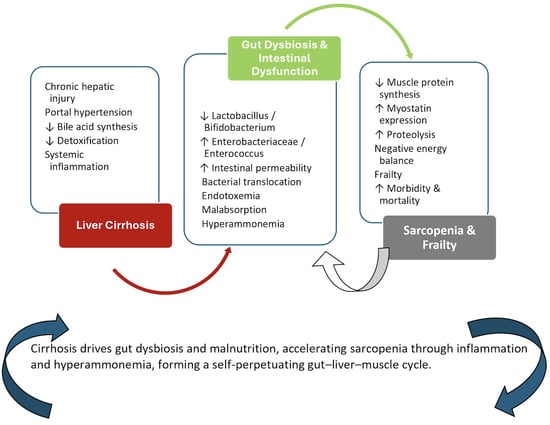
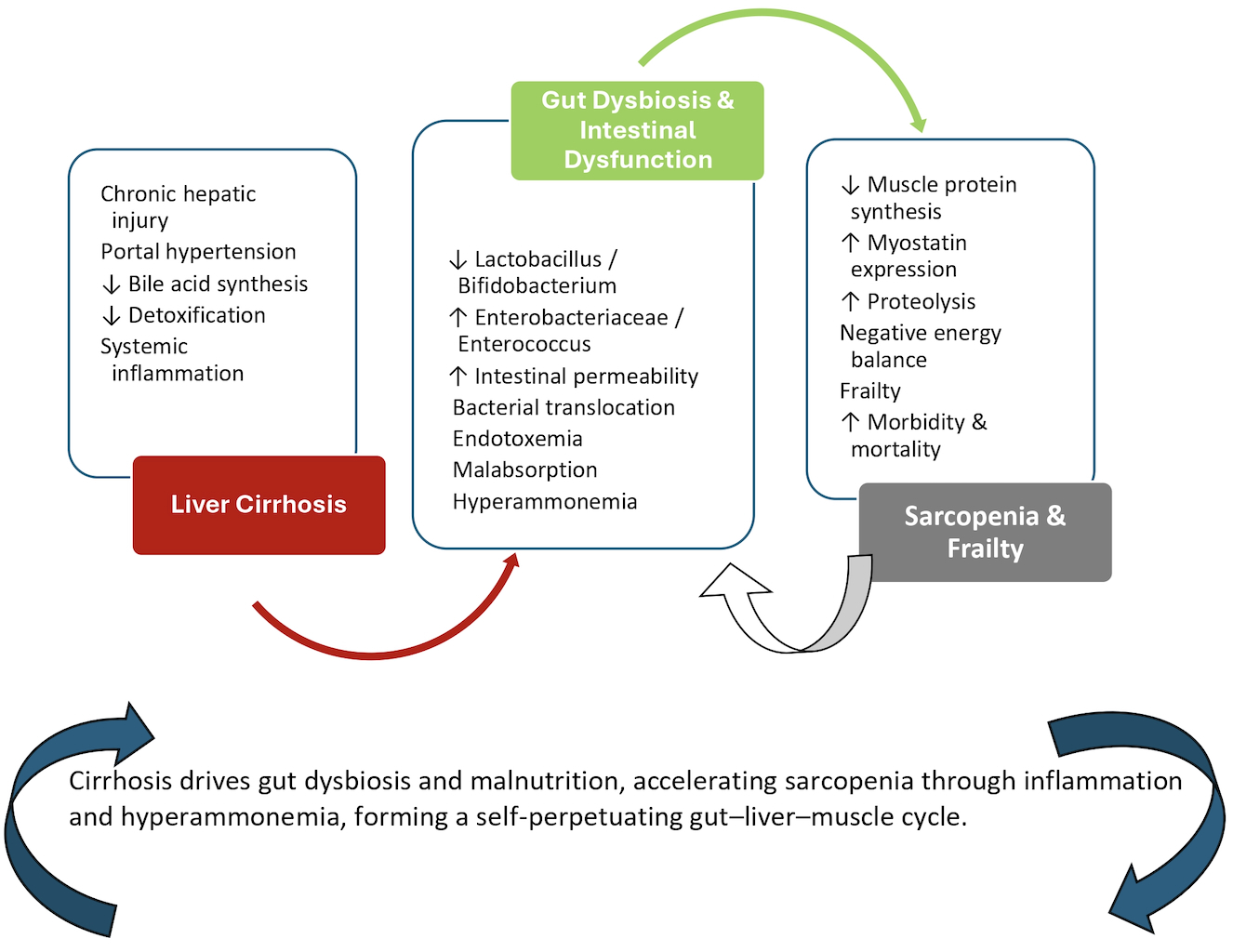
Graphical Abstract

1. Introduction

Cirrhosis of the liver is a multifactorial and progressive disease, resulting from continuous liver damage and long-standing inflammatory responses. Overall, it is the final common pathway of diverse chronic liver conditions, such as viral hepatitis, prolonged alcohol consumption and metabolic, genetic and autoimmune liver diseases, ultimately leading to liver failure [1,2,3]. Besides well-known complications with a direct impact on survival, such as hepatic encephalopathy, hepatorenal syndrome, spontaneous bacterial peritonitis and hepatocellular carcinoma—often complicated by segmental or main portal vein thrombosis—cirrhosis is also associated with a range of metabolic disturbances that substantially contribute to disease burden [4,5,6,7]. Sarcopenia, defined by a progressive loss of skeletal muscle mass and function, represents a major complication in patients with liver cirrhosis [8]. Sarcopenia affects up to 40–70% of patients with advanced cirrhosis and is associated with poor quality of life, increased risk of complications and reduced survival [9,10,11,12,13]. Sarcopenia is closely intertwined with frailty, a multidimensional syndrome characterized by diminished physiological reserve, muscle weakness, fatigue and reduced resilience to stressors. In the context of chronic liver disease, both sarcopenia and frailty develop insidiously, often remaining underrecognized until advanced stages of cirrhosis. Numerous studies have demonstrated their strong association with increased morbidity, higher rates of cirrhosis-related complications, prolonged hospitalization and reduced quality of life [14,15,16]. While reduced dietary intake and metabolic alterations have traditionally been considered the main drivers of muscle wasting in cirrhosis, growing evidence suggests that gastrointestinal dysfunction plays a pivotal role in this process. In particular, gut dysbiosis—a hallmark of cirrhosis—has emerged as a key contributor to impaired digestion and systemic inflammation, all of which may accelerate skeletal muscle loss [13,17,18,19]. It is well established that the integrity of the intestinal barrier is essential for maintaining hepatic homeostasis, while portal hypertension resulting from advanced liver disease promotes increased gut barrier permeability, highlighting the bidirectional interactions between the gut and liver [20,21,22]. Alteration of the intestinal microbiota in liver cirrhosis occurs through two main mechanisms: a reduction in bile acid synthesis and increased portal pressure, which leads to gastrointestinal blood stasis and subsequent hyperpermeability [13]. Damage to the intestinal barrier facilitates the translocation of bacteria and microbial metabolites into the systemic circulation, resulting in endotoxemia and a proinflammatory state. This pathological condition is further amplified by the impaired capacity of the cirrhotic liver to detoxify and clear these toxins. The ensuing systemic inflammation plays a central role in the pathogenesis of sarcopenia by promoting proteolysis, suppressing muscle protein synthesis and inducing anabolic dysfunction. Moreover, chronic inflammation exacerbates metabolic alterations and energy imbalance, thereby accelerating skeletal muscle wasting and functional decline in patients with liver cirrhosis [23,24]. At the same time, an altered gut microbiota worsens disease progression through endotoxemia and the release of proinflammatory cytokines, thereby contributing to the development of cirrhosis-related complications such as hepatic encephalopathy, significant portal hypertension with esophagogastric variceal bleeding, severe hematological abnormalities, particularly thrombocytopenia and spontaneous bacterial peritonitis, ultimately creating a vicious gut–liver cycle. Malnutrition, despite being a serious complication of liver cirrhosis, is frequently underestimated. Reduced protein intake, chronic inflammation, malabsorption with altered nutrient metabolism, endocrine dysfunction and dysbiosis all contribute to the development and progression of malnutrition in cirrhotic patients [18,25,26]. Malnutrition is an independent predictor of poor clinical outcomes, including the development of complications—particularly infections—as well as increased hospitalization rates and mortality [27,28,29].
Although the individual roles of gut dysbiosis, malnutrition and sarcopenia in liver cirrhosis have been extensively discussed, their interconnection has not been comprehensively addressed in a unified narrative framework. Specifically, the mechanistic links between dysbiosis-induced malabsorption and the development of sarcopenia remain insufficiently explored. Therefore, this narrative review aims to synthesize current evidence on the interplay between gut dysbiosis, malnutrition and sarcopenia in patients with liver cirrhosis, highlighting underlying pathophysiological mechanisms, clinical implications and potential therapeutic strategies, while identifying gaps for future research.

2. Materials and Methods

A comprehensive literature search was conducted across major databases, including PubMed and Web of Science (Clarivate Analytics, Philadelphia, PA, USA), primarily focusing on articles published within the last five years (2020–2025), in order to capture the most recent evidence. Earlier landmark studies were also included when considered essential for understanding key pathophysiological mechanisms. The search strategy used combinations of keywords such as “liver cirrhosis,” “gut dysbiosis,” “malnutrition,” and “sarcopenia”. To minimize the risk of missing relevant studies, additional terms including “intestinal microbiota,” “gut microbiome,” “small intestinal bacterial overgrowth (SIBO),” “bacterial translocation” and “hyperammonemia” were also considered during manual reference screening and secondary searches.
Studies were selected based on their relevance to the pathophysiological links, clinical implications and management strategies related to gut dysbiosis, malnutrition and sarcopenia in patients with liver cirrhosis. Full-text original research articles, reviews and meta-analyses published in English were included, whereas case reports, editorials, and non-English publications were excluded. Data were extracted regarding study design, patient characteristics, main findings and proposed mechanisms linking gut dysbiosis, malnutrition and sarcopenia. Evidence was synthesized narratively, with emphasis on underlying mechanisms, clinical outcomes and potential therapeutic approaches. The review was conducted as a narrative synthesis and did not follow a predefined systematic review protocol. Knowledge gaps and directions for future research were highlighted. Additional relevant studies were identified through manual screening of reference lists from selected articles.

3. Results

The literature search identified a substantial body of evidence addressing the relationship between liver cirrhosis and sarcopenia, malnutrition and gut dysbiosis. In the Web of Science database, 586 records were identified for sarcopenia, 321 for malnutrition and 359 for gut dysbiosis, while PubMed yielded 184, 104 and 219 records for the respective topics. Following screening for relevance, the most pertinent studies were selected and synthesized narratively.
In a recent meta-analysis of 22 studies including nearly 7000 patients with liver cirrhosis, Tantai et al. reported a pooled prevalence of sarcopenia of 37.5%, with this skeletal muscle condition significantly increasing the risk of mortality. It was concluded that sarcopenia, assessed using L3-SMI criteria (skeletal muscle mass at L3 measured by computed tomography), affected approximately one-third of patients with cirrhosis, with increased prevalence reported in men, patients with alcohol-associated liver disease and those with Child–Pugh C cirrhosis [30].
According to Cui et al., sarcopenia occurred more frequently in men compared to women, and its prevalence was higher in patients with hepatic encephalopathy [31]. Specifically, patients with sarcopenia exhibited an approximately 20% higher incidence of hepatic encephalopathy compared to non-sarcopenic patients [8]. However, several studies have concluded that sarcopenia is a risk factor for hepatic encephalopathy [32,33,34].
Across different studies and meta-analyses, the reported prevalence of sarcopenia appears broadly similar, showing only slight differences [11,35,36,37], Table 1.
A prospective study including 156 patients with advanced chronic liver disease confirmed previously published findings, demonstrating a higher prevalence of sarcopenia in men, assessed using the psoas muscle index (PMI) at the level of the third lumbar vertebra on computed tomography images [38]. Furthermore, patients with alcohol-related liver disease exhibited a greater prevalence of sarcopenia than those with other causes of liver disease [38]. In addition, an association was identified between the presence of sarcopenia and greater severity of liver disease [38,39,40].
Table 1. Summary of the main studies evaluating the prevalence and clinical impact of sarcopenia in patients with liver cirrhosis.
Author (Year)Study DesignPopulation/Sample SizeSarcopenia PrevalenceMain Findings
Tantai X et al. (2022) [30]Meta-analysis696537.50%Independent risk factor for mortality
Cui Y et al. (2024) [31]Systematic review/Meta-analysis894541%Risk factor for both survival and mortality; significant risk factor for HE *.
Mazeaud S et al. (2023) [35]Systematic review/Meta-analysis882133%Indicator of poor quality of life
Thyloor Kenchappa S (2023) [38]Prospective Study15647.40%Indicator of worse prognosis, increased hospitalization and mortality rate
Tuo S et al. (2024) [41]Systematic review/Meta-analysis13,15840.10%Independent predictor of poor quality of life, increased morbidity and mortality.
* HE—Hepatic Encephalopathy.
A large systematic review and meta-analysis encompassing 55 studies with a total of 13,158 patients across 17 countries reported an overall worldwide prevalence of sarcopenia of 40.1% and identified sarcopenia as an independent predictor of prolonged hospital stays, poor quality of life, increased morbidity and mortality in cirrhotic patients [41].
Sarcopenia and malnutrition are closely interrelated in patients with liver cirrhosis, with sarcopenia often reflecting the clinical manifestation of nutritional deficiencies and contributing to increased morbidity and mortality. Malnutrition in cirrhotic patients has been reported in 5–92% of cases, highlighting either inconsistencies in assessment methods, limited clinical awareness or both factors [18].
Several authors have investigated different instruments and methods for assessing malnutrition in patients with liver cirrhosis due to the lack of consensus regarding its diagnosis, noting that malnutrition is often underdiagnosed in clinical practice [42]. They recommended the use of anthropometric tools, such as triceps skinfold thickness (TST) for assessing fat mass in females and mid-arm muscle circumference (MAMC) for detecting muscle loss in males. These tools have been employed in multiple studies to identify malnutrition, with TST demonstrating a detection range of 10–45%; moreover, reduced TST measurements have been associated with increased mortality [43,44,45,46,47].
An extensive review regarding the molecular mechanism of malnutrition published in 2020 outlined established and emerging molecular mechanisms involved in the development of malnutrition and sarcopenia in liver cirrhosis and identifies key gaps in current knowledge [48].
All of these are summarized in Table 2.
Beyond sarcopenia and malnutrition, gut dysbiosis has emerged as an important contributor to disease progression in liver cirrhosis. Liver–gut axis has recently gained considerable research interest, with numerous publications highlighting its contribution to gut dysbiosis, systemic inflammation and metabolic alterations in patients with liver cirrhosis, Table 3.
Nie et al. described the potential mechanisms underlying gut dysbiosis in liver cirrhosis and examined the development of related complications, including spontaneous bacterial peritonitis, hepatorenal syndrome, portal vein thrombosis, hepatic encephalopathy and hepatocellular carcinoma [13].
The composition of the gut microbiota is critically important, as highlighted by a recent large meta-analysis [49]. Alterations associated with liver cirrhosis were characterized by a reduction in Lachnospiraceae, Ruminococcaceae and Clostridia, with an increase in Enterobacteriaceae, Pasteurellaceae, Streptococcaceae and Streptococcus species [49].
Another meta-analysis including 17 relevant studies confirmed previously reported data from literature regarding gut microbiota composition in patients with liver cirrhosis [50]. Cirrhosis is associated with reduced levels of Lactobacillus and Bifidobacterium, along with an overrepresentation of Enterobacter and Enterococcus. Probiotic-based interventions, particularly those containing Bifidobacterium alone or in combination with Lactobacillus, have been shown to lower blood ammonia concentrations and decrease the risk of hepatic encephalopathy [50,55,56,57].
An original study, although conducted in a limited number of subjects, confirmed the association between gut microbiota alterations and an increased risk of complications in liver cirrhosis; in particular, these changes correlated with disease severity [51].
The authors of a meta-analysis showed that the gut microbiota is different in liver cirrhosis with hepatic encephalopathy versus without hepatic encephalopathy [52].
A large meta-analysis including 17 studies revealed characteristic alterations in the gut microbiota of patients with liver cirrhosis and hepatic encephalopathy which may predict the development of encephalopathy and overall prognosis [53].
Another meta-analysis including 30 randomized controlled trials demonstrated promising results regarding the use of probiotics in reversing the manifestations of hepatic encephalopathy by reducing ammonia levels and improving neuropsychometric and neurophysiological performance. In addition, probiotics were shown to potentially enhance liver function, as reflected by a significant reduction in MELD score [54]. Furthermore, probiotic therapy has been investigated across various liver diseases, including liver cirrhosis with hepatic encephalopathy and non-alcoholic liver disease, with encouraging outcomes [58,59,60].

4. Discussion

4.1. Clinical Relevance of Sarcopenia and Malnutrition in Liver Cirrhosis

Historically, sarcopenia was first proposed by Rosenberg in 1989 and originally referred solely to the age-related loss of skeletal muscle mass, termed primary sarcopenia disease [61,62,63]. However, the concept has since evolved to encompass additional features, including declines in muscle strength and physical performance, which are classified as secondary sarcopenia when related to an underlying disease [64,65,66]. In this context, sarcopenia and malnutrition have emerged as highly prevalent and clinically relevant complications of liver cirrhosis, with consistent evidence demonstrating their strong association with increased morbidity, mortality and reduced quality of life. Sarcopenia tends to become more prevalent as liver disease severity increases, as reflected by worsening Child–Pugh class [11,12,67]. As liver disease progresses, the increasing prevalence of sarcopenia substantially contributes to the development of frailty, a multidimensional clinical syndrome characterized by reduced functional capacity, muscle impairment and decreased tolerance to physical and metabolic challenges. Importantly, sarcopenia and frailty are increasingly recognized as key determinants of adverse clinical outcomes in patients with liver cirrhosis, with sarcopenia independently predicting increased mortality [15,16,30]. Beyond a low dietary intake and metabolic alterations, emerging evidence highlights gastrointestinal dysfunction, particularly gut dysbiosis, as a central contributor to sarcopenia in cirrhosis. Dysbiosis promotes systemic inflammation and nutrient malabsorption, thereby accelerating muscle wasting and exacerbating frailty. Accurate assessment of skeletal muscle mass using L3-SMI allows for objective identification of sarcopenic patients, facilitating risk stratification and guiding clinical management in cirrhosis [14,68].

4.2. Pathophysiological Interplay Between Gut Dysbiosis, Malnutrition and Sarcopenia

The gut–liver–muscle axis represents a central mechanism linking gastrointestinal dysfunction, malnutrition and sarcopenia in patients with liver cirrhosis. Alterations in gut microbiota composition, commonly observed in advanced liver disease, are characterized by reduced beneficial bacteria such as Lactobacillus and Bifidobacterium, alongside overrepresentation of potentially pathogenic taxa including Enterobacter and Enterococcus [49,50,52,53]. These microbial imbalances contribute to increased intestinal permeability, bacterial translocation and systemic inflammation, which impair nutrient absorption and metabolism [21]. Consequently, a negative energy balance develops, reducing muscle protein synthesis and promoting catabolic pathways, thereby accelerating skeletal muscle loss. Malnutrition in cirrhotic patients is multifactorial, encompassing inadequate dietary intake, altered macronutrient utilization and micronutrient deficiencies, often exacerbated by dysbiosis. Evidence suggests that the severity of gut microbiota alterations correlates with the progression of liver disease and the risk of complications, including hepatic encephalopathy, reinforcing the clinical importance of maintaining gut microbial homeostasis [18,69,70,71]. Beyond its musculoskeletal consequences, gut dysbiosis contributes to worsening portal hypertension, which in turn can lead to several complications, such as esophagogastric varices with risk of bleeding, ascites, spontaneous bacterial peritonitis, hypersplenism with thrombocytopenia and portosystemic encephalopathy [72]. On the other hand, it has been hypothesized that portal hypertension, by impairing intestinal motility and barrier function, promotes cirrhosis-specific gut dysbiosis, reinforcing the vicious gut–liver–cycle [73]. Endotoxemia and systemic inflammation arising from gut dysbiosis further exacerbate liver dysfunction and increase portal pressure, contributing to complications such as esophagogastric variceal bleeding and hypersplenism-related thrombocytopenia. Thrombocytopenia reflects both splenic sequestration and bone marrow suppression, complicating invasive procedures and overall management. Partial splenic embolization has emerged as an effective strategy to restore platelet counts and reduce bleeding risk [74]. Importantly, despite the biological plausibility of this integrated model, direct clinical evidence specifically linking microbiota composition with objectively measured sarcopenia in cirrhosis remains scarce, highlighting the need for dedicated translational studies.

4.3. Role of Inflammation, Metabolic Dysregulation and Ammonia

Systemic inflammation represents a central pathophysiological mechanism between gut dysbiosis and muscle wasting in cirrhosis [13]. Elevated circulating endotoxins and proinflammatory cytokines contribute to anabolic resistance, mitochondrial dysfunction and impaired energy metabolism in skeletal muscle [21,23,75,76,77]. In parallel, hyperammonemia—partly driven by dysbiosis—has been shown to directly impair muscle protein synthesis and promote myostatin expression, further accelerating sarcopenia [78,79,80]. These mechanisms also help explain the close association between sarcopenia and hepatic encephalopathy, as skeletal muscle plays a compensatory role in ammonia detoxification. Loss of muscle mass therefore exacerbates hyperammonemia and neurocognitive dysfunction, reinforcing the bidirectional relationship between muscle wasting and hepatic encephalopathy. Beyond their metabolic and neuromuscular consequences, the same systemic inflammatory and metabolic derangements also promote endothelial dysfunction and coagulation abnormalities in advanced cirrhosis, highlighting the potential role of D-dimers as biomarkers of disease severity [81,82].

4.4. Prognostic and Therapeutic Implications

The close interplay between gut dysbiosis, malnutrition, sarcopenia and systemic inflammation have important implications for prognosis and clinical management in patients with liver cirrhosis. Increasing evidence indicates that sarcopenia and frailty are not merely consequences of advanced liver disease but represent independent predictors of adverse outcomes, including mortality, risk of decompensation and reduced quality of life [30,31,49]. Sarcopenia has been consistently associated with a higher incidence of cirrhosis-related complications, including infections, hepatic encephalopathy, variceal bleeding and prolonged hospitalization [9,11]. Sarcopenia and frailty provide complementary prognostic information and should be systematically assessed together in routine clinical practice.
These considerations are particularly relevant in the context of liver transplantation because both sarcopenia and frailty have been linked to increased waitlist mortality, lower likelihood of successful transplantation and worse post-transplant outcomes. Consequently, objective evaluation of skeletal muscle mass is increasingly advocated as part of pre-transplant risk stratification. The third lumbar skeletal muscle index (L3 SMI) was a more accurate predictor of mortality than the psoas muscle index (PMI) [83,84]. From a therapeutic perspective, recognition of the gut–liver–muscle axis supports the implementation of integrated, multimodal intervention strategies. Nutritional therapy remains the cornerstone of sarcopenia management in cirrhosis and includes adequate protein intake, late-evening snacks, correction of micronutrient deficiencies, while routine branched-chain amino acid supplementation beyond meeting daily protein targets from diverse sources is not recommended [84]. However, nutritional interventions alone may be insufficient in the presence of persistent inflammation and gastrointestinal dysfunction.
Targeted modulation of the gut microbiota has therefore emerged as a promising adjunctive strategy. Probiotics, prebiotics and synbiotics have been shown to improve gut barrier integrity, reduce endotoxemia, lower ammonia levels and decrease the incidence of hepatic encephalopathy, with potential improvements in liver function, as reflected by reductions in MELD score [54]. By attenuating systemic inflammation and improving nutrient absorption, microbiota-directed therapies may contribute to the preservation of muscle mass and functional status; however, further high-quality studies are needed to define optimal regimens. Despite these encouraging findings, heterogeneity in probiotic strains, dosing and study design limits firm clinical recommendations [58,59].
Exercise-based interventions, when appropriately tailored to disease severity, represent an additional pillar of multimodal management. Resistance and aerobic training have been shown to improve muscle strength, physical performance and quality of life in selected patients with cirrhosis. When combined with nutritional and microbiota-targeted therapies, these interventions form the basis of a “prehabilitation” strategy, particularly relevant for patients awaiting liver transplantation [84,85].

4.5. Critical Appraisal of Current Evidence

A substantial body of literature has addressed gut dysbiosis and sarcopenia in liver cirrhosis; however, important limitations remain in the current evidence base. To date, very few studies have been specifically designed to directly investigate the association between gut microbiota alterations and objectively defined sarcopenia as a primary outcome [13,55]. Most available data derive from investigations that examined gut dysbiosis in relation to hepatic decompensation or hepatic encephalopathy, while sarcopenia has predominantly been evaluated as a prognostic factor for mortality, hospitalization and complications [13,30,31,41,53]. Therefore, the proposed dysbiosis–sarcopenia link is largely constructed from indirect associations rather than demonstrated causal relationships.
In addition, cirrhosis represents a highly heterogeneous clinical entity, spanning from compensated stages to advanced decompensated disease characterized by portal hypertension, systemic inflammation and multiorgan dysfunction [1,4]. Both dysbiosis and sarcopenia appear to worsen with increasing disease severity [30,49]; however, most studies do not consistently stratify outcomes according to compensated versus decompensated cirrhosis [71]. This methodological limitation restricts the ability to determine whether gut microbiota alterations directly contribute to early muscle loss or whether both conditions primarily reflect advanced hepatic insufficiency.
Hyperammonemia illustrates the complexity of this bidirectional interplay. Ammonia accumulation results from impaired hepatic detoxification, portosystemic shunting and dysbiosis-driven intestinal ammonia production [78,79]. Elevated ammonia levels impair skeletal muscle protein synthesis and promote myostatin expression via NF-κappaB-mediated mechanisms [80]. Conversely, skeletal muscle functions as an auxiliary site for ammonia detoxification; consequently, sarcopenia further aggravates hyperammonemia, creating a self-perpetuating cycle [8,32]. Importantly, much of the mechanistic evidence supporting this model derives from experimental studies or indirect clinical observations rather than from prospective human studies specifically designed to assess the gut–liver–muscle axis.
These considerations highlight the need for integrated longitudinal studies combining microbiome profiling, objective muscle mass quantification and metabolic characterization across clearly defined stages of cirrhosis.

4.6. Knowledge Gaps and Future Directions

Despite growing recognition of the clinical relevance of sarcopenia and frailty in chronic liver disease, several important knowledge gaps remain. Standardized diagnostic criteria and cut-off values applicable across diverse populations and disease stages are still lacking, limiting comparability between studies and routine clinical implementation. In addition, the optimal integration of sarcopenia and frailty assessments into existing prognostic models requires further validation. From a therapeutic perspective, high-quality randomized controlled trials are needed to define the most effective nutritional strategies, exercise interventions and microbiota-targeted therapies, as well as their timing and duration. The role of emerging pharmacological agents and personalized interventions based on sex, age, disease severity and comorbidities also warrants further investigation. Future research should focus on longitudinal studies to clarify causal relationships, evaluate clinically meaningful outcomes and determine whether targeted interventions can improve survival, functional status and quality of life. Advances in imaging, digital health tools and biomarker discovery may further enhance risk stratification and enable individualized management strategies. Finally, emerging biomarkers reflecting systemic inflammation, metabolic dysregulation and coagulation imbalance, such as ammonia levels and D-dimers, may further refine prognostic assessment and guide individualized therapeutic approaches. As discussed earlier, these findings emphasize the need for early identification and comprehensive management of sarcopenia, malnutrition and gut dysbiosis to improve outcomes in patients with liver cirrhosis.
In addition to nutritional optimization and microbiota-targeted interventions, structured liver rehabilitation programs have recently emerged as a promising therapeutic strategy in chronic liver disease. Liver rehabilitation integrates individualized exercise training, nutritional support and multidisciplinary care with the aim of improving physical function, attenuating sarcopenia and enhancing overall clinical outcomes. Recent guidance by Terai et al. emphasizes the importance of tailored rehabilitation protocols according to disease severity, functional status and comorbidities, highlighting their potential role in preventing frailty progression and improving quality of life in patients with advanced liver disease. Incorporating standardized rehabilitation strategies into routine cirrhosis management may therefore represent an important step toward comprehensive, multimodal care, although further prospective studies are required to define optimal timing, intensity and long-term benefits [86].

5. Conclusions

Sarcopenia, malnutrition and gut dysbiosis are highly prevalent and interrelated complications of liver cirrhosis, significantly impacting prognosis and clinical outcomes. The gut–liver–muscle axis plays a central role in disease progression through systemic inflammation, metabolic dysregulation and impaired nutrient absorption. Early recognition and integrated, multimodal management strategies targeting nutrition, physical function and gut microbiota are essential to ameliorate health status in patients with liver cirrhosis.
Importantly, the recognition of the gut-liver-muscle axis reframes liver cirrhosis as a systemic disorder extending far beyond hepatic insufficiency alone. Muscle depletion should not be viewed merely as a secondary epiphenomenon of advanced disease but as an active contributor to metabolic instability, ammonia handling and overall clinical deterioration. Early identification of sarcopenia, particularly in compensated stages of cirrhosis, may represent a critical window for intervention before the establishment of irreversible frailty and recurrent decompensation. In this context, integrated management strategies that combine optimized protein intake, structured physical rehabilitation and microbiota-targeted therapies may provide synergistic benefits.
Furthermore, future research should prioritize longitudinal, well-characterized cohorts in which microbiome profiling, objective muscle mass quantification and metabolic biomarkers are assessed simultaneously across different stages of cirrhosis. Such approaches could clarify causality, identify high-risk phenotypes and facilitate personalized therapeutic strategies. Ultimately, embedding muscle health and intestinal homeostasis into standard cirrhosis care pathways may improve transplant candidacy, reduce healthcare utilization and enhance long-term survival in this vulnerable population.

Author Contributions

Conceptualization, M.-V.L. and I.D.; methodology, C.G.I. and I.D.B.; software, M.-V.L. and V.I.G.; validation, M.-V.L., L.A.B. and I.D.; formal analysis, C.G.I.; investigation, M.N. and M.-V.L.; resources, I.D. and M.N.; data curation, C.G.I., V.I.G.; writing—original draft preparation, C.G.I., I.D.B. and V.I.G.; writing—review and editing, M.-V.L.; visualization, M.-V.L., C.G.I. and V.I.G.; supervision, I.D. and L.A.B.; project administration, M.-V.L., C.G.I. and I.D.B. All authors have read and agreed to the published version of the manuscript.

Funding

This research received no external funding.

Data Availability Statement

No new data were created or analyzed in this study. Data sharing is not applicable to this article.

Acknowledgments

Publication of this paper was supported by the University of Medicine and Pharmacy Carol Davila through the institutional program Publish not Perish.

Conflicts of Interest

The authors declare no conflicts of interest.

References

  1. Tapper, E.B.; Parikh, N.D. Diagnosis and Management of Cirrhosis and Its Complications A Review. JAMA 2023, 329, 1589–1602. [Google Scholar] [CrossRef] [PubMed]
  2. Battle, A.; Mudd, J.; Ahlenstiel, G.; Kalo, E. Liver Cirrhosis: Evolving Definitions, and Recent Advances in Diagnosis, Prevention and Management. Livers 2025, 5, 28. [Google Scholar] [CrossRef]
  3. Asrani, S.K.; Devarbhavi, H.; Eaton, J.; Kamath, P.S. Burden of liver diseases in the world. J. Hepatol. 2019, 70, 151–171. [Google Scholar] [CrossRef] [PubMed]
  4. Ginès, P.; Krag, A.; Abraldes, J.G.; Solà, E.; Fabrellas, N.; Kamath, P.S. Liver cirrhosis. Lancet 2021, 398, 1359–1376. [Google Scholar] [CrossRef]
  5. D’Amico, G.; Garcia-Tsao, G.; Pagliaro, L. Natural history and prognostic indicators of survival in cirrhosis: A systematic review of 118 studies. J. Hepatol. 2006, 44, 217–231. [Google Scholar] [CrossRef]
  6. Tsochatzis, E.A.; Bosch, J.; Burroughs, A.K. Liver cirrhosis. Lancet 2014, 383, 1749–1761. [Google Scholar] [CrossRef]
  7. Poordad, F.F. Presentation and complications associated with cirrhosis of the liver. Curr. Med. Res. Opin. 2015, 31, 925–937. [Google Scholar] [CrossRef]
  8. Chen, H.; Yang, C.; Yan, S.; Liu, X.; Zhou, L.; Yuan, X. Sarcopenia in cirrhosis: From pathophysiology to interventional therapy. Exp. Gerontol. 2024, 196, 112571. [Google Scholar] [CrossRef]
  9. Nishikawa, H.; Fukunishi, S.; Asai, A.; Nishiguchi, S.; Higuchi, K. Sarcopenia and Frailty in Liver Cirrhosis. Life 2021, 11, 399. [Google Scholar] [CrossRef]
  10. Peng, S.; Plank, L.D.; McCall, J.L.; Gillanders, L.K.; McIlroy, K.; Gane, E.J. Body composition, muscle function, and energy expenditure in patients with liver cirrhosis: A comprehensive study. Am. J. Clin. Nutr. 2007, 85, 1257–1266. [Google Scholar] [CrossRef]
  11. Kim, G.; Kang, S.H.; Kim, M.Y.; Baik, S.K. Prognostic value of sarcopenia in patients with liver cirrhosis: A systematic review and meta-analysis. PLoS ONE 2017, 12, e0186990. [Google Scholar] [CrossRef]
  12. Kim, H.Y.; Jang, J.W. Sarcopenia in the prognosis of cirrhosis: Going beyond the MELD score. World J. Gastroenterol. 2015, 21, 7637–7647. [Google Scholar] [CrossRef] [PubMed]
  13. Montano-Loza, A.J.; Duarte-Rojo, A.; Meza-Junco, J.; Baracos, V.E.; Sawyer, M.B.; Pang, J.X.Q.; Beaumont, C.; Esfandiari, N.; Myers, R.P. Inclusion of Sarcopenia Within MELD (MELD-Sarcopenia) and the Prediction of Mortality in Patients With Cirrhosis. Clin. Transl. Gastroenterol. 2015, 6, e102. [Google Scholar] [CrossRef] [PubMed]
  14. Ghumman, U.; Lee, B.; Bigham, D.; Tsai, E. Sarcopenia in cirrhosis: A clinical practice review. Ann. Palliat. Med. 2025, 14, 255–268. [Google Scholar] [CrossRef]
  15. Lai, J.C.; Feng, S.; Terrault, N.A.; Lizaola, B.; Hayssen, H.; Covinsky, K. Frailty predicts waitlist mortality in liver transplant candidates. Am. J. Transplant. 2014, 14, 1870–1879. [Google Scholar] [CrossRef]
  16. Lai, J.C.; Covinsky, K.E.; McCulloch, C.E.; Feng, S. The Liver Frailty Index Improves Mortality Prediction of the Subjective Clinician Assessment in Patients with Cirrhosis. Am. J. Gastroenterol. 2018, 113, 235–242. [Google Scholar] [CrossRef]
  17. Khan, S.; Sansoni, S.; Di Cola, S.; Lapenna, L.; Merli, M. A Comparative Study of Dietary Intake, Nutritional Status, and Frailty in Outpatients and Inpatients with Liver Cirrhosis. Nutrients 2025, 17, 580. [Google Scholar] [CrossRef]
  18. Traub, J.; Reiss, L.; Aliwa, B.; Stadlbauer, V. Malnutrition in Patients with Liver Cirrhosis. Nutrients 2021, 13, 540. [Google Scholar] [CrossRef]
  19. Anand, A.C. Nutrition and Muscle in Cirrhosis. J. Clin. Exp. Hepatol. 2017, 7, 340. [Google Scholar] [CrossRef]
  20. Fukui, H. Role of Gut Dysbiosis in Liver Diseases: What Have We Learned So Far? Diseases 2019, 7, 58. [Google Scholar] [CrossRef]
  21. Fukui, H. Gut-liver axis in liver cirrhosis: How to manage leaky gut and endotoxemia. World J. Hepatol. 2015, 7, 425–442. [Google Scholar] [CrossRef]
  22. Acharya, C.; Sahingur, S.E.; Bajaj, J.S. Microbiota, cirrhosis, and the emerging oral-gut-liver axis. JCI Insight 2017, 2, e94416. [Google Scholar] [CrossRef]
  23. Bellot, P.; Francés, R.; Such, J. Pathological bacterial translocation in cirrhosis: Pathophysiology, diagnosis and clinical implications. Liver Int. 2013, 33, 31–39. [Google Scholar] [CrossRef] [PubMed]
  24. Prytz, H.; Holst-Christensen, J.; Korner, B.; Liehr, H. Portal venous and systemic endotoxaemia in patients without liver disease and systemic endotoxaemia in patients with cirrhosis. Scand. J. Gastroenterol. 1976, 11, 857–863. [Google Scholar] [CrossRef] [PubMed]
  25. Ferreira, L.G.; Anastacio, L.R.; Lima, A.S.; Correia, M.I. Malnutrition and inadequate food intake of patients in the waiting list for liver transplant. Rev. Assoc. Med. Bras. 2009, 55, 389–393. [Google Scholar] [CrossRef] [PubMed]
  26. Nielsen, K.; Kondrup, J.; Martinsen, L.; Stilling, B.; Wikman, B. Nutritional assessment and adequacy of dietary intake in hospitalized patients with alcoholic liver cirrhosis. Br. J. Nutr. 1993, 69, 665–679. [Google Scholar] [CrossRef]
  27. Bunchorntavakul, C.; Supanun, R.; Atsawarungruangkit, A. Nutritional Status and its Impact on Clinical Outcomes for Patients Admitted to Hospital with Cirrhosis. J. Med. Assoc. Thai. 2016, 99, S47–S55. [Google Scholar]
  28. Maharshi, S.; Sharma, B.C.; Srivastava, S. Malnutrition in cirrhosis increases morbidity and mortality. J. Gastroenterol. Hepatol. 2015, 30, 1507–1513. [Google Scholar] [CrossRef]
  29. Huisman, E.J.; Trip, E.J.; Siersema, P.D.; van Hoek, B.; van Erpecum, K.J. Protein energy malnutrition predicts complications in liver cirrhosis. Eur. J. Gastroenterol. Hepatol. 2011, 23, 982–989. [Google Scholar] [CrossRef]
  30. Tantai, X.; Liu, Y.; Yeo, Y.H.; Praktiknjo, M.; Mauro, E.; Hamaguchi, Y.; Engelmann, C.; Zhang, P.; Jeong, J.Y.; van Vugt, J.L.A.; et al. Effect of sarcopenia on survival in patients with cirrhosis: A meta-analysis. J. Hepatol. 2022, 76, 588–599. [Google Scholar] [CrossRef]
  31. Cui, Y.; Zhang, M.; Guo, J.; Jin, J.; Wang, H.; Wang, X. Correlation between sarcopenia and cirrhosis: A meta-analysis. Front. Nutr. 2024, 10, 1342100. [Google Scholar] [CrossRef] [PubMed]
  32. Nardelli, S.; Riggio, O.; Gioia, S.; Merli, M.; Spagnoli, A.; di Martino, M.; Pelle, G.; Ridola, L. Risk factors for hepatic encephalopathy and mortality in cirrhosis: The role of cognitive impairment, muscle alterations and shunts. Dig. Liver Dis. 2022, 54, 1060–1065. [Google Scholar] [CrossRef] [PubMed]
  33. Bhanji, R.A.; Moctezuma-Velazquez, C.; Duarte-Rojo, A.; Ebadi, M.; Ghosh, S.; Rose, C.; Montano-Loza, A.J. Myosteatosis and sarcopenia are associated with hepatic encephalopathy in patients with cirrhosis. Hepatol. Int. 2018, 12, 377–386. [Google Scholar] [CrossRef] [PubMed]
  34. Yin, L.; Chu, S.L.; Lv, W.F.; Zhou, C.Z.; Liu, K.C.; Zhu, Y.J.; Zhang, W.-Y.; Wang, C.-X.; Zhang, Y.-H.; Lu, D.; et al. Contributory roles of sarcopenia and myosteatosis in development of overt hepatic encephalopathy and mortality after transjugular intrahepatic portosystemic shunt. World J. Gastroenterol. 2023, 29, 2875–2887. [Google Scholar] [CrossRef]
  35. Mazeaud, S.; Zupo, R.; Couret, A.; Panza, F.; Sardone, R.; Castellana, F. Prevalence of sarcopenia in liver cirrhosis: A systematic review and meta-analysis. Clin. Transl. Gastroenterol. 2023, 14, e00584. [Google Scholar] [CrossRef]
  36. Ebadi, M.; Bhanji, R.A.; Mazurak, V.C.; Montano-Loza, A.J. Sarcopenia in cirrhosis: From pathogenesis to interventions. J. Gastroenterol. 2019, 54, 845–859. [Google Scholar] [CrossRef]
  37. Michitaka, K.; Nishiguchi, S.; Aoyagi, Y.; Hiasa, Y.; Tokumoto, Y.; Onji, M. Japan Etiology of Liver Cirrhosis Study Group. Etiology of liver cirrhosis in Japan: A nationwide survey. J. Gastroenterol. 2010, 45, 86–94. [Google Scholar] [CrossRef]
  38. Thyloor Kenchappa, S.; Sharma, S.; Kumar, M.; Ghuman, S.S.; Arora, A.; Ranjan, P.A. Prospective Study of Prevalence and Impact of Sarcopenia on Short-term Mortality in Hospitalized Patients with Liver Cirrhosis. J. Clin. Exp. Hepatol. 2023, 13, 946–954. [Google Scholar] [CrossRef]
  39. DiMartini, A.; Cruz, R.J.; Dew, M.A.; Myaskovsky, L.; Goodpaster, B.; Fox, K.; Kim, K.H.; Fontes, P. Muscle mass predicts outcomes following liver transplantation. Liver Transplant. 2013, 19, 1172–1180. [Google Scholar] [CrossRef]
  40. Durand, F.; Buyse, S.; Francoz, C.; Laouénan, C.; Bruno, O.; Belghiti, J.; Moreau, R.; Vilgrain, V.; Valla, D. Prognostic value of muscle atrophy in cirrhosis using psoas muscle thickness on computed tomography. Hepatology 2014, 60, 1151–1157. [Google Scholar] [CrossRef]
  41. Tuo, S.; Yeo, Y.H.; Chang, R.; Wen, Z.; Ran, Q.; Yang, L.; Fan, Q.; Kang, J.; Si, J.; Liu, Y.; et al. Prevalence of and associated factors for sarcopenia in patients with liver cirrhosis: A systematic review and meta-analysis. Clin. Nutr. 2024, 43, 84–94. [Google Scholar] [CrossRef] [PubMed]
  42. Bartlett, S.; Yiu, T.H.; Valaydon, Z. Nutritional assessment of patients with liver cirrhosis in the outpatient setting: A narrative review. Nutrition 2025, 132, 112675. [Google Scholar] [CrossRef] [PubMed]
  43. Caregaro, L.; Alberino, F.; Amodio, P.; Merkel, C.; Bolognesi, M.; Angeli, P.; Gatta, A. Malnutrition in alcoholic and virus-related cirrhosis. Am. J. Clin. Nutr. 1996, 63, 602–609. [Google Scholar] [CrossRef] [PubMed]
  44. Landa-Galván, H.V.; Milke-García, M.P.; León-Oviedo, C.; Gutiérrez-Reyes, G.; Higuera-de la Tijera, F.; Pérez-Hernández, J.L.; Serralde-Zúñiga, A.E. Evaluación del estado nutricional de pacientes con cirrosis hepática alcohólica atendidos en la Clínica de Hígado del Hospital General de México [Nutritional assessment of alcoholic liver cirrhotic patients treated in the liver Clinic of the Mexico’s General Hospital]. Nutr. Hosp. 2012, 27, 2006–2014. [Google Scholar] [CrossRef]
  45. Italian Multicentre Cooperative Project on Nutrition in Liver Cirrhosis. Nutritional status in cirrhosis. J. Hepatol. 1994, 21, 317–325. [PubMed]
  46. Nunes, G.; Santos, C.A.; Barosa, R.; Fonseca, C.; Barata, A.T.; Fonseca, J. Outcome and nutritional assessment of chronic liver disease patients using anthropometry and subjective global assessment. Arq. Gastroenterol. 2017, 54, 225–231. [Google Scholar] [CrossRef][Green Version]
  47. Yao, J.; Zhou, X.; Yuan, L.; Niu, L.Y.; Zhang, A.; Shi, H.; Duan, Z.; Xu, J. Prognostic value of the third lumbar skeletal muscle mass index in patients with liver cirrhosis and ascites. Clin. Nutr. 2020, 39, 1908–1913. [Google Scholar] [CrossRef]
  48. Meyer, F.; Bannert, K.; Wiese, M.; Esau, S.; Sautter, L.F.; Ehlers, L.; Aghdassi, A.A.; Metges, C.C.; Garbe, L.-A.; Jaster, R.; et al. Molecular Mechanism Contributing to Malnutrition and Sarcopenia in Patients with Liver Cirrhosis. Int. J. Mol. Sci. 2020, 21, 5357. [Google Scholar] [CrossRef]
  49. Liu, Y.; Chen, Z.; Li, C.; Sun, T.; Luo, X.; Jiang, B.; Liu, M.; Wang, Q.; Li, T.; Cao, J.; et al. Associations between changes in the gut microbiota and liver cirrhosis: A systematic review and meta-analysis. BMC Gastroenterol. 2025, 25, 16. [Google Scholar] [CrossRef]
  50. Huang, L.; Yu, Q.; Peng, H.; Zhen, Z. Alterations of gut microbiome and effects of probiotic therapy in patients with liver cirrhosis: A systematic review and meta-analysis. Medicine 2022, 101, e32335. [Google Scholar] [CrossRef]
  51. Solé, C.; Guilly, S.; Da Silva, K.; Llopis, M.; Le-Chatelier, E.; Huelin, P.; Carol, M.; Moreira, R.; Fabrellas, N.; De Prada, G.; et al. Alterations in Gut Microbiome in Cirrhosis as Assessed by Quantitative Metagenomics: Relationship with Acute-on-Chronic Liver Failure and Prognosis. Gastroenterology 2021, 160, 206–218.e13. [Google Scholar] [CrossRef] [PubMed]
  52. Xirouchakis, E.; Pelekanos, A.; Xirouchakis, S.; Kranidioti, H.; Manolakopoulos, S. A Systematic Review of Microbiota in Cirrhosis: A Change Towards a More Pathogenic Predisposition. Int. J. Mol. Sci. 2025, 26, 527. [Google Scholar] [CrossRef] [PubMed]
  53. Xu, X.T.; Jiang, M.J.; Fu, Y.L.; Xie, F.; Li, J.J.; Meng, Q.H. Gut microbiome composition in patients with liver cirrhosis with and without hepatic encephalopathy: A systematic review and meta-analysis. World J. Hepatol. 2025, 17, 100377. [Google Scholar] [CrossRef] [PubMed]
  54. Yang, X.; Lei, L.; Shi, W.; Li, X.; Huang, X.; Lan, L.; Lin, J.; Liang, Q.; Li, W.; Yang, J. Probiotics are beneficial for liver cirrhosis: A systematic review and meta-analysis of randomized control trials. Front. Med. 2024, 11, 1379333. [Google Scholar] [CrossRef]
  55. Ren, X.; Hao, S.; Yang, C.; Yuan, L.; Zhou, X.; Zhao, H.; Yao, J. Alterations of intestinal microbiota in liver cirrhosis with muscle wasting. Nutrition 2021, 83, 111081. [Google Scholar] [CrossRef]
  56. Saji, S.; Kumar, S.; Thomas, V. A randomized double blind placebo controlled trial of probiotics in minimal hepatic encephalopathy. Trop. Gastroenterol. 2011, 32, 128–132. [Google Scholar] [CrossRef] [PubMed]
  57. Holte, K.; Krag, A.; Gluud, L.L. Systematic review and meta-analysis of randomized trials on probiotics for hepatic encephalopathy. Hepatol. Res. 2012, 42, 1008–1015. [Google Scholar] [CrossRef]
  58. Macnaughtan, J.; Figorilli, F.; Garcia-Lopez, E.; Lu, H.; Jones, H.; Sawhney, R.; Suzuki, K.; Fairclough, S.; Marsden, J.; Moratalla, A.; et al. A double-blind, randomized placebo-controlled trial of probiotic Lactobacillus casei Shirota in stable cirrhotic patients. Nutrients 2020, 12, 1651. [Google Scholar] [CrossRef]
  59. Scorletti, E.; Afolabi, P.R.; Miles, E.A.; Smith, D.E.; Almehmadi, A.; Alshathry, A.; Childs, C.E.; Del Fabbro, S.; Bilson, J.; Moyses, H.E.; et al. Synbiotics Alter fecal microbiomes, but not liver fat or fibrosis, in a randomized trial of patients with nonalcoholic fatty liver disease. Gastroenterology 2020, 158, 1597–1610.e7. [Google Scholar] [CrossRef]
  60. Vidot, H.; Cvejic, E.; Finegan, L.J.; Shores, E.A.; Bowen, D.G.; Strasser, S.I.; McCaughan, G.W.; Carey, S.; Allman-Farinelli, M.; Shackel, N.A. Supplementation with Synbiotics and/or branched chain amino acids in hepatic encephalopathy: A pilot randomised placebo-controlled clinical study. Nutrients 2019, 11, 1810. [Google Scholar] [CrossRef]
  61. Rosenberg, I.H. Summary comments: Epidemiological and methodological problems in determining nutritional status of older persons. Am. J. Clin. Nutr. 1989, 50, 1231–1233. [Google Scholar] [CrossRef]
  62. Capisizu, A.; Zamfirescu, A.; Aurelian, S.M.; Dina, I. Results of prevalence study regarding comorbidities for various patients. Rom. Stat. Rev. 2013, 5, 76–87. [Google Scholar]
  63. Cruz-Jentoft, A.J.; Landi, F.; Schneider, S.M.; Zúñiga, C.; Arai, H.; Boirie, Y.; Chen, L.K.; Fielding, R.A.; Martin, F.C.; Michel, J.P.; et al. Prevalence of and interventions for sarcopenia in ageing adults: A systematic review. Report of the International Sarcopenia Initiative (EWGSOP and IWGS). Age Ageing 2014, 43, 748–759. [Google Scholar] [CrossRef] [PubMed]
  64. Bodine, S.C.; Edward, F. Adolph Distinguished Lecture. Skeletal muscle atrophy: Multiple pathways leading to a common outcome. J. Appl. Physiol. 2020, 129, 272–282. [Google Scholar] [CrossRef]
  65. Albano, D.; Messina, C.; Vitale, J.; Sconfienza, L.M. Imaging of sarcopenia: Old evidence and new insights. Eur. Radiol. 2020, 30, 2199–2208. [Google Scholar] [CrossRef] [PubMed]
  66. Hanai, T.; Shiraki, M.; Ohnishi, S.; Miyazaki, T.; Ideta, T.; Kochi, T.; Imai, K.; Suetsugu, A.; Takai, K.; Moriwaki, H.; et al. Rapid skeletal muscle wasting predicts worse survival in patients with liver cirrhosis. Hepatol. Res. 2016, 46, 743–751. [Google Scholar] [CrossRef]
  67. Goodpaster, B.H.; Park, S.W.; Harris, T.B.; Kritchevsky, S.B.; Nevitt, M.; Schwartz, A.V.; Simonsick, E.M.; Tylavsky, F.A.; Visser, M.; Newman, A.B. The loss of skeletal muscle strength, mass, and quality in older adults: The health, aging and body composition study. J. Gerontol. Biol. Sci. Med. Sci. 2006, 61, 1059–1064. [Google Scholar] [CrossRef]
  68. Malmstrom, T.K.; Miller, D.K.; Simonsick, E.M.; Ferrucci, L.; Morley, J.E. SARC-F: A symptom score to predict persons with sarcopenia at risk for poor functional outcomes. J. Cachexia Sarcopenia Muscle 2016, 7, 28–36. [Google Scholar] [CrossRef]
  69. Ruiz-Margain, A.; Macias-Rodriguez, R.U.; Ampuero, J.; Cubero, F.J.; Chi-Cervera, L.; Rios-Torres, S.L.; Duarte-Rojo, A.; Espinosa-Cuevas, A.; Romero-Gomez, M.; Torre, A. Low phase angle is associated with the development of hepatic encephalopathy in patients with cirrhosis. World J. Gastroenterol. 2016, 22, 10064–10070. [Google Scholar] [CrossRef]
  70. Tandon, P.; Garcia-Tsao, G. Bacterial infections, sepsis, and multiorgan failure in cirrhosis. Semin. Liver Dis. 2008, 28, 26–42. [Google Scholar] [CrossRef]
  71. Oikonomou, T.; Papatheodoridis, G.V.; Samarkos, M.; Goulis, I.; Cholongitas, E. Clinical impact of microbiome in patients with decompensated cirrhosis. World J. Gastroenterol. 2018, 24, 3813–3820. [Google Scholar] [CrossRef] [PubMed]
  72. Jagdish, R.K.; Roy, A.; Kumar, K.; Premkumar, M.; Sharma, M.; Rao, P.N.; Reddy, D.N.; Kulkarni, A.V. Pathophysiology and management of liver cirrhosis: From portal hypertension to acute-on-chronic liver failure. Front. Med. 2023, 10, 1060073. [Google Scholar] [CrossRef] [PubMed]
  73. Gulyaeva, K.; Nadinskaia, M.; Maslennikov, R.; Aleshina, Y.; Goptar, I.; Lukashev, A.; Poluektova, E.; Ivashkin, V. Gut microbiota analysis in cirrhosis and non-cirrhotic portal hypertension suggests that portal hypertension can be main factor of cirrhosis-specific dysbiosis. Sci. Rep. 2025, 15, 8394. [Google Scholar] [CrossRef] [PubMed]
  74. Omer, S.; Zara, O.; Iacobescu, C.; Dina, I. Partial splenic embolization for hypersplenism in cirrhotic patients. A case series. J. Gastrointest. Liver Dis. 2014, 23, 215–218. [Google Scholar] [CrossRef]
  75. Kronsten, V.T.; Shawcross, D.L. Clinical Implications of Inflammation in Patients with Cirrhosis. Am. J. Gastroenterol. 2025, 120, 65–74. [Google Scholar] [CrossRef]
  76. Waidmann, O.; Brunner, F.; Herrmann, E.; Zeuzem, S.; Piiper, A.; Kronenberger, B. Macrophage activation is a prognostic parameter for variceal bleeding and overall survival in patients with liver cirrhosis. J. Hepatol. 2013, 58, 956–961. [Google Scholar] [CrossRef]
  77. Albillos, A.; Martin-Mateos, R.; Van der Merwe, S.; Wiest, R.; Jalan, R.; Álvarez-Mon, M. Cirrhosis-associated immune dysfunction. Nat. Rev. Gastroenterol. Hepatol. 2022, 19, 112–134. [Google Scholar] [CrossRef]
  78. Jakhar, D.; Sarin, S.K.; Kaur, S. Gut microbiota and dynamics of ammonia metabolism in liver disease. npj Gut Liver 2024, 1, 11. [Google Scholar] [CrossRef]
  79. Manothiya, P.; Dash, D.; Koiri, R.K. Gut microbiota dysbiosis and the gut–liver–brain axis: Mechanistic insights into hepatic encephalopathy. Med. Microecol. 2025, 26, 100157. [Google Scholar] [CrossRef]
  80. Qiu, J.; Thapaliya, S.; Runkana, A.; Yang, Y.; Tsien, C.; Mohan, M.L.; Narayanan, A.; Eghtesad, B.; Mozdziak, P.E.; McDonald, C.; et al. Hyperammonemia in cirrhosis induces transcriptional regulation of myostatin by an NF-κB-mediated mechanism. Proc. Natl. Acad. Sci. USA 2013, 110, 18162–18167. [Google Scholar] [CrossRef]
  81. Balaceanu, L.A.; Dina, I. D-dimers in advanced liver cirrhosis: Useful biomarker or not? Am. J. Med. Sci. 2024, 368, 415–423. [Google Scholar] [CrossRef]
  82. Nesci, A.; Ruggieri, V.; Manilla, V.; Spinelli, I.; Santoro, L.; Di Giorgio, A.; Santoliquido, A.; Ponziani, F.R. Endothelial Dysfunction and Liver Cirrhosis: Unraveling of a Complex Relationship. Int. J. Mol. Sci. 2024, 25, 12859. [Google Scholar] [CrossRef]
  83. Lee, C.M.; Kang, B.K.; Kim, M. Radiologic Definition of Sarcopenia in Chronic Liver Disease. Life 2021, 11, 86. [Google Scholar] [CrossRef]
  84. Lai, J.C.; Tandon, P.; Bernal, W.; Tapper, E.B.; Ekong, U.; Dasarathy, S.; Carey, E.J. Malnutrition, Frailty, and Sarcopenia in Patients with Cirrhosis: 2021 Practice Guidance by the American Association for the Study of Liver Diseases. Hepatology 2021, 74, 1611–1644. [Google Scholar] [CrossRef]
  85. Carey, E.J.; Lai, J.C.; Sonnenday, C.; Tapper, E.B.; Tandon, P.; Duarte-Rojo, A.; Dunn, M.A.; Tsien, C.; Kallwitz, E.R.; Ng, V.; et al. A North American Expert Opinion Statement on Sarcopenia in Liver Transplantation. Hepatology 2019, 70, 1816–1829. [Google Scholar] [CrossRef]
  86. Terai, S.; Kamimura, H.; Hiasa, Y.; Akuta, N.; Ishikawa, T.; Eguchi, Y.; Okubo, H.; Kawaguchi, T.; Kawanaka, M.; Kanda, T.; et al. Guidance for Liver Rehabilitation in Chronic Liver Disease. Hepatol. Res. 2026. ahead of print. [Google Scholar] [CrossRef]
Table 2. Summary of the main studies evaluating the prevalence and clinical impact of malnutrition in patients with liver cirrhosis.
Author (Year)Study DesignPrevalenceMechanisms/DiagnosisMain Outcomes
Traub J et al. (2021) [18]Review5–92%Inflammation, malabsorption, reduced protein intake, dysbiosis, hormonal disturbancesRisk factor for infections and HE
Bartlett S. et al. (2025) [42]Narrative Review40–75%No correlation with biochemical markersIncreased rates of complications, hospitalization and mortality
Meyer F. et al. (2020) [48]Review50–90%No validated biomarkers for identification and monitoring of DRM *Skeletal muscle loss is the principal component of malnutrition
* DRM—disease-related malnutrition.
Table 3. Summary of the main studies evaluating the clinical impact of dysbiosis in patients with liver cirrhosis.
Author (Year)Study DesignPopulation/Sample Size/StudiesMicrobiota ComponentsMain Outcomes
Liu Y et al. (2025) [49]Systematic Review/Meta-analysis5076 subjectsIncrease Enterobacteriaceae and PasteurellaceaeGut microbiota imbalance plays a key role in liver cirrhosis progression.
Huang L et al. (2022) [50]Systematic Review/Meta-analysis17 studiesDecrease Bifidobacterium, LactobacillusTargeted probiotic supplementation reduce * HE incidence
Solé C et al. (2021) [51]Original Research182 subjectsReduction metagenomic species richnessAltered microbioma increased the risk of cirrhosis complications/survival.
Xirouchakis E et al. (2025) [52]Systematic Review9763 subjectsIncrease Enterococcus, StreptococcusDysbiosis associated with * HE and ** HCC
Xu XT et al. (2025) [53]Systematic Review/Meta-analysis17 studiesIn HE, increase Enterococcus, Proteobacteria, EnterobacteriaceaeThe gut microbiome may distinguish between patients with/without HE in liver cirrhosis
Yang X et al. (2024) [54]Systematic Review/Meta-analysis30 *** RCTs/2084 subjectsNAProbiotics may reverse HE, regulate gut dysbiosis, increase quality of life
* HE—hepatic encephalopathy; ** HCC—hepatocellular carcinoma; *** RCTs—randomized controlled trial.
Disclaimer/Publisher’s Note: The statements, opinions and data contained in all publications are solely those of the individual author(s) and contributor(s) and not of MDPI and/or the editor(s). MDPI and/or the editor(s) disclaim responsibility for any injury to people or property resulting from any ideas, methods, instructions or products referred to in the content.