Functional siRNA Screen Links Ras/MAPK and Wnt Pathway to EV Secretion in HCT-116 Colorectal Cancer Cells


Abstract
1. Introduction
2. Materials and Methods
2.1. Cell Culture
2.2. Reverse siRNA Transfection
2.3. Isolation of Extracellular Vesicles (EVs)
2.4. Nanoparticle Tracking Analysis
2.5. Western Blot
2.6. Quantification of Total Protein
2.7. Determination of Cell Viability
2.8. Statistical Analysis
3. Results
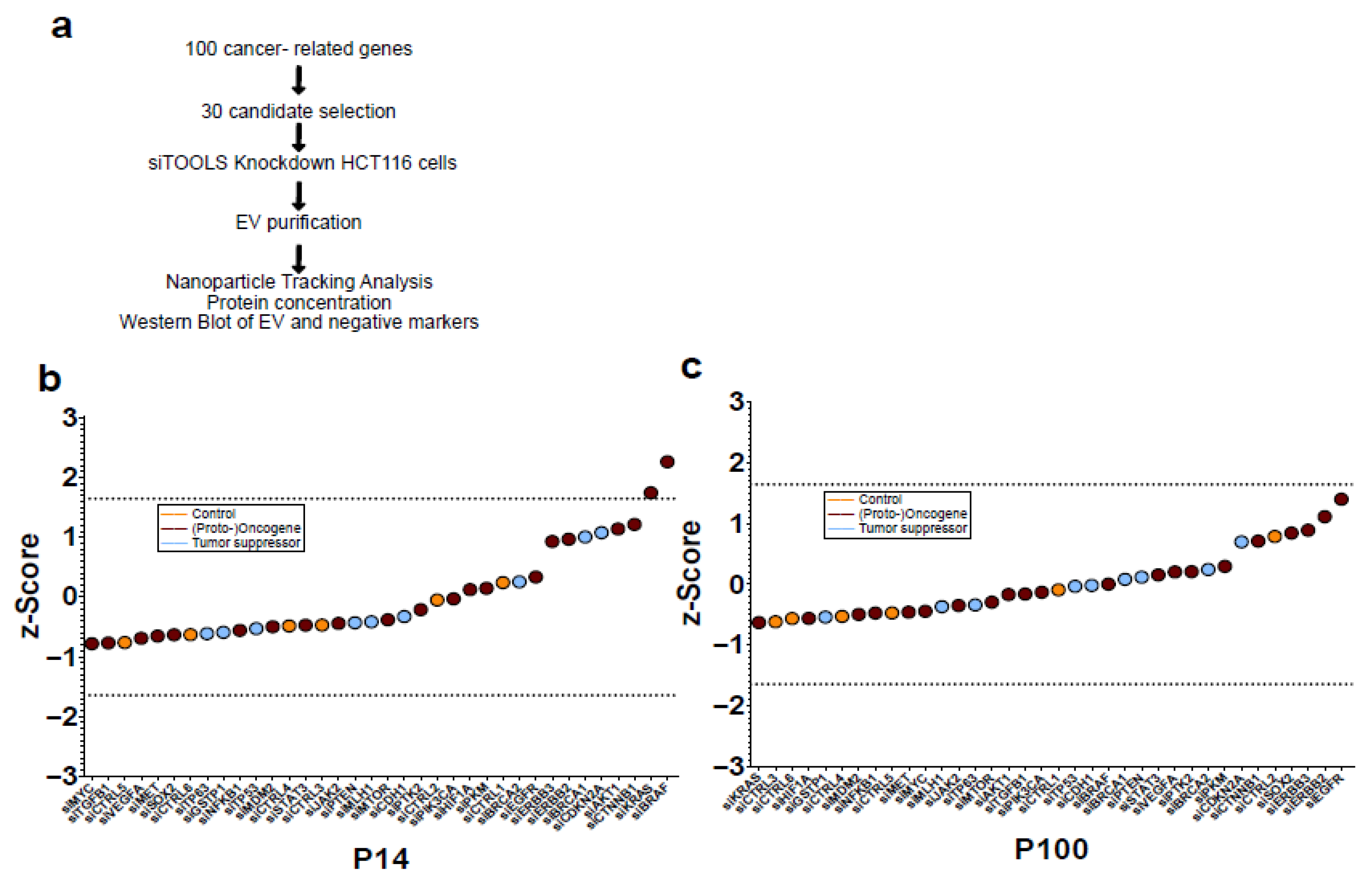
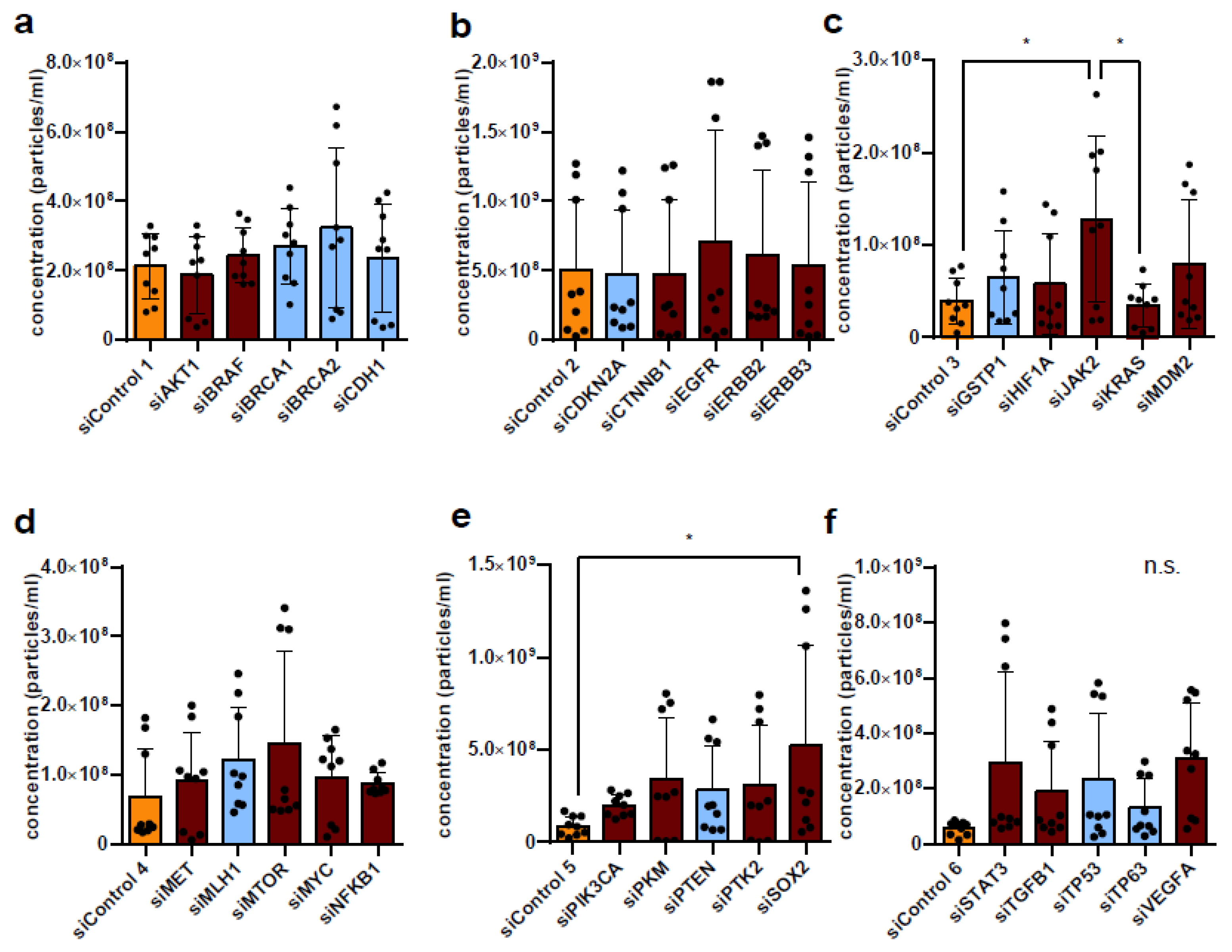
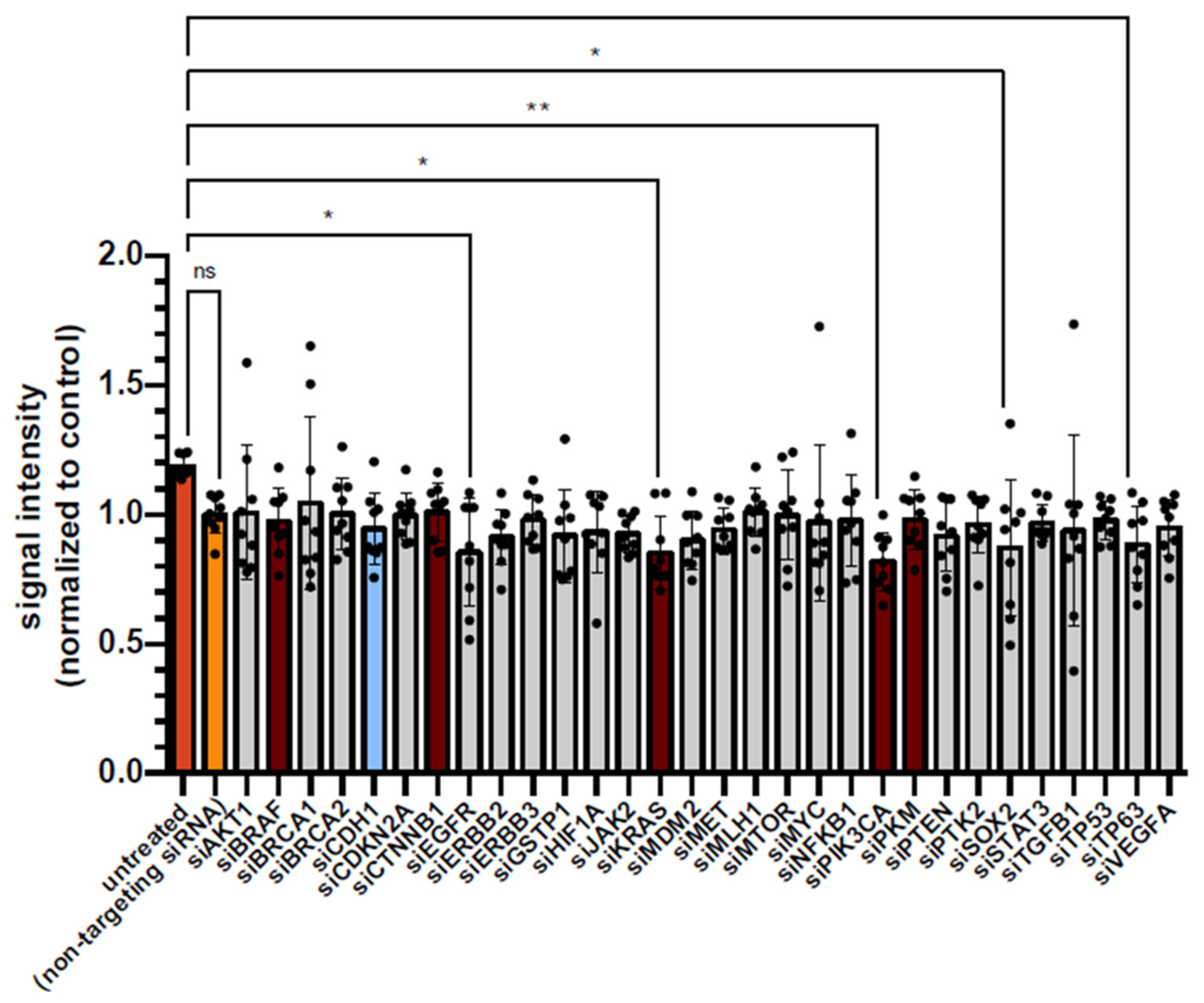
3.1. No Generic Effects of Cancer-Related Genes on EV Secretion
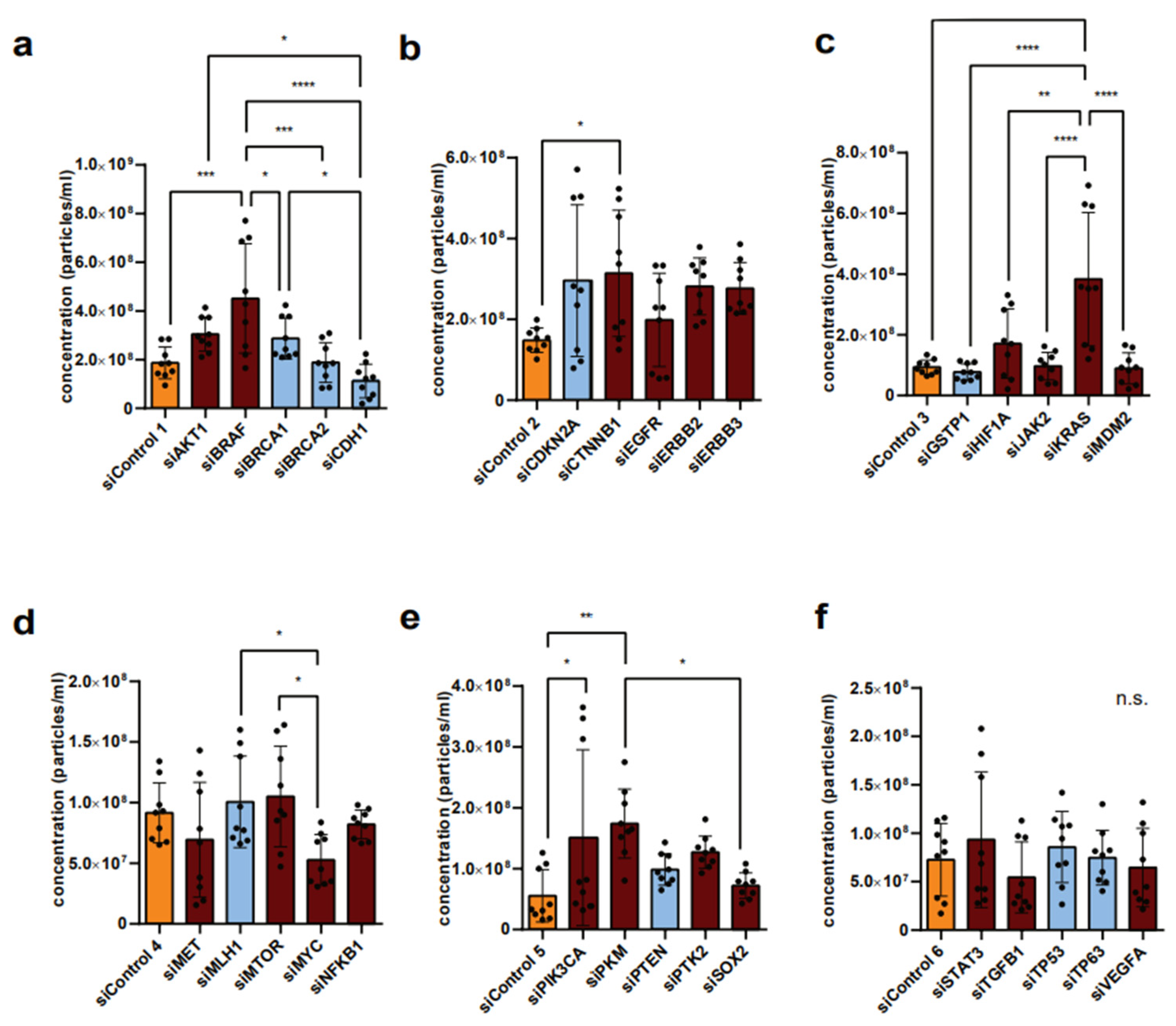
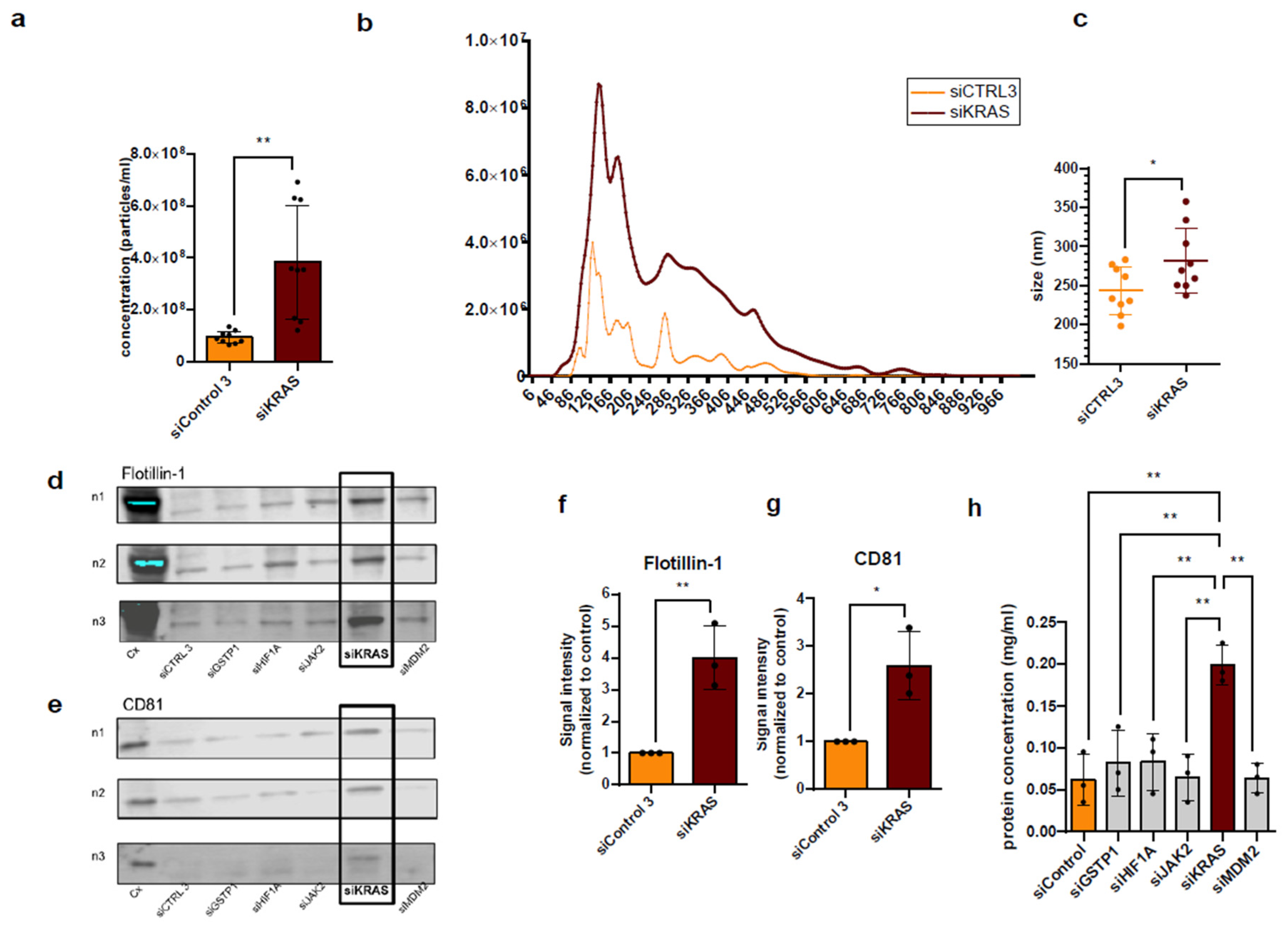
3.2. KRAS Knockdown Leads to Significantly More P14 EV Secretion as Well as to Secretion of Significantly Bigger Particles
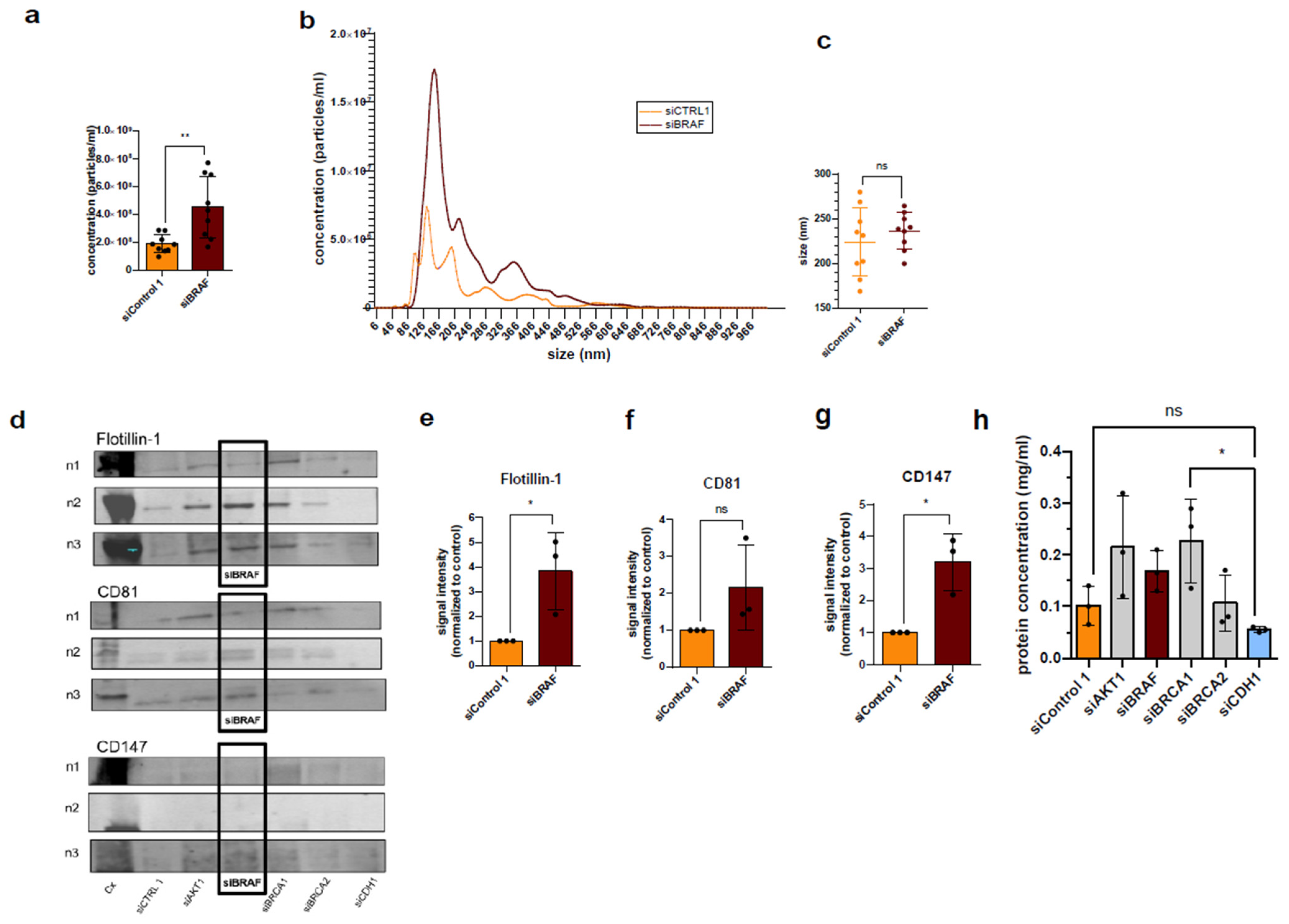
3.3. BRAF Knockdown Leads to Increased Secretion of P14 EVs
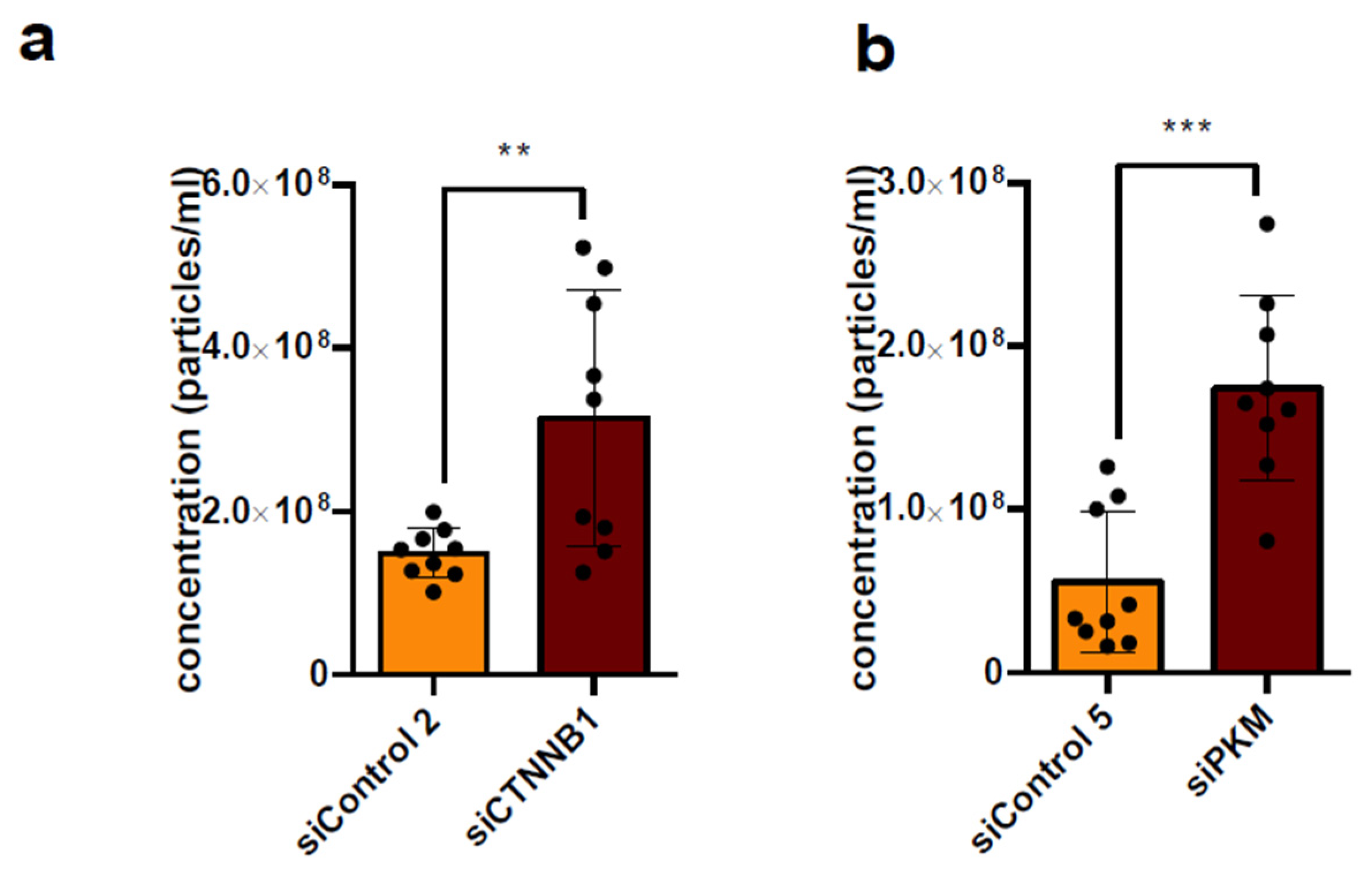
3.4. Knockdown of CTNNB1 and PKM Leads to Increased Secretion of P14 EVs
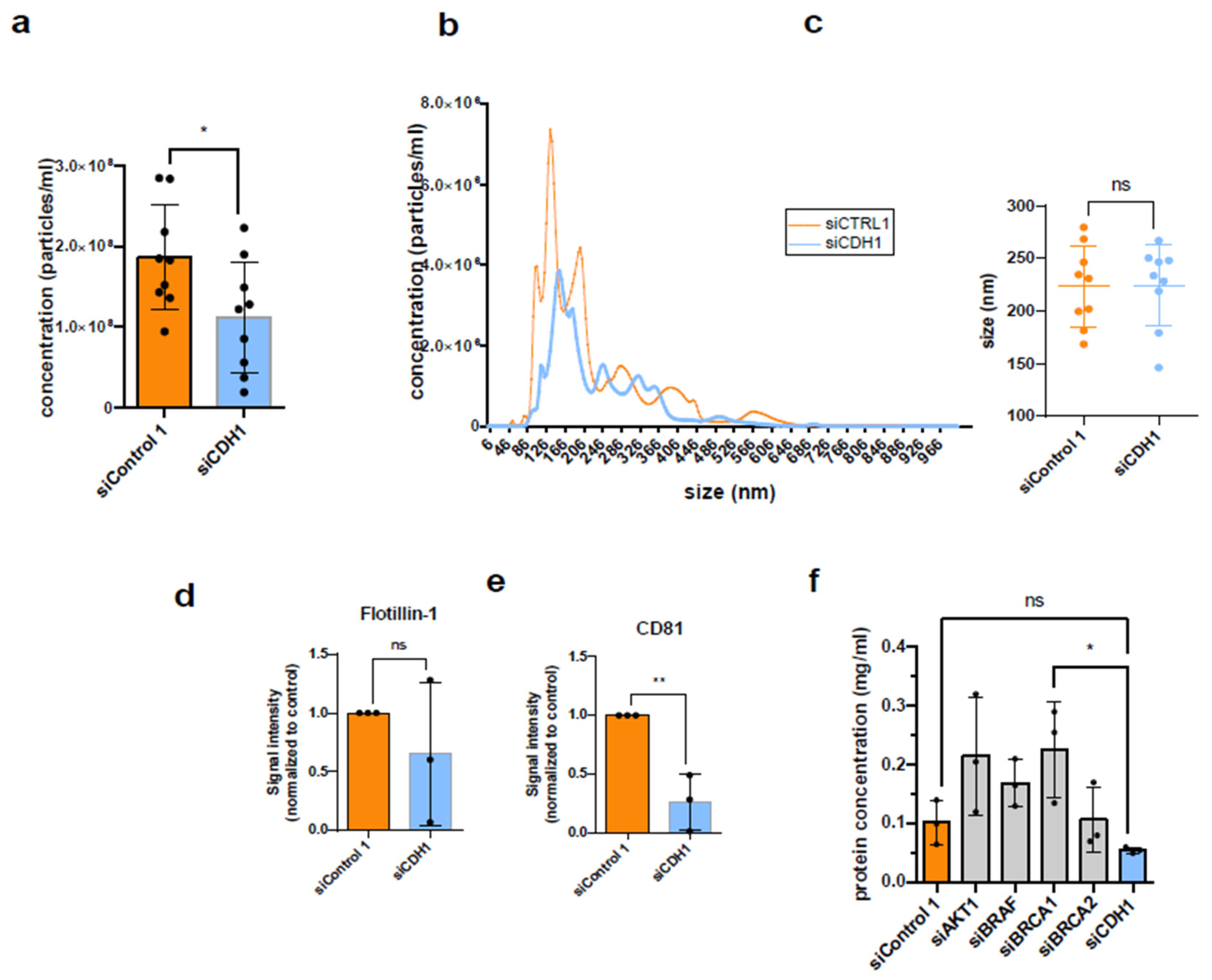
3.5. Knockdown of CDH1 Leads to Reduced Secretion of P14 EVs
3.6. Cell Viability
4. Discussion
5. Conclusions
Supplementary Materials
Author Contributions
Funding
Data Availability Statement
Acknowledgments
Conflicts of Interest
Abbreviations
| ADP | Adenosine diphosphate |
| AKT1 | v-akt murine thymoma viral oncogene homolog 1 (proto-oncogene) |
| ATP | Adenosine triphosphate |
| BRAF | V-raf murine sarcoma viral oncogene hom-olog B1 (proto-oncogene) |
| CDH1 | Cadherin-1, E-cadherin (tumor suppressor gene) |
| CDKN2A | cyclin-dependent kinase inhibitor 2A (p16(INK4a)) gene (proto-oncogene) |
| CTNNB1 | β-Catenin (oncogene) |
| DMEM | Dulbecco’s Modified Eagle Medium |
| EGFR | Epidermal growth factor receptor (proto-oncogene) |
| EV | Extracellular Vesicle |
| GAPs | GTPase-activating proteins |
| GDP | Guanosine diphosphate |
| GEPs | Guanine nucleotide exchange factors |
| GSTP1 | Glutathione S-transferase pi 1 (tumor suppressor gene) |
| GTP | Guanosine triphosphate |
| KRAS | v-Kirsten rat sarcoma gene (oncogene) |
| MDM2 | Mdm2 p53 binding protein homolog (proto-oncogene) |
| MET | Hepatocyte growth receptor gene (oncogene) |
| MYC | Myelocytomatosis viral oncogene (oncogene) |
| NTA | Nanoparticle tracking analysis |
| PEP | Phosphoenolpyruvate |
| PIK3CA | Phosphatidylinositol(-4,5-bisphosphate)3-kinase, catalytic subunit alpha |
| PI3K | phosphatidylinositol 3-kinase |
| PIP3 | Phosphatidylinositol 3,4,5-triphosphate |
| PKM | Pyruvate kinase, muscle (proto-oncogene) |
| PtdIns | Phosphatidylinositols |
| RNAi | RNA interference |
| ROS | Reactive oxygen species |
| Small EVs | sEVs |
| SOX2 | SRY (sex determining region Y)-box 2 (oncogene) |
| siRNA | Small interfering RNA |
| TGFB1 | Transforming growth factor beta 1 (oncogene) |
| TP63 | Tumor protein 63 (tumor suppressor gene) |
References
- Gurung, S.; Perocheau, D.; Touramanidou, L.; Baruteau, J. The exosome journey: From biogenesis to uptake and intracellular signalling. Cell Commun. Signal. 2021, 19, 47. [Google Scholar] [CrossRef]
- Johnstone, R.M.; Adam, M.; Hammond, J.R.; Orr, L.; Turbide, C. Vesicle formation during reticulocyte maturation. Association of plasma membrane activities with released vesicles (exosomes). J. Biol. Chem. 1987, 262, 9412–9420. [Google Scholar] [CrossRef]
- van Niel, G.; D’Angelo, G.; Raposo, G. Shedding light on the cell biology of extracellular vesicles. Nat. Rev. Mol. Cell Biol. 2018, 19, 213–228. [Google Scholar] [CrossRef]
- Heijnen, H.F.G.; Schiel, A.E.; Fijnheer, R.; Geuze, H.J.; Sixma, J.J. Activated Platelets Release Two Types of Membrane Vesicles: Microvesicles by Surface Shedding and Exosomes Derived From Exocytosis of Multivesicular Bodies and α-Granules. Blood 1999, 94, 3791–3799. [Google Scholar] [CrossRef]
- Segura, E.; Amigorena, S.; Théry, C. Mature dendritic cells secrete exosomes with strong ability to induce antigen-specific effector immune responses. Blood Cells Mol. Dis. 2005, 35, 89–93. [Google Scholar] [CrossRef]
- Robbins, P.D.; Morelli, A.E. Regulation of Immune Responses by Extracellular Vesicles. Nat. Rev. Immunol. 2014, 14, 195–208. [Google Scholar] [CrossRef]
- Baixauli, F.; López-Otín, C.; Mittelbrunn, M. Exosomes and Autophagy: Coordinated Mechanisms for the Maintenance of Cellular Fitness. Front. Immunol. 2014, 5, 403. [Google Scholar] [CrossRef] [PubMed]
- Zhang, B.; Wang, M.; Gong, A.; Zhang, X.; Wu, X.; Zhu, Y.; Shi, H.; Wu, L.; Zhu, W.; Qian, H.; et al. HucMSC-Exosome Mediated-Wnt4 Signaling Is Required for Cutaneous Wound Healing. Stem Cells 2015, 33, 2158–2168. [Google Scholar] [CrossRef] [PubMed]
- Ng, Y.H.; Rome, S.; Jalabert, A.; Forterre, A.; Singh, H.; Hincks, C.L.; Salamonsen, L.A. Endometrial Exosomes/Microvesicles in the Uterine Microenvironment: A New Paradigm for Embryo-Endometrial Cross Talk at Implantation. PLoS ONE 2013, 8, e58502. [Google Scholar] [CrossRef]
- Mitchell, M.D.; Peiris, H.N.; Kobayashi, M.; Koh, Y.Q.; Duncombe, G.; Illanes, S.E.; Rice, G.E.; Salomon, C. Placental exosomes in normal and complicated pregnancy. Am. J. Obstet. Gynecol. 2015, 213, 173–181. [Google Scholar] [CrossRef] [PubMed]
- Hur, Y.H.; Cerione, R.A.; Antonyak, M.A. Extracellular Vesicles and Their Roles in Stem Cell Biology: Concise Review. Stem Cells 2020, 38, 469–476. [Google Scholar] [CrossRef]
- Men, Y.; Yelick, J.; Jin, S.; Tian, Y.; Chiang, M.S.R.; Higashimori, H.; Brown, E.; Jarvis, R.; Yang, Y. Exosome reporter mice reveal the involvement of exosomes in mediating neuron to astroglia communication in the CNS. Nat. Commun. 2019, 10, 4136. [Google Scholar] [CrossRef]
- Ye, L.; Li, Y.; Zhang, S.; Wang, J.; Lei, B. Exosomes-regulated lipid metabolism in tumorigenesis and cancer progression. Cytokine Growth Factor Rev. 2023, 73, 27–39. [Google Scholar] [CrossRef] [PubMed]
- Yang, E.; Wang, X.; Gong, Z.; Yu, M.; Wu, H.; Zhang, D. Exosome-mediated metabolic reprogramming: The emerging role in tumor microenvironment remodeling and its influence on cancer progression. Signal Transduct. Target. Ther. 2020, 5, 242. [Google Scholar] [CrossRef]
- Lötvall, J.; Hill, A.F.; Hochberg, F.; Buzás, E.I.; Di Vizio, D.; Gardiner, C.; Gho, Y.S.; Kurochkin, I.V.; Mathivanan, S.; Quesenberry, P.; et al. Minimal experimental requirements for definition of extracellular vesicles and their functions: A position statement from the International Society for Extracellular Vesicles. J. Extracell. Vesicles 2014, 3, 26913. [Google Scholar] [CrossRef]
- Théry, C.; Witwer, K.W.; Aikawa, E.; Alcaraz, M.J.; Anderson, J.D.; Andriantsitohaina, R.; Antoniou, A.; Arab, T.; Archer, F.; Atkin-Smith, G.K.; et al. Minimal information for studies of extracellular vesicles 2018 (MISEV2018): A position statement of the International Society for Extracellular Vesicles and update of the MISEV2014 guidelines. J. Extracell. Vesicles 2018, 7, 1535750. [Google Scholar] [CrossRef]
- Witwer, K.W.; Goberdhan, D.C.; O’Driscoll, L.; Théry, C.; Welsh, J.A.; Blenkiron, C.; Buzás, E.I.; Di Vizio, D.; Erdbrügger, U.; Falcón-Pérez, J.M.; et al. Updating MISEV: Evolving the minimal requirements for studies of extracellular vesicles. J. Extracell. Vesicles 2021, 10, e12182. [Google Scholar] [CrossRef] [PubMed]
- Welsh, J.A.; Goberdhan, D.C.I.; O’Driscoll, L.; Buzas, E.I.; Blenkiron, C.; Bussolati, B.; Cai, H.; Di Vizio, D.; Driedonks, T.A.P.; Erdbrügger, U.; et al. Minimal information for studies of extracellular vesicles (MISEV2023): From basic to advanced approaches. J. Extracell. Vesicles 2024, 13, e12404. [Google Scholar] [CrossRef] [PubMed]
- Boukouris, S.; Mathivanan, S. Exosomes in bodily fluids are a highly stable resource of disease biomarkers. Proteom. Clin. Appl. 2015, 9, 358–367. [Google Scholar] [CrossRef]
- Zhang, K.; Li, R.; Chen, X.; Yan, H.; Li, H.; Zhao, X.; Huang, H.; Chen, S.; Liu, Y.; Wang, K.; et al. Renal Endothelial Cell-Targeted Extracellular Vesicles Protect the Kidney from Ischemic Injury. Adv. Sci. 2022, 10, e2204626. [Google Scholar] [CrossRef]
- Balaj, L.; Lessard, R.; Dai, L.; Cho, Y.; Pomeroy, S.L.; Breakefield, X.O.; Skog, J. Tumour microvesicles contain retrotransposon elements and amplified oncogene sequences. Nat. Commun. 2011, 2, 180. [Google Scholar] [CrossRef]
- Kahlert, C.; Melo, S.A.; Protopopov, A.; Tang, J.; Seth, S.; Koch, M.; Zhang, J.; Weitz, J.; Chin, L.; Futreal, A.; et al. Identification of double-stranded genomic DNA spanning all chromosomes with mutated KRAS and p53 DNA in the serum exosomes of patients with pancreatic cancer. J. Biol. Chem. 2014, 289, 3869–3875. [Google Scholar] [CrossRef] [PubMed]
- Thakur, B.K.; Zhang, H.; Becker, A.; Matei, I.; Huang, Y.; Costa-Silva, B.; Zheng, Y.; Hoshino, A.; Brazier, H.; Xiang, J.; et al. Double-stranded DNA in exosomes: A novel biomarker in cancer detection. Cell Res. 2014, 24, 766–769. [Google Scholar] [CrossRef]
- San Lucas, F.A.; Allenson, K.; Bernard, V.; Castillo, J.; Kim, D.U.; Ellis, K.; Ehli, E.A.; Davies, G.E.; Petersen, J.L.; Li, D.; et al. Minimally invasive genomic and transcriptomic profiling of visceral cancers by next-generation sequencing of circulating exosomes. Ann. Oncol. 2016, 27, 635–641. [Google Scholar] [CrossRef]
- Zhang, L.; Zhang, S.; Yao, J.; Lowery, F.J.; Zhang, Q.; Huang, W.C.; Li, P.; Li, M.; Wang, X.; Zhang, C.; et al. Microenvironment-induced PTEN loss by exosomal microRNA primes brain metastasis outgrowth. Nature 2015, 527, 100–104. [Google Scholar] [CrossRef]
- Chairoungdua, A.; Smith, D.L.; Pochard, P.; Hull, M.; Caplan, M.J. Exosome release of β-catenin: A novel mechanism that antagonizes Wnt signaling. J. Cell Biol. 2010, 190, 1079–1091. [Google Scholar] [CrossRef] [PubMed]
- Cbioportal. Cell Line HCT-116. 2017. Available online: https://www.cbioportal.org/patient?studyId=cellline_nci60&caseId=HCT_116#navCaseIds=cellline_nci60:COLO205,cellline_nci60:HCC_2998,cellline_nci60:HCT_116,cellline_nci60:HCT_15,cellline_nci60:HT29,cellline_nci60:KM12,cellline_nci60:SW_620 (accessed on 29 November 2017).
- Momen-Heravi, F. Isolation of Extracellular Vesicles by Ultracentrifugation. Methods Mol. Biol. 2017, 1660, 25–32. [Google Scholar] [PubMed]
- Doyle, L.M.; Wang, M.Z. Overview of Extracellular Vesicles, Their Origin, Composition, Purpose, and Methods for Exosome Isolation and Analysis. Cells 2019, 8, 727. [Google Scholar] [CrossRef]
- Curtis, A.E.; Smith, T.A.; Ziganshin, B.A.; Elefteriades, J.A. The Mystery of the Z-Score. Aorta 2016, 4, 124–130. [Google Scholar] [CrossRef]
- Pantsar, T. The current understanding of KRAS protein structure and dynamics. Comput. Struct. Biotechnol. J. 2019, 18, 189–198. [Google Scholar] [CrossRef]
- Demory Beckler, M.; Higginbotham, J.N.; Franklin, J.L.; Ham, A.-J.; Halvey, P.J.; Imasuen, I.E.; Whitwell, C.; Li, M.; Liebler, D.C.; Coffey, R.J. Proteomic Analysis of Exosomes from Mutant KRAS Colon Cancer Cells Identifies Intercellular Transfer of Mutant KRAS. Mol. Cell. Proteom. 2013, 12, 343–355. [Google Scholar] [CrossRef]
- Hanahan, D.; Weinberg, R.A. The Hallmarks of Cancer. Cell 2000, 100, 57–70. [Google Scholar] [CrossRef]
- Cicenas, J.; Tamosaitis, L.; Kvederaviciute, K.; Tarvydas, R.; Staniute, G.; Kalyan, K.; Meskinyte-Kausiliene, E.; Stankevicius, V.; Valius, M. KRAS, NRAS and BRAF mutations in colorectal cancer and melanoma. Med. Oncol. 2017, 34, 26. [Google Scholar] [CrossRef]
- Shang, S.; Hua, F.; Hu, Z.-W. The regulation of β-catenin activity and function in cancer: Therapeutic opportunities. Oncotarget 2017, 8, 33972–33989. [Google Scholar] [CrossRef]
- Li, Y.; Li, X.; Liu, J.; Wang, H.; Fan, L.; Li, J.; Sun, G. PKM2, a potential target for regulating cancer. Gene 2018, 668, 48–53. [Google Scholar] [CrossRef]
- Mendonsa, A.M.; Na, T.-Y.; Gumbiner, B.M. E-cadherin in contact inhibition and cancer. Oncogene 2018, 37, 4769–4780. [Google Scholar] [CrossRef]
- Zhang, X.; Yuan, X.; Shi, H.; Wu, L.; Qian, H.; Xu, W. Exosomes in cancer: Small particle, big player. J. Hematol. Oncol. 2015, 8, 83. [Google Scholar] [CrossRef] [PubMed]
- Bebelman, M.P.; Janssen, E.; Pegtel, D.M.; Crudden, C. The forces driving cancer extracellular vesicle secretion. Neoplasia 2021, 23, 149–157. [Google Scholar] [CrossRef]
- Hinger, S.A.; Abner, J.J.; Franklin, J.L.; Jeppesen, D.K.; Coffey, R.J.; Patton, J.G. Rab13 regulates sEV secretion in mutant KRAS colorectal cancer cells. Sci. Rep. 2020, 10, 15804. [Google Scholar] [CrossRef] [PubMed]
- Crewe, C. Energetic Stress-Induced Metabolic Regulation by Extracellular Vesicles. Compr. Physiol. 2023, 13, 5051–5068. [Google Scholar] [CrossRef] [PubMed]
- Dovrat, S.; Caspi, M.; Zilberberg, A.; Lahav, L.; Firsow, A.; Gur, H.; Rosin-Arbesfeld, R. 14-3-3 and β-catenin are secreted on extracellular vesicles to activate the oncogenic Wnt pathway. Mol. Oncol. 2014, 8, 894–911. [Google Scholar] [CrossRef]
- Kalra, H.; Gangoda, L.; Fonseka, P.; Chitti, S.V.; Liem, M.; Keerthikumar, S.; Samuel, M.; Boukouris, S.; Al Saffar, H.; Collins, C.; et al. Extracellular vesicles containing oncogenic mutant β-catenin activate Wnt signalling pathway in the recipient cells. J. Extracell. Vesicles 2019, 8, 1690217. [Google Scholar] [CrossRef] [PubMed]
- Auber, M.; Svenningsen, P. An estimate of extracellular vesicle secretion rates of human blood cells. J. Extracell. Biol. 2022, 1, e46. [Google Scholar] [CrossRef] [PubMed]
- Wei, Y.; Wang, D.; Jin, F.; Bian, Z.; Li, L.; Liang, H.; Li, M.; Shi, L.; Pan, C.; Zhu, D.; et al. Pyruvate kinase type M2 promotes tumour cell exosome release via phosphorylating synaptosome-associated protein 23. Nat. Commun. 2017, 8, 14041. [Google Scholar] [CrossRef] [PubMed]



| Candidate 1 | Gene Name | Mutational Status in HCT-116-Cells 2 |
|---|---|---|
| AKT1 | v-akt murine thymoma viral oncogene homolog 1 | None |
| BRAF | v-raf murine sarcoma viral oncogene homolog B1 | None |
| BRCA1 | breast cancer susceptibility gene 1 | None |
| BRCA2 | breast cancer susceptibility gene 2 | None |
| CDH1 | cadherin 1, type 1, E-cadherin (epithelial) | X441_splice, H121Tfs*94 truncating mutation (putative driver mutation) |
| CDKN2A | cyclin-dependent kinase inhibitor 2A (p16(INK4a)) gene | None |
| CTNNB1 | catenin (cadherin-associated protein), beta 1 | S45 del Inframe mutation (putative driver mutation) |
| EGFR | epidermal growth factor receptor (erythroblastic leukemia viral oncogene homolog 1) | None |
| ERBB2 | erythroblastic leukemia viral oncogene homolog 2 | None |
| ERBB3 | erb-b2 receptor tyrosine kinase 3 | Q261* truncating mutation (putative passenger mutation) |
| GSTP1 | glutathione S-transferase pi 1 | Missense mutation (putative passenger mutation) |
| HIF1A | hypoxia inducible factor 1 alpha subunit | None |
| JAK2 | janus kinase 2 | None |
| KRAS | kirsten rat sarcoma 2 viral oncogene homolog | G13D missense mutation (putative driver mutation) |
| MDM2 | mdm2 p53 binding protein homolog | None |
| MET | met proto-oncogene (hepatocyte growth factor receptor) | L238Yfs*25 truncating mutation (putative passenger mutation) |
| MLH1 | E.coli MutL homolog gene | S252* truncating mutation (putative driver mutation) |
| MTOR | mechanistic target of rapamycin | None |
| MYC | v-myc myelocytomatosis viral oncogene homolog (avian) | Amplification |
| NFKB1 | nuclear factor kappa B subunit 1 | None |
| PIK3CA | phosphatidylinositol-4,5-bisphosphate-3-kinase, catalytic subunit alpha | None |
| PKM | pyruvate kinase, muscle | H1047R missense mutation (putative driver mutation) |
| PTEN | phosphatase and tensin homolog gene | None |
| PTK2 | protein tyrosine kinase 2 | None |
| SOX2 | SRY (sex determining region Y)-box 2 | Amplification |
| STAT3 | signal transducer and activator of transcription 3 (acute-phase-response factor) | Missense mutation (putative passenger mutation) |
| TP53 | tumor protein p53 | None |
| TP63 | tumor protein p63 | None |
| TGFB1 | transforming growth factor beta 1 | Missense mutation (putative passenger mutation) |
| VEGFA | vascular endothelial growth factor A | Y103H missense mutation (putative passenger mutation) None |
| Camera Settings | P14 | P100 |
|---|---|---|
| Camera Level | 13 | 14 |
| Screen Gain | 1 | 3 |
| Analysis Settings | P14 | P100 |
|---|---|---|
| Screen Gain | 10 | 10 |
| Detection Threshold | 6 | 3 |
Disclaimer/Publisher’s Note: The statements, opinions and data contained in all publications are solely those of the individual author(s) and contributor(s) and not of MDPI and/or the editor(s). MDPI and/or the editor(s) disclaim responsibility for any injury to people or property resulting from any ideas, methods, instructions or products referred to in the content. |
© 2026 by the authors. Licensee MDPI, Basel, Switzerland. This article is an open access article distributed under the terms and conditions of the Creative Commons Attribution (CC BY) license.
Share and Cite
Pätzold, S.M.; Gross, J.C. Functional siRNA Screen Links Ras/MAPK and Wnt Pathway to EV Secretion in HCT-116 Colorectal Cancer Cells. Diseases 2026, 14, 89. https://doi.org/10.3390/diseases14030089
Pätzold SM, Gross JC. Functional siRNA Screen Links Ras/MAPK and Wnt Pathway to EV Secretion in HCT-116 Colorectal Cancer Cells. Diseases. 2026; 14(3):89. https://doi.org/10.3390/diseases14030089
Chicago/Turabian StylePätzold, Sophie Marie, and Julia Christina Gross. 2026. "Functional siRNA Screen Links Ras/MAPK and Wnt Pathway to EV Secretion in HCT-116 Colorectal Cancer Cells" Diseases 14, no. 3: 89. https://doi.org/10.3390/diseases14030089
APA StylePätzold, S. M., & Gross, J. C. (2026). Functional siRNA Screen Links Ras/MAPK and Wnt Pathway to EV Secretion in HCT-116 Colorectal Cancer Cells. Diseases, 14(3), 89. https://doi.org/10.3390/diseases14030089