Article

Optimal Resource Allocation for a Single-Cell Multicast Transmission Scheme with a Supplementary Multicast Channel

Department of Information Communication Engineering, Inha University, Incheon 22212, Korea
*
Author to whom correspondence should be addressed.
Electronics 2019, 8(6), 704; https://doi.org/10.3390/electronics8060704

Submission received: 13 May 2019 / Revised: 12 June 2019 / Accepted: 19 June 2019 / Published: 22 June 2019
(This article belongs to the Section Microwave and Wireless Communications)

Abstract

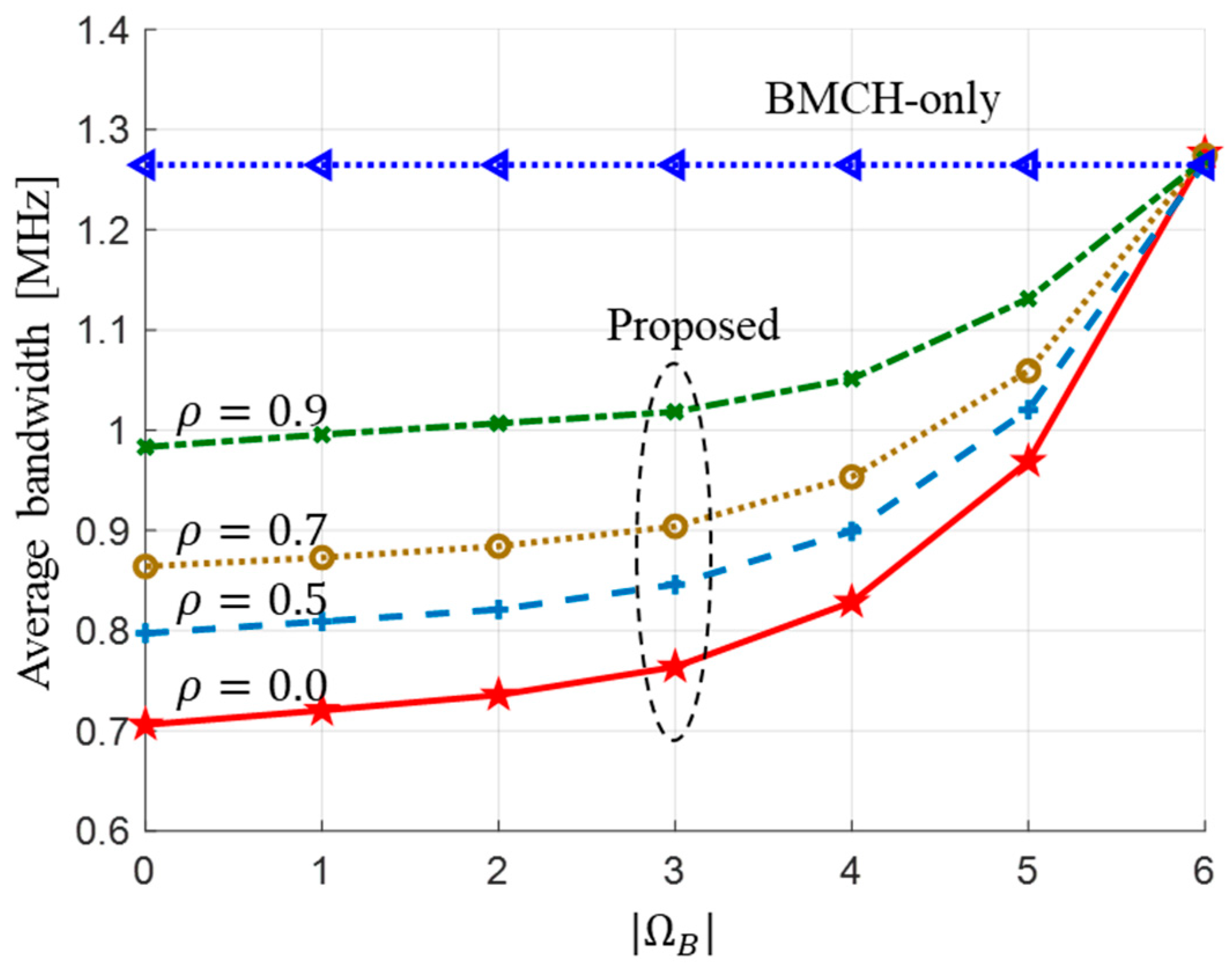
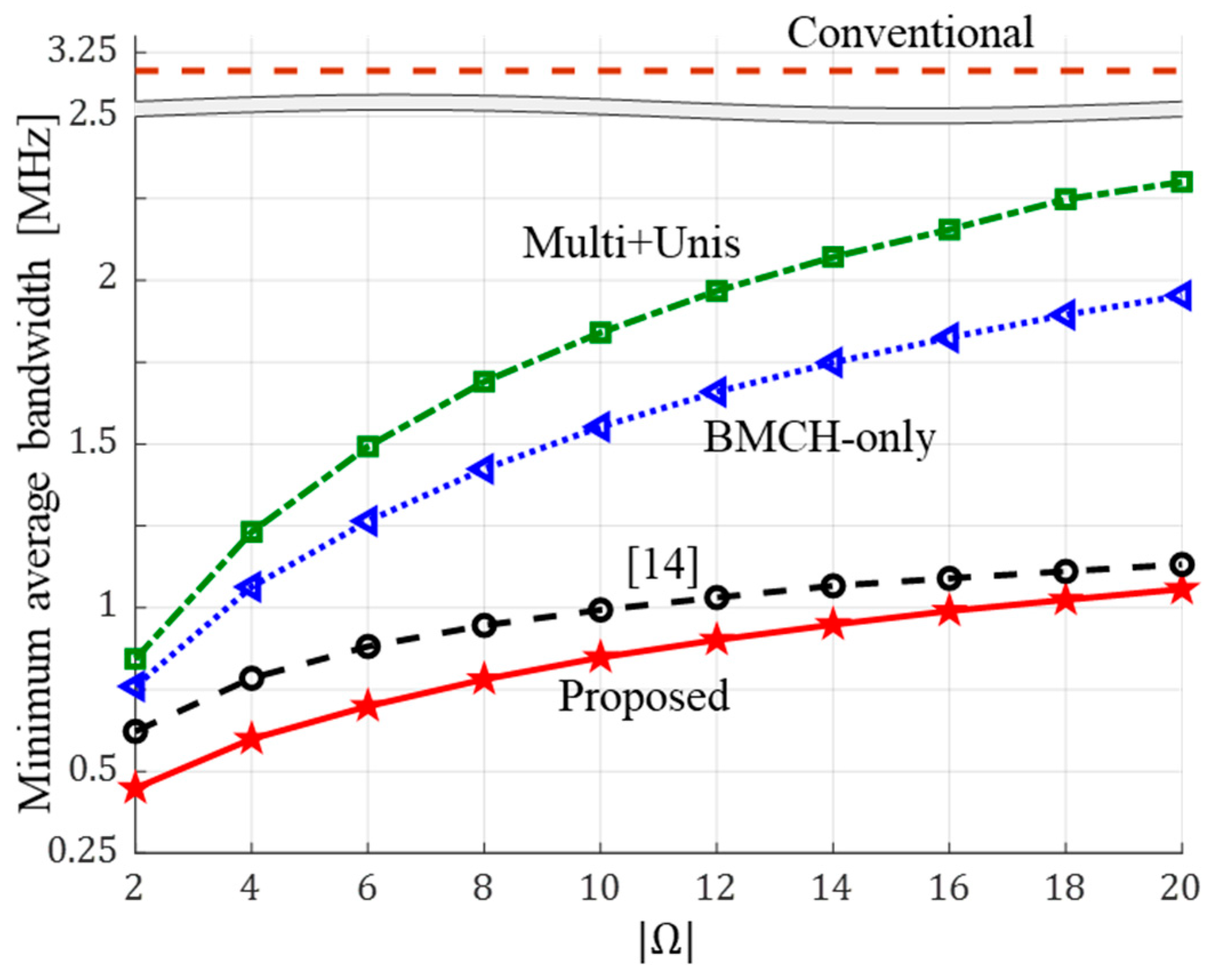
Multicast transmission is an attractive solution when a large number of users receive the same content in a wide area, for example, as with mobile TV. Ever since the multimedia broadcast multicast service (MBMS) was introduced in the 3rd Generation Partnership Project (3GPP), continuing work on the multicast transmission has been done and its importance is growing in the fifth generation (5G) cellular networks. The use cases of multicast transmission have been enlarged from mobile TV and public safety to vehicular-to-everything (V2X) and unmanned aerial vehicles (UAV). Recently, for group communications in public safety networks and for geographical information sharing in automotive, airborne and social networks, multicast transmission has been targeted at fewer users in a relatively small area, which has stimulated extensive research on the single-cell multicast transmission scheme. In the proposed single-cell multicast transmission scheme, a supplementary multicast channel is additionally assigned in a single-cell multicast transmission scheme to exploit channel diversity. The resource allocation is adaptive to the channel variations of the users (responsive to users QoS needs), using channel feedback from the users, in contrast with previous approaches where resources were determined conservatively. An optimal resource allocation problem to minimize the required bandwidth while enabling every user to obtain the target multicast rate is formulated as a convex problem and an iterative algorithm is proposed in a computationally efficient way. Performance is evaluated mathematically and through intensive simulations, where other cell interference is considered using a fluid model. The proposed single-cell multicast transmission scheme provides benefits in comparison to existing multicast schemes in the simulations, under a set of various parameters including the number of multicast users and channel correlation between the multicast channels.
Keywords: single-cell multicast transmission; radio resource allocation; optimal problem; supplementary multicast channel; public safety networks single-cell multicast transmission; radio resource allocation; optimal problem; supplementary multicast channel; public safety networks