Article

Optimal Penetration Level of Photovoltaic Units in Distribution Networks Considering Engineering and Economic Performance Using the Pied Kingfisher Optimizer


1
Power Grid and Renewable Energy Laboratory, Hanoi University of Science and Technology, Hanoi 100000, Vietnam
2
School of Electrical and Electronic Engineering, Hanoi University of Science and Technology, Hanoi 100000, Vietnam
3
Power System Optimization Research Group, Faculty of Electrical and Electronics Engineering, Ton Duc Thang University, Ho Chi Minh City 700000, Vietnam
4
Faculty of Electrical Engineering, The University of Danang-University of Science and Technology, Danang 550000, Vietnam
5
Department of Energy, Politecnico Di Milano, 20156 Milan, Italy
*
Authors to whom correspondence should be addressed.
Electronics 2026, 15(8), 1674; https://doi.org/10.3390/electronics15081674
Submission received: 12 March 2026 / Revised: 10 April 2026 / Accepted: 13 April 2026 / Published: 16 April 2026
(This article belongs to the Section Industrial Electronics)

Abstract

This study proposes a new approach for optimizing the penetration level of photovoltaic units (PVUs) to achieve both engineering and economic benefits in a standard distribution power system. The Mirage Search Optimization (MSO) and the Pied Kingfisher Optimizer (PKO) are applied to minimize the total active power loss (TRPL) in the IEEE 69-node system. Two cases are considered: Case 1, where PVUs inject only active power, and Case 2, where PVUs inject both active and reactive power. The results demonstrate that PKO outperforms MSO and several metaheuristic algorithms reported in the literature. In Case 2, the optimal PVU penetration level of 67.17% significantly reduces TRPL compared with Case 1. The effectiveness of this optimized penetration level is further evaluated by comparing it with four other penetration levels: 25%, 50%, 75%, and 100%. PKO is then used to optimize the 24 h energy cost considering load variation and dynamic PV generation during four months of the year, including December, September, June, and March, which are ordered by increasing solar radiation across seasons under Vietnam’s climatic conditions. The results show that although the 75% penetration level slightly reduces the energy purchasing cost compared with the optimal level, it requires higher power capacity. Therefore, the optimized penetration level of 67.17% provides a balanced solution for reducing power losses while maintaining economic efficiency.

1. Introduction

Distributed Generators (DGs) are widely recognized as one of the most cost-effective solutions for alleviating the strain on utility grids, particularly in light of unprecedented growth in load demand [1]. Currently, with the increasing global trend towards clean energy, the deployment of Renewable Energy-based Distributed Generators (REDGs) has flourished and gained widespread acceptance, especially within various Distribution Power Networks (DPNs) [2,3]. The key advantages of REDGs are that they are easy to recognize and intuitive in both the engineering and economic aspects. Firstly, the REDGs are friendly to the embedded environment; unlike conventional power DG, which requires fossil fuel to run, REDGs produce zero emissions during operation [4]. The implementation of these sources will largely reduce greenhouse gases and air pollutants, which are critical factors against climate change, and enhance local air quality, contributing a major part to the global effort. Secondly, REDGs offer high flexibility in both their implementation and eventual disposal, which aligns seamlessly with strategic energy planning [5]. Their modular design, characteristic of technologies like solar panels and small wind turbines, allows for scalable and phased deployment, offering greater adaptability than large, centralized power plants. This decentralized placement also bolsters grid resilience and energy security. Thirdly, REDGs prove to be cost-effective [6]. While some initial capital investments may be substantial, the long-term operational costs are significantly lower due to the free input material and reduced maintenance needs compared to traditional generators. This long-term economic advantage, when thoroughly evaluated, makes them increasingly attractive to investors and utility companies. Finally, the cost per megawatt of power generated by renewable energy sources has become remarkably more affordable over the past few decades. So, using renewable energy must be carefully considered for distribution networks, transmission networks and electric loads [7]. This dramatic reduction in the Levelized Cost of Electricity (LCOE) for renewables, driven by technological advancements, economies of scale in manufacturing, and supportive government policies, has made REDGs not only environmentally superior but also increasingly competitive and often cheaper than new fossil fuel-based power plants, fundamentally reshaping investment landscapes in power generation.
Acknowledging the significant advantages of REDGs, numerous studies have explored the optimal placement of various REDG types within diverse distribution power network (DPN) configurations [8,9]. These studies consistently highlight two primary benefits of integrating PVUs into the grid: (1) Reduction in total active power loss: PVUs help minimize the power loss that occurs during current transmission through distribution lines, and (2) Voltage Improvement: Their connection significantly enhances the voltage profile at load nodes, which largely ensures the proper operation of all devices and, consequently, improves the overall reliability of the entire system. However, the effective placement of PVUs or other REDGs within a given grid requires careful planning and optimization to maximize overall efficiency. Recognizing this need, the Backward-Forward Sweep (BFS) method was proposed to solve power flow calculations in distribution power grids [10]. This computational tool allows for the precise calculation of voltage at each node and current amplitude. Based on these calculated current and voltage values, other critical parameters, such as total real power loss and total reactive power loss, can be determined. Nevertheless, the process of optimizing the placement of PVUs or DGs on the grid needs to be tailored to specific requirements, with the minimization of total real power loss often being a primary focus. For small-scale DPNs, the rated power and connection node of PVUs might be determined through a trial-and-error approach. However, for large-scale DPNs with complex branch connections, a modern computational tool becomes essential. Such a tool must be capable of evaluating multiple PVU parameters simultaneously, thereby significantly reducing the overall computation time.
Meta-heuristic algorithms have proven to be a transformative solution for effectively addressing a wide range of optimization problems, particularly those characterized by extensive solution spaces and complex constraints. In the context of optimally allocating PVUs within various Distribution Power Network configurations, a significant number of these algorithms have been successfully applied. Table 1 below presents the application of different meta-heuristic algorithms to optimize the placement of PVUs across various systems, along with the main achievements.
Besides the achievements and the contribution of providing different solutions to integrate PVU to various systems, considering the objective function, the study [11,12,13,14,15,16,17,18,19,20,21,22,23,24,25,26,27,28,29,30,31,32,33,34] has several downsides, as follows:
-
These studies mostly considered constant load demand, which is very useful to the planning process, while the dynamic load demand over a certain period of time is not considered. In practice, distribution networks experience continuous load fluctuations across hours, days, and seasons, driven by consumer behavior, industrial activity, and climatic conditions. Relying solely on constant load models fails to capture the temporal mismatch between solar generation peaks and actual load demand peaks, which is a fundamental operational challenge of PVU integration.
-
The uncertain characteristic of renewable energy is not fully considered by practical data and is only reliant on probabilistic models, which do not completely reflect the actual nature of these sources. Furthermore, probabilistic models tend to smooth out extreme irradiance fluctuations and fail to capture temporal correlations in solar output, leading to an incomplete representation of real-world uncertainty. The absence of practically measured irradiance and temperature data in most studies further limits the reliability and transferability of their conclusions to actual deployment environments. Adopting data-driven approaches based on real field measurements would therefore significantly enhance the realism and accuracy of uncertainty characterization in PVU integration studies.
-
The previous studies mostly focus on solving the problem of integrating PVU to the grid in the engineering aspect and often ignore the economic viability. Without a comprehensive economic evaluation encompassing capital costs, operational and maintenance expenditures, energy savings value, and financial indicators such as net present value and internal rate of return, the study’s conclusions remain confined to the engineering domain. This significantly limits the practical applicability of research outcomes, as real-world deployment decisions are driven not by technical merit alone but by the ability to demonstrate financial justification to stakeholders and regulators. Integrating economic viability assessment alongside engineering optimization is therefore essential for producing research that can meaningfully inform grid investment decisions and support the large-scale adoption of solar distributed generation.
By understanding the remaining downsides from the previous studies, this research leverages the strengths of meta-heuristic algorithms to tackle the optimization problem of allocating renewable energy sources, specifically photovoltaic units (PVUs), within a standard distribution power network (SDPN). We apply two recently proposed meta-heuristic algorithms: Mirage Search Optimization (MSO) [35] and the Pied Kingfisher Optimizer (PKO) [36]. The primary objectives are to achieve the minimum value of total active power loss and total electricity cost. MSO is a novel algorithm inspired by the physical principles of mirages, while PKO simulates the unique hunting methods and social behaviors of pied kingfishers. Both algorithms have demonstrated impressive capabilities in solving a wide array of theoretical and practical optimization problems. More importantly, their creators have shown them to offer significant efficiency advantages over many earlier algorithms. However, a direct comparison between MSO and PKO on a specific optimization problem has not been documented until now. Therefore, their application in this research serves as a realistic foundation to thoroughly evaluate and prove their respective capabilities in the context of PVU allocation.
Key novelties and contributions of this study can be summarized as follows:
(1)
Regarding the applied method:
  • Two recently developed meta-heuristic algorithms are successfully employed to optimize the allocation of photovoltaic units (PVUs) on the given SDPN.
  • Through various case studies and comparisons across different criteria, the Pied Kingfisher Optimizer (PKO) has proven itself to be a superior search tool, delivering the best performance in optimizing the allocation of PVUs on the grid for achieving the optimal value of the main objective function.
(2)
Regarding the given problem:
  • The study quantifies total real-power losses and improves bus-voltage profiles through two cases with different PVU settings, then determines the best cases using an optimal PVU configuration.
  • The study identifies the most cost-effective PVU penetration level that balances economic gain and initial investment by comparing different penetration levels against the optimized configuration.
(3)
Regarding the economic gain:
  • The study also demonstrates the contribution of PVUs to reducing electricity purchasing costs compared to the case in which PVUs are absent in an operational schedule for the last 24 h of an average day of the month, accounting for load-demand fluctuations and real-time electricity prices.
  • The effects of seasonal changes in load demand over the course of a year on the cost of electricity savings are also assessed. In particular, the injected power from PVU not only contributed to lower EC but also provided the castflow back to the customer during particular periods of the year, while PVU’s injected power was larger than needed.
Apart from the Introduction, the paper is organized as follows: Section 2 formulates the optimization problem and provides the governing mathematical expressions, Section 3 offers a concise overview of the algorithms employed, Section 4 presents the numerical results together with an in-depth discussion, Section 5 summarizes the principal conclusions, highlighting the study’s key contributions and findings.

2. Problem Description

2.1. Power Loss and Voltage Drop

Standard radial distribution systems (SRDN) connect electric loads to power sources via metal conductors, which are called distribution branches. Distribution branches are represented by reactance and resistance. The two factors cause reactive and real power losses on all the branches. In addition, they simultaneously influence the voltage drop on the branches. The power losses and voltage drop are determined by:
Q L o s s , j = 3 × I o p e r , j 2 ×   R A j
P L o s s , j = 3 × I o p e r , j 2 × R S j
V L o s s , j = 3 × I o p e r , j × [ R A j × S i n P W F j + R S j × C o s ( P W F j ) ]
where Q L o s s , j and P L o s s , j are reactive and real power losses on the jth branch; V L o s s , j is voltage drop on the jth branch; Ioper,j is working current of the jth branch; RAj and RSj are the reactance and resistance of the jth branch.

2.2. Power Loss Reduction

Minimizing total real power loss on all branches is considered an important task when placing photovoltaic power units in distribution systems [28] because the system distributes high energy to electric loads via low voltage levels and high reactance and resistance. So, this objective is considered in the study as follows:
R e d u c i n g   T R P L = j = 1 N b r s P L o s s , j
where TRPL is the sum of real power losses on all the branches; and N b r s is the number of branches.

2.3. Electric Purchasing Cost Reduction

When operating the distribution system, electric customers must buy energy from electric power companies, from which the power is supplied by the slack transformer at the sending end of the system. The electric purchasing cost is high due to the use of a high amount of fossil fuels from conventional power plants, which are thermal power plants. So, the study considers the minimization of electric purchasing costs from the grid and the energy loss costs as follows:
R e d u c i n g   E l e c t r i c i t y   C o s t = z = 1 24 C o s t B u y
In the equation, C o s t B u y is the total costs of electricity, obtained by:
C o s t B u y = P r i c e E , z · z = 1 24 P s y s , z
P s y s , z = k = 1 N L o a d s P L o a d , k , z + j = 1 N b r s P L o s s , j , z n = 1 N P V U P P V U , n , z
where P r i c e E , z is the electric purchasing price at the zth hour; P s y s , z is the active power supplied by the grid at the zth hour. P L o a d , k , z is the active power of the kth load at the zth hour; P P V U , n , z is the active power supplied by PVU nth at zth hour; P L o s s , j , z is the loss of the jth branch at the zth hour; and N L o a d s is the number of loads.

2.4. Constraints

Thermal constraint limits of conductors: Each conductor links two nodes, and it is a branch in the distribution systems. To keep the system working stably and effectively, its operating current value at each hour must not be greater than its limit as follows:
I o p e r , j I j M a x
where I j M a x is the rated current of the jth branch’s metal conductor.
Load voltage limits: In the study, the voltage of loads at each hour is constrained between 0.95 pu and 1.05 pu as follows:
0.95 V o l L o a d , k 1.05
where V o l L o a d , k is the voltage of the kth load.
Constraints of power, power factor and location of photovoltaic power units: The study considers the placement of photovoltaic power units, and there are three constraints: rated power, power factor, and location for installation.
The locations are constrained as follows:
2   L o C P V U , n N n o d e s
where L o C P V U , n is the location of the nth photovoltaic power units; and N n o d e s is the node number.
In addition, the rated power of each PVU must follow the allowable limit below.
0 n N P V U P P V U , n P P V U M a x
where P P V U , n is the rated power of nth photovoltaic power units; N P V U is the number of photovoltaic power units installed in the system; and P P V U M a x is the possible maximum installation power of each PVU.
The power factor of each solar power source is selected as follows:
P W F M i n P W F P V U , n P W F M a x
where P W F M a x and P W F M i n are the maximum and minimum power factors; and P W F P V U , n is the power factor of the nth photovoltaic power unit. In this research, the power factors of all the PVUs are allowed to vary between 0.8 and 1.0 in the design phase.
System power constraints: Distribution systems have two major constraints regarding reactive and active power as follows:
Q s y s + n = 1 N P V U Q P V U , n Q a l l L o s s k = 1 N L o a d s Q L o a d , k = 0
P s y s + n = 1 N P V U P P V U , n P a l l L o s s k = 1 N L o a d s P L o a d , k = 0
where Q s y s and P s y s are the reactive and active power supplied by the distribution system; Q P V U , n and Q L o a d , k are the reactive power generated by the nth photovoltaic unit and consumed by the kth load; and Q a l l L o s s is the total reactive power losses.
The reactive power of the nth photovoltaic power unit and the total reactive power loss are determined by:
Q P V U , n = P P V U , n · t a n ( a r c c o s ( P W F P V U , n ) )
Q a l l L o s s = j = 1 N b r s Q L o s s , j

3. The Applied Algorithms

3.1. Mirage Search Optimization Algorithm

As mentioned earlier, the main difference that classifies MSO and others is its update methods to produce new solutions. The update is featured by two strategies: the upper image generation and the lower image generation. The detailed mathematical model of these two strategies will be given in the next subsections.
The first strategy: In this first strategy, all solutions in the initial population will be updated using the following model:
X k n e w 1 = X k + X S t 1
With
X S t 1 = s i n α 1 × h × s i n α 2 s i n α 3 × s i n α 4
h = X B e s t , k X k × ω 1 + 1
where X k n e w 1 is the kth new solution in the first strategy with k = 1, …, N I P S , where N I P S is the initial population size; X k is the current solution; X S t 1 is the difference on phase angle in the first strategy; α 1 is the angle between the reflected light ray and the horizontal datum; α 2 is the angle between the incident light ray and the normal line at the point of incidence; α 3 is the phase angle between the incident light ray and the normal line at the point of incidence; α 4 is the phase angle between the incident ray and the normal to the horizontal datum line; ω 1 is the random value between zero and one; and h is the distance between the current solution and it’s so-far best position.
The second strategy: In this second strategy, all solutions will be refreshed by applying the following expression:
X k n e w 2 = X k + α 3 X S t 2
With
X S t 2 = h t a n θ
θ = 3.14 × ( I T m a x I T P R ) × ω 2 2 × I T P R
where X k n e w 2 is the kth new solution in the second strategy; X S t 2 is difference on phase angle in the second strategy; θ is the phase angle between the refractive layered line and the stratified reference line; ω 2 is the random value between zero and one; and I T m a x and I T P R are the maximum and the present indices of the preset iteration.
The entire optimizing process of MSO execute both the two strategies sequentially as illustrated by flowchart in Figure 1.

3.2. Pied Kingfisher Optimizer

Similar to MSO, as described in the previous section, PKO also follows an updated process for new solutions across the two phases, and their descriptions will be given below.
The first phase: In this first phase, each solution in the initial population is updated using the following model:
X k n e w 1 = X k + ε × P G × X m X k , if   r d   < 0.8 X k + h p r o p × σ × C p × X s X G b e s t , otherwise
With
ε = 1 2 × r n d 1
σ = e x p I T P R N I P S 2
P G = e x p   ( 1 ) e x p t I T P R N I P S 1 8 × c o s ( π × r n )
h p r o p = r n × F i F B e s t
where ε is the position factor; P G is the position gain; X m is the neighborhood solution of the kth solution; h p r o p is the hunting propability; r n d is the random value between 1 and dimmension of the given problem. C p is the control parameter adjusting the searching process; σ is the dependent factor; rn is the random value between zero and 1; X s is the random solution selected in the initial population; and X G b e s t is the global best solution at the present iteration.
The second phase: In this second phase, all solutions are updated using the following mathematical expressions.
X k n e w 2 = X m + σ × C p × X k X m ,           if   r d > 1 A F X k , otherwise
with
A F = A F m a x ( A F m a x A F m i n ) × I T P R I T m a x
where A F is the advantage factor corresponding to the kth solution; A F m a x and A F m i n are, respectively, the maximum and minimum boundaries of the advantage factor.
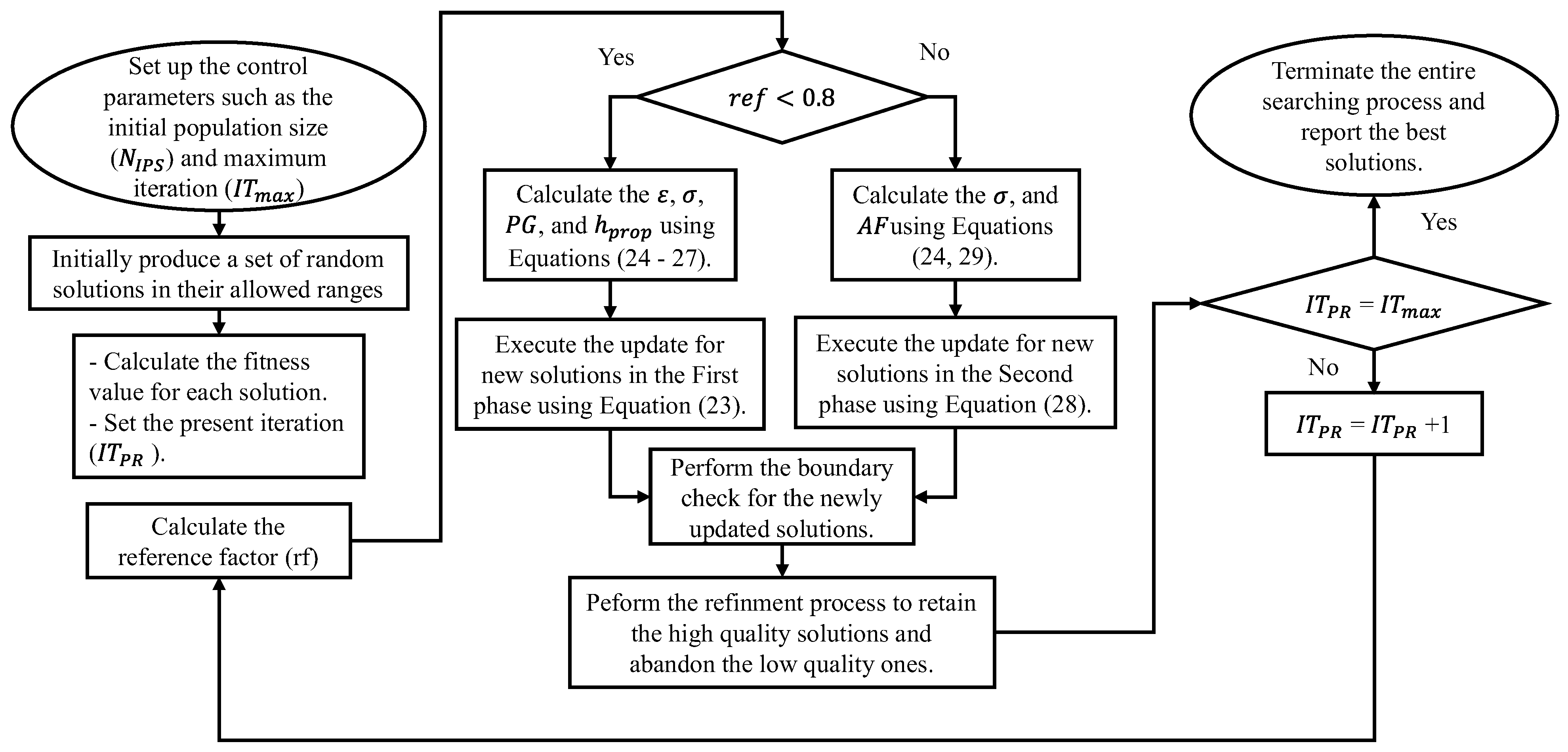
Unlike MSO, which executes both phases in its optimization process, PKO conducted its update process for the new solution, executing only one of the two phases throughout the comparison of the reference factor (rf), which is randomly produced between 0 and 1. If rf is smaller than 0.8, the update process is performed for new solution using Phase 1. For other values of rf, Phase 2 is used to update new solutions.
Figure 2 shows the flowchart of the entire optimizing process of PKO with clear orders as mentioned earlier.

4. Results and Discussion

In this section, MSO and PKO are applied to the allocation of the PVUs in the IEEE 69-node SRDN to reach the optimal value of the two objective functions as presented in Section 2, including minimizing total real power loss (TRPL) and minimizing electricity cost (EC). For the first objective function, two study simulation cases are executed as follows:
  • Case 1: Optimizing the allocation of 3 PVUs on the IEEE 69-node SRDN, suppose that the PVUs can only inject active power to the grid.
  • Case 2: Optimizing the allocation of 3 PVUs on the IEEE 69-node SRDN, suppose that the PVUs can inject active and reactive power to the grid.
Note that both Case 1 and Case 2 are implemented under the following hypotheses:
(1)
Each PVU’s rated power output is assumed to be injectable into the grid with a precision of three decimal places.
(2)
The power converter installed on each PVU connected to the grid is assumed to operate over the full range of power levels determined by the optimization methods.
(3)
The DC-to-AC conversion losses of the inverters are ignored, a commonly accepted simplification in power system planning in many previous studies.
(4)
The grid is assumed to accommodate the total power injected by the PVUs without operational disruption, as long as all constraints presented in Section 2 are satisfied.
(5)
Transient fault conditions, sudden grid disturbances, and potential failures of the related equipment are excluded. The study focuses solely on maintaining the steady-state of the considered system, rather than on dynamic or protection scenarios.
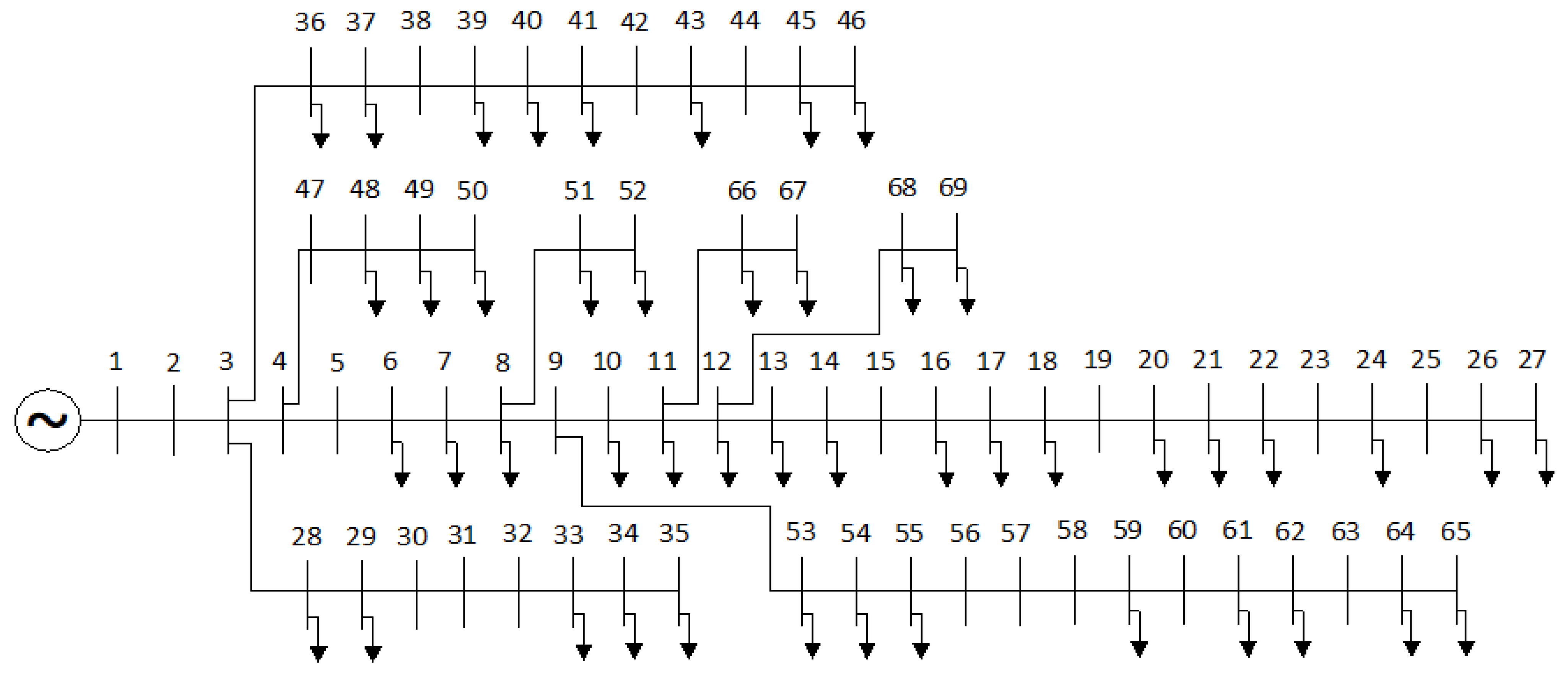
After completing these two cases above, a more effective algorithm between MSO and PKO will be reapplied to determine the optimal value of the second objective function, minimizing the total energy purchasing cost of the system for the four months in a with real solar radiation profiles. The IEEE 69-node SRDN is considered to be the medium SRDN with active and reactive load demand of 3800 kW and 2690 kVar, with the loss of 255.001 kW and 102.165 kVAr [18]. The illustrated graph of the considered SRDN is given in Figure 3. Both MSO and PKO use the same settings for the population size (NIPZ) and the maximum iteration ( I T m a x ). Particularly, for the first objective function’s first case, these settings are 20 and 100, while in the second case, these parameters are 30 and 150. In addition, MSO and PKO are executed 50 trial runs for the best solution before comparisons. In fact, the selection of these settings depends heavily on the given optimization problem. There is no common formula that provides optimal settings for NIPZ and I T m a x . In particular, the current settings of these initial parameters for MSO and PKO differ from GA [37], where the algorithm is applied to optimize the load profile with a secure ledger. In the study, only GA is used, and the initial parameters are set to 50 for NIPZ and 100 for I T m a x , which is higher in population size but lower in maximum iterations. For solving the problem given in [37], this setting ensures more potential solutions are evaluated in each iteration, increasing the likelihood of achieving optimal results. Additionally, the setting of I T m a x = 100 aims to reduce computing time entirely. However, the initial setting of the control parameters for MSO and PKO in this manuscript not only increases the probability of reaching the optimal solution and shortens computing time, but also clarifies the performance gap between the two algorithms.
All computations are carried out on a personal computer with the following specifications: a 2.35 GHz clock speed of the central processing unit (CPU) and 16 GB of random-access memory (RAM). Additionally, MATLAB programming language with version 2018a is the main computing platform for all the coding and related simulations.

4.1. The Results for Cases 1 and 2

  • The results of Case 1:
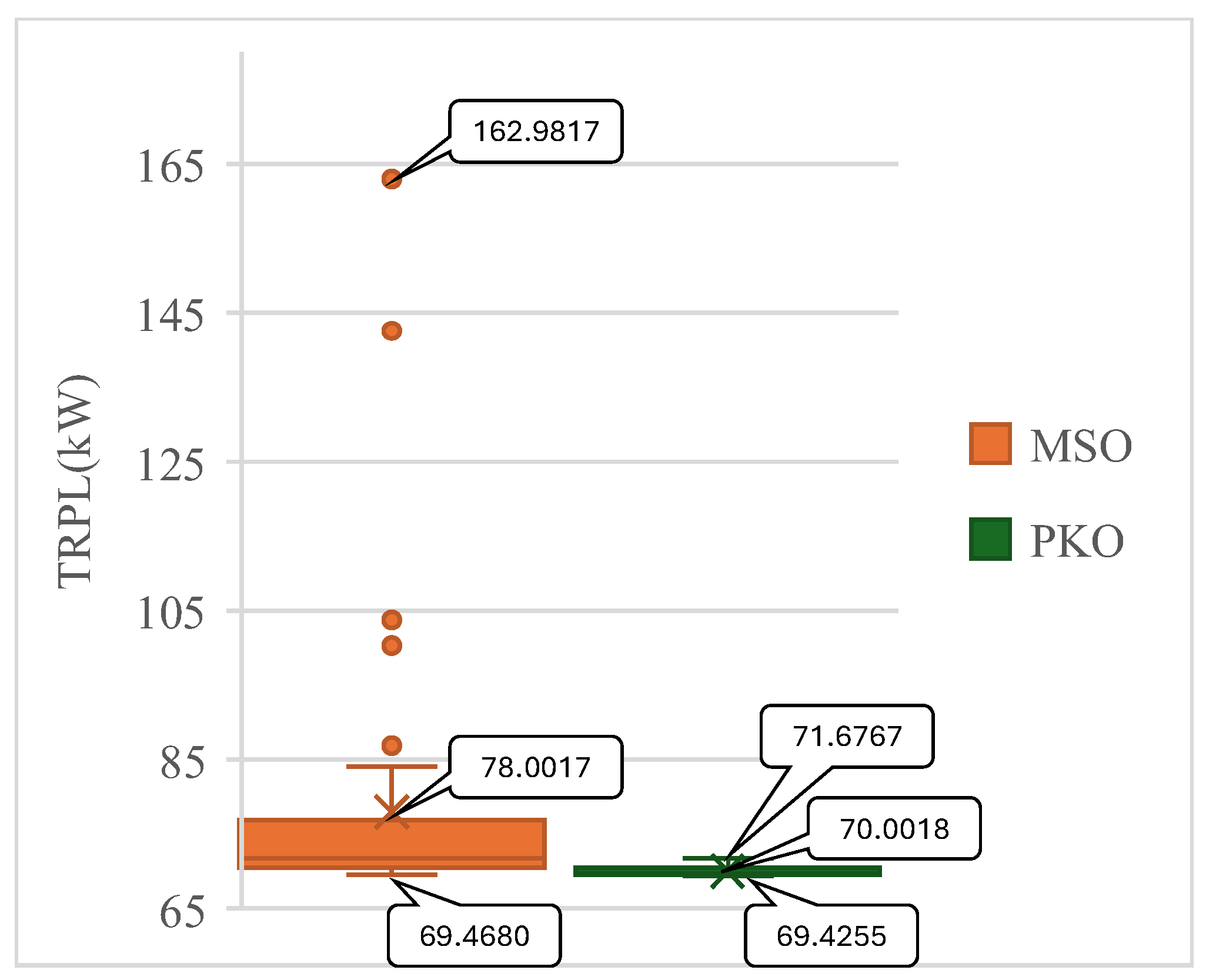
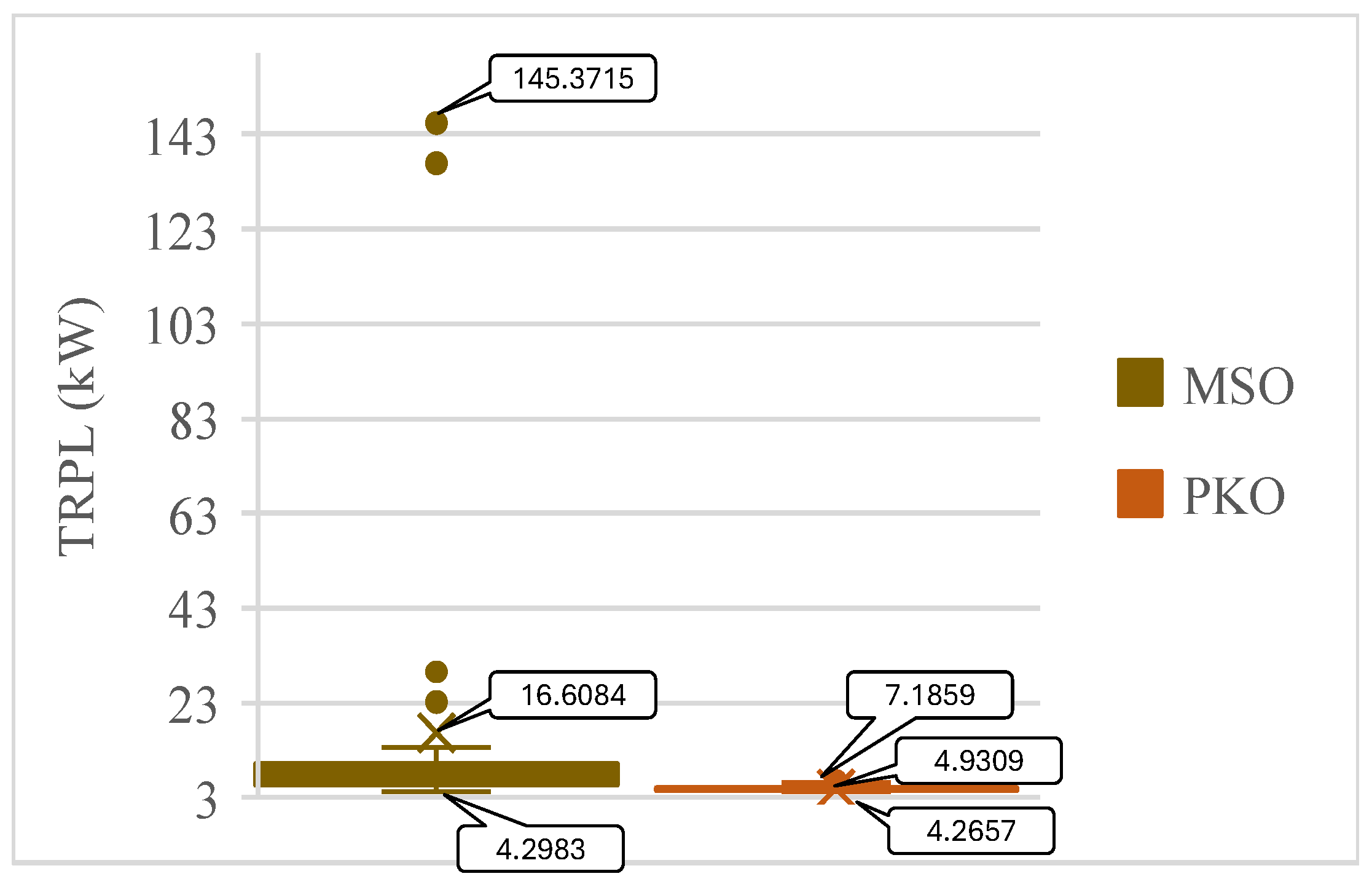
Figure 4 summarizes the TRPL (kW) achieved by MSO and PKO over 50 trial runs. MSO shows a higher middle value for TRPL and a much wider range of results, including several unusually high values. PKO, on the other hand, has a slightly lower middle value, and its TRPL results are very close to each other, with no extremely high values. This indicates that PKO provides much more stable performance for the problem.
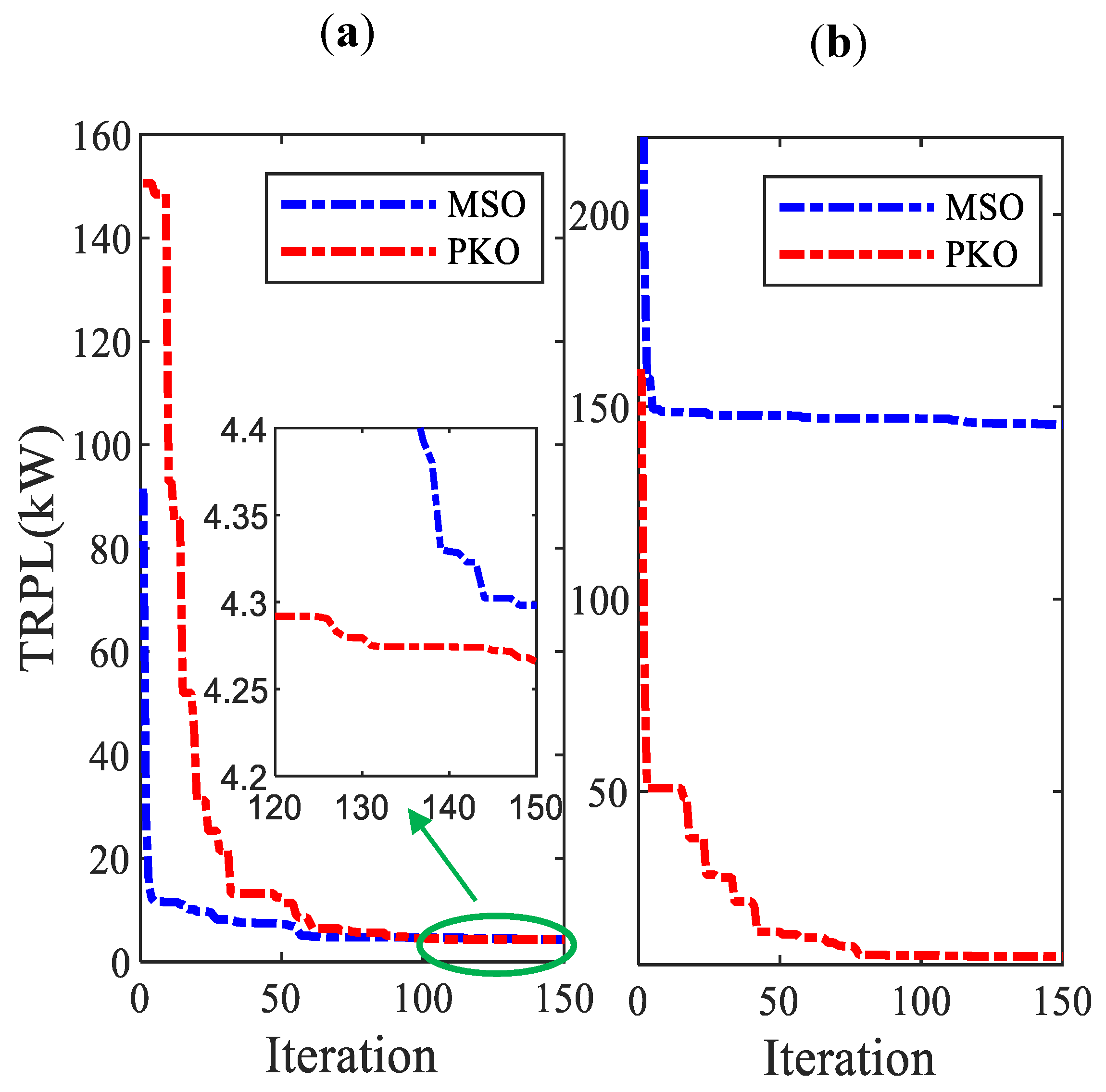
Figure 5a,b illustrate the minimum and maximum convergence characteristics of MSO and PKO in Case 1. In terms of the minimum characteristic convergence, the difference in the end values achieved by the two algorithms is not great; however, only PKO reaches the optimal value of TRPL in this case, while MSO cannot offer the same capability. Regarding the maximum convergence, PKO completely outperforms MSO.
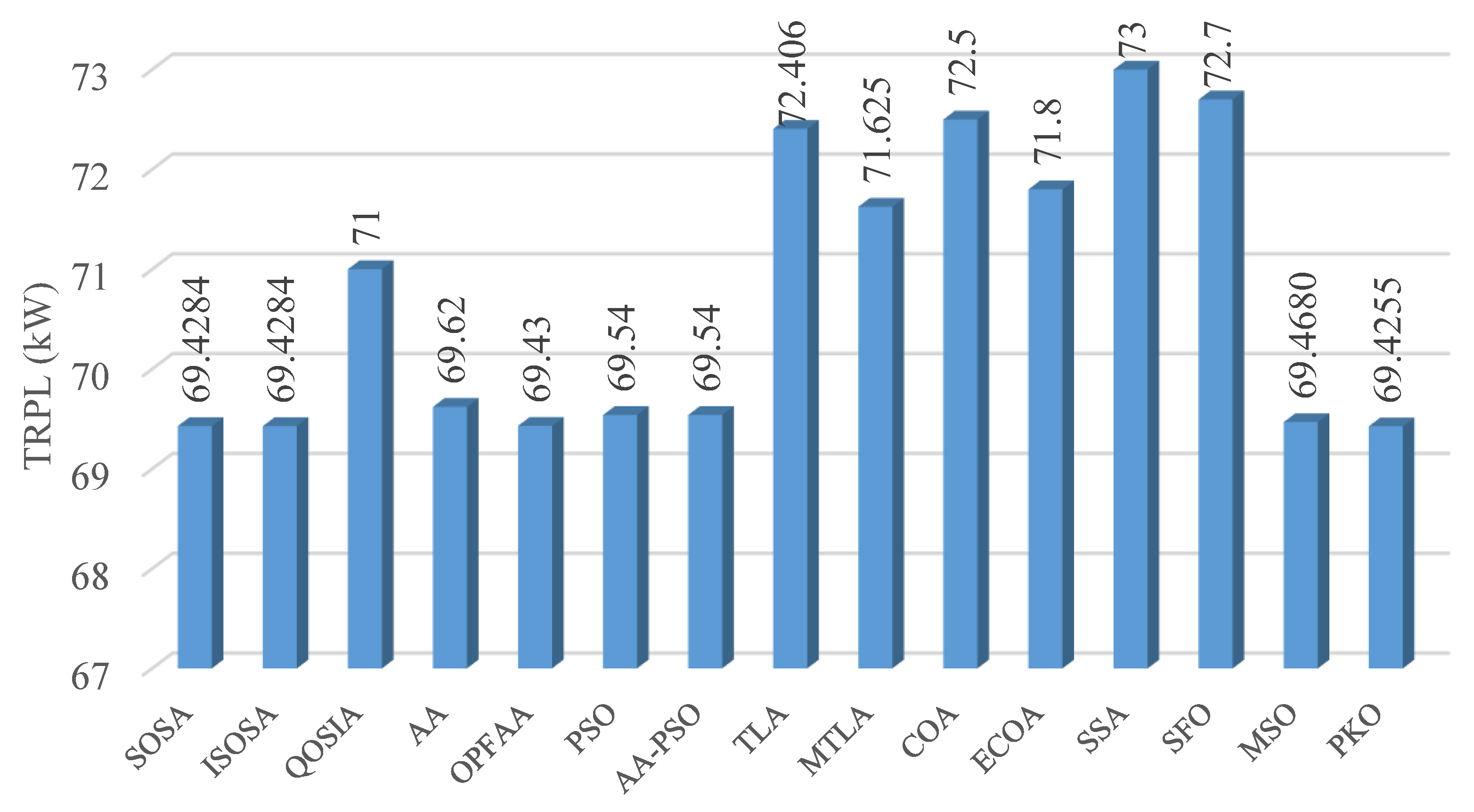
Figure 6 illustrates the comparison of the TRPL achieved by the two applied algorithms against other methods. PKO has a smaller loss than all compared algorithms, so PKO outperforms than them for Case 1.
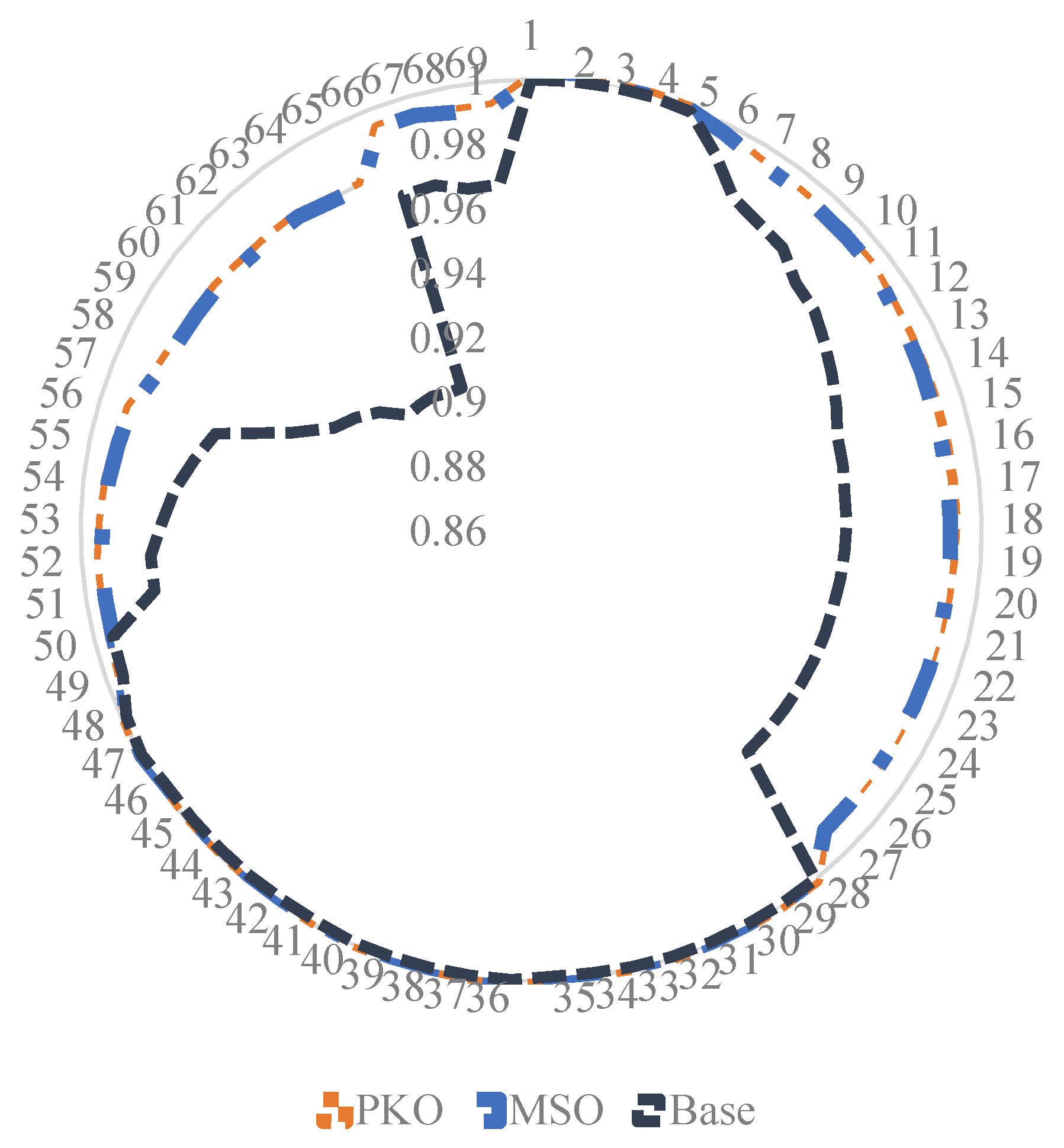
Figure 7 illustrates the voltage at each node achieved by MSO and PKO after optimizing the allocation of three PVUs, compared to the basic configuration without PVUs. The voltage profiles obtained by MSO and PKO appear to be identical across all nodes. However, when compared to the basic configuration, the voltage improvement resulting from these two algorithms is significant.
  • The results of Case 2:
Figure 8 shows the TRPL achieved by MSO and PKO after 50 trial runs in Case 2. PKO continues outperforming MSO, as evidenced by the significantly narrower range of TRPL values observed across all 50 trial runs. It is important to note that the solution space in Case 2 is significantly larger than in the previous case. This expansion is due to the initial hypothesis that PVUs can supply both active and reactive power to the grid. In Case 1, each PVU on the grid was defined by two variables: its rated power and its connection node. With three PVUs, each algorithm had to optimize for a total of six variables. In Case 2, PVUs are assumed to supply reactive power, adding one more variable per PVU. Consequently, each algorithm in Case 2 must optimize for a total of nine variables. The consistency of PKO’s search performance, even with the expanded solution space, indicates that PKO is more robust and stable than MSO. MSO, on the other hand, exhibits a significantly wider range of TRPL values, with the maximum TRPL reaching up to 143 kW.
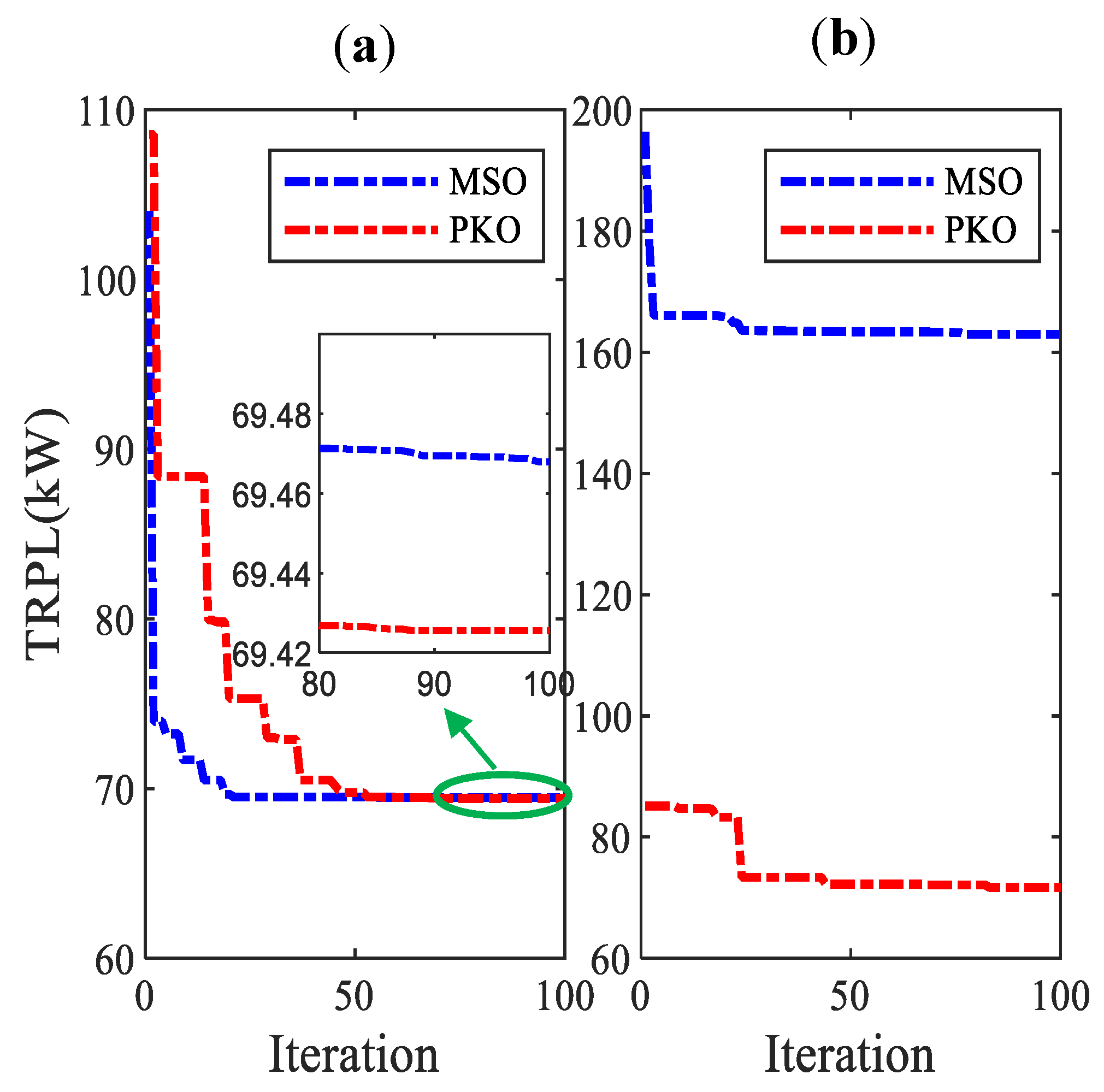
Figure 9a,b show the minimum and maximum convergence characteristics achieved by MSO and PKO among 50 trial tests in Case 2. Regardless of the space solution increase compared to Case 1, PKO still outperforms MSO in reaching the optimal values of the minimum and maximum TRPL. More importantly, the superiority in the maximum convergence characteristic achieved by PKO over MSO is significant.
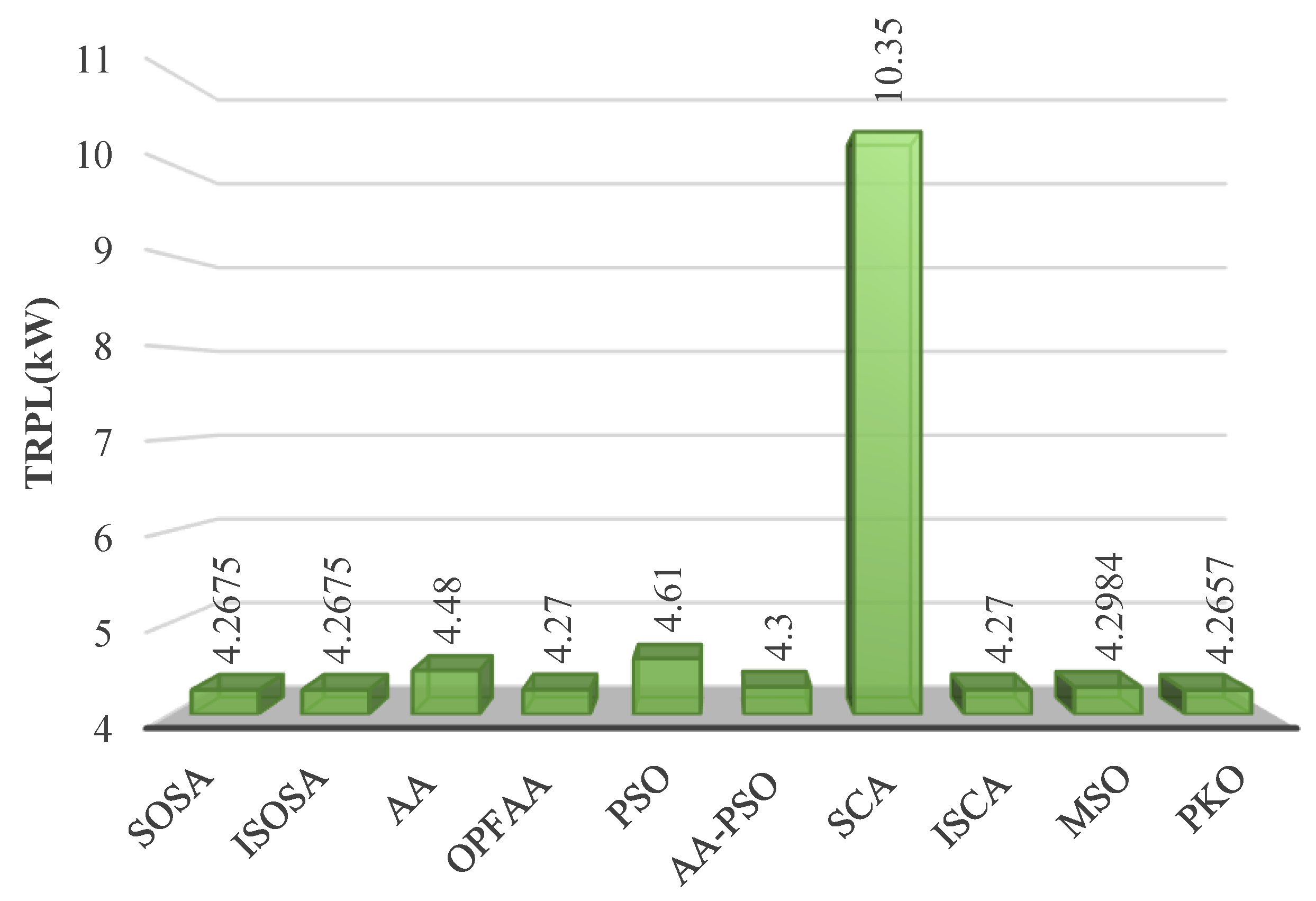
Figure 10 presents the comparison of the TRPL. PKO can reach a slightly or significantly smaller loss than other algorithms, especially SCA [18] with the highest loss of 10.35 kW.
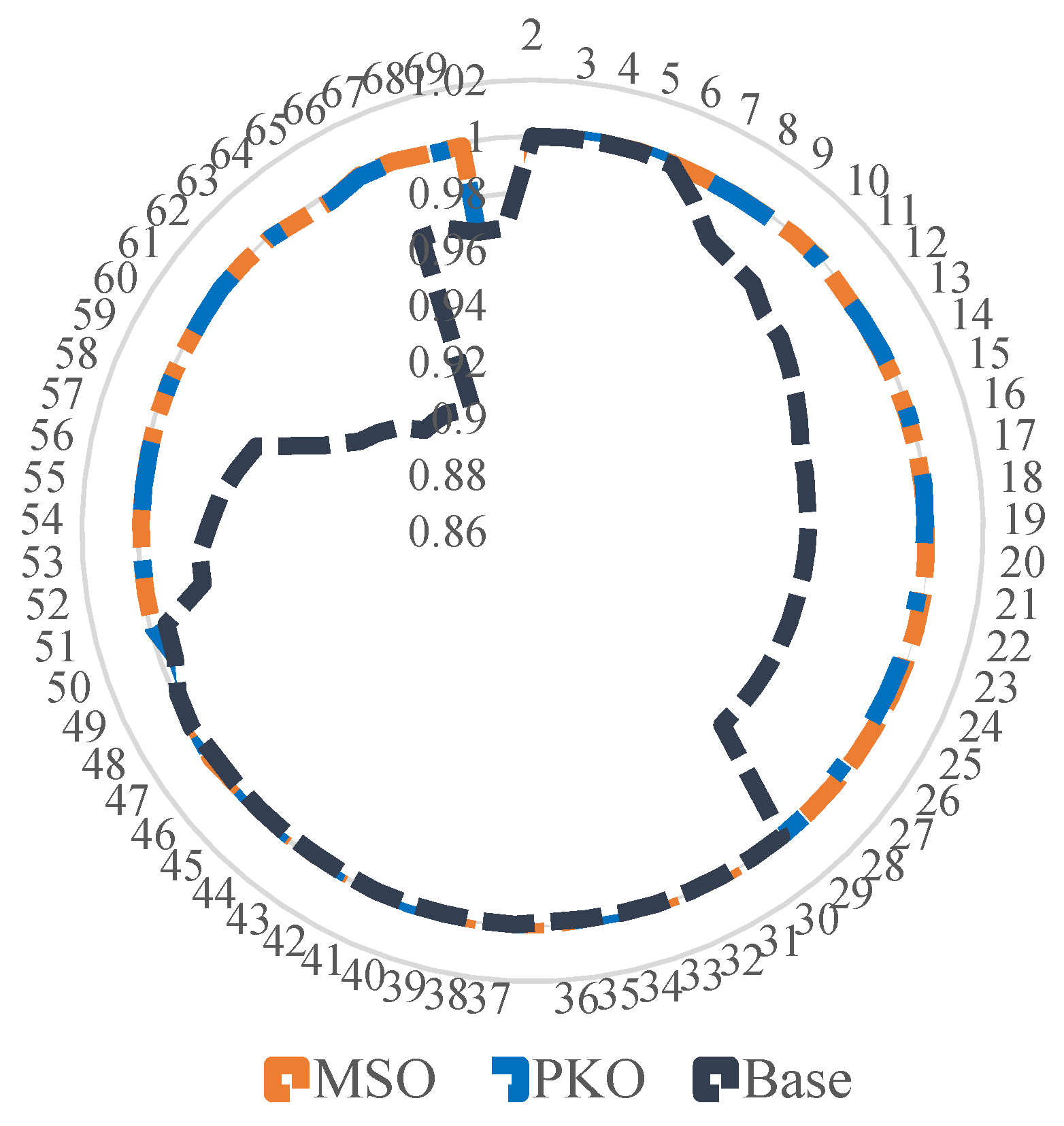
Figure 11 presents the voltage profiles of all nodes, comparing the results from MSO and PKO against the basic configuration of the given SRDN. In this specific case, MSO yields slightly better voltage values for nodes 20 to 26 compared to PKO. For all other nodes, the voltage values produced by both algorithms are nearly identical. Crucially, the voltage at all nodes achieved by both MSO and PKO shows significant improvement compared to the scenario where PVUs are not connected to the grid.
The optimal solutions achieved by MSO and PKO are presented in Table 2 and Table 3. The differences between the two algorithms are node 18 and node 21, and the penetration level of PVUs, leading to a slightly better cost of PKO than MSO.
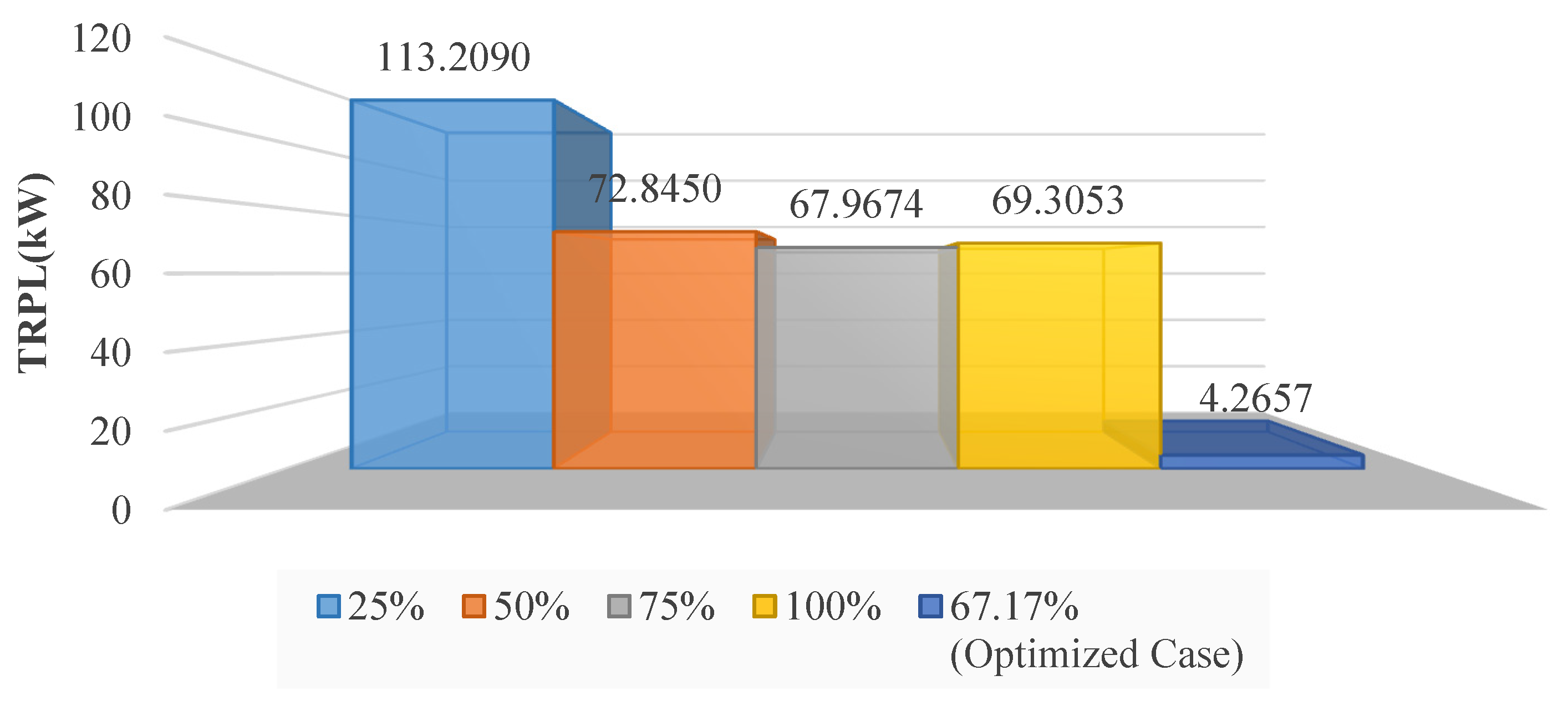
To further demonstrate the effectiveness of PVU’s configuration in Case 2 with the current penetration level of PVUs at 67.17% according to Table 2 in the designing phase, four more penetration levels, including 25%, 50%, 75%, and 100% are assessed and the results are presented in Figure 12. In the figure, the newly added penetration levels are the results of the modest TRPL compared to the optimized case with PVU’s penetration of 67.17%. This significant reduction is due to the simultaneous optimization of active power, reactive power, and node placement of the three PVU, achieved through the PKO algorithm. Notably, the 100% penetration level yields a higher TRPL than the 75% case, confirming that simply increasing the penetration level without optimization does not guarantee improved performance. Furthermore, the optimal penetration level of 67.17% does not coincide with any previously established discrete values, demonstrating that continuous optimization is necessary to determine the true optimal point of the system. These results together confirm that the 67.17% penetration level is a reasonable and technically superior solution for minimizing power losses in the distribution network. Note that the optimal solution of the four additional penetration levels are presented in Table 4.

4.2. The Results of Energy Cost Reduction for Months

In this case, PKO is reapplied to determine the optimal energy cost values while solving the operational problem in the given SRDN. The optimization focuses on optimizing the active and reactive power supplied by PVUs to the grid at each period of time, within the rated power values that were already optimized in Case 2, shown in Table 2 and Table 3. This approach aims to reduce the total amount of power that must be supplied to the load by the utility grid. Consequently, the energy cost is lower due to the decreased reliance on utility grid power:
  • Active radiation data during daytime: This data forms the primary basis for determining the power output of each PVU at each hour.
  • Load demand variation data within 24 h.
  • Electricity price for each hour.
The radiation data is sourced from the Global Solar Atlas (GSA), an online platform that provides estimated solar radiation data for any location worldwide. For this study, it is assumed that the given SRDN is located in Southern Vietnam, and the rated power supply of the three PVUs is inherited from Case 2. The actual power injected into the grid is determined based on the rated power parameters of PVUs (as previously mentioned) combined with the solar radiation data provided by GSA. The solar radiation data for the three PVUs, corresponding to their active locations, can be found in [38,39,40].
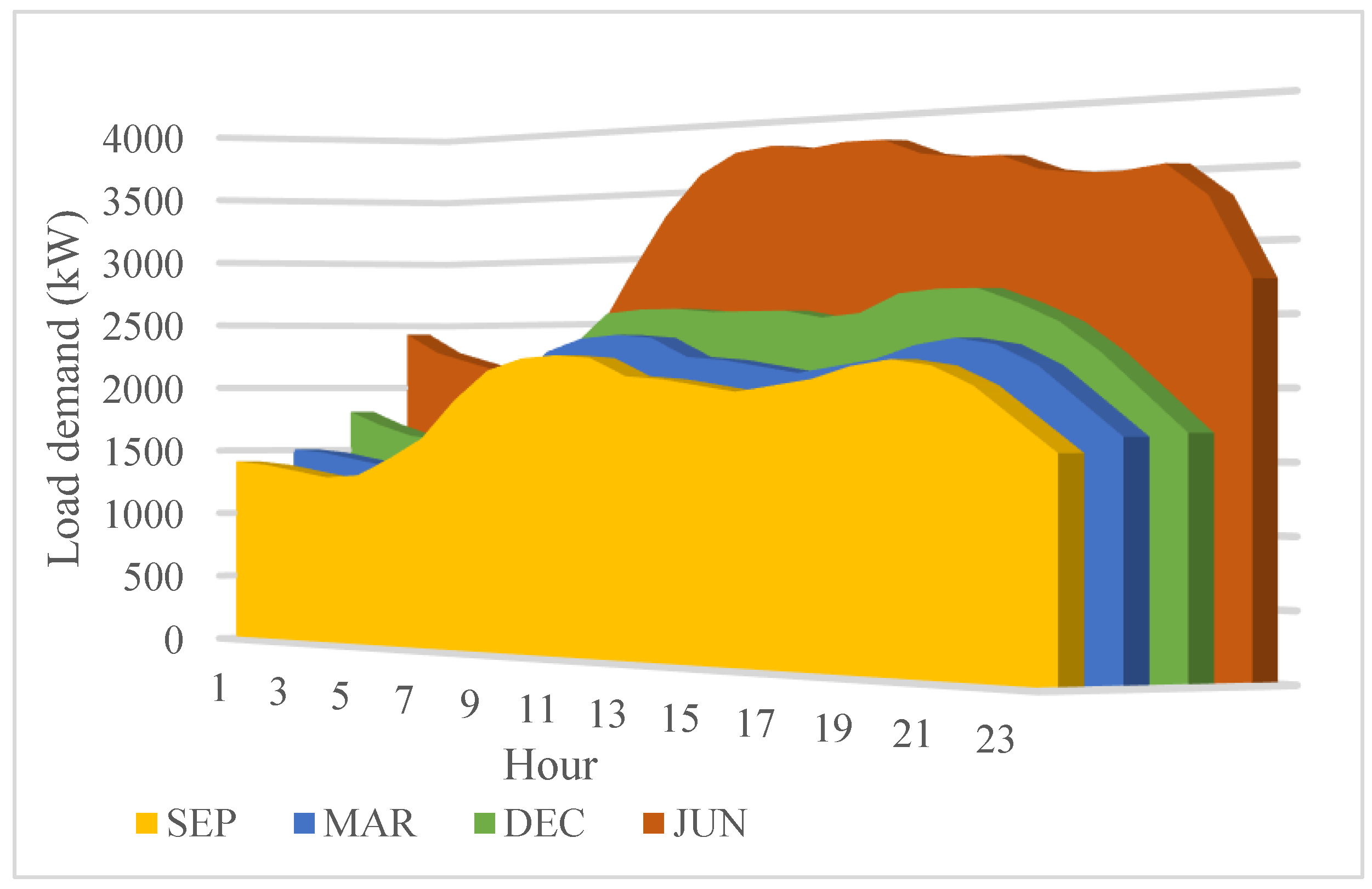
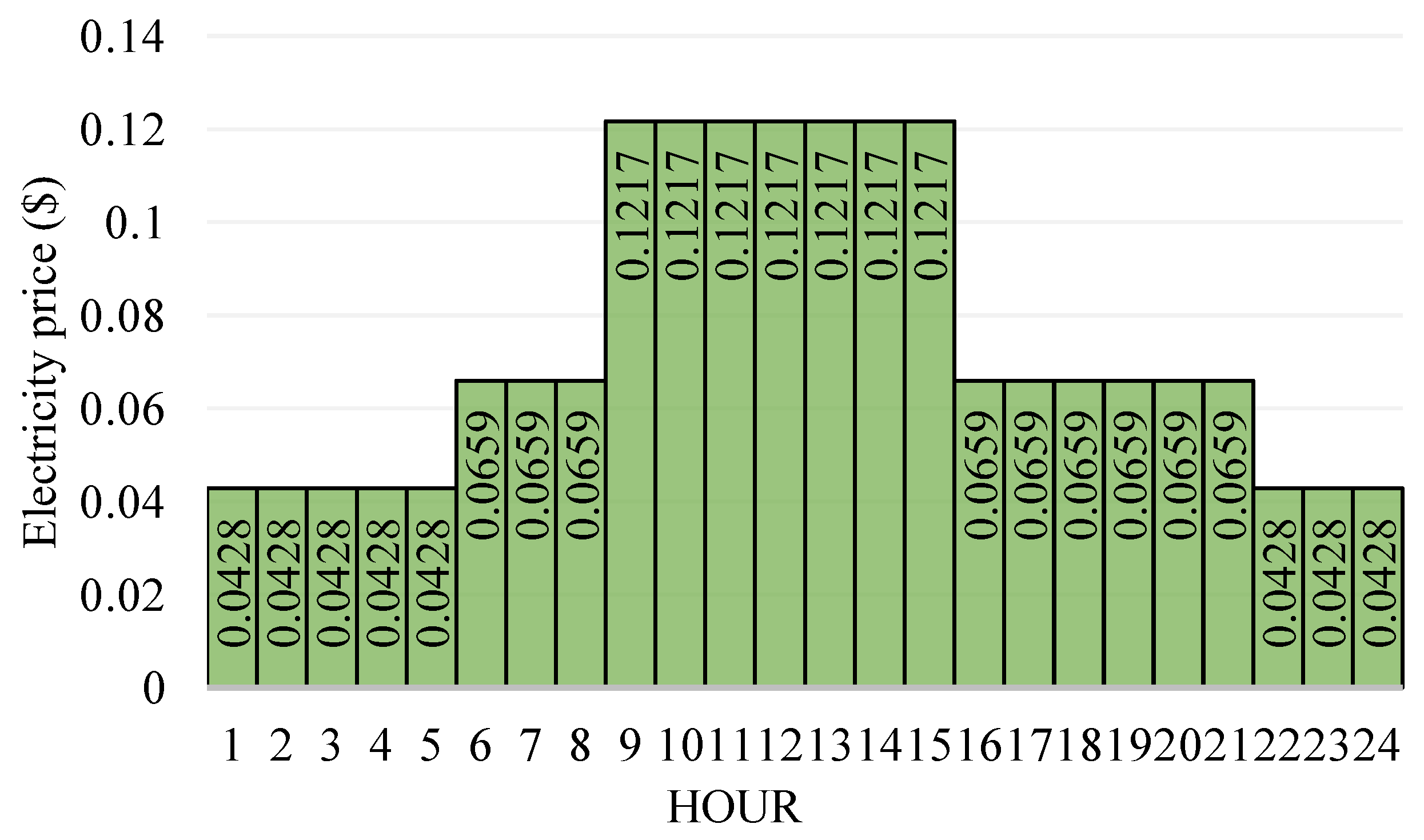
In Vietnam, it was observed that December and March represent the months with the smallest and highest solar radiation yields, respectively. In addition, September and June are the two months in the middle, with solar radiation increasing gradually. The consideration of the four months is aimed at providing coverage and a general overview of seasonal changes over the year. Therefore, these four months are selected to optimize the energy cost value over an average day of each month in the order of the increase in solar radiation, which is meant to provide a detailed look at how the EV decreases from the month with the lowest solar radiation to the month with higher solar radiation. The load demand values for a 24 h period are illustrated in Figure 13 [41]. The electricity price data for a 24 h period is taken from the official webpage of EVN [42] and is depicted in Figure 14.
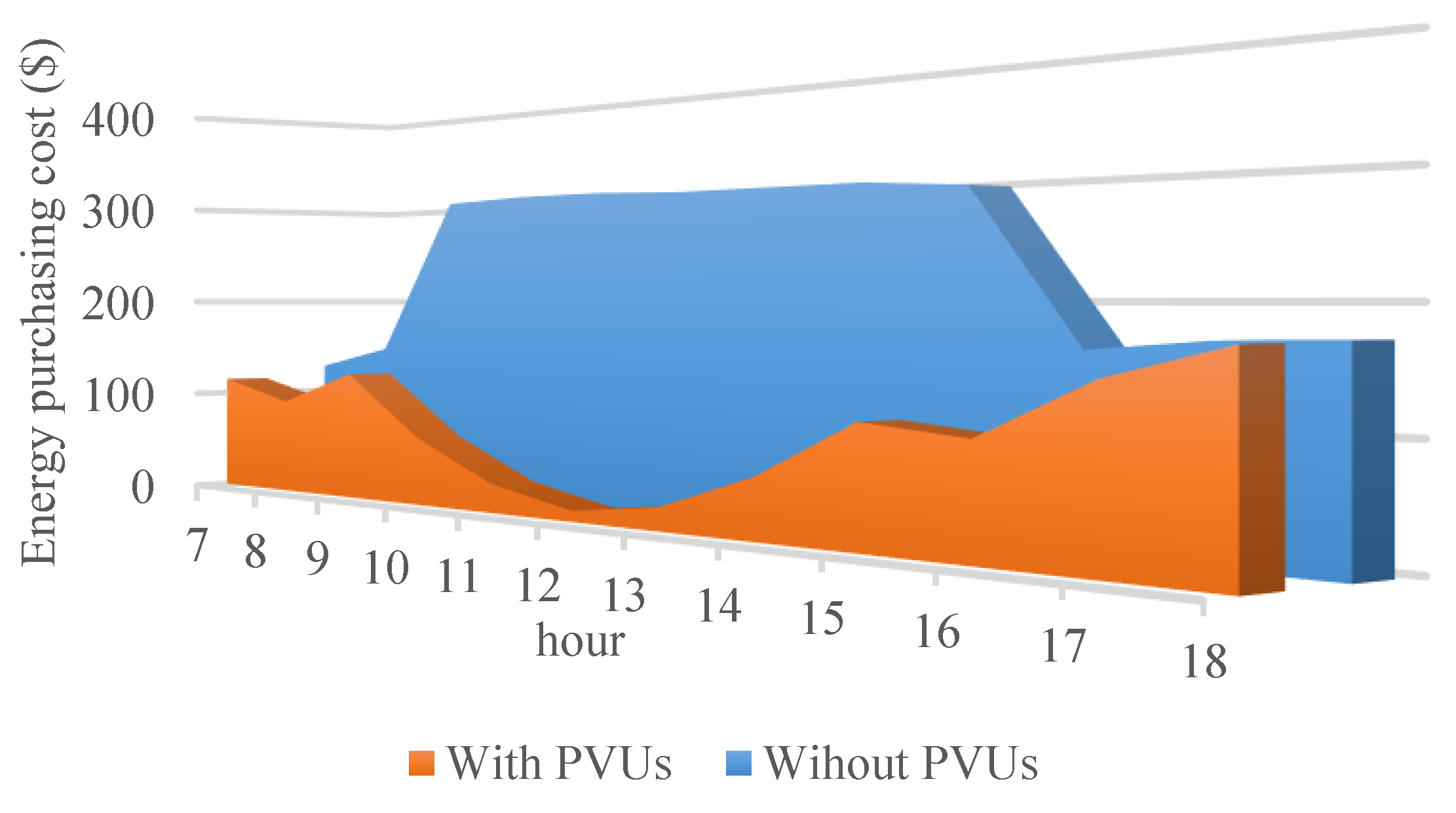
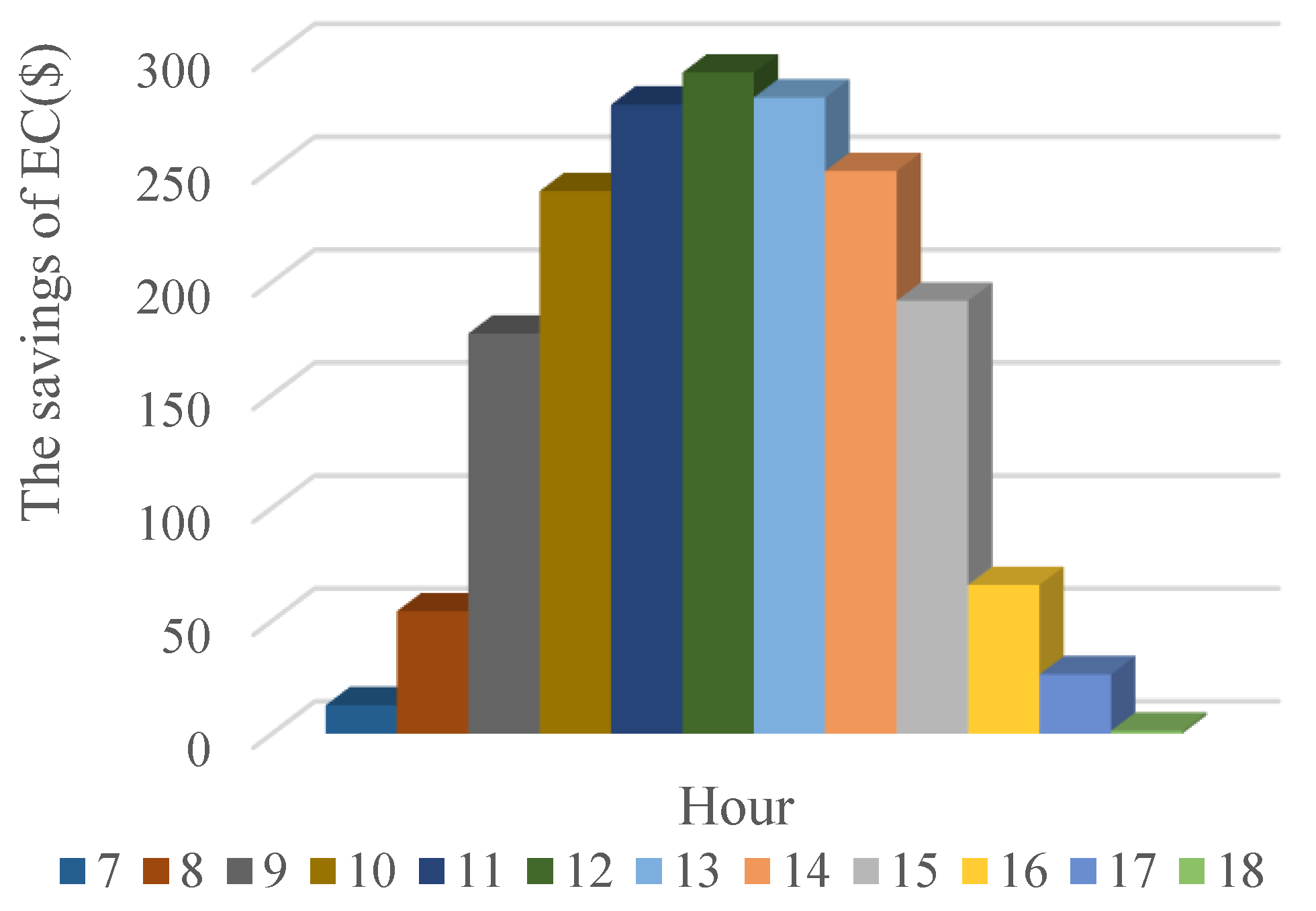
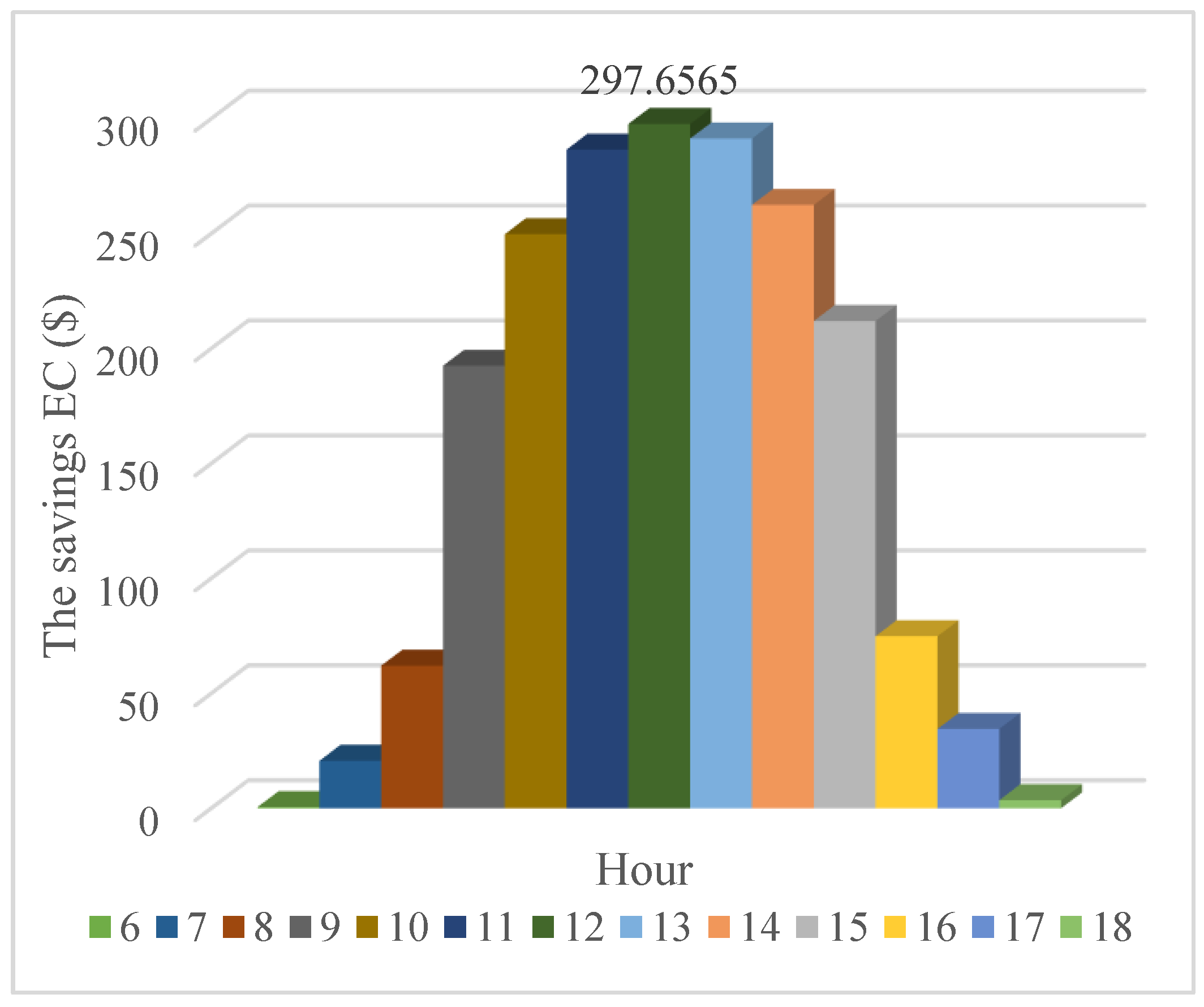
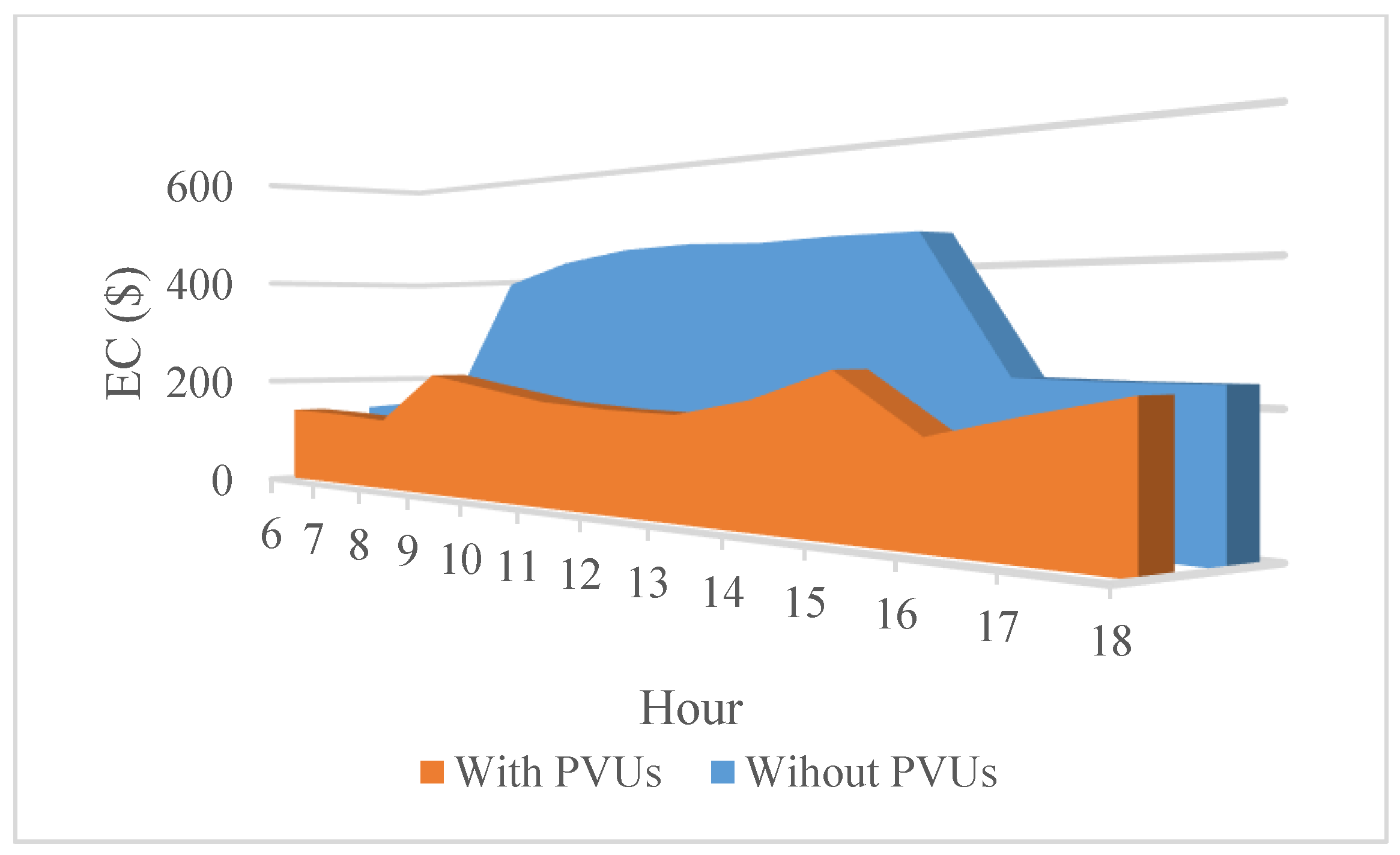
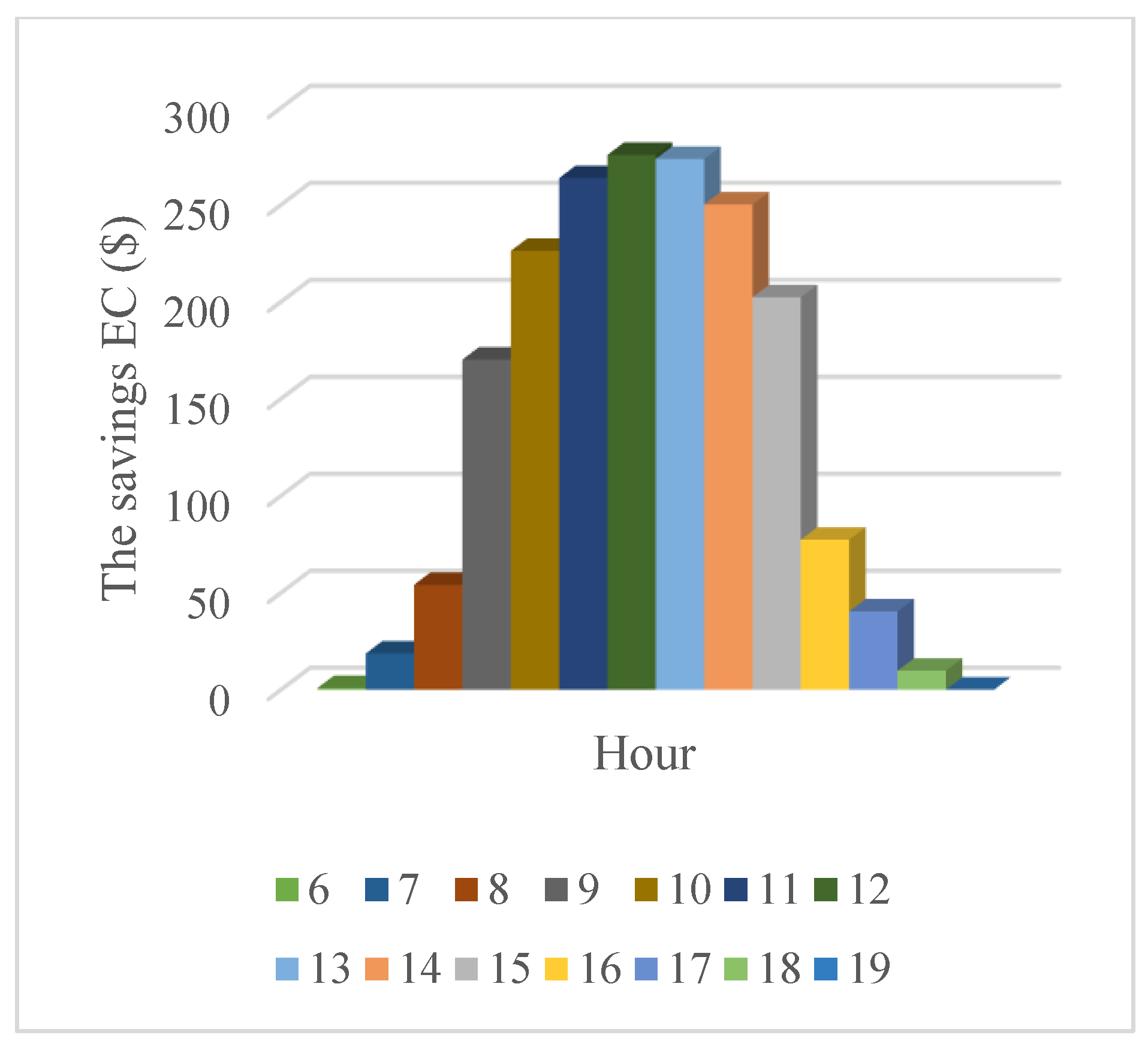
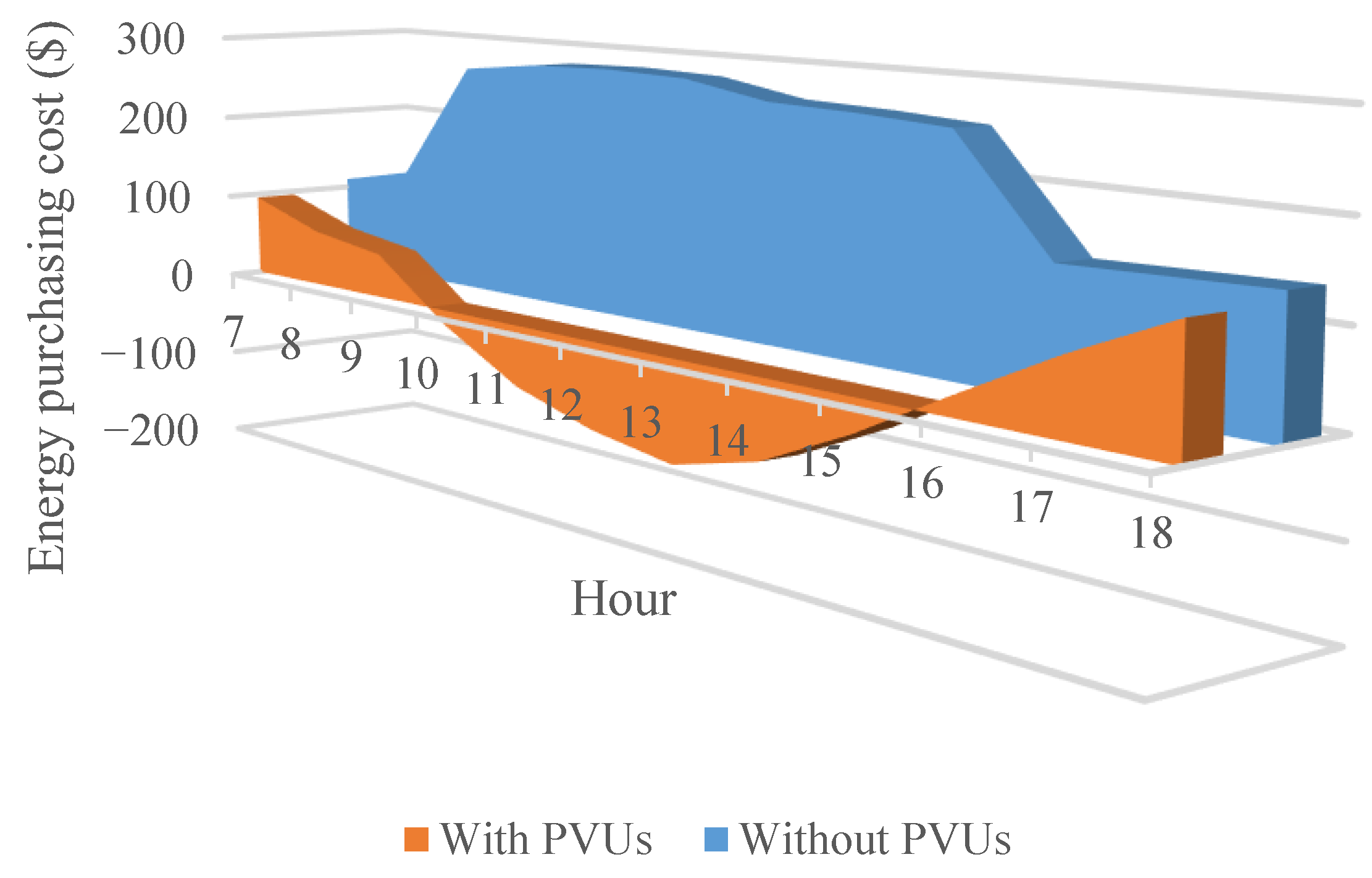
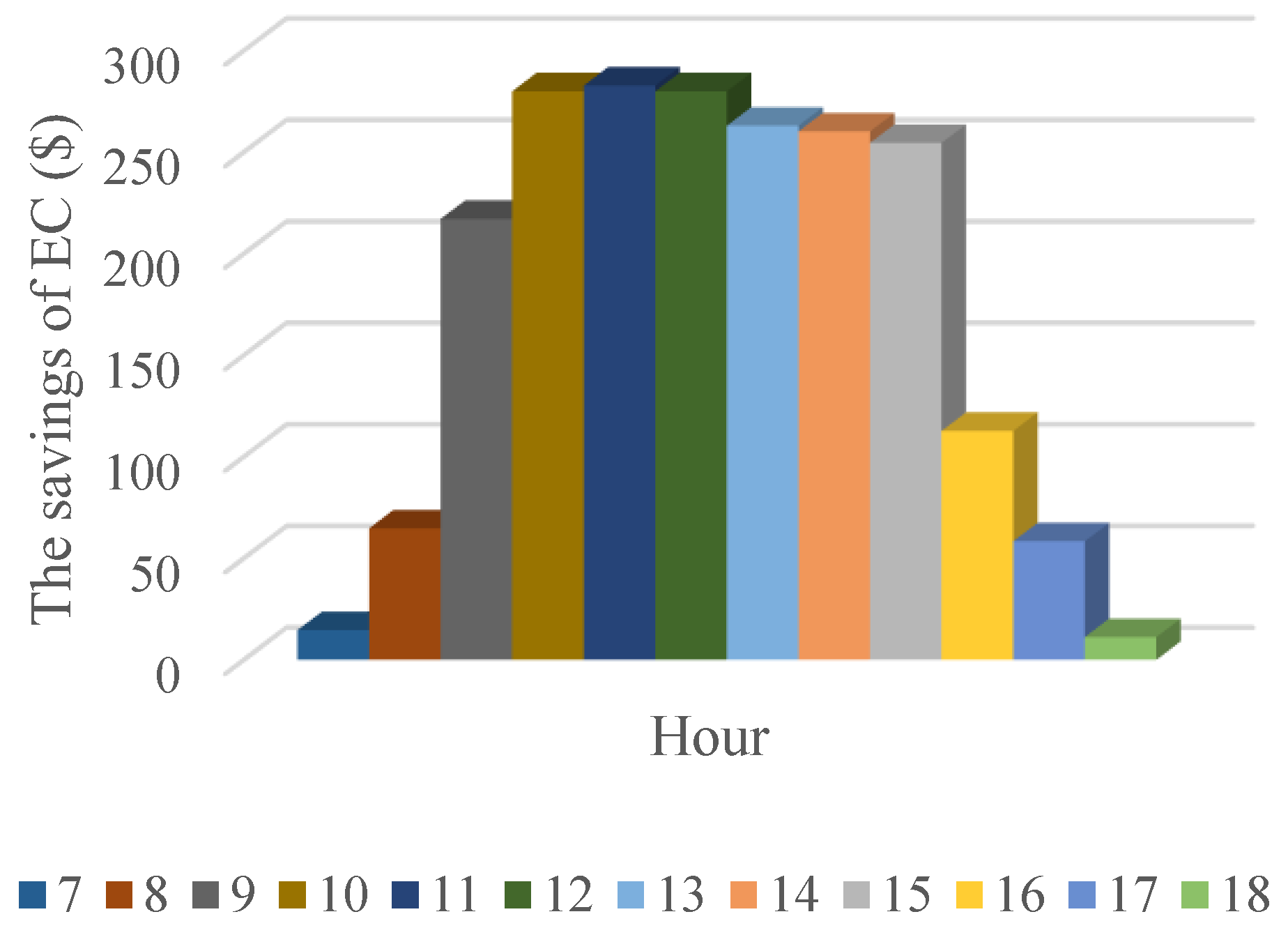
Figure 15 illustrates the energy cost values over a 24 h period, comparing scenarios with and without PVUs in December. It is very clear that the presence of PVUs significantly reduces the energy cost value during daytime periods, when PVUs are actively injecting power into the grid. Figure 16 details the specific energy cost savings achieved from hour 6 to hour 18 on an average day. It should be noted that the savings are zero during other hours due to the inactivity of all PVUs.
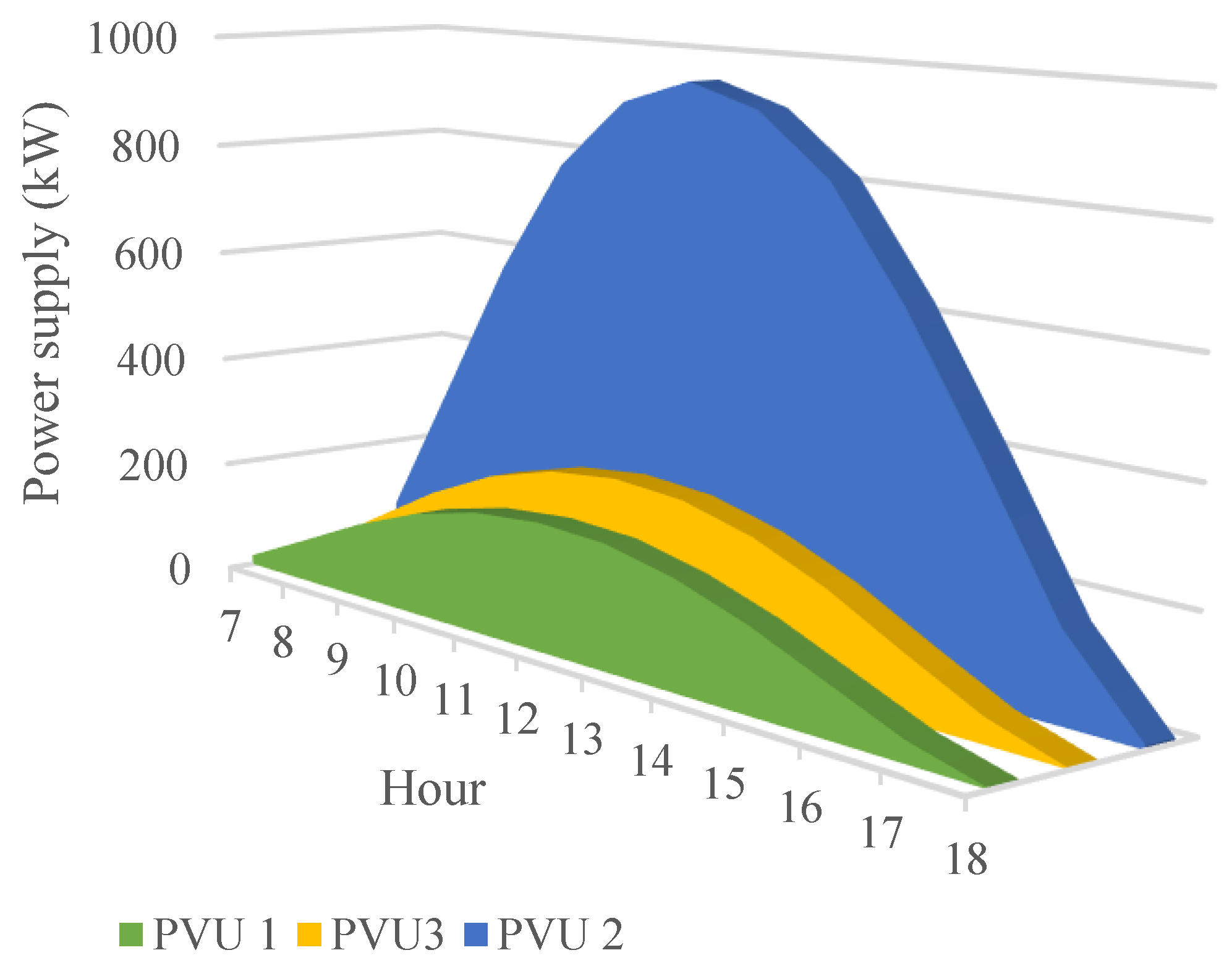
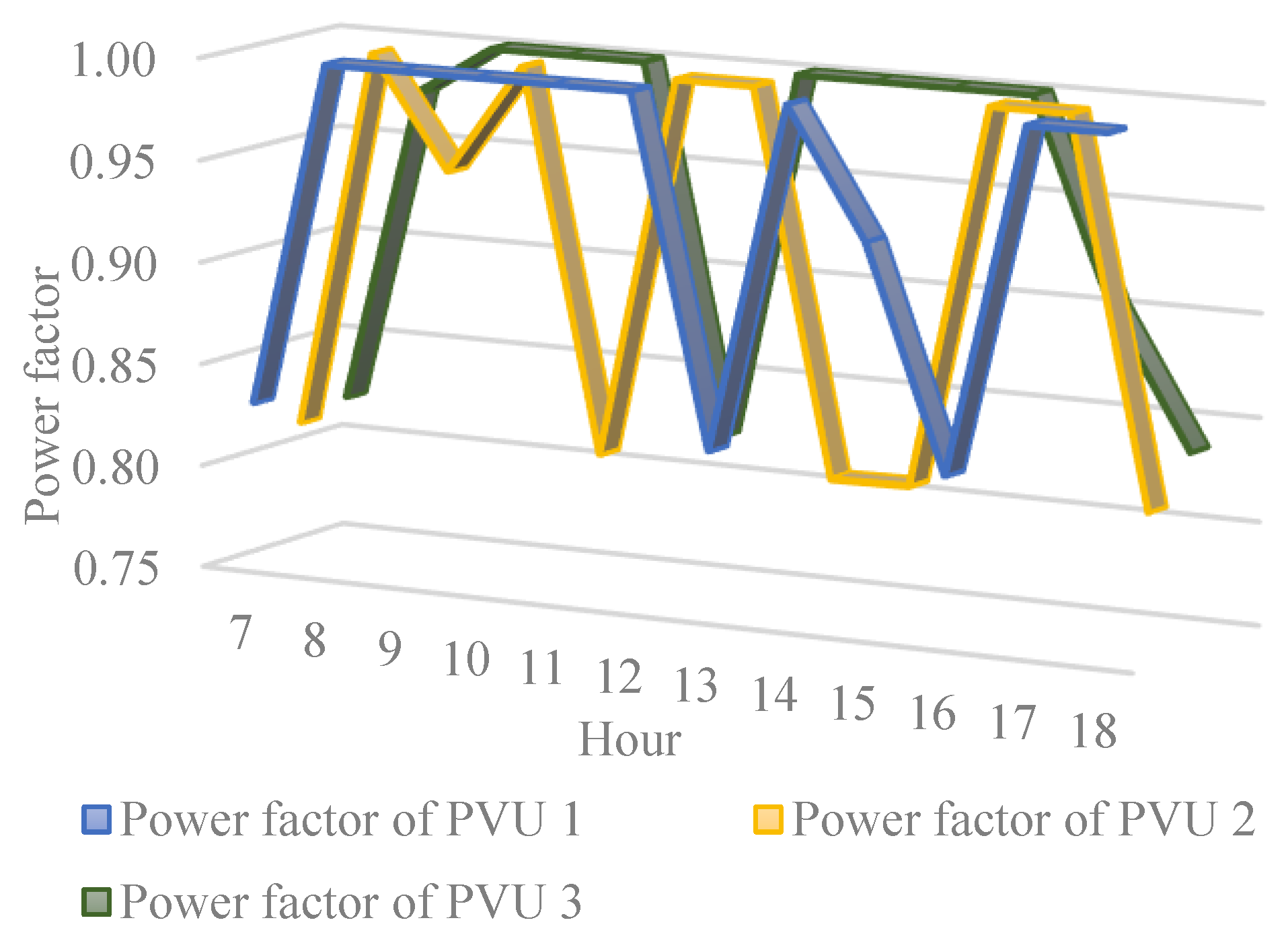
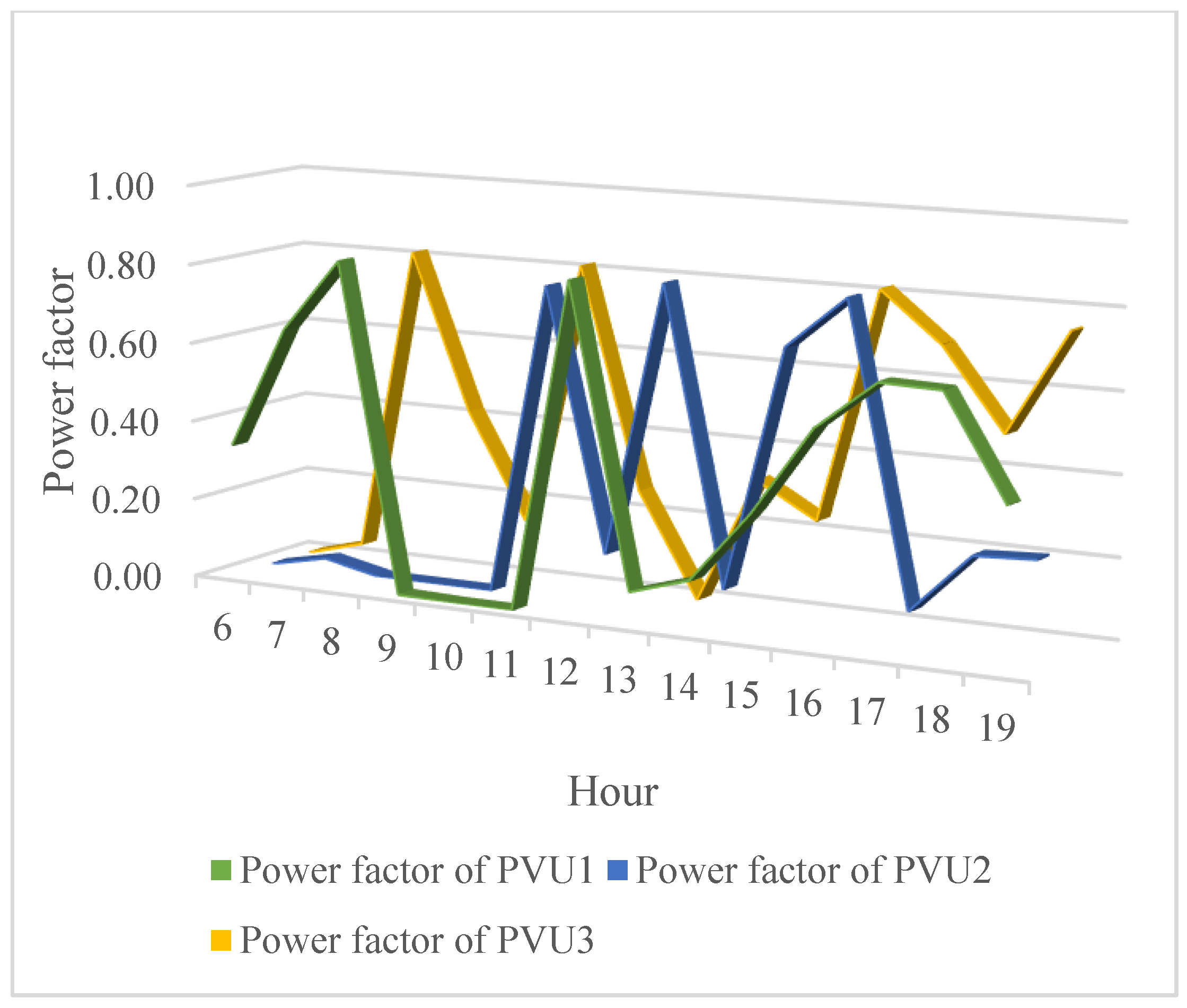
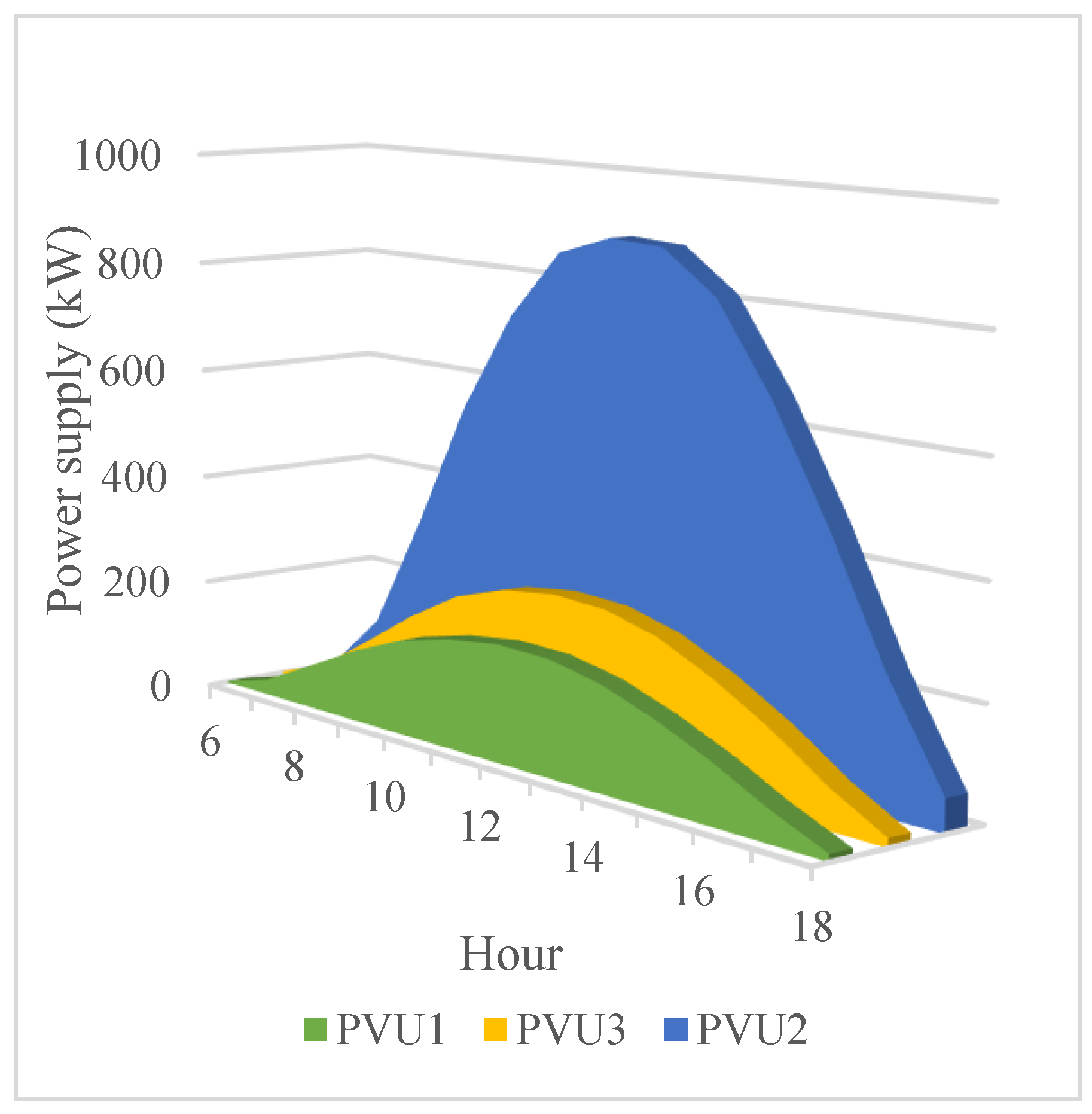
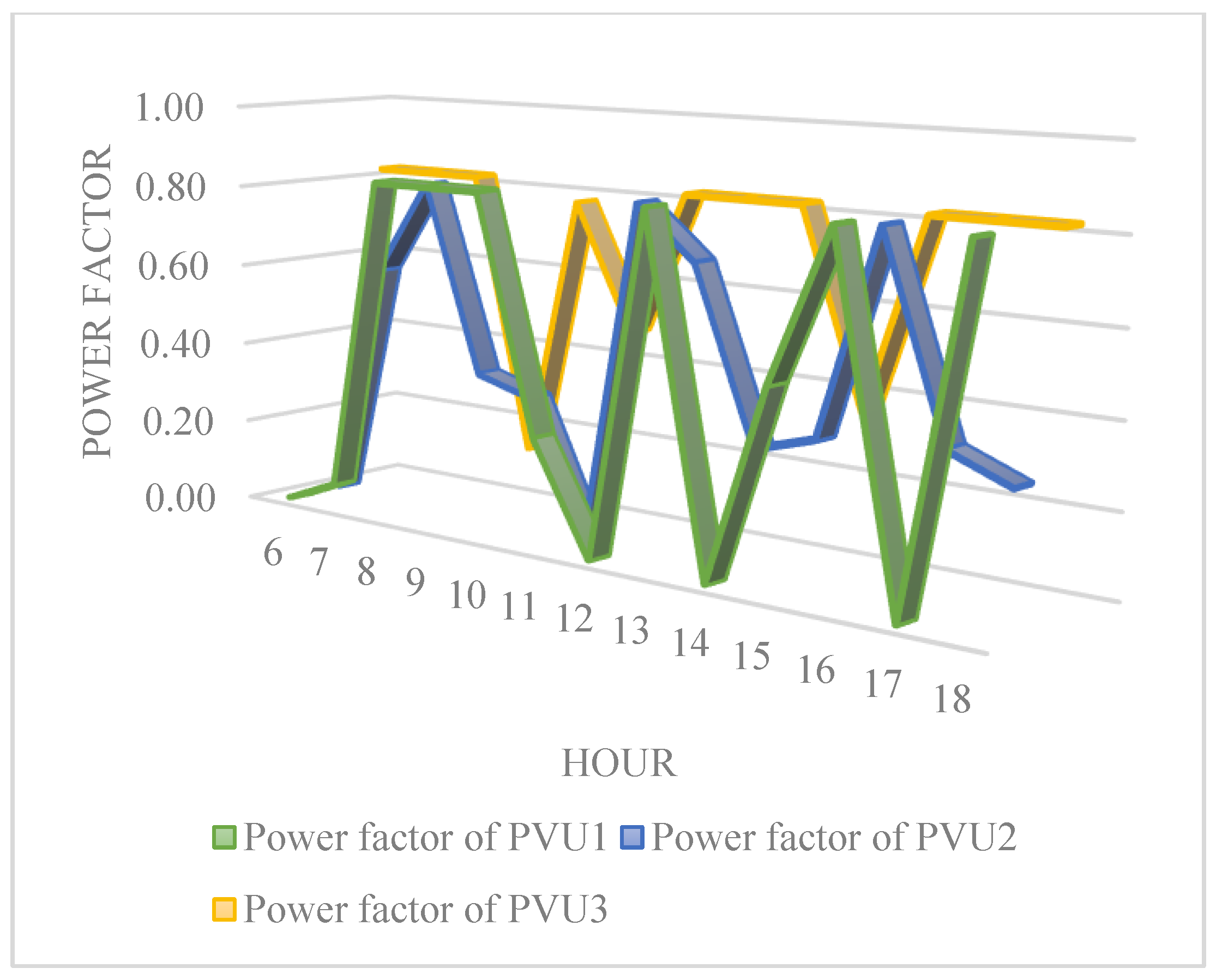
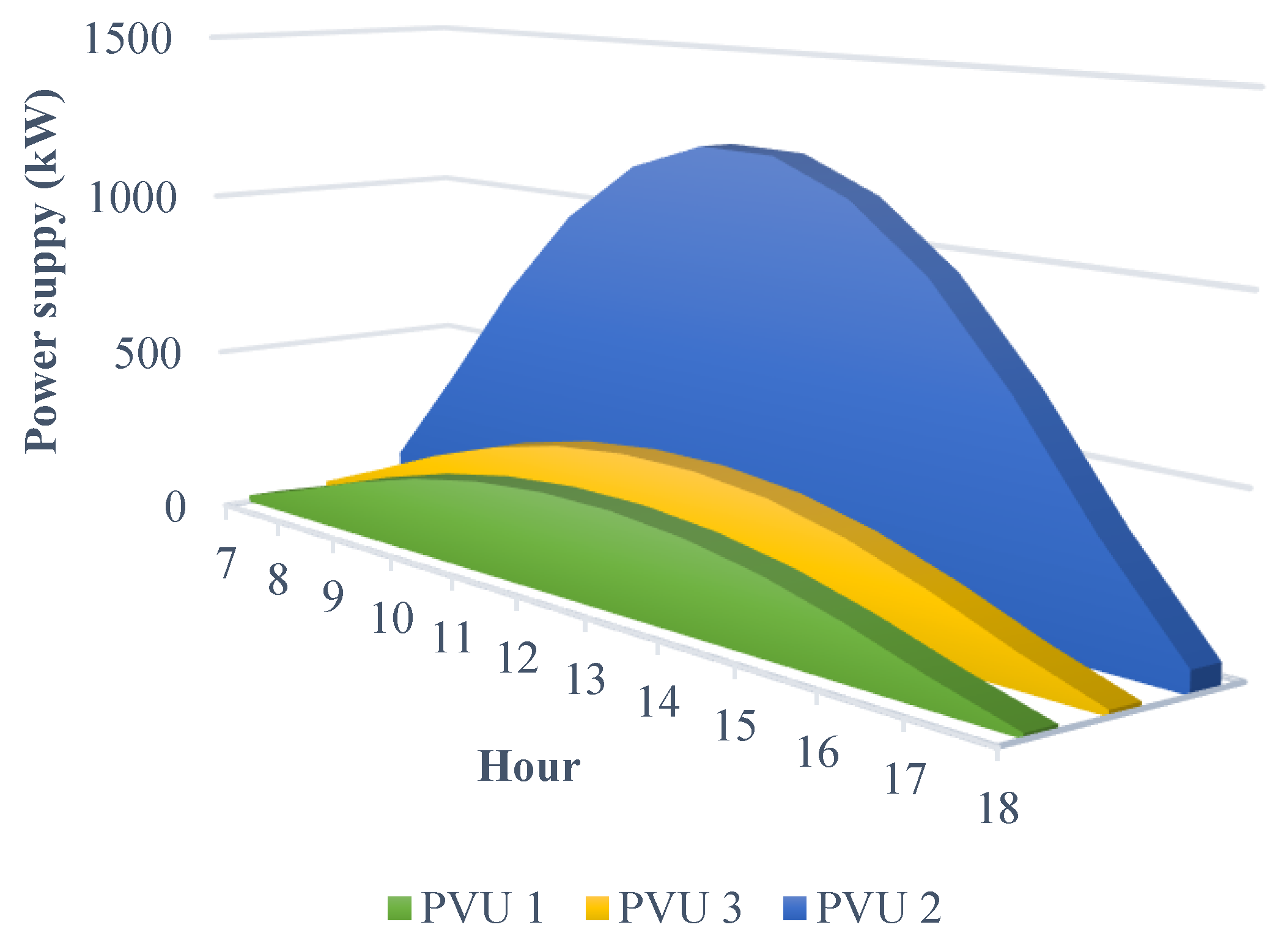
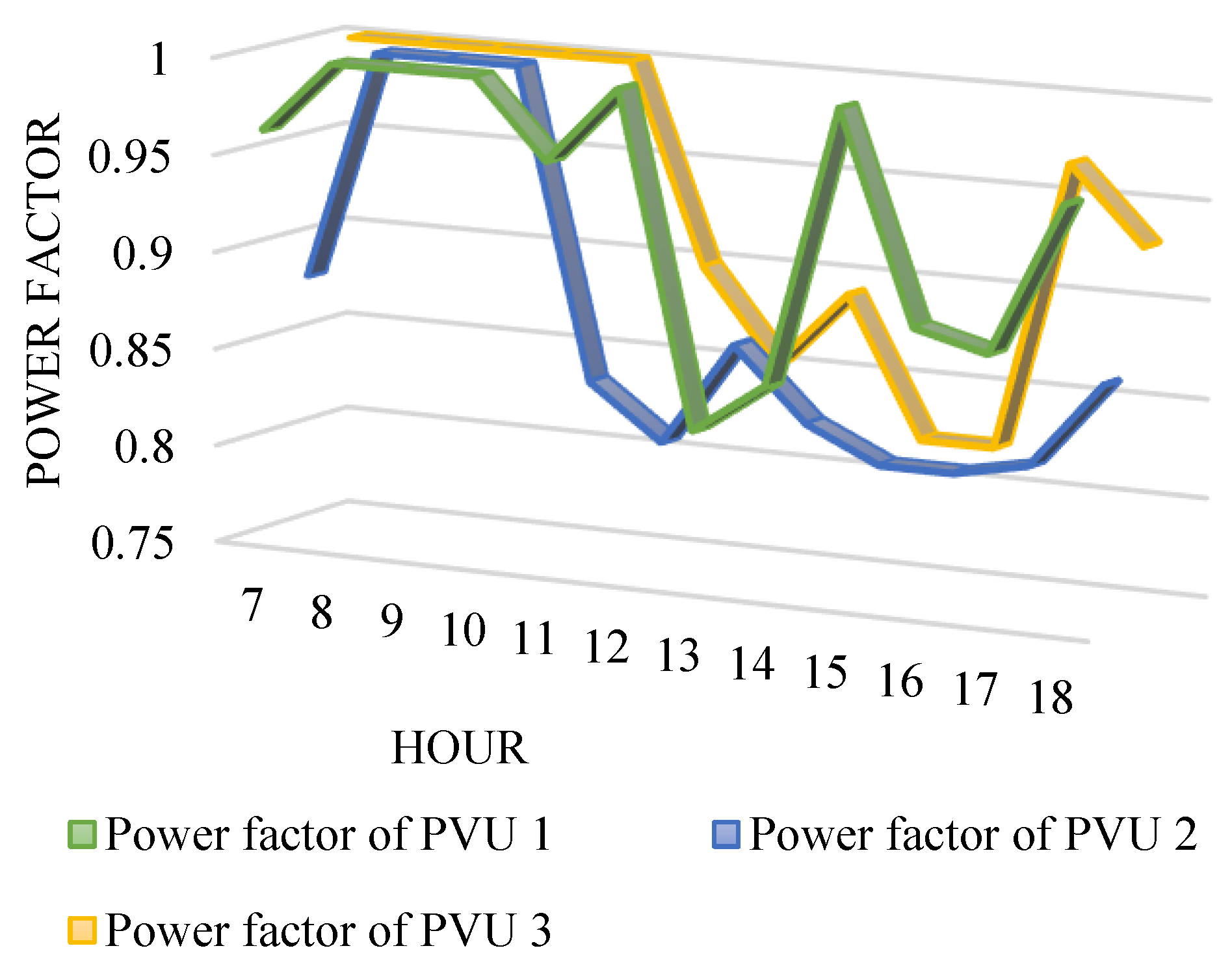
Figure 17 and Figure 18 show the optimal active power supplied to the grid of the three PVUs and the corresponding power factor for each hour in the daytime. Both active power and the power factor value are varied within their rated parameters as optimized in Case 2, presented in the previous section.
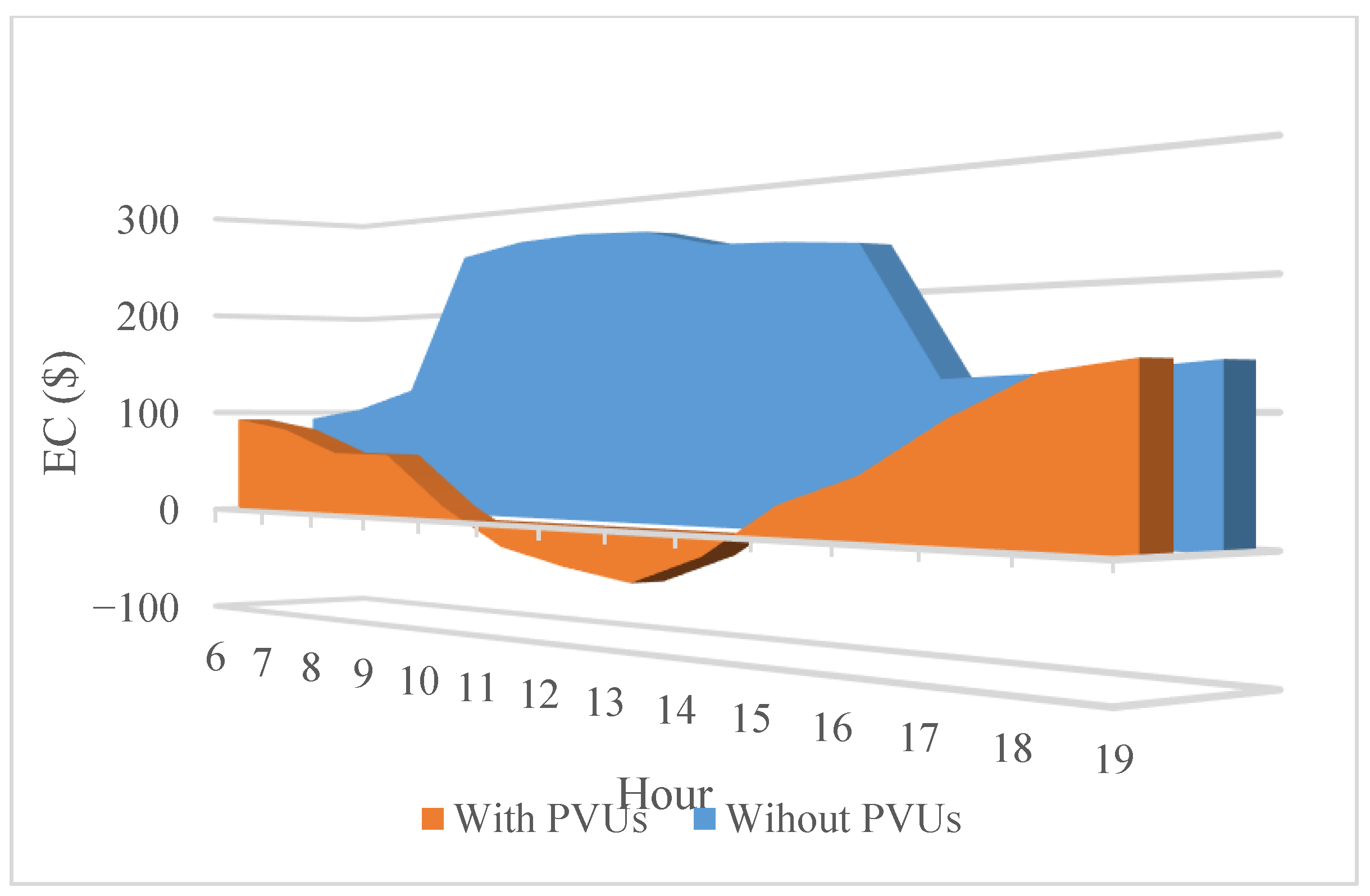
Figure 19 shows the energy cost values over a 24 h period, comparing scenarios with and without PVUs in September, which is the month with the highest radiation intensity compared to December. Similar to what has been observed in December, the integration of PVUs also resulted in the clear reduction in EC compared to the case where the PVUs are not connected to the grid. Furthermore, the EC values at hours 11 to 15 are the negative values, which means that the higher solar radiation density in this month has led to an increase in power supplied from PVU over the load demand. The negative EC value in those periods can be translated into the amount of money gained by selling the extra power back to the utility. Figure 20 displays energy cost savings achieved from hour 6 to hour 18 on an average day in September. Note that the savings in energy costs can only be found during the day when PVUs are active.
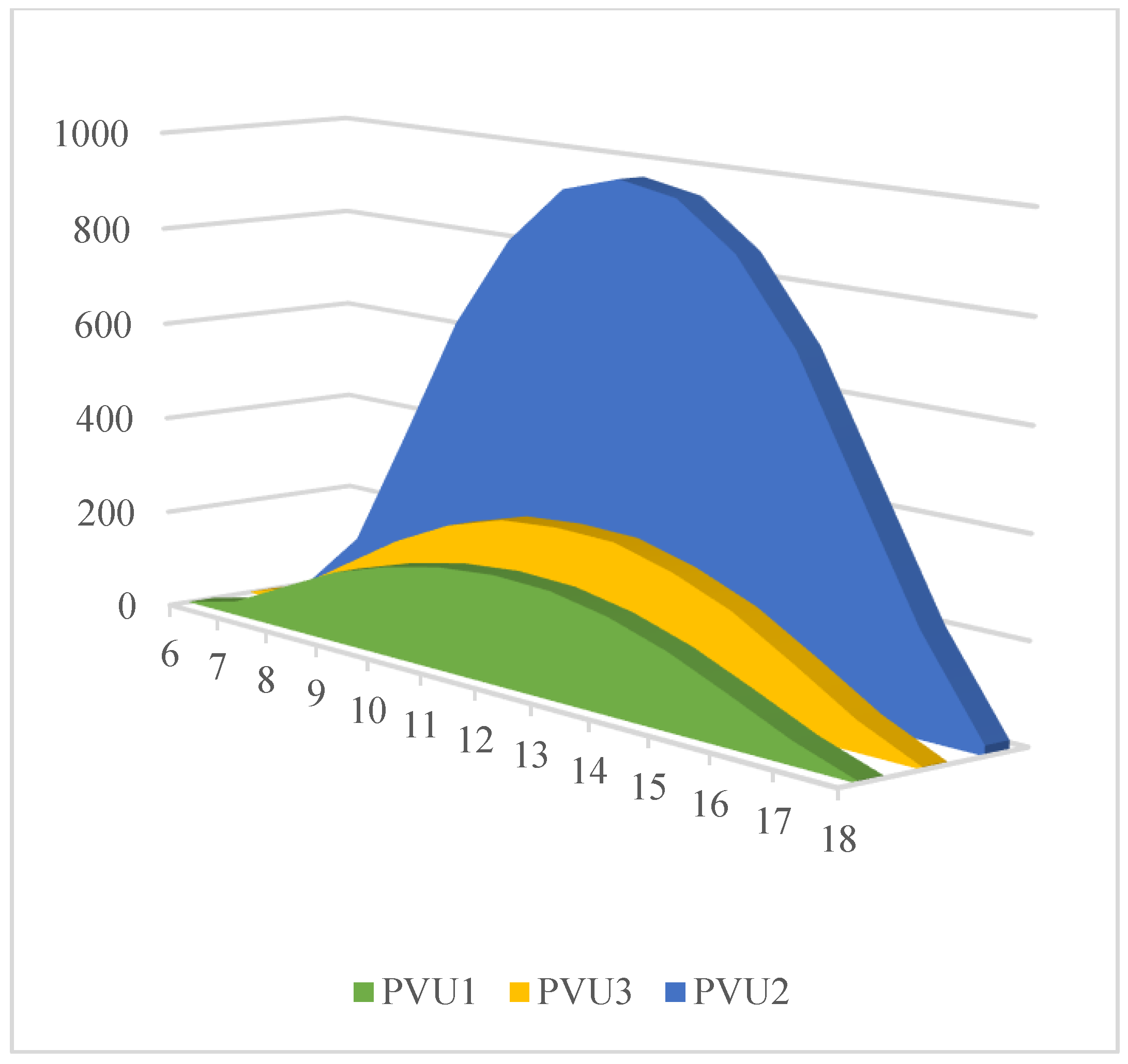
Figure 21 and Figure 22 present the optimal active power supplied to the grid of the three PVUs and their power factors for each hour in the daytime. Both active power and the power factor value are varied within their rated parameters as optimized in Case 2. Similar to December, PVU2 is in charge of providing the largest amount of power supplied to the grid, while PVU1 injects the smallest amount.
Figure 23 presents the energy cost reduction by the three PVUs in June, the month with higher radiation intensity compared to the first two previous months. This month, the presence of PVUs on the grid also offers a significant reduction in EC. However, the reduction in EC values in this case does not offer a higher economic benefit than the previous month, September, with the negative values of EC, which then resulted in the money gain due to the selling of extra energy back to the grid. This can be explained because this month is in the middle of summer, while the power demand will largely increase with higher load factors as indicated in [40]. Figure 24 qualitatively shows the reduction in EC at each hour during the day when all PVUs are active. The EC reduction chart also shows the same shapes as previously, but they are slightly lower throughout the daytime.
Figure 25 and Figure 26 display the optimal active power supplied to the grid for the three PVUs and their power factors for each hour of the day in June, similar to the last two months mentioned above. In these figures, the power output at each hour and the power factor of each PVU are varied within the allowed ranges, as optimally determined by the optimizer before.
Figure 27 presents the energy cost values over 24 h in March, comparing scenarios with and without PVUs. The negative energy cost values during these hours indicate that the power supplied to the grid by all three PVUs exceeds the load demand at those times. In fact, these negative energy cost values can translate into monetary payback if the utility allows excess power from PVUs to be sold back to the grid. This excess power could then be circulated to other regions or areas within the power system experiencing generation shortages or high electricity prices. This capability could also help decrease the utility’s reliance on urgent generating sources during peak hours, thereby increasing its profit. In the case that excess power from the PVUs is legally sold back to the grid, the savings energy cost is displayed in Figure 28.
Figure 29 and Figure 30 present the amount of active power supplied to the grid along with the corresponding power factor for each PVU. All the values satisfy the rated parameters achieved in Case 2, presented in the previous section.
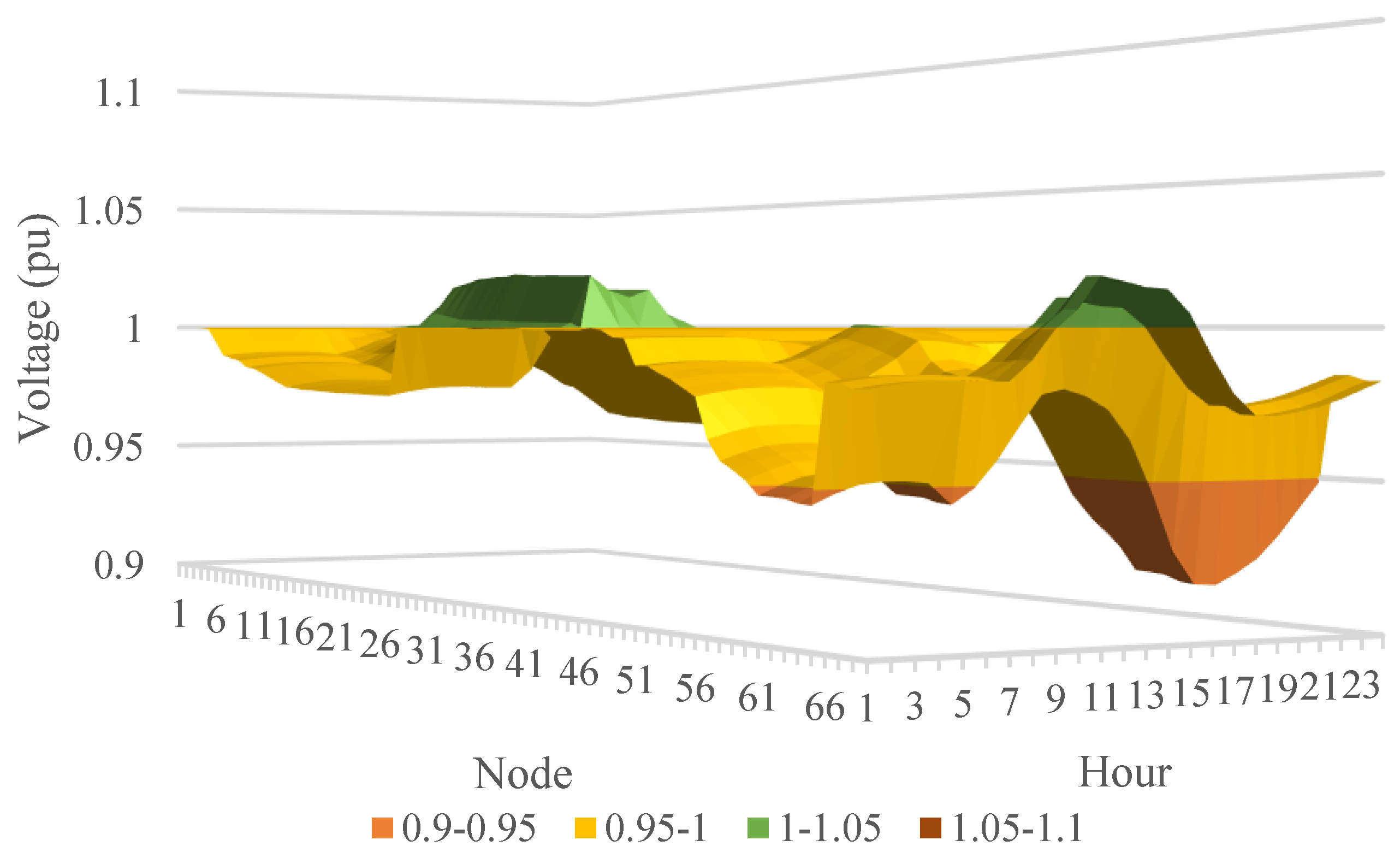
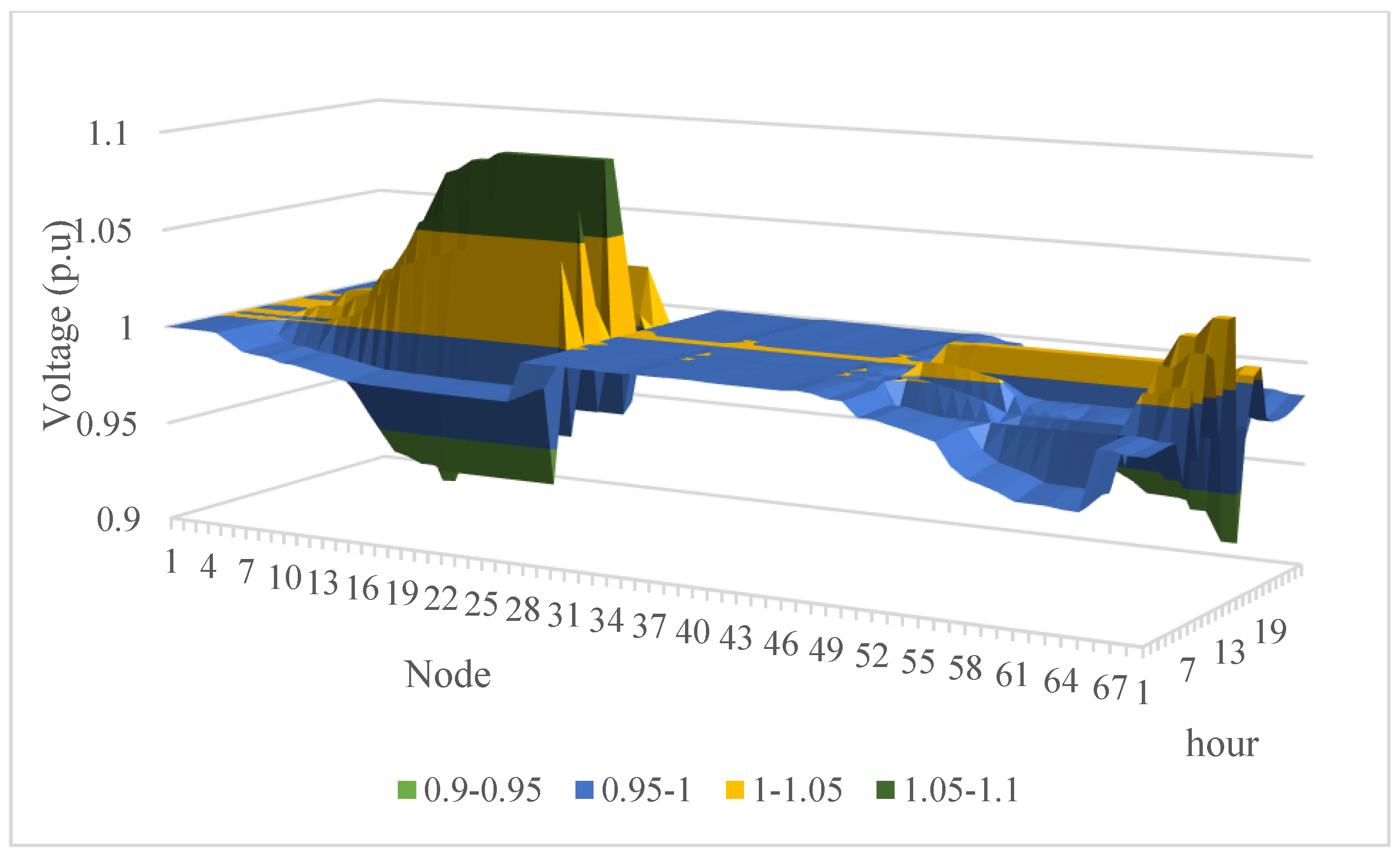
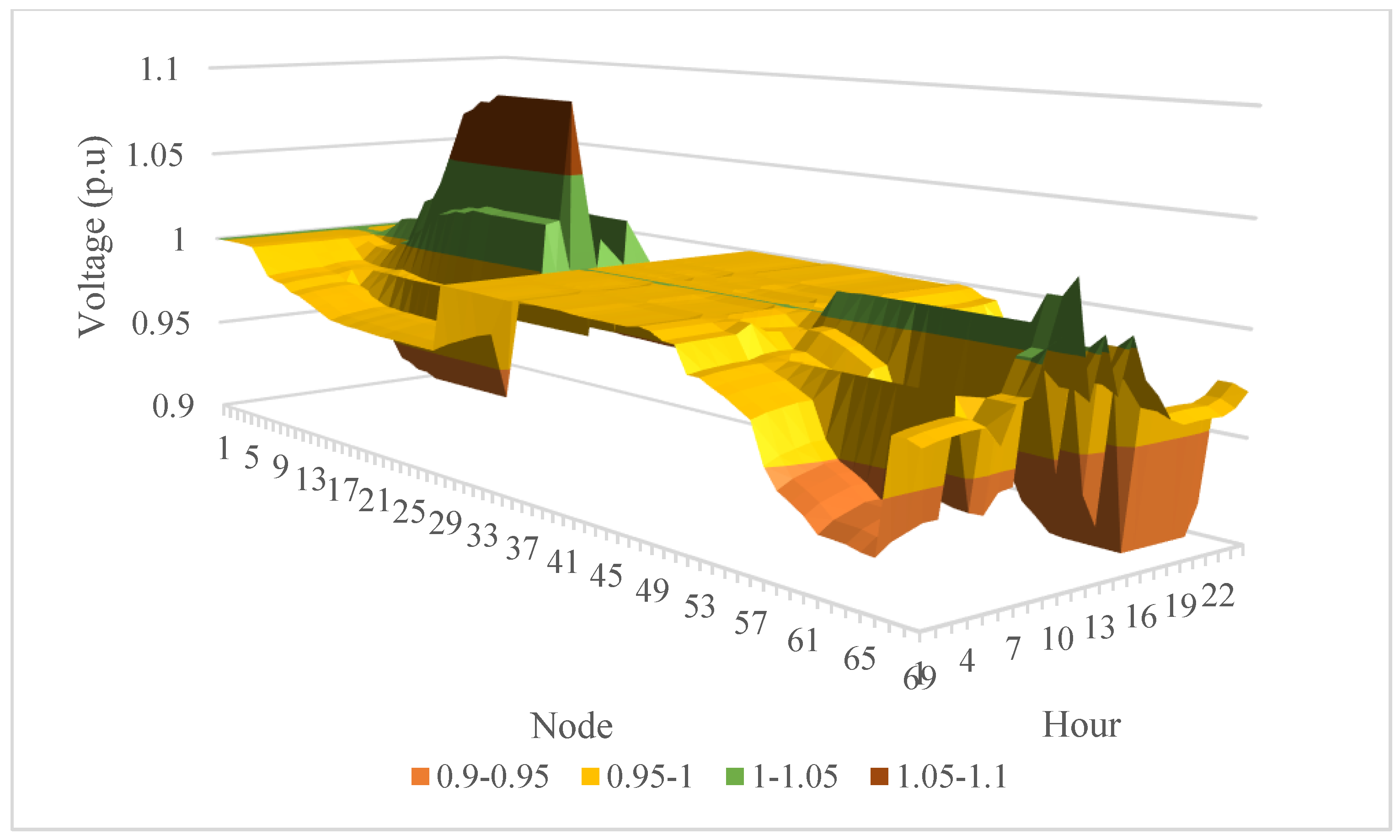
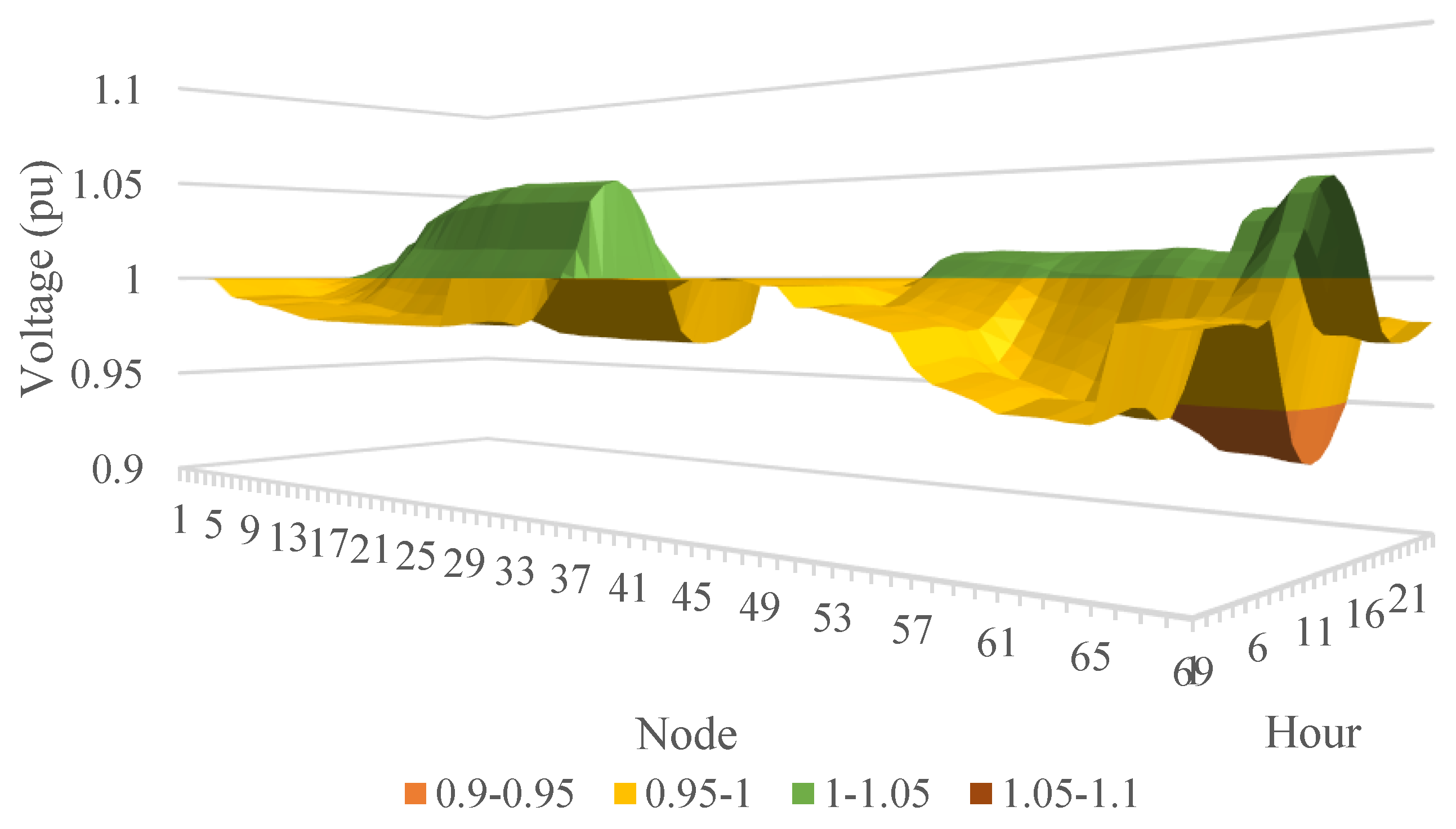
Figure 31, Figure 32, Figure 33 and Figure 34 provide the voltage profile over the four months, which is considered to represent the seasonal change in radiation intensity throughout the year. The figures indicate that the voltage profile achieved in March is the best. Notably, the voltage nodes achieved in March mostly range from 0.93 to 1.00 pu, while those in the other months fluctuate between 0.92 and 0.98. Undeniably, the voltage nodes shown in those two figures sometimes deviate from the designed values, which are defined between 0.95 and 1.05 pu, corresponding to a deviation of 5% relative to 1 pu. Clearly, the voltage profiles of the four months witnessed a slight violation of the lower boundary, as presented in Section 2. There are three main reasons for the above indications: (1) The power supplied by PVUs is not complimentary to the power demand at those periods leading to the shortage of power and then results in the voltage decrease; (2) The voltage node’s value is violated chiefly at the time the PVUs are naturally decrease their supply or deactivated when the load factor still high specially from hour 17 to 22; and (3) the main objective function of the whole research is to optimize the power loss values which are clearly presented by different figures along with detailed analyses not voltage improvement. So, the violation of the voltage node at some periods could be considered as the trade-off to achieve the main goal when only PVUs are integrated into the given power grid without the combination of other devices. To cope with these situations, there are several solutions, as follows:
  • Integrating the energy storage system (ESS) provides the capability to save extra energy produced by the PVUs during the daytime and discharge this amount of saved energy back to the grid at nighttime, while the power supplied by PVUs is not available. However, integrating the ESS also requires an optimized charging or discharging schedule for specific periods throughout the entire schedule. Furthermore, the amount of charged/discharged energy needs to be optimized so that all ESS constraints are satisfied, as specified by the equality of the energy in the ESS at the start and end periods.
  • Installing capacitor banks that offer the capability of improving the voltage node due to the injection of extra reactive power. In terms of investment and operating cost, installing the capacitor banks is an affordable solution with a high degree of flexibility. Furthermore, integrating a capacitor with PVUs partially mitigates the uncertainty caused by PVUs’ strong dependence on weather conditions. However, the installation of such capacitor banks also requires an optimal allocation on the grid to maximize their advantage.
  • Installing flexible AC transmission system (FACTS) devices, such as Static Var Compensator, TCSC, UPFC, and SSSC. These devices enable changing line parameters to control power flow among distribution lines. However, installing such devices requires a significant investment in terms of cost and deployment time. Furthermore, the installation of such devices must be carefully considered using effective optimization tools to reach the expected efficiency.
Figure 35 illustrates hourly power loss within 24 h across four months: March, June, September, and December. In the figure, June shows the highest losses, driven by the highest loads shown in Figure 13. September shows a sharp but brief spike around hours 10–12, reaching nearly 150 kW, before dropping significantly. March maintains moderate and relatively stable losses throughout the day. December records the lowest overall power loss, with only minor fluctuations in the early morning hours. All seasons share a common pattern of reduced losses during off-peak periods, such as late night and early morning. These findings indicate that summer represents the most critical period for network stress, and the chart also indicates that DG placement should be prioritized during peak hours to improve overall system efficiency.

4.3. The Comparison of the Optimized Penetration Level over the Four Ones of PVUs in Operation

This section provides a detailed analysis of the effectiveness of the optimized penetration level, which is 67.17% of PVUs, in comparison to other penetration levels of 25%, 50%, 75%, and 100%. Additionally, the base case without any PVUs is included to highlight the economic benefits that PVUs offer.
Figure 36 illustrates the energy consumption (EC) values for each hour at the five different penetration levels compared to the base case. Figure 36a focuses on data from December, while Figure 36b presents data from March. In both subfigures, it is evident that the presence of PVUs at all penetration levels significantly reduces EC values for each hour. The negative EC, as observed from the first three penetrations, specifically 67.17%, 75% and 100% in Figure 36b, can be converted to monetary benefit if the related policies and engineering alley are fully supported. The reductions in EC values for the last two penetration levels (25% and 50%) are modest compared to the more considerable reductions observed at the higher levels of 75%, 100%, and 67.17%.
Table 5 and Table 6 provide a clearer understanding of the effectiveness of three penetration levels—75%, 100%, and 67.17%—regarding electricity cost (EC) reduction during December and March. These months correspond to the lowest and highest solar radiation periods in Vietnam, respectively.
As shown in Table 5, a penetration level of 75% results in the highest EC reduction, slightly outperforming the optimized penetration level of 67.17%. The better percentage of EC is only 0.18%; however, this better percentage comes at the cost of injecting an additional 993.02 kW into the system. This increased energy input necessitates larger photovoltaic units (PVUs), leading to higher investment costs, which can obscure the marginal benefits of greater EC reduction. Additionally, the extra power injected into the grid may create unstable conditions that could negatively impact overall grid stability.
Table 6 highlights a potentially unnecessary trade-off between EC reduction and initial costs at the 75% penetration level. Notably, the 75% penetration level offers only 0.47% better percentage in EC reduction compared to the 67.17% penetration level; however, the higher penetration level requires 1173.72 kW of additional power injected by PVUs, which is notably higher than that of December presented in Table 5.

5. Conclusions

In this study, MSO and PKO were applied to optimize the penetration levels of PVUs within the IEEE 69-node SRDN for two objective functions, including minimizing the Total Active Power Loss (TRPL) and minimizing the Electricity Cost (EC). For the first objective function, the two applied algorithms were employed to determine the best penetration levels of PVUs in two cases with different settings, in which PVUs in Case 1 only supplied active power to the grid. In contrast, PVUs in Case 2 can supply both active and reactive power. The results show that Case 2 offers a significantly reduced TRPL compared to Case 1. Additionally, the penetration of 67.17% of PVUs in Case 2 also provides the best effectiveness in reducing TRPL compared to the other four penetration levels, including 25%, 50%, 75%, and 100%. In addition, PKO outperformed MSO across several criteria: convergence speed, the quality of the optimal solution achieved, and overall stability during the search process. Moreover, PKO demonstrated strong competitiveness compared to other established algorithms, highlighting its effectiveness as a search method while dealing with the considered problem. Therefore, PKO is highly recommended for solving such given optimization problems.
Thanks to the superior performance, as proven earlier, PKO was reapplied to optimize total EC using the results achieved in Case 2 for the second objective function, reducing energy costs. All five penetration levels of PVUs will be employed for energy cost reduction within a day, with load demand variation and dynamic power supplied from the PVUs. Then, the results of the EC reduction in March continuously indicate that the 75% penetration level of PVUs showed a slight improvement in EC reduction compared to the 67.17% penetration level. However, 0.47% more of the EC reduction comes with a significant amount of power injected into the grid, up to 1173.72 kW. The analyses on the results reveal that the penetration level of 67.17% of PVUs provides the most affordable balance in both engineering and economic gain. Besides the results and the achievement as mentioned, the manuscript also has several limitations, which are as follows: (1) the economic aspects related to the capital cost, the maintenance cost, and the lifecycle cost of the PVs are ignored. In fact, these are the important terms that must be carefully evaluated before deploying the project, even if all the engineering benefits have been verified. In particular, if the engineering advantages do not justify the cost, the entire project could be terminated. (2) The payback period of the deployed PVs is not determined, which stresses the viability of the project and highly affects the practicality of integrating the PVs into the grid. By acknowledging the mentioned downside, the future development of the research should be rigorously evaluated and assessed, including both engineering and economic aspects, to improve the overall practicality of the research. Additionally, the PVs’ payback periods must be provided, taking into account appropriate time horizons for better capital allocation by the project’s owner.

Author Contributions

C.L.T.M. and M.M.: writing—original draft, administration, methodology, simulation, formal analysis, data collection; H.H.P.: methodology, data collection, conceptualization, supervision, simulation; M.Q.D. and T.T.N.: methodology, writing—review and editing, supervision, conceptualization. All authors have read and agreed to the published version of the manuscript.

Funding

This research was funded by Hanoi University of Science and Technology through project code T2024-PC-057.

Data Availability Statement

The data that support the findings of this study are available from the corresponding author upon reasonable request.

Conflicts of Interest

The authors declare no conflicts of interest.

References

  1. Ackermann, T.; Andersson, G.; Söder, L. Distributed generation: A definition. Electr. Power Syst. Res. 2001, 57, 195–204. [Google Scholar] [CrossRef]
  2. Mahmoud, K.; Yorino, N.; Ahmed, A. Optimal Distributed Generation Allocation in Distribution Systems for Loss Minimization. IEEE Trans. Power Syst. 2016, 31, 960–969. [Google Scholar] [CrossRef]
  3. Ranga, J.; Jalli, R.K.; Muthusamy, S.K.; Sundaresan, V.; Ramesh, S.; Palanisamy, R.; Arulprakasam, S. Multi-Objective Integrated Approach for Distributed Generation Placement and Sizing to Enhance Performance of Radial Power Distribution System. Adv. Electr. Electron. Eng. 2025, 23, 189. [Google Scholar] [CrossRef]
  4. Alhasnawi, B.N.; Almutoki, S.M.M.; Hussain, F.F.K.; Harrison, A.; Bazooyar, B.; Zanker, M.; Bureš, V. A new methodology for reducing carbon emissions using multi-renewable energy systems and artificial intelligence. Sustain. Cities Soc. 2024, 114, 105721. [Google Scholar] [CrossRef]
  5. Nguyen, V.P.U.; Dang, T.N. Minimizing the overall electricity production cost to the large-scale power system incorporating solar and wind energy sources using Elk Herd Optimizer. J. Adv. Eng. Comput. 2026, 10, 36–49. [Google Scholar] [CrossRef]
  6. Nguyen, T.T.; Nguyen, H.D.; Duong, M.Q. Optimal power flow solutions for power system considering electric market and renewable energy. Appl. Sci. 2023, 13, 3330. [Google Scholar] [CrossRef]
  7. Yeşil, F.N.; Serttaş, T.N. Advances in Solar Radiation Estimation Techniques: A Comprehensive Review. Adv. Electr. Electron. Eng. 2024, 22, 308. [Google Scholar] [CrossRef]
  8. Jamil, M.; Anees, A.S. Optimal sizing and location of SPV (solar photovoltaic) based MLDG (multiple location distributed generator) in distribution system for loss reduction, voltage profile improvement with economical benefits. Energy 2016, 103, 231–239. [Google Scholar] [CrossRef]
  9. Duong, M.Q.; Tran, N.T.; Sava, G.N.; Tanasiev, V. Design, performance and economic efficiency analysis of the photovoltaic rooftop system. Rev. Roum. Des Sci. Tech. 2019, 15, 229–234. [Google Scholar]
  10. Augugliaro, A.; Dusonchet, L.; Favuzza, S.; Ippolito, M.G.; Sanseverino, E.R. A backward sweep method for power flow solution in distribution networks. Int. J. Electr. Power Energy Syst. 2010, 32, 271–280. [Google Scholar] [CrossRef]
  11. Truong, K.H.; Nallagownden, P.; Elamvazuthi, I.; Vo, D.N. An improved meta-heuristic method to maximize the penetration of distributed generation in radial distribution networks. Neural Comput. Appl. 2020, 32, 10159–10181. [Google Scholar] [CrossRef]
  12. Sharma, S.; Bhattacharjee, S.; Bhattacharya, A. Quasi-Oppositional Swine Influenza Model Based Optimization with Quarantine for optimal allocation of DG in radial distribution network. Int. J. Electr. Power Energy Syst. 2016, 74, 348–373. [Google Scholar] [CrossRef]
  13. Balu, K.; Mukherjee, V. Optimal siting and sizing of distributed generation in radial distribution system using a novel student psychology-based optimization algorithm. Neural Comput. Appl. 2021, 33, 15639–15667. [Google Scholar] [CrossRef]
  14. Kansal, S.; Kumar, V.; Tyagi, B. Hybrid approach for optimal placement of multiple DGs of multiple types in distribution networks. Int. J. Electr. Power Energy Syst. 2016, 75, 226–235. [Google Scholar] [CrossRef]
  15. Sultana, S.; Roy, P.K. Multi-objective quasi-oppositional teaching learning based optimization for optimal location of distributed generator in radial distribution systems. Int. J. Electr. Power Energy Syst. 2014, 63, 534–545. [Google Scholar] [CrossRef]
  16. Nagaballi, S.; Kale, V.S. Pareto optimality and game theory approach for optimal deployment of DG in radial distribution system to improve techno-economic benefits. Appl. Soft Comput. 2020, 92, 106234. [Google Scholar] [CrossRef]
  17. Nguyen, T.T.; Nguyen, T.T. Power Loss Minimization by Optimal Placement of Distributed Generation Considering the Distribution Network Configuration Based on Artificial Ecosystem Optimization. Adv. Electr. Electron. Eng. 2023, 20, 418–431. [Google Scholar] [CrossRef]
  18. Pham, T.D.; Nguyen, T.T.; Dinh, B.H. Find optimal capacity and location of distributed generation units in radial distribution networks by using enhanced coyote optimization algorithm. Neural Comput. Appl. 2021, 33, 4343–4371. [Google Scholar] [CrossRef]
  19. Mohanty, A.K.; Perli, S.B. Fuzzy Based Optimal Network Reconfiguration of Distribution System with Electric Vehicle Charging Stations, Distributed Generation, and Shunt Capacitors. Adv. Electr. Electron. Eng. 2023, 21, 81. [Google Scholar]
  20. Selim, A.; Kamel, S.; Mohamed, A.A.; Elattar, E.E. Optimal Allocation of Multiple Types of Distributed Generations in Radial Distribution Systems Using a Hybrid Technique. Sustainability 2021, 13, 6644. [Google Scholar] [CrossRef]
  21. Talebi, H.; Nikoukar, J.; Gandomkar, M. Optimal Sizing and Techno-economic Analysis of Combined Solar Wind Power System, Fuel Cell and Tidal Turbines Using Meta-heuristic Algorithms: A Case Study of Lavan Island. Int. J. Comput. Intell. Syst. 2025, 18, 15. [Google Scholar] [CrossRef]
  22. Daravath, R.; Bali, S.K. Optimal Distributed Energy Resources Placement to Reduce Power Losses and Voltage Deviation in a Distribution System. Iran. J. Sci. Technol. Trans. Electr. Eng. 2025, 49, 725–744. [Google Scholar] [CrossRef]
  23. Wang, Q.; Zhang, M.; Li, L.; Yan, W.; Liu, B.; Xia, Z.; Tseng, M.L. Optimal capacity configuration of coupled photovoltaic and energy storage system: Multi-objective red-billed blue-magpie optimizer. J. Ind. Prod. Eng. 2025, 42, 495–515. [Google Scholar] [CrossRef]
  24. Rajakumar, P.; Balasubramaniam, P.M.; Parimalasundar, E.; Suresh, K.; Aravind, P. Optimized placement and sizing of solar photovoltaic distributed generation using jellyfish search algorithm for enhanced power system performance. Sci. Rep. 2025, 15, 20755. [Google Scholar] [CrossRef]
  25. Fokui, W.S.T.; Rene, E.A.; Mtonga, T. Integration of Photovoltaic and DSTATCOM In the Distribution Network Using Rat Swarm Optimization Technique. J. Adv. Eng. Comput. 2024, 8, 144–157. [Google Scholar] [CrossRef]
  26. Tran, D.T.; Duong, M.P. Zebra Optimization Algorithm for Dealing with Large-Scale Economic Load Dispatch Considering Renewable Energy Sources. In AETA 2023; Lecture Notes in Electrical Engineering; Springer: Singapore, 2025; Volume 1405. [Google Scholar]
  27. Singh, B.M.; Agarwal, C.; Vilas, S.S.; Raghuvanshi, H.; Sahay, P.K.; Gupta, V.K.; Babu, M.S.; Srinivas, V.L.; Kumar, A. Optimal Location and Sizing of Distributed Generation Using Horse Herd Optimization. In Proceedings of the 2025 IEEE 1st International Conference on Smart and Sustainable Developments in Electrical Engineering 2025(SSDEE), Dhanbad, India, 28 February–2 March 2025; pp. 1–6. [Google Scholar]
  28. Pham, L.H.; Phan, T.T.; Phan, K.D.T.; Nguyen, P.H. Optimizing the Efficiency of Photovoltaic Distributed Generation in the Distribution System. J. Adv. Eng. Comput. 2024, 8, 19–28. [Google Scholar] [CrossRef]
  29. Ali, E.S.; Elazim, S.M.A. Dingo Optimization Algorithm for Sizing and Allocation of Wind Energy Systems in Radial Distribution System. WSEAS Trans. Syst. 2025, 24, 84–90. [Google Scholar] [CrossRef]
  30. Van Tran, H.; Duong, M.P.; Kayal, P.; Nguyen, T.T.; Pham, T.D. Investigating the impact of harmonic constraints caused by nonlinear loads and renewable power sources’ converters based on economic-technical-environmental factors of distribution grid using hippopotamus optimization algorithm. Comput. Electr. Eng. 2026, 129, 110844. [Google Scholar] [CrossRef]
  31. Mohd Rostam Affendi, B.N.A.S.; Abdul Rahim, S.R.; Azmi, A.; Hussain, M.H.; Azmi, S.A.; Musirin, I.; Aminudin, N. Integration of Multi-Unit Distributed Generation Resources Employing a Bio-Inspired Optimizer—Artificial Hummingbird Algorithm in Distribution System. J. Phys. Conf. Ser. 2025, 2998, 012008. [Google Scholar] [CrossRef]
  32. Rajakumar, P.; Balasubramaniam, P.M.; Aldulaimi, M.H.; Arunkumar, M.; Ramesh, S.; Alam, M.M.; AL-Mdallal, Q.M. An integrated approach using active power loss sensitivity index and modified ant lion optimization algorithm for DG placement in radial power distribution network. Sci. Rep. 2025, 15, 10481. [Google Scholar] [CrossRef]
  33. Ullah, Z.; Qazi, H.S.; Alferidi, A.; Alsolami, M.; Lami, B.; Hasanien, H.M. Advanced optimization of renewables and energy storage in power networks using metaheuristic technique with voltage collapse proximity and dynamic thermal rating technology. J. Energy Storage 2025, 108, 115005. [Google Scholar] [CrossRef]
  34. Chen, G.; Honggang, J.; Jian, Z.; Zhiqi, Z.; Xingxing, Z. Improving power distribution networks with dwarf mongoose optimization for improved photovoltaic incorporation in rural-urban settings. Energy Inform. 2025, 8, 28. [Google Scholar] [CrossRef]
  35. He, J.; Zhao, S.; Ding, J.; Wang, Y. Mirage search optimization: Application to path planning and engineering design problems. Adv. Eng. Softw. 2025, 203, 103883. [Google Scholar] [CrossRef]
  36. Bouaouda, A.; Hashim, F.A.; Sayouti, Y.; Hussien, A.G. Pied kingfisher optimizer: A new bio-inspired algorithm for solving numerical optimization and industrial engineering problems. Neural Comput. Appl. 2024, 36, 15455–15513. [Google Scholar] [CrossRef]
  37. Cavus, M.; Ayan, H.; Sari, M.; Akbulut, O.; Dissanayake, D.; Bell, M. Enhancing Smart Grid Reliability Through Data-Driven Optimisation and Cyber-Resilient EV Integration. Energies 2025, 18, 4510. [Google Scholar] [CrossRef]
  38. Solar Radiation Data of PVU1. Available online: https://globalsolaratlas.info/map?s=10.666006,107.775192,10&pv=medium,180,11,400 (accessed on 17 June 2025).
  39. Solar Radiation Data of PVU2. Available online: https://globalsolaratlas.info/map?s=10.710539,107.991486,10&pv=medium,180,12,1700 (accessed on 17 June 2025).
  40. Solar Radiation Data of PVU3. Available online: https://globalsolaratlas.info/map?s=10.916247,108.28743,10&pv=medium,180,11,500 (accessed on 17 June 2025).
  41. Phan, T.M.; Duong, M.P.; Doan, A.T.; Duong, M.Q.; Nguyen, T.T. Optimal Design and Operation of Wind Turbines in Radial Distribution Power Grids for Power Loss Minimization. Appl. Sci. 2024, 14, 1462. [Google Scholar] [CrossRef]
  42. EVN Vietnam. Electricity Price Within 24 Hour. Available online: https://www.evn.com.vn/d/vi-VN/news/Bieu-gia-ban-le-dien-theo-QD-2941-BCT-ngay-8112023-60-3566-8503 (accessed on 10 June 2025).
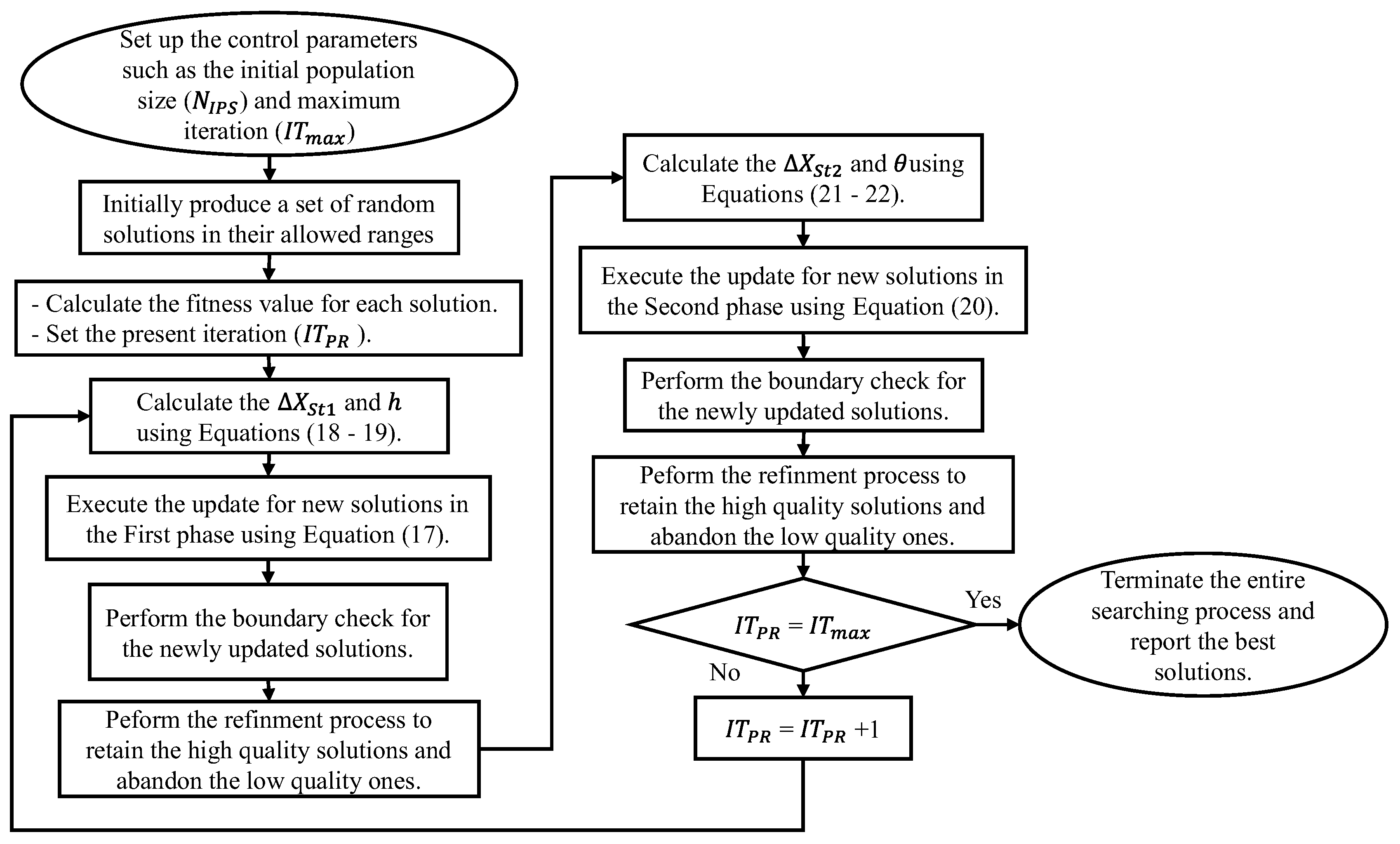
Figure 1. The entire optimizing process of MSO.
Electronics 15 01674 g001
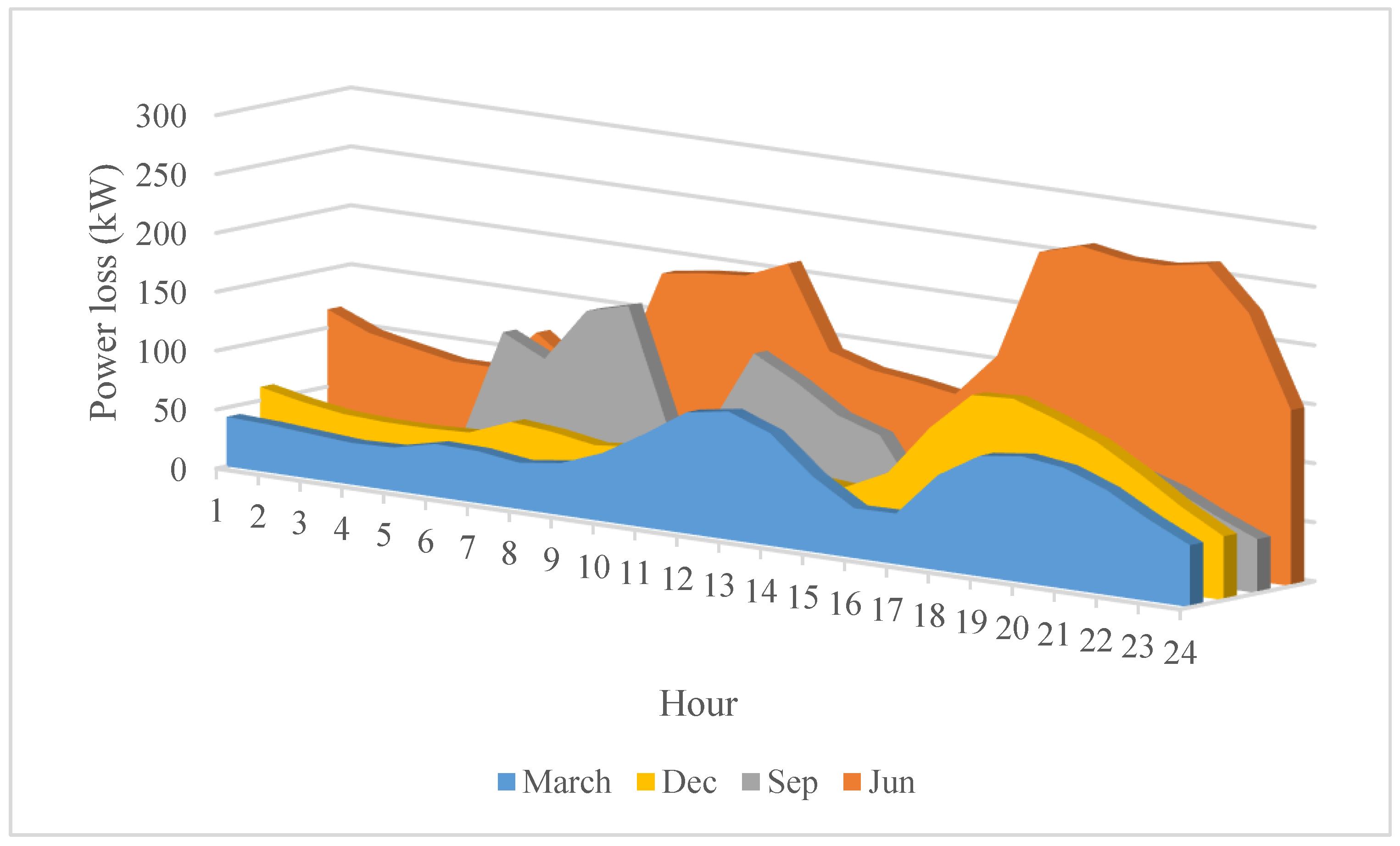
Figure 2. The entire optimizing process of PKO.
Electronics 15 01674 g002
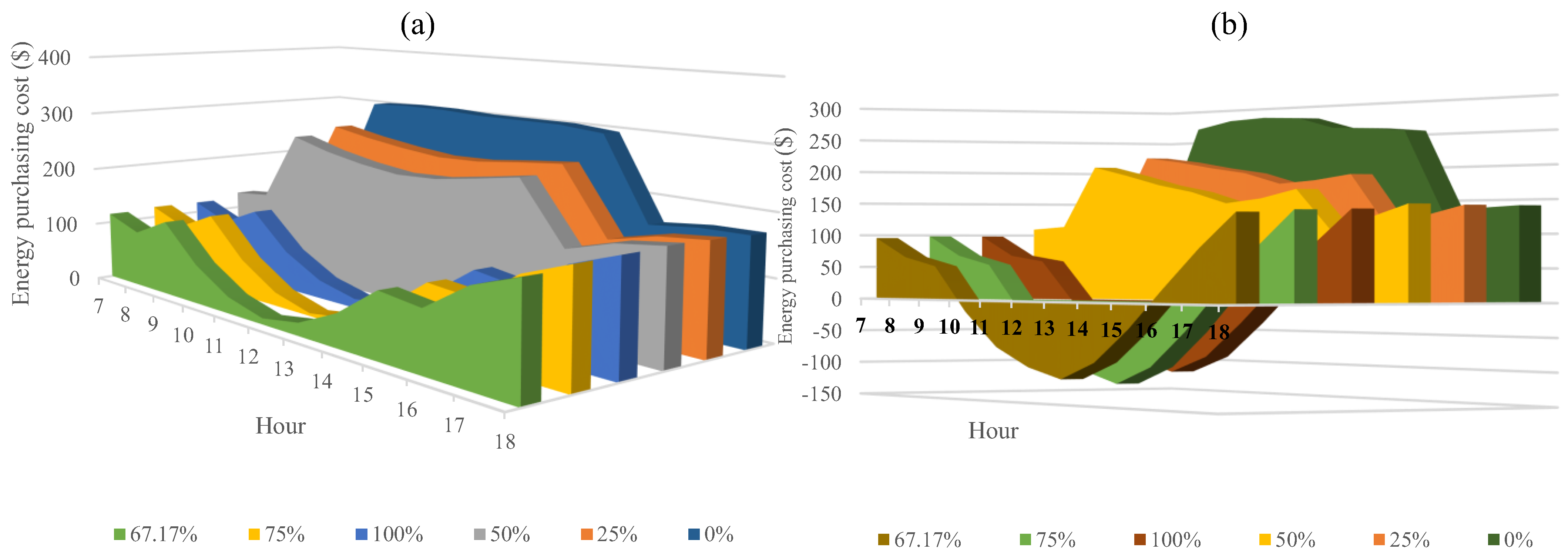
Figure 3. The illustration of the IEEE 69-node SDPN.
Electronics 15 01674 g003
Figure 4. The summary of 50 trial runs obtained by MSO and PKO for Case 1.
Electronics 15 01674 g004
Figure 5. The convergence curves achieved for Case 1: (a) the best run and (b) the worst run.
Electronics 15 01674 g005
Figure 6. The comparison of loss for Case 1.
Electronics 15 01674 g006
Figure 7. The voltage node profiles for Case 1.
Electronics 15 01674 g007
Figure 8. The summary of 50 trial runs obtained by MSO and PKO for Case 2.
Electronics 15 01674 g008
Figure 9. The convergence curves achieved for Case 2: (a) the best run and (b) the worst run.
Electronics 15 01674 g009
Figure 10. The comparison of loss for Case 2.
Electronics 15 01674 g010
Figure 11. The voltage node profiles for Case 2.
Electronics 15 01674 g011
Figure 12. The TRPL values corresponding to the four additional penetration levels and optimized penetration one.
Electronics 15 01674 g012
Figure 13. Load demand 24 h of an average day in March, June, September, and December.
Electronics 15 01674 g013
Figure 14. Electricity price per hour.
Electronics 15 01674 g014
Figure 15. The hourly energy cost of an average day in December.
Electronics 15 01674 g015
Figure 16. The energy cost savings from hour 6 to 18 in an average day of December.
Electronics 15 01674 g016
Figure 17. The active power supplied by the three PVUs at daytime in December.
Electronics 15 01674 g017
Figure 18. The power factor of the three PVUs at daytime in December.
Electronics 15 01674 g018
Figure 19. The hourly energy cost of an average day in September.
Electronics 15 01674 g019
Figure 20. The energy cost savings from hour 6 to 18 on an average day in September.
Electronics 15 01674 g020
Figure 21. The active power supplied by the three PVUs at daytime in September.
Electronics 15 01674 g021
Figure 22. The power factor of the three PVUs at daytime in September.
Electronics 15 01674 g022
Figure 23. The hourly energy cost of an average day in June.
Electronics 15 01674 g023
Figure 24. The energy cost savings from hour 6 to 18 in an average day of June.
Electronics 15 01674 g024
Figure 25. The active power supplied by the three PVUs at daytime in June.
Electronics 15 01674 g025
Figure 26. The power factor of the three PVUs at daytime in June.
Electronics 15 01674 g026
Figure 27. The hourly energy cost of an average day in March.
Electronics 15 01674 g027
Figure 28. The energy cost savings from hour 6 to 18 in an average day of March.
Electronics 15 01674 g028
Figure 29. The active power supplied by the three PVUs at daytime in March.
Electronics 15 01674 g029
Figure 30. The power factor of the three PVUs at daytime in March.
Electronics 15 01674 g030
Figure 31. The voltage profile achieved in the day with lowest radiation index in December.
Electronics 15 01674 g031
Figure 32. The voltage profile achieved in the day with highest radiation index in September.
Electronics 15 01674 g032
Figure 33. The voltage profile achieved in the day with highest radiation index in June.
Electronics 15 01674 g033
Figure 34. The voltage profile achieved in the day with highest radiation index in March.
Electronics 15 01674 g034
Figure 35. The TRPL value within 24 h in an average day of the four months.
Electronics 15 01674 g035
Figure 36. Energy cost of an average day for different penetration levels (a) December and (b) March.
Electronics 15 01674 g036
Table 1. The summary of the application of previous meta-heuristic algorithms in optimizing the placement of PVU to different case studies.
Ref. No.Considered
System
Main Objective FunctionApplied AlgorithmAchievement
[11]IEEE 33-bus, 69-bus, and 118-bus radial distribution networks-Maximize DG penetration
-Minimize real power loss
Quasi-Oppositional Chaotic Symbiotic Organisms Search (QOCSOS)The application of QOCSOS have resulted in the significant reduction in real power losses across all three test systems.
[12]IEEE 33-bus and 69-bus radial distribution networksMinimizing power lossQuasi-Oppositional Swine Influenza (QOSIA)Power loss reduction and voltage profiles have been largely improved by the optimized placement of DGs.
[13]IEEE 33-bus, 69-bus, and 136-bus (practical Brazil) radial distribution systems-Minimize active power loss, voltage deviation, and maximize voltage stability indexStudent Psychology-Based Optimization (SPBO)The optimization of designed parameters to DG has resulted in the best values of the considered objective function with multiple load model types.
[14]IEEE 33-bus and 69-bus distribution networksMinimize power lossParticle Swarm Optimization (PSO)Reduced power losses and improved voltage profile with multiple DG types simultaneously placed.
[15]IEEE 33-bus, 69-bus, and 118-bus radial distribution systems-Minimize power loss and voltage deviation,
-Maximize voltage stability index
Multi-objective Quasi-Oppositional Teaching Learning Based Optimization (MOQOTLBO)Provide a better Pareto-optimal solutions for DG placement across multiple network sizes.
[16]IEEE 33-bus and 69-bus radial distribution systemsMinimize power losses and maximize net cost savingsJaya Algorithm (JA)- Improved techno-economic benefits with the optimal placement of DGs.
- Clarify the effectiveness of JA and the other optimization algorithm.
[17]IEEE 33-bus radial distribution network (with reconfiguration)-Minimize power lossArtificial Ecosystem Optimization (AEO)Reduced power losses through simultaneous DG placement and network reconfiguration.
[18]IEEE 33-bus, 69-bus, and 85-bus radial distribution networks-Minimize power loss, operating cost;
-Maximize voltage stability
Enhanced Coyote Optimization Algorithm (ECOA)-Provide the optimal DG placement solution for the considered objective function.
- Proving the superiority of ECOA compared to its original version and many previous methods.
[19]IEEE 69-bus radial distribution system (with network reconfiguration)-Minimize active power loss
-Improve substation power factor and voltage profile with
RAO-3Significant active power loss reduction (up to ~90%) with improved voltage profile accommodating EV charging.
[20]IEEE 33-bus and 69-bus radial distribution systemsMinimize total power losses Sine Cosine Algorithm (SCA)Improved efficiency of the grid with significant active power loss reduction provided by the optimized placement of PVDGs.
[21]Off-grid system for Lavan Island, Iran (standalone microgrid)-Minimize Cost of Energy (COE);
-Minimize power losses;
maximize system reliability
Meta-heuristic algorithms (PSO, GA, etc.)Proposed a cost-effective and reliable solution of the standalone energy system for Lavan Island using hybrid PV/wind/fuel cell/tidal.
[22]Radial distribution system (IEEE 33-bus and/or practical network)Minimize power losses and voltage deviationChimp Sine Cosine Algorithm (ChSCA)Reduced power losses and minimized voltage deviation with optimal DER integration.
[23]Grid-connected photovoltaic and energy storage systemOptimizing capacity configuration of PV and energy storageMulti-objective Red-Billed Blue-Magpie Optimizer (MOBBMO)Improved Pareto-optimal capacity planning for coupled PV and energy storage systems.
[24]IEEE 33-bus and 69-bus power distribution systemsMinimize power lossesJellyfish Search Algorithm (JSA)Enhanced power system performance with significant active power loss reduction.
[25]IEEE 33-bus distribution network-Minimize power losses;
-Improve voltage profile
Rat Swarm Optimization (RSO)Improved voltage profile and reduced losses through joint optimal PV and DSTATCOM placement.
[26]Large-scale power system with renewable energy sources (standard ELD test systems)-Minimize total economic generation cost Zebra Optimization Algorithm (ZOA)Provide an efficient and competitive economic dispatch solution for large-scale systems with renewables.
[27]IEEE 33-bus radial distribution system-Minimize power lossesHorse Herd Optimization Algorithm (HOA)Effectively improve loss reduction and voltage stability.
[28]IEEE 33-bus and 69-bus distribution systems-Maximize efficiency of photovoltaic DG;
-Minimize power losses
-Improve voltage profile
Backtracking Search Optimization Algorithm (BSOAImproved efficiency of the grid with significant active power loss reduction provided by the optimized placement of PVDGs.
[29]IEEE 33-bus radial distribution systemMinimize power lossesDingo Optimization Algorithm (DOA)Optimal wind energy allocation with improved voltage stability and reduced power losses.
[30]IEEE 33-bus and 69-bus distribution grids (with nonlinear loads and renewable converters)Economic-technical-environmental optimization subject to harmonic distortion constraints (THD limits)Hippopotamus Optimization Algorithm (HOA)Reduced harmonic distortion while improving economic and environmental objectives simultaneously.
[31]IEEE 33-bus radial distribution systemMinimize power losses; Artificial Hummingbird Algorithm (AHA)Improved voltage profile and reduced losses by optimizing the rated parameters of DGs.
[32]IEEE 33-bus and 69-bus radial power distribution networks-Minimize active power losses Modified Ant Lion Optimization Algorithm (MALO)Reduced active power losses with optimal allocation of DGs.
[33]IEEE 33-bus and 69-bus distribution networks (with dynamic thermal rating)Minimizing voltage collapse proximity and thermal limitsFractional Order Whale Optimization Algorithm (FWOA)Enhanced voltage stability and renewable integration with improved system reliability.
[34]IEEE 33-bus distribution network (rural-urban setting) Dwarf Mongoose Optimization (DMO)Enhanced PV integration with significant power loss reduction in rural-urban distribution contexts.
Table 2. The optimal solution achieved by MSO and PKO in Case 1.
InformationMSOPKO
P P V U , 1 (kW)380.35821713.105
P P V U , 2 (kW)1718.607335.1528
P P V U , 3 (kW)526.5447611.5048
L o C P V U , 1 (node)1861
L o C P V U , 2 (node)6121
L o C P V U , 3 (node)1111
Total injected power (kW)2625.512659.763
Penetration Level (%)69.0923769.99375
Table 3. The optimal solution achieved by MSO and PKO in Case 2.
InformationMSOPKO
P P V U , 1 (kW)563.758375.3062
P P V U , 2 (kW)1668.9331676.46
P P V U , 3 (kW)351.0512500.7051
Q P V U , 1 (kVAr)349.8134251.5938
Q P V U , 2 (kVAr)1204.1591195.523
Q P V U , 3 (kVAr)229.3838349.162
P F P V U , 1 0.85280.8313
P F P V U , 2 0.81050.8151
P F P V U , 3 0.83740.8201
L o C P V U , 1 (node)1118
L o C P V U , 2 (node)6161
L o C P V U , 3 (node)2111
Total injected power (kW)2583.7422552.471
Total injected power (kVAr)1783.3561796.279
P penetration level (%)67.99367.170
Q penetration level (%)66.29666.776
Table 4. The optimal solution achieved in the four penetration levels.
Penetration25%50%75%100%
P P V U , 1 (kW)2783223971446
P P V U , 2 (kW)1013671665541
P P V U , 3 (kW)57112127891814
Q P V U , 1 (kVAr)246.06233.09351.411265.65
Q P V U , 2 (kVAr)89.06264.441473.19462.59
Q P V U , 3 (kVAr)505.771073.34130.651533.35
L o C P V U , 1 (node)65211849
L o C P V U , 2 (node)63656216
L o C P V U , 3 (node)6262962
Total injected power (kW)950190128513801
Total injected power (kVAr)840.891570.871955.253261.59
Table 5. Comparison among the five cases for an average day in December.
Case25%50%75%100%67.17%Base Case
Total energy injected by the grid (kWh/day)55,313.1455,355.3255,481.0355,222.8255,496.0656,172.7978
Total energy injected by PVUs (kWh/day)3675.3244545.42610,959.336966.6869966.312-
Demand (kWh/day)53,744.1653,744.1653,744.1653,744.1653,744.1653,744.16
Loss (kWh/day)1568.9781611.1621736.8651478.6561751.9042428.6378
Total Energy cost ($/day)3692.6853564.3012212.3442260.8492219.5784090.769
Total EC reduction ($/day)398.084526.4681878.4251829.9201871.191-
Total EC reduction (%)9.7312.8745.9244.7345.74-
Rank541326
Table 6. Comparison among the five cases for an average day in March.
Case25%50%75%100%67.17%Base Case
Total energy injected by the grid (kWh/day)48,986.7849,030.8649,109.5949,022.0849,253.7449,562.551
Total energy injected by PVUs (kWh/day)4954.7246084.12714,816.6519,759.7513,642.93-
Demand (kWh/day)47,688.4847,688.4847,688.4847,688.4847,688.4847,688.48
Loss (kWh/day)1298.3041342.381421.1061333.5991565.261874.071
Total EC ($/day)3068.0152880.7381082.9371189.3391100.133625.675
Total EC reduction ($/day)557.660744.9382542.7382436.3362525.545-
Total EC reduction (%)15.3820.5570.1367.2069.66-
Rank541326
Disclaimer/Publisher’s Note: The statements, opinions and data contained in all publications are solely those of the individual author(s) and contributor(s) and not of MDPI and/or the editor(s). MDPI and/or the editor(s) disclaim responsibility for any injury to people or property resulting from any ideas, methods, instructions or products referred to in the content.