Article

Bidirectional Dual Active Bridge Converter with Extended Voltage Range for HEMS Applications

Department of Electronic Engineering, University of Valencia, 46100 Valencia, Spain
*
Author to whom correspondence should be addressed.
Electronics 2026, 15(7), 1391; https://doi.org/10.3390/electronics15071391
Submission received: 26 February 2026 / Revised: 22 March 2026 / Accepted: 25 March 2026 / Published: 26 March 2026

Abstract

The wide voltage range of energy storage batteries, as currently required in the electric vehicle industry, presents significant challenges for the optimal design of the dual active bridge (DAB) converters used in bidirectional DC–DC (BCD) plug-in electric vehicle (PEV) chargers and home energy management systems (HEMS) applications. This article proposes a DAB converter with an enhanced single-phase-shift (ESPS) modulation that extends the operating voltage range while maintaining zero-voltage-switching (ZVS) conditions by including a DC-blocking capacitor and modifying the trigger sequence of the bridge converter on the secondary side. The operational modes of this modulation scheme are presented, and a control strategy is developed to extend the ZVS range. To validate the concept, a 3.7 kW, 100 kHz prototype is designed and tested, interfacing a 400 V DC bus with a 400–800 V battery. Using 1200 V silicon carbide (SiC) devices, the prototype achieves a peak efficiency of 95.5%.

1. Introduction

The continuous growth in electricity consumption, together with increasing environmental concerns, has created new challenges for the design and operation of modern power systems. Improving energy utilization in residential environments has therefore become an important objective in order to reduce environmental impact and maintain stable grid operation. Home energy management systems (HEMS) provide an effective solution by optimizing energy consumption according to user demand, electricity tariffs, and available generation resources. These systems enable improved integration of renewable generation while helping to reduce operational costs [1]. In addition to managing household loads, an effective HEMS must coordinate energy storage systems (ESS) and plug-in electric vehicles (PEVs). Such coordination is essential to mitigate peak power demand, address the intermittent nature of renewable generation, regulate charging schedules, and reduce energy exchange with the grid. Furthermore, when surplus renewable energy is available, controlled energy export to the grid may also be enabled.
A typical HEMS architecture is illustrated in Figure 1 [2]. In this configuration, multiple power electronic converters are interconnected through a common DC bus. The battery of a plug-in electric vehicle is connected to the DC bus through a bidirectional DC–DC converter, allowing for both charging and discharging operation. In a similar manner, a stationary battery used for residential storage can be connected through another bidirectional converter, forming the energy storage system (ESS).
Renewable energy sources (RES), such as photovoltaic (PV) systems, interface with the DC bus through unidirectional DC–DC converters. The DC bus is linked to the low-voltage grid (LVG) through a bidirectional converter. In most European residential installations, the LVG consists of a single-phase 230 V, 50 Hz supply of 7.4 kW (32 A) [3].
Within this system architecture, DC–DC converters play a central role. For the considered power levels, the dual active bridge (DAB) topology is widely adopted [4]. This converter operates at medium switching frequencies, typically between 20 kHz and 150 kHz, and uses ZVS to reduce the switching losses and electromagnetic interference (EMI), thus improving its overall efficiency.
Conversely, the electric vehicle (EV) industry is undergoing a progressive transition toward 800 V electrical architectures, which have been validated in commercial applications and are currently in an advanced stage of adoption, as reported by IDTechEx in its analysis of power electronics for electric vehicles [5]. These 800 V systems provide significant structural and performance advantages; however, their deployment necessitates a comprehensive redesign of the vehicle powertrain, power electronic subsystems, and battery charging infrastructure.
Increasing the battery voltage from 400 V to 800 V reduces the system current, thereby lowering the conduction losses and wiring harness volume while improving charging times, leading to an enhanced overall EV performance [6,7]. However, this transition imposes additional requirements on power converters, which must operate over an extended voltage range to ensure compatibility with both 400 V and 800 V battery systems. In this context, DAB converters implemented with SiC devices are particularly well suited, as their inherent bidirectional power flow capability, combined with the high blocking voltage, fast switching speed, and low switching losses of SiC semiconductors, enables high power density and efficiency across a wide operating range, meeting the requirements of HEMS applications.
Several authors have proposed DAB design solutions to extend the operating voltage range while preserving ZVS operation, either through the use of input-parallel–output-series DAB (IPOS-DAB) topologies [8] or via advanced modulation techniques [8]. To simplify converter control, this work presents an enhanced single-phase-shift (ESPS) based on a single-phase-shift (SPS) modulation [9], which incorporates a DC decoupling capacitor into the circuit [10].
This paper presents the operational principles of the proposed modulation, demonstrates soft-switching area mapping, addresses the selection of the DC blocking capacitor, reports experimental results from a 3.7 kW prototype, and concludes with the main findings.

2. Methods and Materials

2.1. ESPS-DAB Converter Configuration

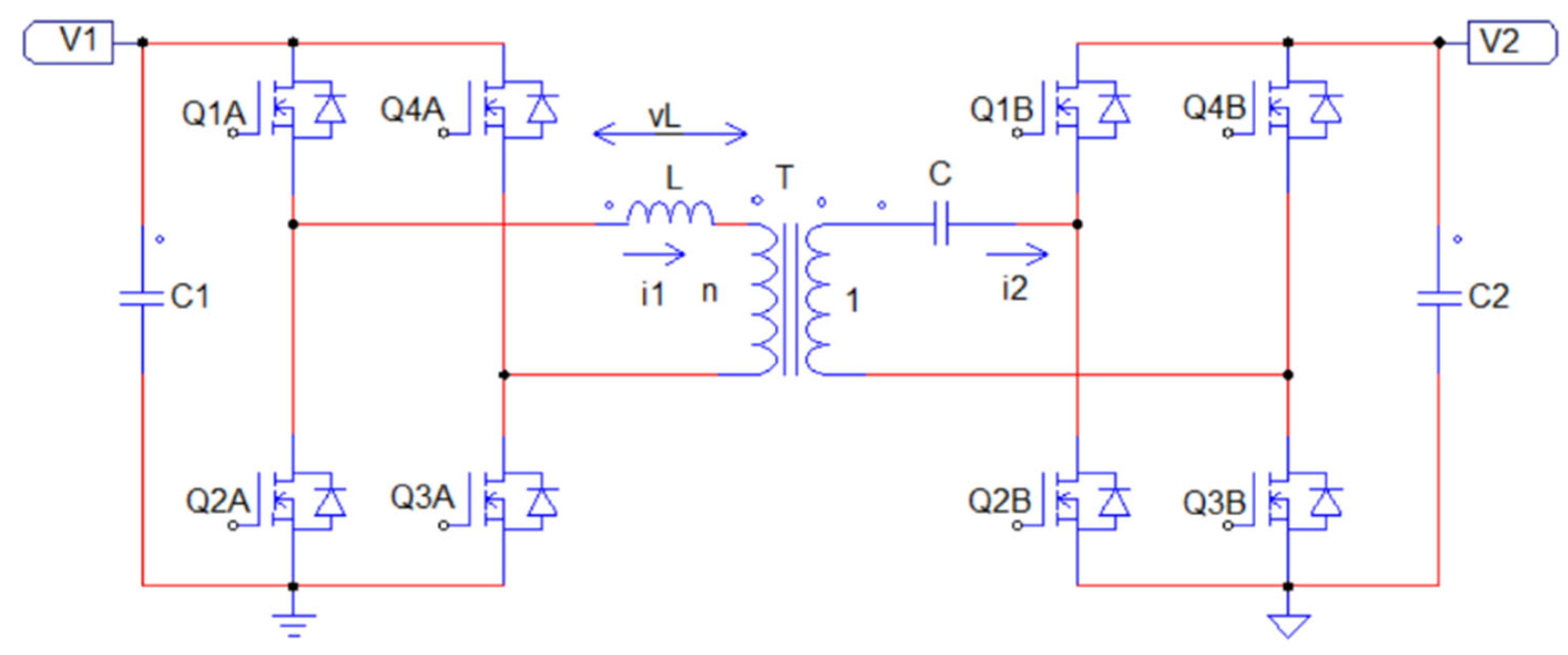
A simplified representation of the proposed bidirectional converter-based DAB topology is presented in Figure 2. The converter consists of two actively controlled full-bridge stages located on the primary and secondary sides, which are interconnected through a high-frequency isolation transformer, T. This transformer ensures galvanic isolation while adapting the voltage levels between the input and output DC V1 and V2. Energy transfer between the two bridges occurs through the series inductance L, which includes the transformer leakage inductance and acts as the main energy transfer element of the converter. Under single phase shift (SPS) control, both bridges operate with a fixed duty cycle of 50%, and the power flow is regulated through the phase displacement ϕ between their switching signals. The capacitor C1 forms the input DC-link capacitor associated with the source voltage V1, while C2 operates as the output filtering capacitor on the secondary side. When a battery is connected at terminal V2, the converter transfers energy from C1 to C2 during the charging process. In the opposite case, when the battery supplies energy, the power transfer direction is reversed. An additional capacitor C is inserted at the input of the secondary bridge. Its purpose is to block the DC component that appears when the proposed control strategy is applied. The role of this capacitor will be discussed in later sections. All switching devices used in the converter are SiC MOSFETs, and the resulting configuration is referred to as the ESPS-DAB converter. The main design parameters of the prototype are summarized in Table 1.

2.2. Analysis of the SPS-DAB Converter

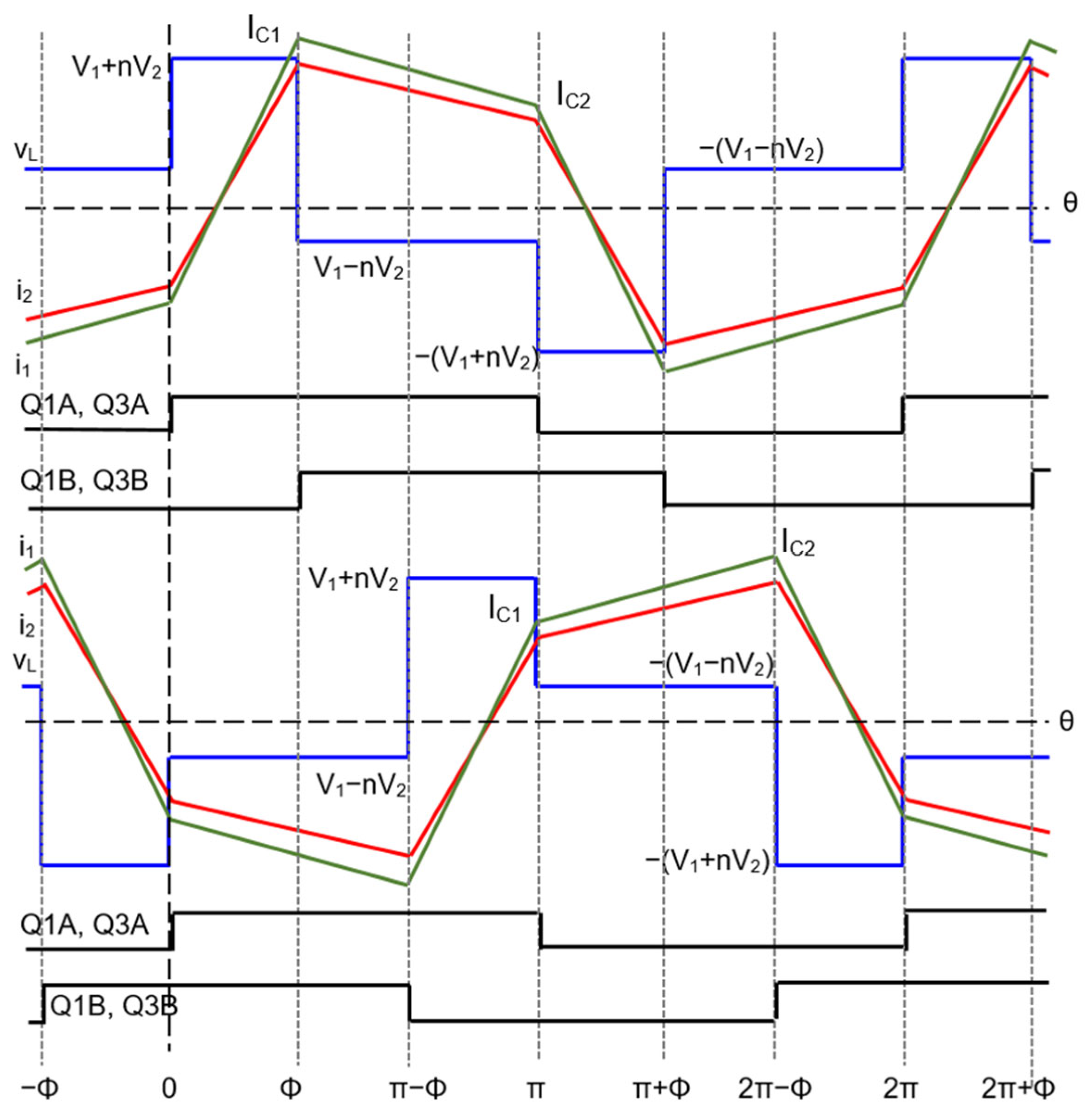
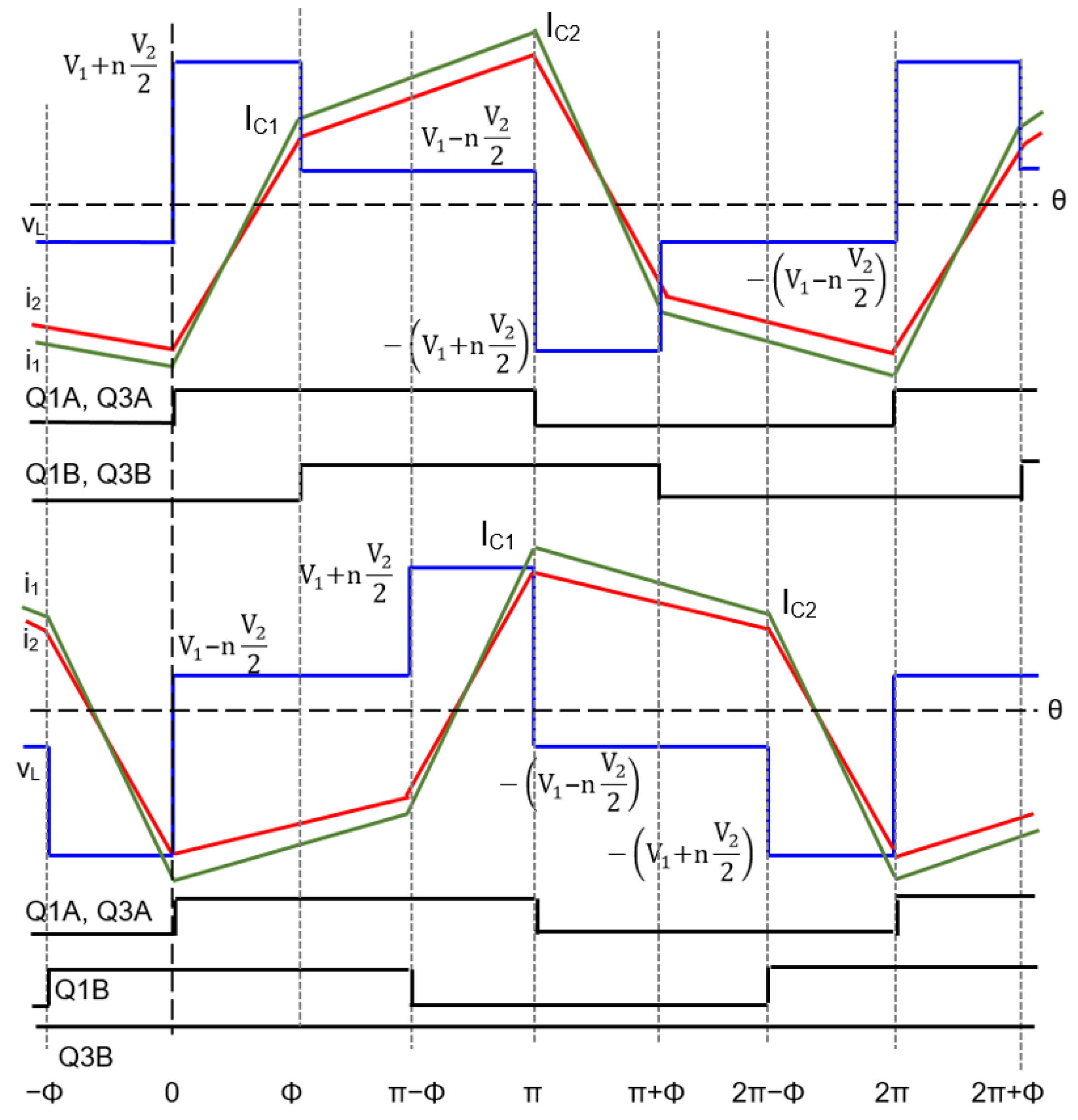
The operation of the conventional SPS-DAB converter can be studied using the waveforms derived from the circuit in Figure 2 [11], assuming that capacitor C is short-circuited. Figure 3 illustrates the simplified voltage and current waveforms for both charging (top) and discharging (bottom) modes. In these waveforms, the black traces correspond to the gate signals of transistors Q1A, Q3A, Q1B and Q3B on the secondary bridge. The complementary switches operate with a 180° phase shift, relative to their counterparts. The voltage of the inductance L is represented in blue, while the current of the primary bridge is shown in green. The red waveform corresponds to the current entering the secondary bridge. The sign of the phase shift ϕ determines the power flow direction. A positive phase shift corresponds to the battery charging operation, whereas a negative phase shift results in discharging.
The active power transferred between both bridges can be determined from the average value of the instantaneous power, calculated as the product of the voltage and current [12]:
P = n V 1 V 2 ϕ ( π ϕ ) π L ω .
The maximum transferable power occurs when the phase shift reaches 90°. To guarantee that the rated power is delivered at the minimum output voltage, the inductance L must satisfy
L = n V 1 V 2 min 8 P max f .
Similarly, the transformer turns ratio can be determined using
n = 8 P max f   L V 1 V 2 min .
These equations make it possible to design the transformer with n = 0.765 and a leakage inductance of L = 31 µH. The high efficiency and reduced electromagnetic interference require that switching transitions occur under zero-voltage switching (ZVS) conditions. This condition is satisfied when the switching current at turn-on is negative when ϕ = 0, which establishes a minimum phase shift value
ϕ min = π   ( n V 2 V 1 ) 2 n V 2 .
Consequently, the region where ZVS is guaranteed becomes
ϕ min < ϕ π / 2 .
By substituting (4) into (1), the minimum output power required for ZVS operation is obtained.
P min = V 1 ( n 2 V 2 2 V 1 2 ) 8 n L V 2 f ,
and therefore, the range of power transfer under ZVS operation can be expressed as
P min < P P max .
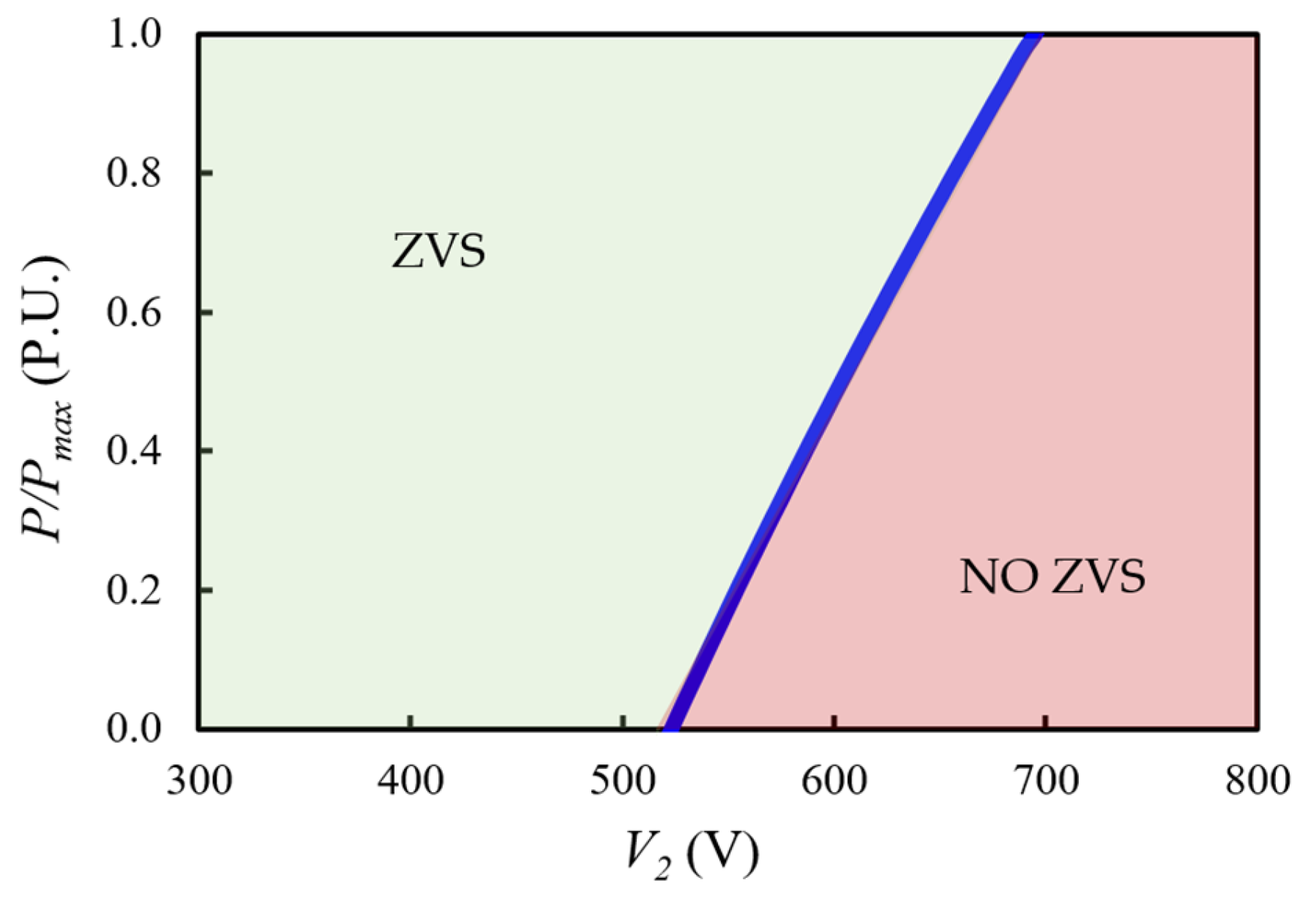
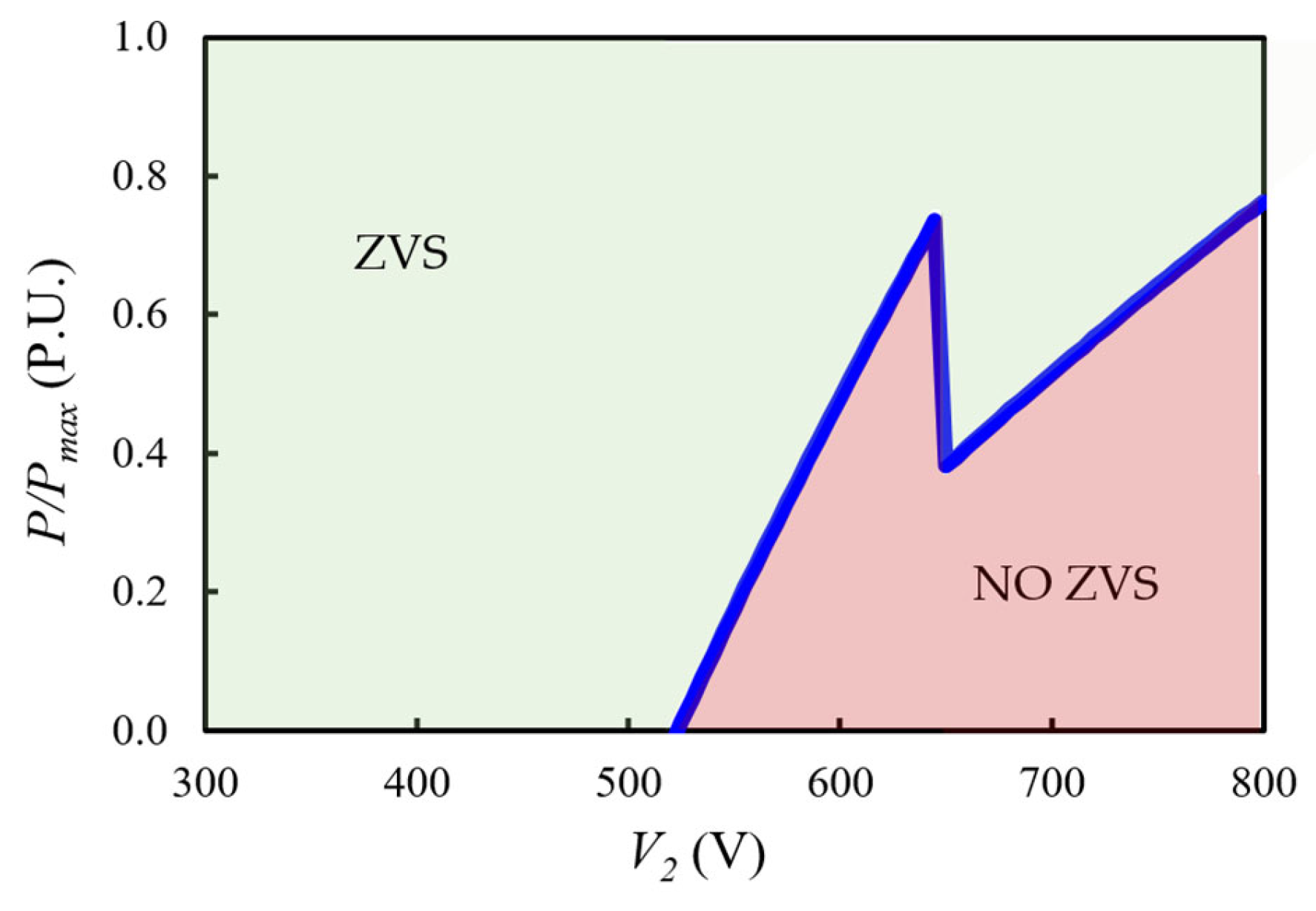
Based on (7), Figure 4 was obtained, showing the distribution of P and V2 for which the ZVS condition is fulfilled in green.
The root mean square (RMS) current at the output of the primary-side bridge and the switching current of its transistors [12] are as follows:
I 1 r m s = π 2 3 L ω V 1 2 + 2 n V 1 V 2 4 ϕ 3 π 3 + 6 ϕ 2 π 2 1 + n 2 V 2 2 ,
I C 1 = π V 1 n V 2 ( π 2 ϕ ) 2 L ω ,
I C 2 = n π V 2 V 1 ( π 2 ϕ ) 2 L ω .
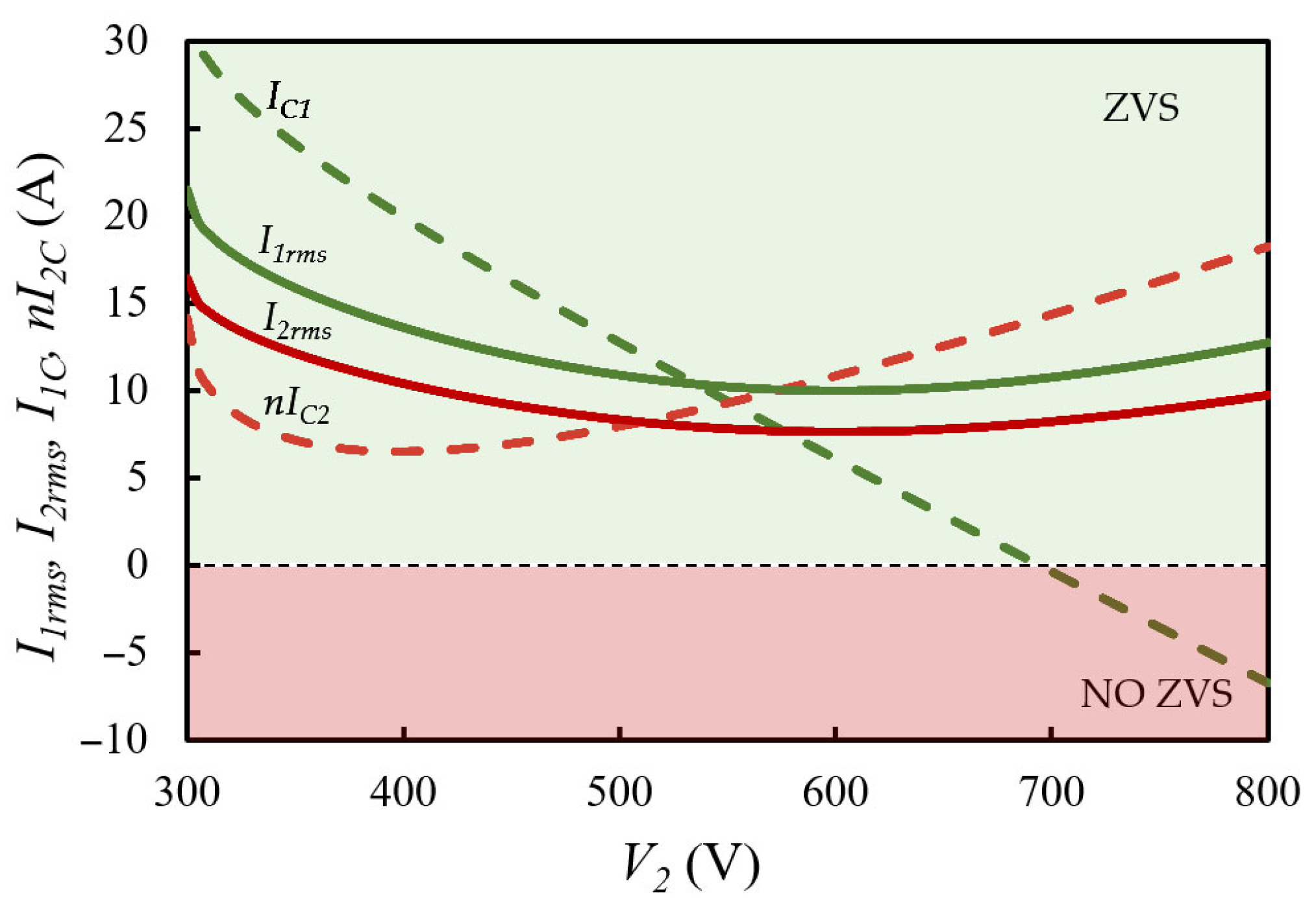
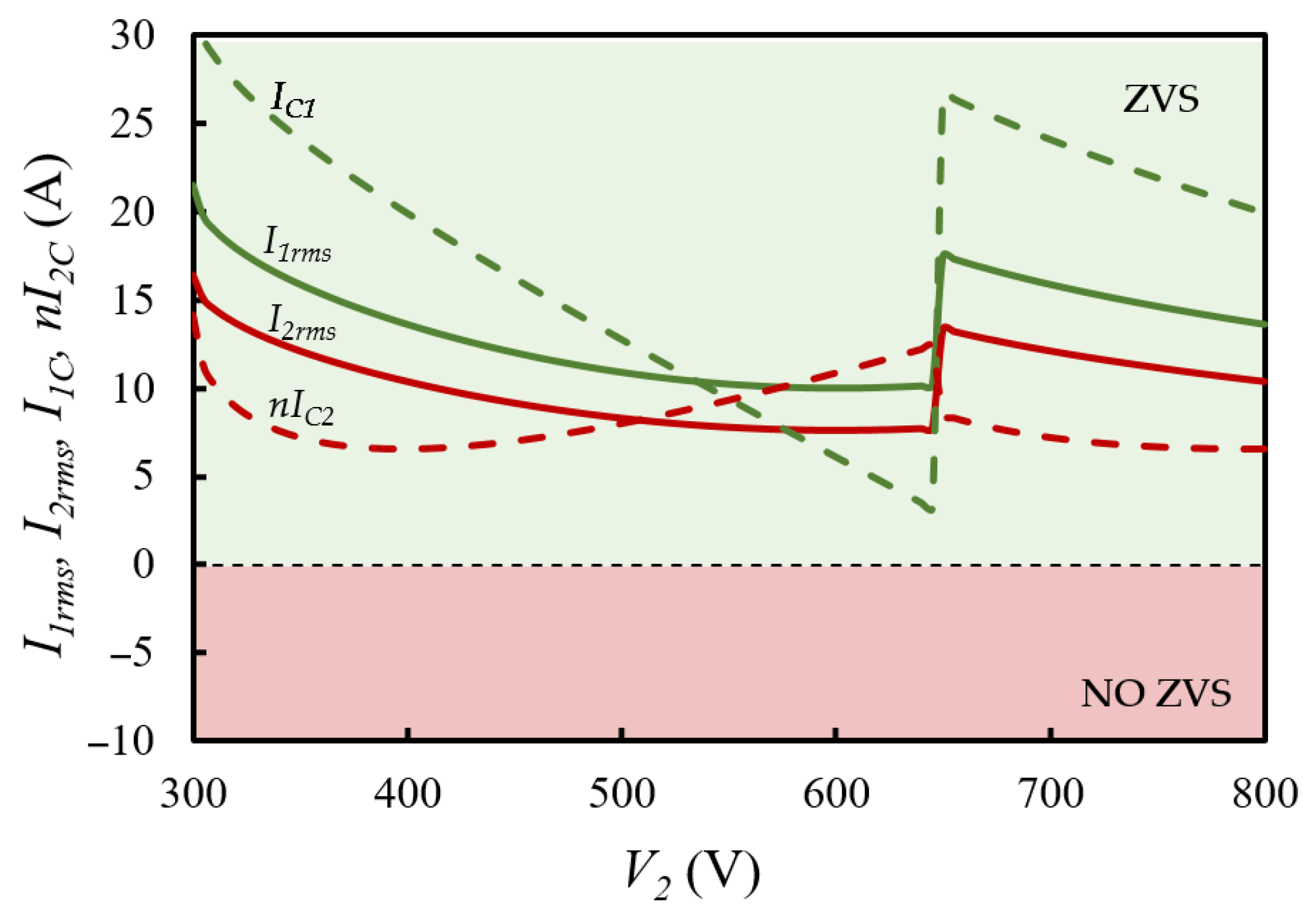
Figure 5 shows the variation in rms currents of the primary and secondary bridges, as well as the value of the transistor’s commutation current, as a function of the voltage V2 at maximum output power (3.7 kW). It should be noted that for voltages above 690 V, the condition in (5) is no longer satisfied; the commutation current IC1 becomes negative and, therefore, the commutation is capacitive (i.e., non-ZVS), leading to significant on-state losses.

2.3. Analysis of the ESPS-DAB

The ESPS-DAB circuit, which must include the DC-blocking capacitor C, extends the ZVS operating range by modifying the gating sequence of the second bridge without changing the circuit component values. The ESPS-DAB operates as an SPS-DAB up to a certain value of V2, beyond which the transistor’s trigger sequence is modified by leaving transistor Q3B always in ON and Q4B in OFF, thereby obtaining the waveforms shown in Figure 6, which are analogous to those in Figure 3, which satisfy the ZVS condition.
Now, the minimum power that defines the boundary of ZVS region is
P min = V 1 ( n 2 V 2 2 V 1 2 ) 16 n L V 2 f ,
The change in the trigger sequence must be carried out when the output voltage is lower than the limit value obtained from Figure 4 (690 V), in order to extend the ZVS operating range as much as possible. A value of V2 = 650 V satisfies the above conditions. Now, a new ZVS operating map is obtained for the ESPS-DAB converter combining (6) and (11), as illustrated in Figure 7. It can be observed that the ZVS operating limit up to 650 V is identical to that of the SPS-DAB converter shown in Figure 4. However, for values above 650 V, the ZVS boundary changes, extending the operating range while maintaining ZVS at high power levels for 800 V, which was not achievable with the conventional single-phase-shift control.
Now, when the trigger sequence is modified, the voltage applied to the secondary side is reduced by half; therefore, in order to maintain the power, the current must be doubled, resulting in a primary-side output root mean square (RMS) current given by the following:
I 1 r m s * = I 1 r m s if V 2 < 650   V 2 I 1 r m s if V 2 > 650   V
This extension of the ZVS operating range is achieved at the expense of an increase in the rms and switching current in both bridges, as shown in Figure 8. Nevertheless, with an appropriate selection of semiconductor devices, the extension of the ZVS range enables a significant improvement in efficiency, as will be discussed in the following section, as well as a substantial reduction in EMI emissions at high power levels across the entire output voltage range.

2.4. Design of the DC Blocking Capacitor

There are three main criteria for designing the DC blocking capacitor [13]. First, it must be capable of conducting the maximum secondary RMS current, Irms,max = 17 A (see Figure 8). Second, it must withstand half of the maximum secondary voltage, V2max = 800 V. Finally, the capacitance value must establish a resonant frequency with the transformer secondary leakage inductance L being at least two orders of magnitude (i.e., 100 times) lower than the switching frequency. Accordingly,
C 100 L ( 2 π   f ) 2 .
Based on these requirements, eighteen units of the SMD, MLCC, high voltage ceramic capacitor of 0.47 μF, 500 V with temperature coefficient XR7, were selected.

2.5. Selection of Power Transistors

Power electronic converters typically rely on two main semiconductor technologies: silicon insulated-gate bipolar transistors (IGBTs) and silicon-carbide (SiC) MOSFETs. While IGBTs have historically been widely used, SiC devices are increasingly preferred due to their higher switching speed, lower switching losses, and improved thermal characteristics. The superior thermal conductivity of SiC devices facilitates heat dissipation, enabling greater power density and potentially reducing the converter size and cooling requirements. In the implemented prototype, both the primary and secondary bridges are constructed using single-device switches. Based on the required voltage and current ratings, the C3M0032120K SiC MOSFET was selected. The main electrical parameters of this device are summarized in Table 2.

2.6. Loss Analysis

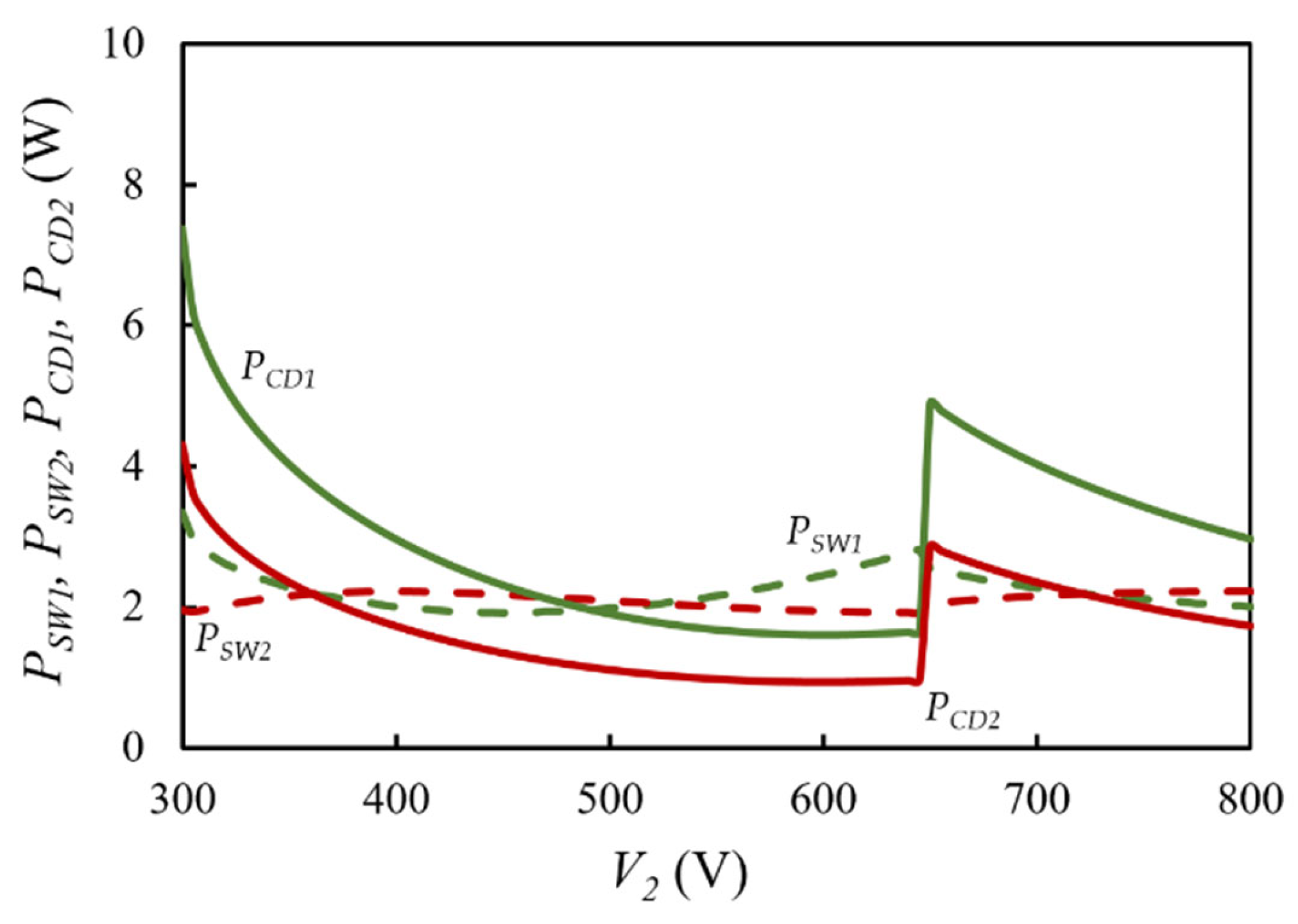
A comparative loss analysis was conducted for both SPS-DAB and ESPS-DAB converters. The study considers the conduction and switching losses of the transistors, while losses associated with passive components such as the transformer, capacitors, and conductors are not included. Since reverse current conduction occurs mainly through the MOSFET channel (except during dead times), diode conduction losses were neglected. The conduction losses of the primary and secondary bridge switches can be expressed as
P C D 1 = I 1 r m s 2 2 R D S o n ,
P C D 2 = n I 1 r m s 2 2 R D S o n .
Switching losses were estimated using the turn-on and turn-off energy curves provided by the manufacturer, which were approximated through polynomial expressions:
E o f f   = a   I C 2 + b   I C + c ,
E o n   = d   I C 2 + e   I C + g ,
where IC is the commutation current and the coefficients take the values shown in Table 3:
The commutation current takes different values for each converter and bridge configuration, depending on the switching condition, as summarized in Table 4.
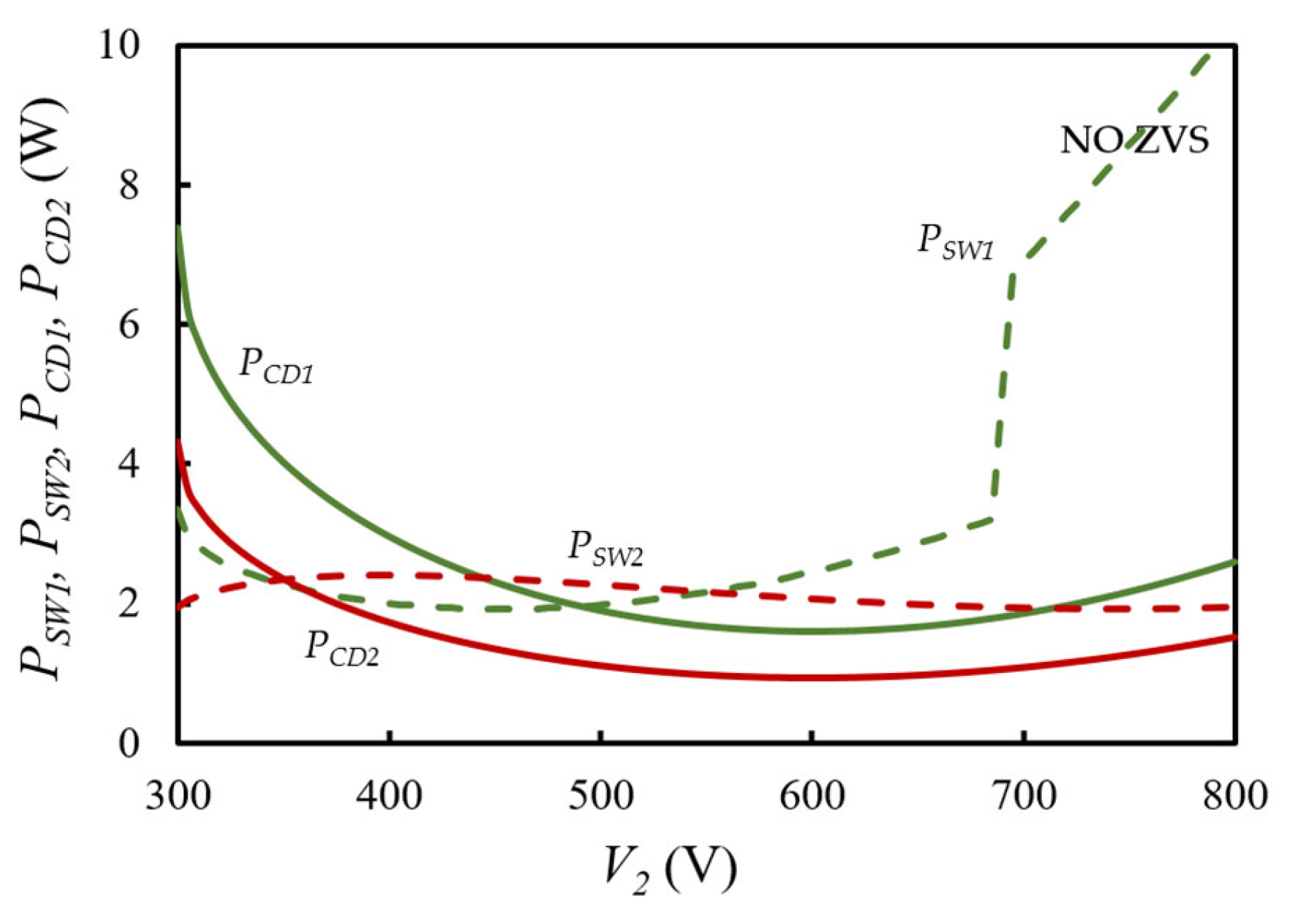
The turn-off switching losses for each transistor are obtained by multiplying the switching energy by the converter switching frequency. Figure 9 and Figure 10 present the calculated conduction and switching losses of the devices as a function of the secondary voltage for the rated power of 3.7 kW.

3. Result Analysis and Discussion

3.1. Calculated Results

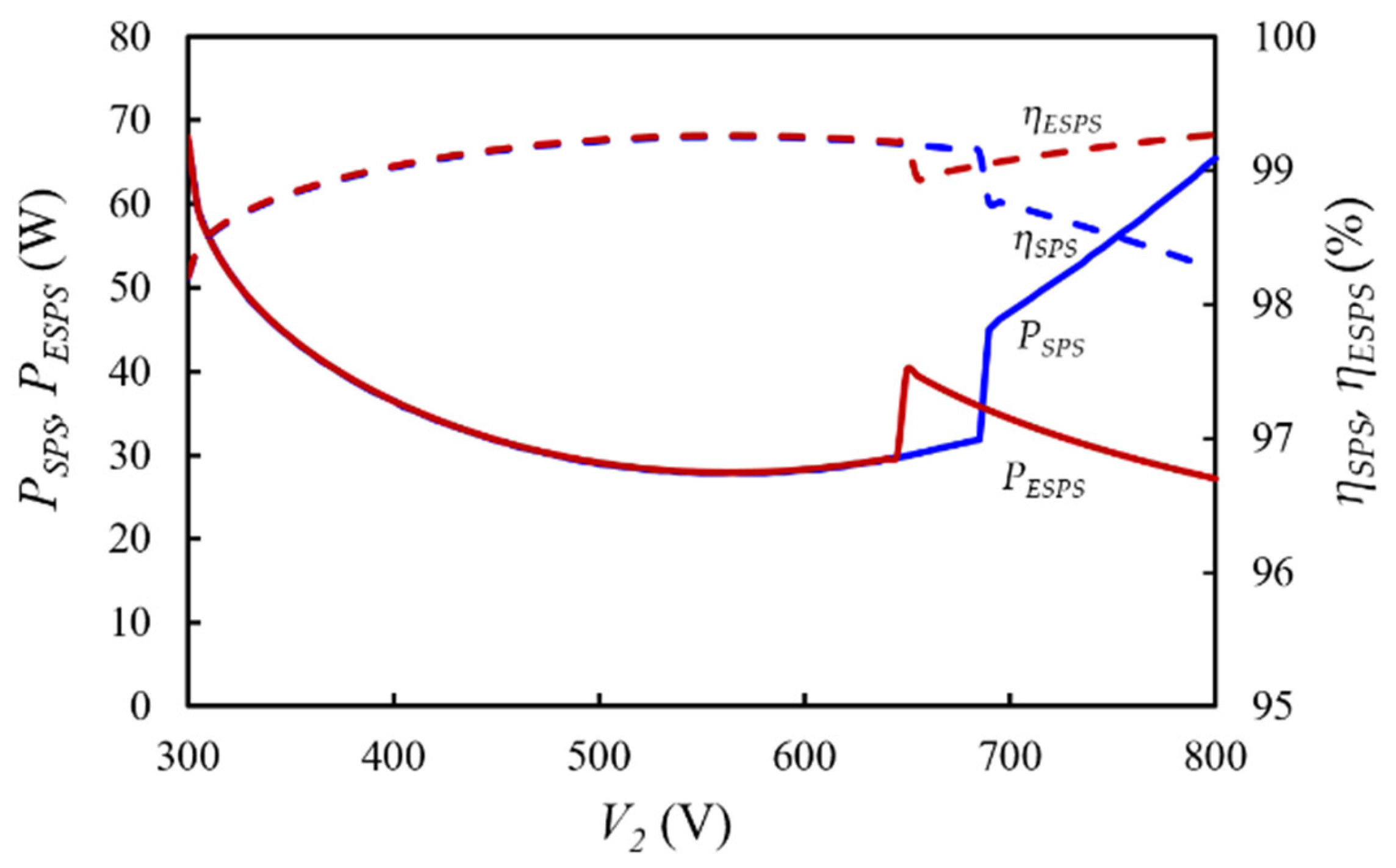
The total power loss of the converter is
P t o t =   4 P C D 1 + P S W 1 + 4 P C D 2 + P S W 2 ,
while the converter efficiency is calculated as
η = P o P o + P t o t .
A comparison of the calculated transistor power losses and efficiency for the SPS-DAB and ESPS-DAB converters is presented in Figure 11 for different values of the output voltage V2 at the rated output power of 3.7 kW. In the figure, solid curves represent the calculated power losses, whereas dashed curves correspond to the resulting efficiency values. The results associated with the conventional SPS-DAB converter are indicated in blue, while those corresponding to the proposed ESPS-DAB approach are shown in red. From this comparison, it can be observed that the ESPS-based control strategy leads to a moderate but consistent efficiency improvement, reaching approximately one percentage point at higher output voltage levels.

3.2. Experimental Validation

To verify the theoretical analysis, an experimental prototype of the ESPS-DAB converter rated at 3.7 kW was constructed and tested according to the design specifications summarized previously in Table 1.
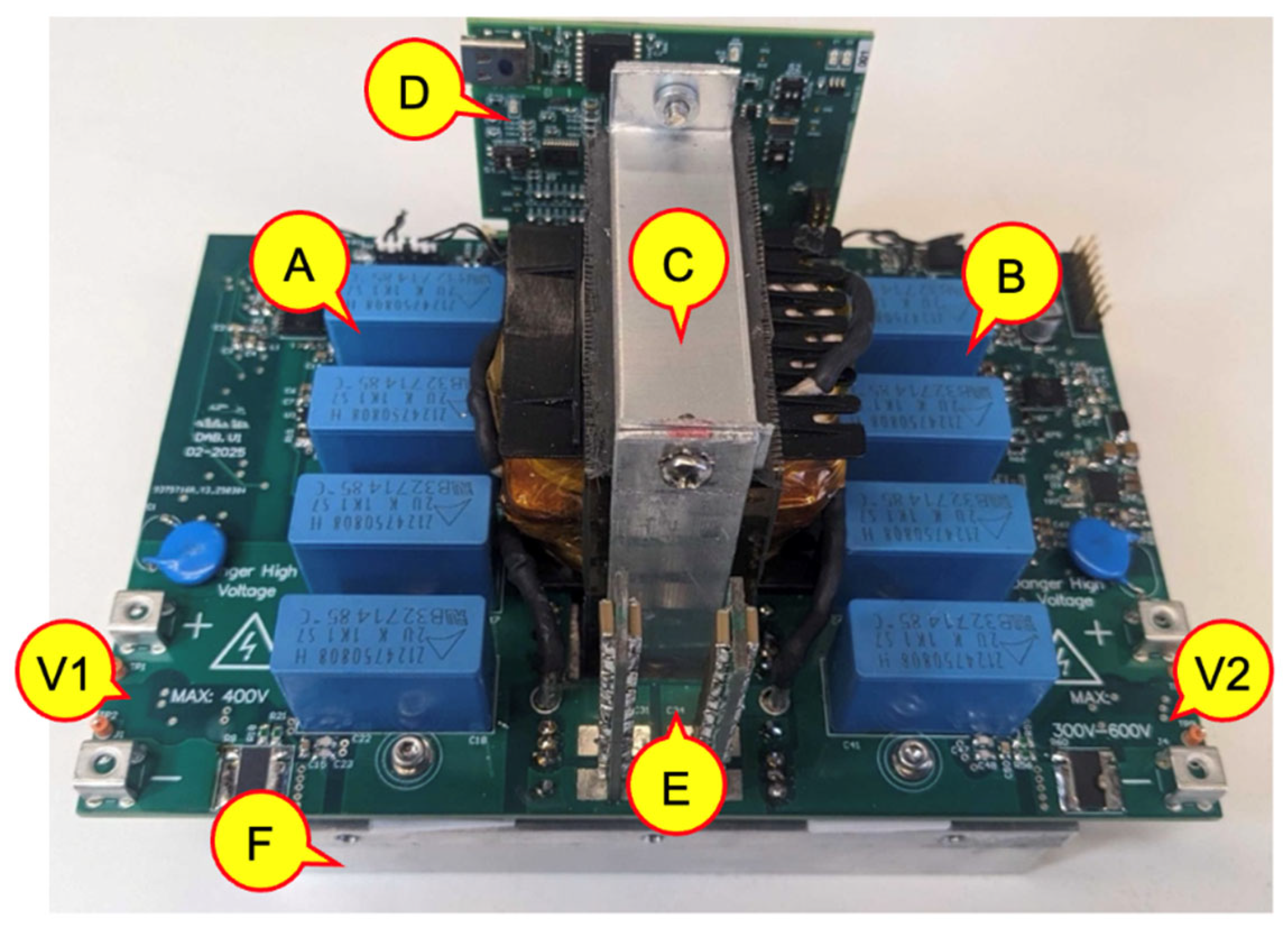
Both the primary and secondary bridges (A and B) were implemented as complete full-bridge modules, including current sensors, isolated gate-driver circuits, and auxiliary power supplies designed to withstand high common-mode transient immunity (CMTI) conditions. The input and output DC voltages V1 and V2 were generated using IT6012C-800-50 power supplies. A photograph of the developed prototype is shown in Figure 12, where the labeled elements correspond to those listed in Table 5.
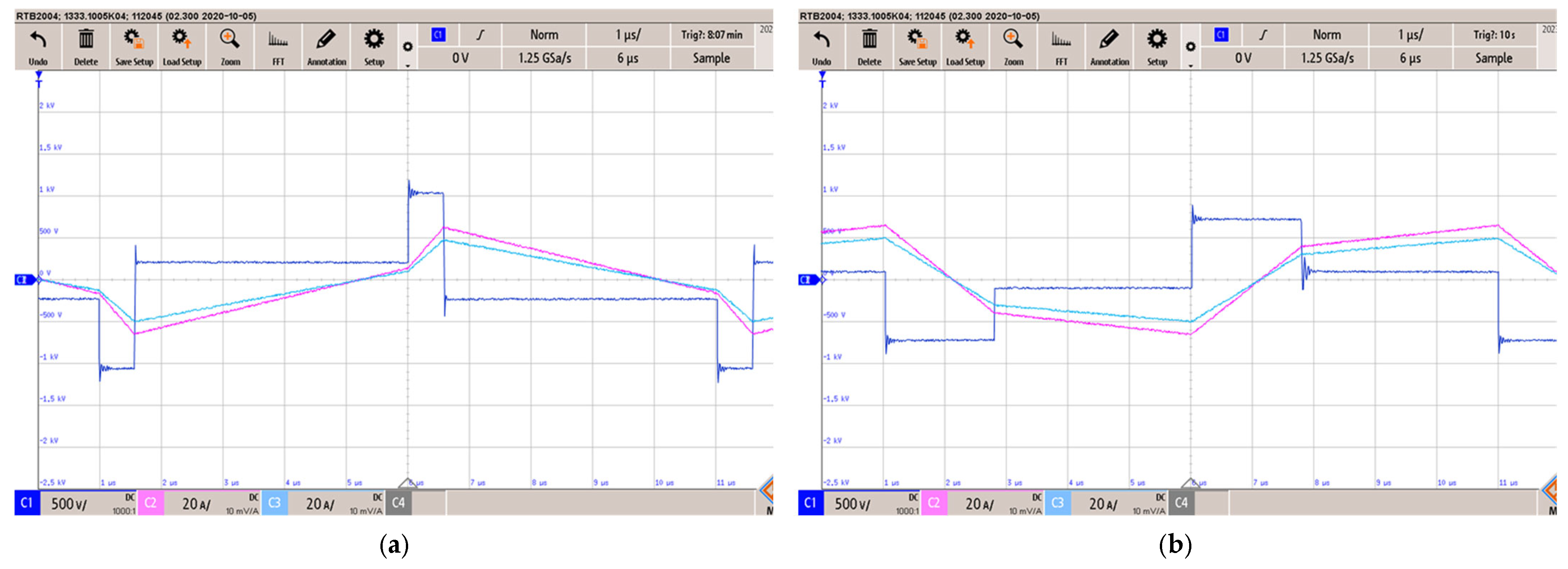
Oscilloscope measurements obtained during operation at rated power are shown in Figure 13. Figure 13a illustrates the waveforms for the conventional SPS-DAB converter operating in charging mode with V2 = 800 V. In this case, the switching transition occurs under non-ZVS conditions, resulting in capacitive turn-on behavior. By contrast, Figure 13b presents the waveforms for the ESPS-DAB converter under identical operating conditions. The modified control strategy successfully restores ZVS operation, as evidenced by the switching behavior observed in the measurements.
The measured signals include the following channels: C1 (dark blue)—voltage across the inductor L (500 V/div), C2 (magenta)—current of the primary bridge (20 A/div) and C3 (light blue)—current of the secondary bridge (20 A/div). The time scale of the measurements is 1 µs/div.
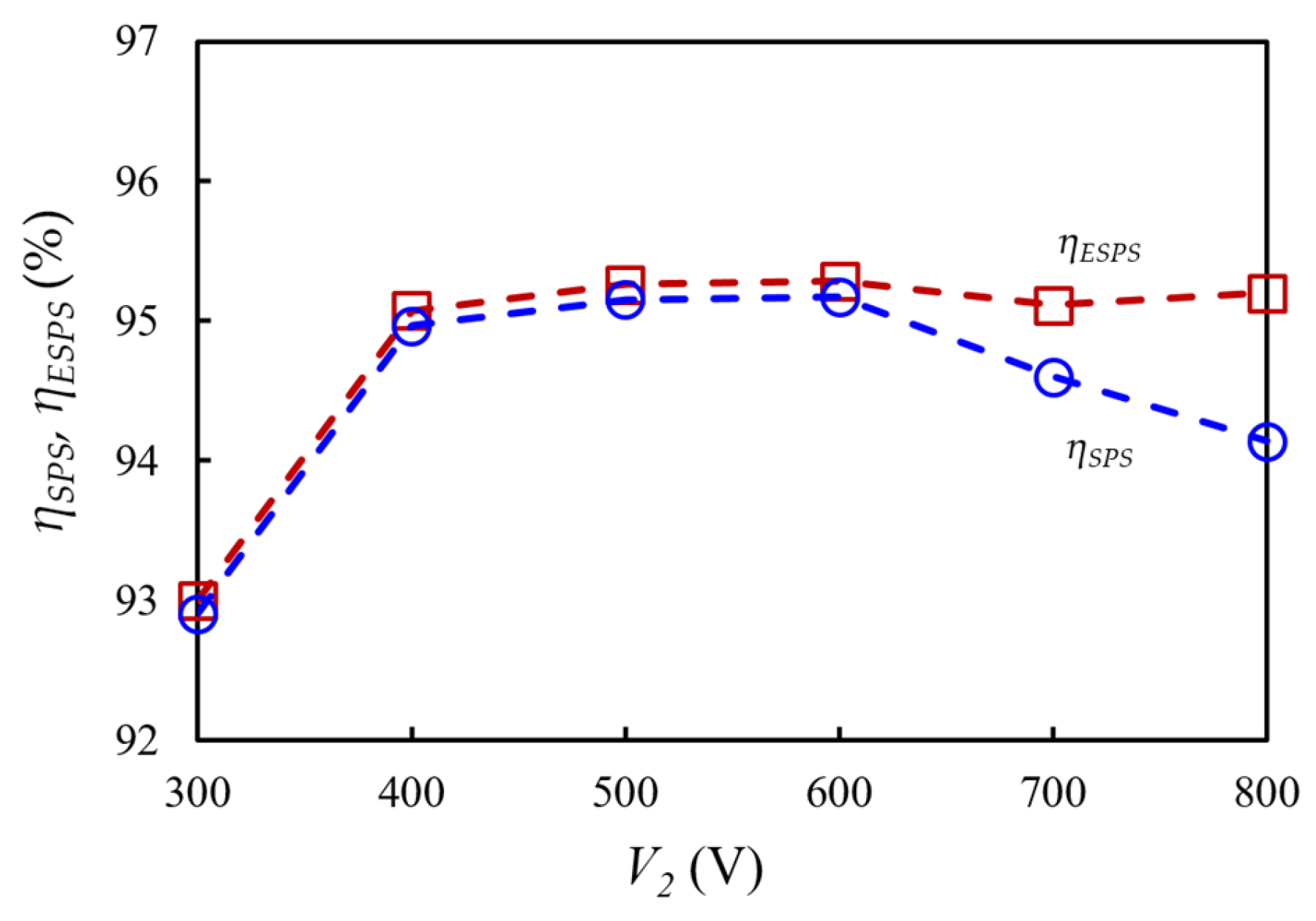
The experimentally measured efficiency of the converter operating in charging mode is presented in Figure 14, where the output voltage V2 is varied while maintaining a constant output power of 3.7 kW. Similar efficiency values were observed when the converter operated in discharging mode. In the figure, solid lines and markers represent experimental measurements, while colors indicate the modulation strategy used: blue for SPS-DAB and red for ESPS-DAB. A discrepancy of slightly more than three percentage points can be observed between the analytical predictions and the experimental results. This difference can be attributed to several factors, including: modeling simplifications, unaccounted losses in passive components (transformer, capacitors, and conductors), additional losses in control and sensing circuits, and measurement uncertainties.
Despite these differences, the relative efficiency improvement of approximately one percentage point obtained with the ESPS-DAB strategy is preserved, confirming the validity of the proposed approach.

4. Discussion and Conclusions

This article has presented a DAB converter that extends the operating voltage range while maintaining zero-voltage-switching (ZVS) conditions. The proposed solution relies exclusively on an enhanced single-phase-shift (ESPS) modulation strategy, which incorporates a DC decoupling capacitor into the circuit.
After a detailed analysis of the SPS-DAB operation, a comprehensive design procedure was developed, enabling the implementation of an ESPS-DAB converter for home energy management system (HEMS) applications.
A comparative analysis of converter losses demonstrated that the proposed modulation strategy provides improved performance, relative to the conventional SPS method, with an efficiency gain of approximately one percentage point.
The feasibility of the concept was validated experimentally, using a 3.7 kW prototype implemented with SiC MOSFET devices, which achieved efficiencies above 95%, which represents an improvement of approximately one percentage point compared to conventional SPS control and confirms the predicted performance enhancement. Although a 1% increase in efficiency may appear marginal, it is significant when aiming to achieve the highest possible energy efficiency in converters that already operate at relatively high efficiency levels. Moreover, operation under ZVS conditions reduces EMI emissions, thereby facilitating the EMC design of the converter.
Although a wide range of bidirectional DC–DC converter topologies exists, the proposed approach offers a simple implementation with a limited number of active components. While it may not represent the most advanced topology in terms of maximum efficiency or dynamic performance, the ESPS-DAB architecture provides a robust, reliable, and cost-effective solution, making it particularly suitable for HEMS applications.

Author Contributions

Conceptualization and methodology, V.E.; software, A.P. and V.P.; validation, J.J.; formal analysis, V.E.; resources, V.E.; data curation, A.P. and V.P.; writing, editing and visualization V.E.; supervision, V.E.; project administration and funding acquisition, V.E. All authors have read and agreed to the published version of the manuscript.

Funding

This research received no external funding.

Data Availability Statement

The data presented in this study are available on request from the corresponding author. The data are not publicly available due to privacy restrictions.

Conflicts of Interest

The authors declare no conflict of interest.

References

  1. Motta, L.L.; Ferreira, L.C.B.C.; Cabral, T.W.; Lemes, D.A.M.; Cardoso, G.d.S.; Borchardt, A.; Cardieri, P.; Fraidenraich, G.; de Lima, E.R.; Neto, F.B.; et al. General Overview and Proof of Concept of a Smart Home Energy Management System Architecture. Electronics 2023, 12, 4453. [Google Scholar] [CrossRef]
  2. Esteve, V.; Bellido, J.L.; Jordán, J. Efficiency Design of a Single-Phase Bidirectional Rectifier for Home Energy Management Systems. Electronics 2025, 14, 15. [Google Scholar] [CrossRef]
  3. Guo, R.; Meunier, S.; Protopapadaki, C.; Saelens, D. A review of European low-voltage distribution networks. Renew. Sustain. Energy Rev. 2023, 173, 113056. [Google Scholar] [CrossRef]
  4. Zhao, B.; Song, Q.; Liu, W.; Sun, Y. Overview of dual-active-bridge isolated bidirectional dc–dc converter for high-frequency-link power-conversion system. IEEE Trans. Power Electron. 2014, 29, 4091–4106. [Google Scholar] [CrossRef]
  5. Li, J. Power Electronics for Electric Vehicles 2026–2036: Technologies, Markets, and Forecasts; IDtechEx Report: Cambridge, UK, 2026. [Google Scholar]
  6. Aghabali, I.; Bauman, J.; Kollmeyer, P.J.; Wang, Y.; Bilgin, B.; Emadi, A. 800-v electric vehicle powertrains: Review and analysis of benefits, challenges, and future trends. IEEE Trans. Transp. Electrific. 2021, 7, 927–948. [Google Scholar] [CrossRef]
  7. Safayatullah, M.; Elrais, M.T.; Ghosh, S.; Rezaii, R.; Batarseh, I. A comprehensive review of power converter topologies and control methods for electric vehicle fast charging applications. IEEE Access 2022, 10, 40753–40793. [Google Scholar] [CrossRef]
  8. Zhang, H.; Liang, J.; Liang, J.; Fu, M.; Wang, H. Wide Voltage Range Efficiency Enhancement Scheme for Input-Parallel-Output-Series DAB Converters in 800 V DC Microgrids. IEEE Trans. Power Electron. 2025, 40, 13716–13729. [Google Scholar] [CrossRef]
  9. Cui, L.; Zhang, Y.; Wang, X.; Zhang, D. An Enhanced Integrated Optimization Strategy for Wide ZVS Operation and Reduced Current Stress Across the Full Load Range in DAB Converters. Appl. Sci. 2025, 15, 7413. [Google Scholar] [CrossRef]
  10. Qin, Z.; Shen, Y.; Loh, P.C.; Wang, H.; Blaabjerg, F. A Dual Active Bridge Converter with an Extended High-Efficiency Range by DC Blocking Capacitor Voltage Control. IEEE Trans. Power Electron. 2018, 33, 5949–5966. [Google Scholar] [CrossRef]
  11. Liu, X.; Zhu, Z.Q.; Stone, D.A.; Foster, M.P.; Chu, W.Q.; Urquhart, I.; Greenough, J. Novel Dual-Phase-Shift Control with Bidirectional Inner Phase Shifts for a Dual-Active-Bridge Converter Having Low Surge Current and Stable Power Control. IEEE Trans. Power Electron. 2017, 32, 4095–4106. [Google Scholar] [CrossRef]
  12. Esteve, V.; Bellido, J.L.; Jordán, J.; Dede, E.J. Improving the Efficiency of an Isolated Bidirectional Dual Active Bridge DC–DC Converter Using Variable Frequency. Electronics 2024, 13, 294. [Google Scholar] [CrossRef]
  13. Dai, P.; Liu, S.; Fang, S.; Gong, Z. Optimal Asymmetric Duty Modulation for Dual Active Bridge Converters with DC Blocking Capacitors. Energies 2023, 16, 6674. [Google Scholar] [CrossRef]
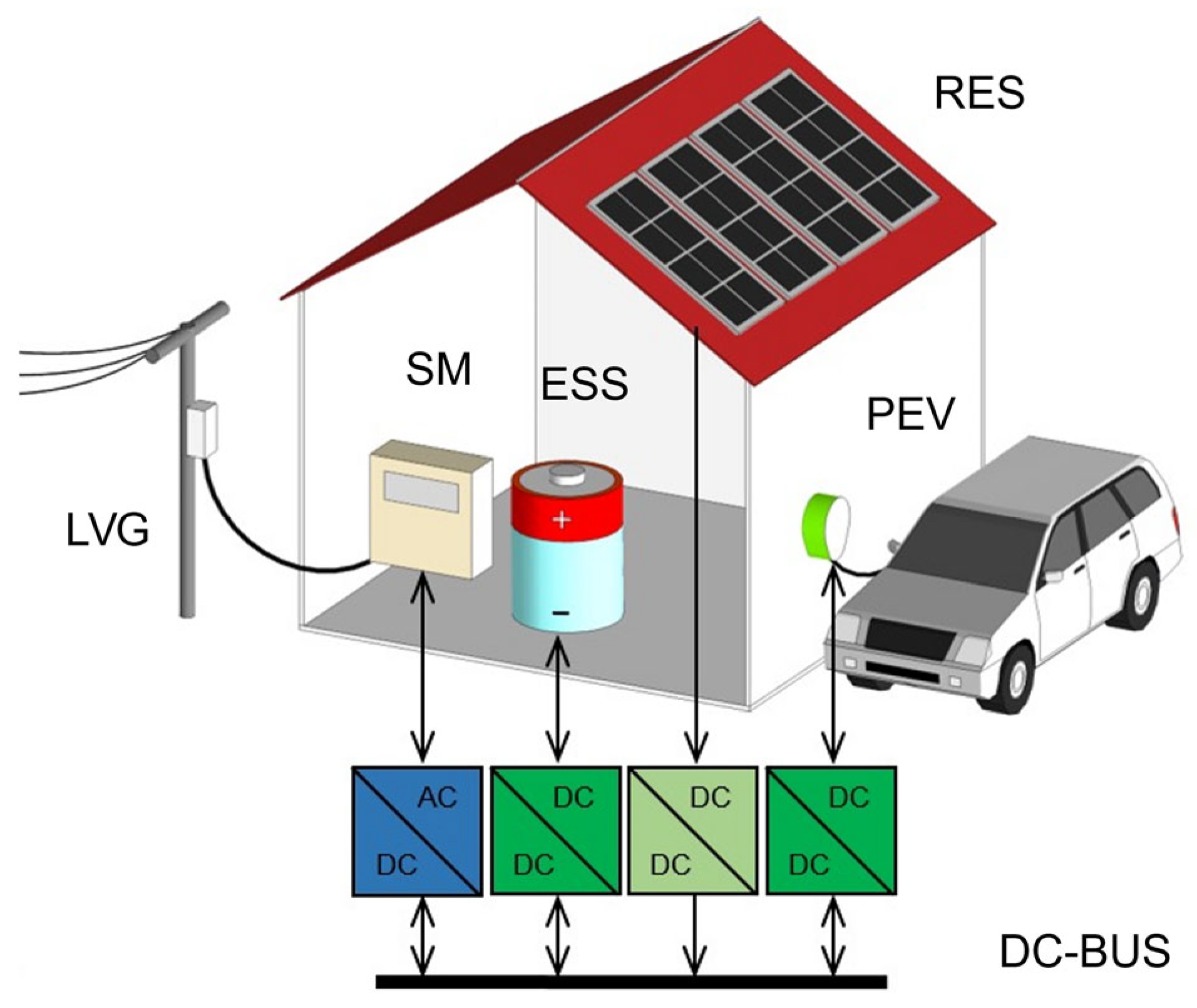
Figure 1. Diagram of a HEMS.
Electronics 15 01391 g001
Figure 2. ESPS-DAB configuration.
Electronics 15 01391 g002
Figure 3. SPS-DAB waveforms.
Electronics 15 01391 g003
Figure 4. Output power P in normalized units in front of V2 of SPS-DAB. ZVS condition in green.
Electronics 15 01391 g004
Figure 5. Currents of SPS-DAB in front of V2 for output power 3.7 kW.
Electronics 15 01391 g005
Figure 6. Simplified voltage and current waveforms of ESPS-DAB.
Electronics 15 01391 g006
Figure 7. Output power P in normalized units in front of V2 of ESPS-DAB. ZVS condition in green.
Electronics 15 01391 g007
Figure 8. Currents of ESPS-DAB in front of V2 for output power 3.7 kW.
Electronics 15 01391 g008
Figure 9. Power losses in SPS-DAB in front of V2 for output power 3.7 kW.
Electronics 15 01391 g009
Figure 10. Power losses in ESPS-DAB in front of V2 for output power 3.7 kW.
Electronics 15 01391 g010
Figure 11. Comparative results of total power losses and efficiency in front of V2 for output power 3.7 kW in SPS-DAB (blue) and ESPS-DAB (red).
Electronics 15 01391 g011
Figure 12. ESPS-DAB prototype.
Electronics 15 01391 g012
Figure 13. Experimental waveforms in charge mode, with V1 = 400 V and V2 = 800 V when P = 3.7 kW for SPS-DAB (a) and ESPS-DAB (b).
Electronics 15 01391 g013
Figure 14. Experimental efficiency in function of output voltage with 3.7 kW at the output.
Electronics 15 01391 g014
Table 1. ESPS-DAB specifications.
SpecificationSymbolValueUnit
Maximum PowerPmax3.7kW
Switching Frequencyf100kHz
Regulated DC Input VoltageV1400V
Minimum DC Output VoltageV2min300V
Maximum DC Output VoltageV2max800V
Table 2. Transistor design parameters.
SymbolParameterValueUnit
RDS(on)Drain-source on-state resistance32
VDSDrain-source voltage1200V
IDDC continuous drain current69A
RthJCThermal resist. junction-case0.44K/W
RthCHThermal resist. case-heatsink0.2K/W
PackageTO-247-4L
Table 3. Transistor parameters.
SymbolParameterValueUnit
aEOFF first coefficient54.1nJ/A2
bEOFF second coefficient−1.73µJ/A
cEOFF constant term33.1µJ
dEON first coefficient32.1nJ/A2
eEON second coefficient5.12µJ/A
gEON constant term67µJ
Table 4. Switching condition.
ConverterBridgeConditionEquationIC Value
SPS-DABPrimaryZVS(15)IC1
SPS-DABPrimaryno ZVS(16)IC1
ESPS-DABPrimaryZVS(15)IC1
SPS-DABSecondaryZVS(15)nIC2
ESPS-DABSecondaryZVS(15)nIC2
Table 5. Elements of the experimental set-up.
LabelElement
APrimary bridge with four C3M0032120K SiC MOSFETs
BSecondary bridge with four C3M0032120K SiC MOSFETs.
CTransformer of ratio 13:17
DDigital electronic control
EDC blocking capacitor
FHeatsink
Disclaimer/Publisher’s Note: The statements, opinions and data contained in all publications are solely those of the individual author(s) and contributor(s) and not of MDPI and/or the editor(s). MDPI and/or the editor(s) disclaim responsibility for any injury to people or property resulting from any ideas, methods, instructions or products referred to in the content.