1. Introduction
LIght Detection And Ranging (LiDAR) sensors are widely deployed in autonomous vehicles, unmanned aerial vehicles (UAVs), and mobile mapping systems, where range data is integral to decision-making logic for obstacle detection and operational safety. In these contexts, the statistical reliability of distance measurements is as critical as—or even more significant than—geometric accuracy, especially in dynamic environments where uncertainty propagation directly affects threshold-based perception systems [
1,
2,
3].
Extensive research has addressed the static performance and calibration characteristics of multi-channel LiDAR systems. For instance, Glennie and Lichti [
4] analyzed the calibration parameters of the Velodyne HDL-64E, and Kelly et al. [
5] evaluated the temporal stability of low-cost LiDAR sensors. In addition, self-calibration approaches for terrestrial laser scanners [
6] and investigations into range errors induced by surface reflectance [
7] have demonstrated that LiDAR measurements comprise both systematic and stochastic error components. Quantitative analyses of incidence angle and intensity effects [
8,
9] further underscore that measurement dispersion cannot be adequately characterized by mean bias alone.
In dynamic operational environments, additional distortion mechanisms are introduced. Real-time LiDAR odometry and mapping (LOAM) frameworks [
10,
11] and probabilistic vehicle localization methods [
12] have sought to address geometric inconsistencies caused by platform motion. Distortion compensation approaches integrating IMU and LiDAR measurements have likewise improved dynamic correction precision [
13]. Furthermore, research on UAV platforms has identified structural vibration and flight instability as critical factors degrading data quality and measurement accuracy [
14]. However, these studies primarily focus on maintaining geometric consistency, leaving a gap in the direct analysis of how the statistical distribution of raw range outputs is modulated under mechanical vibration conditions.
In the field of metrology, extensive research has been conducted on the uncertainty modeling of laser scanning point clouds [
15]. Monte Carlo-based evaluation methods provide a rigorous statistical foundation for distribution-level analysis [
16,
17,
18]. Additionally, the GUM-based framework for measurement uncertainty estimation establishes a methodology for determining confidence intervals through probability distribution propagation, emphasizing the importance of variance-oriented analysis in mathematical and metrological disciplines. Allan variance modeling for inertial sensors has demonstrated how vibration and stochastic processes propagate into measurement variance [
19]. Moreover, studies on uncertainty propagation in airborne LiDAR systems have confirmed that distribution-based reliability analysis is essential for dynamic sensing systems [
20]. Parallel investigations into Doppler-based LiDAR systems have reported that the variance structure of measurement errors shifts significantly depending on environmental conditions and system parameters [
21].
Time-of-Flight (ToF) sensors are inherently susceptible to photon statistics and shot noise, which directly govern range variance and outlier behavior [
22]. Universal LiDAR error models have also been proposed to simultaneously account for systematic and stochastic components across diverse mapping environments [
23]. Such findings underscore the necessity of evaluation frameworks that transcend central tendency metrics to incorporate variance-based indicators. Furthermore, assessments of LiDAR intensity and range uncertainty have demonstrated that the radiometric calibration of intensity values is vital for stabilizing data quality [
24], while correction techniques help mitigate deviations arising from sensor-specific characteristics and incidence angles [
25].
The impact of mechanical vibration has been experimentally explored in UAV-borne LiDAR platforms, where damping structures were found to enhance measurement stability [
26]. Optical experiments employing frequency modulated continuous wave (FMCW)-LiDAR have simultaneously mapped range and vibration signals, confirming a distinct coupling between mechanical excitation and range output [
27]. Similarly, mobile LiDAR systems have been characterized under modal conditions that account for vibration influences [
28]. In automotive contexts, LiDAR performance exhibits heightened uncertainty under adverse weather—such as rain and fog [
2]—and nonlinear heteroscedastic models have further highlighted the importance of variance-sensitive analysis [
29]. Additionally, stochastic error factors in feature matching have been quantitatively analyzed [
3], and recent studies have indicated that the statistical properties of measurement errors in dynamic driving scenarios shift according to environmental and system configurations [
30].
Despite extensive research on LiDAR calibration, uncertainty modeling, and motion compensation in dynamic sensing platforms, most prior studies have focused primarily on maintaining geometric consistency or correcting pose distortions. Consequently, relatively limited attention has been directed toward directly examining how mechanical vibration modifies the intrinsic error characteristics of raw LiDAR range outputs. In particular, the manner in which vibration alters the dispersion structure of range measurements remains insufficiently understood, despite its critical importance for perception reliability in autonomous vehicles, UAVs, and mobile mapping systems operating in dynamic environments.
Accordingly, this study experimentally investigates the behavior of LiDAR distance measurement errors under controlled platform vibration conditions. Using a dual-channel LiDAR configuration, range measurements are obtained at a fixed distance while vibration intensity is increased in a stepwise manner. The objective is to determine whether vibration primarily induces a systematic bias shift or instead amplifies the dispersion and extreme-value characteristics of measurement errors.
The remainder of this paper is organized as follows:
Section 2 describes the experimental setup and vibration protocol,
Section 3 presents the experimental characterization of LiDAR distance measurement errors under different vibration conditions, and
Section 4 and
Section 5 provide the discussion and conclusions.
2. Materials and Experimental Methodology
2.1. Experimental Configuration of the Multi-Channel LiDAR System
To investigate the response of LiDAR range measurements to external vibration, an experimental setup was developed to apply controlled vibration excitation and analyze the resulting variability in distance data. The LiDAR sensor (Kanavi Mobility Co., Ltd., Incheon, Republic of Korea) employed in
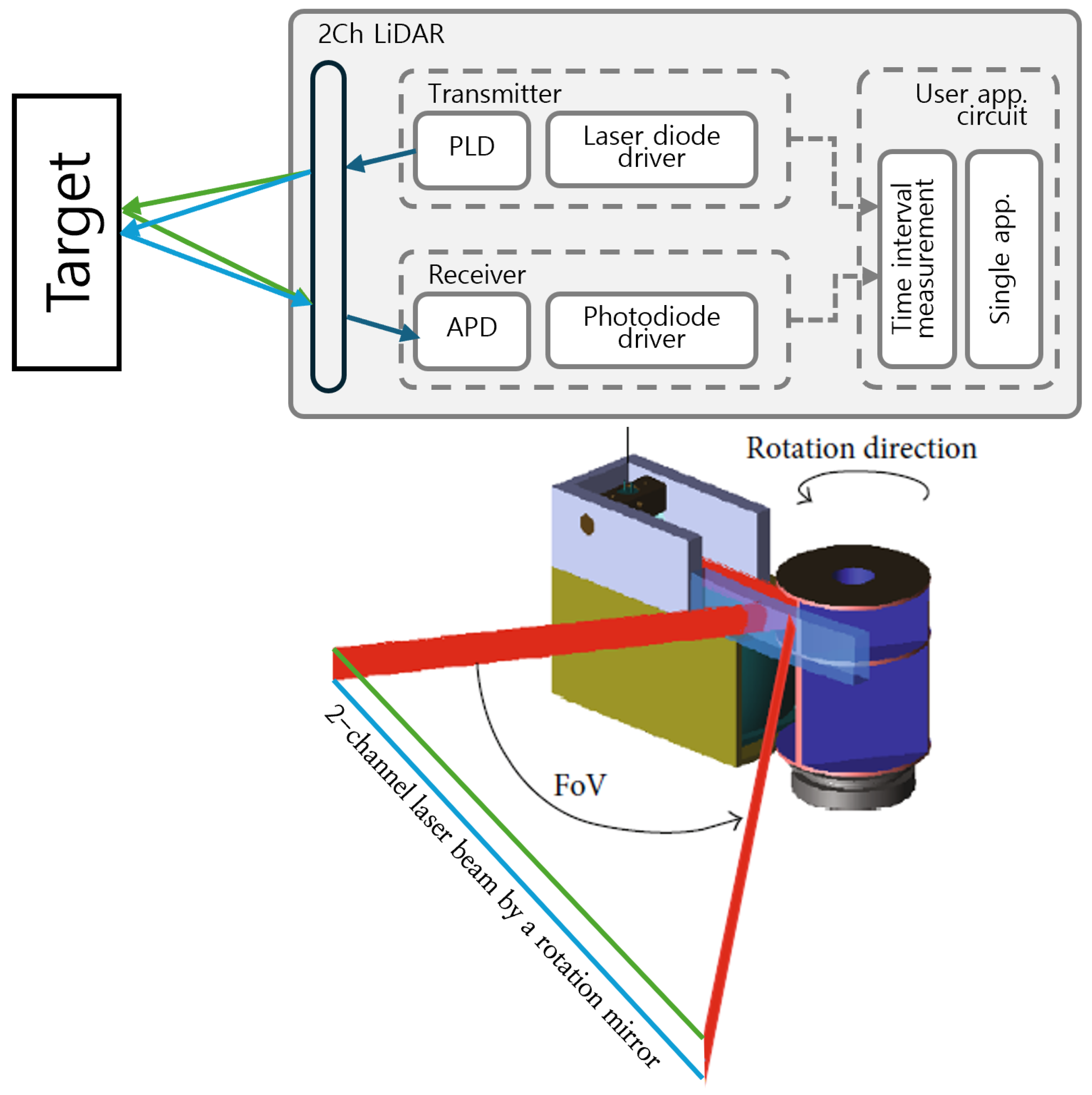
Figure 1 is a compact unit suitable for integration into small mobile platforms, such as UAVs or autonomous vehicles. A key structural feature of this sensor is its dual-channel architecture, with fixed vertical scan angles of 0° and −3°. This configuration allows for simultaneous and independent range measurements, enabling a comparative sensitivity analysis of how vibration affects different optical paths at the same horizontal distance.
As illustrated in
Figure 1, the LiDAR system consists of transmitter and receiver modules. The transmitter includes a pulsed laser diode (PLD) for emitting laser pulses and a laser diode driver that controls the driving current and pulse generation. The receiver section consists of an avalanche photodiode (APD) for detecting the reflected optical signal and a photodiode driver for signal amplification and conditioning. The detected signal is then processed in the user application circuit, where time interval measurement is performed to determine the distance based on the time-of-flight principle. As detailed in
Table 1, the optical paths are separated via a rotating mirror, achieving a horizontal field of view (HFoV) of 120° and a vertical field of view (VFoV) of 3°.
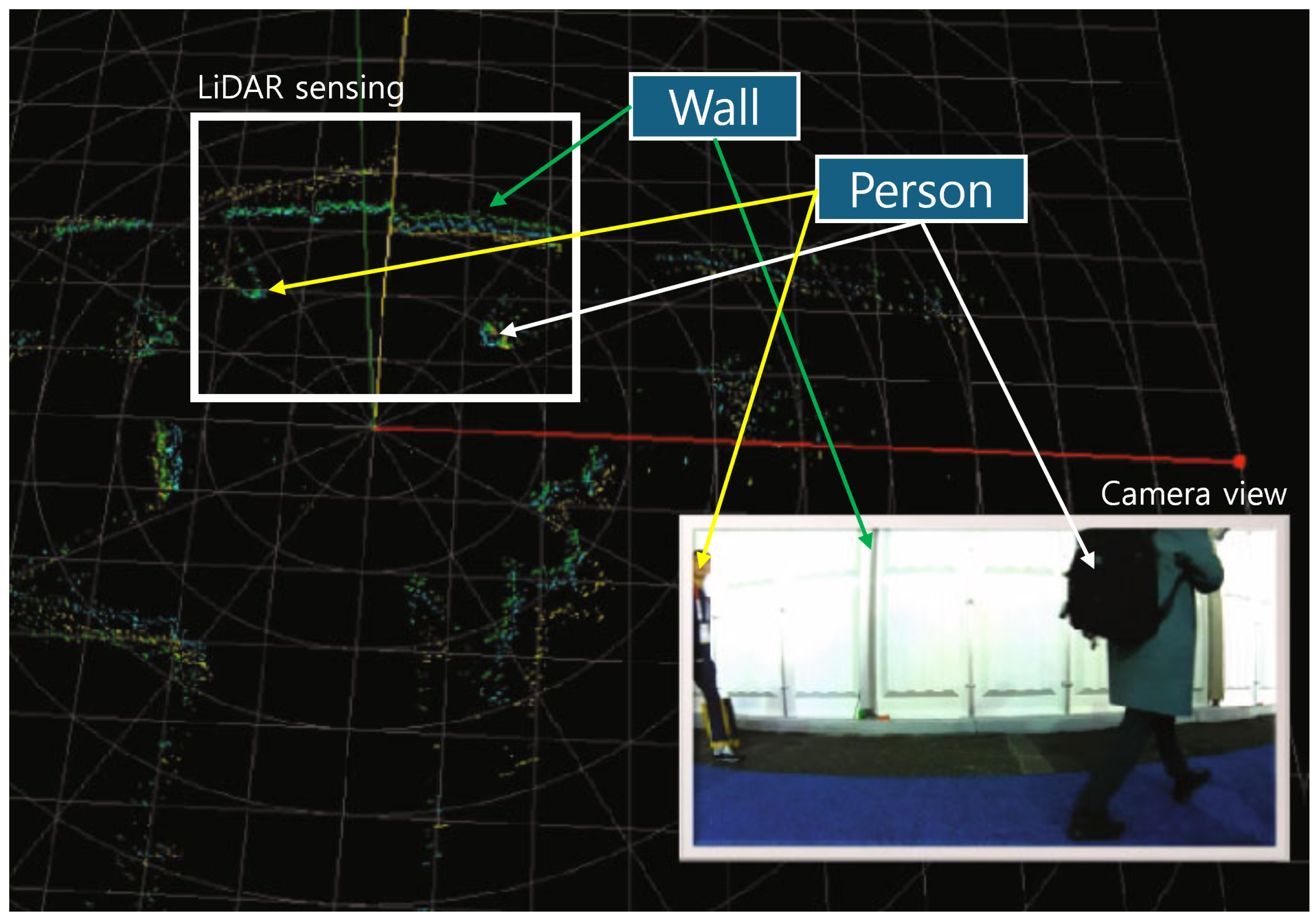
During environmental sensing, the LiDAR system captures reflected laser pulses (returns) from target surfaces within its emission field. These acquired points are processed in real time based on their ToF and angular orientation, allowing for the precise mapping of spatial coordinates. As illustrated in
Figure 2, the resulting point cloud data is visualized in two-dimensional (2D) or three-dimensional (3D) space, representing the geometric structure of the scanned environment.
The sensor was fixed at a horizontal distance of exactly 1.5 m from the target. At this range, the downward 3° channel scans a point approximately 5.24 cm below the 0° channel in vertical geometry. This 2-channel configuration was designed to observe internal error propagation or jitter by analyzing the range difference between channels under various vibration intensities. The 1.5 m distance was selected as a benchmark, as it represents a critical proximity sensing range for both UAV obstacle detection and low-speed autonomous navigation, ensuring both ecological validity and analytical precision.
As illustrated in
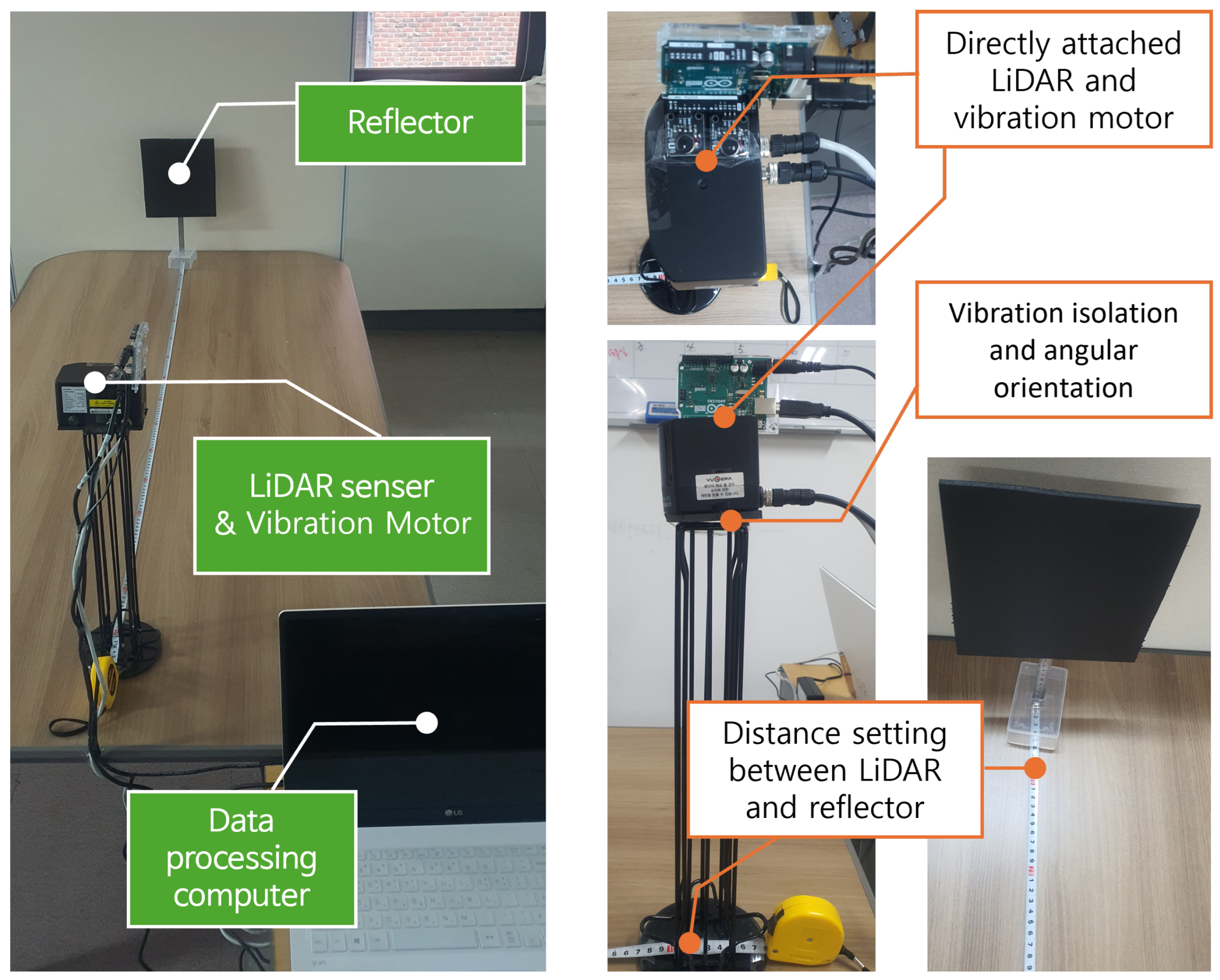
Figure 3, the measurement platform employed a rigid steel frame to prevent unintended tilting or external disturbances. To isolate the sensor from structural resonances, vibration isolation components were installed between the frame and the LiDAR unit. To implement controlled excitation, an eccentric rotating mass (ERM) motor was mounted directly onto the sensor housing. The motor was aligned such that the vibration was transmitted along the vertical axis, orthogonal to the primary optical path, to simulate the most demanding mechanical conditions.
The target was a matte black flat panel, vertically aligned using a transparent acrylic support. The separation between the LiDAR and the reflector was calibrated using a precision scale and mechanically locked to prevent displacement during data acquisition. Measurement signals were transmitted via universal asynchronous receiver/transmitter (UART)-based serial communication to a personal computer (PC) for real-time logging, with all raw data converted to centimeters for subsequent statistical post-processing.
LiDAR sensors are inherently sensitive to mechanical disturbances that may disrupt optical alignment, scanning stability, or pulse-width modulation (PWM) processing. In mobile deployment scenarios, even small-scale vibrations can compromise the mean range accuracy, variance, and repeatability. To isolate the specific impact of vibration, environmental variables—including target reflectivity and ambient lighting—were kept constant, ensuring that vibration intensity served as the sole independent variable.
2.2. Stepwise Mechanical Vibration Excitation Protocol
In mobile electronic systems employing LiDAR-based range sensing, measurement reliability is governed not only by the optical performance of the sensor but also by its structural resilience to mechanical vibration. In platforms incorporating rotational drive mechanisms, such as UAVs, periodic vibrations from propulsion motors are transmitted through the sensor housing, potentially introducing nonlinear stochastic errors into the range acquisition process. From an electronic systems perspective, this phenomenon is critical as it may manifest as a sudden threshold-driven degradation in stability rather than a simple linear increase in noise.
To quantitatively evaluate how LiDAR range measurements vary with vibration intensity, a stepwise excitation protocol was established. A compact Eccentric Rotating Mass (ERM) motor was utilized to simulate the rotational imbalance-induced vibrations typical of drone propulsion systems. The vibration intensity was modulated via Arduino-based PWM control, where varying the duty cycle under a constant supply voltage adjusted the motor’s rotational speed and the resulting kinetic energy of the eccentric mass. In this study, vibration intensity is operationally defined as the displacement amplitude of the mechanical vibration applied to the LiDAR platform and generated by the ERM motor under PWM control. The vibration produced by the rotating eccentric mass induces micro-vibrations of the platform with an approximately quasi-sinusoidal waveform, and its dominant frequency is governed by the motor rotational speed determined by the PWM duty cycle.
As summarized in
Table 2, the vibration conditions were categorized into three discrete levels (S1–S3), defined by displacement amplitude (mm) to ensure both experimental reproducibility and physical interpretability. These levels were established based on the rotational imbalance theory, where the centrifugal force generated by the ERM motor is proportional to the square of its angular velocity (
). Preliminary calibration tests were conducted to characterize the voltage-vibration response of the ERM motor, three amplitude stages—low, medium, and high (0.3, 0.5, and 0.6 mm, respectively)—were selected. Specifically, a 30% PWM duty cycle was used to induce a low-amplitude vibration (∼0.3 mm) for low-speed scenarios, while 60% and 100% duty cycles generated intermediate (∼0.5 mm) and peak (∼0.6 mm) amplitudes, respectively. These experimental intervals were defined to emulate the dynamic mechanical environments encountered in mobile robotic platforms.
Two ERM motors were connected in parallel and rigidly mounted to the upper portion of the sensor housing to ensure the direct and synchronous transmission of vibration to the sensor body. This configuration was specifically engineered to apply deterministic, periodic vibration stimuli with controlled intensity, rather than stochastic shocks or random disturbances. This setup ensures the high degree of consistency and reproducibility necessitated by repeated measurement protocols in electronic system characterization. For each vibration level, range data acquisition commenced only after a sufficient stabilization period to eliminate transient effects. All environmental variables, except for the vibration intensity, were strictly maintained as constants to ensure the validity of cross-condition comparative analysis.
2.3. Data Acquisition Procedure and Statistical Evaluation Framework
To quantitatively analyze the impact of vibration intensity on LiDAR range measurements, all data were repeatedly acquired at a fixed reference distance of 1.5 m. Because the reference distance remained constant at 1.5 m across all experimental conditions, measurement errors were analyzed using absolute error values rather than relative error. The data acquisition protocols and evaluation metrics are summarized in
Table 3. Sensor outputs were transmitted to an external PC via UART-based serial communication. Notably, raw data were analyzed without prior filtering or preprocessing to assess the influence of vibration on statistical stability without introducing artificial bias. While outlier removal or smoothing filters are effective for mitigating ambient noise, such procedures may inadvertently suppress the intrinsic structural errors or mechanical jitter being investigated in this paper. Therefore, the entire stochastic distribution of repeated measurements was preserved to evaluate sensor consistency, error bands, and variance amplification phenomena. Three specific metrics were employed to comprehensively characterize the sensor’s accuracy, precision, and metrological reliability.
Sensor performance degradation and the resulting surge in measurement uncertainty profoundly impact both system reliability and predictive accuracy; however, such stochastic shifts are seldom fully captured by standard deviation alone [
31]. To quantitatively characterize diverse sensor errors and uncertainties, recent systematic reviews have advocated for the concurrent application of multiple metrics, such as outliers, drift, and bias [
32]. Furthermore, in statistical parameter estimation, a “threshold effect” has been documented, where estimation errors escalate nonlinearly when the signal-to-noise ratio (SNR) or operational stability falls below a critical limit [
33].
Accordingly, this paper focuses on measurement variability as a primary indicator to capture nonlinear growth patterns and discontinuous “threshold transitions” that reflect the structural sensitivity of the sensor system. This approach is particularly vital when a sensor maintains stability up to a certain vibration level but undergoes abrupt performance bifurcation beyond a specific mechanical threshold. Since conventional, single-metric statistical analyses often fail to detect such state-dependent transitions, a parallel analytical strategy employing multiple indicators is essential to rigorously identify and interpret these structural shifts.
3. Experimental Results and Statistical Analysis
3.1. Baseline Measurement Stability Under Non-Vibration Condition
Based on range measurements obtained under the baseline (non-vibration) condition, the system’s intrinsic repeatability and inter-channel error characteristics were characterized. As summarized in
Table 4, the mean error, standard deviation, and RMSE for both the 0° and −3° channels remain near zero, demonstrating that systematic bias relative to the reference distance is negligible. This confirms the stability of the sensor alignment and the precision of the initial distance configuration. Furthermore, the 95% confidence intervals (CIs) are narrowly centered around zero, reinforcing the statistical reliability of the mean range estimates.
However, subtle inter-channel discrepancies were observed in the standard deviation and RMSE values. While both channels exhibit comparable variance levels, the slight divergence in RMSE reflects a marginal precision gap resulting from the coupled effects of mean deviation and stochastic dispersion. These discrepancies may stem from geometric offsets in optical axis alignment or minor fluctuations in internal signal processing. Nevertheless, as the absolute error magnitude remains within a sub-millimeter or low-millimeter scale, the system is considered to possess robust fundamental measurement stability under baseline conditions.
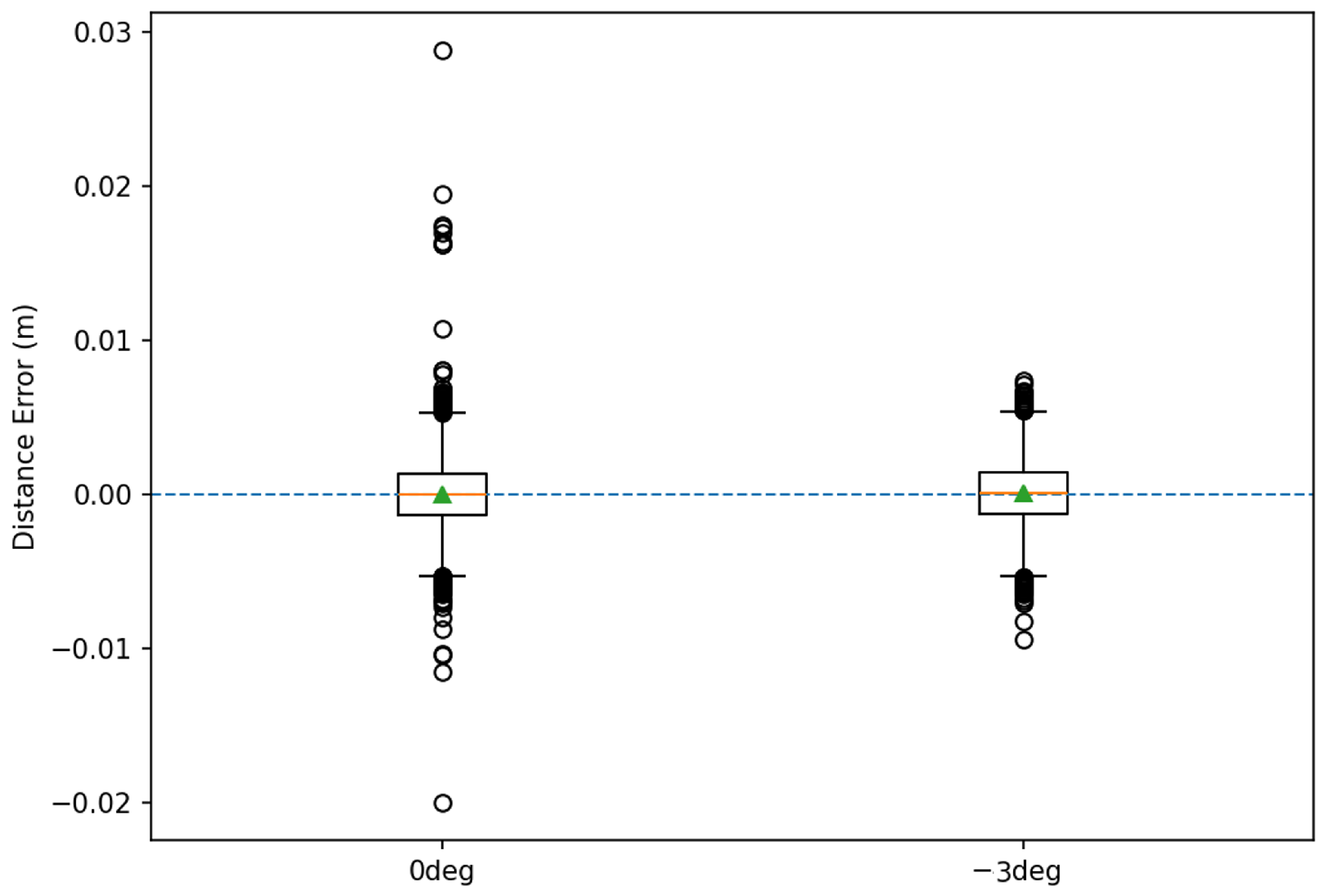
As illustrated in
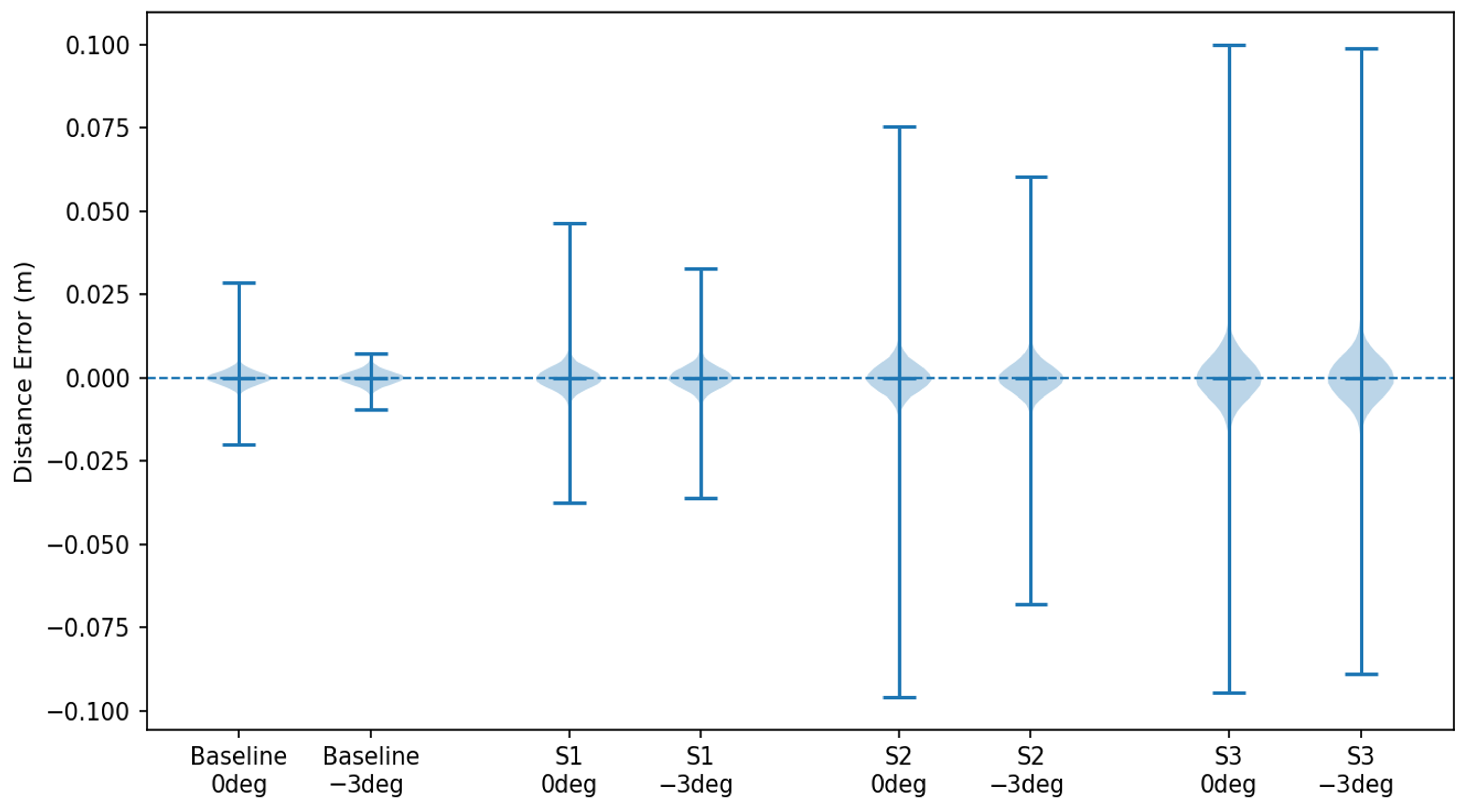
Figure 4, the medians of both channels are centered near 0 m, confirming that systematic bias relative to the reference distance is negligible. The mean values also converge toward zero, validating that absolute accuracy is stably maintained under baseline conditions. However, the 0° channel exhibits a notably wider dispersion between the upper and lower extremes compared to the −3° channel, characterized by a longer negative tail. This suggests that even in the absence of external excitation, inherent differences exist in the distributional spread and stochastic architecture between the two channels.
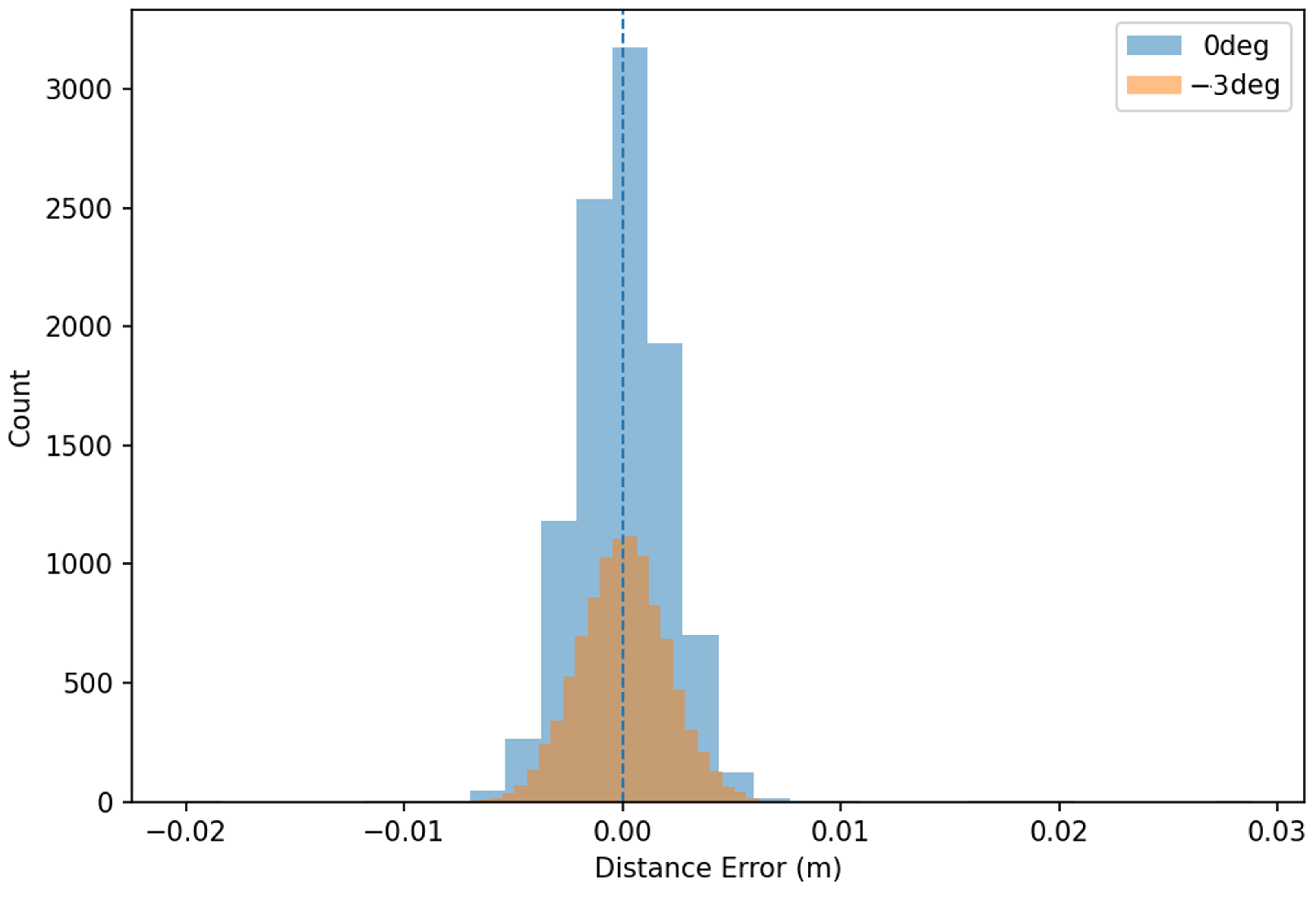
The overlaid histograms in
Figure 5 further reveal that while both error distributions are generally symmetric and approximate a Gaussian profile, subtle discrepancies persist in their density structures. The 0° channel displays a broader distribution width with a higher frequency of outliers in the extreme regions. Conversely, the −3° channel shows a more leptokurtic (concentrated) central density, indicating a marginally lower variance level. While these variations do not significantly impact mean accuracy, they underscore structural distinctions in terms of repeatability and the intrinsic noise floor.
Although both channels perform nearly identically regarding mean error under baseline conditions, they diverge in their variance and extreme-value behavior. This indicates that subtle geometric misalignments or variations in internal signal processing pathways may fundamentally modulate the underlying noise topology of each channel.
3.2. Variance Scaling Under Incremental Vibration Excitation
The variations in range error characteristics as a function of increasing vibration intensity were quantitatively analyzed.
Table 5 presents the mean error, standard deviation, and RMSE calculated for each vibration stage (Baseline, S1, S2, and S3) across both channel conditions (0° and −3°). Across all excitation levels, the mean error consistently remained near 0 m; even as vibration intensity escalated, the absolute magnitude of the systematic bias remained within a strictly limited range. This suggests that mechanical vibration does not induce a significant systematic shift in range measurements, maintaining a relatively stable mean performance.
In contrast, the standard deviation and RMSE exhibited a monotonic increase from the Baseline to the S3 stage in both channels. Notably, the expansion of variance became more pronounced during the S2 and S3 stages, indicating that vibration structurally broadens the stochastic dispersion and degrades the repeatability of the measurements. The RMSE followed a nearly identical upward trend, implying that the widening of the variance component—rather than a shift in the mean—is the primary driver of overall accuracy degradation.
The quantitative results confirm that increasing vibration intensity modulates range error characteristics primarily through the amplification of random variability and distributional broadening rather than through increased systematic bias. These findings suggest that sensor performance degradation under vibration manifests predominantly as variance inflation and a heightened probability of extreme-value occurrences, rather than a simple translational shift in the mean range.
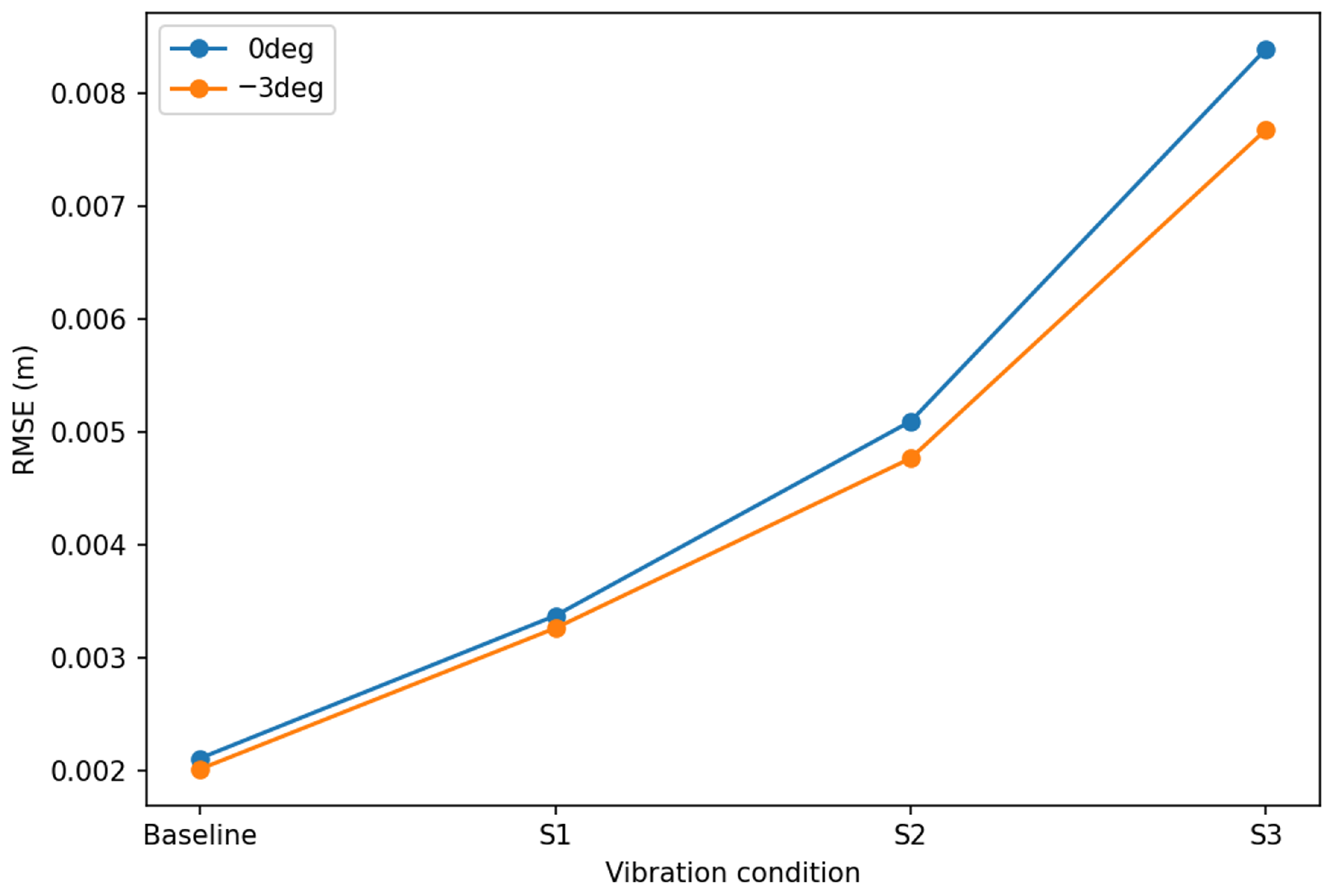
Figure 6 compares the RMSE across vibration stages (Baseline-S3) for both channels. A clear monotonic escalation in RMSE is observed as the vibration intensity increases, confirming that mechanical excitation serves as a primary driver in amplifying the total error magnitude. Notably, the transition from Baseline through S1, S2, and S3 reveals a nonlinear growth pattern, with the most significant surge occurring under the high-vibration condition (S3). This trend reinforces the finding that vibration degrades overall sensing accuracy primarily through the expansion of variance components rather than a translational mean shift. The nonlinear increase in variance and RMSE observed in
Figure 6 can be interpreted as a consequence of vibration-induced beam pointing jitter combined with geometric amplification and boundary-sensitive measurement effects.
In the inter-channel comparison, the 0° channel consistently exhibits slightly higher RMSE values than the −3° channel across all excitation levels. This discrepancy suggests that the geometric alignment of the optical axis may interact with the vibration transmission paths, thereby modulating the degree of stochastic error dispersion. Nevertheless, given that both channels display a synchronized upward trend, increasing vibration intensity can be identified as a universal factor driving accuracy degradation, independent of specific channel orientation.
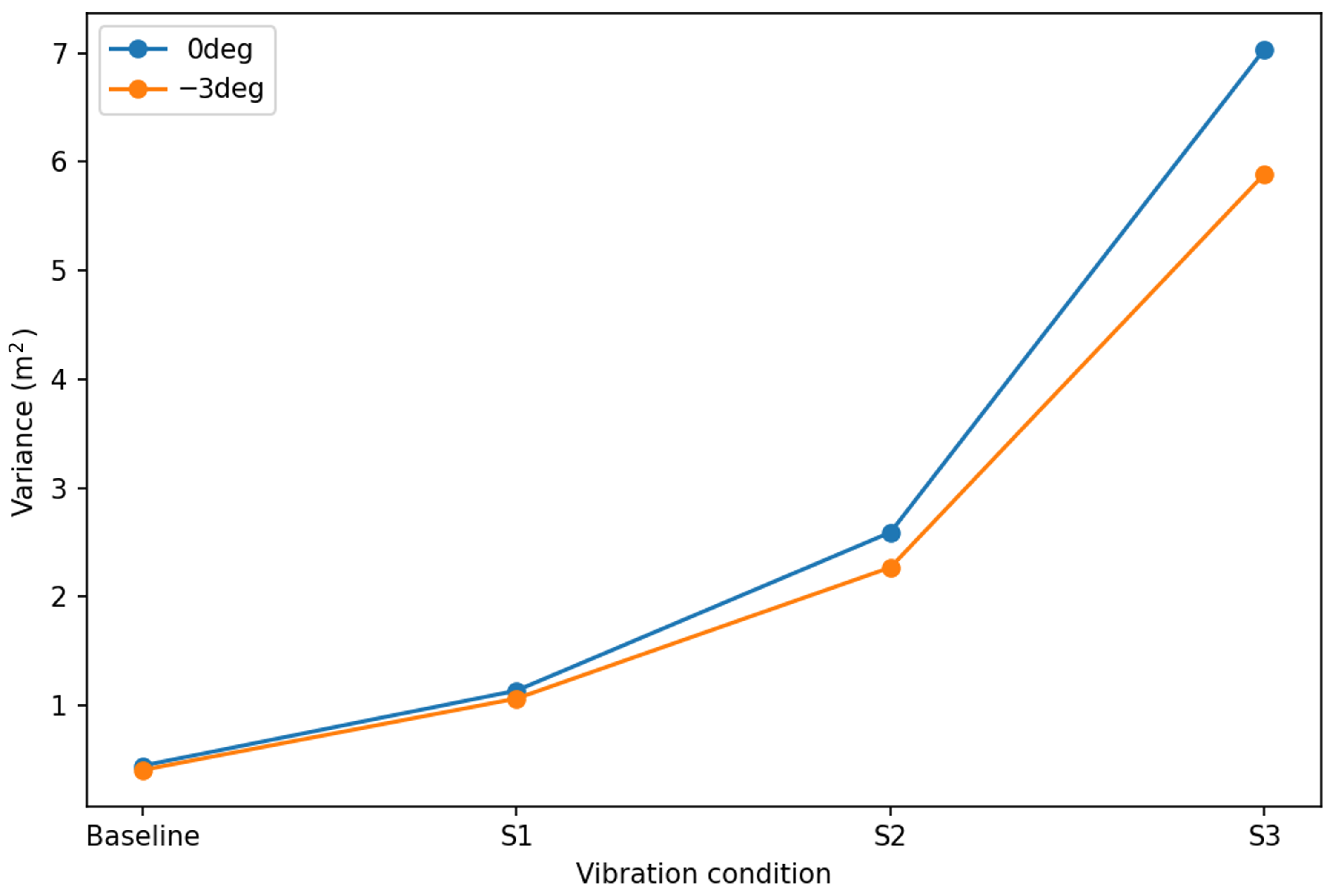
Figure 7 compares the stochastic variance in range errors across the vibration stages (Baseline-S3) for each channel. In both channels, a definitive trend of progressive variance expansion is observed as vibration intensity increases. Notably, the rate of escalation becomes more pronounced beyond the S2 stage, with the high-vibration condition (S3) inducing a sharp, nonlinear surge in variance. This suggests that once mechanical excitation exceeds a specific operational threshold, measurement variability undergoes structural amplification.
In the inter-channel comparison, the 0° channel consistently maintains slightly higher variance levels than the −3° channel throughout all vibration stages. This discrepancy indicates that the geometric alignment of the optical axis may interact with the vibration transmission paths, thereby modulating the magnitude of stochastic error dispersion. However, given that both channels demonstrate synchronized growth patterns, increased vibration intensity serves as a universal driver that amplifies range measurement variability independent of channel orientation.
Variance inflation directly reflects the intensification of random variability and the subsequent degradation of measurement repeatability. These results confirm that vibration primarily compromises the stability of range outputs through dispersion broadening rather than through systematic mean shifts. Accordingly, the deterioration in overall sensing accuracy under increasing vibration is fundamentally attributable to the expansion of the variance component.
3.3. Distributional Broadening and Heteroscedastic Behavior
Additional analyses were conducted to examine the evolution of the error distribution architecture under varying vibration conditions. To quantitatively characterize distributional broadening and extreme-value behavior, the interquartile range (IQR), total range, and outlier rate were computed. As summarized in
Table 6, the IQR expanded by more than threefold as vibration intensity progressed from the Baseline to the S3 stage. This suggests that the central 50% of the distribution does not merely shift, but undergoes a cumulative structural expansion proportional to the excitation intensity. In essence, vibration acts as a primary driver that amplifies the probabilistic dispersion rather than shifting the central tendency.
The total range exhibited a dramatic increase, reaching 4 to 11 times the baseline value at the S3 stage. Notably, the rate of expansion accelerated beyond the S2 stage, manifesting a nonlinear divergence pattern. This indicates a sharp escalation in the likelihood of extreme-value occurrences under high-vibration conditions. These findings point to a stochastic threshold beyond which the distribution’s tail region expands structurally, representing a critical transition in sensor reliability.
Furthermore, the outlier rate increased by approximately 1.5 to 2 times under S3 relative to the Baseline. This demonstrates that, beyond a simple increase in variance, the relative frequency of anomalous deviations exceeding the IQR-based thresholds rises significantly. Vibration, therefore, not only degrades steady-state stability but also inherently increases the probability of extreme error events. Increasing vibration intensity contributes more significantly to the nonlinear growth of distributional spread and outlier probability than to any systematic shift in the mean error.
Figure 8 provides a visual comparison of the probability density functions (PDFs) and morphological shifts in range error distributions across the vibration stages (Baseline-S3) for each channel. In all scenarios, the medians remain stably centered near 0 m; however, as vibration intensity escalates, a definitive progressive broadening of the distribution width is observed. This trend signifies that intensified mechanical excitation directly amplifies the stochastic dispersion of measurement errors, consequently degrading measurement repeatability.
Specifically, under the S2 and S3 conditions, the lower and upper tails of the distributions undergo significant expansion, exhibiting pronounced “long-tail” characteristics. This morphology suggests that the frequency of extreme deviations escalates more sharply than any shift in the mean error, reflecting a higher incidence of anomalous range deviations within vibratory environments. These observations are highly consistent with the previously noted increases in RMSE and variance. Furthermore, the 0° channel generally displays a broader distribution profile compared to the −3° channel, implying that the geometric alignment of the optical axis may interact with the vibration transmission paths to modulate the final stochastic topology of the error distribution. The emergence of these heavy-tail distributions indicates that vibration introduces non-Gaussian noise components, which must be accounted for in the development of robust perception algorithms for mobile robotics.
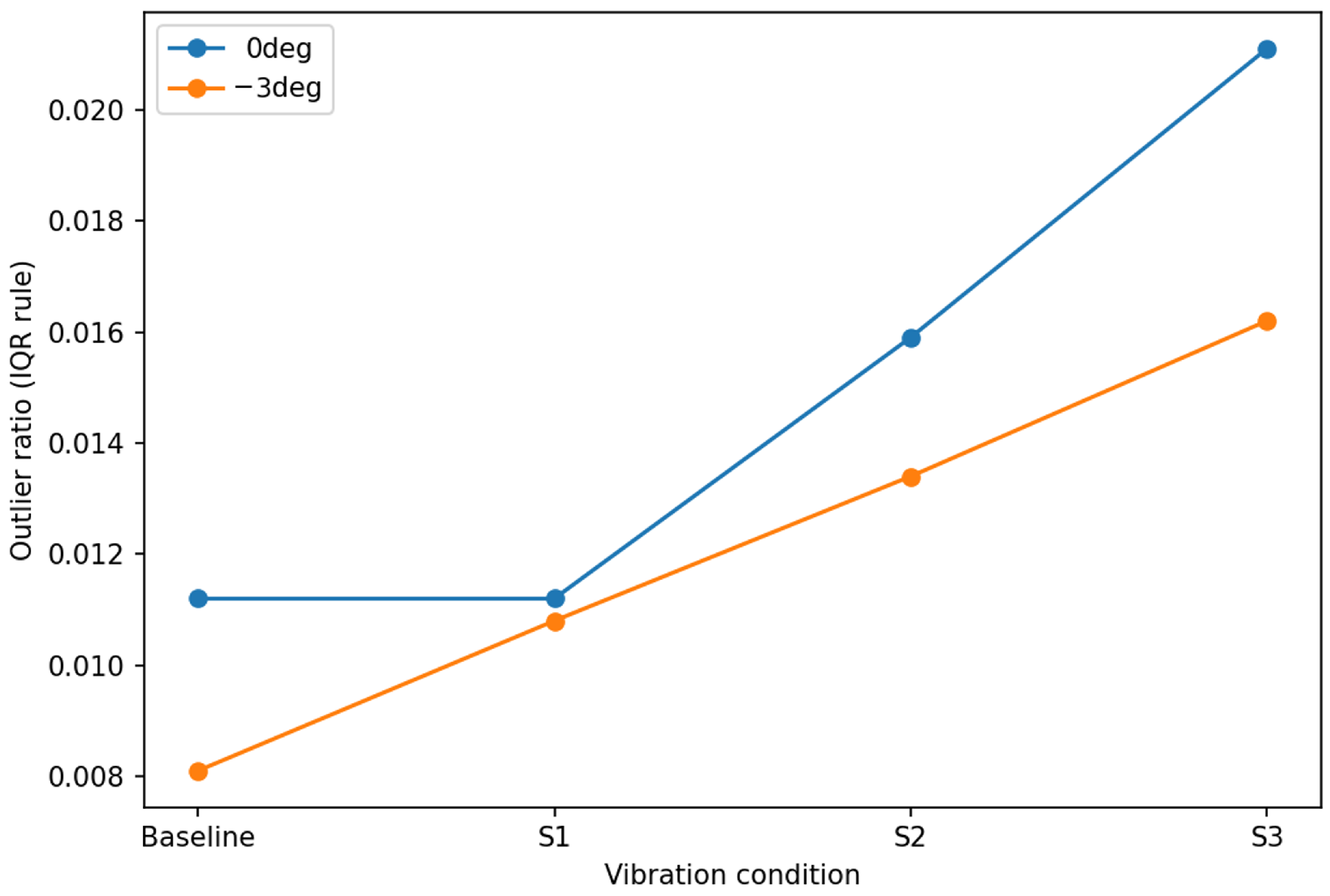
Figure 9 compares the outlier rates—defined by the 1.5 × IQR criterion—across varying vibration stages. Relative to the baseline, a progressive escalation in the outlier ratio is observed in both channels as vibration intensity increases from S1 to S3. This trend indicates that intensified mechanical excitation does not merely shift the mean error but specifically amplifies the frequency of anomalous deviations within the extreme tails of the distribution.
Notably, the surge in the outlier rate becomes more pronounced during the S2 and S3 stages. This behavior likely stems from a synergistic combination of factors, including micro-perturbations of the optical axis, transient phase fluctuations in the internal scanning mechanism, and potentially, partial reflection or scattering effects. These observations are highly consistent with the increasing trends in variance and RMSE, reinforcing the conclusion that vibration structurally compromises the sensor’s measurement stability.
Furthermore, the inter-channel comparison reveals that the 0° channel generally exhibits a higher outlier rate than the −3° channel, suggesting that geometric alignment of the optical axis interacts with the vibration transmission paths to influence the probability of extreme-value occurrences. Ultimately, increasing vibration intensity appears to reinforce distributional asymmetry (skewness) and heavy-tail behavior beyond simple mean bias, thereby driving the degradation of sensor reliability at a fundamental, distributional level.
3.4. Comparative Sensitivity Analysis and Inter-Channel Interaction Effects
To examine the interaction effects between channel configuration and vibration intensity, a two-way Analysis of Variance (ANOVA) was performed. The independent variables were vibration stage (Baseline-S3) and channel condition (0°, −3°), with the range measurement error as the dependent variable. As summarized in
Table 7, the main effect of vibration was not significant (
), nor was the main effect of the channel condition (
). Furthermore, the interaction effect between vibration and channel was found to be statistically non-significant (
). At the conventional significance level of
, none of these factors yielded statistically significant results.
Statistically, these findings indicate that no significant shifts in the mean error occurred across vibration levels or channel configurations. Specifically, the non-significant interaction term suggests that the trend of the mean error remains consistent between channels as vibration intensity increases. However, it is crucial to note that these ANOVA results pertain exclusively to central tendency. As demonstrated by the preceding analyses of RMSE, variance, and outlier rates, the stochastic dispersion and frequency of extreme values escalated with vibration intensity. This implies that the impact of vibration manifests primarily through variance inflation rather than through systematic mean shifts.
The two-way ANOVA confirms that vibration and channel conditions do not induce significant translational shifts in the mean error. Instead, vibration-induced performance degradation is fundamentally characterized by morphological shifts in the distribution structure and the amplification of extreme deviations, rather than by average error displacement. The lack of significance in the ANOVA, coupled with the significant escalation in variance-based metrics, provides empirical evidence of heteroscedasticity in LiDAR range measurements under mechanical stress.
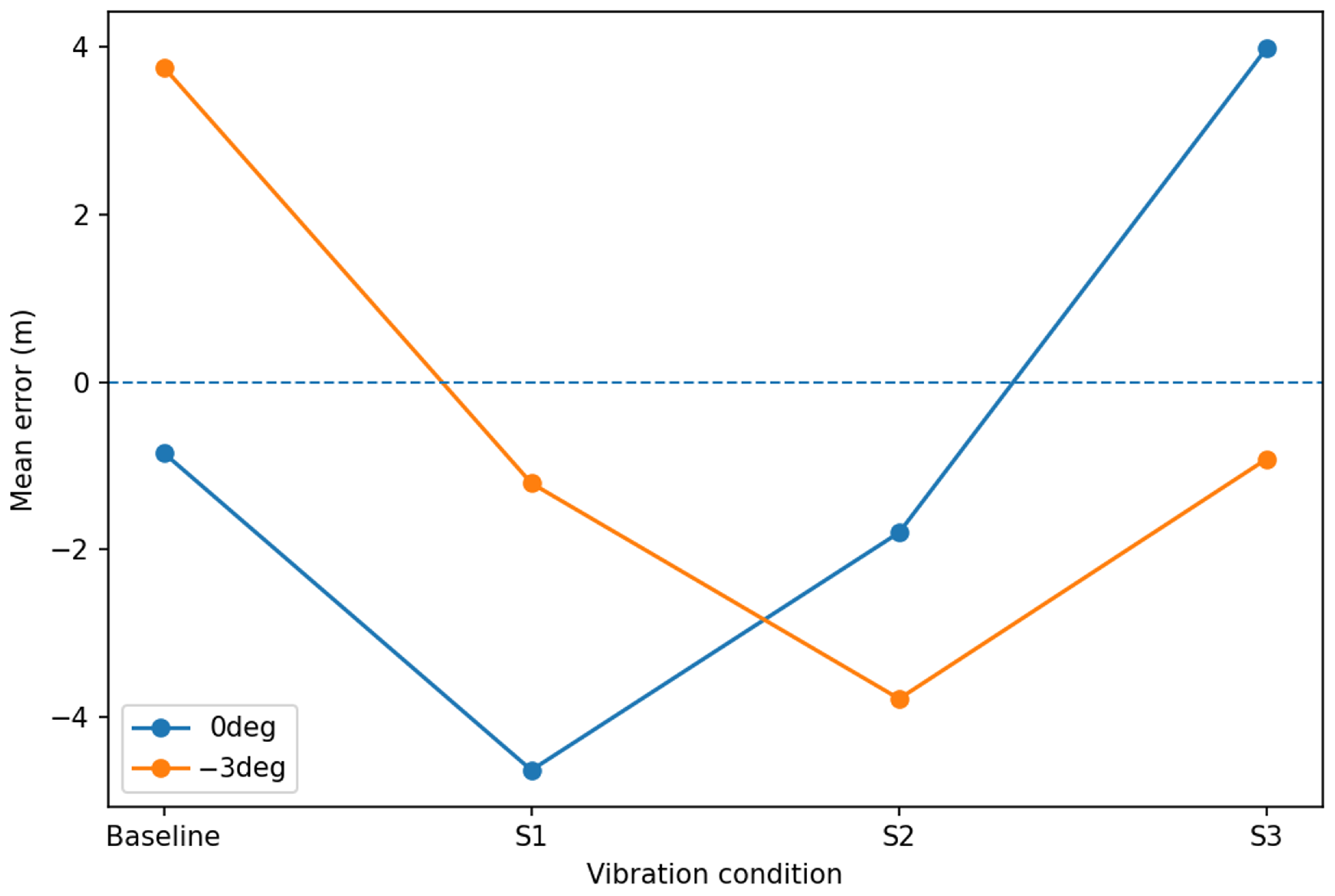
Figure 10 illustrates the interaction effect between vibration intensity (Baseline-S3) and channel configuration (0°, −3°) on the mean range error. In both channels, the mean error fluctuates within an extremely narrow margin around 0 m, showing no definitive monotonic trend as vibration intensity escalates. This reinforces the finding that mechanical excitation has a negligible impact on the systematic bias of the range measurements.
The linear trajectories of the two channels are not strictly parallel and exhibit intersections at specific stages. At the Baseline, the −3° channel shows a marginal positive mean error, which shifts negatively at the S1 and S2 stages before converging toward zero at S3. Conversely, the 0 channel reaches its peak negative mean error at S1 followed by a positive transition at S3. This crossing pattern suggests that the response of the mean error to vibration stages is not uniform across different channel orientations.
However, given that the absolute magnitude of the mean error remains within the order of m across all stages, these inter-channel discrepancies are statistically insignificant. Nevertheless, the relatively larger fluctuations observed in the −3° channel at certain stages may imply subtle sensitivity variations under dynamic conditions. These results are fundamentally consistent with the previous findings, confirming that the primary impact of vibration manifests as variance inflation and extreme-value amplification rather than as a meaningful displacement of the mean.
4. Discussion
This paper experimentally investigated how the statistical structure of range measurement outputs from a two-channel LiDAR system (0°, −3°) changes with increasing vibration intensity under a fixed horizontal distance of 1.5 m. The results show that the mean error fluctuated within a very small range on the order of m across all conditions, indicating that increases in systematic bias were limited. In contrast, variance, RMSE, IQR, total range, and outlier rate exhibited progressive or nonlinear growth in proportion to vibration intensity. These findings indicate that the impact of vibration is manifested primarily through increased random variability and reinforced extreme-value behavior rather than through mean displacement.
4.1. Geometry-Driven Error Amplification Mechanism
In this experimental setup, the LiDAR was positioned approximately 10 cm above the center of the target reflector. Consequently, the 0° channel scanned the upper boundary region, while the −3° channel targeted the lower region. This spatial offset serves as a geometric factor that induces channel-specific sensitivity variations, even under identical excitation. When a micro-angular perturbation occurs at a horizontal distance L, the resulting vertical displacement can be expressed as using the small-angle approximation. At, m, even a uniform angular perturbation alters the optical axis’s proximity to the target boundaries differently for each channel. This suggests that in certain frames, reflected signal intensities near the reflector edges may fluctuate, or partial target excursions may occur.
The observed results—specifically the threefold expansion in IQR, the multi-fold increase in the total range, and the 1.5 to 2 times rise in the outlier rate—are closely coupled with this geometric amplification mechanism. In particular, the phenomenon where the mean error remains nearly constant while the RMSE and variance escalate indicates that vibration does not induce a systematic range offset. Instead, it structurally expands the probabilistic dispersion of the measurements through transient, high-frequency perturbations of the optical axis. By quantifying the relationship between mechanical excitation and these geometric error-amplification factors, this paper establishes a deterministic framework for predicting LiDAR reliability in dynamic robotic environments.
4.2. Limitations of Mean-Centric Performance Evaluation
The performance evaluation of range-sensing systems has predominantly focused on mean error or systematic bias. However, the results of this paper demonstrate that the mean error remained virtually stagnant despite escalating vibration intensity, and the two-way ANOVA confirmed that these differences were statistically insignificant ().
In stark contrast, the standard deviation, variance, RMSE, and IQR exhibited significant structural growth as vibration levels increased. This clearly illustrates that performance degradation under mechanical excitation manifests as stochastic uncertainty rather than a translational mean shift. Consequently, mean accuracy alone is insufficient to fully characterize sensor reliability in dynamic environments. A multidimensional evaluation framework—incorporating variance-based metrics, distributional breadth, and outlier probability—is essential. When assessing LiDAR performance in mobile deployment scenarios, such as UAVs, autonomous vehicles, or maritime platforms, it is imperative to move beyond mean-centric metrics to account for these critical distributional effects. The findings provide empirical evidence that vibration-induced errors are inherently heteroscedastic, necessitating noise models that can adapt to varying mechanical stress levels.
4.3. Direction-Dependent Sensitivity and Differential Response Characteristics
Although the 0° and −3° channels interrogate the same target, discrepancies in their impact locations along the optical axis lead to distinct stochastic behaviors under vibration. The interaction plot revealed that the mean error trends for the two channels intersected at specific vibration levels, suggesting that the error evolution patterns in response to increasing intensity are not uniform across channel configurations.
Specifically, because the 0° channel senses a region in close proximity to the upper boundary of the reflector, it is more susceptible to boundary excursions during vertical perturbations. In contrast, the −3° channel encompasses a broader area within the reflector’s interior, which may result in a different distributional expansion architecture even under identical excitation.
These discrepancies are interpreted not as inherent flaws in sensor hardware, but as emergent effects arising from the coupling between optical axis orientation, target geometry, and vibration-induced disturbances. Consequently, channel-specific sensitivity should be understood as a system-level attribute governed by structural configuration and geometric amplification mechanisms.
4.4. Experimental Constraints and Model Generalization Potential
This paper was conducted under controlled conditions, specifically limited to a fixed horizontal distance of 1.5 m, a 20 cm square reflector, and a dual-channel (0° and −3°) configuration. While these constraints provide analytical clarity for geometric interpretation, broader validation is necessary to generalize the findings.
In particular, as the distance L increases, the relationship implies that even identical angular perturbations will induce proportionally larger vertical displacements. Consequently, in longer-range scenarios, the effects of variance inflation and outlier occurrence are likely to become more pronounced. This behavior can be physically interpreted as a consequence of vibration-induced angular perturbations of the LiDAR beam. These small orientation fluctuations cause variations in the beam intersection point on the target surface, which expand the dispersion of measured ranges without significantly shifting the mean error. In addition, when the laser footprint approaches the boundary of the target surface, partial reflections and edge interactions may produce occasional extreme deviations in the measured distance.Furthermore, a reduction in target dimensions is expected to geometrically exacerbate boundary sensitivity. Future research should, therefore, encompass extended experimental campaigns—including varying distances, target sizes, and reflectivities, as well as composite frequency and multi-axis vibration environments—to verify the universality of the variance amplification and boundary-sensitive architectures identified in this paper. Such vibration amplitudes are comparable to micro-vibration levels commonly observed in mobile sensing platforms, including ground vehicles, UAV payload mounts, and marine monitoring systems, where structural oscillations and mechanical disturbances can induce sub-millimeter platform vibrations.
5. Conclusions
This paper experimentally elucidated the evolution of the stochastic structure of range measurements from a dual-channel LiDAR system (0°, −3°) under stepwise vibration conditions (Baseline-S3). At a fixed horizontal distance of 1.5 m, the sensor was positioned 10 cm above the center of a 20 cm × 20 cm vertical target. Comprehensive statistical analyses were performed using multiple metrological indicators, including mean error, variance, RMSE, IQR, and outlier rate.
The experimental results demonstrate that as vibration intensity escalated, the mean error fluctuated only within a negligible range, with no significant increase in systematic bias. In contrast, the standard deviation, variance, RMSE, IQR, and outlier rate exhibited a progressive and nonlinear expansion. These findings indicate that mechanical vibration does not primarily shift the central tendency of distance measurements; rather, it amplifies the stochastic dispersion and reinforces the heavy-tail characteristics of the distribution. Thus, performance degradation under vibration is governed by variance inflation and a heightened probability of anomalous deviations rather than a translational mean shift.
Furthermore, distinct sensitivities associated with channel orientation were identified. Despite interrogating the same target, the 0° and −3° channels exhibited divergent error architectures due to geometric discrepancies in their optical axis trajectories and impact locations. While two-way ANOVA showed limited statistical significance regarding mean error, the interaction patterns suggest that channel orientation and vibration intensity synergistically modulate error characteristics. This highlights that sensor reliability is determined not only by intrinsic hardware properties but also by the interplay between optical axis–target geometry and external disturbances.
Consequently, LiDAR performance evaluation in vibratory environments must transcend single, mean-centric metrics. A multidimensional assessment framework—incorporating variance-based indicators, RMSE, distributional breadth, and outlier probability—is essential. For multi-channel systems, design and validation strategies should explicitly account for the coupling between channel orientation and target geometry. Although limited to a single-distance scenario, this paper provides a metrological foundation for understanding vibration-induced variance amplification and boundary sensitivity, providing a rationale for extended research across diverse distances, target scales, and composite vibration environments.