1. Introduction
Power devices intended for applications exposed to ionizing radiation typically incorporate protection mechanisms to endure reliable operation. These mechanisms may be related to the operation mode and conditions, such as shielding or electrical derating, or to structural modifications implemented at the device level to mitigate radiation-induced failures.
Silicon Vertical Double-Diffused MOS (VDMOS) power devices operating in radiation environments are susceptible to several failure mechanisms, including Single-Event Burnout (SEB), Single-Event Gate Rupture (SEGR), Total Ionizing Dose (TID) and Displacement Damage (DD), [
1,
2,
3,
4,
5,
6]. The occurrence and severity of these effects strongly depend on radiation characteristics. Consequently, the selection or design of radiation-hardened (Rad-Hard) devices must be accompanied by a clear definition of the radiation environment in which the device is expected to operate.
This work focuses on Single-Event Burnout (SEB), a destructive failure mechanism triggered by the interaction of high-energy ions (typically of space origin) with the device. SEB occurs when ion-induced charge deposition activates the parasitic bipolar transistor (BJT) inherent to VDMOS structures, leading to a transient latch-up condition that can result in permanent device failure if the power dissipated and subsequent temperature rise during the event is sufficiently high [
7].
The onset of SEB is primarily determined by three factors: the ion impact location, the magnitude and spatial distribution of the deposited charge, and the applied bias conditions. The most critical impact location is generally the one that maximizes the hole current flowing into the P-well immediately after the ion strike. Although, previous studies have shown that the thermal worst-case does not necessarily coincide with the position of maximum hole current [
8]. The spatial distribution of the deposited energy is typically characterized by parameters such as LET and radial charge density, which are commonly obtained using simulation tools such as SRIM/TRIM or GEANT4 [
9]. In addition, the applied voltage in the blocking mode influences the transient currents, dissipated power and peak temperatures reached during the event. In space applications, ion properties such as atomic mass, energy, and fluence are dictated by the mission orbit, making SEB a critical concern in Rad-Hard power device design.
A widely adopted approach to mitigate SEB in radiation environments consists of applying voltage and current derating to commercial off-the-shelf (COTS) devices [
10]. However, the degree of oversizing required to ensure safe operation can be substantial, often resulting in increased cost, reduced power density, and limited applicability. To overcome these limitations, numerous studies have proposed device-level design modifications aimed at improving SEB robustness without resorting to excessive derating. These approaches include the introduction of buffer layers between the epitaxial layer and the substrate to increase the second breakdown voltage and reduce dissipated power [
11], the reduction in P-well resistance or the redirection of the hole current paths to suppress parasitic latch-up [
12,
13] and the incorporation of regions with enhanced recombination to remove excess holes before they reach the P-body [
14]. Nevertheless, such modifications may lead to undesired changes in the device’s electrical characteristics.
In this context, the present work evaluates, through electro-thermal transient simulations, the SEB robustness and its improvement in a 60 V silicon VDMOS device. Planar VDMOS technologies are widely used in space applications, and commercial devices based on this architecture are already available. The proposed approach combines the incorporation of a buffer layer with a novel P-body BOX implant within the P-body region without significantly increasing process device technology and cost, achieving enhanced SEB robustness without degrading the device’s electrical performance in terms of specific on-resistance (R
ONxS) and breakdown voltage (V
BR). Due to the easy incorporation of the BOX profile together with the inclusion of the buffer layer, the SEB robustness could be enhanced in a wide spectrum of silicon power VDMOS. The analysis is based on detailed physical modeling of both the ion strike and device structure, implemented using SENTAURUS TCAD [
15].
This paper is organized as follows.
Section 2 describes the SEB mechanism as a function of external parameters and temperature.
Section 3 presents the VDMOS model and simulation boundary conditions.
Section 4 analyzes the effect of introducing a buffer layer.
Section 5 investigates the impact of the BOX implant profile.
Section 6 discusses the combined effects of both modifications. Finally,
Section 7 summarizes the main conclusions and contributions of this work.
2. SEB Dependence on VDS, Ion Characteristics and Temperature
The SEB phenomenon has been extensively described in the literature [
1,
2], and its dependence on operating conditions such as applied voltage, ion properties, and temperature is well established. The SEB process can be divided into two main stages:
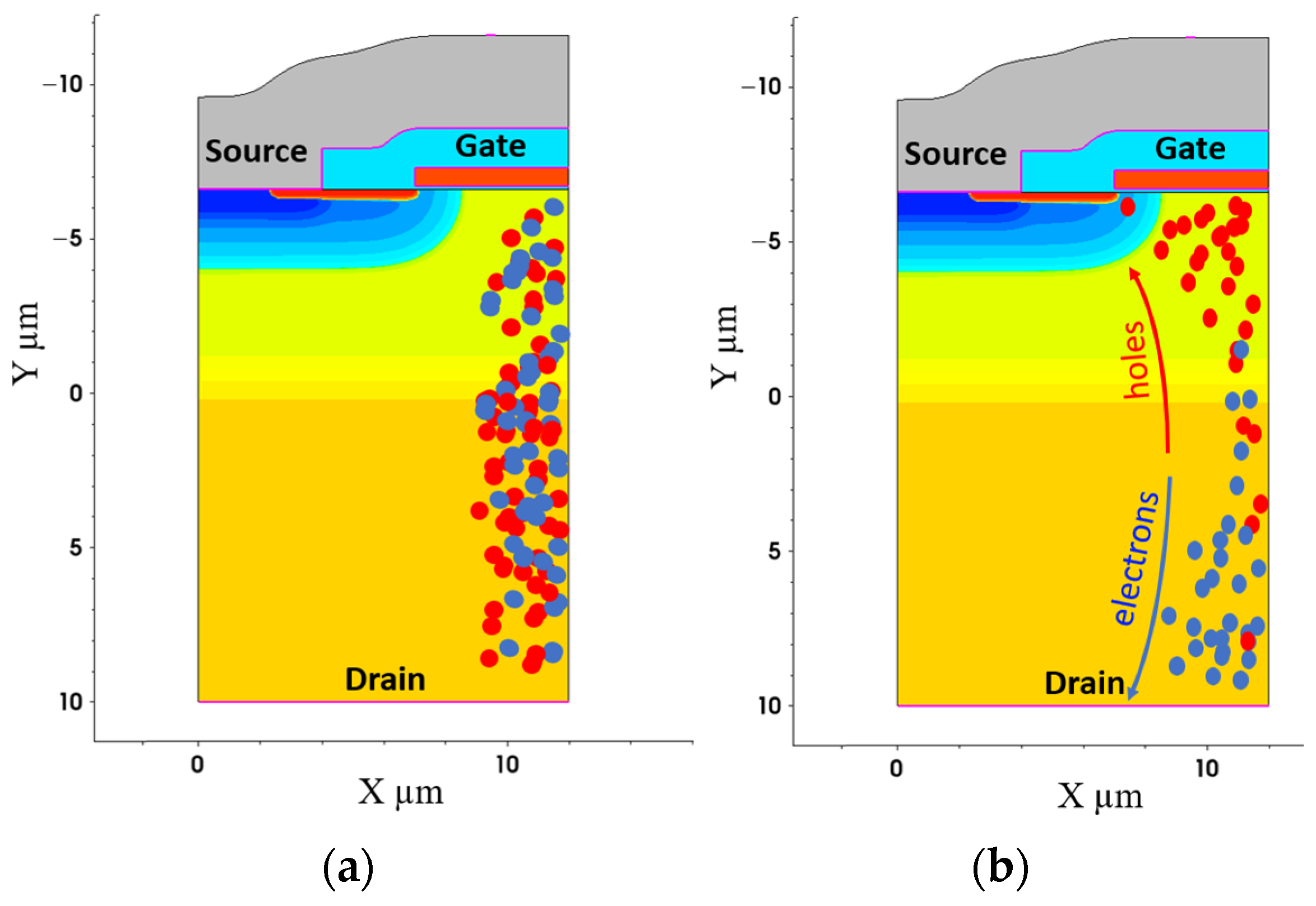
Following the ion impact, a localized generation of electron–hole pairs occur, whose magnitude depends on the ion LET, which defines the energy deposited per area and depth by the ion along its path, and atomic mass. When the generated charge density locally exceeds the epitaxial doping concentration, the electric field distribution within the device in blocking mode is significantly modified. In particular, the electric field peak may shift from the P
−/N
− junction toward the N
−/N
+ junction, where additional electron-hole pairs can be generated through avalanche multiplication. Simultaneously, due to applied device bias, the holes generated by the ion flow toward the source through the P-body, as schematically illustrated in
Figure 1.
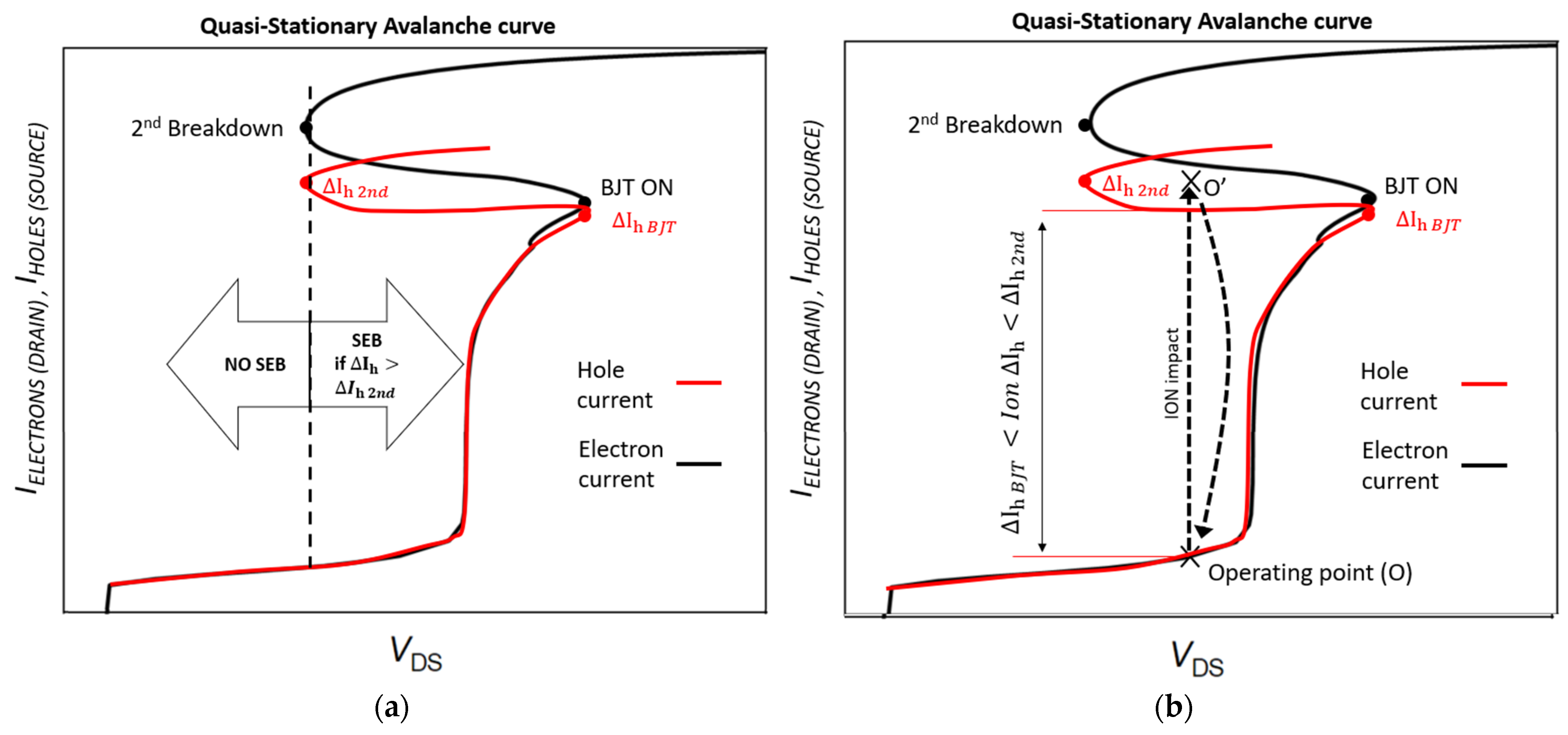
If the hole current flowing through the P-body is sufficiently high, it can activate the parasitic BJT inherent to the VDMOS structure, leading to a latch-up condition. Once activated, the BJT injects additional electrons from the source, further increasing current density in the device. Depending on the applied drain-source voltage (V
DS) and the increment of hole current (
), the system may evolve toward different equilibrium states. For V
DS exceeding the second breakdown voltage (defined as the voltage at which, due to the Kirk effect, the electric field at the N
−/N
+ junction generates enough holes through impact ionization to sustain the BJT injection [
11]), and
larger than a critical threshold,
) the equilibrium point corresponds to a destructive high-current state (SEB) associated with the second breakdown, as shown in
Figure 2a, which illustrates the relation of SEB onset conditions with the quasi-stationary avalanche curve [
11]. In contrast, for the intermediate of
(
), the device may return to its pre-impact state (
Figure 2b), although with higher dissipated power compared to the case without parasitic BJT activation. It should be noted that
also depends on the holes generated by the Kirk effect, as well as on the temperature of the N
−/N
+ junction and the applied V
DS. Consequently, a wide range of recovery behaviors may occur, and each scenario must be analyzed individually.
From this analysis, it becomes evident that the applied V
DS, the ion-induced charge generation and the device temperature are the main variables governing the SEB transient. The applied V
DS directly determines the electric field distribution, which, as described in
Section 1, consequently increases the likelihood of additional carrier generation through impact ionization. Moreover, it sets the current levels in the various device regions and strongly influences the post-transient stability. For this reason, voltage derating is commonly employed in power devices intended for radiation environments.
The role of temperature in SEB behavior is multifaceted and involves several competing mechanisms. First, carrier lifetimes generally increase with temperature, reducing hole recombination rates and favoring parasitic BJT activation through an increased current gain. Second, the base–emitter turn-on voltage of the parasitic BJT decreases with temperature, while the P-body resistance increases, both effects contributing to enhanced latch-up susceptibility. On the other hand, hole generation through avalanche multiplication decreases with increasing temperature due to the reduced carrier mean free path, implying that a higher initial ambient temperature may result in a lower hole current when avalanche is the dominant generation mechanism [
16]. Finally, during a second breakdown transient, the rapid temperature increase in the N
−/N
+ junction can lead to a decrease in the generated current, potentially allowing the device to return to a stable operating point.
Although SEB is influenced by the applied voltage, ion characteristics, and device structure, it is ultimately limited by thermal constraints. Therefore, for each ion-induced transient, it is necessary to assess how these factors affect the total power dissipated and maximum temperature reached in the sensitive regions of the VDMOS device.
3. Model and Simulation Strategy
3.1. VDMOS Model
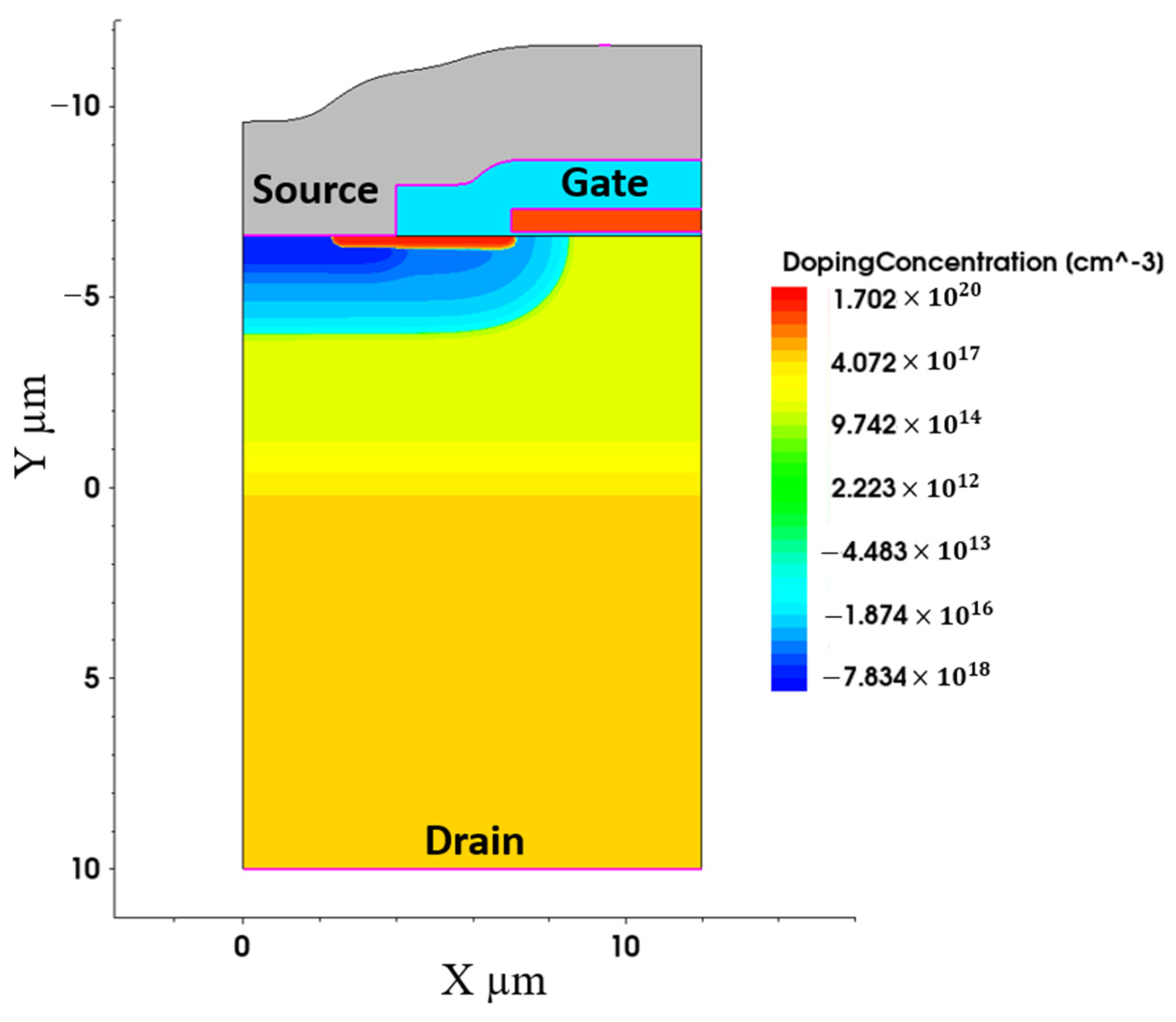
The simulated unit cell corresponds to a typical VDMOS structure, schematically shown in
Figure 3. It features: a 7 µm N
− epitaxial layer with a resistivity of 0.65 Ω·cm grown on a N
+ substrate with a resistivity of 0.03 Ω·cm, with total cell width of 24 µm. These epitaxial parameters ensure a breakdown voltage of approximately 60 V, consistent with the target device class. The device structure was generated using the SENTAURUS TCAD SPROCESS module following a realistic sequence of fabrication steps, resulting in electrical characteristics representative of an actual VDMOS power device. For all simulations, a Z-axis depth of 1 µm is considered, making the half-cell drain area equal to 12 µm
2.
3.2. Ion Model
The ion model incorporates the necessary physical characteristics to reproduce the SEB response of a simulated VDMOS cell. Depending on the ion’s energy and atomic mass, the model defines a specific LET, radial distribution, and penetration depth [
17,
18,
19].
To evaluate the impact of the proposed device modifications, a worst-case ion was selected in terms of fluence, LET, and penetration depth. According to [
20], which defines fluence as a function of energy (LET), atomic number (Z), and orbit; geostationary orbit presents the highest fluence values over energies and atomic numbers. Fluence for ions with Z ≥ 26 (iron) decreases by several orders of magnitude, and since maximum LET scales quadratically with Z [
21], iron is selected as the representative worst-case ion as it has the maximum LET-per-fluence ratio.
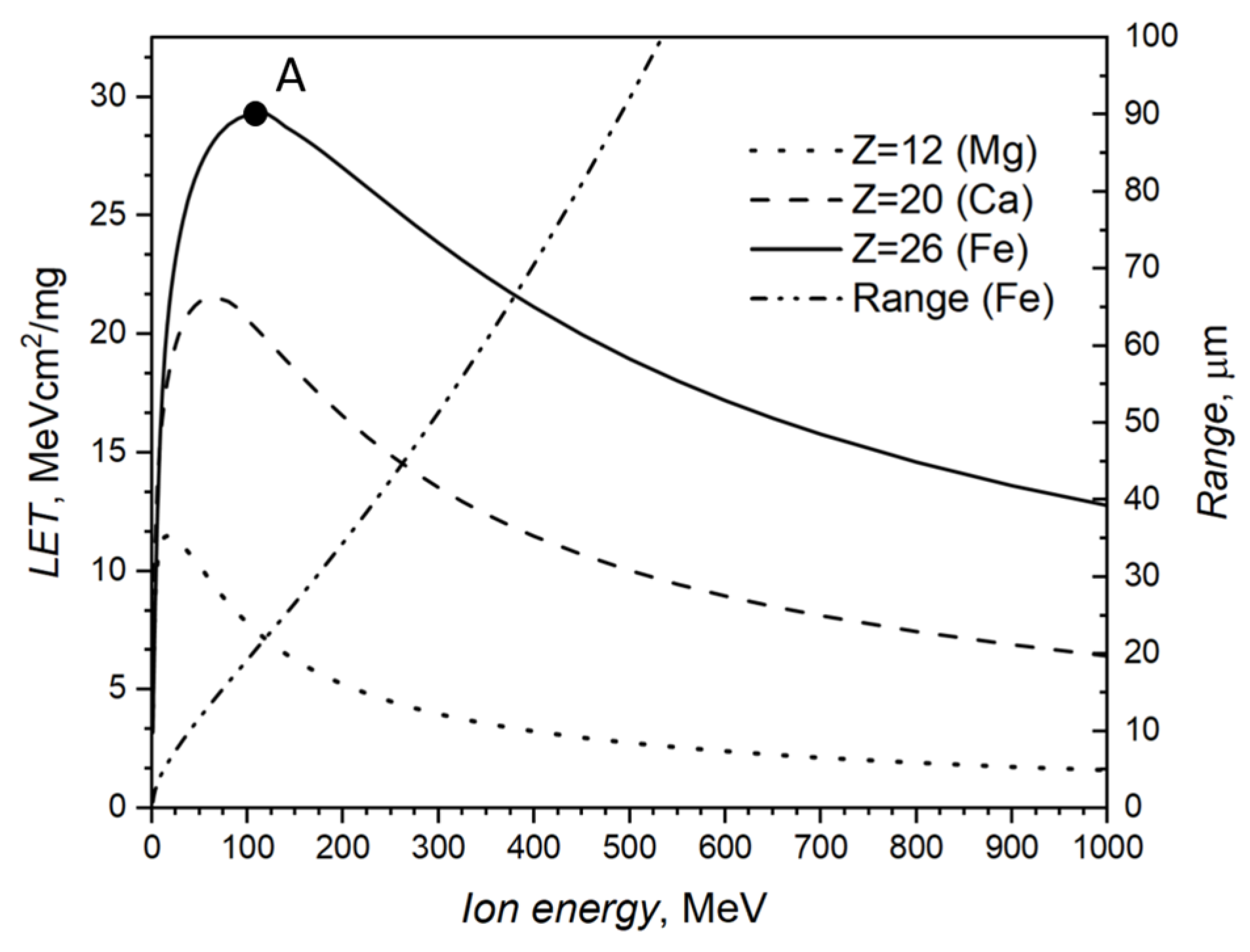
Figure 4 shows the LET dependence on ion energy and penetration depth for several ions, including iron, obtained with SRIM/TRIM simulations. For iron, a peak LET value of 29.3 MeV·cm
2/mg is reached at an energy of 120 MeV (point A), corresponding to a penetration depth of approximately 22.5 µm, sufficient to traverse the entire epitaxial layer and extent partially into the substrate. It should be noted that, according to [
2], electron–hole pairs generated deep in the substrate have a negligible impact on SEB due to rapid recombination.
The radial distribution of the deposited charge is complex to describe analytically. Semi-empirical models [
15] allow for an approximate definition of this distribution. For the selected ion (Fe, 120 MeV), approximating the radial charge distribution using an exponential function, as defined in Equation (1) [
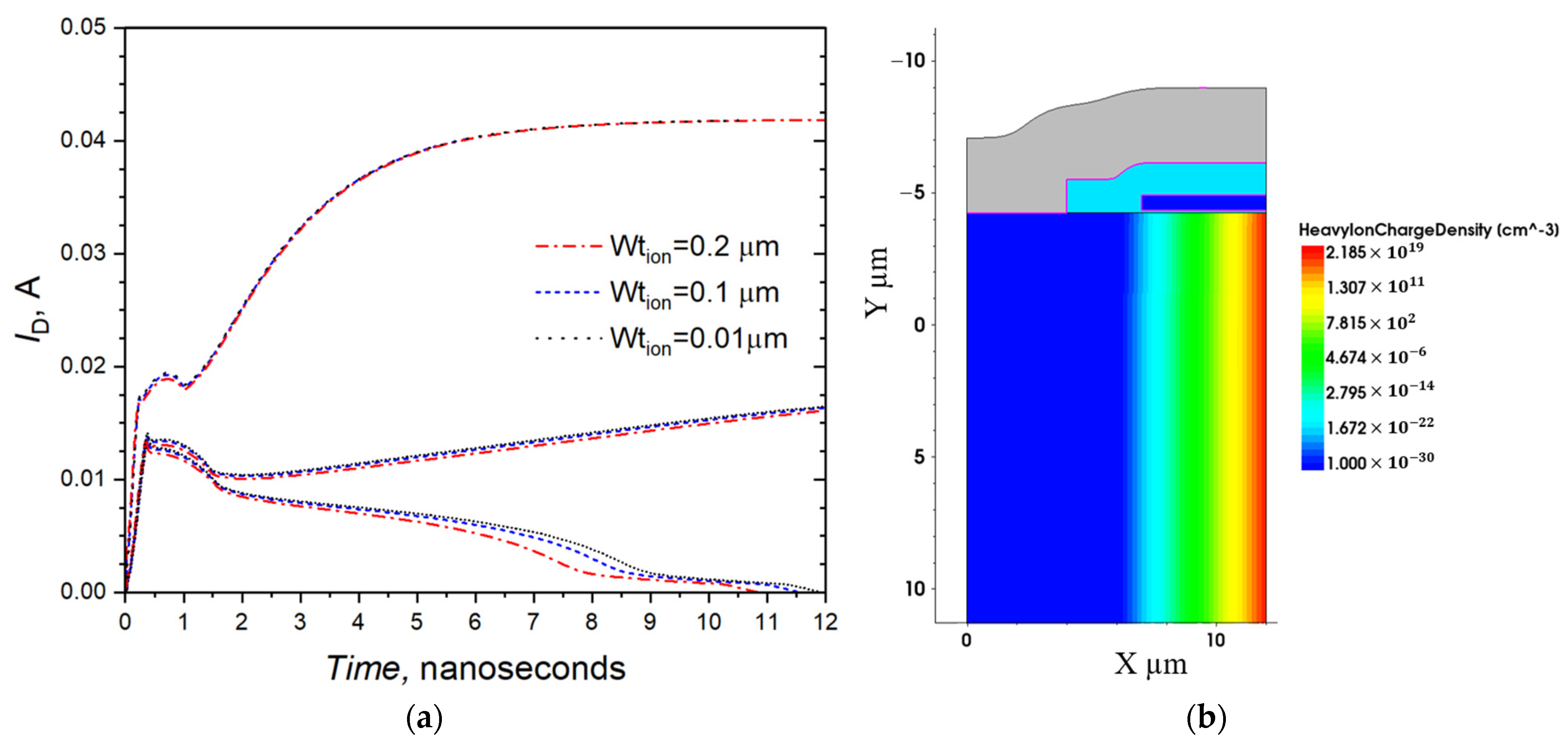
22], yields a characteristic radius (Wt) below 10 nm. Such a small radius would require extremely fine meshing in the impact region, increasing computational cost. However, due to the strong initial charge gradients, the distribution exhibits large drift and diffusion, and the initial radius can be increased without significantly altering the simulated SEB transient, as demonstrated in
Figure 5a. Increasing the radius by a factor of 20 produces nearly similar current and temperature transients, while allowing for a coarser mesh and reduced simulation time. Based on this analysis, a value of Wt = 50 nm is adopted in all simulations, as illustrated in
Figure 5b.
3.3. Simulation Considerations
3.3.1. Heavy Ion Model
Ion-induced transients are simulated using the SENTAURUS TCAD SDEVICE module in combination with the HeavyIon model. This model deposits a charge profile at time t
0 according to Equation (1), with a temporal evolution described by Equation (2), where a characteristic evolution time associated with the ion-track energy deposition process of S
HI = 2 × 10
−12 s is assumed, consistent with reported values in the literature [
16].
The electro-thermal simulations are based on the standard lattice heat equation, where carrier energy dissipation is coupled to the lattice through Joule heating and impact ionization. Non-equilibrium carrier–phonon dynamics and two-temperature effects are important at the track center after the impact; however, they are not explicitly modeled due to the fact that SEB mechanisms have characteristic time orders of magnitude slower than the non-equilibrium effects.
3.3.2. Heavy Ion Impact Position and Basic Cell Symmetry
As discussed in
Section 1, impact position is critical for SEB behavior. The impact location that maximizes the hole current through the P-body is commonly regarded as the worst case, since it enables SEB at the lowest V
DS. However, several studies have reported that the maximum temperature during the transient may occur when the ion impacts the channel region rather than the JFET region, due to a higher initial current peak, even though the parasitic BJT activation is weaker and the total power dissipated lower in this case [
8,
23].
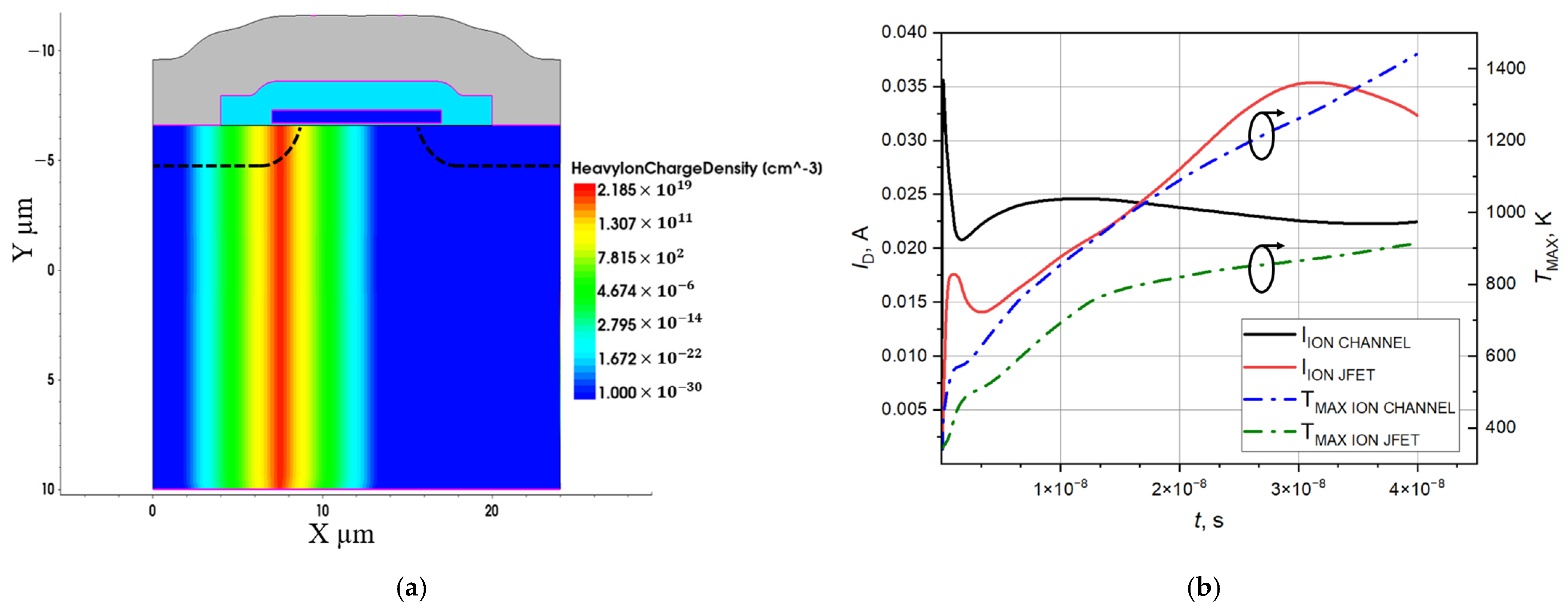
For simulations of the ion impacts in the JFET region, only half of the VDMOS basic cell is required due to structural symmetry. In contrast, full-cell simulations are necessary for channel impacts to avoid overestimating the amount of deposited charge contribution to the transient.
Figure 6a illustrates a channel impact simulated on the full cell, while
Figure 6b shows the resulting current and temperature transients for 120 MeV iron at V
DS = 45 V comparing different impact positions. The results confirm that higher-peak temperatures are reached for channel impacts.
Based on these observations, SEB robustness must be evaluated for both JFET and channel impact positions when assessing the effect of the buffer layer and BOX implant profile for the P-well region.
3.3.3. Thermal Boundaries
For electro-thermal simulations, the following thermal boundary conditions were applied. An initial ambient temperature of 300 K was assumed. Although the absolute temperature peak depends on the initial temperature, a larger temperature increase (ΔT) is generally obtained when starting from lower ambient temperatures [
7]. A Dirichlet boundary condition (T = 300 K) was applied at the drain contact assuming that the substrate volume is sufficiently large to absorb the dissipated energy without significant temperature rise during the transient. Neumann (adiabatic) boundary conditions were imposed at the lateral boundaries and at the aluminum–air interface, assuming negligible heat exchange within the nanosecond time scale of the simulated event.
3.3.4. Limitations of 2D Simulation
All ion impact simulations were performed using a two-dimensional (2D) device model, as is common in device-level numerical analysis. As a consequence, cylindrical effects associated with the radial symmetry of ion-induced charge deposition cannot be fully captured. However, because the regions of the cell influenced by the transient have micrometer-scale dimensions and the ion-track radius is approximately 0.05 µm (several times smaller than the JFET or channel regions), no significant deviation in the overall SEB mechanisms is expected. Nevertheless, the absolute values of temperature and current obtained from the simulations should be regarded as qualitative. For this reason, the effects of the buffer layer and the BOX implant are discussed exclusively in relative terms, focusing on comparative trends rather than absolute thresholds.
4. Buffer Layer Effects on VDMOS Structure
The most common approach reported in the literature to enhance SEB robustness in VDMOS power devices is the introduction of a buffer layer between the N
− epitaxial layer and the N
+ substrate [
11,
24]. This structural modification provides several benefits, among which two effects are particularly relevant for SEB mitigation:
The second breakdown voltage of a power device can be analytically described as a first approximation, under the assumption of an ideal N/N
+ junction. Equation (3), derived from [
25], relates the maximum electric field (E
MAX) to the buffer layer characteristics, namely its doping concentration (N
B) and thickness (W
B).
where the critical current density J
C, corresponding to the onset of the second breakdown, is given by
The remaining parameters are epilayer doping concentration (N
E), applied voltage (V
DS), minimum voltage for second breakdown (
) and material-dependent constants.
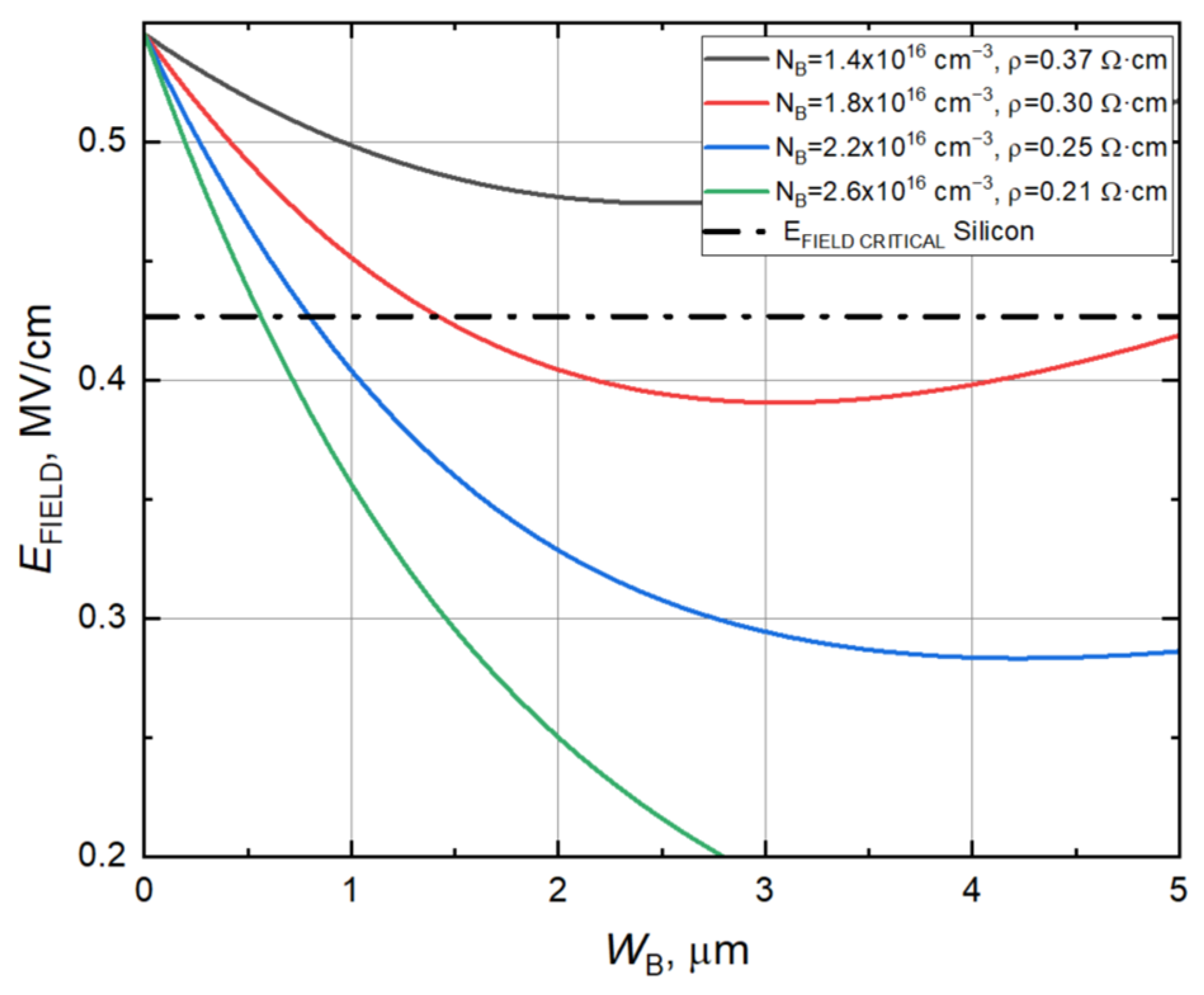
Figure 8 shows the calculated maximum electric field at V
DS = 60 V for different buffer layer doping and thickness values, together with the maximum field sustainable by silicon.
In this work, a buffer layer resistivity of 0.25 Ω·cm is selected, corresponding to a doping concentration of 2.2 × 1016 cm−3. Under these conditions, the minimum feasible buffer layer thickness is 0.75 µm and the maximum reduction in the electric field corresponds to a WB 4 µm.
However, the BJT-injected current density during the transient may exceed JC, meaning that the minimum buffer layer thickness for the selected doping is insufficient to prevent second breakdown. For this reason, a 2.5 µm buffer layer will be considered in this work.
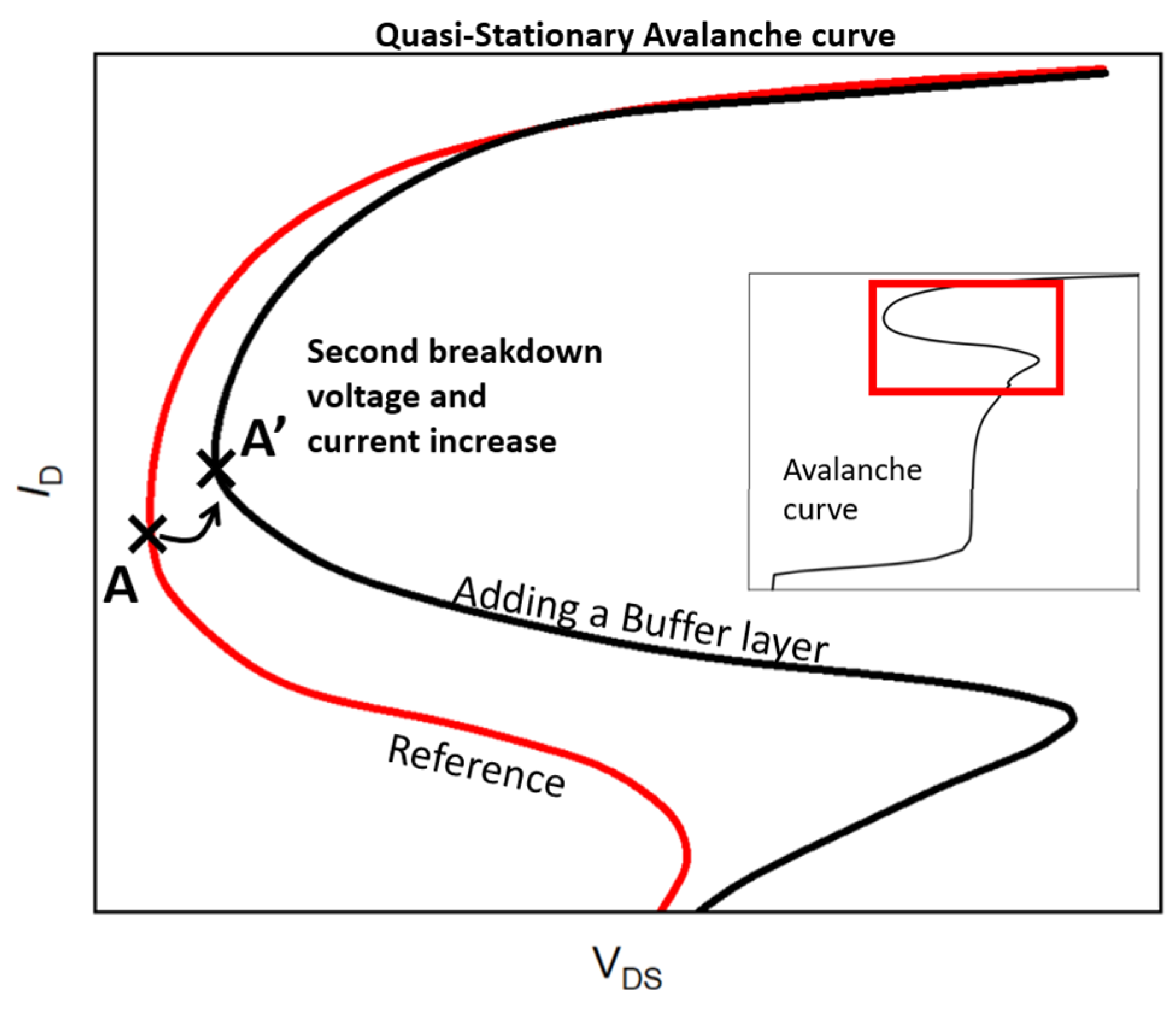
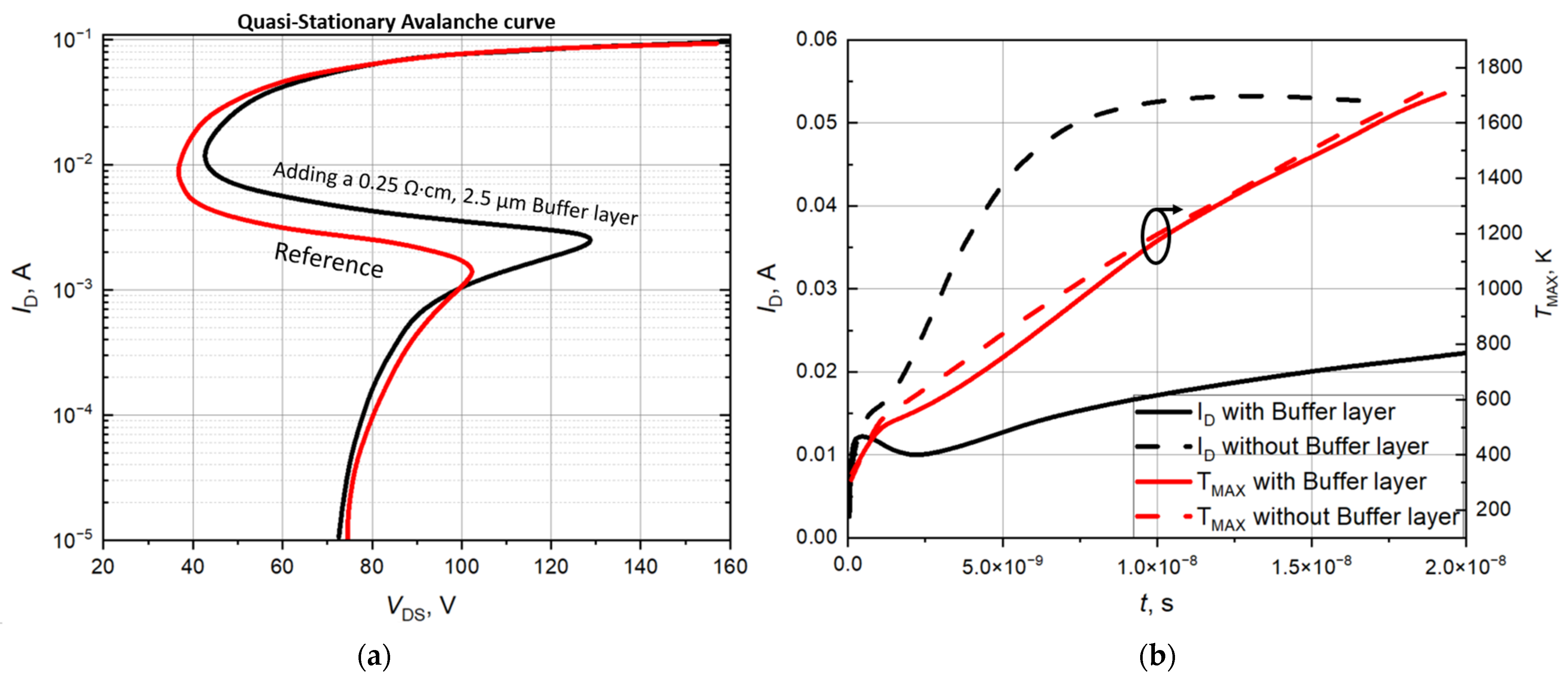
The effect of a 0.25 Ω·cm buffer layer with 2.5 µm thickness on the VDMOS cell is shown in
Figure 9a. The second breakdown voltage has increased from 37 V to 46 V for the same J
C due to the reduction in generated holes that allows the device to turn to the blocking state after the transient, as exposed in
Section 2.
To assess the influence of the buffer layer on the power losses and peak temperature reached during a SEB event, a comparative electro-thermal simulation study was performed.
Figure 9b shows the effect of the buffer layer on temperature and current transients following iron-ion impacts at the JFET region with V
DS = 60 V. The inclusion of the buffer layer leads to a reduction in the transient drain current (lowering its amplitude by a factor of two). However, this modification alone is not sufficient to prevent SEB. Regarding the temperature evolution, despite the halved current, the maximum temperature peak remains almost unchanged up to 2 × 10
−8 s. The physical origin of this behavior is discussed in
Section 6.
5. P-Well BOX Implant Effects on the VDMOS Structure
Numerous studies have addressed the suppression of the parasitic BJT activation in VDMOS devices through different strategies, including modifications of the P-body doping and geometry [
12], the introduction of parallel P-type structures to redirect charge carriers away from the parasitic BJT [
14], or the incorporation of regions with enhanced recombination rates [
26]. Although effective, these approaches typically alter the original VDMOS electrical characteristics or require substantial process redesign.
In this work, a different approach is proposed based on the introduction of a BOX implant in the P-body region during the final fabrication steps of the VDMOS process, which, in contrast with other solutions, does not change the cell structure without affecting the electrical device characteristics, and could be included into the fabrication process without major changes. Due to the high diffusivity of dopants in silicon, any implantation performed earlier in the process would experience significant diffusion during subsequent thermal steps, preventing the formation of a high-concentration and well-confined BOX profile. For this reason, the BOX implant profile is implemented at a late stage of the process flow, immediately before the back-end phase.
Specifically, a boron BOX profile is formed by means of a double implantation through 50 nm of oxide using doses of 5 × 1015 cm−2 at 200 keV and 3 × 1015 cm−2 at 140 keV, resulting in a peak concentration of approximately 2.2 × 1020 cm−3. The implantation is followed by a Rapid Thermal Annealing (RTA) step and is performed using the contact-level mask, thereby minimizing lateral diffusion and preserving the intended BOX profile.
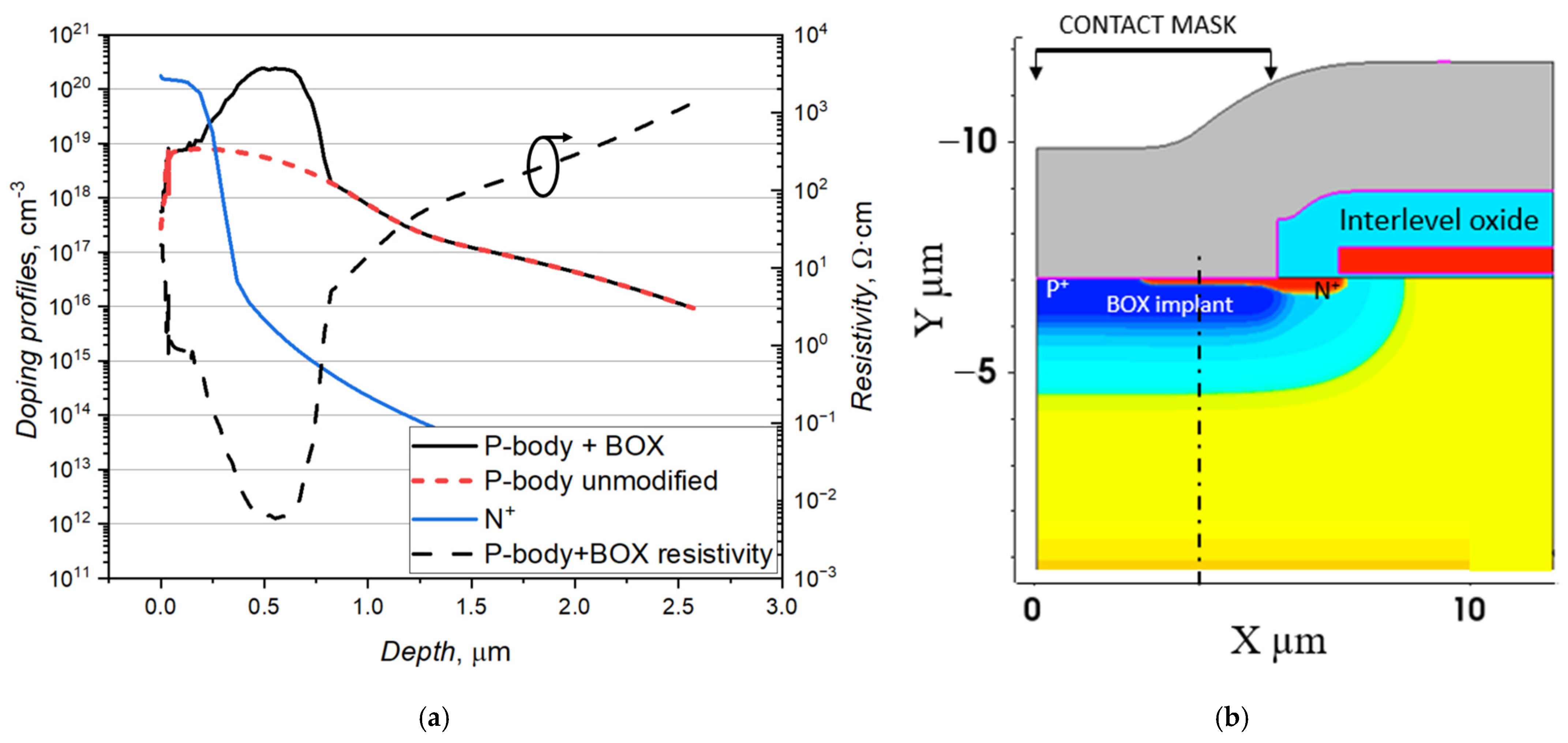
Figure 10a shows the simulated P-body doping profile after the introduction of the BOX implant, together with the resulting reduction in local resistivity. Because the resistivity decreases by several orders of magnitude, the BOX-implanted region contributes negligibly to the total P-body resistance compared with the surrounding unimplanted areas. Since the BOX implant is performed through the contact-level mask, as shown in
Figure 10b, the minimum interlevel oxide thickness constrains the overlap of N
+ and the BOX implant.
The reduction in P-body resistance directly impacts parasitic BJT activation. As shown in
Figure 11, both the V
DS and drain current required to trigger BJT conduction increase, indicating a reduced susceptibility to latch-up.
Starting from the reference VDMOS cell and incorporating the BOX implant described in
Figure 10a, the injected BJT current during the heavy-ion event is significantly reduced, leading to lower-power dissipated peak temperatures during the transient.
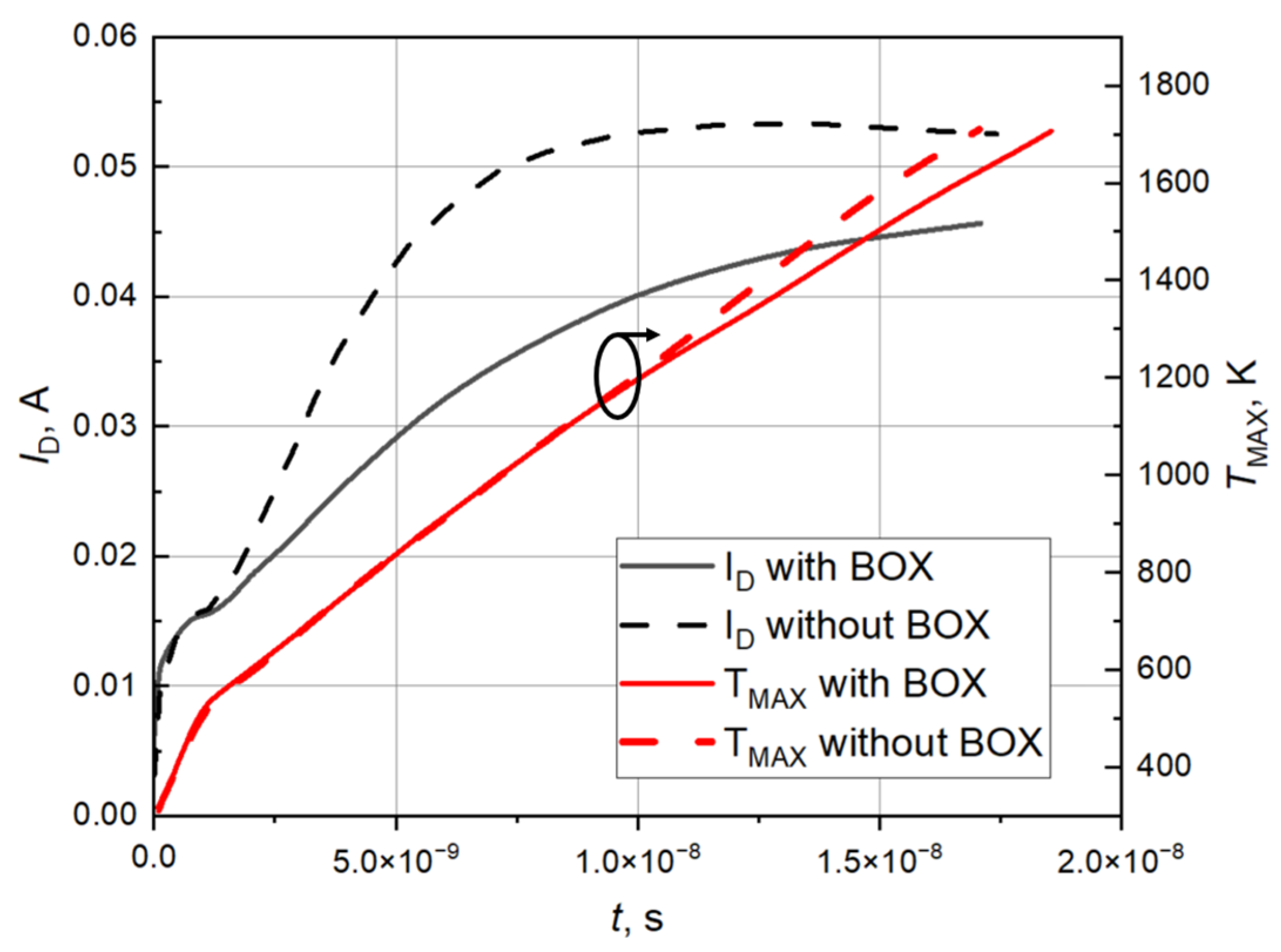
Figure 12 compares the current and temperature transients for an iron-ion impact in the JFET region and V
DS 60 V, with and without the BOX implant. It should be noted that, even with the BOX implant, the device is not able to withstand the 120 MeV iron-heavy ion impact since the destructive high current state is still reached with hotspot temperatures higher than the silicon melting point (1680 K). However, The BOX implant reduces the transient current by approximately 15%, thereby lowering both the dissipated power and the peak temperature.
Since the BOX profile is located beneath the N+ source and entirely within the P-body, no significant modifications to the electrical characteristics of the device (breakdown voltage, RONxS resistance) are observed. The only noticeable effect is a slight shift in the junction position between the P-body and the source; however, according to the simulations, this shift does not produce any measurable impact on RON. Additionally, since the BOX profile is within the P-body, no major changes in device capacitances are expected.
6. Combined Effects of Buffer Layer and BOX Implant
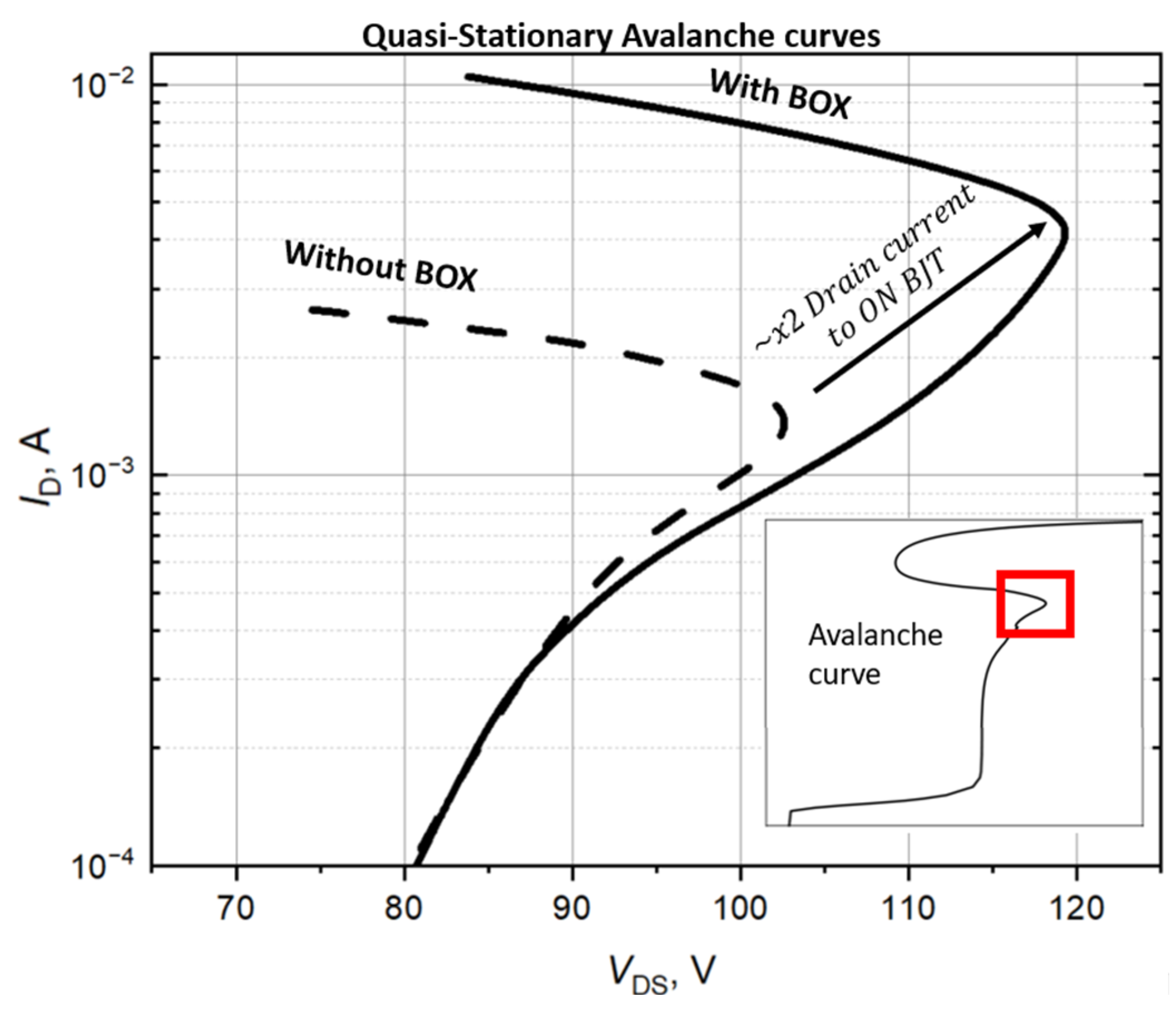
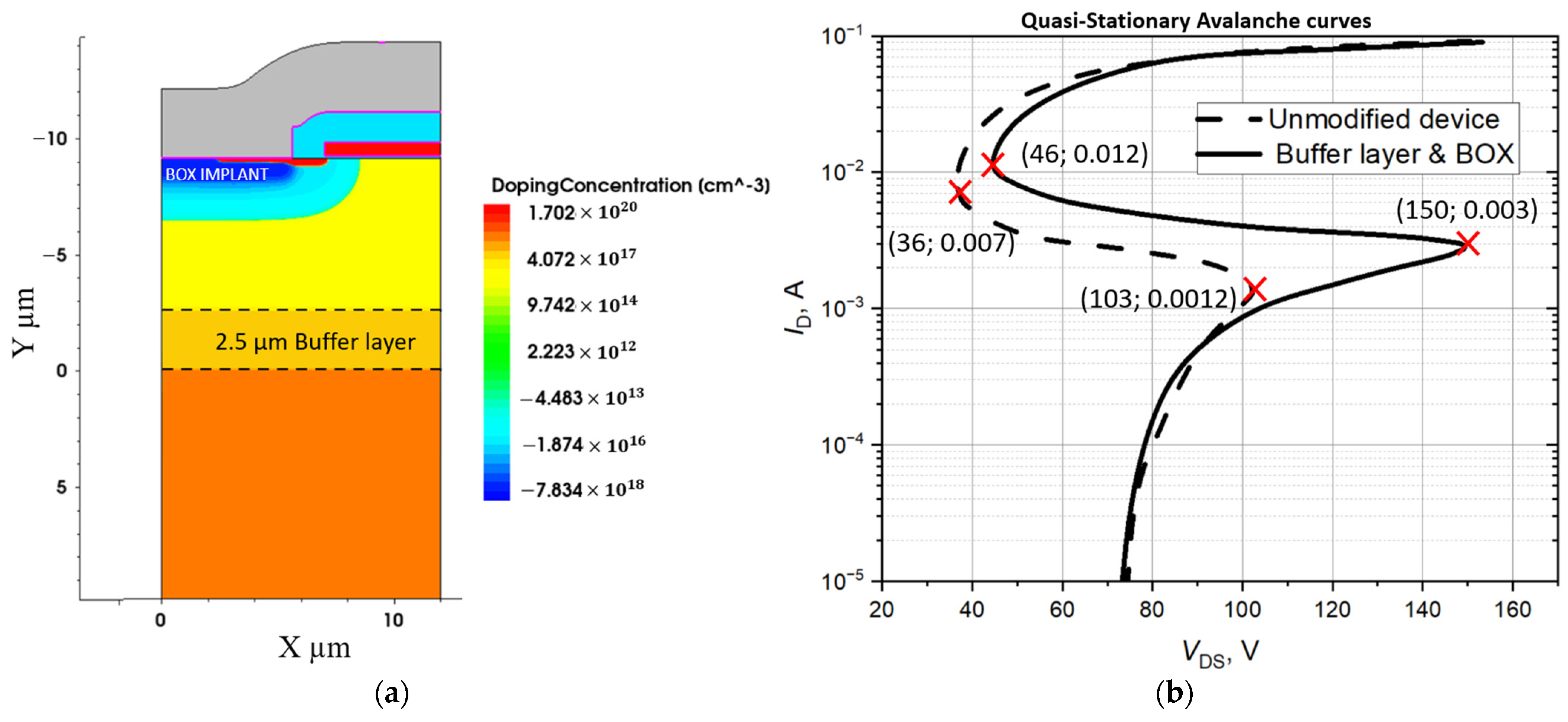
This section presents the results obtained by simultaneously introducing the buffer layer and the BOX implant into the VDMOS structure, as illustrated in
Figure 13a. The increase in SEB robustness can be qualitatively evaluated through the enhanced avalanche curve shown in
Figure 13b, on which the onset current and voltage for second breakdown and BJT activation are increased: drain current necessary for destructive second breakdown is doubled and the minimum V
DS increased by
.
As discussed in
Section 3.3.2, parasitic BJT activation and the resulting SEB behavior strongly depend on the ion impact location. Impacts occurring in the JFET region are more prone to BJT activation due to the higher hole current, whereas channel impacts typically lead to higher peak temperature despite weaker BJT triggering. Consequently, the effectiveness of both the buffer layer and the BOX implant must be evaluated separately for each impact position, expecting the BOX implant to be more effective for ion impacts at the JFET region than in the channel.
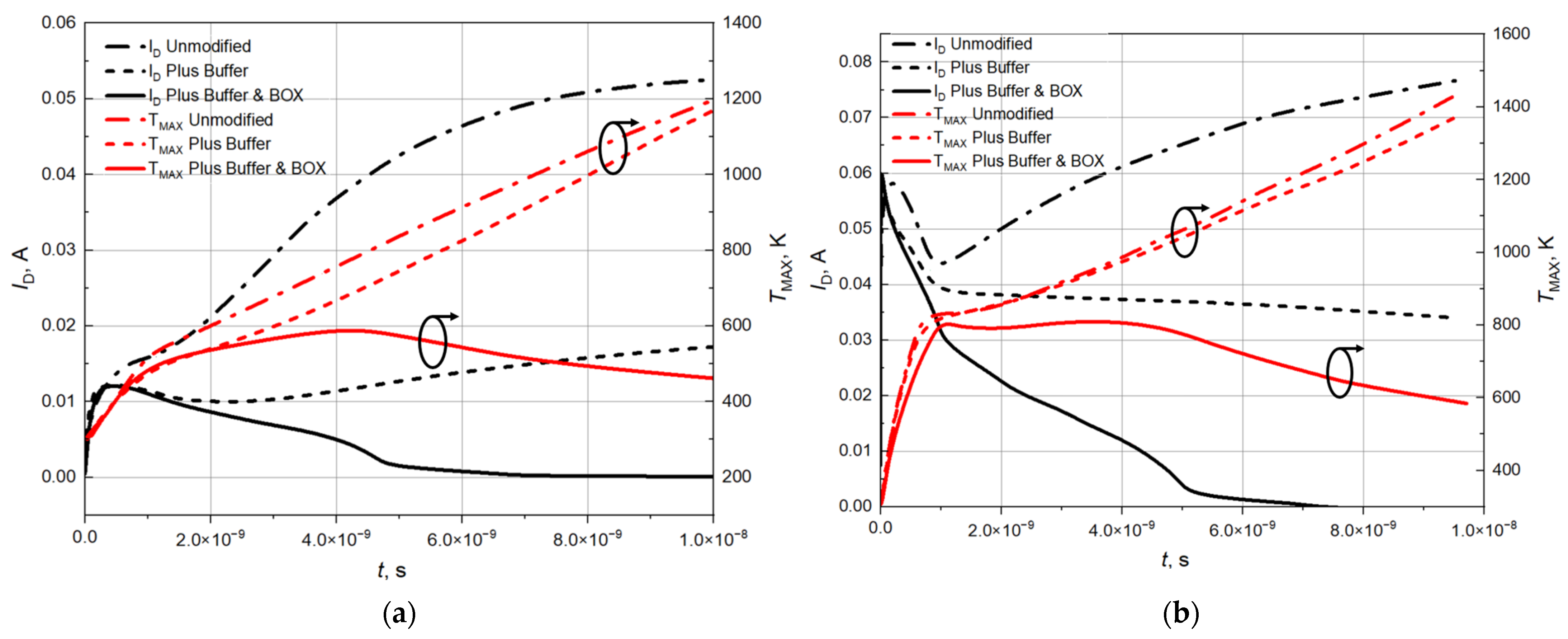
Figure 14 shows the transient evolution of drain current and maximum device temperature following iron-ion impacts in the JFET (14a) and channel (14b) regions, both for the reference device and for the device incorporating the combined 2.5 µm buffer layer and BOX implant.
The introduction of the combined buffer layer + BOX solution leads to a significant decrease in transient current (total dissipated power) and peak temperature because the device no longer reaches the destructive high current point and the peak temperature remains below the silicon melting point for both JFET and channel impacts.
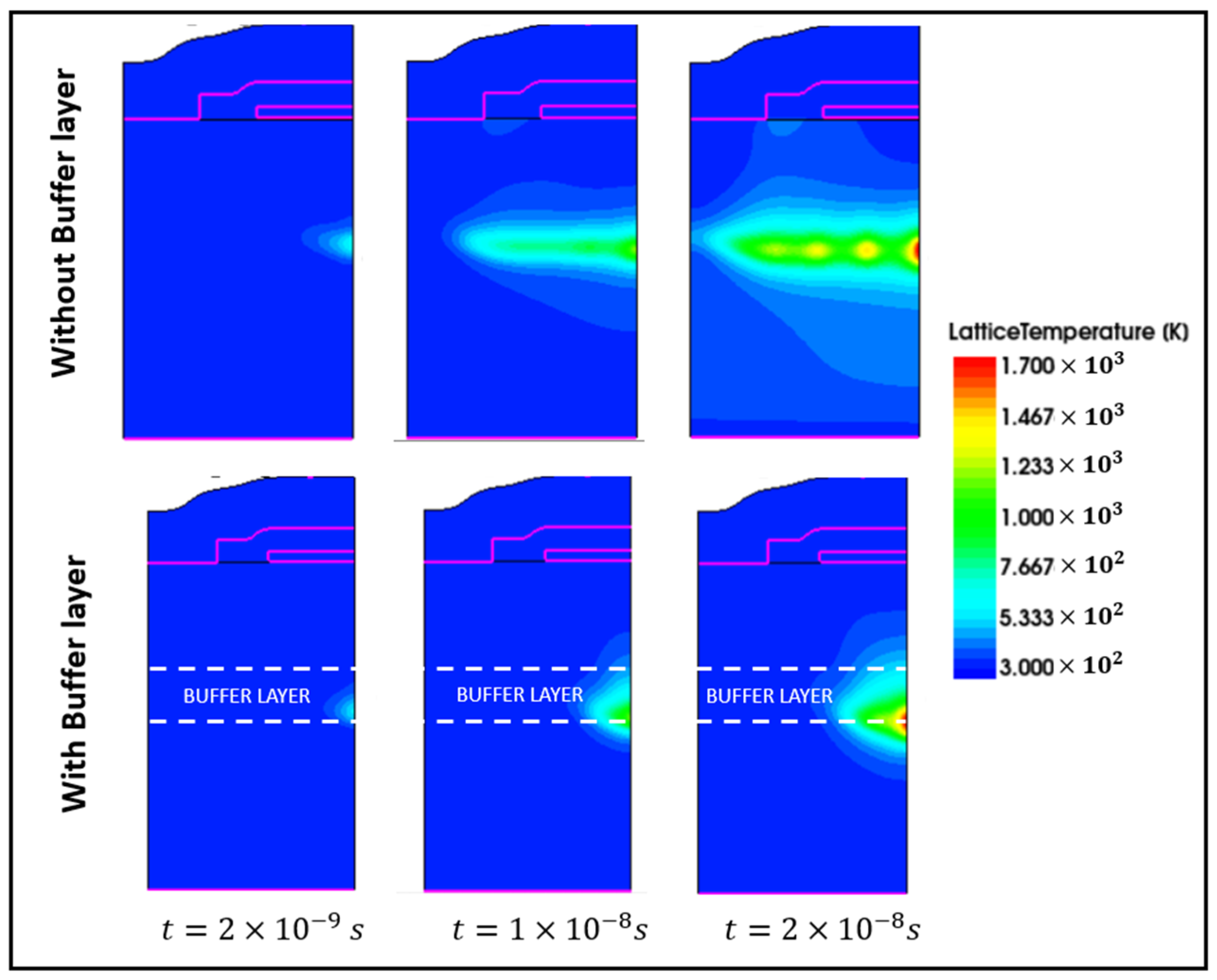
It should be noted that when including only the buffer layer to the device, the current decreases considerably, but the maximum temperature remains almost unchanged; this is explained by
Figure 15, which shows the temperature distribution inside the device with and without the buffer layer. As can be seen, the hotspot at the center of the device remains almost equal, but without a buffer layer the area of high-power losses extends more widely across the N
−/N
+ junction, which implies that the high electric field is present over a larger zone and the total holes generated increase, making the device more prone to SEB and have a larger high-temperature affected area.
In this work, a buffer layer with a thickness of 2.5 µm has been employed. Increasing the buffer layer thickness would further enhance SEB robustness, as indicated by the trends shown in
Figure 8. If the buffer layer alone can avoid the destructive high-current point (second breakdown) for the rated V
DS, the additional effect the BOX implant becomes less significant
. Even when the buffer layer dominates the SEB behavior under specific set of conditions (V
DS, heavy ion atomic mass), the presence of the BOX implant can extent the tolerance to heavier ions, thereby increasing the overall reliability of the device against SEB.
7. Discussion and Conclusions
The results presented in this work provide insight into the mechanisms governing SEB in silicon VDMOS power devices and into the effectiveness of device-level design strategies aimed at improving SEB robustness. Previous studies have shown that SEB is primarily driven by the activation of the parasitic bipolar junction transistor (BJT) and the subsequent evolution toward stable high-current states or thermally destructive transients, depending on the applied bias and the ion-induced charge deposition. The present electro-thermal simulations are consistent with these observations, confirming the central role of drain-source voltage, impact location, and temperature in defining the outcome of heavy-ion events.
The introduction of a buffer layer between the epitaxial layer and the substrate has been widely reported as an effective means to increase the second breakdown voltage and to mitigate SEB by suppressing stable high-current operating points. The results obtained in this work corroborate these findings, showing that the buffer layer limits the electric field peak at the N−/N+ junction and prevents the device from entering a second breakdown regime under heavy-ion irradiation. However, the simulations also indicate that electrical stabilization alone does not fully eliminate the risk of thermally driven failure, particularly for ion impacts that lead to high localized power dissipation.
Strategies based on modifying the P-body region have previously been proposed to reduce parasitic BJT activation by altering hole transport or recombination. In line with these approaches, the BOX implant investigated in this study increases effective P-body conductivity, thereby raising the hole current threshold required to trigger BJT conduction. The simulated results confirm that this modification reduces the injected BJT current and lowers the resulting temperature rise, while preserving the static electrical characteristics of the device. Nevertheless, when applied alone, the BOX implant does not provide sufficient protection against studied heavy-ion events, especially for channel impacts where thermal effects dominate.
The combined implementation of the buffer layer and the BOX implant addresses both electrical and thermal aspects of SEB. By preventing stable high-current states and simultaneously limiting parasitic BJT activation, the proposed solution achieves a more pronounced reduction in peak temperature than either modification applied independently. The remaining sensitivity to ion impact location, particularly in the channel region, is consistent with previous reports highlighting the importance of initial current peaks and localized heating in SEB transients.
Overall, the results of this work are in agreement with existing literature on SEB mitigation while extending it by demonstrating that a combination of buffer layer engineering and localized P-body resistance reduction can enhance SEB robustness without degrading key electrical parameters. This approach provides a viable alternative to excessive voltage derating and can be integrated into standard VDMOS fabrication flows without significant increase in cost or complexity, offering practical benefits for radiation-tolerant power device design over a wide range of VDMOS.
Future work will focus on evaluating the feasibility of incorporating the proposed BOX implant via the fabrication of prototype devices. Their electrical characterization under radiation environments will also be pursued in order to validate simulation results and further assess the effectiveness of the proposed mitigation strategies.
Author Contributions
Conceptualization, J.R., X.J. and M.V.; Validation, J.R.; Formal analysis, E.R., J.R. and M.V.; Investigation, E.R.; Resources, J.C. and L.L.; Writing—original draft, E.R.; Writing—review & editing, E.R., J.R., X.J., J.C., L.L. and M.V.; Supervision, J.R., X.J. and M.V. All authors have read and agreed to the published version of the manuscript.
Funding
This work was supported by the Ministry of Science, Innovation and Universities (MICIU), Spain, through the POWERCELLS project (Grant PID2024-160767OB-I00) and the GaO4Power project (Grant PID2023-151481OB-I00). It was also supported by the Horizon Europe programme through the SAFE-POWER project (Grant 101172940), and by Power Electronics S.L. under contract 20243890.
Data Availability Statement
Data are contained within the article.
Conflicts of Interest
Author José Camps and Llorenç Latorre were employed by the company PowerElectronics SL. The remaining authors declare that the research was conducted in the absence of any commercial or financial relationships that could be construed as a potential conflict of interest.
Abbreviations
The following abbreviations are used in this manuscript:
| BJT | Bipolar Junction Transistor |
| BOX | Buried Oxide (implant) |
| COTS | Commercial Off-The-Shelf |
| DD | Displacement Damage |
| EMAX | Maximum Electric Field |
| Fe | Iron |
| JC | Critical Current Density (Second Breakdown Onset) |
| JFET | Junction Field-Effect Transistor |
| LET | Linear Energy Transfer |
| MOSFET | Metal–Oxide–Semiconductor Field-Effect Transistor |
| NB | Buffer Layer Doping Concentration |
| NE | Epitaxial Layer Doping Concentration |
| NRT | Non-Reach-Through |
| RON | On-State Resistance |
| RTA | Rapid Thermal Annealing |
| SEB | Single-Event Burnout |
| SEE | Single Event Effects |
| SEGR | Single-Event Gate Rupture |
| SPROCESS | Sentaurus Process Simulation Module |
| SRIM | Stopping and Range of Ions in Matter |
| SDEVICE | Sentaurus Device Simulation Module |
| TCAD | Technology Computer-Aided Design |
| TID | Total Ionizing Dose |
| VBR | Breakdown Voltage |
| VDS | drain-source Voltage |
| VDMOS | Vertical-Diffused Metal–Oxide–Semiconductor |
| WB | Buffer Layer Thickness |
| Wt | Radial Charge Distribution Characteristic Radius |
References
- Busatto, G.; De Luca, V.; Iannuzzo, F.; Sanseverino, A.; Velardi, F. Single-Event Effects in Power MOSFETs During Heavy Ion Irradiations Performed After Gamma-Ray Degradation. IEEE Trans. Nucl. Sci. 2013, 60, 3793–3801. [Google Scholar] [CrossRef]
- Ferlet-Cavrois, V.; Sturesson, F.; Zadeh, A.; Santin, G.; Truscott, P.; Poivey, C.; Ecoffet, R. Charge Collection in Power MOSFETs for SEB Characterisation—Evidence of Energy Effects. IEEE Trans. Nucl. Sci. 2010, 57, 3515–3527. [Google Scholar] [CrossRef]
- Oldham, T.R.; McLean, F.B. Total Ionizing Dose Effects in MOS Oxides and Devices. IEEE Trans. Nucl. Sci. 2003, 50, 483–499. [Google Scholar] [CrossRef]
- Emeliyanov, V.V.; Vatuev, A.S.; Useinov, R.G. New Insight Into Heavy Ion Induced SEGR: Impact of Charge Yield. In 2015 15th European Conference on Radiation and Its Effects on Components and Systems (RADECS); IEEE: Piscataway, NJ, USA, 2016; pp. 1–5. [Google Scholar]
- Liu, F.-K.; Liu, Z.-L.; Li, X.; Xu, X.-D.; Liu, S.; Jin, X.; Yang, J.Q.; Li, X.J. Drain-Leakage Degradation During Single-Event Burnout Experiments in N-Channel Power VDMOS Transistors. IEEE Trans. Electron Devices 2024, 71, 4906–4913. [Google Scholar] [CrossRef]
- Grome, C.A.; Ji, W. A Brief Review of Single-Event Burnout Failure Mechanisms and Design Tolerances of Silicon Carbide Power MOSFETs. Electronics 2024, 13, 1414. [Google Scholar] [CrossRef]
- Lei, Y.; Fang, J.; Shi, Q.; Li, S.; Shi, L.; Xiong, X.; Luo, X.; Zhang, B. Thermal and Electrical Study of Single-Event Burnout and Hardening in 600 V Lateral DMOSFETs with Optimized Trench Drain. IEEE Trans. Electron Devices 2023, 70, 692–699. [Google Scholar] [CrossRef]
- Wang, C.; Liu, Y.; Xu, C.; Liao, X.; Chen, D.; Wu, Z. Research on Temperature Dependence of Single-Event Burnout in Power MOSFETs. Micromachines 2023, 14, 1028. [Google Scholar] [CrossRef] [PubMed]
- Raine, M.; Hubert, G.; Gaillardin, M.; Artola, L.; Paillet, P.; Girard, S.; Sauvestre, J.-E.; Bournel, A. Impact of the Radial Ionization Profile on SEE Prediction for SOI Transistors and SRAMs Beyond the 32-nm Technological Node. IEEE Trans. Nucl. Sci. 2011, 58, 840–847. [Google Scholar] [CrossRef]
- Fernández-Martínez, P.; Papadopoulou, A.; Danzeca, S.; Foucard, G.; García-Alía, R.; Kastriotou, M.; Cazzaniga, C.; Tsiligiannis, G.; Gaillard, R. SEE Testing on Commercial Power MOSFETs. In 2020 20th European Conference on Radiation and Its Effects on Components and Systems (RADECS); IEEE: Piscataway, NJ, USA, 2022; pp. 1–8. [Google Scholar]
- Liu, C.; Li, X.; Tan, K.; Liu, C.; Fu, X. Effect of Buffer Layer on Single-Event Burnout of Power DMOSFETs. IEEE Trans. Nucl. Sci. 2008, 55, 2922–2928. [Google Scholar] [CrossRef]
- Tang, Z.; Li, X.; Tan, K.; Liu, C.; Fu, X. Updated Structure of Vertical Double-Diffused MOSFETs for Irradiation Hardening Against Single Events. J. Comput. Electron. 2018, 17, 1578–1583. [Google Scholar] [CrossRef]
- Wan, X.; Zhou, W.S.; Ren, S.; Liu, D.G.; Xu, J.; Bo, H.L.; Zhang, E.X.; Schrimpf, R.D.; Fleetwood, D.M.; Ma, T.P. SEB Hardened Power MOSFETs with High-K Dielectrics. IEEE Trans. Nucl. Sci. 2015, 62, 2830–2836. [Google Scholar] [CrossRef]
- Ren, M.; Hu, Y.; Lin, Y.; He, W.; Ma, Y.; Gao, W.; Zhang, B. Single-Event Effect Hardened VDMOS Device with Hole Bypass Structure. In 2018 10th International Conference on Communications, Circuits and Systems (ICCCAS); IEEE: Piscataway, NJ, USA, 2019; pp. 1–4. [Google Scholar]
- Synopsys Inc. Sentaurus Process: 1D, 2D & 3D Process Simulator, Version N-2017.09; Synopsys: Mountain View, CA, USA, 2017. [Google Scholar]
- Steinmann, P.; Lichtenwalner, D.; Das, S.; Park, J.; Stein, S.; Ryu, S.-H. Temperature Coefficients for Impact Ionization in Silicon Derived From Temperature Coefficients of Avalanche Voltage. IEEE Trans. Electron Devices 2025, 72, 939–942. [Google Scholar] [CrossRef]
- Fageeha, O.; Howard, J.; Block, R.C. Distribution of Radial Energy Deposition Around the Track of Energetic Charged Particles in Silicon. Nucl. Instrum. Methods Phys. Res. B 1984, 2, 349–356. [Google Scholar] [CrossRef]
- Raine, M.; Hubert, G.; Paillet, P.; Gaillardin, M.; Bournel, A. Implementing Realistic Heavy Ion Tracks in a SEE Prediction Tool: Comparison Between Different Approaches. IEEE Trans. Nucl. Sci. 2012, 59, 2674–2681. [Google Scholar] [CrossRef]
- Raine, M.; Hubert, G.; Paillet, P.; Gaillardin, M.; Bournel, A. Towards a Generic Representation of Heavy Ion Tracks to Be Used in Engineering SEE Simulation Tools. IEEE Trans. Nucl. Sci. 2014, 61, 1492–1500. [Google Scholar] [CrossRef]
- Xapsos, M.A.; Stauffer, C.; Jordan, T.; Barth, J.L.; Mewaldt, R.A. Model for Cumulative Solar Heavy Ion Energy and Linear Energy Transfer Spectra. IEEE Trans. Nucl. Sci. 2007, 54, 1985–1989. [Google Scholar] [CrossRef]
- Akkerman, A.; Murat, M.; Barak, J. Electron and Ion Tracks in Silicon: Spatial and Temporal Evolution. IEEE Trans. Nucl. Sci. 2008, 55, 3046–3054. [Google Scholar] [CrossRef]
- Synopsys Inc. Sentaurus Device User Guide, Version H-2013.03; Synopsys: Mountain View, CA, USA, 2013. [Google Scholar]
- Luu, A.; Austin, P.; Miller, F.; Buard, N.; Carriere, T.; Poirot, P.; Sarrabayrouse, G. Sensitive Volume and Triggering Criteria of SEB in Classic Planar VDMOS. IEEE Trans. Nucl. Sci. 2010, 57, 3086–3092. [Google Scholar] [CrossRef]
- Jia, Y.; Peng, L.; Su, H.; Hu, D.; Wu, Y. Effect of Grade Doping Buffer Layer on SEE Failure in VDMOSFET. IEEE Trans. Nucl. Sci. 2016, 63, 2922–2928. [Google Scholar]
- Baliga, B.J. Fundamentals of Power Semiconductor Devices; Springer: New York, NY, USA, 2008. [Google Scholar]
- Tang, Z.; Fu, X.; Tan, K.; Liu, C.; Yang, F.; Ma, K.; Wu, X.; Lin, J. The Progress of SEB and SEGR Irradiation Hardening Technology for Power MOSFET. IEEE Trans. Nucl. Sci. 2019, 66, 2461–2469. [Google Scholar]
Figure 1.
(a) Electron-hole pairs generated at t = 0 by the heavy ion along the device. (b) Flow of electrons (blue) and holes (red) toward drain and source respectively.
Figure 1.
(a) Electron-hole pairs generated at t = 0 by the heavy ion along the device. (b) Flow of electrons (blue) and holes (red) toward drain and source respectively.
Figure 2.
(a) Definition of SEB-susceptible zone using the quasi-stationary curves. (b) Transient after heavy ion strike (O’) with intermediate hole current returning to operating blocking point (O).
Figure 2.
(a) Definition of SEB-susceptible zone using the quasi-stationary curves. (b) Transient after heavy ion strike (O’) with intermediate hole current returning to operating blocking point (O).
Figure 3.
Schematic cross-section of the simulated VDMOS half-unit cell.
Figure 3.
Schematic cross-section of the simulated VDMOS half-unit cell.
Figure 4.
LET as a function of energy and penetration depth for different ions obtained using SRIM/TRIM. Peak LET of iron at 29.3 MeV·cm2/mg (point A).
Figure 4.
LET as a function of energy and penetration depth for different ions obtained using SRIM/TRIM. Peak LET of iron at 29.3 MeV·cm2/mg (point A).
Figure 5.
(a) Effect of radial charge distribution width on SEB transients. (b) Adopted radial charge profile.
Figure 5.
(a) Effect of radial charge distribution width on SEB transients. (b) Adopted radial charge profile.
Figure 6.
(a) Ion impact in the VDMOS channel. (b) Current and temperature transients for different impact locations.
Figure 6.
(a) Ion impact in the VDMOS channel. (b) Current and temperature transients for different impact locations.
Figure 7.
Second breakdown behavior of the VDMOS device with and without buffer layer.
Figure 7.
Second breakdown behavior of the VDMOS device with and without buffer layer.
Figure 8.
Maximum electric field at VDS = 60 V as a function of buffer layer thickness and doping obtained by Equation (3).
Figure 8.
Maximum electric field at VDS = 60 V as a function of buffer layer thickness and doping obtained by Equation (3).
Figure 9.
(a) Quasi-static electrical characteristics of the VDMOS device with and without a 2.5 µm buffer layer. (b) Drain current and maximum temperature transients after a 120 MeV iron-ion impact in the JFET region at VDS = 60 V with and without buffer layer.
Figure 9.
(a) Quasi-static electrical characteristics of the VDMOS device with and without a 2.5 µm buffer layer. (b) Drain current and maximum temperature transients after a 120 MeV iron-ion impact in the JFET region at VDS = 60 V with and without buffer layer.
Figure 10.
(a) P-body doping profile with BOX implant and corresponding resistivity (cut at X = 4 µm, dash line in (b)). (b) Overlap between BOX implant and N+ source.
Figure 10.
(a) P-body doping profile with BOX implant and corresponding resistivity (cut at X = 4 µm, dash line in (b)). (b) Overlap between BOX implant and N+ source.
Figure 11.
Quasi-static electrical simulations showing the effect of P-body resistance reduction on the onset of parasitic BJT activation.
Figure 11.
Quasi-static electrical simulations showing the effect of P-body resistance reduction on the onset of parasitic BJT activation.
Figure 12.
Current and temperature transients following iron-ion impact with and without BOX implant (VDS = 60 V).
Figure 12.
Current and temperature transients following iron-ion impact with and without BOX implant (VDS = 60 V).
Figure 13.
(a) Half VDMOS structure incorporating both buffer layer and BOX implant. (b) Avalanche curve modified with the addition of buffer layer and BOX profile.
Figure 13.
(a) Half VDMOS structure incorporating both buffer layer and BOX implant. (b) Avalanche curve modified with the addition of buffer layer and BOX profile.
Figure 14.
(a) Current and maximum temperature transients for iron-ion impacts in the JFET region. VDS = 60 V. (b) Current and maximum temperature transients for iron-ion impacts in the channel region. VDS = 60 V.
Figure 14.
(a) Current and maximum temperature transients for iron-ion impacts in the JFET region. VDS = 60 V. (b) Current and maximum temperature transients for iron-ion impacts in the channel region. VDS = 60 V.
Figure 15.
Temperature distribution after JFET impact with and without 2.5 µm buffer layer for different transient times.
Figure 15.
Temperature distribution after JFET impact with and without 2.5 µm buffer layer for different transient times.
| Disclaimer/Publisher’s Note: The statements, opinions and data contained in all publications are solely those of the individual author(s) and contributor(s) and not of MDPI and/or the editor(s). MDPI and/or the editor(s) disclaim responsibility for any injury to people or property resulting from any ideas, methods, instructions or products referred to in the content. |





 ,
,