Article

A Case Study of a Stand-Alone AC and DC Power Network in the Red Sea New City, Kingdom of Saudi Arabia

1
Holcombe Department of Electrical and Computer Engineering, Clemson University, Clemson, SC 29634, USA
2
Department of Automotive Engineering, Clemson University, Greenville, SC 29607, USA
*
Author to whom correspondence should be addressed.
Electronics 2026, 15(5), 1077; https://doi.org/10.3390/electronics15051077
Submission received: 18 January 2026 / Revised: 10 February 2026 / Accepted: 12 February 2026 / Published: 4 March 2026
(This article belongs to the Section Industrial Electronics)

Abstract

A photovoltaic (PV) and battery-based energy system can provide the necessary and sufficient electric power to off-grid power system networks due to the technological advancements in both performance improvement and lower system cost. The absence of reactive power in direct current (DC) power system networks has several advantages over corresponding alternating current (AC) power system networks. In this paper, we have investigated a case study for the PV farm coupled with a battery energy storage system (BESS) as a stand-alone power system network in the Red Sea New City, Kingdom of Saudi Arabia. The study consists of two cases, which are the DC battery coupling configuration for the AC power network system and the end-to-end DC (EEDC) configuration for the power network system. Using the same size of solar PV farm and battery storage, we have compared the performance of the two case configurations of different power system networks after thirty years of operation. The results show that implementing the EEDC power system network has a major advantage in improved energy efficiency of the power system (directly related to cost-effectiveness) and lower capital investment of the power system that includes electric power generation, transmission, distribution, and utilization for all applications, including artificial intelligence-based data centers.

1. Introduction

On 24 September 2025, the United Nations Secretary-General stated that, while the 1.5 °C climate goal is technically still possible, current climate plans and actions are far from sufficient to achieve [1]. In a recent report [2] (dated 4 September 2025), S&P Global Commodity predicted that natural gas is the only fossil fuel set to increase its share in the energy mix of the United States, China, and India by 2050, even as oil and coal usage decline globally. Contents of references [1,2] are quite disturbing since the world is spending $18.5 trillion globally for climate damage since the year 2000 [3]. The United States spending on climate damage is nearly $1 trillion per year [4]. Africa, as well as low-income countries, pay heavy prices due to climate change [5,6]. Thus, there is an urgency to save the planet Earth from a climate emergency [7]. In a June 2024 article [8], one of us highlighted the fact that electrifying everything with green energy is the only answer to handling the climate emergency. Both green and clean energies produce minimal carbon emissions, but there are other fundamental differences between the two [9]. Solar and wind energy, as free-fuel energy sources, have minimal impacts on ecosystems, cause minimal deaths from pollution and accidents, and need a minimal amount of water, which is used in electricity production. Electricity generated by nuclear energy is clean, but more expensive than the cost of PV-generated electricity. Nuclear energy does not have a safety record comparable to solar and wind energy. Uranium used in nuclear energy is not renewable and employs a lot of water in the electricity production process [9]. A large number of publications have discussed DC distribution and microgrid as a stand-alone or independent power system network [10,11,12,13]. However, these off-grid power system networks have not been implemented at a large scale anywhere other than in this case study. The word microgrid has been used in both off-grid power system networks (such as in this case study) as well as certain parts of the grid that are still connected with the main grid, and by the flip of a switch, this system can go into island mode, and from a network point of view, is identical to the present case. Switching from an AC to a DC off-grid case, there are distinct advantages in terms of capital cost, energy efficiency, and lower costs for the consumer, which will be shown in this paper.
The purpose of this article is twofold. First, we will examine the status of global energy from the point of carbon emission and see where the investors are currently investing in electricity generation. Second, we will be looking at the ways we can increase the financial efficiency of electricity generated by a PV system. Section 2 presents an electric power grid background that led to the development of a stand-alone electric power system network. In Section 3, we examined the status of global energy. With the help of recent investment data, we will examine the current investment trend in electric power generation technologies. Recently, the Kingdom of Saudi Arabia has used a photovoltaic and battery-based power system network for generating electric power independent of the power grid [14]. The most efficient means of power generation, transmission, distribution, and utilization will be examined to improve the energy efficiency of the power system used in reference [14]. The assumptions and details of this case study are presented in Section 4. In Section 5, we have discussed the methodology used in the analysis of electricity generated, distributed, and utilized by different methods, as well as the evaluation of the system losses. The results of Section 5 are presented in Section 6. The relevance of these results in the context of the present study and their broader impact on the Kingdom of Saudi Arabia, as well as globally, are presented in Section 7. Last, the conclusions of the paper are presented in Section 8.

2. Background Material

As compared to the last century, the commercialization of photovoltaic systems in the twenty-first century has resulted in two major changes in the operation and business model of the electrical power system. First, the rooftop PV provides the flexibility of power flow from consumer to the power grid, and this bi-directional flow of electricity can result in a new business model between customer and utility providers, and consumers can have power flow among themselves, resulting in community solar power [15]. The second major change is that a power system based on PV can operate as a stand-alone power system network without connecting to the grid, the distributed source of the grid, or the centralized source of the power grid.
The history of the power grid began in the late 19th century with Thomas Edison’s direct current (DC) Pearl Street Station in 1882 [16]. However, due to the discovery of the transformer, the alternating current (AC)-based power grid became the norm in the last century [16]. The emergence of power electronics in the last century, coupled with the commercialization of PV (which generates DC power), has demonstrated the low-cost sustainability of DC power over AC power [17]. The DC power generated by PV can be stored in batteries, which store DC power. Thus, from a power generation point of view, DC power networks have distinct advantages over their AC power network counterparts since no DC-to-AC conversion is involved. Except for some inductive loads and motors running on 100% power (indication of inefficiency), virtually all the loads that employ variable frequency drive (VFD) today require DC power as the input power. In an AC power-dominated grid, in all the loads employing VFD, we are converting AC into DC power within the load. For PV and battery-based power systems as a generation source, and loads needing DC as an input power, we have AC power as an unnecessary broker for transmission and distribution. Treating power generation, transmission, distribution, and utilization as a single entity, one must use end-to-end DC (EEDC) power system networks for a new source of power generation and utilization [9]. Loads requiring AC as an input power can be connected with an inverter to a local DC bus in the power utilization system [18].

3. Current Status of Energy and Investment Used in Electricity Production

Figure 1 shows that 86.7% of global energy used in the year 2024 is based on fossil fuels [19]. This figure shows the dominance of fossil fuels in energy use all over the world, and electrical power represents a very small part of the overall use of energy.
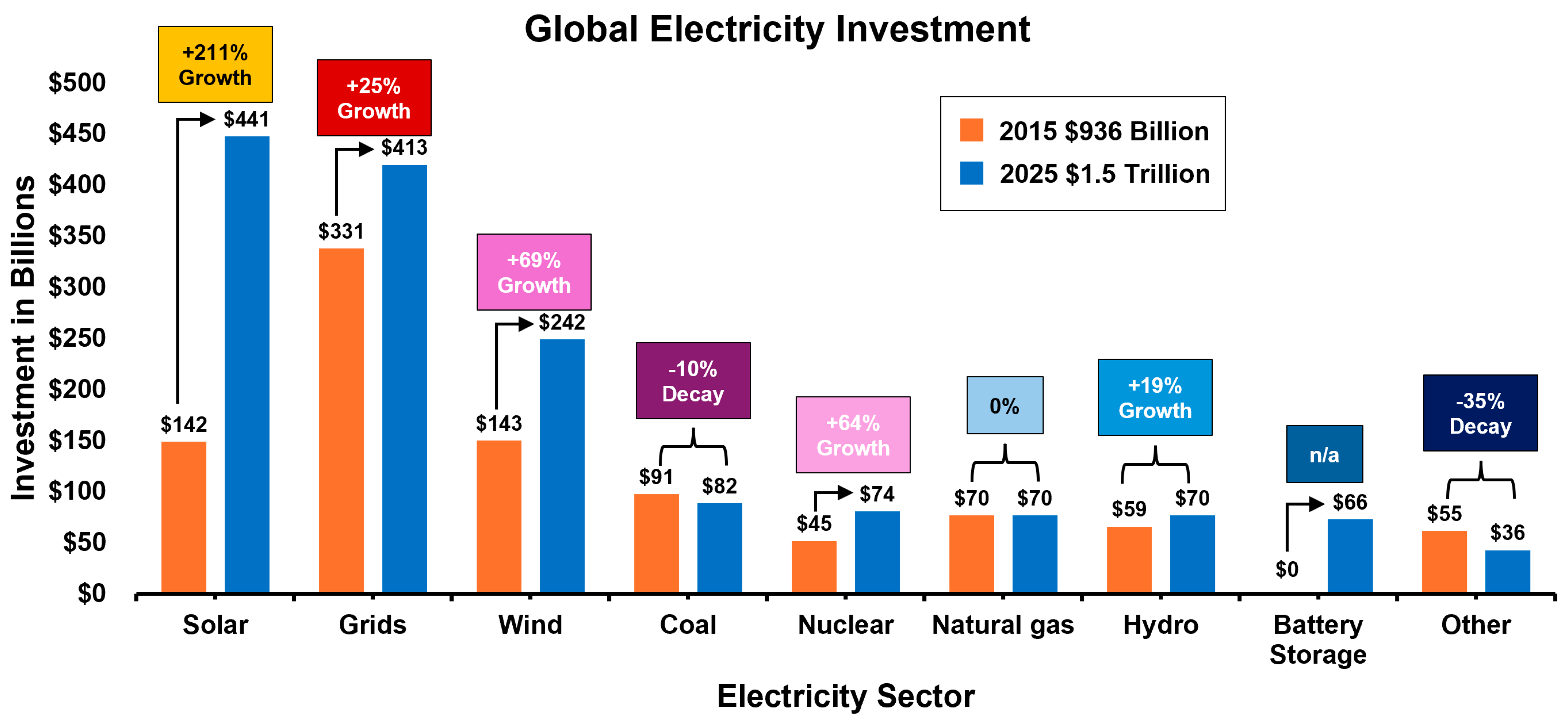
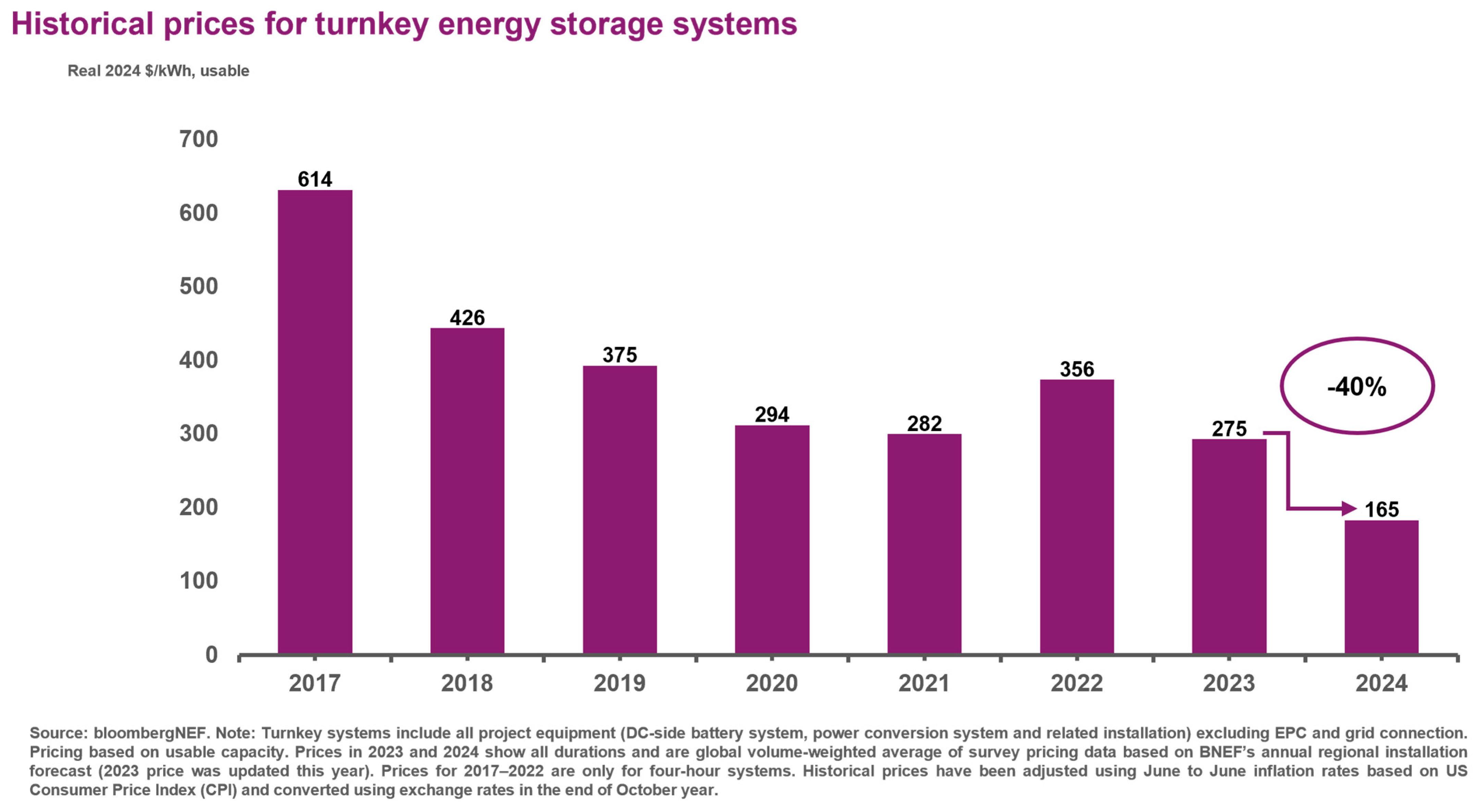
As shown in Figure 2 [20], in the last 10 years, major investments in electricity generation-related technologies have been in PV and wind energy. There is no direct competition between PV and wind energy [21]. However, as predicted by one of the authors of this paper in 2010 [22], photovoltaics have inherent advantages over wind turbines, and PV will take over wind turbines, and this has already happened. Globally, the entire world can get all its sustainable energy needs by using PV, wind, and storage technology [23]. Nuclear (clean energy, but not green energy) is not going to be a major player in the overall generation of electricity for all human needs of energy. This is due to the high cost of nuclear-generated electricity. Globally, in 2024, nuclear energy contributed only 10% of electricity generation [24]. Global solar installation surged 64% in the first half of 2025 [25]. Maximum installation in the first half came from China, followed by India and the United States [25]. Abundance of solar energy [21] coupled with the investment data of 2015–2025 clearly indicate that photovoltaics will dominate as the source of green electricity production technology. Due to continuous cost-reduction (see Figure 3 [26]), lithium-ion batteries are emerging as a cost-effective solution for green energy storage. Due to continuous cost reduction, the battery energy storage system (BESS) technology is approaching the same level as the global installed gigawatt (GW) capacity of pumped hydro technology [27].
In most of the PV projects, globally, batteries have been used mostly for providing electricity for 8–10 h. There is no fundamental limit to extending the battery storage for longer hours. Using the principle of economies of scale, we have shown that without the advancement of technology, the cost of batteries can be further reduced. As an example, 4 h of storage at $292/kWh will be reduced to $226/kWh for 16 h of storage [28]. Thus, in addition to the advancement of technology, economies of scale will play a major role in providing a solution of climate emergency. In essence, PV and battery-based power systems have the potential of providing a bulk of electrical power globally.

4. Details and Assumptions Used in the Case Study

4.1. Case Study Details

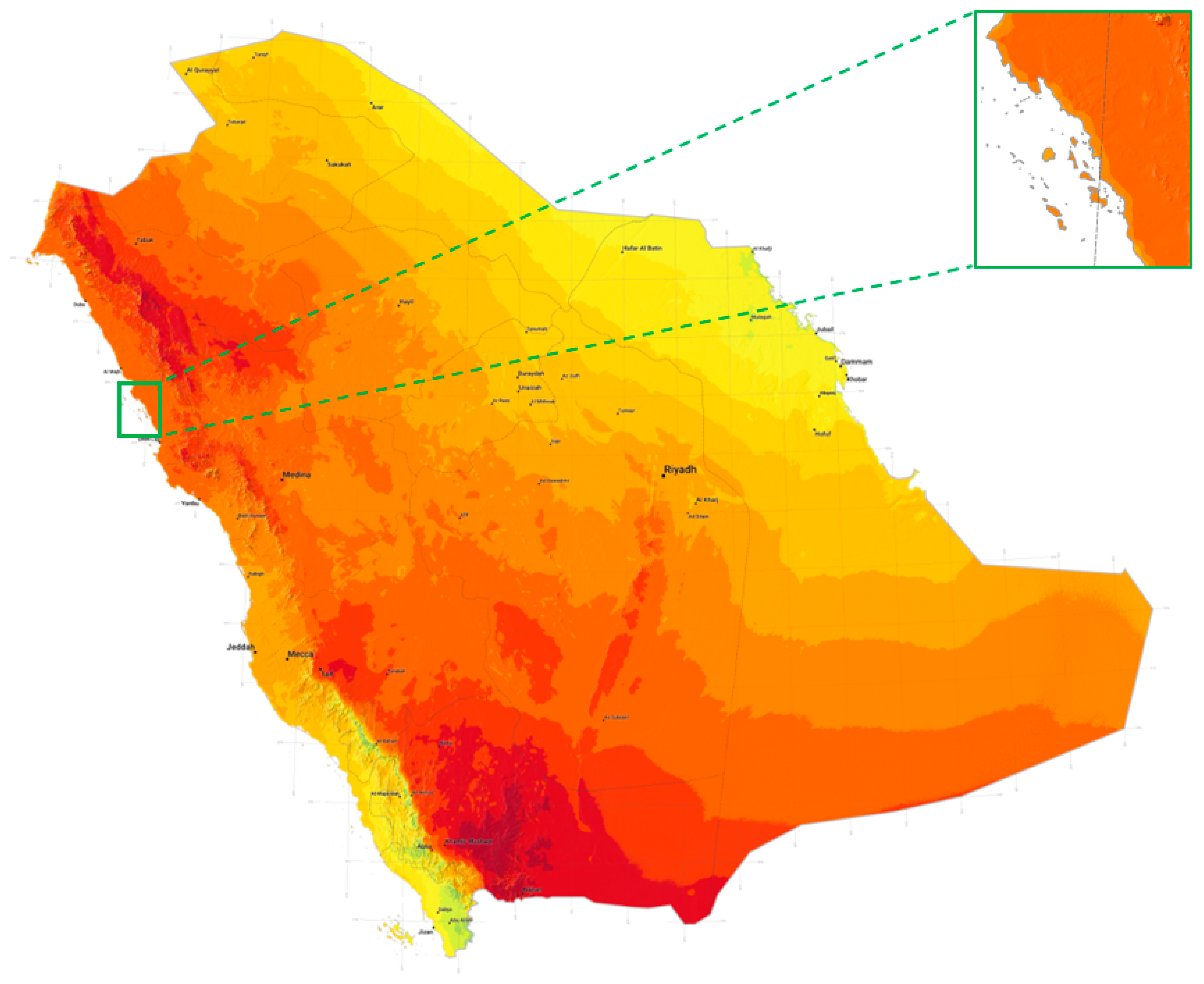
This study focuses on the Red Sea New City, which is located on the Red Sea in the western coast of Saudi Arabia. This new city follows Tabuk Province with geographical coordinates 25°28′34.953″ north and 37°5′43.7742″ east. Figure 4 shows the location of the designated city for the case study [29]. This city was developed to be a global regenerative tourism destination with luxury hotels. In addition, this city contains many islands with world-class resorts [30].
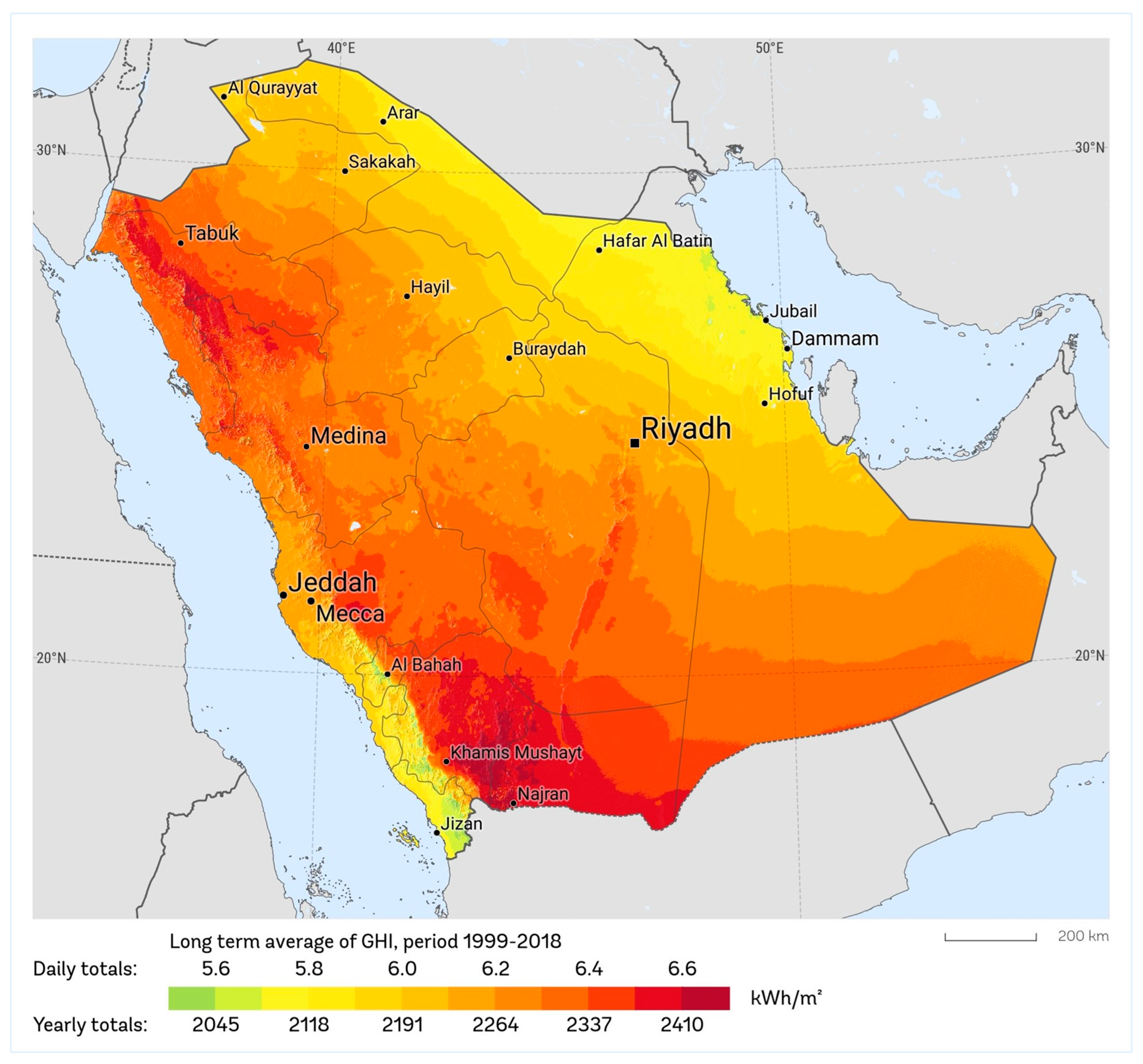
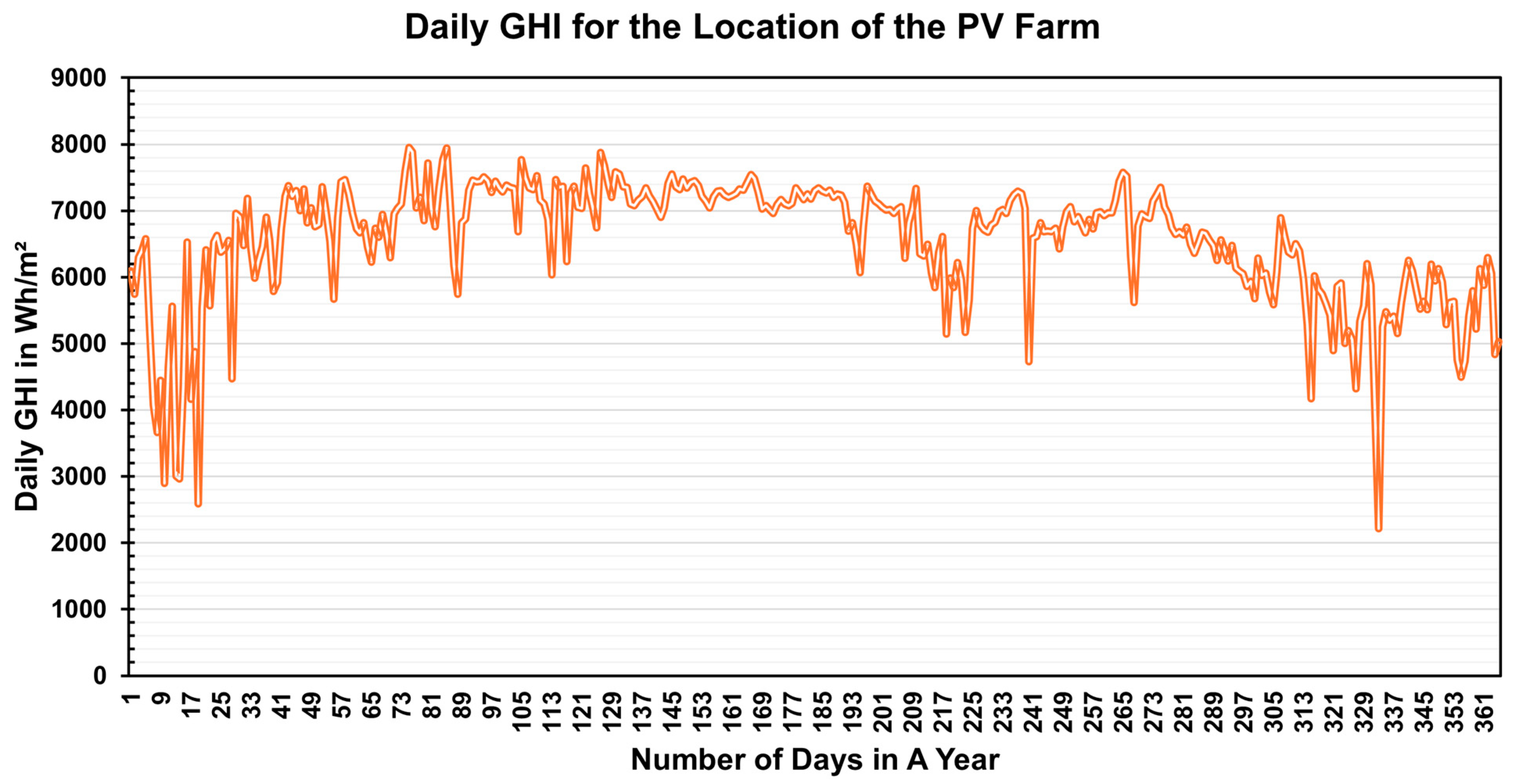
The strong solar resources in Saudi Arabia provide a great opportunity to make solar photovoltaic electric power technology work very well. The average solar irradiation amounts to 2400 kWh/m2/year in the western region of Saudi Arabia, while in the eastern region, the average amount is about 2000 kWh/m2/year, as shown in Figure 5 [29]. The geographical location of the country provides an ideal position for harnessing solar energy with an average daily solar irradiation intensity of 6 kWh/m2 with 80–90% of clear sky days over a year-long period [31]. As illustrated in Figure 5, the yearly global horizontal irradiation (GHI) level surpasses 2100 kWh/m2. Figure 5 also shows that the country possesses a considerable solar energy potential, which could be used to meet its electric energy needs. Several factors, such as extensive areas of unoccupied land, cloud-free skies year-round, abundant solar irradiation, and long average daily sunshine hours, make Saudi Arabia exceptionally well-suited for the implementation of solar energy. Figure 6 shows the GHI profile for the location of the case study for the year 2022. The method of obtaining this data profile will be explained in a later section. To sum up, the aforementioned elements make the adoption of electric power generation by solar photovoltaic farms and co-located battery technologies highly favorable for Saudi Arabia as well as the region of the Arabian Peninsula and the Middle East.
In the year 2024, the Red Sea New City unveiled the world’s largest off-grid green electric power facility [14]. This facility consists of a PV farm coupled with a battery storage system. This stand-alone facility includes 400 MW of PV capacity and 1.3 gigawatt-hour (GWh) of energy storage, which makes it the world’s first independent microgrid project to be powered 100% by green energy, namely solar and battery storage, without connecting to the existing power grid. This facility has been operating smoothly and delivering more than one terawatt-hour (TWh) of green electric power for more than a year [14].
In a previous paper on community solar [32], the emerging concept of community solar and its three types of project business models were discussed. The three business models of community solar energy are the utility-sponsored model, special purpose entity (SPE) model, and nonprofit model. The case study, which is presented in this paper, demonstrates the special purpose entity model of a business project. This type of community solar project model was developed to supply and provide green electric power to a specific and designated location 24 × 7 without the need to connect to the utility grid, and that is exactly what happens with the new city of Red Sea. Moreover, this specific type of community solar project model has the ability to sell its electric power to the utility grid if the establishment wishes to do so. This city establishes the Red Sea Utility Company, which is responsible for powering the Red Sea destination with 100 percent green electric power energy [33].

4.2. Case Study Assumptions

We have tried to gather the actual technical details, information, and operational data for the world’s largest stand-alone green electric power network, which was built by the China-based company, Huawei. However, we got no response from either Huawei or the government of Saudi Arabia about the detailed technical details of the project. The technical details that are necessary to build the case study are a PV panel, a battery storage system, a method of coupling the solar PV farm and battery storage system, a type of converter/inverter, a step-down transformer, and the loads. Since the exact technical details information was not available from the project developer or the government of Saudi Arabia, we have made assumptions, and those assumptions are presented in the following paragraph.
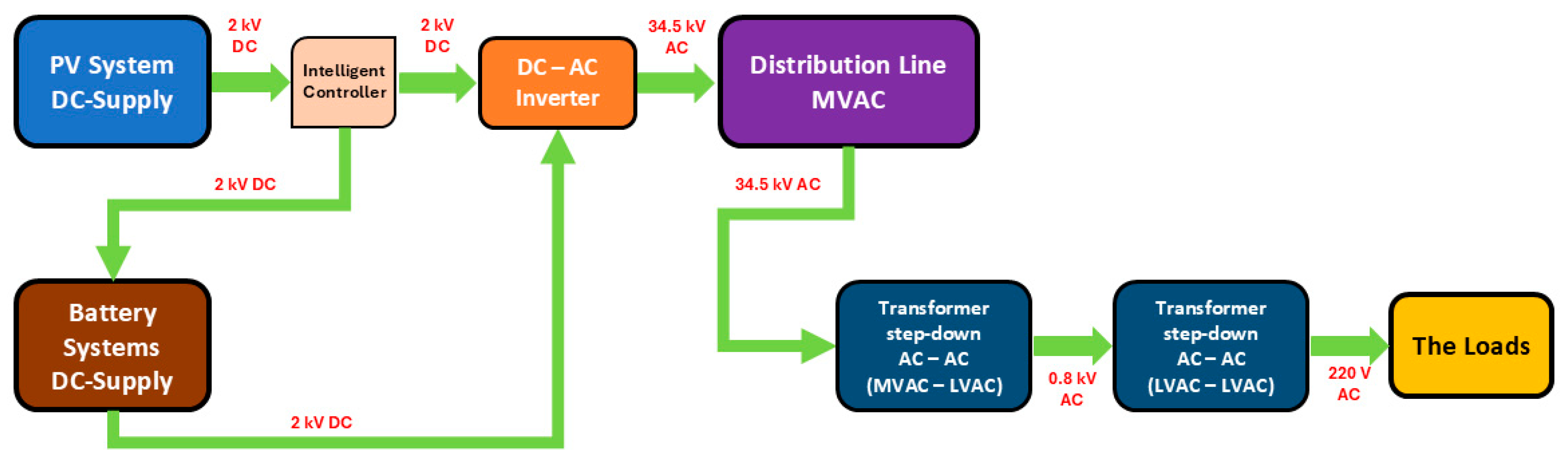
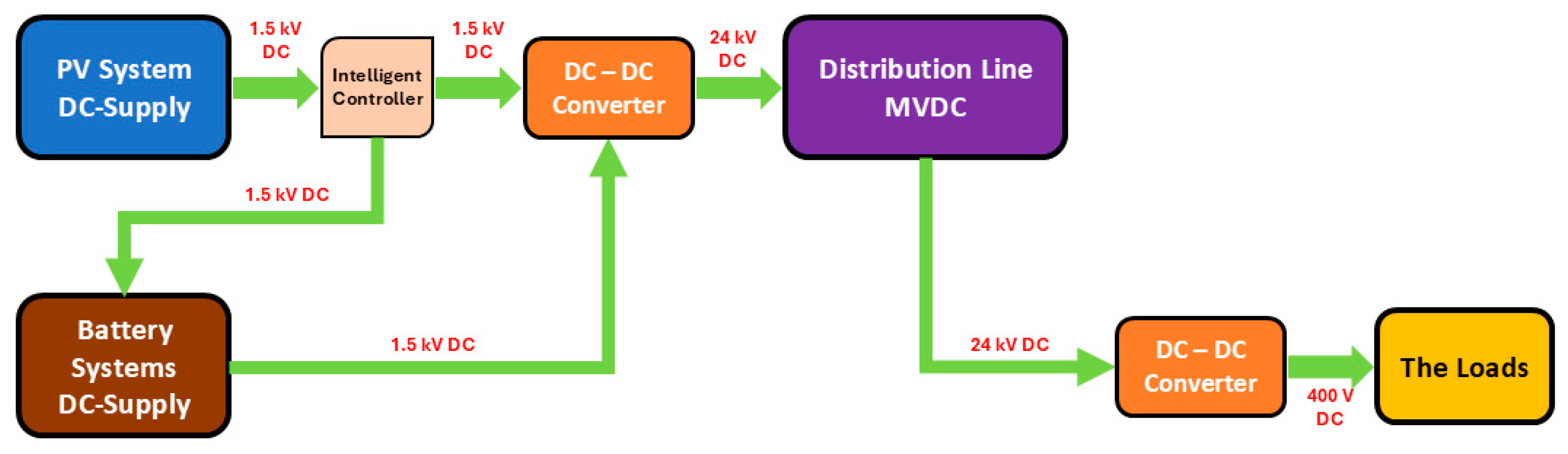
This case study presents two methods of designing a power system network consisting of a solar PV farm coupled with a battery energy system as a stand-alone or off-grid network. The first method is DC battery coupling for an AC power network system, and the second method is an EEDC power network system. Those two configuration methods that are used to design the electric power network system as an independent microgrid are illustrated in Figure 7 and Figure 8.

4.2.1. PV Panel

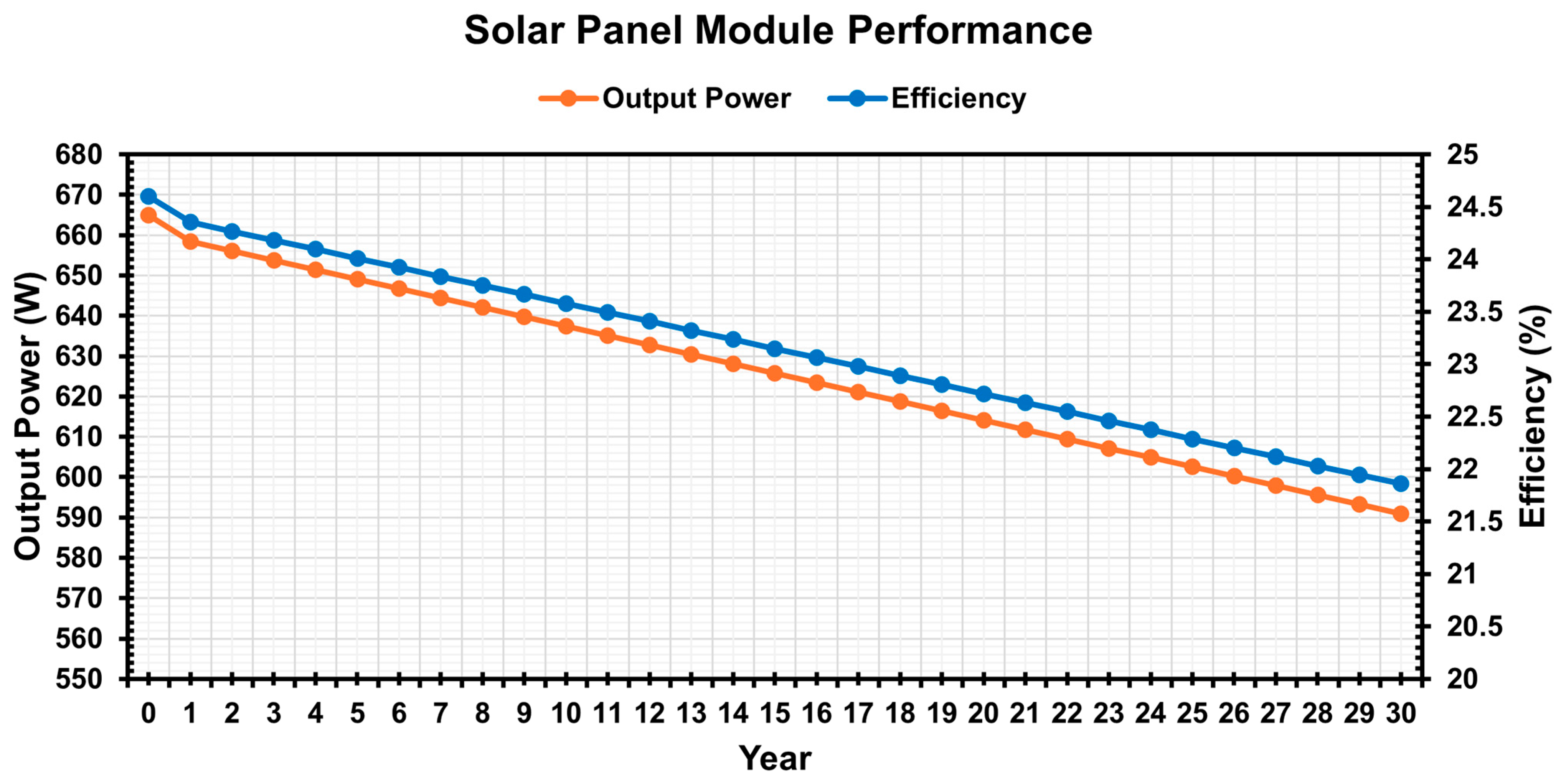
For the design and construction of the PV farm, the PV module, which was selected for this case study, is the state of the art utility-scale PV panel [34] with a high efficiency of 24.6% and maximum output power of 665 W; and it is named the Stellar module [35]. This PV panel has pure black aesthetics for the external appearance. Based on the technical datasheet provided by the manufacturer [35], the first-year degradation is less than 1%, and the annual degradation for years 2 until year 30 is less than 0.35%. Figure 9 shows the performance of the selected PV module, and Table 1 presents the utility-scale PV panel characteristics.

4.2.2. Battery Energy Storage System

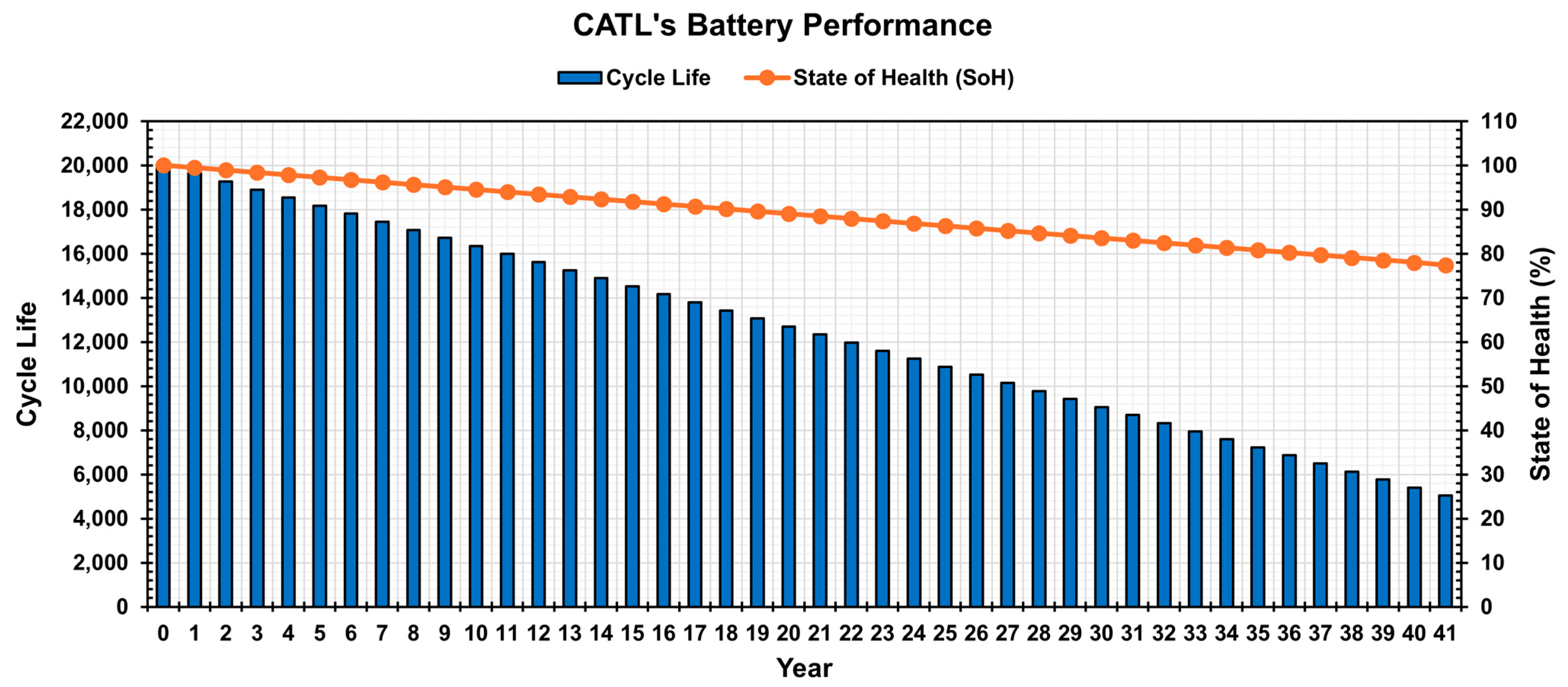
The BESS plays a very important role in the resiliency of any independent microgrid network, since it supplies the green electric power around the clock all year long to power the utilization site. The selected BESS is the state of the art in the field of battery storage system and it is called Tener; it is manufactured by CATL. This battery system is the latest grid-scale battery product with zero degradation for the first five years, which is the first of its kind in the world, and has a capacity of 6.25 megawatt-hour (MWh) with a round-trip efficiency of 96.5% [36,37]. The BESS performance is given in reference [15]. Figure 10 shows the state of health (SoH) for the battery system used in this case study [38].

4.2.3. Inverter

The inverter, which is used in this case study, is the latest utility-scale power station product that is designed for the green energy market [39]. This power station product, Flexinverter from GE Vernova, combines an inverter, medium voltage transformer, and DC coupling with battery energy storage systems for an integrated power conversion solution for utility-scale PV plus storage installation. This inverter provides a maximum permissible of 2 kV DC input voltage, a maximum of 34.5 kV AC output voltage, an output power of 5.4 MW, and a power station efficiency of 97.6%.

4.2.4. DC/DC Converter

The selected DC/DC converter, Freemaq, manufactured by Power Electronics, is the most cost-competitive solution for solar plus battery storage installation [40]. This bi-directional DC convertor is designed to maximize the benefits of the large-scale utility PV farm coupled with a battery storage approach, offering a cutting-edge technology converter with a dedicated medium voltage transformer, and avoiding the installation of any additional device. This product provides a maximum DC input voltage of 1.5 kV for the PV farm as well as the battery storage system. In addition, the unique design of this converter offers a range of power flexibility that is required to design any project; and the power ranges from 525 kW to 3.15 MW with an efficiency of 99% [40].

4.2.5. Intelligent Power Distributor

Figure 7 and Figure 8 show the intelligent power distributor (IC) that controls the power flow after the PV farm generation. In the case of Figure 7, the IC is between the solar farm and the inverter and is connected to the BESS. The location of IC in Figure 8 is between the solar farm and the DC-DC converter, and is connected to the BESS as well. The roles of the distributor in both configurations are the same: to decide the best power split between the two directions of the output power. The incoming power (denoted as P1, which is the power generation in Figure 7 and Figure 8) is split into two output portions: the power goes to the distribution system (denoted as P2), and the power goes to the battery storage (denoted as P3). The equation is represented as follows:
P1 (t) = P2 (t) + P3 (t)
The distributor needs to decide the best split ratio between P2 and P3, which is mainly decided by the PV power generation, the load demand (denoted by D), and the state-of-charge (SoC) of the battery storage, amongst other minor factors. Take Figure 7 as an example, the power splits P2 and P3 need to satisfy Equation (1) and the following constraints:
D   ( t ) = η   × [ P 2   ( t ) + P 4   ( t ) ]
S o C m i n S o C ( t ) S o C m a x
S o C ( t ) = S o C ( t 1 ) + [ ( P 3 ( t ) P 3 ( t 1 ) ) ( P 4 ( t ) P 4 ( t 1 ) ) ] P c
where P4 is the power flow from the battery storage to the DC/AC inverter or DC/DC converter step-up, SoC (t) is the battery SoC, Pc is the battery nominal capacity in terms of power, and η is the power distribution efficiency from the medium voltage DC distribution line to the end user, which considers the losses along the distribution line for all configurations and transformers step-down and DC-DC step-down converter. The intelligent power distributor can be flexibly decided by optimizing certain objectives while satisfying the above constraints (1)–(4), and such an objective can be the economic benefit of users/operators, or battery degradation. It can also be simplified by any solution that satisfies (1)–(4). In extreme cases, e.g., when the PV generation is very low, and the load in (2) cannot be met by the PV and battery, then the objective can be set as minimizing the mismatch between the two sides of Equation (2) so that user discomfort is minimized; i.e.,
min t [ D ( t ) η × ( P 2 ( t ) + P 4 ( t ) ) ] d t

4.2.6. Distribution Lines

In this study, the all-aluminum conductor (AAC) from Southwire was used to design the distribution lines that connect the generation site with the utilization site. The details for the conductor specifications are given in reference [41]. This AAC is mostly used for overhead transmission lines, primary and secondary distribution lines, where the allowable ampere capacity has to be maintained, and a lighter weight of the conductor is desired as compared to the aluminum conductor steel reinforced (ACSR) lines.

4.2.7. Transformer

A step-down transformer is used to convert the incoming medium-voltage to low-voltage that is allowable to be used for the loads at the power utilization site. This transformer is designed for superior reliability, environmental performance, and easy, as well as minimal, maintenance. This device from Chint Power Systems (CPS) has an efficiency of 99% [42].

4.2.8. The Loads

As mentioned earlier, this case study is regarding a global tourism destination with luxury hotels and world-class resorts. As a result, the loads represent the state-of-the-art devices, equipment, and machines that will provide a high-class hospitality and enhance guest experiences. Commercial kitchen equipment has efficient and high-performance machines to deliver fresh and high-quality prepared food. Advanced heating, ventilation, and air conditioning (HVAC) systems are used to provide a perfect climate control system. Highly reliable security systems are used for the safety and protection of the guests. Luxurious amenities, such as entertainment equipment, high-speed Wi-Fi equipment, and fitness and wellness equipment, are also used. The list of the electrical devices, equipment, and machines in the hotels and resorts with their electrical power requirements is given in Table 2, Table 3, Table 4 and Table 5 [43,44,45].
The energy consumed per room includes HVAC systems, lighting, and amenities features such as small fridges and entertainment systems. The consumption of energy considers the high temperatures of the summer season in the region of the case study.

5. Methodology

Based on the solar irradiation profile for the Red Sea destination, the design and sizing for the PV farm are explained in the following subsections.

5.1. Solar Irradiation Profile

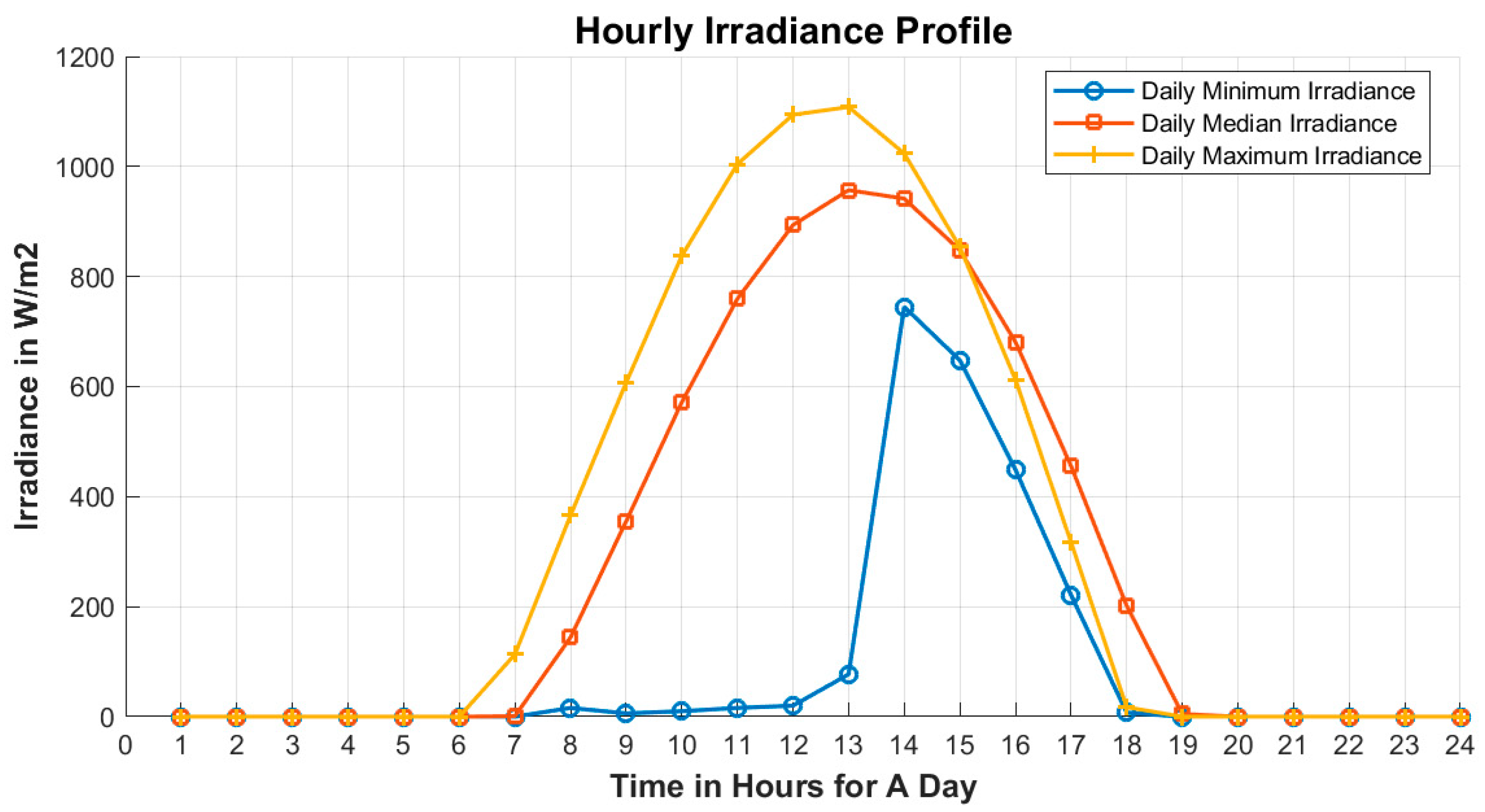
The hourly data for the solar irradiation profile was collected from the National Renewable Energy Laboratory’s (NREL’s) National Solar Radiation Database (NSRDB) for the year 2022, which is the latest update at the time of writing this article [46]. Our simulation model includes the direct normal irradiance, the diffused horizontal irradiance, and the global horizontal irradiance components to account for a realistic design in the irradiation profile for the PV farm [15]. The output profile for the PV panel was temperature-compensated. MATLAB software version R2023b was used to calculate the ideal tilt angle. The optimum and ideal tilt fixed angle for the PV panels was found to be 22° south throughout the year [47]. The temperature-compensated PV panel output of the PV farm was used in the calculations. Figure 11 shows the hourly irradiation profiles, minimum, median, and maximum, for three random different days of sunshine in the year 2022.

5.2. Temperature Compensation Calculations

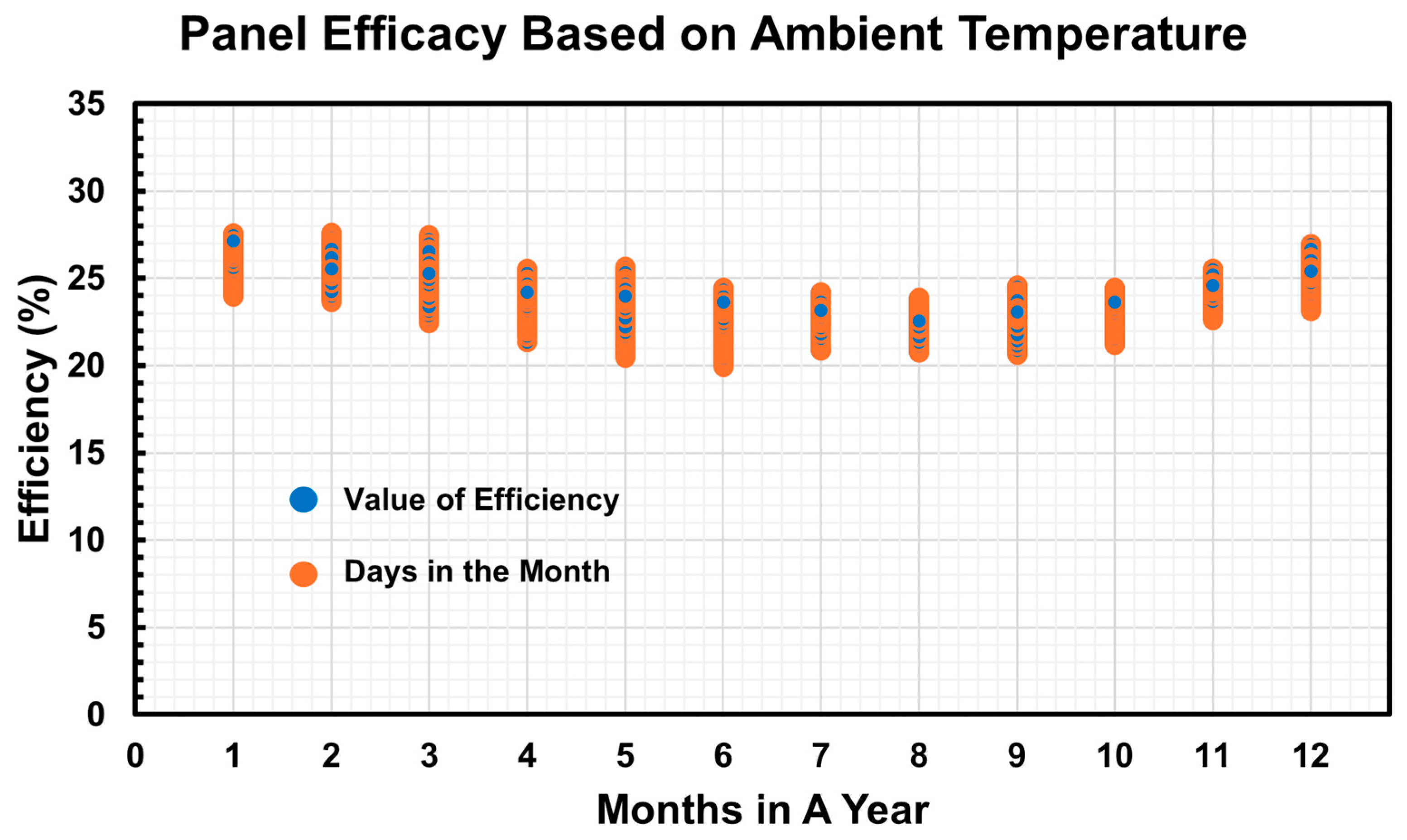
The formula, which is used to calculate the temperature compensation for the PV panels of the solar farm, was adapted from [15]. Figure 12 illustrates the temperature-compensated panel efficiency. In Figure 12, the orange vertical line represents the days in a month, and the blue dot represents the value of efficiency for the PV panel on a given day. For instance, if you look at the month of December, which is 12 in the figure and one of the coldest months in Saudi Arabia, the coldest day in that month has a high value of efficiency (~27%), which is the highest blue dot in the orange line. On the other hand, the relatively warm day in the same month has the lowest value of efficiency (~23%), which is the lowest blue dot in the orange line. As expected, due to low temperature, the PV panel exhibits an improved value of power efficiency compared to the summer season.

5.3. Optimum Tilt Angle Calculations

MATLAB software was used to calculate the optimum tilt angle, and the formula that is used to calculate the optimum tilt angle for the PV panels of the solar farm was adapted from [15]. We have assumed that the daily tilt angle of the panels is fixed throughout the entire year, and that value was found to be 22° south [47]. The output electric power of the PV farm was calculated based on the tilted values for the global horizontal irradiance (GHI) profile, and the temperature-compensated panel efficiency was used in the calculations.

5.4. Area Size of the PV Farm and Co-Located Batteries

As mentioned previously, the PV farm was built with a capacity of 400 MW. Based on the electrical characteristics of the PV modules discussed earlier, the area size of the PV farm is 1,600,000 m2. The BESS was designed to provide 1.3 GWh of storage capacity. Every single unit of BESS can provide energy storage capacity of 6.25 MWh. Thus, the unit number of the BESS was found to be 208 units. Including the area of BESS, the total area size of the solar farm and co-located batteries is 1,624,775 m2.

5.5. Constructing the Distribution Lines

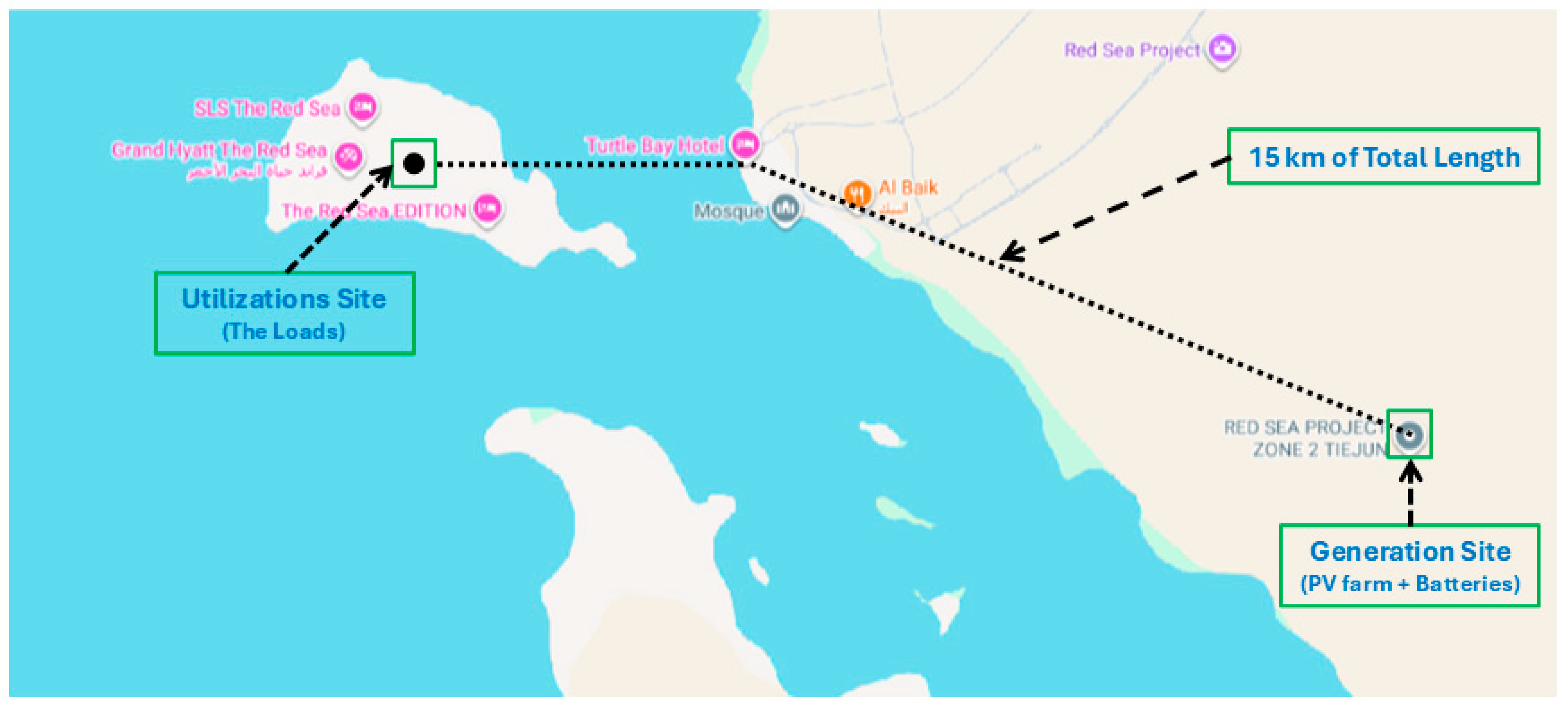
The length measurement feature in Google Maps was used to find the length of the distribution lines and was found to be 15 km. Figure 13 shows the route of the distribution line. To ensure the robustness and reliability of our power system design, the distribution lines are used to distribute the hourly maximum load profile to the utilization site by utilizing a cable with a diameter of 1.912 inch which allows an ampere capacity of more than 1793 Amps [41]. In addition, taking into consideration the futuristic growth of the loads, the design of the two typical AC three-phase overhead distribution lines is implemented in the two networks we used in this case study. In the case of the AC network, three conductors are used to transmit the three-phase power to the load side. In the case of the DC network, two conductors are used to transmit the electric power to the utilization site. The cumulative line and power losses of the two power system network cases are calculated based on the Joules law of electrical heating.

5.6. Evaluation of the System Losses

The use of a DC power network has the ability to satisfy the demands of the utilization site with 100% PV system coupled with battery storage without the violation of the physical limits of its components or losing system stability. Some of the characteristics that bolster the EEDC power network over the AC power network are the avoidance of unnecessary frequency and reactive power synchronization, ease of power-flow control, improved transmission and distribution efficiency, no skin-effect losses, and reduced right-of-way (ROW). For this purpose, the following section evaluates the losses for the two different configurations used in this case study, which are DC battery coupling for the AC power network system and the EEDC power network system. The cumulative power flow and power losses equations are calculated. The total system losses as a function of time for the two different power network system configurations can be summarized as in the following paragraph.
The power losses equation of the DC coupling for the AC power network system is as follows.
[ P P V ( t ) ( P i n t o   b a t t e r y ( t ) + P o u t   b a t t e r y ( t ) P i n v e r ( t ) P l i n e ( t ) P t r a n s ( M V ) ( t ) P t r a n s ( L V ) ( t ) ) / P P V ( t ) ] × 100
The P P V ( t ) is the power-generating source from the PV farm after 30 years of operation. The P i n t o   b a t t e r y ( t ) is half of the power generated from the PV source that goes into the battery, which has a SoH for the battery, after 30 years of operation. The P o u t   b a t t e r y ( t ) is the power coming out of the battery after accounting for the efficiency of the battery and the losses of the inverter. The line losses ( P l i n e ( t ) ) account for the ohmic distribution losses, which are dependent on resistance per unit distance, type of cable, ambient temperature, and amperage. The P t r a n s ( t ) is the power coming out from the transformer, medium voltage (MV) and low voltage (LV), after accounting for its losses and is then distributed to the loads.
The power losses equation of the EEDC power network system is as follows.
[ P P V ( t ) ( P i n t o   b a t t e r y ( t ) + P o u t   b a t t e r y ( t ) P c o n v e r ( t ) P l i n e ( t ) P c o n v e r ( t ) ) / P P V ( t ) ] × 100
The P P V ( t ) is the power-generating source from the PV farm after 30 years of operation. The P i n t o   b a t t e r y ( t ) is half of the power generated from the PV source that goes into the battery, which has a SoH for the battery, after 30 years of operation. P o u t   b a t t e r y ( t ) is the power coming out of the battery after accounting for the efficiency of the battery. The line losses ( P l i n e ( t ) ) account for the ohmic distribution losses, which are dependent on resistance per unit distance, type of cable, ambient temperature, and amperage. The P c o n v e r ( t ) is the power coming out from the converter after accounting for its losses, and is then distributed to the loads.

6. Results

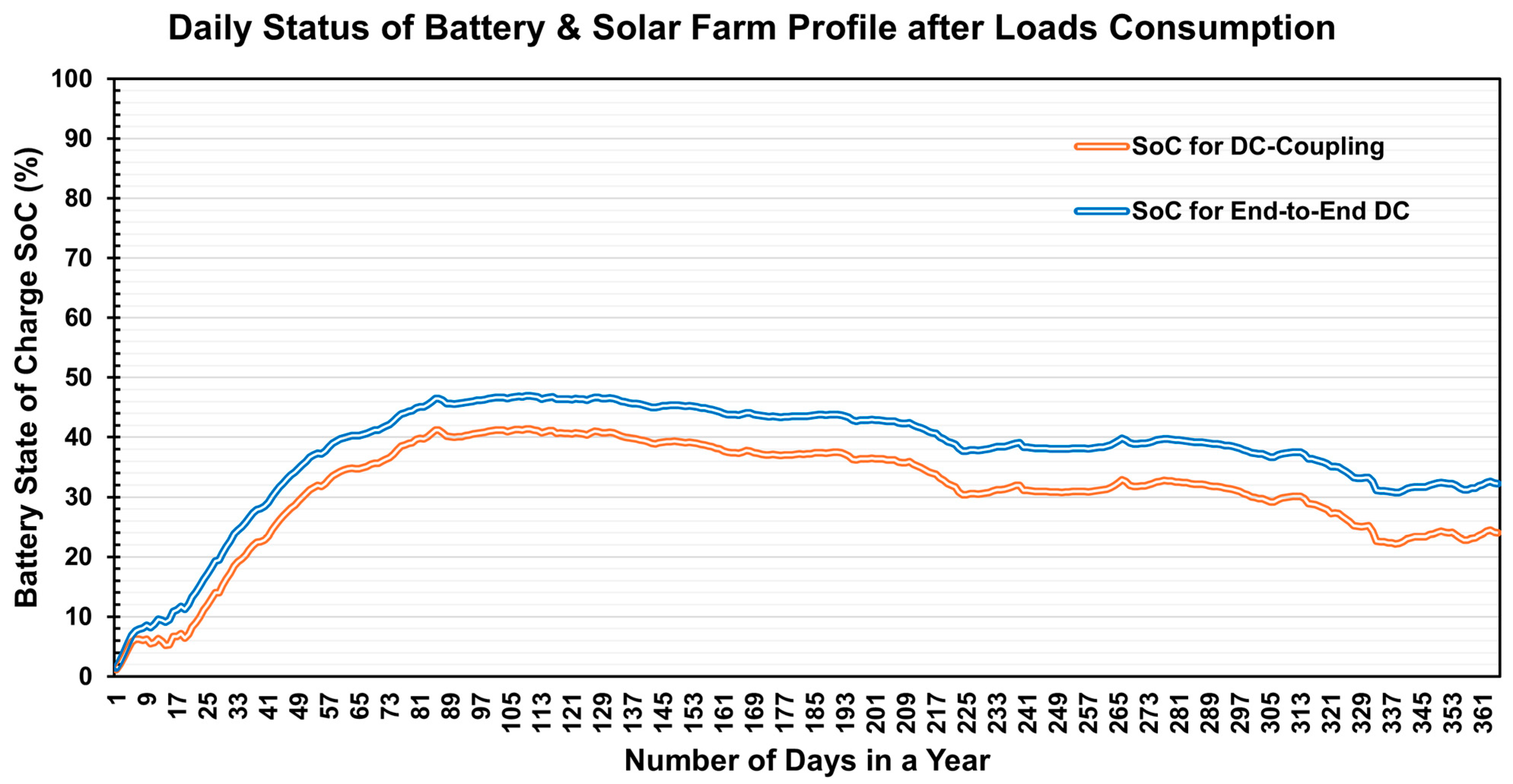
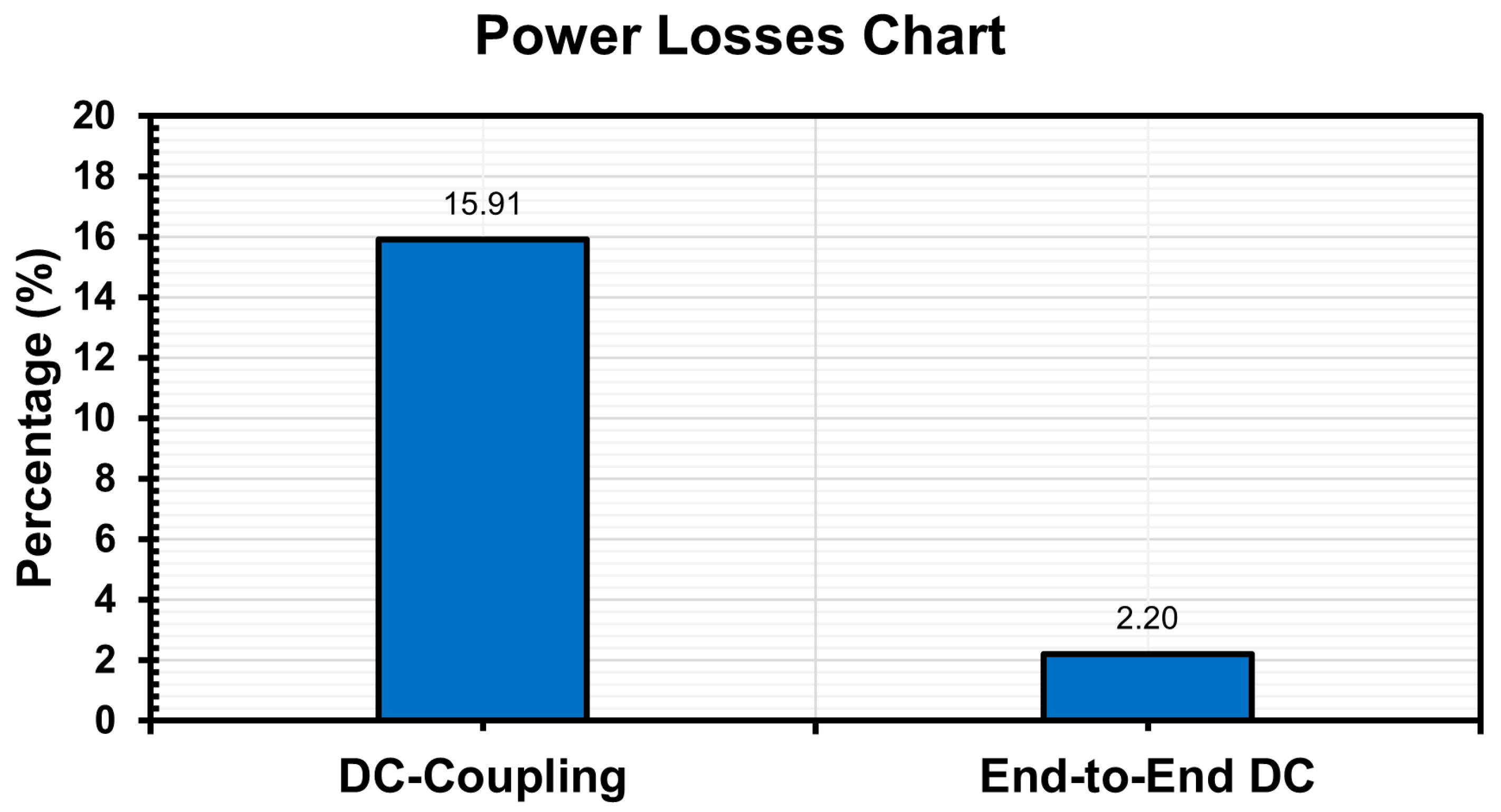
Based on the Red Sea New City in the Kingdom of Saudi Arabia, this case study was carried out to show the performance of the stand-alone electric power network system based on PV and BESS. The power network system was studied for two different cases, namely DC coupling for the AC power system network and the EEDC power system network. The performance of these power system networks was studied after thirty years of operation, and the power losses of the two different networks were also studied. After thirty years of operation, the selected PV panels have an output power performance of 593 watts and an efficiency of 21.9% (see Figure 9). In the case of BESS, the state of health for the chosen battery energy system is 84% (see Figure 10). Figure 14 shows the daily status of the PV farm plus battery storage system after accounting for the load consumption for the two power system networks. Furthermore, it can be interpreted from the figure that the leftover energy or surplus energy is collected throughout the entire year. Figure 15 presents the power losses for the two power system networks. As illustrated in Figure 14, the EEDC power system network shows superior performance for electric energy surplus throughout the year as compared to the other configuration, which is the DC coupling for the AC power system network. As shown in Figure 15, the percentage of the power losses for the EEDC power network is significantly less than that of the other power network configuration. As compared to the DC coupling, for the AC power system network, the EEDC power system network has shown superior performance and surplus of electric energy power throughout the years for thirty years of operation. Moreover, the utilization of the EEDC power network system saves ample costs of the loads, since such loads will not have components that provide internal conversion within the load from AC to DC power.

7. Discussion

Over the years, the consumption of electricity in the Kingdom of Saudi Arabia has increased gradually. In the year 2023, the estimated total electricity generated in the Kingdom was 453 TWh, and the estimated total electricity consumption for the same year was 412 TWh [48]. In the same year, the electricity generated by natural gas was around 62%, about 38% by oil, and less than 1% by PV and wind energy [48]. In the summer season, the Kingdom’s electricity consumption increases significantly, which leads to a greater use of oil-fired electric power generation [48]. The Kingdom’s current demands for electricity are met by conventional crude oil, heavy crude oil, and gas extraction that exceeds one-third of the total daily oil production of the country [48]. According to reference [48], the total electricity consumption in the Kingdom is projected to rise 5–6% per year. Therefore, the Kingdom’s government has launched the national renewable energy program (NREP) [49].
As stated in reference [15], for low voltage DC (1–2000 V), other than system integration, there are no major technical challenges. This is why data centers are changing from 435 V AC to 800 V DC. For medium voltage DC (2–100 kV) and high voltage DC (100–1100 kV), there are many challenges, and there are opportunities for developing solid-state-based bi-directional converters with protection circuits. Generally, data centers are converting the incoming AC power from the grid into DC power before the power enters the building. EEDC power-based data centers will have a cost and energy efficiency advantage over the case of AC grid power conversion to DC power. Due to higher energy efficiency and low capital cost, the PV and battery-based EEDC power network can accelerate the transition from fossil fuel-based electricity generation to green electricity generation.

8. Conclusions

There is no doubt that there are weather-related issues across the globe, and there is an urgency to transition from fossil fuels to renewable energy sources, namely solar, which is abundant, as well as free-fuel and free-carbon sources. Moreover, the power industry (not just in Saudi Arabia, as mentioned previously, but globally) is facing challenges to meet the demand of increasing loads to get away from fossil fuels as an energy source. In this paper, we have shown that PV and BESS as a stand-alone power network system can provide green electricity for a long period. The concept of independent or off-grid power network systems has not been exploited at a large scale anywhere in the world other than in the case study of our work. The term microgrid can be used in both configurations, which are the off-grid power network system, such as this case study, and a certain part of the grid that is still connected to the main AC grid. In essence, this case study presents the world’s largest independent microgrid powered by a PV farm coupled with a battery storage system. In this paper, we have examined two methods for implementing power network system namely DC coupling for the AC power network system and an end-to-end DC power network system. A power losses analysis of both configurations was carried out in this case study. We have shown that the utilization of the EEDC power network system has a great advantage in improved energy efficiency of the power network, and that will also reflect in the efficiency of the financial resources, leading to lower capital investment in power system equipment. The PV and battery-based power network system, as a stand-alone power network, can provide reliable electric power energy for thirty years.

Author Contributions

Conceptualization, R.S. and E.A.; methodology, R.S. and E.A.; software, E.A.; validation, R.S. and E.A.; formal analysis, R.S. and E.A.; investigation, R.S. and E.A.; resources, R.S. and E.A.; data curation, E.A.; writing—original draft preparation, R.S., J.Z. and E.A.; writing—review and editing, R.S., J.Z. and E.A.; visualization, R.S. and E.A.; supervision, R.S. All authors have read and agreed to the published version of the manuscript.

Funding

This research received no external funding.

Data Availability Statement

The data presented in this study are available on request from the corresponding author.

Acknowledgments

The authors would like to thank a large number of publishers for giving permission to use their data in this paper. Also, the authors would like to thank the anonymous reviewers for their feedback, which has improved the quality of the paper.

Conflicts of Interest

The authors declare no conflicts of interest.

References

  1. ‘Science Demands Action’: World Leaders and UN Push Climate Agenda Forward Despite Trump’s Attacks. Available online: https://www.theguardian.com/environment/2025/sep/24/world-leaders-united-nations-climate-agenda (accessed on 14 January 2026).
  2. Beyond the Energy Transition. Available online: https://www.spglobal.com/commodity-insights/en/news-research/special-reports/energy-transition/scenarios-report-2025 (accessed on 14 January 2026).
  3. World Has Spent $18.5 Trillion Globally for Climate Damage Since 2000. Available online: https://www.intellinews.com/world-has-spent-18-5-trillion-globally-for-climate-damage-since-2000-386490/ (accessed on 14 January 2026).
  4. US Spending on Climate Damage Nears $1 Trillion per Year. Available online: https://www.bloomberg.com/news/articles/2025-06-17/us-spending-on-climate-damage-nears-1-trillion-per-year (accessed on 14 January 2026).
  5. Africa Faces Disproportionate Burden from Climate Change and Adaptation Costs. Available online: https://wmo.int/news/media-centre/africa-faces-disproportionate-burden-from-climate-change-and-adaptation-costs (accessed on 14 January 2026).
  6. Poor Countries Pay a Heavy Price for Climate Change. Available online: https://www.iied.org/worlds-least-developed-countries-spend-twice-much-servicing-debts-they-receive-climate-finance (accessed on 14 January 2026).
  7. The Climate Emergency. Available online: https://www.unep.org/climate-emergency (accessed on 14 January 2026).
  8. Singh, R. Expediting Green Energy Transition [Expert View]. IEEE Power Electron. Mag. 2024, 11, 74–77. [Google Scholar] [CrossRef]
  9. Singh, R.; Paniyil, P.; Zhang, Z. Transformative Role of Power Electronics: In solving climate emergency. IEEE Power Electron. Mag. 2022, 9, 39–47. [Google Scholar] [CrossRef]
  10. Singh, R.; Shenai, K. DC Microgrids and the Virtues of Local Electricity. IEEE Spectrum, Online, Posted 6 February 2014. Available online: http://spectrum.ieee.org/green-tech/buildings/dc-microgrids-and-the-virtues-of-local-electricity (accessed on 14 January 2026).
  11. Singh, R.; Asif, A.A.; Venayagamoorthy, G.K. Transformative role of photovoltaics in phasing out alternating current based grid by local DC power networks for sustainable global economic growth. In Proceedings of the 2016 IEEE 43rd Photovoltaic Specialists Conference (PVSC), Portland, OR, USA, 5–10 June 2016; pp. 3345–3350. [Google Scholar] [CrossRef]
  12. Paniyil, P.; Singh, R.; Asif, A.; Powar, V.; Bedi, G.; Kimsey, J. Transformative and disruptive role of local direct current power networks in power and transportation sectors. Facta Univ. Ser. Electron. Energetics 2019, 32, 387–402. [Google Scholar] [CrossRef]
  13. Singh, R.; Yagna, G.V.; Banavath, S.N.; Adapa, R.; Ndiaye, I.; Huang, Z. Why and How Direct Current Power Networks will Dominate Global Electricity Infrastructure. In Proceedings of the 2025 IEEE Seventh International Conference on DC Microgrids (ICDCM), Tallinn, Estonia, 4–6 June 2025; pp. 1–6. [Google Scholar] [CrossRef]
  14. Huawei Unveils World’s Largest Microgrid. Available online: https://www.pv-magazine.com/2024/09/18/huawei-unveils-worlds-largest-microgrid/?utm_source=Global+%7C+Newsletter&utm_campaign=d440e42ba6-dailynl_gl&utm_medium=email&utm_term=0_6916ce32b6-d440e42ba6-160665528 (accessed on 14 January 2026).
  15. Aldarsi, E.; Singh, R.; Zhang, J.; Powar, V. A Photovoltaics and Battery-Based End-to-End Direct Current Power Network for Community Solar. Energies 2025, 18, 1971. [Google Scholar] [CrossRef]
  16. The War of the Currents: AC vs. DC Power. Available online: https://www.energy.gov/articles/war-currents-ac-vs-dc-power (accessed on 14 January 2026).
  17. Singh, R.; Powar, V.; Banavath, S.N.; Dutta, R.; Agarwal, V.; Paniyil, P.; Mantov, G.; Adapa, R.; Shea, J.J.; Griddaluru, V.Y. Sustainable Cost-Effective Solution of Climate Emergency with Many More Societal Benefits. IEEE Power Electron. Mag. 2024, 11, 51–62. [Google Scholar] [CrossRef]
  18. ABB Modernizes MS Amera with DC Technology and Shore Connection. Available online: https://maritime-executive.com/index.php/corporate/abb-modernizes-ms-amera-with-dc-technology-and-shore-connection (accessed on 14 January 2026).
  19. Chart: What Powered the World in 2024? Available online: https://www.visualcapitalist.com/what-powered-the-world-in-2024/ (accessed on 14 January 2026).
  20. Visualizing $1.5 Trillion in Global Power Investment. Available online: https://www.visualcapitalist.com/1-5-trillion-in-global-power-investment/ (accessed on 14 January 2026).
  21. Singh, R.; Alapatt, G.F.; Bedi, G. Why and How PV Will Provide the Cheapest Energy in the 21st Century. Facta Univ. Ser. Electron. Energetics 2014, 27, 275–298. [Google Scholar] [CrossRef]
  22. Champions of Photovoltaics Technology. Available online: https://www.renewableenergyworld.com/energy-storage/champions-of-photovoltaics/ (accessed on 14 January 2026).
  23. Paniyil, P.; Singh, R.; Powar, V.; Deb, N.; Zhang, J.; Dubey, A.; Bai, K. Batteries and Free Fuel based Photovoltaics and Complimentary Wind Energy based DC Power Networks as 100% Source of Electric Power around the Globe. In Proceedings of the 2021 IEEE 48th Photovoltaic Specialists Conference (PVSC), Fort Lauderdale, FL, USA, 20–25 June 2021; pp. 1821–1828. [Google Scholar] [CrossRef]
  24. Ranked: Nuclear Power Generation by Country. Available online: https://www.visualcapitalist.com/ranked-nuclear-power-generation-by-country/ (accessed on 14 January 2026).
  25. Global Solar Installation Surge 64% in First Half of 2025. Available online: https://ember-energy.org/latest-updates/global-solar-installations-surge-64-in-first-half-of-2025/ (accessed on 14 January 2026).
  26. Behind the Numbers: BNEF Finds 40% Year-on-Year Drop in BESS Costs. Available online: https://www.energy-storage.news/behind-the-numbers-bnef-finds-40-year-on-year-drop-in-bess-costs/ (accessed on 14 January 2026).
  27. China Drives Global BESS Deployments in July, Technology Nears Pumped Hydro GW Capacity. Available online: https://www.energy-storage.news/china-drives-global-bess-deployments-in-july-technology-nears-pumped-hydro-gw-capacity/ (accessed on 14 January 2026).
  28. Powar, V.; Singh, R. Stand-Alone Direct Current Power Network Based on Photovoltaics and Lithium-Ion Batteries for Reverse Osmosis Desalination Plant. Energies 2021, 14, 2772. [Google Scholar] [CrossRef]
  29. Global Solar Atlas. Available online: https://globalsolaratlas.info/download/saudi-arabia (accessed on 14 January 2026).
  30. The Red Sea. Available online: https://www.redseaglobal.com/en/our-destinations/the-red-sea/ (accessed on 14 January 2026).
  31. Alnaser, W.; Alnaser, N. The status of renewable energy in the GCC countries. Renew. Sustain. Energy Rev. 2011, 15, 3074–3098. [Google Scholar] [CrossRef]
  32. Aldarsi, E.; Singh, R. Review of Community Solar in the United States of America. New Energy Exploit. Appl. 2024, 3, 67–88. [Google Scholar] [CrossRef]
  33. New Utilities Contract Set to Power The Red Sea Destination with 100 Percent Renewable Energy. Available online: https://www.redseaglobal.com/en/w/media-center/contract-of-power-with-100-percent-renewable-energy/ (accessed on 14 January 2026).
  34. AIKO. Products. Available online: https://aikosolar.com/en/products/ (accessed on 14 January 2026).
  35. AIKO Efficient ABC Module. Available online: https://aikosolar.com/static/pdfjs/web/viewer.html?file=/wp-content/uploads/2025/10/Stellar-1N66_AIKO-A-GRH66Dw-645-680W_2382x1134x30mm_V4.1_202510_DsDr_EN.pdf (accessed on 14 January 2026).
  36. CATL Unveils TENER, the World’s First Five-Year Zero Degradation Energy Storage System with 6.25 MWh Capacity. Available online: https://www.catl.com/en/news/6232.html (accessed on 14 January 2026).
  37. 500Ah+ Cells Becoming New BESS Industry Standard as Chinese Firms Launch Large-Cell Technology Race. Available online: https://www.energy-storage.news/500ah-cells-becoming-new-bess-industry-standard-as-chinese-firms-launch-large-cell-technology-race/ (accessed on 14 January 2026).
  38. Battery Cycle Standards Explained: SOH, DOD, and EOL—What Do They Really Mean? Available online: https://sunlithenergy.com/battery-cycle-standards-explained/ (accessed on 14 January 2026).
  39. FLEXINVERTER 2.0kV Solar Power Station. Available online: https://www.gevernova.com/power-conversion/sites/default/files/2025-09/Preliminary%20Datasheet%20FI%20SLR%20PS%202090-1040-X88033-20250822-R009.pdf (accessed on 14 January 2026).
  40. Power Electronics Inverter Data Sheets. Available online: https://www.garnetenergycenter.com/wp-content/uploads/2021/06/Appendix-2-3.-Power-Electronics-Inverter-Data-Sheet.pdf (accessed on 14 January 2026).
  41. Bare Aluminum Overhead Transmission & Distribution Products. Available online: https://www.southwire.com/wire-cable/bare-aluminum-overhead-transmission-distribution/aac/p/ALBARE2 (accessed on 14 January 2026).
  42. Transformer Specification. Available online: https://www.chintpowersystems.com/wp-content/uploads/2022/08/CPS-TX4170-34.5-0.8-Dy1-Datasheet-Aug-24-2022.pdf (accessed on 14 January 2026).
  43. Ranking Commercial Kitchen Equipment by Energy Consumption. Available online: https://powerknot.com/2025/04/07/ranking-commercial-kitchen-equipment-by-energy-consumption/ (accessed on 14 January 2026).
  44. 10 Must-Know Hotel Energy Consumption Statistics. Available online: https://aemaco.com/2025/01/16/10-must-know-hotel-energy-consumption-statistics/ (accessed on 14 January 2026).
  45. How Much Electricity Does a Swimming Pool Use: Essential Tips for Reducing Your Costs. Available online: https://lovegunitepool.com/how-much-electricity-does-a-swimming-pool-use/ (accessed on 14 January 2026).
  46. NREL’s NSRDB Data Viewer. Available online: https://maps.nrel.gov/nsrdb-viewer/ (accessed on 14 January 2026).
  47. Solar PV Potential in Saudi Arabia by Location. Available online: https://profilesolar.com/countries/SA/ (accessed on 14 January 2026).
  48. Country Analysis Brief: Saudi Arabia. Available online: https://www.eia.gov/international/content/analysis/countries_long/Saudi_Arabia/pdf/Saudi-Arabia.pdf (accessed on 14 January 2026).
  49. National Renewable Energy Program. Available online: https://saudipedia.com/en/article/908/government-and-politics/national-renewable-energy-program (accessed on 14 January 2026).
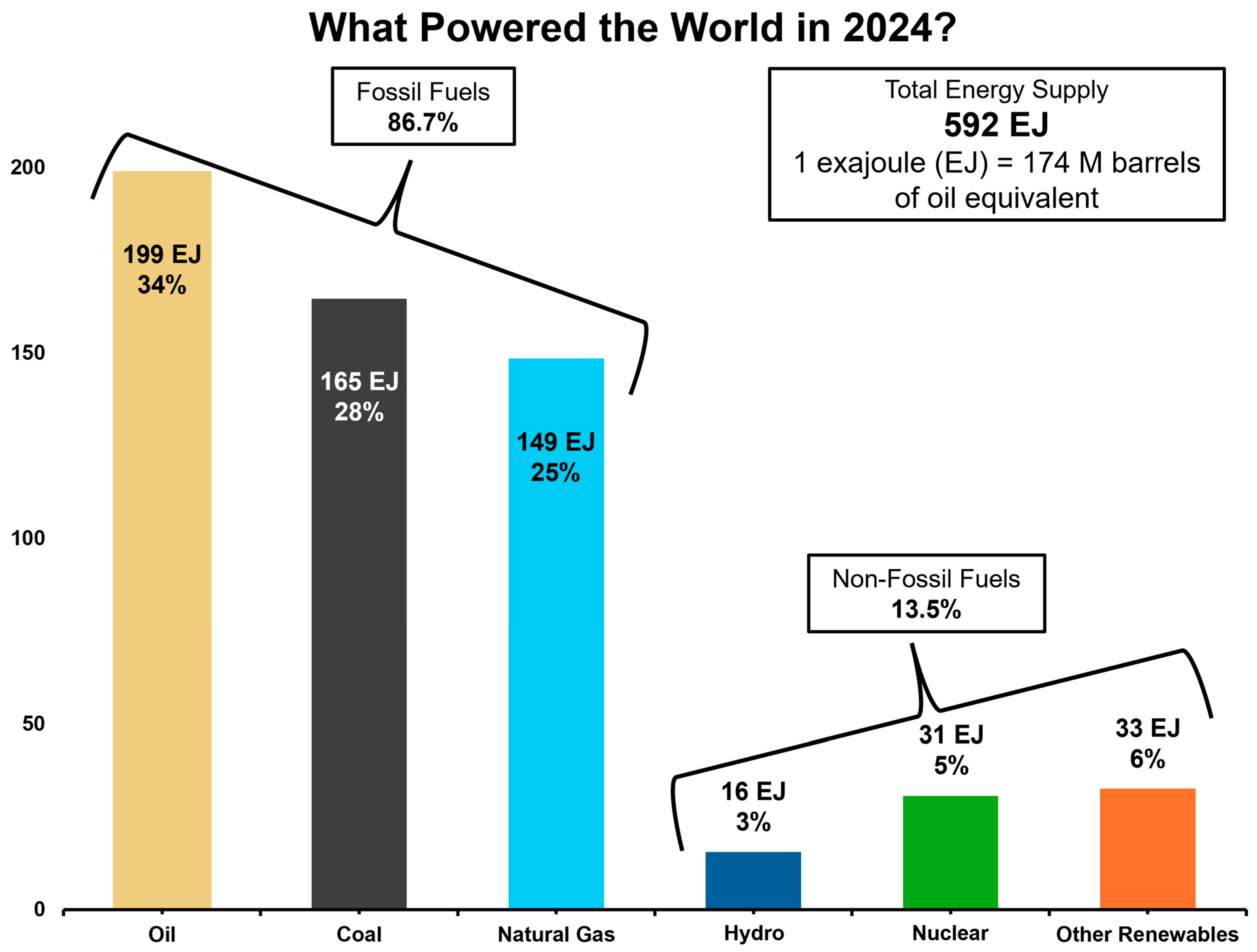
Figure 1. More than 86% energy used in 2024 is based on fossil fuels [19].
Electronics 15 01077 g001
Figure 2. Global investment (2015–2025) in electricity production by sector [20].
Electronics 15 01077 g002
Figure 3. Constant reduction in the cost of battery energy storage systems [26].
Electronics 15 01077 g003
Figure 4. The location of the Red Sea New City [29].
Electronics 15 01077 g004
Figure 5. Global horizontal irradiation map for KSA [29].
Electronics 15 01077 g005
Figure 6. Global horizontal irradiation for the location of the solar farm for the case study.
Electronics 15 01077 g006
Figure 7. Battery DC coupling for AC power network.
Electronics 15 01077 g007
Figure 8. End-to-end DC (EEDC) power network system.
Electronics 15 01077 g008
Figure 9. Output power and efficiency of PV panel for the solar farm as a function of time [35].
Electronics 15 01077 g009
Figure 10. State of health for the battery storage as a function of time [38].
Electronics 15 01077 g010
Figure 11. Hourly irradiance profiles for different cases.
Electronics 15 01077 g011
Figure 12. Temperature correction used in calculating PV panel efficiency [15].
Electronics 15 01077 g012
Figure 13. Distribution lines connecting the solar farm and BESS with the utilization site.
Electronics 15 01077 g013
Figure 14. Daily status of electric energy after accounting for load consumption.
Electronics 15 01077 g014
Figure 15. Power losses in the two connecting power network methods.
Electronics 15 01077 g015
Table 1. PV panel characteristics for the solar farm [35].
Category NameValue
Output Power665 W
Panel Efficiency24.6%
Better Temperature Coefficient−0.26%/°C
First-Year DegradationLess than or equal to 1%
Annual Degradation from Year (2–30)Less than or equal to 0.35%
Table 2. List of commercial kitchen equipment [43].
EquipmentEnergyKilowatt-Hour per Day
Electric oven100kWh/day
Electric stove80
Deep fryer50
Commercial dishwasher50
Walk-in coolers and freezers40
Microwave25
Convection oven25
Griddle20
Toaster oven15
Steam table15
Electric kettle15
Coffee machine12
Pressure cooker10
Ice maker7
Commercial mixer6
Blender5
Heat lamp (food warmer)5
Slow cookers5
Biodigester LFC-502
Table 3. Energy consumed per room [44].
Equipment Consumption per Hotel RoomAssumed Number of RoomsUnit and Usage
15,000200kWh/year
Table 4. Miscellaneous energy consumption [44].
EquipmentEnergyUnit and Usage
Fitness equipment and lighting3000kWh/year
HVAC system7500
CCTV cameras2000
Table 5. Energy consumption for the swimming pools [45].
EquipmentPower (W)Hours Used per Day
Pool pumps150012
Heaters4000
Lights900
Disclaimer/Publisher’s Note: The statements, opinions and data contained in all publications are solely those of the individual author(s) and contributor(s) and not of MDPI and/or the editor(s). MDPI and/or the editor(s) disclaim responsibility for any injury to people or property resulting from any ideas, methods, instructions or products referred to in the content.