1. Introduction
Recent advances in digital technologies have transformed education from traditional classroom-centered instruction to more flexible, learner-centered approaches, including online learning, blended learning, and technology-enhanced instruction [
1]. By removing temporal and spatial constraints, digital technologies enable learners to access educational resources across diverse platforms while providing greater flexibility in learning location, time, and pace [
2,
3]. This flexibility also promotes learner autonomy and engagement, highlighting the potential of technology to enhance learning accessibility and instructional quality [
4]. Consequently, educational technologies continue to evolve toward increasingly immersive and interactive learning environments.
Among emerging educational technologies, Virtual Reality (VR) has emerged as a promising tool for education and professional training. By integrating visual, auditory, and interactive experiences, VR creates a strong sense of presence that enhances learner engagement [
5]. Previous studies show that immersive VR enhances motivation, engagement, and learning outcomes through safe, repeatable practice [
6,
7]. Immersion is a key characteristic of VR, as it enables learners to engage more deeply with virtual environments and experience a stronger sense of presence during learning activities. This immersive experience can increase learner engagement, attention, and interaction, thereby supporting more effective and meaningful learning experiences. Consequently, VR has been widely adopted in high-risk domains such as aviation, healthcare, and engineering, where conventional training is constrained by operational risks, high equipment costs, and limited training opportunities [
8,
9]. However, the adoption of VR in these industries is constrained not only by technical limitations but also by applicable laws, policies, safety standards, and regulatory guidelines. These requirements may affect the design, implementation, and practical deployment of VR systems, particularly in applications involving safety-critical operations and regulated environments.
The rapid growth of unmanned aerial vehicle (UAV) technologies has increased the demand for effective training and qualified operators. UAVs are widely applied in commercial surveying, precision agriculture, environmental monitoring, aerial photography, infrastructure inspection, and disaster response. Consequently, UAV operation has been incorporated into STEM education, engineering curricula, and professional training. Previous studies have shown that drone-based learning enhances technological literacy, critical thinking, spatial reasoning, and problem-solving through authentic flight operations and mission-oriented tasks, highlighting its value as an experiential approach that integrates theoretical knowledge with practical skills [
10]. Yepes et al. investigated the feasibility of integrating UAV technologies into education, and their findings indicated that drone-based training enhanced students’ understanding and interpretation of the learning content, showing its potential to facilitate meaningful STEM education [
11].
Despite these advantages, UAV operation is a skills-oriented activity that requires extensive hands-on practice. Conventional training relies on physical flight practice, which provides authentic operational experience. However, equipment costs can become a constraint particularly for advanced or professional UAV training [
12], while inexpensive platforms such as the DJI Tello can support basic training at relatively low cost (
$99 USD). In addition, novice operators often experience stress and anxiety over equipment damage and operational errors, impairing attention, situational awareness, and decision-making and ultimately hindering skill acquisition [
13]. Psychological pressure has also been shown to increase delayed responses, judgment errors, and unstable task performance [
14]. Therefore, reducing operational risks and psychological stress while maintaining effective skill acquisition remains a key challenge in UAV education.
Recent advances in interactive simulation technologies offer a promising solution to these challenges by providing immersive and risk-free environments for UAV flight training [
15]. Compared with conventional physical practice, virtual simulation provides safe, repeatable, and highly controllable learning environments independent of physical facilities and external constraints. Virtual environments enable learners to repeatedly practice operational procedures while allowing instructors to deliver standardized training under consistent conditions.
Previous studies have shown that simulation-based training improves operational performance, facilitates skill transfer, and enhances learning effectiveness [
16]. In addition, immersive environments with multisensory feedback have been shown to improve learners’ sense of presence, operational performance, and skill transfer to real-world tasks [
17]. By eliminating the immediate risks of equipment damage and operational accidents, virtual environments also reduce learner anxiety and enhance confidence, making them particularly beneficial for novice operators [
18].
Although simulation-based training has achieved substantial educational benefits, different training environments offer distinct instructional advantages and limitations. Physical training provides authentic interaction with real equipment, whereas virtual training offers safer, more flexible, and accessible learning opportunities [
19,
20]. Determining whether virtual training can effectively support or partially replace conventional physical practice without compromising learning outcomes remains an important issue in skills-oriented education. Moreover, limited research has examined how different training environments influence learners’ psychological responses, particularly in terms of learning motivation, cognitive load, and technology acceptance.
Existing studies have primarily explored simulation-based training in domains such as aviation, healthcare, and industrial operations [
21]. However, empirical research on virtual UAV training remains limited and requires further investigation. In particular, insufficient evidence exists regarding whether digital twin-based virtual training environments can achieve learning outcomes comparable to conventional physical UAV training while influencing learners’ motivation, cognitive load, and technology acceptance. Addressing this gap is essential for clarifying the educational value and practical applicability of digital twin technology in UAV operational training.
To address this gap, the present research developed a virtual UAV training system with bidirectional communication and real-time virtual–physical synchronization. A quasi-experimental study involving 60 university students with no prior UAV flight experience compared the proposed system (n = 30) with conventional physical UAV training (n = 30). Participants were assigned to two groups without true randomization, and an intervention was administered to compare outcomes between groups. Both groups completed identical learning activities using different approaches, which were evaluated in terms of learning performance, learning motivation, cognitive load, and technology acceptance. The following research questions were addressed:
- RQ1.
Does virtual UAV training produce learning outcomes comparable to those of conventional physical UAV training?
- RQ2.
To what extent does learning motivation differ between virtual UAV training and conventional physical UAV training?
- RQ3.
To what extent does learner cognitive load differ between virtual UAV training and conventional physical UAV training?
- RQ4.
To what extent does learner technology acceptance differ between virtual UAV training and conventional physical UAV training?
3. Materials and Methods
The present study developed a digital twin-based virtual UAV training system to provide opportunities for learners to repeatedly perform flight tasks and familiarize themselves with UAV control procedures. The current study adopted a quasi-experimental design to examine the effects of the virtual UAV training system on learners’ operational performance. In addition, it examined whether different training environments influenced learning motivation, cognitive load, and technology acceptance.
3.1. Research Design and Framework
The present research compared the effects of virtual and physical UAV training on learner outcomes. Participants were assigned to the experimental or control group using a predetermined grouping procedure. The experimental group received training using the virtual UAV training system, whereas the control group performed identical tasks using a physical UAV in a real-world environment. Both groups received the same instructional content and objectives, with the training environment serving as the sole experimental manipulation to ensure comparable learning conditions.
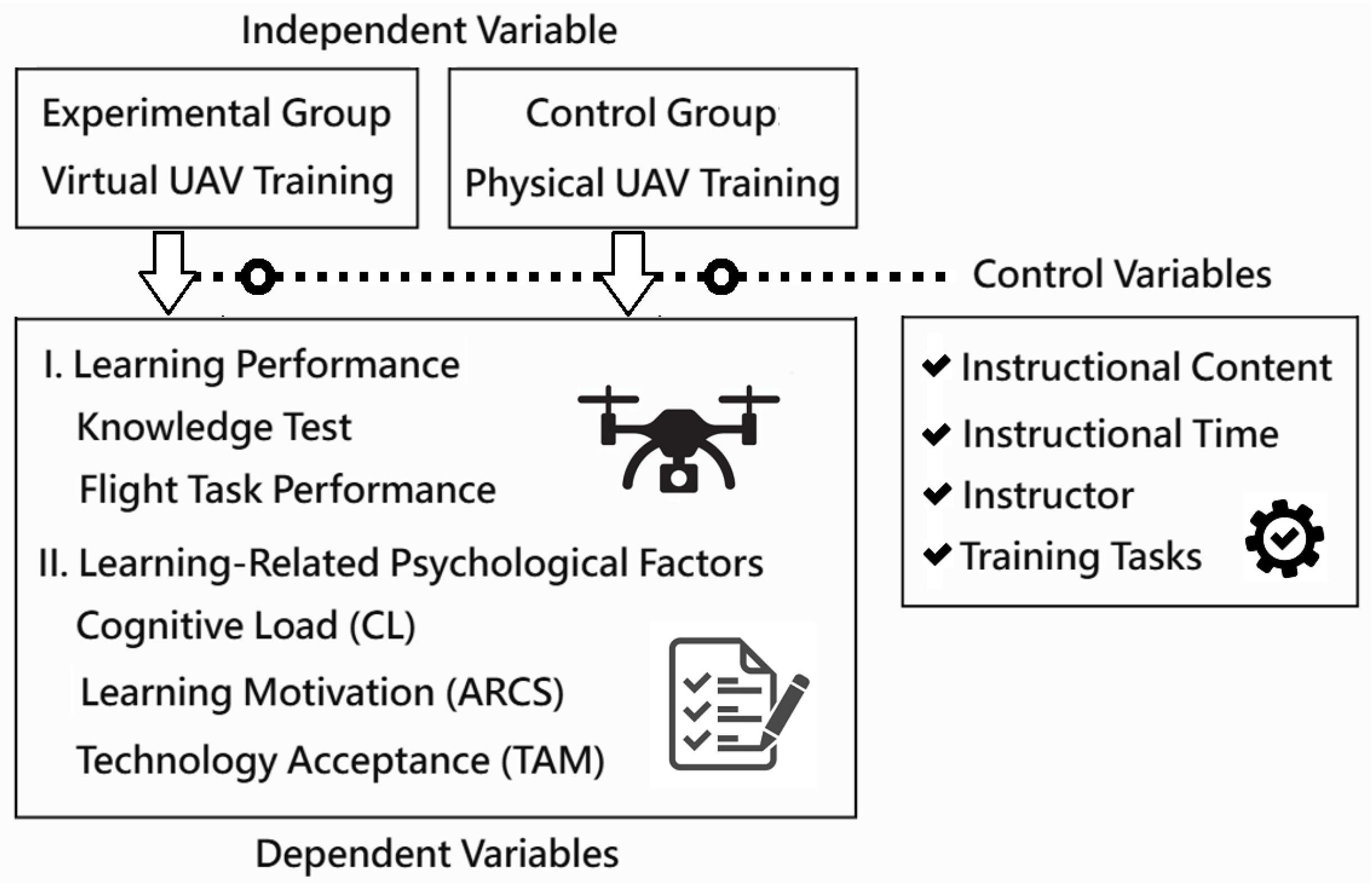
The experiment consisted of three phases: pretest, instructional training, and posttest. The instructional design was based on Fitts and Posner’s Motor Skill Learning Theory (MSLT) [
42], which describes skill acquisition as progressing through cognitive, associative, and autonomous stages. Accordingly, UAV training tasks were structured progressively to support the acquisition of fundamental knowledge, refinement of flight control skills through practice and feedback, and development of accurate and fluent operational performance. The independent variable was the training method (virtual vs. physical UAV training), while dependent variables included learning performance, learning motivation, cognitive load, and technology acceptance. Data were collected through achievement tests and standardized questionnaires to evaluate the effectiveness of the two training approaches and learners’ experiences (
Figure 1).
Specifically, learning performance was assessed through both a knowledge test and a flight performance test. Learning motivation was measured based on the ARCS motivational model [
39], cognitive load was evaluated to examine learners’ perceived mental effort during the training process [
36], and technology acceptance was assessed using the Technology Acceptance Model (TAM) [
44]. Together, these measures enabled a comprehensive evaluation of the effects of the two UAV training approaches on learning performance and learners’ psychological responses.
3.2. Participants
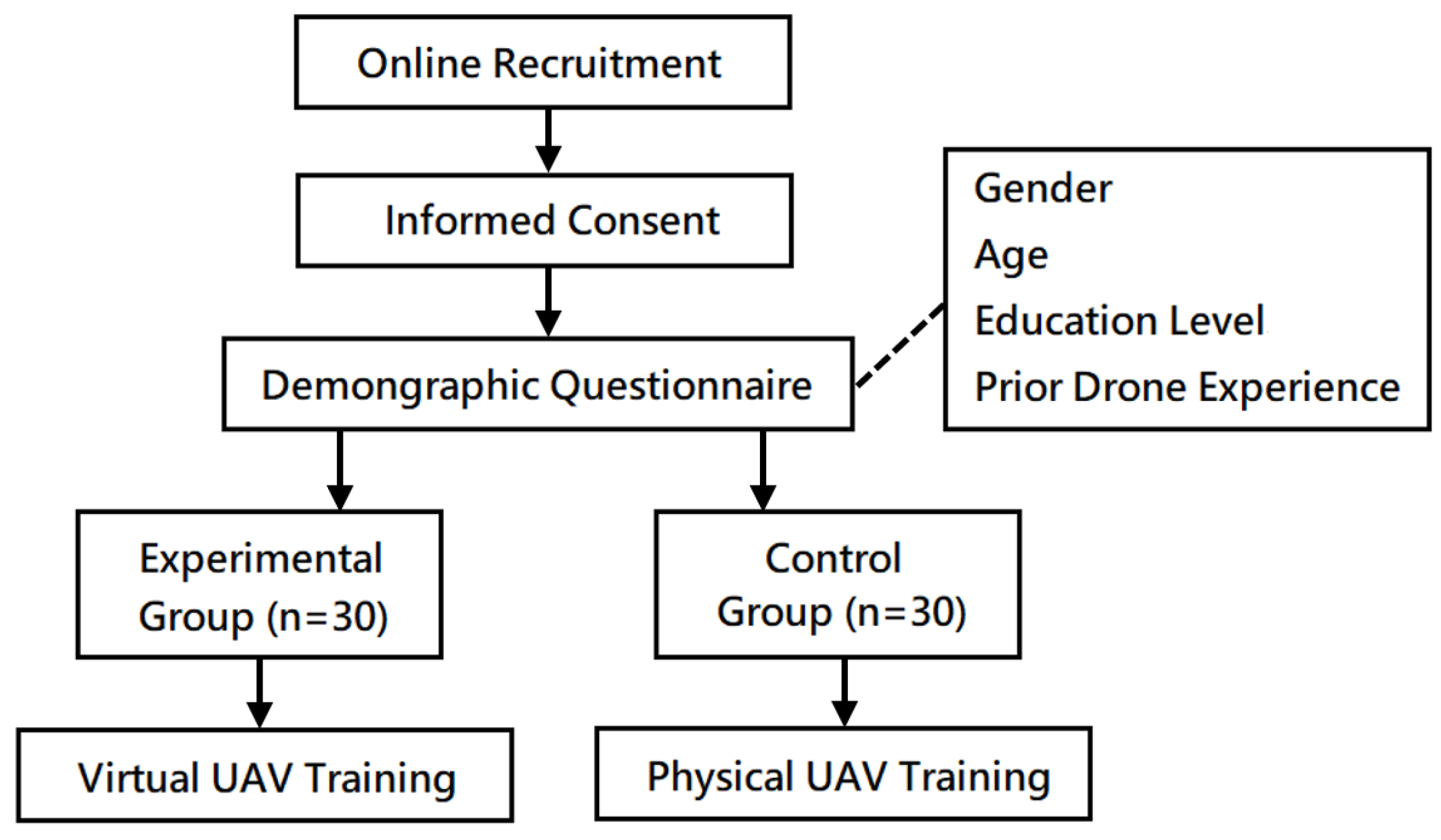
Participants were recruited through an open online invitation and assigned using a predetermined balancing procedure based on gender and education level. Eligible participants were undergraduate and graduate students without prior UAV operation experience or formal UAV training (
Figure 2). A total of 60 students from a university in northern Taiwan participated in the study. Participants were divided into a virtual UAV training group (
n = 30) and a physical UAV training group (
n = 30). Demographic information, including gender, age, education level, and prior drone experience, was collected to characterize the sample and assess the comparability of the two groups at baseline (
Table 1). This demographic information was used for group allocation (gender and education level) and descriptive purposes and were not treated as experimental factors.
Before the intervention, participants completed a background survey assessing prior UAV experience, use of flight simulators or related simulation games, familiarity with computers, VR, and digital games, participation in UAV-related courses or projects, and self-efficacy toward emerging technologies. The participants represented a novice learner population with similar UAV experience, reducing the influence of prior knowledge and enhancing the comparability and interpretability of the training outcomes.
3.3. Experimental Procedure
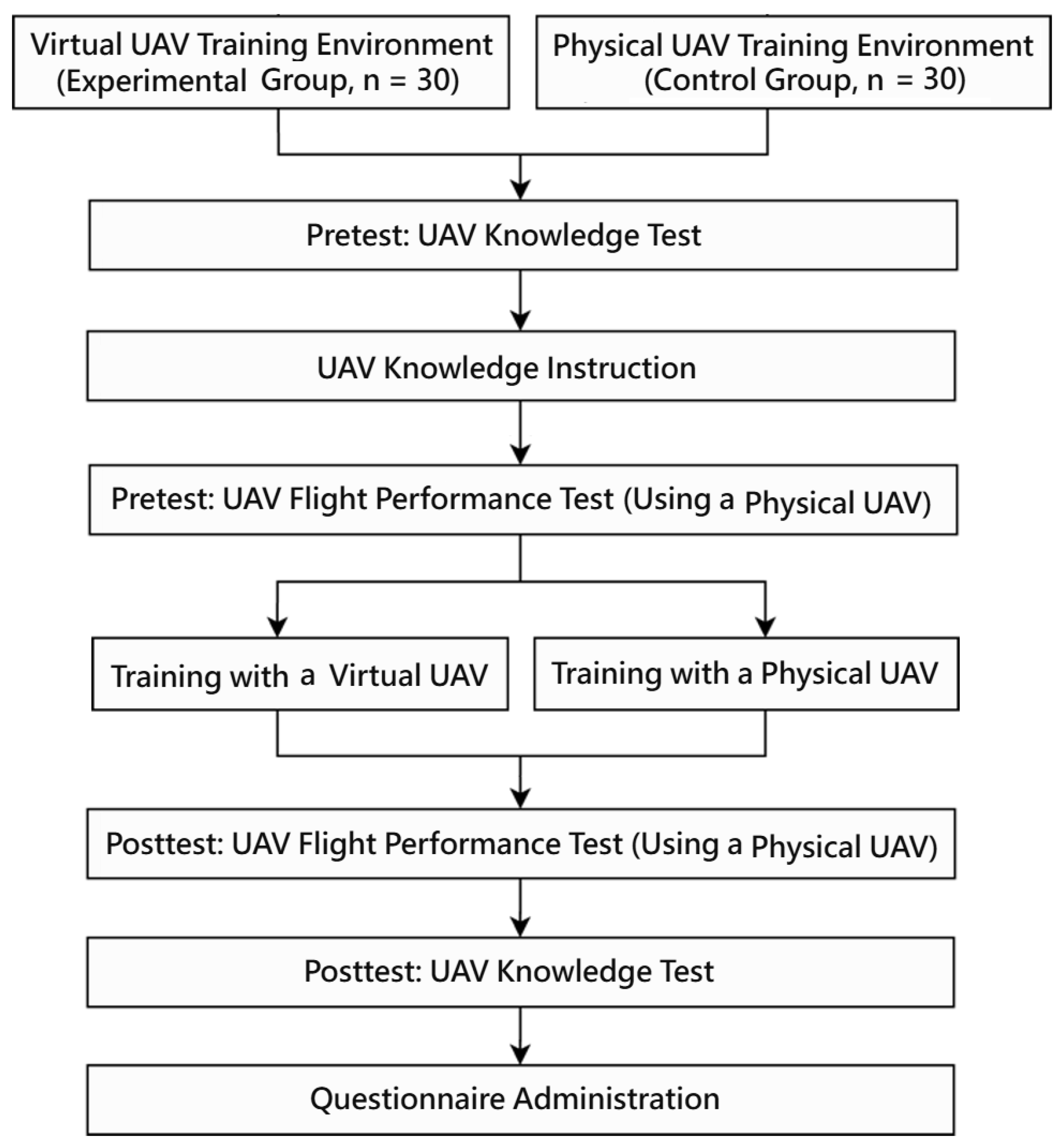
The experiment consisted of five stages: pretest, UAV knowledge instruction, self-directed training, posttest, and questionnaire administration (
Figure 3). Before the instructional intervention, all participants completed a UAV knowledge pretest and received standardized instruction covering fundamental UAV concepts, flight operations, aviation regulations, and experimental tasks. This ensured that participants had comparable baseline knowledge before training. Following the instruction, participants completed a physical UAV flight pretest to assess initial operational performance. After the training intervention, both groups completed a physical UAV flight posttest, knowledge posttest, and questionnaires measuring learning motivation, cognitive load, and technology acceptance. These assessments enabled comprehensive evaluation of learning performance and learners’ perceptions of the training approaches.
All participants completed identical procedures under controlled conditions to ensure experimental consistency, internal validity, and comparability. The experimental design aimed to determine whether training with the virtual UAV could develop flight skills that transfer to actual physical UAV operation. Therefore, both groups completed the same physical UAV posttest, allowing their actual flight performance to be compared under an identical testing environment.
The experimental design codes presented in
Table 2 are defined as follows:
O1: Both groups completed the UAV Knowledge Test (pretest).
O2: Both groups completed the UAV Flight Test (pretest) using a physical UAV.
X1: The experimental group received training in the virtual UAV training environment.
X2: The control group received training in the physical UAV training environment.
O3: Both groups completed the UAV Knowledge Test (posttest).
O4: Both groups completed the UAV Flight Test (posttest) using a physical UAV.
O5: Both groups completed questionnaires assessing learning motivation, cognitive load, and technology acceptance.
During the intervention, each participant completed the training under the supervision of a researcher who served as the instructor and provided feedback when problems were encountered. The training consisted of four practice trials, with each trial limited to 2.5 min, resulting in the same total training time for both groups. Each training session lasted approximately 20 min, including an introduction to UAV-related knowledge and the digital twin concept, followed by the practical training activities. The same training duration, task exposure, and feedback procedures were applied to both groups to ensure comparability between the virtual and physical training conditions.
The researcher provided consistent instructions and performance feedback to both groups throughout the training sessions. The experimental group used the virtual UAV system, while the control group used the physical UAV; however, the virtual environment was configured to replicate the same training environment and task settings used by the control group. The same training tasks, practice opportunities, time limits, instructional procedures, and feedback were provided to both groups. These arrangements ensured comparable instructional time, task exposure, and feedback, while the primary difference between groups was the training medium (virtual versus physical UAV).
3.4. Instructional Materials and Research Instruments
The instructional materials were designed to provide learners with fundamental knowledge and operational skills for unmanned aerial vehicles (UAVs). By integrating virtual simulation and physical flight training, the instructional program aimed to facilitate the systematic development of learners’ UAV knowledge and operational flight skills through structured instruction and hands-on practice. The instructional content covered basic UAV concepts, flight operations, aviation regulations, and practical applications, while incorporating the concept of digital twins to enhance learners’ understanding of cyber–physical integration technologies.
3.4.1. Training Activity Design
The virtual UAV training system provided a simulated and low-risk environment that enabled learners to repeatedly practice UAV operations with real-time visual feedback, facilitating learners’ understanding of the relationship between flight control and spatial movement. In contrast, the control group performed identical tasks using a physical UAV in a real-world environment, allowing direct comparison of virtual and physical training effects on learning performance. This virtual instructional approach integrated conceptual knowledge with practical skill development, aiming to reduce cognitive load during early skill acquisition while enhancing operational proficiency and learning motivation. The design of the training activities was based on MSLT, which describes skill acquisition as progressing through three stages: the cognitive stage, associative stage, and autonomous stage. Accordingly, the UAV training tasks were organized to support learners’ gradual acquisition and refinement of operational skills.
- (1)
Cognitive Stage
Learners first acquired fundamental UAV knowledge through instruction on UAV components, flight control mechanisms, communication protocols, operational principles, and task procedures. This stage aimed to establish conceptual understanding and prepare learners for practical UAV operational training.
- (2)
Associative Stage
Learners refined UAV operational skills through repeated practice and error correction. Practical tasks, including flying through hoops, target photography, and precision landing, were designed to improve flight skills through practice and feedback.
- (3)
Autonomous Stage
Through repeated practice, learners developed greater operational proficiency with reduced cognitive effort. They then completed complex flight assessments involving directional control, obstacle avoidance, and precision landing to achieve stable, accurate, and fluent UAV operation.
The UAV flight training process was designed as a three-stage task sequence, progressing from basic flight control to precision operation and integrated application. The same task structure was applied to both the physical and virtual UAV training environments to facilitate consistent evaluation of learners’ flight skills. In addition to task accuracy and completion, completion time was included as an assessment criterion. A maximum time of 2.5 min was allowed, with shorter completion times receiving higher scores, thereby reflecting learners’ operational proficiency and efficiency.
In the first task, Ring Navigation, learners controlled the UAV through five ring-shaped targets in a specified sequence using horizontal or vertical flight. This task assessed basic flight control and spatial judgment. Each successfully passed ring was awarded 10 points, with deductions for collisions. In the second task, Precision Photography, learners used a first-person-view perspective to align a target with the center of the camera view and capture the target accurately. In the virtual environment, OpenCV-based image processing automatically identified the target and calculated its Euclidean distance from the image center, with smaller deviations receiving higher scores. The third task, Precision Landing, required learners to land the UAV within a designated area while relying primarily on the first-person view and avoiding obstacles.
3.4.2. Instructional Materials
The instructional materials for the experiment were compiled based on the fundamental knowledge and practical skill requirements of UAV operation. The materials consisted of five instructional units: Introduction to UAVs, Regulations and Flight Safety, Introduction to Digital Twin Technology, UAV Operation, and Training Task Instructions. The instructional design emphasized the integration of theoretical knowledge with practical application through illustrated examples, step-by-step operational guidance, and authentic task-based learning scenarios, helping learners understand the relationship between flight control and spatial navigation.
After completing the initial version of the instructional materials, the developed instructional content was reviewed by experts with experience in UAV education and operation to evaluate its accuracy, completeness, and instructional appropriateness. The materials were subsequently revised based on their feedback. The instructional units and their corresponding learning objectives are presented in
Table 3.
3.4.3. Flight Mission Design
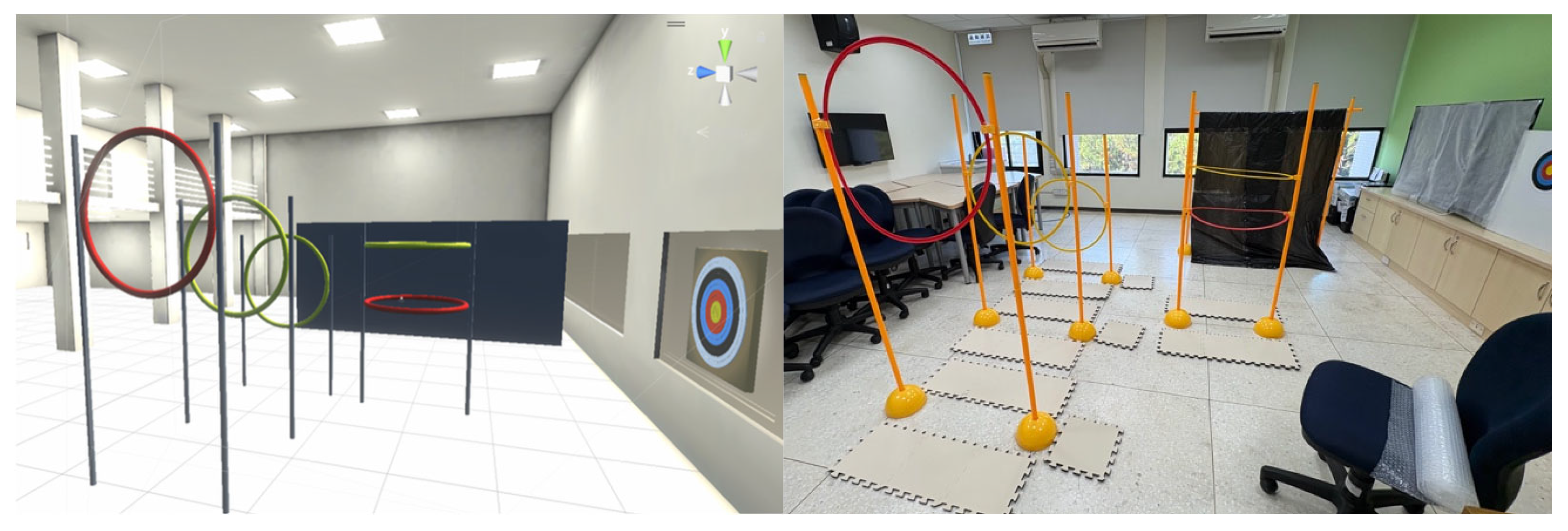
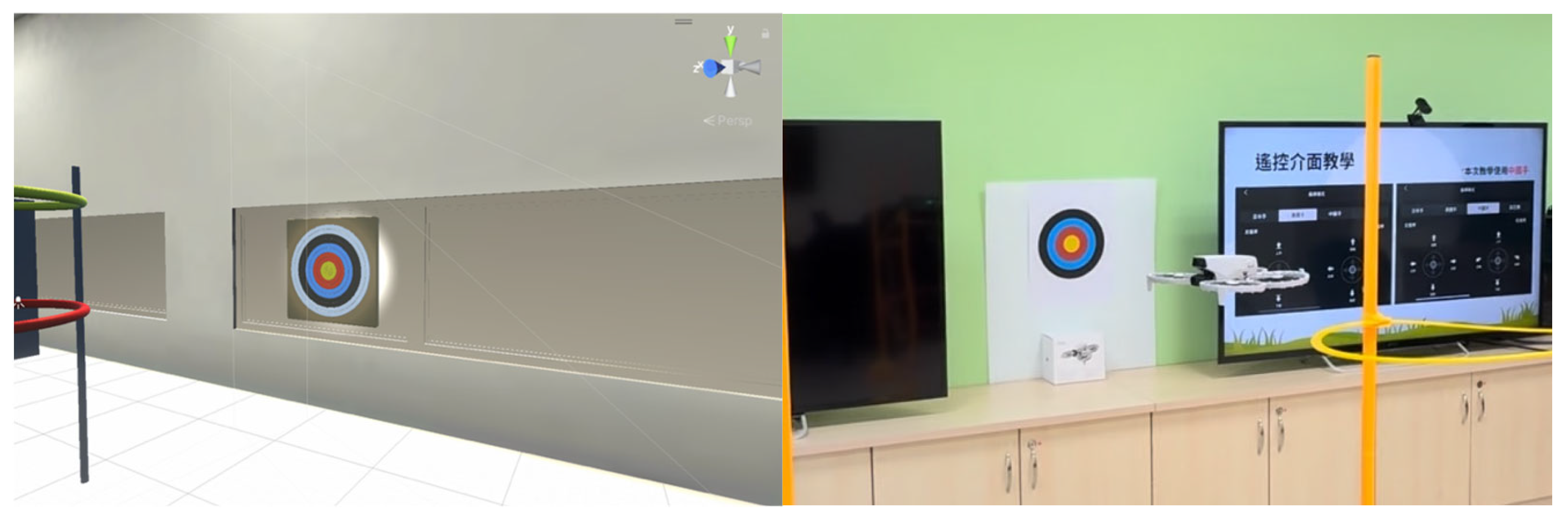
The UAV operational procedures were designed based on a structured flight mission framework. Three progressive levels were developed to guide learners in gradually building their UAV operational skills and to evaluate their flight performance under different levels of difficulty. The first mission, “Ring Navigation,” was designed as a fundamental operational task. Its primary objective was to develop learners’ abilities in basic UAV flight control and spatial orientation. During this mission, learners were required to perform horizontal and vertical movements according to the given instructions and sequentially navigate the UAV through designated targets (
Figure 4). This mission was designed with a relatively low level of difficulty, focusing on familiarizing learners with the control interface and establishing fundamental concepts of UAV manipulation.
The second mission, “Target Photography,” further emphasized position control and flight stability. From a first-person-view (FPV) perspective, learners were required to control the UAV so that the target object was accurately aligned with the center of the screen before completing the photography task (
Figure 5). Compared with the first mission, this mission involved a moderate level of difficulty. In addition to basic flight-control skills, learners were required to integrate visual judgment and fine-tuning operations to improve flight precision and task performance.
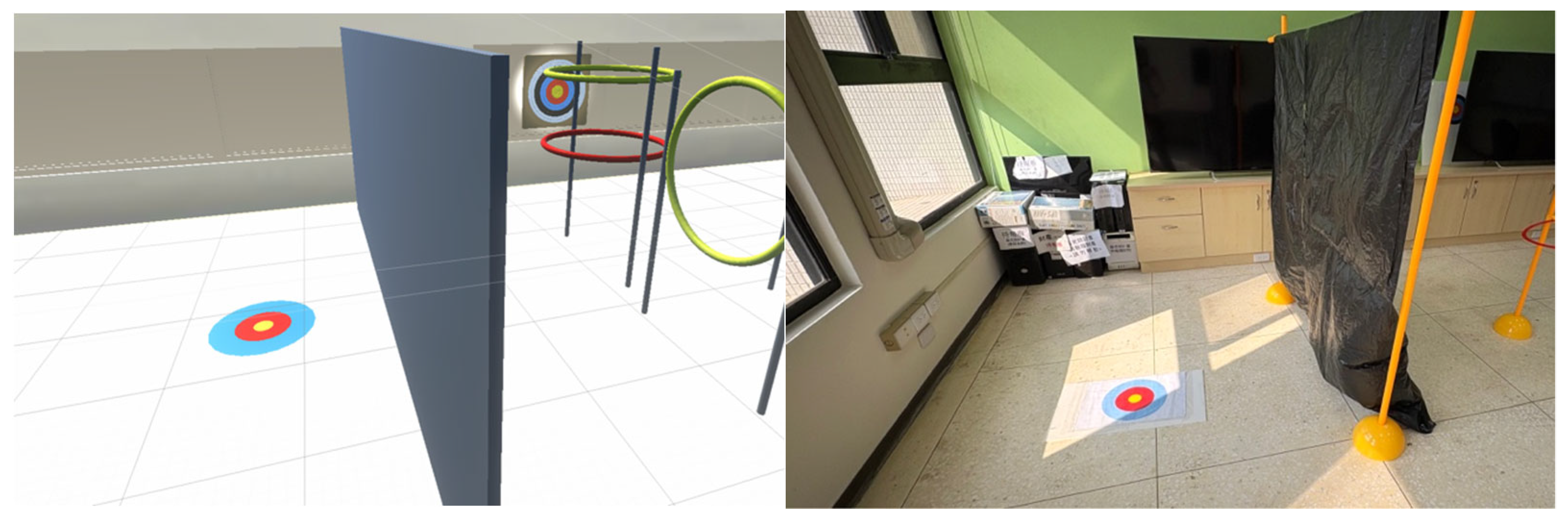
The third mission, “Precision Landing,” was designed as an advanced-level task, emphasizing the development of learners’ spatial judgment and integrated operational skills. In this mission, learners were required to operate the UAV from behind obstacles, where the actual position of the UAV could not be directly observed. Instead, they relied solely on the FPV perspective to control the UAV. By adjusting the flight direction and altitude, learners guided the UAV to land smoothly at the designated location (
Figure 6). This mission represented the highest level of difficulty among the three tasks, requiring learners to integrate previously acquired flight control skills and spatial perception abilities to achieve accurate positioning and stable landing performance.
3.4.4. System Development Tools
This study developed a virtual UAV training system as a learning platform for the experimental group and integrated digital twin technology to enhance system functionality. The control group received training using a commercially available physical UAV, enabling comparison of learning performance between virtual and physical training approaches. The virtual UAV training system was developed using the Unity game engine to construct the virtual flight environment, user interface, and interactive training functions. Through 3D scene modeling and programmed control mechanisms, the system enabled learners to acquire UAV flight skills through immersive interactive practice.
To improve training authenticity, the virtual UAV model and flight control mechanisms were designed based on the operating principles of a physical UAV, allowing learners to perform control actions similar to real-world operations. During training, learners used a mobile device to control the virtual UAV while executing takeoff, navigation, and mission-based tasks with real-time monitoring of flight status and trajectory. By integrating simulation with hands-on practice, the system reduced the risks and barriers of physical UAV training, enabling learners to progressively develop operational skills and improve learners’ understanding of flight control and training performance.
3.4.5. System Interface and Functions
During the training intervention, both the experimental and control groups used Android smartphones as the UAV control interface to ensure consistency in operational procedures and minimize the influence of device-related differences on learning outcomes. The control interface adopted a dual-joystick layout, separating translational flight control from attitude control to provide learners with an intuitive operating experience.
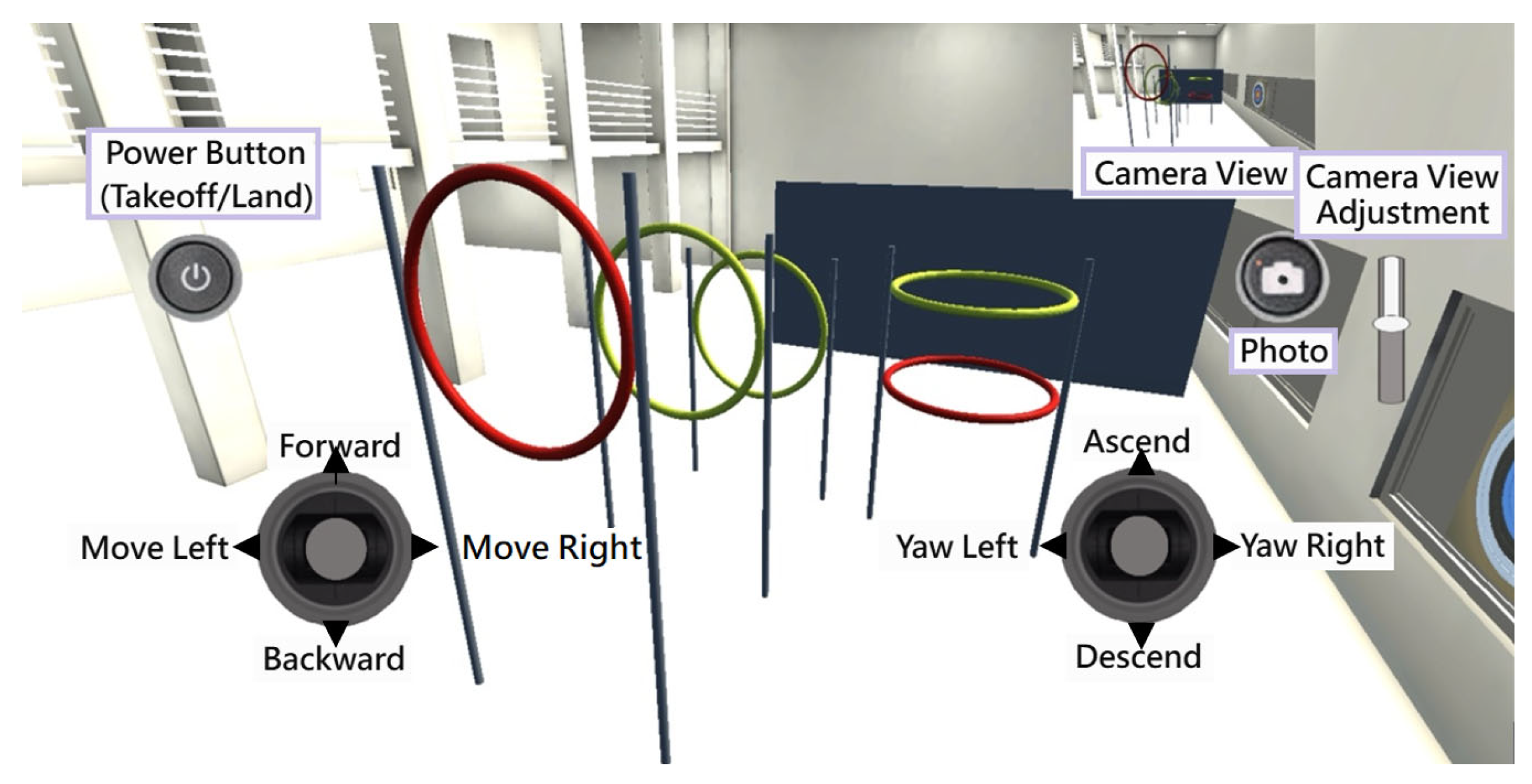
The control interface of the virtual UAV training system consists of two primary components: flight controls and camera controls. The left joystick controls translational movement (forward, backward, left, and right), whereas the right joystick controls altitude and attitude, including ascending, descending, and yaw rotation. The interface also includes a takeoff/landing button, a photo button, and a camera view adjustment slider, allowing learners to modify the viewing perspective. The interface was designed to support intuitive operation and integrate essential flight functions, enabling learners to quickly master the control logic while reducing the learning burden on novice users.
The virtual environment simulates an indoor flight scenario and includes multiple mission levels with progressively increasing difficulty, requiring learners to operate the UAV to complete designated flight tasks (
Figure 7). This mission-based design not only develops learners’ fundamental UAV operational skills, such as directional control and stable flight, but also enhances their spatial awareness and precision control abilities. The progressive sequence of tasks supports the gradual development of UAV competencies, advancing from basic flight control to integrated mission execution.
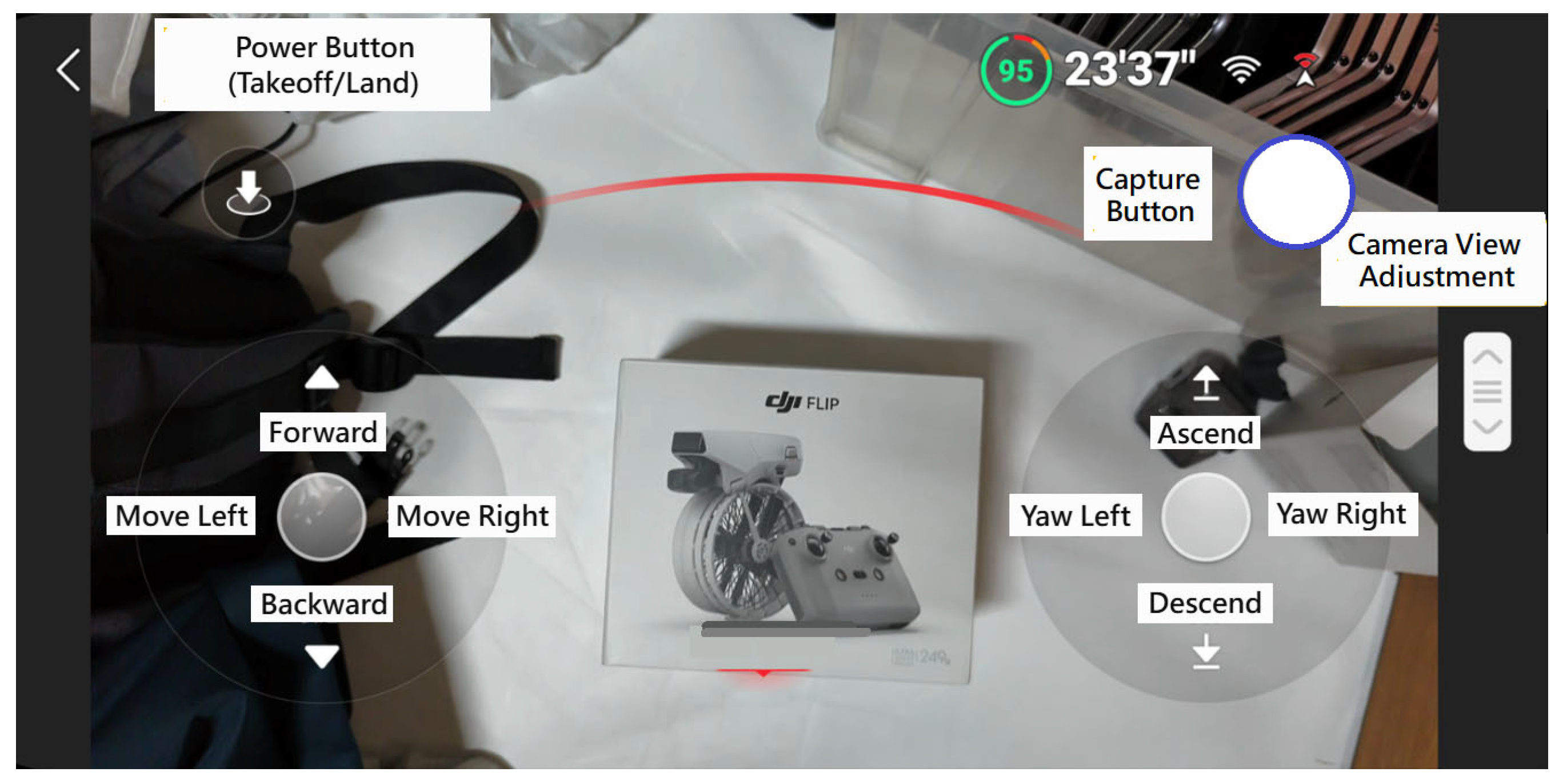
For the control group, the commercially available physical UAV (DJI Flip) was controlled through a smartphone-based interface (
Figure 8). The interface provides a real-time FPV video feed and essential flight information, including battery level, flight time, and connection status. Similar to the virtual UAV training system, the physical UAV uses a dual-joystick control scheme, where the left joystick controls translational movement and the right joystick controls altitude and yaw. Additional functions include image capture and camera view adjustment. The operational logic was designed to match the virtual UAV training system, ensuring comparable control conditions and allowing evaluation of the effects of training environments (virtual vs. physical) on learning outcomes while minimizing interface-related differences.
To ensure a fair comparison between the two training environments, both the virtual and physical UAV systems adopted a consistent smartphone-based control interface with identical control logic. This unified interface design reduced the difficulty of skill transfer between the virtual and physical environments while enhancing the internal validity of the experimental design. Therefore, learning performance differences were primarily attributable to the training environment rather than the control interface.
3.5. Implementation of UAV Digital Twin
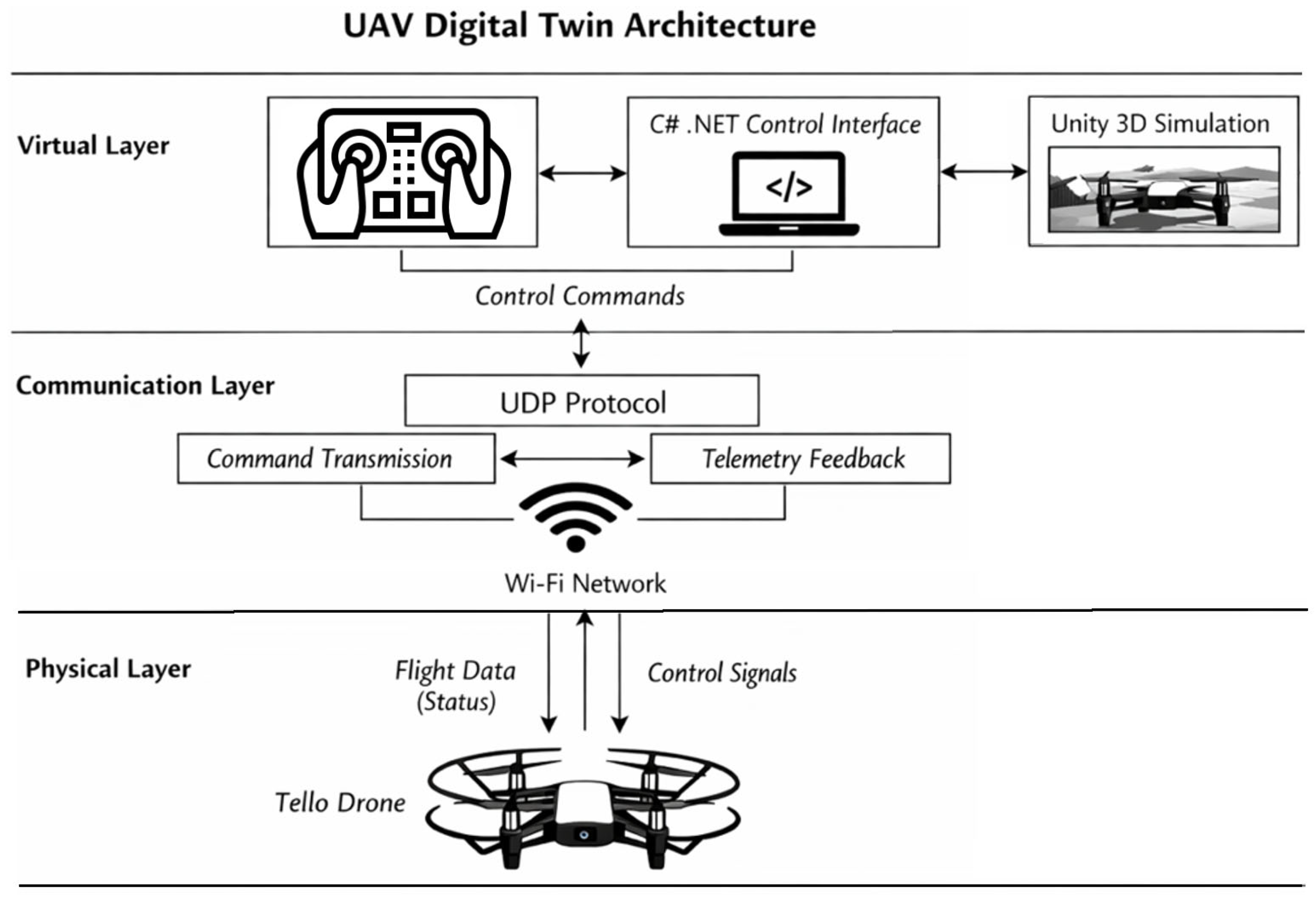
To demonstrate the feasibility of integrating virtual and physical UAV operations, the present study developed a UAV digital twin prototype system that enables real-time interaction between virtual and physical UAVs. Implemented using Unity, C#, and UDP-based communication, the system synchronizes control commands from the virtual environment with the physical UAV. Designed for indoor operational training, the prototype prioritizes instructional applications over high-fidelity physical simulation while considering flight safety, teaching constraints, and UAV regulations. The system comprises four layers: (1) Virtual Environment Layer, (2) Communication and Control Layer, (3) Physical UAV Layer, and (4) Synchronization Mechanism (
Figure 9).
- (1)
Virtual Environment Layer
A three-dimensional virtual training environment was developed in Unity, where the virtual UAV functions as the digital representation of the physical UAV. The environment enables learners to practice UAV operations in a safe and interactive setting. User inputs are converted into UAV commands through a C# control module. To ensure smooth execution on mobile devices, the simulation simplifies complex physical dynamics while preserving essential flight behaviors required for training. The UAV digital twin system was validated in the indoor environment used for the physical UAV experiments and successfully performed the designated training missions.
- (2)
Communication and Control Layer
The communication layer uses C#, User Datagram Protocol (UDP), and the DJI API to establish bidirectional communication between virtual and physical UAVs through a Wi-Fi network. Flight commands, including takeoff, landing, movement, rotation, and image capture, are transmitted with low latency, while telemetry data such as altitude, attitude, and battery status are received for processing. This architecture enables real-time synchronization between the two systems.
- (3)
Physical UAV Layer
The physical platform employed in the present research was a commercially available educational drone. Through the official software development kit (SDK), the UAV system can issue flight commands and retrieve flight status information in real time, allowing the virtual UAV to reflect the operational state of its physical counterpart.
- (4)
Virtual–Physical Synchronization Mechanism
The proposed system constitutes a digital twin of the physical UAV by establishing a bidirectional, real-time connection between the virtual and physical UAVs. Rather than functioning solely as an operator interface, the virtual UAV serves as a dynamic digital representation of the physical UAV, with its state continuously updated according to the physical UAV’s real-time telemetry. The synchronization mechanism consists of two complementary processes:
Command synchronization: Control inputs generated in the virtual environment are converted into UAV control commands and transmitted to the physical UAV via UDP. This allows actions performed on the virtual UAV to correspond to control actions of the physical UAV.
State synchronization: Flight telemetry received from the physical UAV is processed and used to continuously update the virtual UAV’s position, orientation, and flight status. Consequently, changes in the physical UAV are reflected in the virtual environment in real time.
Through this bidirectional synchronization, the virtual UAV maintains a continuously updated correspondence with its physical counterpart. Therefore, the system goes beyond a conventional operator interface by providing a dynamic virtual representation that both reflects the physical UAV’s current state and participates in the control loop, which constitutes the core digital-twin functionality implemented in this study. In this study, the physical drone was not connected to its digital twin during the intervention, as the primary objective was to evaluate the effectiveness of virtual training independently, without the influence of physical–virtual synchronization.
The mechanisms illustrated above provide the fundamental architecture for real-time digital twin operation. To minimize extraneous cognitive load, the instructional interface presents only essential flight information, enabling beginners to focus on developing basic flight control skills without distraction. Learners initially practice flight operations in the virtual environment before progressing to the physical UAV, thereby reducing cognitive interference from simultaneous virtual–physical interaction. Although only limited information is displayed to learners, the underlying communication framework enables real-time bidirectional data transmission and synchronization between the virtual and physical systems. This implementation demonstrates the feasibility of applying an educational digital twin framework to UAV training.
3.6. Research Instrument
The present research examined the effects of a virtual UAV training system on participants’ learning performance and psychological responses. Accordingly, multiple quantitative instruments were employed for systematic data collection and analysis. The research instruments included the UAV Knowledge Test, UAV Flight Test, Learning Motivation Scale, Cognitive Load Scale, and Technology Acceptance Scale. The purpose and design of each instrument are described below.
- (1)
UAV Knowledge Test
The UAV Knowledge Test was developed by the researchers based on fundamental UAV knowledge and practical application scenarios. The test content covered four major dimensions: basic UAV operation knowledge, regulations related to UAV operation, UAV application domains, and digital twin concepts.
The test items were developed with reference to the remote pilot certification examination content established by the Civil Aeronautics Administration (CAA), Ministry of Transportation and Communications, Taiwan, and were further adapted to incorporate practical application contexts. This design enabled the test to evaluate both theoretical understanding and practical knowledge. In addition, experts with research and practical experience in UAV-related fields were invited to review and discuss the test items to ensure their content validity and professional appropriateness.
The assessment comprised a combination of true/false and multiple-choice questions designed to assess learners’ understanding of UAV concepts and decision-making abilities. It comprised 15 items, including 7 true/false and 8 multiple-choice questions. Four items assessed basic operation knowledge, three focused on UAV applications, four addressed UAV regulations, and four evaluated digital twin concepts in UAV applications, ensuring comprehensive coverage of the instructional objectives and learning content.
Table 4 presents the classification of each pretest item. The posttest used the same questions, with the item order and answer options rearranged to maintain content consistency while minimizing memory effects from repeated exposure.
The UAV Knowledge Test was scored based on the number of correct responses and converted into percentage scores. Higher scores indicated better understanding and application of UAV knowledge and related concepts. The test results were used to examine differences in knowledge achievement between different training approaches. The posttest scores of the experimental and control groups were compared using an independent-samples t-test to determine whether the virtual UAV training system resulted in significant differences in learners’ knowledge achievement.
- (2)
UAV Flight Test
The UAV Flight Test consisted of three levels, progressing from basic control skills to precision operation and integrated applications. This design enabled the evaluation of learners’ operational skill development across different learning stages while reflecting the progressive acquisition of UAV competencies. In the UAV Flight Test, the experimental group operated the virtual UAV independently without connection to a physical UAV, and training effectiveness was compared with that of physical UAV training.
In addition to operational accuracy and task completion, completion time was included as an evaluation indicator. Since UAV operation requires not only accuracy but also smooth control and rapid responses, completion time serves as an important indicator of learners’ proficiency and operational efficiency. Learners who completed tasks correctly within a shorter time demonstrated greater familiarity with flight operations and higher levels of skill automatization, and therefore received higher scores. Incorporating time-based evaluation provided a more comprehensive assessment of learners’ UAV operational performance and overall skill development. Detailed task descriptions and scoring criteria are presented in
Table 5.
- (3)
Learning Motivation Scale
The Learning Motivation Scale was developed based on Keller’s ARCS model [
39], comprising four dimensions: Attention, Relevance, Confidence, and Satisfaction. Items were measured using a 5-point Likert scale, with higher scores indicating stronger learning motivation and engagement throughout the learning process. The Cronbach’s α coefficients ranged from 0.725 to 0.863 across the four dimensions, and the overall reliability was 0.907, indicating excellent internal consistency.
- (4)
Cognitive Load Scale
The Cognitive Load Scale was based on Cognitive Load Theory and included Intrinsic Cognitive Load, Extraneous Cognitive Load, and Germane Cognitive Load. Items were measured using a 5-point Likert scale, with higher intrinsic and extraneous load scores indicating greater cognitive burden. Cronbach’s α values ranged from 0.702 to 0.847, while the overall reliability was 0.664. Although slightly below 0.70, the overall value remained acceptable due to the distinct theoretical characteristics of the three dimensions.
- (5)
Technology Acceptance Scale
The Technology Acceptance Scale was developed based on the Technology Acceptance Model (TAM) [
44] and included Perceived Ease of Use, Perceived Usefulness, Attitude Toward Use, and Behavioral Intention. Items were rated using a 5-point Likert scale, with higher scores indicating greater acceptance. Cronbach’s α values ranged from 0.750 to 0.857, and the overall reliability was 0.839, indicating good internal consistency. Overall, the Technology Acceptance Scale demonstrated satisfactory reliability and measurement consistency, supporting its use in subsequent statistical analyses and interpretation of learners’ technology acceptance regarding UAV training.
3.7. Data Processing and Analysis
This study investigated the effects of a virtual UAV training system on learning performance, learning motivation, cognitive load, and technology acceptance. A quantitative research approach was adopted, with data collected through performance assessments and questionnaires before and after the intervention.
3.7.1. Data Processing
Both groups completed UAV knowledge tests before and after training to assess conceptual understanding. The 15-item test included true/false and multiple-choice questions, with scores based on correct responses. UAV Flight Test scores were calculated according to predefined criteria to evaluate operational performance. Post-intervention questionnaires, including the ARCS Learning Motivation Scale, Cognitive Load Scale, and Technology Acceptance Scale, were measured using a 5-point Likert scale to assess learners’ motivation, cognitive load, and technology acceptance. Data were coded in Microsoft Excel 2021 and analyzed using IBM SPSS Statistics 32 with α = 0.05.
3.7.2. Statistical Analysis
Descriptive statistics were conducted to summarize UAV knowledge scores, flight performance, learning motivation, cognitive load, and technology acceptance. Means and standard deviations were calculated to characterize learners’ performance and perceptions. Paired-samples t-tests were used to examine within-group differences between pretest and posttest scores for UAV knowledge and flight performance. ANCOVA was then conducted to compare posttest outcomes between groups while controlling for pretest differences. The homogeneity of regression slopes assumption was examined to validate the ANCOVA model. Because no pretest measures were collected for learning motivation, cognitive load, and technology acceptance, independent-samples t-tests were conducted to compare posttest scores between groups.
5. Discussion
5.1. Learning Performance
The results showed that both virtual and physical training supported improvements in UAV knowledge and flight performance, with comparable posttest outcomes after controlling for pretest differences. These findings suggest that the proposed virtual UAV training system can achieve learning outcomes similar to physical UAV training, demonstrating its potential as an alternative approach for UAV skill development. Unlike conventional simulators, the proposed system integrates digital twin technology to connect virtual practice with physical UAV operation, supporting the transfer of operational skills within a safe and repeatable environment.
These findings are consistent with previous research on simulation-based training [
32,
33], which emphasizes the importance of repeated practice, feedback, and controlled learning conditions in skill acquisition. From the perspective of Motor Learning Theory [
41], the improvement in real UAV flight performance indicates effective transfer of operational strategies acquired in the virtual environment. Nevertheless, virtual training cannot fully replace physical operation because real-world UAV practice provides authentic sensory feedback, environmental uncertainty, and risk-management experiences. Therefore, virtual UAV training is best applied as a complementary approach for initial skill acquisition and procedural preparation.
The proposed system extends beyond a conventional VR simulator by implementing an educational digital twin of the physical UAV, bidirectional synchronization, real-time mapping, and cyber–physical integration. These features enable consistent interactions between virtual and physical environments while preserving operational fidelity during training. Such an architecture supports safe, repeatable, and scalable UAV skill development, providing a practical foundation for future intelligent training systems and digital twin-enabled educational applications.
5.2. Learning Motivation
Comparable levels of overall learning motivation were observed between virtual and physical UAV training groups, indicating that both learning environments were effective in sustaining learner engagement. This finding extends previous VR learning research by demonstrating that virtual UAV training provides motivational experiences similar to physical training despite differences in interaction environments [
29].
The ARCS dimension analysis further indicated that virtual training enhanced perceived Relevance, suggesting stronger connections between UAV learning and contemporary digital technologies. The significant improvement in the Relevance dimension suggests that virtual UAV training strengthened learners’ perceptions of the relationship between training activities and real-world applications. This may be attributed to the digital twin-based environment, which provided an controlled and safe context for simulating UAV operations and mission tasks. By enabling repeated practice without equipment limitations or safety concerns, the system helped learners recognize the practical value and applicability of UAV knowledge and skills.
According to Keller’s ARCS model [
39], such contextualized experiences enhance perceived relevance by aligning learning content with learners’ goals and future needs. These results suggest that virtual and physical training environments provide distinct motivational benefits: virtual environments enhance technological relevance and accessibility, whereas physical environments strengthen experiential engagement. Future digital twin systems should further improve spatial visualization, interaction fidelity, and feedback mechanisms to enhance learner presence and attention.
5.3. Cognitive Load
No significant difference was observed in overall cognitive load between the two groups. This suggests that virtual UAV training can support skill acquisition without increasing learners’ overall mental workload. Similar levels of intrinsic and germane cognitive load further indicate that both approaches involved comparable task complexity and supported equivalent processes of knowledge construction.
However, the higher extraneous cognitive load observed in the virtual training group reveals an important consideration for designing a virtual training system. Translating three-dimensional UAV movements into a mobile-based interface may require additional mental processing of spatial relationships compared with direct physical operation. Although this additional cognitive demand did not hinder learning performance, future systems should minimize unnecessary cognitive processing through improved visualization, spatial feedback, adaptive guidance, and intuitive interaction design.
5.4. Technology Acceptance
Physical UAV training received higher technology acceptance than virtual training, although both approaches achieved comparable learning outcomes. According to TAM [
43], acceptance is influenced by perceived usefulness, ease of use, and practical value. The absence of differences in perceived ease of use suggests that the virtual UAV system achieved acceptable usability, whereas may have been associated with limitations in perceived realism and similarity to actual UAV operation. The involvement of physical UAV operation in the posttest suggests a potential increase in learners’ perceptions of the practical value of the virtual UAV system in real-world training.
Physical environments provide authentic motor feedback, three-dimensional visual interaction, and operational experiences that strengthen perceived transferability. Learners may perceive physical UAVs as more authentic and directly applicable to real-world flight operations. However, similar behavioral intention scores indicate that learners recognized the potential value of virtual UAV training and the proposed system provides a safe, flexible, and effective alternative to conventional physical UAV training. Enhancing realism, feedback quality, and interaction fidelity may therefore reduce the acceptance gap between virtual and physical training.
Overall, the findings provided empirical evidence that a digital twin-based virtual UAV training system can achieve learning outcomes comparable to physical UAV training while offering advantages in safety, repeatability, and scalability. By connecting virtual practice with physical UAV states, the proposed approach supports the transfer of trained operational skills to physical UAV tasks. However, technological capability alone is insufficient for effective learning; instructional design, interaction quality, and training authenticity remain critical. Future UAV training systems should adopt blended learning approaches that integrate virtual practice with physical operation while enhancing immersion, adaptive feedback, and virtual–physical integration.
6. Conclusions
The present study investigated the differences between virtual and physical UAV training environments in terms of learning performance, learning motivation, cognitive load, and technology acceptance. The results demonstrated that virtual UAV training can achieve learning outcomes comparable to physical UAV training, indicating its potential as an effective educational approach for UAV flight skill development.
Regarding learning performance, both virtual and physical training groups showed significant improvements in UAV knowledge and flight skills, with no significant within-group differences in posttest scores after controlling for pretest differences. These findings suggest that the virtual training approach can effectively support the acquisition of fundamental UAV knowledge and operational skills while providing advantages in safety, accessibility, and repeatability. However, physical training remains valuable for developing real-world adaptation, physical feedback perception, and advanced operational experience. Therefore, virtual and physical training approaches should be considered complementary rather than mutually exclusive approaches.
As for learning motivation, no significant difference was found in overall motivation between the two groups, indicating that both training approaches were similarly effective in engaging learners. However, the virtual training group demonstrated higher perceived relevance, suggesting that technology-based learning environments may better connect UAV knowledge with learners’ digital experiences and potential applications. In contrast, physical training may provide advantages in maintaining attention because of its greater realism and immediate operational feedback.
With respect to cognitive load, the two groups showed similar overall cognitive demands, suggesting that virtual training did not impose excessive learning difficulties. However, the virtual training group experienced higher extraneous cognitive load, likely due to limitations in spatial perception, interface interpretation, and operational guidance. These findings highlight the importance of improving instructional design, spatial assistance, and interface usability to reduce unnecessary cognitive processing.
Concerning technology acceptance, physical UAV training received higher evaluations in perceived usefulness and attitude, likely because its realistic operation and immediate feedback provided a stronger sense of authenticity and control. Nevertheless, virtual training achieved comparable behavioral intention, suggesting learners recognized its practical value in terms of cost efficiency, safety, and flexible practice opportunities. These findings indicate that improving realism, feedback quality, and task authenticity may enhance acceptance and effectiveness of future virtual UAV training systems.
Beyond the comparable learning outcomes, the proposed system demonstrates the educational value of digital twin technology. By integrating a digital representation of the physical UAV with bidirectional synchronization, real-time mapping, and cyber–physical integration, the system establishes an educational digital twin that provides a safe, repeatable, and authentic training environment. These characteristics may explain the comparable learning outcomes between the virtual and physical training groups while providing a foundation for future digital twin-based UAV training.
According to the findings, this study confirms that virtual UAV training can serve as a complementary approach to physical training and a valuable component of modern UAV education. By integrating virtual simulation with real-world practice, educators can establish a blended training framework that enhances safety, efficiency, and practical skill development. The virtual UAV model simplified certain flight dynamics to ensure smooth mobile execution. Consequently, the digital twin emphasized instructional functionality rather than high-fidelity aerodynamic simulation.
This study was limited by its short-term intervention and focus on novice university students, which constrained evaluation of long-term skill transfer and generalizability to other learner populations and real-world contexts. Future system improvements should focus on increasing immersion, improving spatial awareness, and incorporating adaptive guidance and intelligent feedback mechanisms. Further research may examine diverse learner populations, long-term skill retention, and the application of emerging technologies, including VR/AR, digital twins, and AI, to develop more adaptive and effective UAV training environments for different educational contexts and applications.