1. Introduction
The vision of the sixth-generation (6G) wireless networks heavily relies on the convergence of ubiquitous communication and high-precision sensing [
1,
2,
3]. In this context, Integrated Sensing and Communication (ISAC) has emerged as a key technology [
4,
5]. By sharing the same spectrum resources and hardware platforms, ISAC significantly improves spectral and energy efficiency compared to traditional separated systems [
6,
7]. To further exploit the potential of ISAC, cloud radio access networks (C-RANs) have recently been considered as a promising architecture for cooperative transmission and sensing [
8]. In a C-RAN architecture, multiple Remote Radio Heads (RRHs) are densely deployed and connected to a centralized Baseband Unit (BBU) via fronthaul links. This integration enables cooperative ISAC, where the BBU jointly processes the signals from multiple RRHs. Such multi-base-station (multi-BS) cooperation effectively mitigates inter-cell interference, provides substantial macro-diversity, and significantly expands the sensing coverage. Furthermore, by exploiting the centralized computational capabilities of the BBU, this cooperative paradigm facilitates global resource allocation and advanced joint signal processing, paving the way for emerging mission-critical applications such as autonomous driving and smart manufacturing, thereby offering a highly robust framework for next-generation networks [
9,
10].
Despite the compelling benefits of cooperative ISAC in C-RAN, the dual-use nature of the transmitted signals introduces critical security vulnerabilities [
11,
12]. Owing to the open propagation characteristics of wireless channels, high-power sensing waveforms steered toward specific targets are vulnerable to interception by unauthorized receivers or malicious wardens [
13]. This interception not only compromises the sensitive location information of the sensing targets but also exposes the very existence of the ongoing communication activities. To address this severe security threat, covert communication has been introduced into wireless networks. Unlike conventional physical layer security techniques that merely protect the data content from being decoded, covert communication aims to completely conceal the transmission activities from vigilant wardens. By ensuring a low probability of detection, covert communication provides an ultimate level of security, making it indispensable for secure ISAC networks [
14]. However, realizing covert communication in C-RAN-based ISAC systems faces unprecedented challenges [
15]. First, to satisfy the stringent covertness requirements, the transmit power of the RRHs must be strictly constrained, which makes the communication links highly susceptible to multi-user interference and sensing signal leakage. Second, the cooperative processing in C-RAN necessitates massive data exchange between the BBU and the RRHs through fronthaul links. In practical scenarios, these fronthaul links have strictly limited capacities. Balancing the extremely restricted transmit power for covertness, the severe interference, and the finite fronthaul capacity constitutes a highly complex and coupled bottleneck.
Recently, considerable attention has recently been paid to secure ISAC design, particularly for protecting communication confidentiality and transmission covertness. For instance, the authors in [
16] proposed an intelligent reflecting surface (IRS)-assisted non-orthogonal multiple access (NOMA) framework for covert ISAC systems, which leverages distributed cooperative jammers and proactive eavesdropper trajectory prediction to maximize the covert transmission rate through joint beamforming and phase shift optimization. Furthermore, the authors in [
17] investigated an active reconfigurable intelligent surface (ARIS)-assisted NOMA-ISAC system, where public NOMA signals and dual-functional artificial noise are jointly exploited to shield covert transmissions and maximize the covert rate. Moreover, secrecy-sensing optimization has also been investigated in RIS-assisted full-duplex ISAC networks, where the joint design of reflective beamforming and full-duplex transmission is exploited to balance secrecy enhancement and sensing performance [
18]. Alternatively, the authors in [
15] explored a cooperative NOMA-assisted ISAC system, where an ISAC relay utilizes probing and public communication waveforms to camouflage covert transmissions through joint beamforming optimization. Additionally, the authors in [
19] investigated a robust beamforming design for covert ISAC systems against multiple non-colluding and colluding wardens under imperfect channel state information (CSI), optimizing the covert rate based on Kullback–Leibler divergence and theoretical detection error probability. To tackle dual security threats in near-field scenarios, the authors in [
20] proposed a generative adversarial network (GAN)-based joint optimization framework for a fluid antenna system (FAS)-enabled cooperative ISAC network, simultaneously enhancing communication secrecy and covertness. Targeting the emerging low-altitude economy, the authors in [
21] investigated a mobile edge computing (MEC)-based networked ISAC system, jointly optimizing multidimensional resources and unmanned aerial vehicle (UAV) trajectories to minimize total energy consumption while ensuring covert transmissions against multiple wardens. Focusing on full-link covert transmissions against UAV eavesdroppers, the authors in [
16] proposed a secure ISAC framework integrating IRS-assisted NOMA and distributed cooperative jammers. Addressing the challenging Warden-blocked scenario, the authors in [
22] proposed a reconfigurable intelligent surface (RIS)-assisted robust framework that leverages an extended Kalman filter with a sensing-failure fallback mechanism for reliable mobile Warden tracking. By incorporating rate-splitting multiple access (RSMA) into covert ISAC systems with imperfect CSI, the authors in [
23] developed a robust precoding design to jointly enhance covert transmission and sensing performance.
From a network architecture perspective, the integration of ISAC within advanced deployment paradigms has also garnered significant attention. The authors in [
24] investigated an IRS-enhanced orthogonal frequency division multiplexing (OFDM)-ISAC system within a C-RAN framework, jointly optimizing the RRH/IRS beamforming and fronthaul compression. Focusing on target sensing in blind areas within a C-RAN architecture, the authors in [
25] proposed a location-aware direction-of-arrival (DOA) estimation scheme for active IRS-assisted ISAC systems. Shifting to a cell-free radio access network (CF-RAN) paradigm, the authors in [
26] investigated passive ISAC deployment by proposing a novel multi-agent deep reinforcement learning algorithm. Further expanding on the C-RAN architecture, the authors in [
27] investigated an active IRS-aided ISAC system for non-line-of-sight (NLoS) target sensing under fronthaul capacity constraints. Addressing energy efficiency and scalability in uplink C-RAN ISAC systems, the authors in [
28] proposed a graph neural network (GNN)-based framework to jointly optimize remote radio unit (RRU) activation and resource allocation. Focusing on wideband OFDM-ISAC systems, the authors in [
29] utilized a frequency-selective active IRS to assist obstructed target sensing. Moreover, to enhance the wireless fronthaul link in a multicarrier C-RAN ISAC system, the authors in [
30] exploited an IRS and jointly optimized fronthaul compression along with multi-node beamforming.
However, despite the aforementioned advancements, existing works exhibit two major limitations. First, while various cooperative and multi-node schemes have been proposed to facilitate covert ISAC transmissions, they predominantly assume ideal communication links between cooperative nodes, largely overlooking the stringent fronthaul capacity constraints inherent in practical base station deployments. Second, although the integration of ISAC within the C-RAN architecture has been extensively studied to enhance overall system performance, these works rarely address the highly demanding security objective of covert communication. Furthermore, the application of RSMA as a powerful and flexible interference management technique remains largely unexplored in the context of secure C-RAN ISAC networks. Consequently, achieving covert ISAC in a capacity-constrained C-RAN architecture with advanced interference management remains a critical yet unresolved challenge. To overcome the aforementioned limitations, RSMA emerges as a powerful and flexible interference management paradigm. Compared with NOMA, RSMA is particularly suitable for the considered fronthaul-constrained C-RAN covert ISAC scenario. Power-domain NOMA generally relies on a predefined SIC decoding order and sufficiently distinct user channel strengths. However, in cooperative C-RAN, the effective user channels are jointly determined by distributed BS cooperation, fronthaul-limited BS-stream scheduling, sensing/AN beamforming, and covertness constraints. As a result, a stable NOMA decoding order may be difficult to maintain. In comparison, RSMA divides multi-user interference into a decodable component carried by the common stream and a residual component treated as noise, enabling a more adaptable interference-control mechanism. Furthermore, in the proposed overt–covert design, the common stream can naturally serve as a legitimate public signal to mask the covert private streams, thereby reducing the additional private-stream power required for covert information delivery. Motivated by this, we present an RSMA-enabled fronthaul-constrained C-RAN framework for jointly supporting sensing and covert communication. By leveraging the robust interference mitigation capabilities of RSMA, the proposed framework effectively manages the complex mutual interference among communication users and sensing targets. Consequently, it maximizes the covert communication performance while strictly adhering to both fronthaul capacity limits and stringent covertness constraints. The key contributions are outlined below.
We propose an RSMA-enabled overt–covert transmission framework for integrated direct localization and covert communication in fronthaul-constrained C-RAN. In this framework, the RSMA common stream is designed as an overt public signal, while the private streams carry covert information for legitimate users. This design provides a flexible interference-management and covertness-enhancement mechanism for cooperative ISAC networks.
A sum covert rate optimization framework is established, where common-rate allocation, BS-stream scheduling, communication precoding, and sensing/AN beamforming are jointly designed. The formulated problem jointly accounts for covertness constraints, multi-static localization accuracy constraints, per-BS transmit power constraints, and finite fronthaul capacity constraints, thereby capturing the coupling among covert communication, cooperative sensing, and fronthaul-limited resource allocation.
To address the computational intractability of the formulated optimization task, we design an iterative SCA-SDP algorithm. Specifically, continuous relaxation, Big-M-based scheduling constraints, semidefinite relaxation, first-order convex approximation, and LMI reformulation are jointly employed to construct a tractable convex subproblem at each iteration. The convergence behavior and computational burden of the proposed algorithm are further characterized. Numerical comparisons verify that the proposed RSMA-enabled dynamic scheduling scheme provides clear performance gains over the SDMA and fixed-scheduling baselines.
2. System Model
As illustrated in
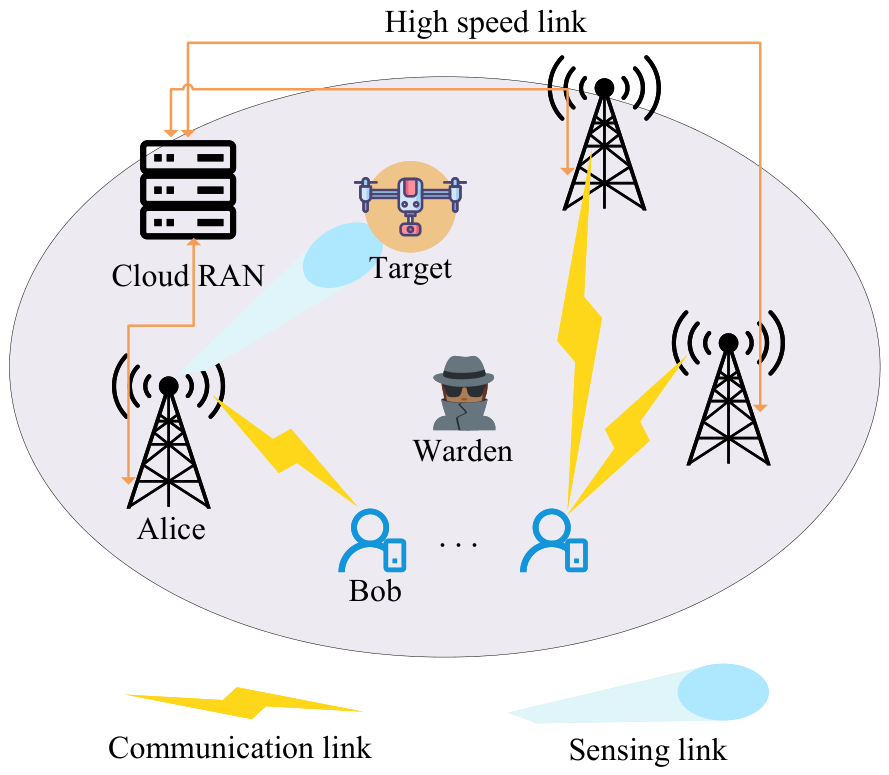
Figure 1, we consider a cooperative C-RAN architecture, where a central processor (CP) coordinates
N distributed BSs through capacity-limited fronthaul links. Each BS is equipped with an
L-antenna uniform planar array (UPA). The cooperative BSs serve
K single-antenna legitimate users, referred to as Bobs, by employing RSMA. Meanwhile, the system performs cooperative target localization while enabling covert communication, where the transmission of covert information is hidden from a malicious target acting as a warden, denoted by Willie. We use
and
to index the BSs and Bobs, respectively.
For coherent multi-static localization, accurate time, frequency, and phase synchronization among distributed BSs is required. Following the centralized processing assumption commonly adopted in C-RAN systems, we assume that the CP provides network-level synchronization and calibration for all cooperative BSs through the fronthaul links. After synchronization and calibration, the residual timing and phase offsets are assumed to be sufficiently small compared with the symbol duration and the carrier phase reference. Therefore, their impact on the Fisher information matrix (FIM) is neglected in the main formulation. If imperfect synchronization is considered, the residual timing and phase offsets can be incorporated into the FIM as additional nuisance parameters, leading to degraded localization accuracy.
2.1. Transmit Signal Model
Unlike conventional RSMA, we propose a novel overt–covert dual transmission framework by endowing the RSMA streams with distinct security attributes. We consider the cooperative BSs as legitimate public nodes (e.g., public broadcasters or meteorological radars). For the K Bobs, each message is divided into a common part and a private part. The common parts of all Bobs are jointly encoded into one common stream , which is transmitted as a legitimate overt signal and naturally serves as a public cover. Hidden beneath this overt signal, the private parts are encoded into K independent private streams to transmit highly confidential covert information without arousing Willie’s suspicion.
It should be emphasized that the common stream is not counted as covert payload in this work. Instead, it is regarded as an overt public service stream that can be legitimately transmitted and decoded by all Bobs. Its role is twofold. First, it enables RSMA-based interference management by allowing part of the multi-user interference to be decoded before private-stream decoding. Second, since the common stream is present regardless of whether covert private streams are transmitted, it acts as a public cover signal and does not directly contribute to the additional detectable energy used by Willie to distinguish the two hypotheses. Therefore, allocating part of the users’ information demand to the common stream can reduce the required private-stream power and indirectly enhance covertness. Furthermore, to perform direct localization and further mask the covert communication, the CP generates a dedicated sensing signal , which also serves as Artificial Noise (AN) to deliberately confuse Willie.
The cascaded transmit signal vector
from all
N BSs is formulated as
where
and
are the cascaded precoding vectors for the overt common message and the
k-th covert private message, respectively.
is the cascaded beamforming vector for the sensing/AN signal. We assume
. Let
encompass all RSMA communication precoders. The overall transmit covariance matrix is
.
2.2. RSMA Communication and Fronthaul Model
The received signal at Bob
k can be expressed as
where
denotes the cascaded channel from all BSs to Bob
k, and
represents the additive white Gaussian noise (AWGN).
Following the RSMA decoding principle, Bob
k first attempts to decode the common stream
, while treating the private streams and the sensing signal as interference. The corresponding signal-to-interference-plus-noise ratio (SINR) is given by
Once
is decoded, Bob
k subtracts it from the received signal via successive interference cancellation (SIC), and then decodes its intended private stream
. The private-stream SINR is therefore written as
Since the common stream must be reliably decoded by all Bobs, its achievable rate is limited by the weakest common-stream decoding link, i.e.,
The common rate
is then partitioned among the
K Bobs, satisfying
, where
denotes the common-rate portion assigned to Bob
k.
Due to the C-RAN architecture, the data transferred from the CP to the
n-th BS is constrained by the fronthaul capacity
. We define binary scheduling variables
. The fronthaul constraint is formulated as
where
. The scheduling variables dictate the precoders such that
and
.
2.3. Covertness Model
In the proposed overt–covert dual transmission framework, the common stream and the sensing/AN signal are regarded as overt public signals that are legitimately transmitted and observable to Willie. The detection task of Willie is therefore to determine whether covert private streams are embedded beneath these overt transmissions. Thus, Willie faces a binary hypothesis testing problem:
(only overt common and sensing/AN signals are transmitted) versus
(covert private streams are transmitted alongside the overt signals). The signal observed by Willie is modeled as follows:
where
is the sample index,
M is the total number of samples, and
is the AWGN at Willie.
Willie employs an energy detector to determine whether covert private streams are present. The test statistic is given by
where
is the detection threshold. When
, with a sufficiently large number of samples, the test statistic asymptotically approaches its mean received power. Define
as the aggregate overt-signal power associated with the common stream and the sensing/AN waveform, and
as the received power of the covert private streams. Then, the asymptotic detector output is given by
In practice, Willie cannot perfectly know the background noise power. The noise variance is assumed to be randomly distributed over a finite uncertainty range, expressed as
Let
. For a given threshold
, the false alarm probability is
which can be written as
Similarly, the missed detection probability is
which is given by
The total detection error probability is
. When
, the received energy intervals under
and
overlap, and Willie cannot perfectly distinguish the two hypotheses. Under this condition, the lowest achievable detection error at Willie can be expressed as
When
, the two intervals become separable, and Willie can choose a threshold between them to achieve zero detection error. Thus,
To guarantee covertness, we require
Then, the covertness requirement can be equivalently written as
2.4. Direct Localization Sensing Model
The cooperative BSs receive the echo signals reflected by Willie to estimate its 3D position
. Let
denote the round-trip delay from transmitting BS
n to Willie and back to receiving BS
m, where
and
are the known coordinates of the respective BSs, and
c is the speed of light. Note that this model captures a fully cooperative multistatic sensing scenario, which inherently encompasses both the monostatic reflection paths (when
) and the bistatic reflection paths (when
), thereby exploiting the spatial diversity to enhance the localization performance [
31,
32].
The transmitted baseband signal from all BSs is denoted as
Accordingly, the empirical covariance of the transmit waveform can be written as
The baseband echo observed at the
m-th BS is represented by
where
is the complex channel gain of the target reflection path, which absorbs the target’s radar cross-section (RCS) as well as the carrier phase shift induced by the time delay,
and
are the receive and transmit array response vectors, and
is the AWGN with variance
.
By stacking the received signals from all
N BSs over an observation duration
, we aim to estimate the unknown parameter vector
, where
and
contain the real and imaginary parts of all channel gains
, respectively. Under the AWGN assumption, the log-likelihood function of the stacked received signal
given
is
To derive the fundamental limits of the localization accuracy, we compute the Fisher Information Matrix (FIM)
, whose elements are defined as
. The FIM can be naturally partitioned according to the unknown parameters:
Instead of directly differentiating with respect to
, it is mathematically more tractable to first derive the FIM with respect to the intermediate delay parameters
, denoted as
. Based on the properties of the transmitted signal, the elements of
are directly proportional to the effective bandwidth
and the transmit covariance matrix
:
where
denotes the observation period,
is the Kronecker delta function. Subsequently, by applying the chain rule of differentiation, the position-related submatrix
can be obtained by projecting
onto the spatial domain:
where
is the Jacobian matrix of the delays with respect to the 3D position. The column of
corresponding to the delay
is explicitly given by
Similarly, the cross-terms
are computed via
.
Since our primary objective is to evaluate the positioning accuracy of
, the channel gains
are treated as nuisance parameters. To eliminate the impact of estimating these nuisance parameters, we apply the Schur complement to the partitioned FIM, yielding the Equivalent FIM (EFIM) for the target position
:
According to the Cramér-Rao Lower Bound (CRLB) theorem, the mean squared error of any unbiased estimator
is lower-bounded by the trace of the inverse EFIM. Thus, the localization performance is bounded by the Squared Position Error Bound (SPEB):
Crucially, since
is a linear function of
, and
is determined by both the communication precoders
and the sensing/AN precoder
, the RSMA communication signals and the sensing/AN signal jointly contribute to the localization accuracy. This structural relationship provides the basis for jointly designing the communication and sensing resources in the following sections.
The above FIM formulation characterizes the inherent resource coupling of communication transmission and sensing functionality in the considered C-RAN ISAC system. Unlike conventional radar systems that rely on a separated sensing waveform, the proposed framework reuses all transmitted components for target localization. Specifically, the overt common stream, covert private streams, and sensing/AN signal jointly determine the transmit covariance matrix . Since is a function of , all communication and sensing signals contribute to the multi-static localization accuracy.
This coupling leads to a fundamental resource allocation trade-off. Allocating more power to private streams can improve the covert communication rate of Bobs, but it may also increase the energy leakage toward Willie and affect the spatial covariance used for sensing. Allocating more power to the sensing/AN beamformer can improve the EFIM and reduce the SPEB, but it consumes the common transmit power budget and may introduce additional interference to legitimate users. Therefore, the precoders , , and must be jointly optimized to balance covert communication, multi-static localization, and fronthaul-limited cooperative transmission.
3. Problem Formulation
We aim to maximize the sum covert rate of the Bobs (i.e., the private streams) by cooperatively optimizing the RSMA precoders, the sensing/AN beamformer, the common rate allocation, and the BS scheduling policies. This is subject to strict covertness requirements, sensing accuracy constraints, a minimum Quality of Service (QoS) requirement for the overt common stream, and practical C-RAN limitations. Accordingly, the considered design problem can be expressed as follows:
where
denotes the common rate allocation vector, and
collects all binary scheduling variables.
represents the minimum required rate of the overt common message, which ensures that the common stream can provide a legitimate public service and serve as a cover for covert transmission.
denotes the maximum transmit power budget of BS
n, while
denotes the corresponding fronthaul capacity limit. In addition,
is the prescribed localization accuracy threshold.
In problem (31), constraints (31b)–(31d) specify the RSMA common-rate allocation, where the common stream is treated as an overt public signal and must be decodable by all Bobs. Constraint (31c) guarantees a minimum overt service rate so that the public transmission can act as a legitimate cover. Constraint (31e) imposes the per-BS transmit power budget. Constraints (31f)–(31h) characterize the fronthaul-limited BS-stream scheduling policy. Constraint (31i) ensures covertness by restricting the additional received power of covert private streams at Willie. Constraint (31j) guarantees the required multi-static localization accuracy by bounding the SPEB. Due to the binary scheduling variables, coupled fronthaul constraints, fractional SINR expressions, covertness requirement, and SPEB constraint, problem (31) is a mixed-integer non-convex optimization problem.
Remark 1 (
Extension to Imperfect CSI)
. In the main formulation, perfect CSI is assumed to focus on the fundamental coupling among RSMA-based covert transmission, multi-static localization, and fronthaul-limited cooperative resource allocation. In practical C-RAN ISAC systems, however, the CSI of both Bobs and Willie may be imperfect due to channel estimation errors, feedback delay, and synchronization mismatch. The proposed framework can be extended to a robust design by modeling the actual channels asandwhere and denote the estimated channels, while and represent bounded CSI errors. Under this model, the communication rate constraints should be satisfied for the worst-case Bob channels, while the covertness constraint should be guaranteed for the worst-case Willie channel. For example, the robust covertness constraint can be written asSimilarly, the common-stream and private-stream SINR constraints of Bobs can be conservatively reformulated by considering the minimum achievable SINR over the bounded uncertainty regions. By applying the S-procedure, these semi-infinite robust constraints can be transformed into linear matrix inequalities (LMIs), which can be incorporated into the proposed SCA-SDP framework. Therefore, the proposed algorithmic structure remains applicable, although additional auxiliary variables and LMI constraints are introduced. From a performance perspective, imperfect CSI generally reduces the achievable sum covert rate. This is because the transmitter has to allocate more spatial degrees of freedom to protect the worst-case legitimate links and suppress possible private-stream leakage toward Willie. As the uncertainty radii and increase, the feasible set shrinks, leading to a more conservative beamforming solution and lower covert communication performance. Nevertheless, RSMA remains beneficial under imperfect CSI since the common stream provides an additional degree of freedom for interference management and helps reduce the private-stream power required to support the legitimate users.
Remark 2 (
Extension to Multiple Wardens)
. The current work considers a single warden to clearly characterize the fundamental covert ISAC design. The proposed framework can be extended to the case with multiple wardens. Let denote the set of wardens, and let represent the channel from the cooperative BSs to the w-th warden. For non-colluding wardens, each warden independently performs binary detection. In this case, covertness should be guaranteed at every warden, and the covertness constraint can be extended aswhere and denote the covertness threshold and noise uncertainty interval of the w-th warden, respectively. This formulation adds multiple covertness constraints but preserves the main structure of the proposed optimization problem. For colluding wardens, the wardens may share their received observations and perform joint detection. In this case, the aggregate received covert energy becomes the key detection statistic. A conservative covertness constraint can be formulated as
where
and
characterize the covertness requirement and the effective aggregate noise uncertainty under collaborative detection. Compared with the non-colluding case, the colluding-warden scenario is more stringent because the private-stream leakage across multiple wardens is accumulated.
The presence of multiple wardens generally decreases the achievable sum covert rate. As the number of wardens increases, the transmitter must suppress private-stream leakage over more spatial directions, which consumes additional spatial degrees of freedom and reduces the beamforming gain toward Bobs. This degradation becomes more pronounced in the colluding case, where the aggregate leakage rather than the maximum individual leakage determines the detection capability. Nevertheless, the proposed RSMA-enabled design remains applicable because the common stream can carry part of the legitimate information as an overt signal, thereby reducing the required private-stream power and mitigating the covert transmission burden.
4. Proposed Solution
The optimization problem formulated in (31) is inherently a highly non-convex mixed-integer non-Linear programming (MINLP) problem, making it computationally intractable to solve directly. This severe non-convexity stems from multiple coupled factors, primarily the presence of binary scheduling variables and the fractional SINR terms embedded within the achievable rate expressions. Furthermore, the problem is significantly complicated by the covertness requirement, which manifests as a Difference of Convex (DC) function, alongside the highly non-linear SPEB constraint that necessitates evaluating the trace of an inverse matrix. To circumvent these intricate mathematical challenges, this section develops an efficient iterative algorithm leveraging SCA and Linear Matrix Inequalities (LMI) to systematically converge towards a high-quality suboptimal solution.
4.1. Justification of Relaxation and Convex Approximation
The resulting design task is difficult to solve directly, as it contains integer scheduling variables, coupled BS-stream association constraints, non-convex rate expressions, and rank-one beamforming constraints. To obtain a computationally manageable formulation, continuous relaxation, Big-M reformulation, first-order SCA, and SDR are jointly adopted to construct tractable convex approximations at successive iterations. The main rationale behind these transformations is detailed as follows.
First, the binary scheduling variables
and
are relaxed into continuous variables over the interval
. The relaxed variables can be interpreted as soft BS-stream association indicators, which provide a tractable approximation of the original combinatorial scheduling decision. To promote binary-like solutions after relaxation, we introduce the following penalty function:
Since
for
and
holds only when
, minimizing or penalizing
encourages the relaxed scheduling variables to approach binary values. However,
is a concave function with respect to the scheduling variables. Therefore, at each SCA iteration, the concave quadratic terms are replaced by their first-order Taylor approximations around the current local point, which yields a tractable affine approximation while preserving tightness at the current iterate.
Second, the coupling between the scheduling variables and the corresponding precoding vectors is handled through a Big-
M-type reformulation. Specifically, the original activation constraint
is equivalently enforced, after relaxation, by the power-domain constraint
Similarly, the common-stream scheduling constraint is written as
These constraints guarantee that if a BS is not scheduled to transmit a specific stream, i.e., the corresponding scheduling variable is zero, the associated precoder is forced to be zero. When the scheduling variable approaches one, the constraint reduces to the ordinary power-limited beamforming constraint. Thus, the Big-
M reformulation preserves the intended BS-stream activation logic while avoiding explicit bilinear equality constraints.
Third, the achievable rate expressions are handled by the first-order SCA method. Each logarithmic rate term can be represented as the difference of two concave logarithmic functions associated with the total received signal-plus-interference power and the interference-plus-noise power, respectively. The non-convexity arises because the latter concave term appears with a negative sign. At each iteration, this term is replaced by its first-order Taylor expansion, which serves as a global affine upper bound due to concavity. Consequently, the resulting approximated rate is a concave lower bound of the original rate expression and is tight at the current local point. This construction ensures that each convex subproblem optimizes a conservative surrogate of the original problem and enables monotonic improvement within the SCA procedure.
Finally, SDR is employed to handle the quadratic beamforming terms. Specifically, the quadratic beamforming terms are reformulated using positive semidefinite covariance matrices, e.g., , , and . The original rank-one constraints on these covariance matrices are relaxed, leading to a convex SDP. For rank-one covariance solutions, the corresponding precoders are extracted from the dominant eigenmodes. For higher-rank cases, feasible beamforming candidates are constructed through Gaussian randomization, and the candidate yielding the maximum feasible objective value is selected. The possible performance loss mainly stems from the continuous relaxation of scheduling variables and the SDR-based rank-one recovery procedure. In contrast, the first-order SCA approximation is locally tight and converges to a stationary solution of the relaxed problem under standard regularity conditions.
4.2. Handling Binary Variables and Fronthaul Constraints
To deal with the binary variables
and
, we first relax them into continuous variables:
However, the coupling constraints in (31g) are still non-convex. We adopt the Big-
M formulation to decouple the precoders and the scheduling variables. The constraints in (31g) are equivalently rewritten as
Furthermore, the fronthaul capacity constraint (31f) involves the product of variables (e.g.,
). We introduce auxiliary variables
and
, and impose the following linear constraints using a sufficiently large constant
M:
The fronthaul constraint (31f) is then linearized as
4.3. SCA for Achievable Rates
The achievable rate for the private message is
. Let
denote the interference-plus-noise power. The achievable rate can be represented in the following difference-of-concave form:
To optimize the precoding vectors directly, we introduce slack variables
such that
. We apply the first-order Taylor expansion to the convex term
at the local point
in the
i-th iteration. Let
be the interference power at the
i-th iteration. The global lower bound is
To handle
, we introduce an auxiliary variable
such that
, and the rate constraint becomes
The same SCA procedure is applied to the common rate constraint (31b) by introducing auxiliary variables
and
, yielding analogous linearized constraints.
4.4. Linearization of the Covertness Constraint
Assuming the covertness threshold function
is linear with respect to the AN power (i.e.,
), the right-hand side of (31i) is convex with respect to
. We apply the first-order Taylor expansion to
:
Thus, the covertness constraint is approximated by the following convex quadratic constraint:
4.5. LMI Transformation for the SPEB Constraint
The sensing constraint
is highly intractable due to the matrix inversion. First, we introduce an auxiliary symmetric matrix
such that
Using the property of the Schur complement,
is equivalent to the LMI:
Recall from Section II-D that the EFIM
is itself derived from a Schur complement:
. Applying the Schur complement lemma once more to expand the block containing
, we can equivalently express the sensing constraint as a higher-dimensional LMI:
Crucially, the spatial FIM submatrices (
,
,
) are obtained by linearly projecting the delay FIM
using the Jacobian matrix
. Since
is strictly an affine function of the transmit covariance matrix
, the entire block matrix in (
53) is affine with respect to
. By introducing auxiliary positive semi-definite matrices
,
, and
, and dropping the rank-one constraints (Standard SDR), the LMI in (
53) becomes fully convex. The rank-one solutions can be recovered via Gaussian randomization or penalty methods post-optimization.
At iteration
i, the non-convex design problem is replaced with a tractable convex surrogate given by
where
collects all primal variables
. Problem (54) is a convex Semidefinite Program (SDP) and can be efficiently solved using standard solvers like CVX with Mosek. The algorithm iteratively updates the local points
until the fractional increase in the objective function falls below a predefined tolerance
.
The detailed procedure of the proposed SCA-LMI approach is summarized in Algorithm 1. The proposed algorithm requires a feasible initial point. In this work, the initial precoders can be generated by equal-power allocation or maximum-ratio transmission and then scaled to satisfy the transmit power and covertness constraints. The sensing/AN beamformer is initialized toward the estimated direction of Willie to ensure a feasible sensing performance. Owing to the inherent non-convexity of the considered design task, the final stationary point may depend on the chosen feasible initialization. Nevertheless, for any feasible initialization, the proposed SCA procedure guarantees monotonic improvement of the objective value. In practical implementation, multiple feasible initializations can be tested, and the solution with the largest objective value can be selected.
| Algorithm 1 SCA-LMI Based Iterative Algorithm for Joint RSMA and Sensing Optimization |
- 1:
Initialization: - 2:
Initialize feasible starting points for precoders and sensing/AN beamformer . - 3:
Set the convergence tolerance . - 4:
Calculate the initial objective value . - 5:
repeat - 6:
Step 1: Local Approximation - 7:
Compute the interference-plus-noise power and for all . - 8:
Construct the first-order Taylor expansions for the achievable rates and . - 9:
Construct the linear lower bound for the covertness constraint as in ( 50). - 10:
Step 2: Convex Optimization - 11:
Solve the convex approximated SDP problem (54) for the given local points using standard solvers (e.g., CVX). - 12:
Denote the optimal solution at the current iteration as and the optimal objective value as . - 13:
Step 3: Update - 14:
Update the variables: , . - 15:
Update the objective value: . - 16:
Update iteration index: . - 17:
until - 18:
Output: The optimized precoding matrices , sensing/AN beamformer , common rate allocation , and scheduling variables . - 19:
Note: If SDR is applied, perform Gaussian randomization to recover rank-one solutions for and if necessary.
|
4.6. Convergence Analysis
Let represent the objective value at iteration i. During each iteration, the difficult non-convex components are substituted with tractable surrogate functions built around the current feasible solution. These approximations are designed to satisfy two essential conditions: they coincide with the original functions at the current iterate and provide conservative estimates within the local convexified problem.
Since the approximated problem at iteration
i is constructed to be tight at the solution obtained in iteration
, the previous solution remains feasible for the current approximated problem. Therefore, by optimally solving the convex subproblem at iteration
i, the objective value satisfies
Therefore, the generated objective sequence does not decrease over the iterations.
In addition, the achievable objective is bounded from above by the finite power budgets, fronthaul limitations, and covertness requirement. Therefore, the monotonic objective sequence converges to a finite value. Since the first-order approximations adopted in the SCA procedure satisfy the standard consistency conditions, including value matching and gradient matching at the local point, any limit point of the generated sequence satisfies the Karush-Kuhn-Tucker conditions of the relaxed problem. Therefore, the proposed algorithm converges to a stationary suboptimal solution of the relaxed problem.
4.7. Computational Complexity Analysis
We next characterize the computational burden of the proposed SCA-SDP algorithm. Denote by N the number of BSs and by L the antenna number at each BS; accordingly, the total number of transmit antennas is . After SDR, the main optimization variables include the covariance matrices associated with one common stream, K private streams, and one sensing/AN signal. Therefore, there are main semidefinite matrix variables, each with dimension .
Let
denote the total number of scalar linear and conic constraints, including the transmit power constraints, fronthaul constraints, covertness constraint, scheduling constraints, rate constraints, and sensing LMI constraints. Using an interior-point method to solve the convex SDP subproblem, the per-iteration computational complexity approximately scales as
If the algorithm converges within
iterations, the total complexity is given by
The memory overhead is mainly caused by storing the lifted covariance matrices and the coefficient matrices in the SDP constraints, which approximately scales as
Compared with the SDMA baseline, the proposed RSMA scheme introduces an additional common-stream covariance matrix and common-rate allocation variables. Compared with the fixed-scheduling baseline, the proposed scheme additionally optimizes the BS-stream scheduling variables. Therefore, the proposed design requires higher computational complexity, but this additional cost enables better interference management and fronthaul-aware resource allocation.
5. Simulation Results and Discussions
In this section, we provide extensive simulation results to evaluate the performance of the proposed RSMA-enabled covert ISAC framework in a fronthaul-constrained C-RAN. We consider a 2D Cartesian coordinate system where a C-RAN architecture is deployed to serve multiple communication users while simultaneously sensing a target, which is also treated as a malicious warden (Willie) attempting to detect the covert transmission. Unless otherwise specified, the network consists of Remote Radio Heads (RRHs), each equipped with uniform linear array (ULA) antennas. The RRHs are uniformly distributed on a circle with a radius of 100 m, centered at the origin . There are single-antenna communication users (Bobs) randomly distributed within a radius of 50 m from the origin. The sensing target/warden is located at . The large-scale path loss is modeled as , where dB is the path loss at the reference distance m, d is the distance between the transceivers, and is the path loss exponent. We set the path loss exponent for the RRH-to-Bob links as (Rayleigh fading), and for the RRH-to-Warden link as (Rician fading with a Rician factor of 3 dB) to account for the LoS sensing channel. The noise power at all receivers is set to dBm. For the covertness and sensing requirements, the maximum tolerable detection error probability at the warden is set to , and the desired sensing beampattern is generated based on the target’s specific AoD. The fronthaul capacity limit for each RRH is initialized as bps/Hz. For the proposed SCA-based alternating optimization algorithm, the convergence tolerance is set to .
The proposed scheme is evaluated against the following benchmark methods:
Baseline 1 (SCA+SDMA): The traditional Space Division Multiple Access is employed without rate-splitting, where interference is mitigated solely through spatial precoding.
Baseline 2 (Fixed Scheduling): The user scheduling and RRH association are fixed heuristically, optimizing only the precoding and sensing beamforming under the same fronthaul constraints.
For fair comparison, all considered schemes are evaluated under the same network topology, channel realizations, transmit power budgets, fronthaul capacity limits, covertness requirement, and sensing accuracy constraint. The SDMA baseline removes the RSMA common stream and transmits only private streams, thereby serving as a benchmark to evaluate the gain brought by RSMA-based common/private stream splitting. The fixed-scheduling baseline adopts the same RSMA transmission structure as the proposed scheme, but the BS-stream scheduling variables are fixed in advance and are not dynamically optimized. Therefore, the comparison with the fixed-scheduling baseline isolates the performance gain brought by dynamic fronthaul-aware scheduling.
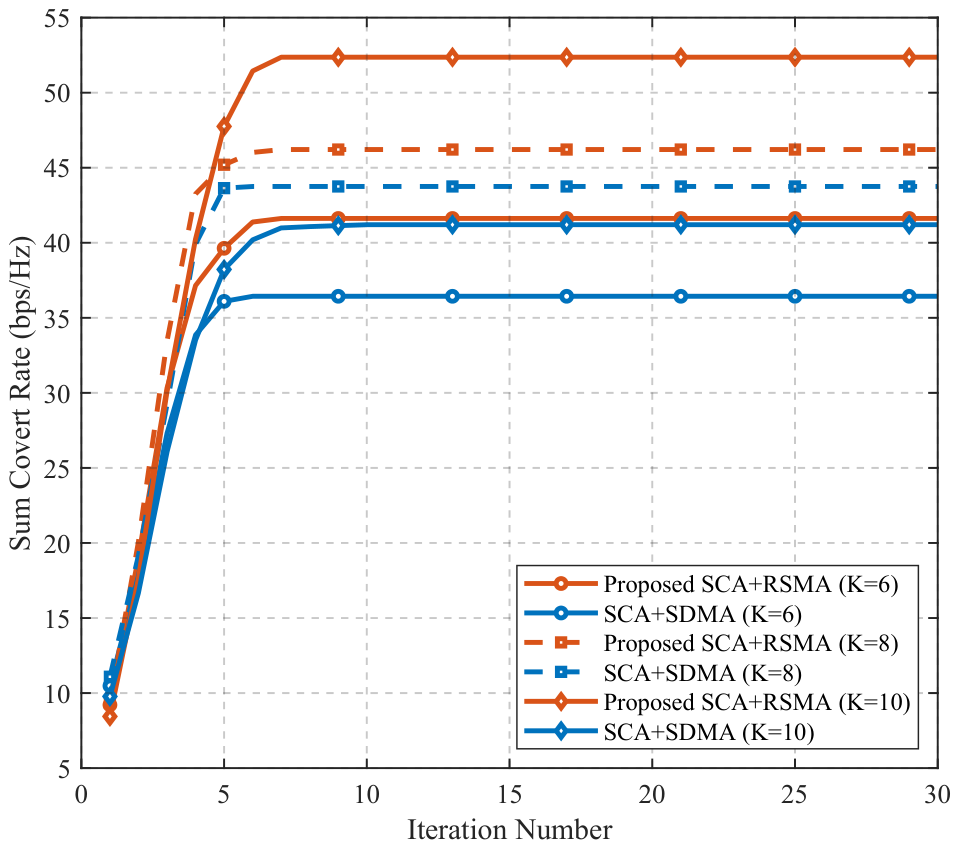
Figure 2 presents the iterative performance of the proposed SCA-based alternating optimization algorithm and Baseline 1 for different numbers of communication users, i.e.,
. The iteration index is shown on the horizontal axis, and the achieved sum covert rate is plotted on the vertical axis. It can be clearly observed that both the proposed RSMA-enabled scheme and the SDMA baseline converge monotonically within a few tens of iterations across all considered values of
K. More importantly, the proposed RSMA-based scheme consistently and significantly outperforms the traditional SDMA-based baseline in terms of the converged sum covert rate for all user configurations. As the number of users
K increases from 6 to 10, the multi-user interference within the C-RAN becomes increasingly severe. The SDMA scheme, which relies solely on spatial precoding to mitigate interference, struggles to manage this overloaded scenario, leading to a marginal performance gain. In stark contrast, RSMA exhibits strong interference management capability by decomposing user messages and enabling each receiver to decode part of the interference while treating the residual component as noise. Consequently, the performance gap between the proposed RSMA scheme and the SDMA baseline widens as
K increases, perfectly highlighting the superiority of introducing RSMA into densely deployed, fronthaul-constrained covert ISAC networks.
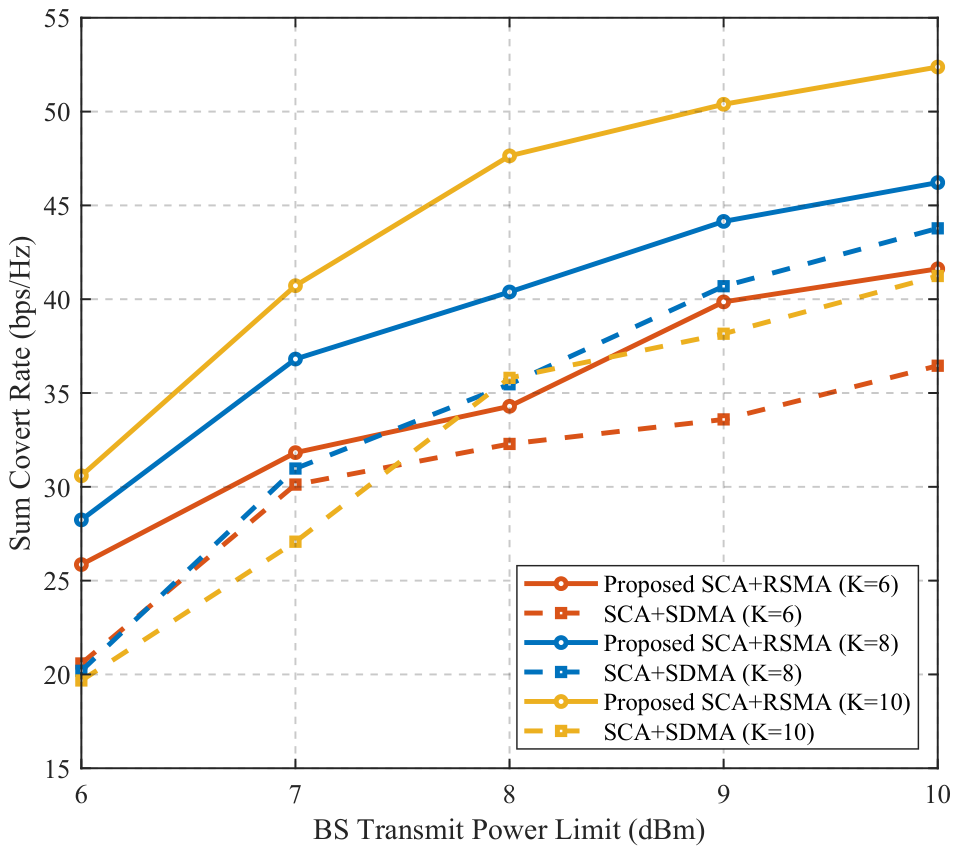
Figure 3 investigates the impact of the maximum transmit power of each RRH on the sum covert rate under different numbers of users (
). It can be clearly observed that the sum covert rate for all considered scenarios increases steadily with the growth of the maximum transmit power
. This demonstrates that our proposed joint optimization framework can effectively exploit the increased power budget to enhance the communication performance while strictly satisfying the covertness requirements. Furthermore, the proposed RSMA-enabled scheme consistently and significantly outperforms the SDMA baseline for all user configurations. This substantial performance gain directly validates the superiority of integrating RSMA into the covert ISAC system to achieve higher spectral efficiency. The performance gain becomes more evident as the number of users increases. This is because larger
K leads to stronger multi-user interference and more severe fronthaul competition. In SDMA, all inter-user interference is treated as noise, which limits the effective private-stream rate. In contrast, RSMA enables part of the interference to be decoded through the common stream, thereby reducing the residual interference during private-stream decoding. Therefore, the proposed scheme can exploit the increased power budget more efficiently while still satisfying the covertness constraint.
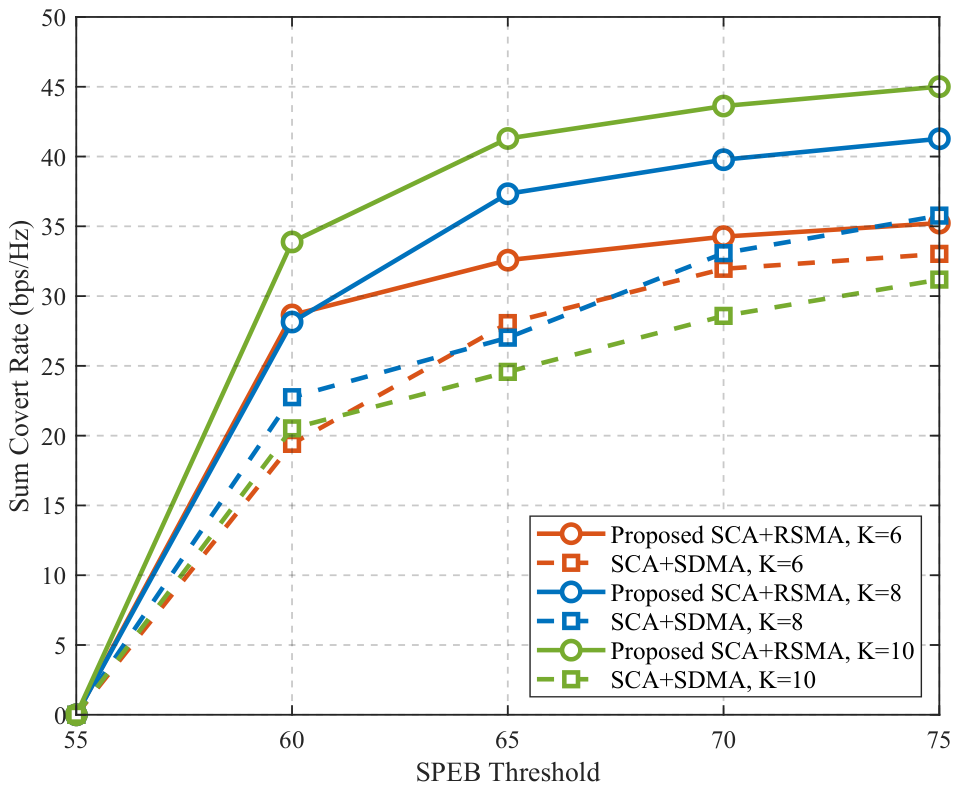
Figure 4 illustrates the fundamental trade-off between communication and sensing performances by plotting the sum covert rate against the sensing performance constraint (i.e., the SPEB threshold) under different numbers of users (
). It is clearly observed that as the SPEB threshold increases (which implies a looser sensing performance constraint), the sum covert rate monotonically increases. This trend perfectly depicts the Pareto boundary of the proposed ISAC system, demonstrating that relaxing the sensing requirement allows the system to allocate more spatial degrees of freedom and power resources to enhance the covert communication rate. Furthermore, the proposed RSMA-enabled scheme consistently outperforms the SDMA baseline across the entire range of SPEB thresholds for all considered user configurations. This confirms that our proposed RSMA framework can achieve a strictly superior communication-sensing trade-off boundary compared to traditional SDMA. This trend also reflects the resource coupling between communication and sensing. A stringent SPEB constraint requires the transmit covariance to provide sufficient sensing information for multi-static localization, which consumes spatial degrees of freedom and transmit power. When the SPEB threshold becomes looser, more resources can be shifted to private-stream transmission, leading to a higher covert rate. The proposed RSMA scheme achieves a better communication-sensing trade-off because the common stream and sensing/AN beamformer jointly contribute to both interference management and localization-oriented covariance shaping.
Figure 5 investigates the impact of the covertness requirement threshold on the sum covert rate under different numbers of users (
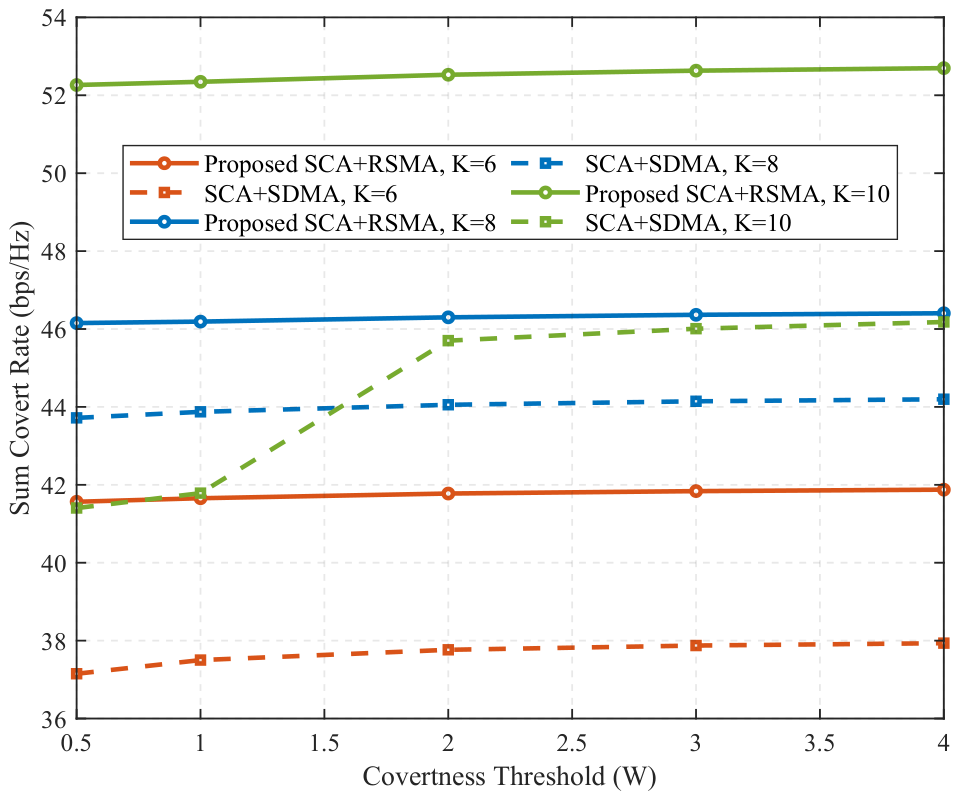
). It can be observed that as the covertness constraint is gradually relaxed (i.e., the threshold increases), the sum covert rate increases. This is because a looser covertness requirement provides the system with more flexibility to allocate transmit power for communication without being easily detected by the warden. However, the growth trend of the sum covert rate is relatively slow. This indicates that the overall system performance is jointly limited by other physical constraints, such as the maximum transmit power and the sensing performance requirements, rather than being solely bottlenecked by the covertness constraint. Furthermore, the proposed RSMA-enabled scheme consistently outperforms the SDMA baseline across all considered covertness thresholds and user configurations, which once again verifies the superiority of adopting RSMA in covert ISAC networks. The relatively slow growth of the sum covert rate indicates that covertness is not the only limiting factor. Even when the covertness threshold becomes looser, the achievable covert rate is still constrained by fronthaul capacity, multi-user interference, and sensing accuracy requirements. The proposed RSMA scheme benefits from a larger covertness threshold because it can allocate more power to private streams while using the common stream to reduce residual interference. However, the final rate improvement remains jointly limited by the coupled C-RAN and ISAC constraints.
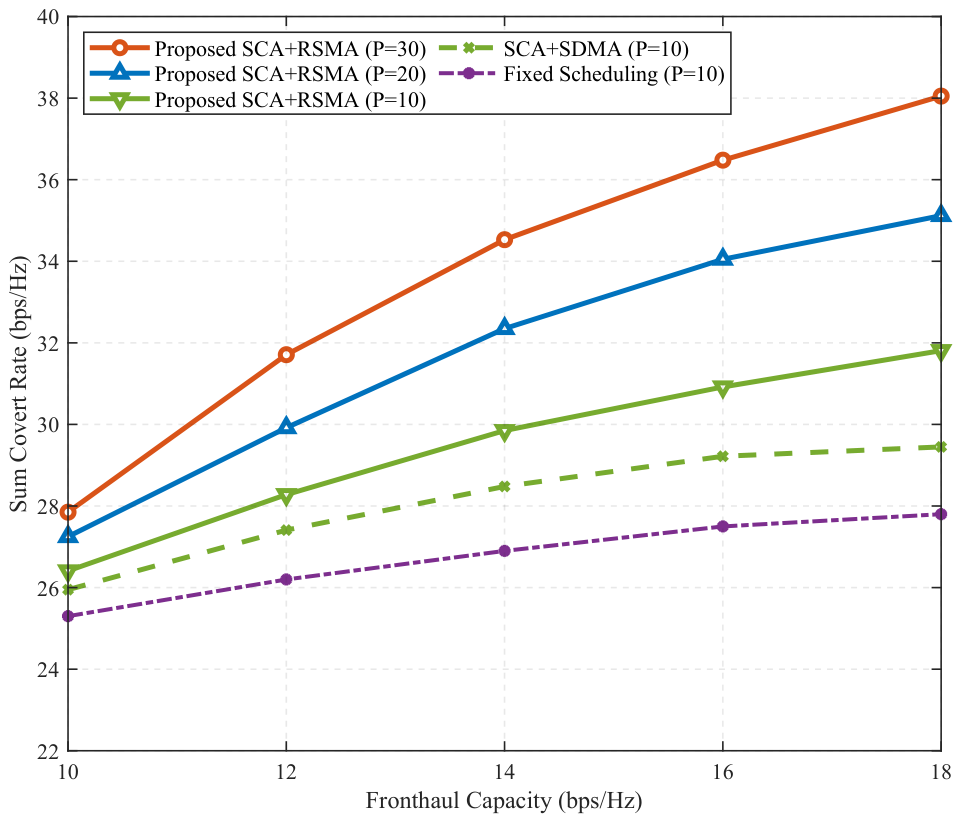
Figure 6 evaluates the sum covert rate versus the fronthaul capacity for the proposed RSMA scheme (under different transmit power levels), the SDMA baseline, and the fixed scheduling baseline. It is observed that the sum covert rate for all schemes increases with the fronthaul capacity, as a larger capacity effectively alleviates the information transfer bottleneck between the central processor and the RRHs. Notably, the proposed RSMA scheme with dynamic scheduling consistently outperforms both the SDMA and fixed scheduling baselines. This confirms the necessity of dynamic user clustering and the superiority of RSMA in managing interference under limited fronthaul resources. Furthermore, comparing the proposed scheme across different transmit power levels reveals that a higher power budget yields a larger sum covert rate, which perfectly corroborates the findings in
Figure 3. The performance improvement with increasing fronthaul capacity demonstrates the importance of fronthaul-aware scheduling. When fronthaul capacity is limited, the CP cannot deliver all user data streams to all BSs, and inefficient BS-user associations may waste scarce fronthaul resources. The proposed dynamic scheduling mechanism selects the most beneficial BS-stream links according to channel conditions, interference levels, and covertness constraints. Therefore, it achieves higher covert rate than fixed scheduling, especially in the low-fronthaul regime.