


Demand-Driven Configuration Method and Model for Equipment Performance Indices


Abstract
1. Introduction
1.1. Demonstration Method of Equipment Performance Index
1.2. Research on Demonstration Knowledge Management Method
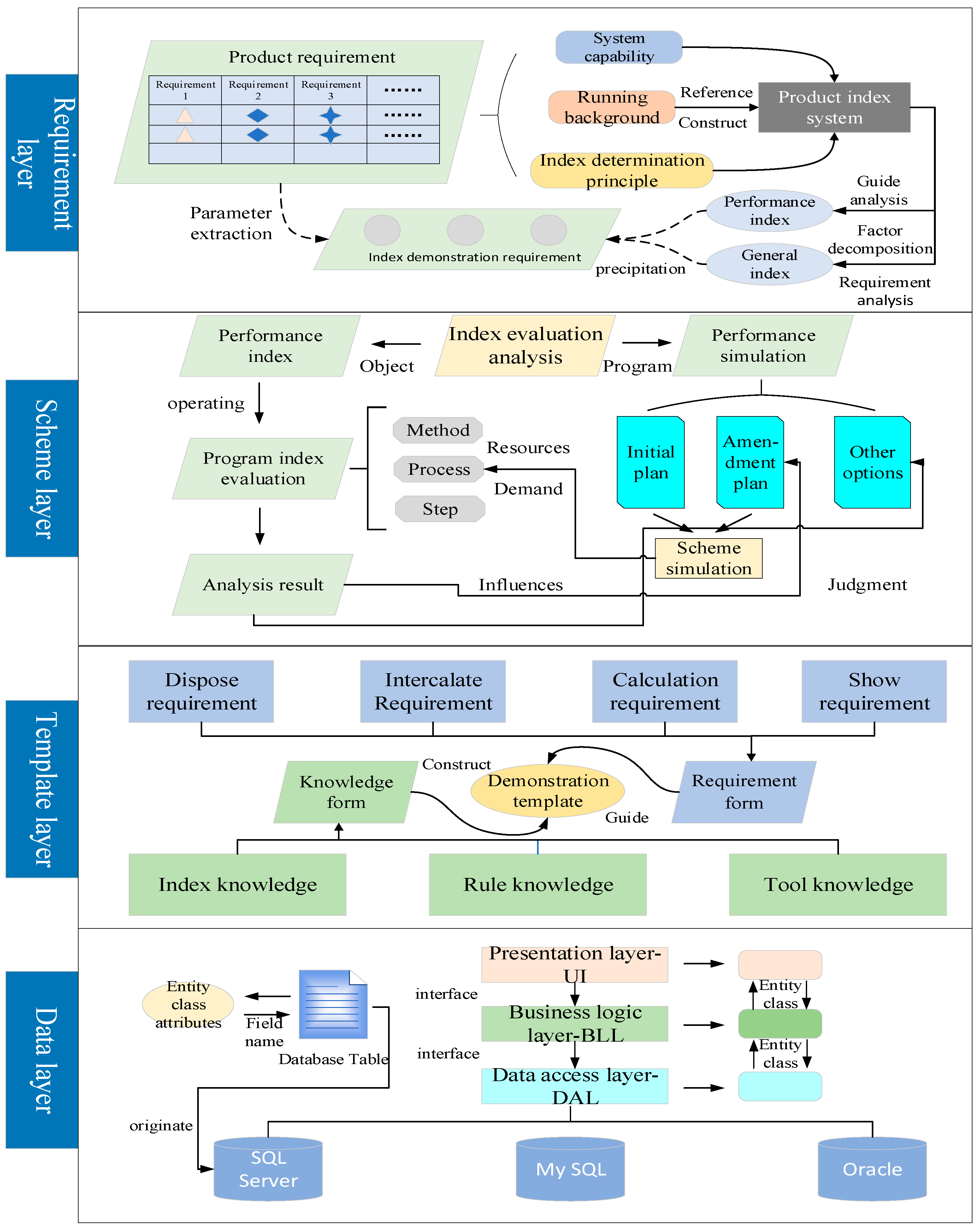
2. Demonstration Model Based on Requirement-Driven Weapon Equipment Performance Indexes
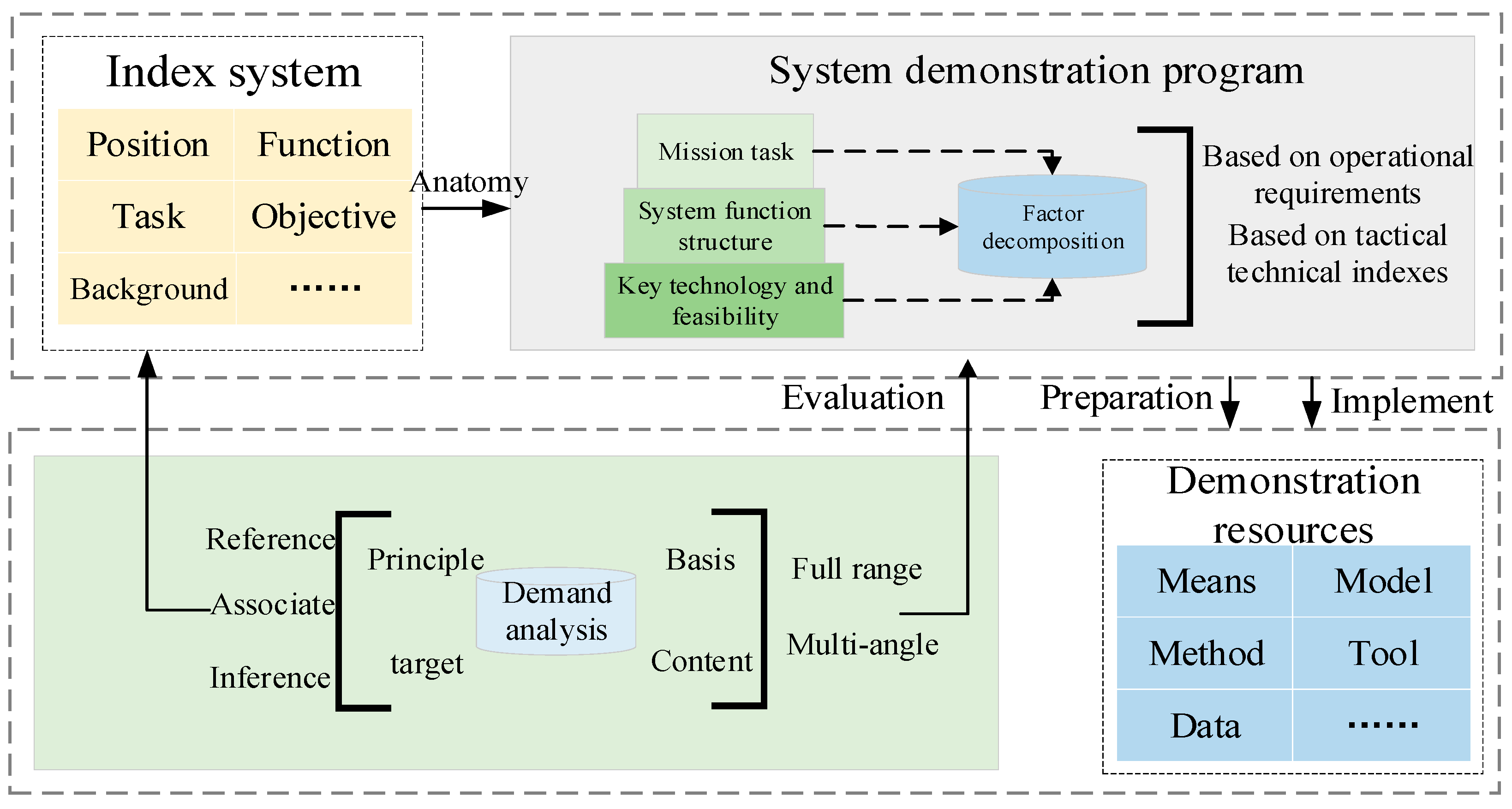
2.1. Analysis and Establishment of Demonstration Requirements
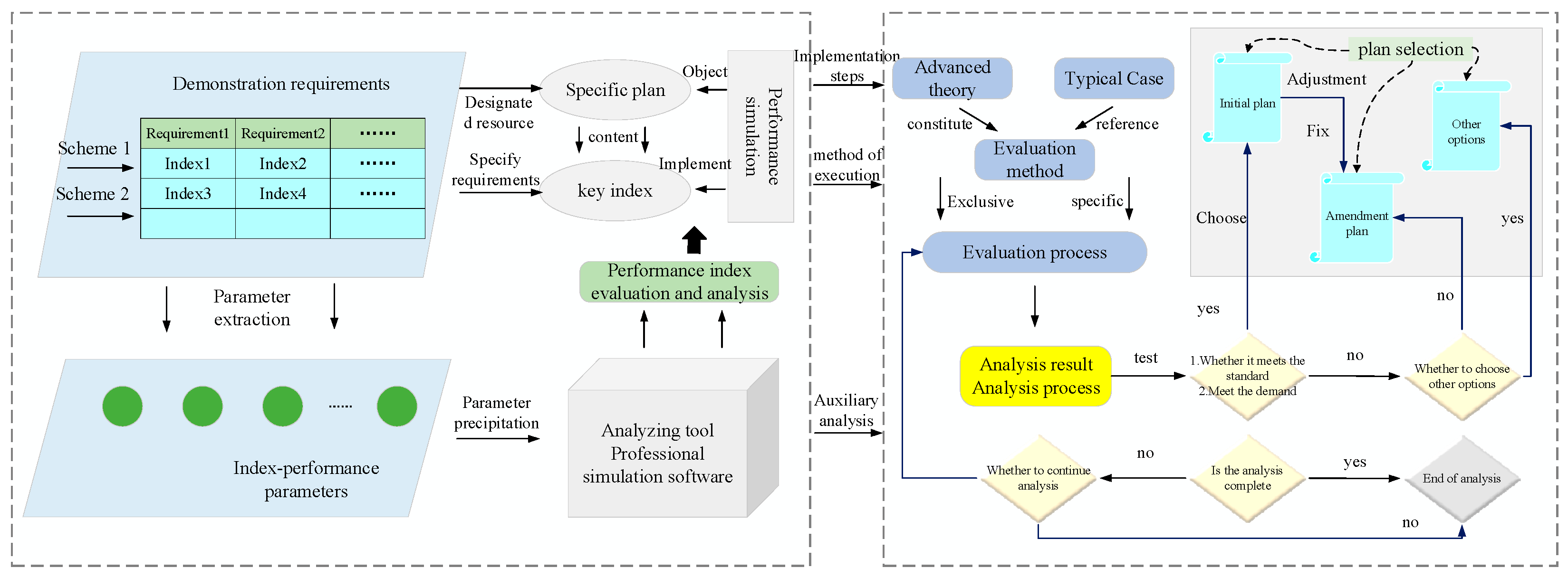
2.2. Construction and Evaluation of Demonstration Index
2.3. Configuration and Packaging of the Demonstration Tool
3. Performance Index Demonstration Template Configuration and Knowledge Management
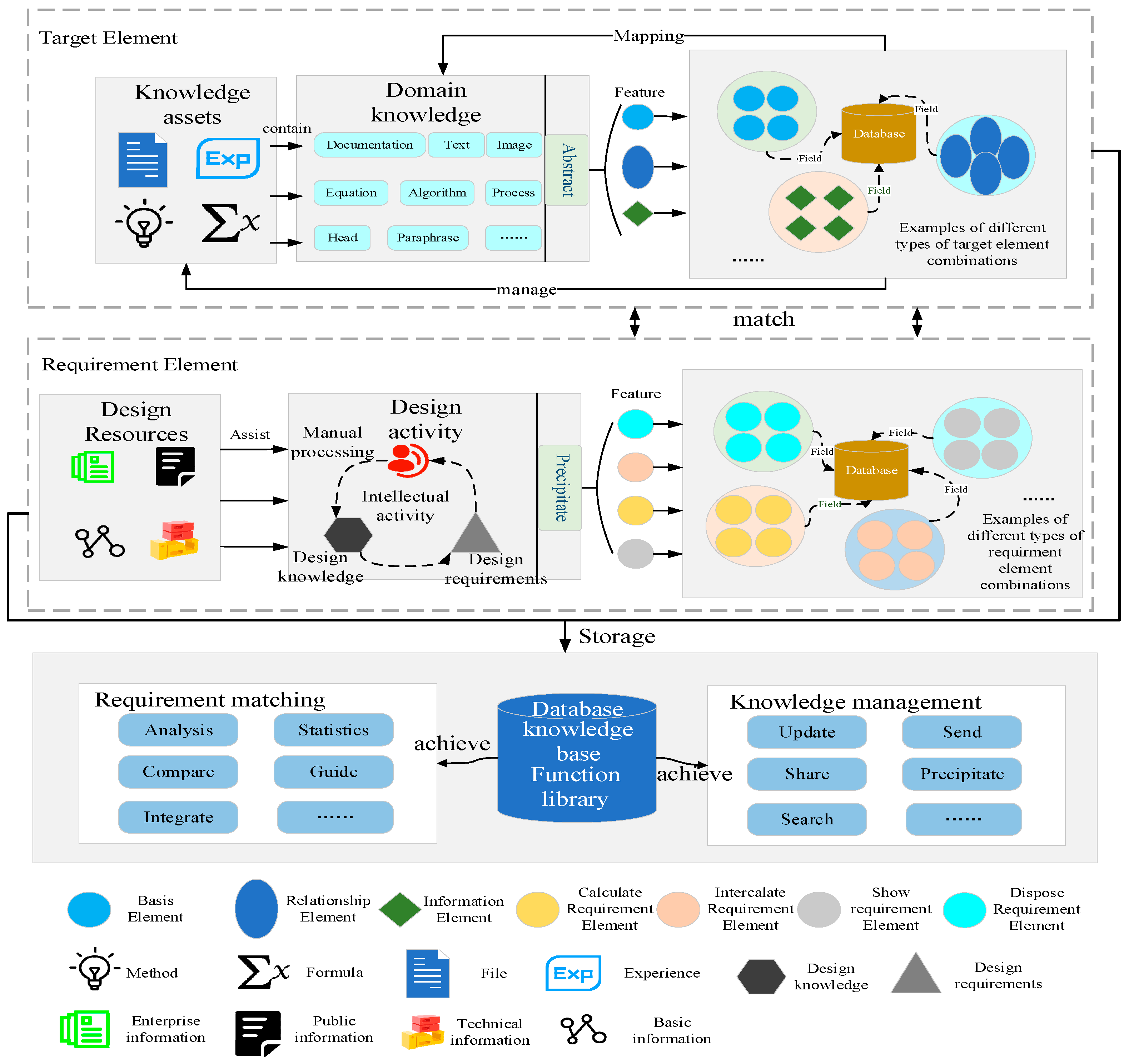
3.1. Unitized Demonstration Requirements and Knowledge Management
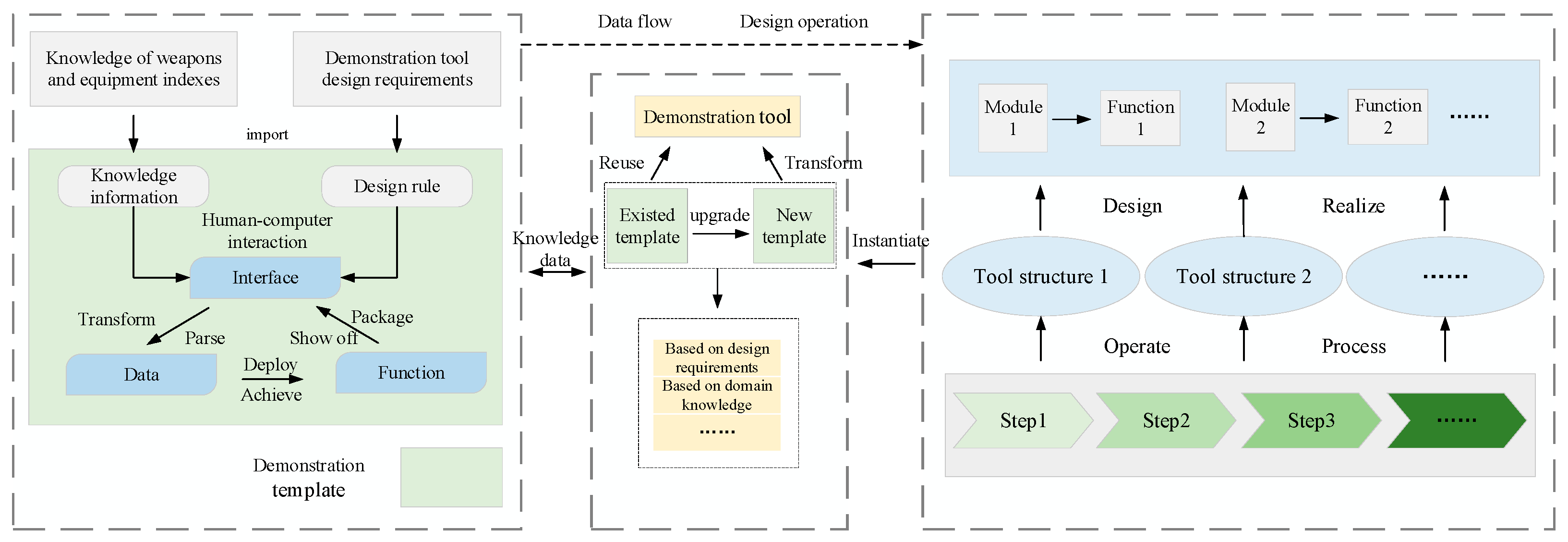
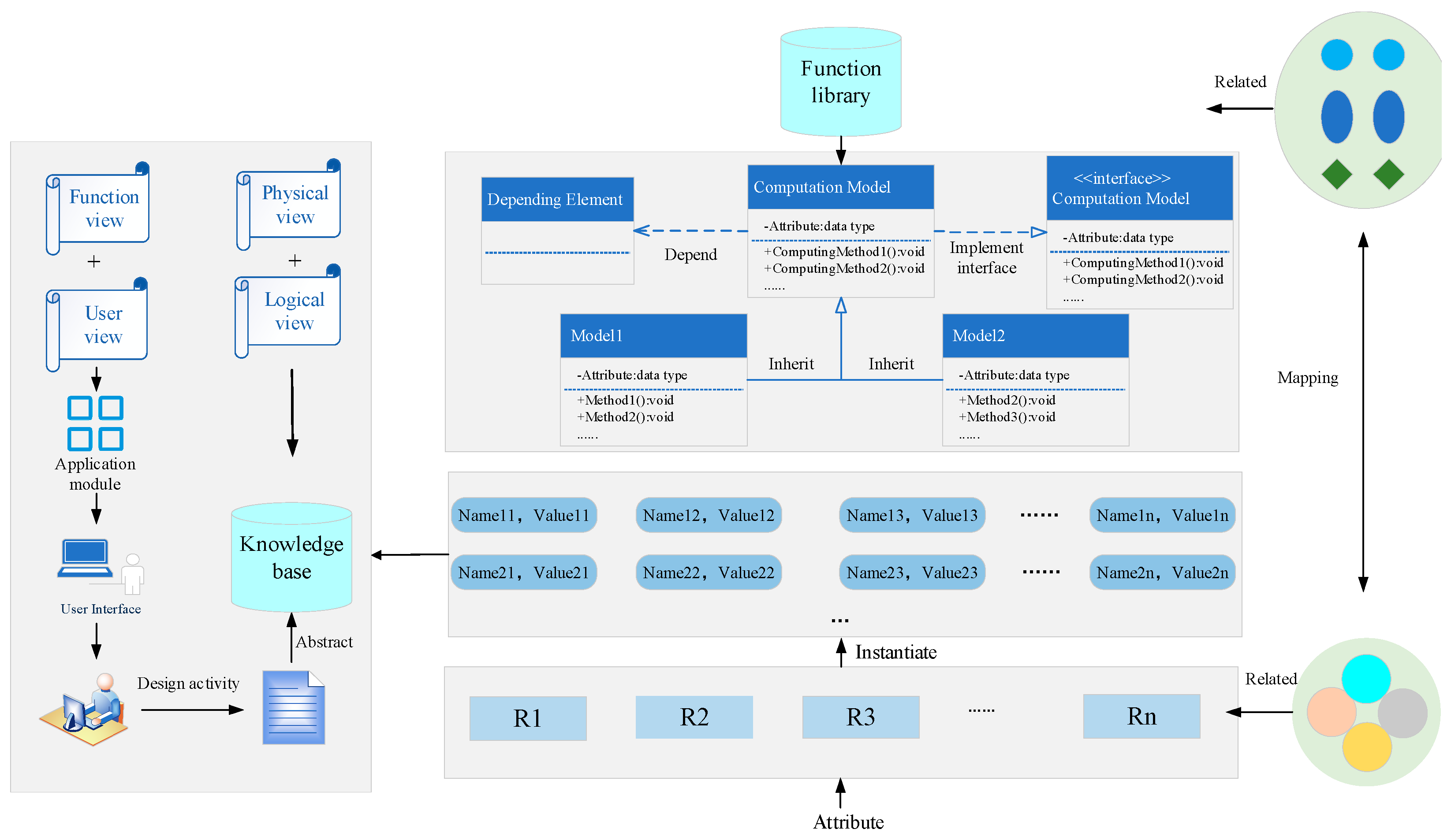
3.2. Dynamic Index Demonstration Template
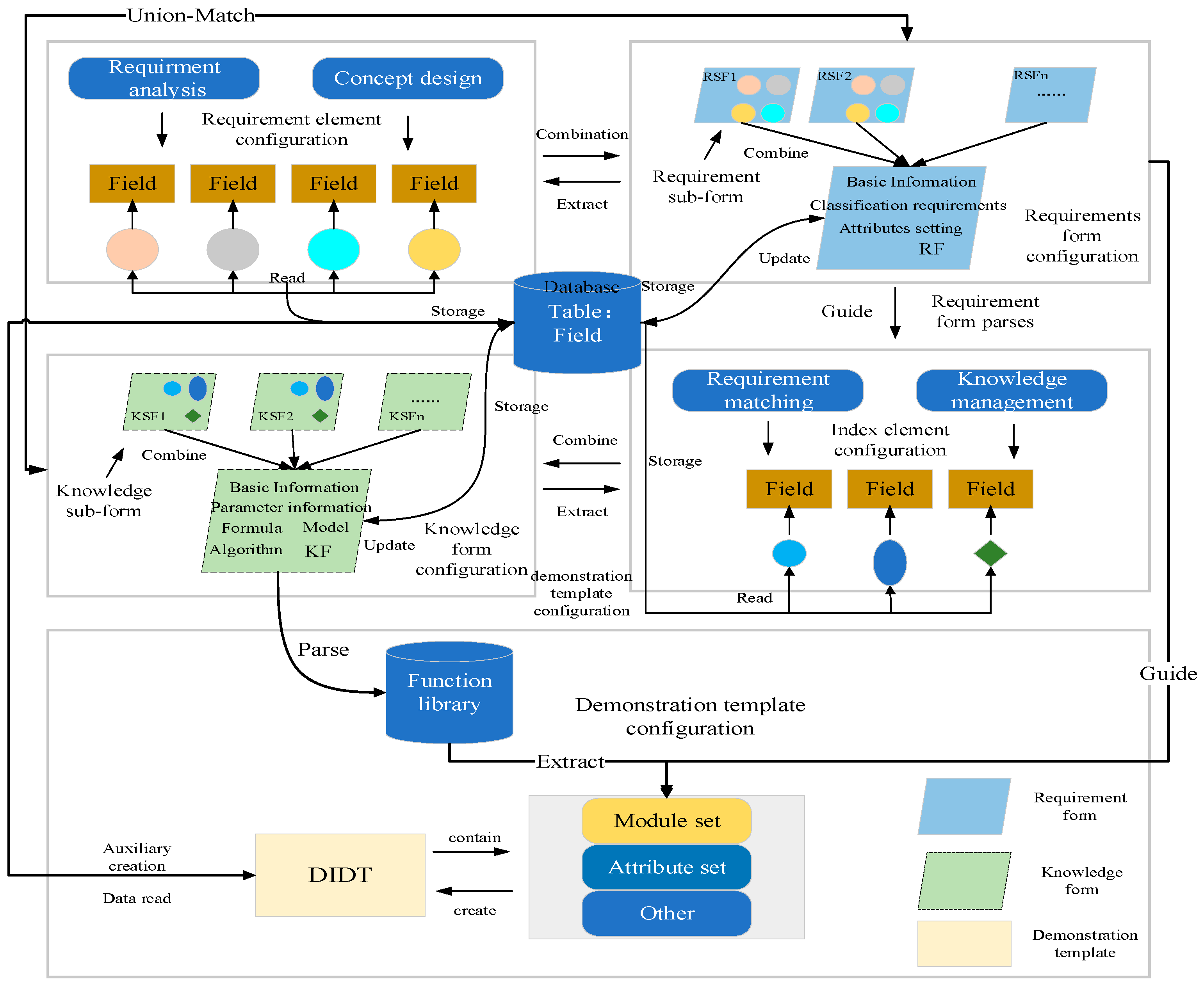
3.3. Configuration Method of Dynamic Index Demonstration Template
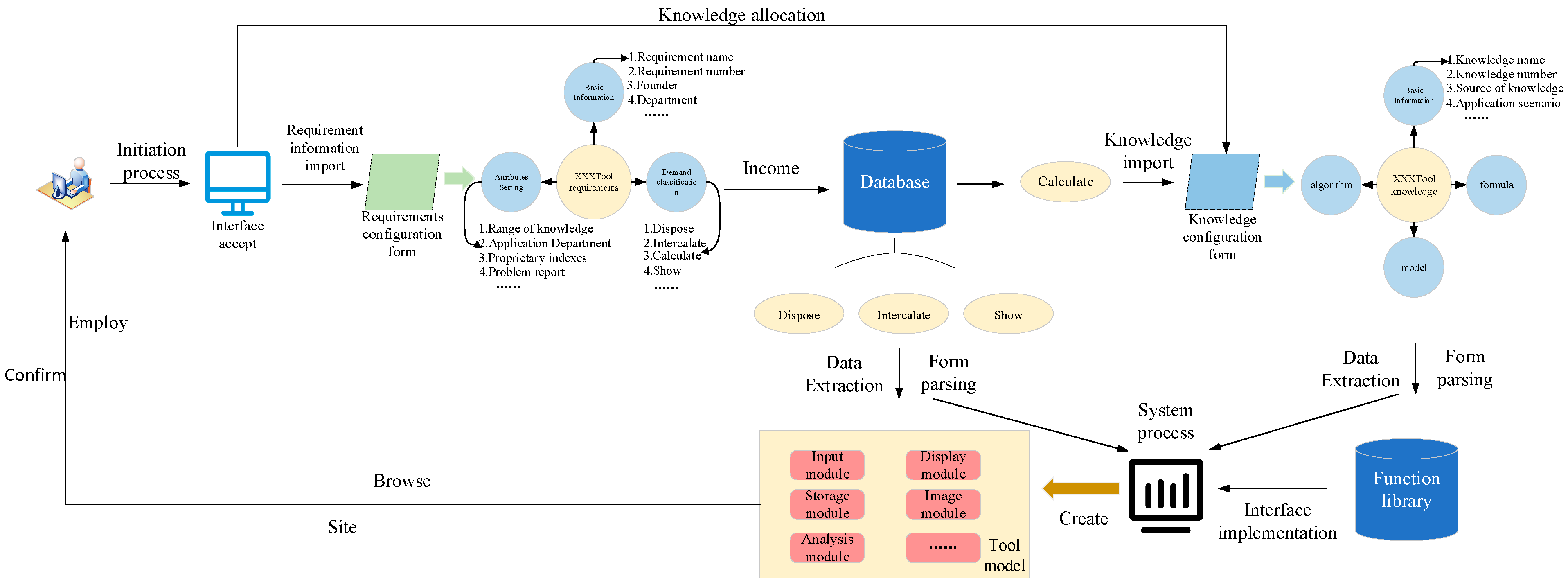
3.4. Instantiation of Dynamic Demonstration Template
4. Applications
4.1. Construction of Dynamic Demonstration Template for Antenna Array System Demonstration Requirements
4.2. Demonstration of Antenna Array Error Index
5. Conclusions
Author Contributions
Funding
Data Availability Statement
Acknowledgments
Conflicts of Interest
References
- Yang, H.; Liu, F.; Yan, Y. A new perspective on evaluation software of contribution rate for weapon equipment system. In Geo-Spatial Knowledge and Intelligence; Springer: Singapore, 2018. [Google Scholar]
- Jia, Z.; Ding, L.; Zhou, Y. Process design of a capability-based weapon equipment requirements analysis system. In Proceedings of the 2018 Fifth International Conference on Software Defined Systems (SDS), Barcelona, Spain, 23–26 April 2018; IEEE: New York, NY, USA, 2018; pp. 74–79. [Google Scholar]
- Kang, H.; Sung, Y.; Kwon, H.; Yoon, S.; Choi, S. An open architecture framework for electronic warfare based approach to HLA federate development. Secur. Commun. Netw. 2018, 2018, 1–12. [Google Scholar] [CrossRef]
- Yang, H.; Xia, Z.; Chen, Y.; Zhu, L.; Dai, L.; Xu, R.; Sun, G.; Yu, H.; Xu, W. Research on visual simulation for complex weapon equipment interoperability based on MBSE. Multimed. Tools Appl. 2024, 83, 13463–13482. [Google Scholar] [CrossRef]
- Jiuyao, J.; Jichao, L.; Kewei, Y. Weapon system portfolio selection based on structural robustness. J. Syst. Eng. Electron. 2020, 31, 1216–1229. [Google Scholar] [CrossRef]
- Wang, C.; Li, N.; Kong, H.; Li, H. Study on general effectiveness evaluation platform for combat aircraft. In System Simulation and Scientific Computing; Springer: Berlin/Heidelberg, Germany, 2012; pp. 128–136. [Google Scholar]
- Li, Z.; Zhang, S.; Wang, J.; Liu, S. Research on description method of operational task oriented to operational effectiveness evaluation. In Proceedings of the Asia Simulation Conference 2012, Shanghai, China, 27–30 October 2012; Springer: Berlin/Heidelberg, Germany, 2012; pp. 313–321. [Google Scholar]
- Ren, W.; Zhang, A.; Ding, Z.; Bi, W. Research on Effectiveness Evaluation of Integrated Space-Ground Information System Oriented Aircraft Carrier Strike. In Recent Developments in Mechatronics and Intelligent Robotics; Springer: Cham, Switzerland, 2019; pp. 1069–1078. [Google Scholar]
- Bi, W.; Gao, F.; Zhang, A. A novel weapon system effectiveness assessment method based on the interval-valued evidential reasoning algorithm and the analytical hierarchy process. IEEE Access 2021, 9, 53480–53490. [Google Scholar] [CrossRef]
- Zhu, L. Research and application of AHP-fuzzy comprehensive evaluation model. Evol. Intell. 2022, 15, 2403–2409. [Google Scholar] [CrossRef]
- Dajie, Y.; Zhexuan, Z.; Danling, Z.; Yong, W. Weapons system portfolio selection based on the contribution rate evaluation of system of systems. J. Syst. Eng. Electron. 2019, 30, 905–919. [Google Scholar] [CrossRef]
- Zhang, Y.; Guo, Q.; Wang, J.; Liu, Q.; Zhang, W. Research on establishment method of index system for weapons and equipment operational test. In Proceedings of the International Conference on Advanced Manufacturing, Computation and Optimization (AMCO 2019), Dublin, Ireland, 17–19 October 2019; pp. 75–84. [Google Scholar]
- Peng, W.; Wang, W.; Chen, L.; Li, Q.; Li, Y. Performance evaluation of man-portable devices based on the cloud center of gravity. J. Phys. Conf. Ser. 2021, 1955, 012124. [Google Scholar]
- Dağıstanlı, H.A. Weapon system selection for capability-based defense planning using Lanchester models integrated with fuzzy MCDM in computer assisted military experiment. Knowl. Decis. Syst. Appl. 2025, 1, 11–23. [Google Scholar] [CrossRef]
- Shi, X.; Tian, X.; Gu, J.; Yang, F.; Ma, L.; Chen, Y.; Su, T. Knowledge graph-based assembly resource knowledge reuse towards complex product assembly process. Sustainability 2022, 14, 15541. [Google Scholar] [CrossRef]
- Sun, Y.; Fang, Z. Research on projection gray target model based on FANP-QFD for weapon system of systems capability evaluation. IEEE Syst. J. 2021, 15, 4126–4136. [Google Scholar] [CrossRef]
- Hui, Q. Research on construction of armament knowledge graph by Protégé. In Proceedings of the IEEE Conference Telecommunications, Optics and Computer Science (TOCS), Dalian, China, 11–12 December 2022; pp. 1410–1413. [Google Scholar]
- Wang, L.; Cheng, H.; Wang, R.; Huang, X. Machining scheme selection of features based on process knowledge graph and improved cosine similarity matching. Machines 2025, 13, 188. [Google Scholar] [CrossRef]
- Han, V.Y.; Wang, T.; Cho, H.; Todi, K.; Fernandes, A.S.; Levi, A.; Zhang, Z.; Grossman, T.; Ion, A.; Jonker, T.R. A dynamic Bayesian network based framework for multimodal context-aware interactions. In Proceedings of the 30th International Conference on Intelligent User Interfaces, Cagliari, Italy, 24–27 March 2025; pp. 54–69. [Google Scholar]
- Hirmer, P.; Wieland, M.; Schwarz, H.; Mitschang, B.; Breitenbücher, U.; Sáez, S.G.; Leymann, F. Situation recognition and handling based on executing situation templates and situation-aware workflows. Computing 2017, 99, 163–181. [Google Scholar] [CrossRef]
- Lenko, G.; Grigorov, G. Conceptual Design of Discrete-Event Systems Using Templates; Queen’s University: Kingston, ON, Canada, 2009. [Google Scholar]
- Jiang, G.; Evans, J.; Endle, C.M. Using semantic web technologies for the generation of domain-specific templates to support clinical study metadata standards. J. Biomed. Semant. 2016, 7, 10. [Google Scholar] [CrossRef]
- Caione, A.; Guido, A.L.; Martella, A.; Paiano, R.; Pandurino, A. Knowledge base support for dynamic information system management. Inf. Syst. e-Bus. Manag. 2016, 14, 3. [Google Scholar] [CrossRef]
- Marrella, A.; Lespérance, Y. A planning approach to the automated synthesis of template-based process models. Serv. Oriented Comput. Appl. 2017, 11, 367–392. [Google Scholar] [CrossRef]
- Gui, C. Evaluation of unmanned equipment operational effectiveness based on ADC model. In Proceedings of the 10th International Conference on Intelligent Human-Machine Systems and Cybernetics (IHMSC), Hangzhou, China, 25–26 August 2018; pp. 299–303. [Google Scholar]
- Cai, Z. Demonstration of weapon system requirements based on system engineering. E3S Web Conf. 2021, 253, 03007. [Google Scholar] [CrossRef]
- Bao, Q.; Zhao, G.; Yu, Y.; Dai, S.; Wang, W. Ontology-based modeling of part digital twin oriented to assembly. Proc. Inst. Mech. Eng. Part B J. Eng. Manuf. 2022, 236, 16–28. [Google Scholar] [CrossRef]
- Li, Y.; Branicio, P.S. Template-based bicontinuous nanoporous graphene: Computational design, thermal stability, and mechanical response. Comput. Mater. Sci. 2025, 260, 114135. [Google Scholar] [CrossRef]
- Sun, S.; Deng, J.; Qin, X. Unearthing historical insights: Semantic organization and application of historical newspapers from a fine-grained knowledge element perspective. Aslib J. Inf. Manag. 2025, 77, 260–281. [Google Scholar] [CrossRef]
- Zhang, L.; Lobov, A. Semantic web rule language-based approach for implementing knowledge-based engineering systems. Adv. Eng. Inform. 2024, 62, 102587. [Google Scholar] [CrossRef]
- Failla, L.; Rossoni, M.; Colombo, G. Ontology-Based Product Lifecycle Management: Insights from a Proof-of-Concept Implementation. IEEE Access 2025, 13, 179295–179314. [Google Scholar] [CrossRef]
- Zhao, W.; Geng, S.; Jia, Z. A review of representation and application scenarios of multi-modal knowledge graphs in the context of large language models. Neurocomputing 2026, 663, 131562. [Google Scholar] [CrossRef]
- Peng, J.; Li, W.; Wang, M.; Song, Y.; Qin, X. Knowledge configuration model for fast derivation design of electronic equipment and its implementation. Knowl.-Based Syst. 2020, 206, 106360. [Google Scholar] [CrossRef]
- Kalluri, V.S.; Malineni, S.C.; Seenivasan, M.; Sakkarai, J.; Kumar, D.; Ananthan, B. Enhancing manufacturing efficiency: Leveraging CRM data with Lean-based DL approach for early failure detection. Bull. Electr. Eng. Inform. 2025, 14, 2319–2329. [Google Scholar] [CrossRef]
- Chen, W.; Zhu, W.; Fan, Z.; Wu, L.; He, Y. Three-dimensional interferometric direction-finding for non-planar antenna arrays. J. Syst. Eng. Electron. 2026, 37, 377–392. [Google Scholar] [CrossRef]
- Dong, Z.; Wang, D.; Yin, J.; Wang, Z. The CNN-SE-LSTM Model for Phase Interferometer Ambiguity Resolution. IEEE Signal Process. Lett. 2025, 32, 2639–2643. [Google Scholar] [CrossRef]

| Methods | Requirement Adaptability | Knowledge Reuse Capability | Template Generation Mechanism | Tool Configurability |
|---|---|---|---|---|
| Conventional manual approaches | Low (Static parameters) | Weak (Unstructured data) | Manual coding | Low |
| Fixed-template approaches | Medium (Predefined scope) | Medium (Domain-specific) | Static invocation | Medium |
| The Proposed Method | High (Dynamic configuration) | Strong (Unitized elements) | Requirement-driven dynamic instantiation | High |
| The RF of Antenna | |||
|---|---|---|---|
| DRE | IRE | CRE | SRE |
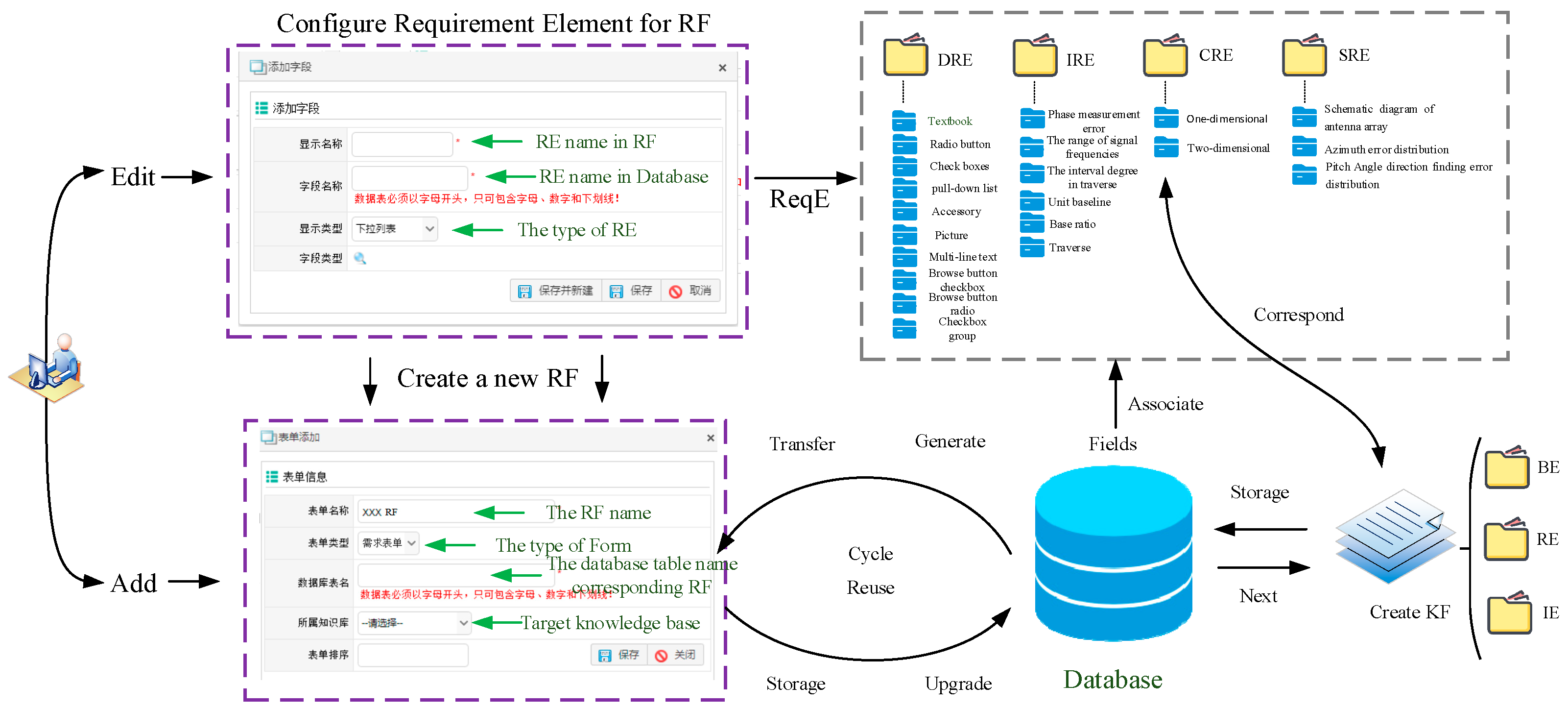
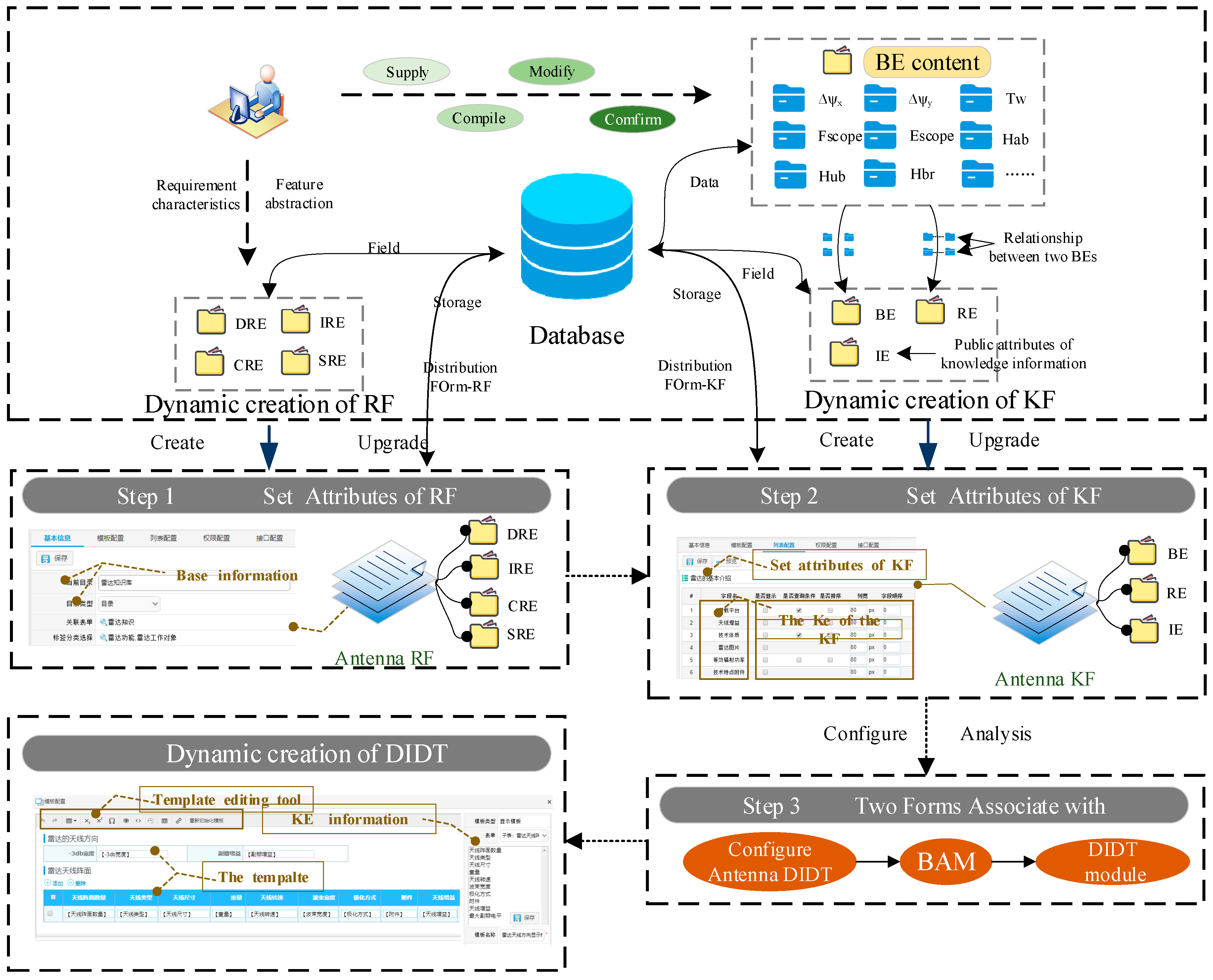
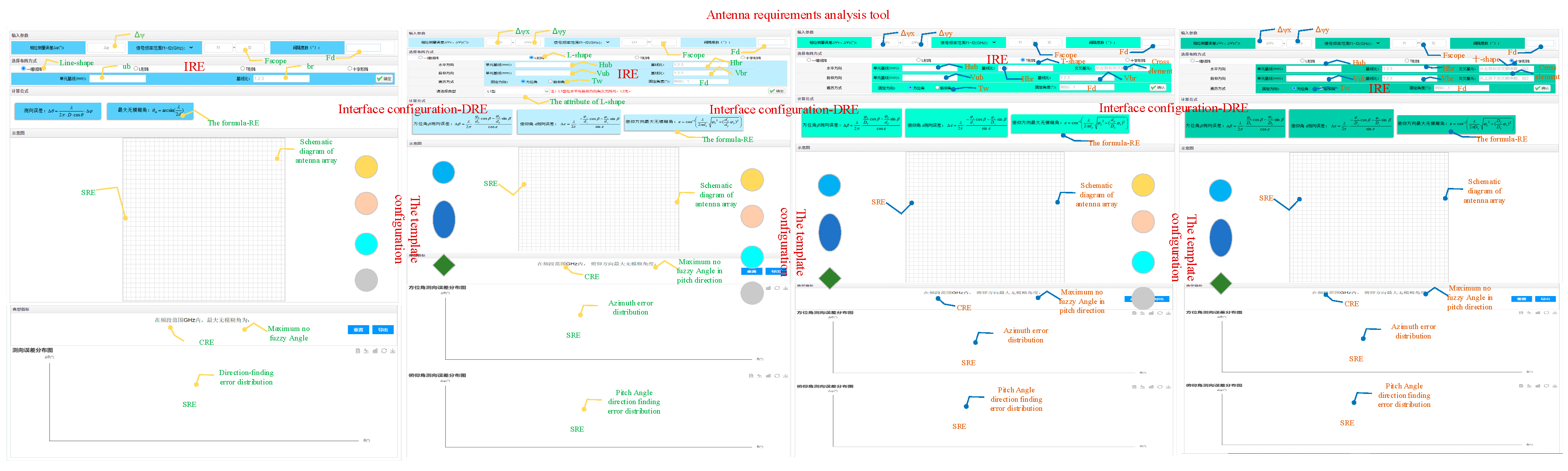
| Txt, Rdo, Btm, Frm, Grp, Lbl, Lvw, Menu, Date, Dgv, Lst, Dud, Canvas, Pdl, Image, Rdo, Hyperlink, etc. | Phase measurement error, The range of signal frequencies, The interval degree in traverse, Unit baseline, Base ratio, Traverse | One-dimensional: Direction finding error and maximum fuzzy Angle of one-dimensional linear array; two-dimensional: L-, T-, cross–azimuth and pitch–Angle measurement error and pitch–direction maximum without fuzzy Angle | Schematic diagram of antenna array, Azimuth error distribution, Pitch Angle direction finding error distribution |
| The KF of Antenna | The KF of Antenna | ||||
|---|---|---|---|---|---|
| BE | Meaning & Information | RE | BE | Meaning & Information | RE |
| ∆ψx | Horizontal phase measurement error | 1~5° | Vab | Vertical antenna baseline | |
| ∆ψy | Vertical phase measurement error | Tw | Traverse way | Horizontal, H/ Vertical, V | |
| Fscope | The range of signal frequencies | 2~8/12~14/14~18/1.2~2/8~10/0.35~0.7 GHz | Fd | Fixed degree | |
| Escope | The range of interferometer system’s error | ±0.5°/±1° | f | frequency | |
| Id | The interval degree in traverse | 1°/2°/5° | maxη | max direction of arrival | |
| Ag | Antenna geometry | L-shape/T-shape/ Cross/Linear array | minθ | The min azimuth | |
| Hub | Horizontal unit baseline | 9.5/76 mm | maxθ | The max azimuth | |
| Vub | Vesrtical unit baseline | minφ | The min pitch angle | ||
| Hbr | Horizontal base ratio | maxφ | The max pitch angle | ||
| Vbr | Vertical base ratio | Hab | Horizontal antenna baseline | ||
| The RE of Antenna | |||
|---|---|---|---|
| Line-Type | L-Type | T-Type | Cross-Type |
| L1: L2: | |||
| TE | ∆ψx | ∆ψy | Fscope | Escope | Id | Ag | Hub | Vub | Hbr | Vbr | Tw | Fd |
|---|---|---|---|---|---|---|---|---|---|---|---|---|
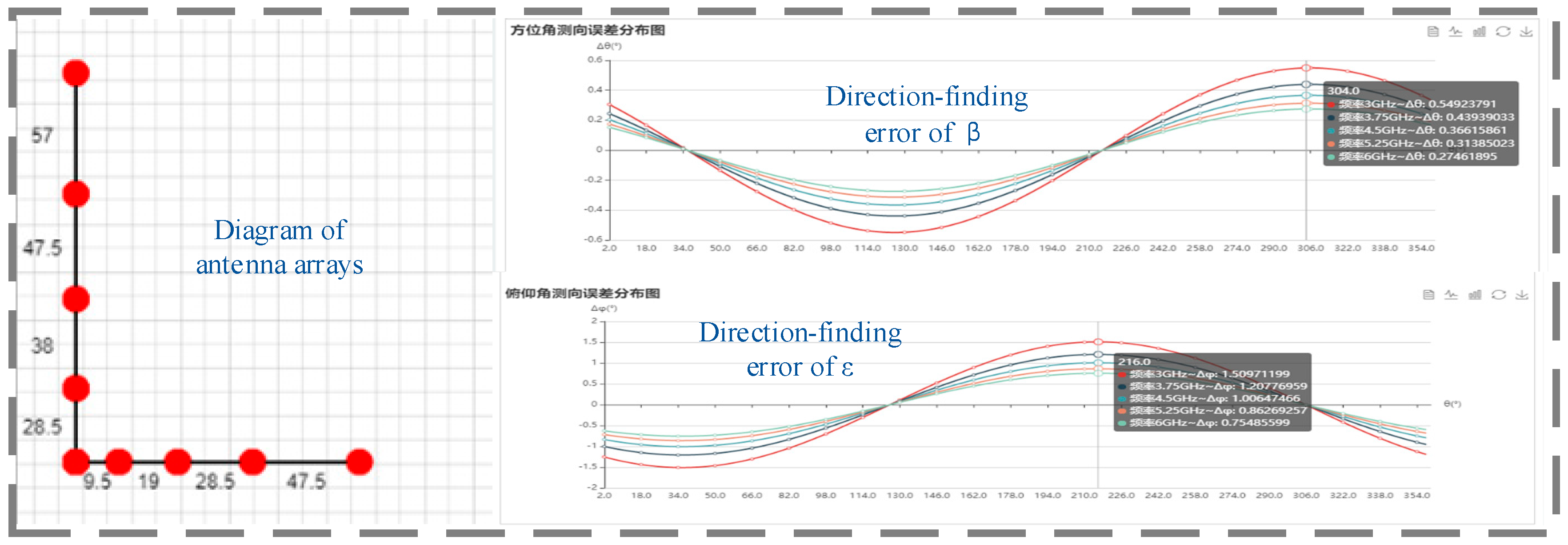
| Data | 0.9° | 1.5° | 3~6 GHz | ±1° | 2° | L1-shape | 9.5 mm | 9.5 mm | 1:2:3:5 | 3:4:5:6 | H | 20° |
| TE | Ap | F (Frequency) | maxη | Hab | Vab | minθ | maxθ | minφ | maxφ |
|---|---|---|---|---|---|---|---|---|---|
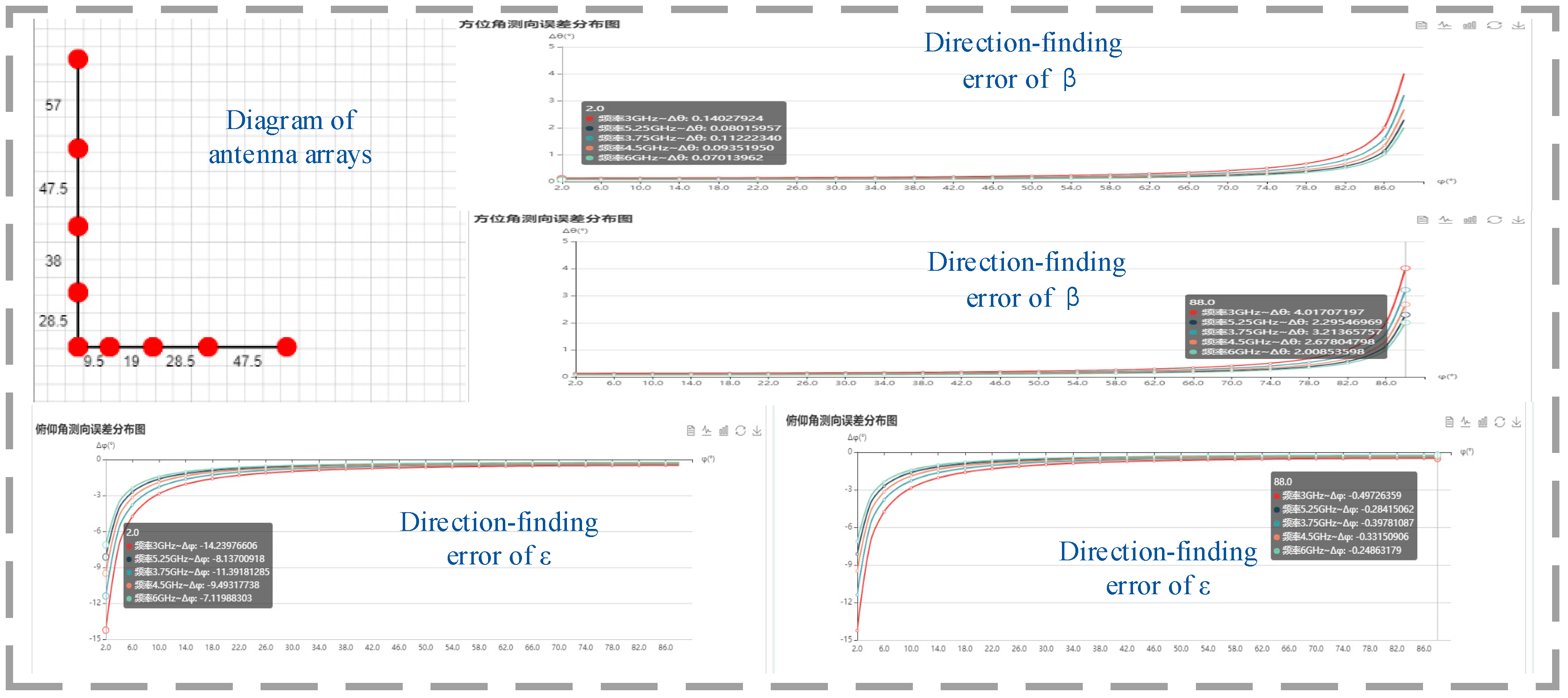
| Data | β = 20° | 3 | 90° | 9.5: 19: 28.5: 47.5 | 28.5: 38: 47.5: 57 | 0.14° | 4.02° | −0.49° | −14.2° |
| 3.75 | 90° | 0.11° | 3.21° | −0.40° | −11.4° | ||||
| 4.5 | 90° | 0.09° | 2.67° | −0.33° | −9.49° | ||||
| 5.25 | 90° | 0.08° | 2.29° | −0.28° | −8.14° | ||||
| 6 | 90° | 0.07° | 2.0° | −0.25° | −7.12° |
| TE | ∆ψx | ∆ψy | Fscope | Escope | Id | Ag | Hub | Vub | Hbr | Vbr | Tw | Fd |
|---|---|---|---|---|---|---|---|---|---|---|---|---|
| Data | 0.9° | 1.5° | 3~6 GHz | ±1° | 2° | L1-shape | 9.5 mm | 9.5 mm | 1:2:3:5 | 3:4:5:6 | V | 20° |
| TE | Ap | F (Frequency) | maxη | Hab | Vab | minθ | maxθ | minφ | maxφ |
|---|---|---|---|---|---|---|---|---|---|
| Data | ε = 20° | 3 | 90° | 9.5: 19: 28.5: 47.5 | 28.5: 38: 47.5: 57 | 0° | 0.549° | 0° | 1.51° |
| 3.75 | 90° | 0° | 0.440° | 0° | 1.21° | ||||
| 4.5 | 90° | 0° | 0.366° | 0° | 1.00° | ||||
| 5.25 | 90° | 0° | 0.314° | 0° | 0.863° | ||||
| 6 | 90° | 0° | 0.275° | 0° | 0.755° |
Disclaimer/Publisher’s Note: The statements, opinions and data contained in all publications are solely those of the individual author(s) and contributor(s) and not of MDPI and/or the editor(s). MDPI and/or the editor(s) disclaim responsibility for any injury to people or property resulting from any ideas, methods, instructions or products referred to in the content. |
© 2026 by the authors. Licensee MDPI, Basel, Switzerland. This article is an open access article distributed under the terms and conditions of the Creative Commons Attribution (CC BY) license.
Share and Cite
Zheng, L.; Liu, Y.; Li, W.; Peng, J.; Zhao, J. Demand-Driven Configuration Method and Model for Equipment Performance Indices. Electronics 2026, 15, 2634. https://doi.org/10.3390/electronics15122634
Zheng L, Liu Y, Li W, Peng J, Zhao J. Demand-Driven Configuration Method and Model for Equipment Performance Indices. Electronics. 2026; 15(12):2634. https://doi.org/10.3390/electronics15122634
Chicago/Turabian StyleZheng, Lanjiang, Yaoling Liu, Wenqiang Li, Jun Peng, and Jia Zhao. 2026. "Demand-Driven Configuration Method and Model for Equipment Performance Indices" Electronics 15, no. 12: 2634. https://doi.org/10.3390/electronics15122634
APA StyleZheng, L., Liu, Y., Li, W., Peng, J., & Zhao, J. (2026). Demand-Driven Configuration Method and Model for Equipment Performance Indices. Electronics, 15(12), 2634. https://doi.org/10.3390/electronics15122634

