A Comparative Analysis of Vivaldi Antenna Designs for Autonomous Ground-Penetrating Radar Sensing of Antarctic Glaciers
 , , and
Abstract
1. Introduction
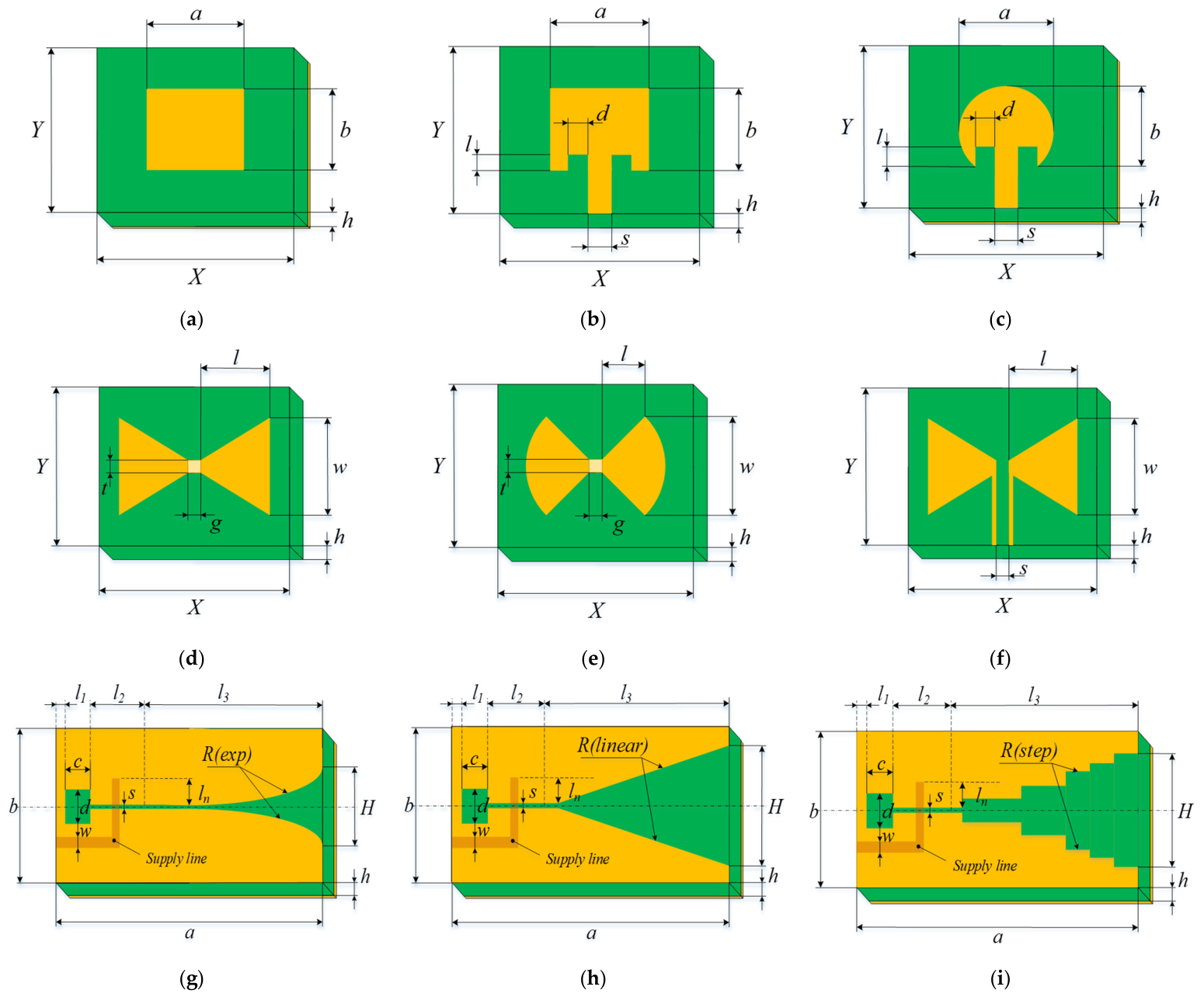
- To briefly systematize the classical types of GPR antennas, including their advantages and limitations;
- To identify the operational limitations of antennas in snow–ice media;
- To substantiate the priority of detecting near-surface crevasses and cavities from the standpoint of the fracture mechanics of snow–firn bridges;
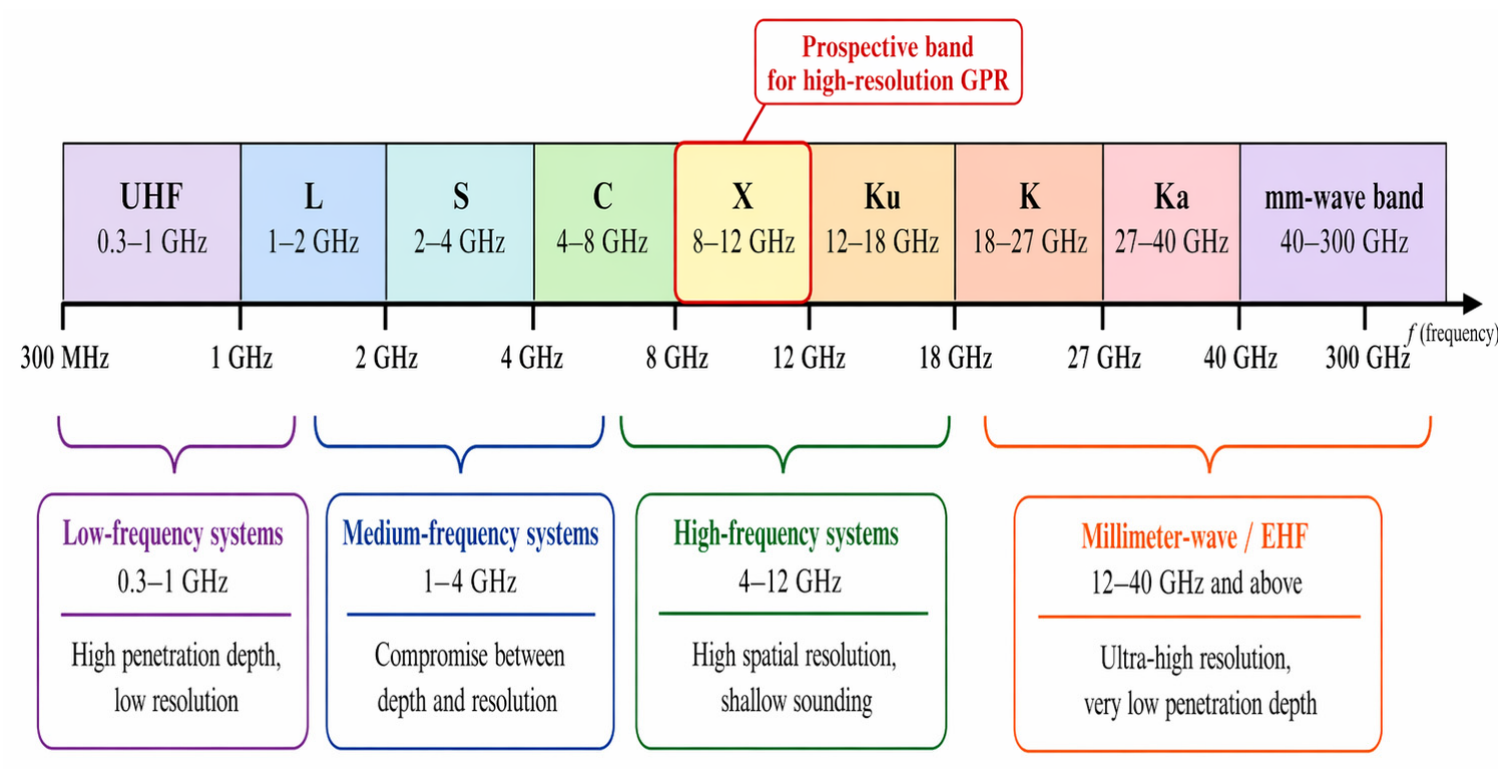
- To justify the selection of the X-band for GPR applications in Antarctica;
- To analyze modern Vivaldi-based antenna solutions;
- To perform a scientometric analysis of publication activity related to the research topic;
- To identify unresolved challenges and promising directions for further research.
2. Materials and Methods
2.1. Materials
2.2. Methods
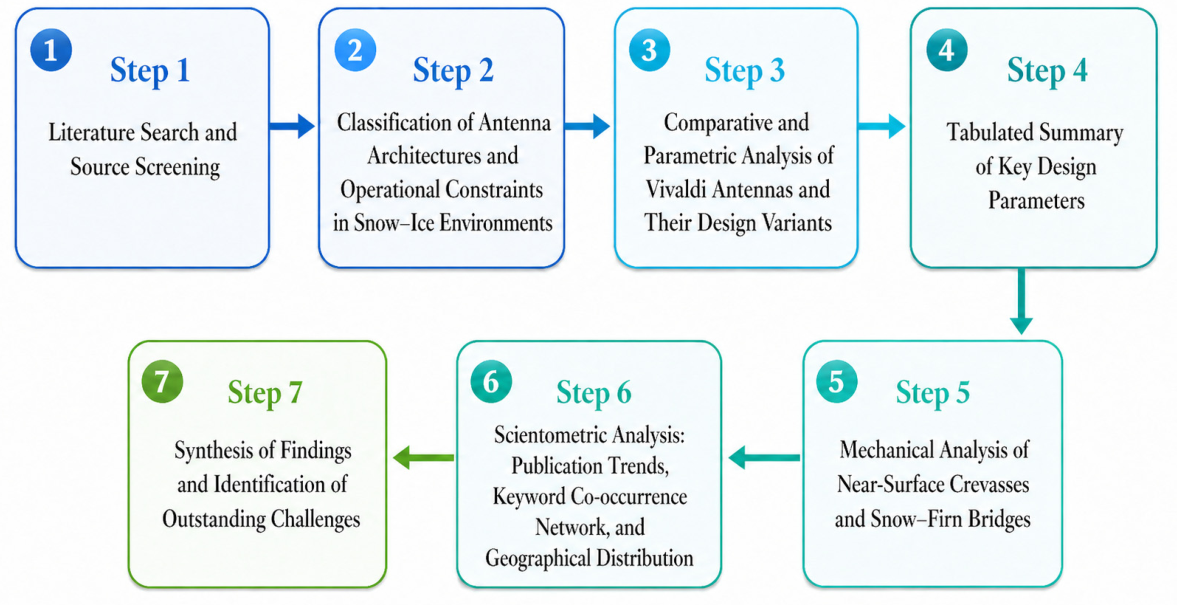
- Source search and filtering. Targeted collection of literature using predefined keywords, followed by the exclusion of studies that did not meet the relevance criteria.
- Antenna classification. Grouping of antenna types and systematization of their operational limitations in snow–ice media, including weight, radiation pattern, climatic impacts, and contact/non-contact operating modes.
- Comparative and parametric analysis. Quantitative comparison of the characteristics of Vivaldi antennas and their modifications, including antipodal, balanced, director-loaded, metamaterial-based, lens-loaded, hybrid Vivaldi–horn designs, and antenna arrays, using the following metrics: frequency range, gain, impedance-matching level, weight, dimensions, main-lobe width, sidelobe level, and cross-polarization discrimination.
- Tabular summary. Consolidation of the parameters of the analyzed solutions into a summary table.
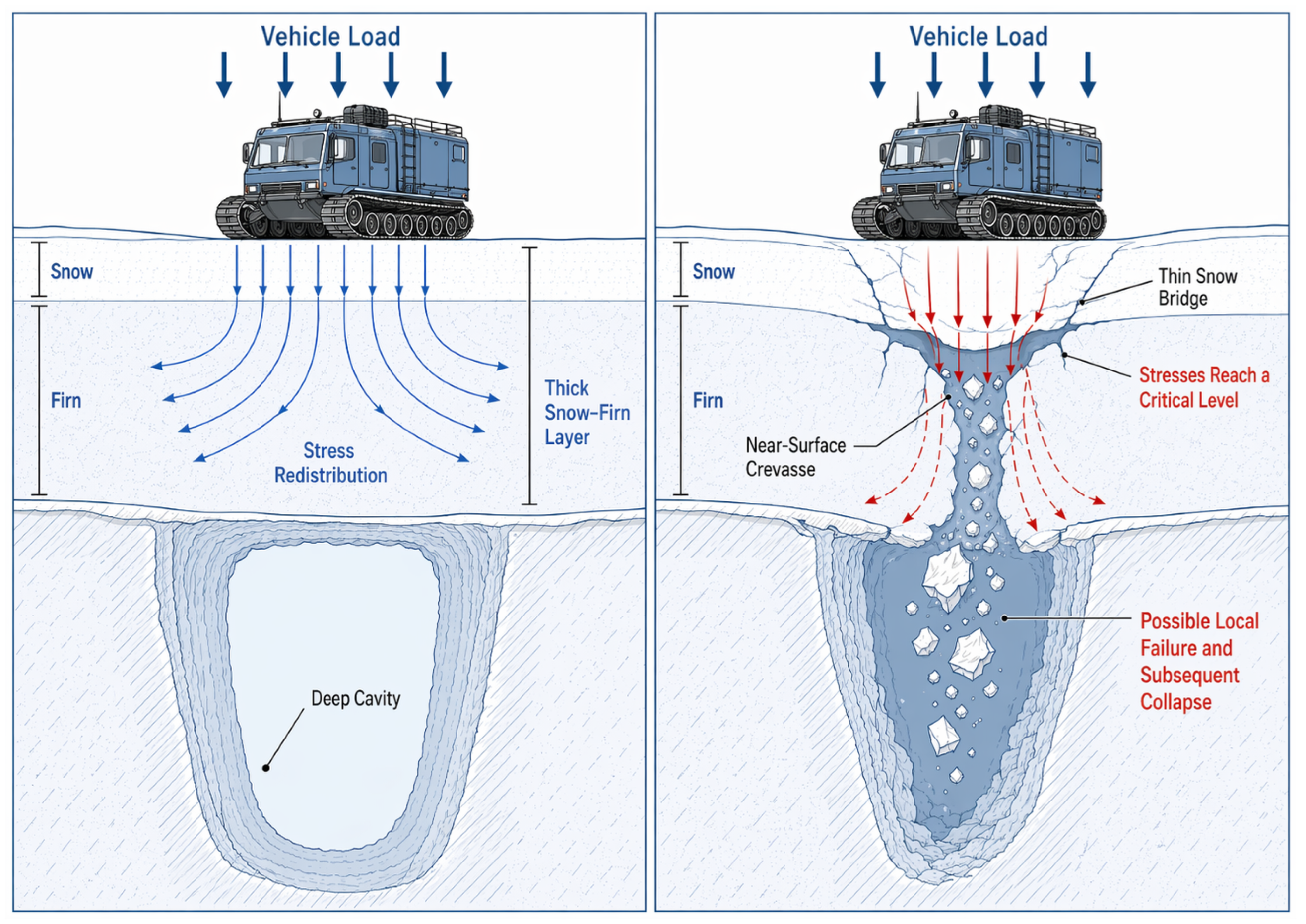
- Mechanical analysis. Application of a classical stress-distribution model in an elastic half-space to substantiate the priority of detecting near-surface crevasses, including an assessment of the effect of snow–firn bridge thickness on load-bearing capacity.
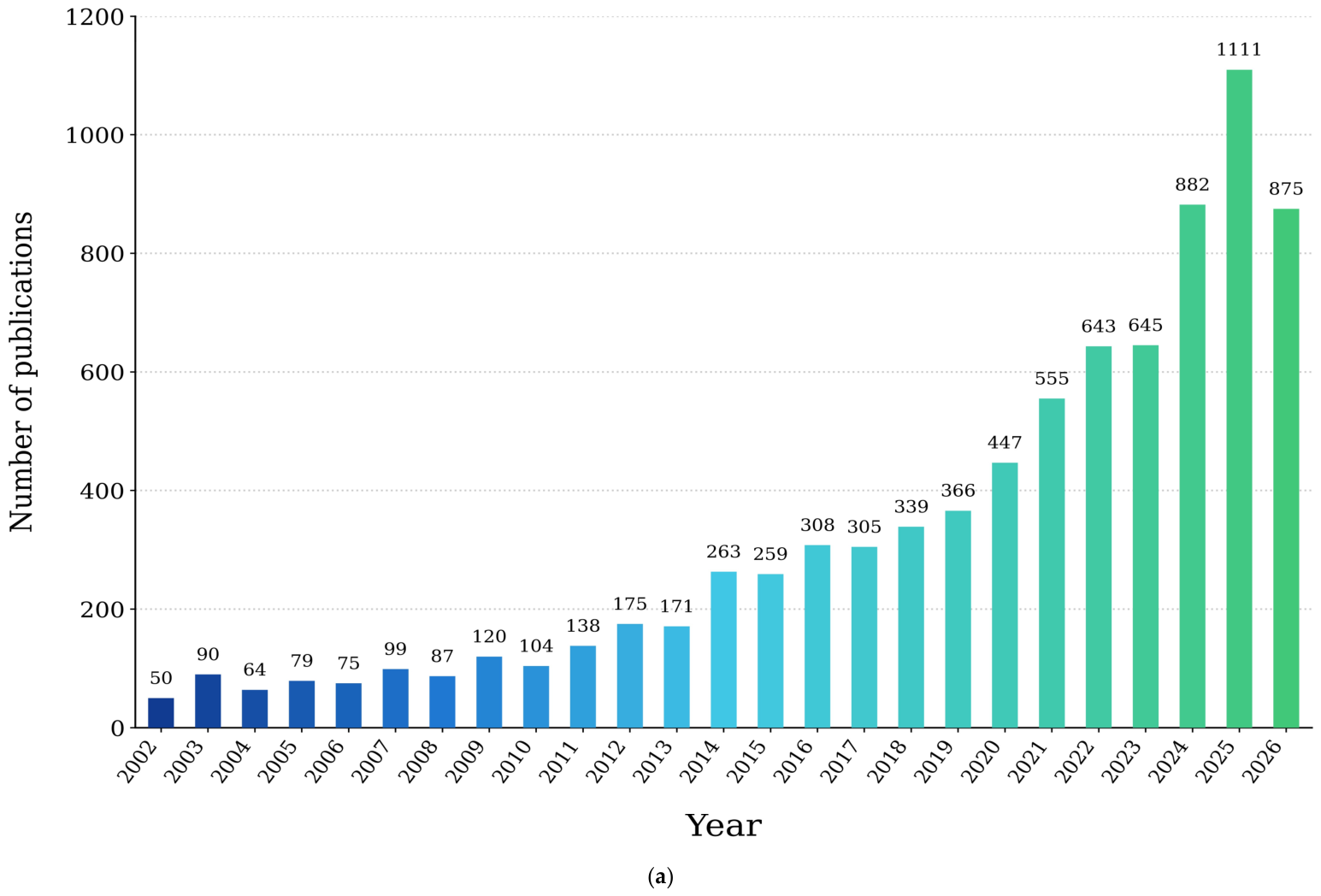
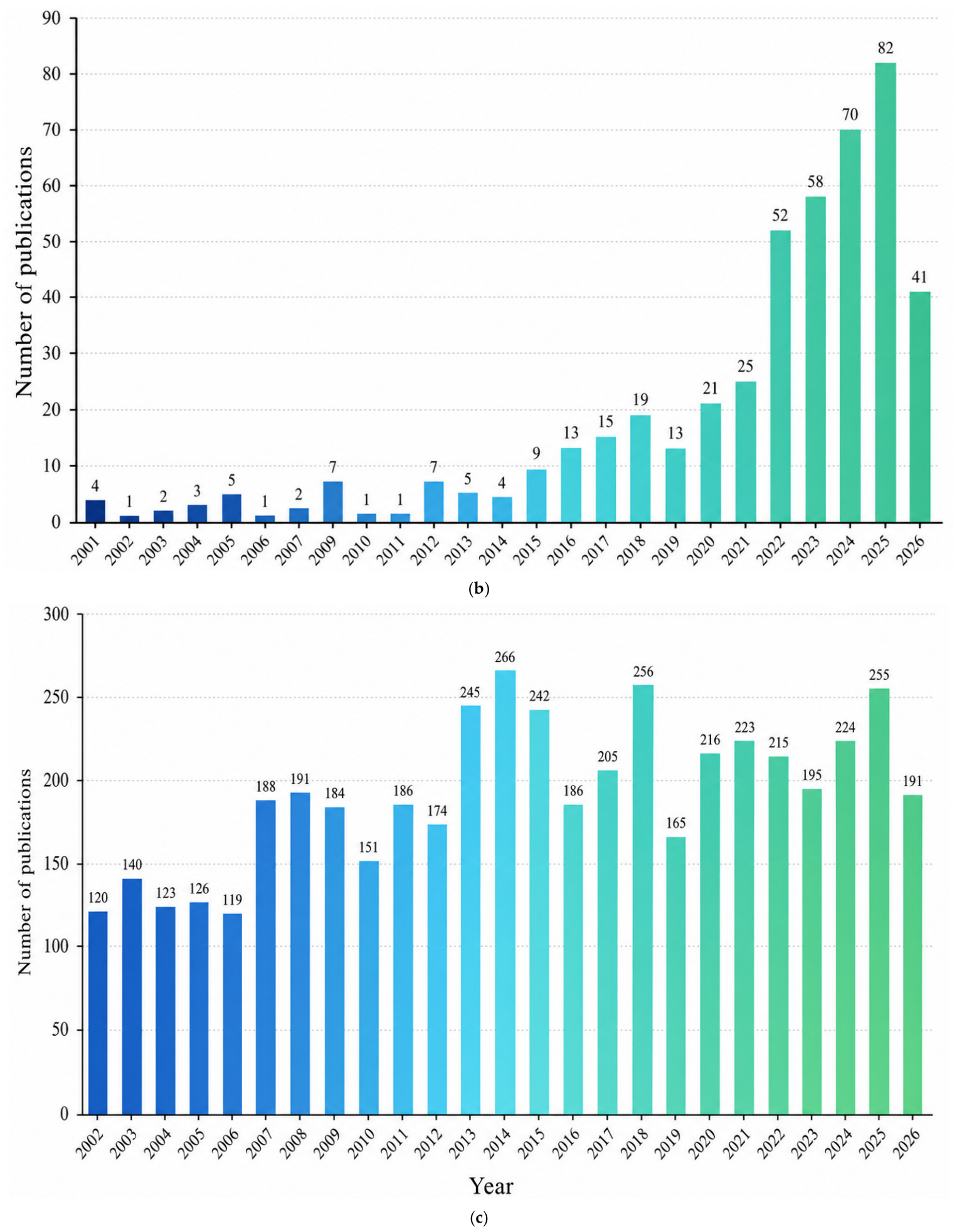
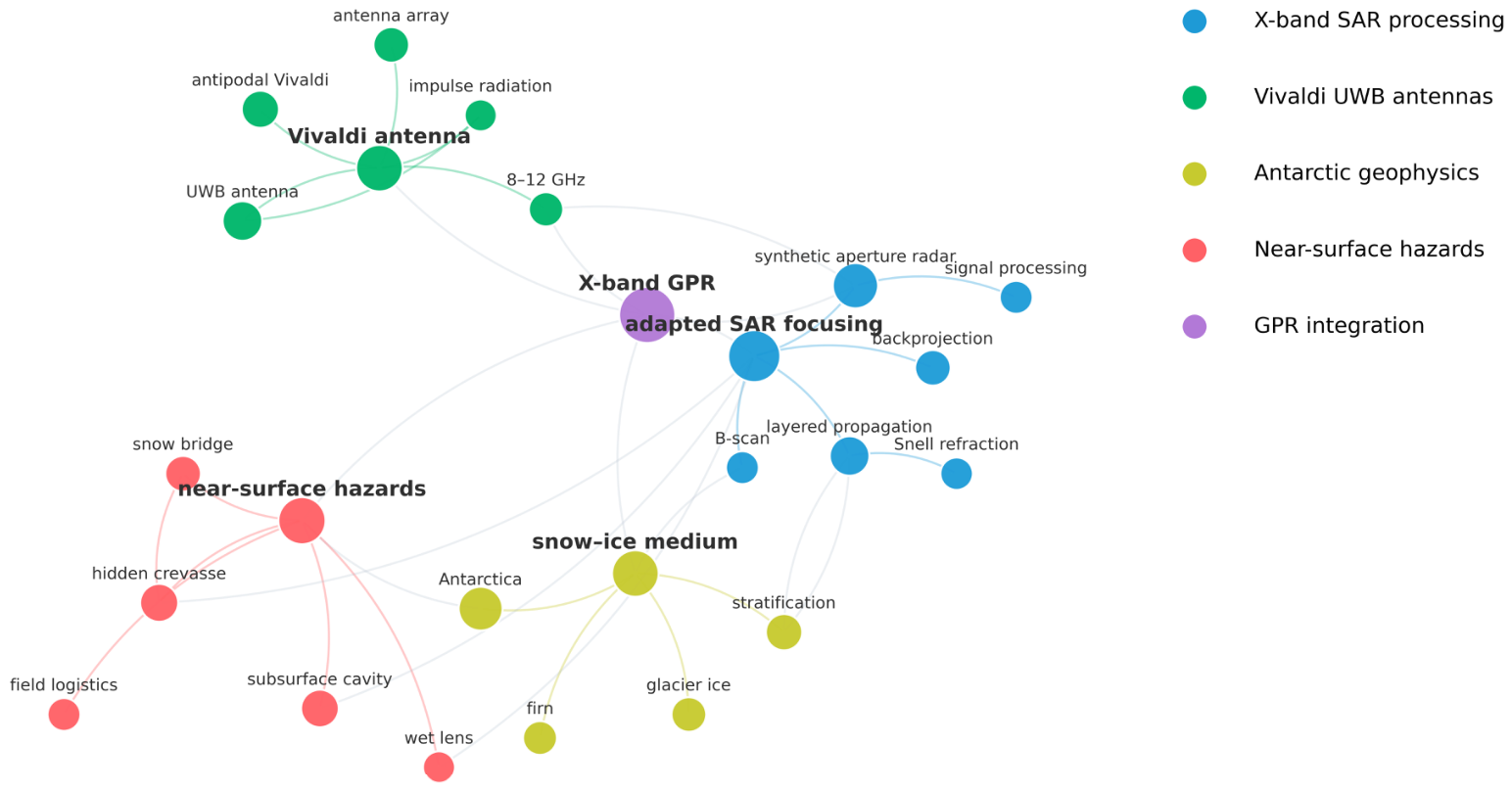
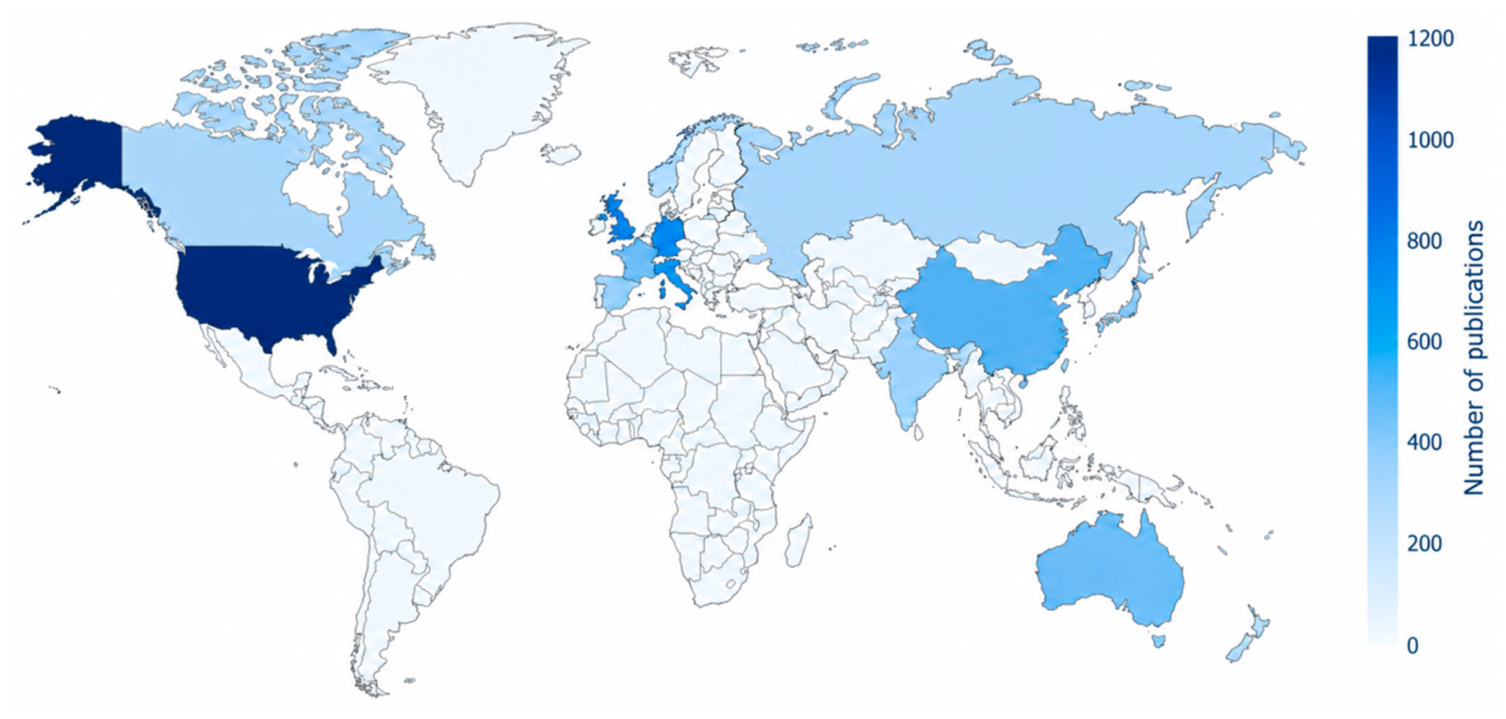
- Scientometric analysis. Processing of Scopus data for three thematic areas: X-band SAR systems, Vivaldi antennas, and Antarctic geophysical research. Annual publication dynamics, keyword network structure, and geographical distribution were assessed [37].
- Synthesis of conclusions and identification of unresolved challenges. Generalization of the comparative analysis results to formulate target requirements for an antenna array of an X-band GPR system and to identify promising directions for further research.
3. Design Features and Operational Limitations of GPR Antennas in Snow–Ice Media
3.1. Brief Overview of Classical GPR Antennas
3.1.1. Horn Antennas
3.1.2. Dipole and Loop Antennas
3.1.3. Bow-Tie Antennas
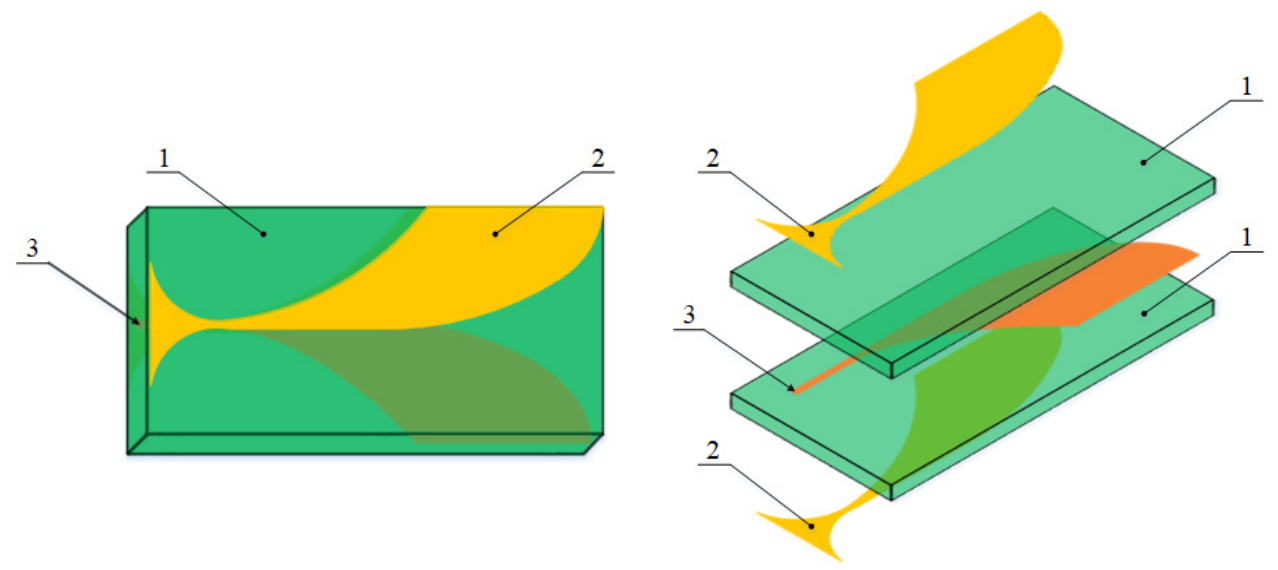
3.1.4. Planar and Slot Antennas: Vivaldi and Tapered Slot Antennas
3.1.5. PCB Yagi-Uda and Quasi-Yagi Antennas
3.2. Operational Limitations of GPR Antennas in Snow–Ice Media
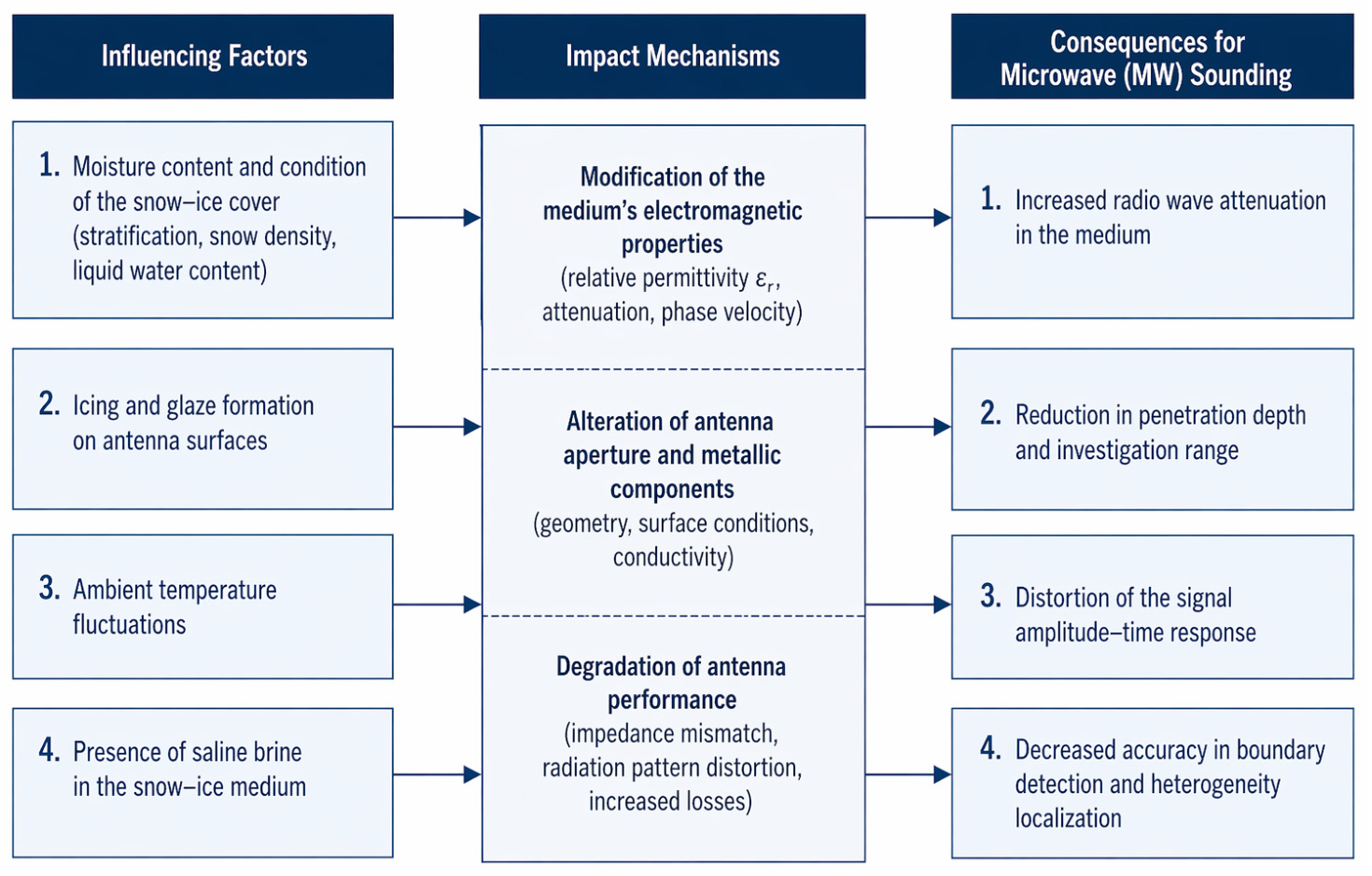
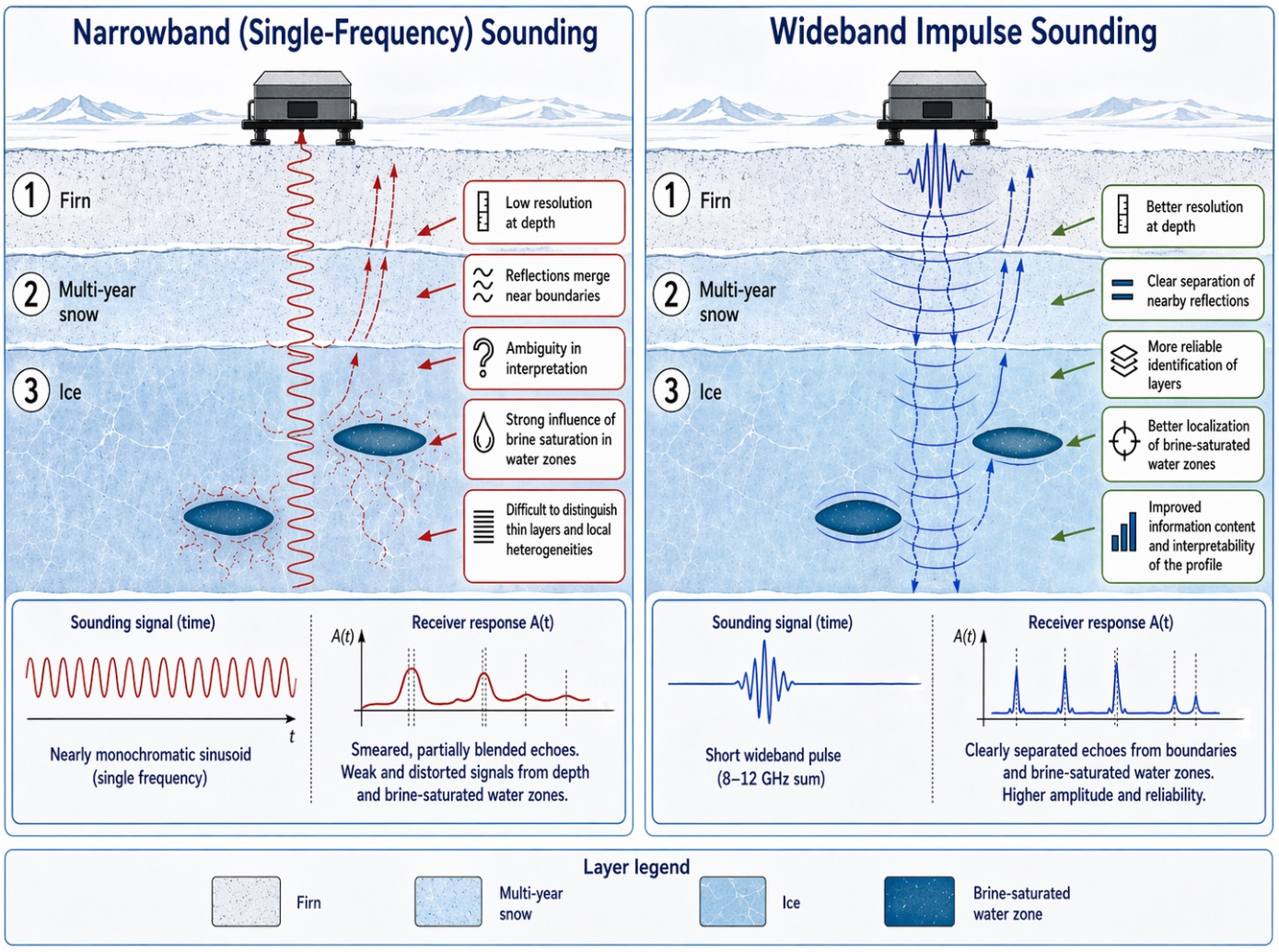
- Climatic impacts: the electrophysical properties of the snow–ice medium, including moisture content, density, stratification, and temperature, determine the propagation velocity, attenuation, and penetration depth of radio waves, as shown in Figure 5.
3.3. Low-Temperature Effects on Dielectric Substrates Used in Printed Antennas
3.4. Environmental Adaptability of Pure-Metal and Dielectric-Based Antenna Architectures
4. Rationale for Prioritizing Near-Surface Targets and the Capabilities of X-Band Probing Signals for Their Detection
4.1. Near-Surface Crevasses and Cavities as the Primary Source of Hazard
4.2. Penetration Capability of X-Band Probing Signals and Their Suitability for Subsurface Sensing Tasks
5. Modern Vivaldi-Based Antenna Solutions
5.1. Antipodal and Balanced Modifications of Vivaldi Antennas
5.2. High-Gain Vivaldi Antennas
5.3. X-Band Vivaldi Antenna Arrays
5.4. Innovative Configurations and Materials for Vivaldi Antennas
6. Results and Discussion
6.1. Assessment of Research Interest in the Study Topic
6.2. Results of the Comparative Analysis
- Achieving a gain exceeding 10–15 dBi while maintaining a wide operating frequency band;
- Forming a narrow radiation pattern and ensuring a high level of side- and back-lobe suppression;
- Maintaining a balance between energy-related and directional characteristics, on the one hand, and weight and dimensional constraints, on the other;
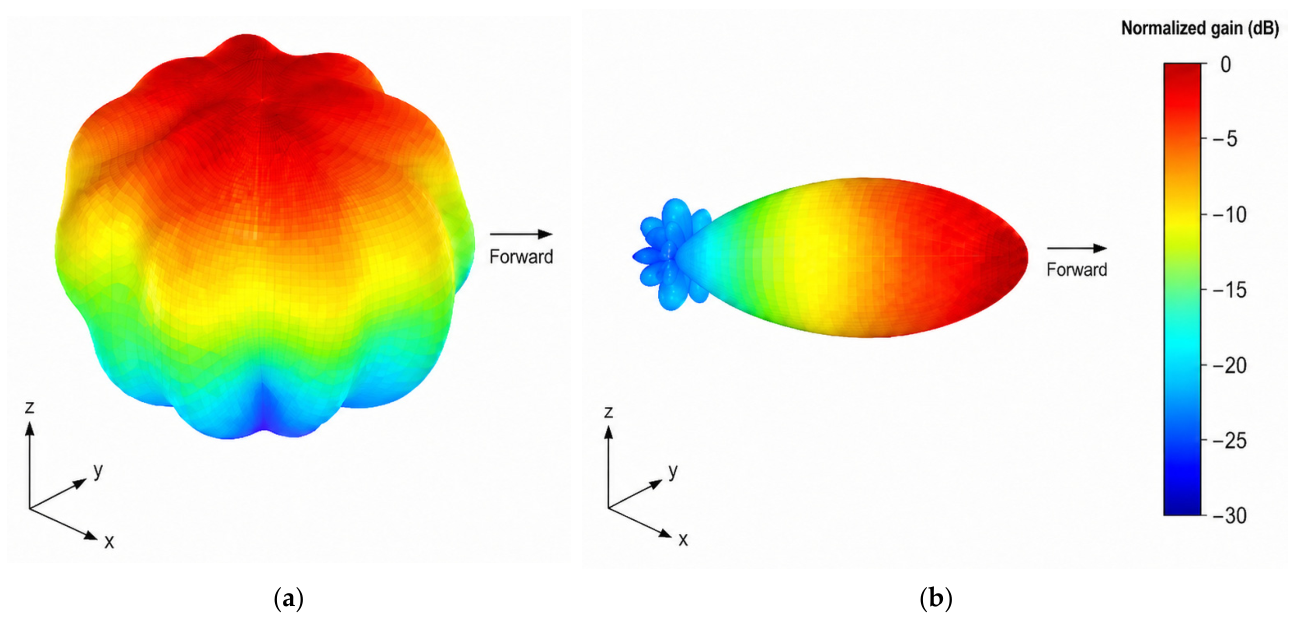
- Ensuring polarization consistency, which involves forming radiation patterns with similar shapes in both radiation planes and achieving high cross-polarization discrimination.
6.3. Prospects for Further Research
6.3.1. Development of Adaptive and Phased Antenna Arrays Based on Vivaldi Radiators
6.3.2. Application of Metamaterials, Electromagnetic Band-Gap (EBG) Structures, Frequency-Selective Surfaces (FSS), and Director Elements to Enhance Radiation Focusing and Suppress Side and Back Lobes
6.3.3. Development of Lightweight Substrate and Structural Materials
6.3.4. Development of Multi-Polarization and Multichannel MIMO Systems Based on Vivaldi Antennas for Simultaneous Operation in Several Orthogonal Polarizations
6.3.5. Integration of Vivaldi Antenna Arrays with Synthetic Aperture Methods
7. Conclusions
Author Contributions
Funding
Data Availability Statement
Acknowledgments
Conflicts of Interest
Abbreviations
| AML | Artificial-material lens |
| EBG | Electromagnetic band-gap |
| FSS | Frequency-selective surfaces |
| GNSS | Global navigation satellite system |
| GPR | Ground-penetrating radar |
| MIMO | Multiple-input multiple-output |
| PCB | Printed Circuit Board |
| SAR | Synthetic aperture radar |
| SSR | Sidelobe suppressor |
| TARC | Total active reflection coefficient |
| TTD | True-time-delay |
| XPD | Cross-polarization discrimination |
Nomenclature
| Symbol | Description |
| Effective frequency bandwidth of the probing signal | |
| Vertical resolution (range resolution) of the GPR system | |
| Real part of the complex dielectric permittivity | |
| Relative permittivity of the dielectric substrate | |
| Thickness of the dielectric substrate | |
| Wavelength (free-space or in-medium) | |
| Loss tangent (dielectric dissipation factor) | |
| Propagation velocity of the electromagnetic wave in the medium |
References
- Denisova, O.V.; Morozova, O.Y.; Sterkhov, I.A. Signal amplifier for an electronic system of a downhole drilling unit. Gorn. Zh. 2025, 9, 51–57. [Google Scholar] [CrossRef]
- Wang, H.; Lu, L.; Liu, P.; Zhang, J.; Liu, S.; Xie, Y.; Ye, Z. Millimeter waves in medical applications: Status and prospects. Intell. Med. 2024, 4, 16–21. [Google Scholar] [CrossRef]
- Filatov, V.M.; Rastvorova, I.I.; Zhurba, E.D. Review of radio-electronic wave techniques and devices for oil diagnostics and monitoring. Bull. Tomsk Polytech. Univ. Geo Assets Eng. 2025, 336, 164–181. [Google Scholar] [CrossRef]
- Davydkina, T.V.; Yankilevich, A.A.; Naumova, A.N. Specifics of magnetotelluric studies in Antarctica. J. Min. Inst. 2025, 273, 80–93. [Google Scholar]
- Bolshunov, A.V.; Ignatev, S.A.; Gorelik, G.D.; Krikun, N.S.; Vasilev, D.A.; Rakitin, I.V.; Shadrin, V.S. Comprehensive studies of the snow–firn layer in the area of the Russian Antarctic Vostok Station. J. Min. Inst. 2025, 273, 52–64. [Google Scholar]
- Cherepovitsyn, A.E.; Strelchenko, K.A. Prospects for recovery and strategic development of the mica industry in the Russian Federation: Arctic focus. Sev. Rynok Form. Ekon. Poryadka 2025, 3, 53–68. [Google Scholar] [CrossRef]
- Litvinenko, V.S.; Petrov, E.I.; Vasilevskaya, D.V.; Yakovenko, A.V.; Naumov, I.A.; Ratnikov, M.A. Assessment of the role of the state in the management of mineral resources. J. Min. Inst. 2023, 259, 95–111. [Google Scholar] [CrossRef]
- Sukhanova, A.A.; Popov, S.V.; Kashkevich, M.P. GPR survey for safety logistics operations of Russian Antarctic expedition. In Proceedings of the 18th International Conference on Ground Penetrating Radar, Golden, CO, USA, 14–19 June 2020. [Google Scholar] [CrossRef]
- Sosnovsky, A.V.; Chernov, R.A. Effect of snow cover on cooling of the surface layer of the East Grønfjord Glacier, Spitsbergen. Ice Snow 2021, 61, 75–88. [Google Scholar] [CrossRef]
- Lambert, E.; Burgard, C. Brief communication: Sensitivity of Antarctic ice shelf melting to ocean warming across basal melt models. Cryosphere 2025, 19, 2495–2505. [Google Scholar] [CrossRef]
- Tuckett, P.A.; Sole, A.J.; Livingstone, S.J.; Jones, J.M.; Lea, J.M.; Gilbert, E. Continent-wide mapping shows increasing sensitivity of East Antarctica to meltwater ponding. Nat. Clim. Change 2025, 15, 775–783. [Google Scholar] [CrossRef]
- Muilwijk, M.; Hattermann, T.; Beadling, R.L.; Swart, N.C.; Nummelin, A.; Guo, C.; Xu, X. Large regional differences in Antarctic ice shelf mass loss from Southern Ocean warming and meltwater feedbacks. Cryosphere 2026, 20, 1087–1117. [Google Scholar] [CrossRef]
- Sadai, S.; Karmalkar, A.V.; Pollard, D.; Dong, Y.; Lucas, E.; Gomez, N.; Condron, A. Antarctic meltwater alters future projections of climate and sea level. Nat. Commun. 2025, 16, 9271. [Google Scholar] [CrossRef] [PubMed]
- Zheng, Y.; Golledge, N.R.; Gossart, A.; Shu, S. Expansion of Antarctic surface melt through the 21st century. Nat. Commun. 2026, 17, 5136. [Google Scholar] [CrossRef]
- Banwell, A.F.; Willis, I.C.; Stevens, L.A.; Dell, R.L.; MacAyeal, D.R. Observed meltwater-induced flexure and fracture at a doline on George VI Ice Shelf, Antarctica. J. Glaciol. 2024, 70, e47. [Google Scholar] [CrossRef]
- Marsh, O.J.; Price, D.; Courville, Z.R.; Floricioiu, D. Crevasse and rift detection in Antarctica from TerraSAR-X satellite imagery. Cold Reg. Sci. Technol. 2021, 187, 103284. [Google Scholar] [CrossRef]
- Nazarychev, A.; Iliev, I.; Manukian, D.; Beloev, H.; Suslov, K.; Beloev, I. Review of operating conditions, diagnostic methods, and technical condition assessment to improve reliability and develop a maintenance strategy for electrical equipment. Energies 2025, 18, 5832. [Google Scholar] [CrossRef]
- Ustinov, D.A.; Rashid, A. Using artificial neural network methods to increase the sensitivity of distance protection. Int. J. Eng. 2024, 37, 2192–2199. [Google Scholar] [CrossRef]
- Huang, Z.; Wang, S.; Alley, R.B.; Parizek, B.R. A robust multitask deep learning algorithm for Antarctic ice shelf fracture detection from multisource satellite imagery. Remote Sens. Environ. 2025, 330, 114964. [Google Scholar] [CrossRef]
- Zhao, J.; Liang, S.; Li, X.; Duan, Y.; Liang, L. Detection of surface crevasses over Antarctic ice shelves using SAR imagery and deep learning method. Remote Sens. 2022, 14, 487. [Google Scholar] [CrossRef]
- Yang, B.; Liang, S.; Guo, H.; Li, X.; Lv, M.; Marinsek, S.; Li, Z. Suitability analysis of human activities over Antarctic ice shelves: An integrated assessment of natural conditions based on machine learning algorithms. Int. J. Digit. Earth 2023, 16, 4906–4928. [Google Scholar] [CrossRef]
- Meng, X.; Zhu, Z.; Liu, H.; Lian, Y.; Lu, H.; Wang, Y.; Spencer, B.F. A drone-borne GPR system for lake and river ice thickness monitoring. Water Resour. Res. 2025, 61, e2025WR040290. [Google Scholar] [CrossRef]
- Sukhanova, A.A.; Kharitonov, V.V.; Popov, S.V.; Kashkevich, M.P. The application of the GPR-method for safety of logistics operations near the Russkaya station in West Antarctica. Ice Snow 2022, 62, 427–440. [Google Scholar] [CrossRef]
- Dupuy, B.; Grøver, A.; Garambois, S.; Tobiesen, A.; Lorand, P.; Dahle, H.; Humstad, T. UAV-borne GPR for snowpack characterisation: Potential, limitations and operational guidelines. Cold Reg. Sci. Technol. 2025, 241, 104641. [Google Scholar] [CrossRef]
- Tjoelker, A.R.; Baraër, M.; Valence, E.; Charonnat, B.; Masse-Dufresne, J.; Mark, B.G.; McKenzie, J.M. Drone-based ground-penetrating radar with manual transects for improved field surveys of buried ice. Remote Sens. 2024, 16, 2461. [Google Scholar] [CrossRef]
- Taraji, M.; Baladi, E.; Antoniades, M.A. Compact wideband and high gain horn slot antenna array fed by printed ridge gap waveguide for X band applications. Sci. Rep. 2025, 15, 17627. [Google Scholar] [CrossRef]
- Carpenter, A.; Lawrence, J.A.; Ghail, R.; Mason, P.J. The development of copper clad laminate horn antennas for drone interferometric synthetic aperture radar. Drones 2023, 7, 215. [Google Scholar] [CrossRef]
- Pi, S.; Wang, T.; Lin, J. Directional and high-gain ultra-wideband bow-tie antenna for ground-penetrating radar applications. Remote Sens. 2023, 15, 3522. [Google Scholar] [CrossRef]
- Danuor, P.; Anim, K.; Jung, Y.B. Monopole antenna with enhanced bandwidth and stable radiation patterns using metasurface and cross-ground structure. Sensors 2022, 22, 8571. [Google Scholar] [CrossRef]
- Ren, J.; Fan, H.; Tang, Q.; Yu, Z.; Xiao, Y.; Zhou, X. An ultra-wideband Vivaldi antenna system for long-distance electromagnetic detection. Appl. Sci. 2022, 12, 528. [Google Scholar] [CrossRef]
- Zhao, C.; Bai, Y.; Wei, Q. A 2 to 50 GHz all-metal Vivaldi antenna for ultra-wideband (UWB) application. AEU Int. J. Electron. Commun. 2022, 148, 154162. [Google Scholar] [CrossRef]
- Bhattacharjee, A.; Bhawal, A.; Karmakar, A.; Saha, A.; Bhattacharya, D. Vivaldi antennas: A historical review and current state of art. Int. J. Microw. Wirel. Technol. 2021, 13, 833–850. [Google Scholar] [CrossRef]
- Subbaraj, S.; Kingsly, S. A review on ultra-wideband antennas for through wall imaging and ground penetrating radar applications. Radio Sci. 2025, 60, 1–15. [Google Scholar] [CrossRef]
- Amador, M.; Rouco, A.; Albuquerque, D.; Pinho, P. Overview of Vivaldi antenna selection for through-wall radar applications. Sensors 2024, 24, 6536. [Google Scholar] [CrossRef] [PubMed]
- Saintenoy, A.; Léger, E. Studying cold regions with ground-penetrating radar: A review. C. R. Geosci. 2025, 357, 283–298. [Google Scholar] [CrossRef]
- Page, M.J.; McKenzie, J.E.; Bossuyt, P.M.; Boutron, I.; Hoffmann, T.C.; Mulrow, C.D.; Moher, D. The PRISMA 2020 statement: An updated guideline for reporting systematic reviews. BMJ 2021, 372, n71. [Google Scholar] [CrossRef] [PubMed]
- Donthu, N.; Kumar, S.; Mukherjee, D.; Pandey, N.; Lim, W.M. How to conduct a bibliometric analysis: An overview and guidelines. J. Bus. Res. 2021, 133, 285–296. [Google Scholar] [CrossRef]
- Wagner, S.; Hossain, A.; Pancrazio, S.; Pham, A.V. System-based specifications for better design of ground-penetrating radar antennas. IET Microw. Antennas Propag. 2023, 17, 478–493. [Google Scholar] [CrossRef]
- Genc, A.; Basyigit, I.B.; Colak, B.; Helhel, S. Investigation of the characteristics of low-cost and lightweight horn array antennas with novel monolithic waveguide feeding networks. AEU Int. J. Electron. Commun. 2018, 89, 15–23. [Google Scholar] [CrossRef]
- Tong, J.; Guo, Y.; Ji, C.; Chai, X.; Zhao, Q. A compact wideband semi-elliptical dipole antenna for boat-borne GPR. IEEE Trans. Antennas Propag. 2022, 70, 11496–11504. [Google Scholar] [CrossRef]
- Wu, K.; Lambot, S. Analysis of low-frequency drone-borne GPR for root-zone soil electrical conductivity characterization. IEEE Trans. Geosci. Remote Sens. 2022, 60, 2006213. [Google Scholar] [CrossRef]
- Auld, M.W.; Macnae, J.C.; Iles, G.N. MAPRad—A miniaturised magnetic antenna ground penetrating radar. In Proceedings of the 1st ASEG DISCOVER Symposium, Hobart, Australia, 15–18 October 2024. [Google Scholar] [CrossRef]
- Darvish, A.; Zakeri, B.; Fallah, P. 50–100 Ohms, 130 MHz–5 GHz resistively loaded bow-tie antenna for efficient UWB mono-pulse radiation. AEU Int. J. Electron. Commun. 2021, 138, 153807. [Google Scholar] [CrossRef]
- Ashraf, M.A.; Jamil, K.; Telba, A.; Alzabidi, M.A.; Sebak, A.R. Design and development of a wideband planar Yagi antenna using tightly coupled directive element. Micromachines 2020, 11, 975. [Google Scholar] [CrossRef]
- Lee, J.-S.; Min, B.-C.; Kumar, S.; Choi, H.-C.; Kim, K.-W. On autonomous phase balancing of the coplanar stripline as a feedline for a quasi-Yagi antenna. Electronics 2023, 12, 4168. [Google Scholar] [CrossRef]
- Li, D.; Yang, C.; Liu, Y.; Yang, L.; Chen, Q. Planar printed wideband filtering quasi-Yagi antenna and its notch-band design using parasitic elements for vehicular communication. IEEE Trans. Veh. Technol. 2024, 73, 2122–2131. [Google Scholar] [CrossRef]
- Mescia, L.; Mevoli, G.; Lamacchia, C.M.; Gallo, M.; Bia, P.; Gaetano, D.; Manna, A. Sinuous antenna for UWB radar applications. Sensors 2022, 22, 248. [Google Scholar] [CrossRef]
- Kumar, A.; Gautam, S.K.; Arya, R.K.; Ali, M.; Singh, P.P.; Verma, A.K.; Mittra, R. High-gain TM11 mode equilateral triangular patch antenna with shorting pins and triangular short horn. Int. J. Microw. Wirel. Technol. 2024, 16, 1009–1023. [Google Scholar] [CrossRef]
- Casula, G.A.; Mazzarella, G.; Montisci, G.; Muntoni, G. A review on improved design techniques for high performance planar waveguide slot arrays. Electronics 2021, 10, 1311. [Google Scholar] [CrossRef]
- Arendt, B.; Schneider, M.; Mayer, W.; Walter, T. Environmental influences on the detection of buried objects with a ground-penetrating radar. Remote Sens. 2024, 16, 1011. [Google Scholar] [CrossRef]
- Lei, W.; Tan, X.; Luo, C.; Xue, W. Mutual interference suppression and signal enhancement method for ground-penetrating radar based on deep learning. Electronics 2024, 13, 4722. [Google Scholar] [CrossRef]
- Valence, E.; Baraer, M.; Rosa, E.; Barbecot, F.; Monty, C. Drone-based ground-penetrating radar (GPR) application to snow hydrology. Cryosphere 2022, 16, 3843–3860. [Google Scholar] [CrossRef]
- Noviello, C.; Gennarelli, G.; Esposito, G.; Ludeno, G.; Fasano, G.; Capozzoli, L.; Catapano, I. An overview on down-looking UAV-based GPR systems. Remote Sens. 2022, 14, 3245. [Google Scholar] [CrossRef]
- Rangole, A.; De, S.; Kuchekar, N.; Raj, A.B. A comprehensive review of ground penetrating radar: Techniques, applications and future directions. Int. J. Eng. Res. Rev. 2024, 12, 30–53. [Google Scholar] [CrossRef]
- Bonnell, R.; McGrath, D.; Williams, K.; Webb, R.; Fassnacht, S.R.; Marshall, H.P. Spatiotemporal variations in liquid water content in a seasonal snowpack: Implications for radar remote sensing. Remote Sens. 2021, 13, 4223. [Google Scholar] [CrossRef]
- Schennen, S.; Wetterich, S.; Schirrmeister, L.; Schwamborn, G.; Tronicke, J. Seasonal impact on 3D GPR performance for surveying Yedoma Ice Complex deposits. Front. Earth Sci. 2022, 10, 741524. [Google Scholar] [CrossRef]
- Islam, Z.U.; Bermak, A.; Wang, B. A review of microstrip patch antenna-based passive sensors. Sensors 2024, 24, 6355. [Google Scholar] [CrossRef]
- Tatarenko, P.V.; Tatarenko, A.S. Solution of an electrodynamic problem for a homogeneous equivalent segment of a coaxial load, considering heat losses in the conductors. Mathematics 2022, 10, 4732. [Google Scholar] [CrossRef]
- Alrawashdeh, R. A cross-shaped slotted patch sensor antenna for ice and frost detection. Technologies 2024, 13, 5. [Google Scholar] [CrossRef]
- Komarov, A.; Soriot, C.; Mallett, R.; Willatt, R.; Yackel, J.; Sturm, M.; Stroeve, J. Bridging the gaps: Unraveling the impact of snow properties on brine wicking and runoff. J. Glaciol. 2025, 71, e50. [Google Scholar] [CrossRef]
- Sandhana Mahalingam, M.; Pandeeswari, R.; Ko, S.; Kouki, A.B. A compact balanced antipodal Vivaldi antenna with improved phase center stability for imaging and ultrawideband localization applications. AEU Int. J. Electron. Commun. 2023, 170, 154844. [Google Scholar] [CrossRef]
- Paghi, A.; Trupiano, G.; Puglia, C.; Burgaud, H.; De Simoni, G.; Greco, A.; Giazotto, F. Estimation of the FR4 microwave dielectric properties at cryogenic temperature for quantum-chip-interface PCBs design. IEEE Trans. Instrum. Meas. 2024, 73, 6004007. [Google Scholar] [CrossRef]
- Rogers Corporation. RO4000® Series High Frequency Circuit Materials: RO4003C™, RO4350B™, RO4835™ and RO4450F™ Laminates Data Sheet. Available online: https://share.google/GanoU4uh6cOE49Ivc (accessed on 4 June 2026).
- Rogers Corporation. RT/duroid® 6006 and 6010.2LM Laminates Data Sheet. Available online: https://share.google/JpiQaBuywABRQFRzs (accessed on 4 June 2026).
- Qnity Electronics. Kapton® General Specifications: Kapton® HN Polyimide Film. Available online: https://share.google/FLxix2sV4hhzBQ3tp (accessed on 4 June 2026).
- Liu, J.; Du, Z.; Zhang, D.; Wang, S. Diagnoses of Antarctic inland water cycle regime: Perspectives from atmospheric water vapor isotope observations along the transect from Zhongshan Station to Dome A. Front. Earth Sci. 2022, 10, 823515. [Google Scholar] [CrossRef]
- Scambos, T.A.; Campbell, G.G.; Pope, A.; Haran, T.; Muto, A.; Lazzara, M.; Reijmer, C.H.; Van den Broeke, M.R. Ultralow surface temperatures in East Antarctica from satellite thermal infrared mapping: The coldest places on Earth. Geophys. Res. Lett. 2018, 45, 6124–6133. [Google Scholar] [CrossRef]
- Pinchera, D.; Schettino, F.; Lucido, M.; Chirico, G.; Migliore, M.D. Design and realization of an ultra-wideband, pattern-stable antenna for ground sensing applications with UAVs. Appl. Sci. 2026, 16, 1159. [Google Scholar] [CrossRef]
- Eravant. SAR-1248-90-S3: WR-90 Pyramidal Horn Antenna, 12 dBi Gain, 8.2 to 12.4 GHz Data Sheet. Available online: https://share.google/Z85FIYfLtcuYi6DLE (accessed on 4 June 2026).
- Haghparast, A.H.; Rezaei, P. High performance H-plane horn antenna using groove gap waveguide technology. AEU Int. J. Electron. Commun. 2023, 163, 154620. [Google Scholar] [CrossRef]
- Chen, Z.; Yin, R.; Jiang, Y.; Mao, X.; Lv, P.; Jiang, S.; Liu, Y. An all-metal antipodal Vivaldi antenna design for high-power microwave application. Appl. Comput. Electromagn. Soc. J. 2024, 39, 1066–1072. [Google Scholar] [CrossRef]
- Zhou, I.; Pradell, L.; Villegas, J.M.; Vidal, N.; Albert, M.; Jofre, L.; Romeu, J. Microstrip-fed 3D-printed H-sectorial horn phased array. Sensors 2022, 22, 5329. [Google Scholar] [CrossRef] [PubMed]
- Alvarez, Y.; García-Fernández, M.; Alvarez-Narciandi, G.; Las-Heras, F. Unmanned aerial vehicle-based ground-penetrating radar systems: A review. IEEE Geosci. Remote Sens. Mag. 2022, 10, 66–86. [Google Scholar] [CrossRef]
- Abushakra, F.; Jeong, N.; Awasthi, A.K.; Kolpuke, S.; Simpson, C.; Reyhanigalangashi, O.; Elluru, D.N.; Bhandari, A.; Taylor, D.; Gogineni, S.P. Ultra-wideband coplanar Vivaldi antenna array with dielectric patch antenna for grating lobes suppression. IEEE Access 2022, 10, 54410–54420. [Google Scholar] [CrossRef]
- Lindvall, N.; Heino, M.; Valkama, M. 3–20 GHz wideband tightly-coupled dual-polarized Vivaldi antenna array. In Proceedings of the 2025 19th European Conference on Antennas and Propagation, Stockholm, Sweden, 30 March–4 April 2025. [Google Scholar] [CrossRef]
- Zou, L.; Descamps, P. Method to predict performances of PCB silicone conformal coating under thermal aging. Appl. Sci. 2022, 12, 11268. [Google Scholar] [CrossRef]
- Sun, H.H.; Lee, Y.H.; Luo, W.; Ow, L.F.; Yusof, M.L.M.; Yucel, A.C. Compact dual-polarized Vivaldi antenna with high gain and high polarization purity for GPR applications. Sensors 2021, 21, 503. [Google Scholar] [CrossRef]
- Kuttah, D. Extension of the Boussinesq’s equation to reflect the actual changes in vertical stresses in geomaterials using LWD loading. Int. J. Pavement Eng. 2025, 26, 2464193. [Google Scholar] [CrossRef]
- Clayton, T.; Duddu, R.; Hageman, T.; Martínez-Pañeda, E. The influence of firn layer material properties on surface crevasse propagation in glaciers and ice shelves. Cryosphere 2024, 18, 5573–5593. [Google Scholar] [CrossRef]
- Hoffman, A.O.; Christianson, K.; Lai, C.Y.; Joughin, I.; Holschuh, N.; Case, E.; GHOST Science Team. Inland migration of near-surface crevasses in the Amundsen Sea Sector, West Antarctica. Cryosphere 2025, 19, 1353–1372. [Google Scholar] [CrossRef]
- Rott, H.; Scheiblauer, S.; Wuite, J.; Krieger, L.; Floricioiu, D.; Rizzoli, P.; Nagler, T. Penetration of interferometric radar signals in Antarctic snow. Cryosphere 2021, 15, 4399–4419. [Google Scholar] [CrossRef]
- Larue, F.; Picard, G.; Aublanc, J.; Arnaud, L.; Robledano-Perez, A.; Meur, E.L.; Thibaut, P. Radar altimeter waveform simulations in Antarctica with the snow microwave radiative transfer model (SMRT). Remote Sens. Environ. 2021, 263, 112534. [Google Scholar] [CrossRef]
- Thompson, S.S.; Cook, S.; Kulessa, B.; Winberry, J.P.; Fraser, A.D.; Galton-Fenzi, B.K. Comparing satellite and helicopter-based methods for observing crevasses, application in East Antarctica. Cold Reg. Sci. Technol. 2020, 178, 103128. [Google Scholar] [CrossRef]
- Olmi, R.; Bittelli, M.; Picard, G.; Arnaud, L.; Mialon, A.; Priori, S. Investigating the influence of the grain size and distribution on the macroscopic dielectric properties of Antarctic firn. Cold Reg. Sci. Technol. 2021, 185, 103254. [Google Scholar] [CrossRef]
- Benedix, W.S.; Hegler, S.; Statz, C.; Hahnel, R.; Plettemeier, D.; Ciarletti, V. The ExoMars 2028 WISDOM antenna assembly: Description and characterization. Planet. Space Sci. 2024, 253, 105995. [Google Scholar] [CrossRef]
- Cheng, K.; Lee, Y.H.; Qian, J.; Lee, D.; Yusof, M.L.M.; Yucel, A.C. A compact dual-polarized Vivaldi antenna with high gain for tree radar application. Sensors 2024, 24, 4170. [Google Scholar] [CrossRef]
- Sutradhar, P.; Hasan, K.N.; Ahmed, S. Design and simulation of a UWB Vivaldi antenna and its array configuration for S, C, and X band applications. In Proceedings of the 2025 International Conference on Quantum Photonics, Artificial Intelligence, and Networking, Rangpur Division, Bangladesh, 31 July–2 August 2025. [Google Scholar] [CrossRef]
- Shi, X.; Cao, Y.; Hu, Y.; Luo, X.; Yang, H.; Ye, L.H. A high-gain antipodal Vivaldi antenna with director and metamaterial at 1–28 GHz. IEEE Antennas Wirel. Propag. Lett. 2021, 20, 2432–2436. [Google Scholar] [CrossRef]
- Hu, R.; Zhang, F.; Ye, S.; Fang, G. Ultra-wideband and high-gain Vivaldi antenna with artificial electromagnetic materials. Micromachines 2023, 14, 1329. [Google Scholar] [CrossRef]
- Shereen, M.K.; Liu, X.; Wu, X.; Din, S.U.; Naseem, A.; Niaz, S.; Khattak, M.I. Innovations in metamaterial and metasurface antenna design: The role of deep learning. Mater. Today Electron. 2025, 13, 100162. [Google Scholar] [CrossRef]
- Xu, G.; He, Y.; Zhu, H.; Huang, Z.; Wu, X.; Shen, H.; Xu, J. Improved Vivaldi with Slots and Directors. Available online: https://patents.google.com/patent/CN115173036B/en (accessed on 20 April 2026).
- Aribi, T.; Sedghi, T.; Lou, R.K.M. High gain and circularly polarized beam-switching 8 × 8 Vivaldi antenna array for X-band application. Int. J. Microw. Wirel. Technol. 2023, 15, 836–842. [Google Scholar] [CrossRef]
- Makas, E.; Aslan, A.R. Spaceborne SAR system design considerations: Minimizing satellite size and mass, system parameter trade-offs, and optimization. Appl. Sci. 2024, 14, 9661. [Google Scholar] [CrossRef]
- Chen, M.Z.; Wang, H.B.; Cheng, Y.J. 2–18 GHz balanced antipodal Vivaldi conformal phased array antenna with resistive load and shorting posts. Int. J. RF Microw. Comput.-Aided Eng. 2022, 32, e23356. [Google Scholar] [CrossRef]
- Ghimire, J.; Diba, F.D.; Kim, J.H.; Choi, D.Y. Vivaldi antenna arrays feed by frequency-independent phase shifter for high directivity and gain used in microwave sensing and communication applications. Sensors 2021, 21, 6091. [Google Scholar] [CrossRef]
- Wang, F.; Zhang, X.; Wang, X.; Yang, C. A multi-stage WPDC optimized separately for even and odd modes. Electronics 2025, 14, 2023. [Google Scholar] [CrossRef]
- Kähkönen, H.; Ala-Laurinaho, J.; Viikari, V. A modular dual-polarized Ka-band Vivaldi antenna array. IEEE Access 2022, 10, 36362–36372. [Google Scholar] [CrossRef]
- Razib, M.H.R.; Das, D.; Murshed, A.H.; Hossain, M.A.; Paul, L.C.; Hossain, M.A. A high gain microwave and millimeter-wave-based balanced antipodal Vivaldi antenna with a parasitic patch and a half-spherical shaped dielectric lens. Heliyon 2024, 10, e39756. [Google Scholar] [CrossRef]
- Ibrahim, I.M.; Ahmed, M.I.; Abdelkader, H.M.; Al-Gburi, A.J.A.; Elsherbini, M.M. A miniaturized and high-gain antipodal Vivaldi antennas using directors. Prog. Electromagn. Res. Lett. 2024, 118, 85–92. [Google Scholar] [CrossRef]
- Cheng, H.; Yang, H.; Li, Y.; Chen, Y. A compact Vivaldi antenna with artificial material lens and sidelobe suppressor for GPR applications. IEEE Access 2020, 8, 64056–64063. [Google Scholar] [CrossRef]
- Andryushchenko, M.S.; Sakhnov, S.A.; Tereshin, S.N. Application of radar stations on board unmanned aerial vehicles. Izv. Tul. Gos. Univ. Tekh. Nauk. 2024, 7, 217–223. Available online: https://www.elibrary.ru/item.asp?id=69196670 (accessed on 19 May 2026).
- Xu, H.; Li, X.; Fan, Y.; Yu, X.; Wang, Y.; Zhao, Y.; Wang, J. A novel BP algorithm-based UWB MIMO ground-penetrating imaging system. Microw. Opt. Technol. Lett. 2024, 66, e34281. [Google Scholar] [CrossRef]
- García-Fernández, M.; Álvarez-Narciandi, G.; Laviada, J.; López, Y.Á.; Las-Heras, F. Towards real-time processing for UAV-mounted GPR-SAR imaging systems. ISPRS J. Photogramm. Remote Sens. 2024, 212, 1–12. [Google Scholar] [CrossRef]
- Wang, M.; Zhang, W.; Ren, Z.; Li, S.; Zheng, X.; Xue, X. Frequency-comb-steered ultrawideband quasi-true-time-delay beamformer for integrated sensing and communication. Nat. Commun. 2025, 16, 7571. [Google Scholar] [CrossRef]
- Koch, M.; Schoenhaerl, S.; Breun, S.; Fischer, G.; Weigel, R. Timed array architectures and integrated true-time delay elements for wideband millimeter-wave antenna arrays. Int. J. Microw. Wirel. Technol. 2025, 17, 190–201. [Google Scholar] [CrossRef]
- Kumar, S.; Dixit, A.S. Enhanced antipodal Vivaldi antenna with SSRR metamaterial for improved 5G performance in the 38 GHz band. Results Eng. 2024, 24, 103133. [Google Scholar] [CrossRef]
- Li, J.; Huang, J.; He, H.; Wang, Y. A high-gain metallic-via-loaded antipodal Vivaldi antenna for millimeter-wave application. Electronics 2024, 13, 1898. [Google Scholar] [CrossRef]
- Afzal, W.; Baig, M.Z.; Ebrahimi, A.; Robel, M.R.; Rana, M.T.A.; Rowe, W. Frequency selective surfaces: Design, analysis, and applications. Telecom 2024, 5, 1102–1128. [Google Scholar] [CrossRef]
- Jhunjhunwala, V.K.; Ali, T.; Kumar, P.; Kumar, P.; Kumar, P.; Shrivastava, S.; Bhagwat, A.A. Flexible UWB and MIMO antennas for wireless body area network: A review. Sensors 2022, 22, 9549. [Google Scholar] [CrossRef]
- Khattak, R.Y.; Ahmed, Q.; Shoaib, S.; Lazaridis, P.I.; Ahmed, I. Design and performance investigation of an ultra-thin and flexible polyimide-based UWB antenna. Results Eng. 2025, 27, 105956. [Google Scholar] [CrossRef]
- Zhang, X.; Pei, J.; Sha, X.; Feng, X.; Hu, X.; Chen, C.; Song, Z. Experimental co-polarimetric GPR survey on artificial vertical concrete cracks by the improved time-varying centroid frequency scheme. Remote Sens. 2024, 16, 2095. [Google Scholar] [CrossRef]
- Vyboldin, Y.K. Application of wireless network technologies in the construction of seismic exploration systems. Gorn. Inf.-Anal. Bull. 2022, 6-2, 283–304. [Google Scholar] [CrossRef]
- Chen, B.; Wang, W.; Liu, J.; Ji, J. Dual-polarized metal Vivaldi array using independent structural elements. Sensors 2024, 24, 315. [Google Scholar] [CrossRef]
- Oraschewski, F.M.; Koch, I.; Ershadi, M.R.; Hawkins, J.D.; Eisen, O.; Drews, R. Layer-optimized synthetic aperture radar processing with a mobile phase-sensitive radar: A proof of concept for detecting the deep englacial stratigraphy of Colle Gnifetti, Switzerland and Italy. Cryosphere 2024, 18, 3875–3889. [Google Scholar] [CrossRef]






| Substrate Family | Electrical Behavior at Low Temperature | Mechanical Behavior | Suitability for Antarctic X-Band GPR |
|---|---|---|---|
| FR-4 glass–epoxy laminate | Low cost, but higher microwave losses and measurable temperature dependence of complex relative permittivity. | Becomes stiffer at low temperature; moisture uptake and thermal mismatch with copper must be controlled. | Acceptable mainly for prototypes or low-cost modules; not optimal for high-stability X-band arrays. |
| Hydrocarbon–ceramic microwave laminate | Lower microwave loss and tighter relative-permittivity control; suitable for stable 8–12 GHz impedance matching. | Rigid and dimensionally stable; requires careful sealing and mechanical protection. | Promising baseline for rigid Vivaldi elements and phased-array configurations. |
| PTFE-based microwave laminate | Very low microwave loss and good dielectric stability. | Softness, creep, and fabrication sensitivity may complicate array assembly. | Suitable for high-performance elements when mechanical support is provided. |
| Polyimide/flexible laminate | Moderate dielectric constant with good thermal endurance; compatible with flexible printed antennas. | High flexibility and low mass; aperture deformation must be prevented by a frame or radome. | Promising for lightweight deployable arrays if mechanical stabilization is ensured. |
| Ceramic substrate | High dimensional and dielectric stability. | Brittle and relatively heavy. | Useful for laboratory or fixed modules; less attractive for mobile polar systems. |
| Antenna Type | Source | Description, Material, Weight/ Dimensions | Frequency Range/ Gain | Radiation-Pattern Characteristics | Notes |
|---|---|---|---|---|---|
| Dual-Polarized Vivaldi Antenna Array | [86] | Printed antenna on an FR-4 substrate (; ; mm) with copper metallization; four Vivaldi elements with a shared aperture; six longitudinal slots; three directors, and a metallic back reflector. Mass not specified; electrical dimensions: . | 0.5–3.0 GHz at dB. Measured gain: 5.6–14.8 dBi. | Directional radiation for horizontal and vertical linear polarizations; narrowing of the main lobe due to the directors and reflector. dB; port isolation > 30 dB. | Dual-polarized configuration for wood sensing; compact and portable design; improved radar image quality compared with a horn antenna. |
| UWB Vivaldi Antenna and , , and Linear Arrays | [87] | Printed UWB antenna on a dielectric substrate (type not specified); single element: mm; , , and arrays were modeled based on this element. Array mass and dimensions are not specified. | 1–12 GHz at dB (simulation). Single-element gain > 3 dBi; for the arrays, gain increases with the number of elements. | Radiation pattern directed along the antenna axis; for the linear arrays, a narrower main lobe is formed and directivity increases. | Configuration intended for the S/C/X bands; all characteristics were obtained by numerical simulation in CST; experimental verification was not performed. |
| Vivaldi Antenna with Directors and a Metamaterial H-Lens | [89] | Printed four-element antenna on a Rogers RT5880 substrate (; mm); directors are installed in the aperture region; an H-shaped metamaterial lens is placed at the aperture. Mass not specified; dimensions: | 0.9–4.0 GHz at dB. Measured gain: 6.7–15.2 dBi; gain increase ≈ 1 dB relative to the prototype without the metamaterial. | Radiation pattern directed along the antenna axis; narrowing of the main lobe and reduction in sidelobes due to the directors and metamaterial; high radiation efficiency. | Intended for wideband GPR systems; artificial materials are used to simultaneously increase gain and improve the radiation pattern. |
| Modified Vivaldi Antenna with a Grooved-Slot Structure and Annular Directors | [91] | Printed antenna on an F4B substrate ( ; mm); 16 rectangular grooves are formed in the flared slot; 7 annular director elements are placed at the aperture; feeding is provided by a microstrip line with a fan-shaped matching section. Mass not specified; substrate dimensions: mm. | Wideband microwave antenna; according to simulation, dB within the operating band. Numerical gain values are not normalized, but an increase in gain relative to an unmodified Vivaldi antenna is claimed. | Rectangular grooves suppress transverse surface currents and reduce sidelobes; annular directors redistribute the field along the radiation axis and increase gain. | Compact wideband radiator positioned for 5G communications and other microwave applications; an example of structural modification of a Vivaldi antenna using combined grooved-slot and director loading. |
| Tightly Coupled Dual-Polarized Antipodal Vivaldi Array | [75] | Tightly coupled array of antipodal Vivaldi elements on an RO4350B substrate ( mm); two orthogonal polarizations are implemented on perpendicular boards; the feed network is placed on a separate board. Mass not specified; single-element dimensions: mm; array spacing: 24.1 mm; array dimensions: mm. | Impedance bandwidth by TARC ( dB): 3–20 GHz; for one polarization, down to 2.74 GHz. dB bandwidth for the central element: 4.6–19.8 GHz. Simulated gain reaches > 10 dBi at frequencies above 10 GHz. | Radiation pattern directed perpendicular to the array axis under in-phase excitation; tight coupling and overlapping tapers extend the lower edge of the band compared with a single element. | Demonstration of a wideband dual-polarized antenna array; scaling to 4 × 4 and larger configurations makes it possible to obtain a gain of approximately 20 dBi in the X-band. |
| Miniaturized Antipodal Vivaldi Antenna with Directors | [99] | Antipodal Vivaldi antenna on an FR-4 substrate (; mm) with an array of parasitic circular and square directors above the aperture. Mass not specified; antenna dimensions: mm3. | 58–62 GHz; dB. Baseline AVA gain = 9 dBi; with directors, up to 12.9 dBi. | Radiation pattern directed along the antenna axis; the directors provide gain enhancement, main-lobe narrowing, and sidelobe suppression while maintaining compactness. | Extremely miniaturized millimeter-wave antenna for 60-GHz systems; gain enhancement is achieved using parasitic directors without bulky lenses or metamaterials. |
| Vivaldi Antenna with an AML and an SSR Sidelobe Suppressor | [100] | Printed Vivaldi antenna on an FR-4 substrate (; ; mm) with a 200-mm-long exponential aperture; an artificial-material lens (AML) is placed above the aperture; SSR elements are installed along the sides. Mass not specified; board dimensions: mm. | 0.7–2.1 GHz at dB. −3 dB gain bandwidth: 1.0–2.1 GHz; gain increase of approximately 1–2 dB relative to the original antenna. | Radiation pattern directed along the antenna axis; the AML focuses the field in the upper part of the band, 1.4–2.1 GHz; SSR elements improve directivity in the 0.7–1.4 GHz range; the main-lobe width in the H-plane decreases to 39–40° at 2.1 GHz; sidelobe and back-lobe levels are reduced. | Compact wideband design integrating two artificial-material-based elements; provides enhanced directivity while maintaining small dimensions, reduces residual ringing in the time-domain response in pulsed mode, and improves the effectiveness of short-pulse GPR systems. |
| Hybrid Vivaldi–Horn Antenna | [101] | All-metal hybrid Vivaldi–horn design fabricated from copper sheet with mm; the exponential slot smoothly transitions into a horn flare.Mass: 240 g; dimensions: mm. | 0.55–2.7 GHz; operating bandwidth based on is approximately 2.15 GHz. Gain data are not specified; the antenna is used in a UAV-mounted GPR system. | Wideband directivity; high stability of the radiation pattern in the near field. The horn increases energy in the aperture direction. | Lightweight horn–exponential antenna for onboard GPR systems; demonstrates the possibility of substantially reducing mass compared with classical horns while preserving wideband properties. |
Disclaimer/Publisher’s Note: The statements, opinions and data contained in all publications are solely those of the individual author(s) and contributor(s) and not of MDPI and/or the editor(s). MDPI and/or the editor(s) disclaim responsibility for any injury to people or property resulting from any ideas, methods, instructions or products referred to in the content. |
© 2026 by the authors. Licensee MDPI, Basel, Switzerland. This article is an open access article distributed under the terms and conditions of the Creative Commons Attribution (CC BY) license.
Share and Cite
Rastvorova, I.; Kiseleva, A.; Filatov, V.; Chmilenko, F.; Perevalov, Y. A Comparative Analysis of Vivaldi Antenna Designs for Autonomous Ground-Penetrating Radar Sensing of Antarctic Glaciers. Electronics 2026, 15, 2581. https://doi.org/10.3390/electronics15122581
Rastvorova I, Kiseleva A, Filatov V, Chmilenko F, Perevalov Y. A Comparative Analysis of Vivaldi Antenna Designs for Autonomous Ground-Penetrating Radar Sensing of Antarctic Glaciers. Electronics. 2026; 15(12):2581. https://doi.org/10.3390/electronics15122581
Chicago/Turabian StyleRastvorova, Irina, Anastasia Kiseleva, Vladislav Filatov, Fedor Chmilenko, and Yuriy Perevalov. 2026. "A Comparative Analysis of Vivaldi Antenna Designs for Autonomous Ground-Penetrating Radar Sensing of Antarctic Glaciers" Electronics 15, no. 12: 2581. https://doi.org/10.3390/electronics15122581
APA StyleRastvorova, I., Kiseleva, A., Filatov, V., Chmilenko, F., & Perevalov, Y. (2026). A Comparative Analysis of Vivaldi Antenna Designs for Autonomous Ground-Penetrating Radar Sensing of Antarctic Glaciers. Electronics, 15(12), 2581. https://doi.org/10.3390/electronics15122581