Article

Quantifying and Mitigating Uncertainties in Geo-Localization of Objects Using LiDAR and Image Data in Forestry


1
DAC.Next Sp. z o.o., Al. Grunwaldzka 472, 80-309 Gdańsk, Poland
2
DAC.Digital S. A., Al. Grunwaldzka 472, 80-309 Gdańsk, Poland
3
Department of Robotics and Decision Systems, Faculty of Electronics, Telecommunications and Informatics, Gdańsk University of Technology, 80-233 Gdańsk, Poland
*
Author to whom correspondence should be addressed.
Electronics 2026, 15(11), 2374; https://doi.org/10.3390/electronics15112374
Submission received: 11 May 2026 / Revised: 24 May 2026 / Accepted: 28 May 2026 / Published: 1 June 2026
(This article belongs to the Section Artificial Intelligence)

Abstract

The accurate characterization and geo-localization of objects using image data and LiDAR are important for forestry, agriculture, urban planning, infrastructure monitoring, and related geospatial applications. However, reliability is affected by uncertainty introduced during sensor acquisition, LiDAR-image projection, segmentation, object-parameter estimation, and final geo-localization. This paper presents a proof-of-concept and method prototype for an uncertainty-aware LiDAR-image workflow in a forestry setting. The novelty of the work does not lie in proposing a new segmentation architecture, but in integrating image-based segmentation, LiDAR-image projection, DBH-level geometric estimation, stage-wise uncertainty propagation, and uncertainty-aware reconciliation of alternative estimates within a single modular workflow. The experimental evaluation was conducted on a limited pilot dataset consisting of 12 individual trees, multiple LiDAR acquisition viewpoints, and 18 high-resolution photographs. The number of trees is the number of independent analyzed objects, whereas the scans and photographs represent acquisition observations. Dense LiDAR point clouds provide many object-level geometric measurements, but these points are not interpreted as independent biological samples. Under the tested acquisition and processing conditions, the uncertainty-aware reconciliation step reduced the estimated spatial uncertainty to approximately 2.5 ± 0.4 cm. This value should be interpreted as a pilot result for the analyzed dataset, not as a general performance guarantee across forest types, tree species, stand densities, lighting conditions, or occlusion patterns. The contribution of this study is therefore positioned as a modular engineering-oriented uncertainty propagation and reconciliation workflow for DBH-level forestry localization. Potential use in robotics, infrastructure monitoring, or other high-precision geospatial applications is discussed only as a future direction requiring separate validation, larger datasets, and real-time implementation work.

1. Introduction

Fields such as forestry management, precision agriculture, environmental monitoring, urban planning, and autonomous navigation require reliable object characterization and accurate geo-localization. LiDAR and high-resolution imagery are widely used for spatial data analysis because they provide complementary information: LiDAR captures three-dimensional structure and depth, while images provide contextual and texture information that supports object detection and segmentation [1].
A persistent challenge is the uncertainty introduced during data acquisition and processing. In spatial workflows, uncertainty may arise from coordinate projection and reprojection, data alignment, sensor noise, segmentation boundaries, object-parameter estimation, and final localization. Quantifying and propagating these uncertainty sources can improve the reliability of localization results and make the outputs more useful for downstream decision making [2,3].
The purpose of this research is to address these concerns through a proof-of-concept feasibility study conducted on a small real-world forestry dataset. The proposed pipeline is not presented as a comprehensive production system or as a fully generalizable forest inventory benchmark. Instead, it is a modular component that can be attached to LiDAR-image processing workflows to quantify, propagate, and reconcile uncertainty in object localization and DBH-level object characterization.
This research has the following objectives: (1) to evaluate whether an uncertainty-aware LiDAR-image workflow can be applied to DBH-level tree-stem localization on real field data; (2) to quantify how uncertainty terms from segmentation, projection, LiDAR measurement, localization, and reconciliation affect the final estimate; and (3) to identify the methodological and practical limitations that must be addressed before broader deployment or statistical generalization can be claimed.
The significance of the study lies in its system-level integration of existing components rather than in claiming a new segmentation network or a new probabilistic estimator. The workflow combines LiDAR-image alignment, segmentation-supported point selection, object-level geometric estimation, uncertainty propagation, and uncertainty-aware reconciliation. The study should be read as an initial prototype demonstrating feasibility and interpretability under controlled pilot conditions [4].
Because the experimental dataset is intentionally limited, all performance statements are restricted to the tested dataset and acquisition conditions. Broader validation across forest types, species compositions, stand densities, seasons, lighting conditions, and occlusion levels remains necessary before general operational claims can be made.
The remainder of this paper is structured as follows: Section 2 reviews the existing literature, highlighting current state-of-the-art techniques and their limitations in handling uncertainty. Section 3 provides an in-depth description of the proposed methodology. Experimental setup, results, and comparative analyses are presented in Section 4. Section 5 discusses the significance, implications, limitations, and potential avenues for future research, while Section 6 concludes by summarizing the core contributions and broader impacts of this work.

2. Related Work

2.1. LiDAR-Based Object Localization in Forestry and Beyond

Light Detection and Ranging (LiDAR) technology has revolutionized spatial data acquisition, providing dense, high-resolution three-dimensional (3D) information essential for object localization tasks across various domains, including forestry. Airborne LiDAR (ALS) has been extensively used to measure forest canopy height, biomass, and individual tree attributes [5]. For example, Hyyppä et al. demonstrated early on the capacity of ALS to produce accurate forest inventory information at operational scales [5].
More recently, terrestrial and mobile LiDAR systems have enabled fine-scale mapping of individual trees, stems, and even understory vegetation, enhancing forest modeling detail [6]. Furthermore, high-density point clouds from UAV-borne (drone-based) LiDAR scanners offer promising alternatives for mapping small-scale forest structure at unprecedented spatial resolution [7].
Recent work in this area increasingly combines geometric LiDAR information with semantic object understanding. Wu et al. developed a multi-domain knowledge-transfer approach for LiDAR-based 3D object detection, supporting transfer between acquisition domains such as urban and rural scenes [8]. In addition, combining LiDAR with radar, hyperspectral imagery, or RGB data can provide richer contextual information for object detection and localization [9].
However, most existing LiDAR localization pipelines still treat positional outputs deterministically, largely neglecting the need to model and propagate uncertainties, particularly critical in forestry applications where occlusions, canopy overlap, and terrain variability complicate data interpretation [10].

2.2. Image Segmentation and Object Detection in Remote Sensing and Forestry

The task of object detection and segmentation from remote sensing imagery has evolved rapidly with the introduction of deep learning. Architectures such as Mask R-CNN [11] have become standard tools for instance segmentation, while newer Transformer-based architectures like Mask DINO demonstrate state-of-the-art performance across detection and segmentation tasks simultaneously [12].
In forestry applications specifically, segmentation has been crucial for individual tree crown delineation. Works such as Ayrey and Hayes demonstrated how applying CNNs to high-resolution aerial imagery can effectively extract tree crowns even in dense forests [13]. Similarly, OBIA (Object-Based Image Analysis) approaches, which group adjacent pixels into meaningful objects before classification, have been shown to outperform pixel-based methods in heterogeneous forest environments [14].
Recent innovations integrate LiDAR-derived elevation models with multispectral images to improve segmentation accuracy further [15]. Nevertheless, a major gap remains: few models incorporate uncertainty metrics directly into their outputs, thus providing little information about the confidence of object delineations. Given the complexity of natural environments like forests, where under-segmentation and over-segmentation frequently occur, uncertainty modeling in segmentation is urgently needed [16].
Recent domain adaptation studies also indicate a promising path for reducing annotation effort and improving the transferability of vision models under domain shift. Wang [17] proposed a domain-adaptive Faster R-CNN for non-PPE identification across body-worn and general construction-site images, while Wang [18] demonstrated transformer-based domain adaptation for automated detection of exterior cladding materials in street-view images. Although these studies are outside forestry, they are relevant to the present work because forestry imagery is also affected by shifts in sensor geometry, illumination, season, background structure, and acquisition domain.

2.3. Uncertainty Quantification in Remote Sensing for Forestry and Environmental Monitoring

Uncertainty quantification (UQ) has become recognized as essential in environmental remote sensing, particularly in decision-critical applications like forest management, carbon stock estimation, and biodiversity monitoring [19].
Traditional approaches to UQ involve variance-covariance propagation, Bayesian estimation, or ensemble prediction methods [20]. For example, Rodgers introduced formalized inverse methods that estimate posterior uncertainties associated with retrievals from remote sensing observations [21]. In forestry, Saarela et al. emphasized the importance of addressing both model uncertainty and sampling error in forest attribute estimations using remote sensing data [22].
The European Space Agency has explicitly stated the need for operational frameworks capable of delivering both estimates and associated uncertainties in remote sensing products, stressing that decision-makers must not only know “what” the measurement is, but “how sure” it is [23].
Despite this recognition, practical implementations of UQ within standard LiDAR and image processing pipelines remain rare, particularly those capable of handling complex, non-Gaussian error structures encountered in real forest environments [24]. Few forestry studies move beyond reporting Root Mean Square Errors (RMSE) or simple confidence intervals, without propagating these uncertainties through multi-stage pipelines [25].

2.4. Identified Gaps and Our Contribution

Considerable progress has been made in LiDAR object localization [5,8], image segmentation [11,12,14], and uncertainty quantification in remote sensing [19,21,22]. However, several gaps remain at the intersection of these areas:
  • Lack of integrated uncertainty propagation: many workflows treat localization, measurement, and segmentation as separate stages and do not propagate uncertainty consistently across the full processing chain.
  • Limited application in forestry: integrated uncertainty-aware systems remain insufficiently explored for forestry settings, where irregular stem geometry, occlusion, canopy structure, terrain variation, and understory vegetation can affect localization and measurement quality.
  • Neglect of Reconciliation Between Multiple Estimations: When multiple candidate localizations are available (e.g., from different methods), there is rarely a principled method for merging them based on their uncertainties.
This work addresses these gaps as a modular system-integration contribution. The novelty is not an algorithmic invention of CNN segmentation, Kalman-style fusion, Bayesian inference, or standard error propagation. Rather, the contribution is the systematic combination of image-based segmentation, LiDAR-image projection, object-level geometric estimation, stage-wise uncertainty propagation, and uncertainty-aware reconciliation in a DBH-level forestry localization workflow. Compared with Bayesian deep learning and evidential uncertainty frameworks, the proposed method is a lighter engineering-oriented layer that can be attached to existing LiDAR-image workflows. Bayesian and evidential methods may provide stronger probabilistic modeling, but they generally require larger training and calibration datasets. In this manuscript, literature-based results are used only for contextual positioning, not as a strict empirical benchmark.

3. Methodology

3.1. Problem Formulation

3.1.1. Formal Definition of the Localization and Uncertainty Estimation Problems

This section describes the proposed modular pipeline. The pipeline is designed to quantify and propagate uncertainty through the LiDAR-image localization chain and to reconcile alternative estimates at the object level. The method is evaluated as a proof-of-concept on a small forestry dataset; therefore, the methodological goal is to demonstrate feasibility and traceability of uncertainty handling rather than to provide a fully optimized production implementation.
Localization is formulated as an estimation problem in which geographic coordinates and object parameters are inferred from LiDAR points, image data, segmentation masks, and DBH-level diameter measurements for the target tree. The estimation task can be expressed probabilistically as follows:
( l a t ^ , l o n ^ , d ^ ) =   arg m a x l a t , l o n , d   p ( l a t ,   l o n ,   d | P ,   I )
The key requirement is to quantify the reliability of each estimated parameter. Uncertainty is represented using standard deviations or covariance matrices, which describe the expected variability of the projected and estimated quantities:
( l a t ^ ± σ l a t ,   l o n ^ ± σ l o n ,   d ^ ± σ d )  

3.1.2. Theoretical Background of Uncertainty Propagation

In this context, uncertainty propagation describes how measurement errors from LiDAR and image acquisition affect later processing stages, including projection, segmentation, and object-parameter estimation. A common approximation uses variance-covariance matrices and a first-order Taylor expansion, while Monte Carlo simulation can be used when stronger non-linear effects are expected [1]. Formally, for a function of uncertain variables, the propagated uncertainty is computed as:
σ f 2 = J   Σ X   J T
where J is the Jacobian matrix of partial derivatives and ΣX is the covariance matrix representing uncertainty in the input variables.

3.2. Data Acquisition and Preprocessing

3.2.1. Description of LiDAR Scanning Methodology

The data acquisition workflow combines image capture and LiDAR scanning. LiDAR scanning generates dense point clouds in PCD format by emitting laser pulses and measuring the return signal to estimate distance. Measurement accuracy depends on sensor resolution, scanning angle, target reflectance, range, weather, and environmental interference [2]. The resulting point clouds provide the geometric basis for tree-stem localization and DBH-level diameter estimation.

3.2.2. Image Capture and Preprocessing Techniques

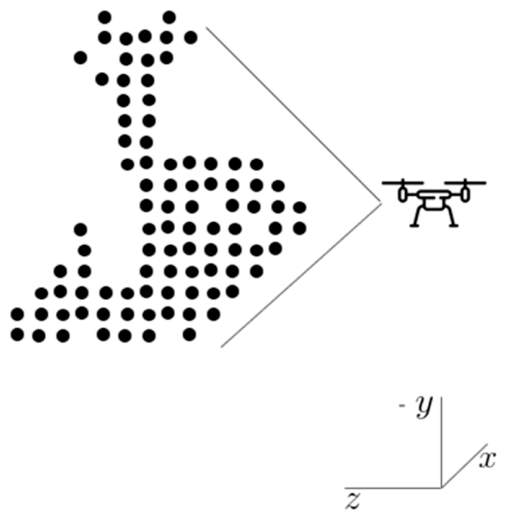
High-resolution imagery is captured in correspondence with the LiDAR observations. The images are preprocessed using standard radiometric and geometric corrections, noise reduction, normalization, and feature enhancement steps that support segmentation. Figure 1 illustrates the image-acquisition and preprocessing stage. Filtering, histogram equalization, and sharpening can be used when needed to improve the visibility of stem boundaries [3].

3.2.3. Alignment Methods Between LiDAR and Image Data

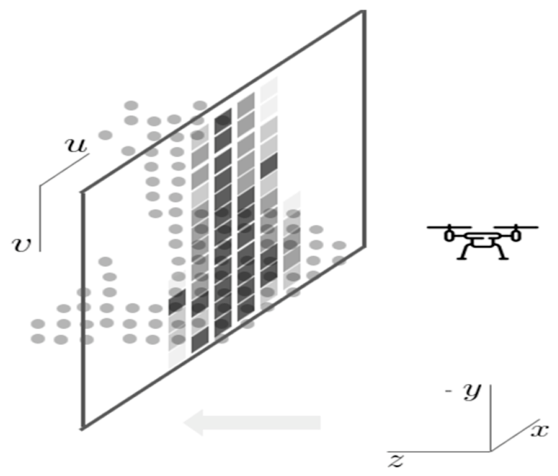
The alignment stage integrates LiDAR and image data by projecting the three-dimensional LiDAR point cloud onto the two-dimensional image plane. This establishes correspondence between spatial points and image pixels. Figure 2 illustrates the projection concept. Intrinsic and extrinsic calibration parameters are used to transform LiDAR points into the camera frame, while depth information and calibration matrices support consistent projection and reprojection within the modular workflow [4].

3.3. Object Detection and Segmentation

3.3.1. Detailed Description of Object Segmentation Algorithm

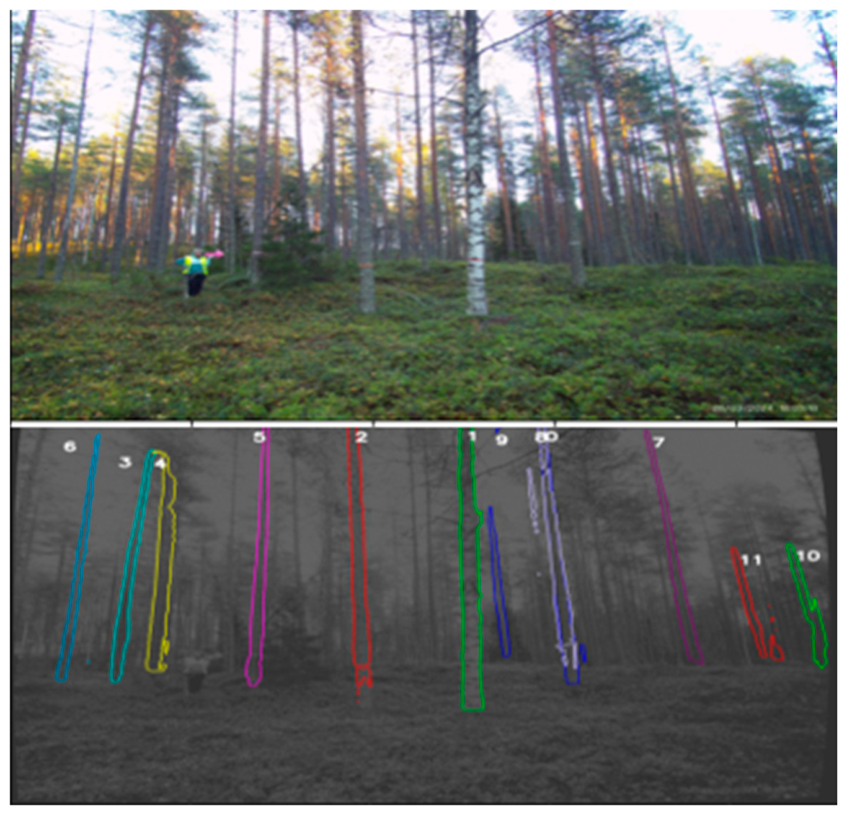
Object segmentation (Figure 3) is performed using Mask R-CNN as the segmentation component of the modular pipeline. The model produces binary masks of tree-stem regions in the image plane, and these masks are used to select corresponding LiDAR points after LiDAR-image projection. In this proof-of-concept setting, segmentation supports object-level point filtering and uncertainty propagation rather than serving as a stand-alone segmentation benchmark.

3.3.2. Mask Extraction and Object-of-Interest Definition

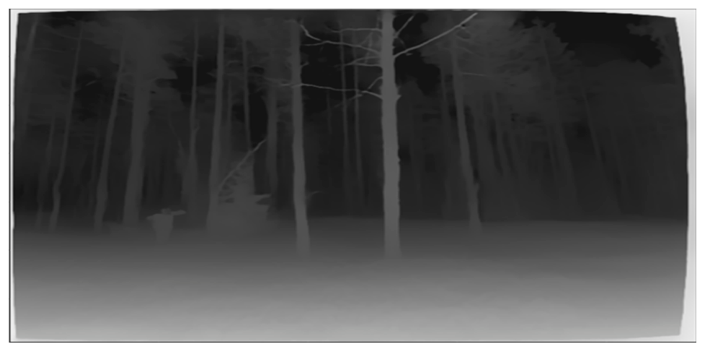
Extracted segmentation masks represent binary images that highlight pixels belonging to the object of interest. These masks are applied to the LiDAR point cloud after image-plane alignment, allowing the workflow to filter points corresponding to a target stem. Mask (Figure 4) quality is evaluated using segmentation-quality indicators such as Intersection over Union where annotation permits. Boundary uncertainty and possible pixel misclassification are treated as uncertainty sources that can affect point selection and DBH estimation.

3.4. Uncertainty Sources and Quantification

3.4.1. Identification of Uncertainty Sources

The pipeline treats uncertainty as a combination of several sources that appear at different stages of the LiDAR-image localization workflow. The main sources considered in this study are listed below.
  • LiDAR measurement uncertainty: errors related to sensor precision, range, reflectance, scanning angle, and environmental conditions.
  • Projection and reprojection uncertainty: errors introduced during coordinate transformation, camera-LiDAR calibration, and alignment between image pixels and LiDAR points.
  • Segmentation uncertainty: errors caused by imperfect mask boundaries, pixel misclassification, partial occlusion, and ambiguity in defining the object of interest.
  • Localization uncertainty: errors related to GNSS/IMU positioning and orientation of the sensing platform during acquisition [25].

3.4.2. Mathematical Formulations Used to Quantify Each Uncertainty Source

LiDAR measurement uncertainty is typically modeled as Gaussian noise:
p o b s = p t r u e   +   ε ,   ε ~ N ( 0 ,   σ L i D A R 2 )
Projection and reprojection errors use error propagation techniques:
( u ,   v )   =   f ( x ,   y ,   z )   +   δ ,   δ ~ N ( 0 ,   Σ p r o j )  
Intersection over Union (IoU) is used to represent segmentation quality and boundary uncertainty in the Mask R-CNN output. Segmentation uncertainty is then propagated to the subsequent point-selection and object-parameter estimation stages.
U s e g   =   1     I o U
Localization errors are quantified using GNSS/IMU sensor accuracy:
( l a t l o n ) o b s =   ( l a t l o n ) t r u e +   η , η ~ N ( 0 , Σ G N S S )  
The Global Navigation Satellite System (GNSS) and inertial measurement unit (IMU) provide platform position, orientation, acceleration, and rotation information. GNSS supports absolute positioning, while the IMU improves motion and orientation tracking. Their combined uncertainty is included as a localization component in the final uncertainty budget.

3.5. Estimation and Reconciliation Procedure

3.5.1. Description of Methods Used to Estimate Object Parameters

Object parameters are estimated from the filtered LiDAR points using geometric and statistical procedures, including circle fitting and extreme-point calculations. The estimated parameters include centroid location, geometric orientation, and DBH-level diameter. Each candidate estimate is associated with an uncertainty term so that alternative estimates can be compared and reconciled.

3.5.2. Procedure for Selecting and Reconciling Estimations Using Uncertainty Metrics

The pipeline may produce multiple candidate estimates for the same object. The reconciliation procedure selects or merges estimates according to their uncertainty. If two estimates are spatially closer than the combined uncertainty interval, they are merged into a single estimate using uncertainty-aware weighting:
i f   | e s t i e s t j | < σ i + σ j   ,   t h e n
e s t m e r g e d = ( σ j 2 e s t i + σ i 2 e s t j σ i 2 + σ j 2 )
σ m e r g e d 2 = σ i 2 σ j 2 σ i 2 + σ j 2

3.5.3. Algorithmic and Statistical Considerations

To reconcile estimates in a modular way, the process uses uncertainty-aware weighted averaging and a merging criterion based on the overlap of uncertainty intervals. The reconciliation step is intended to improve consistency between candidate estimates, not to replace full probabilistic fusion frameworks. More advanced Bayesian, evidential, or learned reconciliation strategies remain relevant directions for future work.

3.6. Implementation Considerations and Computational Scope

  • The current implementation was evaluated offline as a notebook-based prototype. It is therefore a methodological prototype and not a real-time robotic deployment or a fully optimized production system.
  • The prototype consists of image segmentation, LiDAR-image projection, point filtering, geometric estimation, uncertainty propagation, and uncertainty-aware reconciliation.
  • Deployment on autonomous sensing platforms would require additional runtime profiling, onboard implementation, robust sensor synchronization, and optimization of memory use and inference speed.
Compared with fully probabilistic pipelines, the proposed prototype is designed as a lightweight uncertainty layer that can be attached to existing workflows. Real-time performance is not claimed in this study; computational overhead is treated as an implementation limitation and as a target for future optimization.

4. Experimental Results

4.1. Experimental Setup

The experimental validation used a pilot dataset collected for this proof-of-concept study. Synchronized LiDAR observations and high-resolution RGB images were acquired in a managed forestry context. The analysis focused on DBH-level stem localization and diameter estimation, not on crown delineation or stand-level inventory estimation.
The experimental dataset (Table 1) consisted of 12 individual trees, LiDAR observations acquired from multiple scanning viewpoints, and 18 high-resolution photographs. The 12 trees constitute the number of independent analyzed objects. The photographs, scans, and dense point-cloud measurements represent acquisition observations and geometric measurements per object; they are not treated as additional independent biological samples. The limited sample size means that the study supports feasibility and internal consistency of the workflow, but does not provide statistically generalizable validation across forest types, tree species, stand densities, seasons, lighting conditions, or occlusion patterns.
Segmentation quality, localization error, DBH estimation precision, and propagated uncertainty were used as the main evaluation indicators. The values are interpreted as pilot metrics for the analyzed dataset. Probabilistic fusion methods are discussed as methodological context, while deterministic variants evaluated on the same dataset are used to isolate the effect of uncertainty propagation and reconciliation.
The prototype was evaluated offline. The computational assessment covered segmentation, LiDAR-image projection, point filtering, uncertainty propagation, and reconciliation. The reported values describe the prototype implementation and should not be interpreted as evidence of real-time deployment readiness.

4.2. Results and Analysis

4.2.1. Presentation of Key Experimental Findings

The results from the small pilot dataset indicate that the pipeline can be used to explicitly represent and reduce uncertainty in DBH-level tree localization under the tested acquisition conditions. The findings should be interpreted as proof-of-concept evidence rather than as a claim of robustness across all forest environments. The main advantage of the workflow is that it attaches uncertainty terms to individual processing stages and uses them in the final reconciliation of object estimates.
A representative example is the analyzed tree identified by scan ID 1699600633624847473. Two diameter estimates were obtained: 30.25 ± 0.58 cm from circle fitting and 55.85 ± 0.41 cm from extreme-point estimation. The reconciliation procedure used the associated uncertainty values to resolve competing estimates and obtain a more consistent object-level result. This example illustrates how uncertainty information can support decision making within the pipeline.
DetectableTree (
       id = ‘013’,
       scan_id = ‘1699600633624847473’,
       latitude = 64.270000 +/− 0.000009 [°],
       longitude = 19.270000 +/− 0.000021 [°],
       view_direction = 0.00 +/− 1.00 [°],
       #estimations = 2
)
TreeEstimationAtDBH (
       longitude = 19.270027 +/− 0.000021 [°],
       latitude = 64.270027 +/− 0.000009 [°],
       diameter = 30.25 +/− 0.58 [cm],
       distance = 3.30 +/− 0.00 [m],
       number_of_points = 991,
       based_on = ‘circle’
)
TreeEstimationAtDBH (
       longitude = 19.270028 +/− 0.000021 [°],
       latitude = 64.270030 +/− 0.000009 [°],
       diameter = 55.85 +/− 0.41 [cm],
       distance = 3.55 +/− 0.00 [m],
       number_of_points = 991,
       based_on = ‘extreme_points’
)
For the analyzed pilot dataset, the spatial uncertainty after the reconciliation step was reduced to approximately 2.5 ± 0.4 cm. This value describes the tested acquisition and processing conditions only. It is not presented as a general performance guarantee for other forest types, tree species, acquisition seasons, stand densities, lighting conditions, or occlusion patterns.

4.2.2. Detailed Uncertainty Analysis and Interpretation of the Results

The uncertainty analysis revealed trends related to the main sources of error. LiDAR measurement uncertainty, projection and reprojection uncertainty, segmentation boundary uncertainty, and localization uncertainty were treated as separate contributors to the uncertainty budget. The values reported in this section are used to understand how uncertainty propagates through the pipeline rather than to claim broad statistical robustness.
Segmentation uncertainty had a strong influence on object-parameter estimation because mask-boundary errors and pixel misclassification affect which LiDAR points are selected for the target stem. Localization-related uncertainty was not the dominant component of the uncertainty budget because high-precision GNSS/IMU positioning limited its magnitude under the tested conditions. Nevertheless, this component was retained in the final uncertainty budget because it can become more important under different acquisition geometries or weaker positioning conditions.

4.2.3. Comparison with Relevant Approaches from Literature

The comparison with relevant approaches is framed conservatively. The proposed workflow is compared primarily against deterministic variants evaluated on the same pilot dataset, while probabilistic fusion methods are discussed as methodological context. Literature-reported Bayesian or evidential results are not treated as strict empirical benchmarks because those methods were not re-implemented on the same raw data, ground truth, and evaluation protocol.

4.3. Ablation Studies

4.3.1. Quantitative Evaluation

The ablation analysis focuses on the contribution of the uncertainty-aware components within the limits of the pilot dataset. The evaluated variants isolate the effect of uncertainty propagation and uncertainty-aware reconciliation, rather than providing a large-scale forest-inventory benchmark.
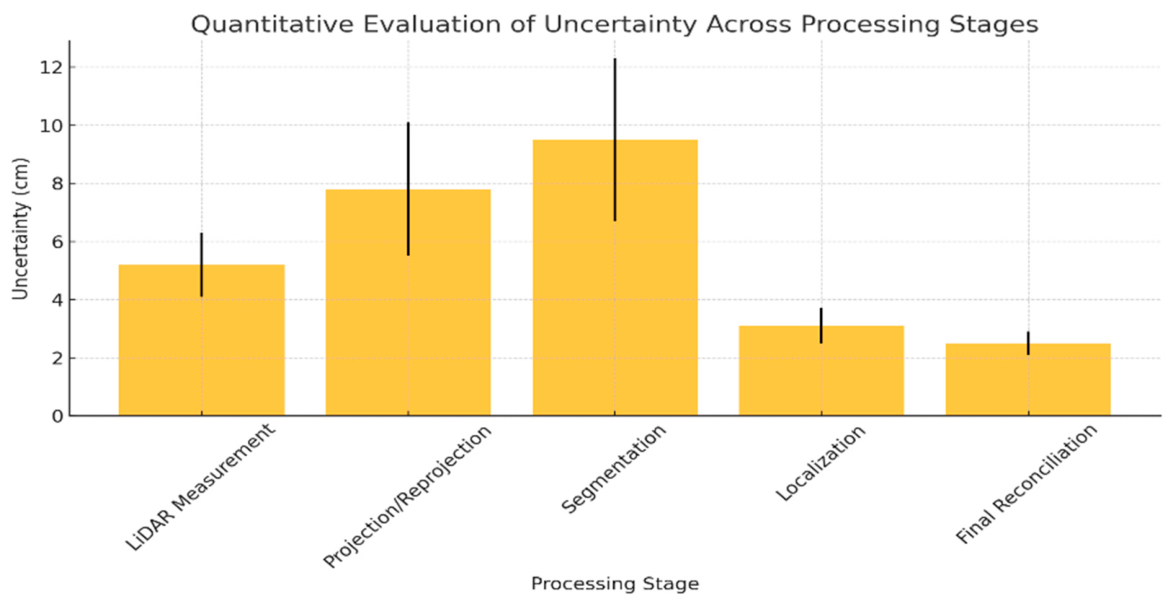
The numerical values underlying Figure 5 are reported explicitly. LiDAR measurement uncertainty introduced an average uncertainty of 5.2 ± 1.1 cm. Projection and reprojection increased the estimated uncertainty to 7.8 ± 2.3 cm. Segmentation contributed the highest mean uncertainty of 9.5 ± 2.8 cm. Localization-related uncertainty remained lower at 3.1 ± 0.6 cm. After uncertainty-aware reconciliation, the final estimated uncertainty for the representative pilot evaluation was approximately 2.5 ± 0.4 cm.
Figure 5. Quantitative evaluation of uncertainty across processing stages. The numerical values underlying this figure are reported in Table 2.
Electronics 15 02374 g005
Table 2. Pilot ablation and uncertainty values used to support Figure 5.
Variant or Processing StageUncertainty HandlingPilot Metric
LiDAR measurement contributionMeasurement uncertainty only5.2 ± 1.1 cm
Projection/reprojection contributionGeometric projection uncertainty7.8 ± 2.3 cm
Segmentation contributionMask-boundary and pixel-classification uncertainty9.5 ± 2.8 cm
Localization contributionGNSS/IMU-related uncertainty component3.1 ± 0.6 cm
Full proposed pipelineStage-wise propagation plus uncertainty-aware reconciliation2.5 ± 0.4 cm
Future strict benchmarkICP, Bayesian/evidential fusion, and compatible public-dataset evaluationFuture work

4.3.2. Qualitative Analysis

Qualitative interpretations aligned with the quantitative pilot results. Visual analysis of the small dataset indicated improved consistency after uncertainty-aware reconciliation. However, these observations are interpreted as internal consistency evidence for the analyzed trees, not as proof of general robustness across all forestry environments.
A representative example involved a single tree for which the initial candidate diameter estimates differed considerably: 30.25 ± 0.58 cm from circle fitting and 55.85 ± 0.41 cm from extreme-point estimation. The uncertainty-aware merging procedure reconciled these alternatives into a more consistent estimate and improved the interpretability of the result. Visual plots and reconstructions from the offline experiments showed that the reconciled points aligned closely with the available real-world coordinates and geometric measurements.

4.3.3. Comparative Analysis with Existing Approaches

Comparative analysis uses concrete deterministic variants rather than unspecified traditional methods. The variants include LiDAR-only geometric estimation, Mask R-CNN with deterministic nearest-neighbor LiDAR projection, and deterministic fusion without uncertainty propagation or uncertainty-aware reconciliation. These variants clarify the role of the uncertainty module within the same pilot setting.
Probabilistic fusion, Bayesian object detection, and evidential learning methods are relevant methodological alternatives. Because these approaches were not re-implemented on the same dataset, literature-reported uncertainty ranges are used only as contextual background. A rigorous benchmark would require applying competing algorithms to the same raw data, ground truth, and evaluation protocol. Such benchmarking, including ICP-based registration and public-dataset evaluation where compatible data are available, remains future work.
The pilot quantitative evaluation, qualitative inspection, and same-dataset deterministic variants provide initial evidence that uncertainty-aware reconciliation improves interpretability and consistency in the analyzed dataset. The results should be interpreted as proof-of-concept evidence, not as comprehensive validation across forest environments.

5. Discussion

5.1. Interpretation of Results

The objective of this research is to improve the interpretability and reliability of object detection and geo-localization by explicitly addressing uncertainties intrinsic to LiDAR and image-based measurements. The findings are acquired through a small dataset of real forest trees and should be interpreted as a proof-of-concept, not as comprehensive validation of an operational forestry system. The results show that a modular uncertainty-aware workflow can be applied to real data and can reduce the estimated uncertainty after reconciliation under the tested conditions.
One of the core findings is that uncertainty-aware reconciliation can reduce inconsistency between candidate estimates. In the pilot dataset, this reduced the final estimated spatial uncertainty to approximately 2.5 ± 0.4 cm. This result is valuable as an internal feasibility indicator, but it should not be extrapolated to more complex forests without additional data.
The findings contribute to the broader field of uncertainty-aware geospatial processing by showing how uncertainty terms can be made explicit in a LiDAR-image workflow. The contribution is deliberately framed as modular system integration and uncertainty-aware reconciliation rather than as a new deep-learning or probabilistic inference algorithm.

5.2. Implications and Potential Applications

The proposed pipeline may support future applications that require interpretable object localization and explicit uncertainty estimates. In forestry, potential use cases include DBH-level stem localization, growth monitoring, and inventory-support workflows. However, the present study does not validate broad operational deployment. Larger and more diverse datasets are required before the method can be recommended for general forestry management decisions.
The precise quantification of tree parameters such as diameter and position is important for forestry management, carbon estimation, growth monitoring, and inventory planning. The present proof-of-concept shows that uncertainty-aware processing can improve transparency in such measurements, but it does not replace larger stand-level validation studies.
The workflow may also be relevant to infrastructure monitoring, robotics, and other high-precision geospatial domains. These applications are now presented only as long-term directions. They would require independent datasets, domain-specific baselines, runtime optimization, and deployment-oriented validation.
Practical integration would require additional engineering, including robust sensor synchronization, onboard or distributed processing, real-time profiling, and validation under field conditions. A decentralized or multi-agent architecture is a promising future direction, where individual sensing units could estimate local uncertainty, exchange compact uncertainty summaries, and reconcile object estimates collaboratively.

5.3. Limitations and Future Work

While the presented pipeline advances the explicit treatment of uncertainty in a LiDAR-image localization workflow, several limitations warrant acknowledgment. First, the pipeline assumes sufficiently accurate calibration and alignment between LiDAR and imaging sensors. Environmental variation, mechanical vibration, or subtle misalignment during prolonged operation can introduce additional uncertainty that is not fully captured in the current model.
One of the most important limitations is the small dataset. The experiment used 12 manually examined trees and 18 high-resolution photographs, which cannot support statistical generalization across tree species, stand densities, illumination conditions, seasons, occlusion levels, or forest contexts. Dense LiDAR point clouds support object-level geometry estimation, but they do not increase the number of independent tree-level samples. Future work should include larger multi-site datasets and public-dataset benchmarking when synchronized LiDAR-image data, calibration information, DBH-level annotations, and ground truth are available.
The segmentation component is another limitation. Because the current workflow relies on supervised instance segmentation, performance may vary with training data, sensor geometry, lighting, season, species composition, occlusion, and understory structure. Fully supervised segmentation is not label-efficient and requires annotated masks that may be expensive to obtain for each new acquisition domain. Future work should investigate semi-supervised learning, weak supervision, and domain adaptation to reduce annotation burden and improve transferability.
Domain adaptation is particularly relevant because it can reduce the cost of transferring visual models between acquisition domains. Recent studies on domain-adaptive Faster R-CNN for non-PPE identification [17] and transformer-based domain adaptation for exterior cladding material detection [18] show that domain-shift handling can improve generalization in visually complex field imagery. Similar ideas should be evaluated for forestry LiDAR-image segmentation and localization.
The current method primarily employs linear uncertainty propagation models. These approximations are practical for a prototype, but they may be limited when handling complex non-linear interactions between segmentation boundaries, projection geometry, and LiDAR sampling. Monte Carlo simulation, Bayesian modeling, or evidential learning may further refine uncertainty estimates in future work.
The reconciliation strategy also depends on heuristic criteria, including the uncertainty-based merging threshold. More advanced probabilistic fusion frameworks, Bayesian models, evidential learning, or machine-learning-driven reconciliation algorithms should be explored to improve decision-making and to provide stronger theoretical guarantees.
Future research should also address deployment. The current implementation was evaluated offline and should not be interpreted as a real-time robotic system. Scaling the method to autonomous sensing platforms would require runtime optimization, onboard processing, communication-aware uncertainty exchange, and possibly decentralized or multi-agent architectures. Computational cost, memory usage, and inference speed should be benchmarked systematically in future implementations.
Therefore, the methodology should be interpreted as an initial proof-of-concept for uncertainty-aware object characterization and geo-localization. It improves interpretability within the tested pilot setting, while broader generalization requires larger datasets, stronger baselines, and deployment-oriented validation.

6. Conclusions

This research presents a proof-of-concept method prototype for mitigating and quantifying uncertainty in object characterization and geo-localization by integrating high-resolution imagery and LiDAR data in a small forestry dataset. The pipeline addresses uncertainty from segmentation, projection/reprojection, LiDAR measurement, localization, and reconciliation of alternative object estimates.
The small-scale experiments indicate that uncertainty-aware reconciliation can reduce the estimated spatial uncertainty in the analyzed dataset, reaching approximately 2.5 ± 0.4 cm under the tested conditions. This result should be understood as pilot evidence only and does not establish general superiority over traditional or probabilistic methods without broader same-dataset benchmarking.
The method remains at a prototype stage. Its current value is in making the uncertainty budget explicit and in demonstrating a modular reconciliation workflow for DBH-level localization. Additional work is required to evaluate computational cost, segmentation generalization, sensor-specific robustness, and applicability across larger and more diverse forestry datasets.
Potential applications beyond the tested forestry case, including robotics, infrastructure inspection, autonomous systems, insurance, or disaster management, are treated as long-term research directions rather than validated outcomes. Each of these domains would require independent validation, domain-specific baselines, and deployment-oriented experiments.
Overall, the proposed pipeline provides an initial and transparent step toward uncertainty-aware geospatial analytics. Future work should extend the evaluation to larger datasets, diverse forest environments, public benchmarks where compatible data exist, and optimized implementations suitable for real-time or distributed processing.

Author Contributions

Conceptualization, O.Ż.; methodology, O.Ż.; validation, M.S.T.; formal analysis, M.S.T.; investigation, K.W. and M.S.T.; resources, K.W. and M.S.T.; data curation, K.W. and M.S.T.; writing—original draft preparation, K.W. and J.N.; writing—review and editing, K.W. and J.N.; visualization, K.W. and O.Ż.; supervision, O.Ż. All authors have read and agreed to the published version of the manuscript.

Funding

This research was developed as part of the Agrarsense Project under Grant Agreement No. 101095835. The project is supported by the Chips Joint Undertaking and its members, including top-up funding from Sweden, Czechia, Finland, Ireland, Italy, Latvia, the Netherlands, Norway, Poland, and Spain, including the National Centre for Research and Development of Poland.

Data Availability Statement

The data used in this study are available through the public hosting resources of the Agrarsense project at the links cited in this article.

Conflicts of Interest

Authors Krzysztof Wołk and Marek S. Tatara were employed by the company DAC.next Sp. z o.o. Authors Oleg Żero and Jacek Niklewski were employed by DAC.digital S. A. All authors declare that the research was conducted in the absence of any commercial or financial relationships that could be construed as a potential conflict of interest. The funders had no role in the design of the study; in the collection, analyses, or interpretation of data; in the writing of the manuscript; or in the decision to publish the results.

References

  1. Berrio, J.S.; Shan, M.; Worrall, S.; Nebot, E. Camera-LIDAR integration: Probabilistic sensor fusion for semantic mapping. IEEE Trans. Intell. Transp. Syst. 2021, 23, 7637–7652. [Google Scholar] [CrossRef]
  2. Durasov, N.; Mahmood, R.; Choi, J.; Law, M.T.; Lucas, J.; Fua, P.; Alvarez, J.M. Uncertainty estimation for 3d object detection via evidential learning. arXiv 2024, arXiv:2410.23910. [Google Scholar] [CrossRef]
  3. Pitropov, M.; Huang, C.; Abdelzad, V.; Czarnecki, K.; Waslander, S. LiDAR-MIMO: Efficient uncertainty estimation for LiDAR-based 3D object detection. In Proceedings of the 2022 IEEE Intelligent Vehicles Symposium (IV), Aachen, Germany, 4–9 June 2022; pp. 813–820. [Google Scholar] [CrossRef]
  4. Wang, Z.; Feng, D.; Zhou, Y.; Rosenbaum, L.; Timm, F.; Dietmayer, K.; Tomizuka, M.; Zhan, W. Inferring spatial uncertainty in object detection. In 2020 IEEE/RSJ International Conference on Intelligent Robots and Systems (IROS); IEEE: Piscataway, NJ, USA, 2020; pp. 5792–5799. [Google Scholar] [CrossRef]
  5. Hyyppa, J.; Kelle, O.; Lehikoinen, M.; Inkinen, M. A segmentation-based method to retrieve stem volume estimates from 3-D tree height models produced by laser scanners. IEEE Trans. Geosci. Remote Sens. 2001, 39, 969–975. [Google Scholar] [CrossRef]
  6. Liang, X.; Litkey, P.; Hyyppa, J.; Kaartinen, H.; Vastaranta, M.; Holopainen, M. Automatic stem mapping using single-scan terrestrial laser scanning. IEEE Trans. Geosci. Remote Sens. 2012, 50, 661–670. [Google Scholar] [CrossRef]
  7. Wallace, L.; Lucieer, A.; Watson, C.; Turner, D. Development of a UAV-LiDAR system with application to forest inventory. Remote Sens. 2012, 4, 1519–1543. [Google Scholar] [CrossRef]
  8. Wu, G.; Cao, T.; Liu, B.; Chen, X.; Ren, Y. Towards universal LiDAR-based 3D object detection by multi-domain knowledge transfer. In Proceedings of the IEEE/CVF International Conference on Computer Vision, Paris, France, 2–6 October 2023; pp. 8669–8678. [Google Scholar] [CrossRef]
  9. Fassnacht, F.E.; Latifi, H.; Stereńczak, K.; Modzelewska, A.; Lefsky, M.; Waser, L.T.; Straub, C.; Ghosh, A. Review of studies on tree species classification from remotely sensed data. Remote Sens. Environ. 2016, 186, 64–87–87. [Google Scholar] [CrossRef]
  10. Durgam, A.; Paheding, S.; Dhiman, V.; Devabhaktuni, V. Cross-view geo-localization: A survey. IEEE Access 2024, 12, 192028–192050. [Google Scholar] [CrossRef]
  11. He, K.; Gkioxari, G.; Dollár, P.; Girshick, R. Mask r-cnn. In Proceedings of the IEEE International Conference on Computer Vision, Venice, Italy, 22–29 October 2017; pp. 2980–2988. [Google Scholar] [CrossRef]
  12. Li, F.; Zhang, H.; Xu, H.; Liu, S.; Zhang, L.; Ni, L.M.; Shum, H.Y. Mask dino: Towards a unified transformer-based framework for object detection and segmentation. In Proceedings of the IEEE/CVF Conference on Computer Vision and Pattern Recognition, Vancouver, BC, Canada, 17–24 June 2023; pp. 3041–3050. [Google Scholar] [CrossRef]
  13. Ayrey, E.; Hayes, D. The use of three-dimensional convolutional neural networks to interpret LiDAR for forest inventory. Remote Sens. 2018, 10, 649. [Google Scholar] [CrossRef]
  14. Blaschke, T. Object based image analysis for remote sensing. ISPRS J. Photogramm. Remote Sens. 2010, 65, 2–16. [Google Scholar] [CrossRef]
  15. Dalponte, M.; Coomes, D.A. Tree-centric mapping of forest carbon density from airborne laser scanning and hyperspectral data. Methods Ecol. Evol. 2016, 7, 1236–1245. [Google Scholar] [CrossRef] [PubMed]
  16. Hamraz, H.; Contreras, M.A.; Zhang, J. A robust approach for tree segmentation in deciduous forests using small-footprint airborne LiDAR data. Int. J. Appl. Earth Obs. Geoinf. 2016, 52, 532–541. [Google Scholar] [CrossRef]
  17. Wang, S. Domain-adaptive faster R-CNN for non-PPE identification on construction sites from body-worn and general images. Sci. Rep. 2026, 16, 4793. [Google Scholar] [CrossRef] [PubMed]
  18. Wang, S. Domain adaptation using transformer models for automated detection of exterior cladding materials in street view images. Sci. Rep. 2025, 16, 2696. [Google Scholar] [CrossRef] [PubMed]
  19. Atkinson, P.M.; Foody, G.M. Uncertainty in remote sensing and GIS: Fundamentals. In Uncertainty in Remote Sensing and GIS 2002; John Wiley & Sons, Ltd.: Hoboken, NJ, USA, 2002; pp. 1–18. [Google Scholar] [CrossRef]
  20. Zribi, M.; Baghdadi, N.; Holah, N.; Fafin, O. New methodology for soil surface moisture estimation and its application to ENVISAT-ASAR multi-incidence data inversion. Remote Sens. Environ. 2005, 96, 485–496. [Google Scholar] [CrossRef]
  21. Rodgers, C.D. Inverse Methods for Atmospheric Sounding: Theory and Practice; World Scientific Publishing: Singapore, 2000. [Google Scholar] [CrossRef]
  22. Saarela, S.; Holm, S.; Grafström, A.; Schnell, S.; Næsset, E.; Gregoire, T.G.; Tomppo, E. Hierarchical model-based inference for forest inventory utilizing three sources of information. Ann. For. Sci. 2016, 73, 895–910. [Google Scholar] [CrossRef]
  23. Zhang, J.; Zhang, J.; Yao, N. Uncertainty characterization in remotely sensed land cover information. Geo-Spat. Inf. Sci. 2009, 12, 165–171. [Google Scholar] [CrossRef]
  24. Rejou-Méchain, M.; Muller-Landau, H.C.; Detto, M.; Thomas, S.C.; Asner, G.P.; Volkmann, L.; Chave, J. Local spatial structure of forest biomass and its consequences for remote sensing of carbon stocks. Biogeosciences 2014, 11, 6827–6840. [Google Scholar] [CrossRef]
  25. Chen, Q.; Baldocchi, D.; Gong, P.; Kelly, M. Isolating individual trees in a savanna woodland using small footprint LiDAR data. Photogramm. Eng. Remote Sens. 2006, 72, 923–932. [Google Scholar] [CrossRef]
Figure 1. Conceptual illustration of LiDAR-supported image capture and preprocessing.
Electronics 15 02374 g001
Figure 2. Projection of LiDAR point cloud data onto the image plane for depth alignment.
Electronics 15 02374 g002
Figure 3. Image-based tree-stem segmentation and mask extraction.
Electronics 15 02374 g003
Figure 4. Estimation of object properties and location from LiDAR data and image-derived masks.
Electronics 15 02374 g004
Table 1. Dataset and acquisition metadata used to define the pilot experimental scope.
Dataset ItemDescription
Independent analyzed objects12 individual trees used as object-level pilot samples
LiDAR observationsDense point clouds acquired from multiple viewpoints and used for object-level geometric estimation
Image observations18 high-resolution RGB photographs acquired from corresponding viewpoints
Acquisition workflowSynchronized LiDAR-image acquisition supported by RGB imaging and GNSS/IMU-based positioning
Calibration and alignmentCamera-LiDAR calibration and GNSS/IMU localization used for projection, reprojection, and uncertainty estimation
Target measurementStem localization and DBH-level diameter estimation at breast height
Ground truthManual DBH field measurements at 1.3 m above ground used as reference measurements
Study contextManaged forestry stand with relatively regular stem structure; the experiment focuses on DBH-level stem observations rather than crown delineation
Validation scopePilot validation under the tested acquisition conditions; cross-site generalization is not claimed
Disclaimer/Publisher’s Note: The statements, opinions and data contained in all publications are solely those of the individual author(s) and contributor(s) and not of MDPI and/or the editor(s). MDPI and/or the editor(s) disclaim responsibility for any injury to people or property resulting from any ideas, methods, instructions or products referred to in the content.