Article

A Longitudinal Layer-Wise Strategy for Fabricating Tapered Micro-Cones by Ion-Beam Etching

1
Institute of Electrical Engineering, Chinese Academy of Sciences, Beijing 100190, China
2
University of Chinese Academy of Sciences, Beijing 100049, China
3
Beijing Academy of Quantum Information Sciences, Beijing 100193, China
*
Authors to whom correspondence should be addressed.
Electronics 2026, 15(10), 2193; https://doi.org/10.3390/electronics15102193
Submission received: 5 April 2026 / Revised: 27 April 2026 / Accepted: 30 April 2026 / Published: 19 May 2026

Abstract

The controllable fabrication of tapered three-dimensional (3D) microstructures by ion-beam processing remains challenging, especially when both profile fidelity and geometric controllability are required. Tapered conical microstructures are of interest because they are relevant to a variety of applications, including micro-optical elements, functional textured surfaces, biomimetic interfaces, and field-enhancing emitter-related structures, where taper angle, aspect ratio, and structural uniformity strongly influence the resulting performance. In this work, a longitudinal layer-wise strategy is proposed for tapered micro-cone fabrication by ion-beam etching. The core idea is to discretize a continuous cone profile along the vertical direction into a sequence of annular layers whose dimensions are determined by the local geometry of the target three-dimensional structure. After this geometric discretization step, each individual layer is executed using a conventional multi-pass strategy, thereby combining longitudinal profile construction with stabilized local material removal. A dedicated pattern-design software, EBWriter, was developed to automatically generate annular patterns and process files from user-defined geometric parameters. Experimental validation was carried out on single-crystal silicon substrates using a dual-beam microscope platform operated at 30 kV. The results show that increasing the longitudinal layer number effectively weakens the staircase effect and improves the continuity of the reconstructed cone profile. For positive micro-cones fabricated using annular patterns with a nominal outer processing diameter of 3 μm, the increasing-inner-radius strategy enables preservation of the cone apex and reconstruction of tapered morphologies with improved fidelity. Under the present processing conditions, an empirical correspondence between the target geometric ratio and the recommended layer number was further summarized: layer numbers of approximately 50, 100, and 300 support cone structures with base-diameter-to-height ratios close to 1:2, 1:3, and 1:4, respectively. In addition, a 3 × 3 positive micro-cone array was successfully fabricated, with a total processing time of about 80 s. The measured cone base diameter and height were 0.886 ± 0.005 μm and 2.354 ± 0.023 μm, respectively, with dimensional variations controlled within ±2%. These results demonstrate that the proposed method provides a feasible layer-wise ion-beam fabrication route for tapered microstructures and offers a useful process basis for future studies on micro-optical surfaces, functional textured interfaces, and emitter-related microstructures.

1. Introduction

Three-dimensional (3D) micro/nanostructures with continuously varying geometries have attracted considerable attention in fields such as micro-optics, microelectromechanical systems (MEMS), functional surfaces, and vacuum microelectronic devices, because structural parameters such as taper angle, surface smoothness, and geometric uniformity can directly influence optical response, interfacial behavior, and electron-emission characteristics. In particular, tapered conical microstructures are of interest because they can serve as basic structural units for microlens-like surfaces, wetting-control interfaces, biomimetic textures, and field-enhancing emitter-related architectures [1,2]. In these applications, the controllable fabrication of cone geometry, sidewall continuity, and structural consistency is often critical to the resulting functionality [3,4,5,6].
Various micro/nanofabrication routes have been explored for constructing tapered or continuously varying surface profiles, including electrochemical etching, plasma-based surface treatment, grayscale lithography, and ion-beam-based processing [7,8,9]. Among them, focused ion beam (FIB) milling and related ion-beam etching methods offer several distinctive advantages, such as maskless direct writing, localized processing capability, high spatial resolution, and compatibility with a broad range of substrate materials. Owing to these characteristics, ion-beam processing has been widely used for the fabrication of complex 3D nanostructures, local prototyping of functional devices, geometry-sensitive surface modification, and photonic micro/nanostructures [10,11,12,13,14,15].
Despite this flexibility, the direct fabrication of smooth and controllable 3D topographies by ion-beam processing remains challenging. Conventional ion-beam etching is more commonly optimized for two-dimensional (2D) patterns or constant-depth regions. When the target morphology evolves from a constant-depth feature to a continuously varying 3D profile, such as a tapered cone, previously reported approaches often rely on depth-controlled milling, grayscale-like dose assignment, grayscale lithography, or multi-step pattern superposition [16,17,18,19,20]. Although these strategies can reconstruct non-planar morphologies to some extent, they may still suffer from limited taper controllability, accumulated alignment errors, insufficient local flatness, or reduced processing efficiency, especially when profile continuity and geometric consistency are simultaneously required.
From a methodological perspective, the key difficulty is not merely to define a desired conical shape, but to establish a stable and hardware-executable shaping route that can convert continuous geometry into a sequence of controllable material-removal steps. This issue is particularly important for tapered cone structures, because their utility depends strongly on geometry-dependent features such as aspect ratio, apex preservation, and array-to-array consistency. Therefore, beyond demonstrating that a cone can be fabricated, it is necessary to clarify how the target cone profile should be discretized, how the corresponding annular pattern sequence should be generated, and how the required layer number should vary with the target geometric ratio.
To address these issues, this work proposes a longitudinal layer-wise strategy for fabricating tapered micro-cones by ion-beam etching, implemented through a self-developed software–pattern generator–equipment architecture. The core idea is not to simply repeat one identical planar pattern, but to first discretize the target three-dimensional cone along the longitudinal direction into multiple annular layers whose dimensions vary according to the local geometry of the desired profile. After this geometric discretization step, each individual layer is then executed using the conventional multi-pass strategy. Therefore, the novelty of the present work does not lie in repeated multi-pass scanning itself, but in introducing a longitudinal discretization step before layer-by-layer execution and in further summarizing an empirical correspondence between target cone geometry and the recommended layer number under the present processing conditions.
Based on experiments performed on silicon substrates, the proposed method demonstrates controllable fabrication of positive micro-cones and cone arrays with improved profile continuity. The results further show that the longitudinal layer number plays an important role in cone reconstruction fidelity, and that different base-diameter-to-height ratios require different discretization densities. The present work, therefore, provides a feasible process route for tapered micro-cone fabrication by ion-beam etching and offers a useful experimental basis for future studies on micro-optical surfaces, functional textured interfaces, and emitter-related microstructures [21].

2. Materials and Methods

2.1. Concept of the Longitudinal Layer-Wise Fabrication Strategy

The present work aims to establish a longitudinal layer-wise strategy for fabricating tapered micro-cones by ion-beam etching. This strategy differs from the conventional multi-pass processing approach, in which the same two-dimensional pattern is repeatedly scanned to improve local removal uniformity and bottom flatness. In the conventional case, the pattern boundary remains unchanged during repeated exposure, and the primary function of multi-pass scanning is to reduce stochastic fluctuation during material removal. In contrast, the method proposed in this study introduces an additional geometric discretization step before multi-pass execution. Specifically, the target three-dimensional cone is first divided along the longitudinal direction into a sequence of fabrication layers. The pattern size of each layer is not fixed, but is determined by the local cross-sectional geometry of the target cone. Each discretized layer is then processed using a conventional multi-pass strategy.
Accordingly, the main methodological contribution of this work does not lie in repeated multi-pass scanning itself, but in combining longitudinal geometric discretization with intra-layer repeated execution. This design allows a continuous tapered profile to be converted into a sequence of annular patterns with layer-dependent dimensions, thereby providing a practical route from target three-dimensional geometry to executable ion-beam fabrication.
To implement this strategy, a software–pattern generator–equipment architecture was used. The workflow consists of three major stages. First, the target cone geometry is parameterized and discretized in the self-developed design software. Second, the generated annular layer patterns and their execution sequence are transferred to the pattern generator for data parsing, pattern decomposition, and scan-path planning. Third, the pattern generator outputs beam-position and dose-related control instructions to the ion-beam system, enabling layer-by-layer material removal on the sample surface. Through this procedure, the final tapered morphology is reconstructed by cumulative annular removal rather than by a single exposure of one unchanged planar pattern.
Figure 1 illustrates the design concept of the proposed longitudinal layer-wise strategy. The target tapered profile is first discretized along the longitudinal direction, and each discretized layer is represented by an annular pattern. Unlike conventional multi-pass processing of one fixed planar pattern, the annular pattern dimensions vary from layer to layer according to the local geometry of the target cone. Each annular layer is then executed using intra-layer multi-pass scanning.

2.2. Physical Basis of Layer-Wise Dose Modulation

Ion-beam etching is a sputtering-driven material-removal process resulting from momentum transfer between incident ions and atoms near the target surface. Under stable processing conditions and within a limited removal-depth range, the local etched depth can be approximately related to the accumulated ion dose within a sputtering-driven material-removal framework. This relation can be expressed as
h = k Q
where h is the local removal depth, Q is the cumulative ion dose per unit area, and k is an effective dose-to-etching conversion coefficient. The value of k depends on factors such as ion species, acceleration voltage, incident angle, target material, and local sputtering conditions.
Based on this approximate dose-to-depth relationship, the fabrication of a continuous cone profile can be reformulated as a problem of spatial dose allocation. For a target cone, the continuous profile is discretized into N L annular layers along the height direction. Each layer corresponds to a shallow removal step with a nominal thickness of Δ h . The spatial superposition of these annular layers determines the local cumulative dose and, consequently, the final etched morphology. In this framework, the target tapered structure is reconstructed through controlled accumulation of annular material-removal steps.
It should be noted that the linear dose-to-depth relation is used here as an approximate process description for algorithm design. In practical ion-beam etching, deviations may occur owing to redeposition, beam broadening, local incidence-angle variation, and changes in sputtering yield during deep or high-aspect-ratio machining. Therefore, the model is used as a design basis rather than a complete physical description of all ion–solid interaction processes.

2.3. Statistical Interpretation of Intra-Layer Multi-Pass Execution

In the proposed strategy, repeated scanning within each layer is used as an auxiliary execution condition to stabilize local material removal. To provide a simplified statistical interpretation of this effect, consider one annular layer with a target removal depth of H L . If this layer is executed using N p repeated scans, the nominal removal depth per scan is
Δ h = H L N p
Let the random depth deviation introduced in the j -th scan be ε j , with
E ( ε j ) = 0 , V a r ( ε j ) = σ 0 2 Δ h 2
The actual removal depth of this layer can then be written as
H L a c t = j = 1 N p ( Δ h + ε j ) = H L + j = 1 N p ε j .
If the scan-to-scan fluctuations are approximately independent, the variance of the actual layer depth becomes
V a r ( H L a c t ) = j = 1 N p V a r ( ε j ) = N p σ 0 2 Δ h 2 = σ 0 2 H L 2 N p
Thus, the relative standard deviation is
V a r ( H L a c t ) H L = σ 0 N p
This simplified relation indicates that repeated shallow execution can statistically reduce local depth fluctuation as the number of scans increases. However, this analysis is introduced only to explain the stabilizing role of intra-layer multi-pass execution. The key feature of the present method remains the prior longitudinal discretization of the target three-dimensional profile into geometry-dependent annular layers.

2.4. Experimental Platform and Processing Conditions

The proposed longitudinal layer-wise fabrication strategy was experimentally validated using a dual-beam microscope platform developed by Shanghai Jingce Semiconductor. Single-crystal Si(100) substrates were used in the experiments. The objective was to evaluate the capability of the proposed method to reconstruct tapered three-dimensional morphologies and to maintain geometric consistency during array fabrication.
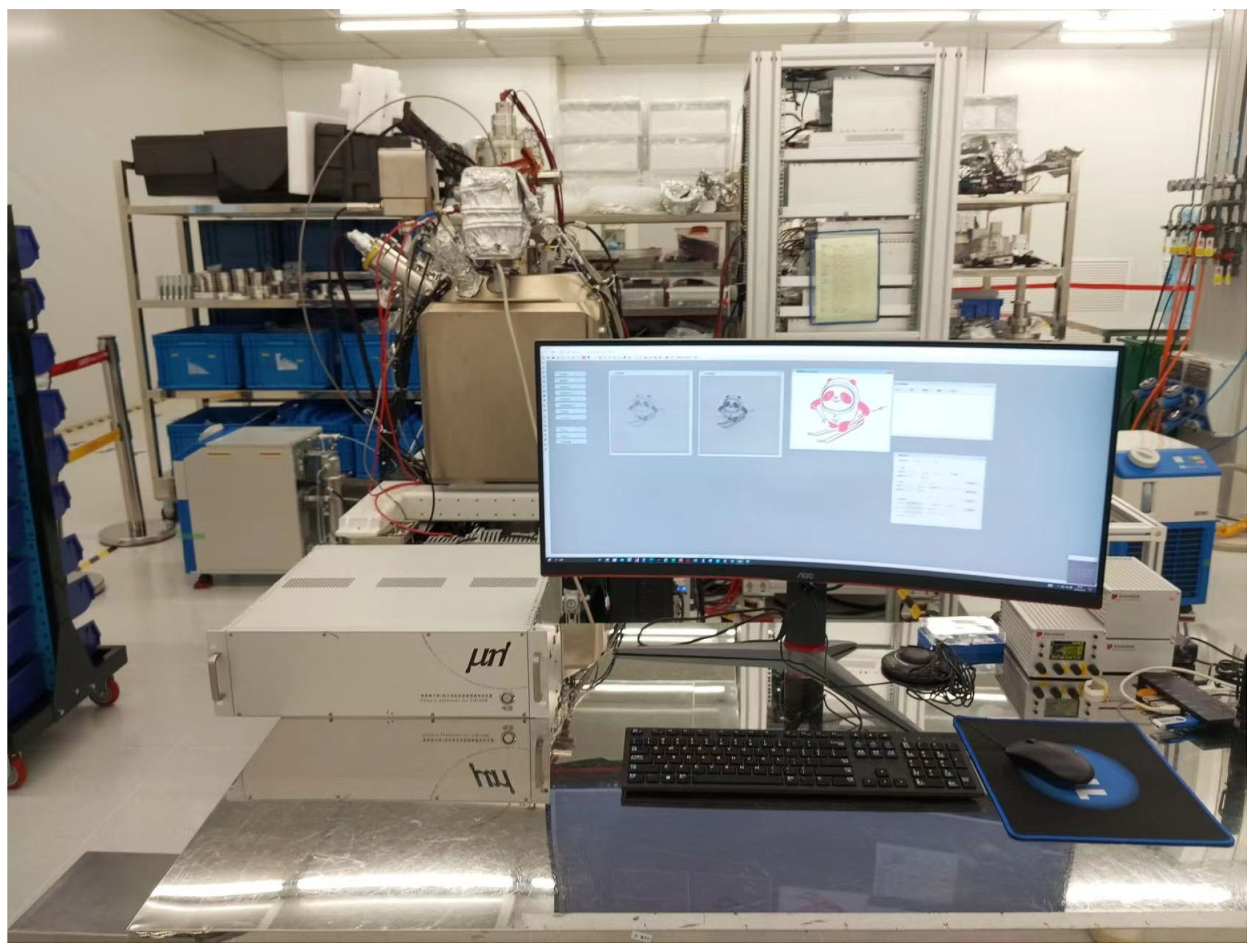
As shown in Figure 2, the experimental platform consisted of a dual-beam microscope, a self-developed pattern generator, and a control workstation for pattern preparation and task execution. During fabrication, the pattern data generated by the design software were transferred to the pattern generator, where they were parsed and converted into executable beam-control instructions. The resulting instructions were subsequently delivered to the beam-control unit of the ion-beam system to enable layer-wise processing of the sample.
Unless otherwise specified, the ion-beam experiments were carried out using Ga+ ions with an acceleration voltage of 30 kV and a beam current of 1 nA. The nominal outer processing diameter of the annular pattern was 3 μm. It should be distinguished from the measured base diameter of the fabricated positive cone, which was determined by the final reconstructed morphology after layer-wise ion-beam removal. For each annular layer, the repeated scanning number was set to 100. The dwell time was 1.5 μs, and the step size was 6 nm. The overlap parameter was set to 0.5. These parameters were used to define the layer-wise execution condition for the annular patterns generated by the proposed longitudinal discretization strategy.
The main processing parameters used in this study are summarized in Table 1.
The target cone geometry was discretized into annular layers according to the prescribed profile. For each layer, the annular pattern dimensions were determined by the local radius of the target cone at the corresponding longitudinal position. After the annular pattern sequence was generated, each layer was executed using intra-layer multi-pass scanning. This procedure enabled the continuous target cone to be approximated by a series of shallow and geometrically varying removal steps.

2.5. Layer-Wise Modeling of Positive and Negative Micro-Cones

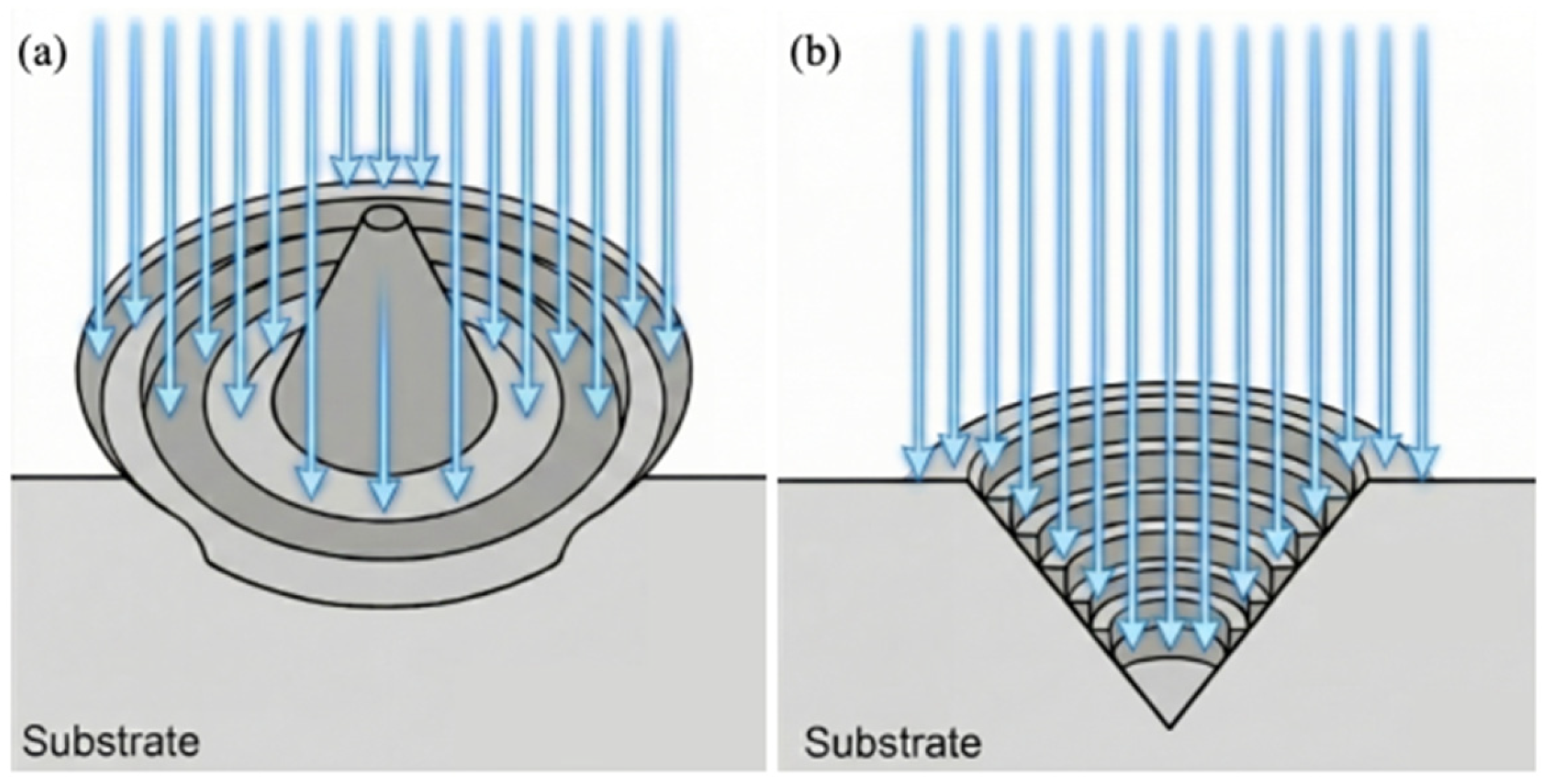
Depending on the target morphology, the proposed strategy can be applied to two basic types of tapered structures: negative cones and positive cones. A negative cone refers to a recessed conical micro-hole formed by material removal, whereas a positive cone refers to a protruding conical microstructure preserved after selective removal of the surrounding material. As shown in Figure 3, these two structures correspond to two opposite layer-superposition logics: for negative cones, the central region receives the highest cumulative dose; for positive cones, the central region is progressively protected while the peripheral region is removed.

2.5.1. Negative Micro-Cones

For a negative cone with maximum depth H and base radius R , the target depth profile is defined as
z n e g ( r ) = H 1 r R , 0 r R
where r is the radial distance from the cone center. This profile requires the maximum removal depth at the center and progressively smaller removal toward the periphery.
To approximate this profile by layer-wise fabrication, the outer radius of the annular pattern decreases with layer index. For the i -th layer, the outer radius is given by
r o u t ( i ) = R 1 i N L , i = 0,1 , , N L 1
where N L is the total number of longitudinal layers. Under this strategy, the central region is included in more layers and therefore receives a larger cumulative dose, while the peripheral region is covered by fewer layers. As a result, a recessed conical profile can be formed.

2.5.2. Positive Micro-Cones

For a positive cone with height H and base radius R , the target etching-depth distribution can be expressed as
z p o s ( r ) = H r R , 0 r R
In this case, the removal depth is minimal near the center and increases toward the periphery. To realize this profile, the inner radius of the annular pattern is progressively increased while the outer radius is kept constant. The inner radius of the i -th layer is defined as
r i n ( i ) = R i N L , i = 0,1 , , N L 1
and the outer radius remains
r o u t ( i ) = R
With this increasing-inner-radius strategy, the peripheral region is repeatedly exposed and undergoes greater material removal, whereas the central region is progressively shielded and retained as the cone apex. This mechanism provides the geometric basis for positive-cone reconstruction in the present work.

2.6. Mapping Between Cone Geometry and Cumulative Dose

The proposed method converts the target cone geometry into a spatially organized cumulative dose distribution. The local removal depth at radial position r can be approximated as
z ( r ) = k Q ( r ) = k I T ( r ) A
where z ( r ) is the local removal depth, Q ( r ) is the local cumulative dose, I is the beam current, T ( r ) is the effective dwell time, and A is the irradiated area associated with the local scan unit.
For the discretized cone model, the cumulative dose at radial position r is expressed as
Q t o t ( r ) = i = 1 N L q i χ i ( r )
where q i is the preset dose assigned to the i -th layer, and χ i ( r ) is an indicator function that equals 1 when position r is covered by the i -th layer and 0 otherwise.
If the same unit dose Δ q is assigned to each layer, Equation (13) can be simplified as
Q t o t ( r ) = n ( r ) Δ q
where n ( r ) is the number of effective layers covering position r . The final etched profile is then
z ( r ) = k n ( r ) Δ q
This formulation establishes a direct mapping between the target cone geometry and the layer-wise dose distribution. For positive cones, n ( r ) increases with radial distance, resulting in greater material removal at the periphery and preservation of the central apex. For negative cones, the opposite coverage logic is used so that the center receives the highest cumulative dose.

2.7. Software–Hardware Data Flow

A dedicated pattern-design software package, EBWriter, was developed for geometric parameter input, annular pattern generation, and process-file output. The software automatically generates the annular layer sequence according to the target cone height, base radius, and number of longitudinal layers. Each annular element is assigned a layer attribute and an execution order so that the intended dose-distribution logic can be encoded in the output file.
The generated pattern file is then transferred to the pattern generator. The pattern generator performs data parsing, pattern decomposition, coordinate transformation, and scan-path reconstruction. Since ion-beam etching is executed through pointwise or vector-based scanning, the annular geometries must be converted into discrete executable primitives. These primitives are further mapped into beam-deflection coordinates and timing instructions.
During execution, the pattern generator outputs synchronized position and dose-control instructions to the beam-deflection control unit of the ion-beam system. The delivered dose of each annular layer is controlled by the execution timing and scan strategy specified in the process file. Through this software–hardware data flow, the target tapered morphology is reconstructed by cumulative layer-wise material removal.

3. Results and Discussion

3.1. Feasibility Verification of Longitudinal Layer-Wise Profile Construction

To verify the feasibility of the proposed longitudinal layer-wise shaping strategy, comparative etching experiments were first conducted on single-crystal silicon substrates. In this study, repeated scanning within each individual layer was used as an auxiliary execution condition to stabilize local material removal, rather than as the main innovation. Therefore, the focus of this section is to evaluate whether longitudinal discretization of the target removal depth into multiple execution layers can improve morphological uniformity and provide a stable basis for subsequent three-dimensional profile construction.
When a relatively large material removal depth was assigned to a single execution step, pronounced trench-like bottom morphologies were observed. This phenomenon can be attributed to the combined effects of redeposition, insufficient averaging of local removal fluctuations, and scan-path-related non-uniformity during localized Ga+ ion-beam etching [22]. In contrast, when the target removal depth was divided into multiple shallow longitudinal layers, the bottom morphology became progressively more uniform, indicating that longitudinal layer-wise execution can improve the stability of local material removal.
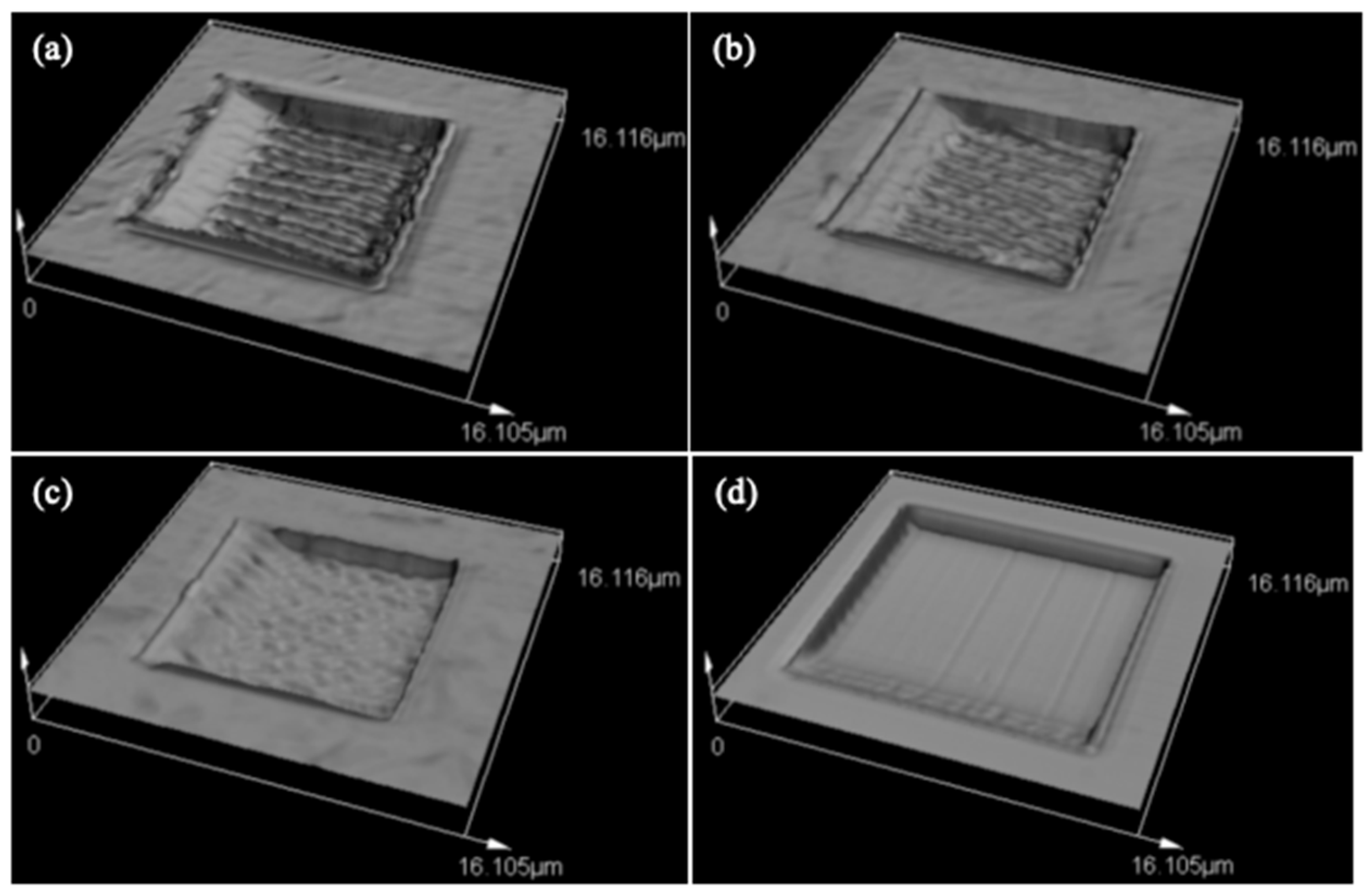
Under fixed processing conditions, including a Ga+ ion beam, an acceleration voltage of 30 kV, a beam current of 1 nA, a dwell time of 1.5 μs, a step size of 6 nm, an overlap parameter of 0.5, and 100 repeated scans per layer, four longitudinal layer numbers, N L = 10, 20, 50, and 100, were investigated. The resulting morphologies were characterized using an OLS5100 three-dimensional laser scanning microscope.
As shown in Figure 4a–d, the etched bottom morphology gradually improved with increasing longitudinal layer number. For the 10-layer and 20-layer cases, obvious trench-like features and local height fluctuations were observed at the bottom of the etched region. When the layer number increased to 50, the bottom fluctuation was reduced. In the 100-layer case, the etched bottom became visibly smoother and more continuous. This trend indicates that decomposing the target removal depth into a larger number of shallow longitudinal layers can reduce abrupt local removal fluctuations and improve the continuity of the etched region.
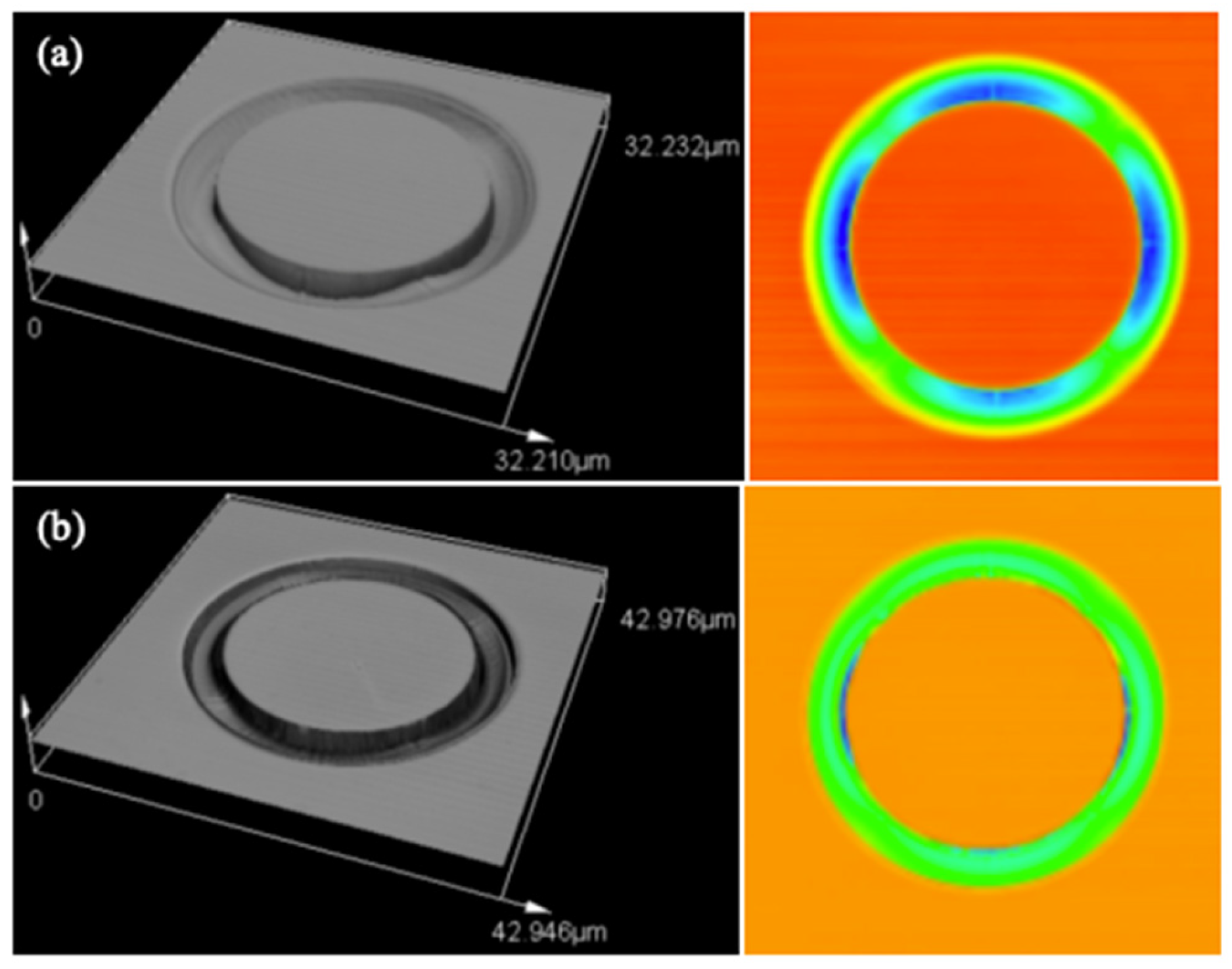
The same tendency was also observed in annular-pattern experiments, which are more directly related to cone fabrication. As shown in Figure 5a,b, the annular grooves fabricated using 50 and 100 longitudinal layers exhibited different levels of bottom flatness. Compared with the 50-layer result, the 100-layer annular structure showed a more uniform bottom morphology and a smoother transition along the annular region. Since annular patterns constitute the basic geometric units for constructing tapered micro-cones in the present method, these results further support the feasibility of longitudinally discretized annular patterns for three-dimensional cone-profile reconstruction.
Although the above results mainly reveal the morphological trend from three-dimensional surface characterization, they provide direct experimental evidence that increasing the number of longitudinal layers is beneficial for improving local removal uniformity. This result also provides the experimental basis for applying the same layer-wise strategy to tapered micro-cone reconstruction.

3.2. Effect of Longitudinal Layer Number on Positive Cone Profile Reconstruction

To further evaluate the capability of the proposed method in three-dimensional cone formation, positive micro-cone structures were fabricated using annular patterns with a nominal outer processing diameter of 3 μm. The measured base diameter of the final positive cone was extracted from the reconstructed morphology after ion-beam processing. Different longitudinal discretization strategies were compared to investigate the influence of layer number on cone-profile reconstruction. In this method, the target cone is first discretized into a finite number of annular layers along the height direction. The inner radius of the annular pattern gradually increases with the layer number, while the outer radius remains constant. Therefore, the final cone profile is mainly determined by whether the longitudinal discretization is sufficiently dense, rather than by repeated execution of a single unchanged planar pattern.
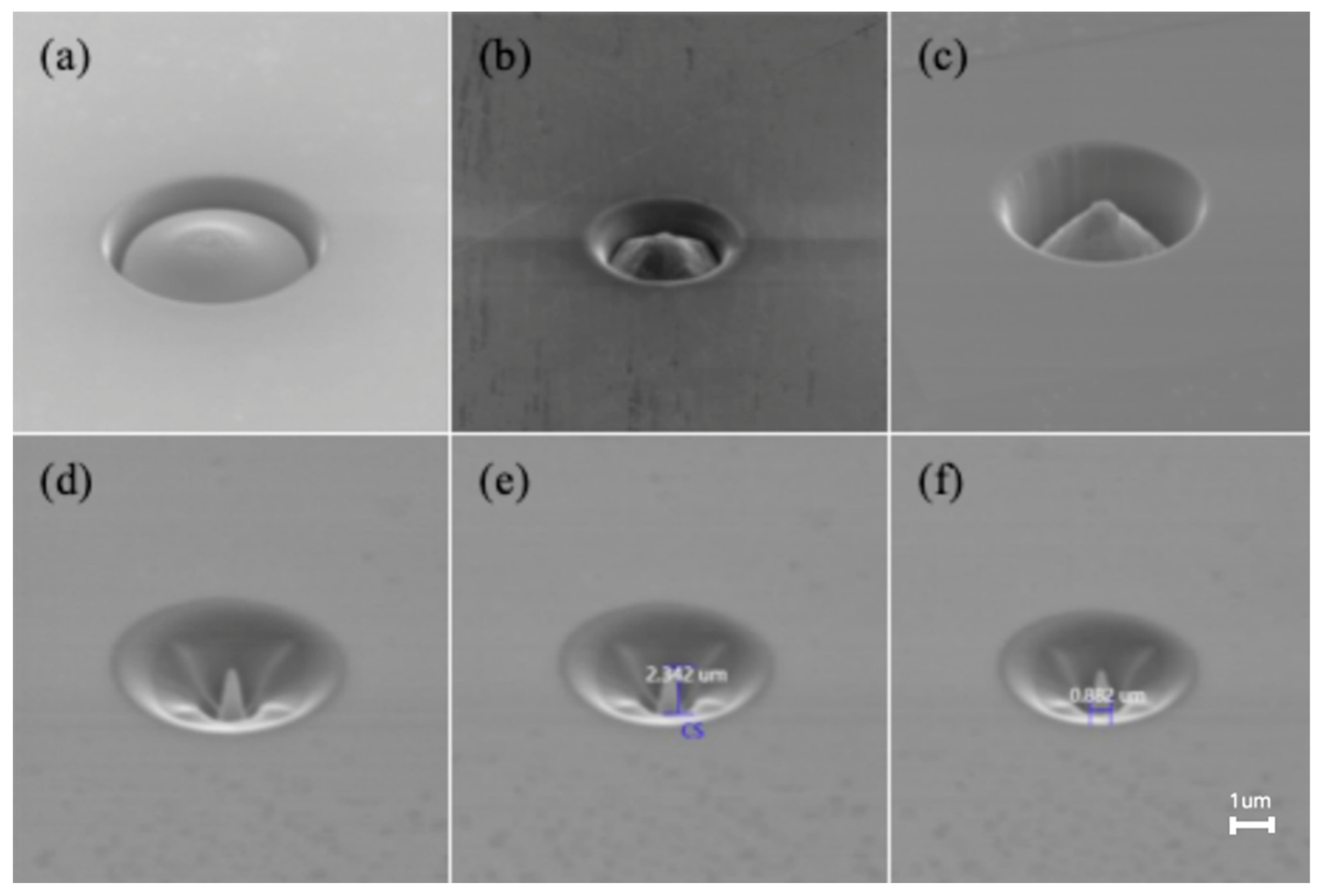
As shown in Figure 6a–d, four representative longitudinal layer numbers, namely 10, 20, 50, and 100, were compared. When the number of longitudinal layers was relatively small, the fabricated cone sidewall exhibited a more pronounced stepped morphology, indicating that the continuous target geometry was insufficiently approximated along the height direction. As the layer number increased, the staircase effect was gradually weakened, and the sidewall transition became smoother. In the 100-layer case, the overall morphology was closer to the intended tapered profile. These results demonstrate that the longitudinal layer number is an important design parameter affecting the profile fidelity of the fabricated positive micro-cone.
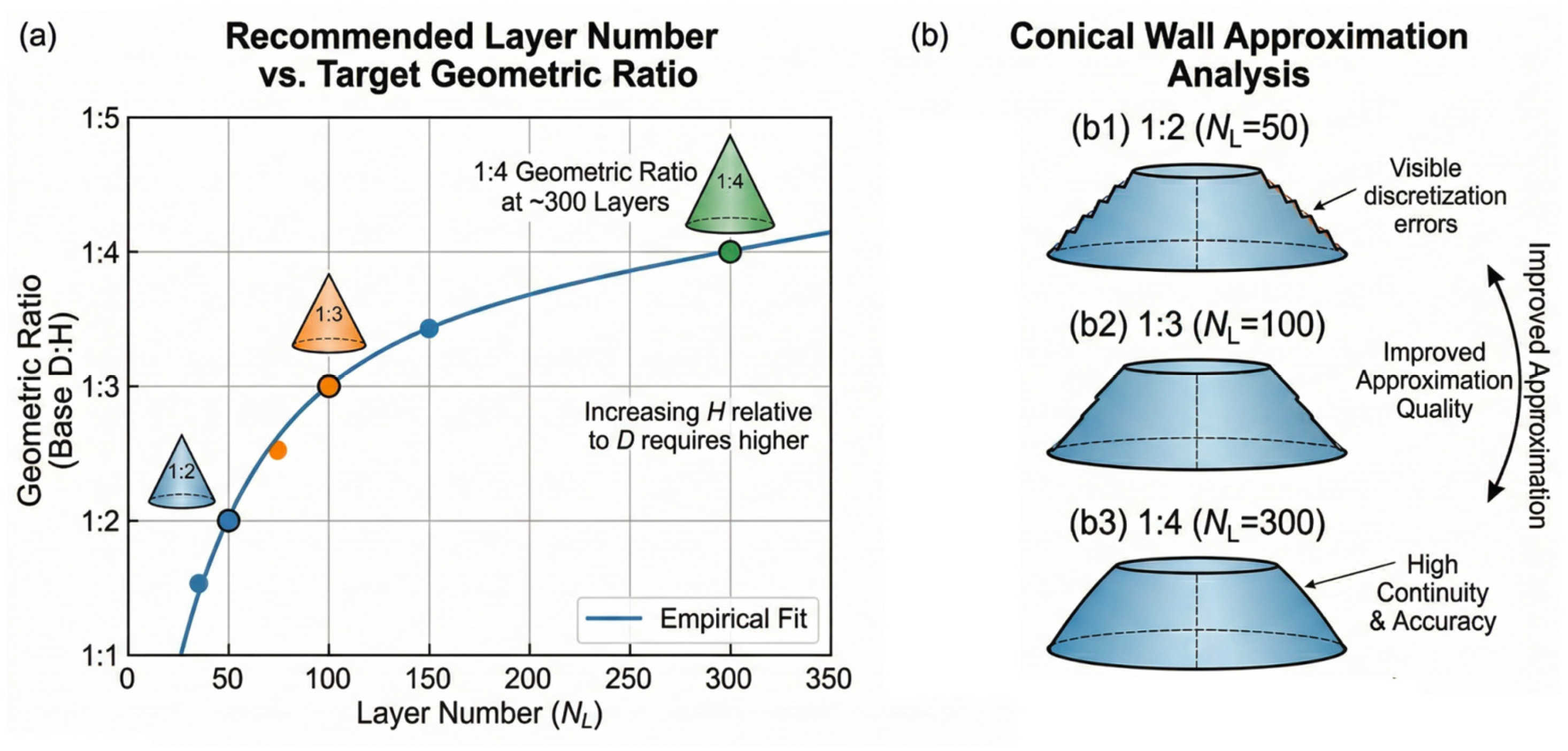
The dimensional measurements shown in Figure 6e,f further illustrate the relationship between the reconstructed cone morphology and the target geometric ratio. The cone height was defined as the vertical distance from the surrounding etched plane to the cone apex, whereas the measured base diameter was defined as the lateral width of the remaining positive cone at its intersection with the surrounding etched plane. Each value was extracted from the corresponding three-dimensional topography and SEM/image-based dimensional analysis. Under the present processing conditions, when the longitudinal layer number reached 100, the fabricated cone exhibited a base-diameter-to-height ratio close to 1:3. This result indicates that a higher longitudinal layer density is beneficial not only for suppressing the sidewall staircase effect, but also for reconstructing tapered structures with relatively higher aspect ratios.
From the viewpoint of geometric construction, the required longitudinal layer number is closely related to the ratio between the base diameter and the target height of the cone. For structures with a larger height relative to the base diameter, the sidewall profile changes more rapidly along the longitudinal direction; therefore, a higher layer density is required to reduce discretization error. In contrast, for structures with a smaller height and a gentler profile variation, acceptable profile continuity can be maintained with fewer longitudinal layers. This relationship indicates that the proposed method provides a layer-design route for tapered micro-cones with different base-diameter-to-height ratios.
Based on the dimensional measurements obtained under the present processing conditions, the relationship between the longitudinal layer number and the reconstructed cone geometry was further summarized, as shown in Figure 7. It should be noted that the base diameter discussed here refers to the measured base diameter of the final positive cone, rather than the nominal outer processing diameter of the annular pattern. For N L = 50 , the measured cone base diameter and height were approximately 1.247 μm and 2.496 μm, respectively, corresponding to a base-diameter-to-height ratio of about 1:2.00. When the layer number increased to N L = 100 , the measured base diameter and height were approximately 0.882 μm and 2.342 μm, respectively, giving a ratio of about 1:2.66, approaching 1:3. When the layer number was further increased to N L = 300 , the measured base diameter and height were approximately 0.618 μm and 2.438 μm, respectively, corresponding to a ratio of about 1:3.94, close to 1:4. These results indicate that the required longitudinal layer density increases as the target cone height becomes larger relative to the base diameter.
It should be emphasized that the empirical relationship shown in Figure 7 was obtained under the present processing conditions, including the Si(100) substrate, Ga+ ion beam, 30 kV acceleration voltage, 1 nA beam current, 1.5 μs dwell time, 6 nm step size, 0.5 overlap parameter, and the present nominal cone dimension. Therefore, this relationship should be regarded as a process-specific design guideline rather than a universal rule applicable to all materials, ion species, beam conditions, or cone dimensions. Nevertheless, it provides a useful experimental reference for selecting the longitudinal layer number when fabricating tapered micro-cones with different geometric ratios.
In addition, the cone apex was well preserved in the fabricated positive cones, indicating that the increasing-inner-radius strategy provided effective spatial control over local material removal. During layer-wise execution, the central region was progressively protected, whereas the peripheral region experienced greater cumulative removal. This result confirms the effectiveness of the annular layer design for positive micro-cone reconstruction.
Although the proposed layer-wise model can be extended to both positive and negative micro-cones, the present experimental validation focuses on positive micro-cone fabrication. The fabrication of negative micro-cones based on the decreasing-outer-radius strategy will be further investigated in future work.

3.3. Demonstration of Micro-Cone Array Fabrication

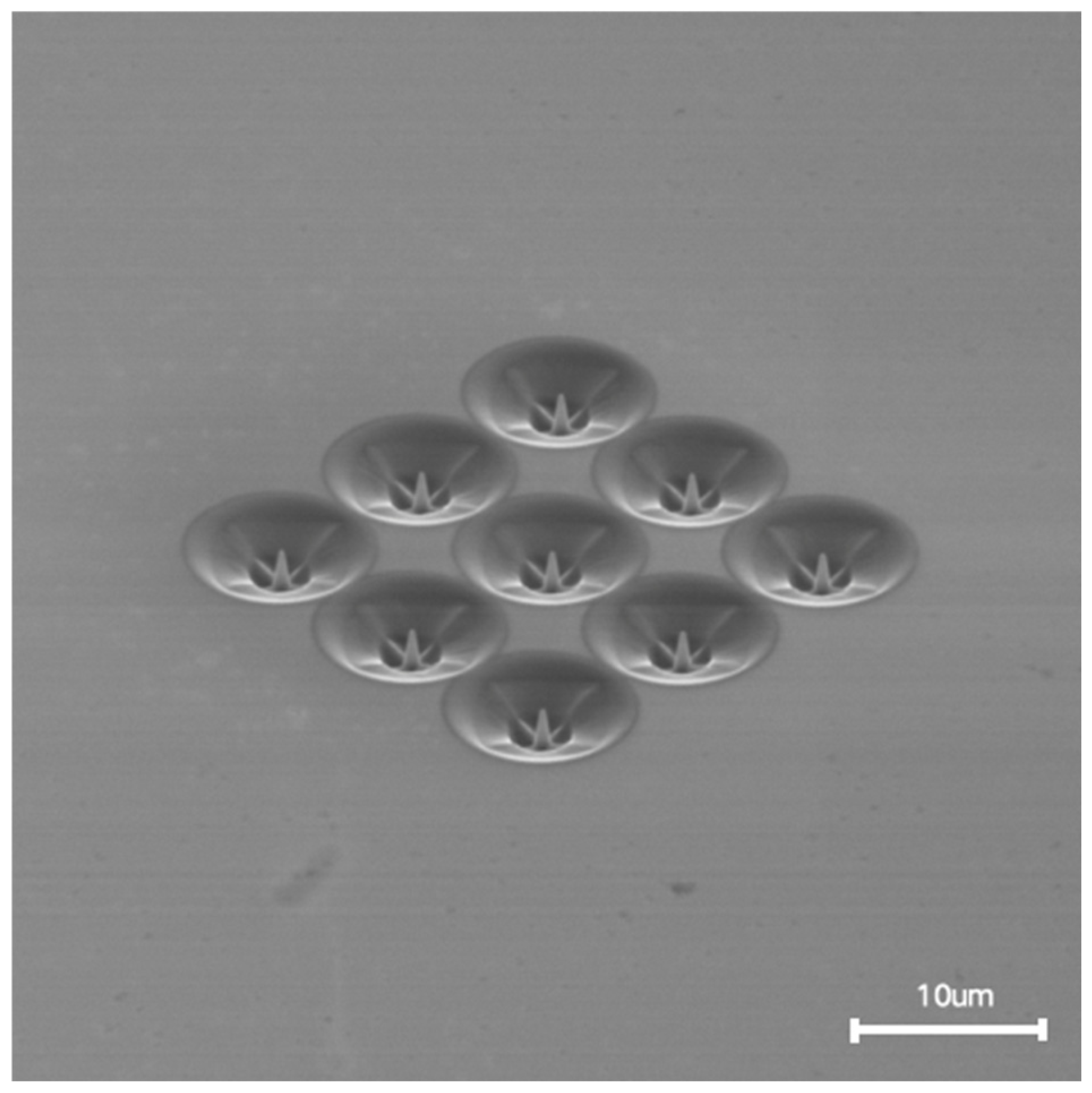
To evaluate the processing feasibility of the proposed method beyond single-structure fabrication, a 3 × 3 positive micro-cone array was fabricated on a silicon substrate. As shown in Figure 8, the array consisted of nine independent micro-cone units. The total processing time was approximately 80 s, corresponding to an average fabrication time of about 8.9 s per cone. This result indicates that the proposed longitudinal layer-wise strategy can be extended from single-cone fabrication to small-scale repeated-structure fabrication while maintaining reasonable processing efficiency.
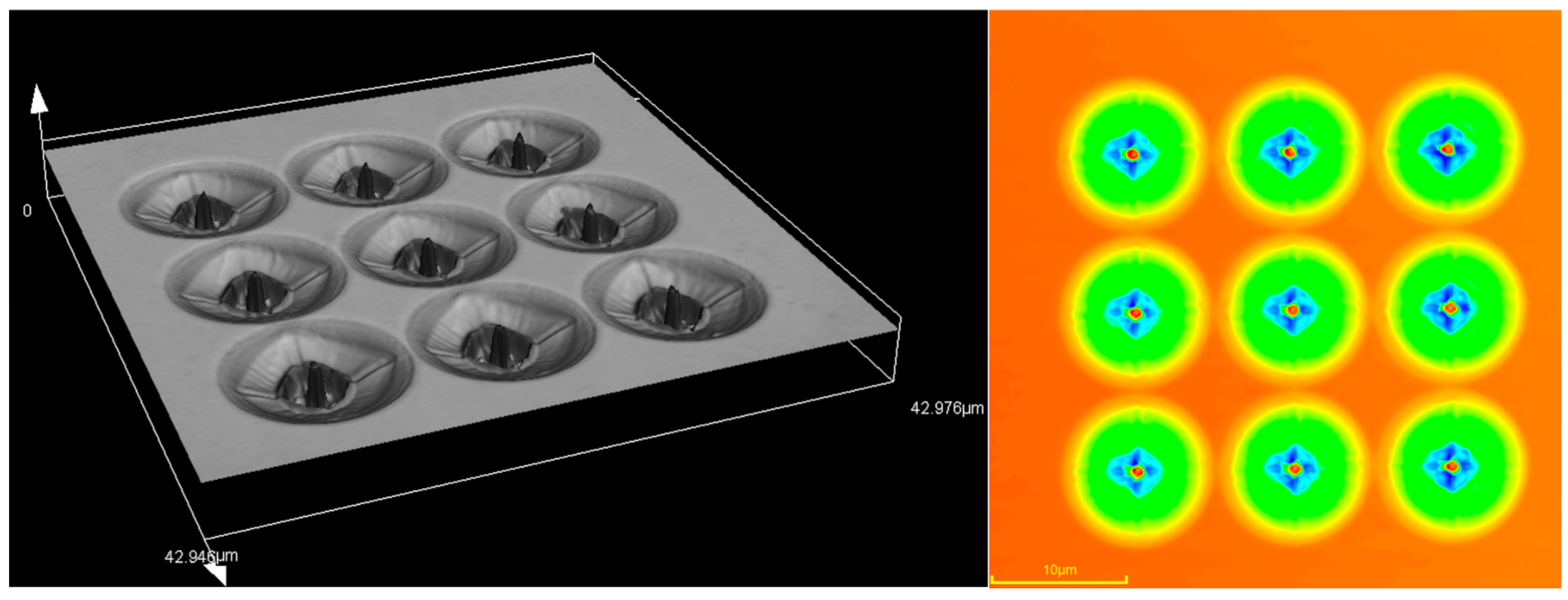
The surface characterization results of the cone array are shown in Figure 9. The base diameter and height of all nine fabricated cones were measured to evaluate the unit-to-unit consistency of the array. The measured base diameters were 0.892, 0.885, 0.882, 0.876, 0.886, 0.891, 0.881, 0.890, and 0.887 μm, giving an average value of 0.886 ± 0.005 μm. The maximum relative deviation of the base diameter from the mean value was approximately 1.08%. The corresponding cone heights were 2.398, 2.357, 2.342, 2.315, 2.368, 2.346, 2.341, 2.357, and 2.361 μm, with an average value of 2.354 ± 0.023 μm and a maximum relative deviation of approximately 1.87%. These results indicate that both the base diameter and height variations in the fabricated 3 × 3 array were controlled within ±2%. This consistency is important for applications requiring repeated conical features, such as micro-optical surfaces, functional textured interfaces, and emitter-related microstructures.
It should be noted that the present work focuses on the fabrication method and geometric reconstruction of tapered micro-cones. Device-level performance verification, such as optical response, wettability modulation, or field-emission characterization, remains beyond the scope of this study and will be investigated in future work.
Overall, the results demonstrate that longitudinally discretized annular-pattern construction provides a feasible ion-beam fabrication route for tapered micro-cones. By combining geometry-dependent longitudinal discretization with intra-layer repeated execution, the proposed method enables controllable cone-profile reconstruction, small-scale array fabrication, and reasonable processing efficiency under the present experimental conditions.

4. Conclusions

In this work, a longitudinal layer-wise ion-beam fabrication strategy was proposed for constructing tapered micro-cones on silicon substrates. Different from conventional multi-pass processing of a fixed planar pattern, the proposed method first discretizes the target three-dimensional cone profile into a sequence of geometry-dependent annular layers, and then executes each layer using intra-layer repeated scanning. This strategy enables the transformation of a continuous tapered profile into a hardware-executable layer-wise fabrication sequence.
The main conclusions can be summarized as follows.
(1)
A longitudinal layer-wise cone-shaping method was established based on a self-developed software–pattern generator–equipment architecture. The target cone geometry was converted into annular layer patterns with layer-dependent dimensions, and EBWriter was used to generate the corresponding pattern files and execution sequence. This workflow provides a practical route from geometric design to ion-beam-based material removal.
(2)
The experimental results demonstrate that the longitudinal layer number plays an important role in cone-profile reconstruction. As the layer number increased, the staircase effect on the cone sidewall was reduced, and the reconstructed morphology became closer to the intended tapered profile. For positive micro-cones, the increasing-inner-radius strategy effectively protected the central region during layer-wise execution, enabling apex preservation and tapered-profile formation.
(3)
Under the present processing conditions, including a Si(100) substrate, Ga+ ion beam, 30 kV acceleration voltage, 1 nA beam current, 1.5 μs dwell time, 6 nm step size, and 0.5 overlap parameter, an empirical relationship between the target geometric ratio and the recommended longitudinal layer number was summarized. Layer numbers of approximately 50, 100, and 300 support measured base-diameter-to-height ratios of about 1:2.00, 1:2.66 (approaching 1:3), and 1:3.94 (close to 1:4), respectively. This relationship should be regarded as a process-specific design guideline rather than a universal rule for all materials or beam conditions.
(4)
The proposed strategy was further demonstrated through the fabrication of a 3 × 3 positive micro-cone array using annular patterns with a nominal outer processing diameter of 3 μm. The measured base diameter and height of the fabricated cones were 0.886 ± 0.005 μm and 2.354 ± 0.023 μm, respectively. The dimensional variations were controlled within ±2%, indicating that the layer-wise design and pattern-generator-assisted execution can maintain stable reconstruction capability across repeated units.
Overall, the present work provides a feasible ion-beam fabrication route for tapered micro-cones through longitudinal discretization, annular-pattern generation, and coordinated hardware execution. The proposed strategy offers a useful process basis for constructing tapered microstructures with different geometric ratios and may provide an experimental reference for future studies on micro-optical surfaces, functional textured interfaces, and emitter-related microstructures. Device-level performance validation, such as optical response, wettability modulation, or field-emission characterization, will be further investigated in future work.

Author Contributions

Conceptualization, C.D. and L.H.; methodology, J.H. and B.Y.; software, J.H.; validation, J.H., C.D. and B.Y.; formal analysis, J.H.; investigation, J.H., B.Y. and P.W.; resources, L.Z., C.D. and L.H.; data curation, J.H.; writing—original draft preparation, J.H.; writing—review and editing, C.D., L.Z. and L.H.; visualization, J.H.; supervision, C.D. and L.H.; project administration, L.H.; funding acquisition, C.D. and L.H. All authors have read and agreed to the published version of the manuscript.

Funding

Chinese Academy of Sciences Strategic Priority Research Program (No. XDA0520504).

Data Availability Statement

The original contributions presented in this study are included in the article. Further inquiries can be directed to the corresponding author(s).

Conflicts of Interest

The authors declare no conflicts of interest.

Abbreviations

The following abbreviations are used in this manuscript:
FIBFocused ion beam
IBEIon beam etching
PGPattern generator
GDSIIGraphic Data System II
SEMScanning electron microscope
MEMSMicro-electromechanical systems
CAD/CAMComputer-aided design/Computer-aided manufacturing
HMIHuman–machine interface
SiSilicon
2DTwo-dimensional
3DThree-dimensional

References

  1. Cai, S.; Sun, Y.; Chu, H.; Yang, W.; Yu, H.; Liu, L. Microlenses arrays: Fabrication, materials, and applications. Microsc. Res. Tech. 2021, 84, 2784–2806. [Google Scholar] [CrossRef] [PubMed]
  2. Schels, A.; Herdl, F.; Hausladen, M.; Wohlfartsstätter, D.; Edler, S.; Bachmann, M.; Pahlke, A.; Schreiner, R.; Hansch, W. Quantitative Field Emission Imaging for Studying the Doping-Dependent Emission Behavior of Silicon Field Emitter Arrays. Micromachines 2023, 14, 2008. [Google Scholar] [CrossRef]
  3. Ngoi, B.K.A.; Fu, Y. Investigation of diffractive-refractive microlens array fabricated by focused ion beam technology. Opt. Eng. 2001, 40, 511–516. [Google Scholar] [CrossRef]
  4. Majumdar, J.; Bhattacharjee, S. Microconical Structure Formation and Field Emission From Atomically Heterogeneous Surfaces Created by Microwave Plasma–Based Low-Energy Ion Beams. Front. Phys. 2021, 9, 674928. [Google Scholar] [CrossRef]
  5. Liu, Y.; He, X.; Yuan, C.; Cao, P.; Bai, X. Antifouling applications and fabrications of biomimetic micro-structured surfaces: A review. J. Adv. Res. 2024, 59, 201–221. [Google Scholar] [CrossRef]
  6. Schneider, L.; Laustsen, M.; Mandsberg, N.; Taboryski, R. The Influence of Structure Heights and Opening Angles of Micro- and Nanocones on the Macroscopic Surface Wetting Properties. Sci. Rep. 2016, 6, 21400. [Google Scholar] [CrossRef]
  7. Suchikova, Y.; Nazarovets, S.; Popov, A.I. Electrochemical Etching vs. Electrochemical Deposition: A Comparative Bibliometric Analysis. Electrochem 2025, 6, 18. [Google Scholar] [CrossRef]
  8. Srinadhu, E.S.; Shyam, R.; Kumar, J.; Thanu, D.P.; Zhao, M.; Keswani, M. Adhesion Enhancement of Polymer Surfaces by Ion Beam Treatment: A Critical Review. Rev. Adhes. Adhes. 2019, 7, 169–194. [Google Scholar] [CrossRef]
  9. Khonina, S.N.; Kazanskiy, N.L.; Butt, M.A. Grayscale Lithography and a Brief Introduction to Other Widely Used Lithographic Methods: A State-of-the-Art Review. Micromachines 2024, 15, 1321. [Google Scholar] [CrossRef]
  10. Li, P.; Chen, S.; Dai, H.; Yang, Z.; Chen, Z.; Wang, Y.; Chen, Y.; Peng, W.; Shan, W.; Duan, H. Recent Advances in Focused Ion Beam Nanofabrication for Nanostructures and Devices: Fundamentals and Applications. Nanoscale 2020, 13, 1529–1565. [Google Scholar] [CrossRef]
  11. Höflich, K.; Hobler, G.; Allen, F.I.; Wirtz, T.; Rius, G.; McElwee-White, L.; Krasheninnikov, A.V.; Schmidt, M.; Utke, I.; Klingner, N.; et al. Roadmap for focused ion beam technologies. Appl. Phys. Rev. 2023, 10, 041311. [Google Scholar] [CrossRef]
  12. Kim, C.-S.; Ahn, S.-H.; Jang, D.-Y. Review: Developments in micro/nanoscale fabrication by focused ion beams. Vacuum 2012, 86, 1014–1035. [Google Scholar] [CrossRef]
  13. Baglin, J.E.E. Ion beam enabled nanoscale fabrication, surface patterning, and self-assembly. Appl. Phys. Rev. 2020, 7, 011601. [Google Scholar] [CrossRef]
  14. Manoccio, M.; Esposito, M.; Passaseo, A.; Cuscunà, M.; Tasco, V. Focused Ion Beam Processing for 3D Chiral Photonics Nanostructures. Micromachines 2020, 12, 6. [Google Scholar] [CrossRef] [PubMed]
  15. Gorelick, S.; De Marco, A. Fabrication of glass microlenses using focused Xe beam. Opt. Express 2018, 26, 13647–13655. [Google Scholar] [CrossRef]
  16. Vasile, M.J.; Niu, Z.; Nassar, R.; Zhang, W.; Liu, S. Focused ion beam milling: Depth control for three-dimensional microfabrication. J. Vac. Sci. Technol. B Microelectron. Nanometer Struct. 1997, 15, 2350–2354. [Google Scholar] [CrossRef]
  17. Erdmanis, M.; Tittonen, I. Focused ion beam high resolution grayscale lithography for silicon-based nanostructures. Appl. Phys. Lett. 2014, 104, 9788. [Google Scholar] [CrossRef]
  18. Totsu, K.; Fujishiro, K.; Tanaka, S.; Esashi, M. Fabrication of three-dimensional microstructure using maskless gray-scale lithography. Sens. Actuators A Phys. 2006, 130, 387–392. [Google Scholar] [CrossRef]
  19. Niessen, F.; Nancarrow, M.J.B. Computer-aided manufacturing and focused ion beam technology enable machining of complex micro- and nano-structures. Nanotechnology 2019, 30, 435301. [Google Scholar] [CrossRef]
  20. Deinhart, V.; Kern, L.-M.; Kirchhof, J.N.; Juergensen, S.; Sturm, J.; Krauss, E.; Feichtner, T.; Kovalchuk, S.; Schneider, M.; Engel, D.; et al. The patterning toolbox FIB-o-mat: Exploiting the full potential of focused helium ions for nanofabrication. Beilstein J. Nanotechnol. 2021, 12, 304–318. [Google Scholar] [CrossRef]
  21. Balram, K.C.; Westly, D.A.; Davanço, M.; Grutter, K.E.; Li, Q.; Michels, T.; Ray, C.H.; Yu, L.; Kasica, R.J.; Wallin, C.B.; et al. The Nanolithography Toolbox. J. Res. Natl. Inst. Stand. Technol. 2016, 121, 464–475. [Google Scholar] [CrossRef]
  22. Li, Y.; Xing, Y.; Fang, C.; Chen, Q.; Qiu, X. An experiment-based method for focused ion beam milling profile calculation and process design. Sens. Actuators A Phys. 2019, 286, 78–90. [Google Scholar] [CrossRef]
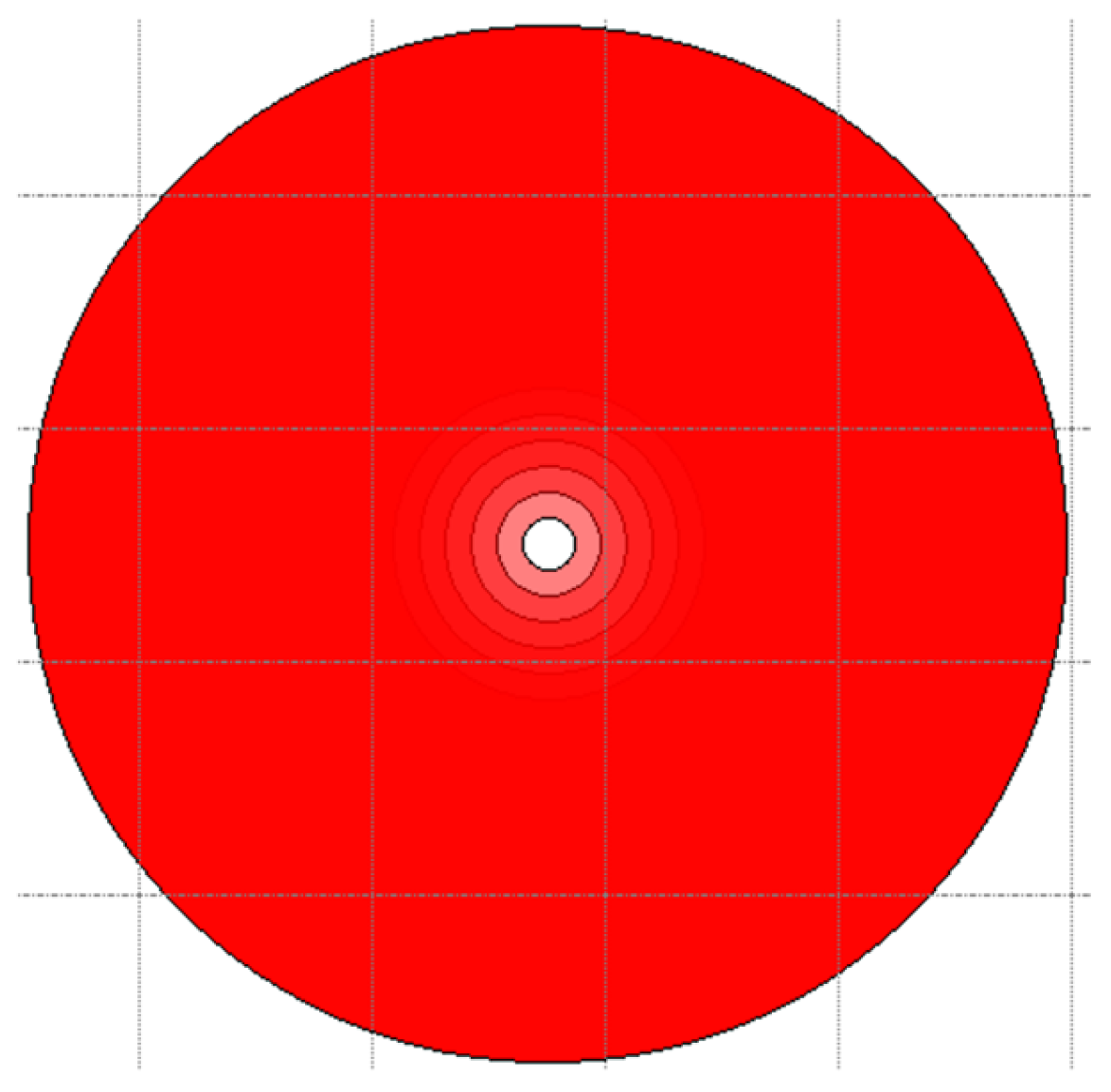
Figure 1. Design schematic of the longitudinal layer-wise annular patterns for ion-beam fabrication of tapered micro-cones.
Electronics 15 02193 g001
Figure 2. On-site installation of the 3D ion-beam fabrication platform.
Electronics 15 02193 g002
Figure 3. Schematic diagrams of positive and negative micro-cones: (a) positive micro-cone; (b) negative micro-cone.
Electronics 15 02193 g003
Figure 4. Surface morphologies of etched rectangular pits with varying layer counts: (a) 10 layers; (b) 20 layers; (c) 50 layers; (d) 100 layers.
Electronics 15 02193 g004
Figure 5. Surface morphologies of the etched annular patterns: (a) etching result with 50 layers; (b) etching result with 100 layers.
Electronics 15 02193 g005
Figure 6. Etched morphologies of positive micro-cones fabricated with different longitudinal layer numbers: (a) 10 layers; (b) 20 layers; (c) 50 layers; (d) 100 layers; (e) height measurement of the micro-cone; (f) base-diameter measurement of the micro-cone.
Electronics 15 02193 g006
Figure 7. Empirical relationship between longitudinal layer number and base-diameter-to-height ratio of fabricated positive micro-cones under the present processing conditions. (a) Recommended layer number versus target geometric ratio. The colored cones indicate the target geometric ratios of 1:2, 1:3, and 1:4, corresponding to different numbers of longitudinal layers (NL). (b) Conical wall approximation analysis for different layer numbers: (b1) 1:2 ratio with NL = 50 showing visible discretization errors; (b2) 1:3 ratio with NL = 100 showing improved approximation quality; (b3) 1:4 ratio with NL = 300 showing high continuity and accuracy.
Electronics 15 02193 g007
Figure 8. Fabrication result of a 3 × 3 positive micro-cone array.
Electronics 15 02193 g008
Figure 9. Surface characterization and dimensional consistency of the fabricated 3 × 3 positive micro-cone array.
Electronics 15 02193 g009
Table 1. Main ion-beam processing parameters used in this study.
ParameterValue
SubstrateSi(100)
Ion speciesGa+
Acceleration voltage30 kV
Beam current1 nA
Nominal outer processing diameter of annular pattern3 μm
Repeated scans per layer100
Dwell time1.5 μs
Step size6 nm
Overlap parameter0.5
Number of longitudinal layers10, 20, 50, 100, and 300, as specified
Characterization methodOLS5100 3D laser scanning microscope/SEM
Disclaimer/Publisher’s Note: The statements, opinions and data contained in all publications are solely those of the individual author(s) and contributor(s) and not of MDPI and/or the editor(s). MDPI and/or the editor(s) disclaim responsibility for any injury to people or property resulting from any ideas, methods, instructions or products referred to in the content.