Article

A Divide-and-Conquer Strategy for Cross-Domain Few-Shot Learning

by
Bingxin Wang
* and
Dehong Yu
School of Mechanical Engineering, Xi’an Jiaotong University, No. 28 Xianning West Road, Xi’an 710049, China
*
Author to whom correspondence should be addressed.
Electronics 2025, 14(3), 418; https://doi.org/10.3390/electronics14030418

Submission received: 23 December 2024 / Revised: 16 January 2025 / Accepted: 20 January 2025 / Published: 21 January 2025

Abstract

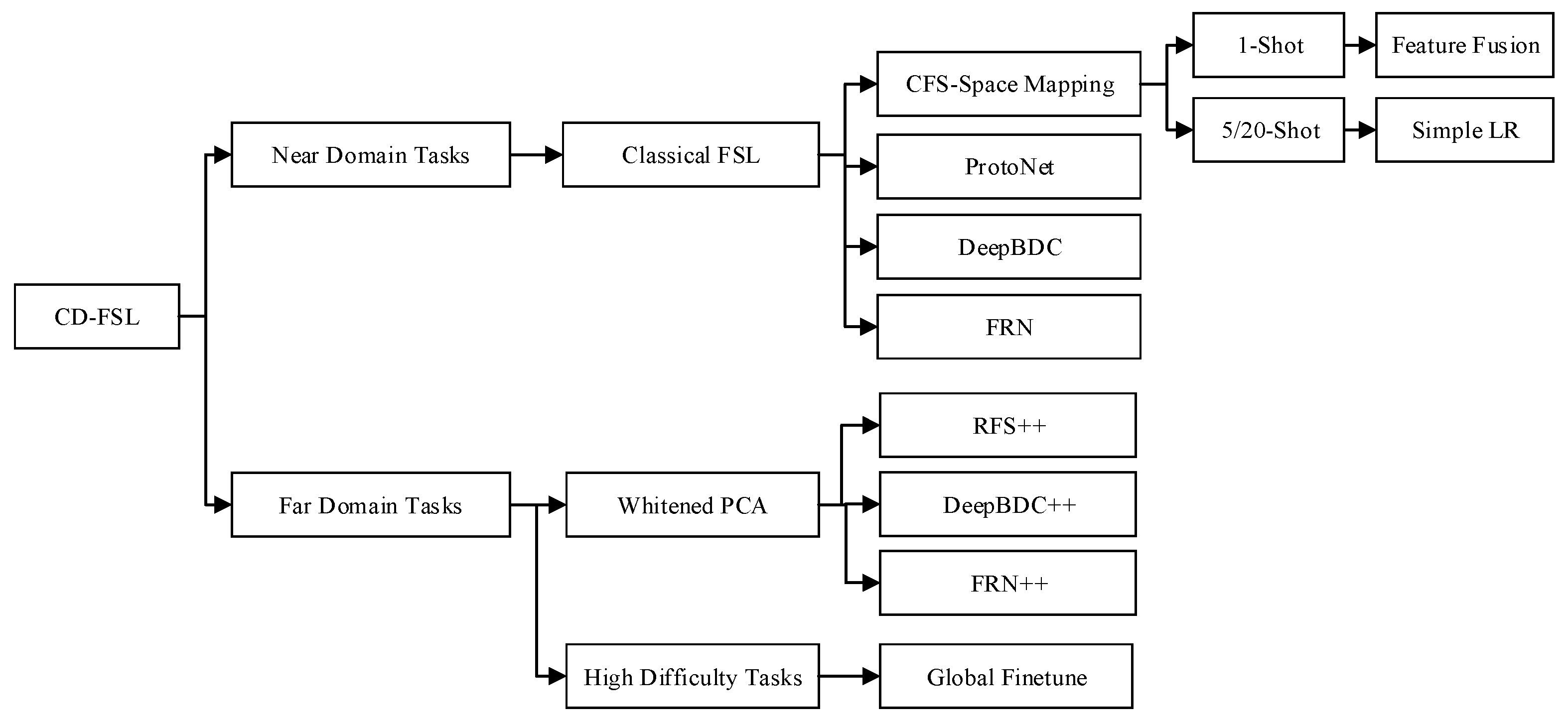
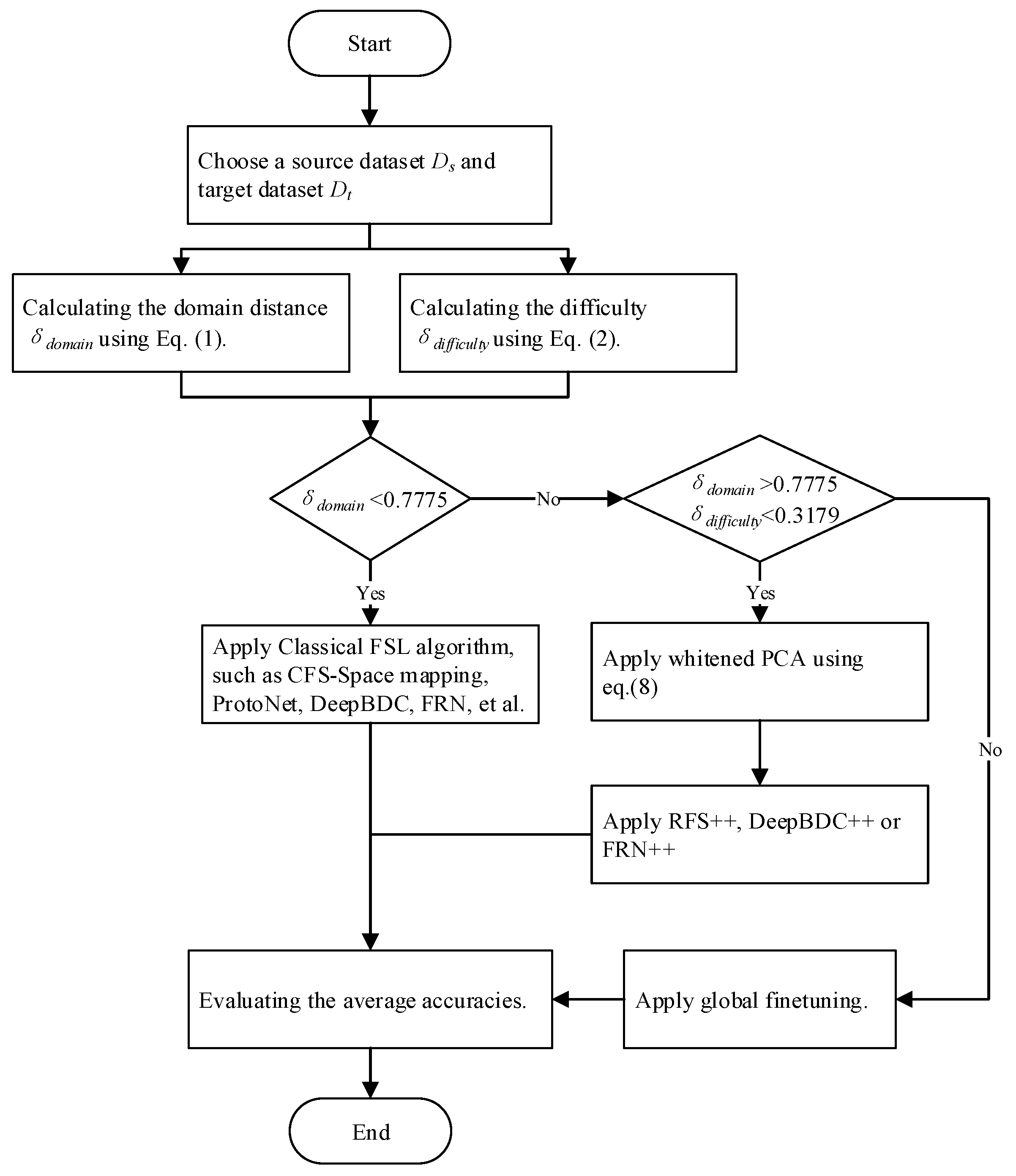
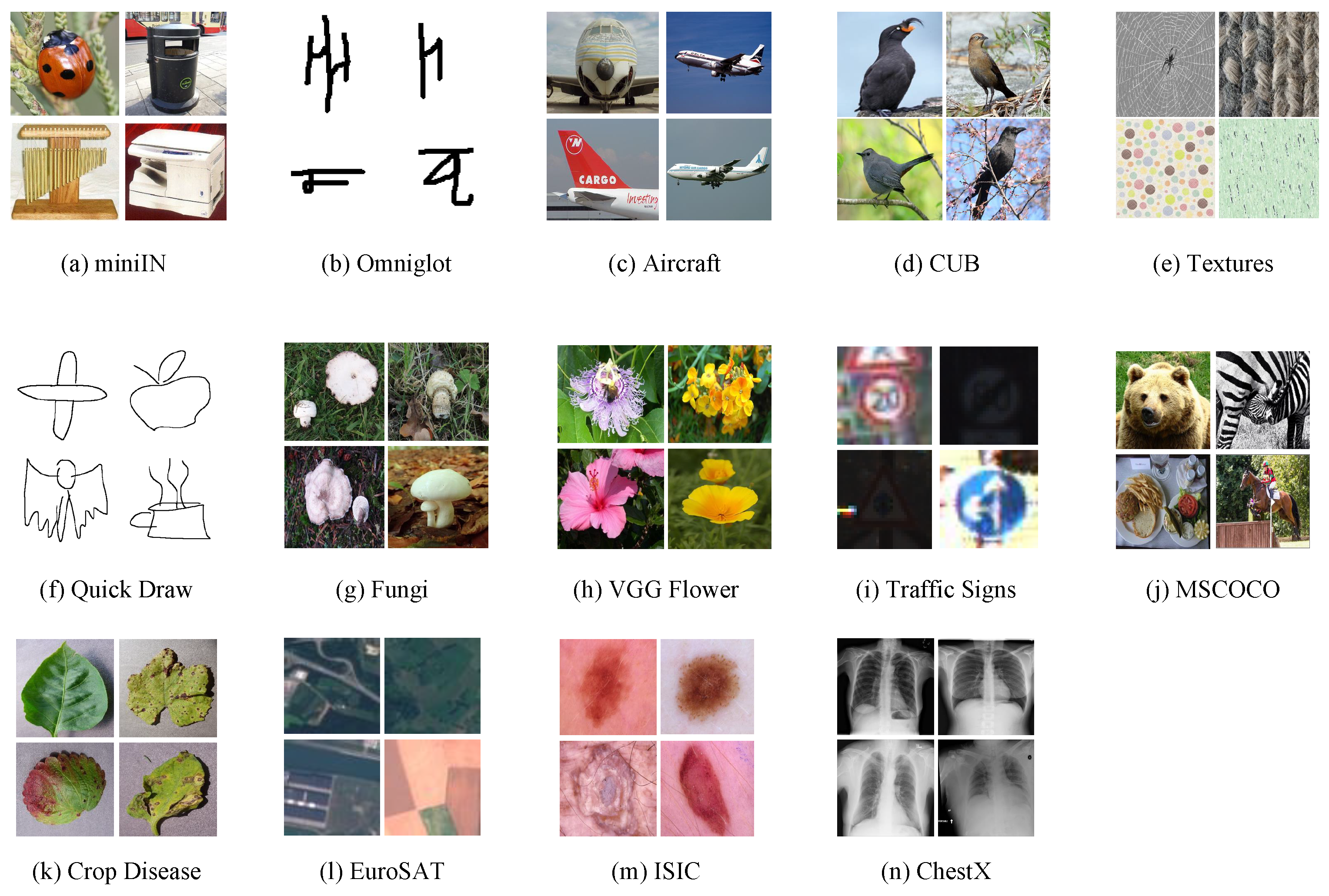
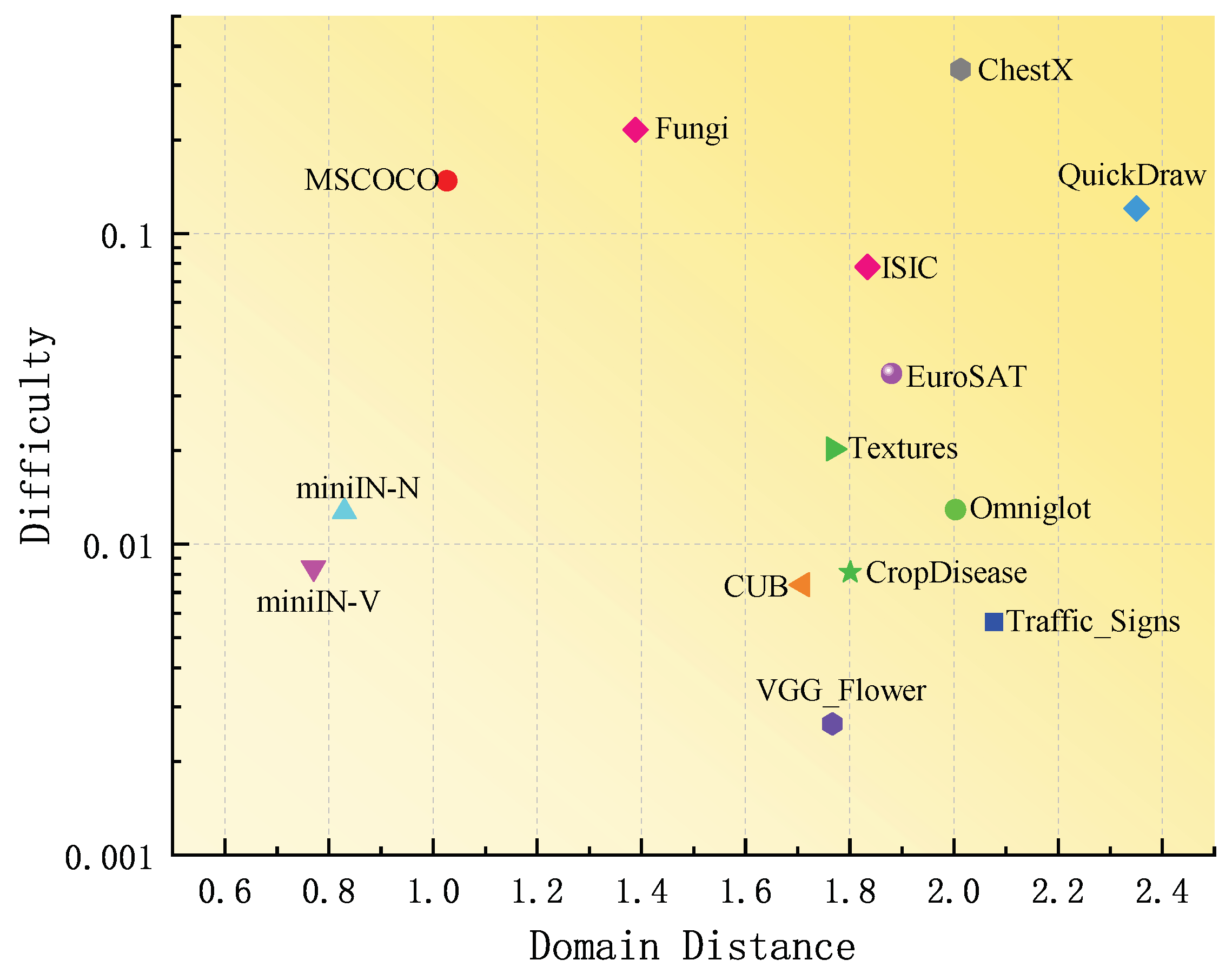
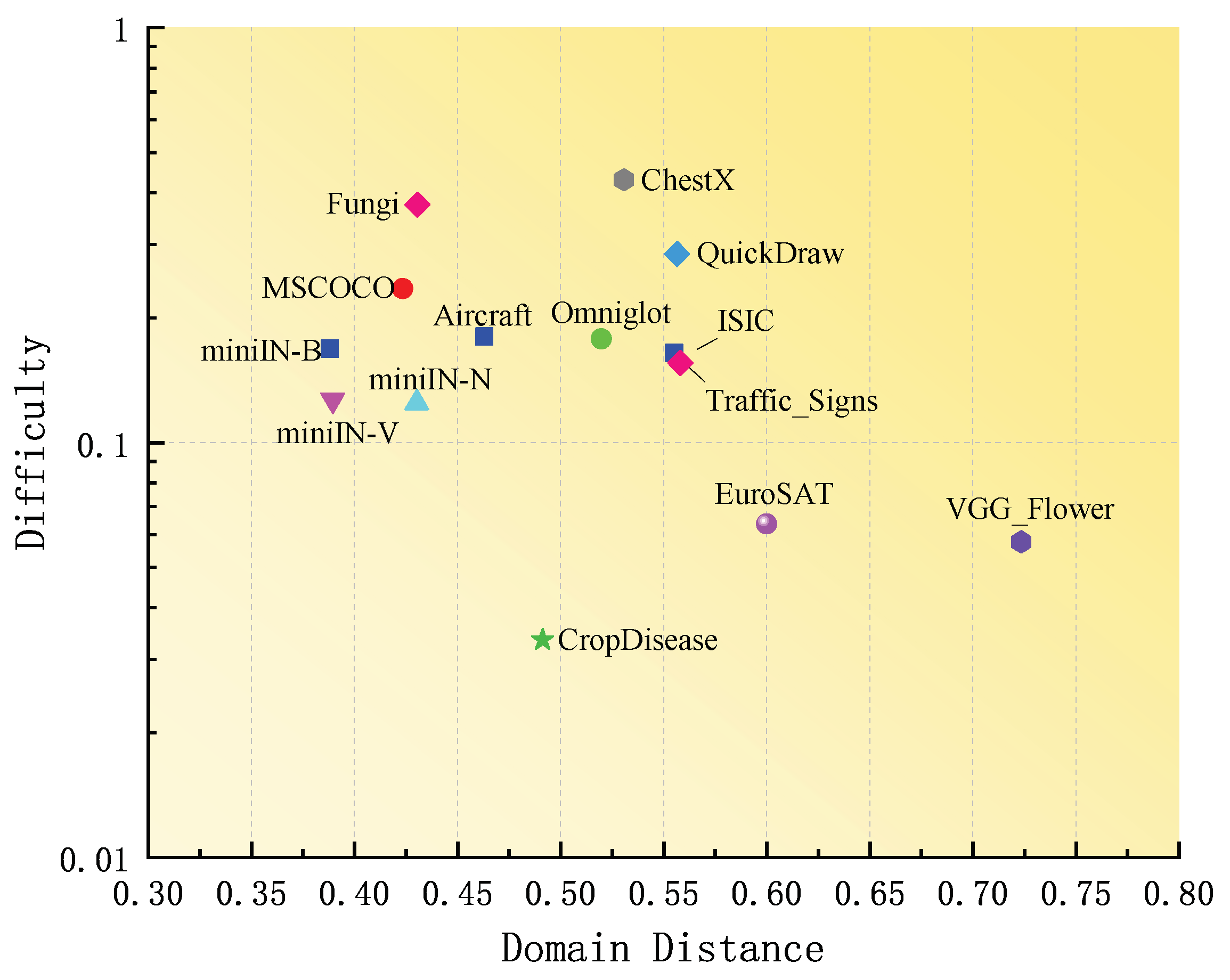
Cross-Domain Few-Shot Learning (CD-FSL) aims to empower machines with the capability to rapidly acquire new concepts across domains using an extremely limited number of training samples from the target domain. This ability hinges on the model’s capacity to extract and transfer generalizable knowledge from a source training set. Studies have indicated that the similarity between source and target-data distributions, as well as the difficulty of target tasks, determine the classification performance of the model. However, the current lack of quantitative metrics hampers researchers’ ability to devise appropriate learning strategies, leading to a fragmented understanding of the field. To address this issue, we propose quantitative metrics of domain distance and target difficulty, which allow us to categorize target tasks into three regions on a two-dimensional plane: near-domain tasks, far-domain low-difficulty tasks, and far-domain high-difficulty tasks. For datasets in different regions, we propose a Divide-and-Conquer Strategy (DCS) to tackle few-shot classification across various target datasets. Empirical results across 15 target datasets demonstrate the compatibility and effectiveness of our approach, improving the model performance. We conclude that the proposed metrics are reliable and the Divide-and-Conquer Strategy is effective, offering valuable insights and serving as a reference for future research on CD-FSL.
Keywords: cross-domain few-shot learning; domain metric; divide-and-conquer strategy; whitened PCA cross-domain few-shot learning; domain metric; divide-and-conquer strategy; whitened PCA