


Abstract
With the large-scale integration of new energy and power electronic devices into power systems, frequency stability has become an increasingly critical concern. To maintain frequency stability while mitigating the high capital expenditure of energy storage systems (ESSs), this paper develops a control framework centered on edge energy management terminals (EEMTs). The design is based on a demonstration project in which distributed energy resources (DERs) and flexible loads collaboratively provide frequency regulation. A monitoring station is implemented to make fast frequency response (FFR) resources dispatchable, detectable, measurable, and tradable. Furthermore, a control strategy tailored for building- and factory-level applications is proposed. This strategy enables real-time optimal scheduling of DERs and flexible loads through coordinated communication between EEMTs and net load units (NLUs). Two field tests further demonstrate the effectiveness and advantages of the proposed approach. In addition, this paper proposes a coordinated scheme in which wind farms and NLUs jointly participate in frequency regulation, aiming to mitigate the response delay of NLUs and the secondary frequency drop observed in wind farms. The feasibility and benefits of this scheme are validated through experimental tests.
1. Introduction
The integration of a high proportion of renewable energy into the power grid has become an irreversible trend and a core characteristic of the future development of global power systems. Many countries and regions have proposed the vision of establishing 100% renewable energy power systems [1]. However, the power generation mechanism of renewable energy differs from that of traditional synchronous generation. Renewable energy generation relies on power electronic devices, and as the proportion of renewable energy increases, the share of traditional synchronous generation decreases. Research on the Irish power grid indicates that when the instantaneous penetration rate of non-synchronous generation exceeds 50%, the system frequency becomes highly sensitive to changes in synchronous inertia, placing the grid in an inertia-sensitive state [2]. During the transition from traditional power grids dominated by synchronous generators to systems with a high proportion of non-synchronous resources, the inertia response capability provided by synchronous generators will continue to decline, thereby weakening the grid’s ability to withstand disturbances [3]. This was one of the contributing factors to the large-scale blackouts in South Australia on 28 September 2016 [4], and in the United Kingdom on 9 August 2019 [5].
In traditional power systems dominated by synchronous generators, when a high-power disturbance occurs, power support is sequentially provided by synchronous inertial response, primary frequency regulation, and secondary frequency regulation. Within the first three seconds following a disturbance, synchronous inertia plays the primary role. To address the challenges of reduced synchronous inertia and the resulting frequency stability issues in the development of new power systems, the concept of FFR has been introduced. Extensive research has been conducted on resources applicable to frequency stability within power systems. The current mainstream new resources for frequency response primarily fall into two categories: DERs (such as wind turbines and photovoltaics) and flexible loads (e.g., electric vehicles (EVs) and air conditioners).
Reference [6] proposed a virtual inertia controller version of the optimized power point tracking (OPPT) method that allows wind turbines to provide frequency response. Grid-forming control strategies for wind turbines integrate grid-side converter control with power limitation and turbine control, fully leveraging wind turbines’ grid-support capabilities [7]. However, due to the operational characteristics of wind turbines, the secondary frequency drop in the grid is inevitable after they provide frequency support. The power generation mechanism of photovoltaics (PV) dictates that they can only reduce their output power. This means PV systems can only support over-frequency events by curtailing generation, but cannot respond to under-frequency events by increasing their generation. Energy storage systems (ESSs) can act as either loads or power sources. They can participate in frequency regulation through strategies such as droop control, static frequency response, and inertia emulation control. However, the high capital investment required for ESSs remains a major challenge to their large-scale deployment [8].
Flexible loads on the demand side can rapidly adjust power consumption through load shedding [9,10]. Based on existing studies, flexible loads can provide various services, including load shed [11,12], as well as ancillary services such as frequency regulation [13,14,15] and spinning reserve [16,17]. Power markets in the United States [18], Europe [19], and the China Southern Power Grid (CSG) are progressively opening up to flexible loads, enabling them to participate in flexibility bidding for various electricity services. However, in the face of the power grid’s need for FFR, traditional frequency control methods—such as issuing control commands from the dispatch platform and employing centralized optimization control via an aggregation platform—suffer from drawbacks including significant response delays, long control intervals, and computational complexity.
Based on the above observations, the main contributions of this paper are as follows:
- (1)
- This paper proposes a novel adaptive control architecture for FFR. This architecture shifts the control paradigm from centralized or cloud-based aggregation to localized, real-time decision-making at the edge. Conventional aggregator-based approaches often suffer from communication latency and computational bottlenecks. In contrast, our design uses EEMTs to enable autonomous frequency regulation. The EEMTs directly coordinate DERs and flexible loads within NLU. This approach ensures that FFR resources are truly dispatchable, detectable, measurable, and tradable in practice.
- (2)
- This paper presents an FFR control strategy tailored to the proposed control architecture. The strategy achieves frequency response objectives while optimizing control performance. Its key novelty lies in its prioritization of DERs and shiftable loads. DER regulation is given priority to maintain a reliable electricity supply for end-users. If DERs alone cannot meet the frequency response requirements, the strategy then sheds flexible loads. This minimizes disruption to consumers.
- (3)
- This paper also introduces a coordinated frequency regulation scheme that combines wind farms with NLUs. The scheme is experimentally validated and leverages the complementary strengths of both resources to overcome their individual limitations. This coordination is a key innovation. It directly addresses two critical challenges: the secondary frequency drop common to wind turbines and the relatively slow response of demand-side resources. Field tests confirm that this synergy creates a complementary effect. Together, wind farms and NLUs deliver a more robust and comprehensive FFR service than either could achieve alone.
2. Overall Architecture Description
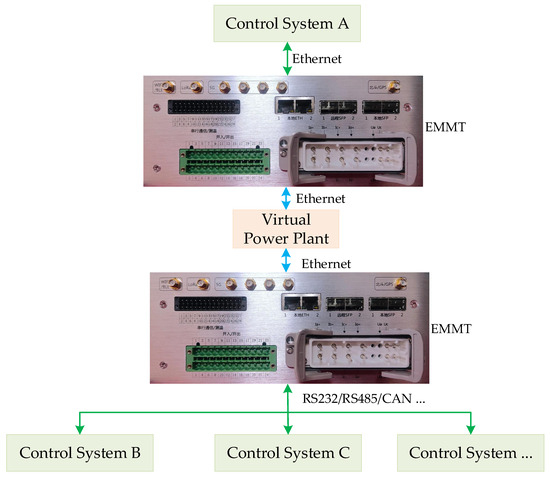
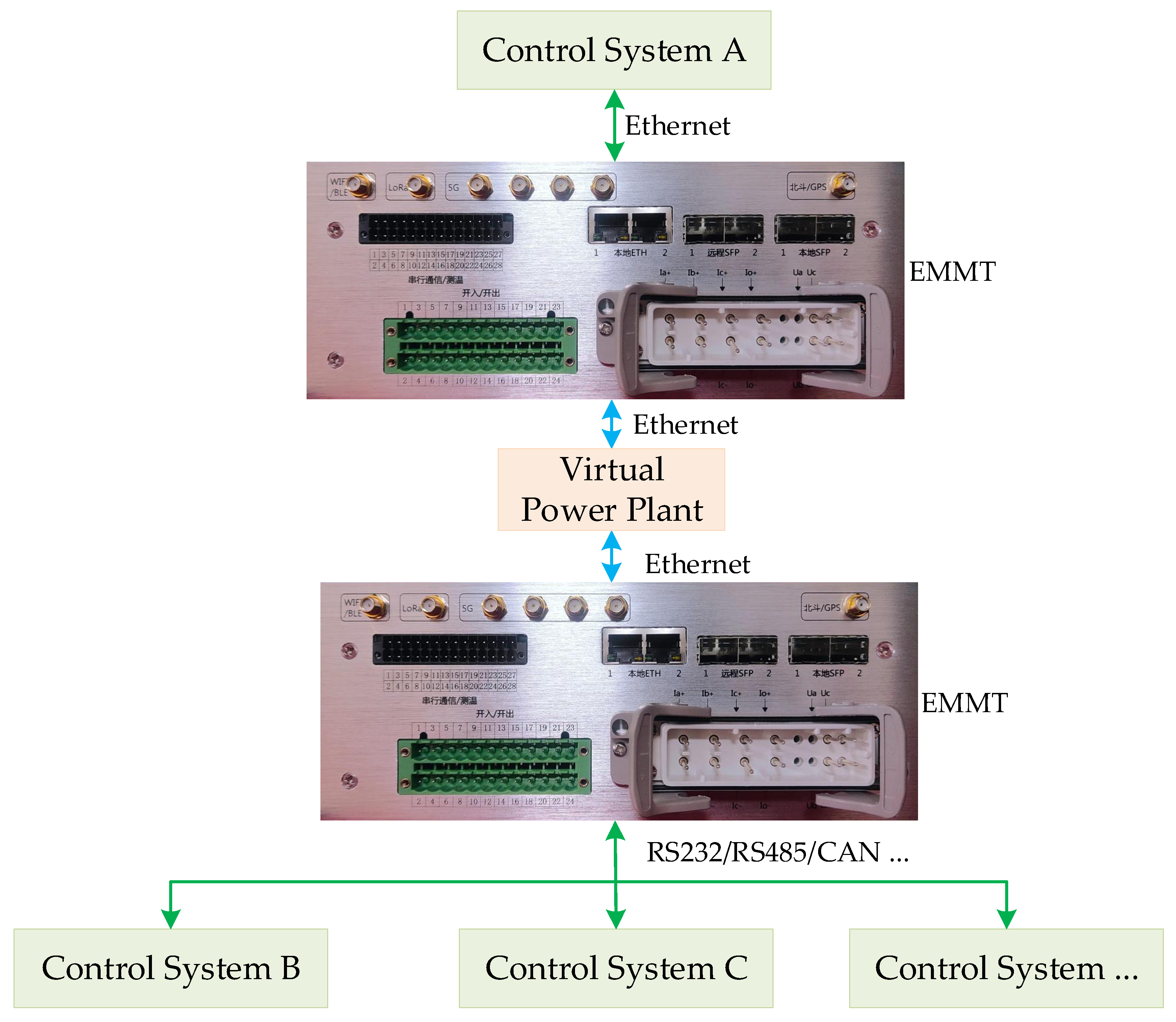
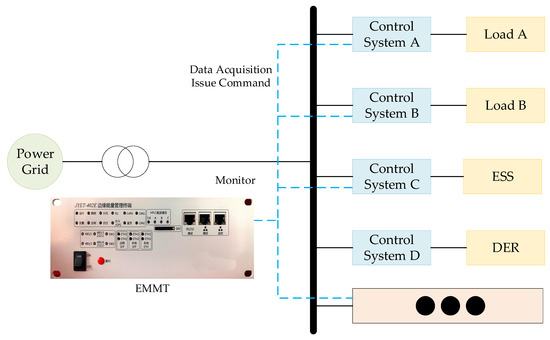
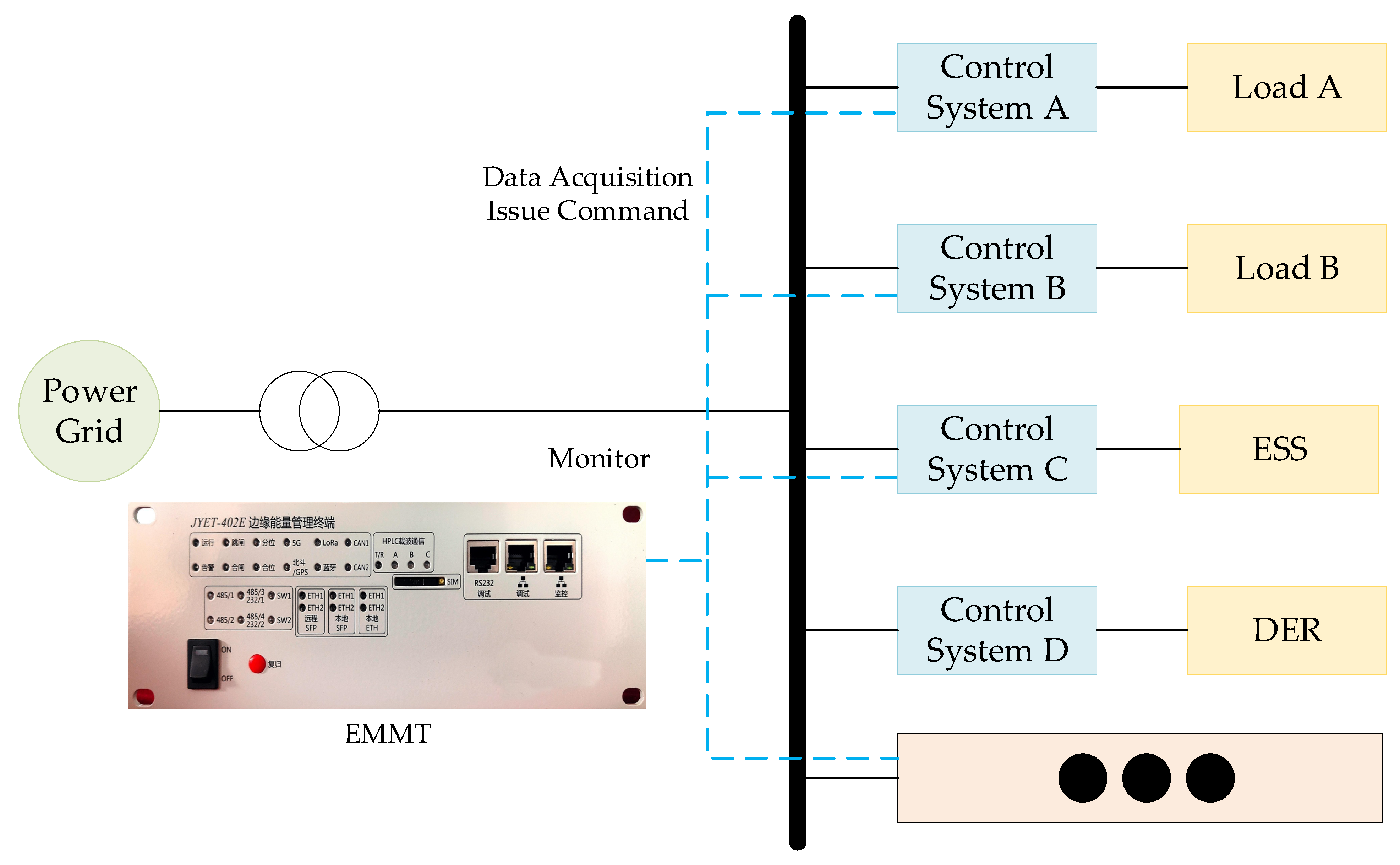
Figure 1 and Figure 2 illustrate the control architecture for flexible demand-side resources and DERs participating in FFR, where a virtual power plant (VPP) aggregates the flexible resources.
Figure 1.
Integrated Control Architecture for Multiple EEMTs.
Figure 2.
Communication and Control Based on a Single EEMT.
The traditional control paradigm relies on dispatch centers or aggregators, which increases communication delays and control intervals in frequency response. To enhance control performance, this paper designs a localized frequency detection and control scheme based on EEMT. Functioning as a frequency regulation substation, the EEMT performs the following tasks: (1) data exchange between the VPP and flexible resources, such as real-time frequency, voltage, and current; (2) calculation of the demand response based on frequency deviation; (3) solving the optimization problem according to the demand response; (4) issuing control commands based on the solution to the optimization problem.
Flexible loads can receive commands from the EEMT and execute power regulation through the power conversion system (PCS) at energy storage stations or the Energy Management System (EMS) in smart buildings.
3. Methodology
3.1. Fast Frequency Response Control Strategy
Flexible loads (also known as demand-side resources), such as thermostatically controlled loads (e.g., air conditioners, electric water heaters, and refrigerators) and EVs with inherent energy storage, have been used for primary and secondary frequency regulation in power systems. Traditionally, flexible loads performing primary frequency control typically employ non-coordinated, autonomous controllers that measure local frequency and adjust local load demand to provide primary frequency regulation analogous to that of synchronous generators [20]. Optimal operation in zero-carbon smart grid systems has been researched for synergistic effects of ESSs and demand-side management [21,22].
This paper proposes a novel control strategy for FFR based on the coordinated participation of DERs and flexible loads. In this strategy, individual NLUs communicate with the EEMT, which makes optimal dispatch decisions for scheduling controllable DERs and flexible loads. Leveraging high-speed local measurements, the strategy ensures the fulfillment of potentially time-varying local control objectives. Suitable for building-scale or factory-scale applications, it fully utilizes the flexibility of loads in building clusters to participate in FFR.
The design concept of this strategy is to use a NLU to provide demand response to grid frequency fluctuations by coordinating and optimizing control of DERs and loads within the unit. NLU is defined as DERs and loads located behind the meter of a typical electricity consumer. Considering a grid-connected smart residential building as a NLU, it comprises DERs and various typical loads, with DERs connected to a common bus via inverters. The loads can be categorized into M flexible loads and N non-flexible loads. Let denote the set of time-varying power demands (in kW) of the M flexible loads at time t (in seconds), and represent the set of power demands (in kW) of the N non-flexible loads at time t (in seconds). Assuming that flexible loads are turned off or on upon receiving a command , the effective power of the flexible loads can be expressed as:
The power provided by the inverter is denoted as (in kW). By convention, a positive value indicates that the inverter supplies power to the bus, while a negative value indicates that the inverter absorbs power from the bus. The inverter should operate within its rated upper and lower limits and respond extremely rapidly to the inverter control command . Let represent the power (in kW) imported from the grid, with its capacity upper and lower limits denoted as . According to Kirchhoff’s law, and neglecting losses, Equation (2) holds:
The control objective of this strategy is to minimize the total amount of load that must be shed while providing demand response. It is first assumed that the NLU is incentivized by the local system operator or a local aggregator to provide demand response services upon detection of a frequency anomaly event. A frequency anomaly event is defined as when Equation (3) or Equation (4) is met, i.e., when the measured frequency exceeds a predefined threshold. Upon detecting such an event, the NLU responds, and the post-disturbance grid power can be derived using Equation (5).
where is the nominal grid frequency (in Hz); and are the frequency deviation thresholds below and above the nominal frequency , respectively (in Hz); denotes the time instant when a frequency anomaly event is detected (in seconds); is the measured AC grid frequency at time (in Hz), is the measured power transfer value at the point of common coupling at time (in kW), and denotes the grid power dispatch command (in kW). represents the frequency response power of the NLU (in kW), which is determined by the droop controller designed in this paper.
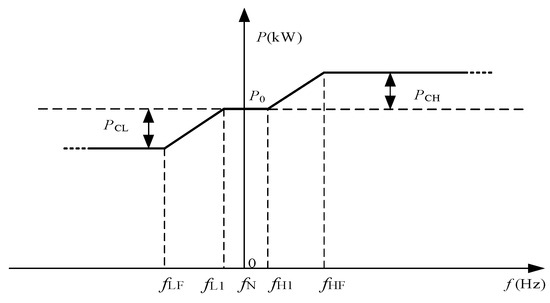
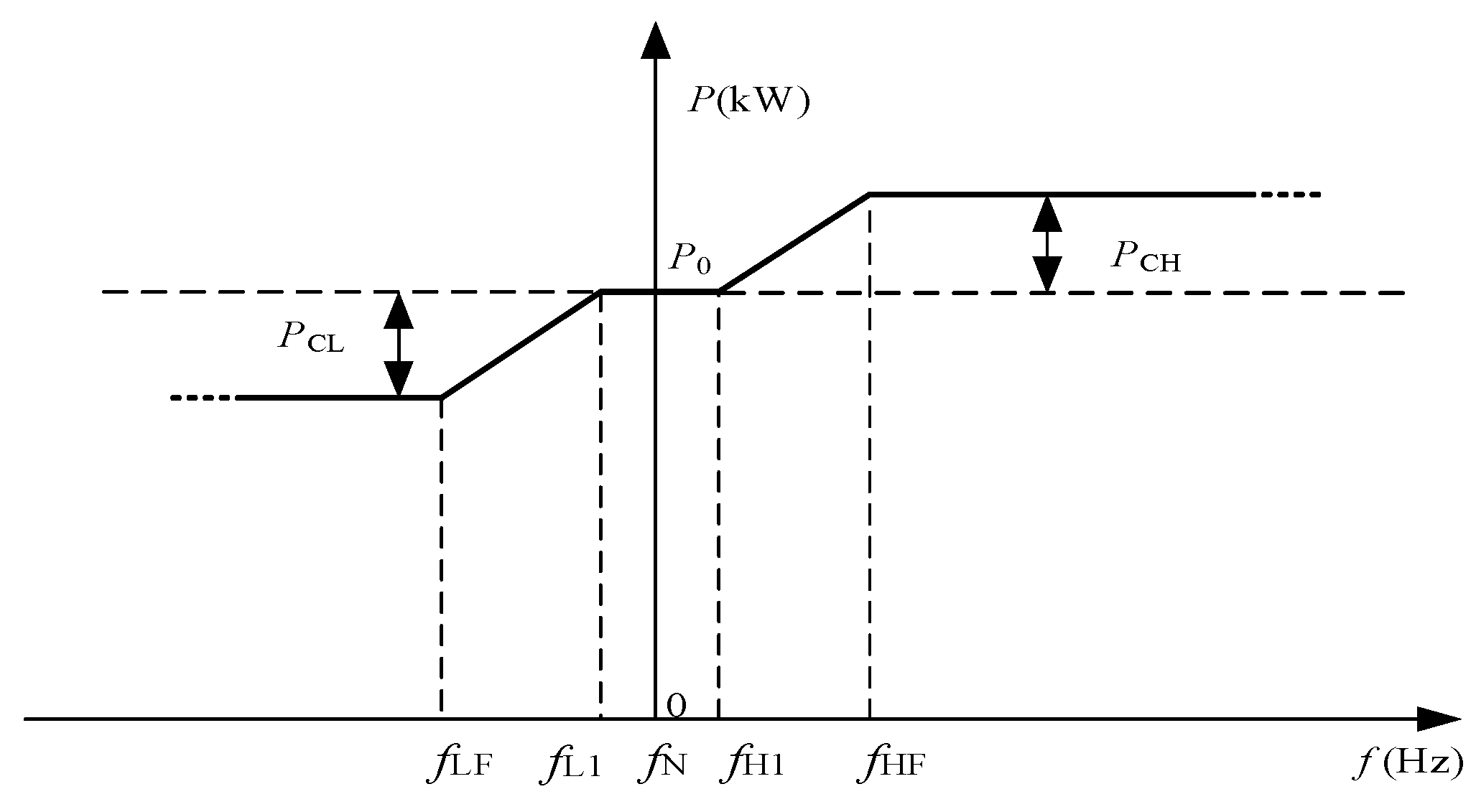
As a widely used control scheme in power systems, droop control enables flexible demand-side resources to participate in fast frequency response. In this paper, the grid frequency droop control curve for flexible loads based on edge terminals is illustrated in Figure 3. Table 1 summarizes the specific values of the parameters shown in Figure 3, derived from actual power grid operations. These values remain unchanged during the smart building and EV charging piles tests.
Figure 3.
Droop Control Curve Based on Edge Terminal.
Table 1.
The parameters of the droop controller in smart building and EV tests.
The response amount of the flexible load is determined by this frequency response function, as shown in Equation (6). Specifically, when the frequency deviation exceeds the deadband threshold, EEMT utilizes this frequency response function to calculate the response amount based on the magnitude of the frequency deviation.
where is the maximum upward response power (under-frequency response) and is the maximum downward response power (over-frequency response), both in kW; is the active power-frequency regulation coefficient for under-frequency response, determined through annual setting; is the active power-frequency regulation coefficient for over-frequency response, determined through annual setting; is the deadband threshold for under-frequency response activation (in Hz); is the full-response frequency for under-frequency response (in Hz); is the deadband threshold for over-frequency response activation (in Hz); is the full-response frequency for over-frequency response (in Hz); and is the frequency at the point of common coupling (in Hz).
Under an incentive-based revenue mechanism, the NLU operator (e.g., the owner of a smart residential building) tends to provide the net load response at minimal cost (such as avoiding load curtailment). Therefore, the control objective of this strategy is to prioritize the dispatch of inverters to meet the required net load response. If the inverter response alone is insufficient to meet the overall net load response requirement, the strategy minimizes curtailment of flexible loads to satisfy it. The mathematical formulation of this control objective is as follows:
where is a bipolar binary variable to represent the lower-frequency or over-frequency, and denotes the inverter power dispatch command (in kW). Based on real-world project experience, Equations (15) and (16) have been introduced to impose bounds on transmission losses. The objective function, Equation (7), prioritizes inverter-based power adjustments, followed by shiftable loads, with the primary aim of minimizing impact on end consumers.
3.2. Implementation Based on EEMT
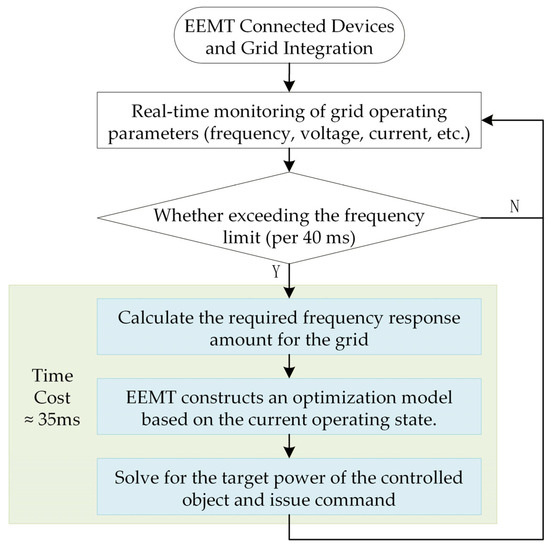
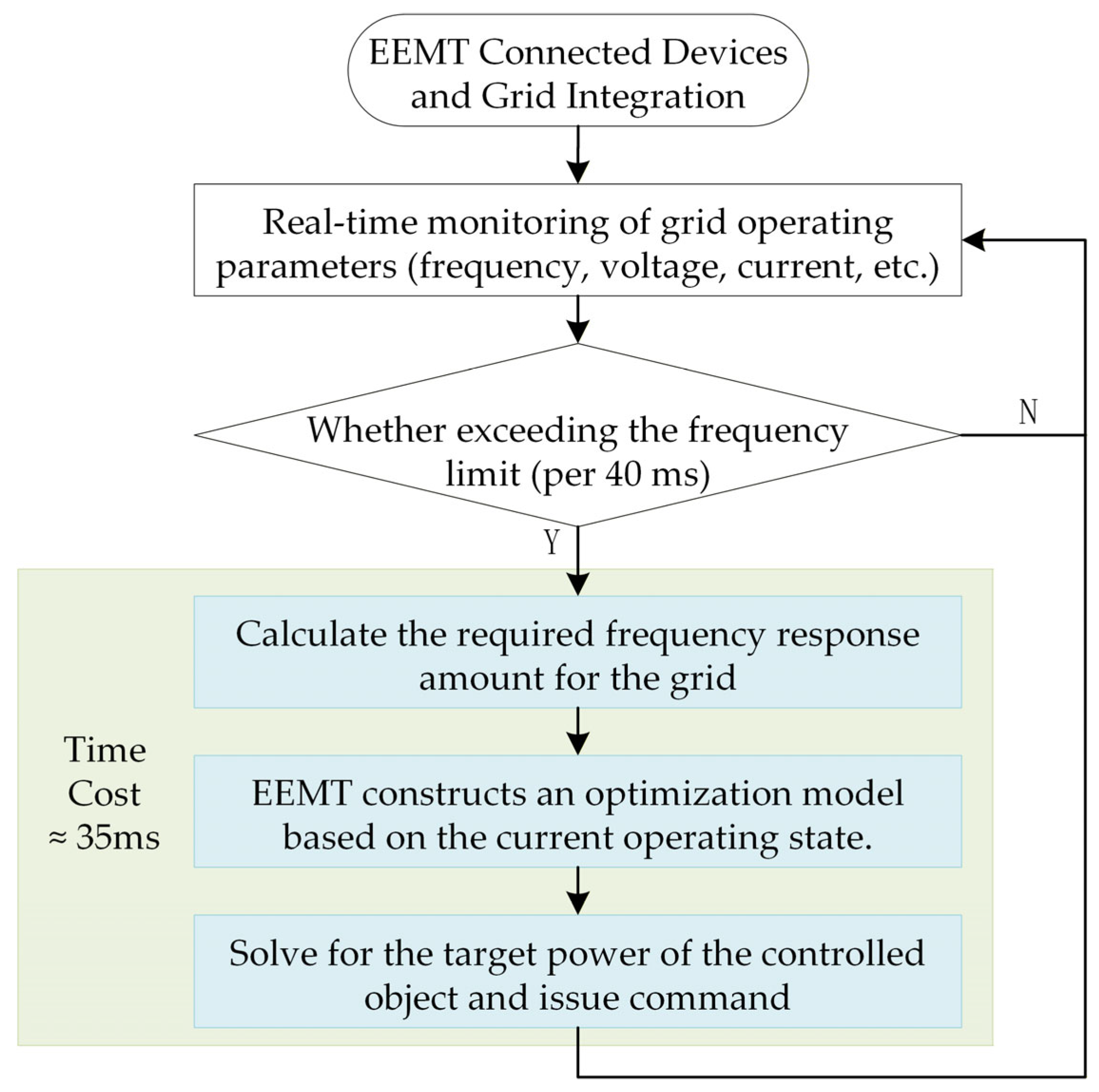
The fast frequency response control process based on the reuse of flexible demand-side resources proposed in this paper is illustrated in Figure 4. This control process, implemented through the EEMT, primarily consists of the following steps:
Figure 4.
Fast Frequency Response Control Process.
Step 1 (Real-time Monitoring of Grid Operating Status): After the edge terminal is successfully connected, it continuously monitors the grid’s operating status (including voltage, current, and frequency) at a 40-millisecond time scale. It is important to emphasize that frequency signals during normal grid operation are insufficient for evaluating the dynamic response performance of flexible demand-side resources, as they limit multi-scenario testing and hinder dynamic response assessment. While constructing a low-inertia microgrid system and inducing significant frequency fluctuations could serve as an experimental approach, this method is challenging to implement. Instead, this experiment utilizes a series of frequency variation signals generated by the edge terminal to simulate frequency fluctuations under different scenarios. Specific details are provided in the following section.
Step 2 (Frequency Anomaly Detection): The edge terminal monitors the frequency signal in real time to determine whether it exceeds preset limits (such as frequency deviation thresholds or rate-of-change-of-frequency thresholds). In this experiment, the edge terminal primarily detects frequency deviations to initiate load control.
Step 3 (Frequency Response): When the frequency deviation exceeds the threshold, the edge terminal immediately calculates the required response amount using the frequency response function and sends the corresponding control signals to the target devices. It is important to note that this process first requires identifying the real-time operating power of the controlled object as the baseline. The target operating power of the controlled object is then determined by combining this baseline with the response amount calculated from the frequency response function.
Step 4 (Target Solution): After receiving the control signals, the power of the inverter and the flexible loads are calculated based on the mathematical formulation of this optimization problem. During under-frequency (or over-frequency) conditions, Equation (13) yields a value of −1 (or 1). Equation (13) constrains the value of the objective function in Equation (7) to be always greater than or equal to zero. Equation (8) determines the frequency response amount at the moment of response. Equations (9)–(12) represent the upper and lower limit constraints for the grid input power and inverter power, respectively. Furthermore, the solution process must also satisfy the constraint given by Equations (14)–(16). When the inverter power adjustment can satisfy the net load response requirement, the objective function value is 0. In this case, only the inverter power is adjusted via commands and . When the inverter power adjustment alone cannot meet the net load response requirement, the objective function value becomes greater than 0. In this case, both the inverter power and the flexible loads are adjusted simultaneously via commands and , with the change in flexible loads being constrained. This approach achieves the net load response at minimal cost, fulfilling the control objective of minimizing the variation in flexible loads while prioritizing inverter power adjustment. The optimization model is solved using CPLEX, with a solution time of approximately 35 ms. To meet the computational requirements of EEMT, we implemented a dedicated software environment. It includes the Python 3.11.9 interpreter, along with essential libraries and tools such as Pyomo 6.7.3, pandas 2.2.1, NumPy 2.0.0, the CPLEX optimizer 20.1, and other necessary components.
4. NLUs Tests
To validate the effectiveness of DERs and flexible loads in frequency regulation, this paper presents experimental results from smart building and EV charging pile tests, together with the proposed control architecture and control strategy. Tests are all designed based on actual operational experience and technical specifications from the China Southern Power Grid (CSG). Considering that field tests require coordination among multiple organizations and entail substantial implementation costs, all experiments described in this paper have been conducted only once to date, without replication.
4.1. The Smart Building Tests
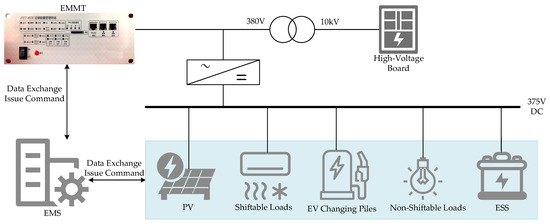
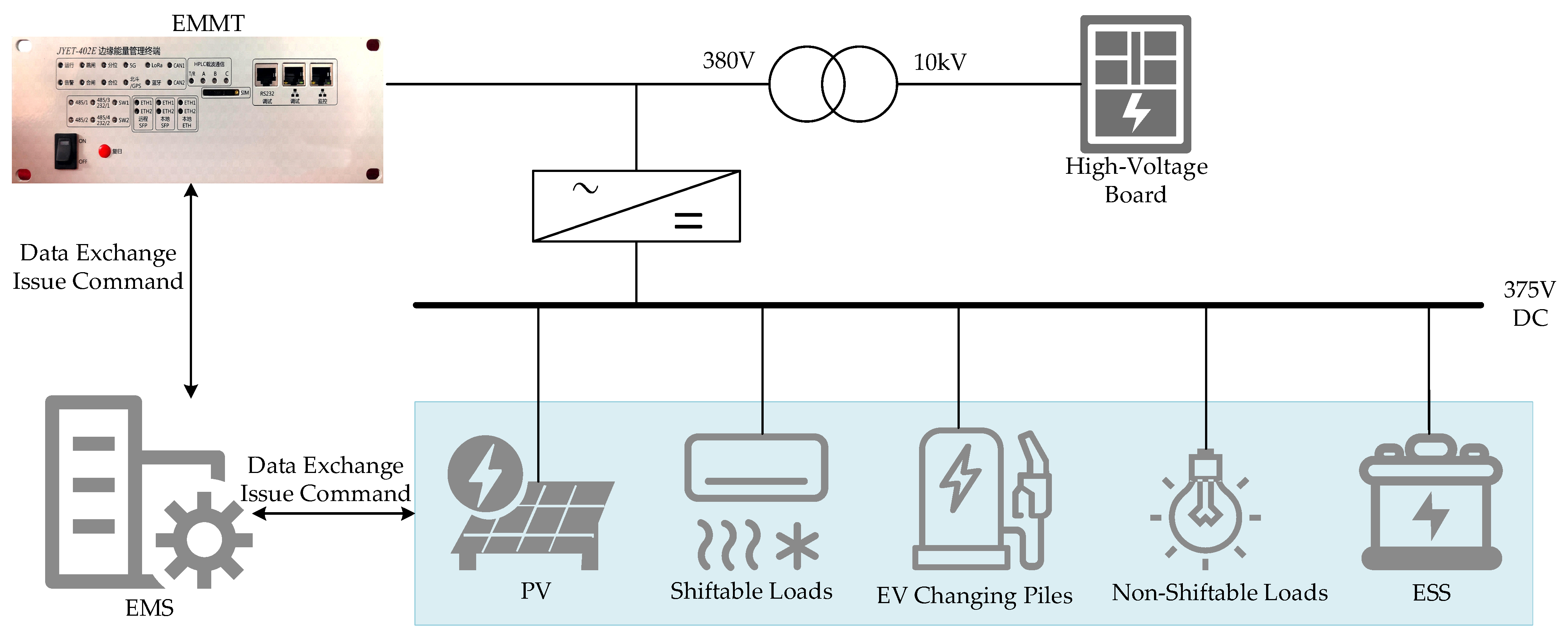
For the smart building experiment, the Future Building in Shenzhen was selected as the study site. Building R3, with a total floor area of 6259.4 m2 and a height of 37.5 m, served as the experimental subject. It is the world’s first fully DC, photovoltaic-integrated, energy-storage-enabled flexible building to be deployed at a real-world scale beyond laboratory conditions. The building employs a low-voltage DC distribution architecture with a ±375 V/48 V topology, enabling all electrical equipment—including lighting, air conditioning, and office appliances—to operate directly on DC power. The project plans to install 150 kWp of photovoltaic modules and configure the energy storage system with 60 kW/77 kWh lithium-titanate batteries and 120 kW/140 kWh lead–carbon batteries. The estimated maximum load is 150 kW, comprising DC loads such as air conditioning, lighting, outlets, charging piles, and data-center equipment, as illustrated in Figure 5.
Figure 5.
Schematic Diagram of the All-DC Smart Building Power Distribution Structure.
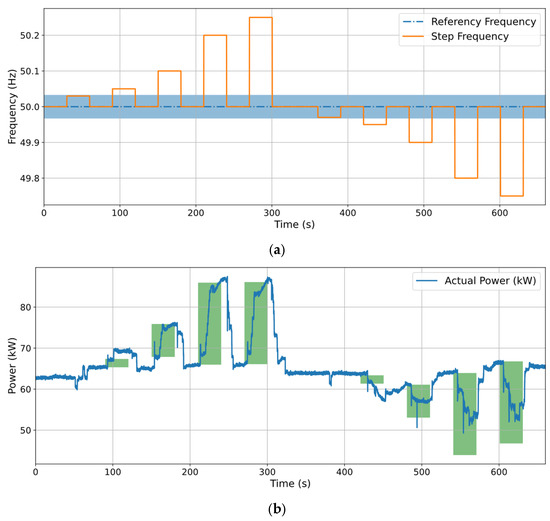
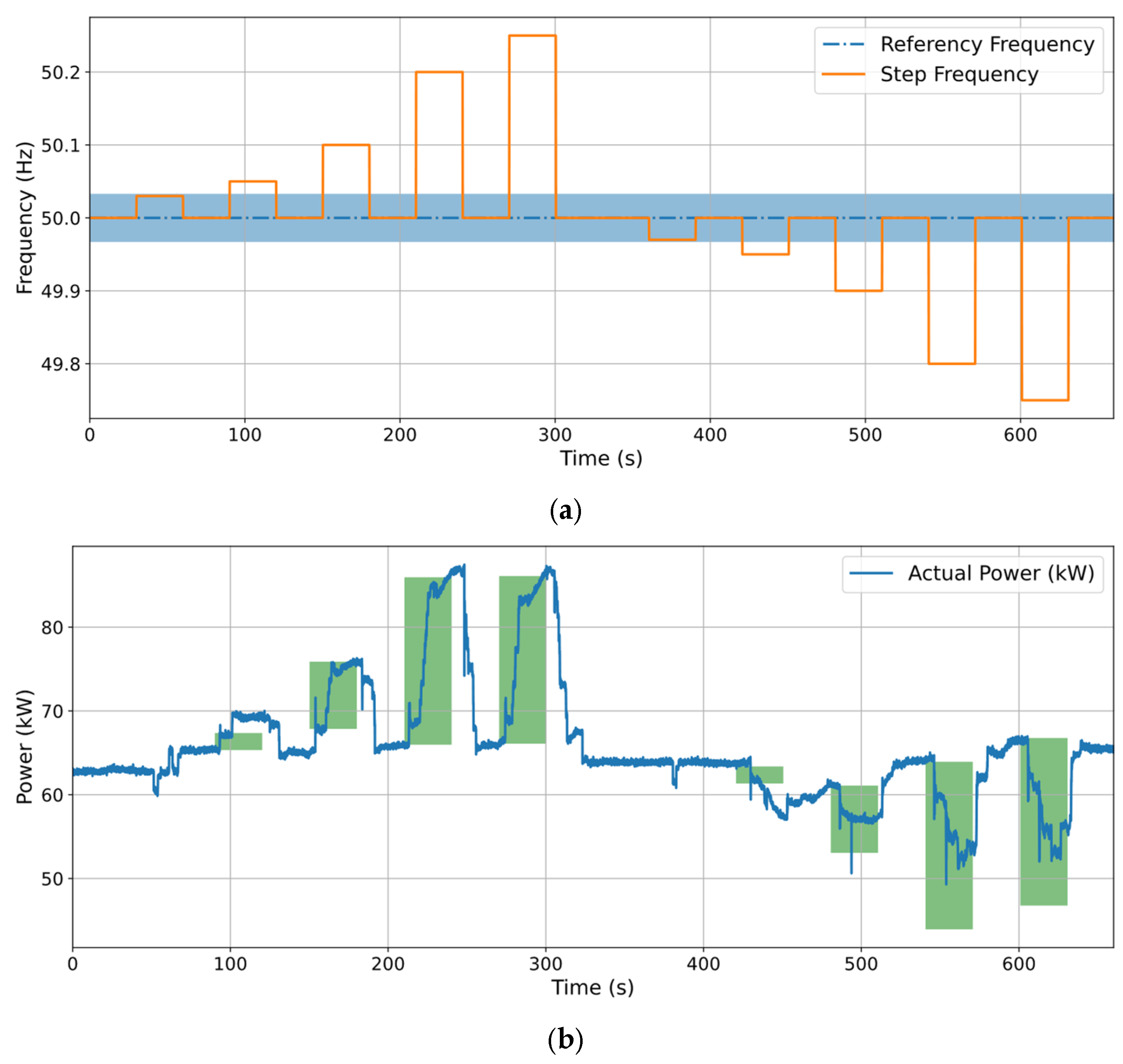
A frequency deadband of ±0.033 Hz was configured, within which the controlled device remains inactive, and the droop controller is set as Table 1. A series of frequency step-response tests were performed to evaluate the smart building’s performance as a flexible demand-side resource, with deviations of ±0.03 Hz, ±0.05 Hz, ±0.1 Hz, ±0.2 Hz, and ±0.25 Hz. Each test lasted 30 s. The frequency step signals used during the tests are shown in Figure 6a.
Figure 6.
Frequency step response tests for building loads and DERs: (a) The applied step frequency signal during smart building tests. The blue shaded region indicates the frequency dead-band (±0.033 Hz around 50 Hz); (b) The actual active power response of the smart building. The green-shaded areas highlight the expected theoretical power deviations for the frequency steps.
Figure 6b presents the smart building’s actual power variations during the frequency response tests. It is noteworthy that all experimental data used in this study are field-measured values without any post-processing or filtering. The raw dataset faithfully captures the intrinsic dynamic response characteristics of the smart building during the frequency response tests.
When a +0.03 Hz frequency step is applied, the building load does not respond, as the deviation is below the 0.033 Hz activation threshold. As the magnitude of the frequency deviation increases, the building’s upward regulation capability progressively improves, reaching its maximum at a +0.2 Hz step change. Notably, for any frequency step exceeding this threshold, the regulation magnitude remains constant. The response is identical for both +0.2 Hz and +0.25 Hz step changes in this paper. When a negative frequency step change occurs, the variation in the building load’s target power follows the same trend as for a positive frequency step change, but in the opposite direction.
Compared to the theoretical power variation, we summarize the results in Table 2. The actual measured power output follows the same trend but exhibits two notable response characteristics:
Table 2.
The evaluation of smart building tests.
- (1)
- A significant response delay;
- (2)
- A control error between the theoretical and actual power.
4.2. The EV Charging Pile Tests
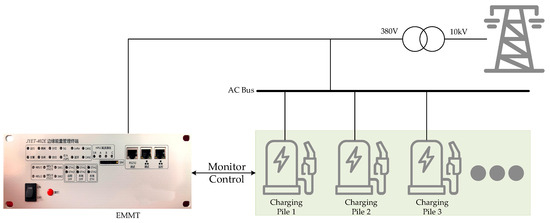
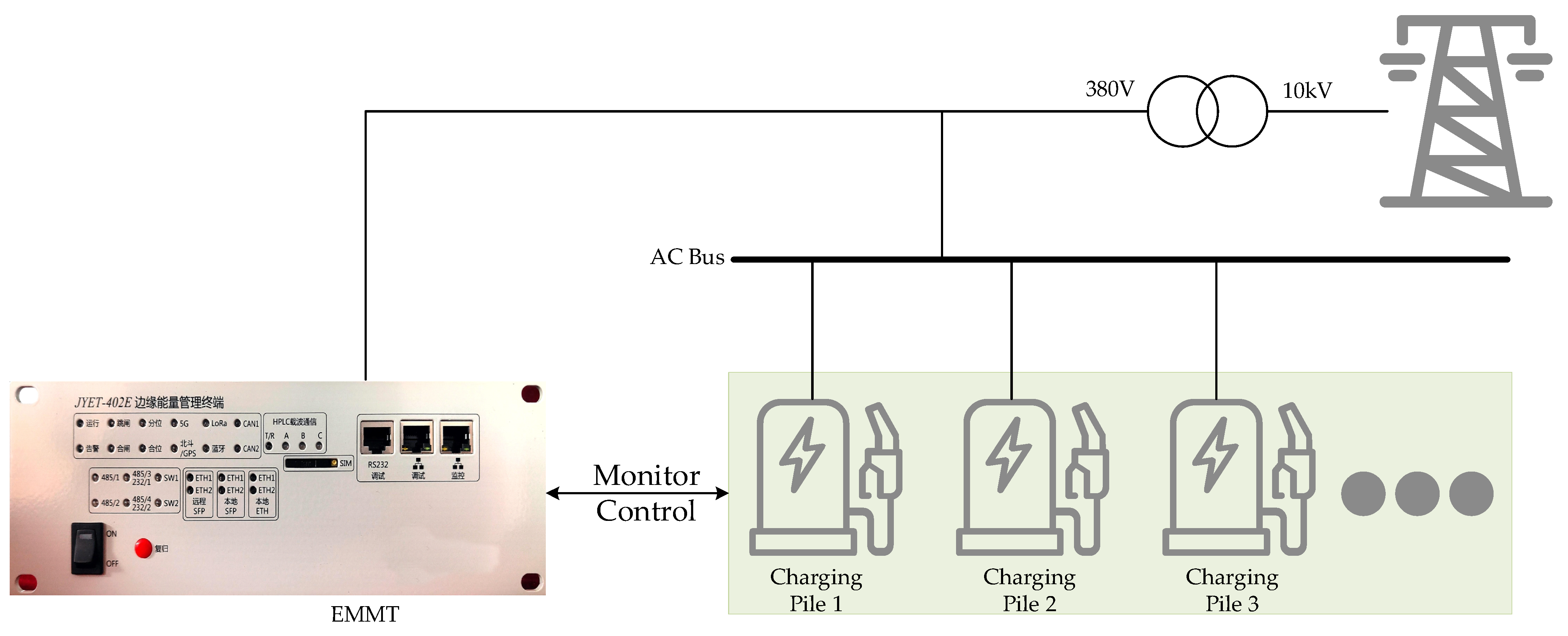
For the EV charging pile regulation performance test, a large charging station located in Shenzhen was selected. The station covers a total area of 5600 square meters and is equipped with 33 units of 240 kW dual-gun DC charging piles developed and manufactured by Yonglian Technology (Shenzhen City, China), with a total installed capacity of 7920 kW. The station is supported by four 2000 kVA box-type transformers that supply power to the charging piles and office facilities. It provides charging services for nearby new energy vehicles, including pure electric dump trucks, tourist coaches, taxis, and logistics vehicles. The station can simultaneously meet the charging demand of 66 electric taxis and serve up to 200 new energy vehicles per day. For this test, a charging pile with an interactive control interface was selected, and rapid regulation of the charging load was achieved through an edge control terminal. As shown in Figure 7, during vehicle charging, the edge terminal adjusts the charging power in response to the grid frequency deviation signal.
Figure 7.
The Connection Between EV Charging Piles and Power Grid.
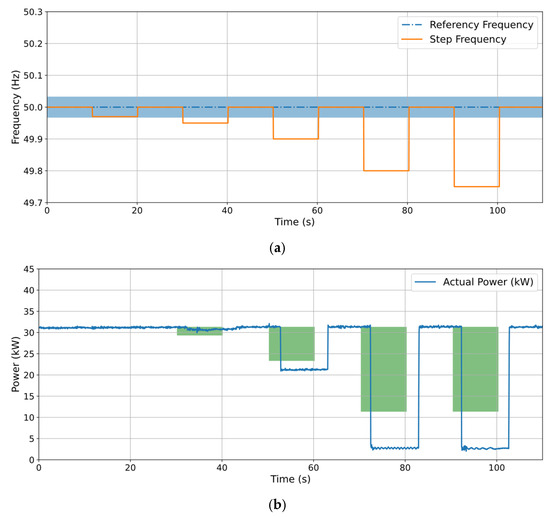
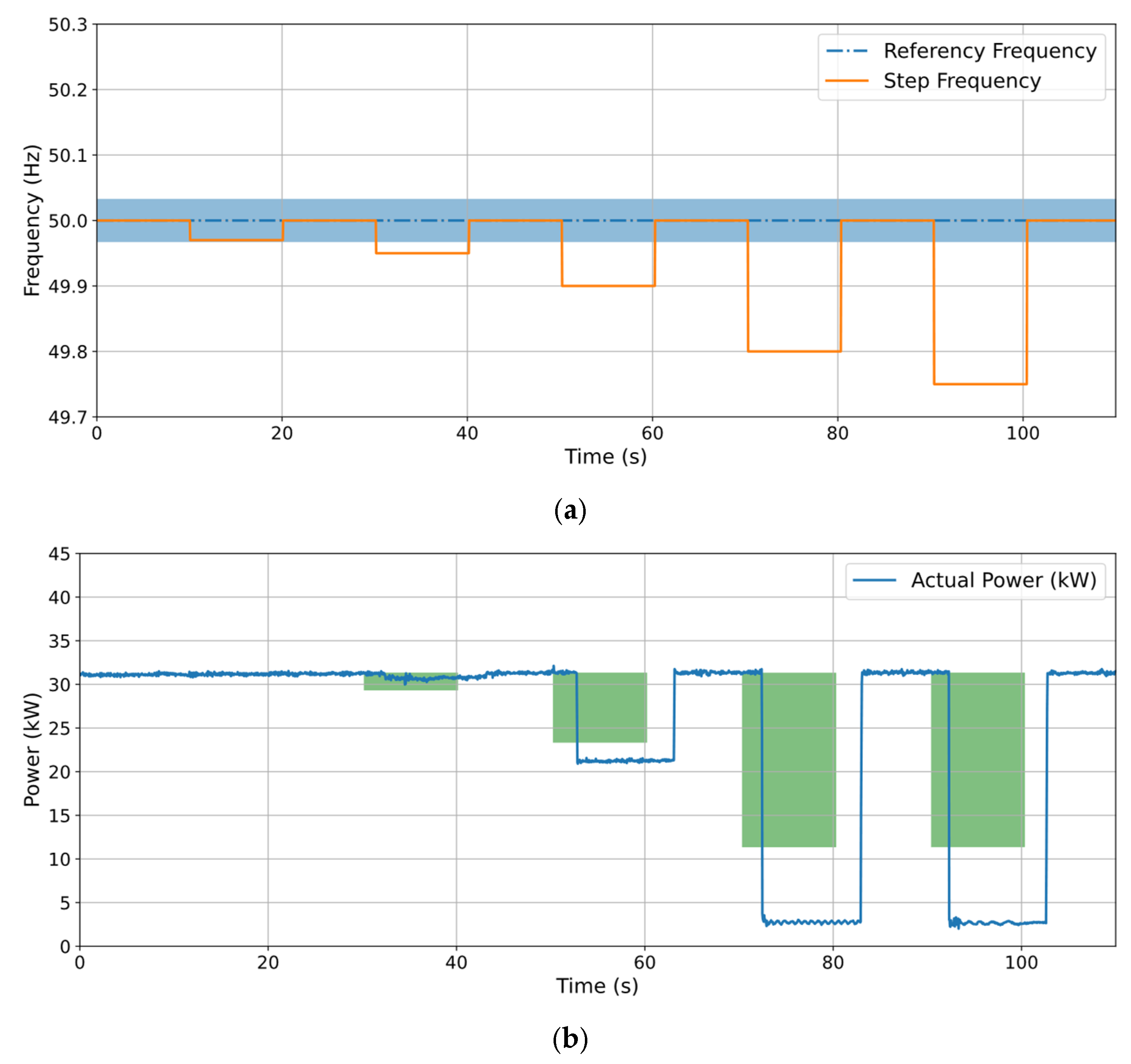
In the field tests, the experimental procedure for the EV charging pile was similar to that of the smart building. However, due to regulatory constraints and operational requirements of the test equipment at the time, we could not meet the necessary conditions to conduct vehicle-to-grid (V2G) charging experiments. The test protocol was adjusted by removing scenarios with positive frequency deviations, reflecting the unidirectional power regulation capability of traditional charging infrastructure. The frequency step response tests employed step changes of −0.03 Hz, −0.05 Hz, −0.1 Hz, −0.2 Hz, and −0.25 Hz, each lasting 10 s. The frequency step signals used during the tests are shown in Figure 8a.
Figure 8.
Frequency step response tests for EV charging piles: (a) The applied step frequency signal during EV charging pile tests. The blue shaded region indicates the frequency dead-band (±0.033 Hz around 50 Hz); (b) The actual active power response of the EV charging piles. The green-shaded areas highlight the expected theoretical power deviations for the frequency steps.
Figure 8b presents the results of the EV charging piles under different frequency response tests. Table 3 summarizes the response delay, response time, settling time, and overshoot in EV charging pile tests.
Table 3.
The evaluation of EV charging pile tests.
Compared with the smart building test results, three key differences in response characteristics are observed:
- (1)
- Shorter response delay, response time, and settling time;
- (2)
- An overshoot occurs during negative frequency steps—opposite to the smart building’s behavior;
- (3)
- After disturbance recovery, the measured load returns to its original level.
5. The Wind Farm Tests
Based on the results of the smart building and EV charging pile experiments, the response delay of NLUs during frequency regulation is relatively large. Consequently, NLUs alone cannot meet the requirements of inertial response. The wind farm can meet the requirements for inertial response, but only when sufficient reserve power is maintained, which leads to curtailment and reduced economic efficiency. Without reserve power, secondary frequency drops may occur. Therefore, this paper proposes a coordinated scheme in which wind farms and NLUs jointly participate in frequency regulation to mitigate NLUs’ response delay and the secondary frequency drop in wind farms. Corresponding wind farm experiments have been conducted to validate this approach.
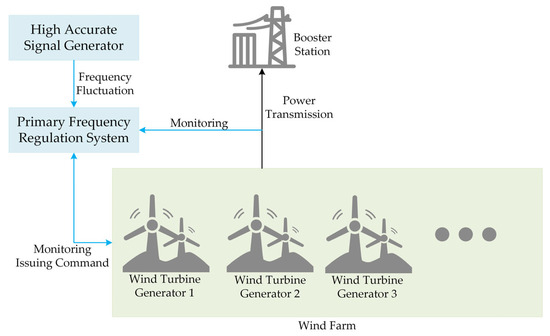
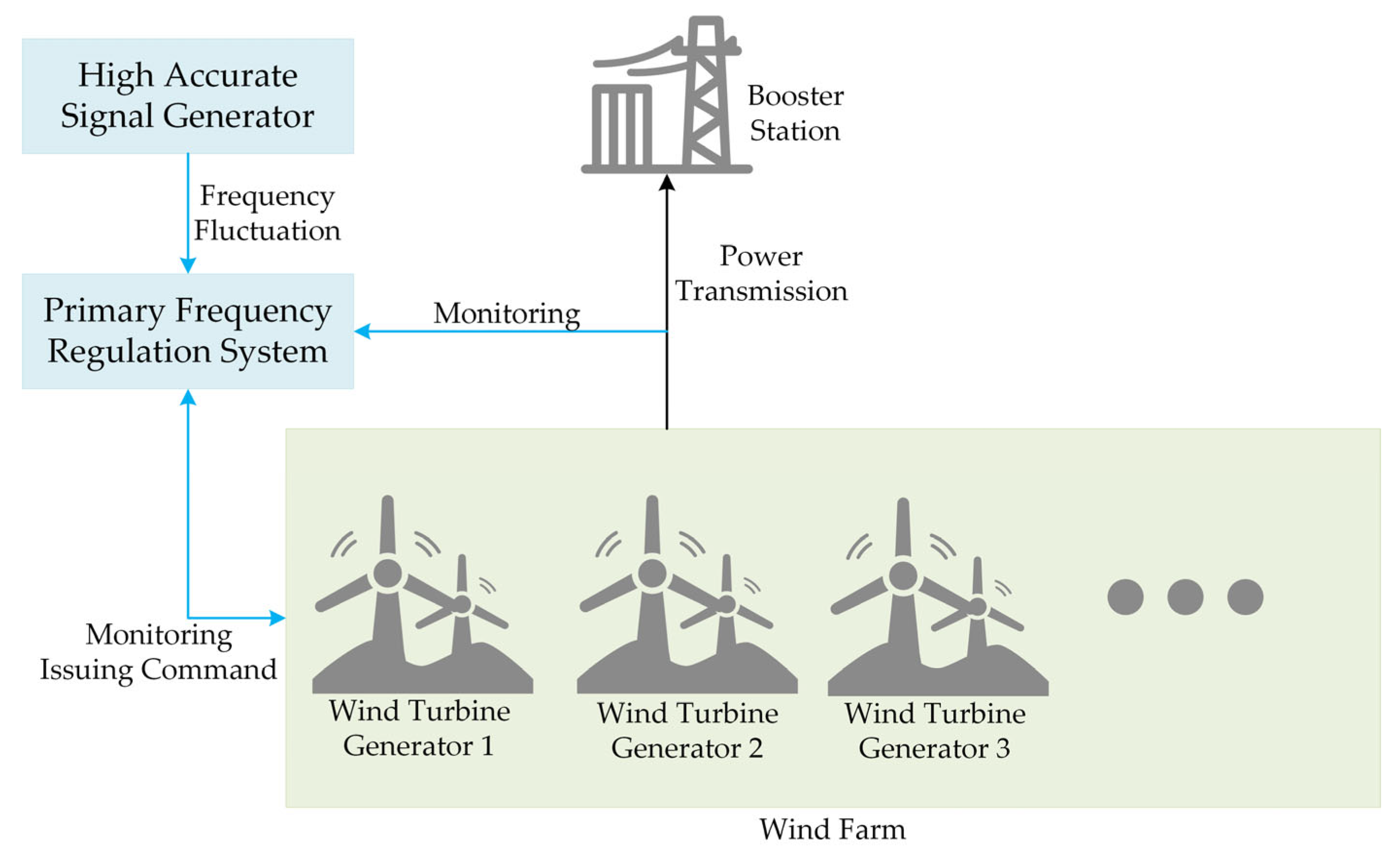
For exploiting the capability of the frequency regulation in wind turbines, wind turbine virtual inertia experiments were conducted on the Xiyangtang wind farm. The entire architecture is shown in Figure 9. The wind farm is equipped with a primary frequency regulation system (PFRS), which monitors the bus frequency signal in the booster station and participates in frequency regulation. PFRS can calculate the power change in the wind farm based on the RoCoF, as shown in Equation (17), and dispatch the power change to each wind turbine generator according to the actual power of the wind turbine generators in the wind farm. To accommodate the frequency fluctuations required by the experiments, a highly accurate signal generator is used.
where is power change in the wind farm for frequency response (in MW); is the inertia time constant of the wind farm (in seconds); is the RoCoF observed by PFRS (in Hz/s), is the rated power capacity of the wind farm (in MW).
Figure 9.
Schematic Diagram of the wind farm experiment for frequency regulation.
Table 4 and Table 5 summarize the specific parameter values used in Equations (6) and (17) for the wind farm + NLU experiment. These values are derived from actual power grid operations and remain unchanged throughout the field tests.
Table 4.
The parameters of Equation (17).
Table 5.
The parameters of the droop controller in wind farm tests.
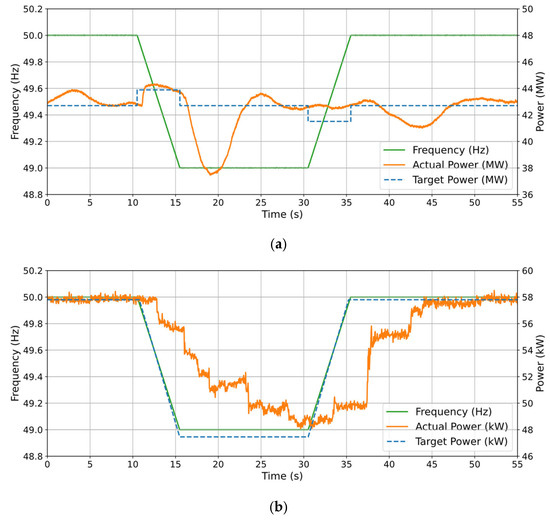
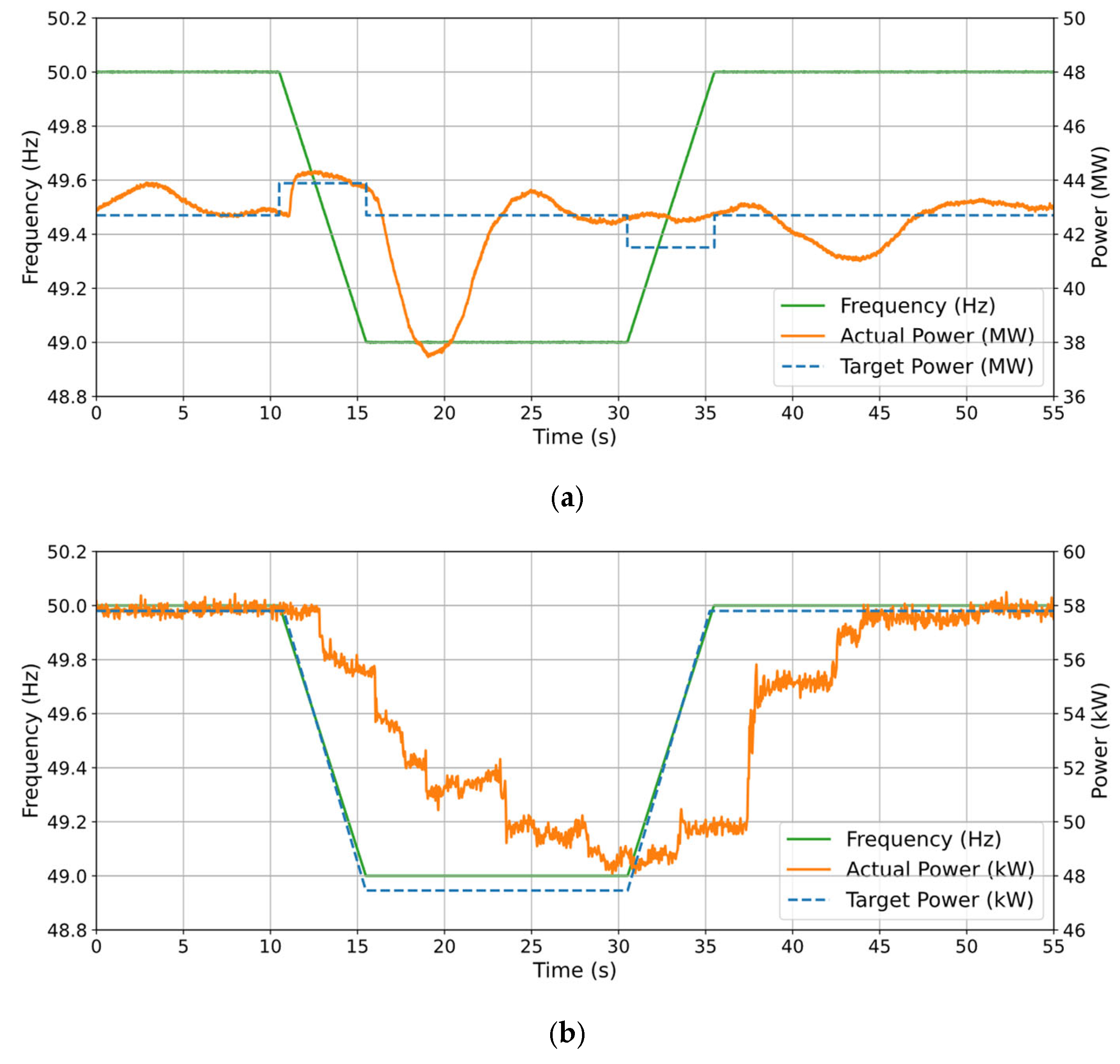
Figure 10a illustrates the variations in system frequency, target power, and actual power of the wind farm during the inertial response. The test was conducted without reserve capacity, under a high-load operating condition, and with the wind farm solely providing inertial response. When the frequency begins to decline, corresponding to a RoCoF of −0.2 Hz/s, the wind farm’s actual power output is required to increase in alignment with the target power. When the RoCoF returns to 0 Hz/s, the actual power should recover to its pre-disturbance value. However, a noticeable reduction in actual power is observed, which leads to a secondary frequency drop. This power reduction also causes the wind farm to fail to provide the required power regulation when the RoCoF reaches +0.2 Hz/s.
Figure 10.
The frequency regulation experiments on different objects: (a). The wind farm; (b). The smart building.
Figure 10b presents the variations in system frequency, target power, and actual power of the smart building during frequency regulation. Table 6 summarizes the response delay, response time, settling time, and overshoot in wind farm + NLU tests.
Table 6.
The evaluation of wind farm and smart building tests.
The frequency variation observed in the smart building matches that of the wind farm. However, its actual power response shows a noticeable delay in participating in frequency regulation. Specifically, when the wind farm’s output begins to decrease, the smart building starts adjusting its power at that moment. By comparing the wind farm and smart building experiments, this paper demonstrates that combining these resources enables more effective use of modern power system assets for frequency regulation. This coordination enhances both system stability and safety.
6. Conclusions
This paper fully leverages grid resources to demonstrate the collaborative participation of DERs, flexible loads, and wind farms in FFR applications, and presents a comprehensive framework for enabling FFR through the adaptive control of DERs and flexible loads. Firstly, a control system centered on EEMTs was designed and deployed, supported by a grid-level monitoring master station that renders FFR resources dispatchable, detectable, measurable, and tradable. Secondly, a novel control strategy suitable for building- or factory-level scenarios is proposed, which achieves optimal scheduling of DERs and flexible loads. By leveraging high-speed local measurements to track time-varying control targets dynamically, the strategy effectively harnesses adjustable resources to support FFR. Eventually, this paper proposes a coordinated scheme in which wind farms and NLUs jointly participate in frequency regulation, aiming to mitigate NLUs’ response delay and the secondary frequency drop observed in wind farms.
Field tests validate the effectiveness of adaptively and coordinately controlling adjustable resources for FFR:
- (1)
- The proposed approach enhances system inertia and frequency resilience in grids with high renewable penetration. It leverages existing demand-side flexibility and renewable generation—without requiring large-scale battery storage. This offers a cost-effective pathway to grid stability.
- (2)
- The coordinated participation of wind farms and NLUs delivers significant synergistic value. Wind turbines provide near-instantaneous power support but experience secondary frequency drops after de-loading. In contrast, NLUs offer sustained regulation capacity but respond more slowly. By operating jointly, they effectively compensate for each other’s limitations. This results in a more robust and balanced FFR service.
Looking ahead, we recommend that future deployments prioritize standardized edge-terminal interfaces and low-latency local communication protocols. This will support scalability and interoperability. Electricity markets—especially ancillary service markets—should also evolve. They need to recognize and compensate hybrid resources, such as the NLU–wind farm ensemble, based on their combined dynamic performance rather than treating them as isolated assets. Such market reforms would incentivize wider adoption of coordinated FFR strategies. They would also accelerate the transition to a more flexible and resilient power system.
Author Contributions
Conceptualization, S.W. and Y.C.; Methodology, S.W. and Y.L.; Software, S.W.; Validation, S.W. and Z.Z.; Formal analysis, S.W. and Z.Z.; Investigation, S.W.; Resources, S.W. and Y.C.; Data curation, S.W. and Z.Z.; Writing—original draft, S.W.; Writing—review & editing, S.W., Y.L., J.H., Y.X. and Y.C.; Visualization, S.W. and Z.Z.; Supervision, Y.L., Y.G., J.H., Y.X. and Y.C.; Project administration, Y.X.; Funding acquisition, Y.X. All authors have read and agreed to the published version of the manuscript.
Funding
This research was supported in part by the Guangdong Basic and Applied Basic Research Foundation (Grant No. 2025A1515010673) and by the National Key Research and Development and China Southern Power Grid Co., Ltd. Key Project (Grant No. 2022YFB2403500). The Article Processing Charge (APC) was funded by Y.X.
Data Availability Statement
The datasets presented in this article are not readily available because proprietary restrictions. Requests to access the datasets should be directed to corresponding author.
Acknowledgments
We thank Shenzhen Institute of Building Research Co., Ltd. and Shenzhen Yonglian Technology Co., Ltd. for providing the necessary equipment and data used in the field tests.
Conflicts of Interest
Authors Yingqi Liang, Yan Guo, Jiyu Huang and Yiping Chen were employed by the company China Southern Power Grid Co., Ltd. The remaining authors declare that the research was conducted in the absence of any commercial or financial relationships that could be construed as a potential conflict of interest.
Correction Statement
This article has been republished with a minor correction to the Funding statement. This change does not affect the scientific content of the article.
Abbreviations
The following abbreviations are used in this manuscript:
| DER | Distributed Energy Resources |
| DR | Demand Response |
| EEMT | Edge Energy Management Terminal |
| EMS | Energy Management System |
| ESS | Energy Storage System |
| EV | Electric Vehicle |
| FFR | Fast Frequency Response |
| MPPT | Maximum Power Point Tracking |
| NLU | Net Load Unit |
| OPPT | Optimized Power Point Tracking |
| PV | Photovoltaics |
| PFRS | Primary Frequency Regulation System |
| PCS | Power Conversion System |
| RoCoF | Rate of Change of Frequency |
| VPP | Virtual Power Plant |
References
- Hansen, K.; Breyer, C.; Lund, H. Status and perspectives on 100% renewable energy systems. Energy 2019, 175, 471–480. [Google Scholar] [CrossRef] [Scilit]
- Al Kez, D.; Foley, A.M.; Morrow, D.J. Analysis of fast frequency response allocations in power systems with high system non-synchronous penetrations. IEEE Trans. Ind. Appl. 2022, 58, 3087–3101. [Google Scholar] [CrossRef] [Scilit]
- Fernández-Guillamón, A.; Gómez-Lázaro, E.; Muljadi, E.; Molina-García, Á. Power systems with high renewable energy sources: A review of inertia and frequency control strategies over time. Renew. Sustain. Energy Rev. 2019, 115, 109369. [Google Scholar] [CrossRef] [Scilit]
- Yan, R.; Masood, N.-A.; Saha, T.K.; Bai, F.; Gu, H. The anatomy of the 2016 South Australia blackout: A catastrophic event in a high renewable network. IEEE Trans. Power Syst. 2018, 33, 5374–5388. [Google Scholar] [CrossRef] [Scilit]
- Bialek, J. What does the GB power outage on 9 August 2019 tell us about the current state of decarbonised power systems? Energy Policy 2020, 146, 111821. [Google Scholar] [CrossRef] [Scilit]
- Ochoa, D.; Martinez, S. Fast-frequency response provided by DFIG-wind turbines and its impact on the grid. IEEE Trans. Power Syst. 2016, 32, 4002–4011. [Google Scholar] [CrossRef] [Scilit]
- Lyu, X.; Groß, D. Grid forming fast frequency response for PMSG-based wind turbines. IEEE Trans. Sustain. Energy 2023, 15, 23–38. [Google Scholar] [CrossRef] [Scilit]
- Meng, L.; Zafar, J.; Khadem, S.K.; Collinson, A.; Murchie, K.C.; Coffele, F.; Burt, G.M. Fast frequency response from energy storage systems—A review of grid standards, projects and technical issues. IEEE Trans. Smart Grid 2019, 11, 1566–1581. [Google Scholar] [CrossRef] [Scilit]
- Hamwi, M.; Lizarralde, I.; Legardeur, J. Demand response business model canvas: A tool for flexibility creation in the electricity markets. J. Clean. Prod. 2021, 282, 124539. [Google Scholar] [CrossRef] [Scilit]
- Tang, H.; Wang, S. Energy flexibility quantification of grid-responsive buildings: Energy flexibility index and assessment of their effectiveness for applications. Energy 2021, 221, 119756. [Google Scholar] [CrossRef] [Scilit]
- Klein, K.; Herkel, S.; Henning, H.M.; Felsmann, C. Load shifting using the heating and cooling system of an office building: Quantitative potential evaluation for different flexibility and storage options. Appl. Energy 2017, 203, 917–937. [Google Scholar] [CrossRef] [Scilit]
- Patteeuw, D.; Henze, G.P.; Helsen, L. Comparison of load shifting incentives for low-energy buildings with heat pumps to attain grid flexibility benefits. Appl. Energy 2016, 167, 80–92. [Google Scholar] [CrossRef] [Scilit]
- Liu, J.; Zhang, W.; Liu, Y. Primary frequency response from the control of LED lighting loads in commercial buildings. IEEE Trans. Smart Grid 2016, 8, 2880–2889. [Google Scholar] [CrossRef] [Scilit]
- Cai, J.; Braun, J.E. A regulation capacity reset strategy for HVAC frequency regulation control. Energy Build. 2019, 185, 272–286. [Google Scholar] [CrossRef] [Scilit]
- Wang, H.; Wang, S. A disturbance compensation enhanced control strategy of HVAC systems for improved building indoor environment control when providing power grid frequency regulation. Renew. Energy 2021, 169, 1330–1342. [Google Scholar] [CrossRef] [Scilit]
- Vrettos, E.; Andersson, G. Scheduling and provision of secondary frequency reserves by aggregations of commercial buildings. IEEE Trans. Sustain. Energy 2015, 7, 850–864. [Google Scholar] [CrossRef] [Scilit]
- Wang, H.; Wang, S.; Tang, R. Development of grid-responsive buildings: Opportunities, challenges, capabilities and applications of HVAC systems in non-residential buildings in providing ancillary services by fast demand responses to smart grids. Appl. Energy 2019, 250, 697–712. [Google Scholar] [CrossRef] [Scilit]
- Fernández-Muñoz, D.; Pérez-Díaz, J.I.; Guisández, I.; Chazarra, M.; Fernandez-Espina, A. Fast frequency control ancillary services: An international review. Renew. Sustain. Energy Rev. 2020, 120, 109662. [Google Scholar] [CrossRef] [Scilit]
- Rollert, K.E. Demand response aggregators as institutional entrepreneurs in the European electricity market. J. Clean. Prod. 2022, 353, 131501. [Google Scholar] [CrossRef] [Scilit]
- Hammerstrom, D.J.; Brous, J.; Chassin, D.P.; Horst, G.R.; Kajfasz, R.; Michie, P.; Oliver, T.V.; Carlon, T.A.; Eustis, C.; Jarvegren, O.M.; et al. Pacific Northwest GridWiseTM Testbed Demonstration Projects; Part II. Grid FriendlyTM Appliance Project; Technical Report; Pacific Northwest National Laboratory (PNNL): Richland, WA, USA, 2007. [Google Scholar]
- Eltamaly, A.M.; Almutairi, Z.A. Nested Optimization Algorithms for Accurately Sizing a Clean Energy Smart Grid System, Considering Uncertainties and Demand Response. Sustainability 2025, 17, 2744. [Google Scholar] [CrossRef] [Scilit]
- Almutairi, Z.A.; Eltamaly, A.M. Synergistic Effects of Energy Storage Systems and Demand-Side Management in Optimizing Zero-Carbon Smart Grid Systems. Energies 2024, 17, 5637. [Google Scholar] [CrossRef] [Scilit]

Disclaimer/Publisher’s Note: The statements, opinions and data contained in all publications are solely those of the individual author(s) and contributor(s) and not of MDPI and/or the editor(s). MDPI and/or the editor(s) disclaim responsibility for any injury to people or property resulting from any ideas, methods, instructions or products referred to in the content. |
© 2025 by the authors. Licensee MDPI, Basel, Switzerland. This article is an open access article distributed under the terms and conditions of the Creative Commons Attribution (CC BY) license (https://creativecommons.org/licenses/by/4.0/).