LITransformer: Transformer-Based Vehicle Trajectory Prediction Integrating Spatio-Temporal Attention Networks with Lane Topology and Dynamic Interaction


Abstract
1. Introduction
- Complex spatio-temporal coupling: The behavior of vehicles is influenced by both temporal and spatial factors, and interaction patterns vary significantly across different time points. For instance, Gao et al. [16] demonstrated that integrating spatial and temporal features with graph attention networks can improve vehicle trajectory prediction in urban traffic scenes. However, their design still relies on a relatively fixed way of combining spatial relationships and temporal evolution, which makes it difficult to fully capture highly dynamic and fine-grained spatio-temporal coupling patterns in dense traffic. Existing independent modeling methods face challenges in effectively capturing the spatio-temporal coupling, resulting in inconsistent prediction outcomes.
- Effective fusion of multi-level interaction information: Real-world traffic scenarios involve various interaction modes, such as vehicle-to-vehicle and vehicle-to-lane interactions, and the importance of these interactions dynamically changes across different scenarios. For instance, Xie et al. [17] demonstrated that modeling traffic agents on a spatial–temporal topology graph can effectively exploit multi-agent interaction information for trajectory prediction. Nevertheless, their fusion of different interaction levels is largely determined by the predefined graph structure, which makes it difficult to flexibly adapt to diverse and rapidly changing interaction patterns in heterogeneous traffic. How to adaptively model and fuse these multi-level interaction patterns while avoiding the structural parameter assumptions of traditional methods remains an open problem.
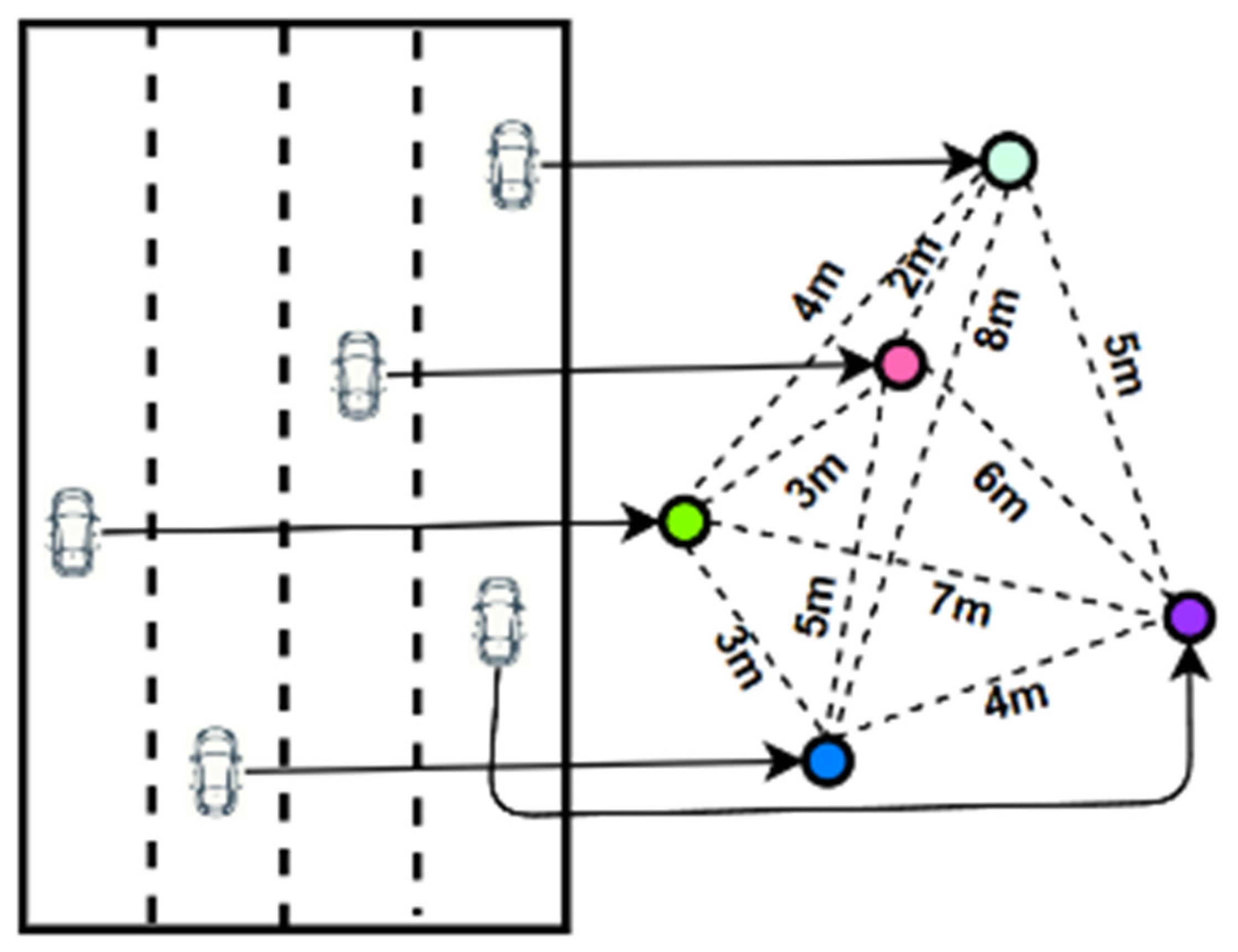
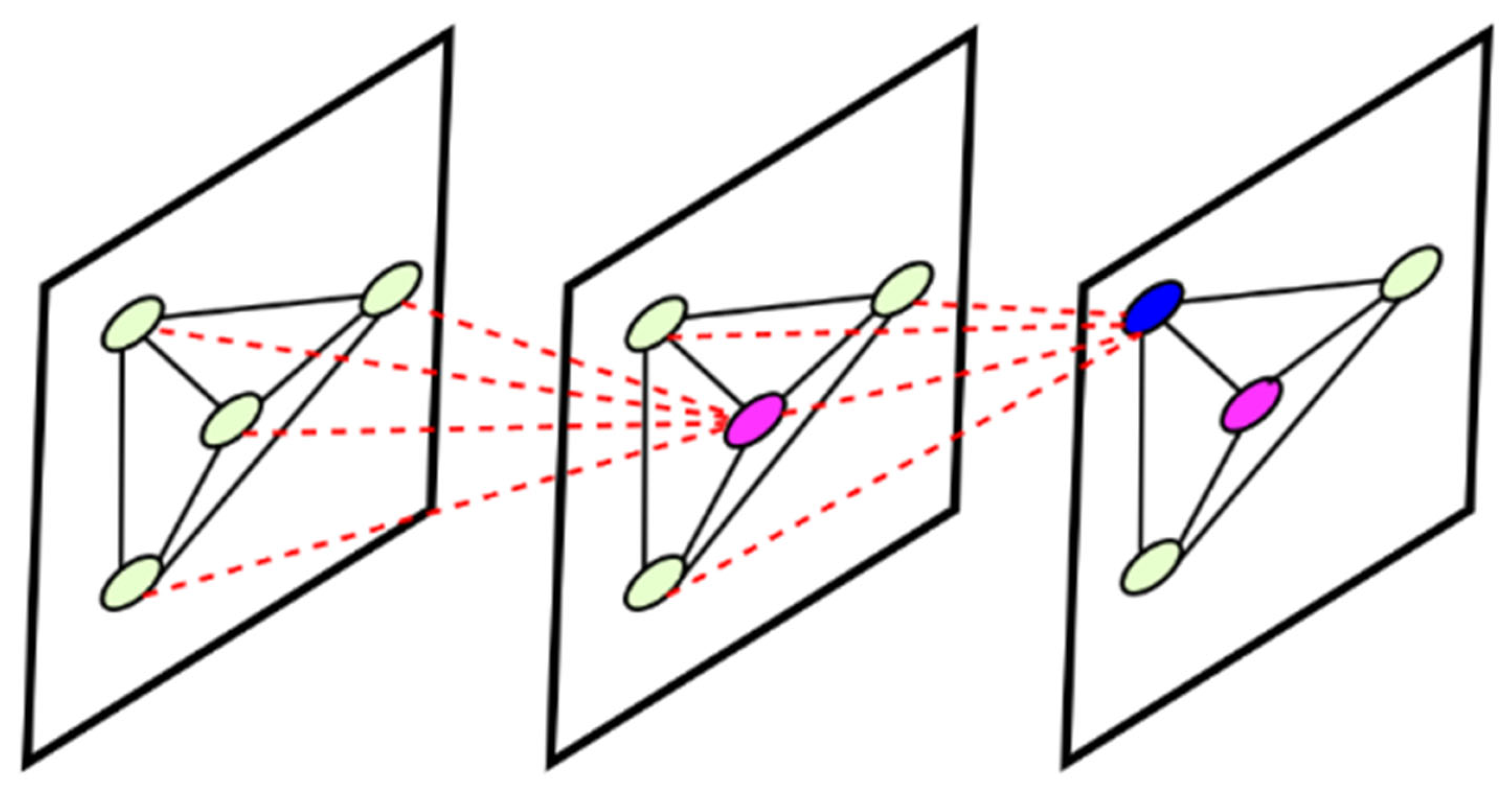
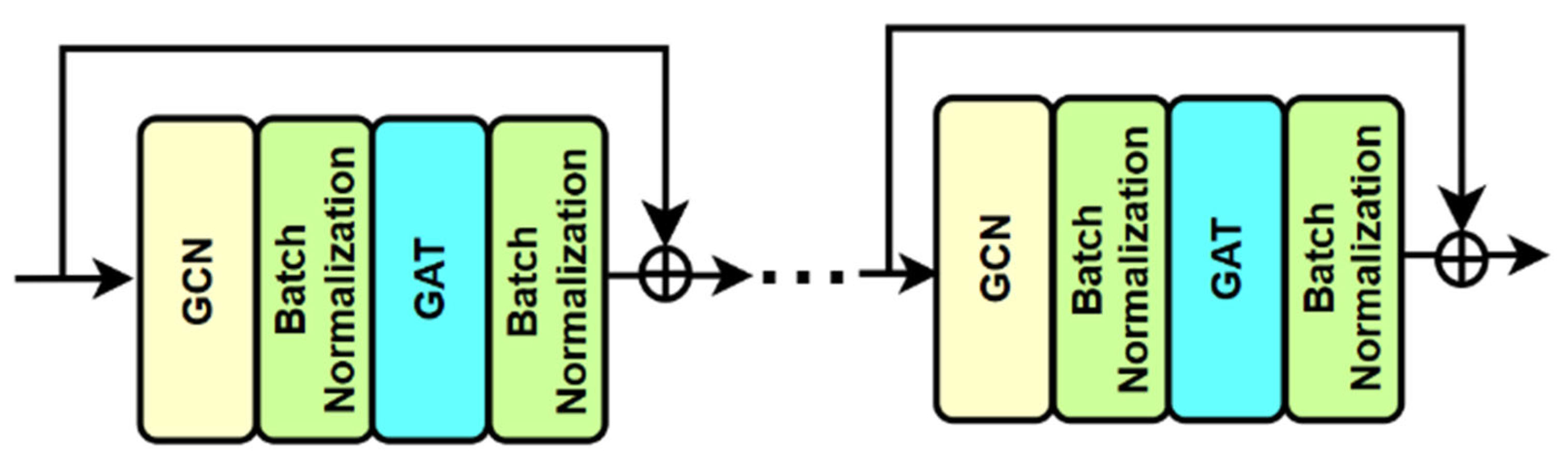
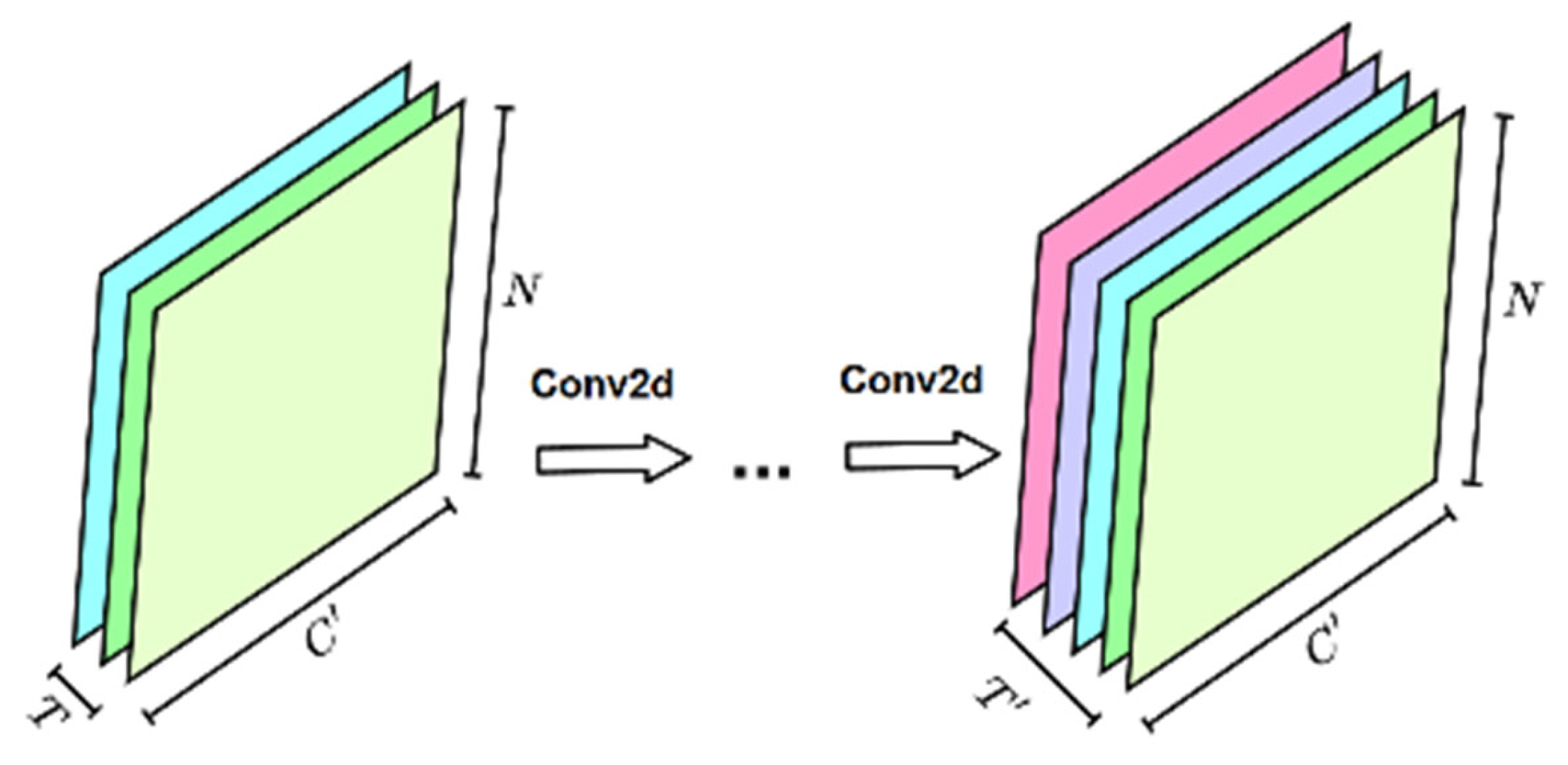
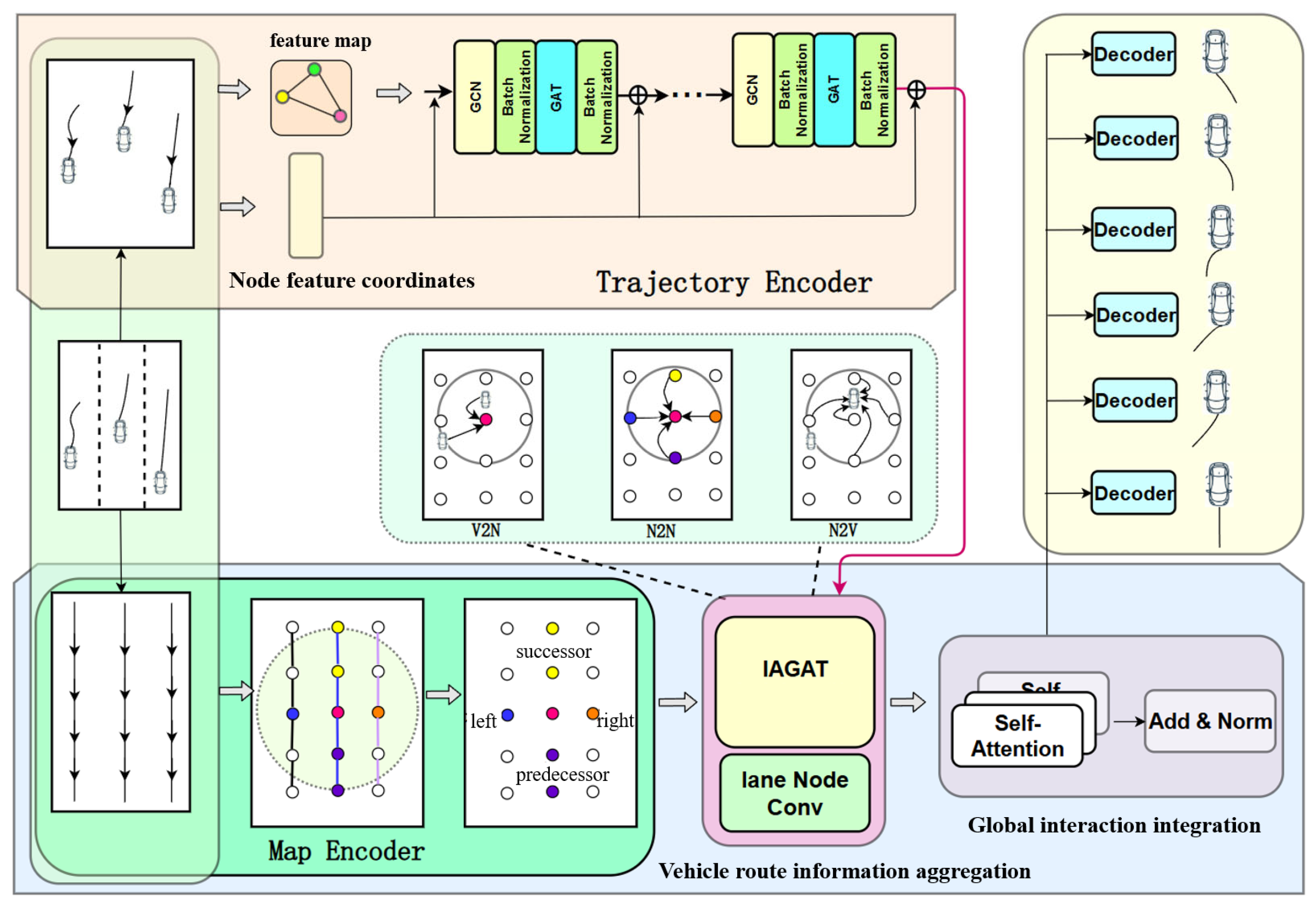
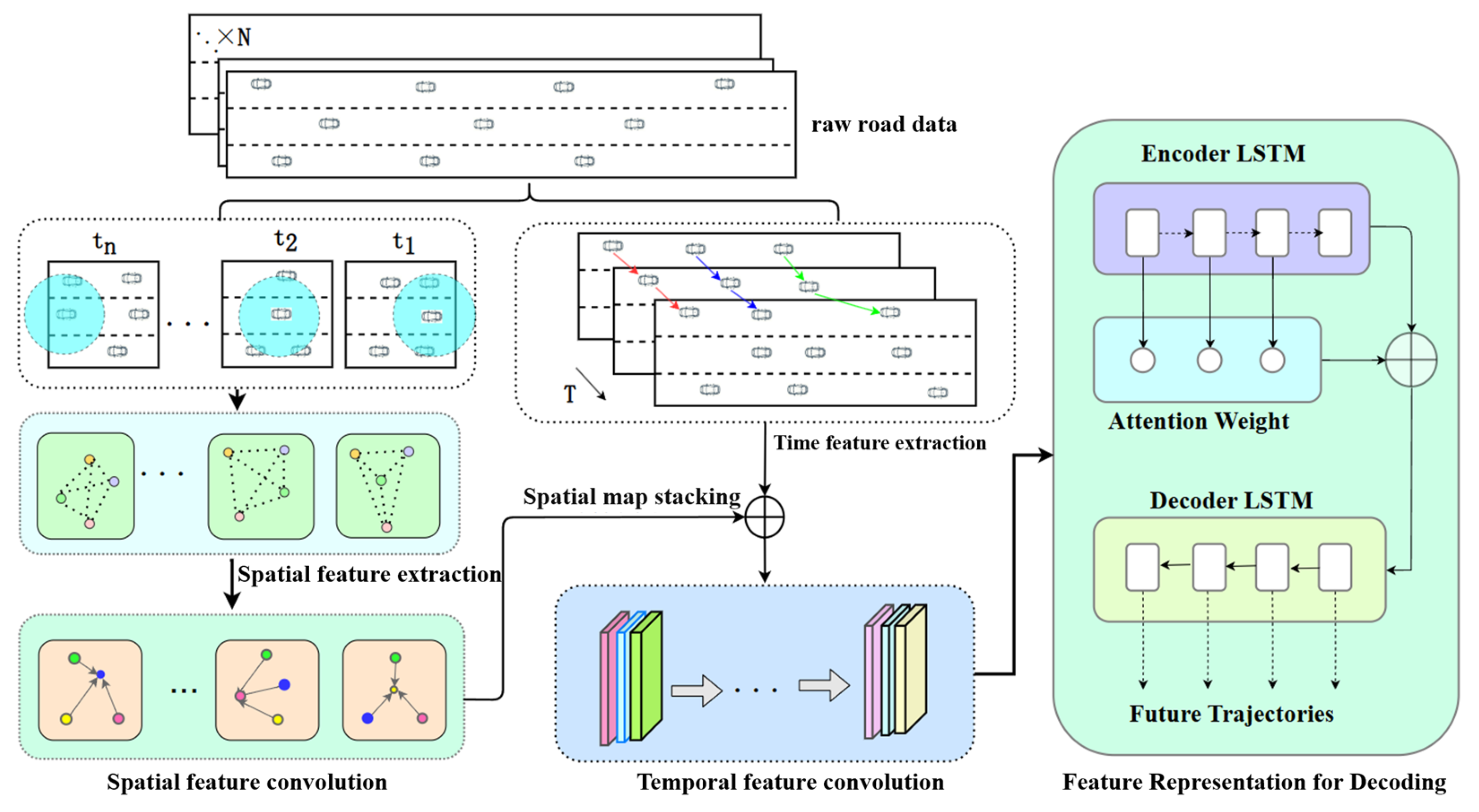
- Lane-informed spatio-temporal architecture: We design an encoder–decoder framework that integrates a spatio-temporal graph attention network (ST-GAN) with lane topology perception for vehicle trajectory prediction. ST-GAN uses GCNs for global traffic situation awareness and GATs for local dynamic interaction refinement, while temporal convolutions capture temporal dependencies.
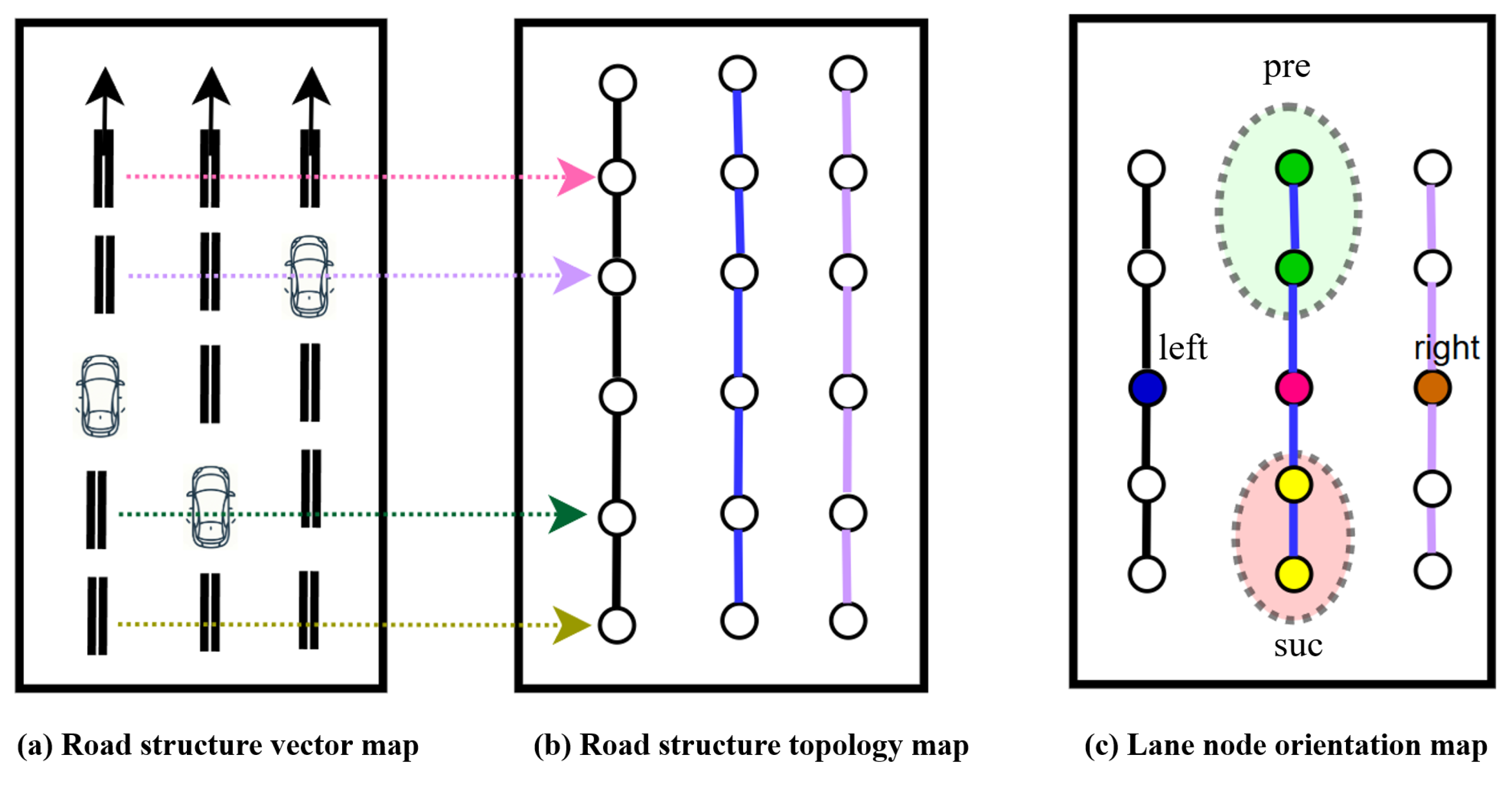
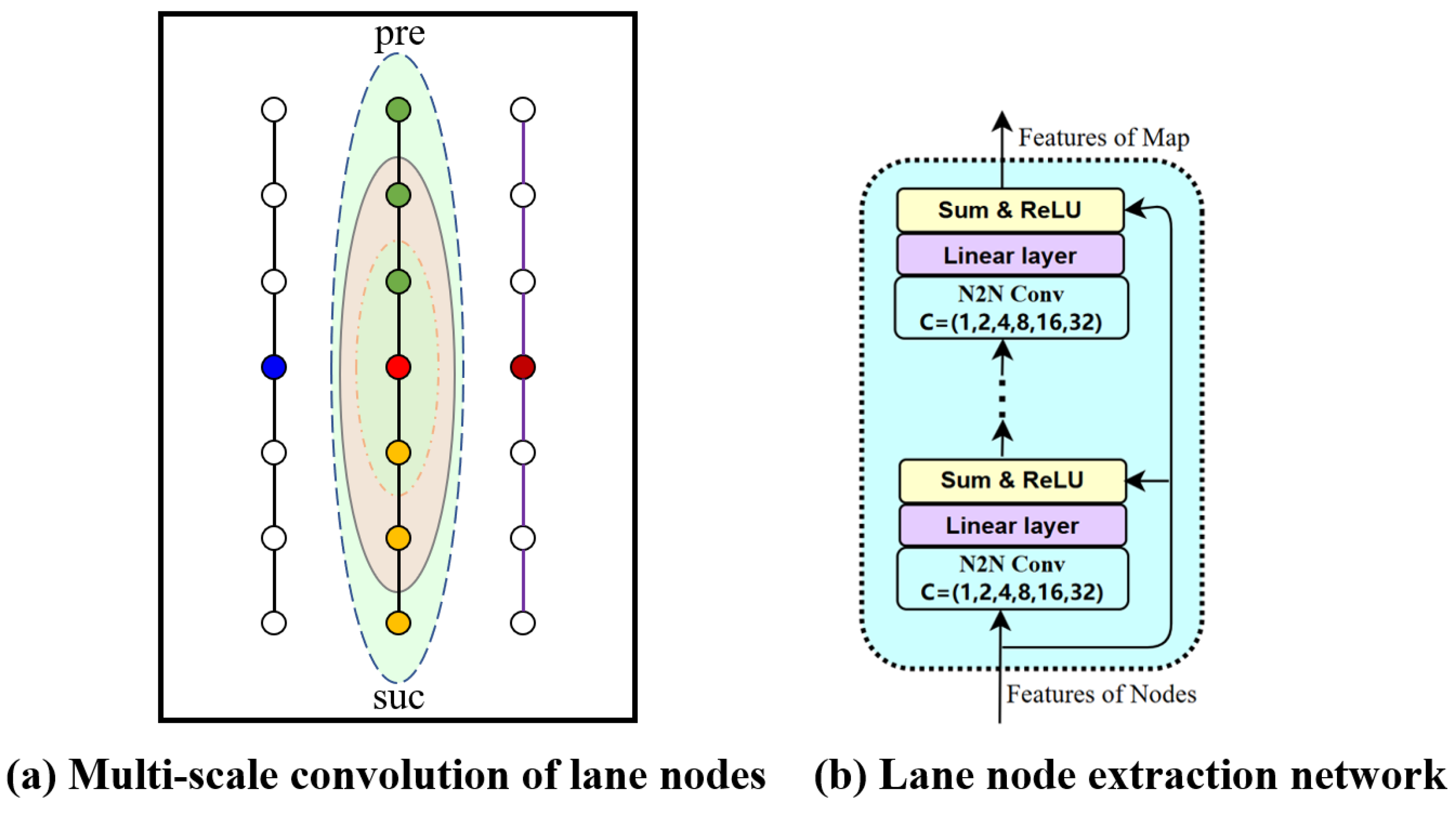
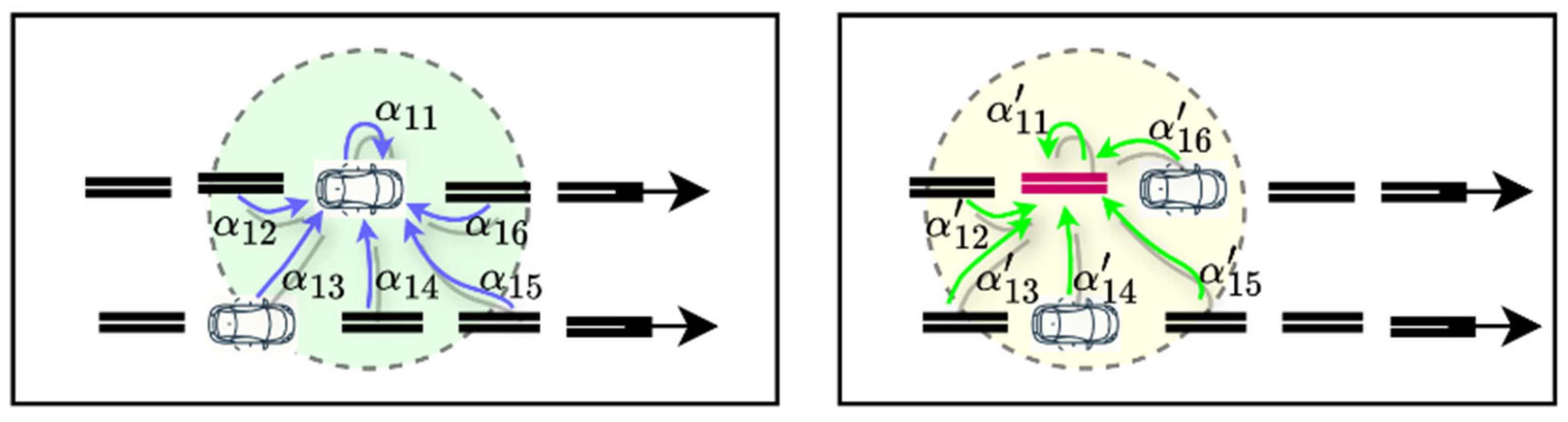
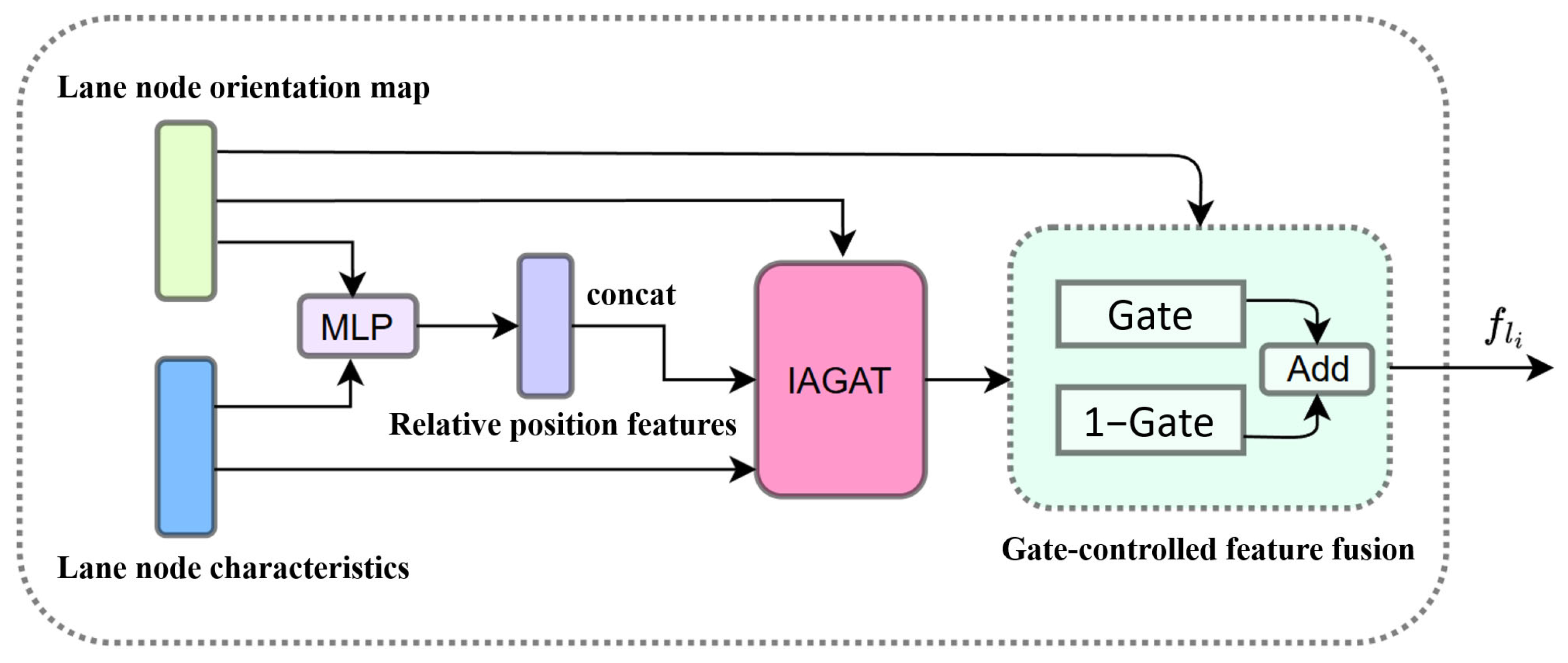
- Lane topology encoding and IAGAT-based fusion: We design a lane topology encoder that integrates geometric and semantic lane attributes through direction-sensitive, multi-scale dilated graph convolutions, transforming vectorized lane centerlines into rich topology-aware representations. On this basis, we introduce an interaction-aware graph attention mechanism (IAGAT) that explicitly models four types of interactions between vehicles and lanes (V2V, V2N, N2V, N2N) and employs gating mechanisms to adaptively fuse structured road information with dynamic spatio-temporal features. These modules are specifically tailored to support the lane-informed interaction fusion in LITransformer.
- Experimental validation and analysis: Experiments on the Argoverse motion forecasting dataset show that LITransformer outperforms representative baselines in prediction accuracy. Ablation studies further verify the effectiveness of the main components and the practicality of the overall model in complex traffic scenarios.
2. Related Works
3. LiTransformer Model Architecture and Methodology
3.1. Spatio-Temporal Attention Network
3.2. Lane-Informed Spatio-Temporal Transformer
3.2.1. Lane Topology Information Extraction
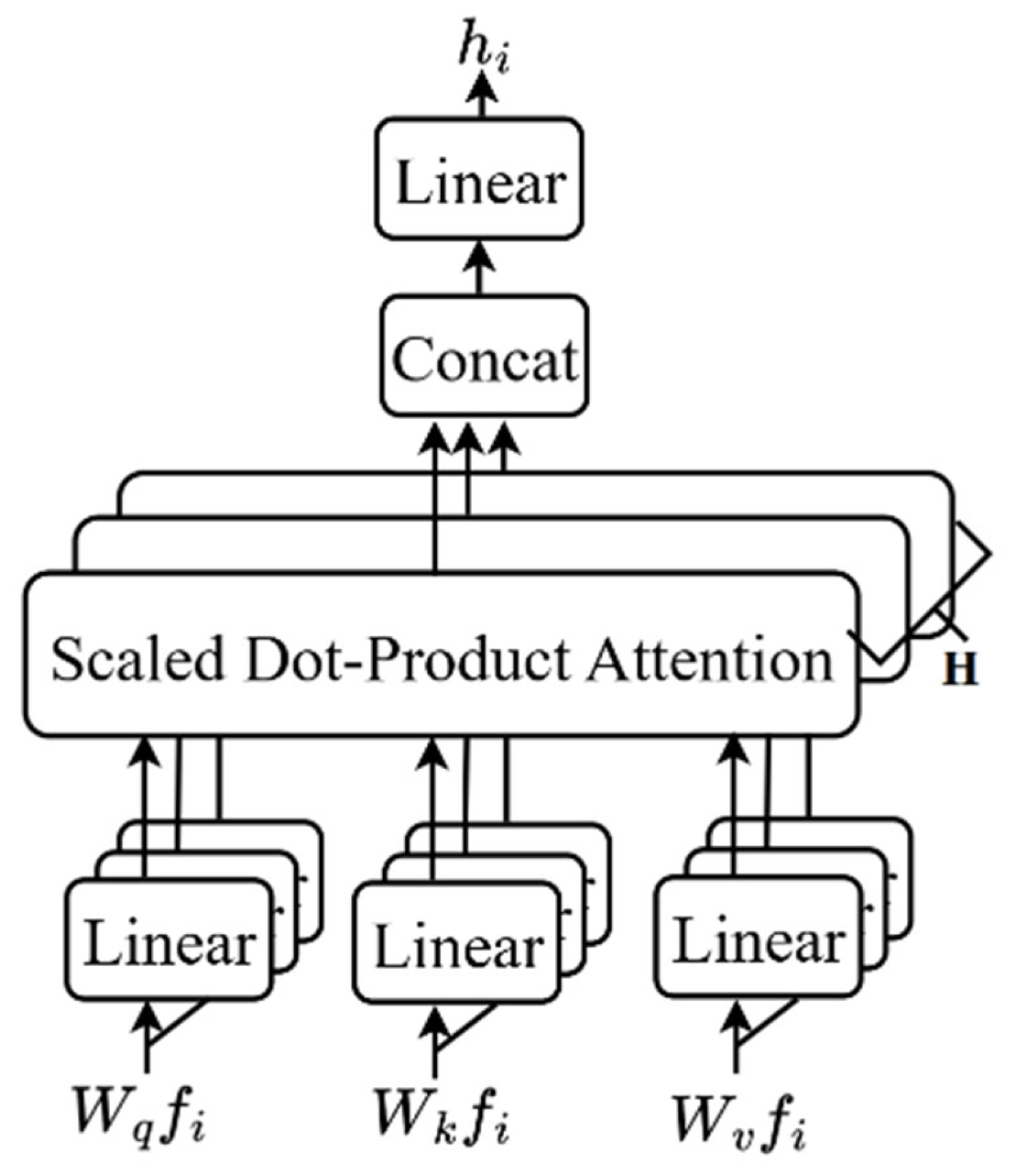
3.2.2. Interactive Graph Attention for Vehicle-Road Fusion
3.2.3. Global Interaction Fusion and Decoder Multimodal Trajectory Prediction
4. Experiments and Results
4.1. Experimental Settings
4.2. Comparative Experimental Analysis
4.3. Ablation Study
4.4. Computational Complexity Analysis
5. Conclusions
Author Contributions
Funding
Data Availability Statement
Conflicts of Interest
Abbreviations
| IAGAT | Interactive Perception Graph Attention Mechanism |
| GCN | Graph Convolution Network |
| GAT | Graph Attention Network |
| LSTM | Long Short-Term Memory |
References
- Feng, X.; Cen, Z.; Hu, J.; Zhang, Y. Vehicle Trajectory Prediction Using Intention-Based Conditional Variational Autoencoder. In Proceedings of the 2019 IEEE Intelligent Transportation Systems Conference (ITSC), Auckland, New Zealand, 27–30 October 2019; pp. 3514–3519. [Google Scholar]
- Huang, Y.; Du, J.; Yang, Z.; Zhou, Z.; Zhang, L.; Chen, H. A Survey on Trajectory-Prediction Methods for Autonomous Driving. IEEE Trans. Intell. Veh. 2022, 7, 652–674. [Google Scholar] [CrossRef]
- Liu, J.; Mao, X.; Fang, Y.; Zhu, D.; Meng, M.Q.-H. A Survey on Deep-Learning Approaches for Vehicle Trajectory Prediction in Autonomous Driving. In Proceedings of the 2021 IEEE International Conference on Robotics and Biomimetics (ROBIO), Sanya, China, 27–31 December 2021; pp. 978–985. [Google Scholar]
- Zhao, W.; Gong, S.; Zhao, D.; Liu, F.; Sze, N.N.; Quddus, M.; Huang, H.; Zhao, X. Impacts of Information Quantity and Display Formats on Driving Behaviors in a Connected Vehicle Environment. Accid. Anal. Prev. 2024, 203, 107621. [Google Scholar] [CrossRef]
- Li, H.; Jiao, H.; Yang, Z. Ship Trajectory Prediction Based on Machine Learning and Deep Learning: A Systematic Review and Methods Analysis. Eng. Appl. Artif. Intell. 2023, 126, 107062. [Google Scholar] [CrossRef]
- Geng, M.; Li, J.; Xia, Y.; Chen, X. A Physics-Informed Transformer Model for Vehicle Trajectory Prediction on Highways. Transp. Res. Part C Emerg. Technol. 2023, 154, 104272. [Google Scholar] [CrossRef]
- Gao, Y.; Fu, J.; Feng, W.; Xu, T.; Yang, K. Surrounding Vehicle Trajectory Prediction under Mixed Traffic Flow Based on Graph Attention Network. Phys. Stat. Mech. Its Appl. 2024, 639, 129643. [Google Scholar] [CrossRef]
- Deng, M.; Li, S.; Jiang, X.; Li, X. Vehicle Trajectory Prediction Method Based on “Current” Statistical Model and Cubature Kalman Filter. Electronics 2023, 12, 2464. [Google Scholar] [CrossRef]
- Hsu, C.-C.; Kang, L.-W.; Chen, S.-Y.; Wang, I.-S.; Hong, C.-H.; Chang, C.-Y. Deep Learning-Based Vehicle Trajectory Prediction Based on Generative Adversarial Network for Autonomous Driving Applications. Multimed. Tools Appl. 2023, 82, 10763–10780. [Google Scholar] [CrossRef]
- Wang, J.; Liu, K.; Li, H. LSTM-Based Graph Attention Network for Vehicle Trajectory Prediction. Comput. Netw. 2024, 248, 110477. [Google Scholar] [CrossRef]
- Zhao, S.; Zhang, J.; Jiang, Y.; He, C.; Han, J. Tire-Road Friction Coefficients Adaptive Estimation through Image and Vehicle Dynamics Integration. Mech. Syst. Signal Process. 2025, 224, 112039. [Google Scholar] [CrossRef]
- Giuliari, F.; Hasan, I.; Cristani, M.; Galasso, F. Transformer Networks for Trajectory Forecasting. In Proceedings of the 2020 25th International Conference on Pattern Recognition (ICPR), Milan, Italy, 10–15 January 2021; pp. 10335–10342. [Google Scholar]
- Liang, M.; Yang, B.; Hu, R.; Chen, Y.; Liao, R.; Feng, S.; Urtasun, R. Learning Lane Graph Representations for Motion Forecasting. In Proceedings of the Computer Vision—ECCV 2020, Glasgow, UK, 23–28 August 2020; Vedaldi, A., Bischof, H., Brox, T., Frahm, J.-M., Eds.; Springer International Publishing: Cham, Switzerland, 2020; pp. 541–556. [Google Scholar]
- Gao, J.; Sun, C.; Zhao, H.; Shen, Y.; Anguelov, D.; Li, C.; Schmid, C. VectorNet: Encoding HD Maps and Agent Dynamics from Vectorized Representation. In Proceedings of the IEEE/CVF Conference on Computer Vision and Pattern Recognition (CVPR), Seattle, WA, USA, 13–19 June 2020; pp. 11525–11533. [Google Scholar]
- Zhou, Z.; Yang, X.; Rossi, R.; Zhao, H.; Yu, R. Neural Point Process for Learning Spatiotemporal Event Dynamics. In Proceedings of the 4th Annual Learning for Dynamics and Control Conference, Stanford, CA, USA, 23–24 June 2022; pp. 777–789. [Google Scholar]
- Gao, Y.; Yang, K.; Yue, Y.; Wu, Y. A Vehicle Trajectory Prediction Model that Integrates Spatial Interaction and Multiscale Temporal Features. Sci. Rep. 2025, 15, 8217. [Google Scholar] [CrossRef] [PubMed]
- Xie, J.; Li, S.; Liu, C. Traffic Agents Trajectory Prediction Based on Spatial–Temporal Interaction Attention. Sensors 2023, 23, 7830. [Google Scholar] [CrossRef]
- Wu, X.; Wang, G.; Shen, N. Research on Obstacle Avoidance Optimization and Path Planning of Autonomous Vehicles Based on Attention Mechanism Combined with Multimodal Information Decision-Making Thoughts of Robots. Front. Neurorobot. 2023, 17, 1269447. [Google Scholar] [CrossRef]
- Du, Z.; Deng, M.; Lyu, N.; Wang, Y. A Review of Road Safety Evaluation Methods Based on Driving Behavior. J. Traffic Transp. Eng. Engl. Ed. 2023, 10, 743–761. [Google Scholar] [CrossRef]
- Akai, N.; Hirayama, T.; Morales, L.Y.; Akagi, Y.; Liu, H.; Murase, H. Driving Behavior Modeling Based on Hidden Markov Models with Driver’s Eye-Gaze Measurement and Ego-Vehicle Localization. In Proceedings of the 2019 IEEE Intelligent Vehicles Symposium (IV), Paris, France, 9–12 June 2019; pp. 949–956. [Google Scholar]
- Berhanu, Y.; Schröder, D.; Wodajo, B.T.; Alemayehu, E. Machine Learning for Predictions of Road Traffic Accidents and Spatial Network Analysis for Safe Routing on Accident and Congestion-Prone Road Networks. Results Eng. 2024, 23, 102737. [Google Scholar] [CrossRef]
- Goli, S.A.; Far, B.H.; Fapojuwo, A.O. Vehicle Trajectory Prediction with Gaussian Process Regression in Connected Vehicle Environment. In Proceedings of the 2018 IEEE Intelligent Vehicles Symposium (IV), Changshu, China, 26–30 June 2018; pp. 550–555. [Google Scholar]
- Gomes, I.P.; Wolf, D.F. A Comprehensive Review of Deep Learning Techniques for Interaction-Aware Trajectory Prediction in Urban Autonomous Driving. Neurocomputing 2025, 651, 131014. [Google Scholar] [CrossRef]
- Messaoud, K.; Yahiaoui, I.; Verroust-Blondet, A.; Nashashibi, F. Relational Recurrent Neural Networks for Vehicle Trajectory Prediction. In Proceedings of the 2019 IEEE Intelligent Transportation Systems Conference (ITSC), Auckland, New Zealand, 27–30 October 2019; pp. 1813–1818. [Google Scholar]
- Yu, Y.; Si, X.; Hu, C.; Zhang, J. A Review of Recurrent Neural Networks: LSTM Cells and Network Architectures. Neural Comput. 2019, 31, 1235–1270. [Google Scholar] [CrossRef] [PubMed]
- Guan, D.; Ren, N.; Wang, K.; Wang, Q.; Zhang, H. Checkpoint Data-Driven GCN-GRU Vehicle Trajectory and Traffic Flow Prediction. Sci. Rep. 2024, 14, 30409. [Google Scholar] [CrossRef]
- Li, H.; Xing, W.; Jiao, H.; Yang, Z.; Li, Y. Deep Bi-Directional Information-Empowered Ship Trajectory Prediction for Maritime Autonomous Surface Ships. Transp. Res. Part E Logist. Transp. Rev. 2024, 181, 103367. [Google Scholar] [CrossRef]
- Park, S.H.; Kim, B.; Kang, C.M.; Chung, C.C.; Choi, J.W. Sequence-to-Sequence Prediction of Vehicle Trajectory via LSTM Encoder-Decoder Architecture. In Proceedings of the 2018 IEEE Intelligent Vehicles Symposium (IV), Changshu, China, 26–30 June 2018; pp. 1672–1678. [Google Scholar]
- Ma, Y.; Zhu, X.; Zhang, S.; Yang, R.; Wang, W.; Manocha, D. TrafficPredict: Trajectory Prediction for Heterogeneous Traffic-Agents. Proc. AAAI Conf. Artif. Intell. 2019, 33, 6120–6127. [Google Scholar] [CrossRef]
- Zhu, Y.; Qian, D.; Ren, D.; Xia, H. StarNet: Pedestrian Trajectory Prediction Using Deep Neural Network in Star Topology. In Proceedings of the 2019 IEEE/RSJ International Conference on Intelligent Robots and Systems (IROS), Macau, China, 4–8 November 2019; pp. 8075–8080. [Google Scholar]
- Jo, E.; Sunwoo, M.; Lee, M. Vehicle Trajectory Prediction Using Hierarchical Graph Neural Network for Considering Interaction among Multimodal Maneuvers. Sensors 2021, 21, 5354. [Google Scholar] [CrossRef] [PubMed]
- Hamilton, W.; Ying, Z.; Leskovec, J. Inductive Representation Learning on Large Graphs. In Proceedings of the Advances in Neural Information Processing Systems, Long Beach, CA, USA, 4–9 December 2017; Volume 30. [Google Scholar]
- Kipf, T.N.; Welling, M. Semi-Supervised Classification with Graph Convolutional Networks. arXiv 2017, arXiv:1609.02907. [Google Scholar] [CrossRef]
- Veličković, P.; Cucurull, G.; Casanova, A.; Romero, A.; Liò, P.; Bengio, Y. Graph Attention Networks. stat 2018, 1050, 10-48550. [Google Scholar]
- Li, X.; Ying, X.; Chuah, M.C. GRIP: Graph-Based Interaction-Aware Trajectory Prediction. In Proceedings of the 2019 IEEE Intelligent Transportation Systems Conference (ITSC), Auckland, New Zealand, 27–30 October 2019; pp. 3960–3966. [Google Scholar]
- Schmidt, J.; Jordan, J.; Gritschneder, F.; Dietmayer, K. CRAT-Pred: Vehicle Trajectory Prediction with Crystal Graph Convolutional Neural Networks and Multi-Head Self-Attention. In Proceedings of the 2022 International Conference on Robotics and Automation (ICRA), Philadelphia, PA, USA, 23–27 May 2022; pp. 7799–7805. [Google Scholar]
- Liu, Y.; Zhang, J.; Fang, L.; Jiang, Q.; Zhou, B. Multimodal Motion Prediction With Stacked Transformers. In Proceedings of the IEEE/CVF Conference on Computer Vision and Pattern Recognition, Nashville, TN, USA, 20–25 June 2021; pp. 7577–7586. [Google Scholar]
- Zhou, Z.; Ye, L.; Wang, J.; Wu, K.; Lu, K. HiVT: Hierarchical Vector Transformer for Multi-Agent Motion Prediction. In Proceedings of the IEEE/CVF Conference on Computer Vision and Pattern Recognition, New Orleans, LA, USA, 18–24 June 2022; pp. 8823–8833. [Google Scholar]



| Parameters | Description |
|---|---|
| TIMESTAMP | Timestamp parameter |
| TRACK_ID | Tracking ID |
| OBJECT_TYPE | Types of road users |
| X,Y | Global coordinates (X,Y) |
| CITY_NAME | City name |
| Method | Map Representation | Interaction Modeling | Global Fusion Strategy | Key Limitations |
|---|---|---|---|---|
| LaneGCN | Lane Graph (Static Adjacency) | Sparse Graph Conv (Local) | Feature Concatenation | Static topology cannot adapt to dynamic traffic flows. |
| VectorNet | Vector Subgraphs | Global Attention (Fully connected) | Global Graph | Computational heavy; lacks fine-grained lane semantics. |
| HiVT [35] | Vector Segments | Local–Global Transformer | Hierarchical Attention | Treats lanes as features rather than structural constraints. |
| LITransformer (Ours) | Lane Topology + Semantic | IAGAT | Multi-modal Transformer |
| Method | K = 1 | K = 6 | ||||
|---|---|---|---|---|---|---|
| minADE | minFDE | MR | minADE | minFDE | MR | |
| LaneGCN | 1.72 | 3.79 | 0.59 | 0.88 | 1. | 0.16 |
| CRAT-Pred | 1.74 | 3.76 | 0.58 | 0.85 | 1.44 | 0.17 |
| mmTransformer | 1.77 | 4.01 | 0.62 | 0.84 | 1.35 | 0.15 |
| HiVT | 1.75 | 3.78 | 0.55 | 0.78 | 1.24 | 0.14 |
| LITransformer (ours) | 1.68 ± 0.02 | 3.65 ± 0.08 | 0.57 | 0.76 ± 0.01 | 1.20 ± 0.04 | 0.08 ± 0.02 |
| Model Modules | K = 1 | ||||
|---|---|---|---|---|---|
| Lane Node Extraction | Vehicle–Lane Interaction | IAGAT | Global Fusion | minADE | minFDE |
| √ | × | × | × | 1.78 | 3.92 |
| √ | √ | × | × | 1.73 | 3.81 |
| √ | √ | √ | × | 1.70 | 3.68 |
| √ | √ | × | √ | 1.72 | 3.77 |
| √ | √ | √ | √ | 1.68 ± 0.02 | 3.65 ± 0.08 |
| Model Modules | K = 6 | ||||
|---|---|---|---|---|---|
| Lane Node Extraction | Vehicle–Lane Interaction | IAGAT | Global Fusion | minADE | minFDE |
| √ | × | × | × | 0.92 | 1.54 |
| √ | √ | × | × | 0.82 | 1.35 |
| √ | √ | √ | × | 0.77 | 1.24 |
| √ | √ | × | √ | 0.79 | 1.31 |
| √ | √ | √ | √ | 0.76 ± 0.01 | 1.20 ± 0.04 |
Disclaimer/Publisher’s Note: The statements, opinions and data contained in all publications are solely those of the individual author(s) and contributor(s) and not of MDPI and/or the editor(s). MDPI and/or the editor(s) disclaim responsibility for any injury to people or property resulting from any ideas, methods, instructions or products referred to in the content. |
© 2025 by the authors. Licensee MDPI, Basel, Switzerland. This article is an open access article distributed under the terms and conditions of the Creative Commons Attribution (CC BY) license (https://creativecommons.org/licenses/by/4.0/).
Share and Cite
Zhong, Y.; Gui, Z.; Gao, Z.; Wang, X.; Wei, J. LITransformer: Transformer-Based Vehicle Trajectory Prediction Integrating Spatio-Temporal Attention Networks with Lane Topology and Dynamic Interaction. Electronics 2025, 14, 4950. https://doi.org/10.3390/electronics14244950
Zhong Y, Gui Z, Gao Z, Wang X, Wei J. LITransformer: Transformer-Based Vehicle Trajectory Prediction Integrating Spatio-Temporal Attention Networks with Lane Topology and Dynamic Interaction. Electronics. 2025; 14(24):4950. https://doi.org/10.3390/electronics14244950
Chicago/Turabian StyleZhong, Yuanchao, Zhiming Gui, Zhenji Gao, Xinyu Wang, and Jiawen Wei. 2025. "LITransformer: Transformer-Based Vehicle Trajectory Prediction Integrating Spatio-Temporal Attention Networks with Lane Topology and Dynamic Interaction" Electronics 14, no. 24: 4950. https://doi.org/10.3390/electronics14244950
APA StyleZhong, Y., Gui, Z., Gao, Z., Wang, X., & Wei, J. (2025). LITransformer: Transformer-Based Vehicle Trajectory Prediction Integrating Spatio-Temporal Attention Networks with Lane Topology and Dynamic Interaction. Electronics, 14(24), 4950. https://doi.org/10.3390/electronics14244950