Research on Time–Frequency Domain Characteristics Analysis of Fault Arc Under Different Connection Methods


Abstract
1. Introduction
2. Materials and Methods
2.1. Construction and Data Acquisition of Arc Fault Experimental Platform
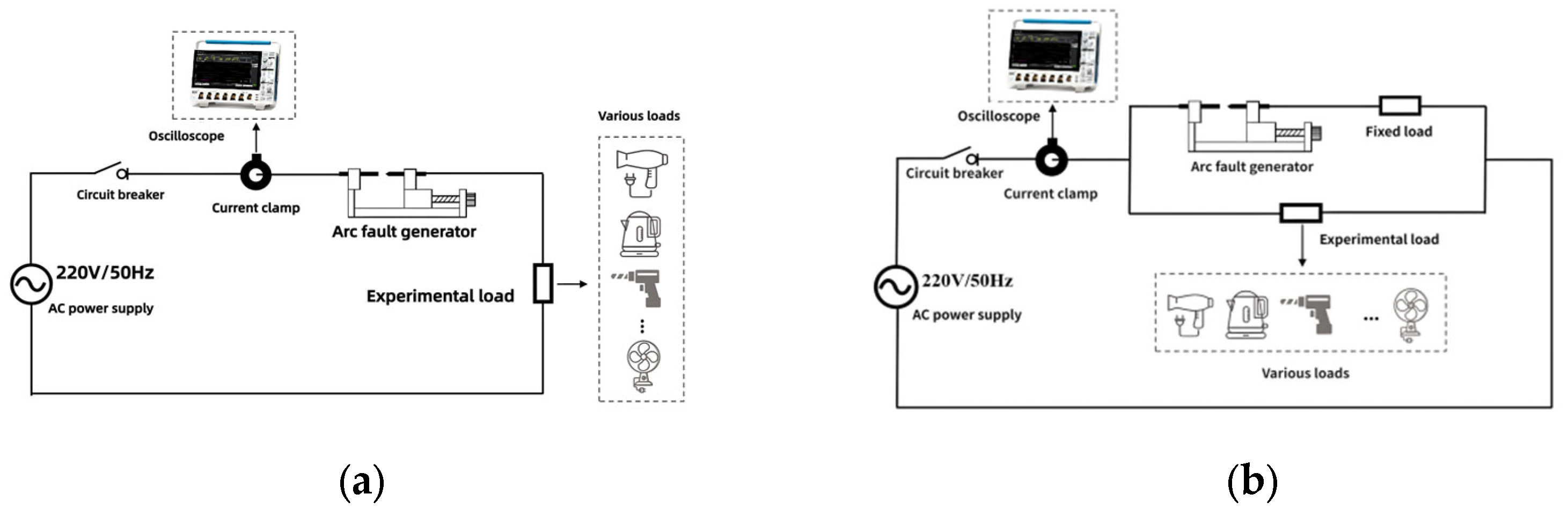
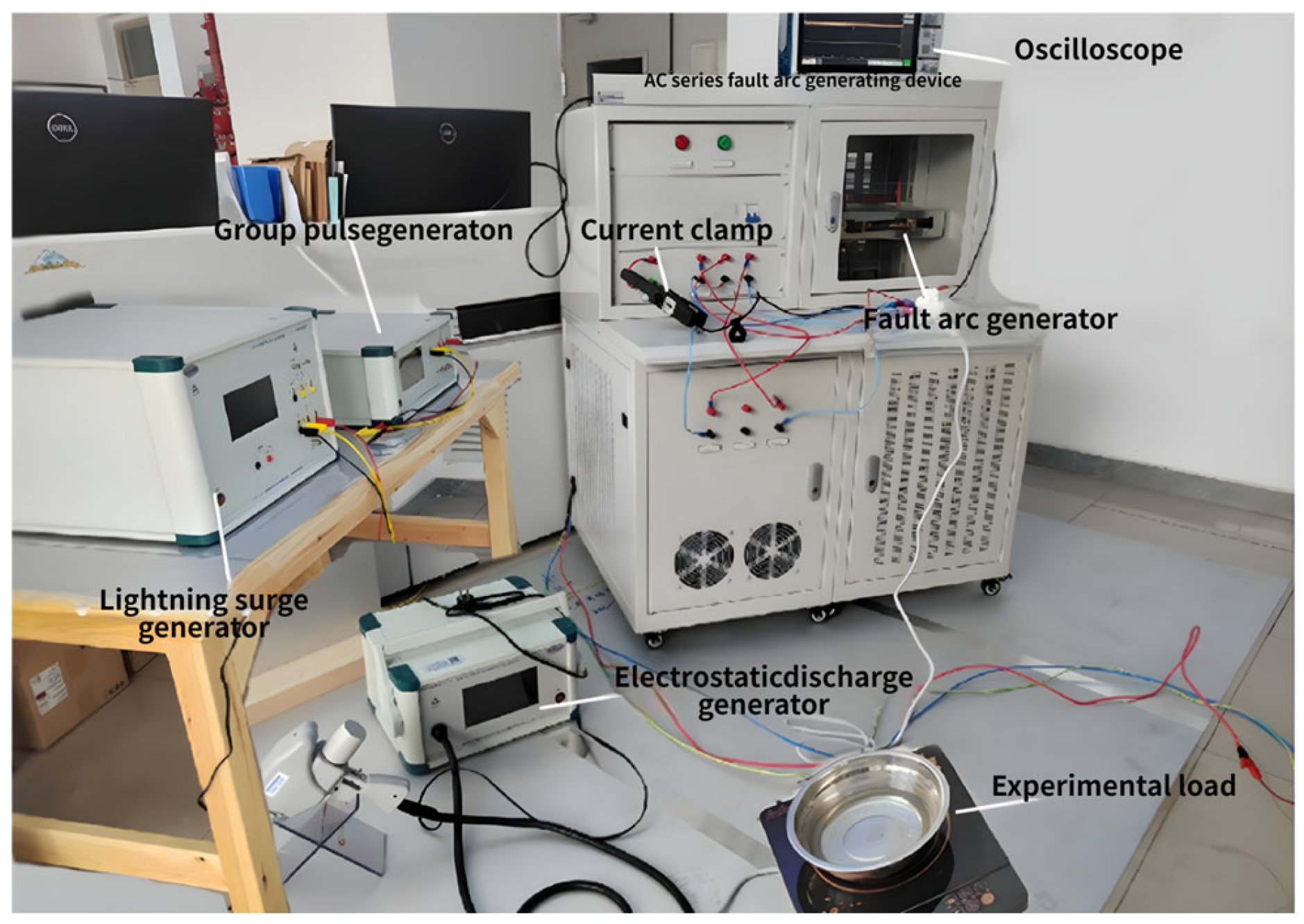
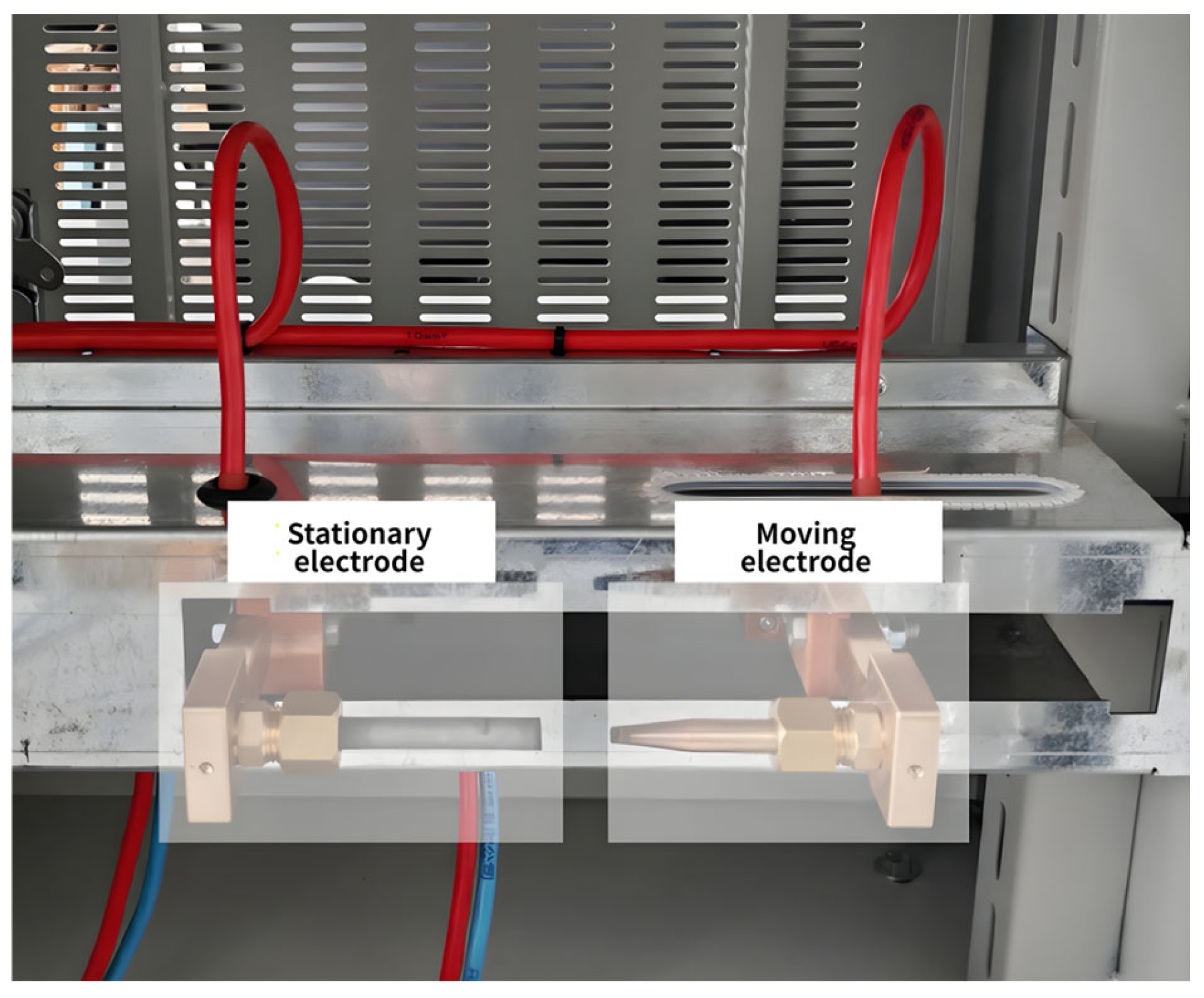
2.1.1. Construction of Arc Fault Test Platform with Different Connection Modes
2.1.2. Design of Test Conditions
2.1.3. Test Data Collection and Pretreatment
2.2. Theoretical Analysis of Frequency-Domain Characteristics
2.2.1. Time-Domain Feature Theory Analysis
2.2.2. Frequency-Domain Characterization Theory Analysis
2.2.3. Wavelet Transform Theory
3. Results
3.1. Time–Frequency Domain Characteristic Analysis Based on Different Load Types
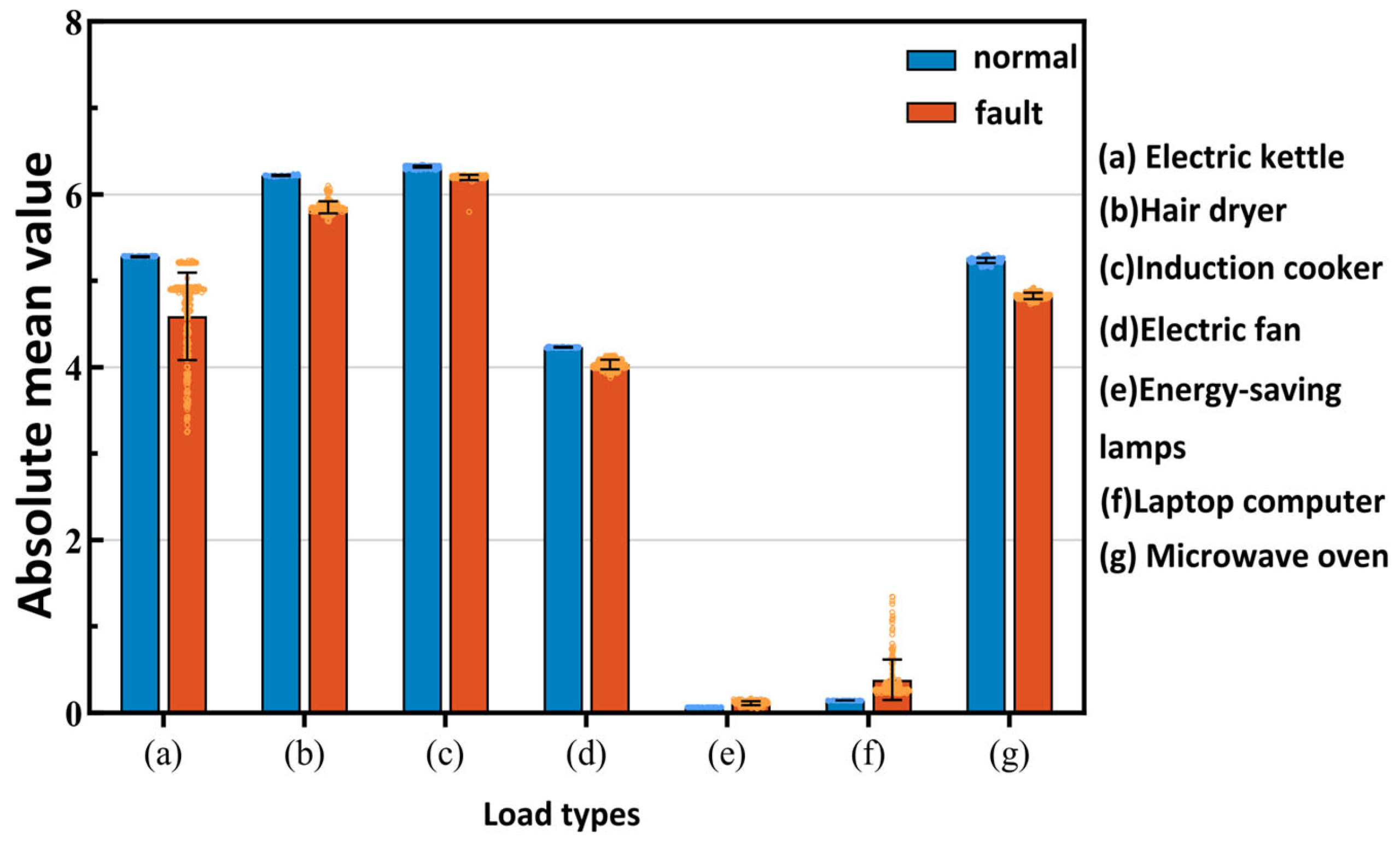
3.1.1. Time-Domain Characteristic Analysis of Different Loads
3.1.2. Frequency-Domain Characteristic Analysis of Different Loads
3.1.3. Time–Frequency Domain Characteristic Analysis of Different Loads
3.2. Time–Frequency Domain Characteristic Analysis Based on Single-Load Series Parallel Mode
3.2.1. Time-Domain Characteristic Analysis of Single Load
3.2.2. Frequency-Domain Characteristic Analysis of Single Load
3.3. Time–Frequency Domain Characteristic Analysis Based on Multi-Load Series Parallel Mode
3.3.1. Multi-Load Time-Domain Characteristic Analysis
3.3.2. Frequency-Domain Characteristic Analysis of Multiple Loads
4. Arc Fault Recognition Method Based on FF-DCNN
4.1. Data Prepocessing and DCNN Model Structure
4.1.1. Dataset Establishment
4.1.2. Data Preprocessing
- (1)
- 1D Data Preprocessing
- (2)
- 2D Data Preprocessing
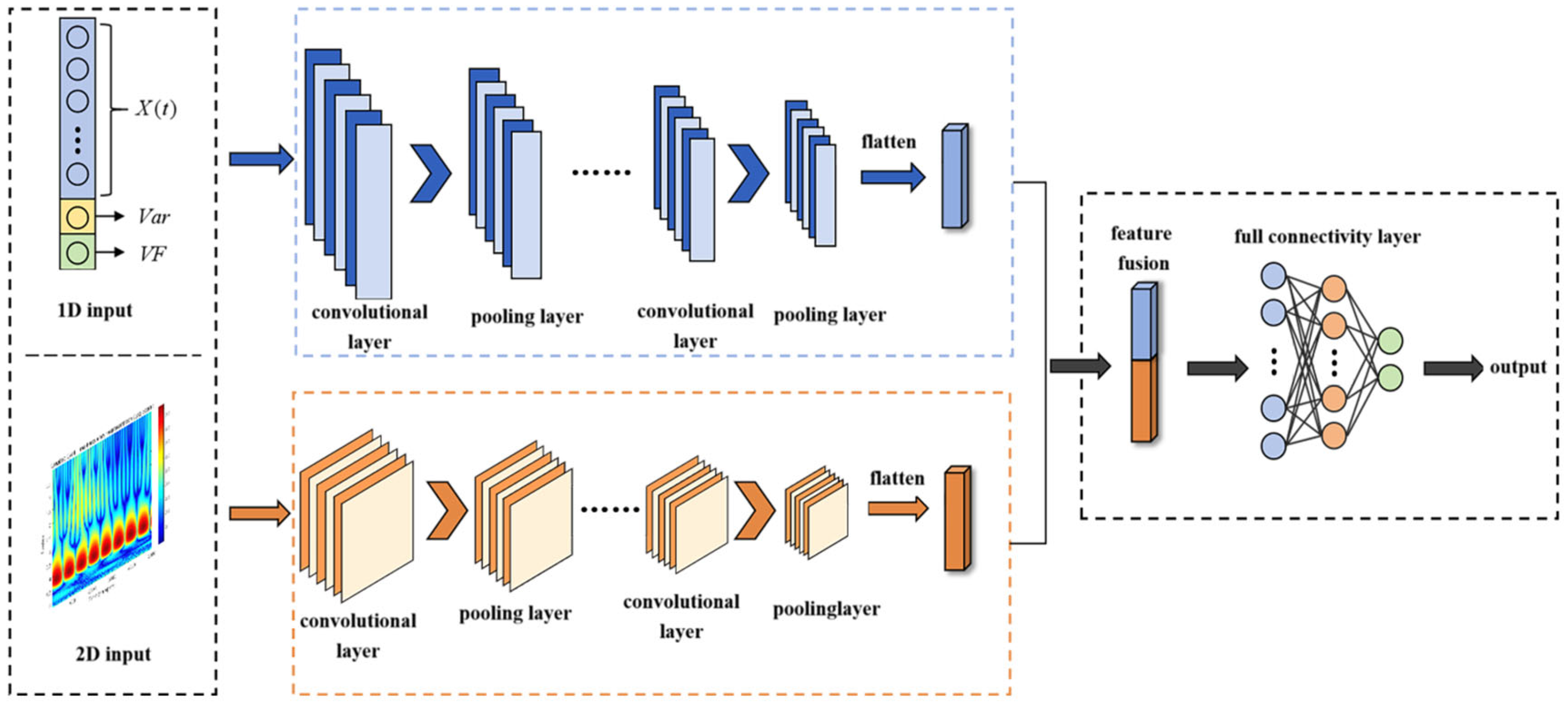
4.1.3. FF-DCNN Model Structure
4.2. FF-DCNN Model Optimization
4.2.1. Model Evaluation Metrics
4.2.2. Loss Function
4.3. Verification Results and Analysis of the FF-DCNN Model
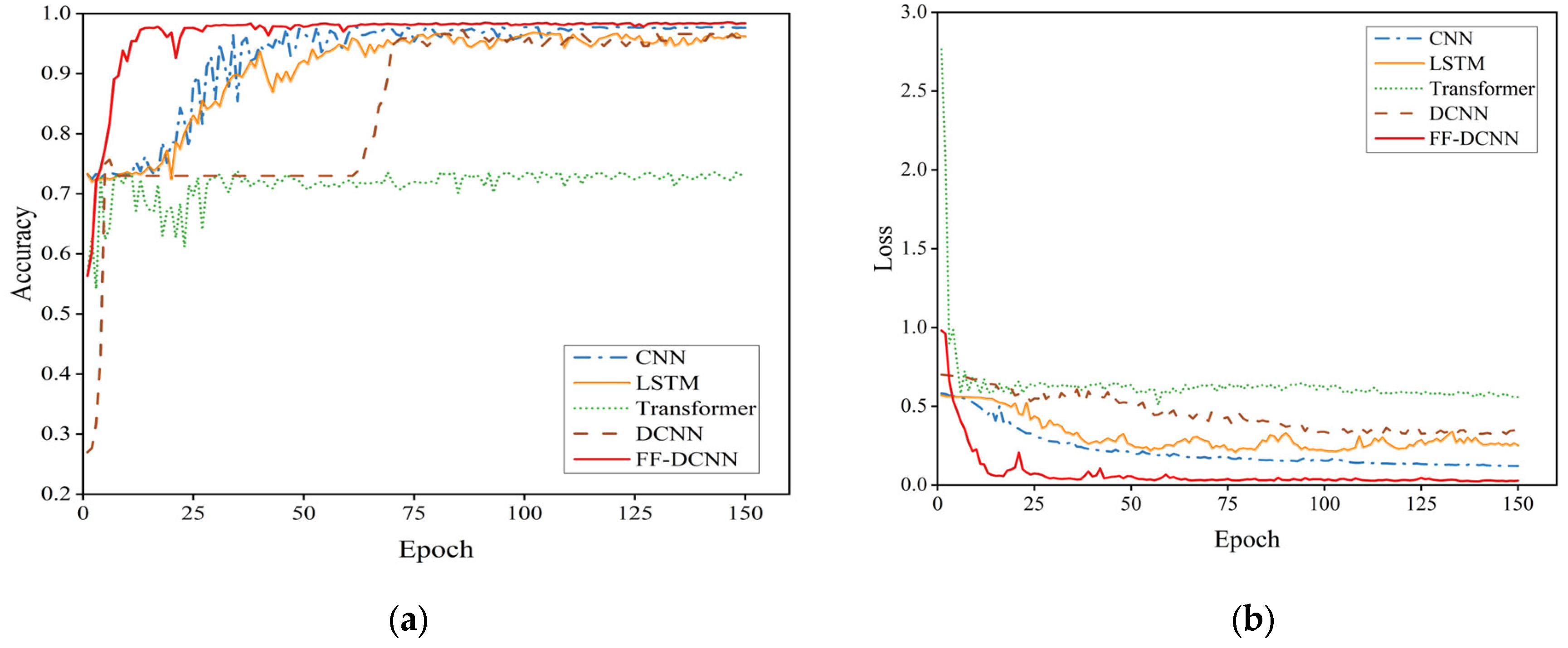
4.3.1. Comparison of Different Model Experiments
4.3.2. Ablation Study
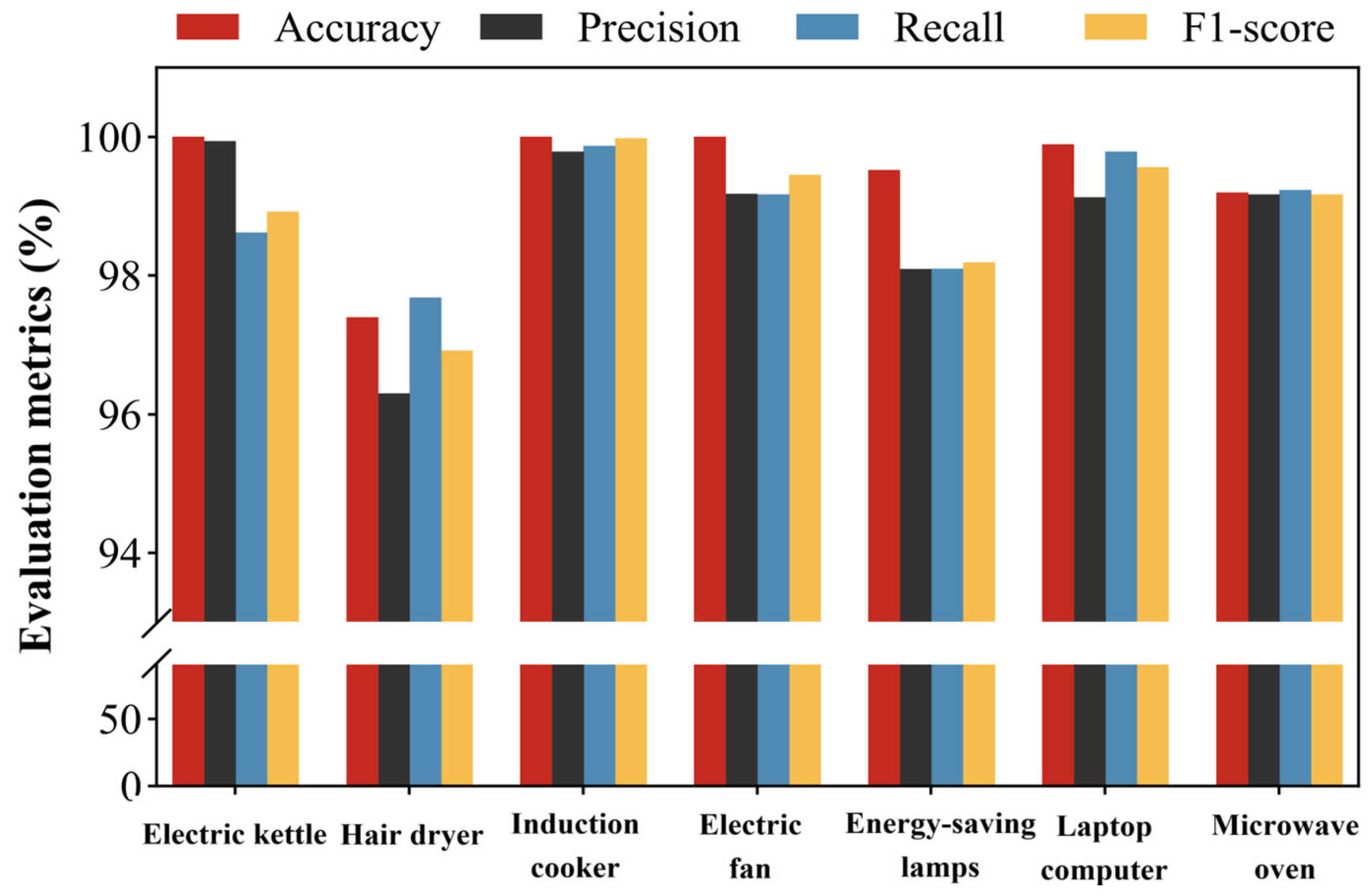
4.4. Verification Results and Analysis of Different Load Types
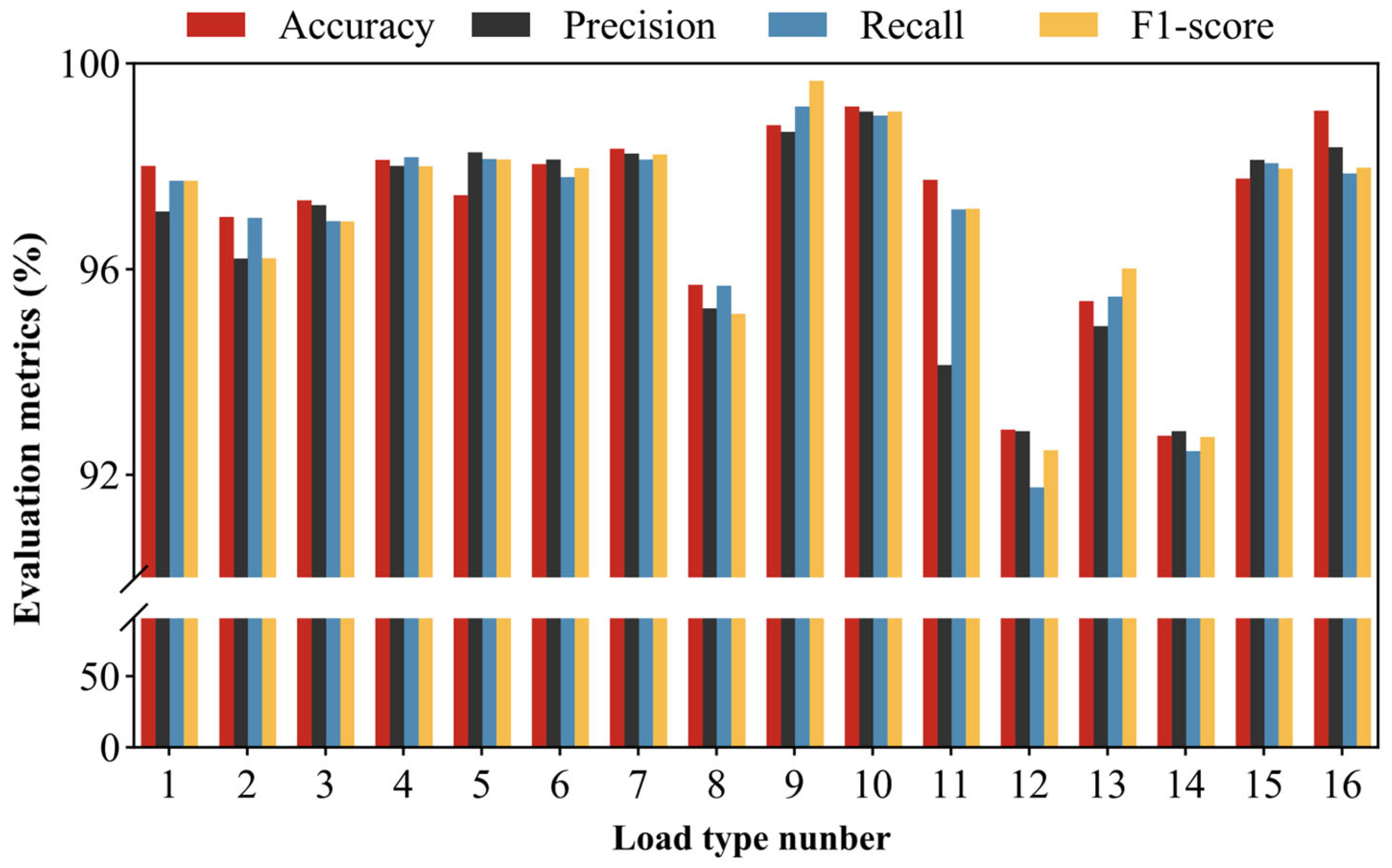
4.5. Verification Results and Analysis of Different Connection Modes
5. Discussion
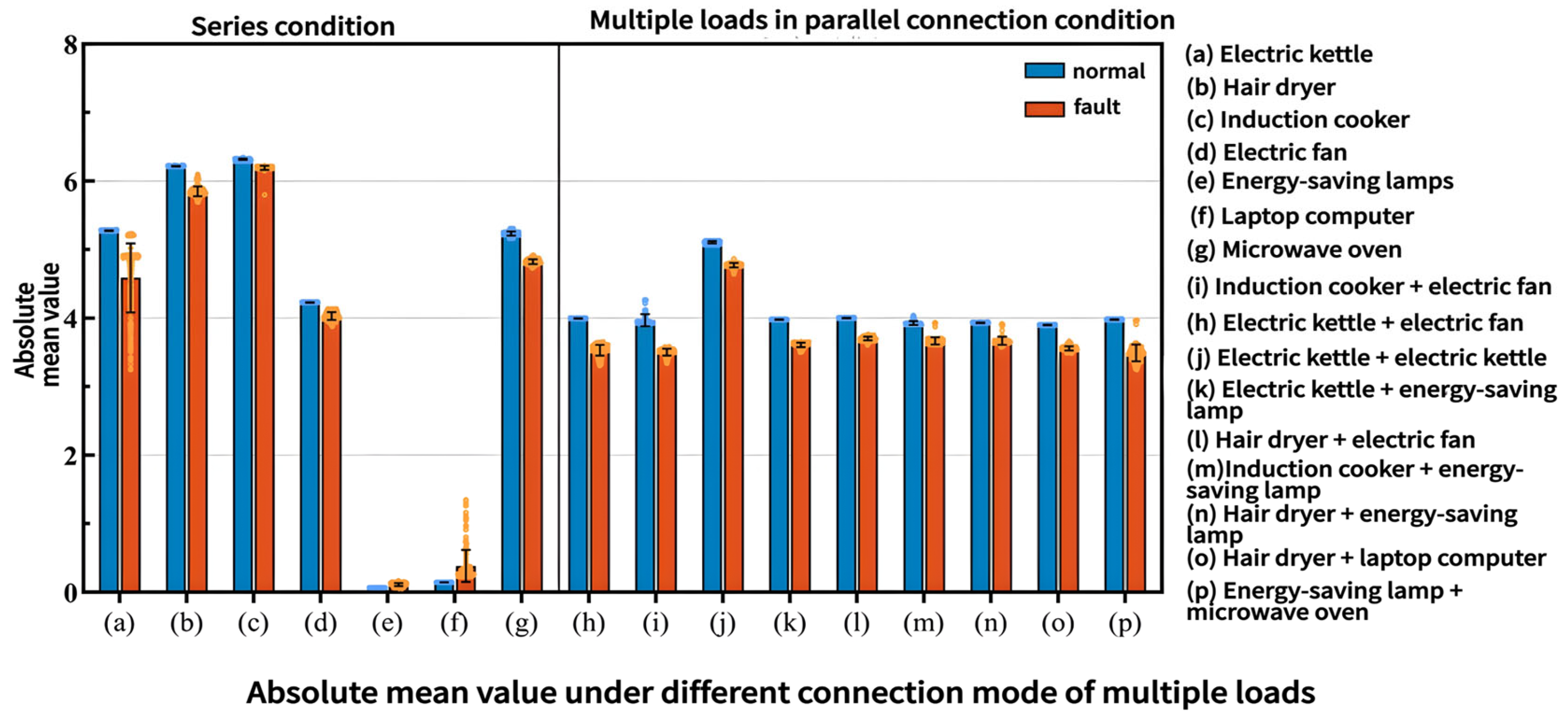
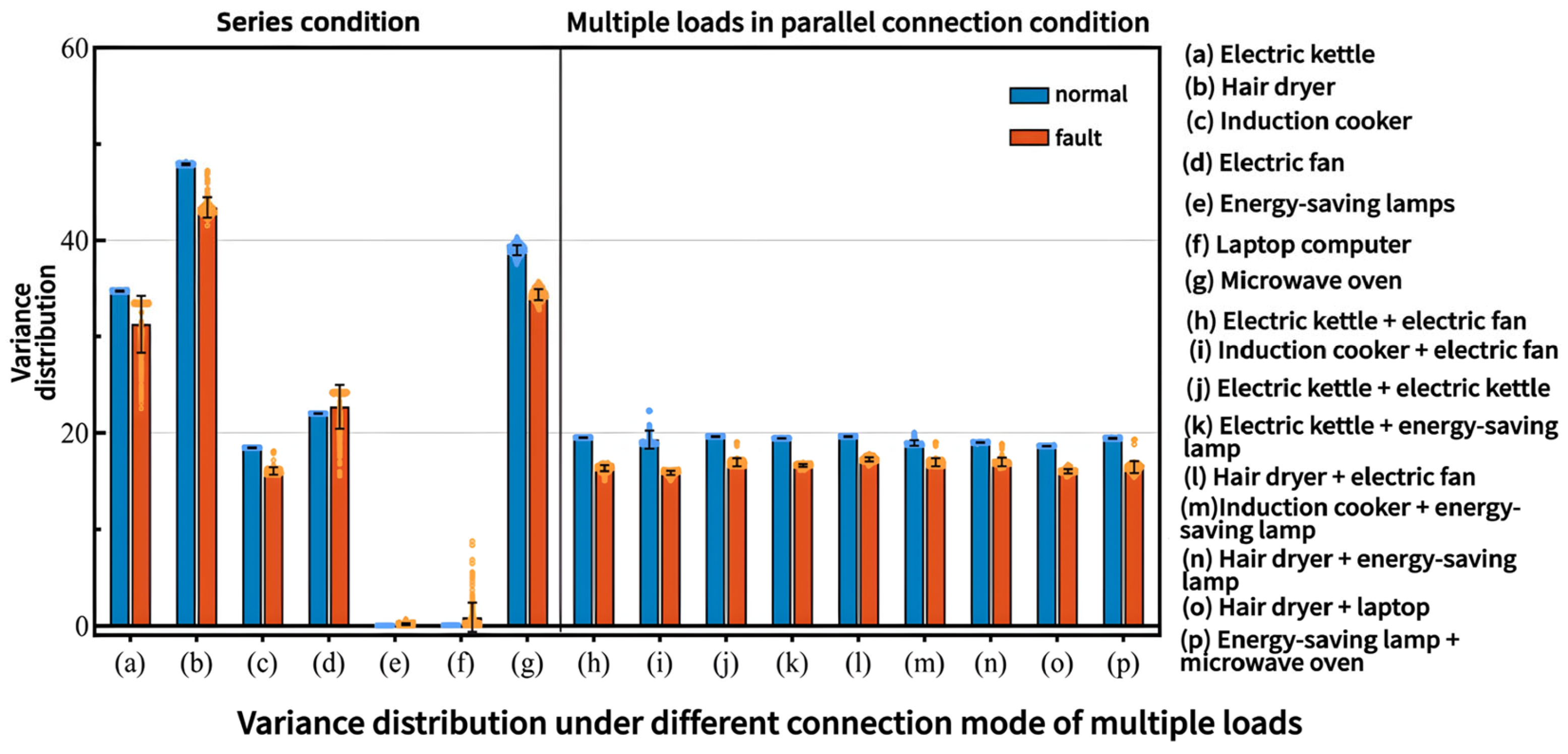
- Simulations of real-world parallel loads (four single, nine multi-load types) showed that parallel arcs reduce time-domain dispersion by >50% and increase fundamental content. These findings are directly applicable to refining electrical fire monitoring algorithms.
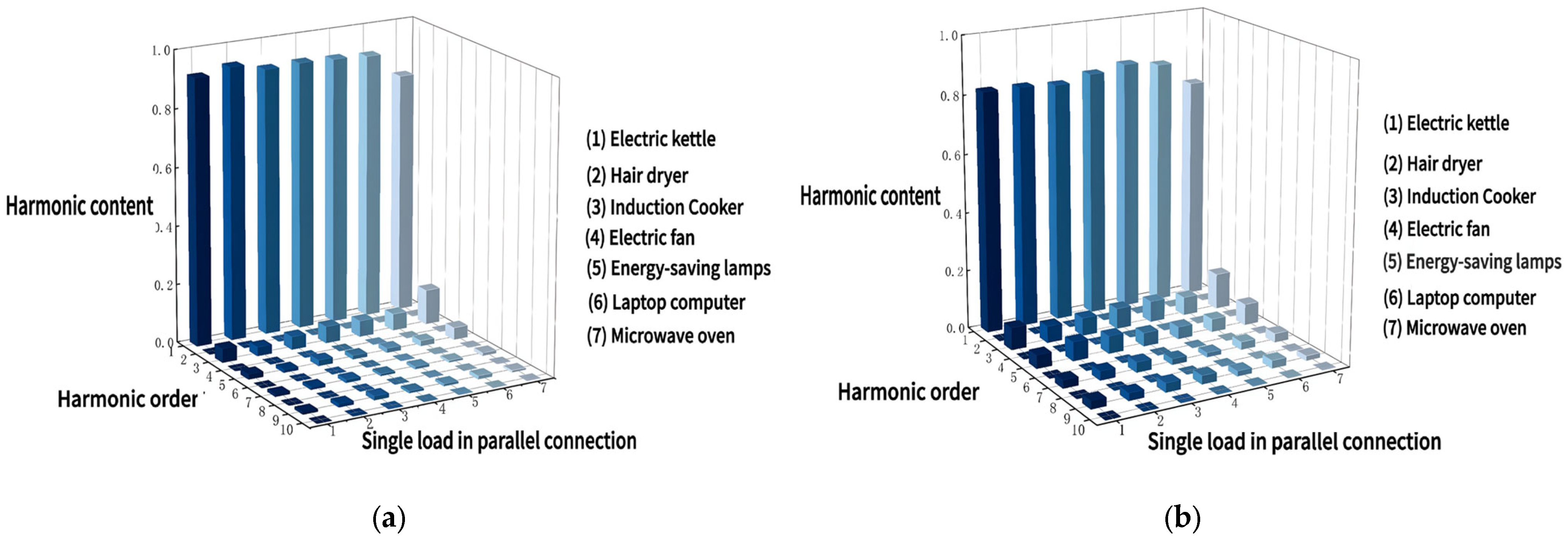
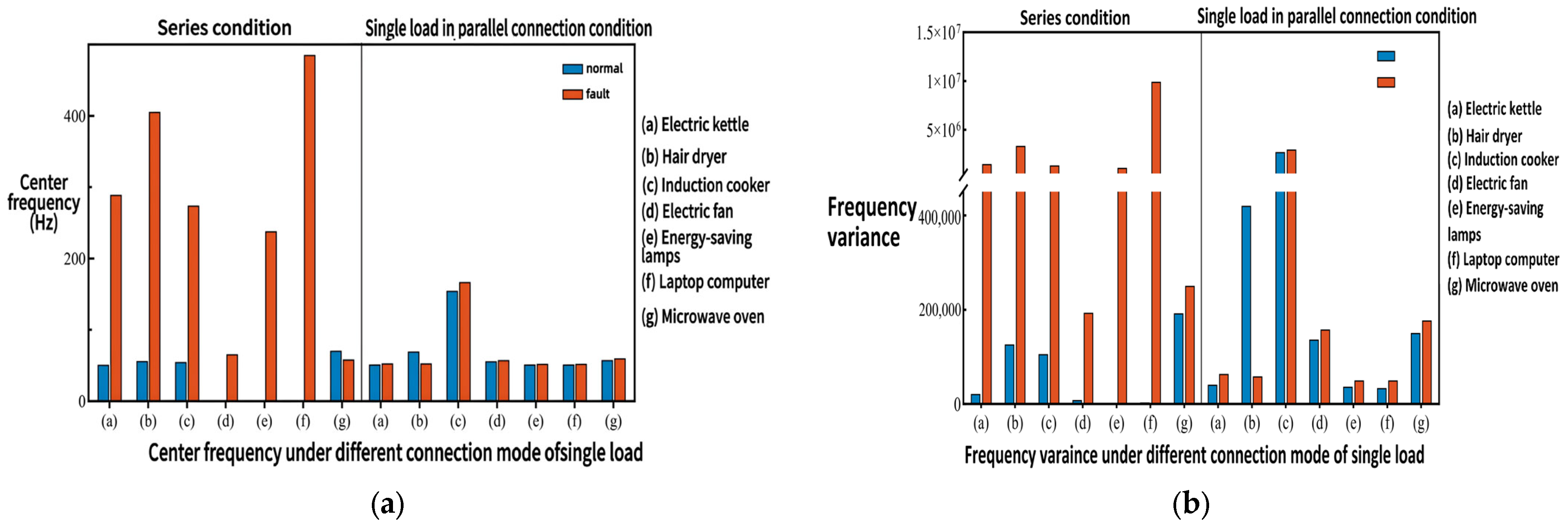
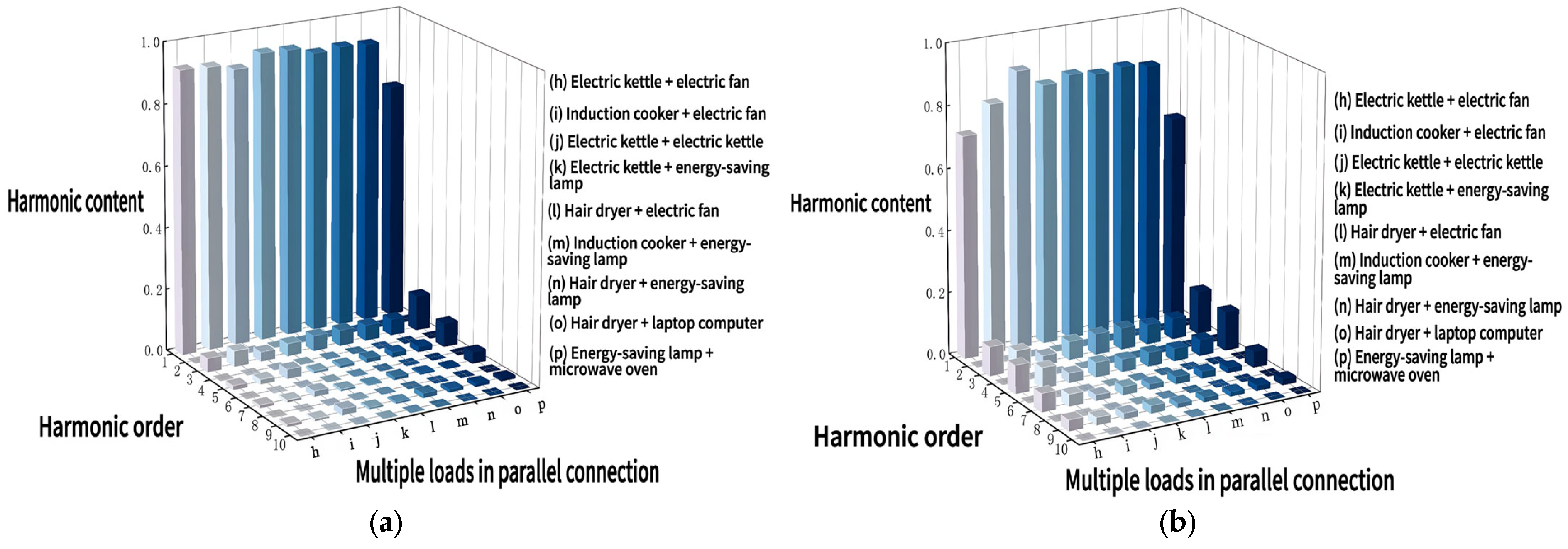
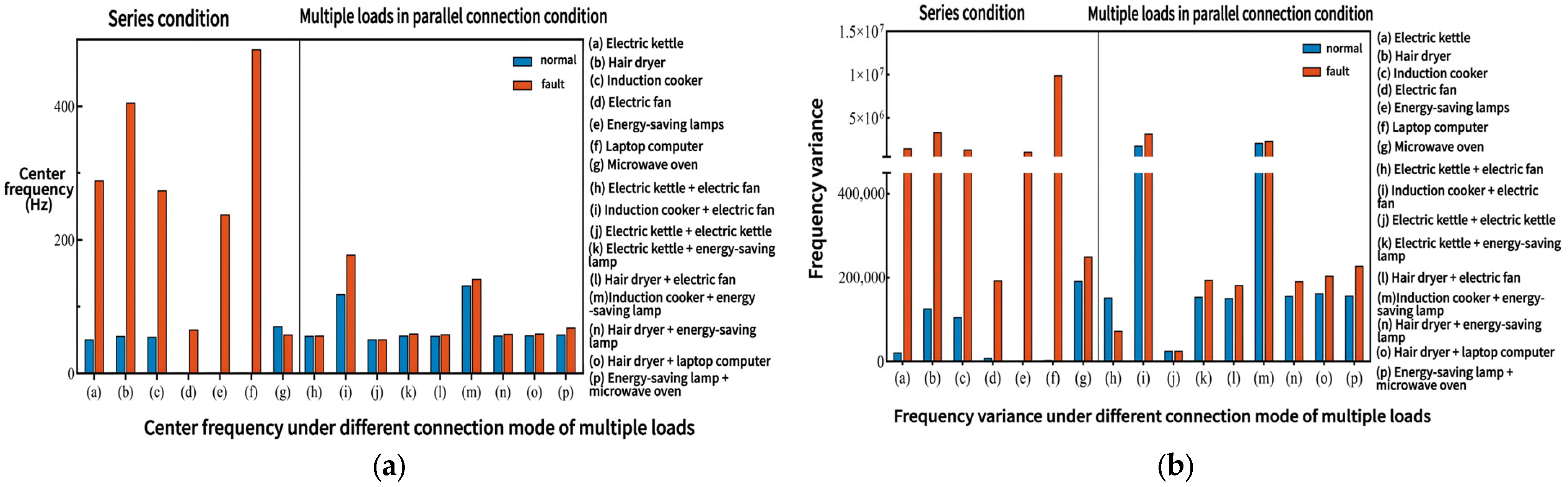
- Under different connection configurations of a single load, a comparison of time–frequency domain characteristics between series and parallel connections reveals that, in the case of parallel connection, although significant differences in load types persist, the waveform characteristics of different loads become submerged, and high-frequency harmonics are attenuated, resulting in notable convergence behavior. The distribution of time-domain features becomes more uniform in the parallel configuration, making it easier to determine the occurrence of arc faults using the fault-to-normal ratio of time-domain characteristic parameters compared to the series configuration. Furthermore, under parallel connection, the influence of load type on the distribution of frequency-domain characteristics is reduced. Although the fundamental frequency component decreases and higher harmonic components increase during arc fault conditions, this trend is less pronounced in the parallel connection than in the series connection.
- Under the parallel multi-load connection mode, a comparison of the time–frequency domain characteristics between series and parallel connections of different load types reveals that the underlying physical mechanisms mainly stem from the current superposition in parallel paths and changes in system impedance characteristics. In a parallel circuit, multiple loads are connected to the same power supply, and the currents of each branch superpose at the nodes, resulting in a smoother total current waveform. First, the current superposition and harmonic cancellation effects cause high-frequency harmonics generated by different loads to partially cancel each other out at the nodes due to phase differences, thereby reducing the overall harmonic content and enhancing the significance of the fundamental wave component. Second, the influence of system impedance cannot be ignored. Parallel paths reduce the equivalent impedance of the system, and high-frequency noise generated by arcs is more easily shunted and attenuated in low-impedance paths, leading to more concentrated frequency-domain characteristics. In addition, the nonlinear characteristics of arcs exhibit more complexity in the parallel structure—the randomness and instability of arcs are “averaged out” by the steady-state characteristics of multiple loads, resulting in a reduction in the dispersion of time-domain characteristics. Therefore, after an arc fault occurs, both the centroid frequency and frequency variance in the parallel connection decrease more significantly than those in the series connection. This indicates that in arc faults with multi-load parallel connections, harmonic components are significantly reduced due to the aforementioned mechanisms, revealing the convergent modulation effect of the parallel structure on the harmonic characteristics of arc faults.
- This study observes that the composite characteristics of multiple parallel loads are not a simple linear superposition of the characteristics of their constituent loads. In accordance with the provisions of the UL 1699 [8] and IEC 62606 [9] standards, the key finding of this experiment is that under multiple parallel loads, the inherent characteristics of each load (such as the inductive spikes of motors and the broadband noise of switching power supplies) undergo mutual modulation and coupling in the circuit. This results in the overall characteristics being not an arithmetic sum of individual components but rather exhibiting the more concealed “emergent” phenomena highlighted by the standards—including the cancellation or enhancement between harmonics of different loads—and the overall frequency response shift caused by impedance matching changes. Consequently, detection algorithms designed based on single-load characteristics are prone to failure under such complex operating conditions, which inversely demonstrates the necessity and superiority of the standard-based test method adopted in this study that covers multiple load combinations.
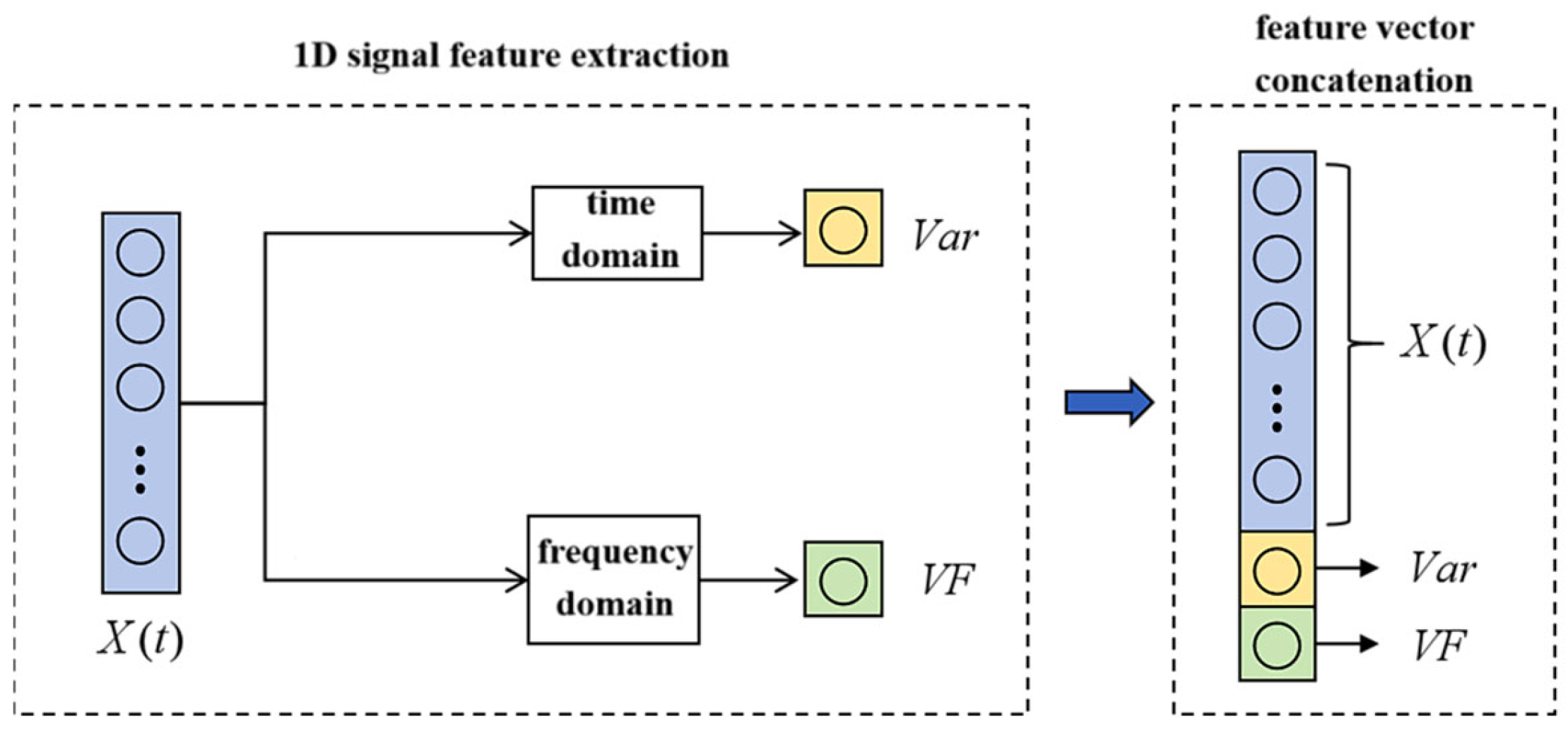
- To address the challenge of high difficulty in arc fault detection under complex parallel load environments, this study proposes a time–frequency domain feature fusion detection method based on the Dual-Channel Convolutional Neural Network (FF-DCNN). This method extracts the time–frequency features of one-dimensional current signals and the deep features of two-dimensional wavelet time–frequency diagrams, respectively, achieving high-robustness and high-precision recognition of arc faults. It maintains an average accuracy exceeding 97% under different connection modes and load types, which is significantly superior to traditional models. The algorithm not only provides a new technical approach for electrical fire monitoring but also has its engineering application value initially verified: the prototype of a dedicated detection chip configured based on this method has now entered the testing phase. Preliminary results indicate that its detection accuracy can reach over 90%, laying a solid foundation for the official launch of subsequent products.
- This study reveals the variation patterns of arc fault characteristics under different connection configurations. The findings not only provide theoretical support for arc fault detection techniques but, more importantly, offer a foundational basis for predicting abnormal temperature rises in electrical circuits and developing early fire warning systems. In future research, we will combine numerical simulation with the FF-DCNN method proposed in this study, which will further deepen the understanding of the intrinsic nature of arc faults.
Author Contributions
Funding
Data Availability Statement
Acknowledgments
Conflicts of Interest
References
- Fire and Rescue Department of the Ministry of Emergency Management. China Fire and Rescue Yearbook; Emergency Management Press: Beijing, China, 2022. [Google Scholar]
- Zhang, G.; Zhang, X.; Liu, H.; Wang, Y.H. Online Detection Method for Series Fault Arcs in Low-Voltage Systems. Trans. China Electrotech. Soc. 2016, 31, 109–115. [Google Scholar]
- Di, Z.G.; Xiong, Q.; Zhang, C.; Li, R.; Ji, S.C. DC Fault Arc Detection Method Based on Weighted Differential Current. J. Xi’an Jiaotong Univ. 2022, 56, 141–148. [Google Scholar]
- Gao, H.Y.; Wang, W.; Shang, T.T.; Zhai, G.L. Series arc fault detection method based on wavelet energy spectrum entropy. Adv. Technol. Electr. Eng. Energy 2022, 41, 63–71. [Google Scholar]
- Wang, Y.; Liu, L.M.; Li, S.N.; Feng, L.; Liu, Q.L.; Song, R.N. Fault Arc Detection Based on Empirical Wavelet Transform Composite Entropy Value and Feature Fusion. Power Syst. Technol. 2023, 47, 1912–1919. [Google Scholar]
- Aires, M.N.O.; Medeiros, R.P.; Costa, F.B.; Silva, K.M.; Chavez, J.J.; Popov, M. A wavelet-based restricted earth-fault power transformer differential protection. Electr. Power Syst. Res. 2021, 196, 107246. [Google Scholar] [CrossRef]
- Gong, Q.Y.; Peng, K.; Gao, Q.; Feng, L.; Xiao, C.L. Series arc fault identification method based on wavelet transform and feature values decomposition fusion DNN. Electr. Power Syst. Res. 2023, 221, 109391. [Google Scholar] [CrossRef]
- UL1699; Arc-Fault Circuit-Interrupters. Underwriters Laboratories Inc: Northbrook, IL, USA, 1999.
- IEC 62606: 2013/AMD1:2017; Amendment 1—General Requirements for Arc Faultdetection Devices. International Electrotechnical Commission: Geneva, Switzerland, 2017.
- GB/T 31143-2014; General Requirements for Arc Fault Detection Devices (AFDD). China Standards Press: Beijing, China, 2014.
- Han, J.W.; Micheline, K.; Pei, J. Data Mining: Concepts and Techniques, 3rd ed.; Morgan Kaufmann: Burlington, VT, USA, 2012; pp. 83–124. [Google Scholar]
- Oppenheim, A.V.; Schafer, R.W.; Buck, J.R. Discrete-Time Signal Processing, 2nd ed.; Prentice Hall: Upper Saddle River, NJ, USA, 1999. [Google Scholar]
- Chaparro, L.F.; Aydin, A. Signals and Systems Using MATLAB, 3rd ed.; Academic Press: Cambridge, MA, USA, 2019. [Google Scholar]
- Cui, F.F. Research on Diagnostic Methods for Series Arc Faults in Household Low-Voltage AC Systems. Master’s Thesis, Liaoning Technical University, Fuxin, China, 2023. [Google Scholar]
- Geng, W.H. Research on Series Arc Fault Detection Technology in Low-Voltage AC Systems. Master’s Thesis, Harbin Institute of Technology, Harbin, China, 2022. [Google Scholar]
- Zhao, L. Research on Three-Phase Arc Fault Detection Algorithm Based on Deep Learning. Master’s Thesis, Henan Polytechnic University, Zhengzhou, China, 2023. [Google Scholar]
- Deng, Y.; Dai, C.C.; Wang, R.J.; Zhu, F.Y.; Leng, J.T.; Zhang, T.Z. Advances in Machine Learning Models for Fatigue Life Prediction. Chin. J. Nat. 2024, 46, 247–260. [Google Scholar]
- Wang, Y.; Tian, M.; Xie, Z.H.; Ban, Y.S.; Hou, L.M.; Li, K. Series Fault Arc Detection Method Based on Current Similarity and High-Frequency Energy. Electr. Meas. Instrum. 2022, 59, 158–165. [Google Scholar]
- Xiong, Q.; Chen, W.J.; Ji, S.C.; Zhu, L.Y. Research Progress Review on Arc Fault Characteristics, Detection and Location Methods in Low-Voltage DC Systems. Proc. CSEE 2020, 40, 6015–6027. [Google Scholar]
- Krzysztof, D.; Piotr, B.; Robert, Ł. A Novel Method for Detection and Location of Series Arc Fault for Non-Intrusive Load Monitoring. Energies 2022, 16, 171. [Google Scholar] [CrossRef]
- Cui, R.H.; Zhang, Z.; Tong, D.S.; Cui, J.P. Series Arc Fault Detection in Aviation Utetheisa Kong AC Circuits Based on Multi-feature Fusion of Improved Empirical Wavelet Transform. Trans. China Electrotech. Soc. 2022, 37, 3148–3161. [Google Scholar]
- Wu, C.H.; Lin, X.M.; Li, Z.H.; Wang, F. Arc Fault Characteristics and Detection Methods in DC Microgrid Systems. High Volt. Eng. 2023, 49, 4307–4316. [Google Scholar]
- Qin, Y.W.; Zhang, P.H.; Song, R.N.; Zhu, M.N. Arc Fault Diagnosis Technology and Development Trends in New Power Systems. Electr. Meas. Instrum. 2024, 61, 1–9. [Google Scholar]
- Wang, Q.; Chen, S.L.; Meng, Y.; Yang, Q.; Li, X.W. A Review of Fault Arc Detection Technologies in Low-Voltage DC Systems. High Volt. Appar. 2023, 59, 93–103. [Google Scholar]
- Wu, N.Q.; Peng, M.Y.; Wang, J.J.; Wu, M.Z.; Lu, Q.W.; Wang, Y.; Ding, Y.K. Research on voltage-current type series arc fault detection method based on composite multi-scale entropy. Electr. Power Syst. Res. 2025, 242, 111445. [Google Scholar] [CrossRef]
- Feng, J.Y. Research on Ignition Characteristics and Identification Methods of DC Series Fault Arcs. Master’s Thesis, Liaoning Technical University, Fuxin, China, 2024. [Google Scholar]



| Number | Load Type | Load Name | Core Components |
|---|---|---|---|
| a | Resistive load | Electric kettle | Heating element |
| b | Hair dryer | Motor | |
| c | Inductive load | Induction cooker | Insulated gate bipolar transistor |
| d | Electric fan | Motor rotor | |
| e | Power electronic load | Energy-saving lamps | Electronic driver |
| f | Laptop computer | Switching mode power supply | |
| g | Switching power supply load | Microwave oven | Magnetron |
| Number | Load Type | Load Name |
|---|---|---|
| a | Resistive load | Electric kettle |
| b | Inductive load | Hair dryer |
| c | Electronic load | Induction cooker |
| d | Switching power supply load | Electric fan |
| e | Resistive and inductive loads | Energy-saving lamps |
| f | Inductive and inductive | Laptop computer |
| g | Resistive and resistive | Microwave oven |
| h | Resistive and power electronic | Electric kettle + Electric fan |
| i | Resistive and inductive | Induction cooker + Electric fan |
| j | Inductive and power electronic | Electric kettle + Electric kettle |
| k | Resistive and power electronic | Electric kettle + Energy-saving lamp |
| l | Resistive and power electronic | Hair dryer + Electric fan |
| m | Power electronic and switching power supply | Induction cooker + Energy-saving lamp |
| n | Resistive load | Hair dryer + Energy-saving lamp |
| o | Inductive load | Hair dryer + Laptop computer |
| p | Electronic load | Energy-Saving lamp + Microwave oven |
| Load Type | Load | Absolute Mean Value Ratio | Peak–Peak Value Ratio | Variance Ratio |
|---|---|---|---|---|
| Resistive load | Electric kettle | 0.869 | 0.980 | 0.901 |
| Hair dryer | 0.941 | 0.972 | 0.906 | |
| Inductive load | Induction cooker | 0.980 | 0.954 | 0.870 |
| Electric fan | 0.984 | 1.039 | 1.032 | |
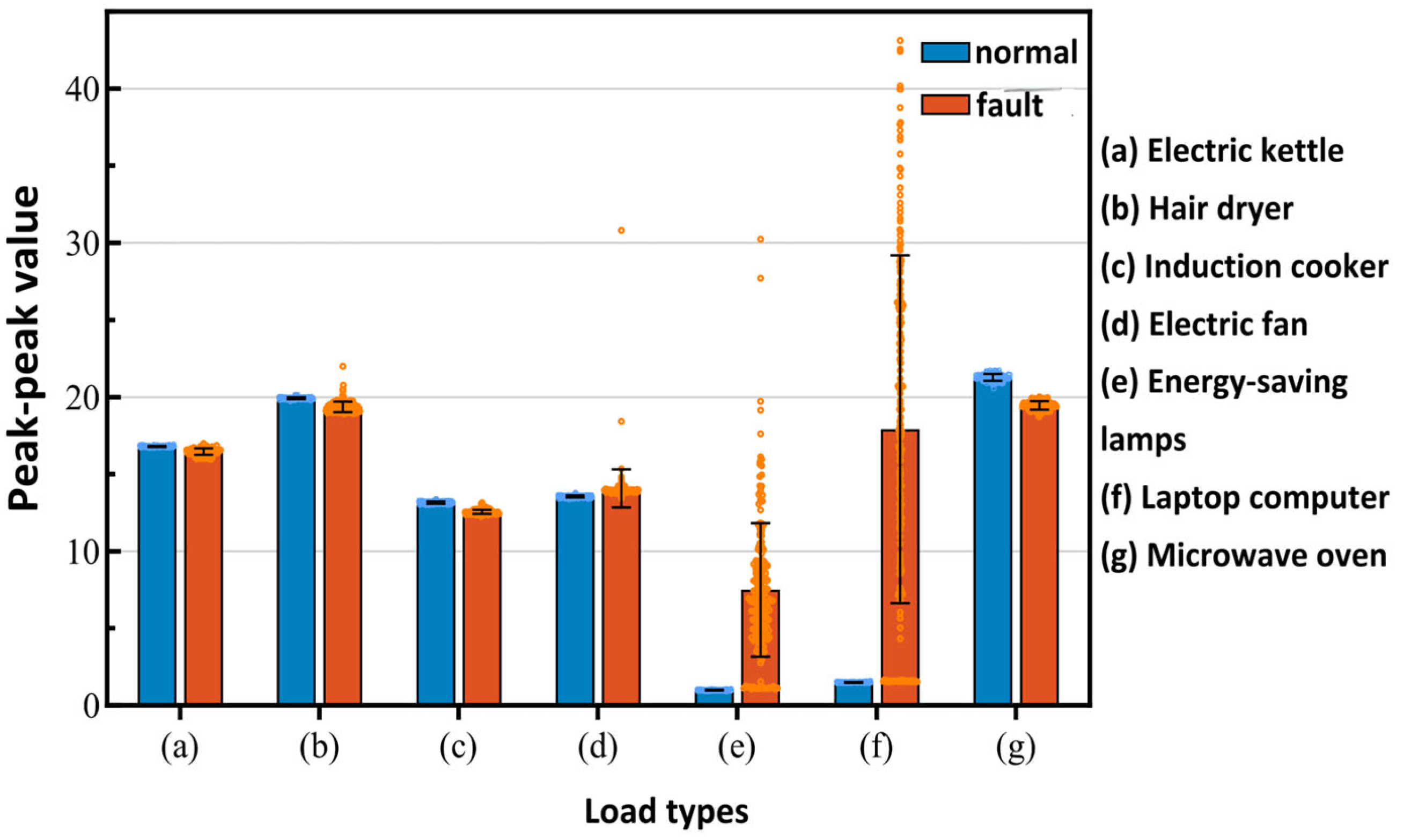
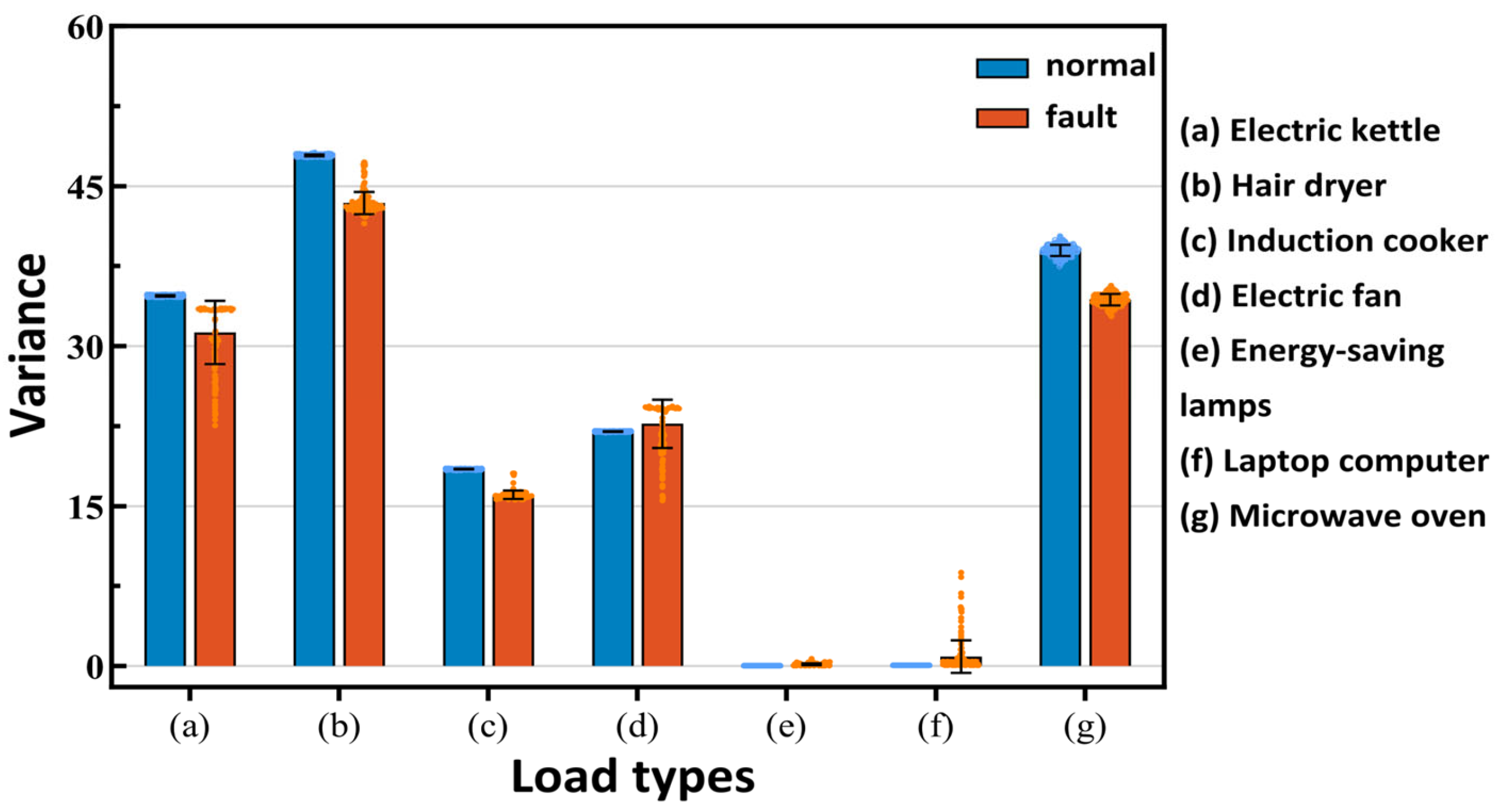
| Power electronic load | Energy-saving lamps | 1.648 | 7.515 | 10.824 |
| Laptop computer | 2.670 | 11.888 | 14.291 | |
| Switching power supply load | Microwave oven | 0.922 | 0.914 | 0.881 |
| Load type | Mean Difference Under Normal Condition for Different Connection | Mean Difference Under Fault Condition for Different Connection | Ratio of Characteristic Signatures Under Series Connection Mode | Ratio of Characteristic Signatures Under Parallel Connection Mode |
|---|---|---|---|---|
| Electric kettle | 0.765 | 0.827 | 0.869 | 0.940 |
| Hair dryer | 0.645 | 0.629 | 0.941 | 0.917 |
| Induction cooker | 0.613 | 0.573 | 0.980 | 0.916 |
| Electric fan | 0.985 | 0.968 | 0.984 | 0.953 |
| Energy-saving lamps | 61.731 | 35.618 | 1.648 | 0.951 |
| Laptop computer | 29.613 | 10.334 | 2.670 | 0.932 |
| Microwave oven | 0.763 | 0.768 | 0.922 | 0.927 |
| Load Type | Mean Difference Under Normal Condition for Different Connection | Mean Difference Under Fault Condition for Different Connection | Ratio of Characteristic Signatures Under Series Connection Mode | Ratio of Characteristic Signatures Under Parallel Connection Mode |
|---|---|---|---|---|
| Electric kettle | 0.576 | 0.580 | 0.901 | 0.907 |
| Hair dryer | 0.347 | 0.397 | 0.906 | 1.036 |
| Induction cooker | 0.870 | 1.000 | 0.870 | 1.006 |
| Electric fan | 0.928 | 0.898 | 1.032 | 0.999 |
| Energy-saving lamps | 142.939 | 131.977 | 10.824 | 0.998 |
| Laptop computer | 328.385 | 22.972 | 14.291 | 0.998 |
| Microwave oven | 0.449 | 0.510 | 0.881 | 0.999 |
| Signal Type | Label | Training Set | Validation Set | Test Set |
|---|---|---|---|---|
| Number of normal samples | 0 | 540,175 | 67,521 | 67,521 |
| Number of faulty samples | 1 | 201,619 | 25,202 | 25,202 |
| sample size | 741,194 | 92,723 | 92,723 | |
| 1D Feature Extraction | 2D feature Extraction | |||||||
|---|---|---|---|---|---|---|---|---|
| Network Layer | Number of Convolutional Kernels | Size | Stride | Network Layer | Number of Convolutional Kernels | Size | Stride | |
| Feature extraction layer | Conv1D MaxPool1D Conv1D MaxPool1D Conv1D MaxPool1D | 16 ReLU / 32 ReLU / 32 ReLU / | 3 × 1 2 × 1 3 × 1 4 × 1 3 × 1 4 × 1 | 2 2 2 4 2 4 | Conv2D | 48 | 11 × 11 | 1 |
| ReLU | ||||||||
| MaxPool2D | / | 3 × 3 | 2 | |||||
| Conv2D | 128 | 5 × 5 | 2 | |||||
| ReLU | ||||||||
| MaxPool2D | / | 3 × 3 | 2 | |||||
| Conv2D | 192 | 3 × 3 | 1 | |||||
| ReLU | ||||||||
| Conv2D | 192 | 3 × 3 | 1 | |||||
| ReLU | ||||||||
| Conv2D | 128 | 3 × 3 | 1 | |||||
| ReLU | ||||||||
| MaxPool2D | / | 3 × 3 | 2 | |||||
| Flatten | / | Flatten | / | |||||
| Feature fusion | Feature splicing | |||||||
| full connectivity layer | full connectivity layer | |||||||
| Output | Output | |||||||
| Actual Class | Predicted Class | |
|---|---|---|
| Positive Sample | TP | FN |
| Negative Sample | FP | TN |
| Model | Accuracy | Precision | Recall | F1-score |
|---|---|---|---|---|
| CNN | 97.62% | 97.41% | 97.54% | 97.59% |
| LSTM | 96.19% | 95.86% | 96.08% | 96.08% |
| Transformer | 73.31% | 73.75% | 73.75% | 62.03% |
| DCNN | 96.19% | 95.86% | 95.74% | 96.08% |
| FF-DCNN | 98.52% | 98.41% | 98.29% | 98.29% |
| Method | Accuracy | Precision | Recall | F1-Score |
|---|---|---|---|---|
| Retain only the 1D-CNN | 97.50% | 97.64% | 97.34% | 97.36% |
| Retain only the 2D-CNN | 95.29% | 94.88% | 95.07% | 95.07% |
| FF-DCNN | 98.52% | 98.41% | 98.28% | 98.29% |
| Number | Load Type | Load | Accuracy | Precision | Recall | F1-Score |
|---|---|---|---|---|---|---|
| 1 | Resistive load | Electric kettle | 99.99% | 99.94% | 98.62% | 98.92% |
| 2 | Hair dryer | 97.40% | 96.30% | 97.68% | 96.92% | |
| 3 | Inductive load | Induction cooker | 99.99% | 99.79% | 99.87% | 99.98% |
| 4 | Electric fan | 99.99% | 99.18% | 99.17% | 99.45% | |
| 5 | Power electronic load | Energy-saving lamps | 99.52% | 98.09% | 98.10% | 98.19% |
| 6 | Laptop computer | 99.89% | 99.13% | 99.79% | 99.56% | |
| 7 | Switching power supply load | Microwave oven | 99.20% | 99.17% | 99.23% | 99.17% |
| Number | Load Type | Load Name | Accuracy | Precision | Recall | F1-Score |
|---|---|---|---|---|---|---|
| 1 | Resistive load | Electric kettle | 98.01% | 97.12% | 97.71% | 97.72% |
| 2 | Inductive load | Hair dryer | 97.01% | 96.25% | 96.99% | 96.21% |
| 3 | Electronic load | Induction cooker | 97.34% | 97.24% | 96.93% | 96.92% |
| 4 | Switching power supply load | Electric fan | 98.12% | 98.01% | 98.17% | 98.00% |
| 5 | Resistive and inductive loads | Energy-saving lamps | 97.43% | 98.27% | 98.14% | 98.13% |
| 6 | Inductive and inductive | Laptop computer | 98.04% | 98.13% | 97.79% | 97.96% |
| 7 | Resistive and resistive | Microwave oven | 98.34% | 98.24% | 98.13% | 98.23% |
| 8 | Resistive and power electronic | Electric kettle + Electric fan | 95.69% | 95.23% | 95.67% | 95.13% |
| 9 | Resistive and inductive | Induction cooker + Electric fan | 98.80% | 98.67% | 99.16% | 99.66% |
| 10 | Inductive and power electronic | Electric kettle + Electric kettle | 99.16% | 99.06% | 98.98% | 99.06% |
| 11 | Resistive and power electronic | Electric kettle + Energy-saving lamp | 97.73% | 94.13% | 97.16% | 97.17% |
| 12 | Resistive and power electronic | Hair dryer + Electric fan | 92.87% | 92.85% | 91.76% | 92.48% |
| 13 | Power electronic and switching power supply | Induction cooker + Energy-saving lamp | 95.37% | 94.89% | 95.46% | 96.01% |
| 14 | Resistive load | Hair dryer + Energy-saving lamp | 92.76% | 92.85% | 92.46% | 92.73% |
| 15 | Inductive load | Hair dryer + Laptop computer | 97.76% | 98.12% | 98.06% | 97.95% |
| 16 | Electronic load | Energy-Saving lamp + Microwave oven | 99.08% | 98.37% | 97.86% | 97.97% |
Disclaimer/Publisher’s Note: The statements, opinions and data contained in all publications are solely those of the individual author(s) and contributor(s) and not of MDPI and/or the editor(s). MDPI and/or the editor(s) disclaim responsibility for any injury to people or property resulting from any ideas, methods, instructions or products referred to in the content. |
© 2025 by the authors. Licensee MDPI, Basel, Switzerland. This article is an open access article distributed under the terms and conditions of the Creative Commons Attribution (CC BY) license (https://creativecommons.org/licenses/by/4.0/).
Share and Cite
Zeng, S.; Lei, L.; Tian, G.; Li, Y.; Wang, J. Research on Time–Frequency Domain Characteristics Analysis of Fault Arc Under Different Connection Methods. Electronics 2025, 14, 4840. https://doi.org/10.3390/electronics14244840
Zeng S, Lei L, Tian G, Li Y, Wang J. Research on Time–Frequency Domain Characteristics Analysis of Fault Arc Under Different Connection Methods. Electronics. 2025; 14(24):4840. https://doi.org/10.3390/electronics14244840
Chicago/Turabian StyleZeng, Siyuan, Lei Lei, Gang Tian, Yimin Li, and Jianhua Wang. 2025. "Research on Time–Frequency Domain Characteristics Analysis of Fault Arc Under Different Connection Methods" Electronics 14, no. 24: 4840. https://doi.org/10.3390/electronics14244840
APA StyleZeng, S., Lei, L., Tian, G., Li, Y., & Wang, J. (2025). Research on Time–Frequency Domain Characteristics Analysis of Fault Arc Under Different Connection Methods. Electronics, 14(24), 4840. https://doi.org/10.3390/electronics14244840