Article

Non-Invasive Showering Estimation Utilizing Household-Adaptive Models and Washing Time Data

1
Center for Mathematical and Data Sciences, Kobe University, 1-1 Rokkodai-cho, Nada-ku, Kobe 657-8501, Japan
2
NORITZ Corporation, 93 Edomachi, Chuo-ku, Kobe 650-0033, Japan
3
RIKEN Center for Advanced Intelligence Project, 1-4-1 Nihonbashi, Chuo-ku, Tokyo 103-0027, Japan
*
Author to whom correspondence should be addressed.
Electronics 2025, 14(21), 4336; https://doi.org/10.3390/electronics14214336

Submission received: 17 October 2025 / Revised: 28 October 2025 / Accepted: 4 November 2025 / Published: 5 November 2025
(This article belongs to the Special Issue Smart Pervasive Technologies Utilizing Non-Verbal Information)

Abstract

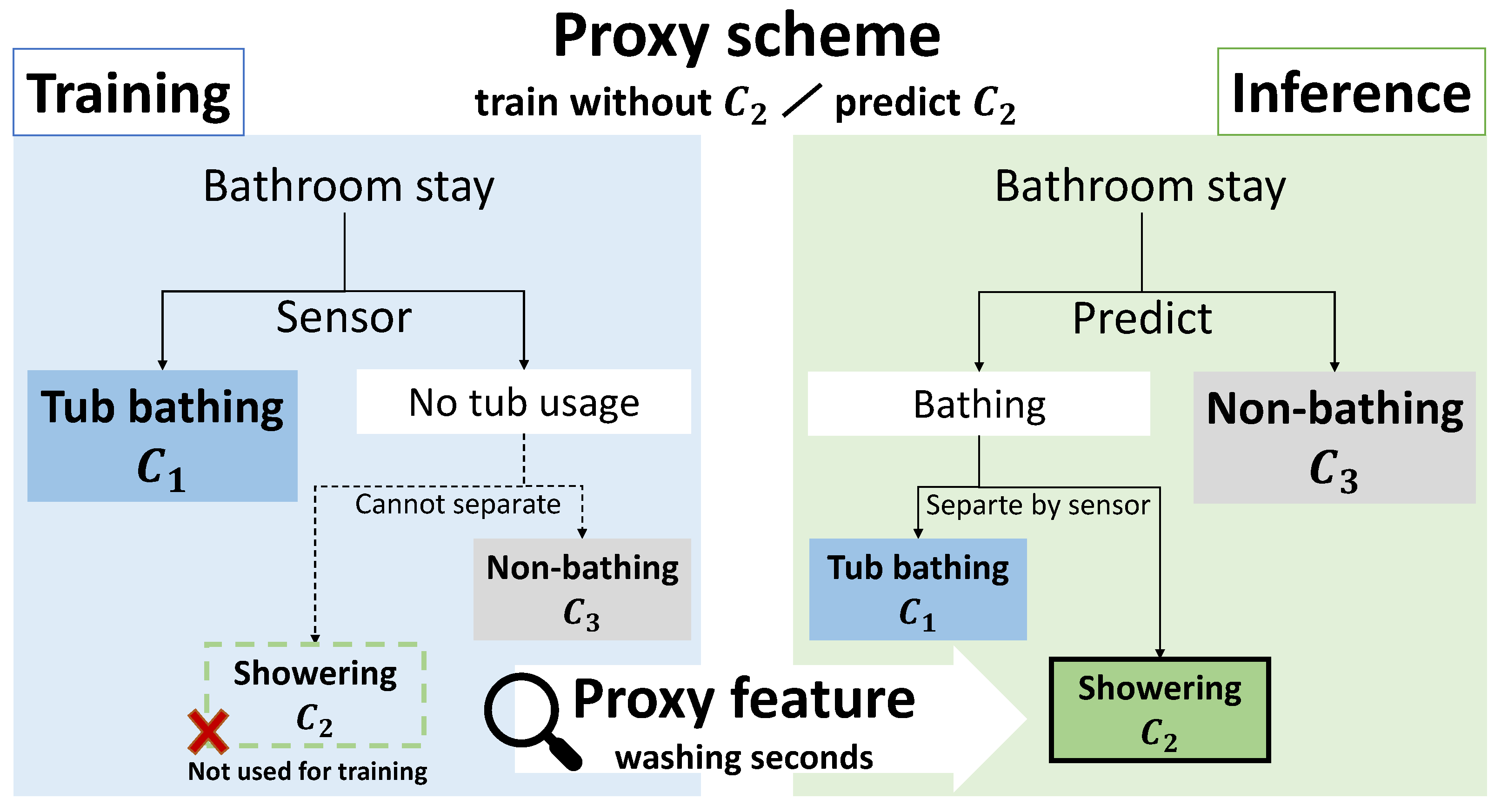
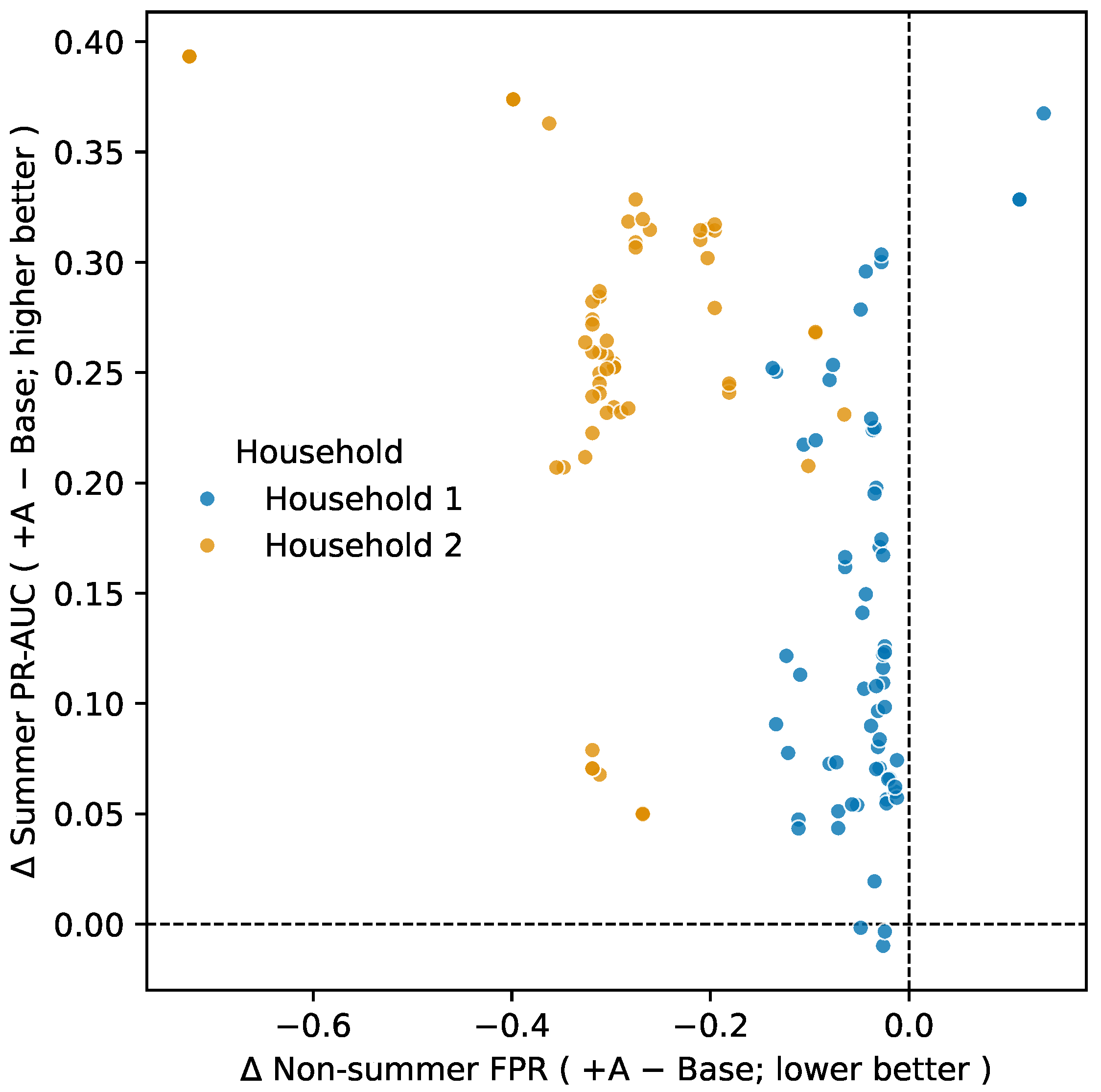
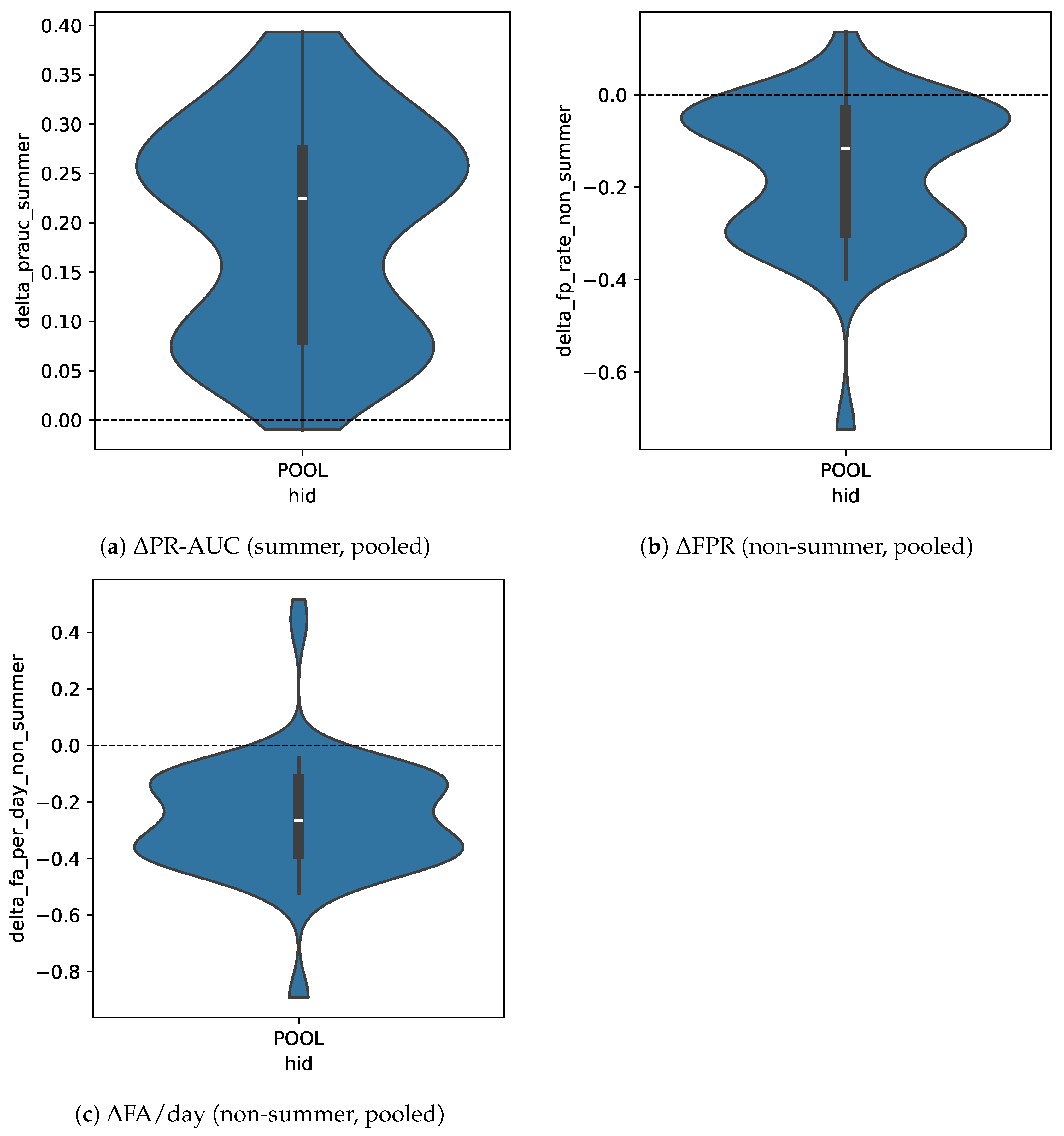
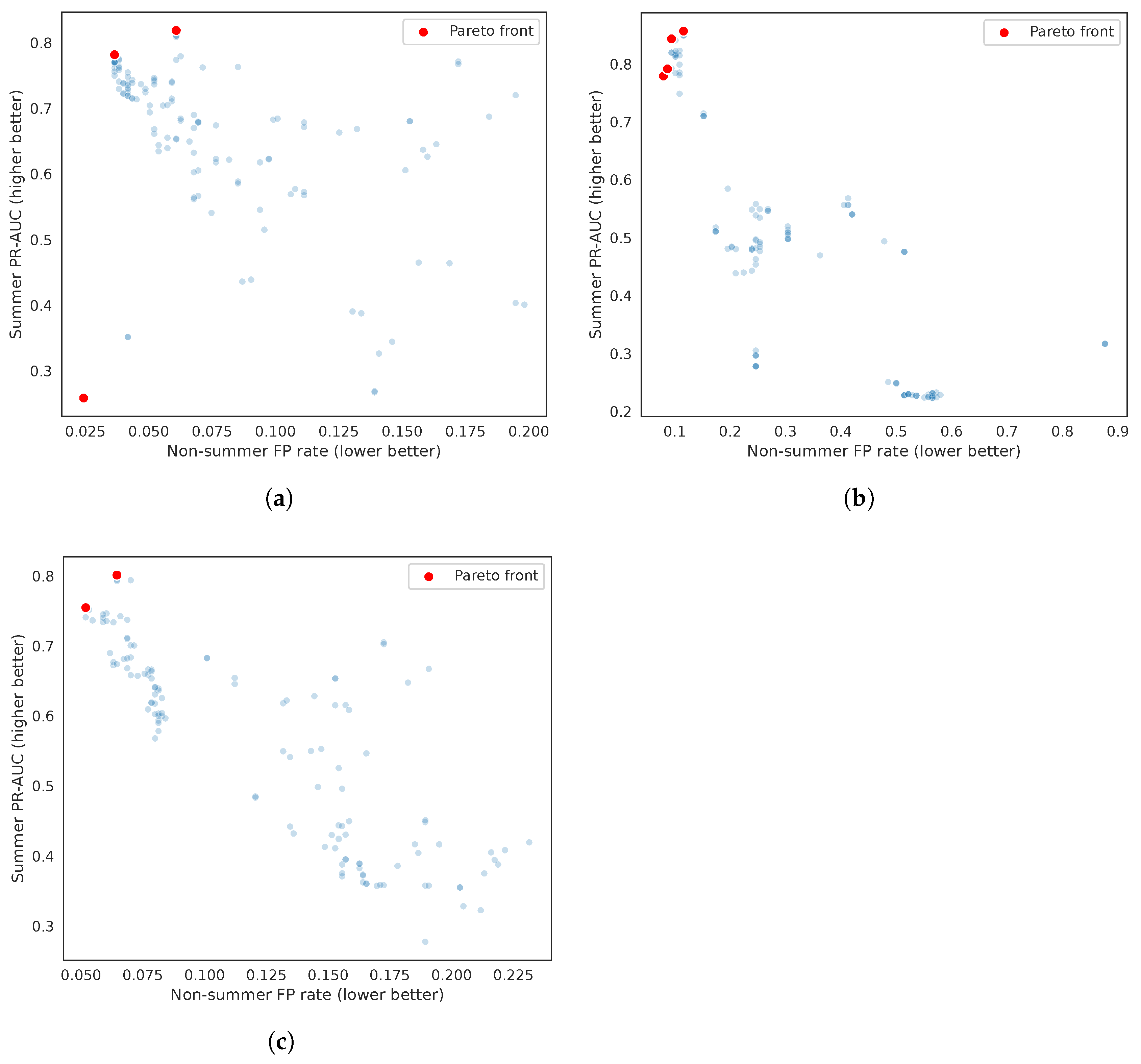
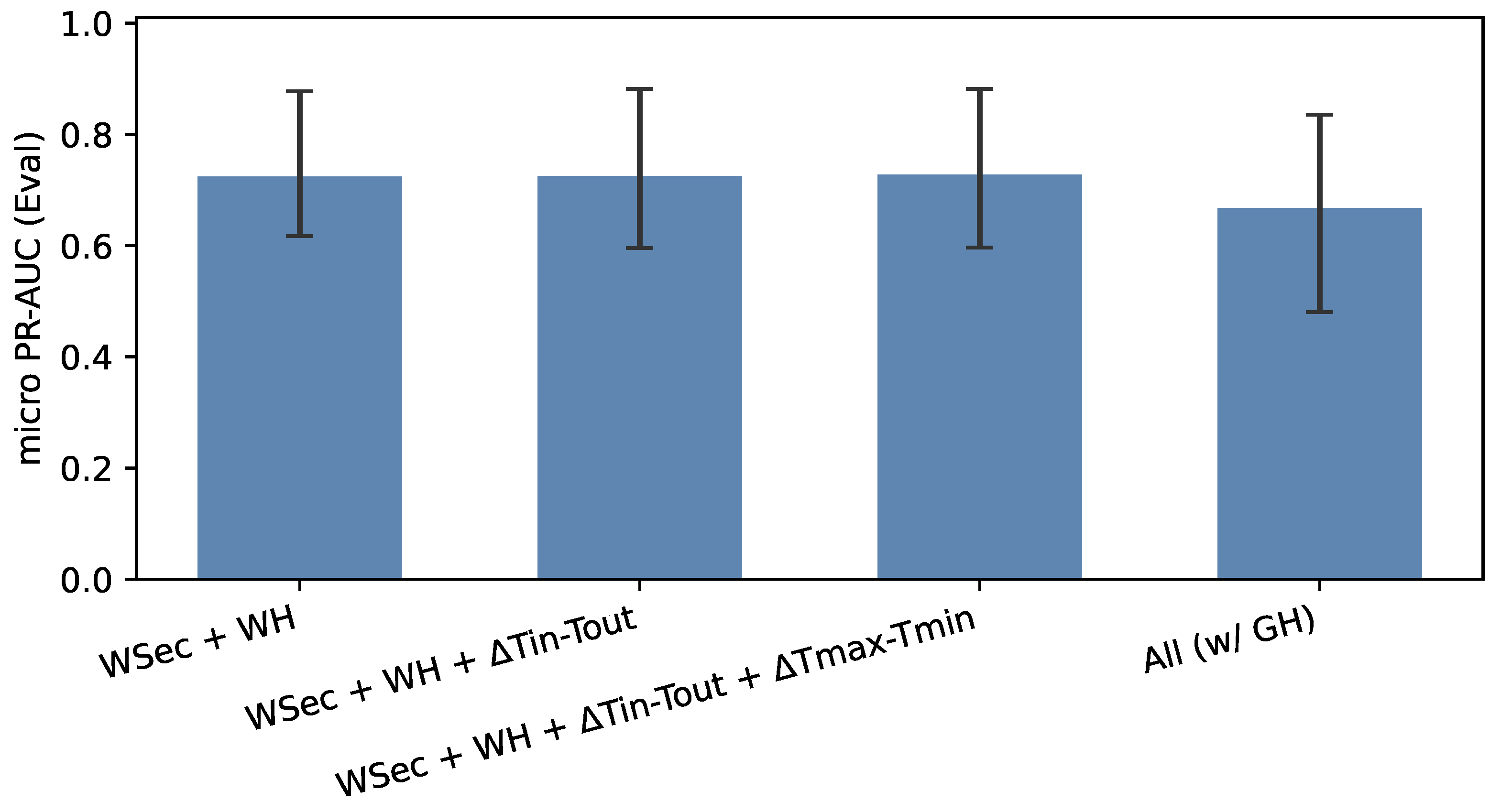
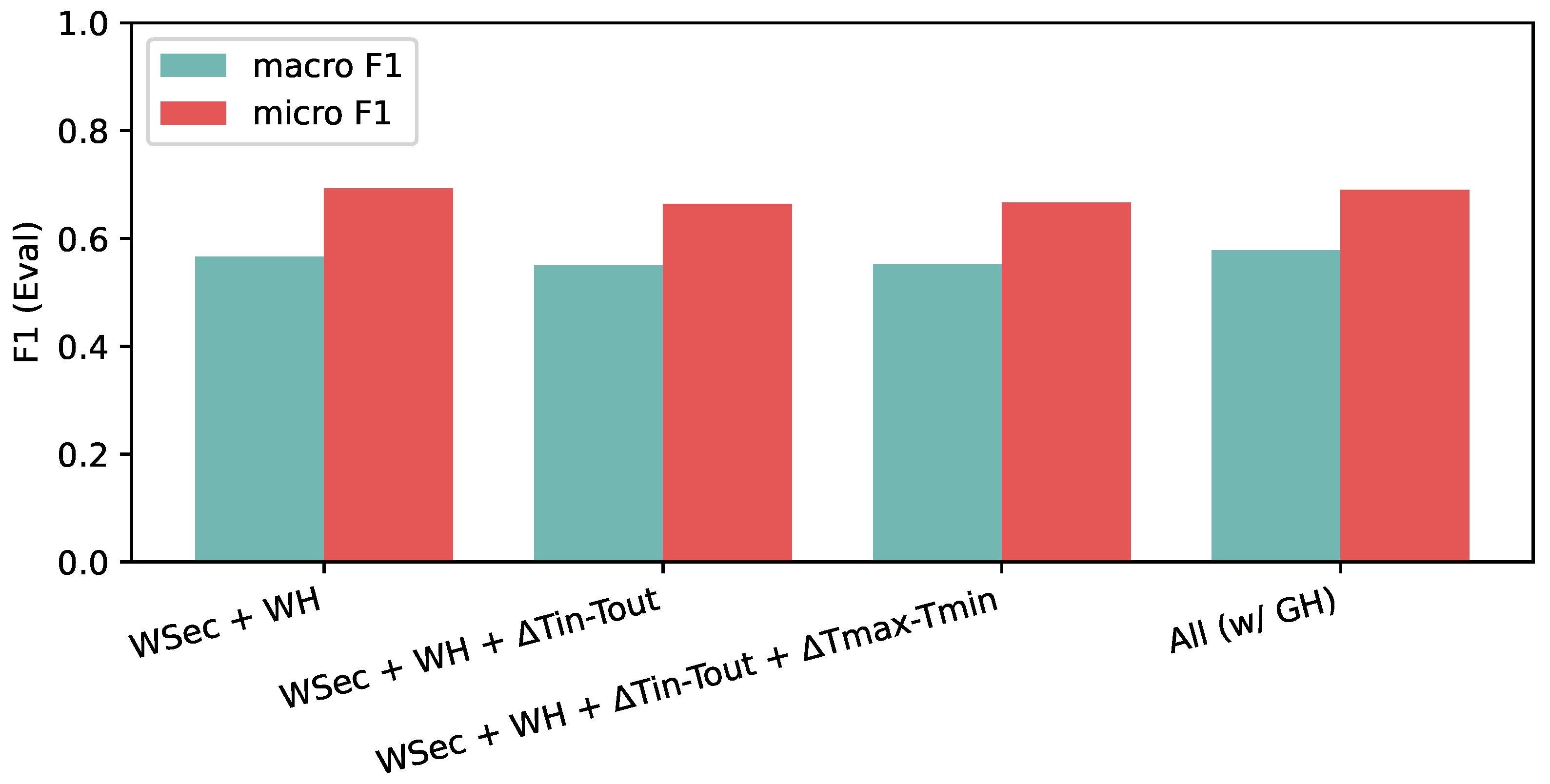
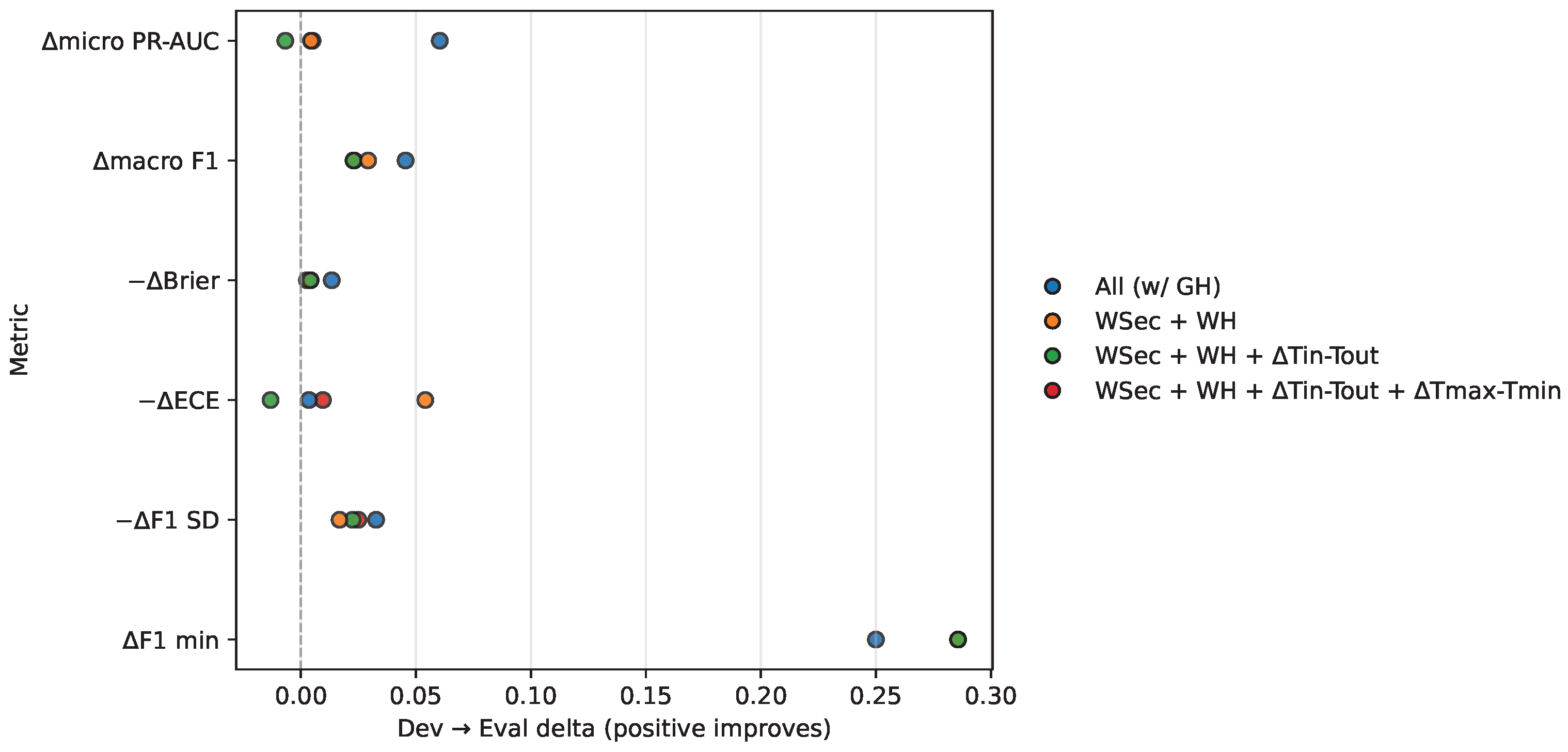
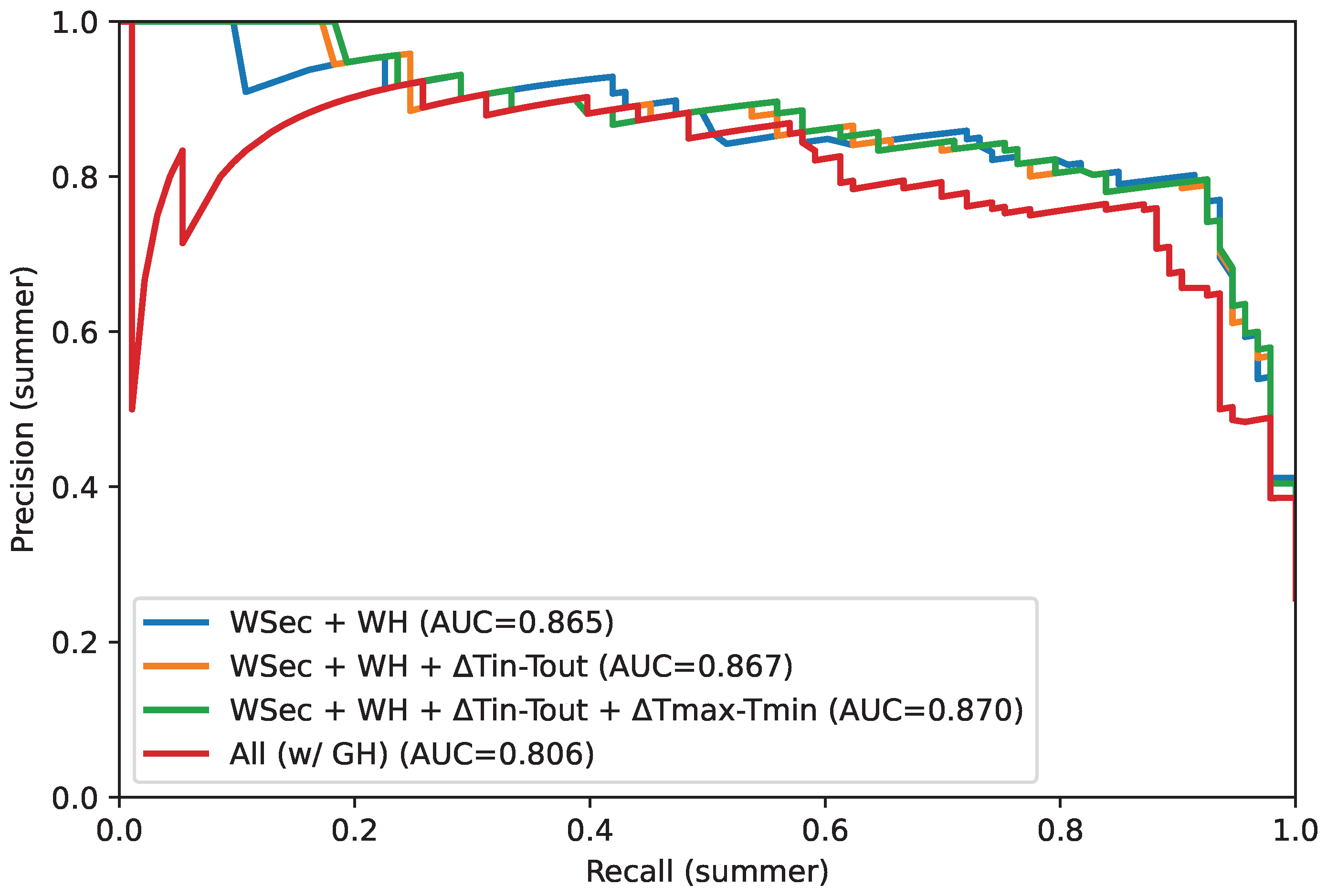
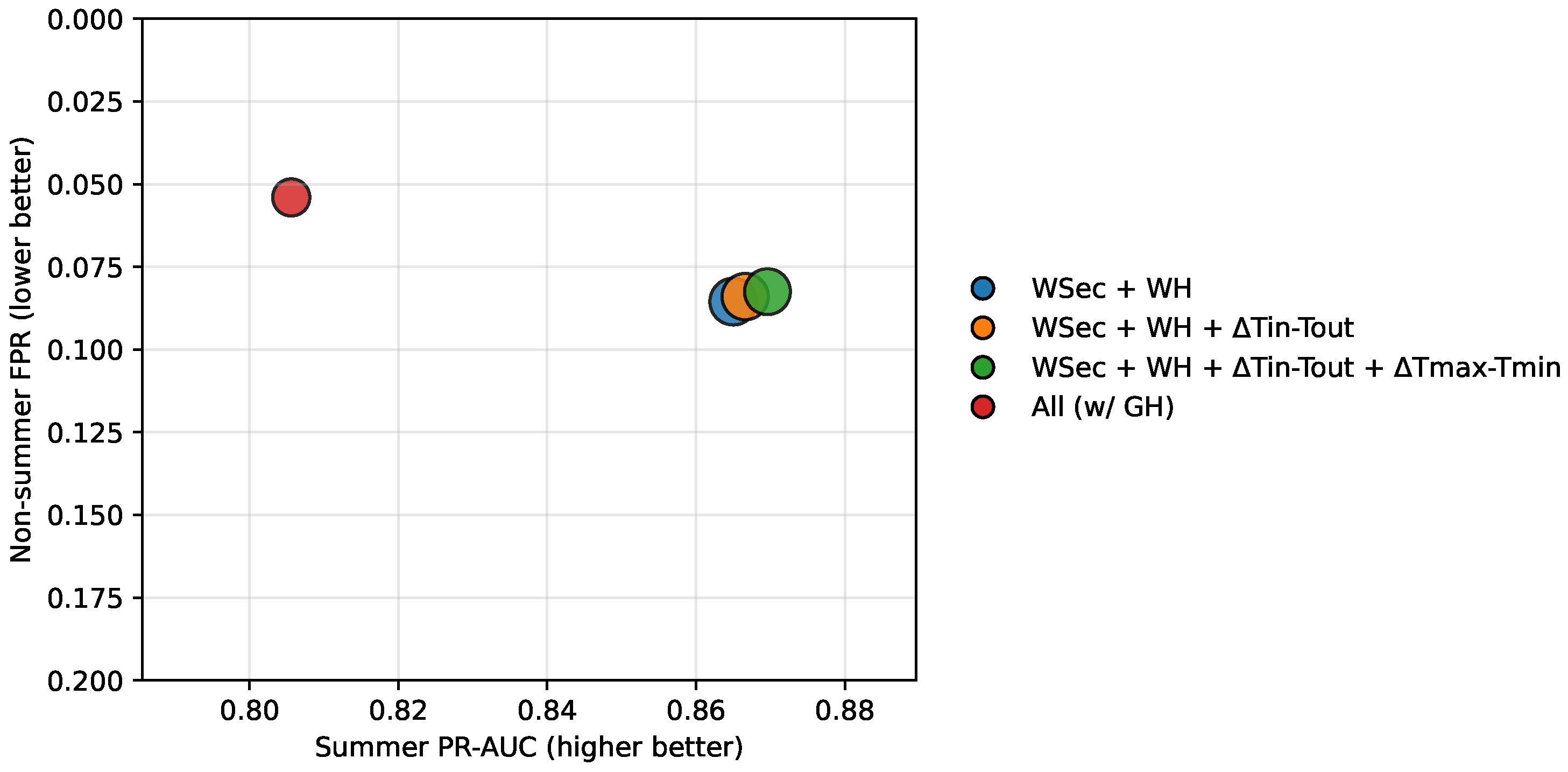
This study introduces a dual-proxy framework for household-adaptive, non-invasive shower detection using standard water-heater logs. The framework leverages proxy at two complementary levels: a feature-level proxy (washing_seconds) that captures washing duration, and a scheme-level proxy (proxy-driven training) that enables learning in periods without direct shower labels. The proxy feature (washing_seconds) serves as an indirect descriptor of washing behavior, enabling effective inference even under label scarcity. We investigated three research questions: (RQ1) the effectiveness of proxy features in improving shower detection, (RQ2) how proxy-driven evaluation identifies compact yet reliable feature subsets, and (RQ3) the robustness of these subsets in long-term, real-world scenarios. Experiments on two households showed that washing_seconds consistently improved discrimination (raising summer PR-AUC, lowering non-summer false alarms), and that compact subsets of only two or three features, anchored by the proxy feature, achieved stable performance across households. The evaluation represents an illustrative example based on two cooperating households, providing practical evidence of the framework’s real-world applicability. Evaluation in real-world conditions confirmed robustness: representative subsets maintained micro PR-AUC 0.724–0.728, micro F1 0.66–0.69 (macro F1 0.55–0.58), and summer PR-AUC near 0.87, with generalization gaps within ±0.01 for discrimination and small positive shifts for F1 (+0.02–+0.05). These results demonstrate that proxy can function both as a feature and as a methodological principle, and that the proposed framework is model-agnostic and transferable to other learning architectures. It provides a foundation for adaptive, privacy-preserving smart home applications that can scale to broader household and healthcare contexts.
Keywords: dual-proxy framework; shower detection; non-invasive sensing; household-adaptive modeling; proxy feature; proxy-driven scheme; feature selection; Pareto analysis; calibration; smart home dual-proxy framework; shower detection; non-invasive sensing; household-adaptive modeling; proxy feature; proxy-driven scheme; feature selection; Pareto analysis; calibration; smart home