Modelling Mass Transport in Anode-Supported Solid Oxide Fuel Cells

 ,
, 

Abstract
1. Introduction
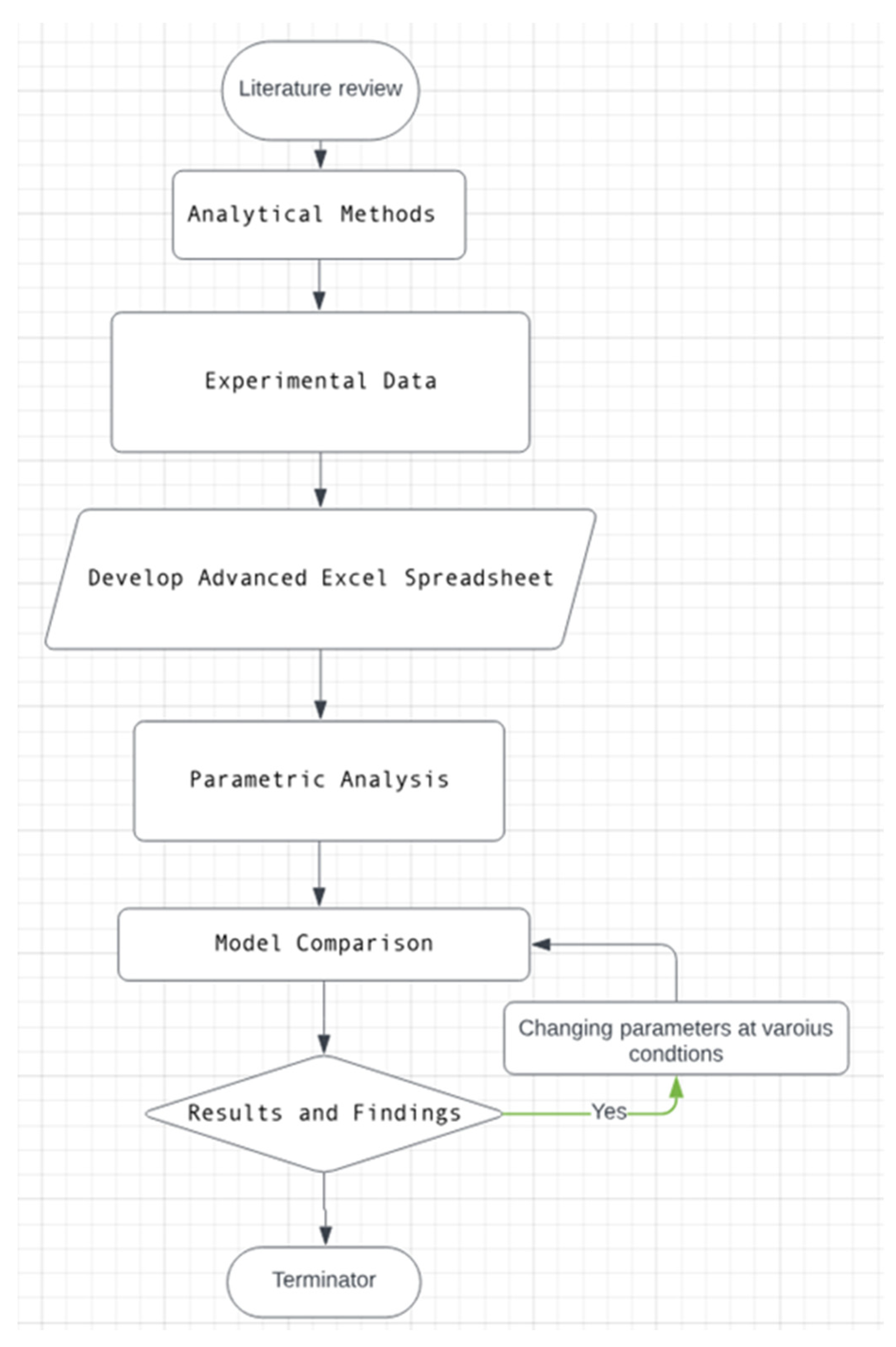
2. Theory and Methodology
2.1. Modelling Equations
2.2. Calculation for Ternary Component System
3. Results and Discussion
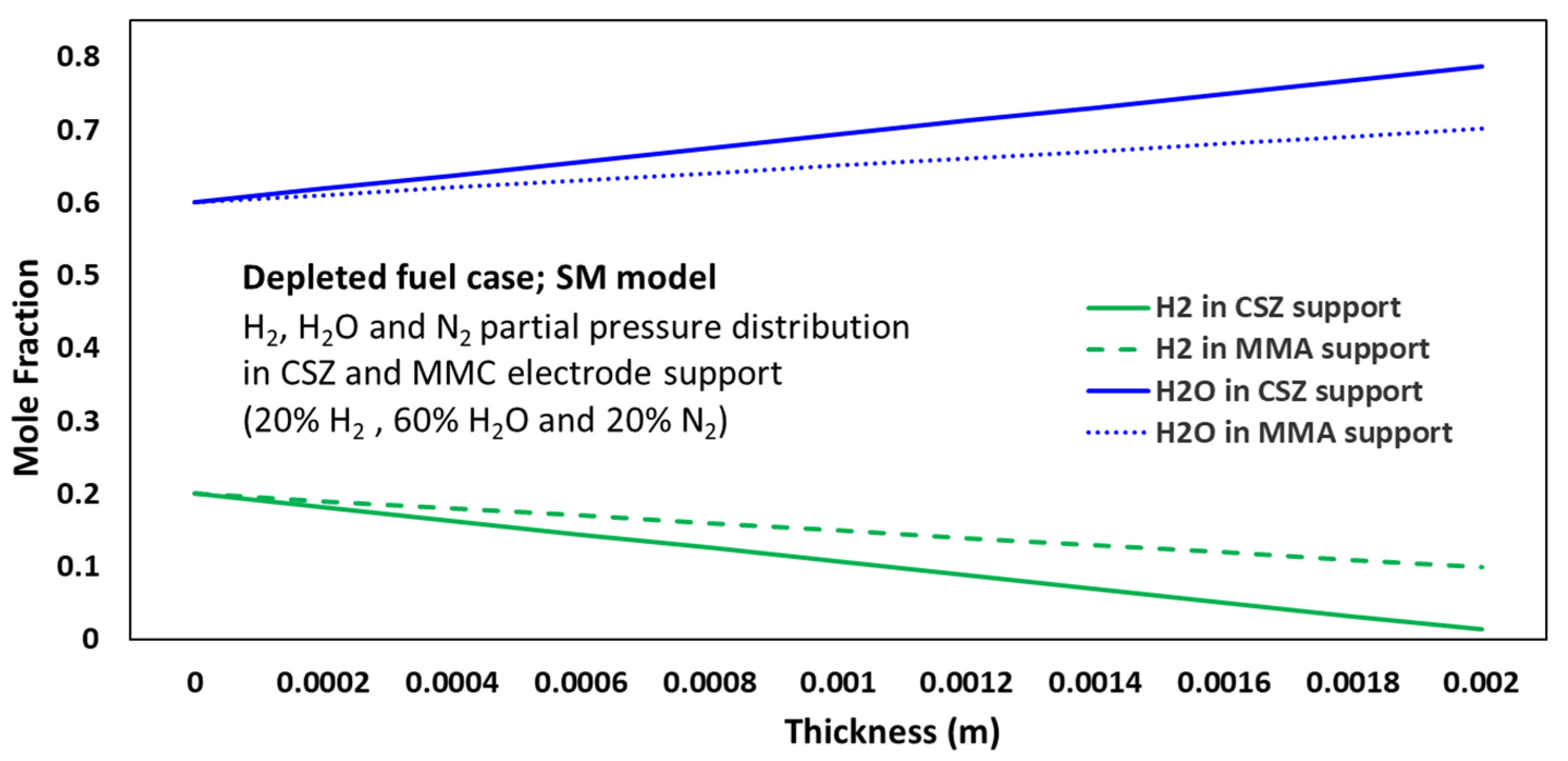
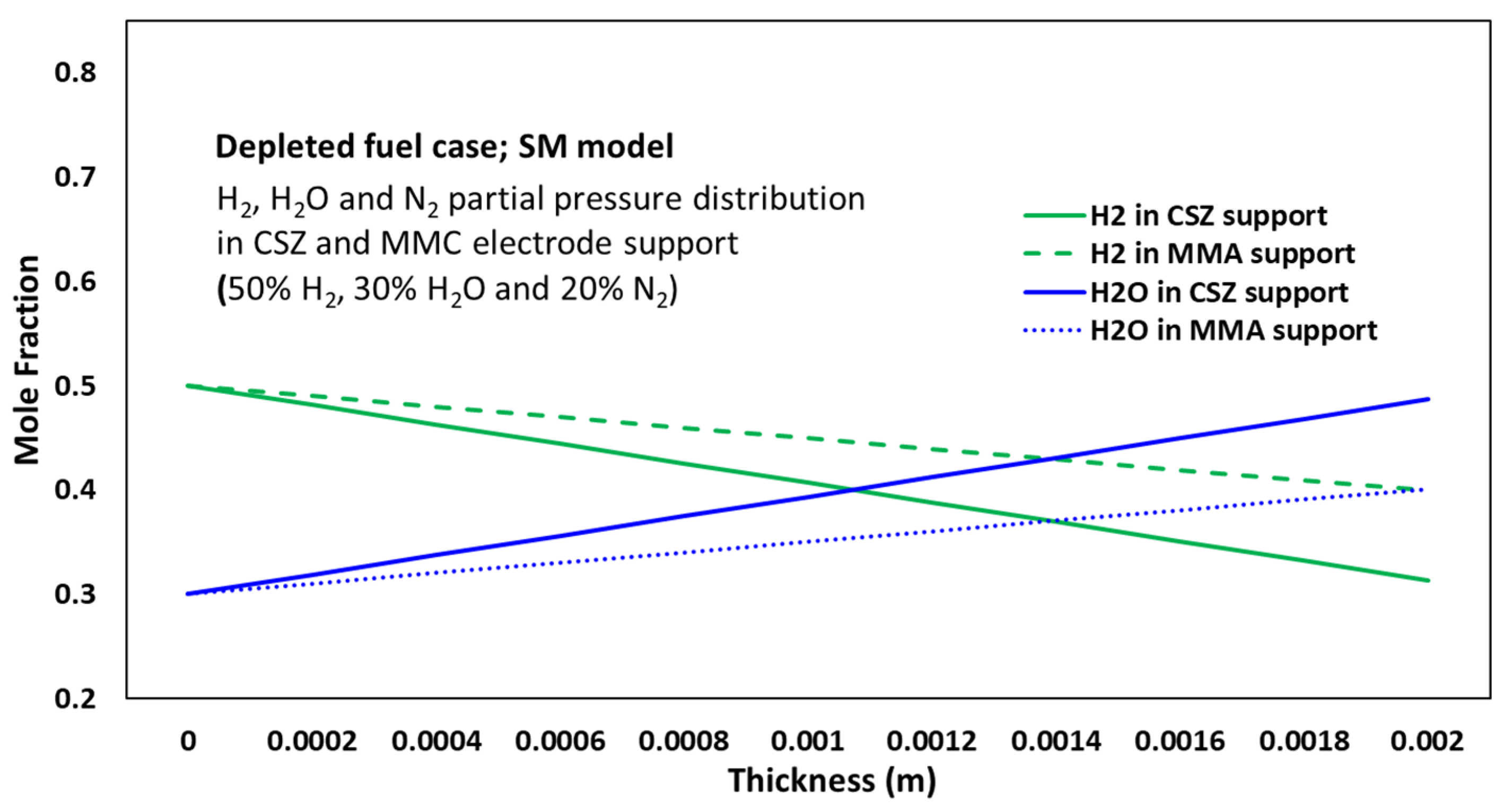
3.1. Mole Fraction Profiles
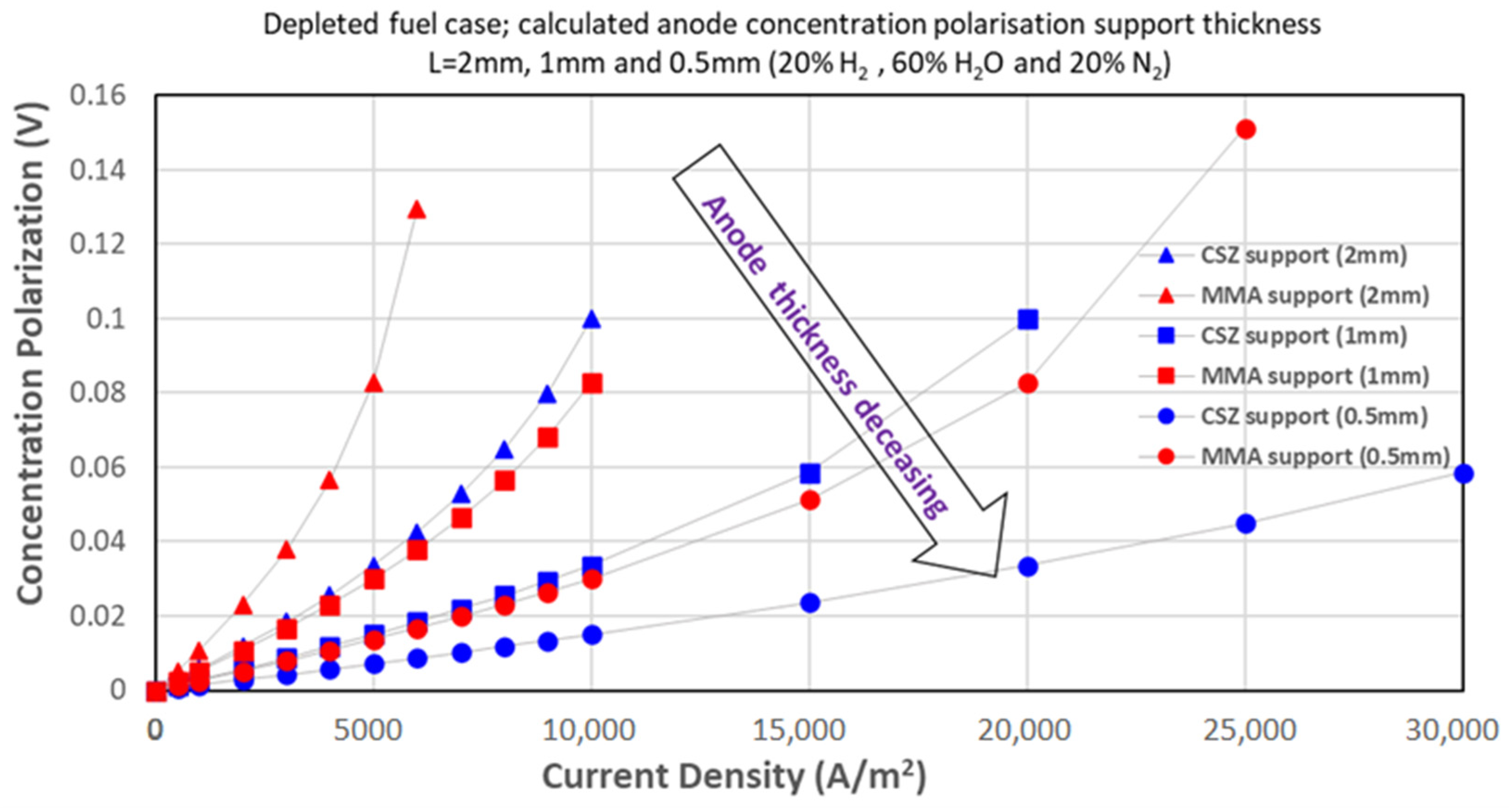
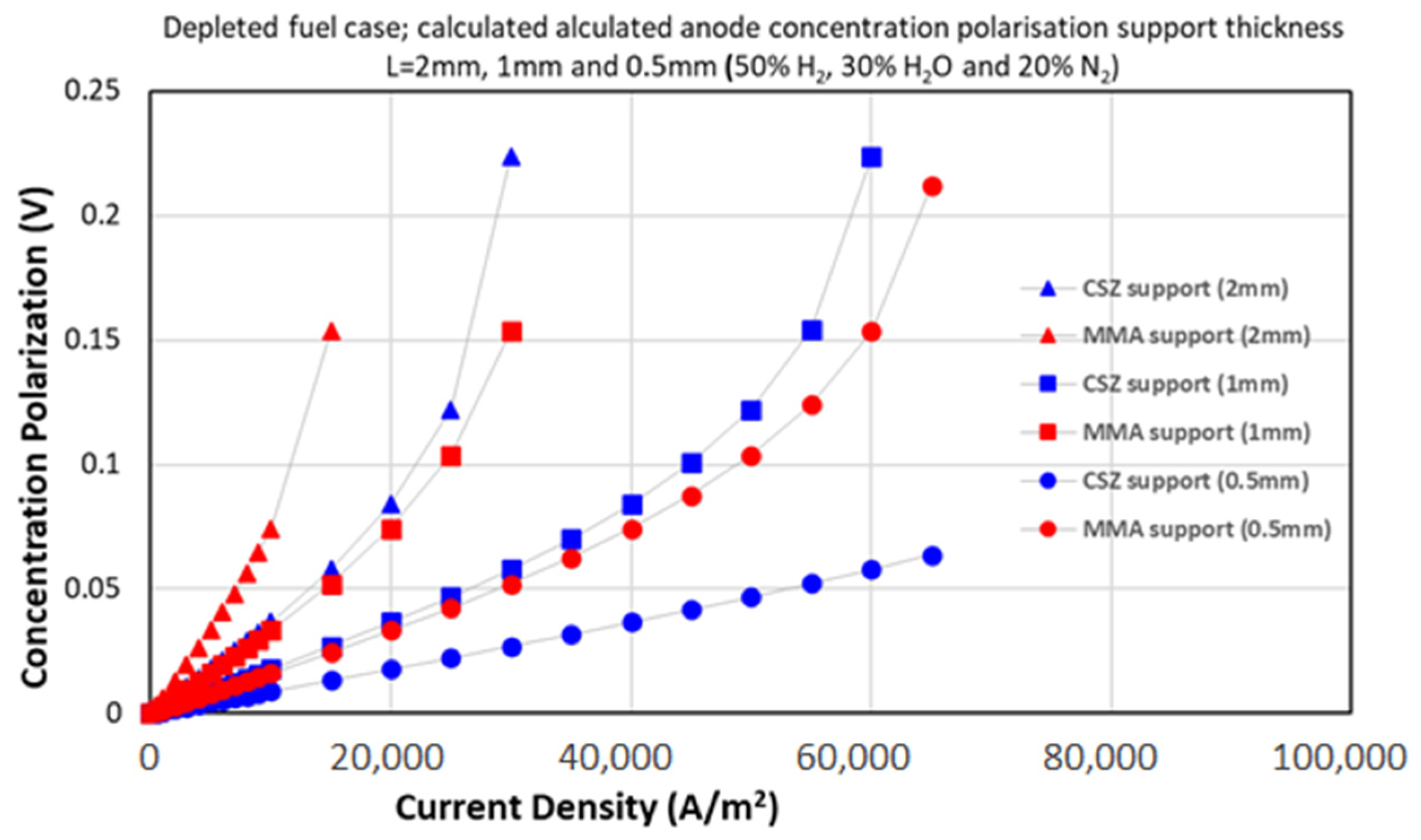
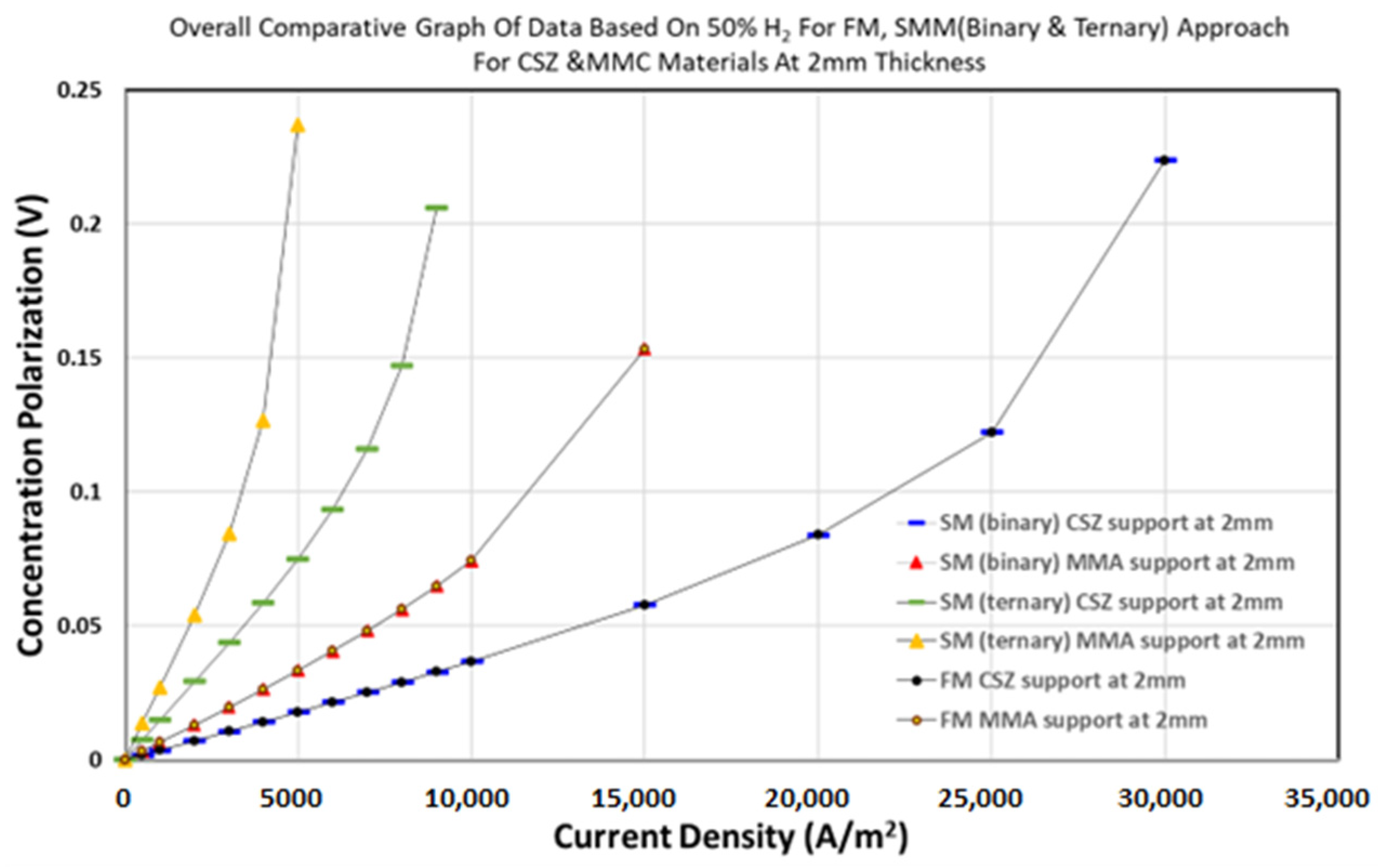
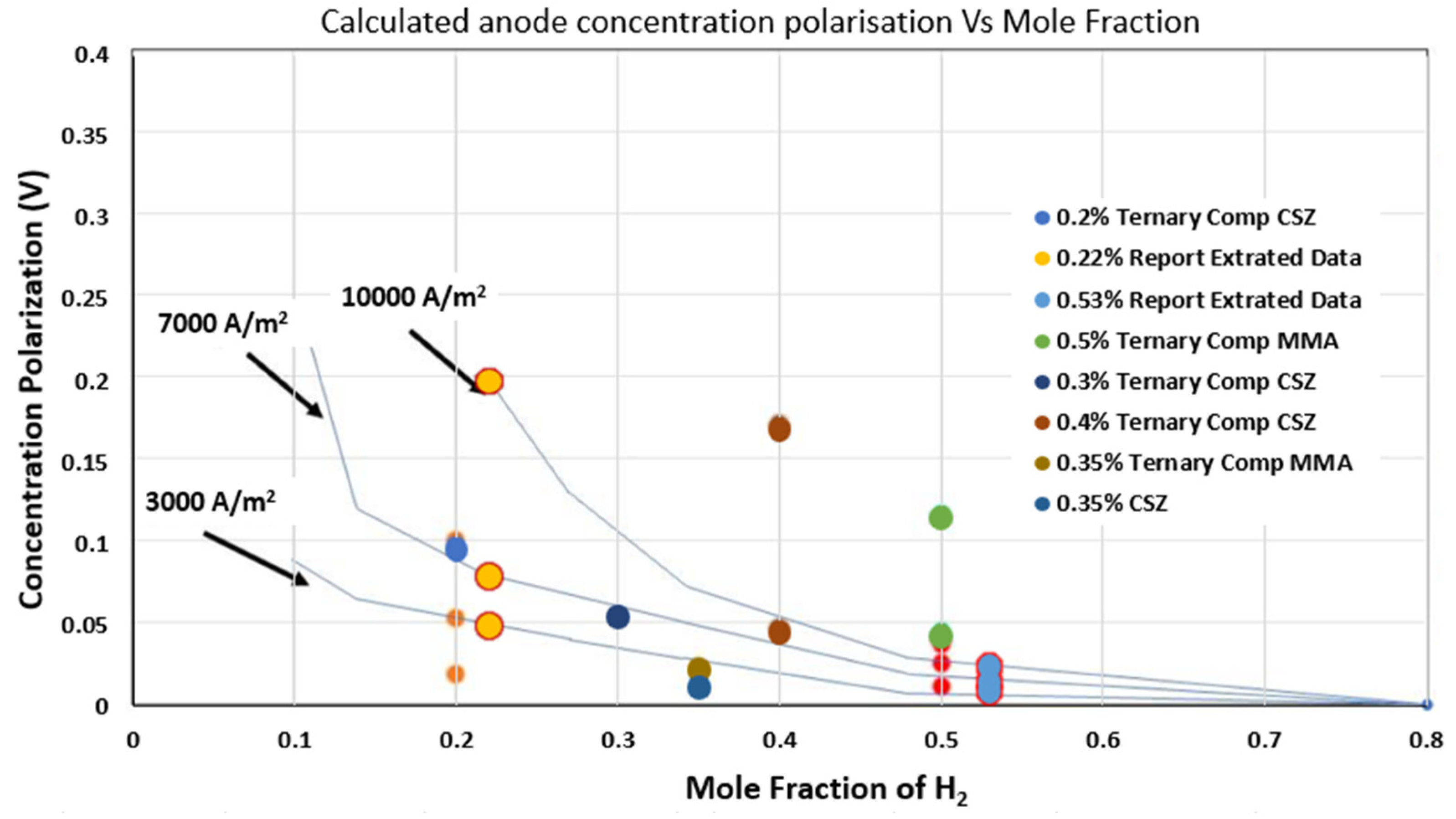
3.2. Concentration Polarization Predictions Using the Stefan–Maxwell Model
- The SM ternary model better captures the non-linear effects of hydrogen concentration on polarization.
- FM tends to underestimate or overestimate polarization, depending on the operating point.
- The SM binary model performs well under high-H2 conditions but becomes less accurate as the H2 concentration decreases.
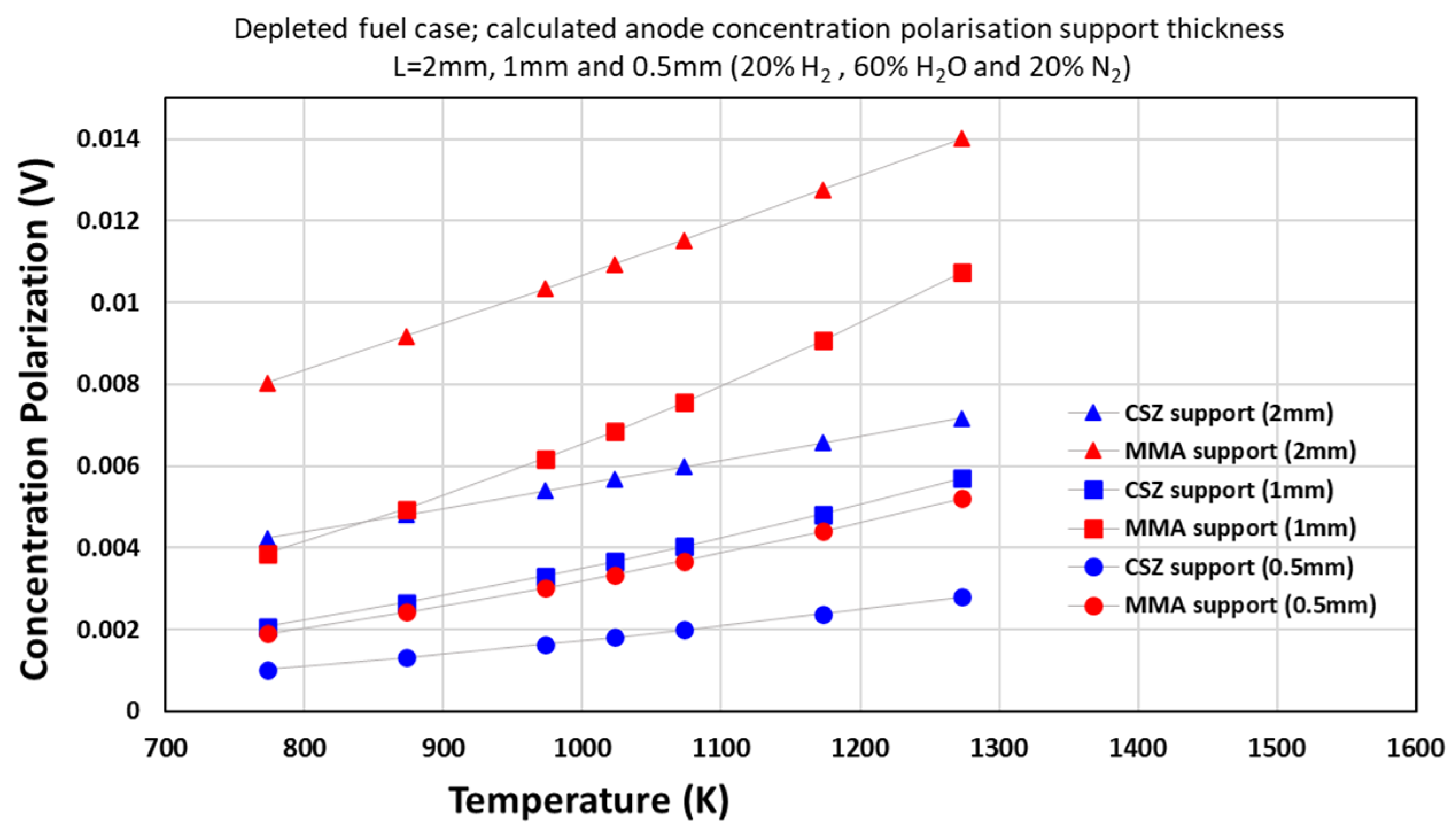
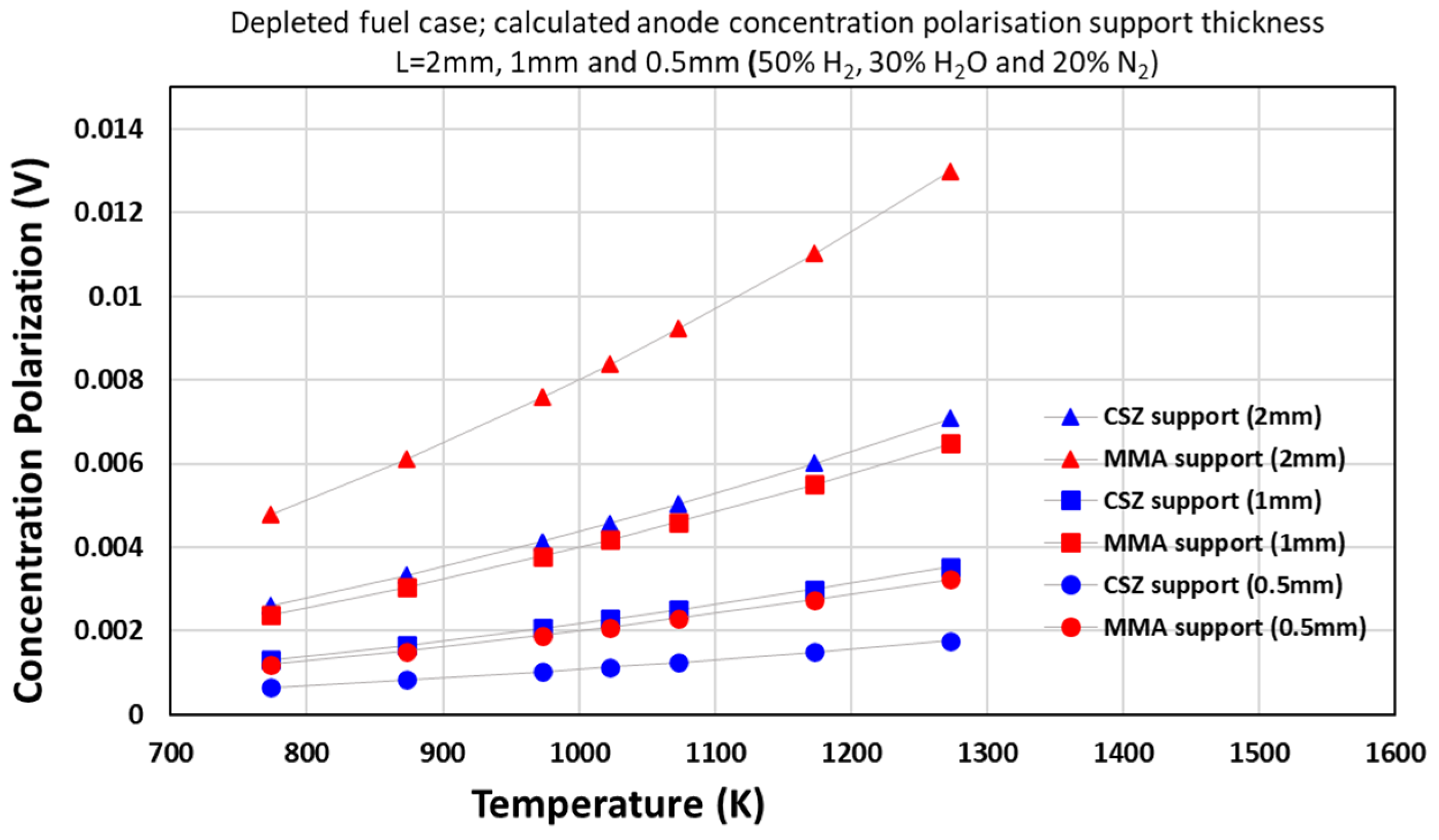
3.3. Concentration Polarization with Temperature Variation
3.3.1. Stefan–Maxwell Binary Model with Temperature Variation
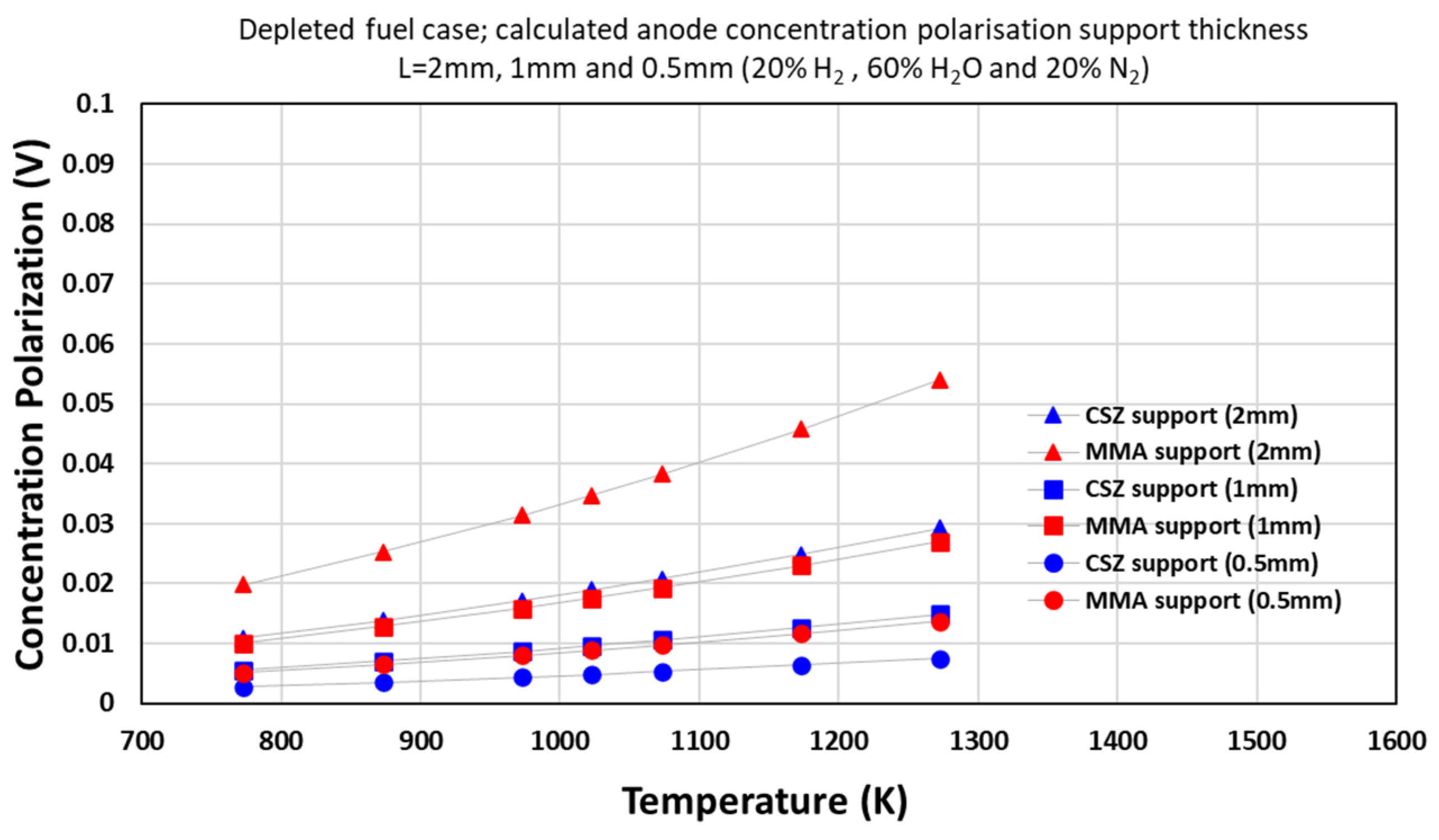
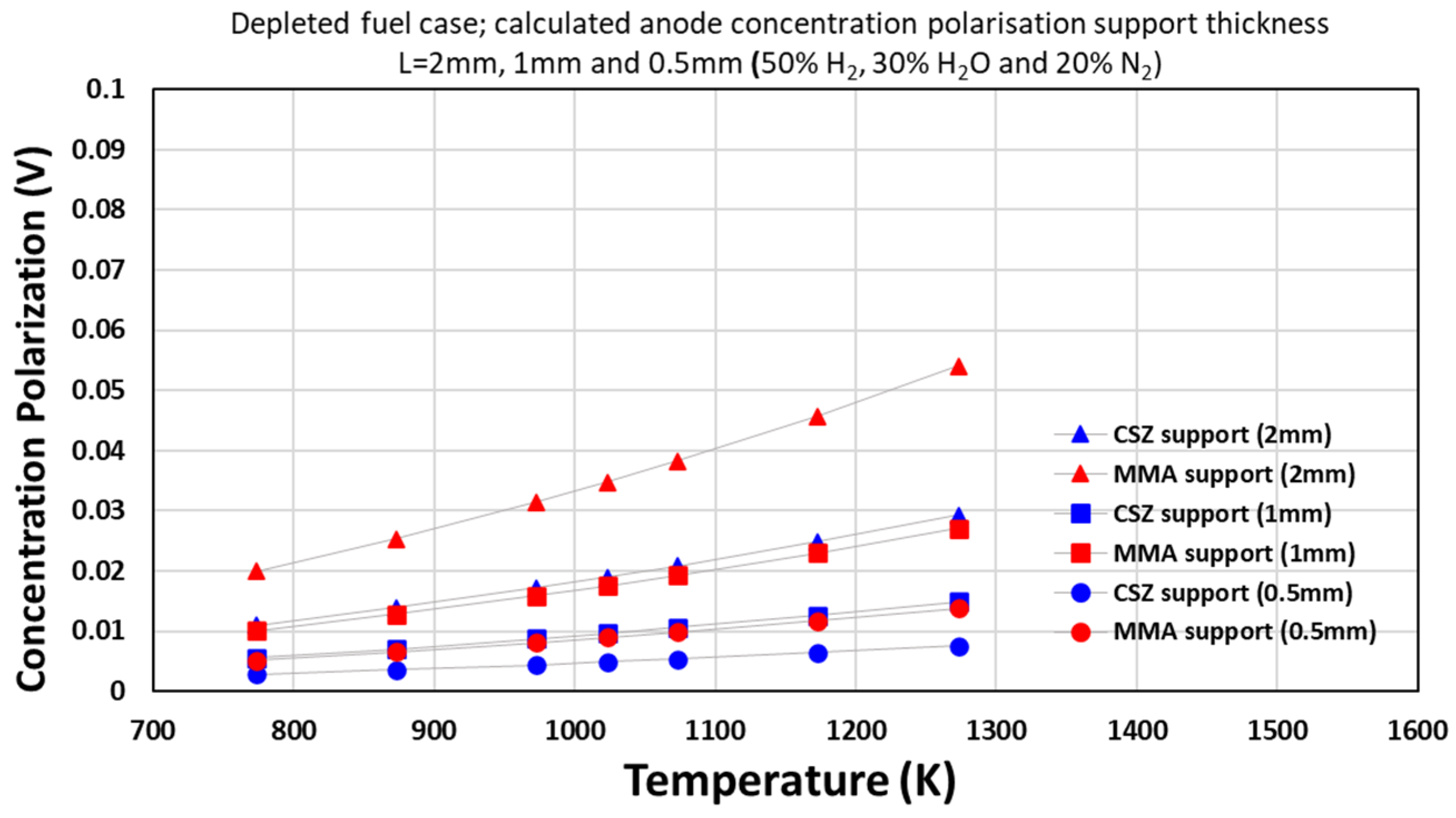
3.3.2. Stefan–Maxwell Ternary Model with Temperature Variation
3.4. Validating SM Models
4. Conclusions
Author Contributions
Funding
Data Availability Statement
Conflicts of Interest
References
- Díaz, B.; Celentano, D.; Molina, P.; Sancy, M.; Troncoso, L.; Walczak, M. On the validation and applicability of multiphysics models for hydrogen SOFC. J. Power Sources 2024, 607, 234493. [Google Scholar] [CrossRef]
- Hu, B.; Lau, G.; Song, D.; Fukuyama, Y.; Tucker, M.C. Optimization of metal-supported solid oxide fuel cells with a focus on mass transport. J. Power Sources 2023, 555, 232402. [Google Scholar] [CrossRef]
- Wei, S.; Zheng, K.; Yan, Y.; Liu, W.; Bai, P.; Wang, S.; Xu, L. Optimizing fuel transport and distribution in gradient channel anode of solid oxide fuel cell. Chem. Eng. Sci. 2024, 285, 119558. [Google Scholar] [CrossRef]
- Machaj, K.; Kupecki, J.; Niemczyk, A.; Malecha, Z.; Brouwer, J.; Porwisiak, D. Numerical analysis of the relation between the porosity of the fuel electrode support and functional layer, and performance of solid oxide fuel cells using computational fluid dynamics. Int. J. Hydrogen Energy 2024, 52, 936–951. [Google Scholar] [CrossRef]
- Mason, J.H.; Sezer, H.; Celik, I.B.; Epting, W.K.; Abernathy, H.W.; Kalapos, T. Fundamental study of gas species transport in the oxygen electrode of solid oxide fuel and electrolysis cells. Int. J. Hydrogen Energy 2024, 50, 1142–1158. [Google Scholar] [CrossRef]
- Hou, M.; Pan, Y.; He, F.; Xu, K.; Zhang, H.; Zhou, Y.; Zhao, B.; Chen, Y.; Liu, M. Manipulating and optimizing the hierarchically porous electrode structures for rapid mass transport in solid oxide cells. Adv. Funct. Mater. 2022, 32, 2203722. [Google Scholar] [CrossRef]
- Faheem, H.H.; Abbas, S.Z.; Tabish, A.N.; Fan, L.; Maqbool, F. A review on mathematical modelling of direct internal reforming-solid oxide fuel cells. J. Power Sources 2022, 520, 230857. [Google Scholar] [CrossRef]
- Iliev, I.K.; Gizzatullin, A.R.; Filimonova, A.A.; Chichirova, N.D.; Beloev, I.H. Numerical simulation of processes in an electrochemical cell using COMSOL Multiphysics. Energies 2023, 16, 7265. [Google Scholar] [CrossRef]
- Hartwell, A.R.; Wilhelm, C.A.; Welles, T.S.; Milcarek, R.J.; Ahn, J. Effects of Synthesis Gas Concentration, Composition, and Operational Time on Tubular Solid Oxide Fuel Cell Performance. Sustainability 2022, 14, 7983. [Google Scholar] [CrossRef]
- Xiong, X.; Liang, K.; Ma, G.; Ba, L. Three-dimensional multi-physics modelling and structural optimization of SOFC large-scale stack and stack tower. Int. J. Hydrogen Energy 2023, 48, 2742–2761. [Google Scholar] [CrossRef]
- Malik, F.R.; Yuan, H.-B.; Moran, J.C.; Tippayawong, N. Overview of hydrogen production technologies for fuel cell utilization. Eng. Sci. Technol. Int. J. 2023, 43, 101452. [Google Scholar] [CrossRef]
- Talukdar, A.; Chakrovorty, A.; Sarmah, P.; Paramasivam, P.; Kumar, V.; Yadav, S.K.; Manickkam, S.; Ahmed, M. A review on solid oxide fuel cell technology: An efficient energy conversion system. Int. J. Energy Res. 2024, 2024, 6443247. [Google Scholar] [CrossRef]
- Opakhai, S.; Kuterbekov, K. Metal-supported solid oxide fuel cells: A review of recent developments and problems. Energies 2023, 16, 4700. [Google Scholar] [CrossRef]
- Abbasi, H.; Babaei, M.; Theodoropoulos, C. Multiscale Simulation of Internal Reforming Solid Oxide Fuel Cells to Capture Complex Reaction Phenomena. ECS Meet. Abstr. 2024, MA2024-02, 3310. [Google Scholar] [CrossRef]
- Mousavi, S.T.; Claassen, C.M.Y.; Baltussen, M.W.; Peters, E.; Kuipers, J.A.M. Coupling of multicomponent transport models in particle-resolved fluid-solid simulations. Chem. Eng. Sci. 2024, 291, 119920. [Google Scholar] [CrossRef]
- Gedik, A.; Lubos, N.; Kabelac, S. Coupled transport effects in solid oxide fuel cell modeling. Entropy 2022, 24, 224. [Google Scholar] [CrossRef]
- Błesznowski, M.; Sikora, M.; Kupecki, J.; Makowski, Ł.; Orciuch, W. Mathematical approaches to modelling the mass transfer process in solid oxide fuel cell anode. Energy 2022, 239, 121878. [Google Scholar] [CrossRef]
- Huang, J.A.; Bao, C.; Jiang, Z.; Zhang, X. A combined approach of Lattice Boltzmann Method and Maxwell-Stefan equation for modeling multi-component diffusion in solid oxide fuel cell. arXiv 2018, arXiv:1809.01600. [Google Scholar]
- Suwanwarangkul, R.; Croiset, E.; Fowler, M.W.; Douglas, P.L.; Entchev, E.; Douglas, M.A. Performance comparison of Fick’s, dusty-gas and Stefan–Maxwell models to predict the concentration overpotential of a SOFC anode. J. Power Sources 2003, 122, 9–18. [Google Scholar] [CrossRef]
- Bianchi, F.R.; Padinjarethil, A.K.; Hagen, A.; Bosio, B. Multiscale analysis of Ni-YSZ and Ni-CGO anode based SOFC degradation: From local microstructural variation to cell electrochemical performance. Electrochimica Acta 2023, 460, 142589. [Google Scholar] [CrossRef]
- Wu, Z.; Zhu, P.; Huang, Y.; Yao, J.; Yang, F.; Zhang, Z.; Ni, M. A Comprehensive Review of Modeling of Solid Oxide Fuel Cells: From Large Systems to Fine Electrodes. Chem. Rev. 2025, 125, 2184–2268. [Google Scholar] [CrossRef]
- Langner, E.; Dehghani, H.; El Hachemi, M.; Belouettar–Mathis, E.; Makradi, A.; Wallmersperger, T.; Gouttebroze, S.; Preisig, H.; Andersen, C.W.; Shao, Q.; et al. Physics-based and data-driven modelling and simulation of Solid Oxide Fuel Cells. Int. J. Hydrogen Energy 2024, 96, 962–983. [Google Scholar] [CrossRef]
- Li, B.; Wang, C.; Liu, M.; Fan, J.; Yan, J. Transient performance analysis of a solid oxide fuel cell during power regulations with different control strategies based on a 3D dynamic model. Renew. Energy 2023, 218, 119266. [Google Scholar] [CrossRef]
- Pinzhi, L.U.; Wei, S.; Zhenhua, D.U.; Wanda, M.A.; Shidong, N.I. Analysis and comparison of multi-physics fields for different flow field configurations in SOFC. Int. J. Heat Mass Transf. 2024, 229, 125708. [Google Scholar] [CrossRef]
- Li, G.; Tian, Y.; Wang, J.; Liu, B.; Jia, L.; Li, J.; Yan, D. Numerical and experimental study of effects of different flow channel structures on the performance of solid oxide fuel cell. J. Power Sources 2025, 652, 237401. [Google Scholar] [CrossRef]
- Zhang, H.; Zhu, Y.; Chen, Z.; Lu, L.; Levtsev, A.; Chen, D. Investigate the multi-physics performance of a new fuel cell stack by a 3D large-scale model basing on realistic structures. Int. J. Hydrogen Energy 2023, 48, 7085–7095. [Google Scholar] [CrossRef]
- Zhang, W.; Zhang, W.; Kuang, X.; Jia, L.; Yan, D. Numerical optimization of obstacles channel geometry for solid oxide fuel cells. Int. J. Hydrogen Energy 2023, 48, 38438–38453. [Google Scholar] [CrossRef]
- Yi, K.; Yin, H.; Kim, Y.; Kim, H.; Yun, K.; Yu, J. Impact of Fuel Utilization on Flow and Reaction Uniformity in a 1 kWe SOFC Stack: A CFD-Based Study. Fuel Cells 2025, 25, e70007. [Google Scholar] [CrossRef]
- Maza, W.A.; Steinhurst, D.; Pomeroy, E.D.; Kee, R.J.; Ricote, S.; Walker, R.A.; Owrutsky, J. Comparison of Carbon Deposition and Removal from Ni-YSZ and Ni-BCZY Composites Using Operando Optical Methods. ECS Transactions 2023, 111, 1271. [Google Scholar] [CrossRef]
- Liu, Z.; Zhou, Y.; Zhang, W.; Hou, J.; Hu, X.; Liu, M. Sulfur-and Coking-Tolerant Anodes for Solid Oxide Fuel Cells. ECS Meet. Abstr. 2022, MA2022-02, 1761. [Google Scholar] [CrossRef]
- Zainon, A.N.; Somalu, M.R.; Bahrain, A.M.K.; Muchtar, A.; Baharuddin, N.A.; Sa, M.A.; Osman, N.; Samat, A.A.; Azad, A.K.; Brandon, N.P. Challenges in using perovskite-based anode materials for solid oxide fuel cells with various fuels: A review. Int. J. Hydrogen Energy 2023, 48, 20441–20464. [Google Scholar] [CrossRef]
- Aslam, Z.; Felix, A.; Kalyvas, C.; Chizari, M. Design of a Fuel Cell/Battery Hybrid Power System for a Micro Vehicle: Sizing Design and Hydrogen Storage Evaluation. Vehicles 2023, 5, 1570–1585. [Google Scholar] [CrossRef]



| Variables | Definition |
|---|---|
| Effective diffusion coefficient of species i (m2/s) | |
| Universal gas constant (N m/mol K) | |
| T | Absolute temperature (K) |
| P | Total pressure (Pa) |
| la | Anode support thickness (m) |
| i | Current density (A/m2) |
| F | Faraday constant (As/mole) |
| Given Constants | Values |
|---|---|
| 0.6 | |
| 0.3 | |
| 0.1 | |
| R (N m/mol K) | 8.31451 |
| T (K) | 1273 |
| i (A/m2) | 2000 |
| F (A s/mole) | 96,485 |
| Deff of H2-H2O in CSZ (m2/s) | 5.98 × 10⁻⁶ |
| Deff of H2-H2O in MMA (m2/s) | 3.27 × 10⁻⁶ |
| Deff of H2-N2 in CSZ (m2/s) | 5.51 × 10⁻⁶ |
| Deff of H2-N2 in MMA (m2/s) | 2.97 × 10⁻⁶ |
| Deff of H2O-N2 in CSZ (m2/s) | 1.67 × 10⁻⁶ |
| Deff of H2O-N2 in MMA (m2/s) | 9.14 × 10⁻⁷ |
| Given Constants | Values |
|---|---|
| yH2, bulk | 0.5 |
| yH2O, bulk | 0.3 |
| yN2, bulk | 0.2 |
| R (N m/mol K) | 8.31451 |
| Assuming y = 1 | 1 |
| T (K) | 1273 |
| i (A/m2) | 2000 |
| F (A s/mole) | 96,485 |
| Deff of H2-H2O in CSZ (m2/s) | 5.98 × 10⁻⁶ |
| Deff of H2-H2O in MMA (m2/s) | 3.27 × 10⁻⁶ |
| Deff of H2-N2 in CSZ (m2/s) | 5.51 × 10⁻⁶ |
| Deff of H2-N2 in MMA (m2/s) | 2.97 × 10⁻⁶ |
| Deff of H2O-N2 in CSZ (m2/s) | 1.67 × 10⁻⁶ |
| Deff of H2O-N2 in MMA (m2/s) | 9.14 × 10⁻⁷ |
| Layer | Thickness | Porosity | Tortuosity | Diffusivity |
|---|---|---|---|---|
| CSZ | 1.8 mm | 0.4 | 3 | 6.72 × 10⁻⁵ m2/s |
| MMA | 0.2 mm | 0.6 | 1.5 | 3.67 × 10⁻⁵ m2/s |
| Model | 20% H2 Case | 50% H2 Case | Agreement with Experimental Data | Complexity | Recommendation |
|---|---|---|---|---|---|
| Fick’s Model | High overpotential, poor accuracy | Moderate accuracy | Low | Low | Not recommended for low H2 |
| SM Binary | Moderate overpotential, acceptable accuracy | Good accuracy | Moderate | Medium | Suitable for high H2 only |
| SM Ternary | Low overpotential, high accuracy | High accuracy | High | High | Best overall performance |
Disclaimer/Publisher’s Note: The statements, opinions and data contained in all publications are solely those of the individual author(s) and contributor(s) and not of MDPI and/or the editor(s). MDPI and/or the editor(s) disclaim responsibility for any injury to people or property resulting from any ideas, methods, instructions or products referred to in the content. |
© 2025 by the authors. Licensee MDPI, Basel, Switzerland. This article is an open access article distributed under the terms and conditions of the Creative Commons Attribution (CC BY) license (https://creativecommons.org/licenses/by/4.0/).
Share and Cite
Patel, V.K.; Gholamalian, F.; Kalyvas, C.; Ghassemi, M.; Chizari, M. Modelling Mass Transport in Anode-Supported Solid Oxide Fuel Cells. Electronics 2025, 14, 3486. https://doi.org/10.3390/electronics14173486
Patel VK, Gholamalian F, Kalyvas C, Ghassemi M, Chizari M. Modelling Mass Transport in Anode-Supported Solid Oxide Fuel Cells. Electronics. 2025; 14(17):3486. https://doi.org/10.3390/electronics14173486
Chicago/Turabian StylePatel, Vishal Kumar, Fateme Gholamalian, Christos Kalyvas, Majid Ghassemi, and Mahmoud Chizari. 2025. "Modelling Mass Transport in Anode-Supported Solid Oxide Fuel Cells" Electronics 14, no. 17: 3486. https://doi.org/10.3390/electronics14173486
APA StylePatel, V. K., Gholamalian, F., Kalyvas, C., Ghassemi, M., & Chizari, M. (2025). Modelling Mass Transport in Anode-Supported Solid Oxide Fuel Cells. Electronics, 14(17), 3486. https://doi.org/10.3390/electronics14173486