Article

Constraints on Bit Precision and Row Parallelism for Reliable Computing-in-Memory

1
Institute for Artificial Intelligence, Peking University, Beijing 100871, China
2
School of Integrated Circuits, Peking University, Beijing 100871, China
3
Beijing Advanced Innovation Center for Integrated Circuits, Beijing 100871, China
*
Author to whom correspondence should be addressed.
Electronics 2025, 14(13), 2532; https://doi.org/10.3390/electronics14132532

Submission received: 13 May 2025 / Revised: 14 June 2025 / Accepted: 20 June 2025 / Published: 22 June 2025
(This article belongs to the Special Issue Analog Circuits and Analog Computing)

Abstract

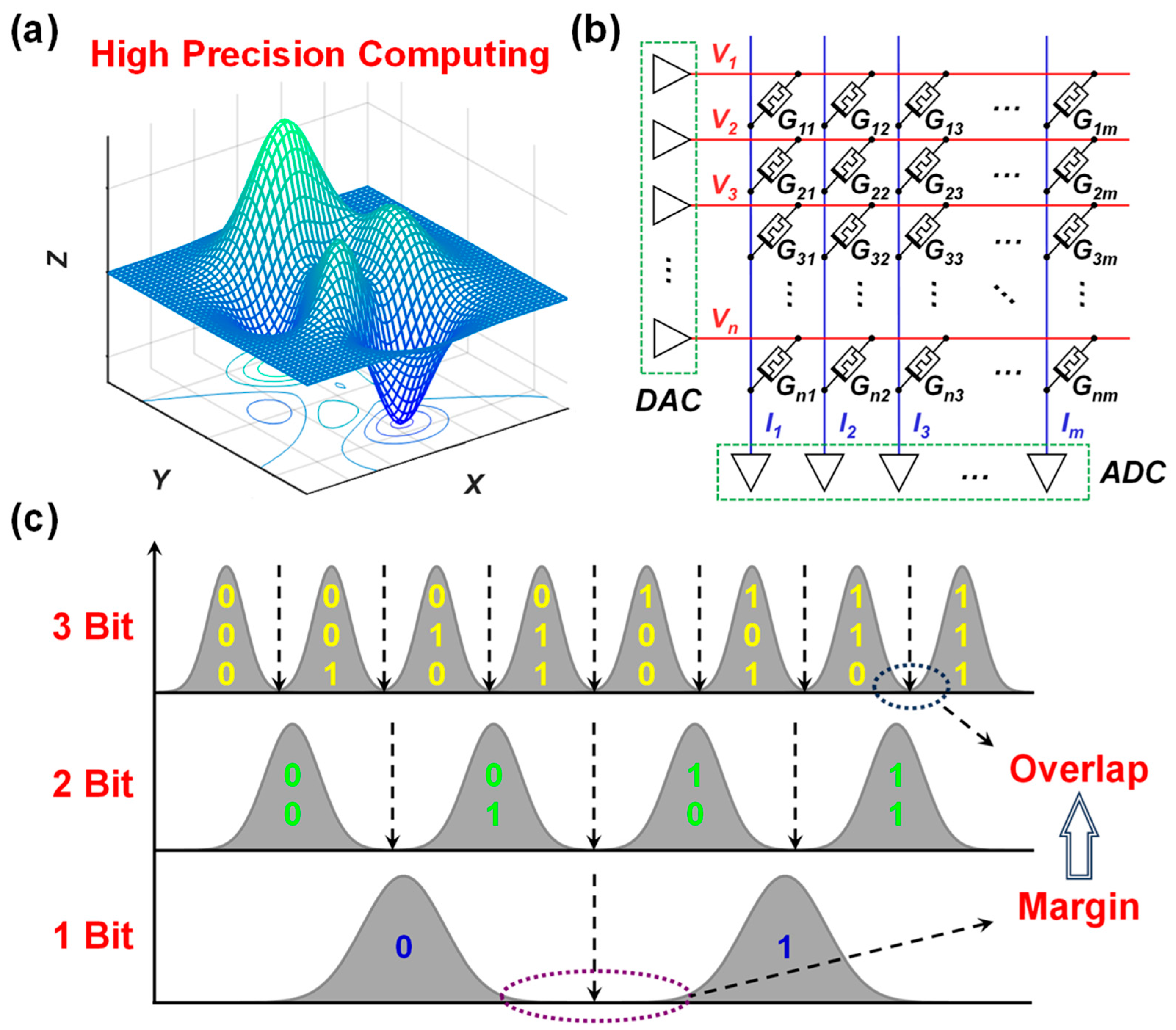
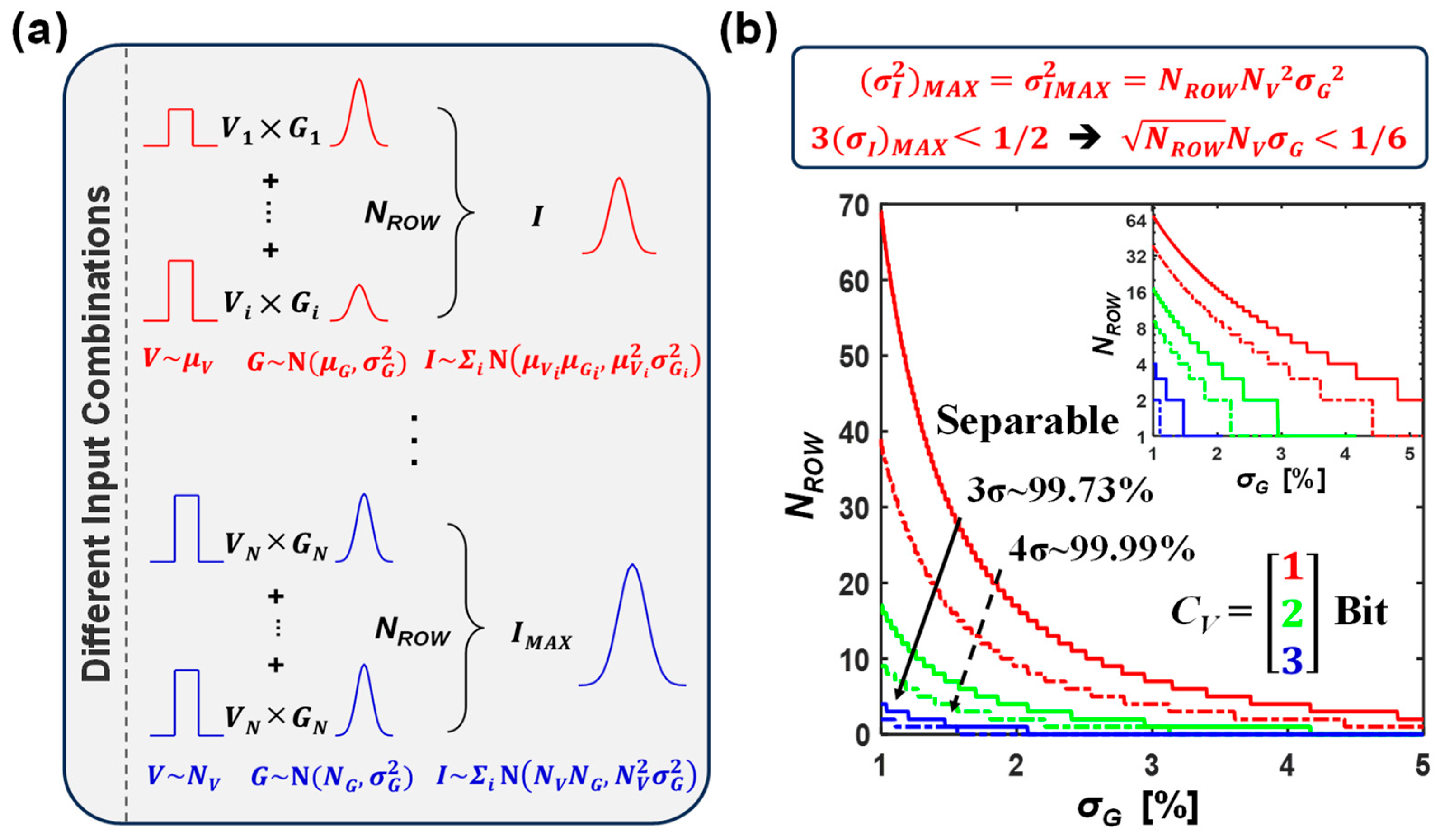
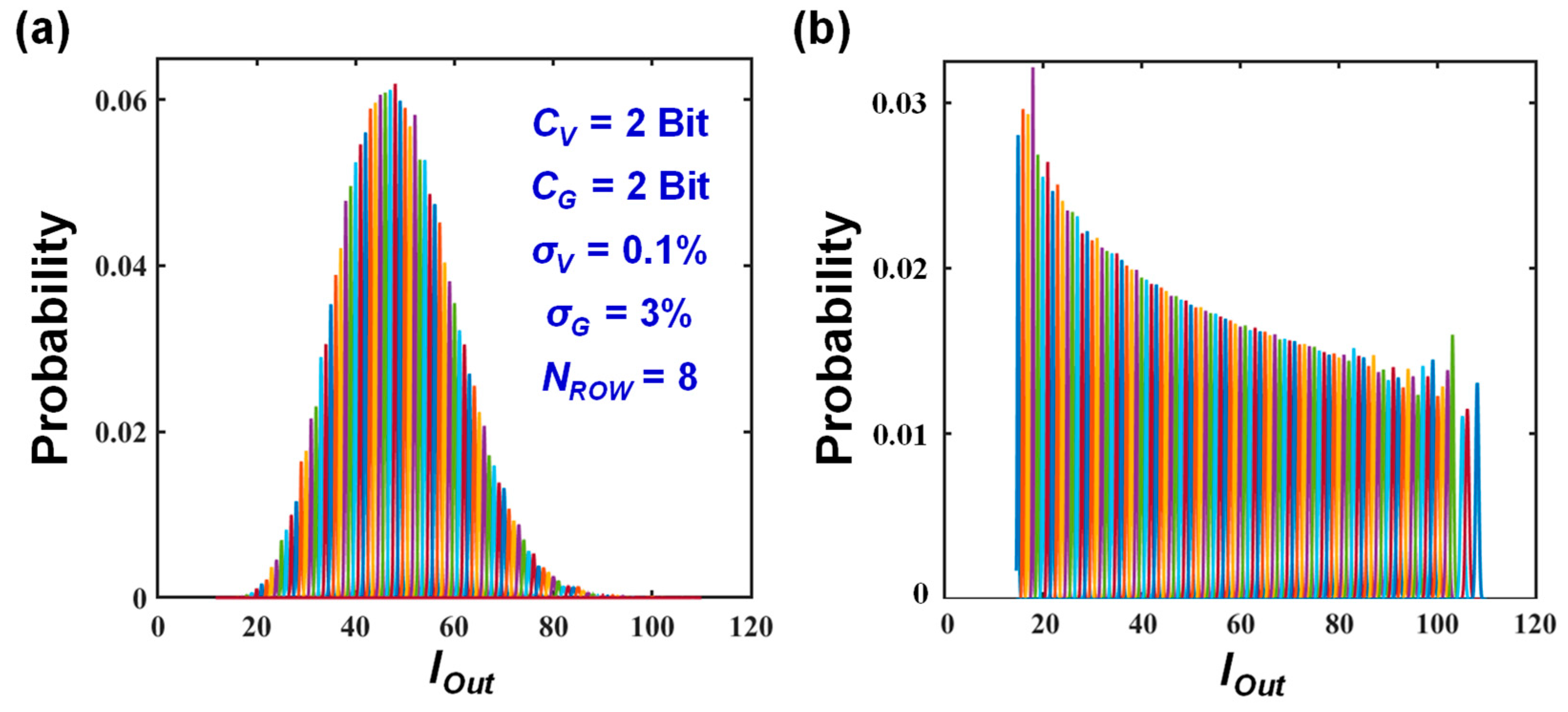
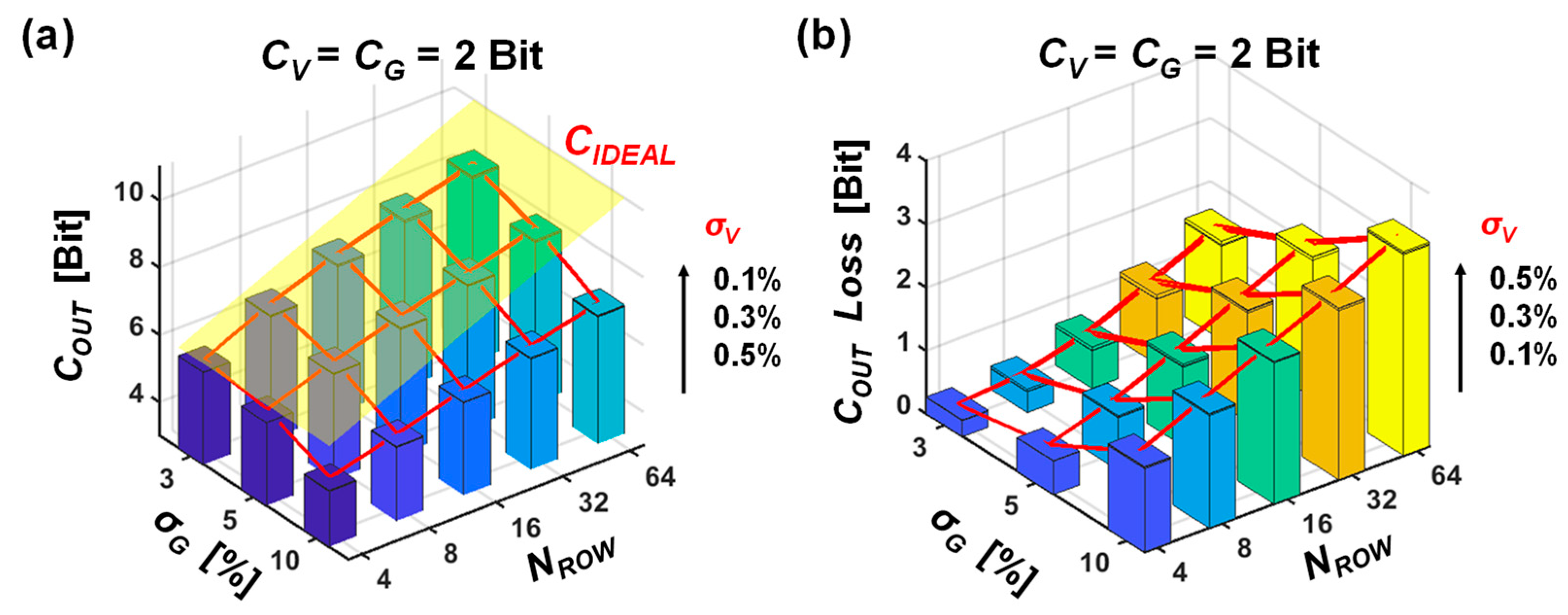
Computing-in-memory (CIM) with emerging non-volatile resistive memory devices has demonstrated remarkable performance in data-intensive applications, such as neural networks and machine learning. A crosspoint memory array enables naturally parallel computation of matrix–vector multiplication (MVM) in the analog domain, offering significant advantages in terms of speed, energy efficiency, and computational density. However, the intrinsic device non-ideality residing in analog conductance state distorts the MVM precision and limits the application to high-precision scenarios, e.g., scientific computing. Yet, a theoretical framework for guiding reliable computing-in-memory designs has been lacking. In this work, we develop an analytical model describing the constraints on bit precision and row parallelism for reliable MVM operations. By leveraging the concept of capacity from information theory, the impact of non-ideality on computational precision is quantitively analyzed. This work offers a theoretical guidance for optimizing the quantized margins, providing valuable insights for future research and practical implementation of reliable CIM.
Keywords: high-precision computing; MVM; bit precision; row parallelism; information theory capacity high-precision computing; MVM; bit precision; row parallelism; information theory capacity